2024 Cybersecurity Risk Report The Data behind the
Description: 2024 Cybersecurity Risk Report The Data behind the Data EY Insights Sponsored by SAFE Security, EY Ben Gowan, Data Scientist, Safe Security Carolyn Schreiber, Principal, Advisory Risk Cybersecurity Purposeful Benchmarks Answers the
Related Topics
Download Presentation
"2024 Cybersecurity Risk Report The Data behind the" is the property of its rightful owner. Permission is granted to download and print the materials on this website for personal, non-commercial use only, and to display it on your personal computer provided you do not modify the materials and that you retain all copyright notices contained in the materials. By downloading content from our website, you accept the terms of this agreement.
Presentation Transcript
slide1. 2024 Cybersecurity Risk Report
The Data behind the Data & EY Insights Sponsored by SAFE Security, EY Ben Gowan, Data Scientist, Safe Security
Carolyn Schreiber, Principal, Advisory | Risk | Cybersecurity<br>
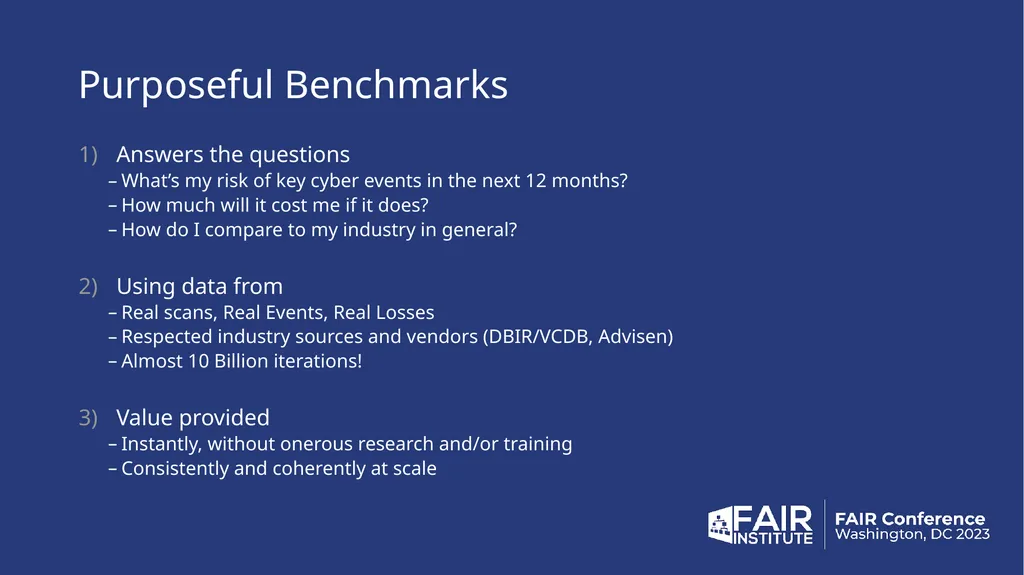
slide2. Purposeful Benchmarks Answers the questions
What’s my risk of key cyber events in the next 12 months?
How much will it cost me if it does?
How do I compare to my industry in general?
Using data from
Real scans, Real Events, Real Losses
Respected industry sources and vendors (DBIR/VCDB, Advisen)
Almost 10 Billion iterations!
Value provided
Instantly, without onerous research and/or training
Consistently and coherently at scale<br>
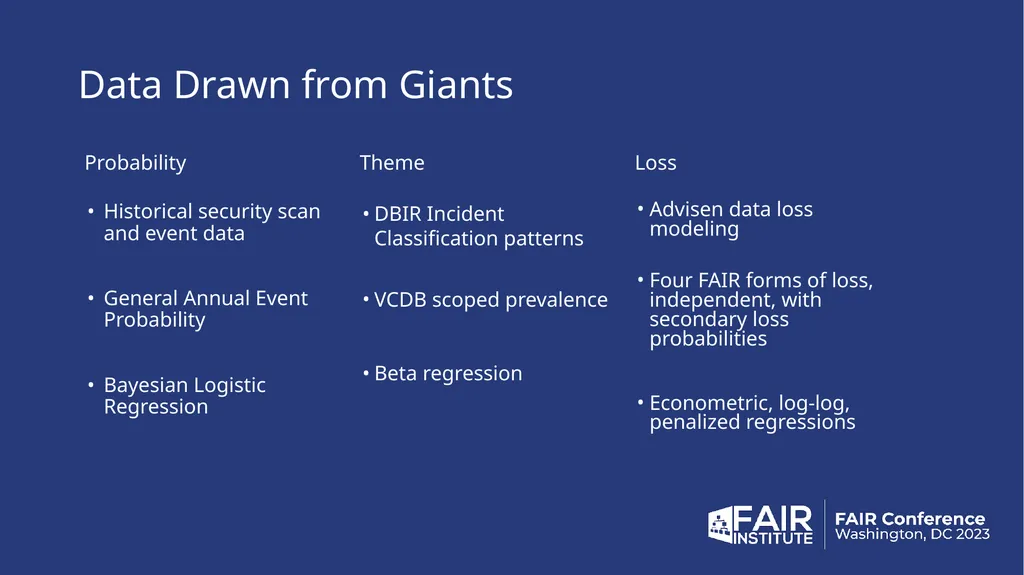
slide3. Data Drawn from Giants Probability Historical security scan and event data
General Annual Event Probability
Bayesian Logistic Regression Theme DBIR Incident Classification patterns
VCDB scoped prevalence
Beta regression Loss Advisen data loss modeling
Four FAIR forms of loss, independent, with secondary loss probabilities
Econometric, log-log, penalized regressions<br>
slide4. Show Me The Data<br>
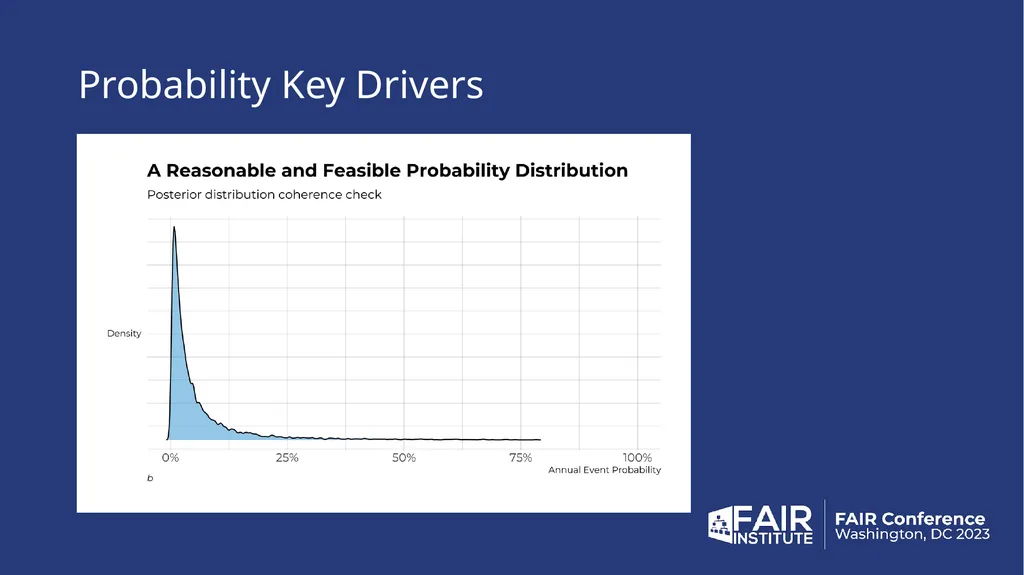
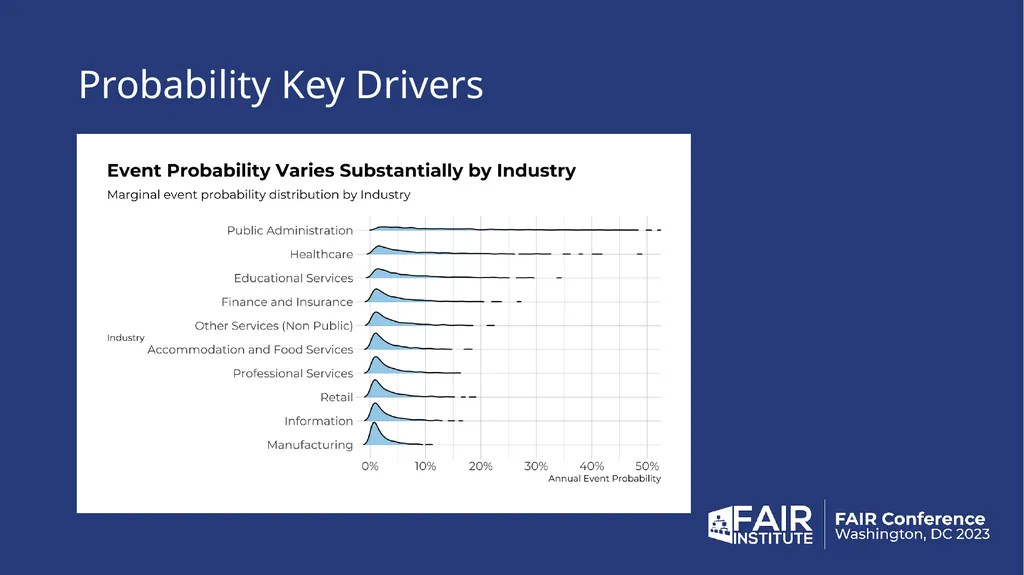
slide5. Probability Key Drivers<br>
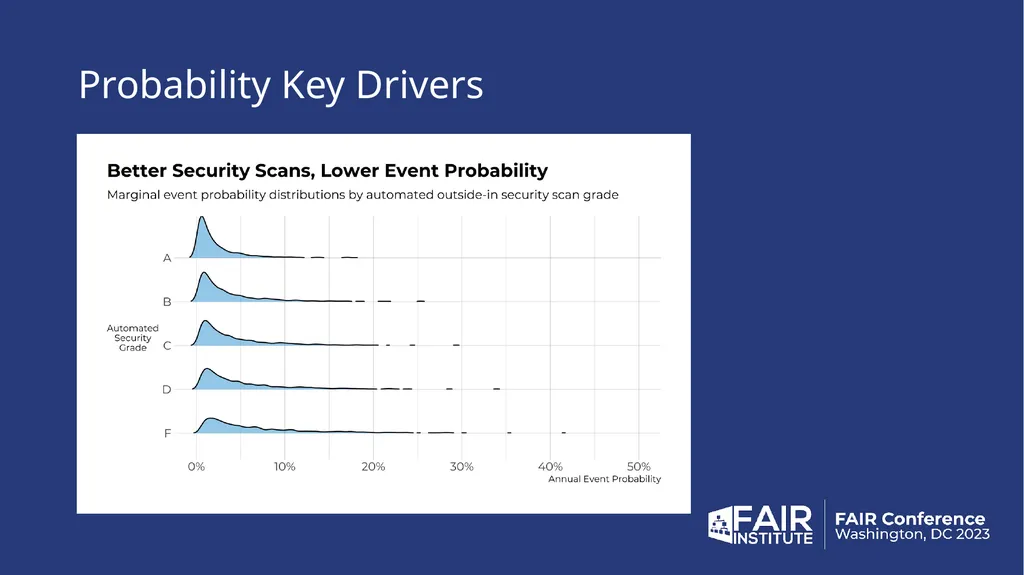
slide6. Probability Key Drivers<br>
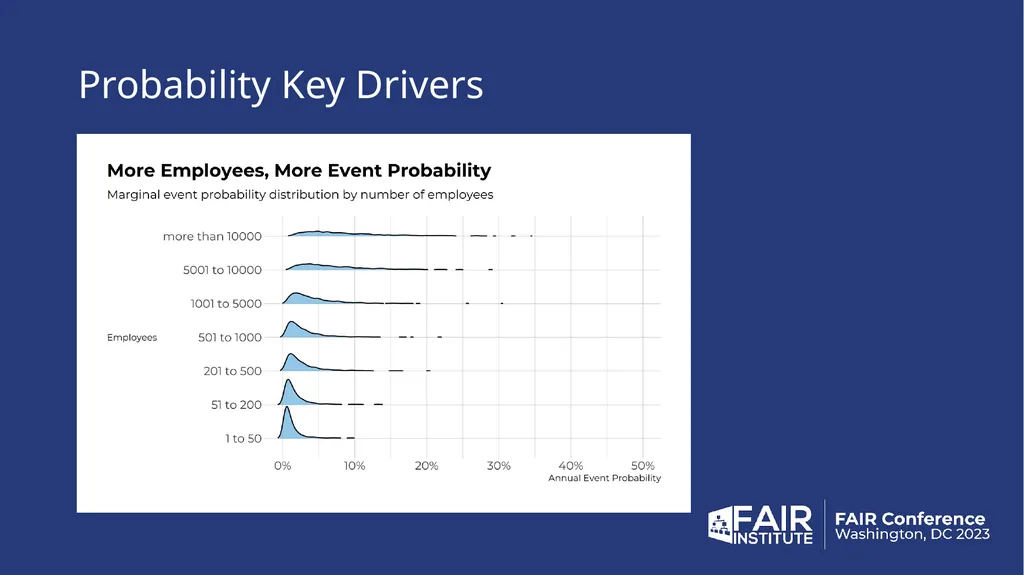
slide7. Probability Key Drivers<br>
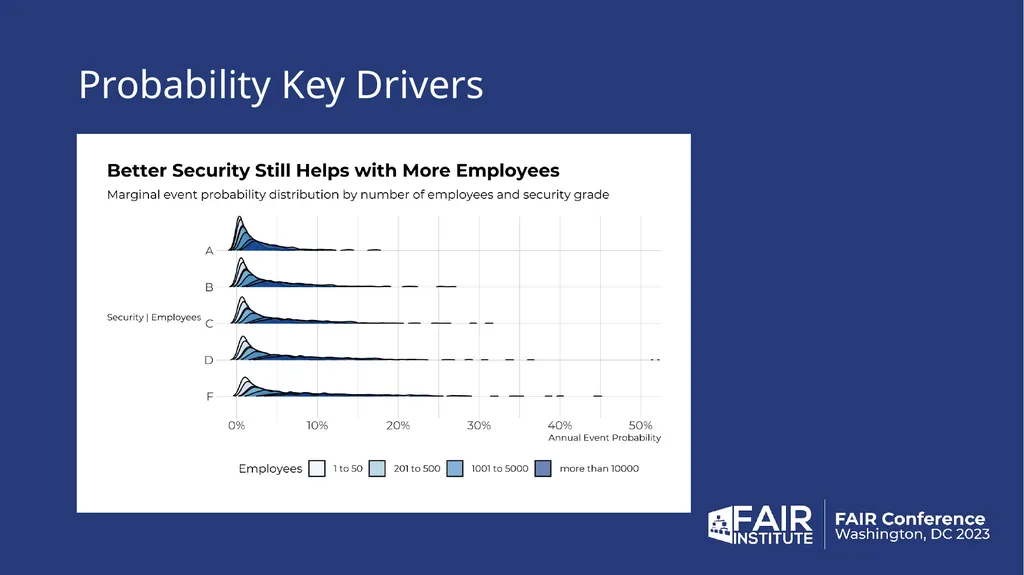
slide8. Probability Key Drivers<br>
slide9. Probability Key Drivers<br>
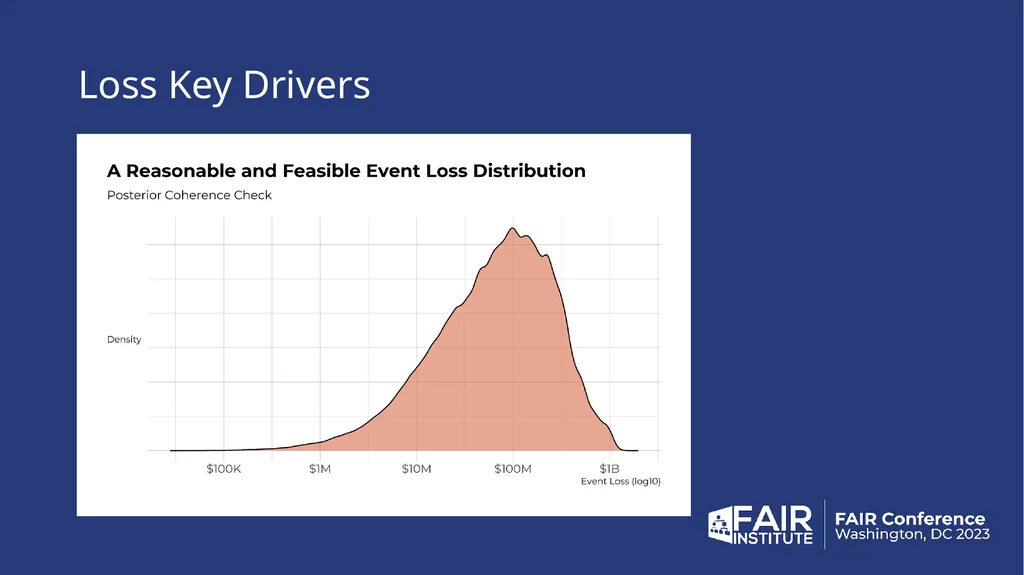
slide10. Loss Key Drivers<br>
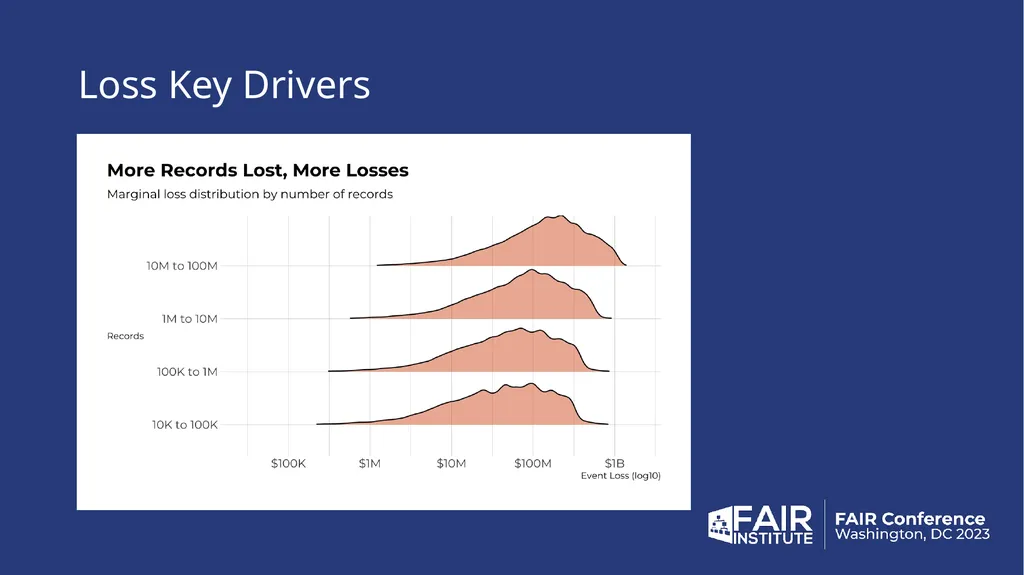
slide11. Loss Key Drivers<br>
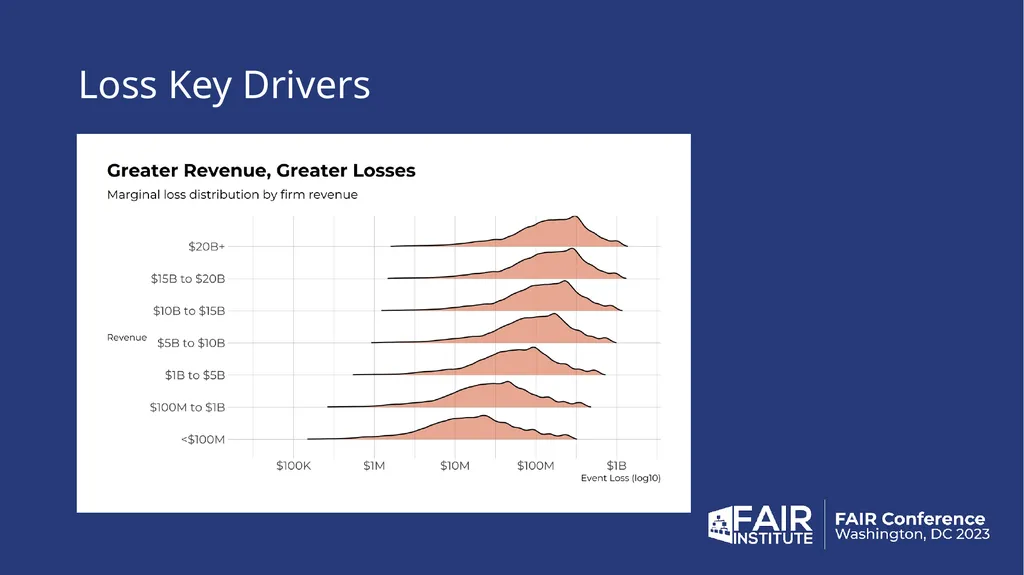
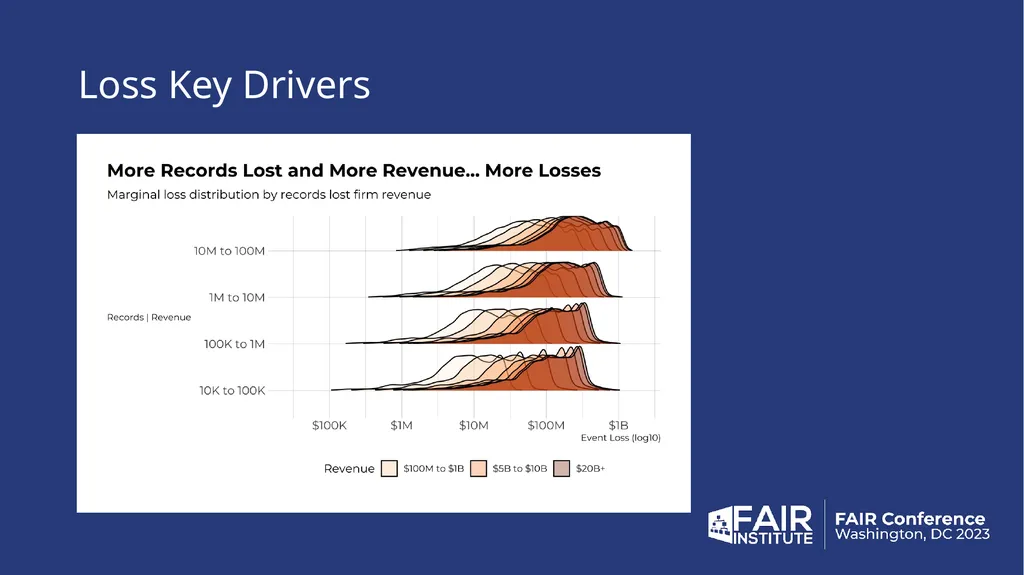
slide12. Loss Key Drivers<br>
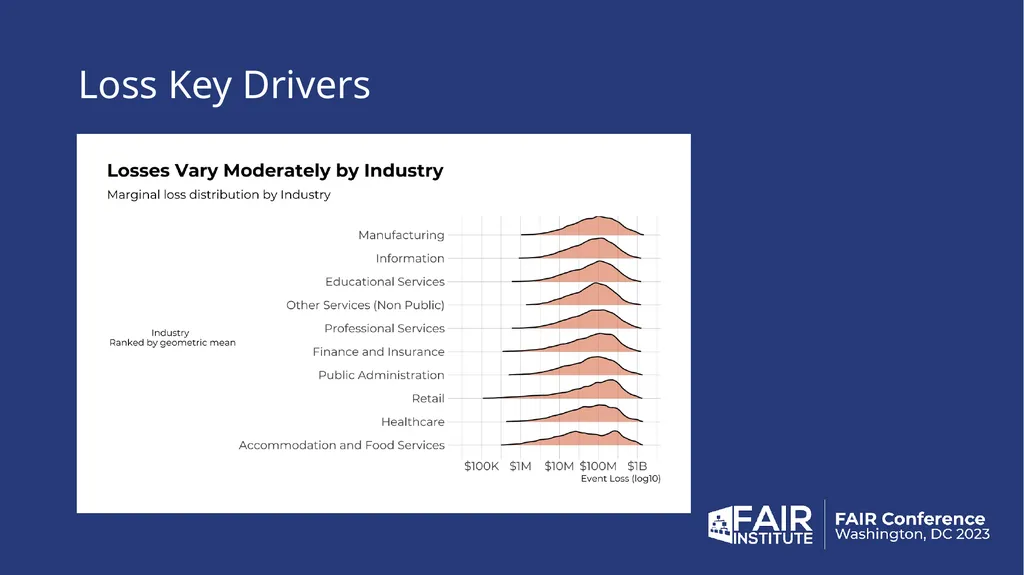
slide13. Loss Key Drivers<br>
slide14. Loss Key Drivers<br>
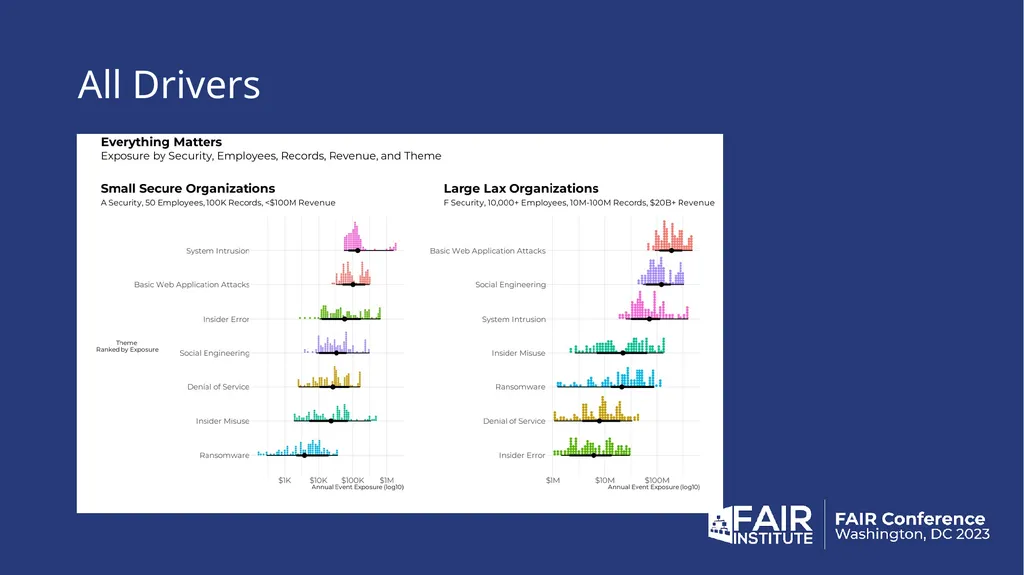
slide15. All Drivers<br>
slide16. Insights<br>
slide17. Top Industries By Loss Exposure<br>
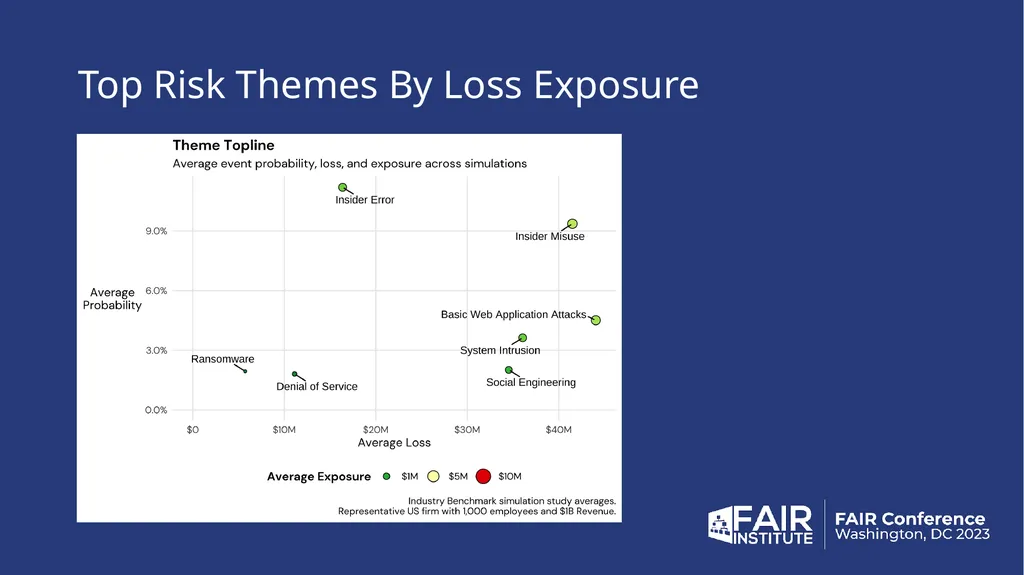
slide18. Top Risk Themes By Loss Exposure<br>
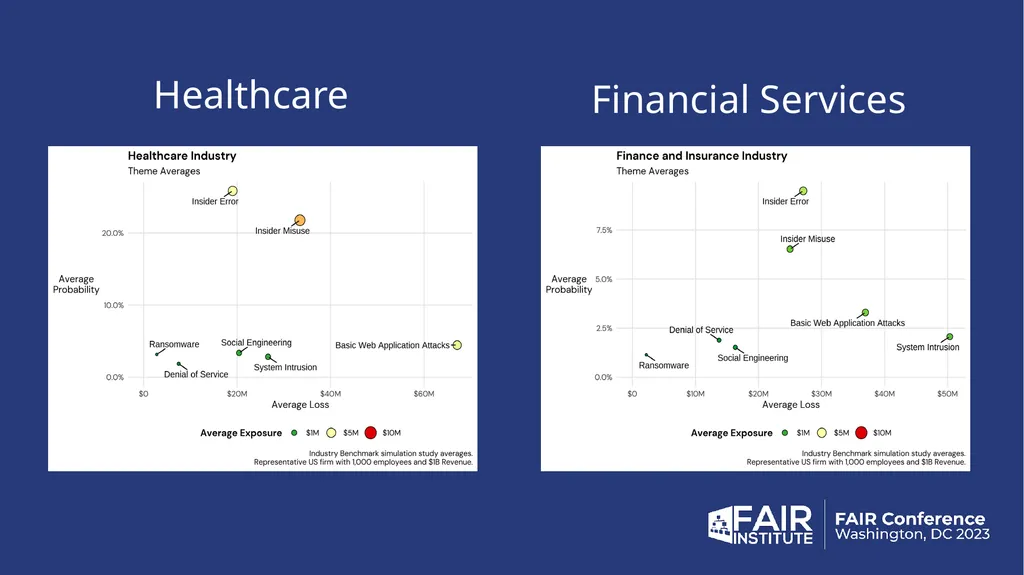
slide19. Healthcare Financial Services<br>
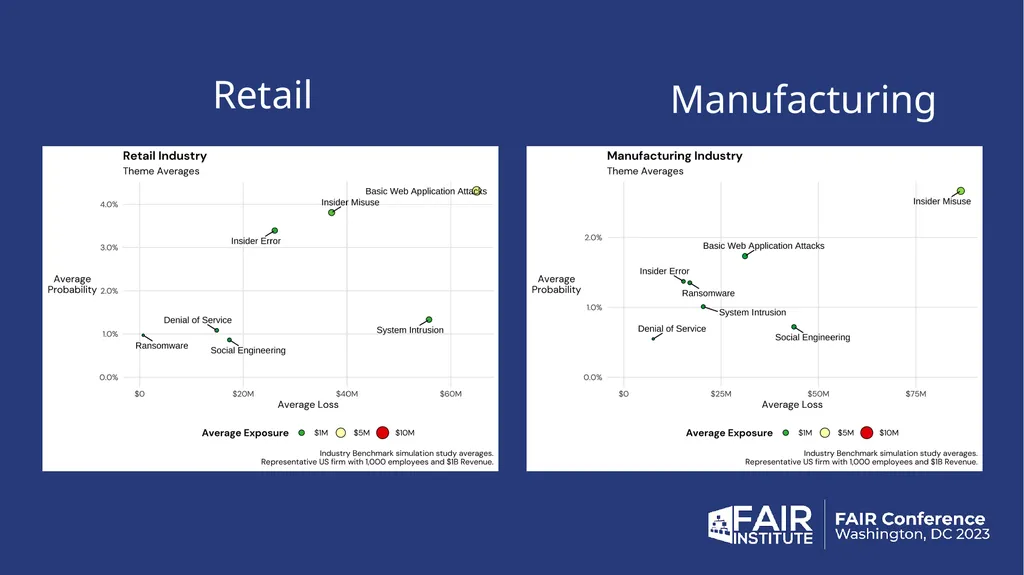
slide20. Retail Manufacturing<br>
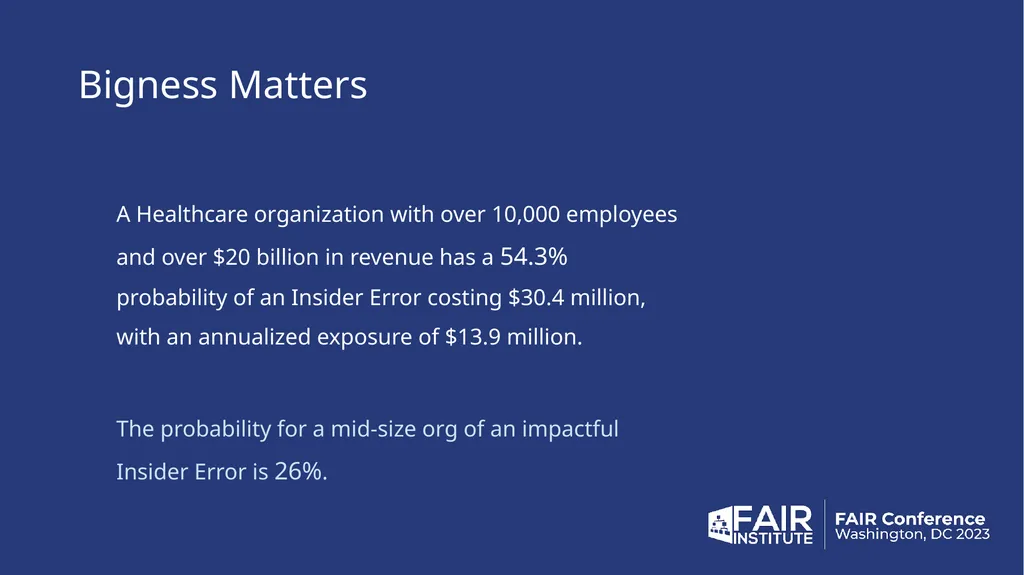
slide21. Bigness Matters A Healthcare organization with over 10,000 employees and over $20 billion in revenue has a 54.3% probability of an Insider Error costing $30.4 million, with an annualized exposure of $13.9 million.
The probability for a mid-size org of an impactful Insider Error is 26%.<br>
slide22. Bonus - Top Risk Scenarios by Industry Healthcare Providers
Ransomware leading to PII/PHI data loss (Electronic Medical Records)
Cyber criminals exfiltrating patient data via Third Party APIs
Insider Error leads to data exposure
Insider Error leads to outage of critical system(s)
Ransomware causes systems outage<br>
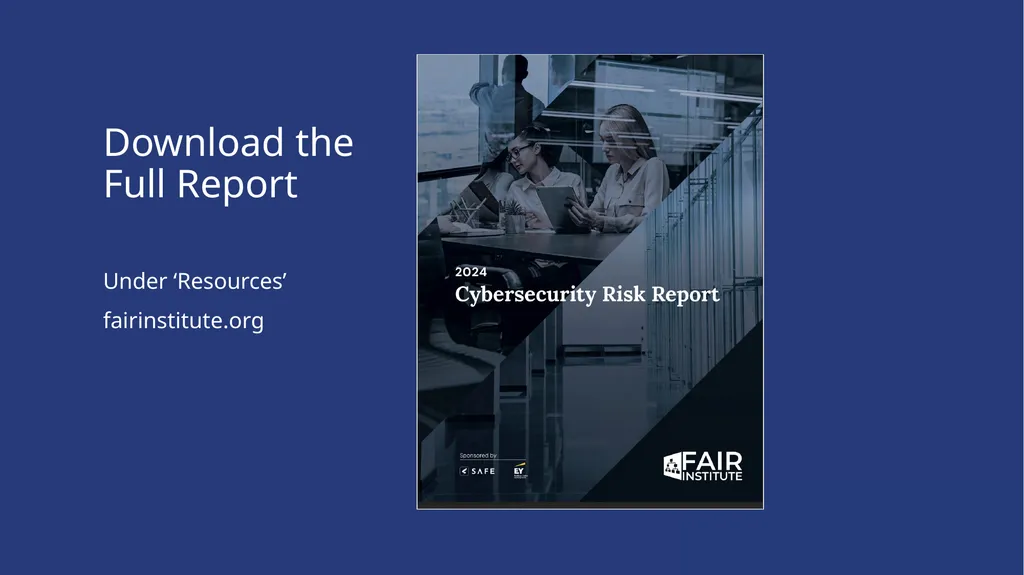
slide23. Download the Full Report
Under ‘Resources’ fairinstitute.org<br>
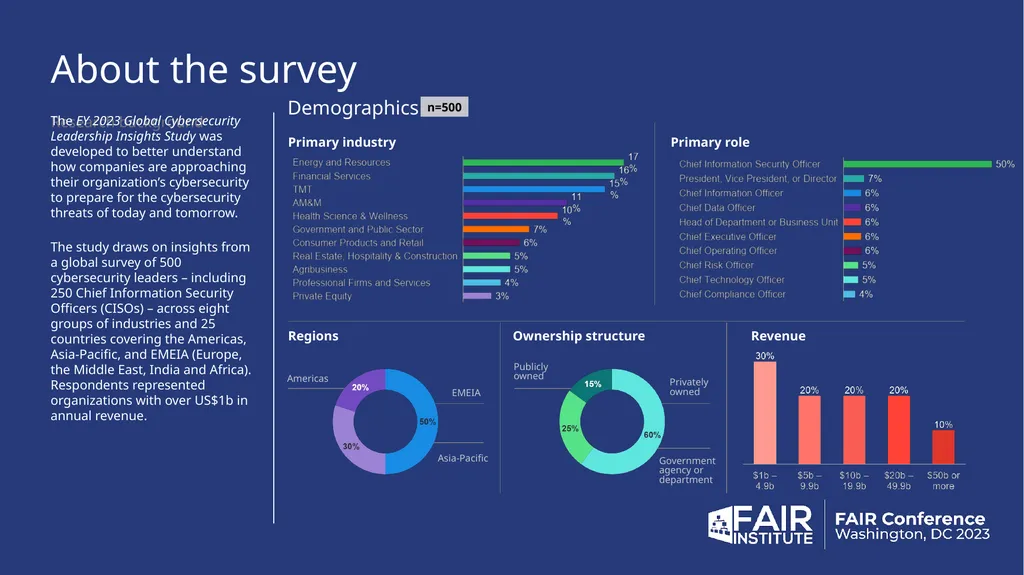
slide25. Research background About the survey The EY 2023 Global Cybersecurity Leadership Insights Study was developed to better understand how companies are approaching their organization’s cybersecurity to prepare for the cybersecurity threats of today and tomorrow.
The study draws on insights from a global survey of 500 cybersecurity leaders – including 250 Chief Information Security Officers (CISOs) – across eight groups of industries and 25 countries covering the Americas, Asia-Pacific, and EMEIA (Europe, the Middle East, India and Africa). Respondents represented organizations with over US$1b in annual revenue. n=500 Demographics Primary industry Primary role EMEIA Americas Asia-Pacific Regions Ownership structure Revenue Privately owned Publicly owned Government agency or department<br>
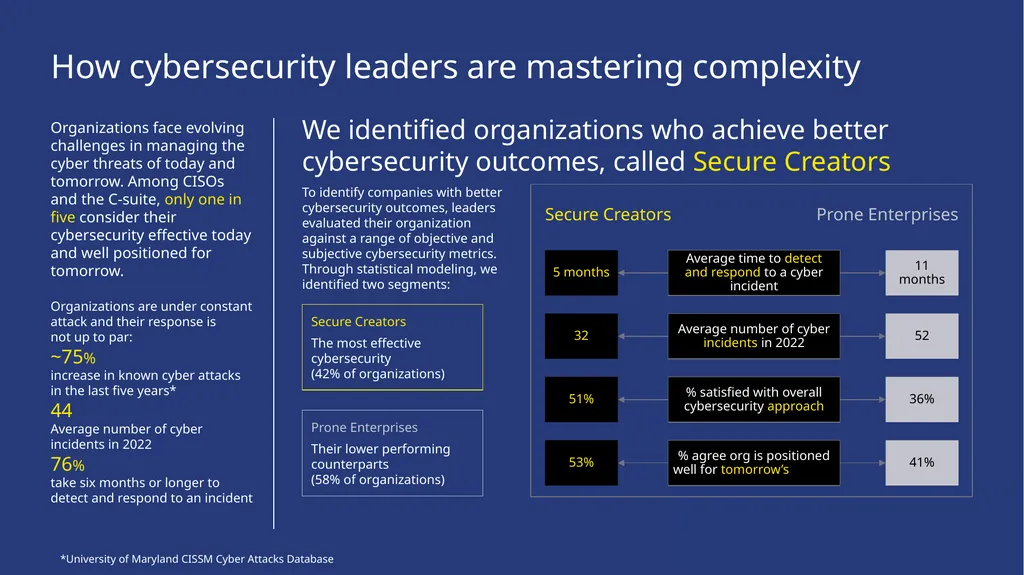
slide26. How cybersecurity leaders are mastering complexity Organizations face evolving challenges in managing the cyber threats of today and tomorrow. Among CISOs and the C-suite, only one in five consider their cybersecurity effective today and well positioned for tomorrow.
Organizations are under constant attack and their response is not up to par:
~75%
increase in known cyber attacks in the last five years*
44
Average number of cyber incidents in 2022
76%
take six months or longer to detect and respond to an incident We identified organizations who achieve better cybersecurity outcomes, called Secure Creators To identify companies with better cybersecurity outcomes, leaders evaluated their organization against a range of objective and subjective cybersecurity metrics. Through statistical modeling, we identified two segments: Secure Creators
The most effective cybersecurity (42% of organizations) Prone Enterprises
Their lower performing counterparts(58% of organizations) 5 months 11 months 32 52 51% 36% 53% 41% Average time to detect and respond to a cyber incident Average number of cyber incidents in 2022 % satisfied with overall cybersecurity approach % agree org is positioned well for tomorrow’s threats Secure Creators Prone Enterprises *University of Maryland CISSM Cyber Attacks Database<br>
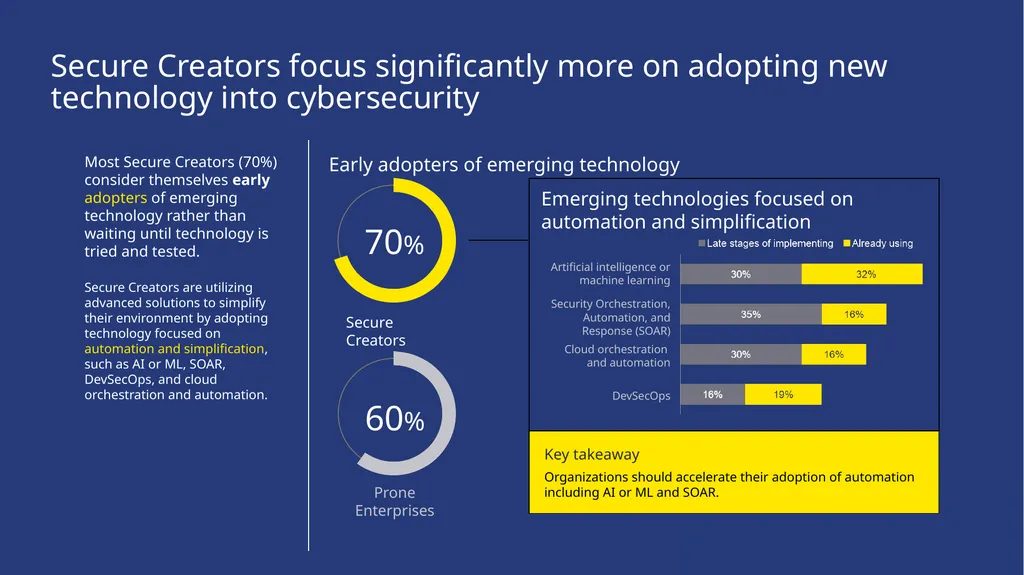
slide27. Secure Creators focus significantly more on adopting new technology into cybersecurity Most Secure Creators (70%) consider themselves early adopters of emerging technology rather than waiting until technology is tried and tested.
Secure Creators are utilizing advanced solutions to simplify their environment by adopting technology focused on automation and simplification, such as AI or ML, SOAR, DevSecOps, and cloud orchestration and automation. 70% 60% Early adopters of emerging technology Secure Creators Prone Enterprises Emerging technologies focused on automation and simplification Artificial intelligence or machine learning Security Orchestration, Automation, and Response (SOAR) Cloud orchestration and automation DevSecOps Key takeaway
Organizations should accelerate their adoption of automation including AI or ML and SOAR.<br>
slide28. Download the Full Report https://www.ey.com/en_gl/consulting/is-your-greatest-risk-the-complexity-of-your-cyber-strategy<br>
slide29. Appendix<br>
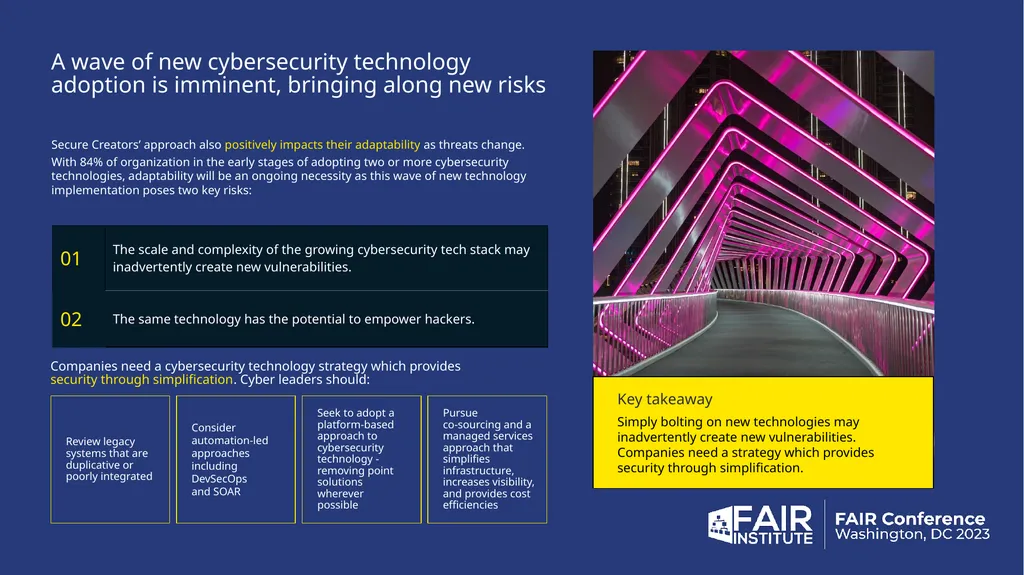
slide30. A wave of new cybersecurity technology adoption is imminent, bringing along new risks Secure Creators’ approach also positively impacts their adaptability as threats change.
With 84% of organization in the early stages of adopting two or more cybersecurity technologies, adaptability will be an ongoing necessity as this wave of new technology implementation poses two key risks: Review legacy systems that are duplicative or poorly integrated Consider automation-led approaches including DevSecOps and SOAR Seek to adopt a platform-based approach to cybersecurity technology - removing point solutions wherever possible Pursue co-sourcing and a managed services approach that simplifies infrastructure, increases visibility, and provides cost efficiencies Companies need a cybersecurity technology strategy which provides security through simplification. Cyber leaders should: Key takeaway
Simply bolting on new technologies may inadvertently create new vulnerabilities. Companies need a strategy which provides security through simplification.<br>
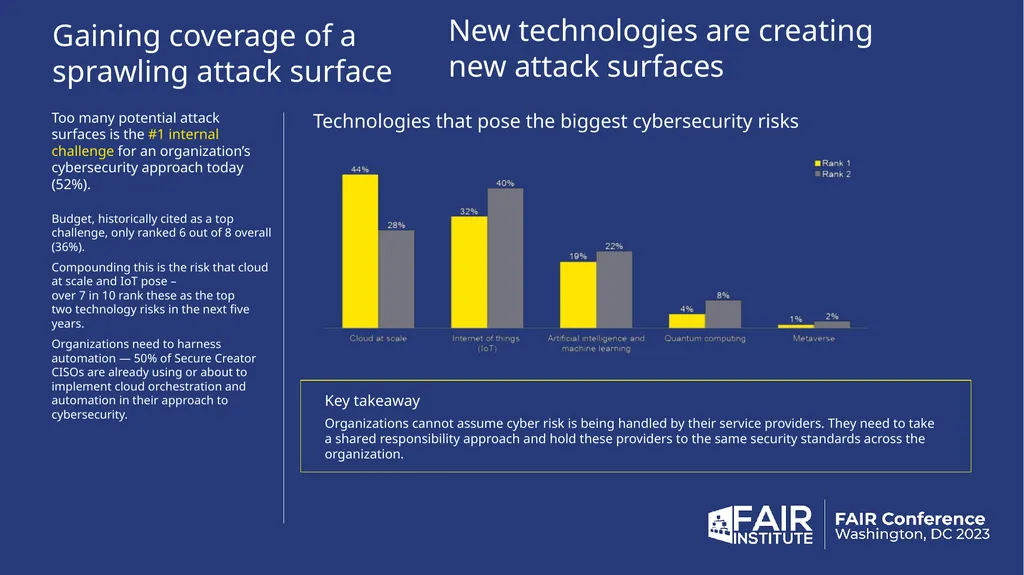
slide31. Gaining coverage of a sprawling attack surface New technologies are creating new attack surfaces Too many potential attack surfaces is the #1 internal challenge for an organization’s cybersecurity approach today (52%).
Budget, historically cited as a top challenge, only ranked 6 out of 8 overall (36%).
Compounding this is the risk that cloud at scale and IoT pose – over 7 in 10 rank these as the top two technology risks in the next five years.
Organizations need to harness automation — 50% of Secure Creator CISOs are already using or about to implement cloud orchestration and automation in their approach to cybersecurity. Key takeaway
Organizations cannot assume cyber risk is being handled by their service providers. They need to take a shared responsibility approach and hold these providers to the same security standards across the organization. Technologies that pose the biggest cybersecurity risks<br>
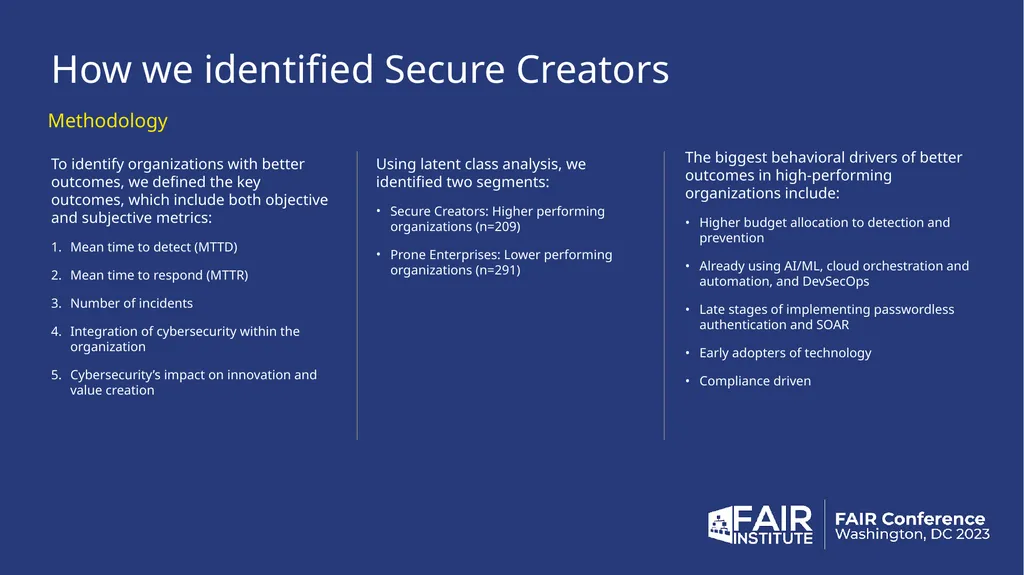
slide32. How we identified Secure Creators To identify organizations with better outcomes, we defined the key outcomes, which include both objective and subjective metrics:
Mean time to detect (MTTD)
Mean time to respond (MTTR)
Number of incidents
Integration of cybersecurity within the organization
Cybersecurity’s impact on innovation and value creation Using latent class analysis, we identified two segments:
Secure Creators: Higher performing organizations (n=209)
Prone Enterprises: Lower performing organizations (n=291) The biggest behavioral drivers of better outcomes in high-performing organizations include:
Higher budget allocation to detection and prevention
Already using AI/ML, cloud orchestration and automation, and DevSecOps
Late stages of implementing passwordless authentication and SOAR
Early adopters of technology
Compliance driven Methodology<br>

The Data behind the Data & EY Insights Sponsored by SAFE Security, EY Ben Gowan, Data Scientist, Safe Security
Carolyn Schreiber, Principal, Advisory | Risk | Cybersecurity<br>
slide2. Purposeful Benchmarks Answers the questions
What’s my risk of key cyber events in the next 12 months?
How much will it cost me if it does?
How do I compare to my industry in general?
Using data from
Real scans, Real Events, Real Losses
Respected industry sources and vendors (DBIR/VCDB, Advisen)
Almost 10 Billion iterations!
Value provided
Instantly, without onerous research and/or training
Consistently and coherently at scale<br>
slide3. Data Drawn from Giants Probability Historical security scan and event data
General Annual Event Probability
Bayesian Logistic Regression Theme DBIR Incident Classification patterns
VCDB scoped prevalence
Beta regression Loss Advisen data loss modeling
Four FAIR forms of loss, independent, with secondary loss probabilities
Econometric, log-log, penalized regressions<br>
slide4. Show Me The Data<br>
slide5. Probability Key Drivers<br>
slide6. Probability Key Drivers<br>
slide7. Probability Key Drivers<br>
slide8. Probability Key Drivers<br>
slide9. Probability Key Drivers<br>
slide10. Loss Key Drivers<br>
slide11. Loss Key Drivers<br>
slide12. Loss Key Drivers<br>
slide13. Loss Key Drivers<br>
slide14. Loss Key Drivers<br>
slide15. All Drivers<br>
slide16. Insights<br>
slide17. Top Industries By Loss Exposure<br>
slide18. Top Risk Themes By Loss Exposure<br>
slide19. Healthcare Financial Services<br>
slide20. Retail Manufacturing<br>
slide21. Bigness Matters A Healthcare organization with over 10,000 employees and over $20 billion in revenue has a 54.3% probability of an Insider Error costing $30.4 million, with an annualized exposure of $13.9 million.
The probability for a mid-size org of an impactful Insider Error is 26%.<br>
slide22. Bonus - Top Risk Scenarios by Industry Healthcare Providers
Ransomware leading to PII/PHI data loss (Electronic Medical Records)
Cyber criminals exfiltrating patient data via Third Party APIs
Insider Error leads to data exposure
Insider Error leads to outage of critical system(s)
Ransomware causes systems outage<br>
slide23. Download the Full Report
Under ‘Resources’ fairinstitute.org<br>
slide25. Research background About the survey The EY 2023 Global Cybersecurity Leadership Insights Study was developed to better understand how companies are approaching their organization’s cybersecurity to prepare for the cybersecurity threats of today and tomorrow.
The study draws on insights from a global survey of 500 cybersecurity leaders – including 250 Chief Information Security Officers (CISOs) – across eight groups of industries and 25 countries covering the Americas, Asia-Pacific, and EMEIA (Europe, the Middle East, India and Africa). Respondents represented organizations with over US$1b in annual revenue. n=500 Demographics Primary industry Primary role EMEIA Americas Asia-Pacific Regions Ownership structure Revenue Privately owned Publicly owned Government agency or department<br>
slide26. How cybersecurity leaders are mastering complexity Organizations face evolving challenges in managing the cyber threats of today and tomorrow. Among CISOs and the C-suite, only one in five consider their cybersecurity effective today and well positioned for tomorrow.
Organizations are under constant attack and their response is not up to par:
~75%
increase in known cyber attacks in the last five years*
44
Average number of cyber incidents in 2022
76%
take six months or longer to detect and respond to an incident We identified organizations who achieve better cybersecurity outcomes, called Secure Creators To identify companies with better cybersecurity outcomes, leaders evaluated their organization against a range of objective and subjective cybersecurity metrics. Through statistical modeling, we identified two segments: Secure Creators
The most effective cybersecurity (42% of organizations) Prone Enterprises
Their lower performing counterparts(58% of organizations) 5 months 11 months 32 52 51% 36% 53% 41% Average time to detect and respond to a cyber incident Average number of cyber incidents in 2022 % satisfied with overall cybersecurity approach % agree org is positioned well for tomorrow’s threats Secure Creators Prone Enterprises *University of Maryland CISSM Cyber Attacks Database<br>
slide27. Secure Creators focus significantly more on adopting new technology into cybersecurity Most Secure Creators (70%) consider themselves early adopters of emerging technology rather than waiting until technology is tried and tested.
Secure Creators are utilizing advanced solutions to simplify their environment by adopting technology focused on automation and simplification, such as AI or ML, SOAR, DevSecOps, and cloud orchestration and automation. 70% 60% Early adopters of emerging technology Secure Creators Prone Enterprises Emerging technologies focused on automation and simplification Artificial intelligence or machine learning Security Orchestration, Automation, and Response (SOAR) Cloud orchestration and automation DevSecOps Key takeaway
Organizations should accelerate their adoption of automation including AI or ML and SOAR.<br>
slide28. Download the Full Report https://www.ey.com/en_gl/consulting/is-your-greatest-risk-the-complexity-of-your-cyber-strategy<br>
slide29. Appendix<br>
slide30. A wave of new cybersecurity technology adoption is imminent, bringing along new risks Secure Creators’ approach also positively impacts their adaptability as threats change.
With 84% of organization in the early stages of adopting two or more cybersecurity technologies, adaptability will be an ongoing necessity as this wave of new technology implementation poses two key risks: Review legacy systems that are duplicative or poorly integrated Consider automation-led approaches including DevSecOps and SOAR Seek to adopt a platform-based approach to cybersecurity technology - removing point solutions wherever possible Pursue co-sourcing and a managed services approach that simplifies infrastructure, increases visibility, and provides cost efficiencies Companies need a cybersecurity technology strategy which provides security through simplification. Cyber leaders should: Key takeaway
Simply bolting on new technologies may inadvertently create new vulnerabilities. Companies need a strategy which provides security through simplification.<br>
slide31. Gaining coverage of a sprawling attack surface New technologies are creating new attack surfaces Too many potential attack surfaces is the #1 internal challenge for an organization’s cybersecurity approach today (52%).
Budget, historically cited as a top challenge, only ranked 6 out of 8 overall (36%).
Compounding this is the risk that cloud at scale and IoT pose – over 7 in 10 rank these as the top two technology risks in the next five years.
Organizations need to harness automation — 50% of Secure Creator CISOs are already using or about to implement cloud orchestration and automation in their approach to cybersecurity. Key takeaway
Organizations cannot assume cyber risk is being handled by their service providers. They need to take a shared responsibility approach and hold these providers to the same security standards across the organization. Technologies that pose the biggest cybersecurity risks<br>
slide32. How we identified Secure Creators To identify organizations with better outcomes, we defined the key outcomes, which include both objective and subjective metrics:
Mean time to detect (MTTD)
Mean time to respond (MTTR)
Number of incidents
Integration of cybersecurity within the organization
Cybersecurity’s impact on innovation and value creation Using latent class analysis, we identified two segments:
Secure Creators: Higher performing organizations (n=209)
Prone Enterprises: Lower performing organizations (n=291) The biggest behavioral drivers of better outcomes in high-performing organizations include:
Higher budget allocation to detection and prevention
Already using AI/ML, cloud orchestration and automation, and DevSecOps
Late stages of implementing passwordless authentication and SOAR
Early adopters of technology
Compliance driven Methodology<br>