
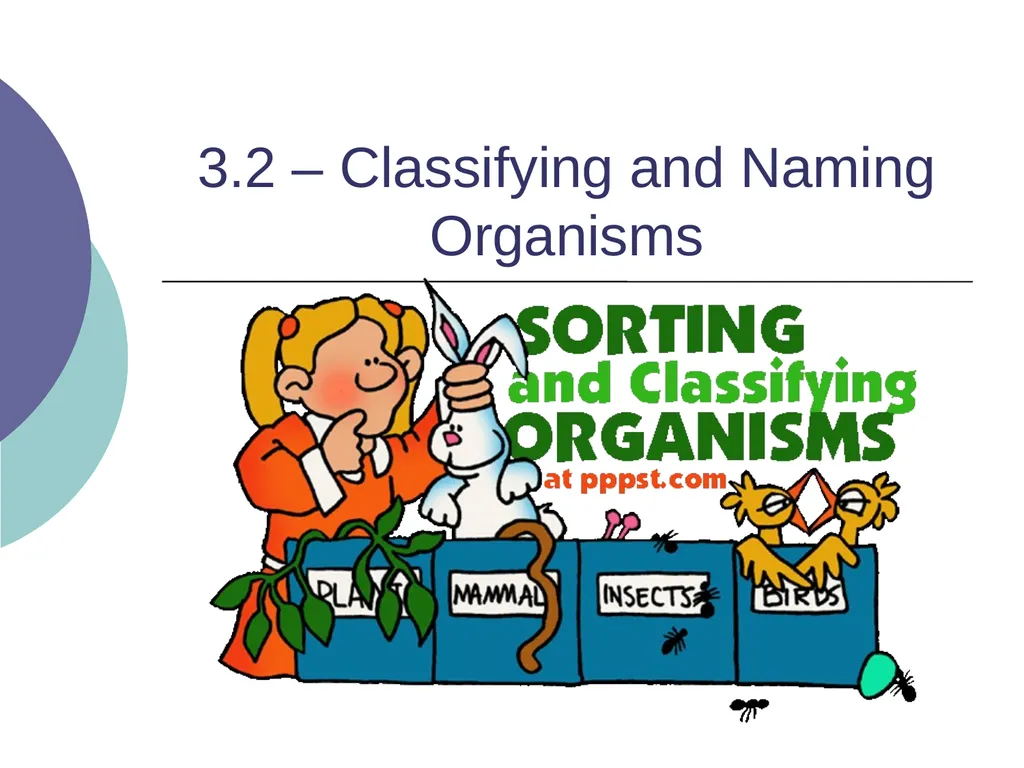
3.2 – Classifying and Naming Organisms The
Description: 3.2 Classifying and Naming Organisms The Classification of Organisms Taxonomy The classification of living things In the Past Aristotle put organisms into 2 large groups: Kingdom Plantae, Kingdom Animalia 1866 Ernst Haeckel Came up
Related Topics
Download Presentation
"3.2 – Classifying and Naming Organisms The" is the property of its rightful owner. Permission is granted to download and print the materials on this website for personal, non-commercial use only, and to display it on your personal computer provided you do not modify the materials and that you retain all copyright notices contained in the materials. By downloading content from our website, you accept the terms of this agreement.
Presentation Transcript
slide1. 3.2 – Classifying and Naming Organisms<br>
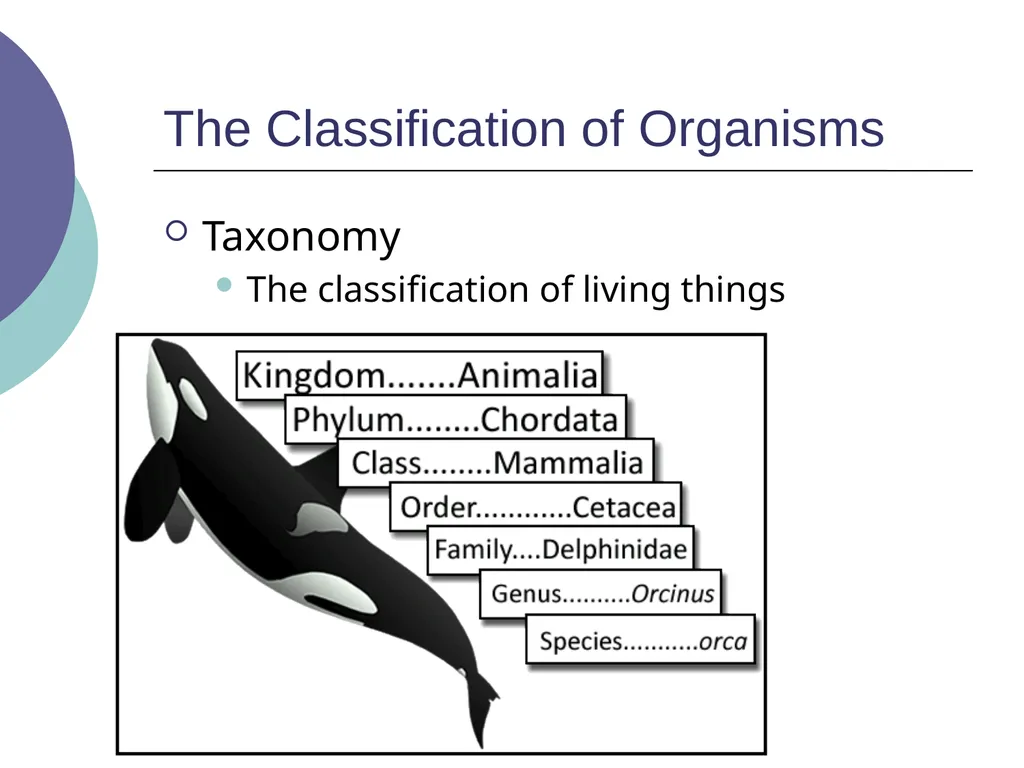
slide2. The Classification of Organisms Taxonomy
The classification of living things<br>
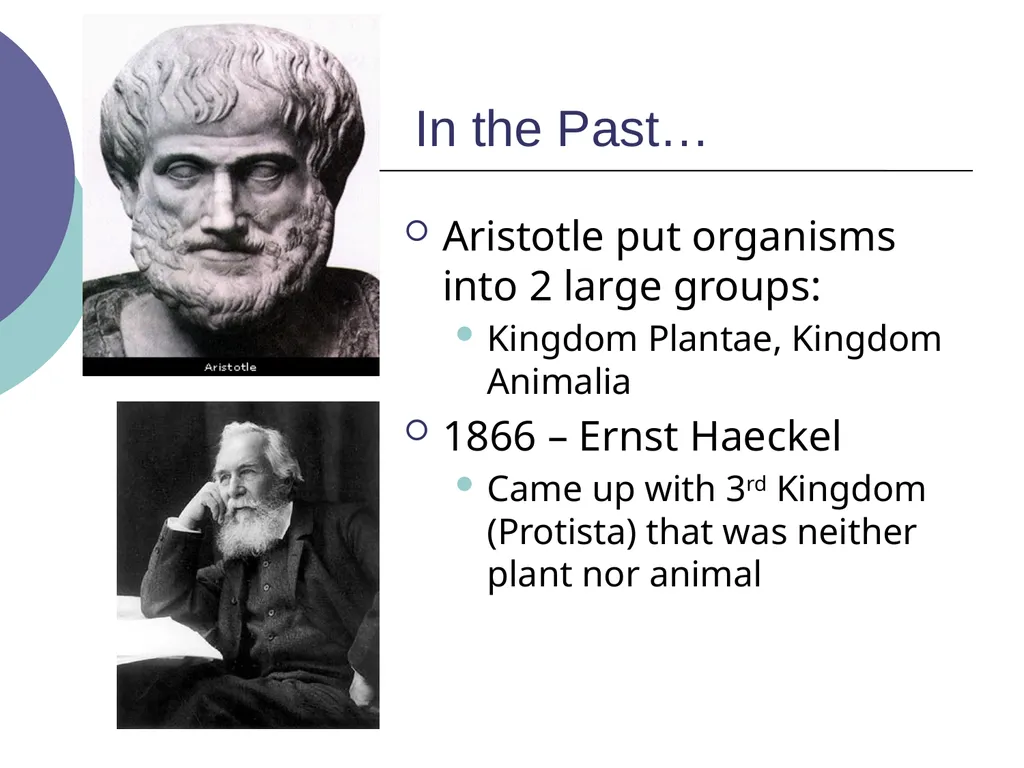
slide3. In the Past… Aristotle put organisms into 2 large groups:
Kingdom Plantae, Kingdom Animalia
1866 – Ernst Haeckel
Came up with 3rd Kingdom (Protista) that was neither plant nor animal<br>
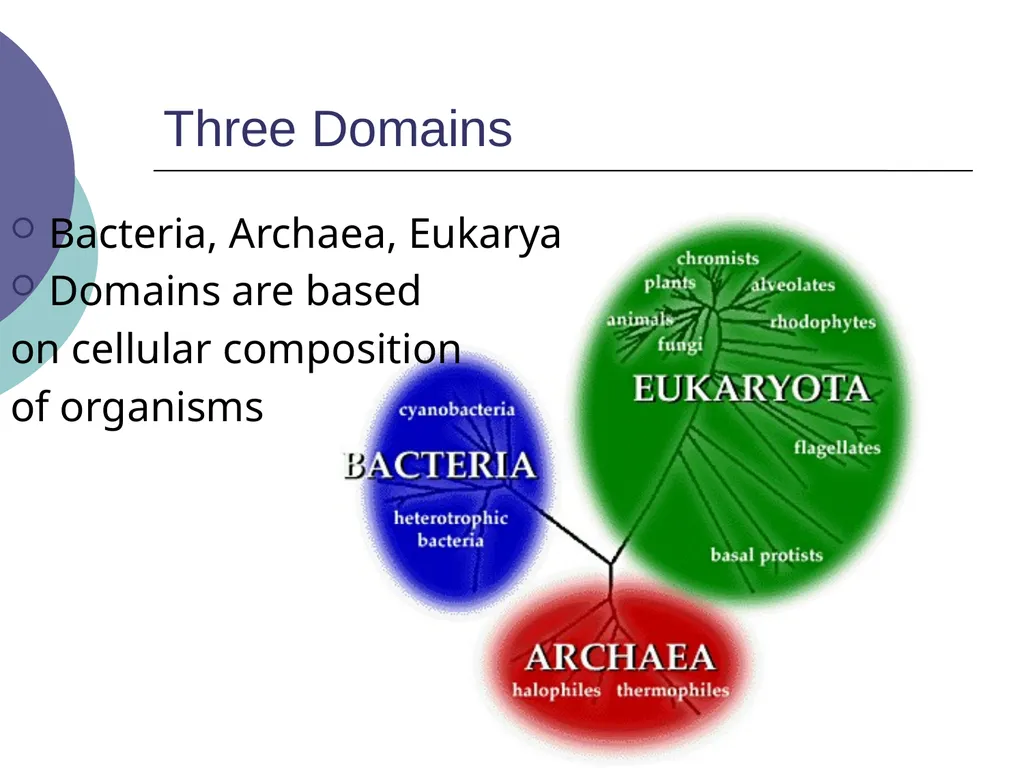
slide4. Three Domains Bacteria, Archaea, Eukarya
Domains are based
on cellular composition
of organisms<br>
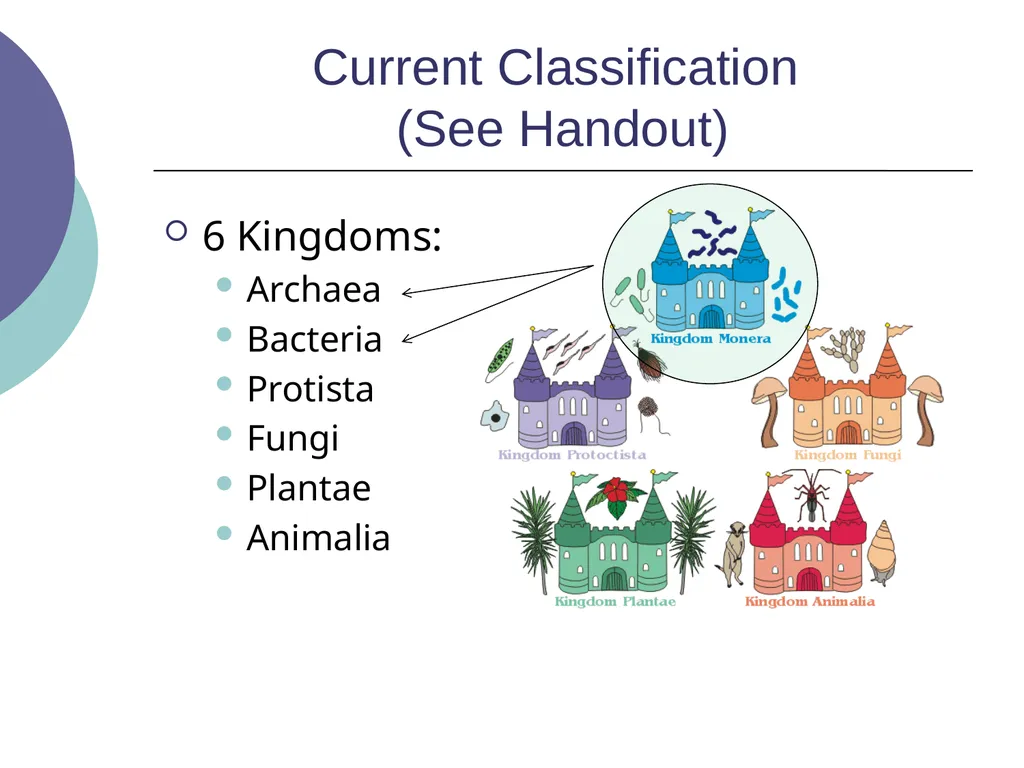
slide5. Current Classification (See Handout) 6 Kingdoms:
Archaea
Bacteria
Protista
Fungi
Plantae
Animalia<br>
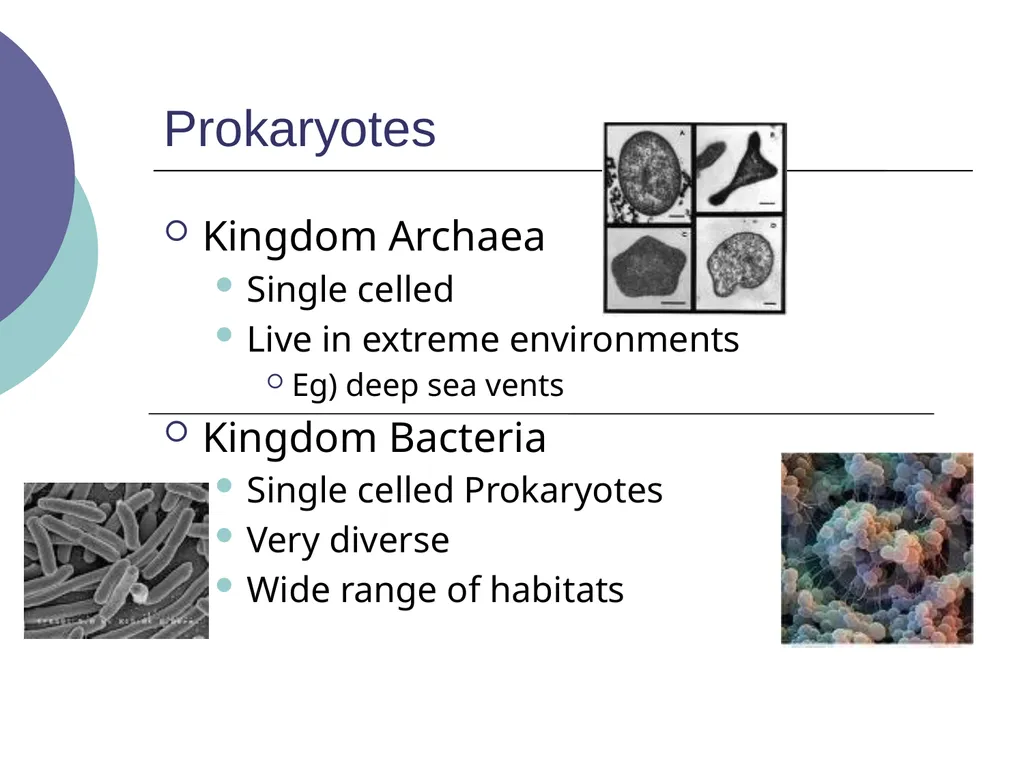
slide6. Prokaryotes Kingdom Archaea
Single celled
Live in extreme environments
Eg) deep sea vents
Kingdom Bacteria
Single celled Prokaryotes
Very diverse
Wide range of habitats<br>
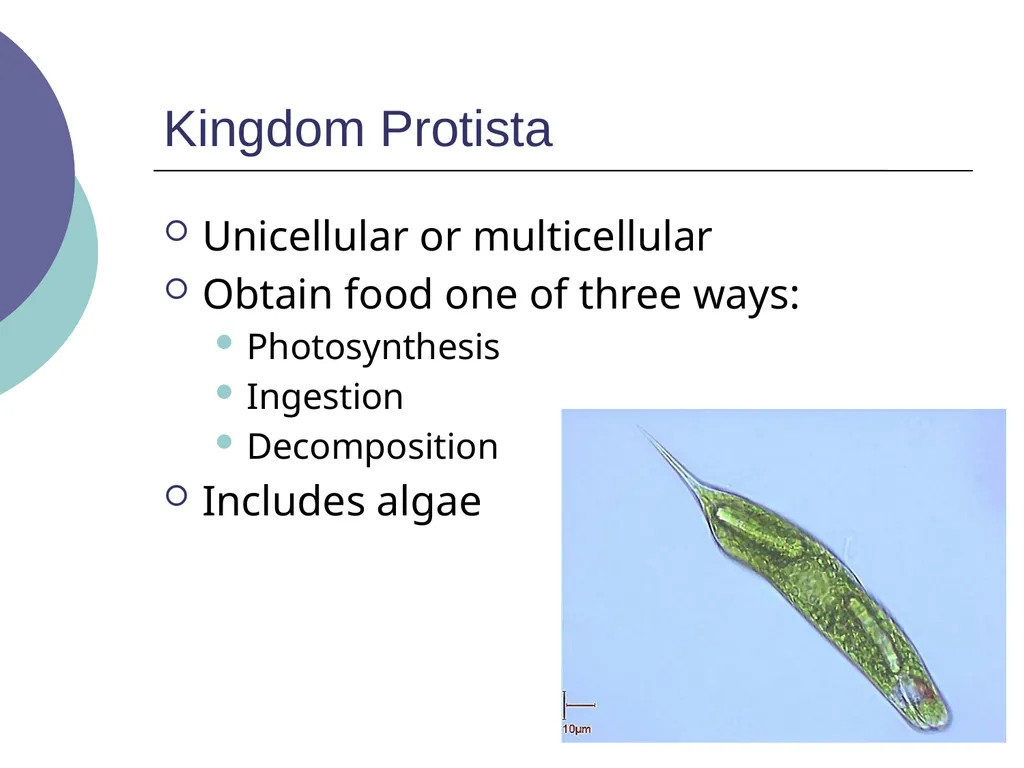
slide7. Kingdom Protista Unicellular or multicellular
Obtain food one of three ways:
Photosynthesis
Ingestion
Decomposition
Includes algae<br>
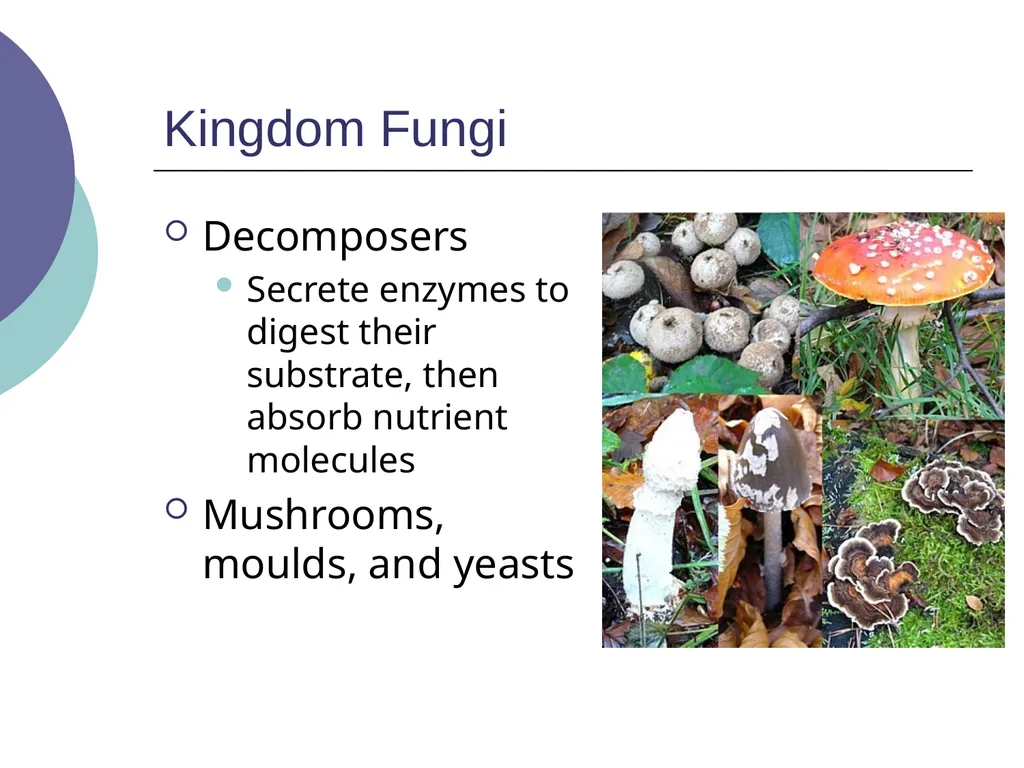
slide8. Kingdom Fungi Decomposers
Secrete enzymes to digest their substrate, then absorb nutrient molecules
Mushrooms, moulds, and yeasts<br>
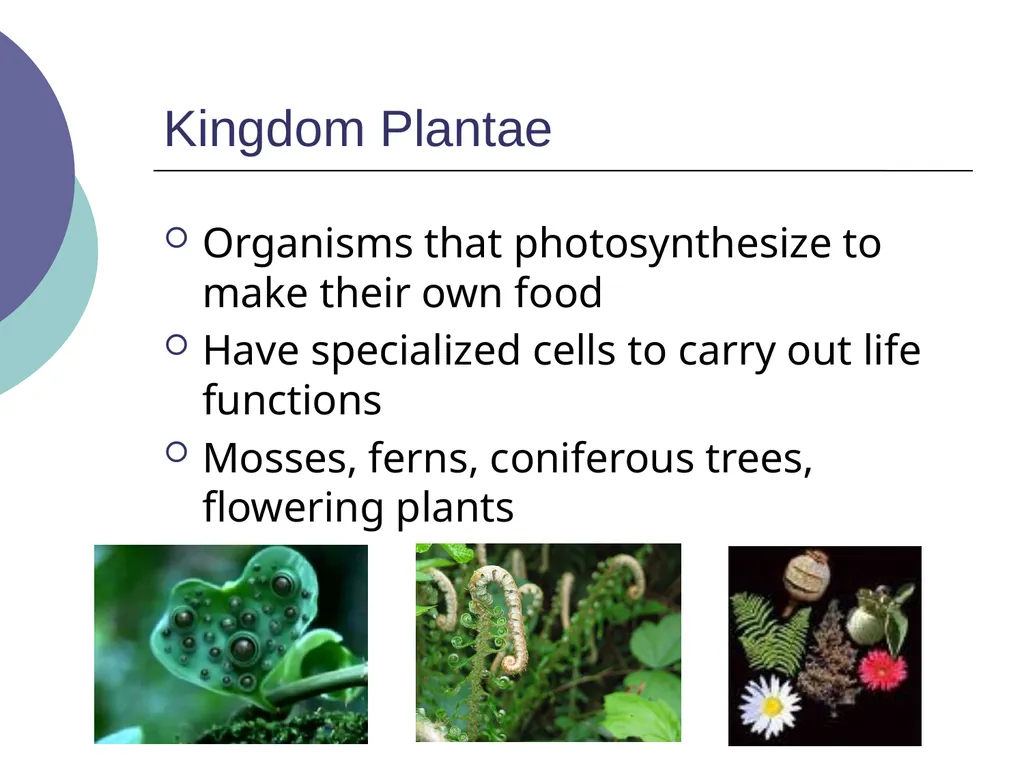
slide9. Kingdom Plantae Organisms that photosynthesize to make their own food
Have specialized cells to carry out life functions
Mosses, ferns, coniferous trees, flowering plants<br>
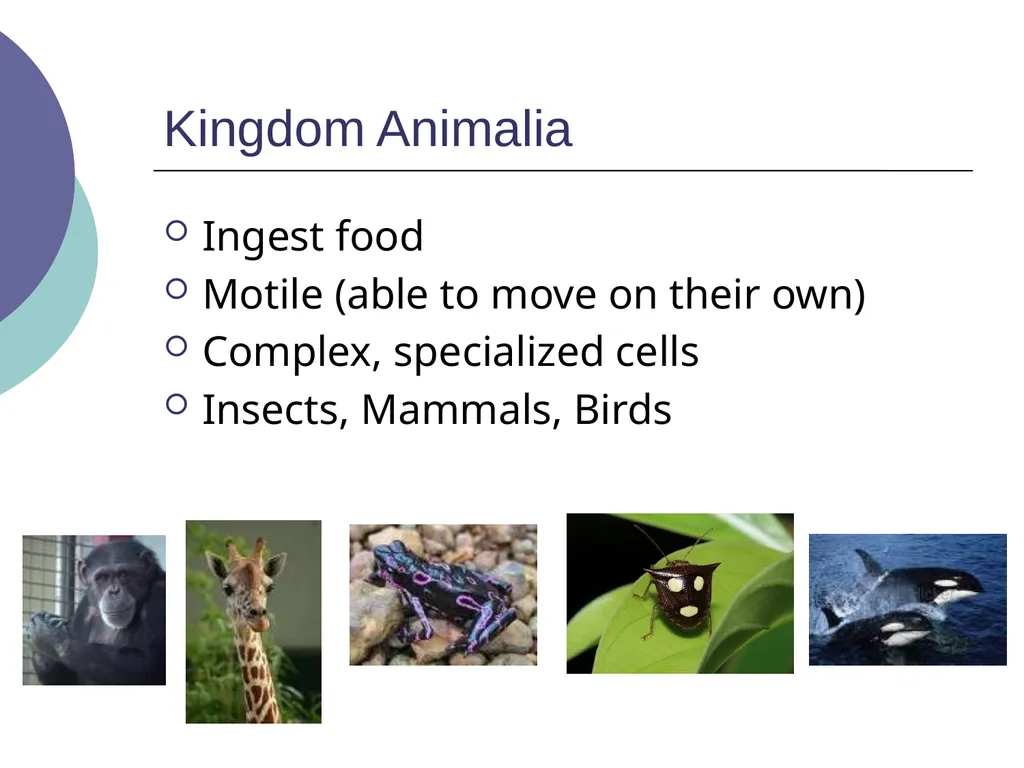
slide10. Kingdom Animalia Ingest food
Motile (able to move on their own)
Complex, specialized cells
Insects, Mammals, Birds<br>
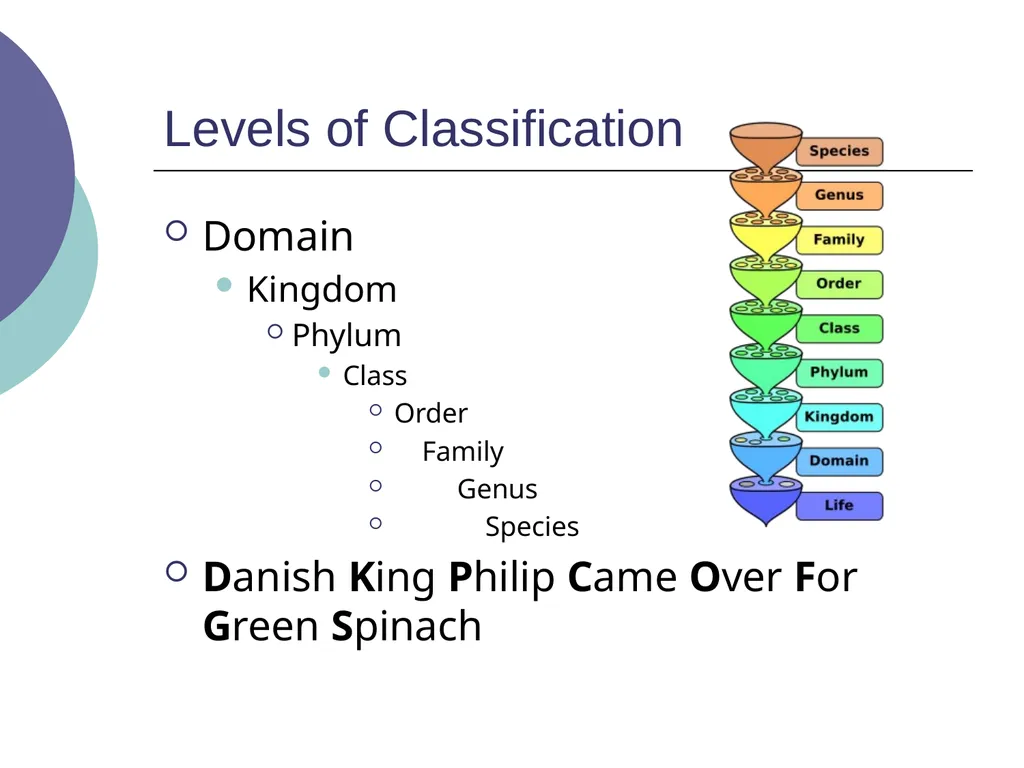
slide11. Levels of Classification Domain
Kingdom
Phylum
Class
Order
Family
Genus
Species
Danish King Philip Came Over For Green Spinach<br>
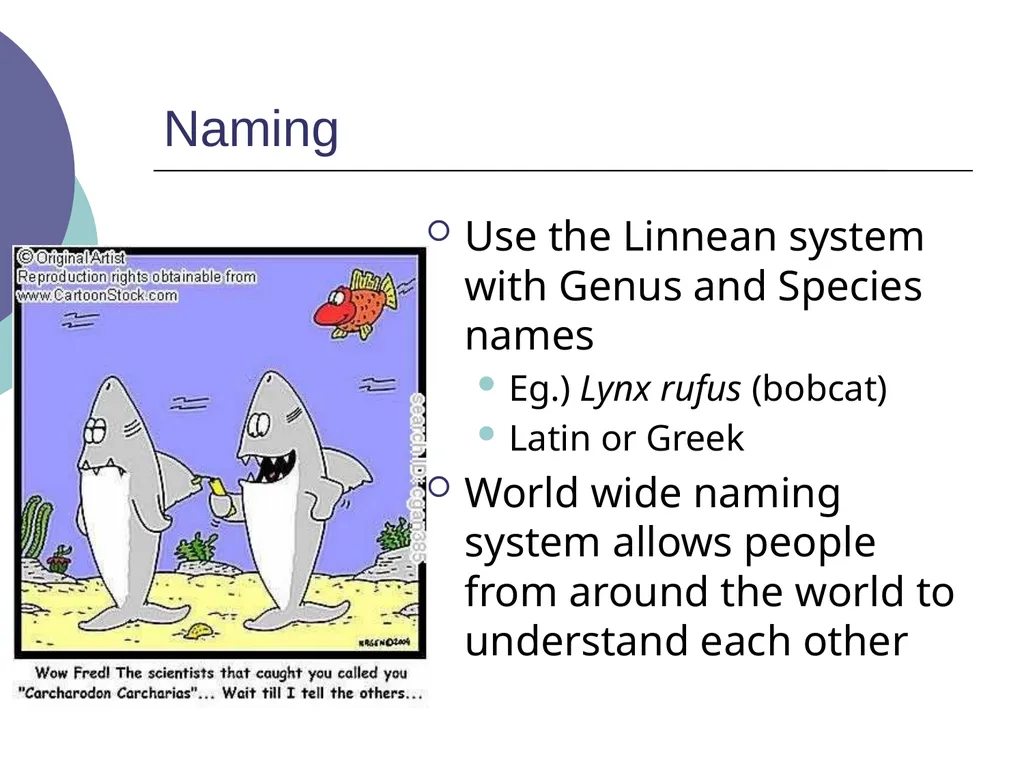
slide12. Naming Use the Linnean system with Genus and Species names
Eg.) Lynx rufus (bobcat)
Latin or Greek
World wide naming system allows people from around the world to understand each other<br>
slide13. Dichotomous Keys Multi-step identification keys
Two choices at each step
Moves from general to more specific<br>
slide2. The Classification of Organisms Taxonomy
The classification of living things<br>
slide3. In the Past… Aristotle put organisms into 2 large groups:
Kingdom Plantae, Kingdom Animalia
1866 – Ernst Haeckel
Came up with 3rd Kingdom (Protista) that was neither plant nor animal<br>
slide4. Three Domains Bacteria, Archaea, Eukarya
Domains are based
on cellular composition
of organisms<br>
slide5. Current Classification (See Handout) 6 Kingdoms:
Archaea
Bacteria
Protista
Fungi
Plantae
Animalia<br>
slide6. Prokaryotes Kingdom Archaea
Single celled
Live in extreme environments
Eg) deep sea vents
Kingdom Bacteria
Single celled Prokaryotes
Very diverse
Wide range of habitats<br>
slide7. Kingdom Protista Unicellular or multicellular
Obtain food one of three ways:
Photosynthesis
Ingestion
Decomposition
Includes algae<br>
slide8. Kingdom Fungi Decomposers
Secrete enzymes to digest their substrate, then absorb nutrient molecules
Mushrooms, moulds, and yeasts<br>
slide9. Kingdom Plantae Organisms that photosynthesize to make their own food
Have specialized cells to carry out life functions
Mosses, ferns, coniferous trees, flowering plants<br>
slide10. Kingdom Animalia Ingest food
Motile (able to move on their own)
Complex, specialized cells
Insects, Mammals, Birds<br>
slide11. Levels of Classification Domain
Kingdom
Phylum
Class
Order
Family
Genus
Species
Danish King Philip Came Over For Green Spinach<br>
slide12. Naming Use the Linnean system with Genus and Species names
Eg.) Lynx rufus (bobcat)
Latin or Greek
World wide naming system allows people from around the world to understand each other<br>
slide13. Dichotomous Keys Multi-step identification keys
Two choices at each step
Moves from general to more specific<br>