4th Manfred Lachs International Conference on

Published  . 0 views
↓ Download
4th Manfred Lachs International Conference on
1 / 1
4th Manfred Lachs International Conference on - slide 1 of 7 4th Manfred Lachs International Conference on - slide 2 of 7 4th Manfred Lachs International Conference on - slide 3 of 7 4th Manfred Lachs International Conference on - slide 4 of 7 4th Manfred Lachs International Conference on - slide 5 of 7 4th Manfred Lachs International Conference on - slide 6 of 7 4th Manfred Lachs International Conference on - slide 7 of 7
Description: 4th Manfred Lachs International Conference on Conflicts in Space and the Rule of Law 28th May 2016, Montreal, Canada Dr. Tare Brisibe Outer Space and the Law of Weaponry Outline Objectives Humanitarian Values and Peaceful Use

Related Topics

Download Presentation

"4th Manfred Lachs International Conference on" is the property of its rightful owner. Permission is granted to download and print the materials on this website for personal, non-commercial use only, and to display it on your personal computer provided you do not modify the materials and that you retain all copyright notices contained in the materials. By downloading content from our website, you accept the terms of this agreement.

Presentation Transcript

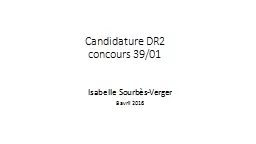
slide1. 4th Manfred Lachs International Conference on Conflicts in Space and the Rule of Law 28th May 2016, Montreal, Canada Dr. Tare Brisibe

Outer Space and the Law of Weaponry<br>
slide2. Outline Objectives
Humanitarian Values and Peaceful Use
Particularities
Concluding Remarks<br>
slide3. Objectives International Space Law
The common interest of humanity in furthering the peaceful use of outer space

Law of Weaponry
Protect humanitarian values<br>
slide4. Protect Humanitarian Values Customary Principles of Weapons law

The rights of the parties to an armed conflict to choose methods or means of warfare is not unlimited Art. 35 (1) Additional Protocol I, 1977 – Geneva Conventions, 1949
Prohibited to employ weapons, projectiles and material and methods of warfare of a nature to cause superfluous injury or unnecessary suffering Art. 35 (2) Additional Protocol I, 1977 - Geneva Conventions, 1949
Prohibited to employ weapons, means or methods of warfare which are indiscriminate by nature Art. 51 (4) Additional Protocol I, 1977 – Geneva Conventions, 1949

Treaty Provisions<br>
slide5. Common Interest and Peaceful Use …”the common interest of mankind as a whole in …furthering the peaceful use of outer space …. [or] …the progress of the exploration and use of outer space for peaceful purposes ”. General Assembly Resolutions: 1472 (XIV) 1959; 1962 (XVIII) 1963; 1721 (XVI) 1961; Outer Space Treaty 1967; Liability Convention 1972; Registration Convention 1976; Art. 3 Moon Agreement 1982

“The moon and other celestial bodies shall be used by all States Parties to the Treaty exclusively for peaceful purposes.” Art. IV Outer Space Treaty, 1967<br>
slide6. Particularities General Application Outer Space Activities Human Rights
Protecting the Environment
Exceptions to and restrictions on the Use or threat of Force Disarmament intertwined with law of weaponry
Politico-Military Considerations
Doctrinal objectives for maintaining peace and security
Obligations associated with weapons reviews
Legality of weapons in the absence of prohibitions
Non-State actors<br>
slide7. Concluding Remarks … “States Parties to the Treaty shall carry on activities in the exploration and use of outer space, including the moon and other celestial bodies, in accordance with international law, including the Charter of the United Nations…” Art. III Outer Space Treaty, 1967

….the intrinsically humanitarian character [of the established principles and rules of humanitarian law applicable in armed conflict] permeates the entire law of armed conflict and applies to all forms of warfare and to all kinds of weapons, those of the past, those of the present and those of the future”. International Court of Justice, Legality of the Threat or Use of Nuclear Weapons, Advisory Opinion, 1996

…”the usefulness of an analogy is of course conditioned by the experience acquired in operating a given rule or institution. But just as obviously, it is only when it really fits the new situation that it offers assistance – sometimes in the application of an existing rule mutatis mutandis, more often in pointing the way to a new rule. It is in any case a serious mistake to employ analogy for the purpose of bringing a new developing branch of international law within the purview of traditional systems inseparable from institutions whose own transmutation is in progress. Analogy must be used creatively”. Judge Manfred Lachs, 1972<br>