
6-5 Conditions for Rhombuses, Rectangles, and
Description: 6-5 Conditions for Rhombuses, Rectangles, and Squares Theorem 6-16 If the diagonals of a parallelogram are perpendicular, then the parallelogram is a rhombus Theorem 6-17 If one diagonal of a parallelogram bisects a pair of opposite angles,
Related Topics
Download Presentation
"6-5 Conditions for Rhombuses, Rectangles, and" is the property of its rightful owner. Permission is granted to download and print the materials on this website for personal, non-commercial use only, and to display it on your personal computer provided you do not modify the materials and that you retain all copyright notices contained in the materials. By downloading content from our website, you accept the terms of this agreement.
Presentation Transcript
slide1. 6-5
Conditions for Rhombuses, Rectangles, and Squares<br>
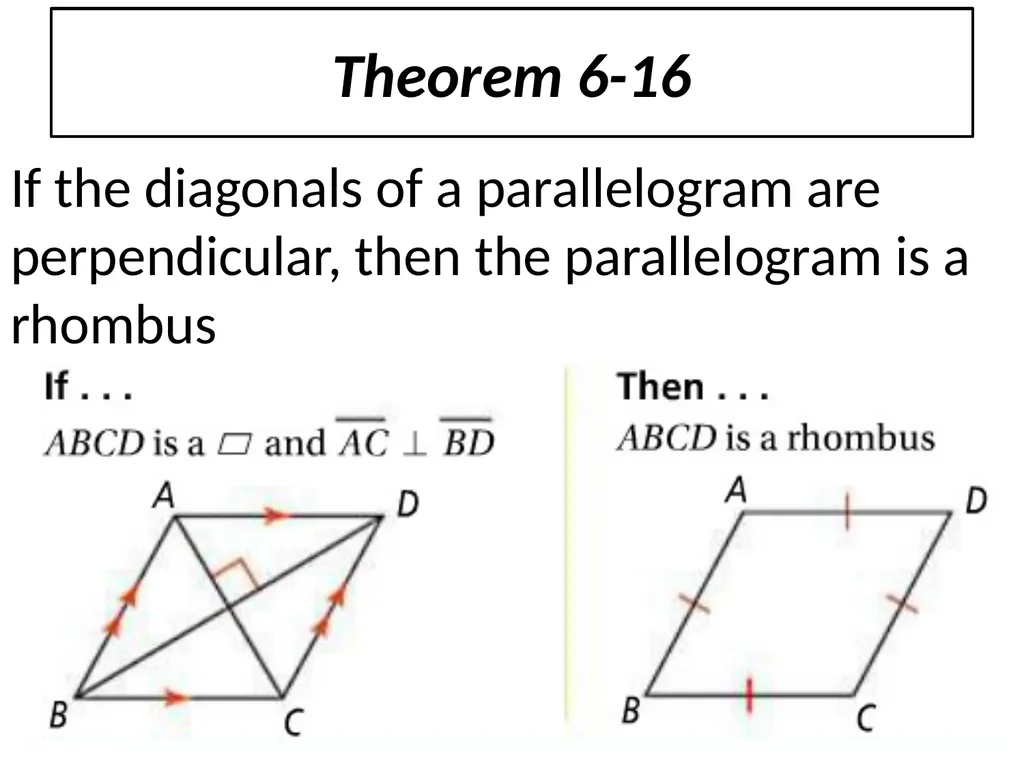
slide2. Theorem 6-16 If the diagonals of a parallelogram are perpendicular, then the parallelogram is a rhombus<br>
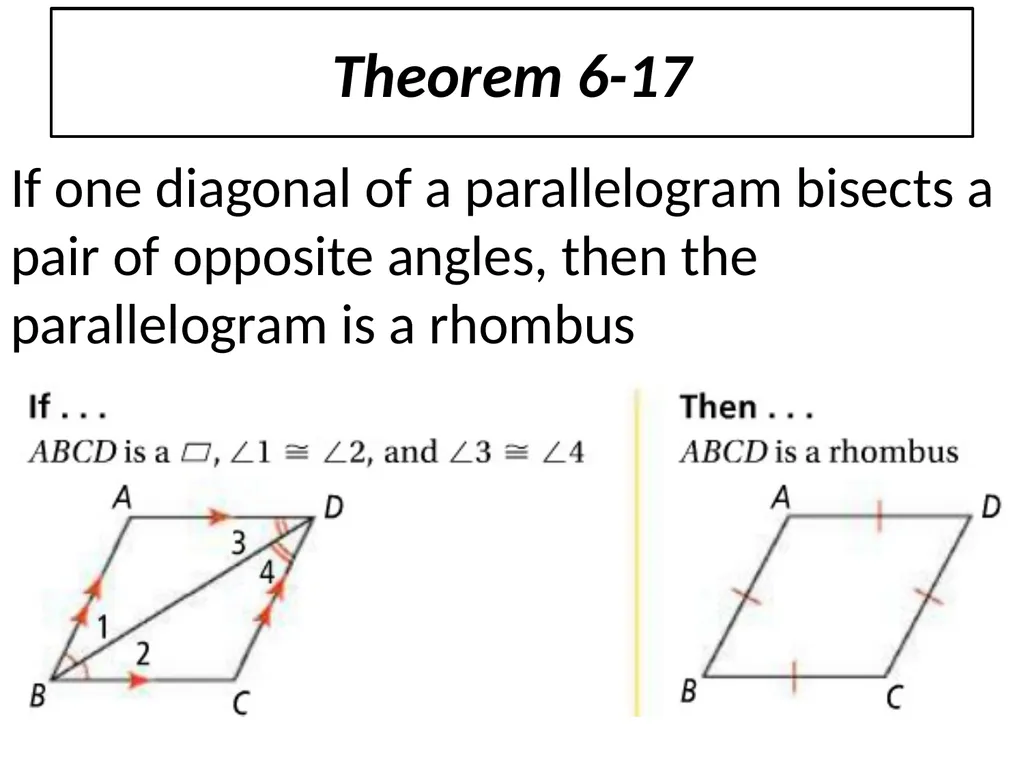
slide3. Theorem 6-17 If one diagonal of a parallelogram bisects a pair of opposite angles, then the parallelogram is a rhombus<br>
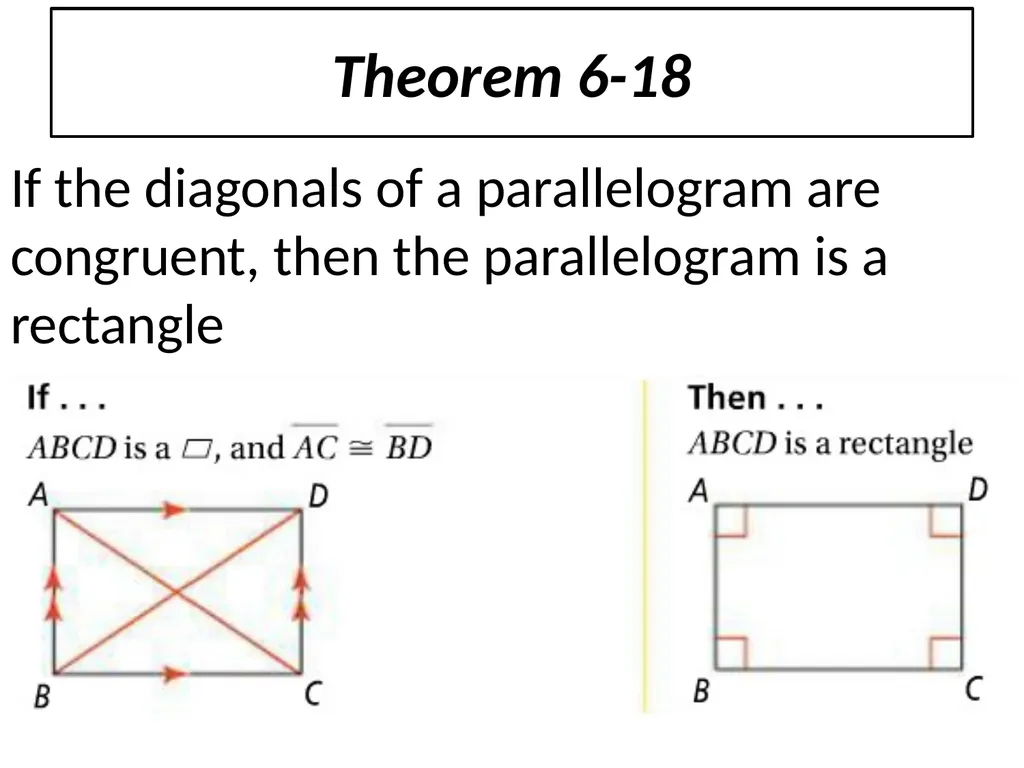
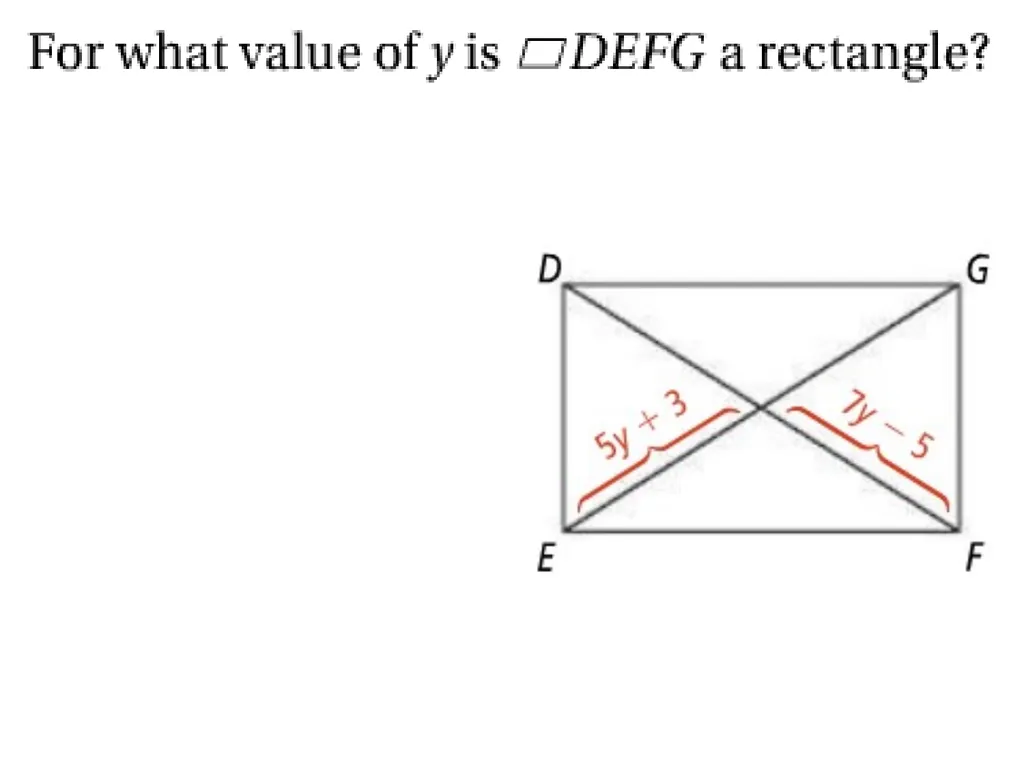
slide4. Theorem 6-18 If the diagonals of a parallelogram are congruent, then the parallelogram is a rectangle<br>
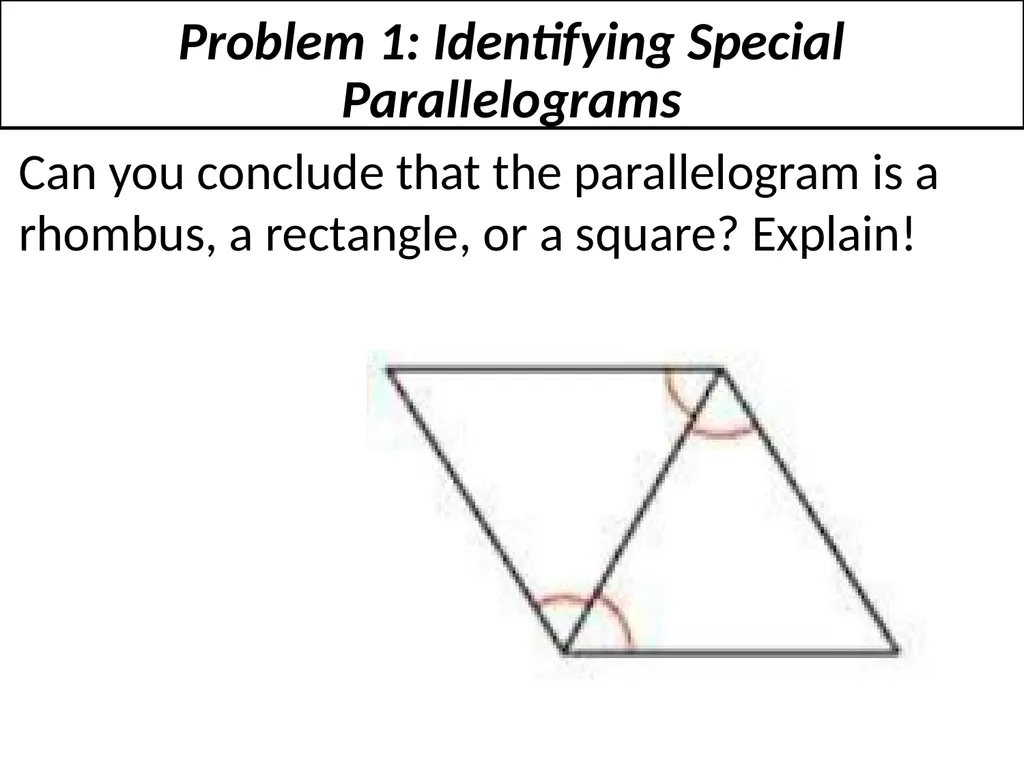
slide5. Problem 1: Identifying Special Parallelograms Can you conclude that the parallelogram is a rhombus, a rectangle, or a square? Explain!<br>
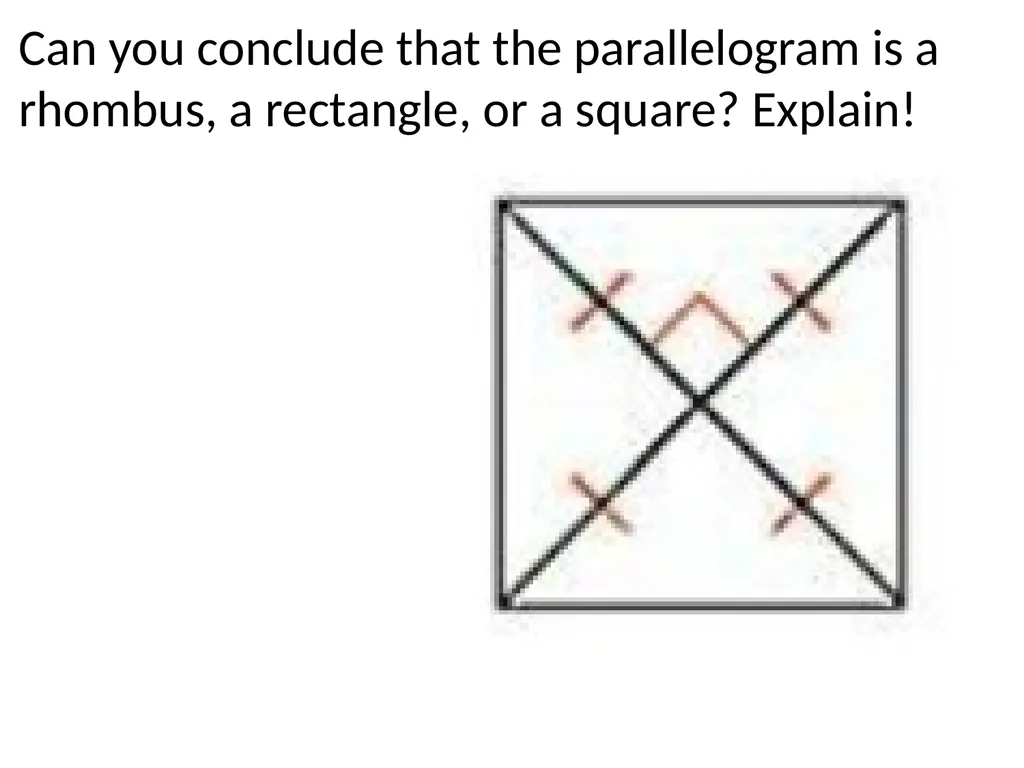
slide6. Can you conclude that the parallelogram is a rhombus, a rectangle, or a square? Explain!<br>
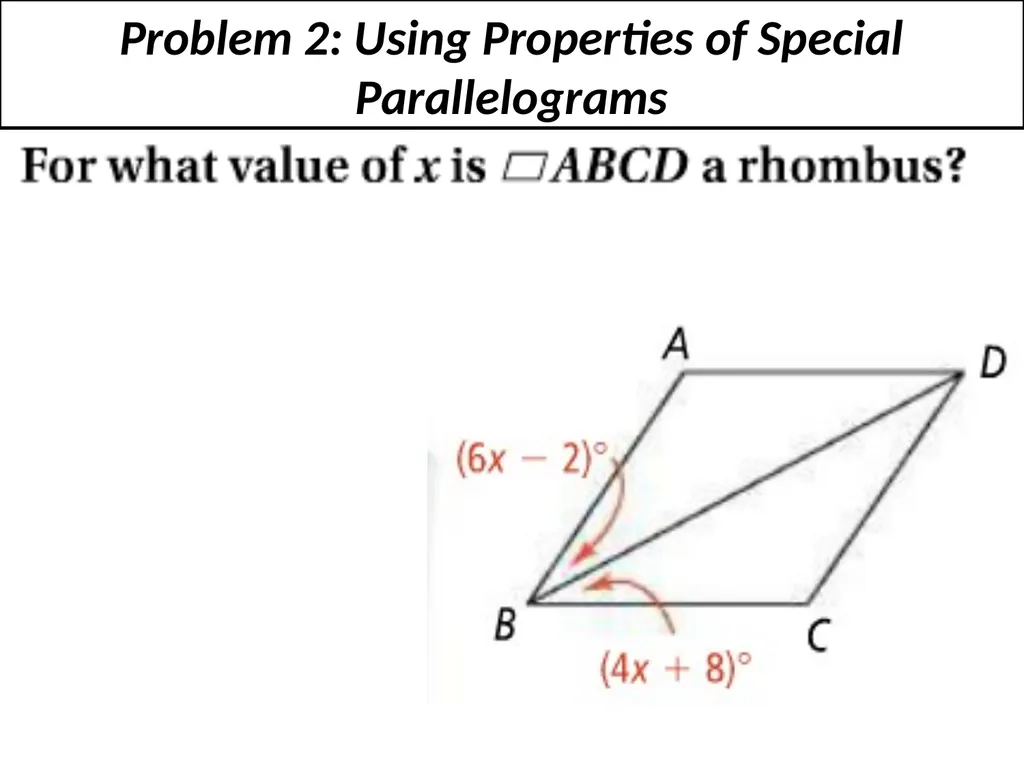
slide7. Problem 2: Using Properties of Special Parallelograms<br>
slide2. Theorem 6-16 If the diagonals of a parallelogram are perpendicular, then the parallelogram is a rhombus<br>
slide3. Theorem 6-17 If one diagonal of a parallelogram bisects a pair of opposite angles, then the parallelogram is a rhombus<br>
slide4. Theorem 6-18 If the diagonals of a parallelogram are congruent, then the parallelogram is a rectangle<br>
slide5. Problem 1: Identifying Special Parallelograms Can you conclude that the parallelogram is a rhombus, a rectangle, or a square? Explain!<br>
slide6. Can you conclude that the parallelogram is a rhombus, a rectangle, or a square? Explain!<br>
slide7. Problem 2: Using Properties of Special Parallelograms<br>