
A guide to UCSB’s Biological Safety Program

Description: A guide to UCSBs Biological Safety Program https:www.ehs.ucsb.eduprograms-servicesbiological-safety 07192024 Checklist The Biological Safety Program in the Context of Research Safety Lab Safety and Chemical Hygiene: Lab Safety
Related Topics
Download Presentation
"A guide to UCSB’s Biological Safety Program" is the property of its rightful owner. Permission is granted to download and print the materials on this website for personal, non-commercial use only, and to display it on your personal computer provided you do not modify the materials and that you retain all copyright notices contained in the materials. By downloading content from our website, you accept the terms of this agreement.
Presentation Transcript
slide1. A guide to UCSB’s Biological Safety Program https://www.ehs.ucsb.edu/programs-services/biological-safety 07/19/2024<br>
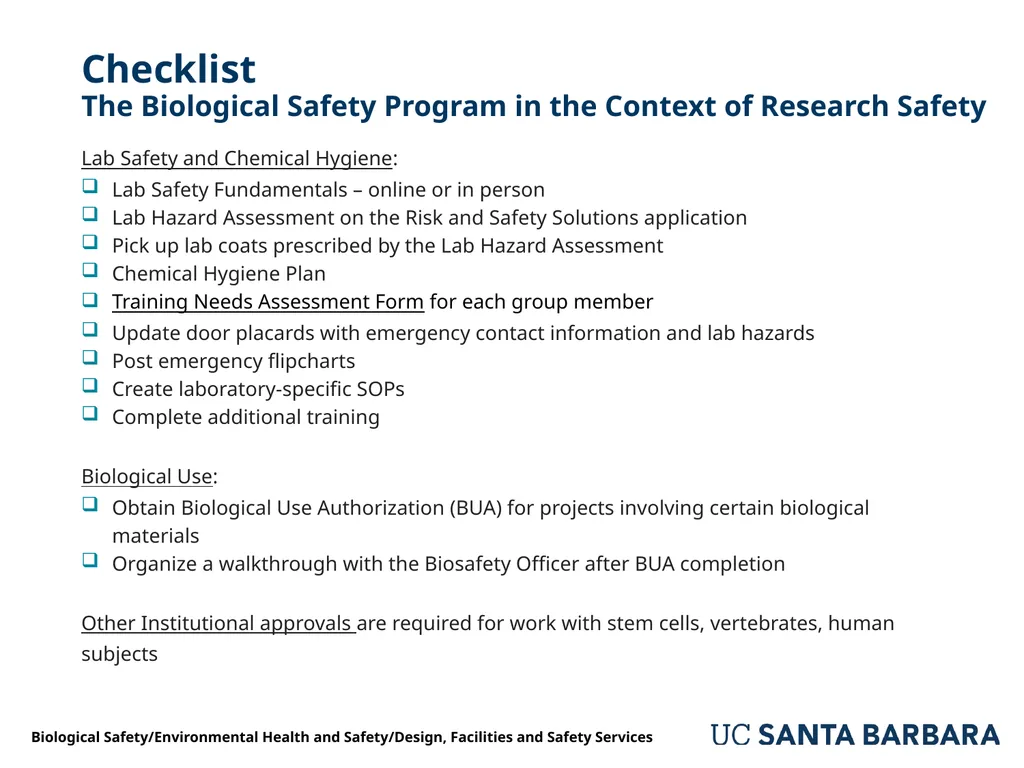
slide2. Checklist The Biological Safety Program in the Context of Research Safety Lab Safety and Chemical Hygiene:
Lab Safety Fundamentals – online or in person
Lab Hazard Assessment on the Risk and Safety Solutions application
Pick up lab coats prescribed by the Lab Hazard Assessment
Chemical Hygiene Plan
Training Needs Assessment Form for each group member
Update door placards with emergency contact information and lab hazards
Post emergency flipcharts
Create laboratory-specific SOPs
Complete additional training
Biological Use:
Obtain Biological Use Authorization (BUA) for projects involving certain biological materials
Organize a walkthrough with the Biosafety Officer after BUA completion
Other Institutional approvals are required for work with stem cells, vertebrates, human subjects<br>
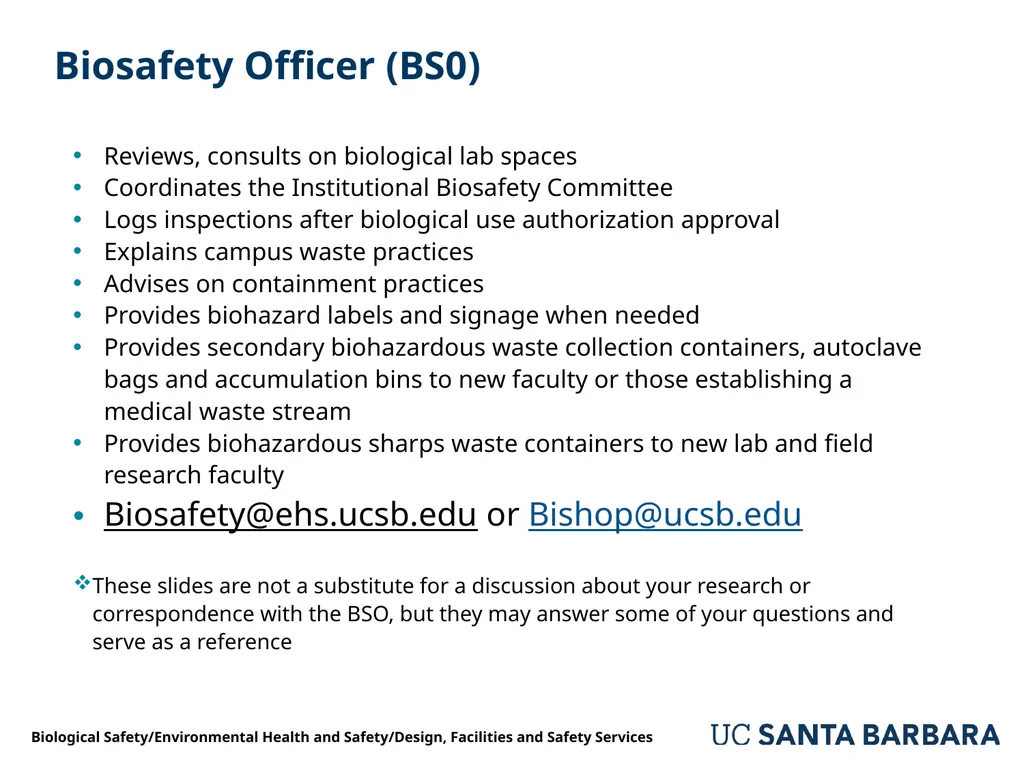
slide3. Biosafety Officer (BS0) Reviews, consults on biological lab spaces
Coordinates the Institutional Biosafety Committee
Logs inspections after biological use authorization approval
Explains campus waste practices
Advises on containment practices
Provides biohazard labels and signage when needed
Provides secondary biohazardous waste collection containers, autoclave bags and accumulation bins to new faculty or those establishing a medical waste stream
Provides biohazardous sharps waste containers to new lab and field research faculty
Biosafety@ehs.ucsb.edu or Bishop@ucsb.edu
These slides are not a substitute for a discussion about your research or correspondence with the BSO, but they may answer some of your questions and serve as a reference<br>
slide4. Institutional Biosafety Committee (IBC) A requirement of the NIH Guidelines is that an Institutional Biosafety Committee (IBC) reviews and approves research that is covered by the NIH Guidelines for local review and oversight
In addition to the research covered by the NIH Guidelines, the UCSB Biosafety Committee also reviews research protocols with wild type infectious agents, human tissues and excreta
The IBC is comprised of UC Santa Barbara tenured or tenure-track faculty, subject matter experts, safety professionals, and includes unaffiliated individuals who represent community interests
IBC composition complies with the requirements of the NIH Guidelines.<br>
slide5. NIH Guidelines for Research Involving Recombinant or Synthetic Nucleic Acid Molecules Introduction:
The “NIH Guidelines for Research Involving Recombinant and Synthetic Nucleic Acid Molecules” detail procedures and practices for the containment and safe conduct of research with recombinant or synthetic nucleic acids, including research involving genetic modification of plants, animals, and microorganisms, human gene transfer, and transfer and use of genetically modified organisms.
The NIH Office of Science Policy (NIH OSP) maintains the NIH Guidelines to promote science, safety and ethics in biotechnology
As a condition for NIH funding, UC Santa Barbara ensures that such research conducted at or sponsored by our campus complies with the NIH Guidelines.
Exposure incidents involving experiments covered by the NIH Guidelines must be reported to the NIH Office of Science and Policy within 30 days<br>
slide6. NIH Guidelines for Research Involving Recombinant or Synthetic Nucleic Acid Molecules Experiments for which NIH OSP Requires Institutional Biosafety Committee Review:
Experiments involving gene drive modified organisms (NIH Office of Science Policy April 2024 guidance)
Minimum of BSL2 containment for all gene drive modified organisms, including Saccharomyces cerevisiae
Recombinant DNA techniques requiring IBC approval as described by the NIH Guidelines for Research Involving Recombinant or Synthetic Nucleic Acid Molecules
Cloning genes that encode molecules toxic to vertebrates, e.g., cloning genes that encode for toxins such as tetanus toxin, alpha-bungarotoxin
NIH OSP requires that some projects are registered or approved by NIH OSP (see notes)
Animal experiments covered by the NIH Guidelines
Biological Select Agents and Toxins
Click here for the NIH OBA list of experiments that are exempt from IBC oversight.<br>
slide7. Biological Use Authorizations Principal investigators first obtain a Biological Use Authorization (BUA) from the Institutional Biosafety Committee (IBC) to conduct research with the following materials and/or strategies:
Microorganisms that cause disease in humans, animals or plants
Human or non-human primate primary cells or tissues
Human or non-human primate excreta
Recombinant DNA techniques requiring IBC approval as described by the NIH Guidelines for Research Involving Recombinant or Synthetic Nucleic Acid Molecules
Experiments involving gene drive modified organisms (NIH Office of Science Policy April 2024 guidance)
Cloning genes that encode molecules toxic to vertebrates, e.g., cloning genes that encode for toxins such as tetanus toxin, alpha-bungarotoxin
Animal experiments covered by the NIH Guidelines
Biological Select Agents and Toxins
Click here for the NIH OBA list of experiments that are exempt from IBC oversight.<br>
slide8. More on Biological Use Authorizations The PI documents project specifics and researcher safety in the BUA
BSO meets with the PI or their designee to review the lab spaces, safety equipment, signage, transport containers, disinfection and waste management practices
The IBC meets monthly during the academic year to review BUAs and amendments to BUAs that increase or introduce new risks
https://www.ehs.ucsb.edu/programs-services/biological-safety/biological-use-authorizations<br>
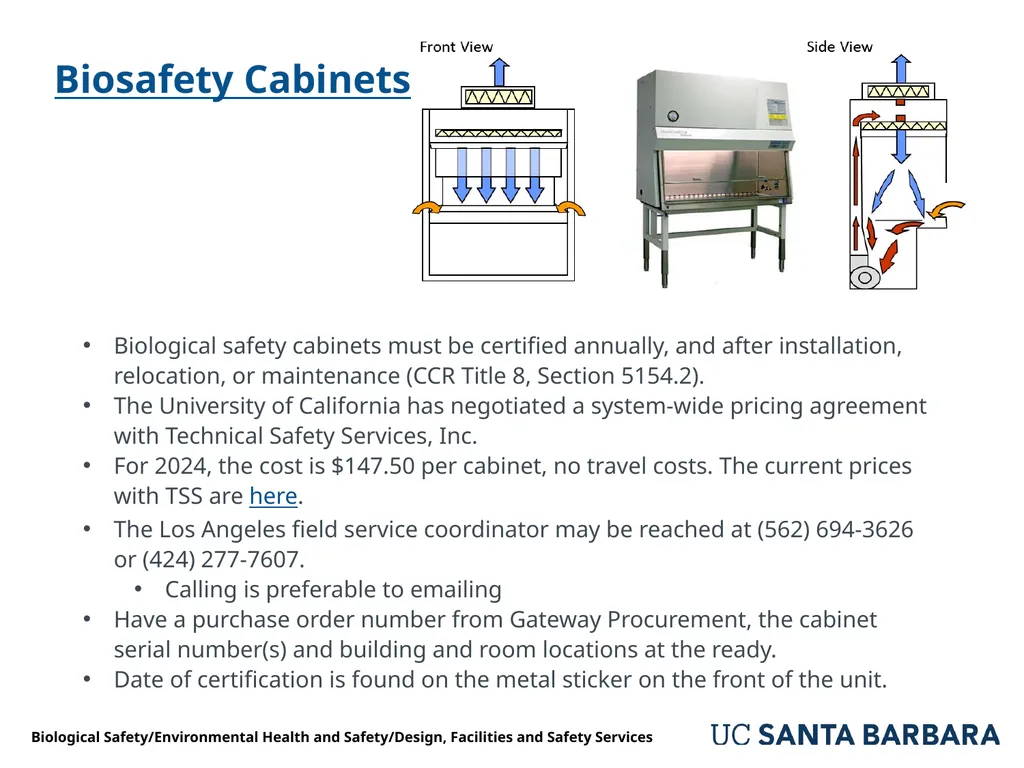
slide9. Biosafety Cabinets Biological safety cabinets must be certified annually, and after installation, relocation, or maintenance (CCR Title 8, Section 5154.2).
The University of California has negotiated a system-wide pricing agreement with Technical Safety Services, Inc.
For 2024, the cost is $147.50 per cabinet, no travel costs. The current prices with TSS are here.
The Los Angeles field service coordinator may be reached at (562) 694-3626 or (424) 277-7607.
Calling is preferable to emailing
Have a purchase order number from Gateway Procurement, the cabinet serial number(s) and building and room locations at the ready.
Date of certification is found on the metal sticker on the front of the unit.<br>
slide10. Lab-Specific Biosafety Manual Biological Use Authorization
Exposure control plans, as applicable
Lab-specific Standard Operating Procedures (SOPs)
Reference UCSB EHS Biosafety Guide
Biosafety in Microbiological and Biomedical Laboratories 6th ed. (CDC & NIH)
Agent summaries, as applicable, Canadian PSDS for Infectious Substances<br>
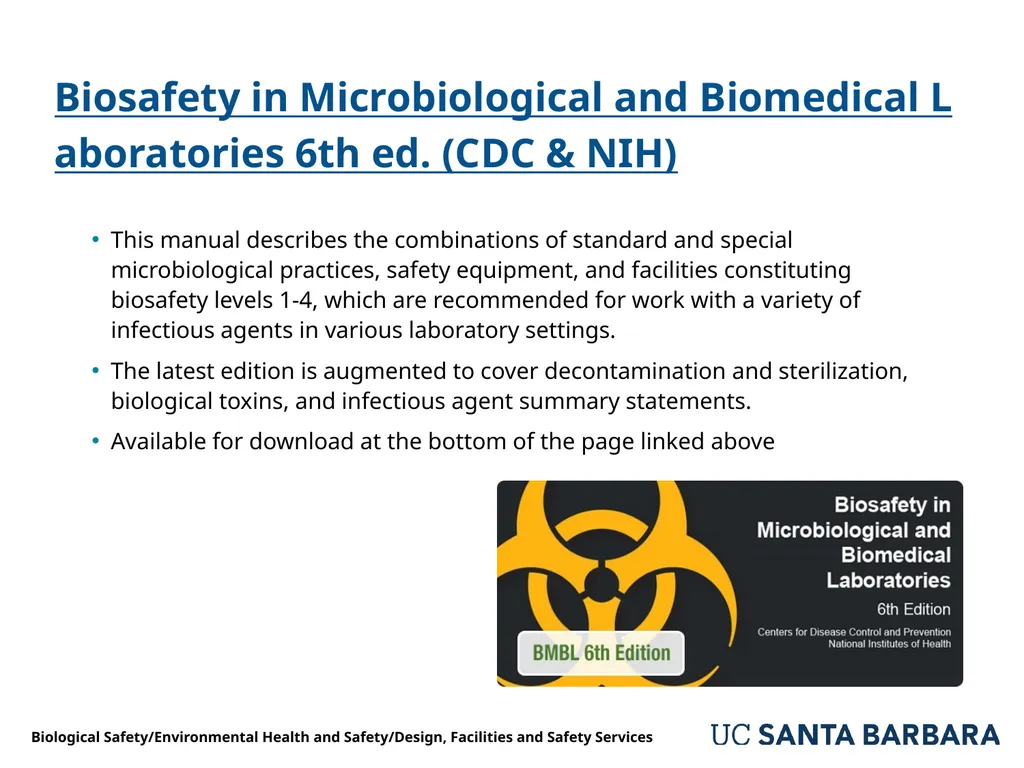
slide11. Biosafety in Microbiological and Biomedical Laboratories 6th ed. (CDC & NIH) This manual describes the combinations of standard and special microbiological practices, safety equipment, and facilities constituting biosafety levels 1-4, which are recommended for work with a variety of infectious agents in various laboratory settings.
The latest edition is augmented to cover decontamination and sterilization, biological toxins, and infectious agent summary statements.
Available for download at the bottom of the page linked above<br>
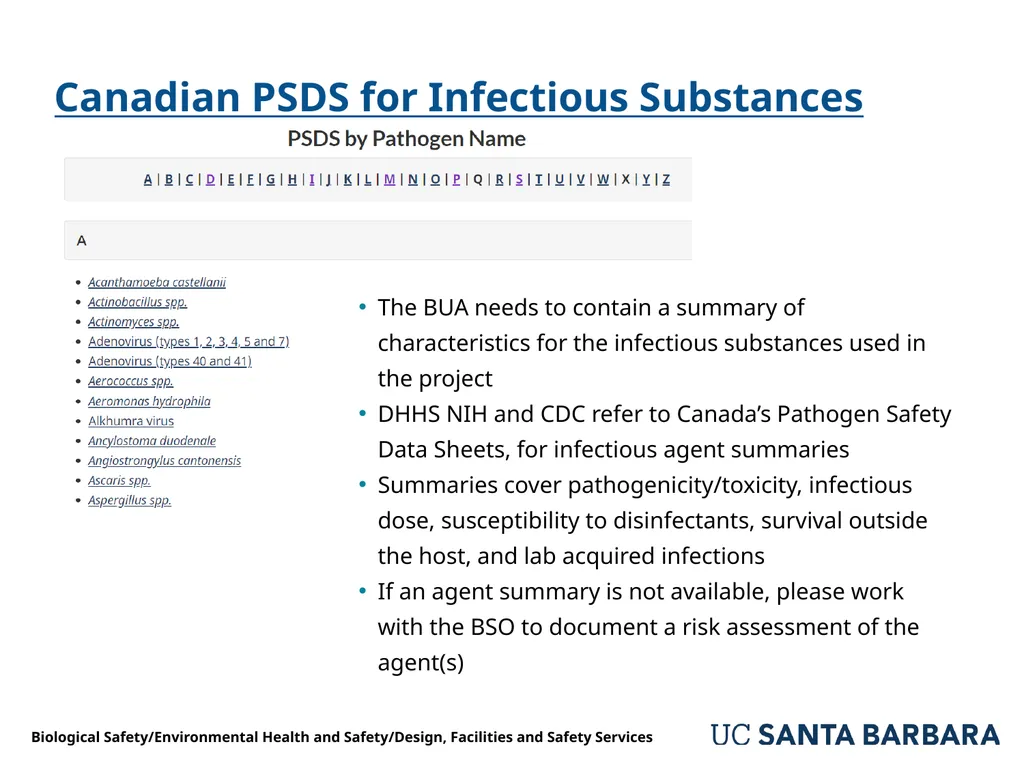
slide12. Canadian PSDS for Infectious Substances The BUA needs to contain a summary of characteristics for the infectious substances used in the project
DHHS NIH and CDC refer to Canada’s Pathogen Safety Data Sheets, for infectious agent summaries
Summaries cover pathogenicity/toxicity, infectious dose, susceptibility to disinfectants, survival outside the host, and lab acquired infections
If an agent summary is not available, please work with the BSO to document a risk assessment of the agent(s)<br>
slide13. Personal Protective Equipment: Lab Coats Obtain 2 liquid impervious pin-striped, cuffed lab coats, so that while one is laundered, there is another available for use
Wear a cuffed lab coat at the BSC, or pull the disposable gloves up and over the cuffs
Ensure lab coats are visible clean
Store the clean lab coat in a drawer or similar, out of any splash zone
In case of gross contamination, autoclave the lab coat before dropping off for laundering
Laundered by Mission Linen
Drop off and pick up on Tuesdays at
Chemistry (storeroom loading dock area)
Bio 2 (1st floor corridor towards the south of the building)<br>
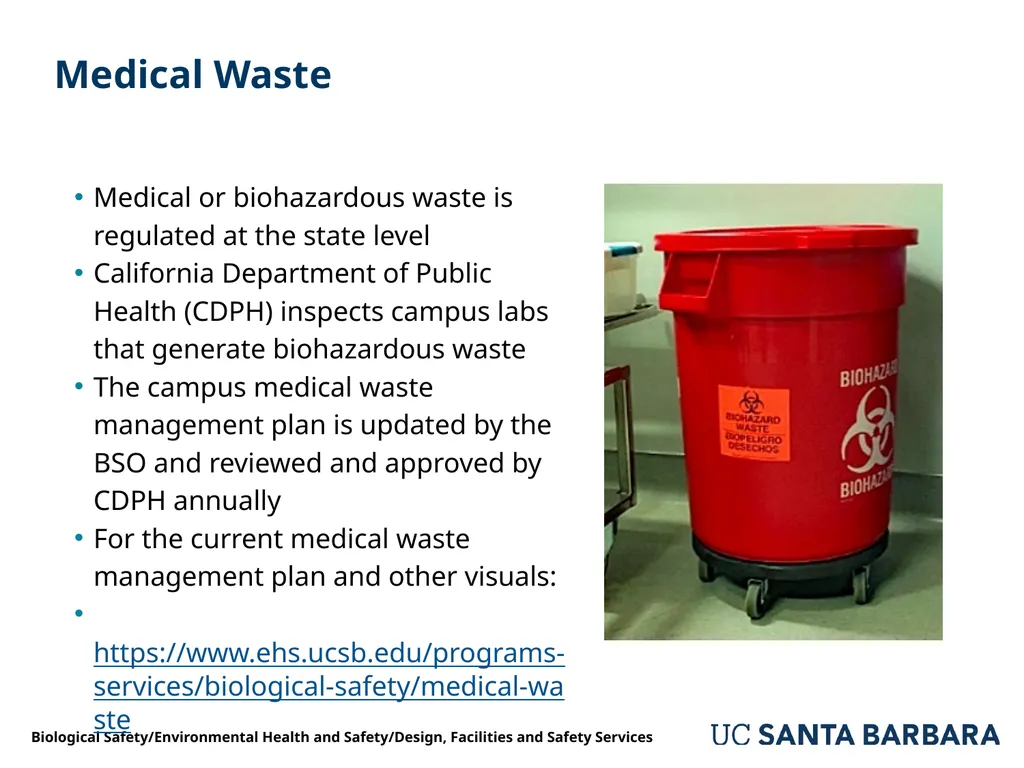
slide14. Medical Waste Medical or biohazardous waste is regulated at the state level
California Department of Public Health (CDPH) inspects campus labs that generate biohazardous waste
The campus medical waste management plan is updated by the BSO and reviewed and approved by CDPH annually
For the current medical waste management plan and other visuals:
https://www.ehs.ucsb.edu/programs-services/biological-safety/medical-waste<br>
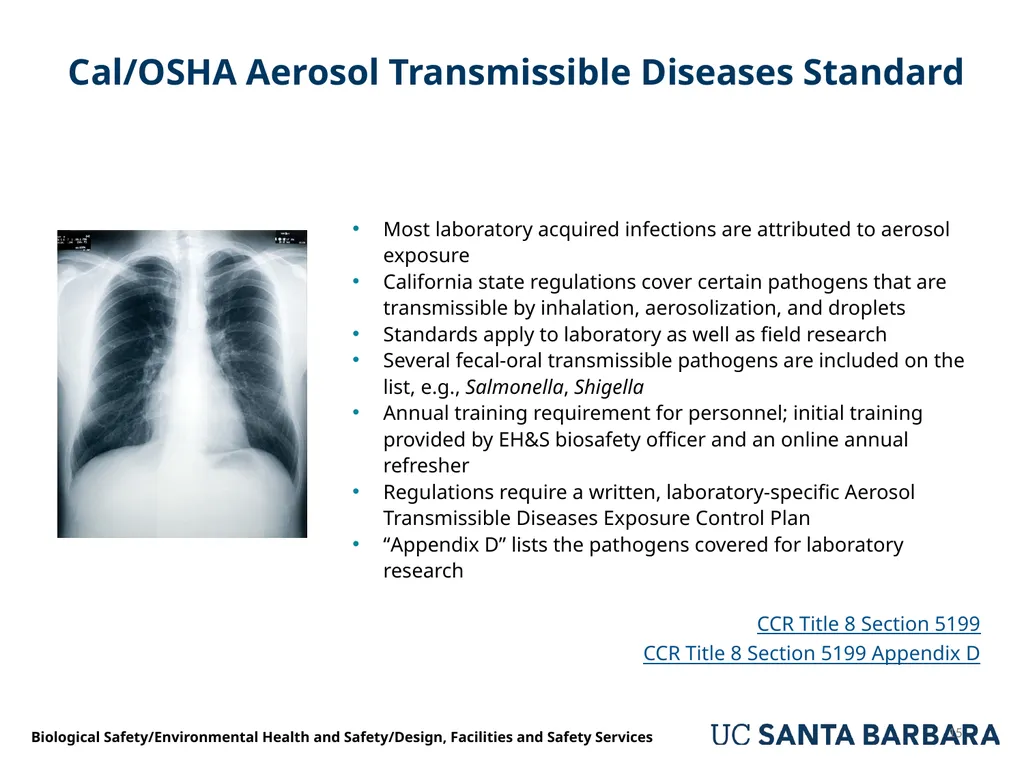
slide15. Cal/OSHA Aerosol Transmissible Diseases Standard Most laboratory acquired infections are attributed to aerosol exposure
California state regulations cover certain pathogens that are transmissible by inhalation, aerosolization, and droplets
Standards apply to laboratory as well as field research
Several fecal-oral transmissible pathogens are included on the list, e.g., Salmonella, Shigella
Annual training requirement for personnel; initial training provided by EH&S biosafety officer and an online annual refresher
Regulations require a written, laboratory-specific Aerosol Transmissible Diseases Exposure Control Plan
“Appendix D” lists the pathogens covered for laboratory research
CCR Title 8 Section 5199
CCR Title 8 Section 5199 Appendix D 15<br>
slide16. 5199.1 Aerosol Transmissible Diseases Standard - Zoonotic Infectious aerosol precautions are required for:
Management, capture, sampling, transportation or disposal of wild birds or other wildlife
Capturing or sampling of wildlife to screen for infection with zoonotic ATPs
A minimum of N95 filtering facepiece respirator is required if:
Presence of animal-related dusts in the environment with reasonable likelihood to present aerosol infection hazard
Increased potential of exposure to infectious aerosols, (e.g., handling animals in enclosed/indoor area)
Responding to a mortality event involving a significant number of animals 16<br>
slide17. Select Agents and Toxins Biological toxins are contained at biosafety level 2
Faculty need a BUA to clone or obtain preparations of biological toxins
Cloning genes that encode molecules toxic to vertebrates, with an LD50 less than or equal to 100 ng/kg requires approval from the NIH Office of Science Policy (OSP) and IBC.
Cloning genes that encode molecules toxic to vertebrates, with an LD50 less than or equal to 100 micrograms per kg, requires NIH OSP registration and IBC approval.
Select Agent Exclusions
Select Agents and Toxins List
42 CFR Parts 72 & 73 (CDC)
7 CFR Part 331 and 9 CFR Part 121 (APHIS) 17<br>
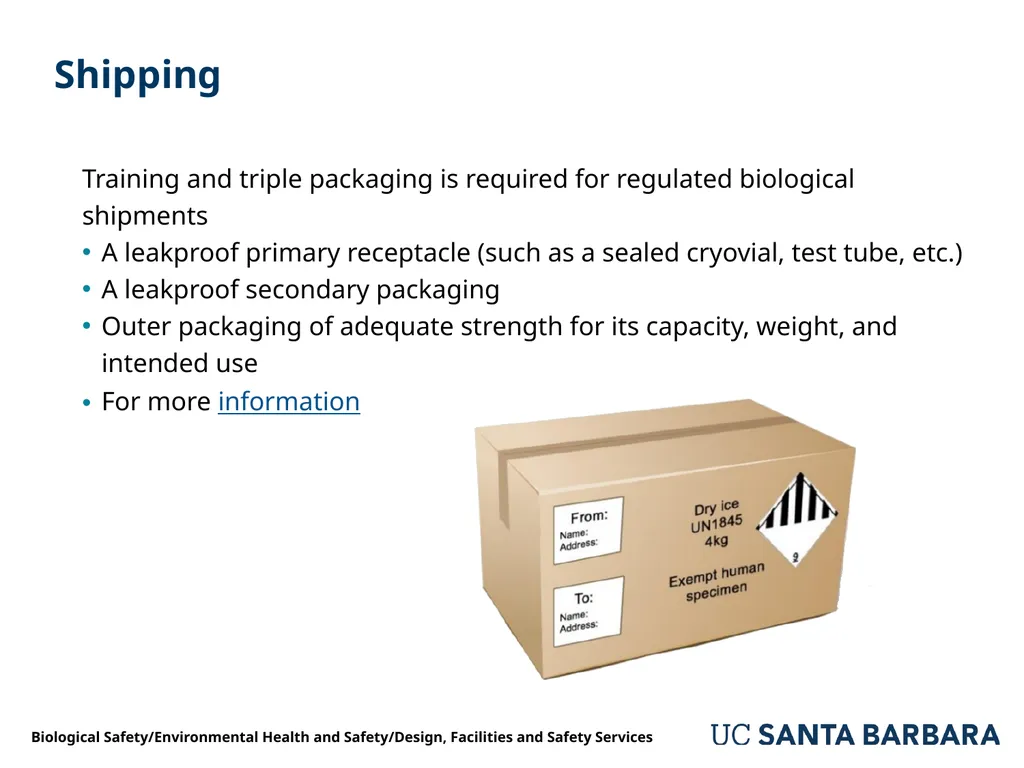
slide18. Shipping Training and triple packaging is required for regulated biological shipments
A leakproof primary receptacle (such as a sealed cryovial, test tube, etc.)
A leakproof secondary packaging
Outer packaging of adequate strength for its capacity, weight, and intended use
For more information<br>
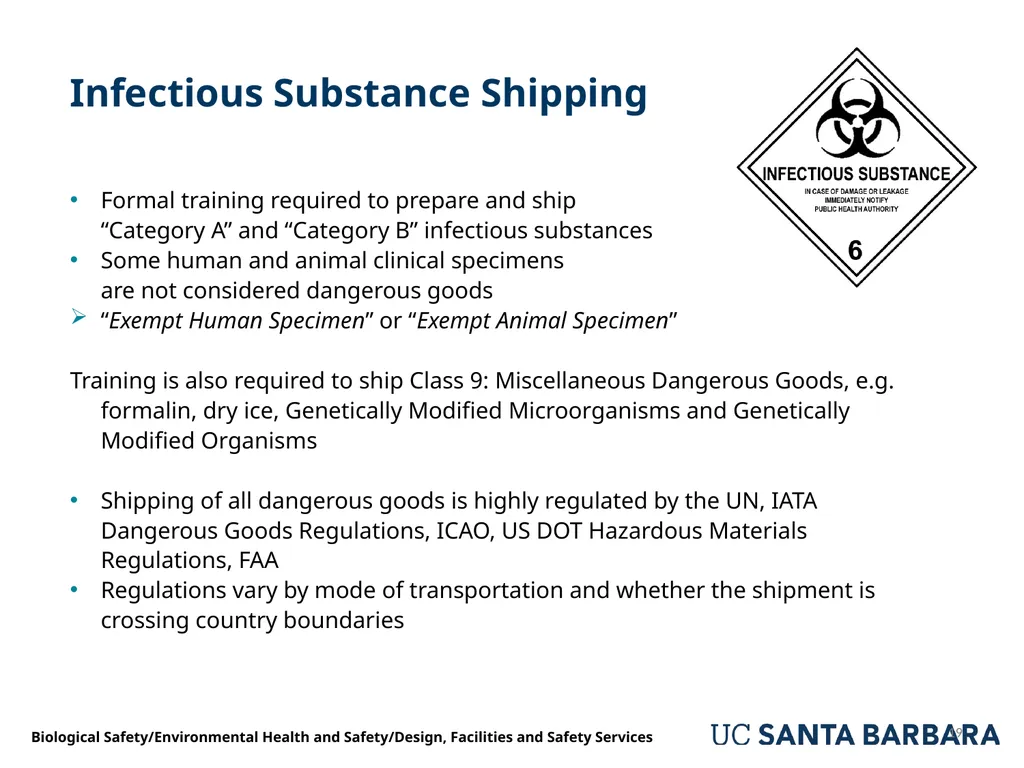
slide19. Infectious Substance Shipping Formal training required to prepare and ship
“Category A” and “Category B” infectious substances
Some human and animal clinical specimens
are not considered dangerous goods
“Exempt Human Specimen” or “Exempt Animal Specimen”
Training is also required to ship Class 9: Miscellaneous Dangerous Goods, e.g. formalin, dry ice, Genetically Modified Microorganisms and Genetically Modified Organisms
Shipping of all dangerous goods is highly regulated by the UN, IATA Dangerous Goods Regulations, ICAO, US DOT Hazardous Materials Regulations, FAA
Regulations vary by mode of transportation and whether the shipment is crossing country boundaries 19<br>
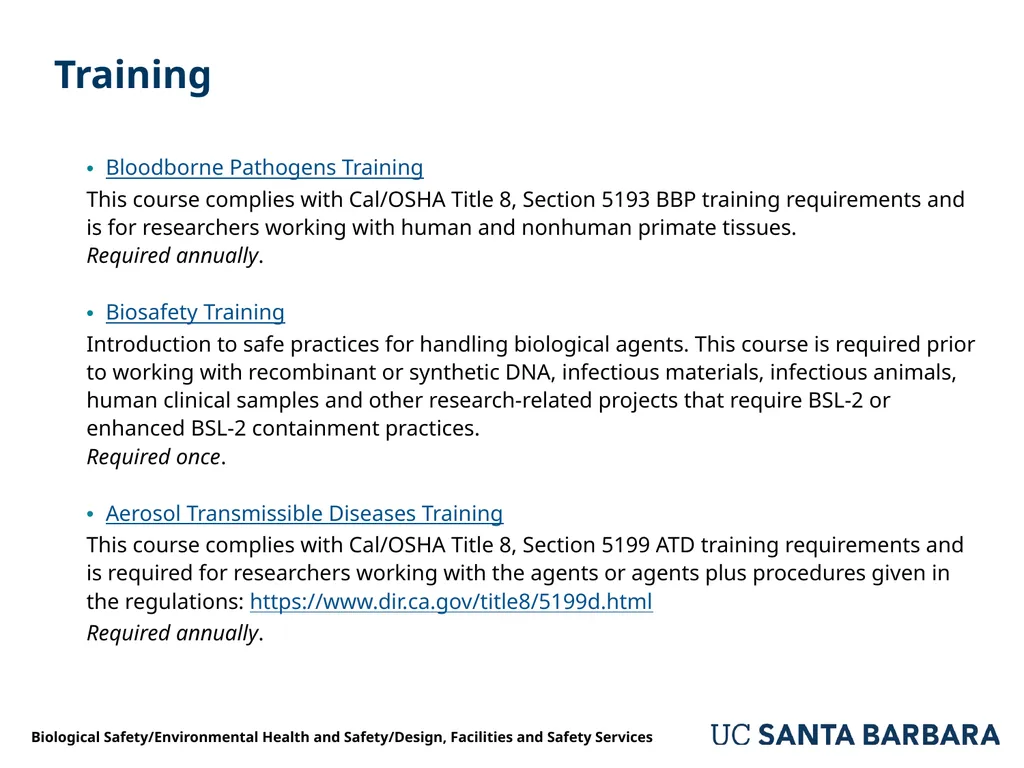
slide20. Training Bloodborne Pathogens Training
This course complies with Cal/OSHA Title 8, Section 5193 BBP training requirements and is for researchers working with human and nonhuman primate tissues.
Required annually.
Biosafety Training
Introduction to safe practices for handling biological agents. This course is required prior to working with recombinant or synthetic DNA, infectious materials, infectious animals, human clinical samples and other research-related projects that require BSL-2 or enhanced BSL-2 containment practices.
Required once.
Aerosol Transmissible Diseases Training
This course complies with Cal/OSHA Title 8, Section 5199 ATD training requirements and is required for researchers working with the agents or agents plus procedures given in the regulations: https://www.dir.ca.gov/title8/5199d.html
Required annually.<br>
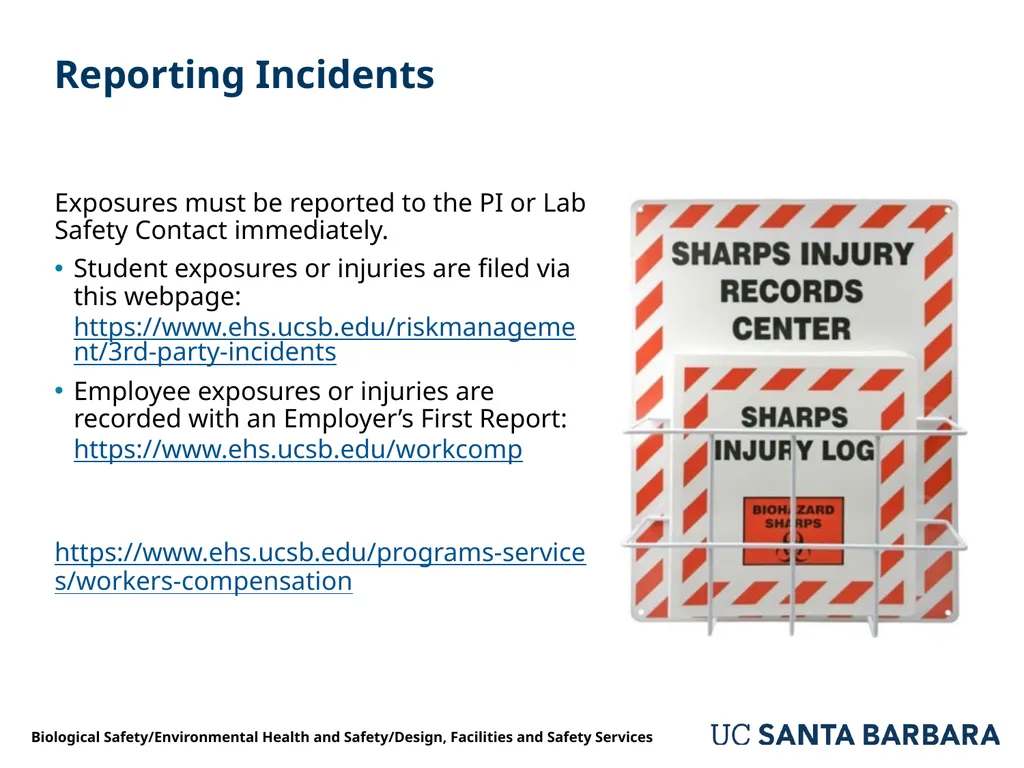
slide21. Reporting Incidents Exposures must be reported to the PI or Lab Safety Contact immediately.
Student exposures or injuries are filed via this webpage: https://www.ehs.ucsb.edu/riskmanagement/3rd-party-incidents
Employee exposures or injuries are recorded with an Employer’s First Report: https://www.ehs.ucsb.edu/workcomp
https://www.ehs.ucsb.edu/programs-services/workers-compensation<br>
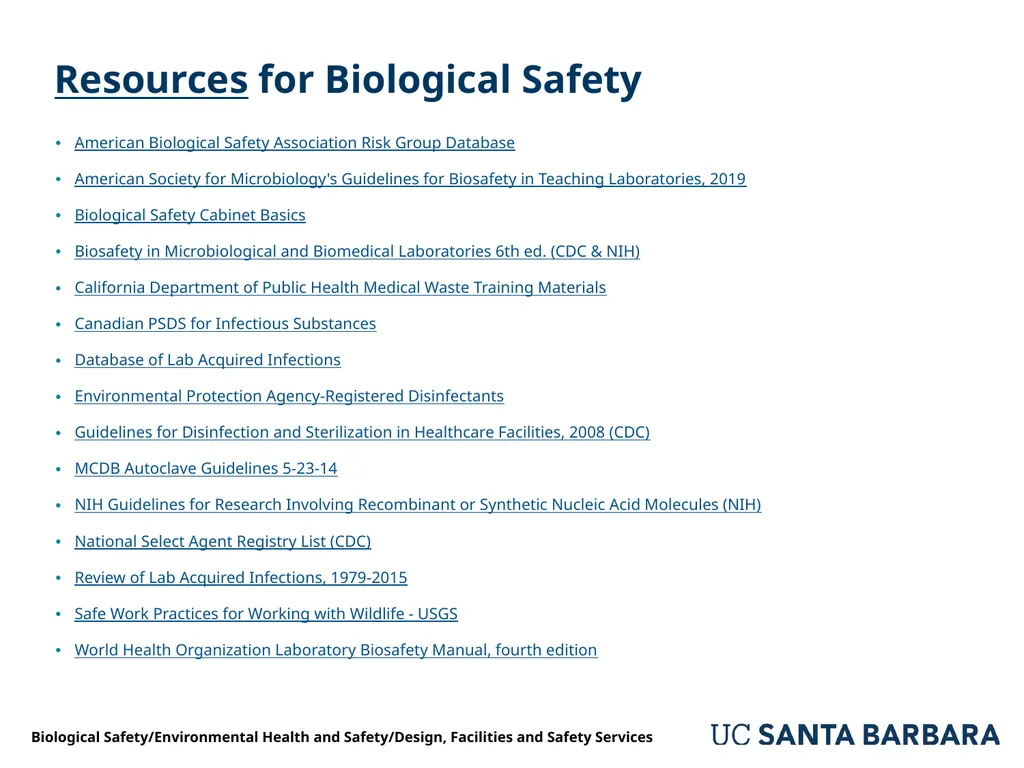
slide22. Resources for Biological Safety American Biological Safety Association Risk Group Database
American Society for Microbiology's Guidelines for Biosafety in Teaching Laboratories, 2019
Biological Safety Cabinet Basics
Biosafety in Microbiological and Biomedical Laboratories 6th ed. (CDC & NIH)
California Department of Public Health Medical Waste Training Materials
Canadian PSDS for Infectious Substances
Database of Lab Acquired Infections
Environmental Protection Agency-Registered Disinfectants
Guidelines for Disinfection and Sterilization in Healthcare Facilities, 2008 (CDC)
MCDB Autoclave Guidelines 5-23-14
NIH Guidelines for Research Involving Recombinant or Synthetic Nucleic Acid Molecules (NIH)
National Select Agent Registry List (CDC)
Review of Lab Acquired Infections, 1979-2015
Safe Work Practices for Working with Wildlife - USGS
World Health Organization Laboratory Biosafety Manual, fourth edition<br>
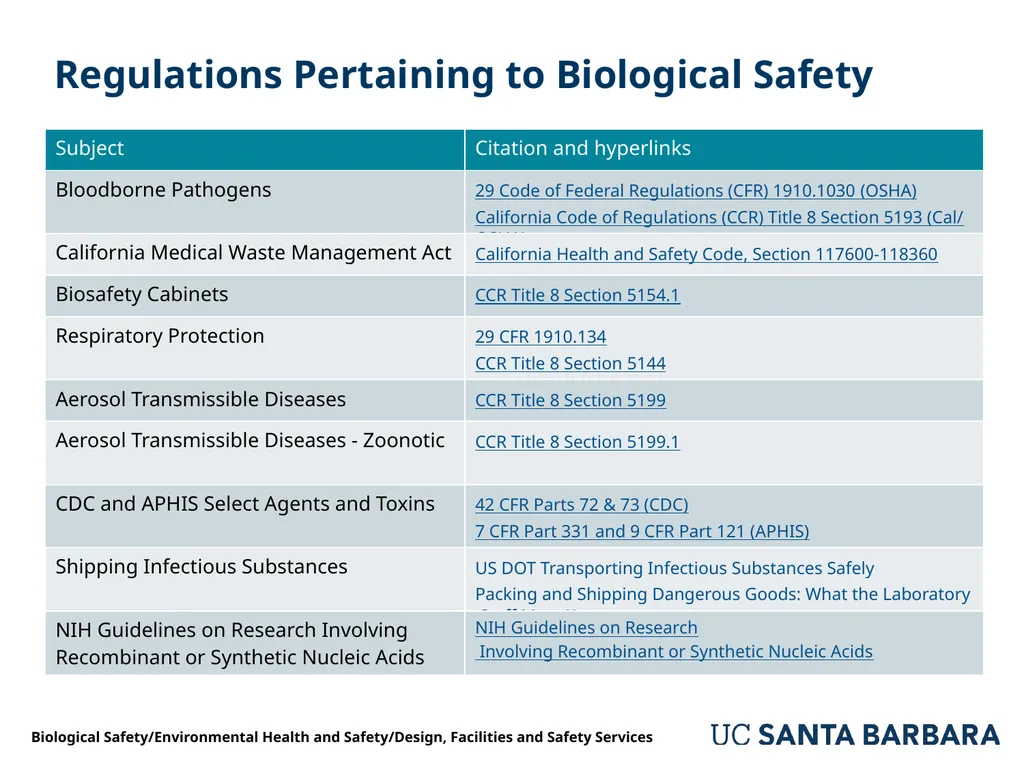
slide23. Regulations Pertaining to Biological Safety<br>
slide2. Checklist The Biological Safety Program in the Context of Research Safety Lab Safety and Chemical Hygiene:
Lab Safety Fundamentals – online or in person
Lab Hazard Assessment on the Risk and Safety Solutions application
Pick up lab coats prescribed by the Lab Hazard Assessment
Chemical Hygiene Plan
Training Needs Assessment Form for each group member
Update door placards with emergency contact information and lab hazards
Post emergency flipcharts
Create laboratory-specific SOPs
Complete additional training
Biological Use:
Obtain Biological Use Authorization (BUA) for projects involving certain biological materials
Organize a walkthrough with the Biosafety Officer after BUA completion
Other Institutional approvals are required for work with stem cells, vertebrates, human subjects<br>
slide3. Biosafety Officer (BS0) Reviews, consults on biological lab spaces
Coordinates the Institutional Biosafety Committee
Logs inspections after biological use authorization approval
Explains campus waste practices
Advises on containment practices
Provides biohazard labels and signage when needed
Provides secondary biohazardous waste collection containers, autoclave bags and accumulation bins to new faculty or those establishing a medical waste stream
Provides biohazardous sharps waste containers to new lab and field research faculty
Biosafety@ehs.ucsb.edu or Bishop@ucsb.edu
These slides are not a substitute for a discussion about your research or correspondence with the BSO, but they may answer some of your questions and serve as a reference<br>
slide4. Institutional Biosafety Committee (IBC) A requirement of the NIH Guidelines is that an Institutional Biosafety Committee (IBC) reviews and approves research that is covered by the NIH Guidelines for local review and oversight
In addition to the research covered by the NIH Guidelines, the UCSB Biosafety Committee also reviews research protocols with wild type infectious agents, human tissues and excreta
The IBC is comprised of UC Santa Barbara tenured or tenure-track faculty, subject matter experts, safety professionals, and includes unaffiliated individuals who represent community interests
IBC composition complies with the requirements of the NIH Guidelines.<br>
slide5. NIH Guidelines for Research Involving Recombinant or Synthetic Nucleic Acid Molecules Introduction:
The “NIH Guidelines for Research Involving Recombinant and Synthetic Nucleic Acid Molecules” detail procedures and practices for the containment and safe conduct of research with recombinant or synthetic nucleic acids, including research involving genetic modification of plants, animals, and microorganisms, human gene transfer, and transfer and use of genetically modified organisms.
The NIH Office of Science Policy (NIH OSP) maintains the NIH Guidelines to promote science, safety and ethics in biotechnology
As a condition for NIH funding, UC Santa Barbara ensures that such research conducted at or sponsored by our campus complies with the NIH Guidelines.
Exposure incidents involving experiments covered by the NIH Guidelines must be reported to the NIH Office of Science and Policy within 30 days<br>
slide6. NIH Guidelines for Research Involving Recombinant or Synthetic Nucleic Acid Molecules Experiments for which NIH OSP Requires Institutional Biosafety Committee Review:
Experiments involving gene drive modified organisms (NIH Office of Science Policy April 2024 guidance)
Minimum of BSL2 containment for all gene drive modified organisms, including Saccharomyces cerevisiae
Recombinant DNA techniques requiring IBC approval as described by the NIH Guidelines for Research Involving Recombinant or Synthetic Nucleic Acid Molecules
Cloning genes that encode molecules toxic to vertebrates, e.g., cloning genes that encode for toxins such as tetanus toxin, alpha-bungarotoxin
NIH OSP requires that some projects are registered or approved by NIH OSP (see notes)
Animal experiments covered by the NIH Guidelines
Biological Select Agents and Toxins
Click here for the NIH OBA list of experiments that are exempt from IBC oversight.<br>
slide7. Biological Use Authorizations Principal investigators first obtain a Biological Use Authorization (BUA) from the Institutional Biosafety Committee (IBC) to conduct research with the following materials and/or strategies:
Microorganisms that cause disease in humans, animals or plants
Human or non-human primate primary cells or tissues
Human or non-human primate excreta
Recombinant DNA techniques requiring IBC approval as described by the NIH Guidelines for Research Involving Recombinant or Synthetic Nucleic Acid Molecules
Experiments involving gene drive modified organisms (NIH Office of Science Policy April 2024 guidance)
Cloning genes that encode molecules toxic to vertebrates, e.g., cloning genes that encode for toxins such as tetanus toxin, alpha-bungarotoxin
Animal experiments covered by the NIH Guidelines
Biological Select Agents and Toxins
Click here for the NIH OBA list of experiments that are exempt from IBC oversight.<br>
slide8. More on Biological Use Authorizations The PI documents project specifics and researcher safety in the BUA
BSO meets with the PI or their designee to review the lab spaces, safety equipment, signage, transport containers, disinfection and waste management practices
The IBC meets monthly during the academic year to review BUAs and amendments to BUAs that increase or introduce new risks
https://www.ehs.ucsb.edu/programs-services/biological-safety/biological-use-authorizations<br>
slide9. Biosafety Cabinets Biological safety cabinets must be certified annually, and after installation, relocation, or maintenance (CCR Title 8, Section 5154.2).
The University of California has negotiated a system-wide pricing agreement with Technical Safety Services, Inc.
For 2024, the cost is $147.50 per cabinet, no travel costs. The current prices with TSS are here.
The Los Angeles field service coordinator may be reached at (562) 694-3626 or (424) 277-7607.
Calling is preferable to emailing
Have a purchase order number from Gateway Procurement, the cabinet serial number(s) and building and room locations at the ready.
Date of certification is found on the metal sticker on the front of the unit.<br>
slide10. Lab-Specific Biosafety Manual Biological Use Authorization
Exposure control plans, as applicable
Lab-specific Standard Operating Procedures (SOPs)
Reference UCSB EHS Biosafety Guide
Biosafety in Microbiological and Biomedical Laboratories 6th ed. (CDC & NIH)
Agent summaries, as applicable, Canadian PSDS for Infectious Substances<br>
slide11. Biosafety in Microbiological and Biomedical Laboratories 6th ed. (CDC & NIH) This manual describes the combinations of standard and special microbiological practices, safety equipment, and facilities constituting biosafety levels 1-4, which are recommended for work with a variety of infectious agents in various laboratory settings.
The latest edition is augmented to cover decontamination and sterilization, biological toxins, and infectious agent summary statements.
Available for download at the bottom of the page linked above<br>
slide12. Canadian PSDS for Infectious Substances The BUA needs to contain a summary of characteristics for the infectious substances used in the project
DHHS NIH and CDC refer to Canada’s Pathogen Safety Data Sheets, for infectious agent summaries
Summaries cover pathogenicity/toxicity, infectious dose, susceptibility to disinfectants, survival outside the host, and lab acquired infections
If an agent summary is not available, please work with the BSO to document a risk assessment of the agent(s)<br>
slide13. Personal Protective Equipment: Lab Coats Obtain 2 liquid impervious pin-striped, cuffed lab coats, so that while one is laundered, there is another available for use
Wear a cuffed lab coat at the BSC, or pull the disposable gloves up and over the cuffs
Ensure lab coats are visible clean
Store the clean lab coat in a drawer or similar, out of any splash zone
In case of gross contamination, autoclave the lab coat before dropping off for laundering
Laundered by Mission Linen
Drop off and pick up on Tuesdays at
Chemistry (storeroom loading dock area)
Bio 2 (1st floor corridor towards the south of the building)<br>
slide14. Medical Waste Medical or biohazardous waste is regulated at the state level
California Department of Public Health (CDPH) inspects campus labs that generate biohazardous waste
The campus medical waste management plan is updated by the BSO and reviewed and approved by CDPH annually
For the current medical waste management plan and other visuals:
https://www.ehs.ucsb.edu/programs-services/biological-safety/medical-waste<br>
slide15. Cal/OSHA Aerosol Transmissible Diseases Standard Most laboratory acquired infections are attributed to aerosol exposure
California state regulations cover certain pathogens that are transmissible by inhalation, aerosolization, and droplets
Standards apply to laboratory as well as field research
Several fecal-oral transmissible pathogens are included on the list, e.g., Salmonella, Shigella
Annual training requirement for personnel; initial training provided by EH&S biosafety officer and an online annual refresher
Regulations require a written, laboratory-specific Aerosol Transmissible Diseases Exposure Control Plan
“Appendix D” lists the pathogens covered for laboratory research
CCR Title 8 Section 5199
CCR Title 8 Section 5199 Appendix D 15<br>
slide16. 5199.1 Aerosol Transmissible Diseases Standard - Zoonotic Infectious aerosol precautions are required for:
Management, capture, sampling, transportation or disposal of wild birds or other wildlife
Capturing or sampling of wildlife to screen for infection with zoonotic ATPs
A minimum of N95 filtering facepiece respirator is required if:
Presence of animal-related dusts in the environment with reasonable likelihood to present aerosol infection hazard
Increased potential of exposure to infectious aerosols, (e.g., handling animals in enclosed/indoor area)
Responding to a mortality event involving a significant number of animals 16<br>
slide17. Select Agents and Toxins Biological toxins are contained at biosafety level 2
Faculty need a BUA to clone or obtain preparations of biological toxins
Cloning genes that encode molecules toxic to vertebrates, with an LD50 less than or equal to 100 ng/kg requires approval from the NIH Office of Science Policy (OSP) and IBC.
Cloning genes that encode molecules toxic to vertebrates, with an LD50 less than or equal to 100 micrograms per kg, requires NIH OSP registration and IBC approval.
Select Agent Exclusions
Select Agents and Toxins List
42 CFR Parts 72 & 73 (CDC)
7 CFR Part 331 and 9 CFR Part 121 (APHIS) 17<br>
slide18. Shipping Training and triple packaging is required for regulated biological shipments
A leakproof primary receptacle (such as a sealed cryovial, test tube, etc.)
A leakproof secondary packaging
Outer packaging of adequate strength for its capacity, weight, and intended use
For more information<br>
slide19. Infectious Substance Shipping Formal training required to prepare and ship
“Category A” and “Category B” infectious substances
Some human and animal clinical specimens
are not considered dangerous goods
“Exempt Human Specimen” or “Exempt Animal Specimen”
Training is also required to ship Class 9: Miscellaneous Dangerous Goods, e.g. formalin, dry ice, Genetically Modified Microorganisms and Genetically Modified Organisms
Shipping of all dangerous goods is highly regulated by the UN, IATA Dangerous Goods Regulations, ICAO, US DOT Hazardous Materials Regulations, FAA
Regulations vary by mode of transportation and whether the shipment is crossing country boundaries 19<br>
slide20. Training Bloodborne Pathogens Training
This course complies with Cal/OSHA Title 8, Section 5193 BBP training requirements and is for researchers working with human and nonhuman primate tissues.
Required annually.
Biosafety Training
Introduction to safe practices for handling biological agents. This course is required prior to working with recombinant or synthetic DNA, infectious materials, infectious animals, human clinical samples and other research-related projects that require BSL-2 or enhanced BSL-2 containment practices.
Required once.
Aerosol Transmissible Diseases Training
This course complies with Cal/OSHA Title 8, Section 5199 ATD training requirements and is required for researchers working with the agents or agents plus procedures given in the regulations: https://www.dir.ca.gov/title8/5199d.html
Required annually.<br>
slide21. Reporting Incidents Exposures must be reported to the PI or Lab Safety Contact immediately.
Student exposures or injuries are filed via this webpage: https://www.ehs.ucsb.edu/riskmanagement/3rd-party-incidents
Employee exposures or injuries are recorded with an Employer’s First Report: https://www.ehs.ucsb.edu/workcomp
https://www.ehs.ucsb.edu/programs-services/workers-compensation<br>
slide22. Resources for Biological Safety American Biological Safety Association Risk Group Database
American Society for Microbiology's Guidelines for Biosafety in Teaching Laboratories, 2019
Biological Safety Cabinet Basics
Biosafety in Microbiological and Biomedical Laboratories 6th ed. (CDC & NIH)
California Department of Public Health Medical Waste Training Materials
Canadian PSDS for Infectious Substances
Database of Lab Acquired Infections
Environmental Protection Agency-Registered Disinfectants
Guidelines for Disinfection and Sterilization in Healthcare Facilities, 2008 (CDC)
MCDB Autoclave Guidelines 5-23-14
NIH Guidelines for Research Involving Recombinant or Synthetic Nucleic Acid Molecules (NIH)
National Select Agent Registry List (CDC)
Review of Lab Acquired Infections, 1979-2015
Safe Work Practices for Working with Wildlife - USGS
World Health Organization Laboratory Biosafety Manual, fourth edition<br>
slide23. Regulations Pertaining to Biological Safety<br>