
A snapshot into Animal Studies Principles of

Description: A snapshot into Animal Studies Principles of Animal Handling Human Animal Interaction Learning Objectives By the end of this presentation Identify occasions when animals may need to be handled and restrained. Present initial ideas on
Related Topics
Download Presentation
"A snapshot into Animal Studies Principles of" is the property of its rightful owner. Permission is granted to download and print the materials on this website for personal, non-commercial use only, and to display it on your personal computer provided you do not modify the materials and that you retain all copyright notices contained in the materials. By downloading content from our website, you accept the terms of this agreement.
Presentation Transcript
slide1. A snapshot into Animal Studies Principles of Animal Handling<br>
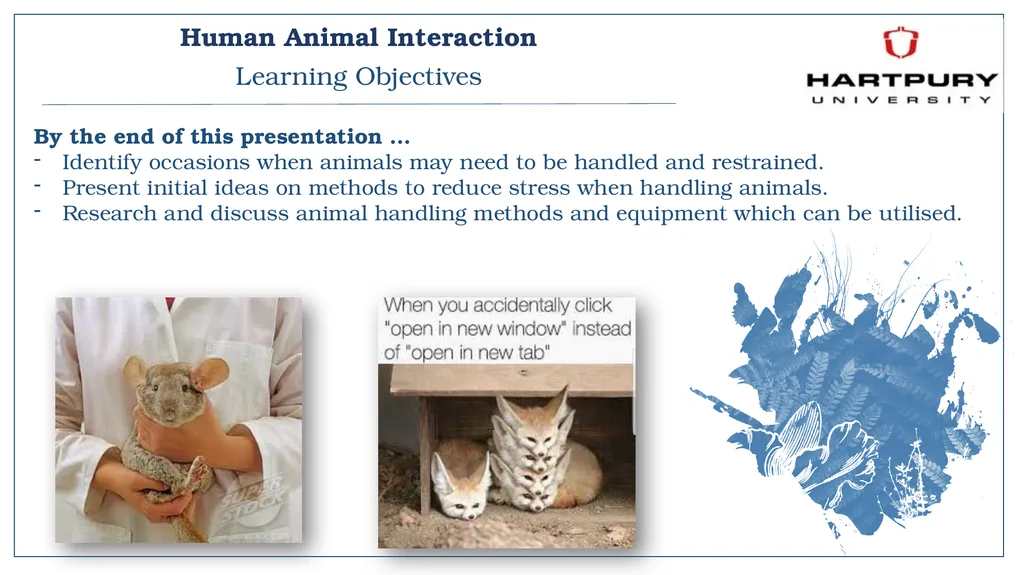
slide2. Human Animal Interaction Learning Objectives By the end of this presentation …
Identify occasions when animals may need to be handled and restrained.
Present initial ideas on methods to reduce stress when handling animals.
Research and discuss animal handling methods and equipment which can be utilised.<br>
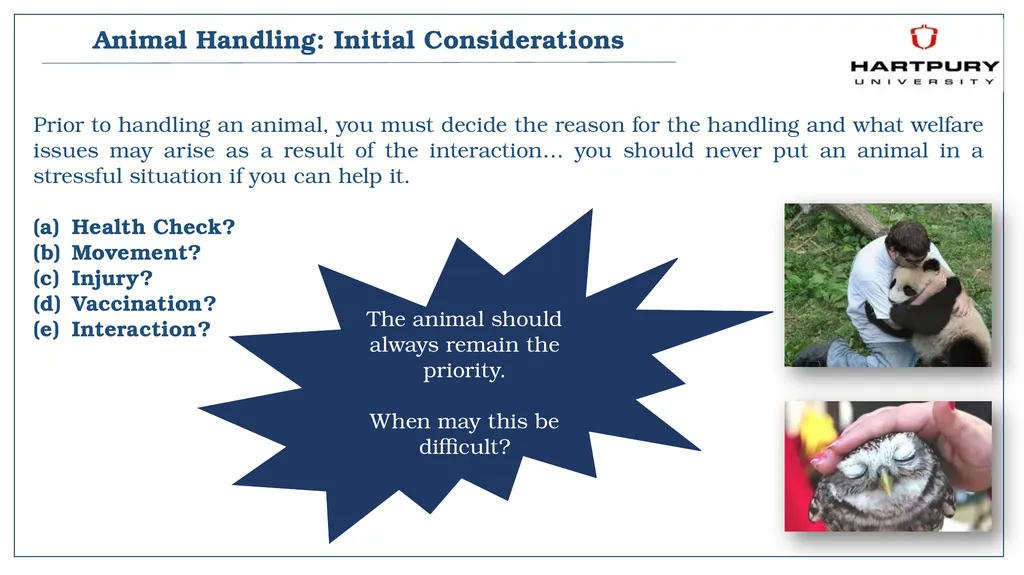
slide3. Animal Handling: Initial Considerations Prior to handling an animal, you must decide the reason for the handling and what welfare issues may arise as a result of the interaction… you should never put an animal in a stressful situation if you can help it.
Health Check?
Movement?
Injury?
Vaccination?
Interaction? The animal should always remain the priority.
When may this be difficult?<br>
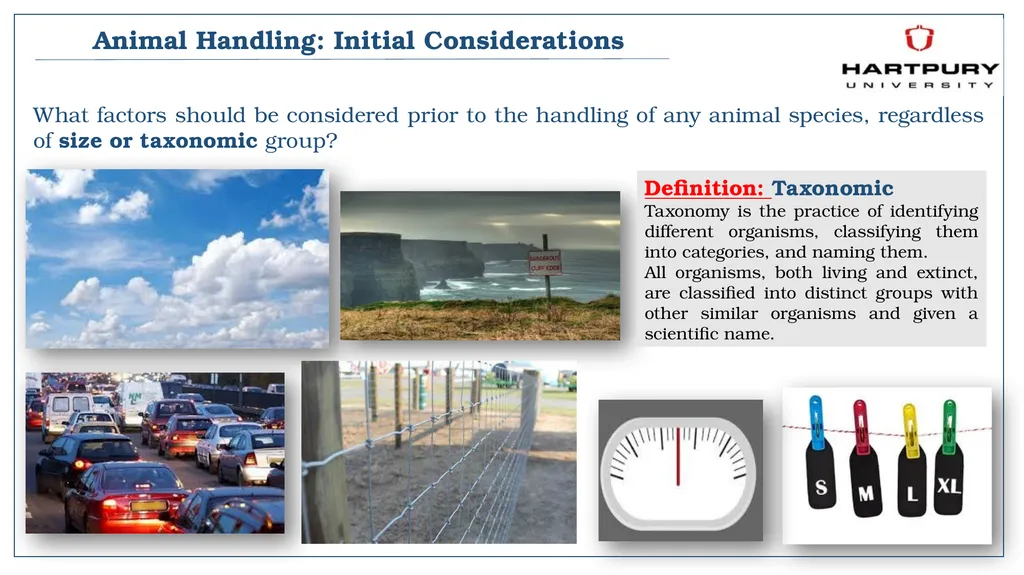
slide4. Animal Handling: Initial Considerations What factors should be considered prior to the handling of any animal species, regardless of size or taxonomic group? Definition: Taxonomic
Taxonomy is the practice of identifying different organisms, classifying them into categories, and naming them.
All organisms, both living and extinct, are classified into distinct groups with other similar organisms and given a scientific name.<br>
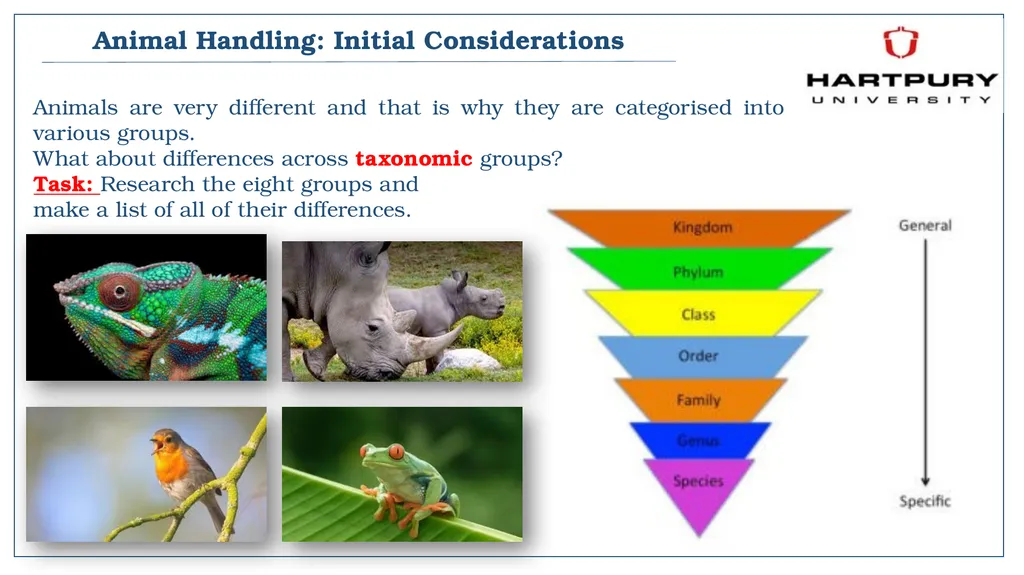
slide5. Animal Handling: Initial Considerations Animals are very different and that is why they are categorised into various groups.
What about differences across taxonomic groups?
Task: Research the eight groups and
make a list of all of their differences.<br>
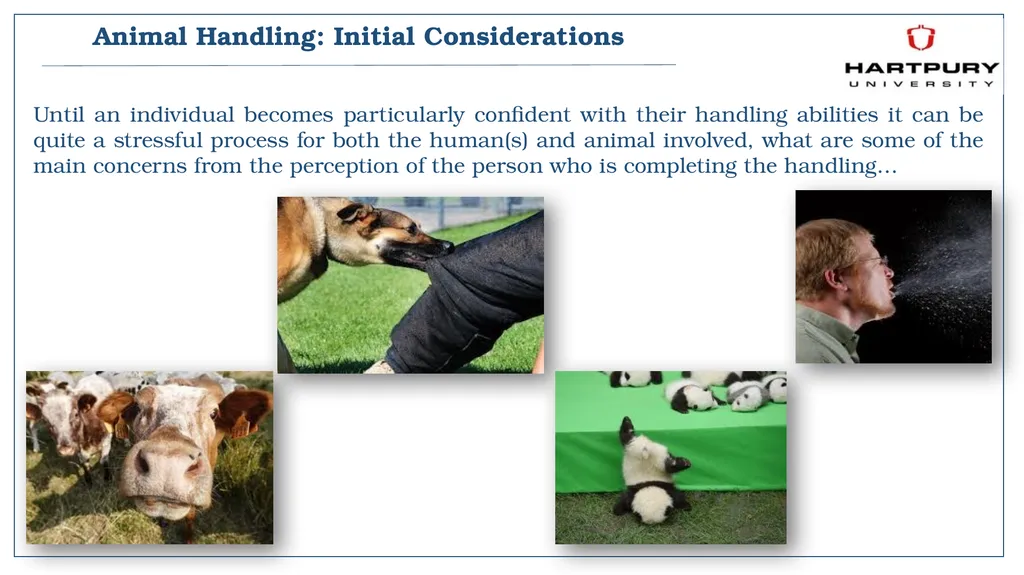
slide6. Animal Handling: Initial Considerations Until an individual becomes particularly confident with their handling abilities it can be quite a stressful process for both the human(s) and animal involved, what are some of the main concerns from the perception of the person who is completing the handling…<br>
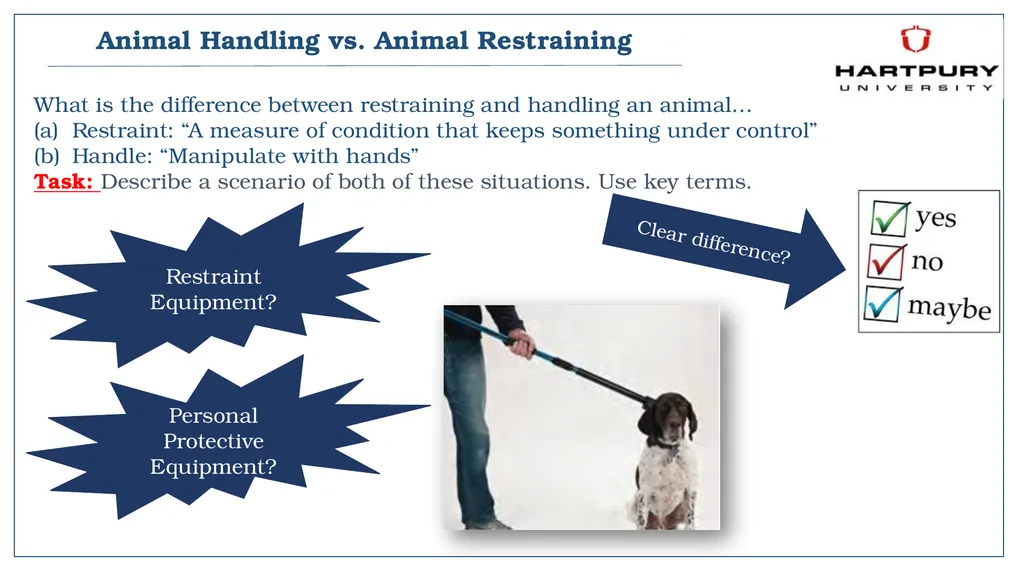
slide7. Animal Handling vs. Animal Restraining What is the difference between restraining and handling an animal…
Restraint: “A measure of condition that keeps something under control”
Handle: “Manipulate with hands”
Task: Describe a scenario of both of these situations. Use key terms. Clear difference? Restraint Equipment? Personal Protective Equipment?<br>
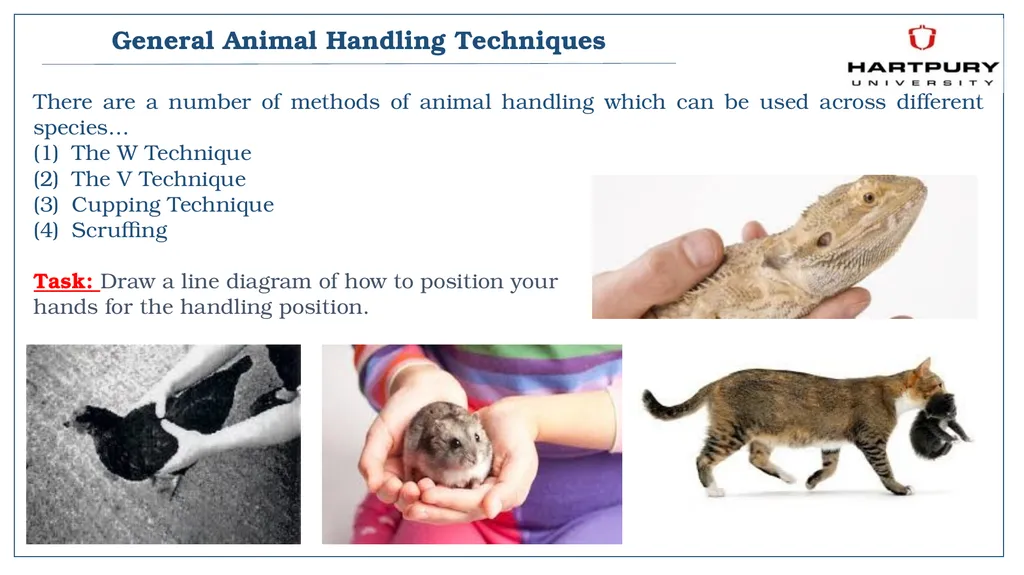
slide8. General Animal Handling Techniques There are a number of methods of animal handling which can be used across different species…
The W Technique
The V Technique
Cupping Technique
Scruffing
Task: Draw a line diagram of how to position your
hands for the handling position.<br>
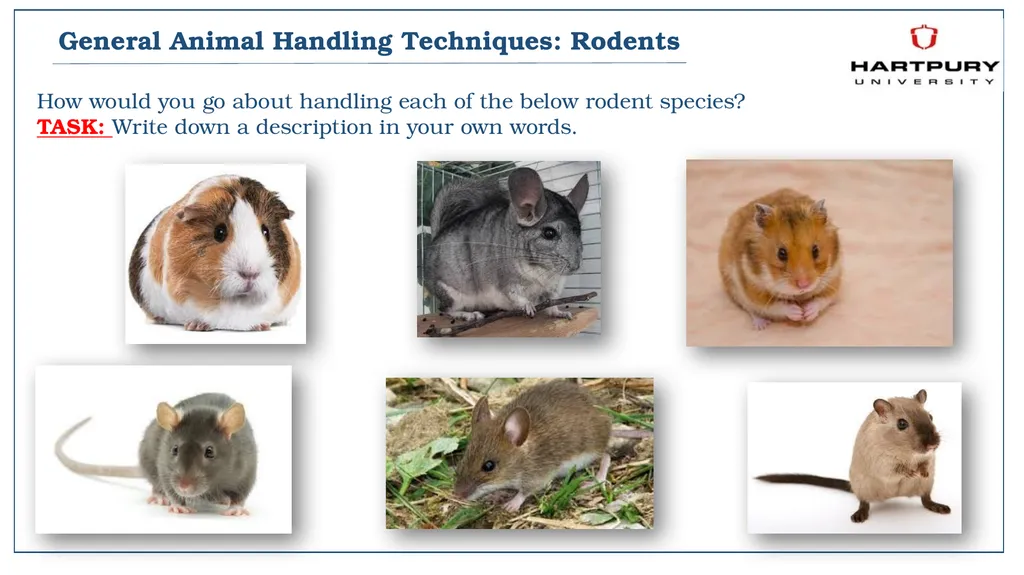
slide9. General Animal Handling Techniques: Rodents How would you go about handling each of the below rodent species?
TASK: Write down a description in your own words.<br>
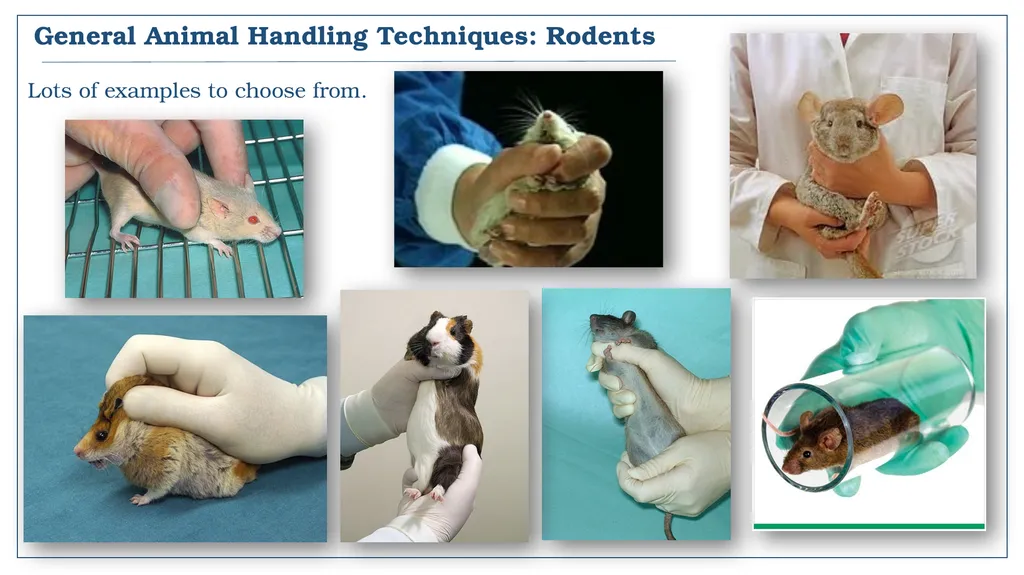
slide10. General Animal Handling Techniques: Rodents Lots of examples to choose from.<br>
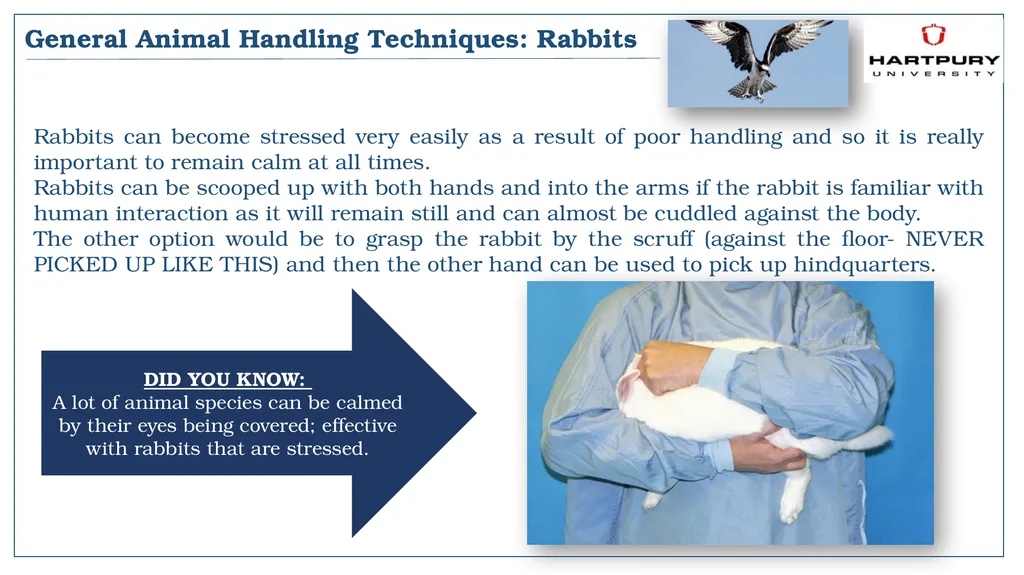
slide11. General Animal Handling Techniques: Rabbits Rabbits can become stressed very easily as a result of poor handling and so it is really important to remain calm at all times.
Rabbits can be scooped up with both hands and into the arms if the rabbit is familiar with human interaction as it will remain still and can almost be cuddled against the body.
The other option would be to grasp the rabbit by the scruff (against the floor- NEVER PICKED UP LIKE THIS) and then the other hand can be used to pick up hindquarters. DID YOU KNOW:
A lot of animal species can be calmed by their eyes being covered; effective with rabbits that are stressed.<br>
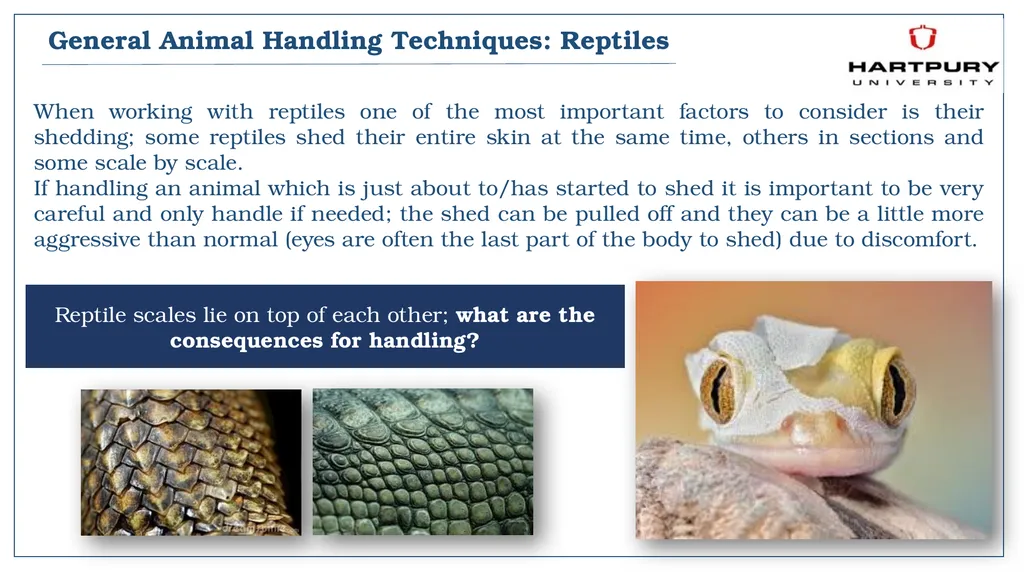
slide12. General Animal Handling Techniques: Reptiles When working with reptiles one of the most important factors to consider is their shedding; some reptiles shed their entire skin at the same time, others in sections and some scale by scale.
If handling an animal which is just about to/has started to shed it is important to be very careful and only handle if needed; the shed can be pulled off and they can be a little more aggressive than normal (eyes are often the last part of the body to shed) due to discomfort. Reptile scales lie on top of each other; what are the consequences for handling?<br>
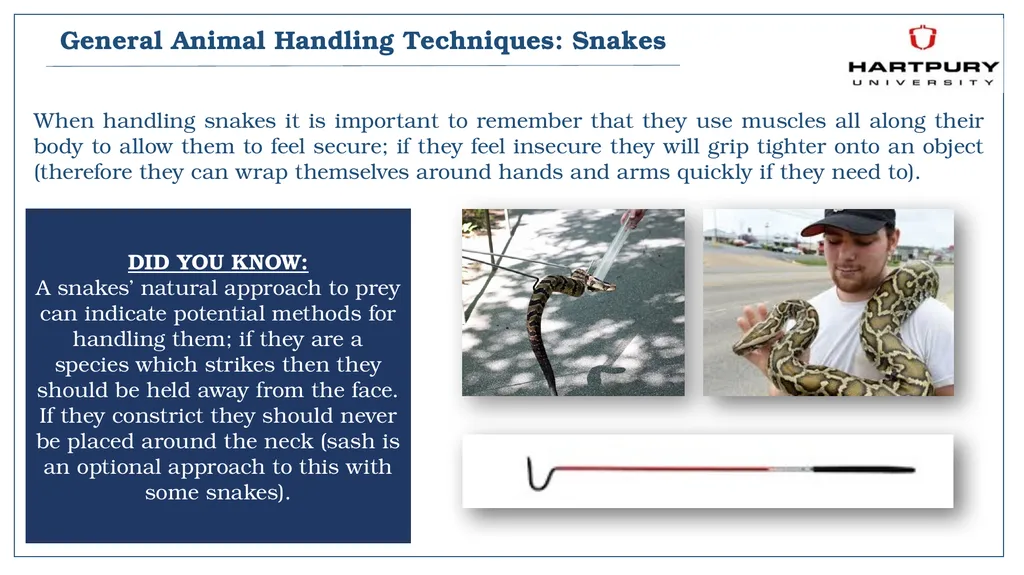
slide13. General Animal Handling Techniques: Snakes When handling snakes it is important to remember that they use muscles all along their body to allow them to feel secure; if they feel insecure they will grip tighter onto an object (therefore they can wrap themselves around hands and arms quickly if they need to). DID YOU KNOW:
A snakes’ natural approach to prey can indicate potential methods for handling them; if they are a species which strikes then they should be held away from the face. If they constrict they should never be placed around the neck (sash is an optional approach to this with some snakes).<br>
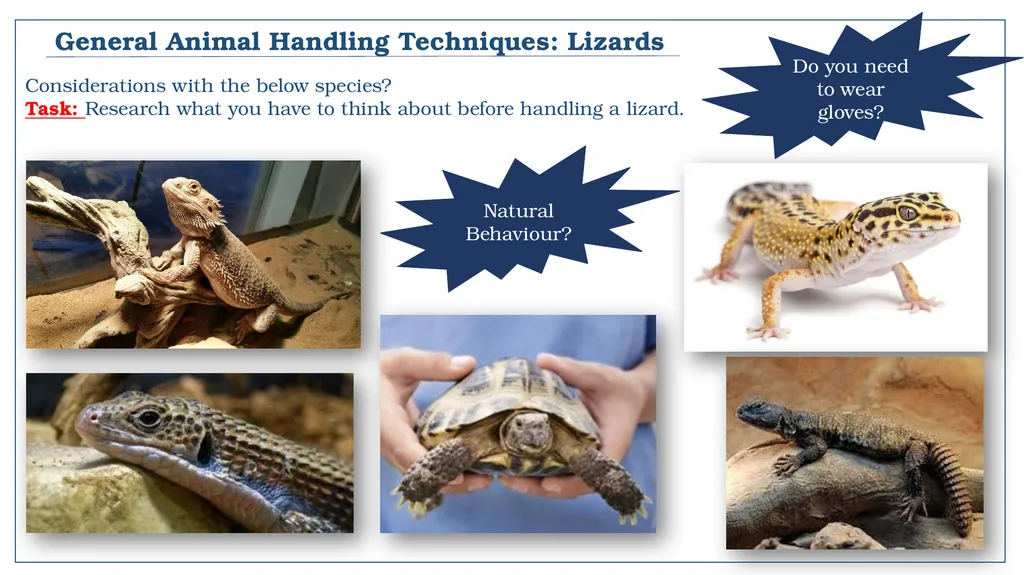
slide14. General Animal Handling Techniques: Lizards Considerations with the below species?
Task: Research what you have to think about before handling a lizard. Do you need to wear gloves? Natural Behaviour?<br>
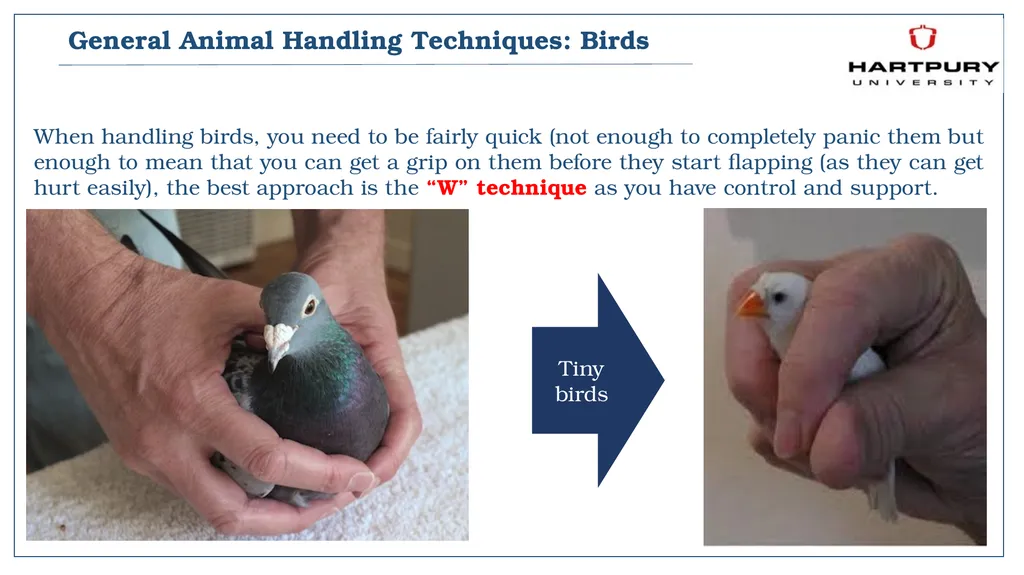
slide15. General Animal Handling Techniques: Birds When handling birds, you need to be fairly quick (not enough to completely panic them but enough to mean that you can get a grip on them before they start flapping (as they can get hurt easily), the best approach is the “W” technique as you have control and support. Tiny birds<br>
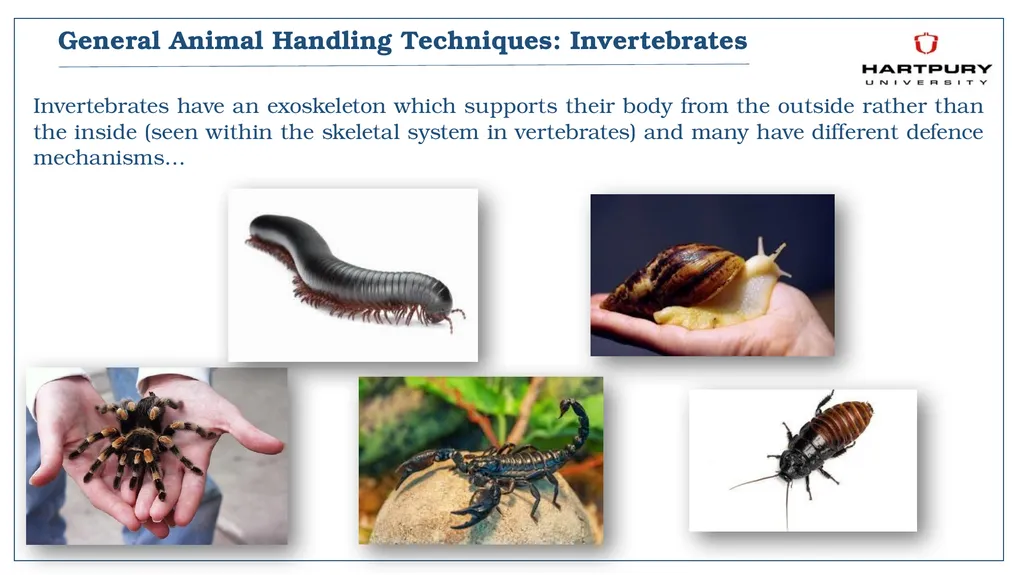
slide16. General Animal Handling Techniques: Invertebrates Invertebrates have an exoskeleton which supports their body from the outside rather than the inside (seen within the skeletal system in vertebrates) and many have different defence mechanisms…<br>
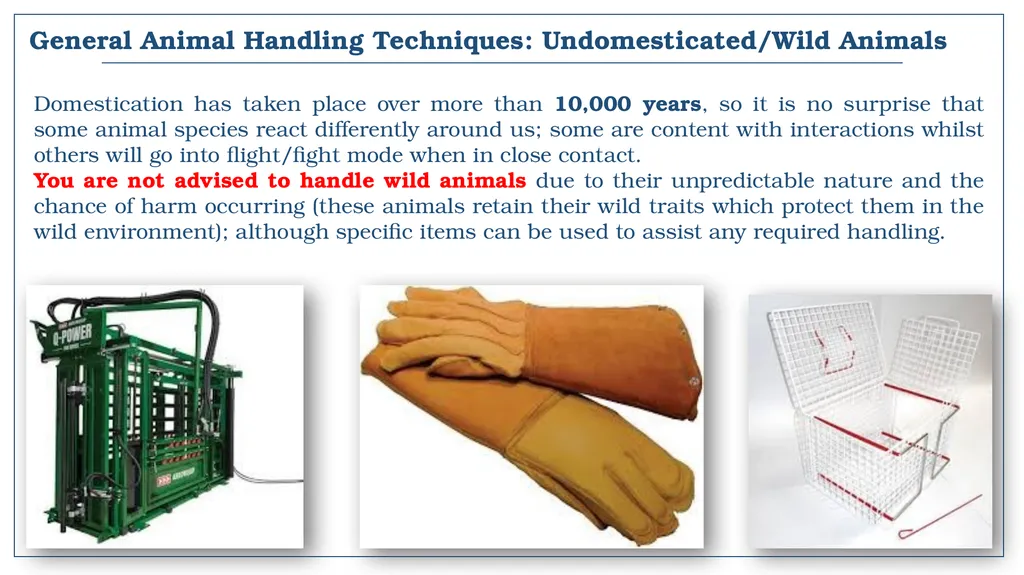
slide17. General Animal Handling Techniques: Undomesticated/Wild Animals Domestication has taken place over more than 10,000 years, so it is no surprise that some animal species react differently around us; some are content with interactions whilst others will go into flight/fight mode when in close contact.
You are not advised to handle wild animals due to their unpredictable nature and the chance of harm occurring (these animals retain their wild traits which protect them in the wild environment); although specific items can be used to assist any required handling.<br>
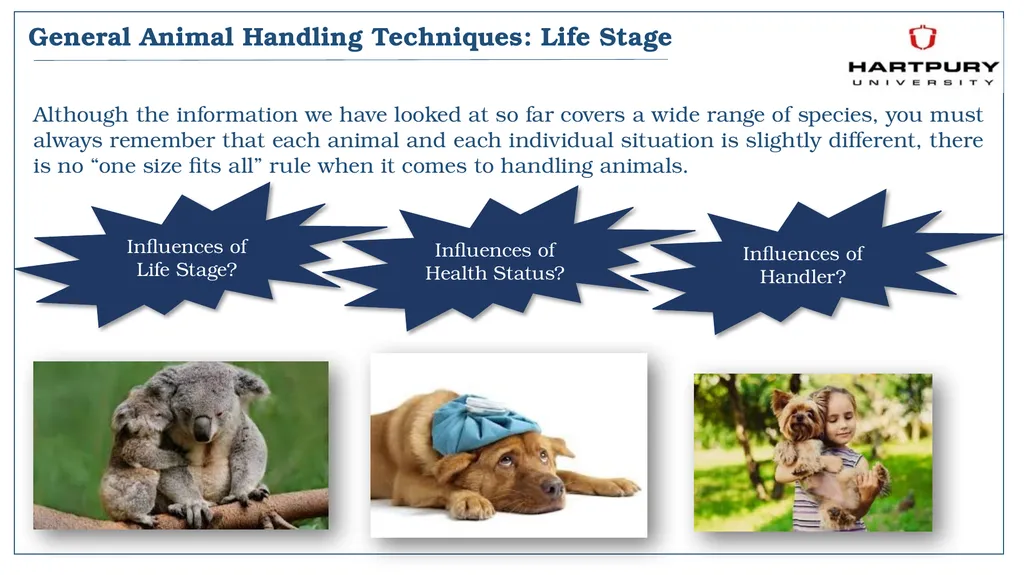
slide18. General Animal Handling Techniques: Life Stage Although the information we have looked at so far covers a wide range of species, you must always remember that each animal and each individual situation is slightly different, there is no “one size fits all” rule when it comes to handling animals. Influences of Life Stage? Influences of Health Status? Influences of Handler?<br>
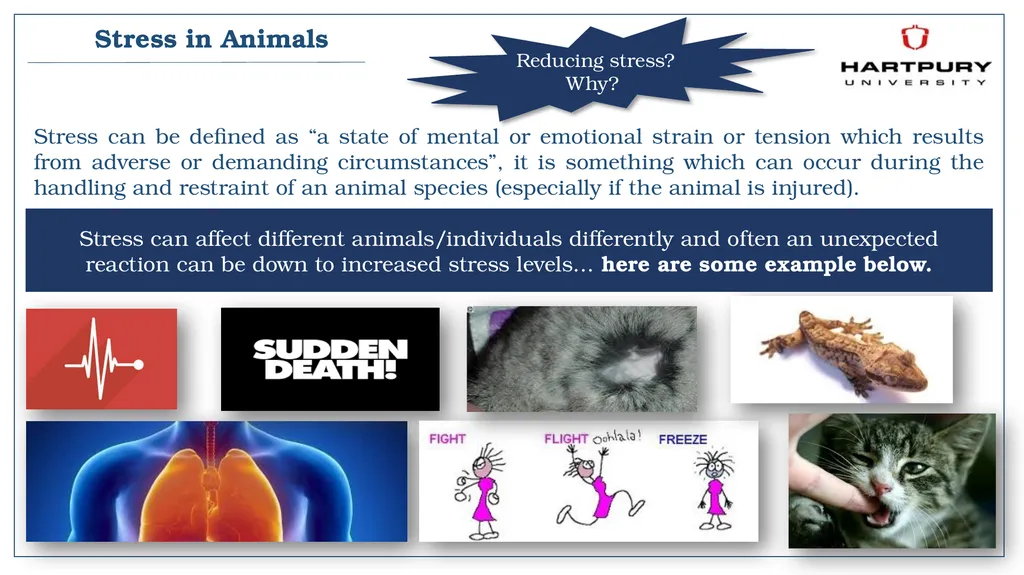
slide19. Stress in Animals Stress can be defined as “a state of mental or emotional strain or tension which results from adverse or demanding circumstances”, it is something which can occur during the handling and restraint of an animal species (especially if the animal is injured). Stress can affect different animals/individuals differently and often an unexpected reaction can be down to increased stress levels… here are some example below. Reducing stress? Why?<br>
slide2. Human Animal Interaction Learning Objectives By the end of this presentation …
Identify occasions when animals may need to be handled and restrained.
Present initial ideas on methods to reduce stress when handling animals.
Research and discuss animal handling methods and equipment which can be utilised.<br>
slide3. Animal Handling: Initial Considerations Prior to handling an animal, you must decide the reason for the handling and what welfare issues may arise as a result of the interaction… you should never put an animal in a stressful situation if you can help it.
Health Check?
Movement?
Injury?
Vaccination?
Interaction? The animal should always remain the priority.
When may this be difficult?<br>
slide4. Animal Handling: Initial Considerations What factors should be considered prior to the handling of any animal species, regardless of size or taxonomic group? Definition: Taxonomic
Taxonomy is the practice of identifying different organisms, classifying them into categories, and naming them.
All organisms, both living and extinct, are classified into distinct groups with other similar organisms and given a scientific name.<br>
slide5. Animal Handling: Initial Considerations Animals are very different and that is why they are categorised into various groups.
What about differences across taxonomic groups?
Task: Research the eight groups and
make a list of all of their differences.<br>
slide6. Animal Handling: Initial Considerations Until an individual becomes particularly confident with their handling abilities it can be quite a stressful process for both the human(s) and animal involved, what are some of the main concerns from the perception of the person who is completing the handling…<br>
slide7. Animal Handling vs. Animal Restraining What is the difference between restraining and handling an animal…
Restraint: “A measure of condition that keeps something under control”
Handle: “Manipulate with hands”
Task: Describe a scenario of both of these situations. Use key terms. Clear difference? Restraint Equipment? Personal Protective Equipment?<br>
slide8. General Animal Handling Techniques There are a number of methods of animal handling which can be used across different species…
The W Technique
The V Technique
Cupping Technique
Scruffing
Task: Draw a line diagram of how to position your
hands for the handling position.<br>
slide9. General Animal Handling Techniques: Rodents How would you go about handling each of the below rodent species?
TASK: Write down a description in your own words.<br>
slide10. General Animal Handling Techniques: Rodents Lots of examples to choose from.<br>
slide11. General Animal Handling Techniques: Rabbits Rabbits can become stressed very easily as a result of poor handling and so it is really important to remain calm at all times.
Rabbits can be scooped up with both hands and into the arms if the rabbit is familiar with human interaction as it will remain still and can almost be cuddled against the body.
The other option would be to grasp the rabbit by the scruff (against the floor- NEVER PICKED UP LIKE THIS) and then the other hand can be used to pick up hindquarters. DID YOU KNOW:
A lot of animal species can be calmed by their eyes being covered; effective with rabbits that are stressed.<br>
slide12. General Animal Handling Techniques: Reptiles When working with reptiles one of the most important factors to consider is their shedding; some reptiles shed their entire skin at the same time, others in sections and some scale by scale.
If handling an animal which is just about to/has started to shed it is important to be very careful and only handle if needed; the shed can be pulled off and they can be a little more aggressive than normal (eyes are often the last part of the body to shed) due to discomfort. Reptile scales lie on top of each other; what are the consequences for handling?<br>
slide13. General Animal Handling Techniques: Snakes When handling snakes it is important to remember that they use muscles all along their body to allow them to feel secure; if they feel insecure they will grip tighter onto an object (therefore they can wrap themselves around hands and arms quickly if they need to). DID YOU KNOW:
A snakes’ natural approach to prey can indicate potential methods for handling them; if they are a species which strikes then they should be held away from the face. If they constrict they should never be placed around the neck (sash is an optional approach to this with some snakes).<br>
slide14. General Animal Handling Techniques: Lizards Considerations with the below species?
Task: Research what you have to think about before handling a lizard. Do you need to wear gloves? Natural Behaviour?<br>
slide15. General Animal Handling Techniques: Birds When handling birds, you need to be fairly quick (not enough to completely panic them but enough to mean that you can get a grip on them before they start flapping (as they can get hurt easily), the best approach is the “W” technique as you have control and support. Tiny birds<br>
slide16. General Animal Handling Techniques: Invertebrates Invertebrates have an exoskeleton which supports their body from the outside rather than the inside (seen within the skeletal system in vertebrates) and many have different defence mechanisms…<br>
slide17. General Animal Handling Techniques: Undomesticated/Wild Animals Domestication has taken place over more than 10,000 years, so it is no surprise that some animal species react differently around us; some are content with interactions whilst others will go into flight/fight mode when in close contact.
You are not advised to handle wild animals due to their unpredictable nature and the chance of harm occurring (these animals retain their wild traits which protect them in the wild environment); although specific items can be used to assist any required handling.<br>
slide18. General Animal Handling Techniques: Life Stage Although the information we have looked at so far covers a wide range of species, you must always remember that each animal and each individual situation is slightly different, there is no “one size fits all” rule when it comes to handling animals. Influences of Life Stage? Influences of Health Status? Influences of Handler?<br>
slide19. Stress in Animals Stress can be defined as “a state of mental or emotional strain or tension which results from adverse or demanding circumstances”, it is something which can occur during the handling and restraint of an animal species (especially if the animal is injured). Stress can affect different animals/individuals differently and often an unexpected reaction can be down to increased stress levels… here are some example below. Reducing stress? Why?<br>