
About OMICS Group OMICS Group International is an
PC
Published · 21 slides · 0 views

1 / 1

Description
About OMICS Group OMICS Group International is an amalgamation of Open Access publications and worldwide international science conferences and events. Established in the year 2007 with the sole aim of making the information on Sciences and
Related Topics
Share
Embed code
Download this presentation From Below
"About OMICS Group OMICS Group International is an" is the property of its rightful owner. Permission is granted to download and print the materials on this website for personal, non-commercial use only, and to display it on your personal computer provided you do not modify the materials and that you retain all copyright notices contained in the materials. By downloading content from our website, you accept the terms of this agreement.
Presentation Transcript
01
About OMICS Group OMICS Group International is an amalgamation of Open Access publications and worldwide international science conferences and events. Established in the year 2007 with the sole aim of making the information on Sciences and technology ‘Open Access’, OMICS Group publishes 400 online open access scholarly journals in all aspects of Science, Engineering, Management and Technology journals. OMICS Group has been instrumental in taking the knowledge on Science & technology to the doorsteps of ordinary men and women. Research Scholars, Students, Libraries, Educational Institutions, Research centers and the industry are main stakeholders that benefitted greatly from this knowledge dissemination. OMICS Group also organizes 300 International conferences annually across the globe, where knowledge transfer takes place through debates, round table discussions, poster presentations, workshops, symposia and exhibitions.<br>
02
About OMICS Group Conferences OMICS Group International is a pioneer and leading science event organizer, which publishes around 400 open access journals and conducts over 300 Medical, Clinical, Engineering, Life Sciences, Phrama scientific conferences all over the globe annually with the support of more than 1000 scientific associations and 30,000 editorial board members and 3.5 million followers to its credit.
OMICS Group has organized 500 conferences, workshops and national symposiums across the major cities including San Francisco, Las Vegas, San Antonio, Omaha, Orlando, Raleigh, Santa Clara, Chicago, Philadelphia, Baltimore, United Kingdom, Valencia, Dubai, Beijing, Hyderabad, Bengaluru and Mumbai.<br>
OMICS Group has organized 500 conferences, workshops and national symposiums across the major cities including San Francisco, Las Vegas, San Antonio, Omaha, Orlando, Raleigh, Santa Clara, Chicago, Philadelphia, Baltimore, United Kingdom, Valencia, Dubai, Beijing, Hyderabad, Bengaluru and Mumbai.<br>
03
3 The cellular basis of protective immunity against experimental infection caused by Francisella tularensis Kubelkova K., Orlikova A., Krocova Z., Pejchal J., Macela A., Stulik J.
Faculty of Military Health Sciences, University of Defense, 500 01 Hradec Kralove, Czech Republic<br>
Faculty of Military Health Sciences, University of Defense, 500 01 Hradec Kralove, Czech Republic<br>
04
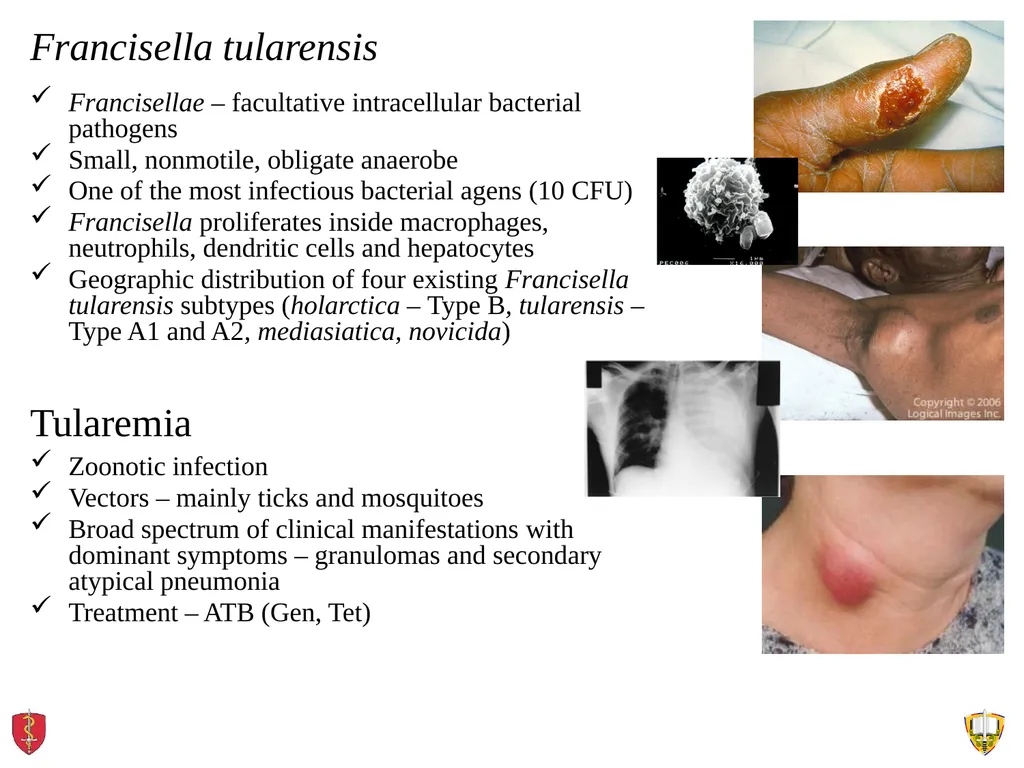
Centre of Advanced Studies, Faculty of Military Health Sciences, University of Defence, 500 01 Hradec Kralove, Czech Republic 4 Francisella tularensis Francisellae – facultative intracellular bacterial pathogens
Small, nonmotile, obligate anaerobe
One of the most infectious bacterial agens (10 CFU)
Francisella proliferates inside macrophages, neutrophils, dendritic cells and hepatocytes
Geographic distribution of four existing Francisella tularensis subtypes (holarctica – Type B, tularensis – Type A1 and A2, mediasiatica, novicida)
Zoonotic infection
Vectors – mainly ticks and mosquitoes
Broad spectrum of clinical manifestations with dominant symptoms – granulomas and secondary atypical pneumonia
Treatment – ATB (Gen, Tet) Tularemia The cellular basis of protective immunity against experimental infection caused by Francisella tularensis<br>
05
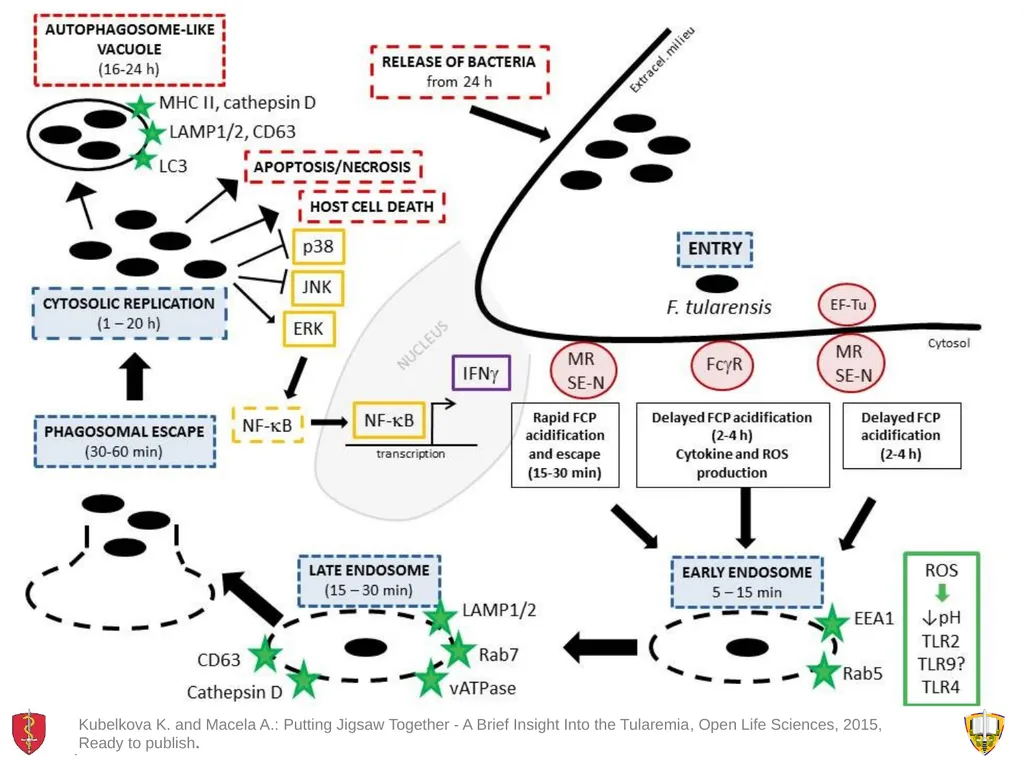
Centre of Advanced Studies, Faculty of Military Health Sciences, University of Defence, 500 01 Hradec Kralove, Czech Republic 5 Kubelkova K. and Macela A.: Putting Jigsaw Together - A Brief Insight Into the Tularemia, Open Life Sciences, 2015, Ready to publish.<br>
06
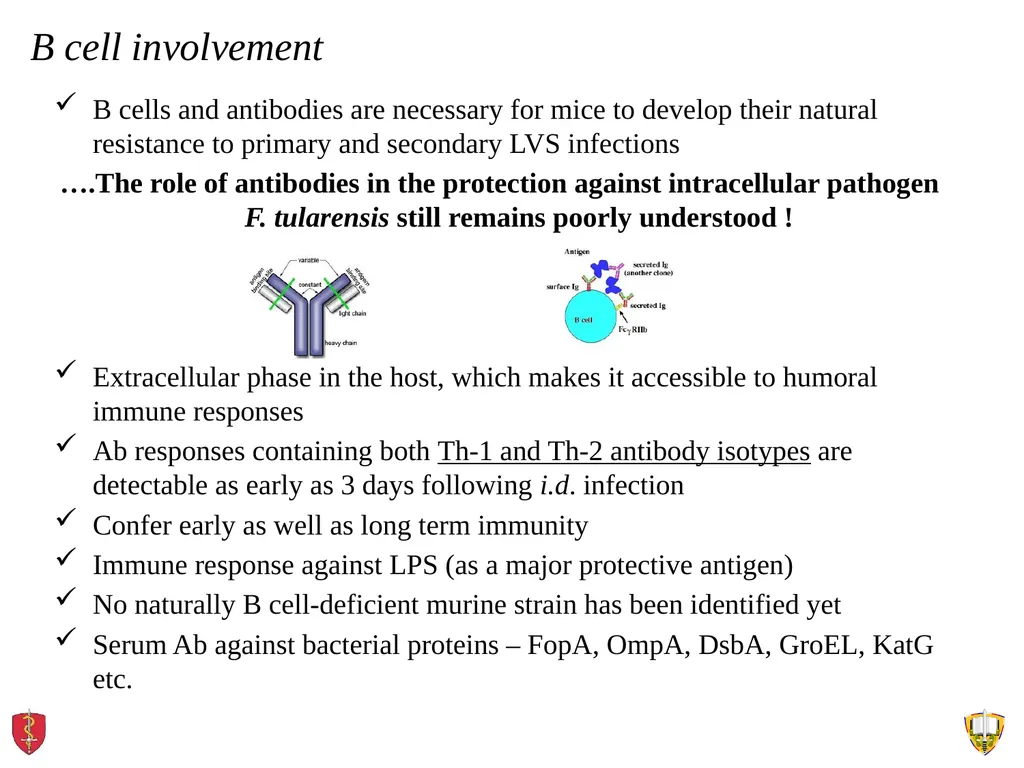
Centre of Advanced Studies, Faculty of Military Health Sciences, University of Defence, 500 01 Hradec Kralove, Czech Republic 6 B cell involvement B cells and antibodies are necessary for mice to develop their natural resistance to primary and secondary LVS infections
….The role of antibodies in the protection against intracellular pathogen F. tularensis still remains poorly understood !
Extracellular phase in the host, which makes it accessible to humoral immune responses
Ab responses containing both Th-1 and Th-2 antibody isotypes are detectable as early as 3 days following i.d. infection
Confer early as well as long term immunity
Immune response against LPS (as a major protective antigen)
No naturally B cell-deficient murine strain has been identified yet
Serum Ab against bacterial proteins – FopA, OmpA, DsbA, GroEL, KatG etc.<br>
07
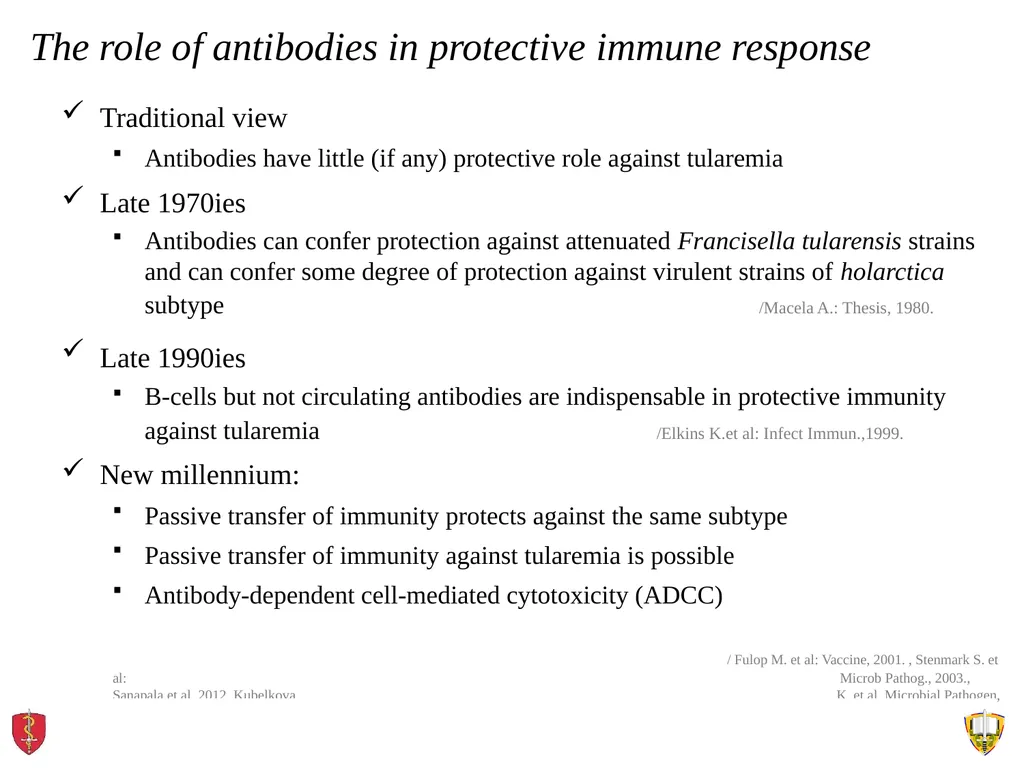
Centre of Advanced Studies, Faculty of Military Health Sciences, University of Defence, 500 01 Hradec Kralove, Czech Republic 7 Traditional view
Antibodies have little (if any) protective role against tularemia
Late 1970ies
Antibodies can confer protection against attenuated Francisella tularensis strains and can confer some degree of protection against virulent strains of holarctica subtype /Macela A.: Thesis, 1980.
Late 1990ies
B-cells but not circulating antibodies are indispensable in protective immunity against tularemia /Elkins K.et al: Infect Immun.,1999.
New millennium:
Passive transfer of immunity protects against the same subtype
Passive transfer of immunity against tularemia is possible
Antibody-dependent cell-mediated cytotoxicity (ADCC)
/ Fulop M. et al: Vaccine, 2001. , Stenmark S. et al: Microb Pathog., 2003., Sanapala et al. 2012, Kubelkova K. et al. Microbial Pathogen, 2012 The role of antibodies in protective immune response<br>
08
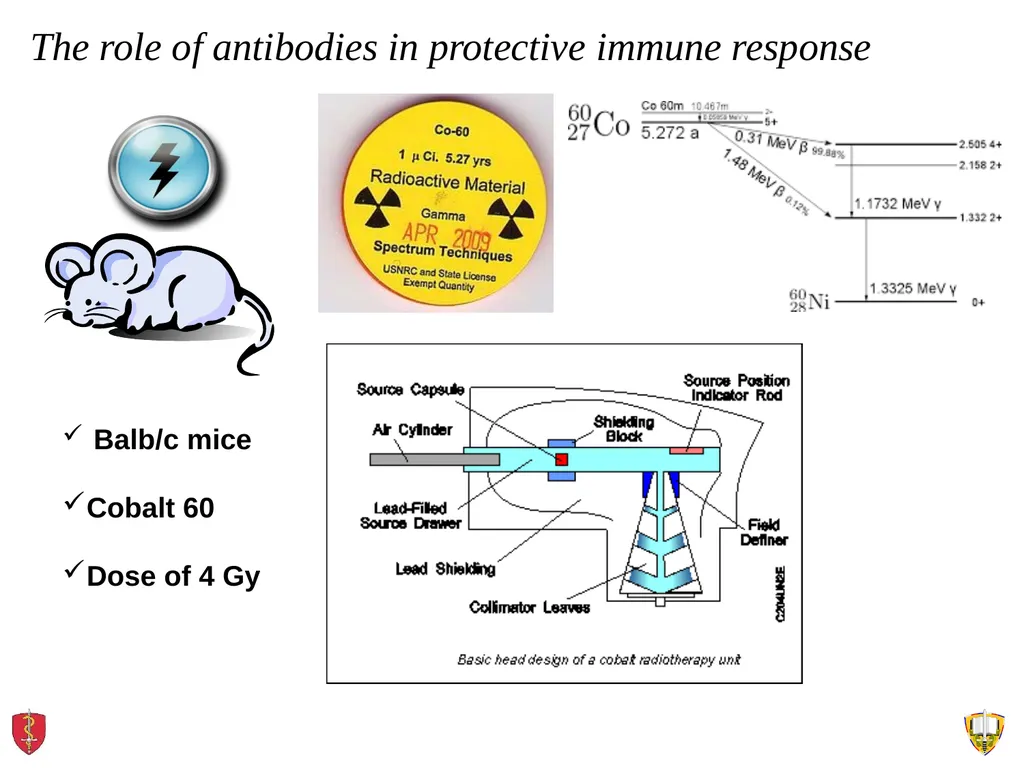
Centre of Advanced Studies, Faculty of Military Health Sciences, University of Defence, 500 01 Hradec Kralove, Czech Republic 8 The role of antibodies in protective immune response Balb/c mice
Cobalt 60
Dose of 4 Gy<br>
Cobalt 60
Dose of 4 Gy<br>
09
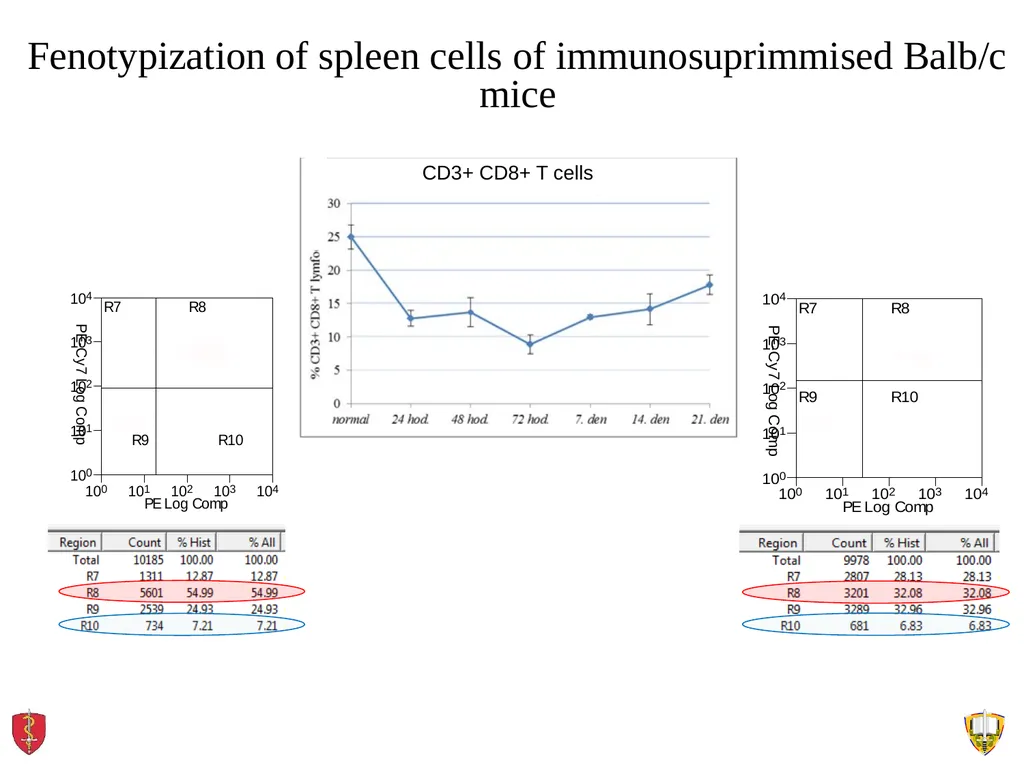
Obr.č.3: CD3+CD8+T lymfocyty Fenotypization of spleen cells of immunosuprimmised Balb/c mice CD3+ CD8+ T cells<br>
10
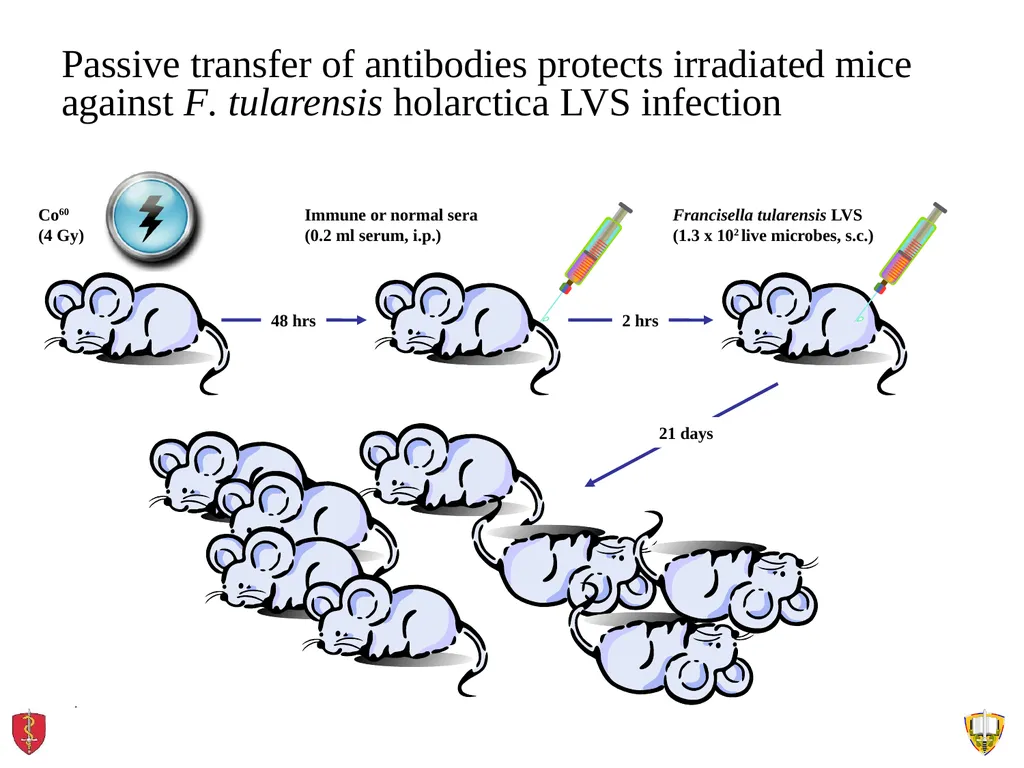
Centre of Advanced Studies, Faculty of Military Health Sciences, University of Defence, 500 01 Hradec Kralove, Czech Republic 10 Passive transfer of antibodies protects irradiated mice against F. tularensis holarctica LVS infection Francisella tularensis LVS
(1.3 x 10² live microbes, s.c.) Immune or normal sera
(0.2 ml serum, i.p.) 48 hrs 2 hrs 21 days<br>
(1.3 x 10² live microbes, s.c.) Immune or normal sera
(0.2 ml serum, i.p.) 48 hrs 2 hrs 21 days<br>
11
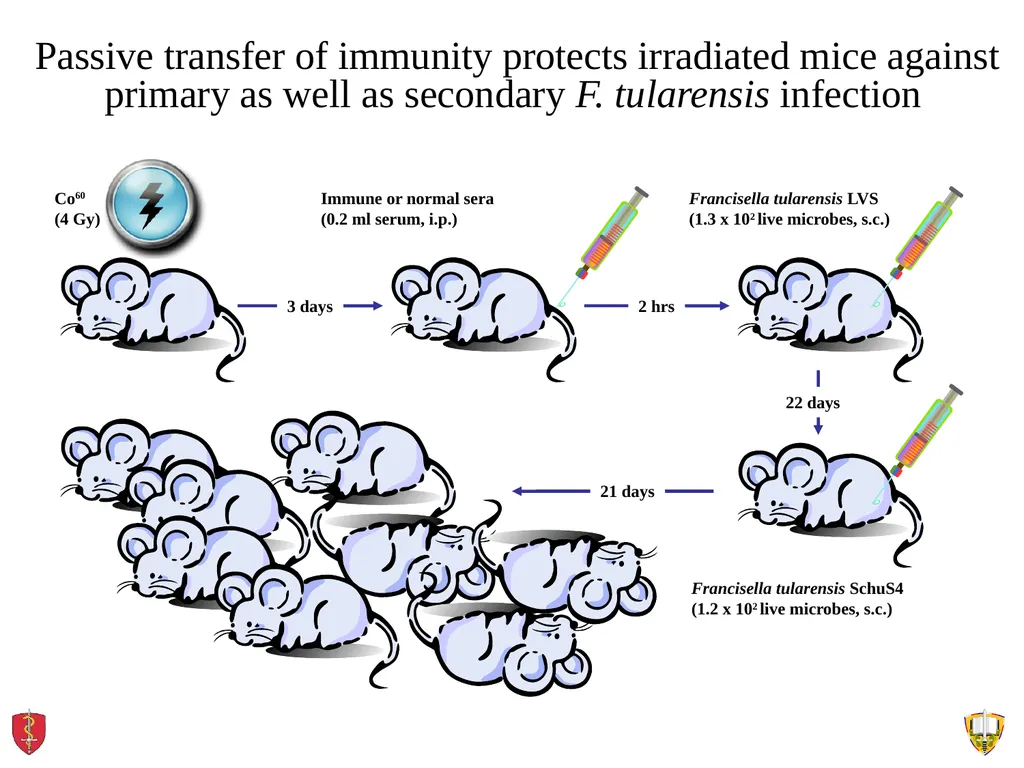
Centre of Advanced Studies, Faculty of Military Health Sciences, University of Defence, 500 01 Hradec Kralove, Czech Republic 11 Passive transfer of immunity protects irradiated mice against primary as well as secondary F. tularensis infection<br>
12
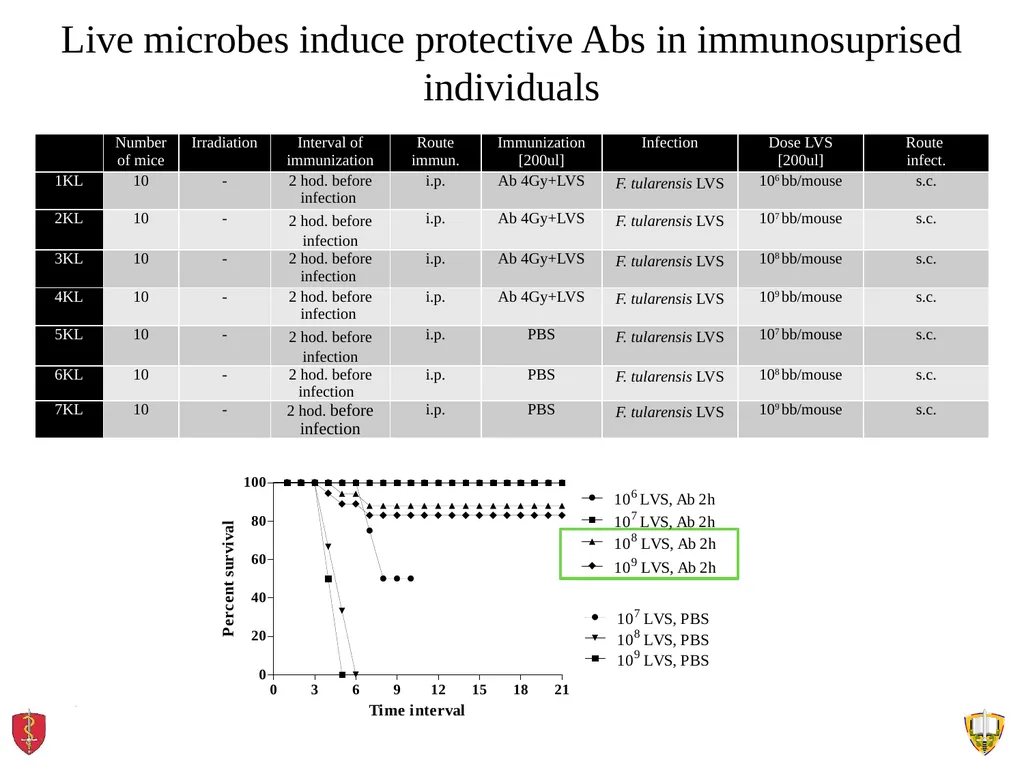
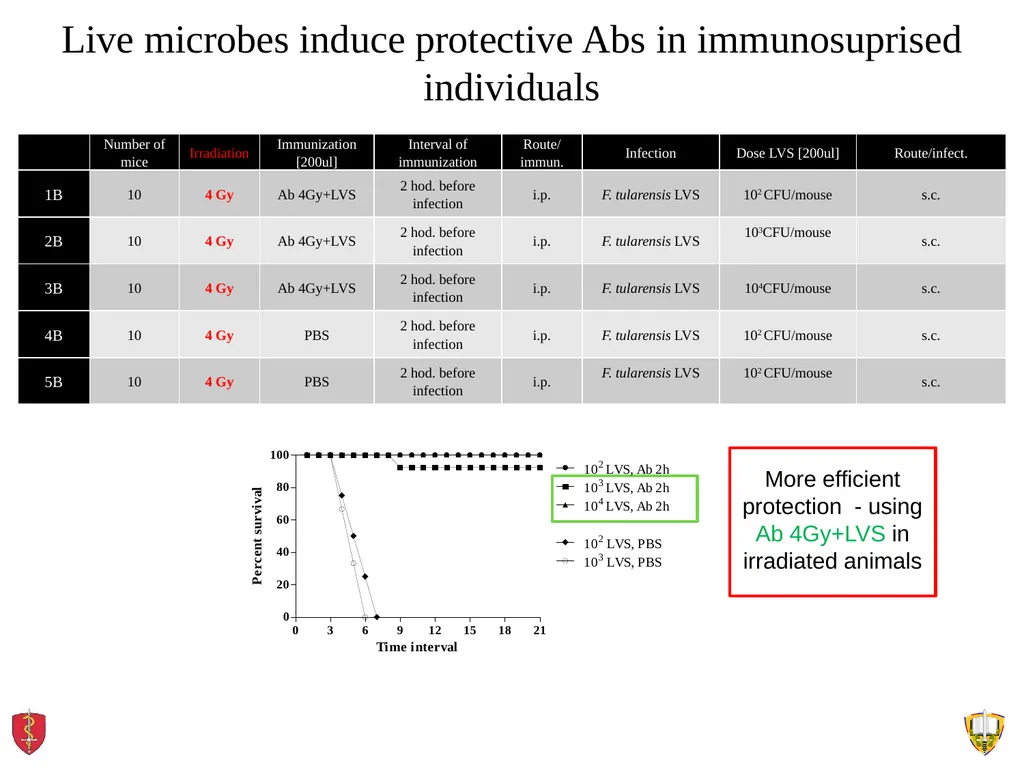
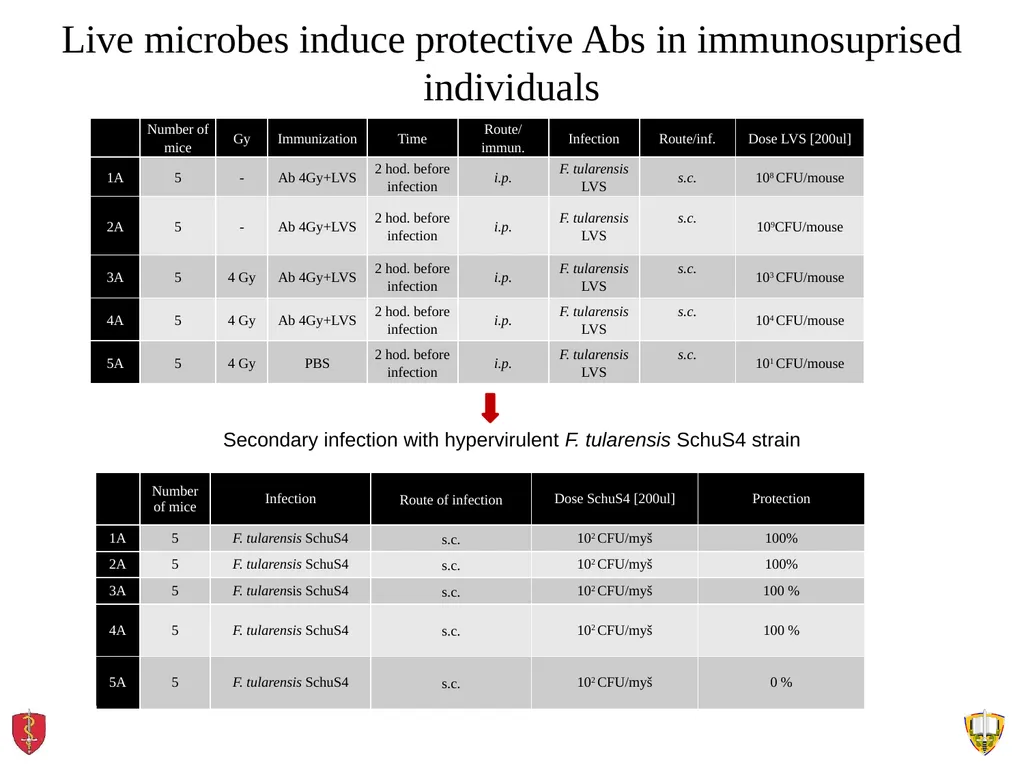
Live microbes induce protective Abs in immunosuprised individuals<br>
13
More efficient protection - using Ab 4Gy+LVS in irradiated animals Live microbes induce protective Abs in immunosuprised individuals<br>
14
Secondary infection with hypervirulent F. tularensis SchuS4 strain Live microbes induce protective Abs in immunosuprised individuals<br>
15
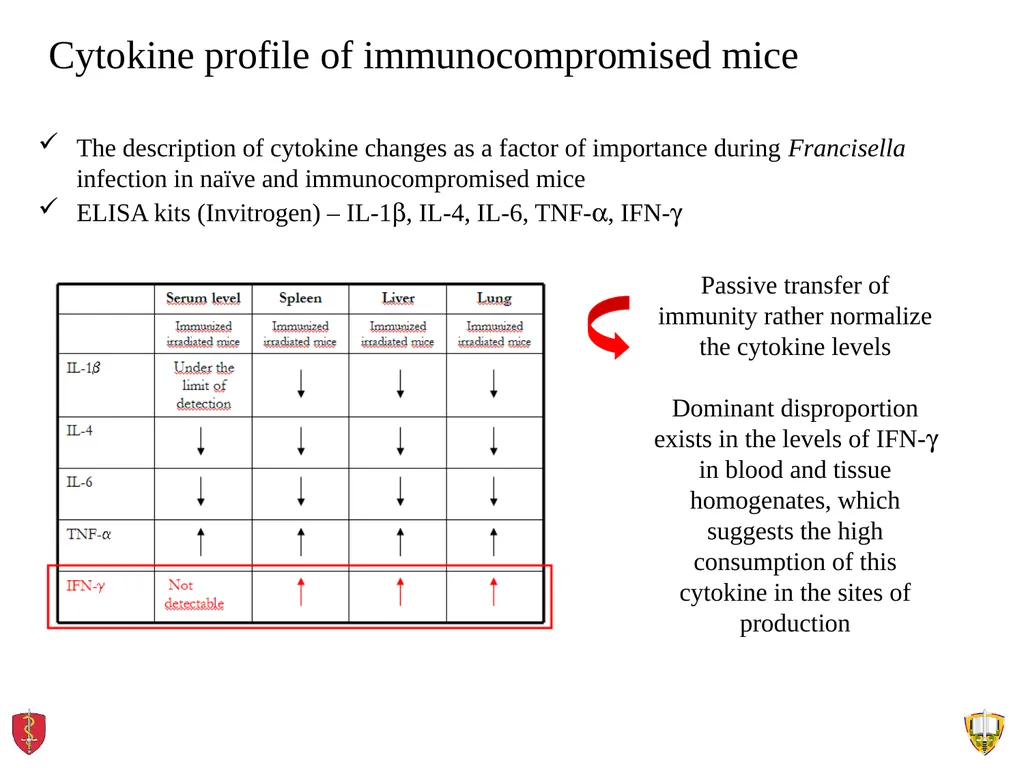
Centre of Advanced Studies, Faculty of Military Health Sciences, University of Defence, 500 01 Hradec Kralove, Czech Republic 15 Cytokine profile of immunocompromised mice The description of cytokine changes as a factor of importance during Francisella infection in naïve and immunocompromised mice
ELISA kits (Invitrogen) – IL-1b, IL-4, IL-6, TNF-a, IFN-g Passive transfer of immunity rather normalize the cytokine levels
Dominant disproportion exists in the levels of IFN-g in blood and tissue homogenates, which suggests the high consumption of this cytokine in the sites of production<br>
ELISA kits (Invitrogen) – IL-1b, IL-4, IL-6, TNF-a, IFN-g Passive transfer of immunity rather normalize the cytokine levels
Dominant disproportion exists in the levels of IFN-g in blood and tissue homogenates, which suggests the high consumption of this cytokine in the sites of production<br>
16
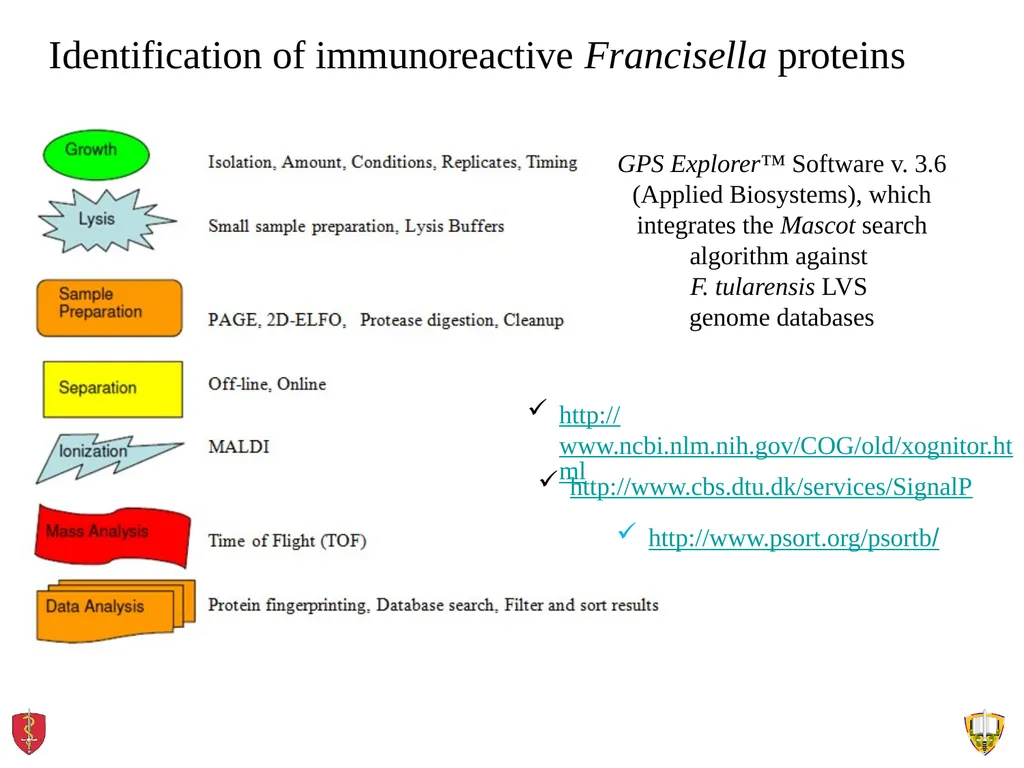
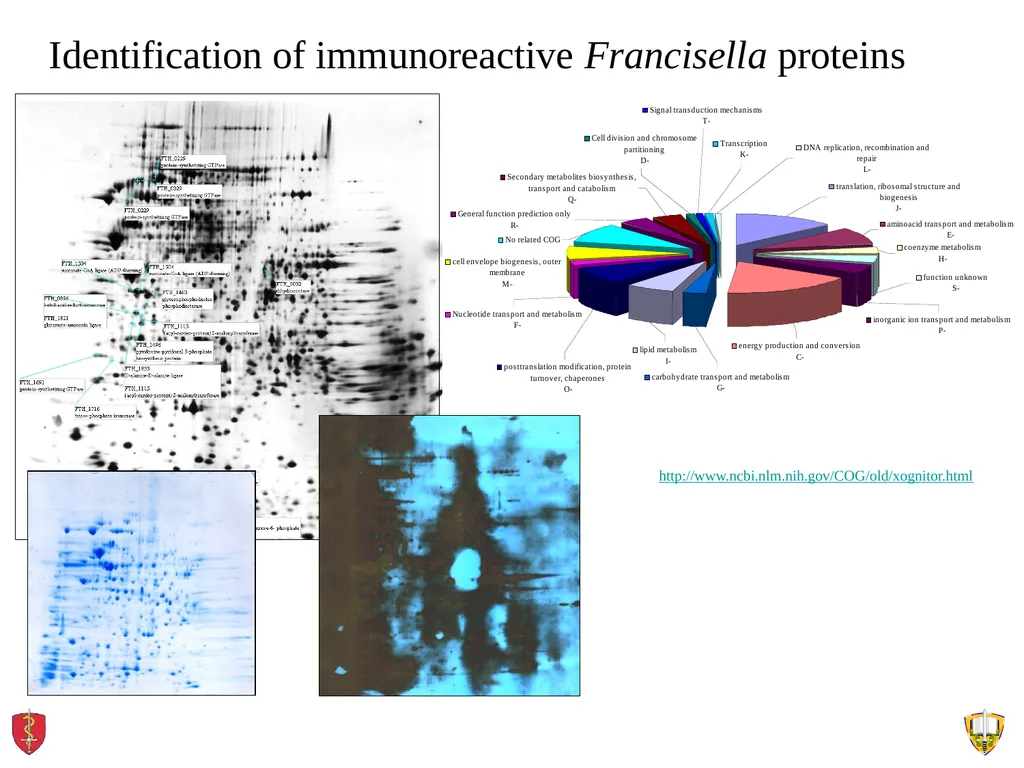
Centre of Advanced Studies, Faculty of Military Health Sciences, University of Defence, 500 01 Hradec Kralove, Czech Republic 16 http://www.psort.org/psortb/ http://www.cbs.dtu.dk/services/SignalP GPS Explorer™ Software v. 3.6 (Applied Biosystems), which integrates the Mascot search algorithm against
F. tularensis LVS genome databases Identification of immunoreactive Francisella proteins http://www.ncbi.nlm.nih.gov/COG/old/xognitor.html<br>
F. tularensis LVS genome databases Identification of immunoreactive Francisella proteins http://www.ncbi.nlm.nih.gov/COG/old/xognitor.html<br>
17
Centre of Advanced Studies, Faculty of Military Health Sciences, University of Defence, 500 01 Hradec Kralove, Czech Republic 17 http://www.ncbi.nlm.nih.gov/COG/old/xognitor.html Identification of immunoreactive Francisella proteins<br>
18
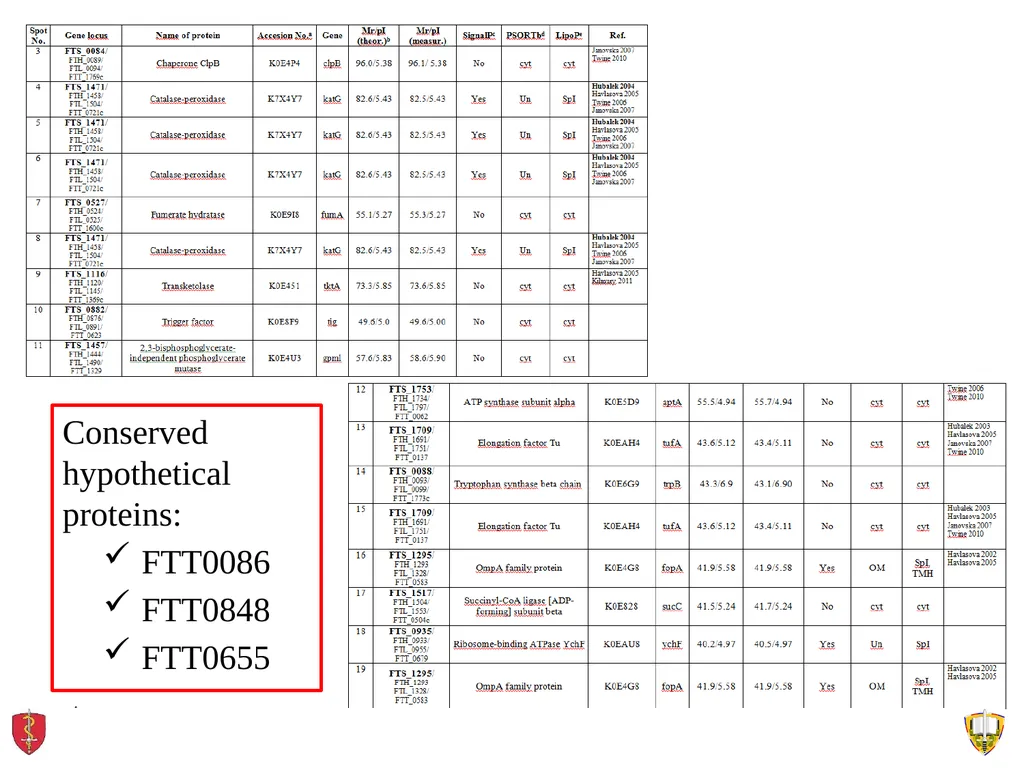
Conserved hypothetical proteins:
FTT0086
FTT0848
FTT0655<br>
FTT0086
FTT0848
FTT0655<br>
19
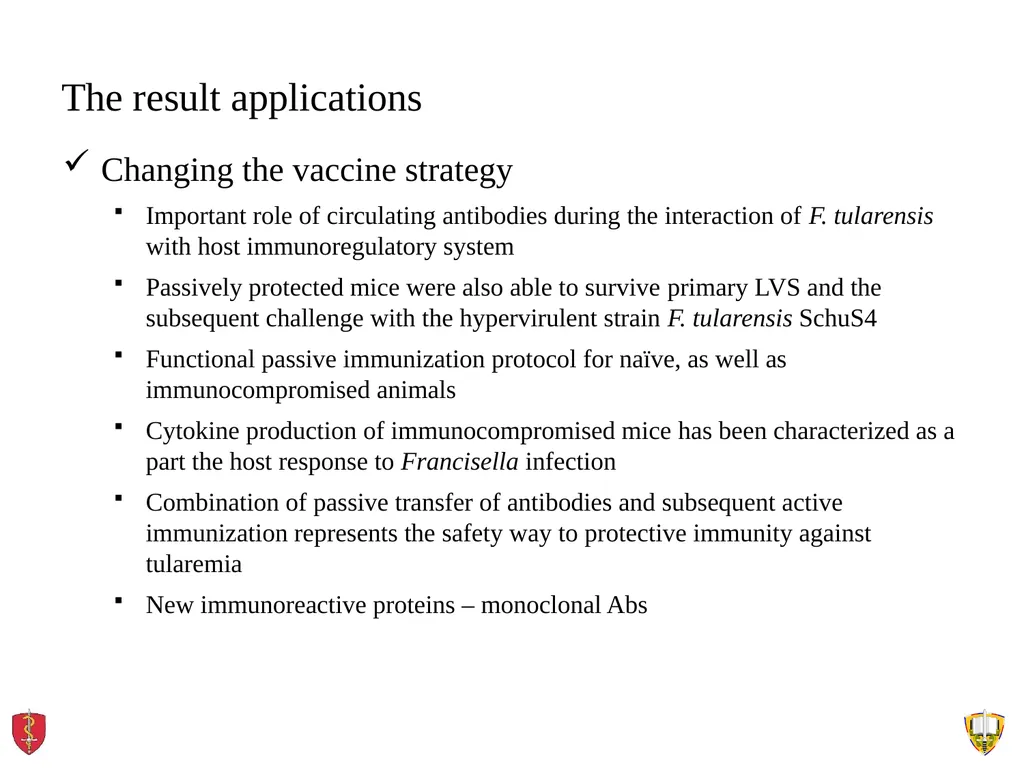
Centre of Advanced Studies, Faculty of Military Health Sciences, University of Defence, 500 01 Hradec Kralove, Czech Republic 19 The result applications Changing the vaccine strategy
Important role of circulating antibodies during the interaction of F. tularensis with host immunoregulatory system
Passively protected mice were also able to survive primary LVS and the subsequent challenge with the hypervirulent strain F. tularensis SchuS4
Functional passive immunization protocol for naïve, as well as immunocompromised animals
Cytokine production of immunocompromised mice has been characterized as a part the host response to Francisella infection
Combination of passive transfer of antibodies and subsequent active immunization represents the safety way to protective immunity against tularemia
New immunoreactive proteins – monoclonal Abs<br>
20
Centre of Advanced Studies, Faculty of Military Health Sciences, University of Defence, 500 01 Hradec Kralove, Czech Republic 20 UNIVERSITY OF DEFENCE FDA, CBER
Macela Ales Elkins Karen
Stulik Jiri DePascalis Roberto
Krocova Zuzana Kurtz Sherry
Safarova Maria
Zakova Jitka
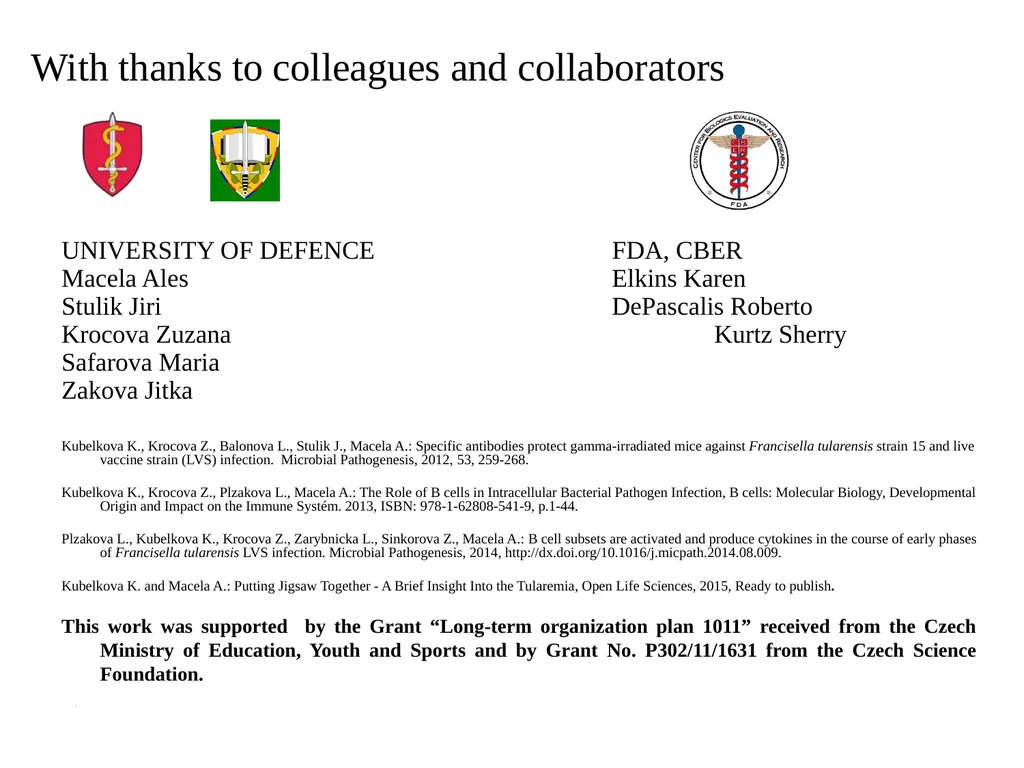
Kubelkova K., Krocova Z., Balonova L., Stulik J., Macela A.: Specific antibodies protect gamma-irradiated mice against Francisella tularensis strain 15 and live vaccine strain (LVS) infection. Microbial Pathogenesis, 2012, 53, 259-268.
Kubelkova K., Krocova Z., Plzakova L., Macela A.: The Role of B cells in Intracellular Bacterial Pathogen Infection, B cells: Molecular Biology, Developmental Origin and Impact on the Immune Systém. 2013, ISBN: 978-1-62808-541-9, p.1-44.
Plzakova L., Kubelkova K., Krocova Z., Zarybnicka L., Sinkorova Z., Macela A.: B cell subsets are activated and produce cytokines in the course of early phases of Francisella tularensis LVS infection. Microbial Pathogenesis, 2014, http://dx.doi.org/10.1016/j.micpath.2014.08.009.
Kubelkova K. and Macela A.: Putting Jigsaw Together - A Brief Insight Into the Tularemia, Open Life Sciences, 2015, Ready to publish.
This work was supported by the Grant “Long-term organization plan 1011” received from the Czech Ministry of Education, Youth and Sports and by Grant No. P302/11/1631 from the Czech Science Foundation. With thanks to colleagues and collaborators<br>
21
Let Us Meet Again We welcome you all to our future conferences of OMICS Group International
Please Visit: www.omicsgroup.com
www.conferenceseries.com<br>
Please Visit: www.omicsgroup.com
www.conferenceseries.com<br>