Academic Writing Skills: Paraphrasing and Summarising Activities and strategies to help students Why do I need to paraphrase or summarise? to show that you are able to understand and analyse information from a source to avoid plagiarising
"Academic Writing Skills: Paraphrasing and" is the property of its rightful owner. Permission is granted to
download and print the materials on this website for personal, non-commercial use only, and to display it
on your personal computer provided you do not modify the materials and that you retain all copyright
notices contained in the materials. By downloading content from our website, you accept the terms of this
agreement.
Presentation Transcript
01
Academic Writing Skills: Paraphrasing and Summarising Activities and strategies to help students<br>
02
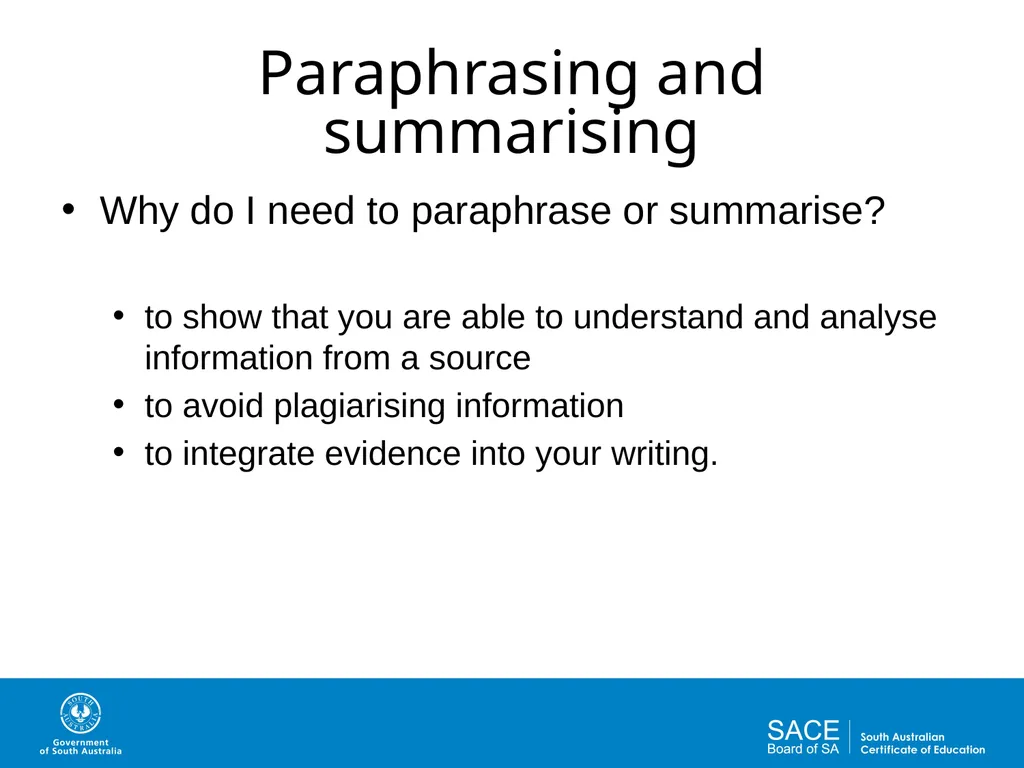
Why do I need to paraphrase or summarise?
to show that you are able to understand and analyse information from a source
to avoid plagiarising information
to integrate evidence into your writing. Paraphrasing and summarising<br>
03
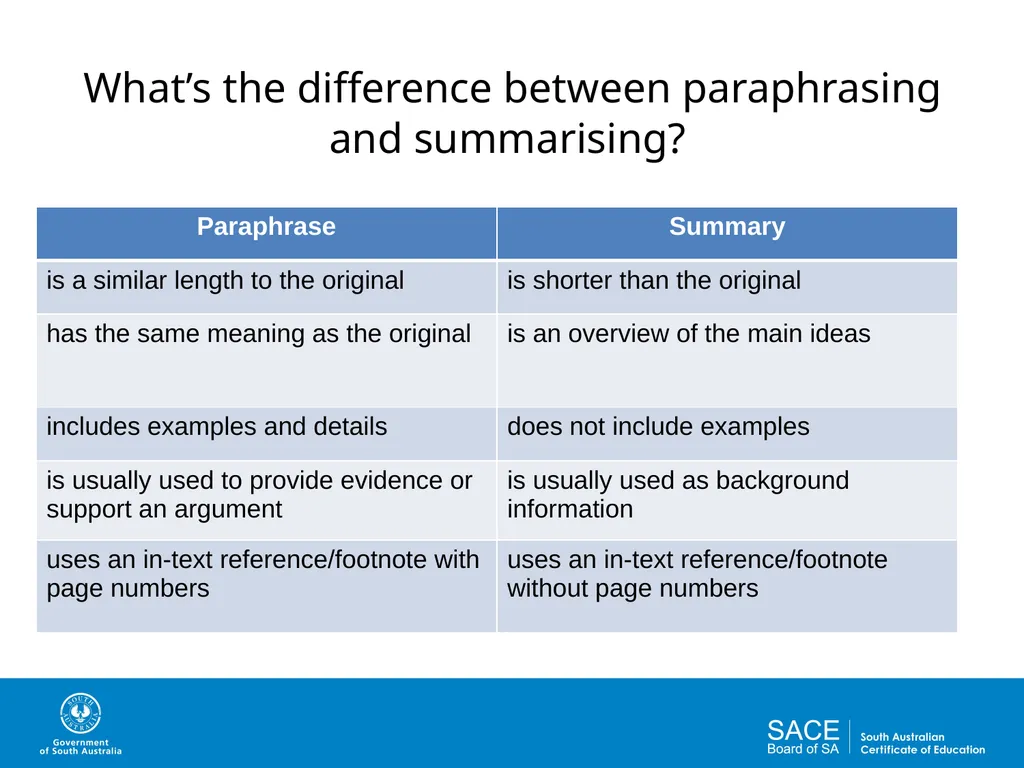
What’s the difference between paraphrasing and summarising?<br>
04
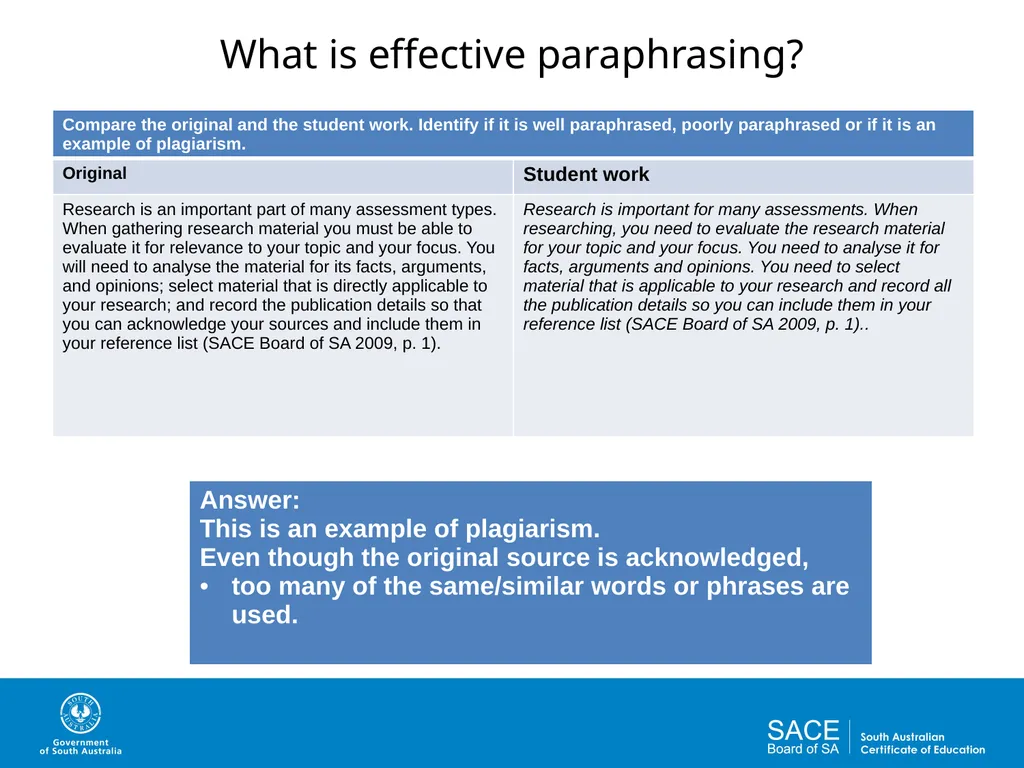
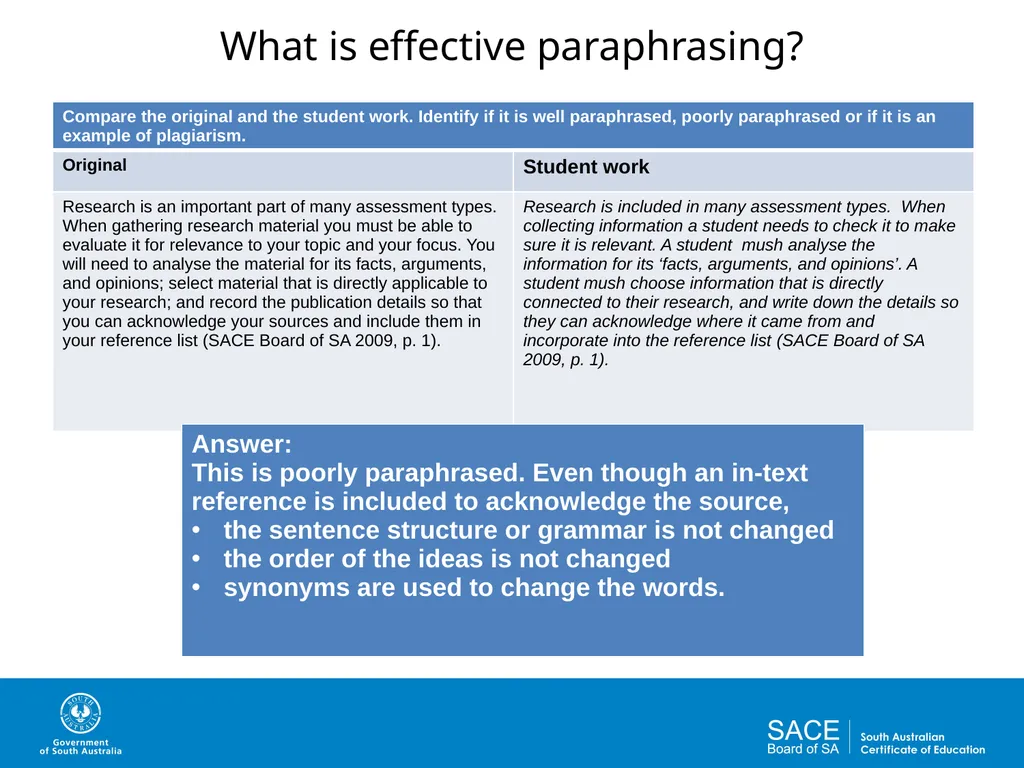
What is effective paraphrasing?<br>
05
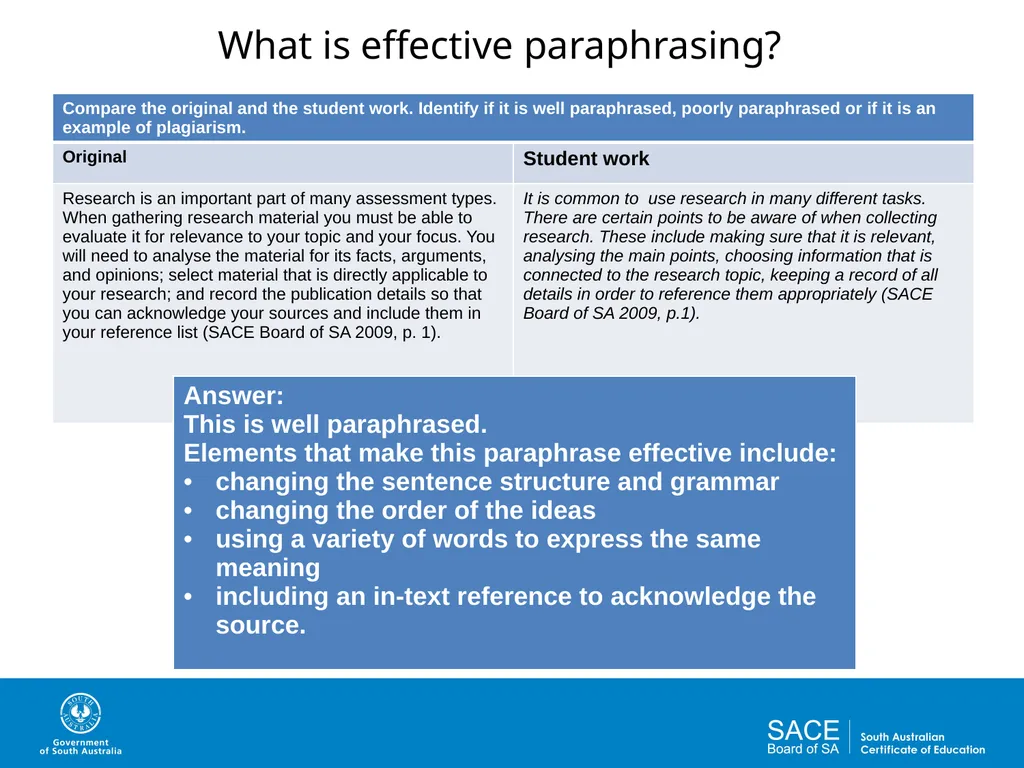
What is effective paraphrasing?<br>
06
What is effective paraphrasing?<br>
07
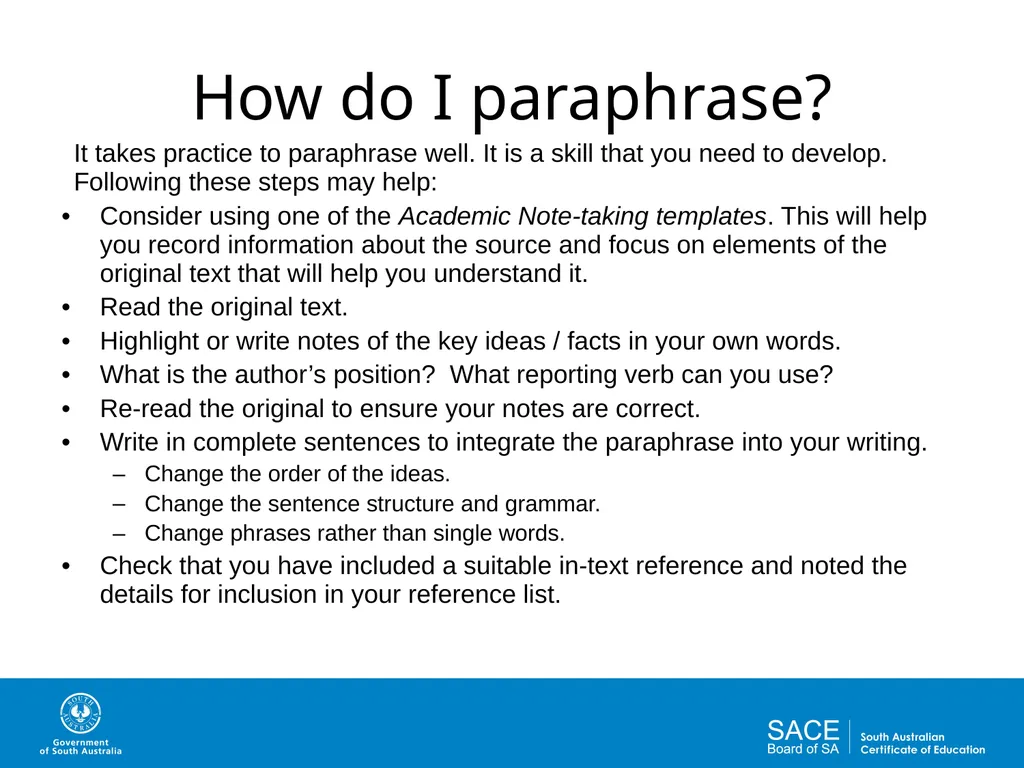
It takes practice to paraphrase well. It is a skill that you need to develop. Following these steps may help:
Consider using one of the Academic Note-taking templates. This will help you record information about the source and focus on elements of the original text that will help you understand it.
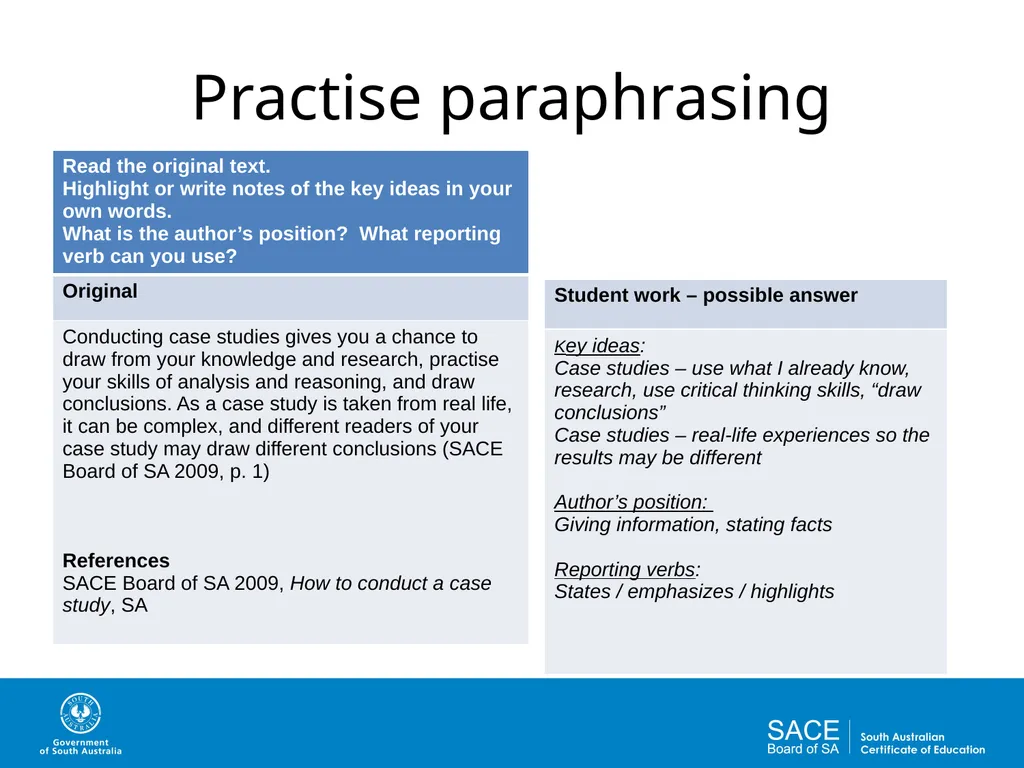
Read the original text.
Highlight or write notes of the key ideas / facts in your own words.
What is the author’s position? What reporting verb can you use?
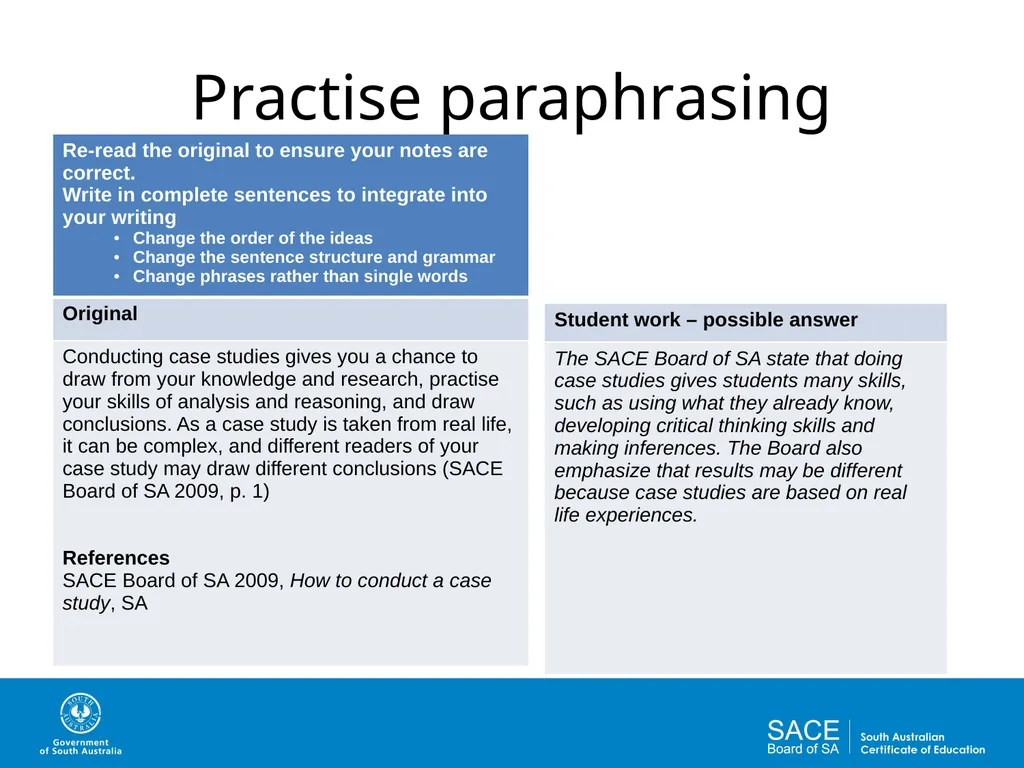
Re-read the original to ensure your notes are correct.
Write in complete sentences to integrate the paraphrase into your writing.
Change the order of the ideas.
Change the sentence structure and grammar.
Change phrases rather than single words.
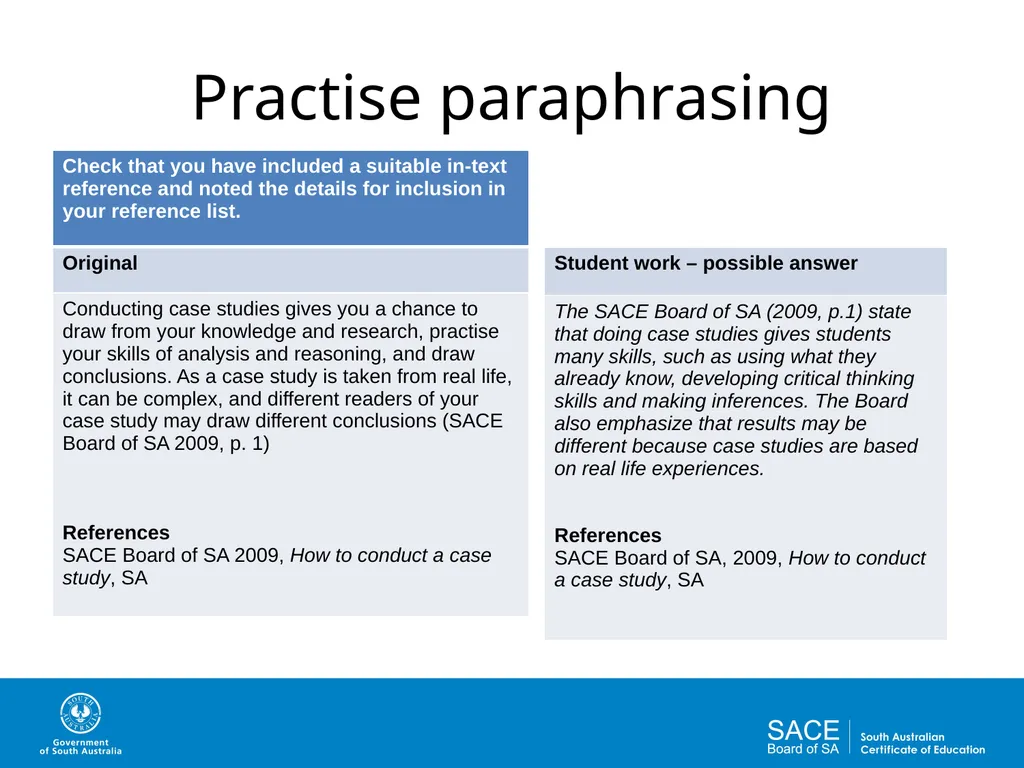
Check that you have included a suitable in-text reference and noted the details for inclusion in your reference list. How do I paraphrase?<br>
08
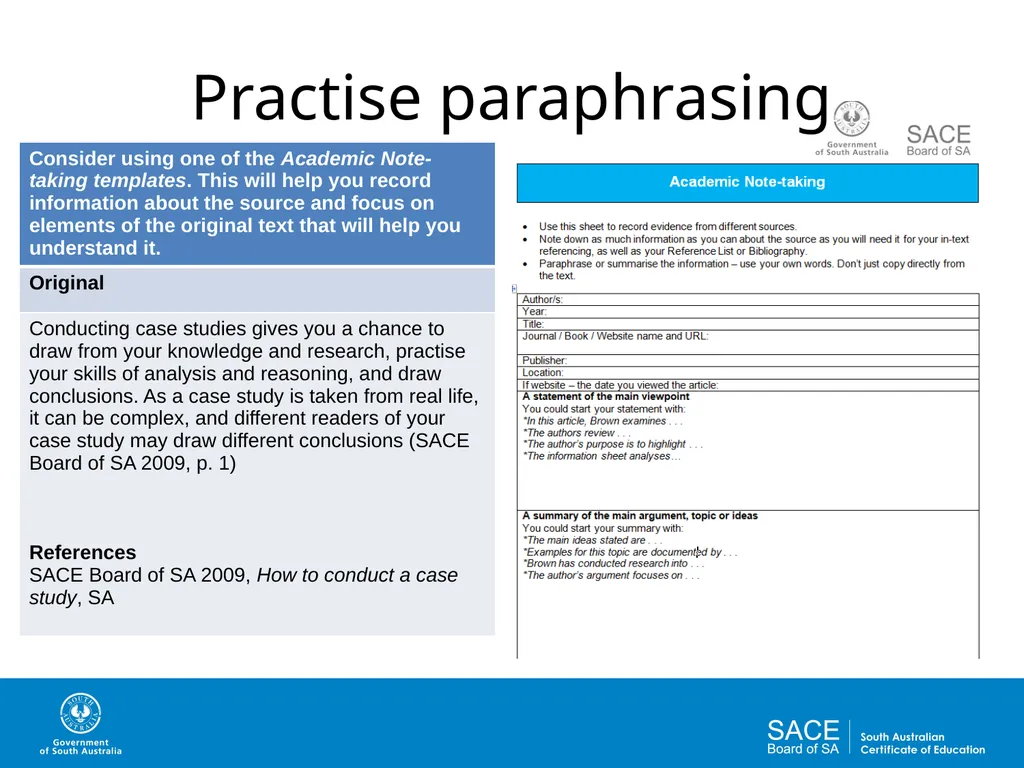
Practise paraphrasing<br>
09
Practise paraphrasing<br>
10
Practise paraphrasing<br>
11
Practise paraphrasing<br>
12
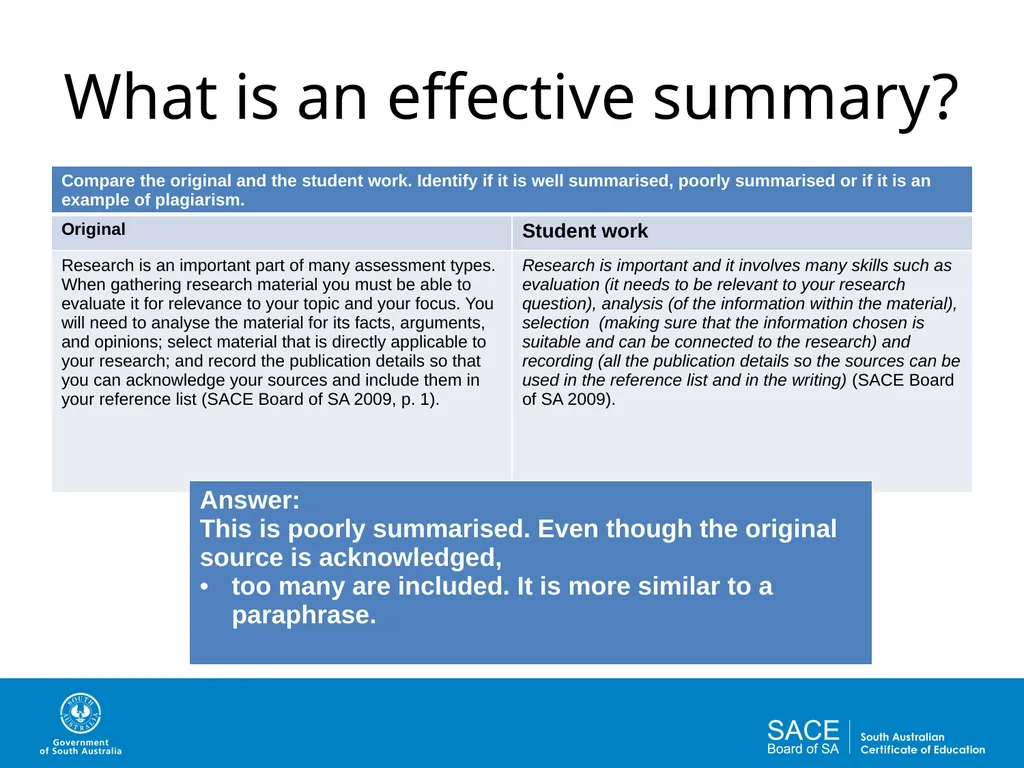
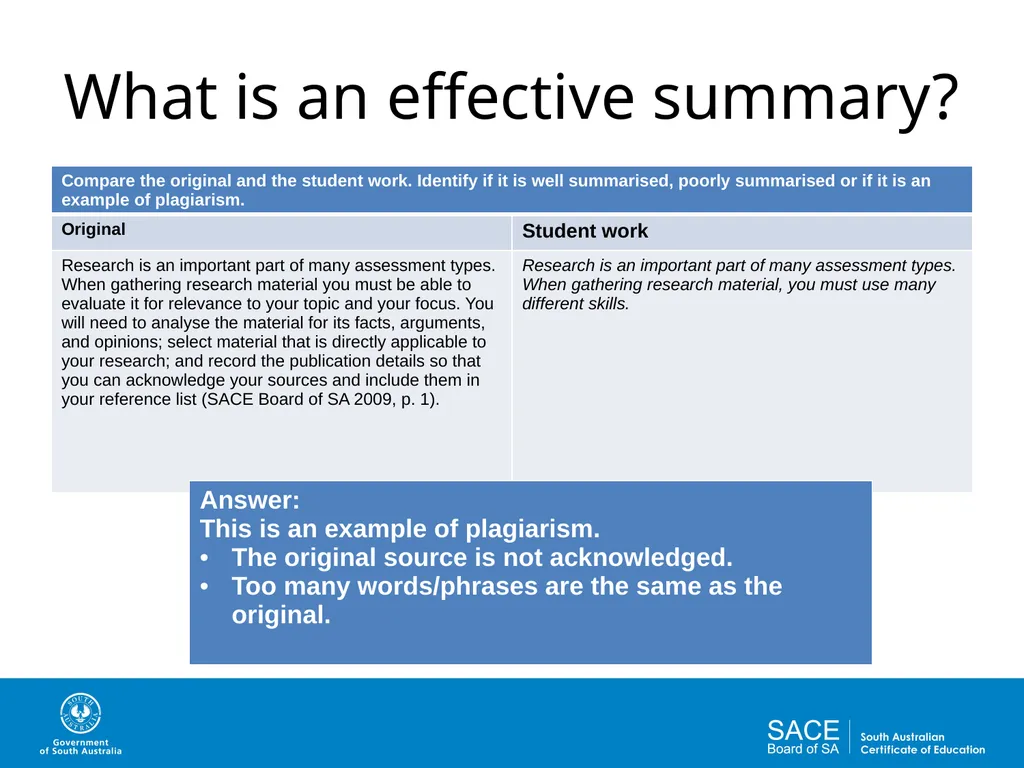
What is an effective summary?<br>
13
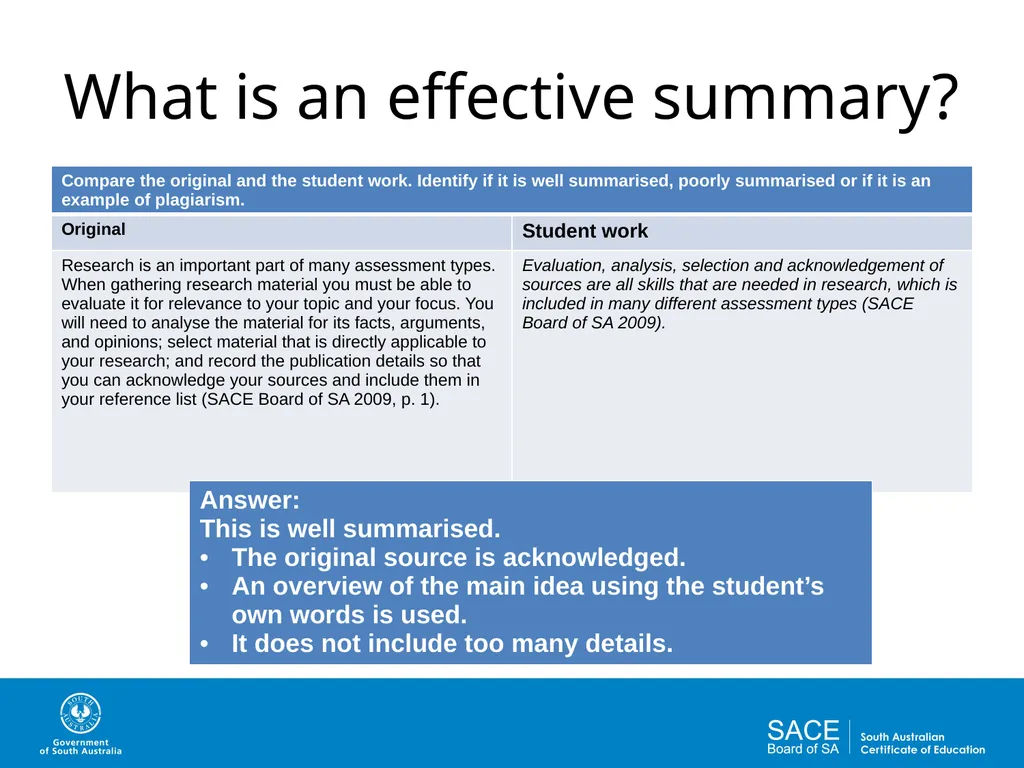
What is an effective summary?<br>
14
What is an effective summary?<br>
15
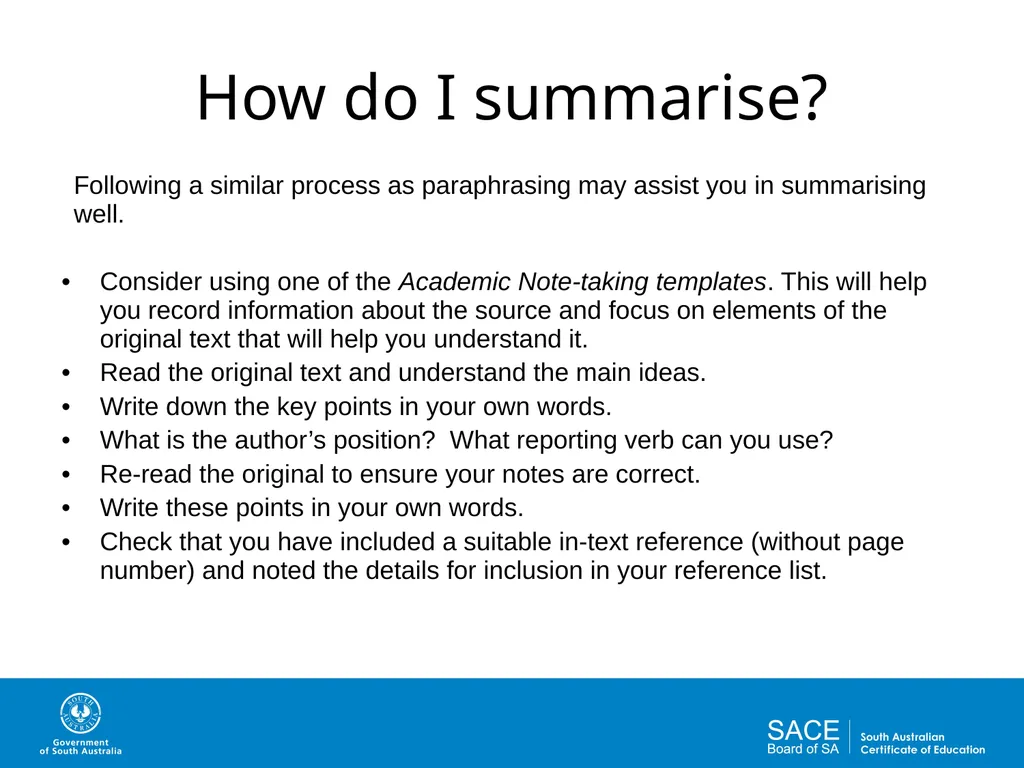
Following a similar process as paraphrasing may assist you in summarising well.
Consider using one of the Academic Note-taking templates. This will help you record information about the source and focus on elements of the original text that will help you understand it.
Read the original text and understand the main ideas.
Write down the key points in your own words.
What is the author’s position? What reporting verb can you use?
Re-read the original to ensure your notes are correct.
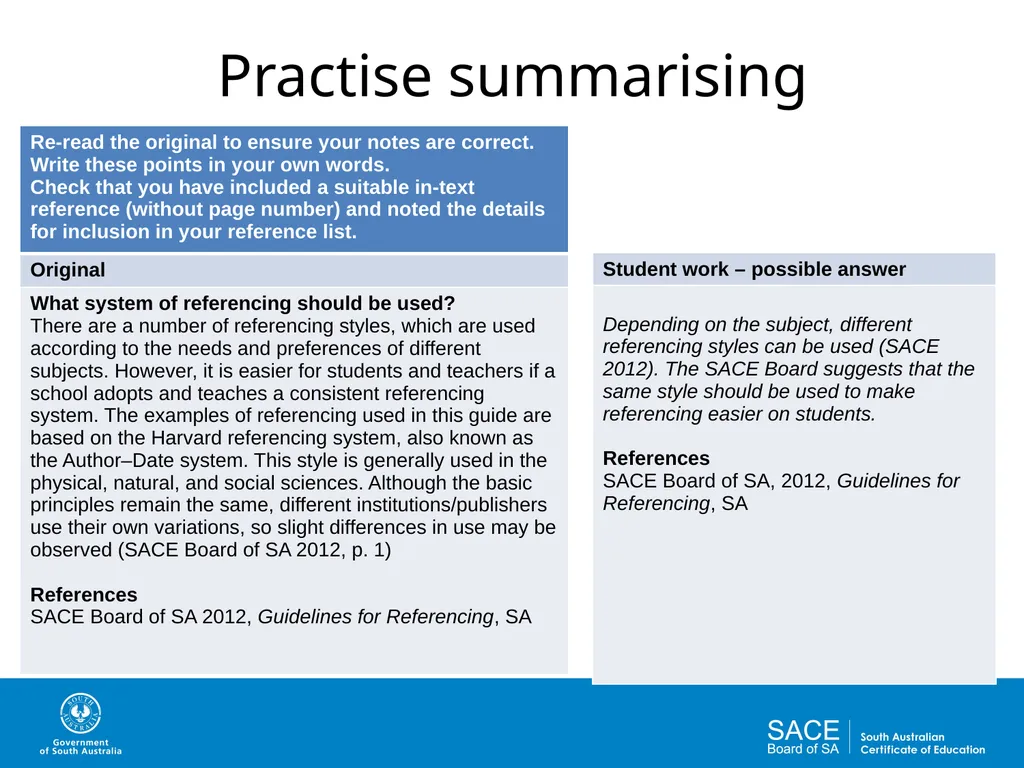
Write these points in your own words.
Check that you have included a suitable in-text reference (without page number) and noted the details for inclusion in your reference list. How do I summarise?<br>
16
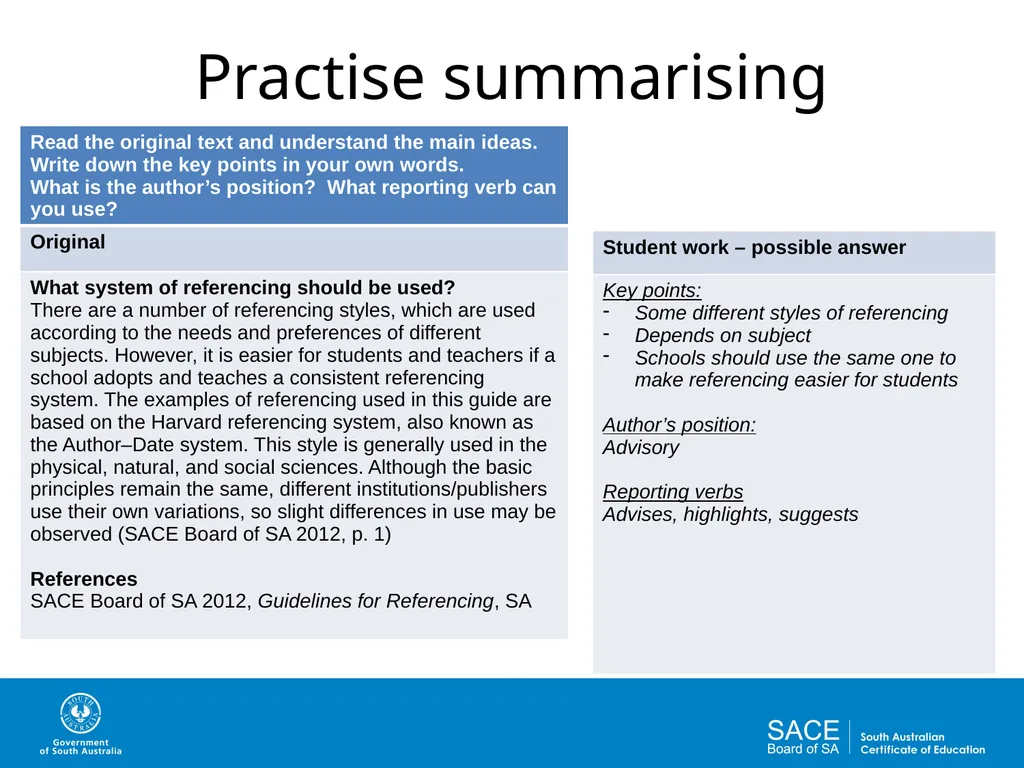
Practise summarising<br>
17
Practise summarising<br>
18
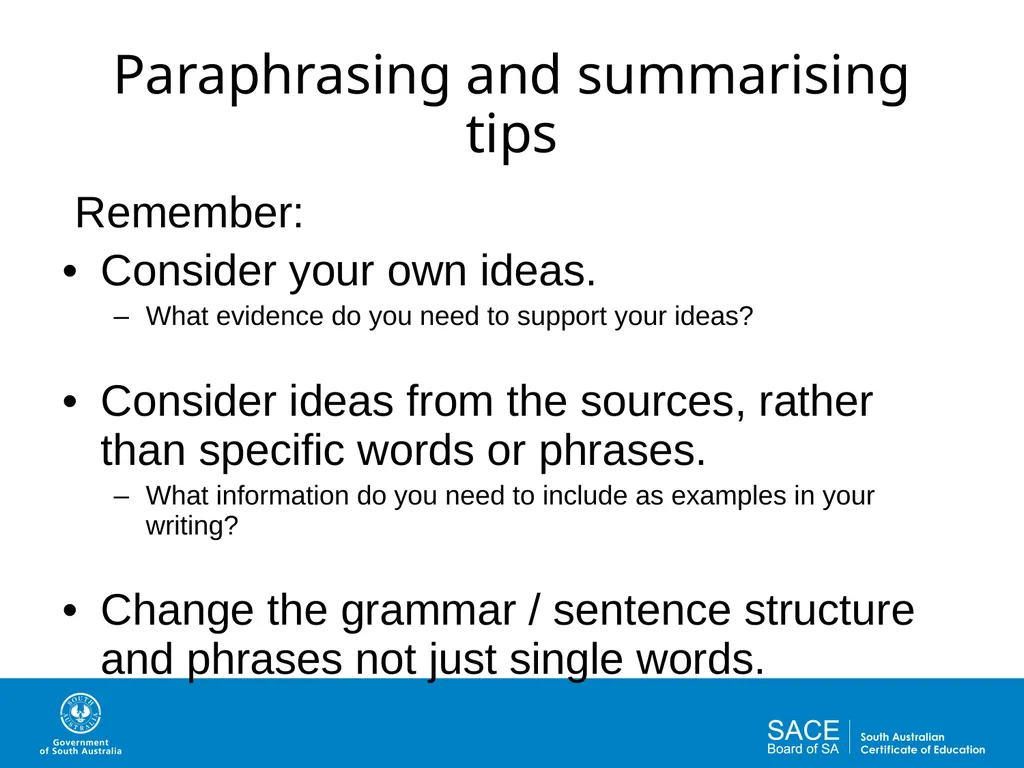
Remember:
Consider your own ideas.
What evidence do you need to support your ideas?
Consider ideas from the sources, rather than specific words or phrases.
What information do you need to include as examples in your writing?
Change the grammar / sentence structure and phrases not just single words. Paraphrasing and summarising tips<br>
19
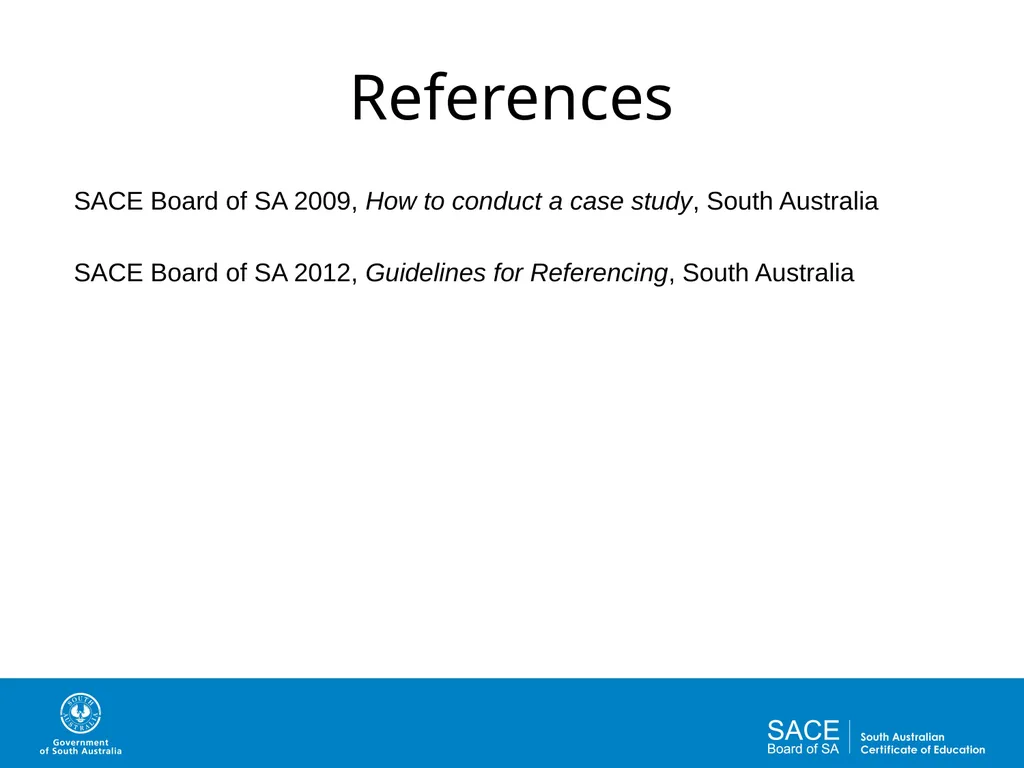
SACE Board of SA 2009, How to conduct a case study, South Australia
SACE Board of SA 2012, Guidelines for Referencing, South Australia References<br>