
ACT with Mindfulness: Piloting a Curriculum for
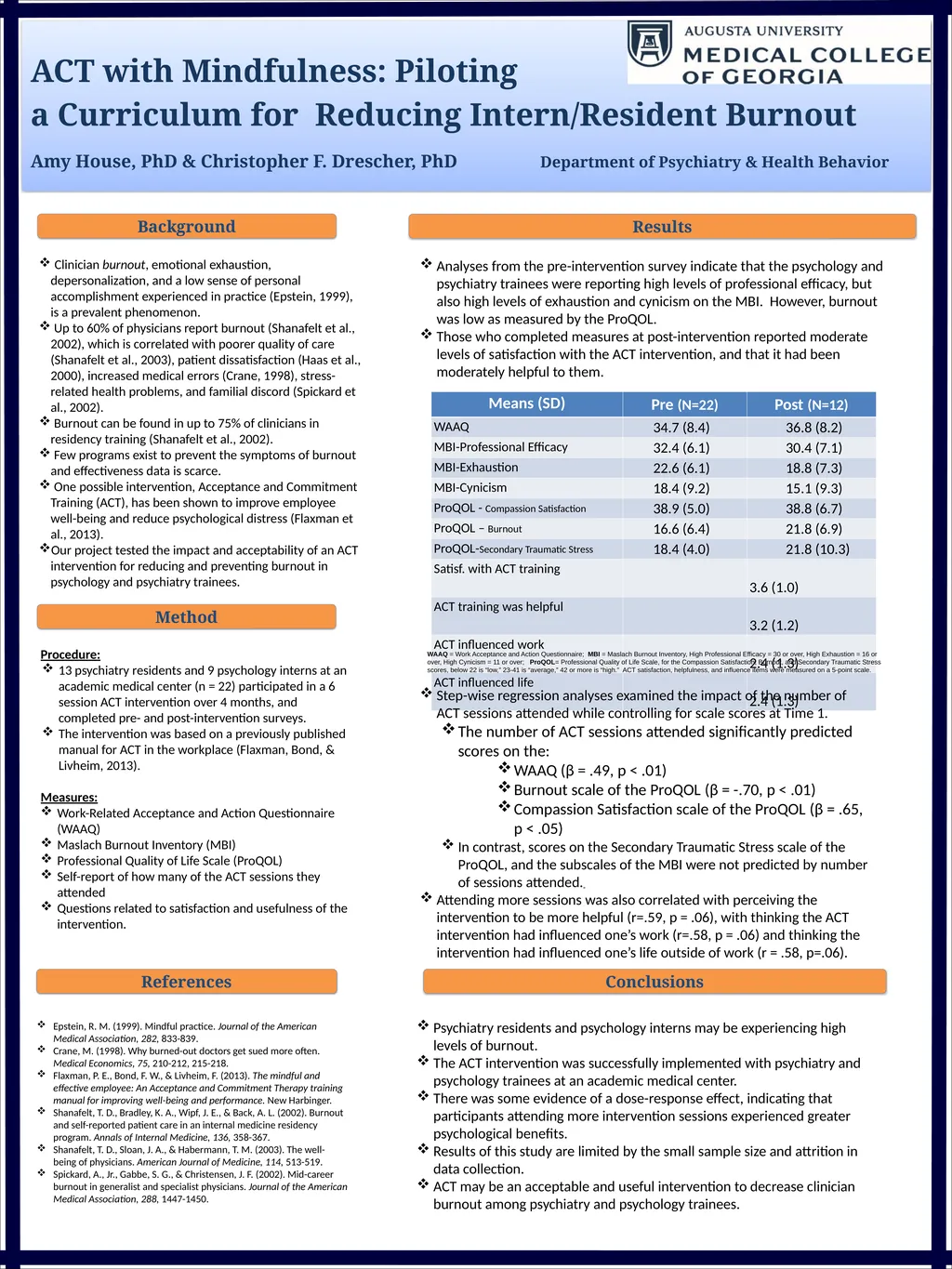
Description: ACT with Mindfulness: Piloting a Curriculum for Reducing InternResident Burnout Amy House, PhD Christopher F. Drescher, PhD Department of Psychiatry Health Behavior Procedure: 13 psychiatry residents and 9 psychology interns at an
Related Topics
Download Presentation
"ACT with Mindfulness: Piloting a Curriculum for" is the property of its rightful owner. Permission is granted to download and print the materials on this website for personal, non-commercial use only, and to display it on your personal computer provided you do not modify the materials and that you retain all copyright notices contained in the materials. By downloading content from our website, you accept the terms of this agreement.
Presentation Transcript
slide1. ACT with Mindfulness: Piloting
a Curriculum for Reducing Intern/Resident Burnout
Amy House, PhD & Christopher F. Drescher, PhD Department of Psychiatry & Health Behavior Procedure:
13 psychiatry residents and 9 psychology interns at an academic medical center (n = 22) participated in a 6 session ACT intervention over 4 months, and completed pre- and post-intervention surveys.
The intervention was based on a previously published manual for ACT in the workplace (Flaxman, Bond, & Livheim, 2013).
Measures:
Work-Related Acceptance and Action Questionnaire (WAAQ)
Maslach Burnout Inventory (MBI)
Professional Quality of Life Scale (ProQOL)
Self-report of how many of the ACT sessions they attended
Questions related to satisfaction and usefulness of the intervention. Background Method Conclusions Results Clinician burnout, emotional exhaustion, depersonalization, and a low sense of personal accomplishment experienced in practice (Epstein, 1999), is a prevalent phenomenon.
Up to 60% of physicians report burnout (Shanafelt et al., 2002), which is correlated with poorer quality of care (Shanafelt et al., 2003), patient dissatisfaction (Haas et al., 2000), increased medical errors (Crane, 1998), stress-related health problems, and familial discord (Spickard et al., 2002).
Burnout can be found in up to 75% of clinicians in residency training (Shanafelt et al., 2002).
Few programs exist to prevent the symptoms of burnout and effectiveness data is scarce.
One possible intervention, Acceptance and Commitment Training (ACT), has been shown to improve employee well-being and reduce psychological distress (Flaxman et al., 2013).
Our project tested the impact and acceptability of an ACT intervention for reducing and preventing burnout in psychology and psychiatry trainees. References Epstein, R. M. (1999). Mindful practice. Journal of the American Medical Association, 282, 833-839.
Crane, M. (1998). Why burned-out doctors get sued more often. Medical Economics, 75, 210-212, 215-218.
Flaxman, P. E., Bond, F. W., & Livheim, F. (2013). The mindful and effective employee: An Acceptance and Commitment Therapy training manual for improving well-being and performance. New Harbinger.
Shanafelt, T. D., Bradley, K. A., Wipf, J. E., & Back, A. L. (2002). Burnout and self-reported patient care in an internal medicine residency program. Annals of Internal Medicine, 136, 358-367.
Shanafelt, T. D., Sloan, J. A., & Habermann, T. M. (2003). The well-being of physicians. American Journal of Medicine, 114, 513-519.
Spickard, A., Jr., Gabbe, S. G., & Christensen, J. F. (2002). Mid-career burnout in generalist and specialist physicians. Journal of the American Medical Association, 288, 1447-1450. Psychiatry residents and psychology interns may be experiencing high levels of burnout.
The ACT intervention was successfully implemented with psychiatry and psychology trainees at an academic medical center.
There was some evidence of a dose-response effect, indicating that participants attending more intervention sessions experienced greater psychological benefits.
Results of this study are limited by the small sample size and attrition in data collection.
ACT may be an acceptable and useful intervention to decrease clinician burnout among psychiatry and psychology trainees. Analyses from the pre-intervention survey indicate that the psychology and psychiatry trainees were reporting high levels of professional efficacy, but also high levels of exhaustion and cynicism on the MBI. However, burnout was low as measured by the ProQOL.
Those who completed measures at post-intervention reported moderate levels of satisfaction with the ACT intervention, and that it had been moderately helpful to them. Step-wise regression analyses examined the impact of the number of ACT sessions attended while controlling for scale scores at Time 1.
The number of ACT sessions attended significantly predicted scores on the:
WAAQ (β = .49, p < .01)
Burnout scale of the ProQOL (β = -.70, p < .01)
Compassion Satisfaction scale of the ProQOL (β = .65, p < .05)
In contrast, scores on the Secondary Traumatic Stress scale of the ProQOL, and the subscales of the MBI were not predicted by number of sessions attended.
Attending more sessions was also correlated with perceiving the intervention to be more helpful (r=.59, p = .06), with thinking the ACT intervention had influenced one’s work (r=.58, p = .06) and thinking the intervention had influenced one’s life outside of work (r = .58, p=.06). WAAQ = Work Acceptance and Action Questionnaire; MBI = Maslach Burnout Inventory, High Professional Efficacy = 30 or over, High Exhaustion = 16 or over, High Cynicism = 11 or over; ProQOL= Professional Quality of Life Scale, for the Compassion Satisfaction, Burnout, and Secondary Traumatic Stress scores, below 22 is “low,” 23-41 is “average,” 42 or more is “high.” ACT satisfaction, helpfulness, and influence items were measured on a 5-point scale.<br>
a Curriculum for Reducing Intern/Resident Burnout
Amy House, PhD & Christopher F. Drescher, PhD Department of Psychiatry & Health Behavior Procedure:
13 psychiatry residents and 9 psychology interns at an academic medical center (n = 22) participated in a 6 session ACT intervention over 4 months, and completed pre- and post-intervention surveys.
The intervention was based on a previously published manual for ACT in the workplace (Flaxman, Bond, & Livheim, 2013).
Measures:
Work-Related Acceptance and Action Questionnaire (WAAQ)
Maslach Burnout Inventory (MBI)
Professional Quality of Life Scale (ProQOL)
Self-report of how many of the ACT sessions they attended
Questions related to satisfaction and usefulness of the intervention. Background Method Conclusions Results Clinician burnout, emotional exhaustion, depersonalization, and a low sense of personal accomplishment experienced in practice (Epstein, 1999), is a prevalent phenomenon.
Up to 60% of physicians report burnout (Shanafelt et al., 2002), which is correlated with poorer quality of care (Shanafelt et al., 2003), patient dissatisfaction (Haas et al., 2000), increased medical errors (Crane, 1998), stress-related health problems, and familial discord (Spickard et al., 2002).
Burnout can be found in up to 75% of clinicians in residency training (Shanafelt et al., 2002).
Few programs exist to prevent the symptoms of burnout and effectiveness data is scarce.
One possible intervention, Acceptance and Commitment Training (ACT), has been shown to improve employee well-being and reduce psychological distress (Flaxman et al., 2013).
Our project tested the impact and acceptability of an ACT intervention for reducing and preventing burnout in psychology and psychiatry trainees. References Epstein, R. M. (1999). Mindful practice. Journal of the American Medical Association, 282, 833-839.
Crane, M. (1998). Why burned-out doctors get sued more often. Medical Economics, 75, 210-212, 215-218.
Flaxman, P. E., Bond, F. W., & Livheim, F. (2013). The mindful and effective employee: An Acceptance and Commitment Therapy training manual for improving well-being and performance. New Harbinger.
Shanafelt, T. D., Bradley, K. A., Wipf, J. E., & Back, A. L. (2002). Burnout and self-reported patient care in an internal medicine residency program. Annals of Internal Medicine, 136, 358-367.
Shanafelt, T. D., Sloan, J. A., & Habermann, T. M. (2003). The well-being of physicians. American Journal of Medicine, 114, 513-519.
Spickard, A., Jr., Gabbe, S. G., & Christensen, J. F. (2002). Mid-career burnout in generalist and specialist physicians. Journal of the American Medical Association, 288, 1447-1450. Psychiatry residents and psychology interns may be experiencing high levels of burnout.
The ACT intervention was successfully implemented with psychiatry and psychology trainees at an academic medical center.
There was some evidence of a dose-response effect, indicating that participants attending more intervention sessions experienced greater psychological benefits.
Results of this study are limited by the small sample size and attrition in data collection.
ACT may be an acceptable and useful intervention to decrease clinician burnout among psychiatry and psychology trainees. Analyses from the pre-intervention survey indicate that the psychology and psychiatry trainees were reporting high levels of professional efficacy, but also high levels of exhaustion and cynicism on the MBI. However, burnout was low as measured by the ProQOL.
Those who completed measures at post-intervention reported moderate levels of satisfaction with the ACT intervention, and that it had been moderately helpful to them. Step-wise regression analyses examined the impact of the number of ACT sessions attended while controlling for scale scores at Time 1.
The number of ACT sessions attended significantly predicted scores on the:
WAAQ (β = .49, p < .01)
Burnout scale of the ProQOL (β = -.70, p < .01)
Compassion Satisfaction scale of the ProQOL (β = .65, p < .05)
In contrast, scores on the Secondary Traumatic Stress scale of the ProQOL, and the subscales of the MBI were not predicted by number of sessions attended.
Attending more sessions was also correlated with perceiving the intervention to be more helpful (r=.59, p = .06), with thinking the ACT intervention had influenced one’s work (r=.58, p = .06) and thinking the intervention had influenced one’s life outside of work (r = .58, p=.06). WAAQ = Work Acceptance and Action Questionnaire; MBI = Maslach Burnout Inventory, High Professional Efficacy = 30 or over, High Exhaustion = 16 or over, High Cynicism = 11 or over; ProQOL= Professional Quality of Life Scale, for the Compassion Satisfaction, Burnout, and Secondary Traumatic Stress scores, below 22 is “low,” 23-41 is “average,” 42 or more is “high.” ACT satisfaction, helpfulness, and influence items were measured on a 5-point scale.<br>