
ACUTE DIARRHOEA By Dr. Ajay Kumar Agarwal









Description: ACUTE DIARRHOEA By Dr. Ajay Kumar Agarwal Professor RMCH, Bareilly 1 INTRDUCTION Group of diseases with predominant symptom of diarrhea. Diarrhea- passing three or more times loose or watery stool per day, however even passing once a large
Related Topics
Download Presentation
"ACUTE DIARRHOEA By Dr. Ajay Kumar Agarwal" is the property of its rightful owner. Permission is granted to download and print the materials on this website for personal, non-commercial use only, and to display it on your personal computer provided you do not modify the materials and that you retain all copyright notices contained in the materials. By downloading content from our website, you accept the terms of this agreement.
Presentation Transcript
slide1. ACUTE DIARRHOEA By Dr. Ajay Kumar Agarwal
Professor
RMCH, Bareilly<br>
slide2. 1<br>
slide3. INTRDUCTION Group of diseases with predominant symptom of diarrhea.
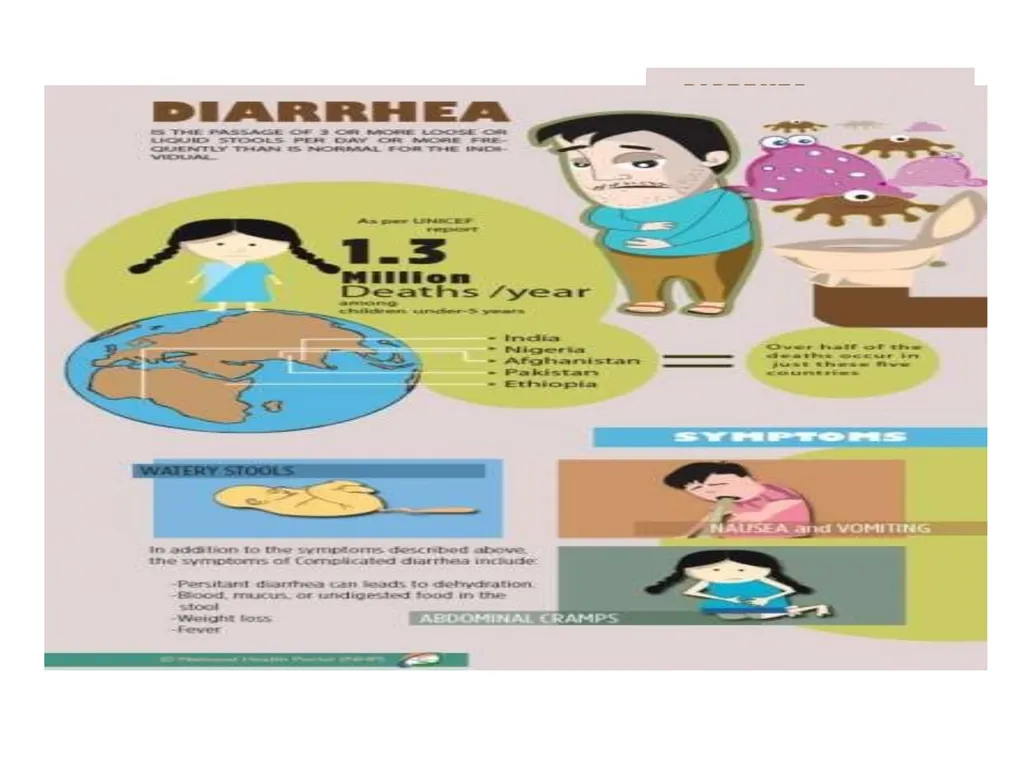
Diarrhea- passing three or more times loose or watery stool per day, however even passing once a large amount of watery stool but frequent passing of normal stool is not diarrhea.
Loose stool is one that take shape of container
Acute diarrhea- sudden onset of diarrhea with or without vommiting and fever, may continue for 10-14 days, diarrhea lasting for 3 weeks-chronic diarrhea, passing blood and mucus- dysentery.<br>
slide4. Gastroenteritis-inflammation of intestine, characterized by diarrhea with or without vomiting and fever.
COMPLICATIONS
Dehydration
Malnutrition<br>
slide5. DEHYDRATION: Loss of fluids and electrolytes
either due to loss of absorbing capacity or due to increased secretion of electrolyte rich intestinal juice leads to acidosis, renal failure, shock and death.
MALNUTRITION: Loss of body weight due to
Decreased intake of nutrition due to loss of appetite or blind beliefs and restricting food intake.
Increased loss of nutrients due to diarrhea or vomiting
Increased demand of nutrients due to biochemical activities.<br>
slide6. DIARRHEA DEFENITION Stool weight in excess of 200 grams per day.
Collecting and weighing stools is neither practical nor required except in a clinical research setting.
A good working definition is three or more loose or watery stools per day
A definite decrease in consistency and increase in frequency based upon an individual baseline.<br>
slide7. Diarrhoea reflects increased water content of the stool, whether due to impaired water absorption and/or active water secretion by the bowel.
In severe infectious diarrhoea, the number of stools may reach 20 or more per day, with defecation occurring every 20 or 30 minutes. In this situation, the total daily volume of stool may exceed two litters, with resultant volume depletion and hypokalemia.
Most patients with acute diarrhoea have three to seven movements per day with total stool volume less than one litter per day.<br>
slide8. MAGNITUTE OF PROBLEM<br>
slide9. GLOBAL:
Major public health problem in all developing countries like Asia, Africa and Latin America.
750 million children below 5 years every year and 5 million per annum die at rate of 10 per minute.<br>
slide10. INDIA:
Under 5- population 15%.
1.5 million die every year due to acute gastroenteritis, infant hit hardest.
5000 deaths per day, 200/ hour and 3 /minute.
70% due to dehydration.
90% preventable.<br>
slide11. ETIOLOGY<br>
slide12. NON-INFECTIOUS Drugs
Food allergies
Gastrointestinal diseases such as inflammatory bowel disease
Other disease states such as thyrotoxicosis and the carcinoid syndrome.<br>
slide13. SMALL BOWEL INFECTIONS Watery diarrhea
Large volume
Abdominal cramping
Bloating, gas
Weight loss
Fever is rarely a significant symptom
Stool does not contain occult blood or inflammatory cells.<br>
slide14. LARGE INTESTINAL DIARRHEAS Frequent,
Regular
Small volume
Often painful bowel movements.
Fever
Bloody or mucoid stools are common,
Red blood cells and inflammatory cells may be seen routinely on the stool smear.<br>
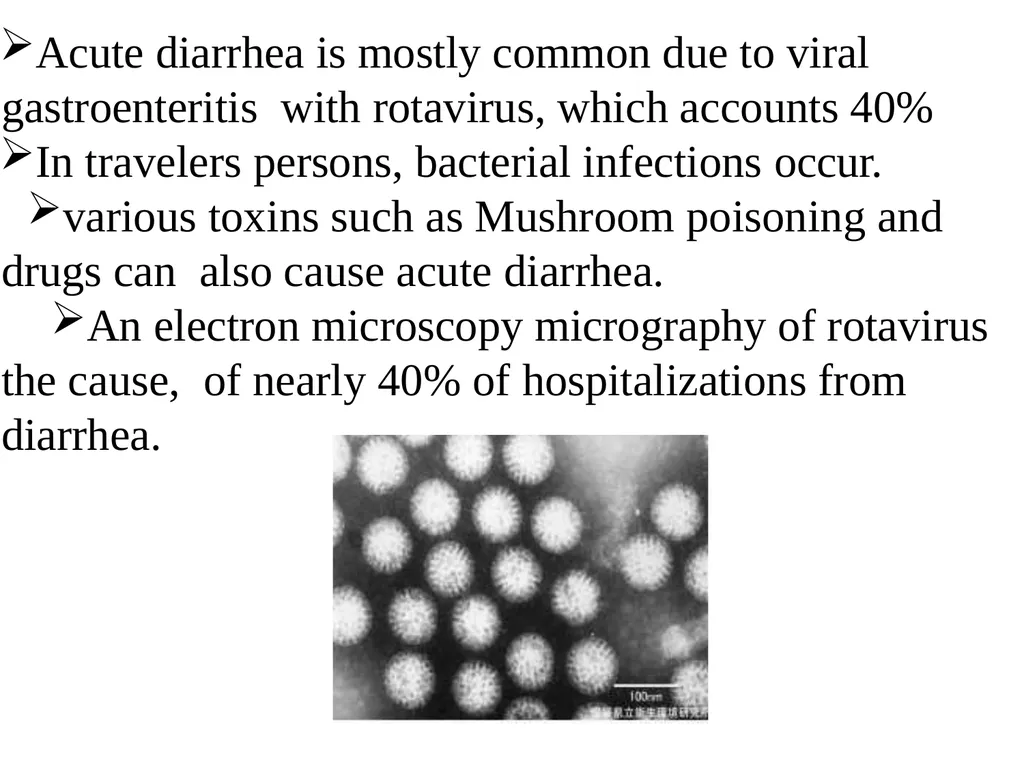
slide15. Acute diarrhea is mostly common due to viral gastroenteritis with rotavirus, which accounts 40%
In travelers persons, bacterial infections occur.
various toxins such as Mushroom poisoning and drugs can also cause acute diarrhea.
An electron microscopy micrography of rotavirus the cause, of nearly 40% of hospitalizations from diarrhea.<br>
slide16. Acute if < 2 weeks,
Persistent if 2-4 weeks,
Chronic if > 4 weeks.
ACUTE DIARRHEA
>90% caused by infectious agents. Remaining 10%
Medications
Toxic ingestions,
Ischemia ( loss of blood )<br>
slide19. AGENTS THAT COMMONLY CAUSE ACUTE GASTROINTESTINAL ILLNESS<br>
slide20. BACTERIA Salmonella
Campylobacter
Shigella
Escherichia coli 0157:H7
Clostridium difficile<br>
slide21. VIRUSES Calcivirused (Norovirus and related viruses)
Rotavirus
Adenovirus types 40 and 41 Astrovirus<br>
slide22. PROTOZOA Cryptosporidium
Giardia
Cyclospora
Entamoeba histolytica<br>
slide23. FUNGI Cryptosporidium- diarrhea neither severe nor prolonged except in immuno-deficient patients.
Toxoplasma group.
Through contact with pets and farm animals.
Mixed infection in 2-5% cases.
In ENT infections, Respiratory or Urinary infection or simple teething process<br>
slide24. RESERVOIR Human is principal reservoir.
Animal- salmonella, Campylobacter and Yersinia enterocolitica and fungi.<br>
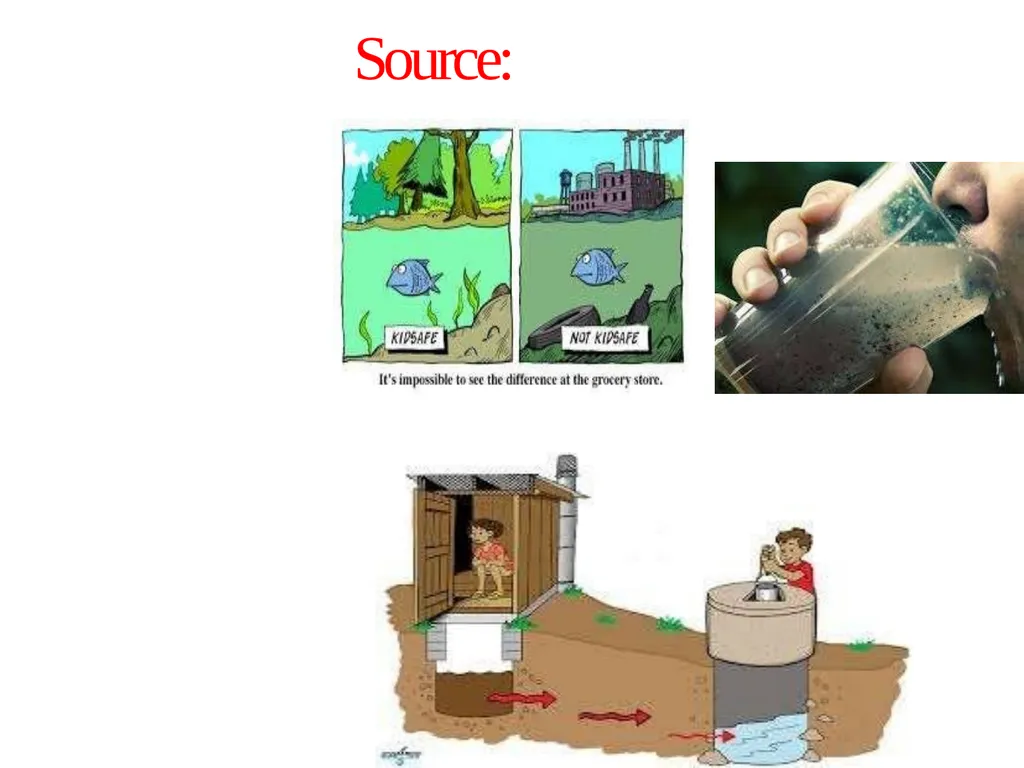
slide25. Source:<br>
slide26. HOST FACTOR AGE:
In all age groups but more common among children below 5 years and infants.
SEX:
Equal in both sexes.<br>
slide27. ENVIRONMENTAL FACTOR Bacterial diarrhea common in summer and viral during winter.<br>
slide28. PREDISPOSING FACTORS SOCIAL FACTORS:
Poverty, illiteracy, ignorance, lack of sanitation, lack of protected water supply, poor standard of living.
Malpractices in breastfeeding- feeding prelacteal feeds, discarding colostrum, using feeding bottles, premature weaning etc.<br>
slide29. MODE OF TRANSMISSION Through feco-oral route<br>
slide30. RELATED TERMS SECRETORY DIARRHEA:
Due to decreased absorption and increased excretion of fluids and electrolytes in gut-in all infectious diarrhea.
OSMOTIC DIARRHEA:
Due to ingestion of active substance which prevents absorption of fluids and electrolytes<br>
slide31. EFFECTS OF LOSS OF FLUIDS AND ELECTROLYTES Loss of water results in hypovolemia
Loss of sodium and chlorides results in electrolyte imbalance (hyponatremia)
Loss of bicarbonates salts favors development of acidosis and renal failure. When HCO3 falls<12 mmol/L breathing becomes deep and hurried
Loss of potassium salts results in muscular weakness, cardiac arrhythmia and paralytic ileus.<br>
slide32. INCUBATION PERIOD Varies from few hours to few days.<br>
slide33. ETIOLOGY Most cases of acute infectious gastroenteritis are probably viral, in most studies, stool culture has been positive in only 1.5 to 5.6 percent of cases.
In contrast, bacterial causes are responsible for most cases of severe diarrhea.
Protozoa are less commonly identified as the etiologic agents of acute gastrointestinal illness.<br>
slide34. CLINICAL FEATURES Due to dehydration-
Early stages- child irritable, thirsty and drink water eagerly.
Later stages- dehydration worsens, child more irritable, develop pinch, look dry and sunken eyes, anterior fontanel depressed, tongue dried, abdomen scaphoid, child passes urine at longer intervals and scanty, later skin losses elasticity, associated fever, vomiting, later shock develops associated by acidosis<br>
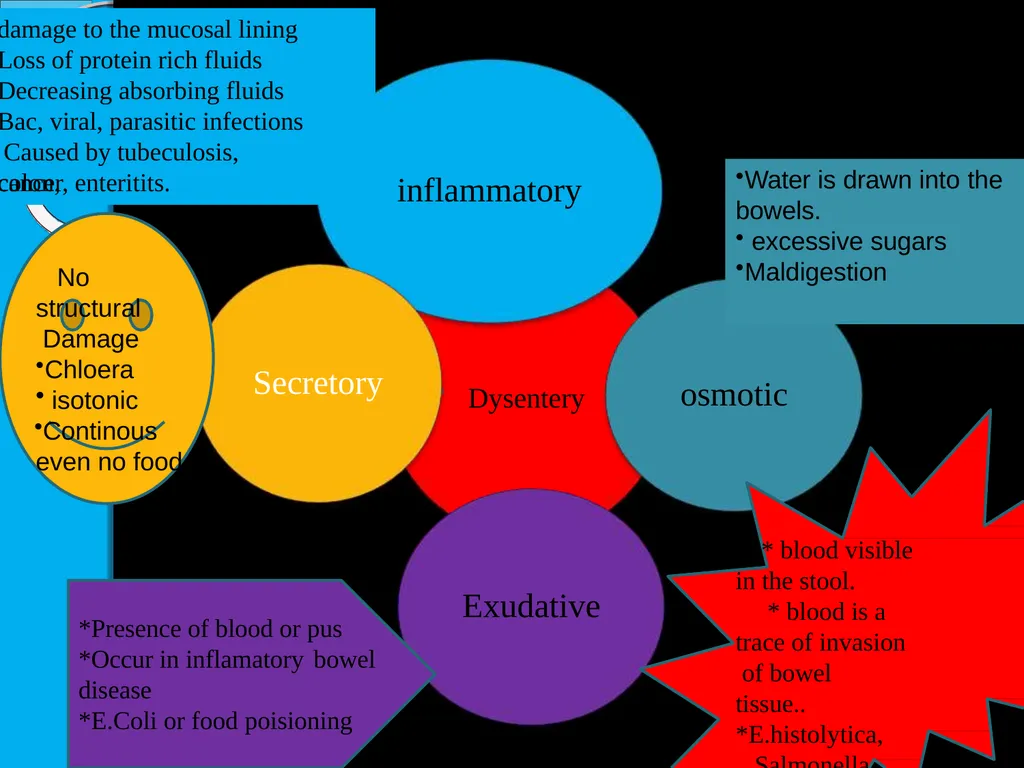
slide35. Dysentery inflammatory osmotic Exudative Secretory damage to the mucosal lining Loss of protein rich fluids Decreasing absorbing fluids Bac, viral, parasitic infections Caused by tubeculosis, colon, cancer, enteritits. Water is drawn into the
bowels.
excessive sugars
Maldigestion *Presence of blood or pus *Occur in inflamatory bowel disease *E.Coli or food poisioning No structural Damage Chloera isotonic Continous even no food * blood visible
in the stool.
* blood is a trace of invasion of bowel tissue..
*E.histolytica, Salmonella<br>
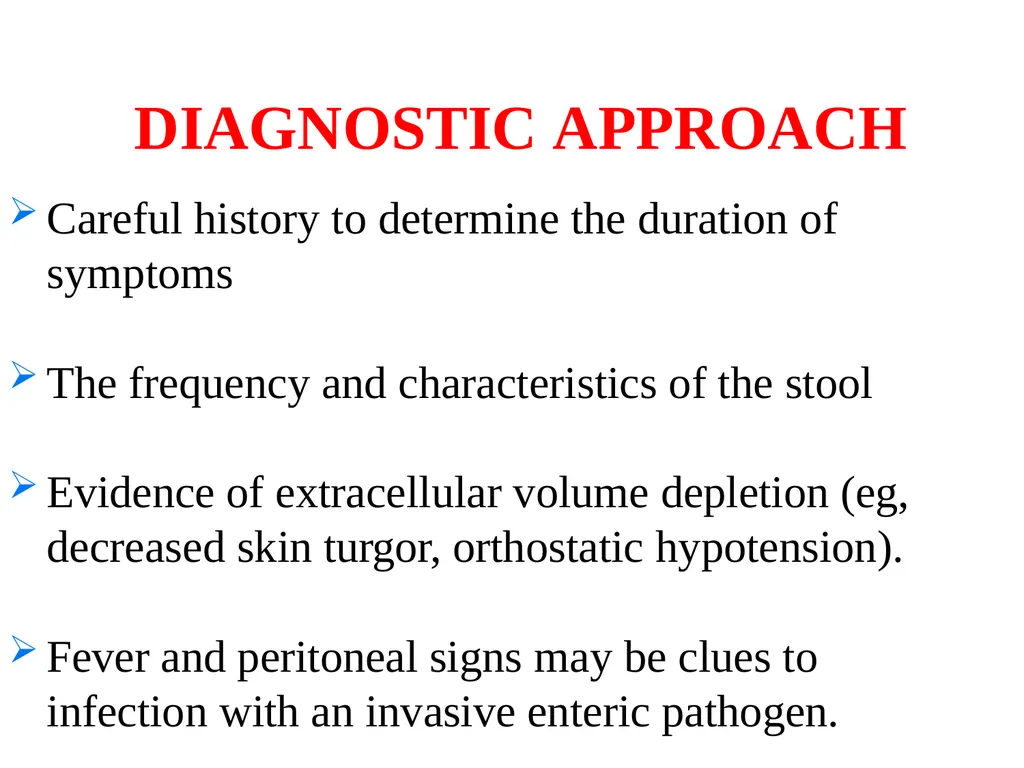
slide36. DIAGNOSTIC APPROACH Careful history to determine the duration of symptoms
The frequency and characteristics of the stool
Evidence of extracellular volume depletion (eg, decreased skin turgor, orthostatic hypotension).
Fever and peritoneal signs may be clues to infection with an invasive enteric pathogen.<br>
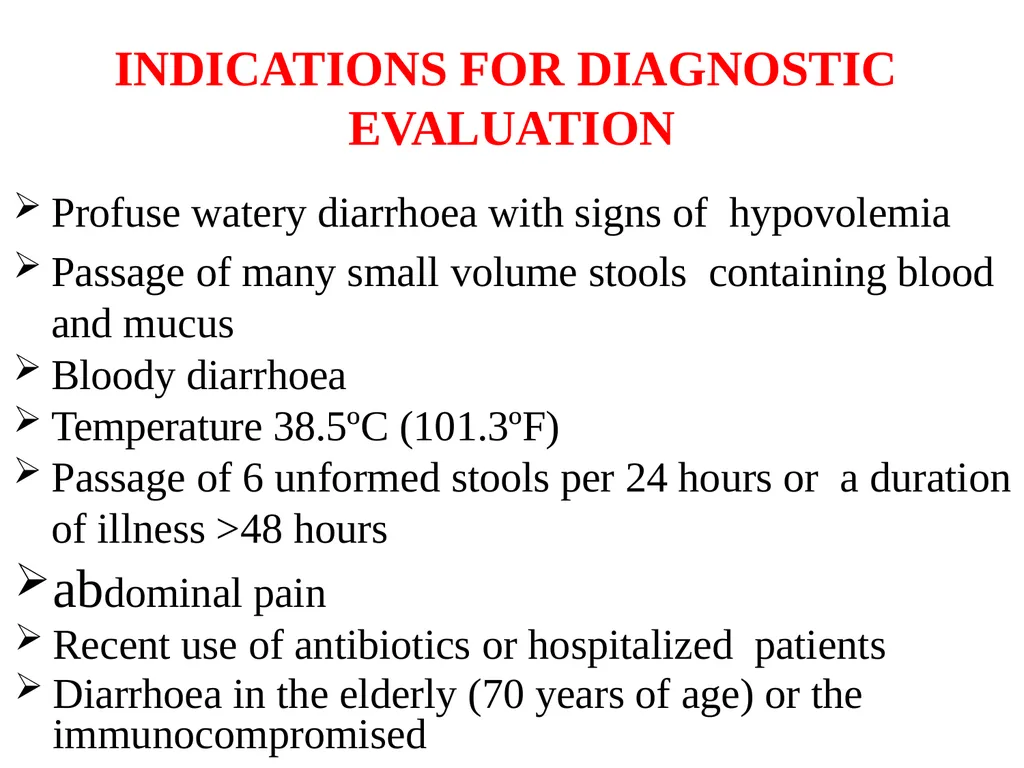
slide37. INDICATIONS FOR DIAGNOSTIC EVALUATION Profuse watery diarrhoea with signs of hypovolemia
Passage of many small volume stools containing blood and mucus
Bloody diarrhoea
Temperature 38.5ºC (101.3ºF)
Passage of 6 unformed stools per 24 hours or a duration of illness >48 hours
abdominal pain
Recent use of antibiotics or hospitalized patients
Diarrhoea in the elderly (70 years of age) or the immunocompromised<br>
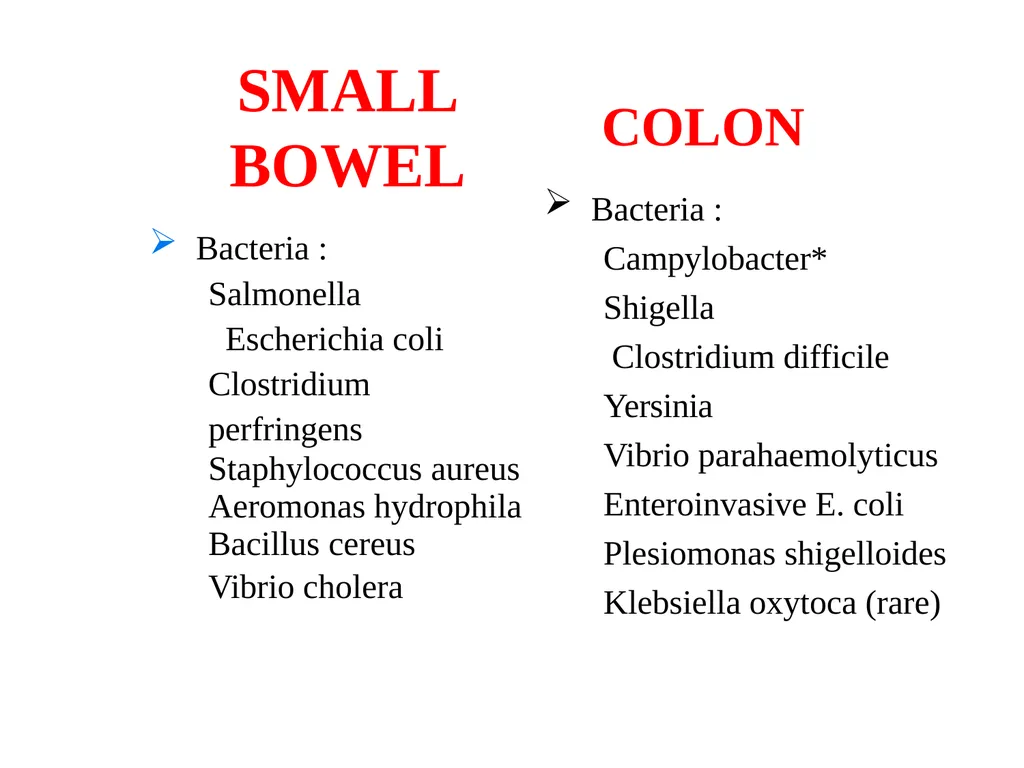
slide38. SMALL BOWEL Bacteria :
Salmonella
Escherichia coli Clostridium perfringens
Staphylococcus aureus Aeromonas hydrophila Bacillus cereus
Vibrio cholera COLON
Bacteria :
Campylobacter* Shigella
Clostridium difficile
Yersinia
Vibrio parahaemolyticus Enteroinvasive E. coli Plesiomonas shigelloides Klebsiella oxytoca (rare)<br>
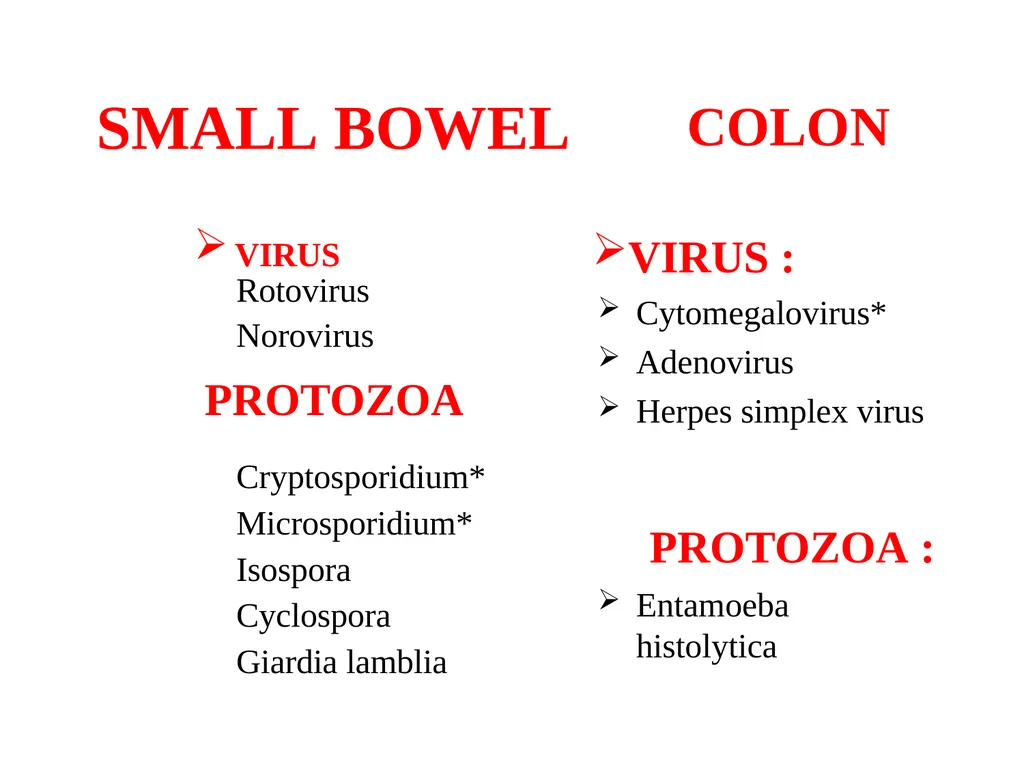
slide39. SMALL BOWEL COLON VIRUS Rotovirus Norovirus PROTOZOA Cryptosporidium* Microsporidium* Isospora Cyclospora Giardia lamblia VIRUS :
Cytomegalovirus*
Adenovirus
Herpes simplex virus
PROTOZOA :
Entamoeba histolytica<br>
slide40. HISTORICAL CLUE Symptoms that begin within six hours suggest ingestion of a preformed toxin of Staphylococcus aureus or Bacillus cereus
Symptoms that begin at 8 to 16 hours suggest infection with Clostridium perfringens
Symptoms that begin at more than 16 hours can result from viral or bacterial infection (eg, contamination of food with enterotoxigenic or enterohemorrhagic E. coli
Recent antibiotic use<br>
slide41. CLINICAL FEATURES: WATERY STOOL VOMITING FEVER DEHYDRATION<br>
slide42. FECAL LEUKOCYTES AND OCCULT BLOOD The variable estimates :may be partially due to differences in specimen processing and in operator experience. So the role has been questioned
The presence of occult blood and fecal leukocytes supports the diagnosis of a bacterial cause of diarrhea in the context of the medical history and other diagnostic evaluation
Bacterial culture in high risk patients.
Fecal leukocyte determination is probably not of value in patients who develop diarrhea while hospitalized, in whom testing for Clostridium difficile is much more likely to be helpful<br>
slide43. It is reasonable to continue symptomatic therapy for several days before considering further evaluation in patients who do not have severe illness, particularly if occult blood and fecal leukocytes are absent<br>
slide44. WHEN TO OBTAIN STOOL CULTURES Immunocompromised patients, including (HIV) Patients with comorbidities that increase the risk for complications
Patients with more severe, inflammatory diarrhea (including bloody diarrhea)
Patients with underlying inflammatory bowel disease in whom the distinction between a flare and superimposed infection is critical
Some employees, such as food handlers, occasionally require negative stool cultures to return to work<br>
slide45. WHEN TO OBTAIN STOOL FOR OVA AND PARASITES Sending stool samples for ova and parasites is not cost effective for the majority of patients with acute diarrhea<br>
slide46. INDICATIONS FOR OVA AND PARASITE STUDY Persistent diarrhea (associated with Giardia, Cryptosporidium, and Entamoeba histolytica)
Persistent diarrhea following travel to special region (associated with Giardia, Cryptosporidium, and Cyclospora)
Persistent diarrhea with exposure to infants in daycare centers (associated with Giardia and Cryptosporidium)<br>
slide47. Diarrhoea in a man who has sex with men (MSM) or a patient with AIDS (associated with Giardia and Entamoeba histolytica in the former, and a variety of parasites in the latter)
A community waterborne outbreak (associated with Giardia and Cryptosporidium)
Bloody diarrhoea with few or no faecal leukocytes (associated with intestinal amoebiasis)<br>
slide48. ENDOSCOPY Endoscopy is uncommonly needed in the diagnosis of acute diarrhoea. It may be helpful in the following settings:
Distinguishing inflammatory bowel disease from infectious diarrhoea
Diagnosing C. difficile infection and looking for pseudo membranes in patients who are toxic while results of tissue culture assays are pending. The widespread adoption of enzyme linked immunosorbent assays (ELISA) for C. difficile toxins A and B has reduced the time for C. difficile results to become available and thus decreased the need for endoscopy in these patients.<br>
slide49. In immunocompromised patients who are at risk for opportunistic infections with agents such as cytomegalovirus.
In patients in whom ischemic colitis is suspected but the diagnosis remains unclear after clinical and radiologic assessment.<br>
slide50. TREATMENT Oral rehydration solutions
Empiric antibiotic therapy<br>
slide51. WHEN TO TREAT<br>
slide52. Those with moderate to severe travelers' diarrhea as characterized by more than four unformed stools daily, fever, blood, pus, or mucus in the stool.<br>
slide53. Those with more than eight stools per day, volume depletion, symptoms for more than one week<br>
slide54. Those in whom hospitalization is being considered and immunocompromised hosts<br>
slide55. Signs and symptoms of bacterial diarrhea such as fever, bloody diarrhea (except, for suspected EHEC or C. difficile infection),and the presence of occult blood or fecal leukocytes in the stool<br>
slide56. We recommend empiric therapy with an oral fluoroquinolone (ciprofloxacin 500 mg twice daily, norfloxacin 400 mg twice daily, or levofloxacin 500 mg once daily) for three to five days in the absence of suspected EHEC or fluoroquinolone-resistant campylobacter infection.
Azithromycin (500 mg once daily for three days) and erythromycin (500 mg twice daily for five days) are alternative agents particularly if fluoroquinolone resistance is suspected .<br>
slide57. SYMPTOMATIC THERAPY<br>
slide58. The antimotility agent loperamide (Imodium) may be used for the symptomatic treatment of patients with acute diarrhea in whom fever is absent or low grade and the stools are not bloody. The dose of loperamide is two tablets (4 mg) initially, then 2 mg after each unformed stool, not to exceed 16 mg/day for 2 days.<br>
slide59. DIPHENOXYLATE Diphenoxylate (Lomotil) is an alternative agent. The dose of diphenoxylate is two tablets (4 mg) four times daily for 2 days. Has central opiate effects and may cause cholinergic side effects.<br>
slide60. Treatment with these agents may mask the amount of fluid lost, since fluid may pool in the intestine. Thus, fluids should be used aggressively when antimotility agents are employed.
Both drugs may facilitate the development of the hemolytic-uremic syndrome (HUS) in patients infected with EHEC<br>
slide61. BISMUTH SUBSALICYLATE (Pepto-Bismol)when compared with placebo significantly reduced the number of unformed stools and increased the proportion of patients free of symptoms at the end of treatment trials
May be used in patients with significant fever and dysentery, conditions in which loperamide should be avoided.
The dose of bismuth subsalicylate is 30 mL or two tablets every 30 minutes for eight doses.<br>
slide62. DIETARY RECOMMENDATIONS Adequate nutrition during an episode of acute diarrhea is important to facilitate enterocyte renewal if patients are anorectic
A short period of consuming only liquids will not be harmful.
Boiled starches and cereals (eg, potatoes, noodles, rice, wheat, and oat) with salt are indicated in patients with watery diarrhea; crackers, bananas, soup, and boiled vegetables may also be consumed<br>
slide63. PREVENTION:<br>
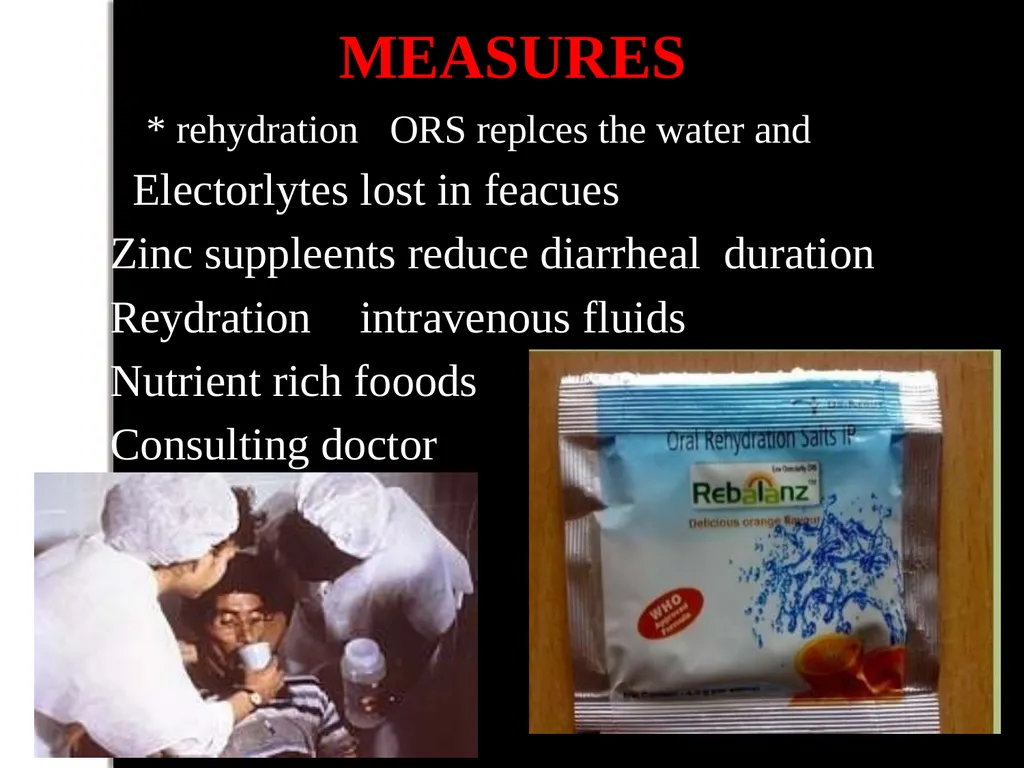
slide65. MEASURES * rehydration ORS replces the water and Electorlytes lost in feacues
*Zinc suppleents reduce diarrheal duration
*Reydration intravenous fluids
*Nutrient rich fooods
*Consulting doctor<br>
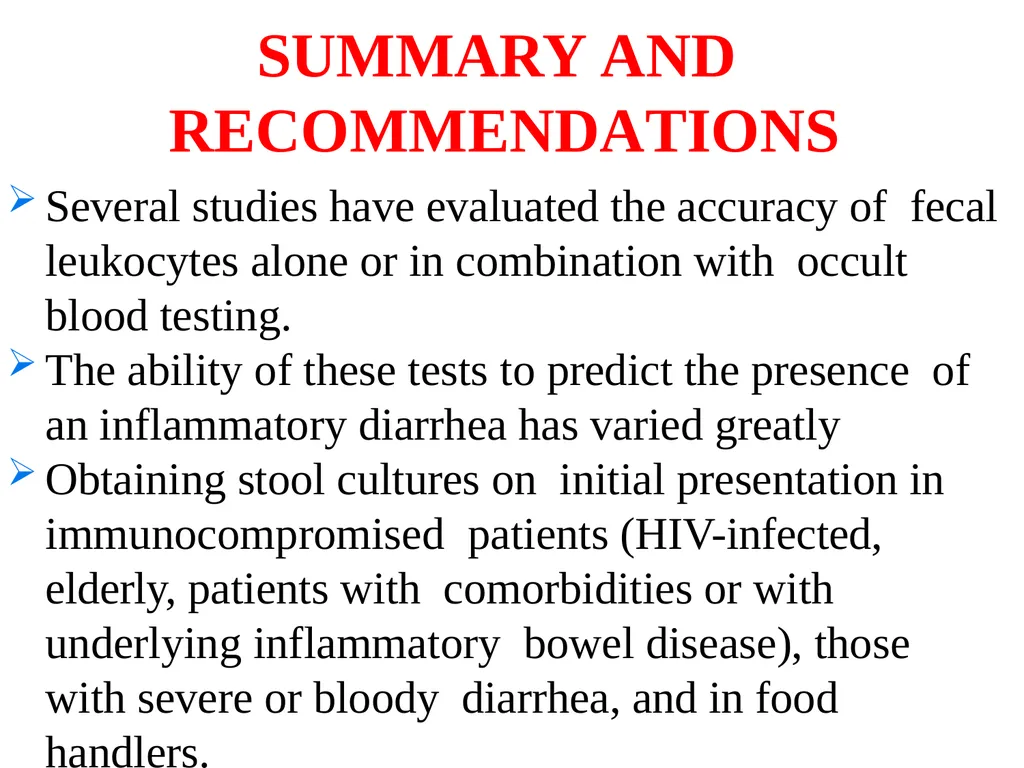
slide68. SUMMARY AND RECOMMENDATIONS Several studies have evaluated the accuracy of fecal leukocytes alone or in combination with occult blood testing.
The ability of these tests to predict the presence of an inflammatory diarrhea has varied greatly
Obtaining stool cultures on initial presentation in immunocompromised patients (HIV-infected, elderly, patients with comorbidities or with underlying inflammatory bowel disease), those with severe or bloody diarrhea, and in food handlers.<br>
slide69. SHIGELLA INFECTION IN ADULTS Shigella species are a common cause of bacterial diarrhea worldwide,
The organism is not as susceptible to acid as many other bacterial pathogens; thus, as few as 10 to 100 organisms can cause disease in part because the organisms can survive transit through the stomach .
Ingested bacteria pass into the small intestine where they multiply, so that several logs more bacteria pass into the colon, where the organisms enter the colonic cells.<br>
slide70. SHIGELLA INFECTION IN ADULTS Shigella transmission can occur through direct person-to-person spread as well as from contaminated food and water; the former accounts for most cases in the United States while the latter is more important in the developing world.
Shigella is a cause of classic dysentery<br>
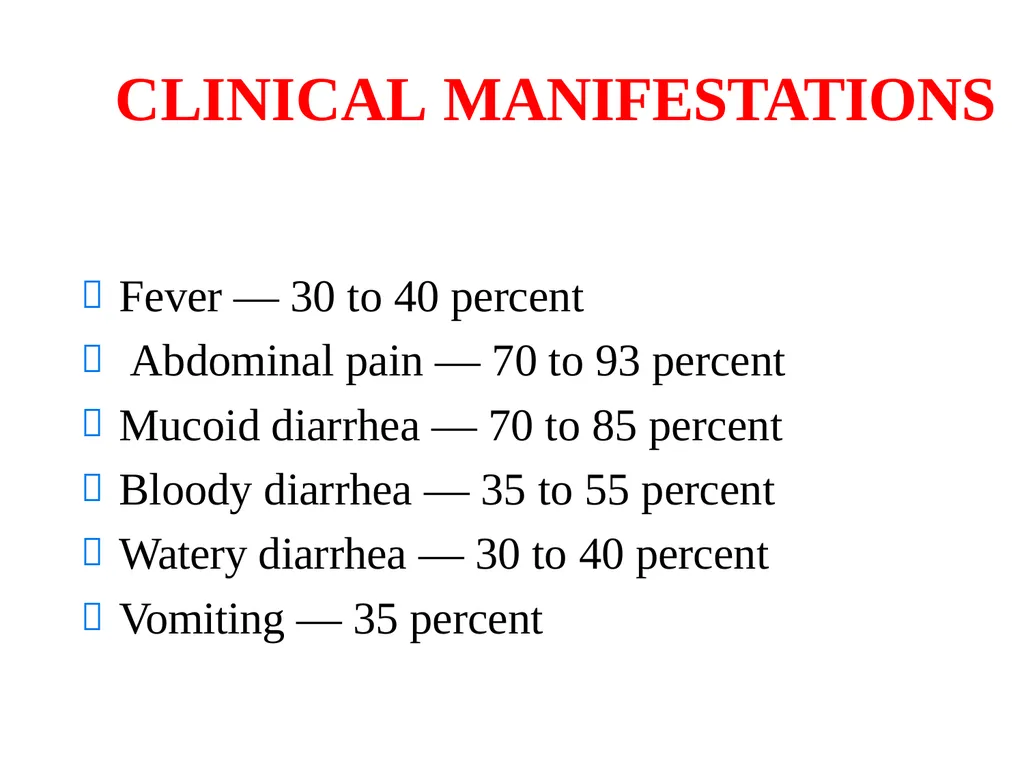
slide71. CLINICAL MANIFESTATIONS Fever — 30 to 40 percent
Abdominal pain — 70 to 93 percent
Mucoid diarrhea — 70 to 85 percent
Bloody diarrhea — 35 to 55 percent
Watery diarrhea — 30 to 40 percent
Vomiting — 35 percent<br>
slide72. CLINICAL MANIFESTATIONS The incubation period one to seven days, with an average of three days
Fever
Anorexia and malaise
Diarrhea initially is watery, but subsequently contains blood and mucus.
Tenesmus is a common complaint.<br>
slide73. CLINICAL MANIFESTATIONS Stool frequency is typically eight to ten per day, may increase to up to 100 per day.
Stools are of small volume, such that significant fluid loss is uncommon (average approximately 30 mL/kg per day)
In a normal healthy host, the course of disease is generally self-limited, lasting no more than seven days when left untreated.<br>
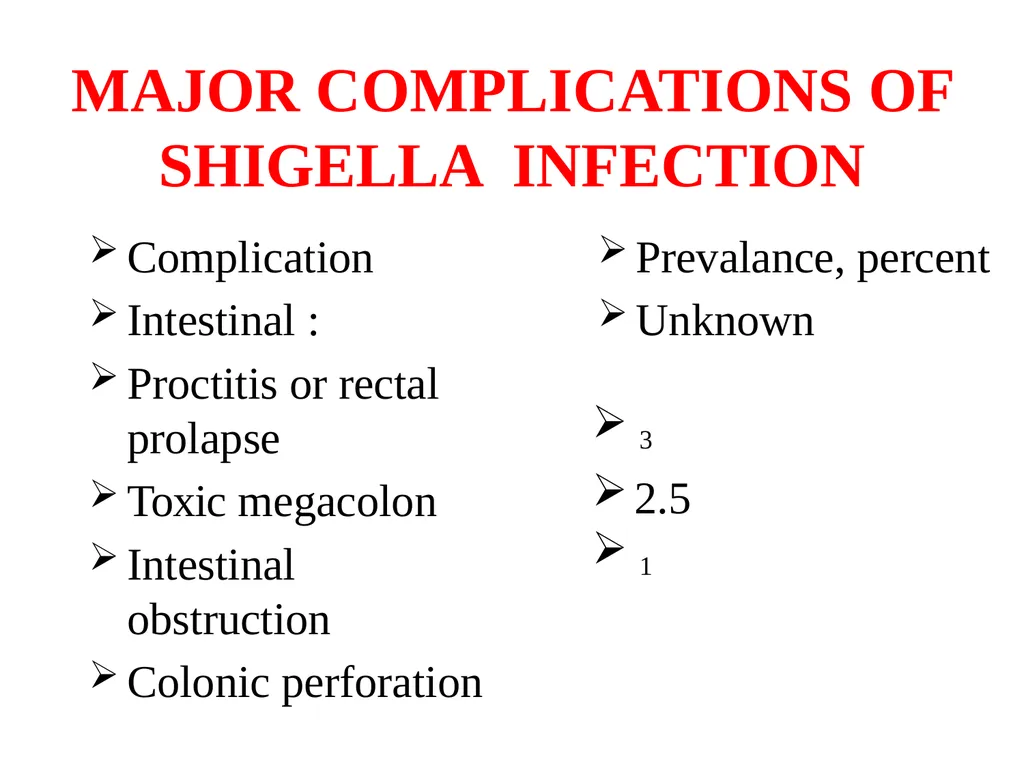
slide74. MAJOR COMPLICATIONS OF SHIGELLA INFECTION Complication
Intestinal :
Proctitis or rectal prolapse
Toxic megacolon
Intestinal obstruction
Colonic perforation Prevalance, percent
Unknown
3
2.5
1<br>
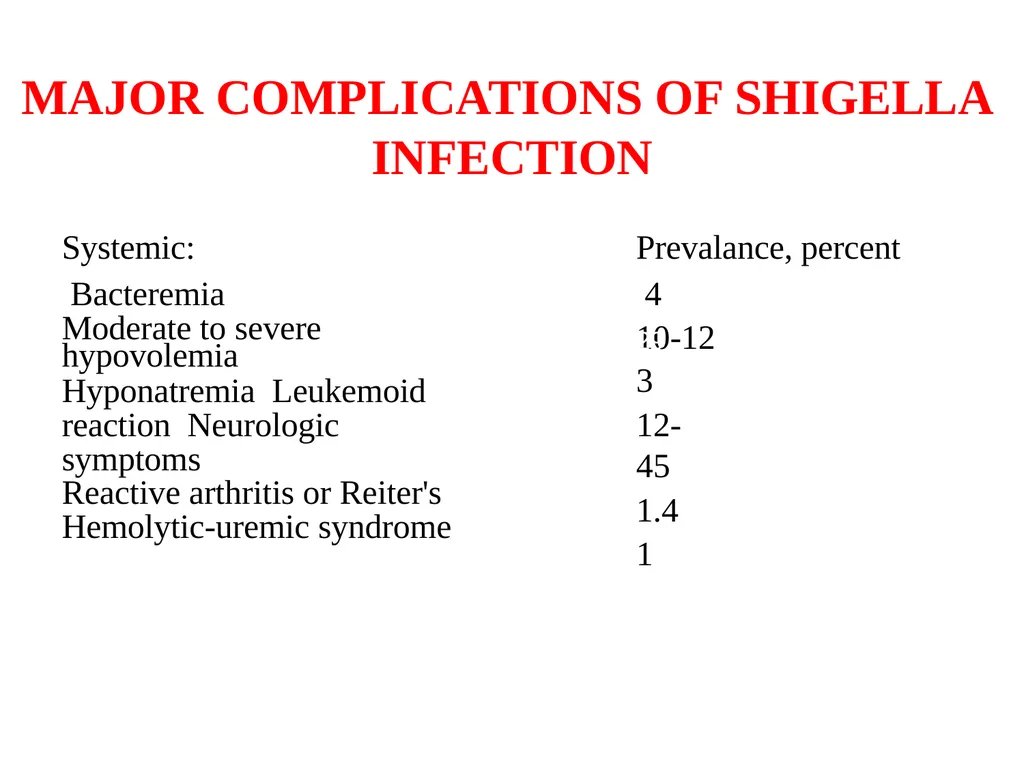
slide75. MAJOR COMPLICATIONS OF SHIGELLA INFECTION Systemic:
Bacteremia
Moderate to severe hypovolemia
Hyponatremia Leukemoid reaction Neurologic symptoms
Reactive arthritis or Reiter's Hemolytic-uremic syndrome Prevalance, percent
4
10-12 29
3
12-45
1.4
1<br>
slide76. DIAGNOSIS Frequent, small volume, bloody stools,
Abdominal cramps, and tenesmus, particularly if accompanied by fever.
Nausea and vomiting are notably absent in most patients
Fecal leukocytes are generally present.<br>
slide77. DIFFERENTILA DIAGNOSIS Shigella
Salmonella
Campylobacter
Yersinia
Enteroinvasive E. coli
Clostridium difficile
Noninfectious inflammatory bowel disease<br>
slide78. FECAL LEUKOCYTES Is associated with a bacterial cause of acute diarrhea in 89 percent of cases .
had fecal leukocytes (all of which were polymorphonuclear leukocytes) in 70 to 100 percent of samples tested, with at least 10 to 25 cells/hpf in the majority of patients .
In comparison, healthy controls and patients with cholera or viral diarrhea had no fecal leukocytes.<br>
slide79. STOOL CULTURE Definitive determination by stool culture
Sheigla requires prompt handling and optimally should be inoculated onto agar at the bedside.
Culture from a stool sample may give a better yield than culture from a rectal swab<br>
Professor
RMCH, Bareilly<br>
slide2. 1<br>
slide3. INTRDUCTION Group of diseases with predominant symptom of diarrhea.
Diarrhea- passing three or more times loose or watery stool per day, however even passing once a large amount of watery stool but frequent passing of normal stool is not diarrhea.
Loose stool is one that take shape of container
Acute diarrhea- sudden onset of diarrhea with or without vommiting and fever, may continue for 10-14 days, diarrhea lasting for 3 weeks-chronic diarrhea, passing blood and mucus- dysentery.<br>
slide4. Gastroenteritis-inflammation of intestine, characterized by diarrhea with or without vomiting and fever.
COMPLICATIONS
Dehydration
Malnutrition<br>
slide5. DEHYDRATION: Loss of fluids and electrolytes
either due to loss of absorbing capacity or due to increased secretion of electrolyte rich intestinal juice leads to acidosis, renal failure, shock and death.
MALNUTRITION: Loss of body weight due to
Decreased intake of nutrition due to loss of appetite or blind beliefs and restricting food intake.
Increased loss of nutrients due to diarrhea or vomiting
Increased demand of nutrients due to biochemical activities.<br>
slide6. DIARRHEA DEFENITION Stool weight in excess of 200 grams per day.
Collecting and weighing stools is neither practical nor required except in a clinical research setting.
A good working definition is three or more loose or watery stools per day
A definite decrease in consistency and increase in frequency based upon an individual baseline.<br>
slide7. Diarrhoea reflects increased water content of the stool, whether due to impaired water absorption and/or active water secretion by the bowel.
In severe infectious diarrhoea, the number of stools may reach 20 or more per day, with defecation occurring every 20 or 30 minutes. In this situation, the total daily volume of stool may exceed two litters, with resultant volume depletion and hypokalemia.
Most patients with acute diarrhoea have three to seven movements per day with total stool volume less than one litter per day.<br>
slide8. MAGNITUTE OF PROBLEM<br>
slide9. GLOBAL:
Major public health problem in all developing countries like Asia, Africa and Latin America.
750 million children below 5 years every year and 5 million per annum die at rate of 10 per minute.<br>
slide10. INDIA:
Under 5- population 15%.
1.5 million die every year due to acute gastroenteritis, infant hit hardest.
5000 deaths per day, 200/ hour and 3 /minute.
70% due to dehydration.
90% preventable.<br>
slide11. ETIOLOGY<br>
slide12. NON-INFECTIOUS Drugs
Food allergies
Gastrointestinal diseases such as inflammatory bowel disease
Other disease states such as thyrotoxicosis and the carcinoid syndrome.<br>
slide13. SMALL BOWEL INFECTIONS Watery diarrhea
Large volume
Abdominal cramping
Bloating, gas
Weight loss
Fever is rarely a significant symptom
Stool does not contain occult blood or inflammatory cells.<br>
slide14. LARGE INTESTINAL DIARRHEAS Frequent,
Regular
Small volume
Often painful bowel movements.
Fever
Bloody or mucoid stools are common,
Red blood cells and inflammatory cells may be seen routinely on the stool smear.<br>
slide15. Acute diarrhea is mostly common due to viral gastroenteritis with rotavirus, which accounts 40%
In travelers persons, bacterial infections occur.
various toxins such as Mushroom poisoning and drugs can also cause acute diarrhea.
An electron microscopy micrography of rotavirus the cause, of nearly 40% of hospitalizations from diarrhea.<br>
slide16. Acute if < 2 weeks,
Persistent if 2-4 weeks,
Chronic if > 4 weeks.
ACUTE DIARRHEA
>90% caused by infectious agents. Remaining 10%
Medications
Toxic ingestions,
Ischemia ( loss of blood )<br>
slide19. AGENTS THAT COMMONLY CAUSE ACUTE GASTROINTESTINAL ILLNESS<br>
slide20. BACTERIA Salmonella
Campylobacter
Shigella
Escherichia coli 0157:H7
Clostridium difficile<br>
slide21. VIRUSES Calcivirused (Norovirus and related viruses)
Rotavirus
Adenovirus types 40 and 41 Astrovirus<br>
slide22. PROTOZOA Cryptosporidium
Giardia
Cyclospora
Entamoeba histolytica<br>
slide23. FUNGI Cryptosporidium- diarrhea neither severe nor prolonged except in immuno-deficient patients.
Toxoplasma group.
Through contact with pets and farm animals.
Mixed infection in 2-5% cases.
In ENT infections, Respiratory or Urinary infection or simple teething process<br>
slide24. RESERVOIR Human is principal reservoir.
Animal- salmonella, Campylobacter and Yersinia enterocolitica and fungi.<br>
slide25. Source:<br>
slide26. HOST FACTOR AGE:
In all age groups but more common among children below 5 years and infants.
SEX:
Equal in both sexes.<br>
slide27. ENVIRONMENTAL FACTOR Bacterial diarrhea common in summer and viral during winter.<br>
slide28. PREDISPOSING FACTORS SOCIAL FACTORS:
Poverty, illiteracy, ignorance, lack of sanitation, lack of protected water supply, poor standard of living.
Malpractices in breastfeeding- feeding prelacteal feeds, discarding colostrum, using feeding bottles, premature weaning etc.<br>
slide29. MODE OF TRANSMISSION Through feco-oral route<br>
slide30. RELATED TERMS SECRETORY DIARRHEA:
Due to decreased absorption and increased excretion of fluids and electrolytes in gut-in all infectious diarrhea.
OSMOTIC DIARRHEA:
Due to ingestion of active substance which prevents absorption of fluids and electrolytes<br>
slide31. EFFECTS OF LOSS OF FLUIDS AND ELECTROLYTES Loss of water results in hypovolemia
Loss of sodium and chlorides results in electrolyte imbalance (hyponatremia)
Loss of bicarbonates salts favors development of acidosis and renal failure. When HCO3 falls<12 mmol/L breathing becomes deep and hurried
Loss of potassium salts results in muscular weakness, cardiac arrhythmia and paralytic ileus.<br>
slide32. INCUBATION PERIOD Varies from few hours to few days.<br>
slide33. ETIOLOGY Most cases of acute infectious gastroenteritis are probably viral, in most studies, stool culture has been positive in only 1.5 to 5.6 percent of cases.
In contrast, bacterial causes are responsible for most cases of severe diarrhea.
Protozoa are less commonly identified as the etiologic agents of acute gastrointestinal illness.<br>
slide34. CLINICAL FEATURES Due to dehydration-
Early stages- child irritable, thirsty and drink water eagerly.
Later stages- dehydration worsens, child more irritable, develop pinch, look dry and sunken eyes, anterior fontanel depressed, tongue dried, abdomen scaphoid, child passes urine at longer intervals and scanty, later skin losses elasticity, associated fever, vomiting, later shock develops associated by acidosis<br>
slide35. Dysentery inflammatory osmotic Exudative Secretory damage to the mucosal lining Loss of protein rich fluids Decreasing absorbing fluids Bac, viral, parasitic infections Caused by tubeculosis, colon, cancer, enteritits. Water is drawn into the
bowels.
excessive sugars
Maldigestion *Presence of blood or pus *Occur in inflamatory bowel disease *E.Coli or food poisioning No structural Damage Chloera isotonic Continous even no food * blood visible
in the stool.
* blood is a trace of invasion of bowel tissue..
*E.histolytica, Salmonella<br>
slide36. DIAGNOSTIC APPROACH Careful history to determine the duration of symptoms
The frequency and characteristics of the stool
Evidence of extracellular volume depletion (eg, decreased skin turgor, orthostatic hypotension).
Fever and peritoneal signs may be clues to infection with an invasive enteric pathogen.<br>
slide37. INDICATIONS FOR DIAGNOSTIC EVALUATION Profuse watery diarrhoea with signs of hypovolemia
Passage of many small volume stools containing blood and mucus
Bloody diarrhoea
Temperature 38.5ºC (101.3ºF)
Passage of 6 unformed stools per 24 hours or a duration of illness >48 hours
abdominal pain
Recent use of antibiotics or hospitalized patients
Diarrhoea in the elderly (70 years of age) or the immunocompromised<br>
slide38. SMALL BOWEL Bacteria :
Salmonella
Escherichia coli Clostridium perfringens
Staphylococcus aureus Aeromonas hydrophila Bacillus cereus
Vibrio cholera COLON
Bacteria :
Campylobacter* Shigella
Clostridium difficile
Yersinia
Vibrio parahaemolyticus Enteroinvasive E. coli Plesiomonas shigelloides Klebsiella oxytoca (rare)<br>
slide39. SMALL BOWEL COLON VIRUS Rotovirus Norovirus PROTOZOA Cryptosporidium* Microsporidium* Isospora Cyclospora Giardia lamblia VIRUS :
Cytomegalovirus*
Adenovirus
Herpes simplex virus
PROTOZOA :
Entamoeba histolytica<br>
slide40. HISTORICAL CLUE Symptoms that begin within six hours suggest ingestion of a preformed toxin of Staphylococcus aureus or Bacillus cereus
Symptoms that begin at 8 to 16 hours suggest infection with Clostridium perfringens
Symptoms that begin at more than 16 hours can result from viral or bacterial infection (eg, contamination of food with enterotoxigenic or enterohemorrhagic E. coli
Recent antibiotic use<br>
slide41. CLINICAL FEATURES: WATERY STOOL VOMITING FEVER DEHYDRATION<br>
slide42. FECAL LEUKOCYTES AND OCCULT BLOOD The variable estimates :may be partially due to differences in specimen processing and in operator experience. So the role has been questioned
The presence of occult blood and fecal leukocytes supports the diagnosis of a bacterial cause of diarrhea in the context of the medical history and other diagnostic evaluation
Bacterial culture in high risk patients.
Fecal leukocyte determination is probably not of value in patients who develop diarrhea while hospitalized, in whom testing for Clostridium difficile is much more likely to be helpful<br>
slide43. It is reasonable to continue symptomatic therapy for several days before considering further evaluation in patients who do not have severe illness, particularly if occult blood and fecal leukocytes are absent<br>
slide44. WHEN TO OBTAIN STOOL CULTURES Immunocompromised patients, including (HIV) Patients with comorbidities that increase the risk for complications
Patients with more severe, inflammatory diarrhea (including bloody diarrhea)
Patients with underlying inflammatory bowel disease in whom the distinction between a flare and superimposed infection is critical
Some employees, such as food handlers, occasionally require negative stool cultures to return to work<br>
slide45. WHEN TO OBTAIN STOOL FOR OVA AND PARASITES Sending stool samples for ova and parasites is not cost effective for the majority of patients with acute diarrhea<br>
slide46. INDICATIONS FOR OVA AND PARASITE STUDY Persistent diarrhea (associated with Giardia, Cryptosporidium, and Entamoeba histolytica)
Persistent diarrhea following travel to special region (associated with Giardia, Cryptosporidium, and Cyclospora)
Persistent diarrhea with exposure to infants in daycare centers (associated with Giardia and Cryptosporidium)<br>
slide47. Diarrhoea in a man who has sex with men (MSM) or a patient with AIDS (associated with Giardia and Entamoeba histolytica in the former, and a variety of parasites in the latter)
A community waterborne outbreak (associated with Giardia and Cryptosporidium)
Bloody diarrhoea with few or no faecal leukocytes (associated with intestinal amoebiasis)<br>
slide48. ENDOSCOPY Endoscopy is uncommonly needed in the diagnosis of acute diarrhoea. It may be helpful in the following settings:
Distinguishing inflammatory bowel disease from infectious diarrhoea
Diagnosing C. difficile infection and looking for pseudo membranes in patients who are toxic while results of tissue culture assays are pending. The widespread adoption of enzyme linked immunosorbent assays (ELISA) for C. difficile toxins A and B has reduced the time for C. difficile results to become available and thus decreased the need for endoscopy in these patients.<br>
slide49. In immunocompromised patients who are at risk for opportunistic infections with agents such as cytomegalovirus.
In patients in whom ischemic colitis is suspected but the diagnosis remains unclear after clinical and radiologic assessment.<br>
slide50. TREATMENT Oral rehydration solutions
Empiric antibiotic therapy<br>
slide51. WHEN TO TREAT<br>
slide52. Those with moderate to severe travelers' diarrhea as characterized by more than four unformed stools daily, fever, blood, pus, or mucus in the stool.<br>
slide53. Those with more than eight stools per day, volume depletion, symptoms for more than one week<br>
slide54. Those in whom hospitalization is being considered and immunocompromised hosts<br>
slide55. Signs and symptoms of bacterial diarrhea such as fever, bloody diarrhea (except, for suspected EHEC or C. difficile infection),and the presence of occult blood or fecal leukocytes in the stool<br>
slide56. We recommend empiric therapy with an oral fluoroquinolone (ciprofloxacin 500 mg twice daily, norfloxacin 400 mg twice daily, or levofloxacin 500 mg once daily) for three to five days in the absence of suspected EHEC or fluoroquinolone-resistant campylobacter infection.
Azithromycin (500 mg once daily for three days) and erythromycin (500 mg twice daily for five days) are alternative agents particularly if fluoroquinolone resistance is suspected .<br>
slide57. SYMPTOMATIC THERAPY<br>
slide58. The antimotility agent loperamide (Imodium) may be used for the symptomatic treatment of patients with acute diarrhea in whom fever is absent or low grade and the stools are not bloody. The dose of loperamide is two tablets (4 mg) initially, then 2 mg after each unformed stool, not to exceed 16 mg/day for 2 days.<br>
slide59. DIPHENOXYLATE Diphenoxylate (Lomotil) is an alternative agent. The dose of diphenoxylate is two tablets (4 mg) four times daily for 2 days. Has central opiate effects and may cause cholinergic side effects.<br>
slide60. Treatment with these agents may mask the amount of fluid lost, since fluid may pool in the intestine. Thus, fluids should be used aggressively when antimotility agents are employed.
Both drugs may facilitate the development of the hemolytic-uremic syndrome (HUS) in patients infected with EHEC<br>
slide61. BISMUTH SUBSALICYLATE (Pepto-Bismol)when compared with placebo significantly reduced the number of unformed stools and increased the proportion of patients free of symptoms at the end of treatment trials
May be used in patients with significant fever and dysentery, conditions in which loperamide should be avoided.
The dose of bismuth subsalicylate is 30 mL or two tablets every 30 minutes for eight doses.<br>
slide62. DIETARY RECOMMENDATIONS Adequate nutrition during an episode of acute diarrhea is important to facilitate enterocyte renewal if patients are anorectic
A short period of consuming only liquids will not be harmful.
Boiled starches and cereals (eg, potatoes, noodles, rice, wheat, and oat) with salt are indicated in patients with watery diarrhea; crackers, bananas, soup, and boiled vegetables may also be consumed<br>
slide63. PREVENTION:<br>
slide65. MEASURES * rehydration ORS replces the water and Electorlytes lost in feacues
*Zinc suppleents reduce diarrheal duration
*Reydration intravenous fluids
*Nutrient rich fooods
*Consulting doctor<br>
slide68. SUMMARY AND RECOMMENDATIONS Several studies have evaluated the accuracy of fecal leukocytes alone or in combination with occult blood testing.
The ability of these tests to predict the presence of an inflammatory diarrhea has varied greatly
Obtaining stool cultures on initial presentation in immunocompromised patients (HIV-infected, elderly, patients with comorbidities or with underlying inflammatory bowel disease), those with severe or bloody diarrhea, and in food handlers.<br>
slide69. SHIGELLA INFECTION IN ADULTS Shigella species are a common cause of bacterial diarrhea worldwide,
The organism is not as susceptible to acid as many other bacterial pathogens; thus, as few as 10 to 100 organisms can cause disease in part because the organisms can survive transit through the stomach .
Ingested bacteria pass into the small intestine where they multiply, so that several logs more bacteria pass into the colon, where the organisms enter the colonic cells.<br>
slide70. SHIGELLA INFECTION IN ADULTS Shigella transmission can occur through direct person-to-person spread as well as from contaminated food and water; the former accounts for most cases in the United States while the latter is more important in the developing world.
Shigella is a cause of classic dysentery<br>
slide71. CLINICAL MANIFESTATIONS Fever — 30 to 40 percent
Abdominal pain — 70 to 93 percent
Mucoid diarrhea — 70 to 85 percent
Bloody diarrhea — 35 to 55 percent
Watery diarrhea — 30 to 40 percent
Vomiting — 35 percent<br>
slide72. CLINICAL MANIFESTATIONS The incubation period one to seven days, with an average of three days
Fever
Anorexia and malaise
Diarrhea initially is watery, but subsequently contains blood and mucus.
Tenesmus is a common complaint.<br>
slide73. CLINICAL MANIFESTATIONS Stool frequency is typically eight to ten per day, may increase to up to 100 per day.
Stools are of small volume, such that significant fluid loss is uncommon (average approximately 30 mL/kg per day)
In a normal healthy host, the course of disease is generally self-limited, lasting no more than seven days when left untreated.<br>
slide74. MAJOR COMPLICATIONS OF SHIGELLA INFECTION Complication
Intestinal :
Proctitis or rectal prolapse
Toxic megacolon
Intestinal obstruction
Colonic perforation Prevalance, percent
Unknown
3
2.5
1<br>
slide75. MAJOR COMPLICATIONS OF SHIGELLA INFECTION Systemic:
Bacteremia
Moderate to severe hypovolemia
Hyponatremia Leukemoid reaction Neurologic symptoms
Reactive arthritis or Reiter's Hemolytic-uremic syndrome Prevalance, percent
4
10-12 29
3
12-45
1.4
1<br>
slide76. DIAGNOSIS Frequent, small volume, bloody stools,
Abdominal cramps, and tenesmus, particularly if accompanied by fever.
Nausea and vomiting are notably absent in most patients
Fecal leukocytes are generally present.<br>
slide77. DIFFERENTILA DIAGNOSIS Shigella
Salmonella
Campylobacter
Yersinia
Enteroinvasive E. coli
Clostridium difficile
Noninfectious inflammatory bowel disease<br>
slide78. FECAL LEUKOCYTES Is associated with a bacterial cause of acute diarrhea in 89 percent of cases .
had fecal leukocytes (all of which were polymorphonuclear leukocytes) in 70 to 100 percent of samples tested, with at least 10 to 25 cells/hpf in the majority of patients .
In comparison, healthy controls and patients with cholera or viral diarrhea had no fecal leukocytes.<br>
slide79. STOOL CULTURE Definitive determination by stool culture
Sheigla requires prompt handling and optimally should be inoculated onto agar at the bedside.
Culture from a stool sample may give a better yield than culture from a rectal swab<br>