
ADAPTATION Physiology Dr. Ravindra Kumar Director
Description: ADAPTATION Physiology Dr. Ravindra Kumar Director Research Bihar Animal Sciences University, Patna Basics of Adaptation Physiology Concept of animal adaptation refers to genetic and physiological changes taking place in an animal in
Related Topics
Download Presentation
"ADAPTATION Physiology Dr. Ravindra Kumar Director" is the property of its rightful owner. Permission is granted to download and print the materials on this website for personal, non-commercial use only, and to display it on your personal computer provided you do not modify the materials and that you retain all copyright notices contained in the materials. By downloading content from our website, you accept the terms of this agreement.
Presentation Transcript
slide1. ADAPTATION Physiology<br>
slide2. Dr. Ravindra Kumar
Director Research
Bihar Animal Sciences University,
Patna Basics of Adaptation Physiology<br>
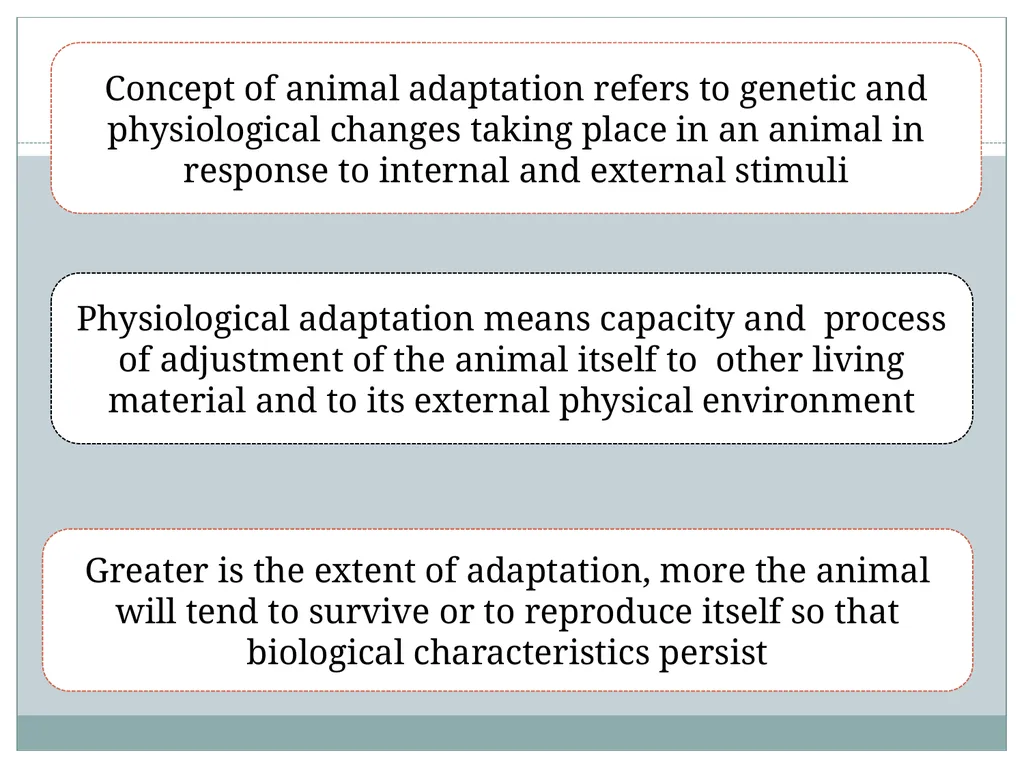
slide3. Concept of animal adaptation refers to genetic and physiological changes taking place in an animal in response to internal and external stimuli Physiological adaptation means capacity and process of adjustment of the animal itself to other living material and to its external physical environment Greater is the extent of adaptation, more the animal will tend to survive or to reproduce itself so that biological characteristics persist<br>
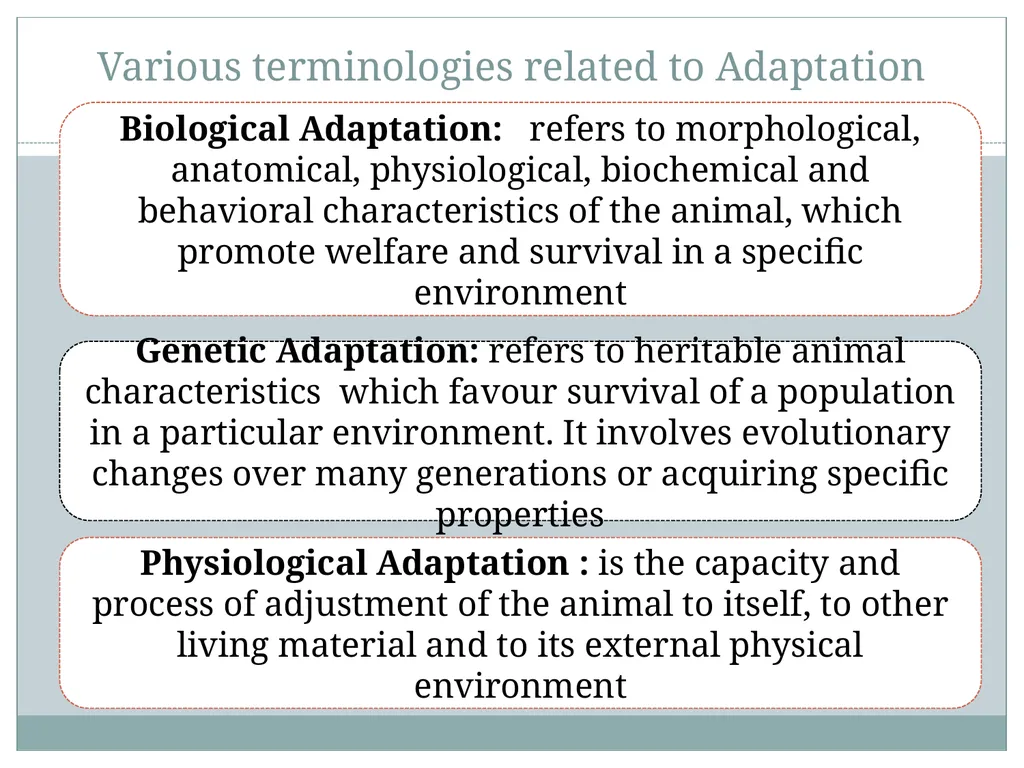
slide4. Various terminologies related to Adaptation Biological Adaptation: refers to morphological, anatomical, physiological, biochemical and behavioral characteristics of the animal, which promote welfare and survival in a specific environment Genetic Adaptation: refers to heritable animal characteristics which favour survival of a population in a particular environment. It involves evolutionary changes over many generations or acquiring specific properties Physiological Adaptation : is the capacity and process of adjustment of the animal to itself, to other living material and to its external physical environment<br>
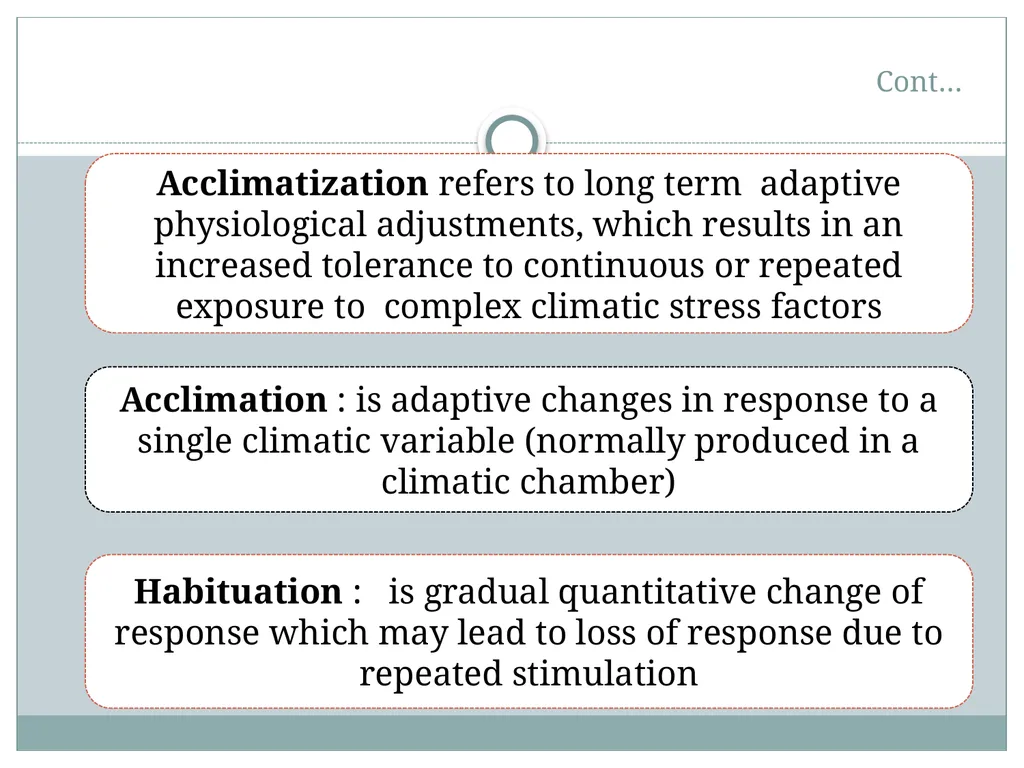
slide5. Cont… Acclimatization refers to long term adaptive physiological adjustments, which results in an increased tolerance to continuous or repeated exposure to complex climatic stress factors Acclimation : is adaptive changes in response to a single climatic variable (normally produced in a climatic chamber) Habituation : is gradual quantitative change of response which may lead to loss of response due to repeated stimulation<br>
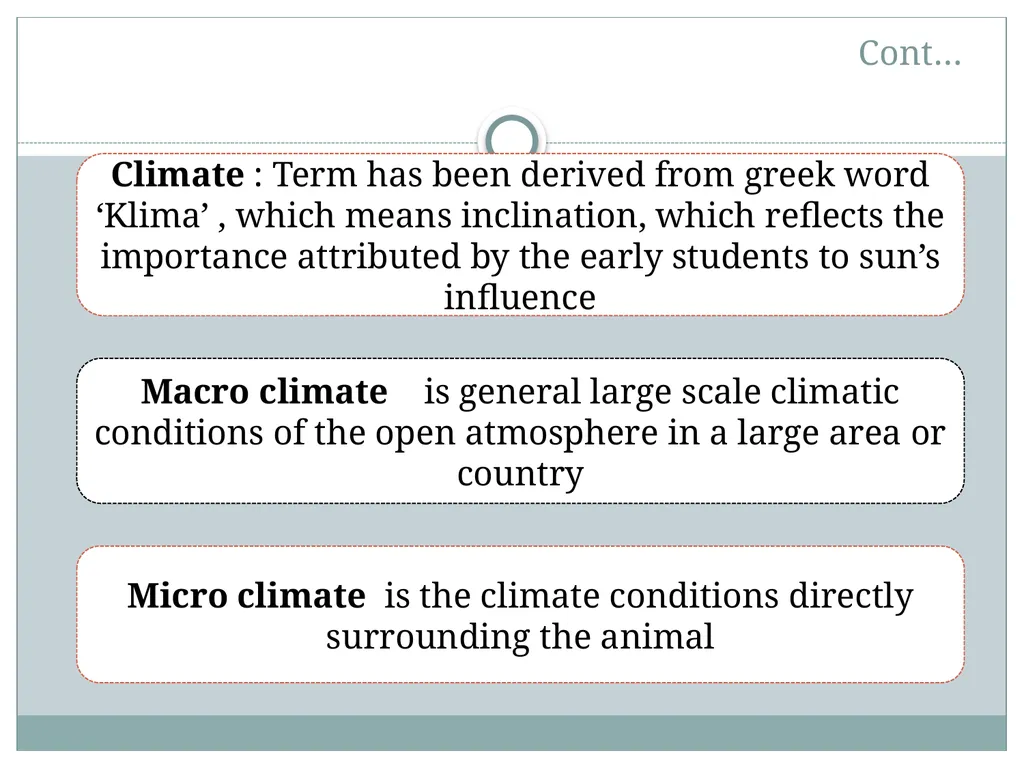
slide6. Cont… Climate : Term has been derived from greek word ‘Klima’ , which means inclination, which reflects the importance attributed by the early students to sun’s influence Macro climate is general large scale climatic conditions of the open atmosphere in a large area or country Micro climate is the climate conditions directly surrounding the animal<br>
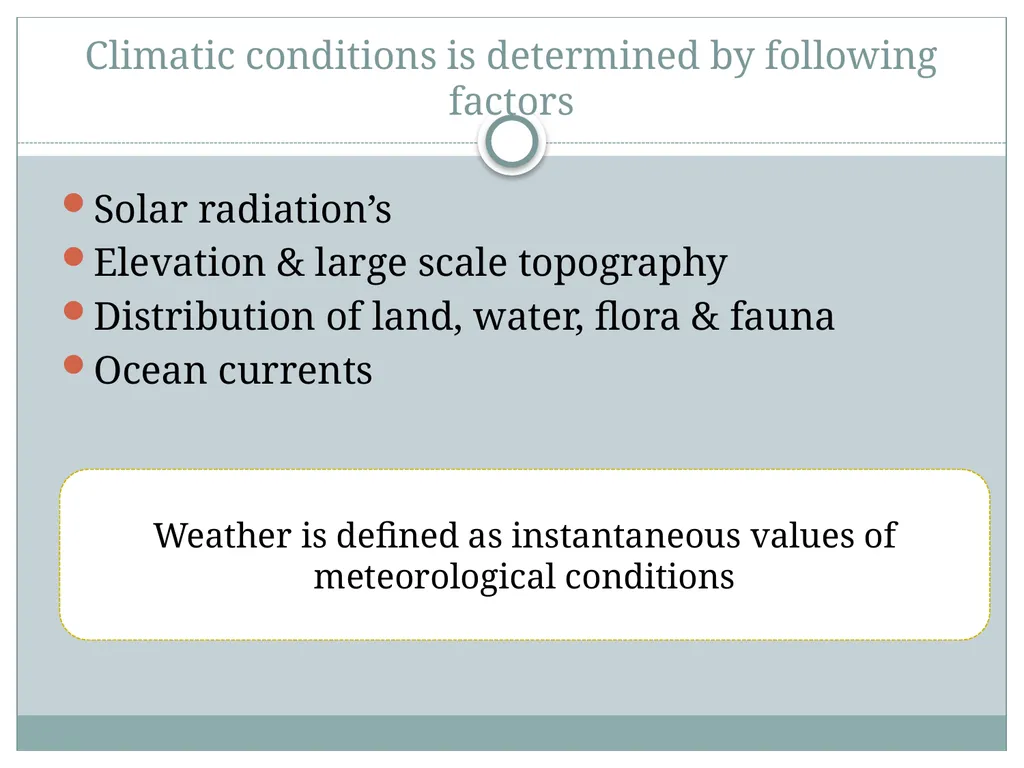
slide7. Climatic conditions is determined by following factors Solar radiation’s
Elevation & large scale topography
Distribution of land, water, flora & fauna
Ocean currents Weather is defined as instantaneous values of meteorological conditions<br>
slide8. PHYSICAL ENVIRONMENT<br>
slide9. Energy is the source of all life and movement
Physics energy is defined as the ability to do work
All process of life itself involve, one way or another the expenditure of energy through work<br>
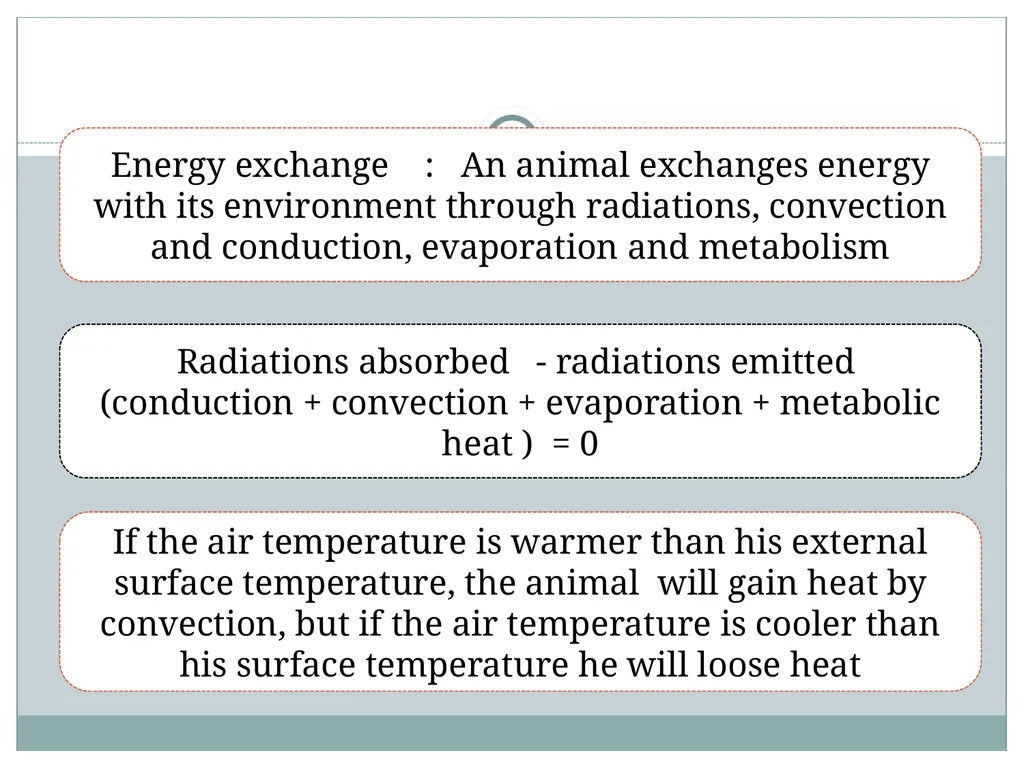
slide10. Energy exchange : An animal exchanges energy with its environment through radiations, convection and conduction, evaporation and metabolism Radiations absorbed - radiations emitted (conduction + convection + evaporation + metabolic heat ) = 0 If the air temperature is warmer than his external surface temperature, the animal will gain heat by convection, but if the air temperature is cooler than his surface temperature he will loose heat<br>
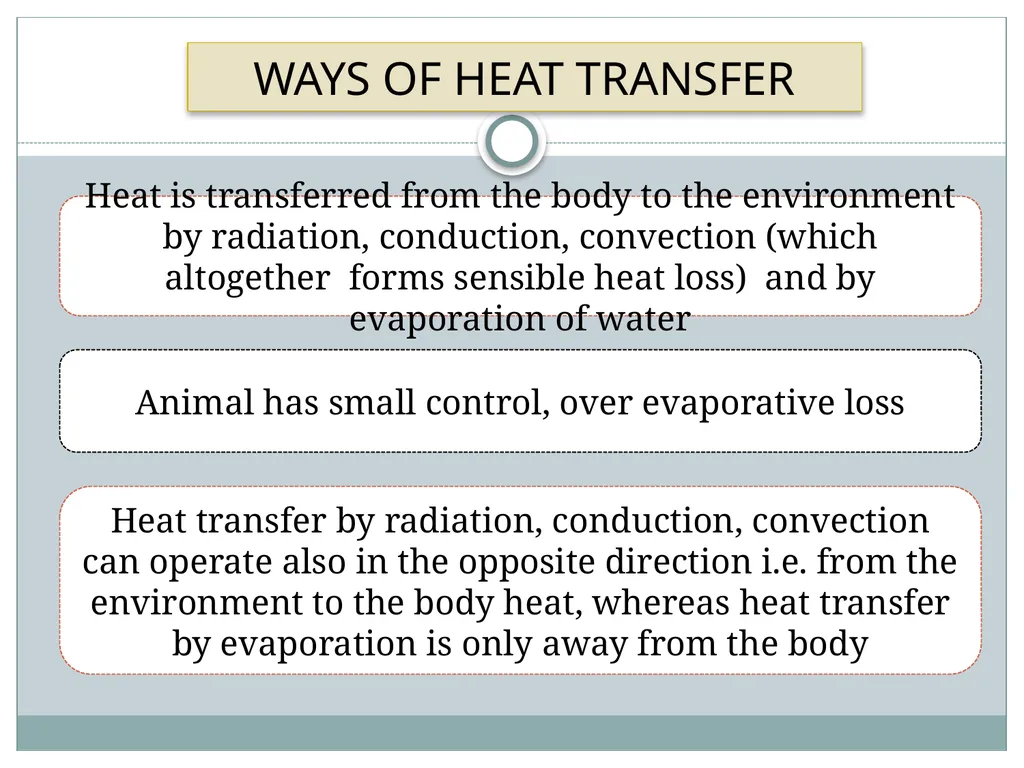
slide11. WAYS OF HEAT TRANSFER Heat is transferred from the body to the environment by radiation, conduction, convection (which altogether forms sensible heat loss) and by evaporation of water Animal has small control, over evaporative loss Heat transfer by radiation, conduction, convection can operate also in the opposite direction i.e. from the environment to the body heat, whereas heat transfer by evaporation is only away from the body<br>
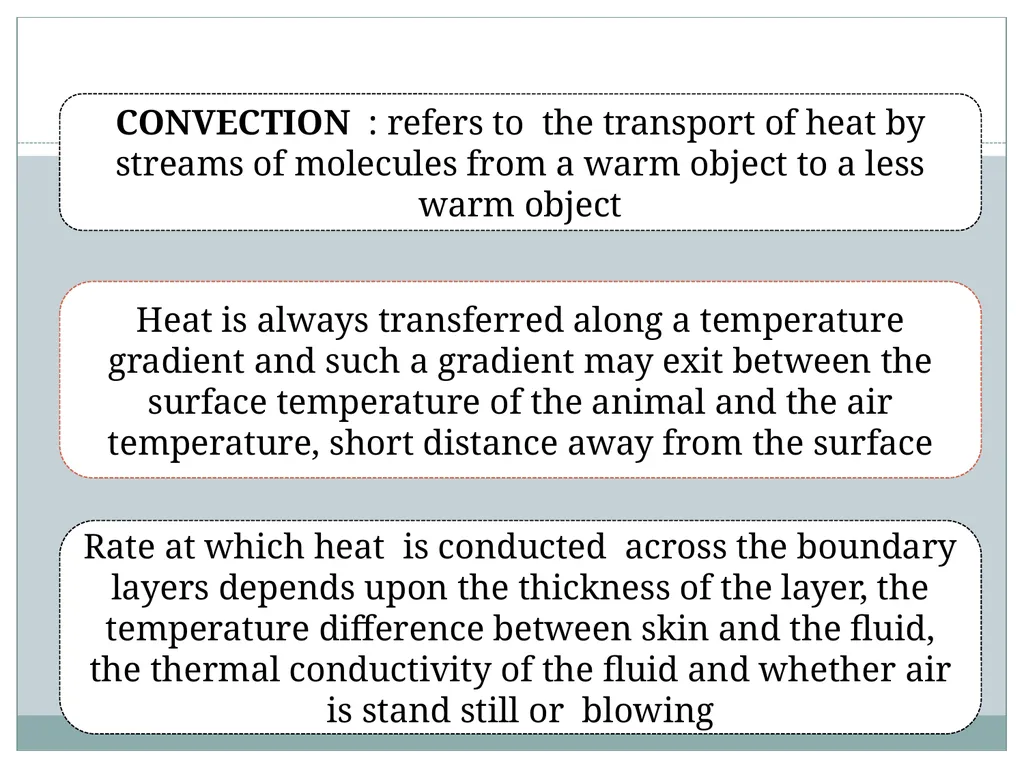
slide12. CONVECTION : refers to the transport of heat by streams of molecules from a warm object to a less warm object Heat is always transferred along a temperature gradient and such a gradient may exit between the surface temperature of the animal and the air temperature, short distance away from the surface Rate at which heat is conducted across the boundary layers depends upon the thickness of the layer, the temperature difference between skin and the fluid, the thermal conductivity of the fluid and whether air is stand still or blowing<br>
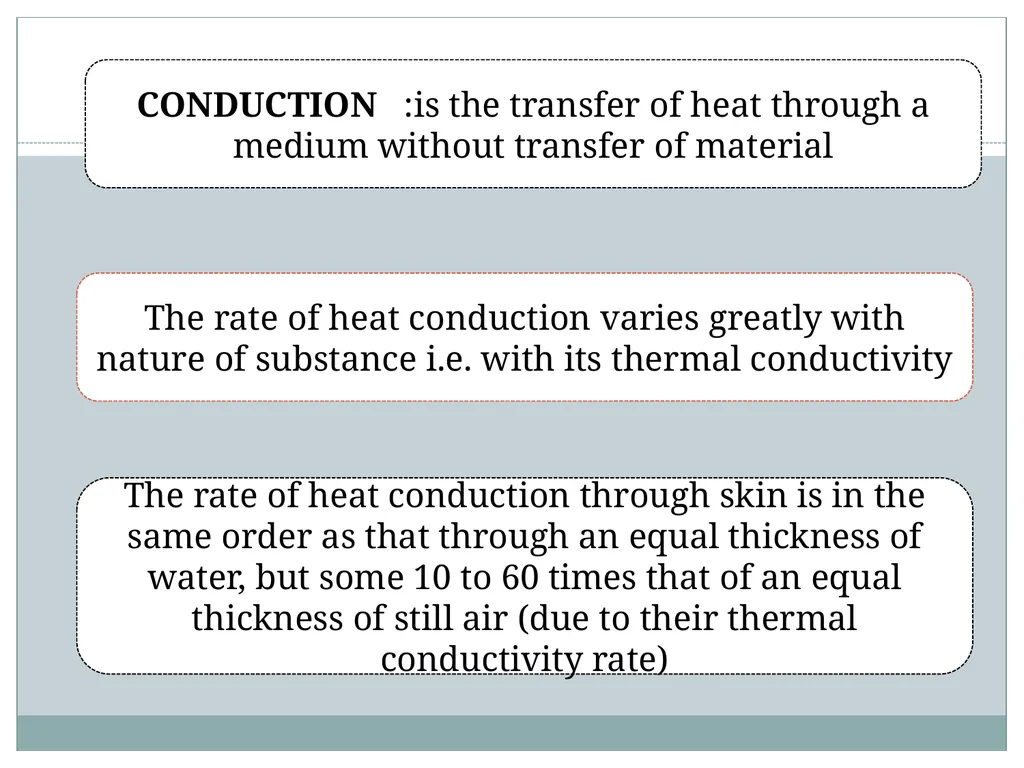
slide13. CONDUCTION :is the transfer of heat through a medium without transfer of material The rate of heat conduction varies greatly with nature of substance i.e. with its thermal conductivity The rate of heat conduction through skin is in the same order as that through an equal thickness of water, but some 10 to 60 times that of an equal thickness of still air (due to their thermal conductivity rate)<br>
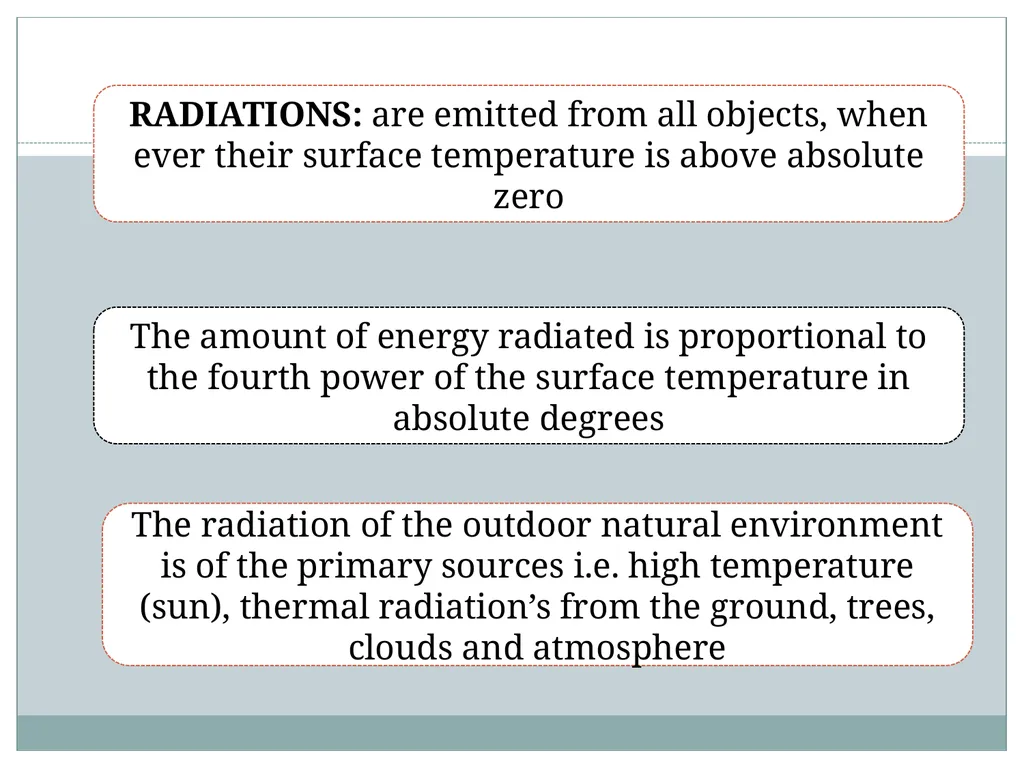
slide14. RADIATIONS: are emitted from all objects, when ever their surface temperature is above absolute zero The amount of energy radiated is proportional to the fourth power of the surface temperature in absolute degrees The radiation of the outdoor natural environment is of the primary sources i.e. high temperature (sun), thermal radiation’s from the ground, trees, clouds and atmosphere<br>
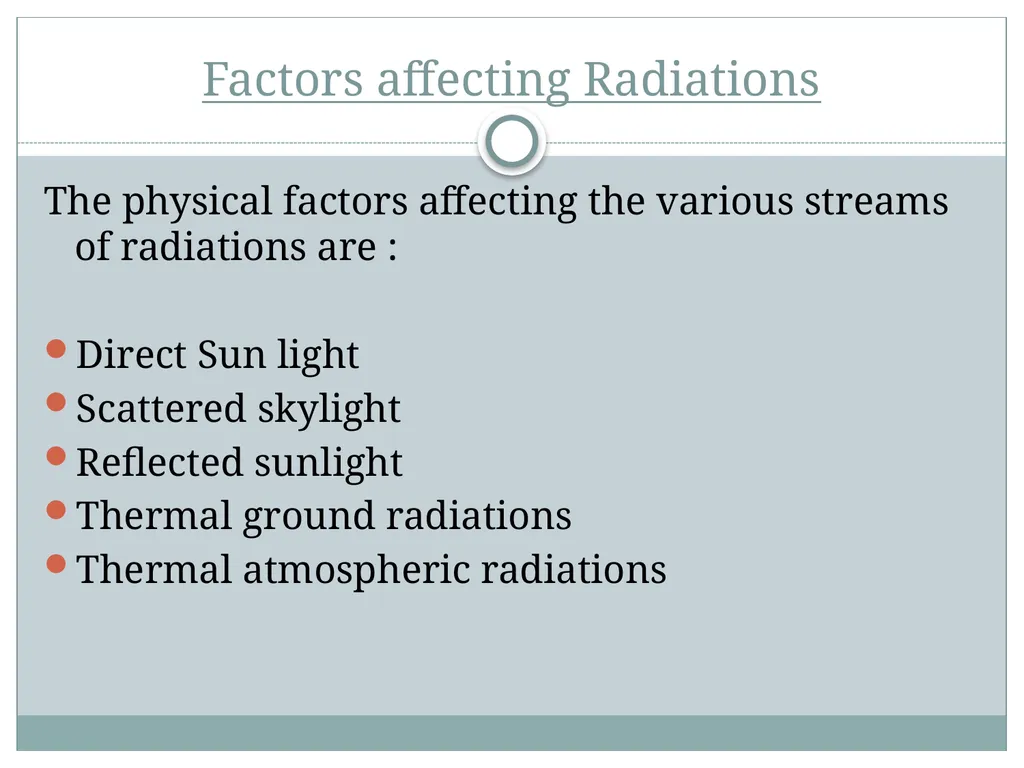
slide15. Factors affecting Radiations The physical factors affecting the various streams of radiations are :
Direct Sun light
Scattered skylight
Reflected sunlight
Thermal ground radiations
Thermal atmospheric radiations<br>
slide2. Dr. Ravindra Kumar
Director Research
Bihar Animal Sciences University,
Patna Basics of Adaptation Physiology<br>
slide3. Concept of animal adaptation refers to genetic and physiological changes taking place in an animal in response to internal and external stimuli Physiological adaptation means capacity and process of adjustment of the animal itself to other living material and to its external physical environment Greater is the extent of adaptation, more the animal will tend to survive or to reproduce itself so that biological characteristics persist<br>
slide4. Various terminologies related to Adaptation Biological Adaptation: refers to morphological, anatomical, physiological, biochemical and behavioral characteristics of the animal, which promote welfare and survival in a specific environment Genetic Adaptation: refers to heritable animal characteristics which favour survival of a population in a particular environment. It involves evolutionary changes over many generations or acquiring specific properties Physiological Adaptation : is the capacity and process of adjustment of the animal to itself, to other living material and to its external physical environment<br>
slide5. Cont… Acclimatization refers to long term adaptive physiological adjustments, which results in an increased tolerance to continuous or repeated exposure to complex climatic stress factors Acclimation : is adaptive changes in response to a single climatic variable (normally produced in a climatic chamber) Habituation : is gradual quantitative change of response which may lead to loss of response due to repeated stimulation<br>
slide6. Cont… Climate : Term has been derived from greek word ‘Klima’ , which means inclination, which reflects the importance attributed by the early students to sun’s influence Macro climate is general large scale climatic conditions of the open atmosphere in a large area or country Micro climate is the climate conditions directly surrounding the animal<br>
slide7. Climatic conditions is determined by following factors Solar radiation’s
Elevation & large scale topography
Distribution of land, water, flora & fauna
Ocean currents Weather is defined as instantaneous values of meteorological conditions<br>
slide8. PHYSICAL ENVIRONMENT<br>
slide9. Energy is the source of all life and movement
Physics energy is defined as the ability to do work
All process of life itself involve, one way or another the expenditure of energy through work<br>
slide10. Energy exchange : An animal exchanges energy with its environment through radiations, convection and conduction, evaporation and metabolism Radiations absorbed - radiations emitted (conduction + convection + evaporation + metabolic heat ) = 0 If the air temperature is warmer than his external surface temperature, the animal will gain heat by convection, but if the air temperature is cooler than his surface temperature he will loose heat<br>
slide11. WAYS OF HEAT TRANSFER Heat is transferred from the body to the environment by radiation, conduction, convection (which altogether forms sensible heat loss) and by evaporation of water Animal has small control, over evaporative loss Heat transfer by radiation, conduction, convection can operate also in the opposite direction i.e. from the environment to the body heat, whereas heat transfer by evaporation is only away from the body<br>
slide12. CONVECTION : refers to the transport of heat by streams of molecules from a warm object to a less warm object Heat is always transferred along a temperature gradient and such a gradient may exit between the surface temperature of the animal and the air temperature, short distance away from the surface Rate at which heat is conducted across the boundary layers depends upon the thickness of the layer, the temperature difference between skin and the fluid, the thermal conductivity of the fluid and whether air is stand still or blowing<br>
slide13. CONDUCTION :is the transfer of heat through a medium without transfer of material The rate of heat conduction varies greatly with nature of substance i.e. with its thermal conductivity The rate of heat conduction through skin is in the same order as that through an equal thickness of water, but some 10 to 60 times that of an equal thickness of still air (due to their thermal conductivity rate)<br>
slide14. RADIATIONS: are emitted from all objects, when ever their surface temperature is above absolute zero The amount of energy radiated is proportional to the fourth power of the surface temperature in absolute degrees The radiation of the outdoor natural environment is of the primary sources i.e. high temperature (sun), thermal radiation’s from the ground, trees, clouds and atmosphere<br>
slide15. Factors affecting Radiations The physical factors affecting the various streams of radiations are :
Direct Sun light
Scattered skylight
Reflected sunlight
Thermal ground radiations
Thermal atmospheric radiations<br>