
ADEA Academic Dental Careers Fellowship Program
MY
Published · 34 slides · 0 views
1 / 1


Description
ADEA Academic Dental Careers Fellowship Program (ADCFP) Introduction and Resources What Is the ADCFP? Faculty development program aimed at improving the climate for nonclinical careers in dental education institutions by providing students
Related Topics
Share
Embed code
Download this presentation From Below
"ADEA Academic Dental Careers Fellowship Program" is the property of its rightful owner. Permission is granted to download and print the materials on this website for personal, non-commercial use only, and to display it on your personal computer provided you do not modify the materials and that you retain all copyright notices contained in the materials. By downloading content from our website, you accept the terms of this agreement.
Presentation Transcript
01
ADEA Academic Dental Careers
Fellowship Program (ADCFP)
Introduction and Resources<br>
02
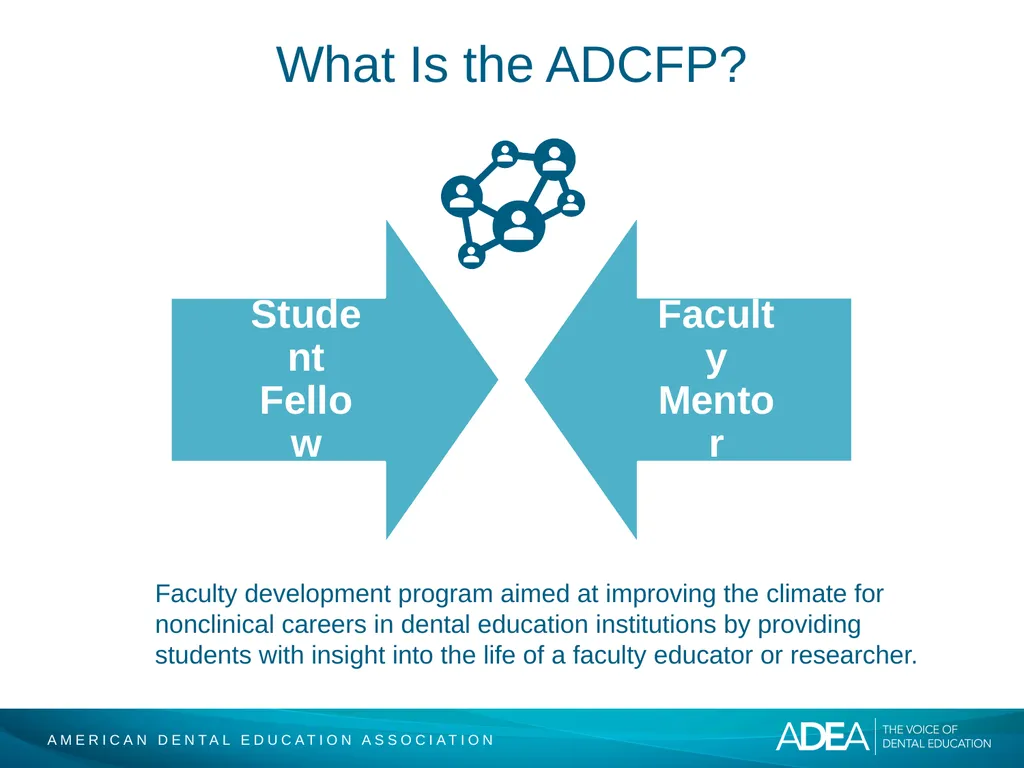
What Is the ADCFP? Faculty development program aimed at improving the climate for nonclinical careers in dental education institutions by providing students with insight into the life of a faculty educator or researcher.<br>
03
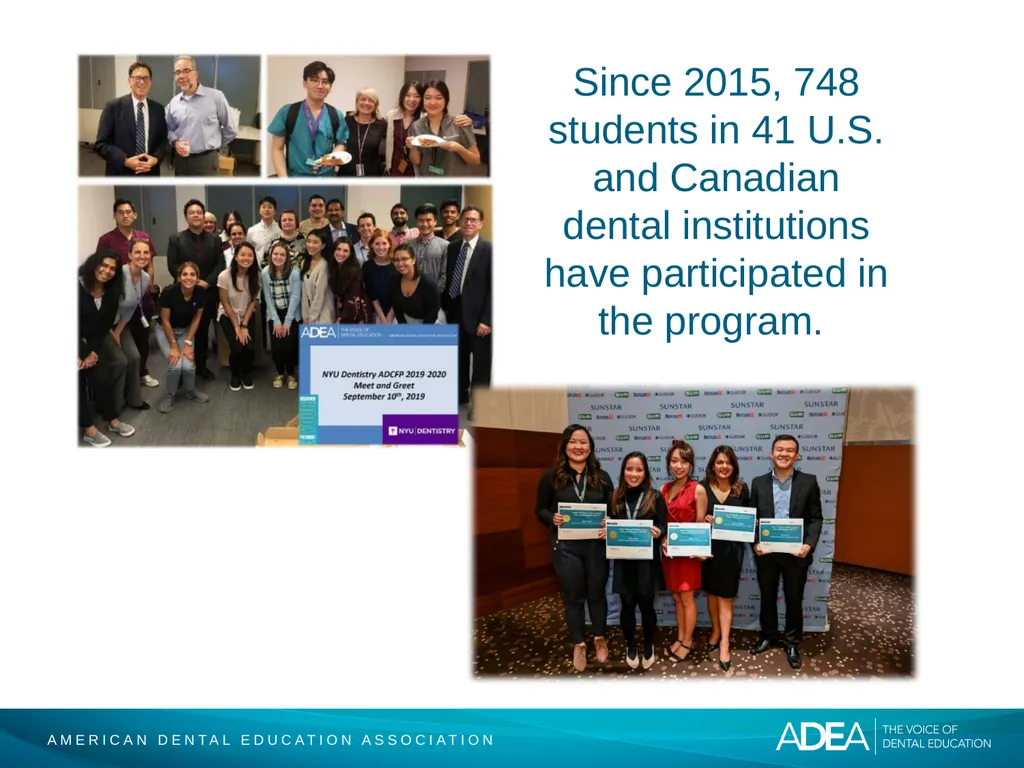
Since 2015, 748 students in 41 U.S. and Canadian
dental institutions have participated in the program.<br>
dental institutions have participated in the program.<br>
04
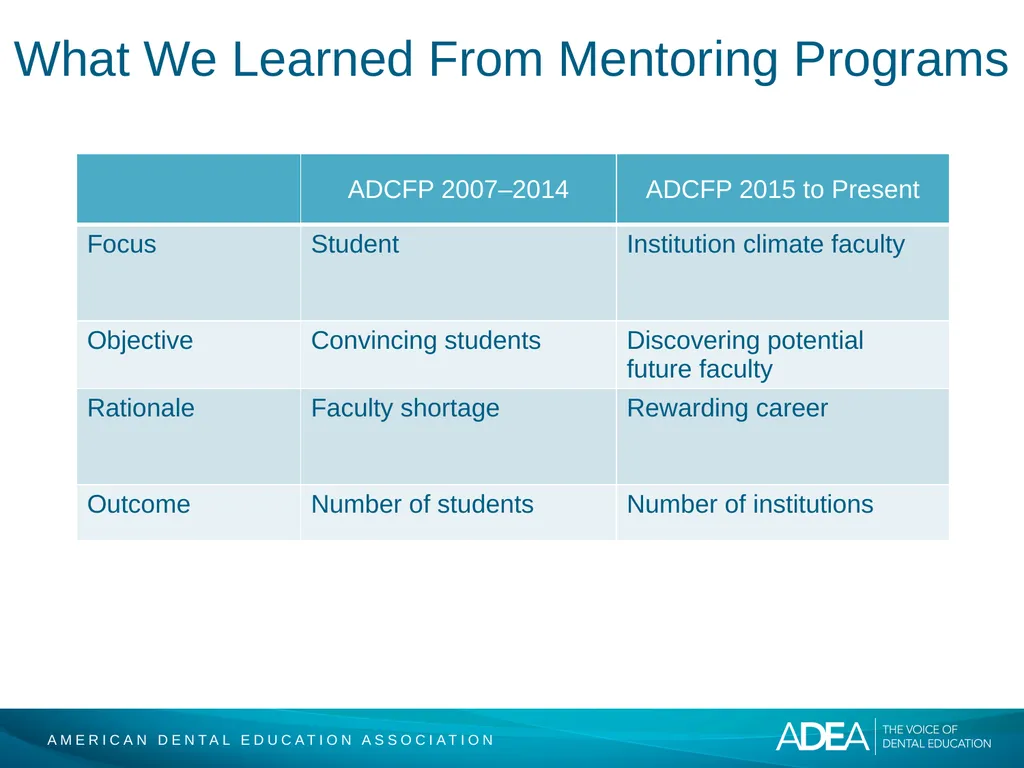
What We Learned From Mentoring Programs<br>
05
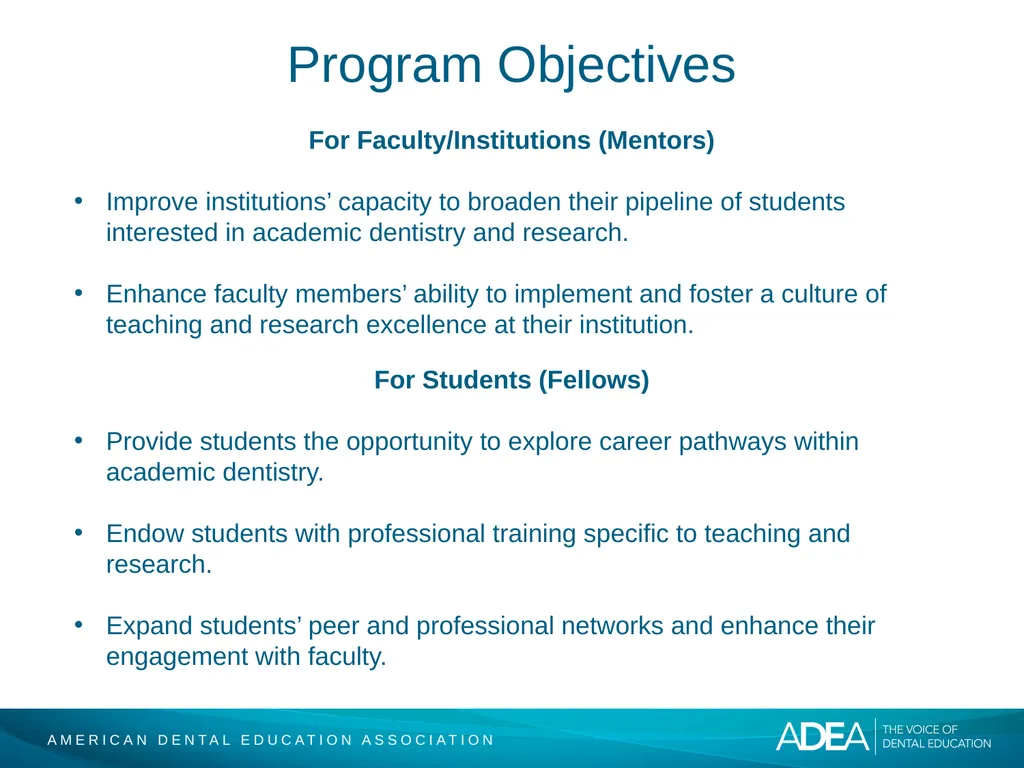
For Faculty/Institutions (Mentors)
Improve institutions’ capacity to broaden their pipeline of students interested in academic dentistry and research.
Enhance faculty members’ ability to implement and foster a culture of teaching and research excellence at their institution. For Students (Fellows)
Provide students the opportunity to explore career pathways within academic dentistry.
Endow students with professional training specific to teaching and research.
Expand students’ peer and professional networks and enhance their engagement with faculty. Program Objectives<br>
Improve institutions’ capacity to broaden their pipeline of students interested in academic dentistry and research.
Enhance faculty members’ ability to implement and foster a culture of teaching and research excellence at their institution. For Students (Fellows)
Provide students the opportunity to explore career pathways within academic dentistry.
Endow students with professional training specific to teaching and research.
Expand students’ peer and professional networks and enhance their engagement with faculty. Program Objectives<br>
06
ADCFP Liaison
Faculty Mentors
Student Fellows Program Participants<br>
Faculty Mentors
Student Fellows Program Participants<br>
07
Responsibilities
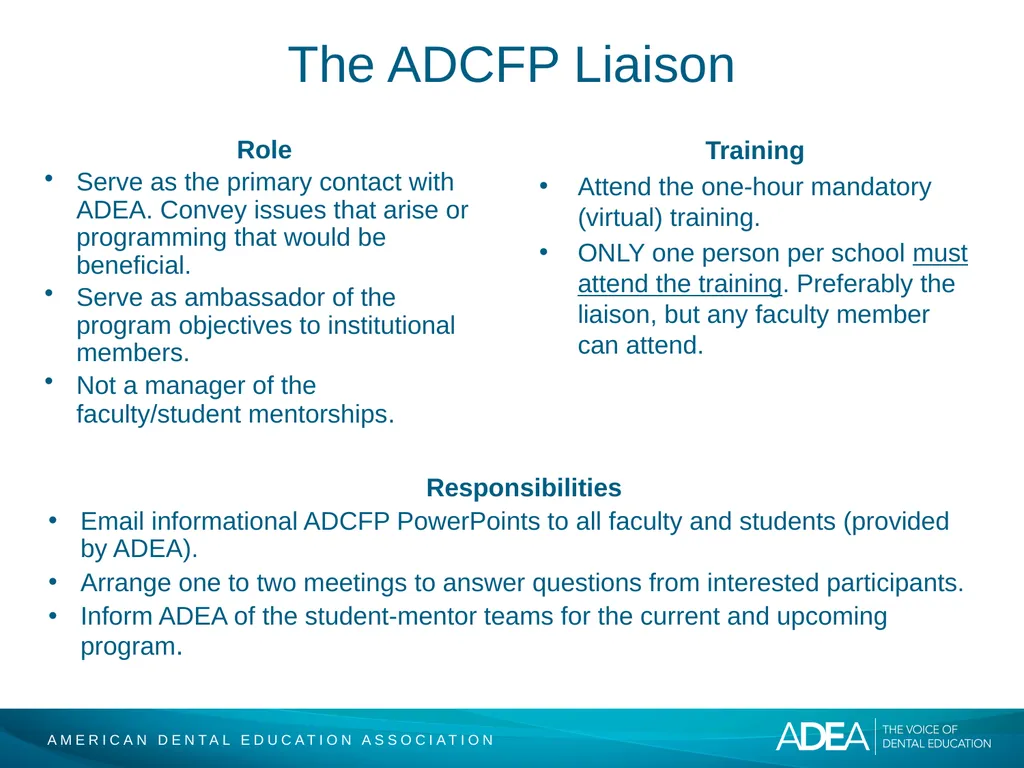
Email informational ADCFP PowerPoints to all faculty and students (provided by ADEA).
Arrange one to two meetings to answer questions from interested participants.
Inform ADEA of the student-mentor teams for the current and upcoming program. The ADCFP Liaison Role
Serve as the primary contact with ADEA. Convey issues that arise or programming that would be beneficial.
Serve as ambassador of the program objectives to institutional members.
Not a manager of the faculty/student mentorships. Training
Attend the one-hour mandatory (virtual) training.
ONLY one person per school must attend the training. Preferably the liaison, but any faculty member can attend.<br>
Email informational ADCFP PowerPoints to all faculty and students (provided by ADEA).
Arrange one to two meetings to answer questions from interested participants.
Inform ADEA of the student-mentor teams for the current and upcoming program. The ADCFP Liaison Role
Serve as the primary contact with ADEA. Convey issues that arise or programming that would be beneficial.
Serve as ambassador of the program objectives to institutional members.
Not a manager of the faculty/student mentorships. Training
Attend the one-hour mandatory (virtual) training.
ONLY one person per school must attend the training. Preferably the liaison, but any faculty member can attend.<br>
08
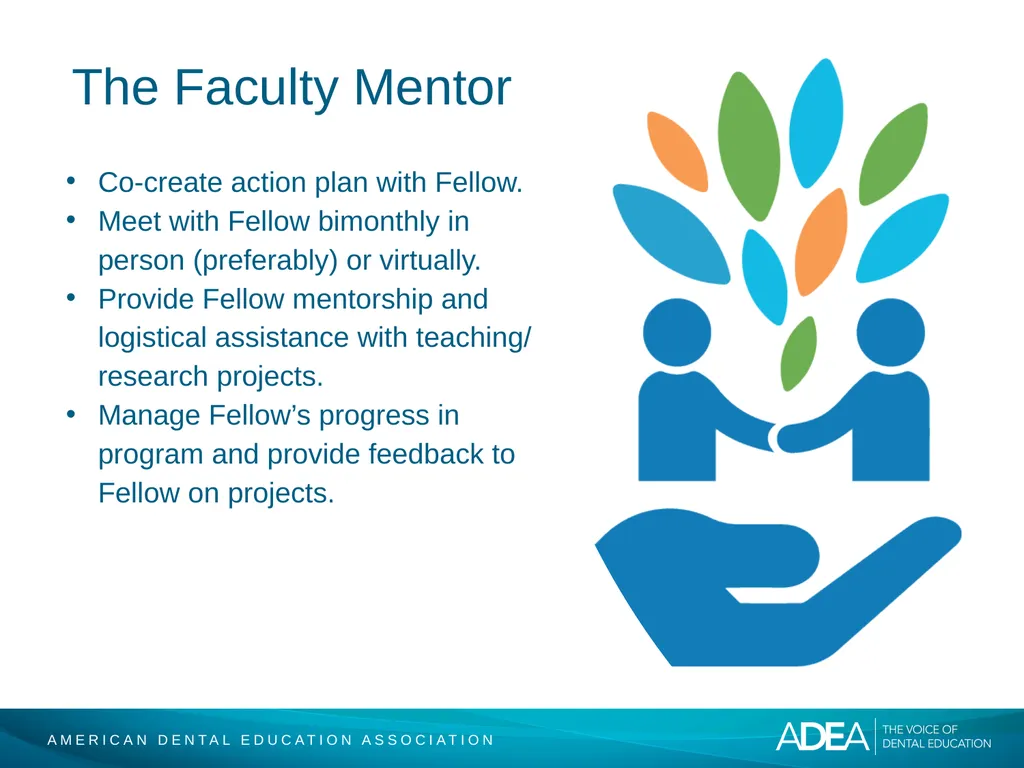
The Faculty Mentor Co-create action plan with Fellow.
Meet with Fellow bimonthly in person (preferably) or virtually.
Provide Fellow mentorship and logistical assistance with teaching/ research projects.
Manage Fellow’s progress in program and provide feedback to Fellow on projects.<br>
Meet with Fellow bimonthly in person (preferably) or virtually.
Provide Fellow mentorship and logistical assistance with teaching/ research projects.
Manage Fellow’s progress in program and provide feedback to Fellow on projects.<br>
09
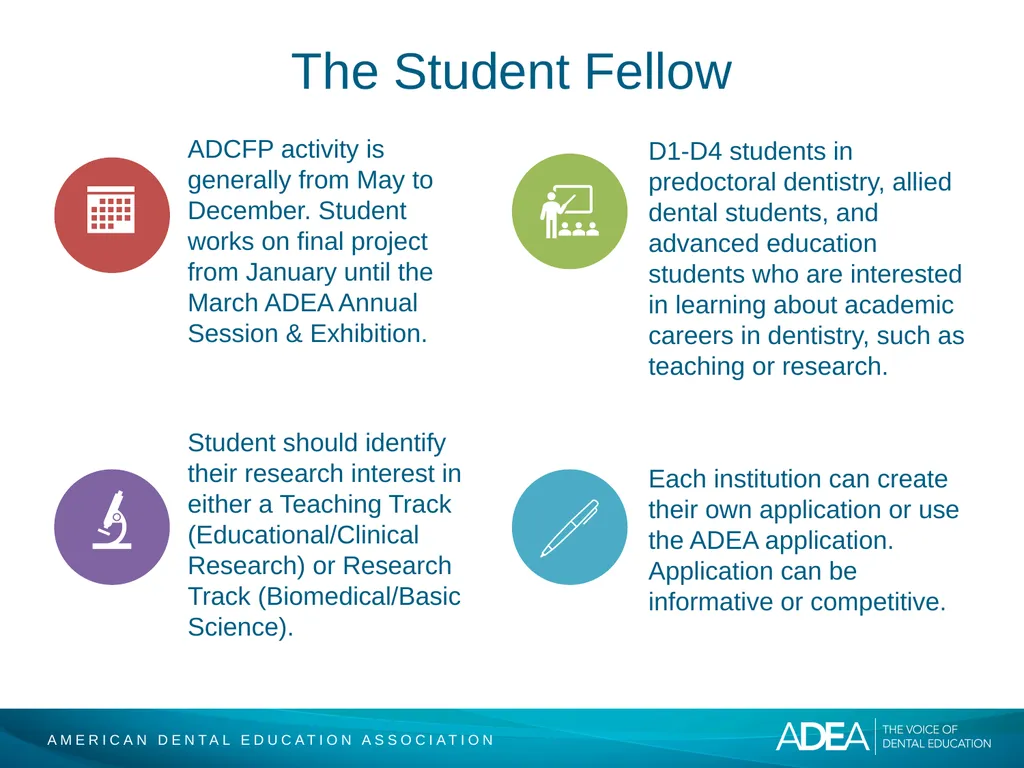
The Student Fellow<br>
10
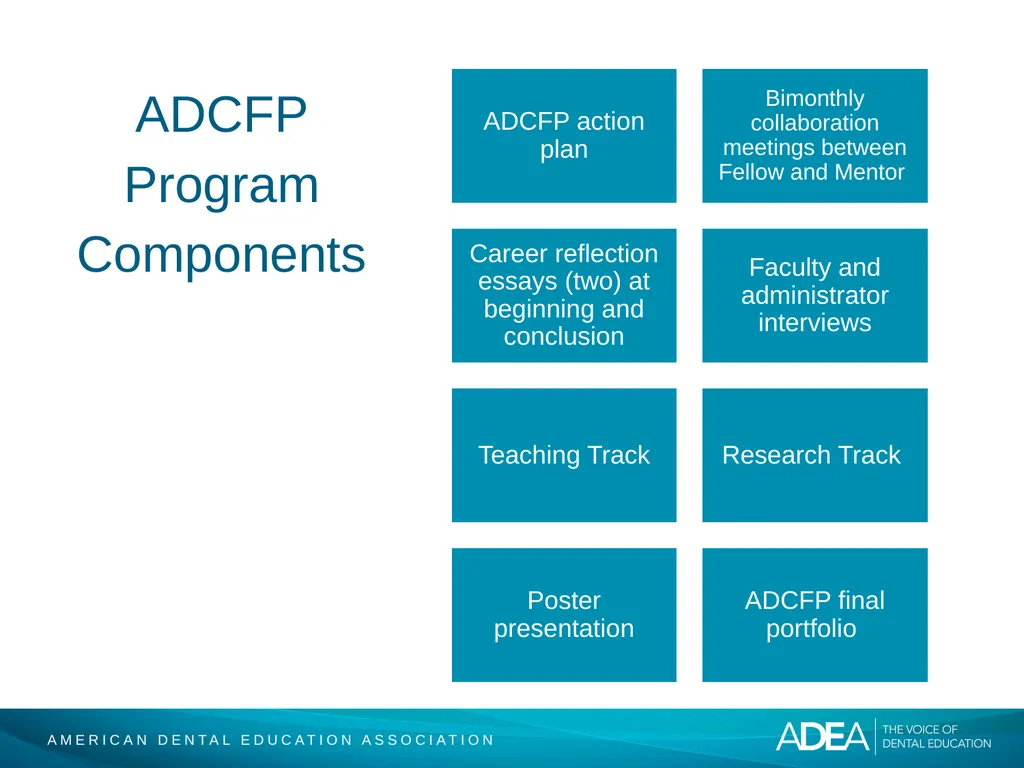
ADCFP Program Components<br>
11
ADCFP ACTION PLAN<br>
12
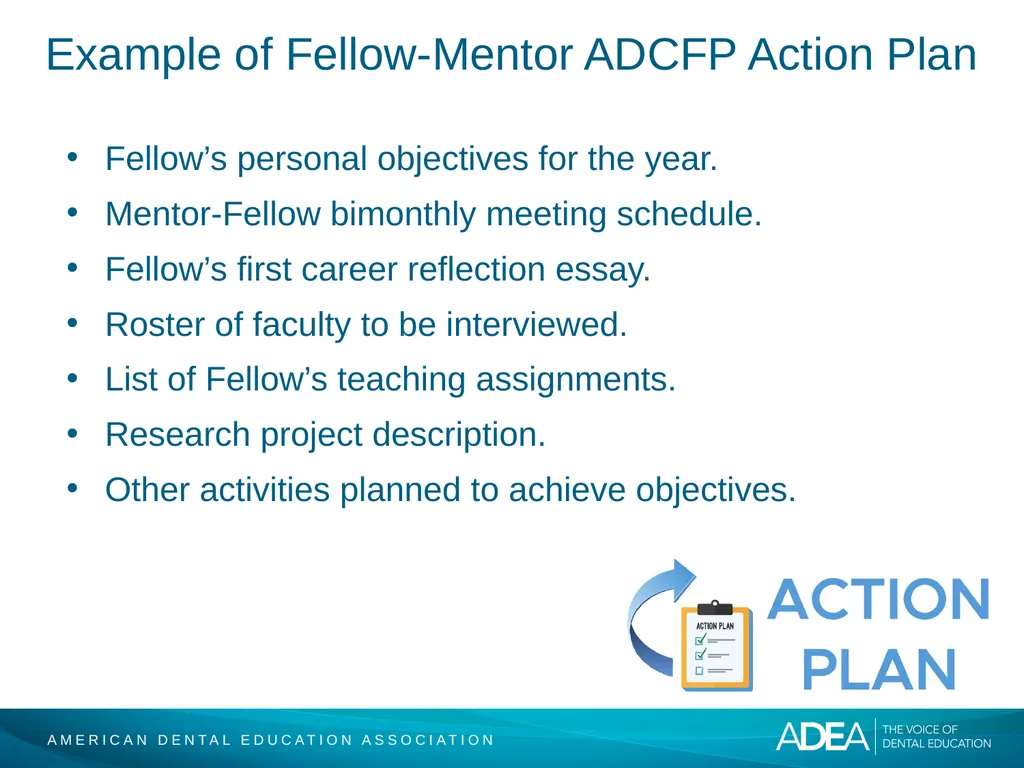
Example of Fellow-Mentor ADCFP Action Plan Fellow’s personal objectives for the year.
Mentor-Fellow bimonthly meeting schedule.
Fellow’s first career reflection essay.
Roster of faculty to be interviewed.
List of Fellow’s teaching assignments.
Research project description.
Other activities planned to achieve objectives.<br>
Mentor-Fellow bimonthly meeting schedule.
Fellow’s first career reflection essay.
Roster of faculty to be interviewed.
List of Fellow’s teaching assignments.
Research project description.
Other activities planned to achieve objectives.<br>
13
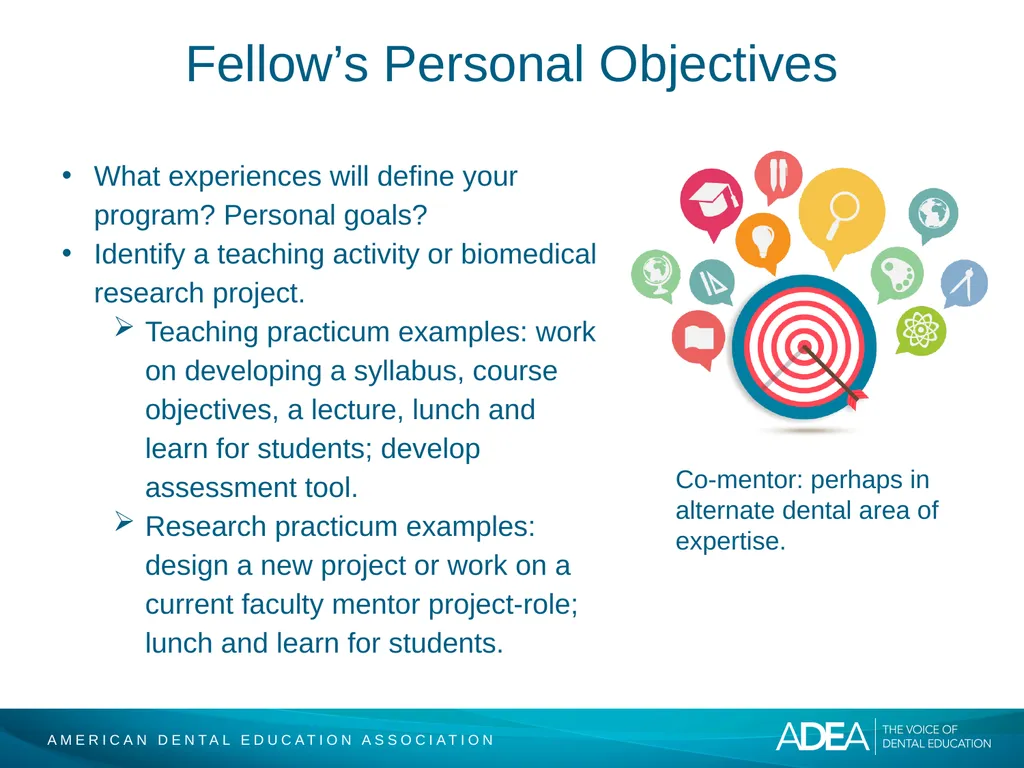
Fellow’s Personal Objectives What experiences will define your program? Personal goals?
Identify a teaching activity or biomedical research project.
Teaching practicum examples: work on developing a syllabus, course objectives, a lecture, lunch and learn for students; develop assessment tool.
Research practicum examples: design a new project or work on a current faculty mentor project-role; lunch and learn for students. Co-mentor: perhaps in alternate dental area of expertise.<br>
Identify a teaching activity or biomedical research project.
Teaching practicum examples: work on developing a syllabus, course objectives, a lecture, lunch and learn for students; develop assessment tool.
Research practicum examples: design a new project or work on a current faculty mentor project-role; lunch and learn for students. Co-mentor: perhaps in alternate dental area of expertise.<br>
14
BIMONTHLY MEETINGS<br>
15
CAREER REFLECTION ESSAYS Essay #1 (February: Action Plan) Example: February 2022
Essay #2 (March: Final Portfolio) Example: March 2023<br>
Essay #2 (March: Final Portfolio) Example: March 2023<br>
16
FACULTY AND ADMINISTRATOR INTERVIEWS<br>
17
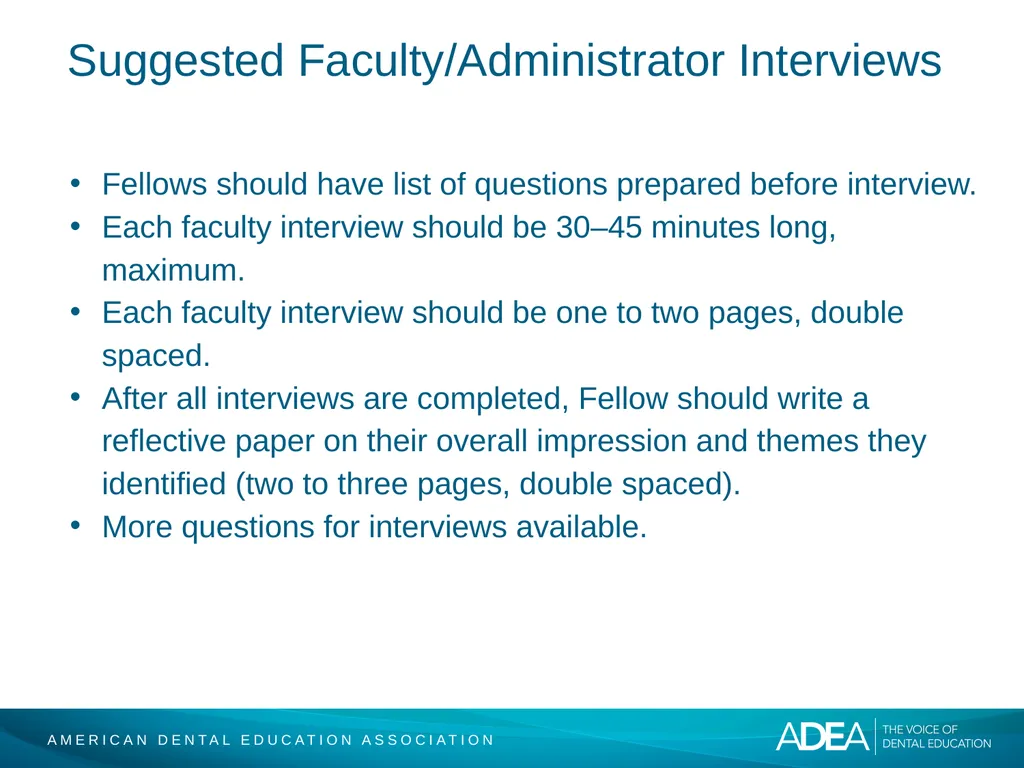
Suggested Faculty/Administrator Interviews Fellows should have list of questions prepared before interview.
Each faculty interview should be 30–45 minutes long, maximum.
Each faculty interview should be one to two pages, double spaced.
After all interviews are completed, Fellow should write a reflective paper on their overall impression and themes they identified (two to three pages, double spaced).
More questions for interviews available.<br>
Each faculty interview should be 30–45 minutes long, maximum.
Each faculty interview should be one to two pages, double spaced.
After all interviews are completed, Fellow should write a reflective paper on their overall impression and themes they identified (two to three pages, double spaced).
More questions for interviews available.<br>
18
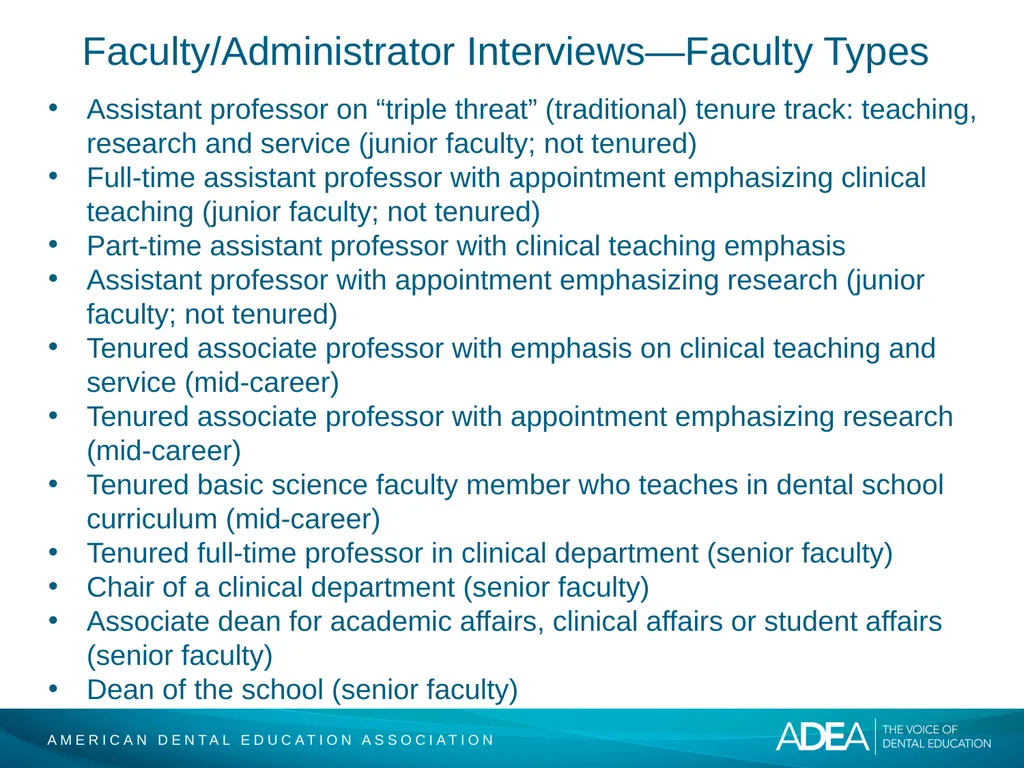
Faculty/Administrator Interviews—Faculty Types Assistant professor on “triple threat” (traditional) tenure track: teaching, research and service (junior faculty; not tenured)
Full-time assistant professor with appointment emphasizing clinical teaching (junior faculty; not tenured)
Part-time assistant professor with clinical teaching emphasis
Assistant professor with appointment emphasizing research (junior faculty; not tenured)
Tenured associate professor with emphasis on clinical teaching and service (mid-career)
Tenured associate professor with appointment emphasizing research (mid-career)
Tenured basic science faculty member who teaches in dental school curriculum (mid-career)
Tenured full-time professor in clinical department (senior faculty)
Chair of a clinical department (senior faculty)
Associate dean for academic affairs, clinical affairs or student affairs (senior faculty)
Dean of the school (senior faculty)<br>
Full-time assistant professor with appointment emphasizing clinical teaching (junior faculty; not tenured)
Part-time assistant professor with clinical teaching emphasis
Assistant professor with appointment emphasizing research (junior faculty; not tenured)
Tenured associate professor with emphasis on clinical teaching and service (mid-career)
Tenured associate professor with appointment emphasizing research (mid-career)
Tenured basic science faculty member who teaches in dental school curriculum (mid-career)
Tenured full-time professor in clinical department (senior faculty)
Chair of a clinical department (senior faculty)
Associate dean for academic affairs, clinical affairs or student affairs (senior faculty)
Dean of the school (senior faculty)<br>
19
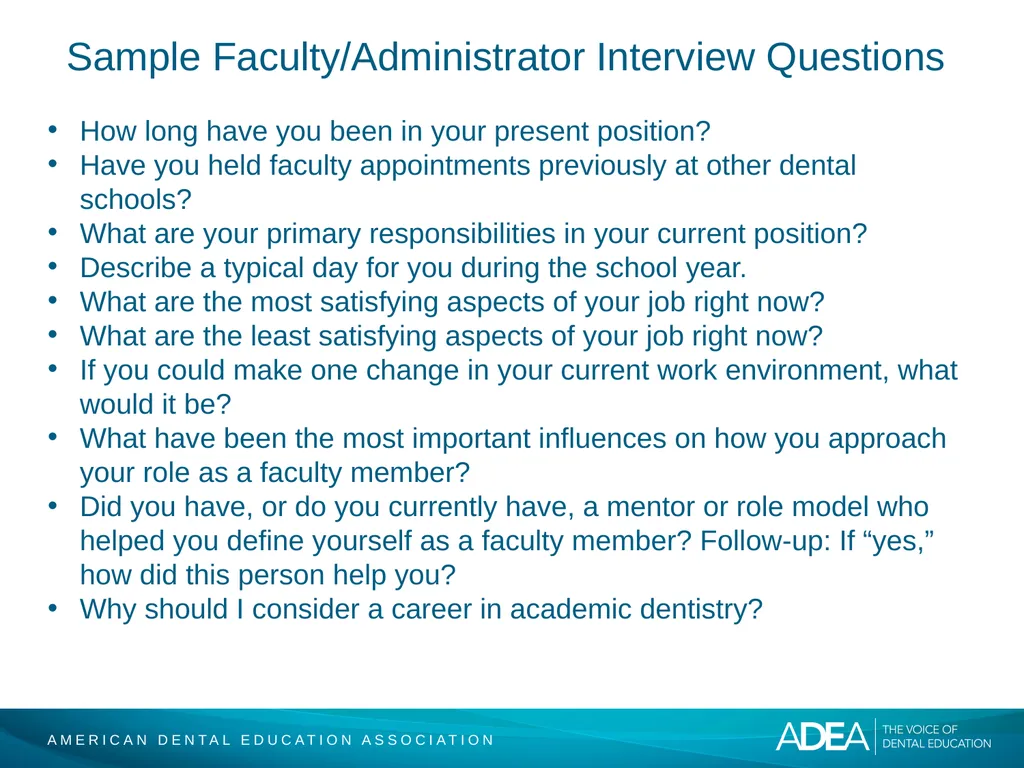
How long have you been in your present position?
Have you held faculty appointments previously at other dental schools?
What are your primary responsibilities in your current position?
Describe a typical day for you during the school year.
What are the most satisfying aspects of your job right now?
What are the least satisfying aspects of your job right now?
If you could make one change in your current work environment, what would it be?
What have been the most important influences on how you approach your role as a faculty member?
Did you have, or do you currently have, a mentor or role model who helped you define yourself as a faculty member? Follow-up: If “yes,” how did this person help you?
Why should I consider a career in academic dentistry? Sample Faculty/Administrator Interview Questions<br>
Have you held faculty appointments previously at other dental schools?
What are your primary responsibilities in your current position?
Describe a typical day for you during the school year.
What are the most satisfying aspects of your job right now?
What are the least satisfying aspects of your job right now?
If you could make one change in your current work environment, what would it be?
What have been the most important influences on how you approach your role as a faculty member?
Did you have, or do you currently have, a mentor or role model who helped you define yourself as a faculty member? Follow-up: If “yes,” how did this person help you?
Why should I consider a career in academic dentistry? Sample Faculty/Administrator Interview Questions<br>
20
TEACHING TRACK<br>
21
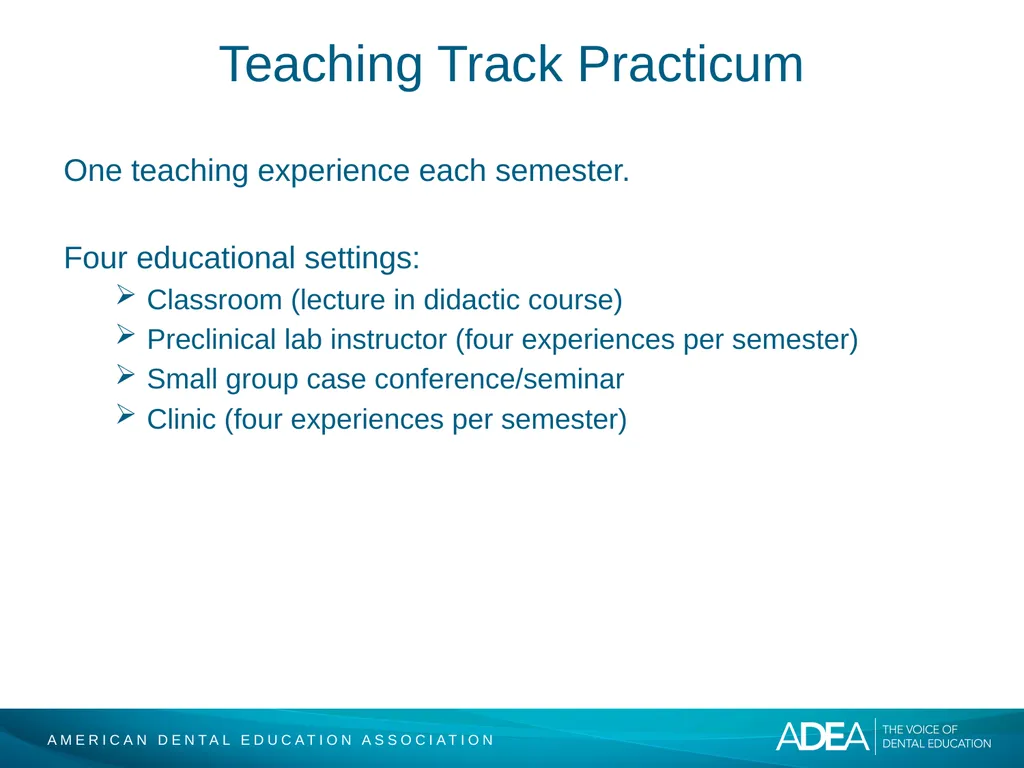
One teaching experience each semester.
Four educational settings:
Classroom (lecture in didactic course)
Preclinical lab instructor (four experiences per semester)
Small group case conference/seminar
Clinic (four experiences per semester) Teaching Track Practicum<br>
Four educational settings:
Classroom (lecture in didactic course)
Preclinical lab instructor (four experiences per semester)
Small group case conference/seminar
Clinic (four experiences per semester) Teaching Track Practicum<br>
22
Fellow
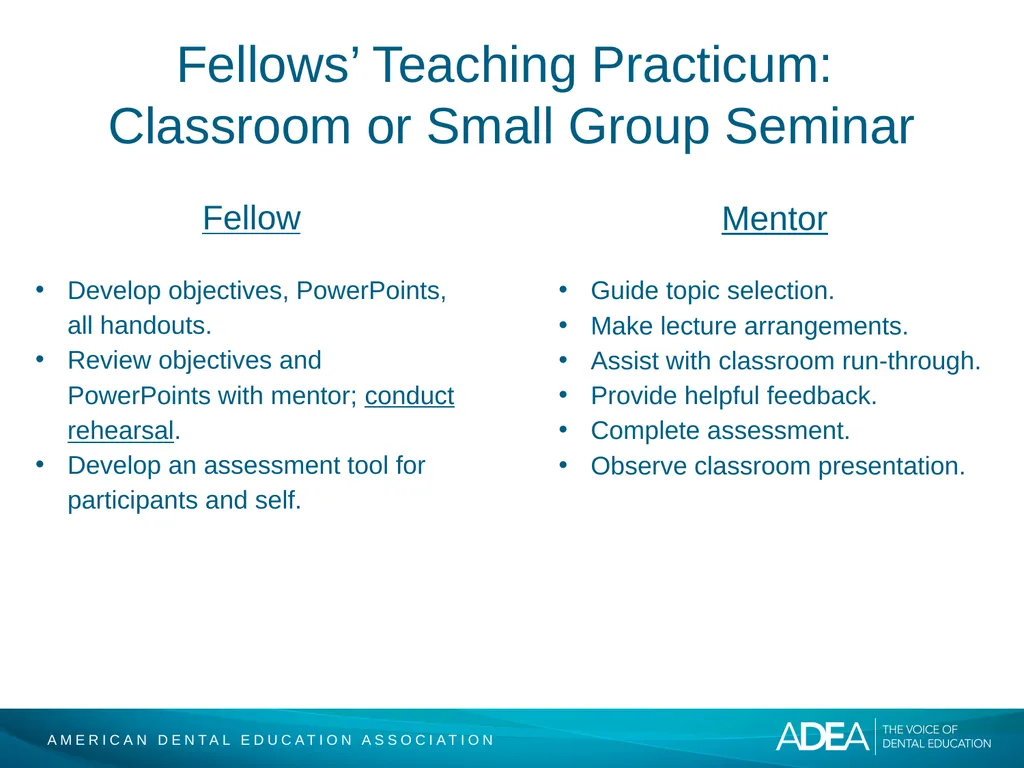
Develop objectives, PowerPoints, all handouts.
Review objectives and PowerPoints with mentor; conduct rehearsal.
Develop an assessment tool for participants and self. Mentor
Guide topic selection.
Make lecture arrangements.
Assist with classroom run-through.
Provide helpful feedback.
Complete assessment.
Observe classroom presentation. Fellows’ Teaching Practicum: Classroom or Small Group Seminar<br>
Develop objectives, PowerPoints, all handouts.
Review objectives and PowerPoints with mentor; conduct rehearsal.
Develop an assessment tool for participants and self. Mentor
Guide topic selection.
Make lecture arrangements.
Assist with classroom run-through.
Provide helpful feedback.
Complete assessment.
Observe classroom presentation. Fellows’ Teaching Practicum: Classroom or Small Group Seminar<br>
23
BIOMEDICAL RESEARCH TRACK<br>
24
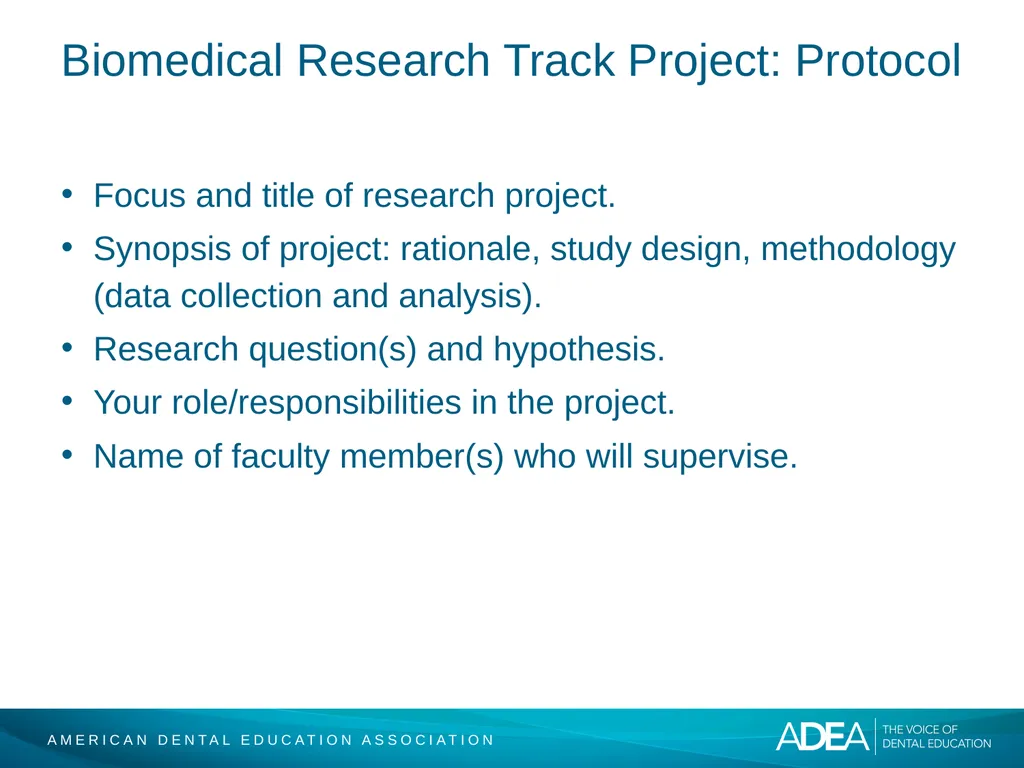
Focus and title of research project.
Synopsis of project: rationale, study design, methodology (data collection and analysis).
Research question(s) and hypothesis.
Your role/responsibilities in the project.
Name of faculty member(s) who will supervise. Biomedical Research Track Project: Protocol<br>
Synopsis of project: rationale, study design, methodology (data collection and analysis).
Research question(s) and hypothesis.
Your role/responsibilities in the project.
Name of faculty member(s) who will supervise. Biomedical Research Track Project: Protocol<br>
25
OTHER ACTIVITIES<br>
26
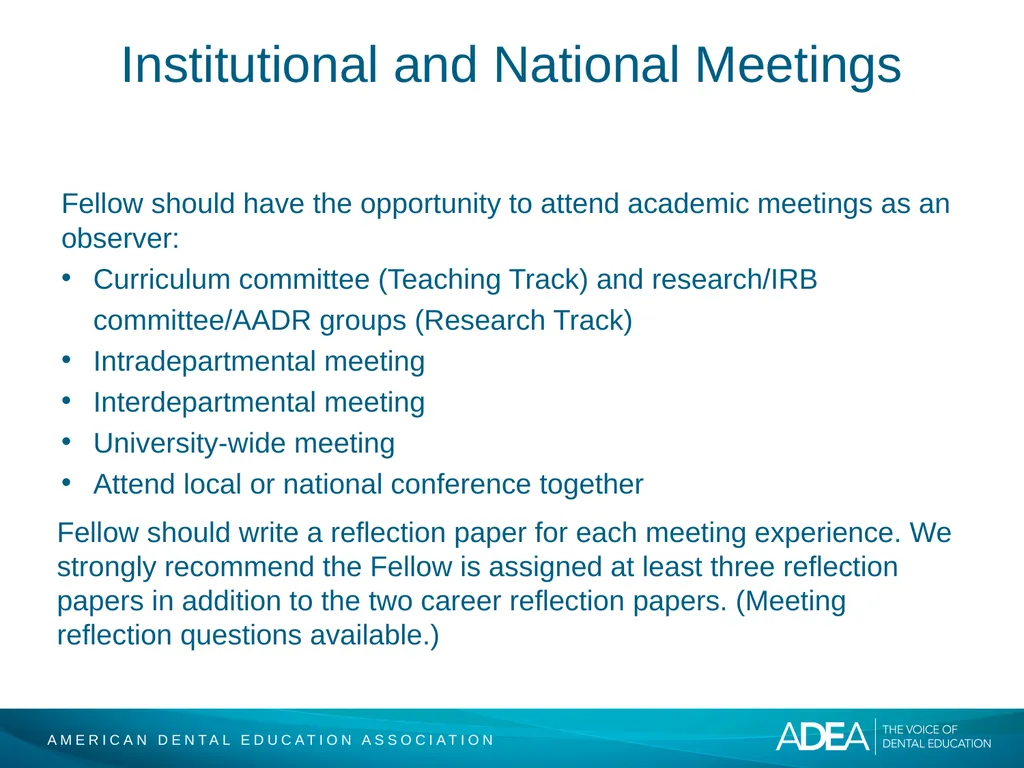
Fellow should have the opportunity to attend academic meetings as an observer:
Curriculum committee (Teaching Track) and research/IRB committee/AADR groups (Research Track)
Intradepartmental meeting
Interdepartmental meeting
University-wide meeting
Attend local or national conference together Fellow should write a reflection paper for each meeting experience. We strongly recommend the Fellow is assigned at least three reflection papers in addition to the two career reflection papers. (Meeting reflection questions available.) Institutional and National Meetings<br>
Curriculum committee (Teaching Track) and research/IRB committee/AADR groups (Research Track)
Intradepartmental meeting
Interdepartmental meeting
University-wide meeting
Attend local or national conference together Fellow should write a reflection paper for each meeting experience. We strongly recommend the Fellow is assigned at least three reflection papers in addition to the two career reflection papers. (Meeting reflection questions available.) Institutional and National Meetings<br>
27
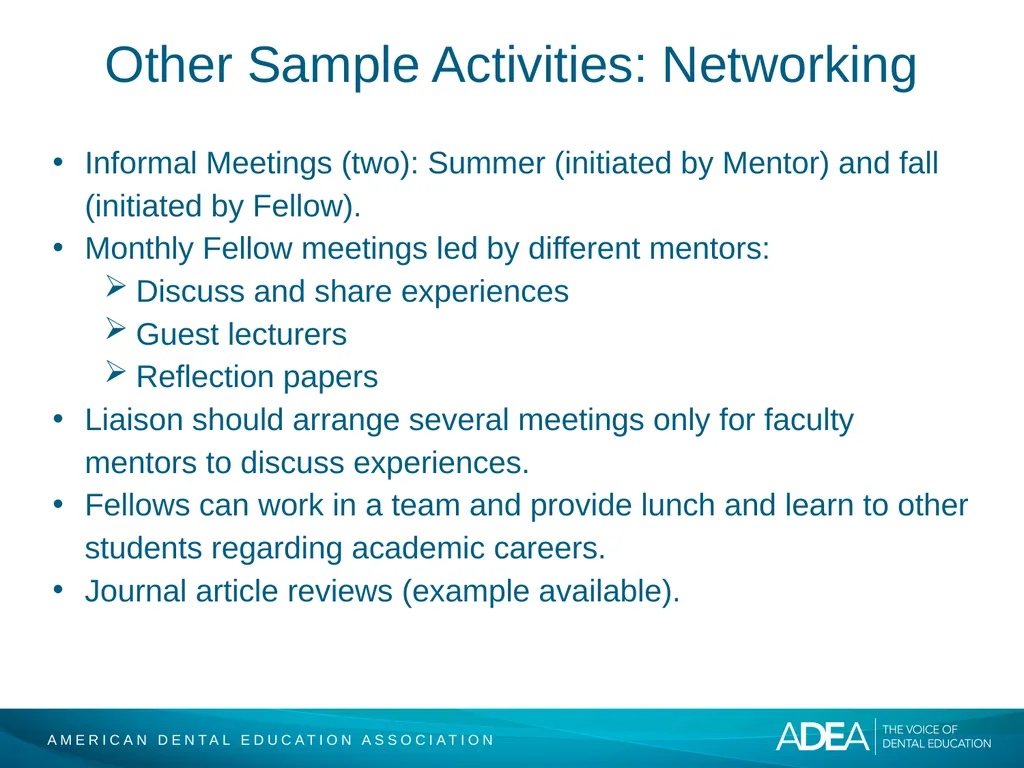
Informal Meetings (two): Summer (initiated by Mentor) and fall (initiated by Fellow).
Monthly Fellow meetings led by different mentors:
Discuss and share experiences
Guest lecturers
Reflection papers
Liaison should arrange several meetings only for faculty mentors to discuss experiences.
Fellows can work in a team and provide lunch and learn to other students regarding academic careers.
Journal article reviews (example available). Other Sample Activities: Networking<br>
Monthly Fellow meetings led by different mentors:
Discuss and share experiences
Guest lecturers
Reflection papers
Liaison should arrange several meetings only for faculty mentors to discuss experiences.
Fellows can work in a team and provide lunch and learn to other students regarding academic careers.
Journal article reviews (example available). Other Sample Activities: Networking<br>
28
POSTER PRESENTATION<br>
29
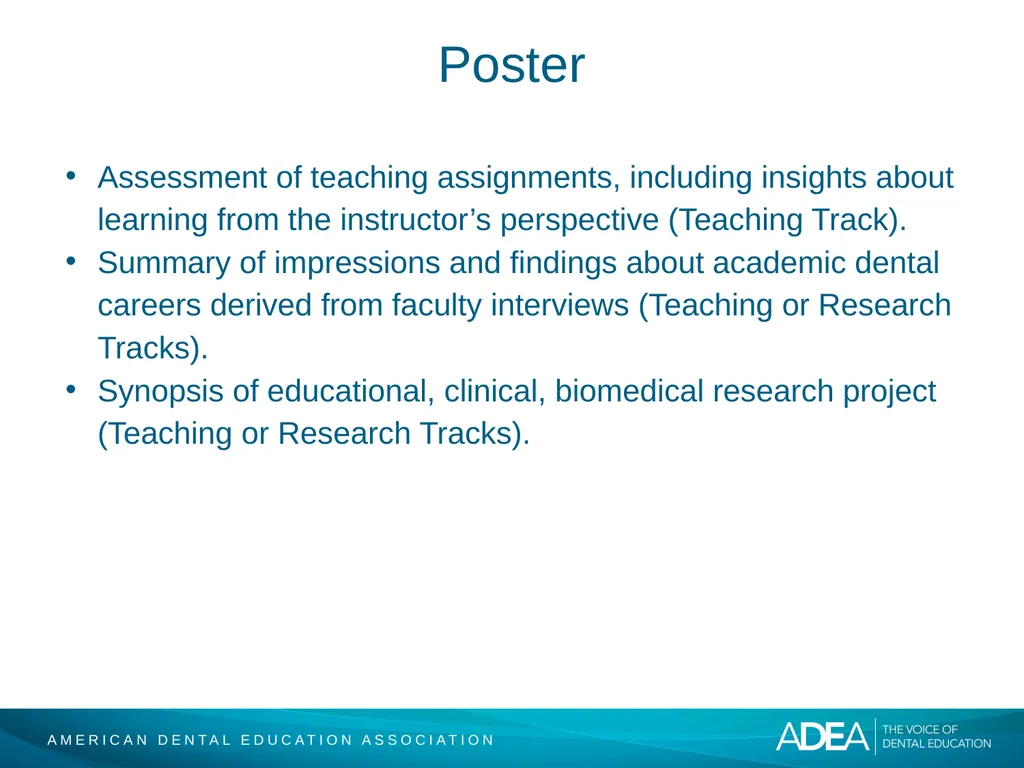
Assessment of teaching assignments, including insights about learning from the instructor’s perspective (Teaching Track).
Summary of impressions and findings about academic dental careers derived from faculty interviews (Teaching or Research Tracks).
Synopsis of educational, clinical, biomedical research project (Teaching or Research Tracks). Poster<br>
Summary of impressions and findings about academic dental careers derived from faculty interviews (Teaching or Research Tracks).
Synopsis of educational, clinical, biomedical research project (Teaching or Research Tracks). Poster<br>
30
ADEA Annual Session & Exhibition ADCFP Poster Session.
Schools must fund students in total.
Participation is not a requirement to complete the Fellowship Program.
Schools are strongly encouraged to arrange a poster presentation at their home institution to share with other faculty and students the fruits of their hard work, and to motivate others to participate in the ADCFP the next year. Poster<br>
Schools must fund students in total.
Participation is not a requirement to complete the Fellowship Program.
Schools are strongly encouraged to arrange a poster presentation at their home institution to share with other faculty and students the fruits of their hard work, and to motivate others to participate in the ADCFP the next year. Poster<br>
31
FINAL PORTFOLIO<br>
32
Fellowship plan.
Log of Fellow-Mentor meetings.
Summary of each faculty interview and overall summary of interviews.
Career reflection essays (first and second).
Teaching assignment schedule and description of each teaching activity:
Name of course and course component.
Fellow’s role, including specific lecture or seminar topics.
Dates of teaching.
Assessments (peer, self, mentor) of teaching activities.
PowerPoints and handouts from presentations.
Protocol and final report for research project.
Copy of poster (if assigned by mentor). Document Sequence Sample ADCFP Final Portfolio<br>
Log of Fellow-Mentor meetings.
Summary of each faculty interview and overall summary of interviews.
Career reflection essays (first and second).
Teaching assignment schedule and description of each teaching activity:
Name of course and course component.
Fellow’s role, including specific lecture or seminar topics.
Dates of teaching.
Assessments (peer, self, mentor) of teaching activities.
PowerPoints and handouts from presentations.
Protocol and final report for research project.
Copy of poster (if assigned by mentor). Document Sequence Sample ADCFP Final Portfolio<br>
33
Mid-November: Early Bird Registration for ADEA Annual Session & Exhibition.
January/February: One-hour virtual training for your ADCFP Liaison.
February–March: Complete recruitment of Faculty Mentors/Student Fellows at your school.
March/April: Fellow-Mentor action plans completed.
Join us: ADCFP Certificate Event at the ADEA Annual Session & Exhibition.
Note: Confirmed dates will be posted on the ADCFP webpage: adea.org/dentalfellow. What Is Next?<br>
January/February: One-hour virtual training for your ADCFP Liaison.
February–March: Complete recruitment of Faculty Mentors/Student Fellows at your school.
March/April: Fellow-Mentor action plans completed.
Join us: ADCFP Certificate Event at the ADEA Annual Session & Exhibition.
Note: Confirmed dates will be posted on the ADCFP webpage: adea.org/dentalfellow. What Is Next?<br>
34
Questions? Renee Latimer, M.B.A.
ADEA Senior Director of Professional Development and Educational Technology
LatimerR@adea.org<br>
ADEA Senior Director of Professional Development and Educational Technology
LatimerR@adea.org<br>