
Adjectives and Adverbs Adapted from Real Good


Description: Adjectives and Adverbs Adapted from Real Good Grammar, Too by Mamie Webb Hixon What is an adjective? An adjective is a word that describes or modifies a noun or a pronoun. He seems strange. The response was quick. Be careful on Friday, the
Related Topics
Download Presentation
"Adjectives and Adverbs Adapted from Real Good" is the property of its rightful owner. Permission is granted to download and print the materials on this website for personal, non-commercial use only, and to display it on your personal computer provided you do not modify the materials and that you retain all copyright notices contained in the materials. By downloading content from our website, you accept the terms of this agreement.
Presentation Transcript
slide1. Adjectives and Adverbs Adapted from Real Good Grammar, Too by Mamie Webb Hixon<br>
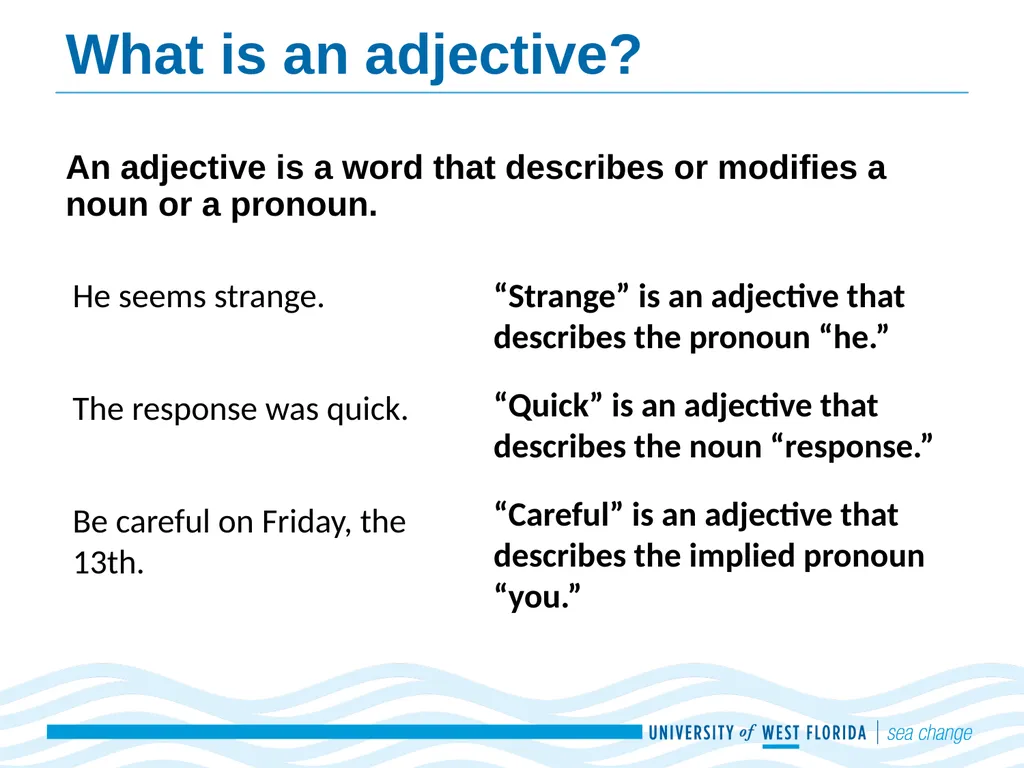
slide2. What is an adjective? An adjective is a word that describes or modifies a noun or a pronoun. He seems strange.
The response was quick.
Be careful on Friday, the 13th. “Strange” is an adjective that describes the pronoun “he.”
“Quick” is an adjective that describes the noun “response.”
“Careful” is an adjective that describes the implied pronoun “you.”<br>
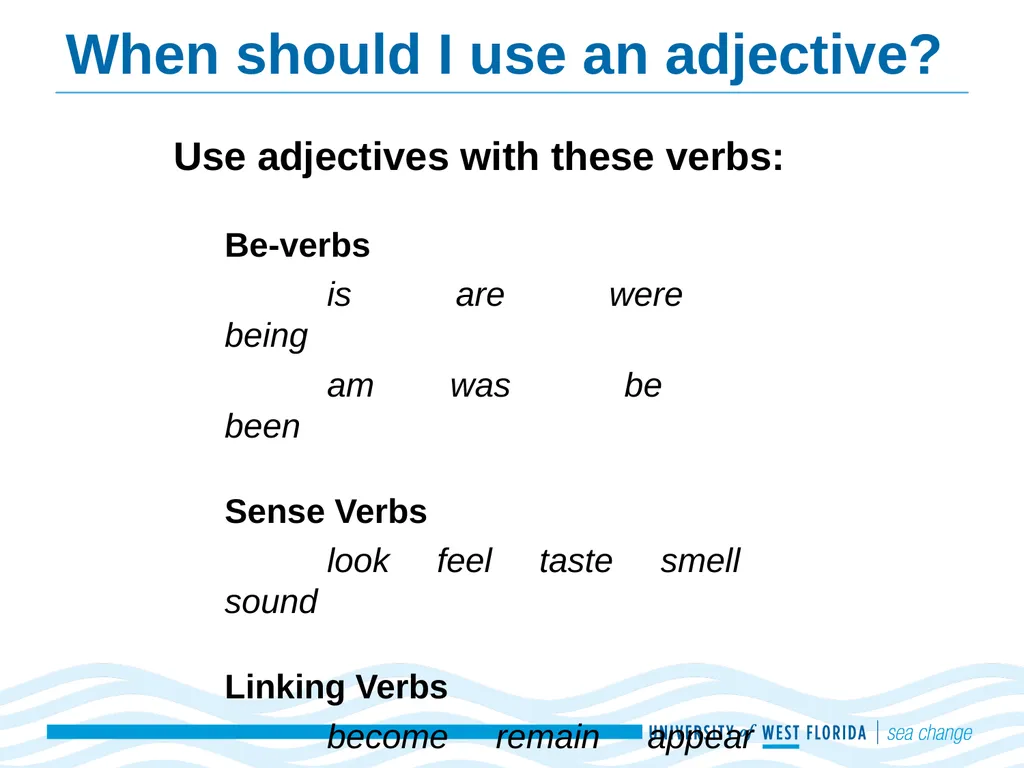
slide3. When should I use an adjective? Use adjectives with these verbs:
Be-verbs
is are were being
am was be been
Sense Verbs
look feel taste smell sound
Linking Verbs
become remain appear seem<br>
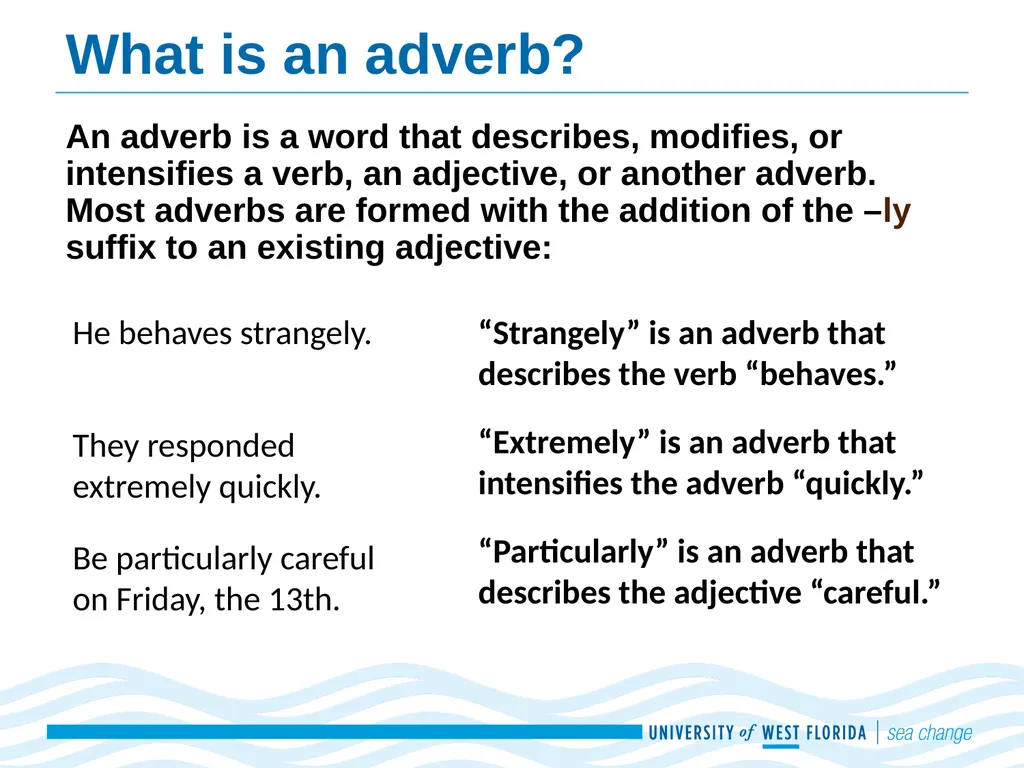
slide4. What is an adverb? An adverb is a word that describes, modifies, or intensifies a verb, an adjective, or another adverb. Most adverbs are formed with the addition of the –ly suffix to an existing adjective: He behaves strangely.
They responded extremely quickly.
Be particularly careful on Friday, the 13th. “Strangely” is an adverb that describes the verb “behaves.”
“Extremely” is an adverb that intensifies the adverb “quickly.”
“Particularly” is an adverb that describes the adjective “careful.”<br>
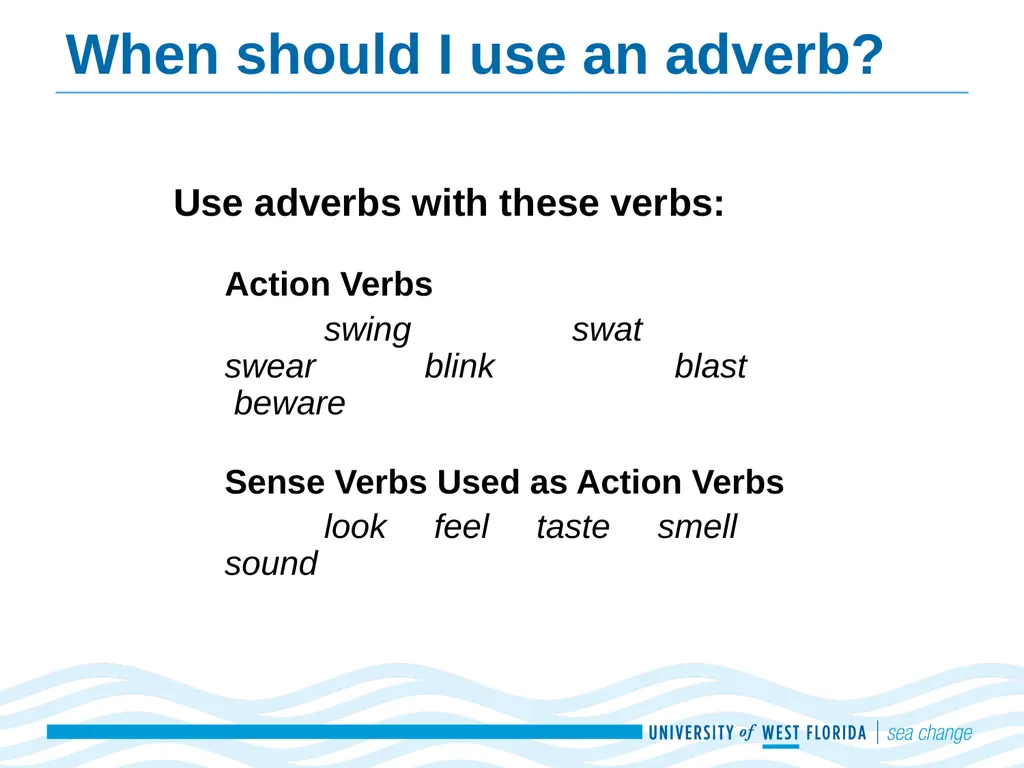
slide5. When should I use an adverb? Use adverbs with these verbs:
Action Verbs
swing swat swear blink blast beware
Sense Verbs Used as Action Verbs
look feel taste smell sound<br>
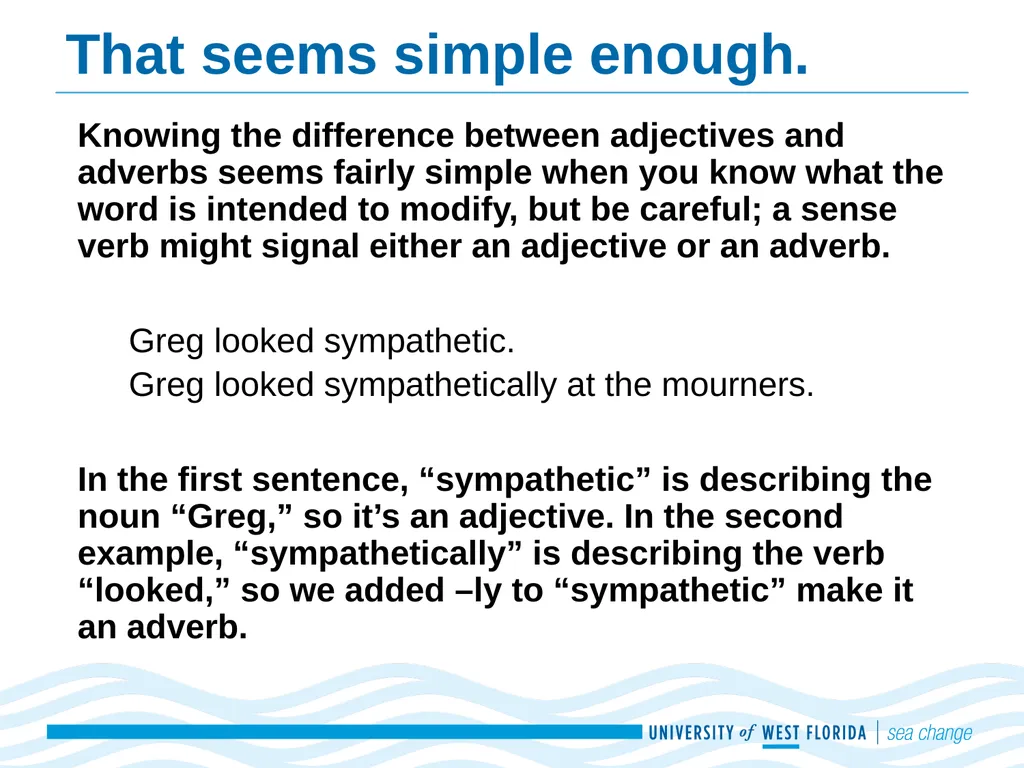
slide6. That seems simple enough. Knowing the difference between adjectives and adverbs seems fairly simple when you know what the word is intended to modify, but be careful; a sense verb might signal either an adjective or an adverb.
Greg looked sympathetic.
Greg looked sympathetically at the mourners.
In the first sentence, “sympathetic” is describing the noun “Greg,” so it’s an adjective. In the second example, “sympathetically” is describing the verb “looked,” so we added –ly to “sympathetic” make it an adverb.<br>
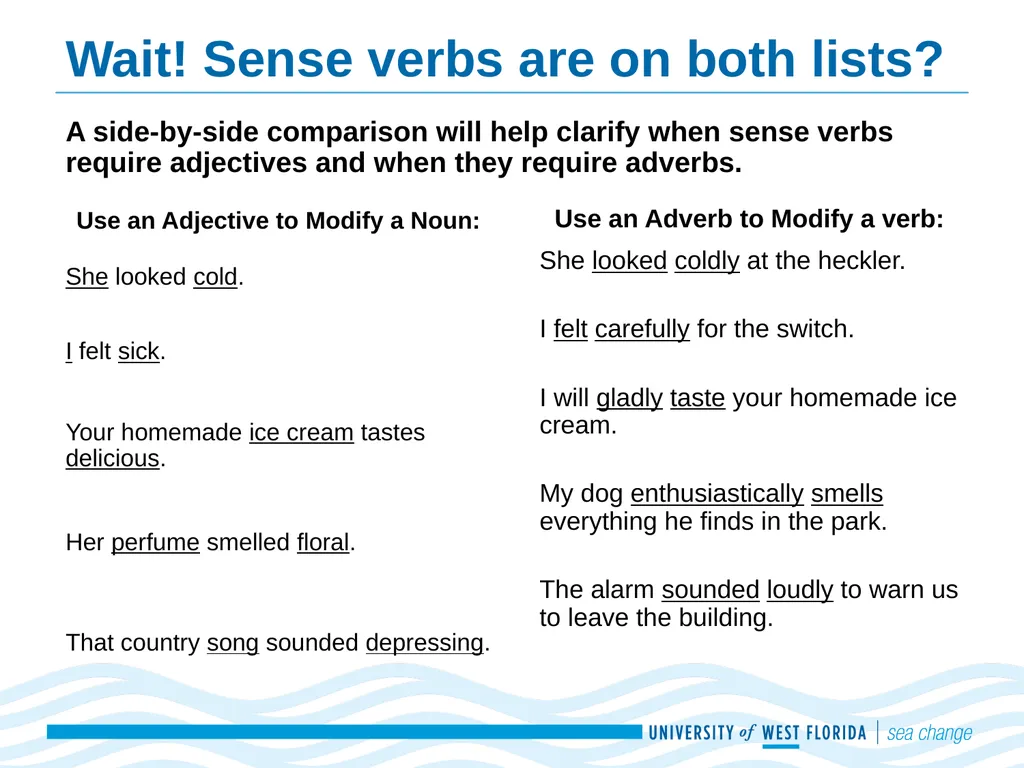
slide7. Wait! Sense verbs are on both lists? A side-by-side comparison will help clarify when sense verbs require adjectives and when they require adverbs. Use an Adverb to Modify a verb:
She looked coldly at the heckler.
I felt carefully for the switch.
I will gladly taste your homemade ice cream.
My dog enthusiastically smells everything he finds in the park.
The alarm sounded loudly to warn us to leave the building. Use an Adjective to Modify a Noun:
She looked cold.
I felt sick.
Your homemade ice cream tastes delicious.
Her perfume smelled floral.
That country song sounded depressing.<br>
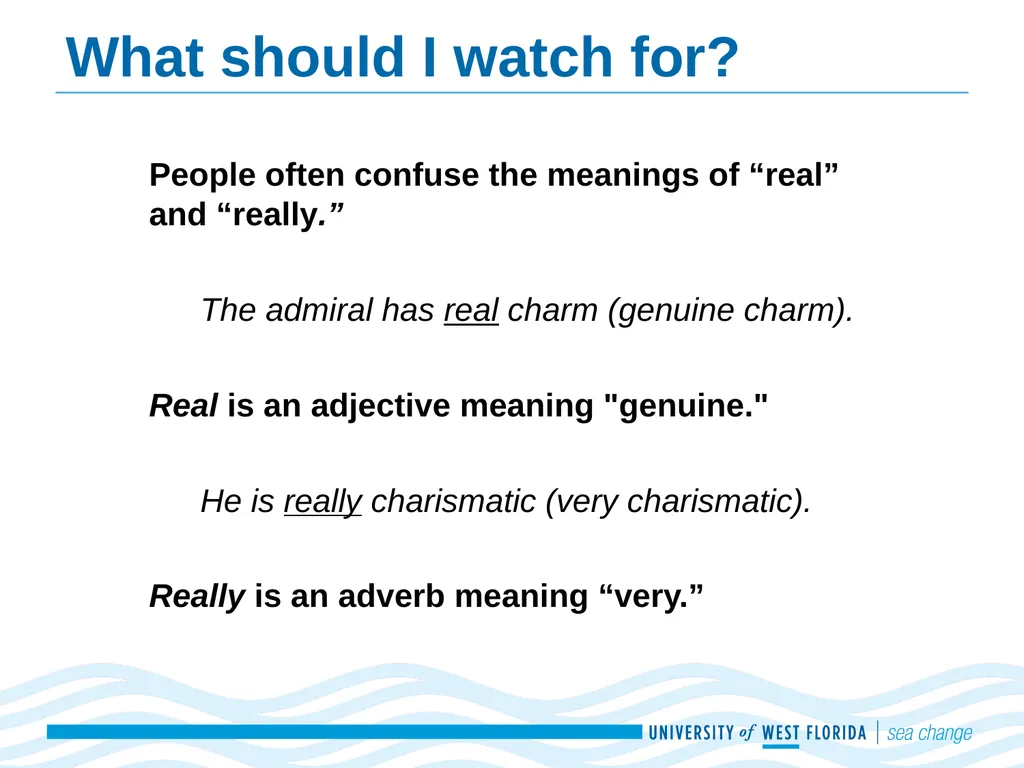
slide8. What should I watch for? People often confuse the meanings of “real” and “really.”
The admiral has real charm (genuine charm).
Real is an adjective meaning "genuine."
He is really charismatic (very charismatic).
Really is an adverb meaning “very.”<br>
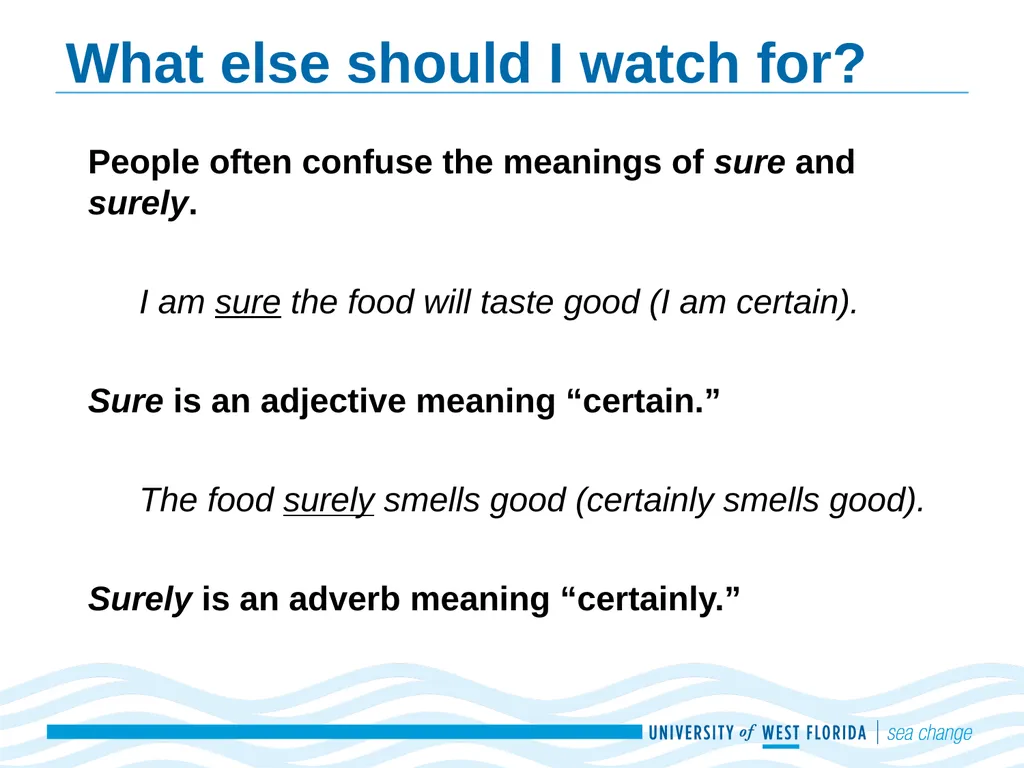
slide9. People often confuse the meanings of sure and surely.
I am sure the food will taste good (I am certain).
Sure is an adjective meaning “certain.”
The food surely smells good (certainly smells good).
Surely is an adverb meaning “certainly.” What else should I watch for?<br>
slide2. What is an adjective? An adjective is a word that describes or modifies a noun or a pronoun. He seems strange.
The response was quick.
Be careful on Friday, the 13th. “Strange” is an adjective that describes the pronoun “he.”
“Quick” is an adjective that describes the noun “response.”
“Careful” is an adjective that describes the implied pronoun “you.”<br>
slide3. When should I use an adjective? Use adjectives with these verbs:
Be-verbs
is are were being
am was be been
Sense Verbs
look feel taste smell sound
Linking Verbs
become remain appear seem<br>
slide4. What is an adverb? An adverb is a word that describes, modifies, or intensifies a verb, an adjective, or another adverb. Most adverbs are formed with the addition of the –ly suffix to an existing adjective: He behaves strangely.
They responded extremely quickly.
Be particularly careful on Friday, the 13th. “Strangely” is an adverb that describes the verb “behaves.”
“Extremely” is an adverb that intensifies the adverb “quickly.”
“Particularly” is an adverb that describes the adjective “careful.”<br>
slide5. When should I use an adverb? Use adverbs with these verbs:
Action Verbs
swing swat swear blink blast beware
Sense Verbs Used as Action Verbs
look feel taste smell sound<br>
slide6. That seems simple enough. Knowing the difference between adjectives and adverbs seems fairly simple when you know what the word is intended to modify, but be careful; a sense verb might signal either an adjective or an adverb.
Greg looked sympathetic.
Greg looked sympathetically at the mourners.
In the first sentence, “sympathetic” is describing the noun “Greg,” so it’s an adjective. In the second example, “sympathetically” is describing the verb “looked,” so we added –ly to “sympathetic” make it an adverb.<br>
slide7. Wait! Sense verbs are on both lists? A side-by-side comparison will help clarify when sense verbs require adjectives and when they require adverbs. Use an Adverb to Modify a verb:
She looked coldly at the heckler.
I felt carefully for the switch.
I will gladly taste your homemade ice cream.
My dog enthusiastically smells everything he finds in the park.
The alarm sounded loudly to warn us to leave the building. Use an Adjective to Modify a Noun:
She looked cold.
I felt sick.
Your homemade ice cream tastes delicious.
Her perfume smelled floral.
That country song sounded depressing.<br>
slide8. What should I watch for? People often confuse the meanings of “real” and “really.”
The admiral has real charm (genuine charm).
Real is an adjective meaning "genuine."
He is really charismatic (very charismatic).
Really is an adverb meaning “very.”<br>
slide9. People often confuse the meanings of sure and surely.
I am sure the food will taste good (I am certain).
Sure is an adjective meaning “certain.”
The food surely smells good (certainly smells good).
Surely is an adverb meaning “certainly.” What else should I watch for?<br>