
Advanced Suturing for RVNs Zamantha Marshall

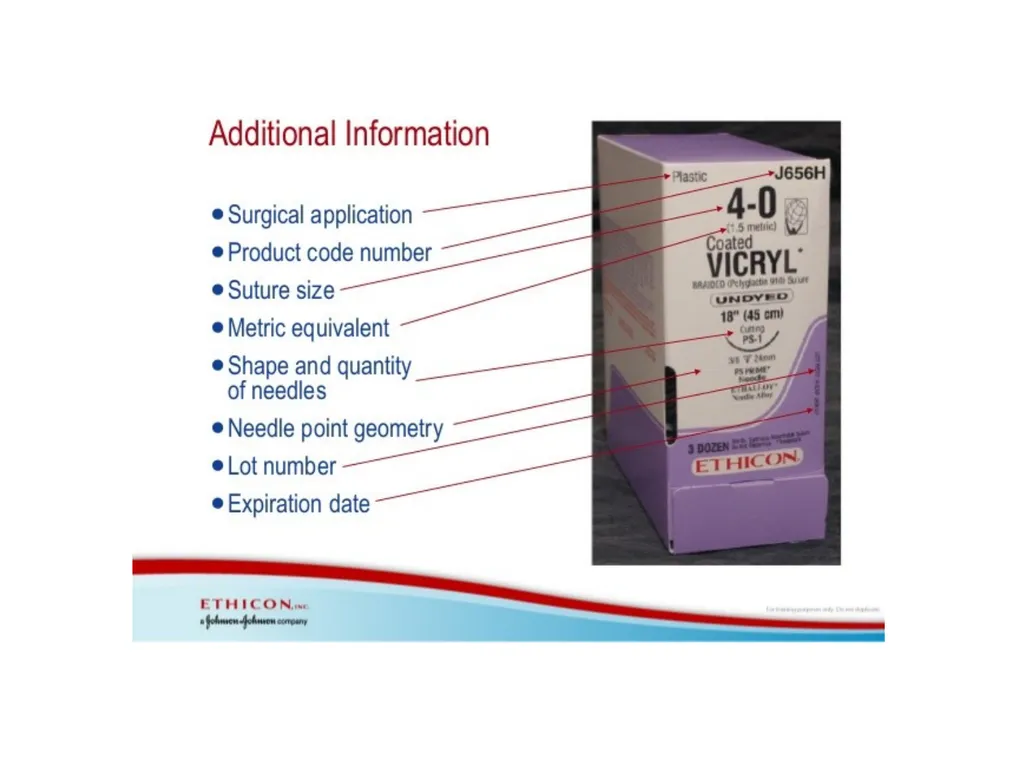
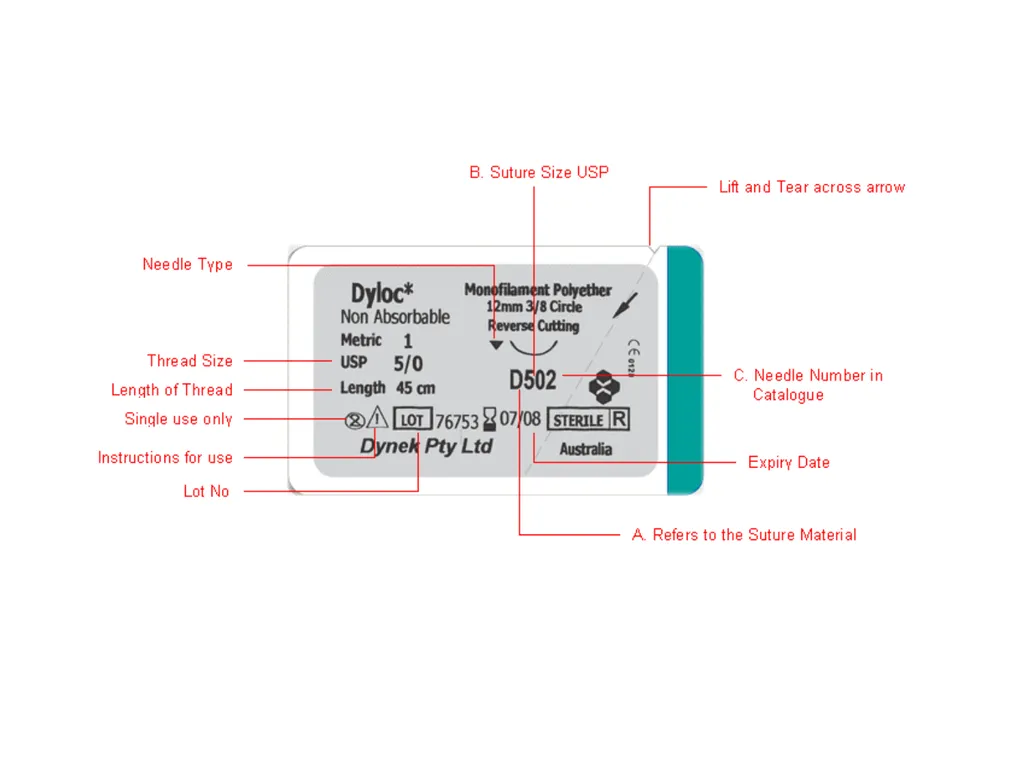

Description: Advanced Suturing for RVNs Zamantha Marshall Lissann Wolfe What will be covered. Choosing an appropriate suture material How to make a surgical incision How to bury a knot Intradermal suture patterns How to perform an Aberdeen knot
Related Topics
Download Presentation
"Advanced Suturing for RVNs Zamantha Marshall" is the property of its rightful owner. Permission is granted to download and print the materials on this website for personal, non-commercial use only, and to display it on your personal computer provided you do not modify the materials and that you retain all copyright notices contained in the materials. By downloading content from our website, you accept the terms of this agreement.
Presentation Transcript
slide1. Advanced Suturing for RVNs Zamantha Marshall
Lissann Wolfe<br>
slide2. What will be covered…. Choosing an appropriate suture material
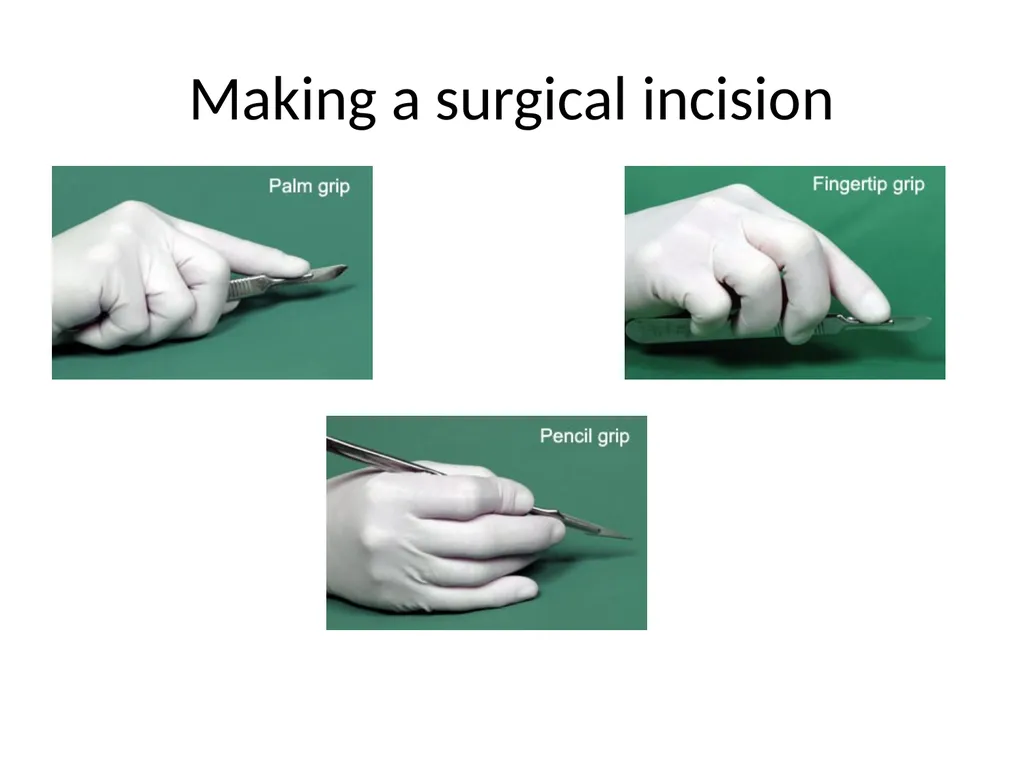
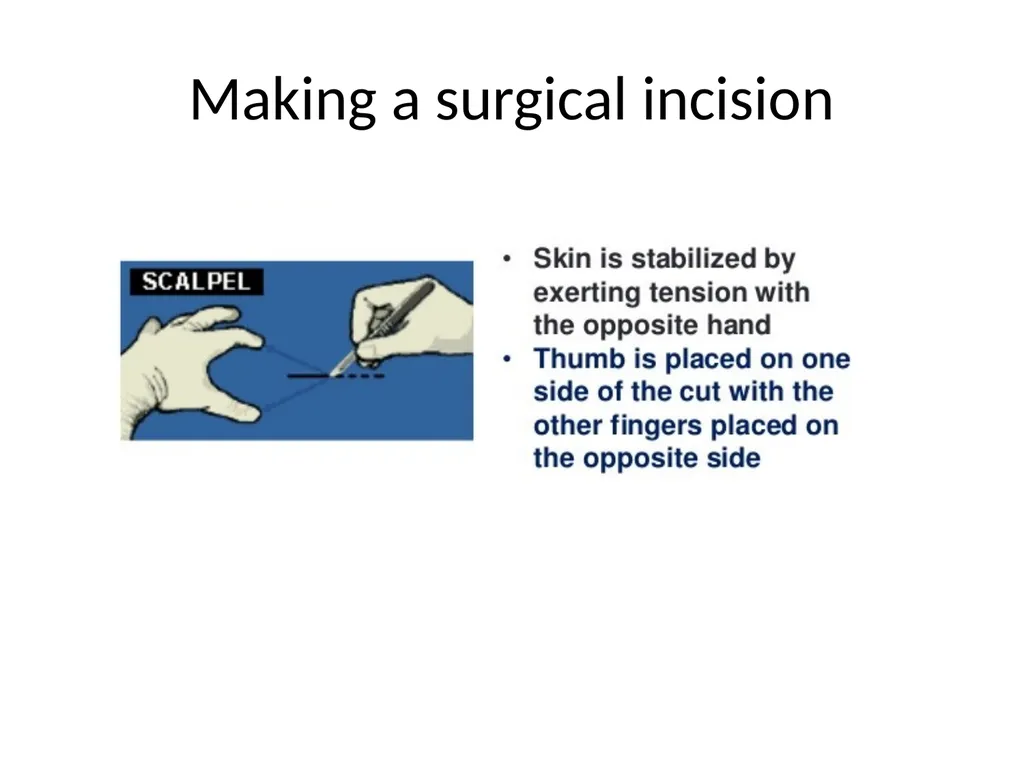
How to make a surgical incision
How to bury a knot
Intradermal suture patterns
How to perform an Aberdeen knot<br>
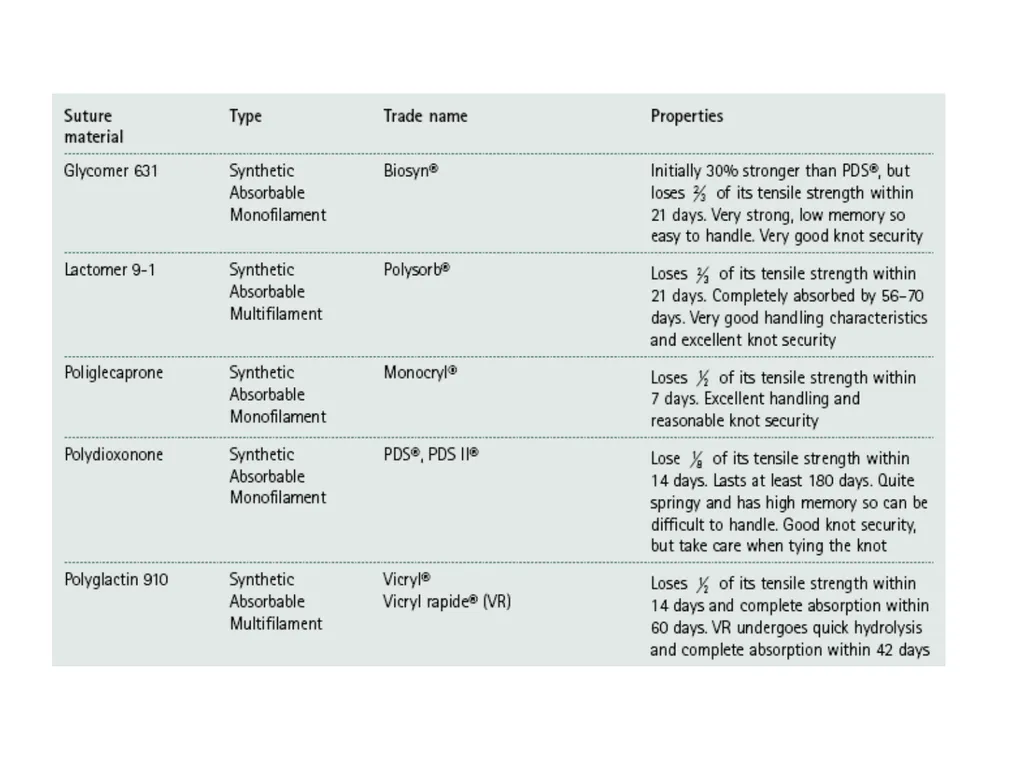
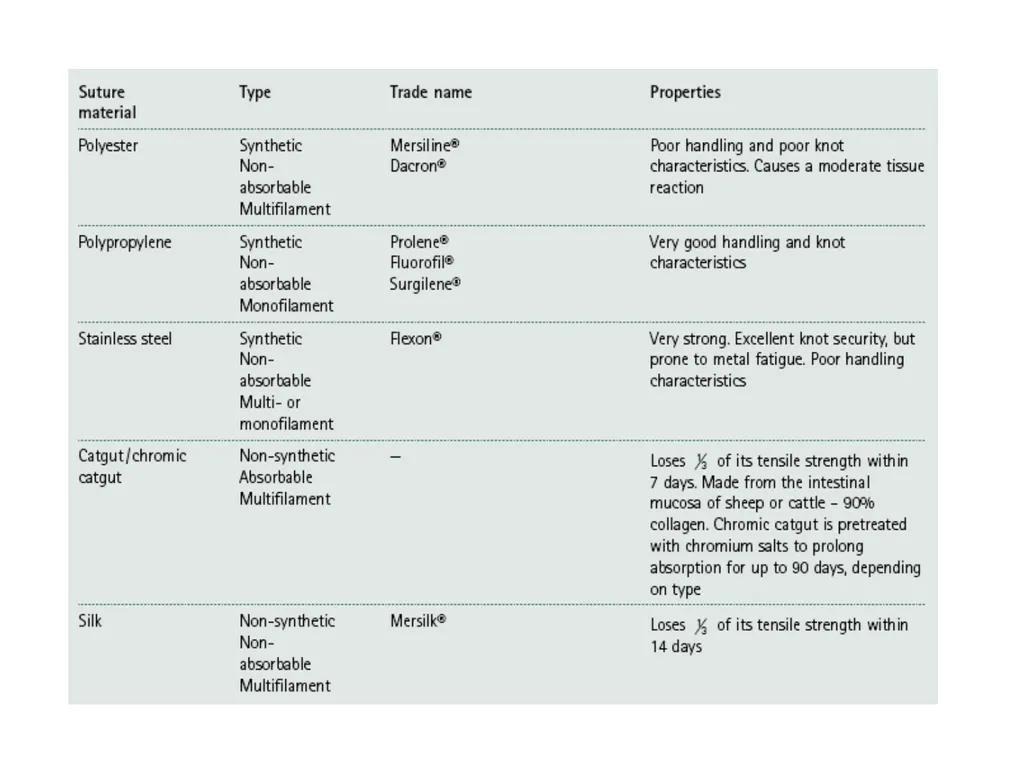
slide3. Choosing Suture Material Absorbable vs nonabsorbable
Natural vs synthetic
Monofilament vs multifilament
Tensile strength
Ease of handling
Knot security
Capillary (fluid absorption & wicking)
Tissue being sutured, healing speed, cost<br>
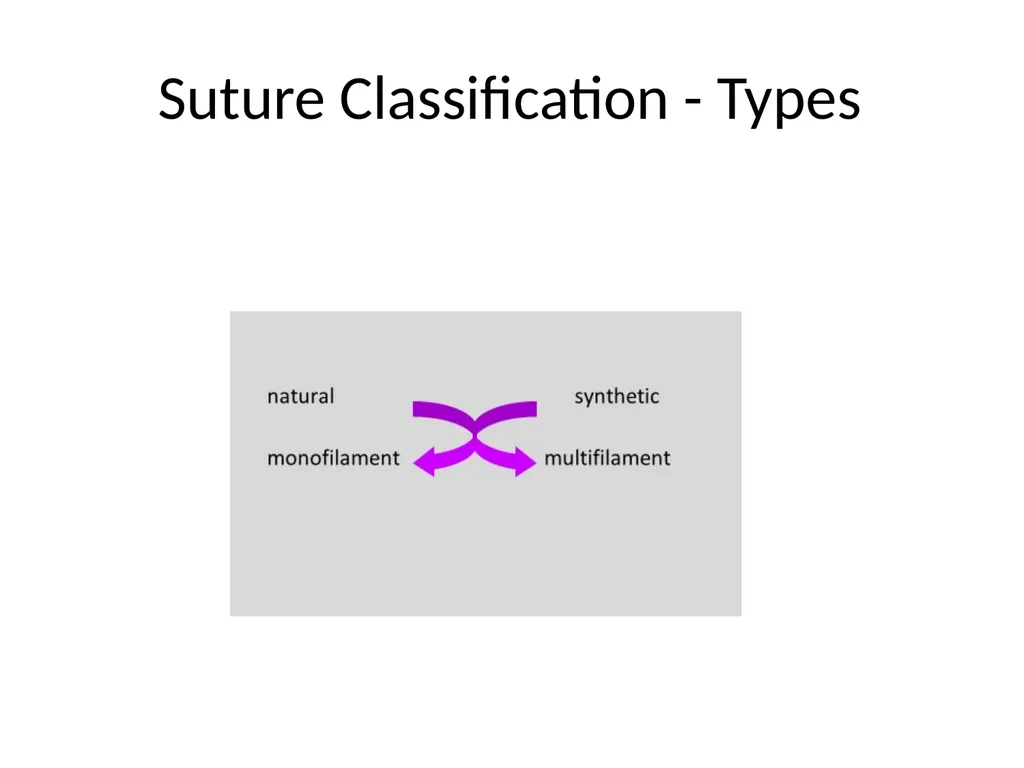
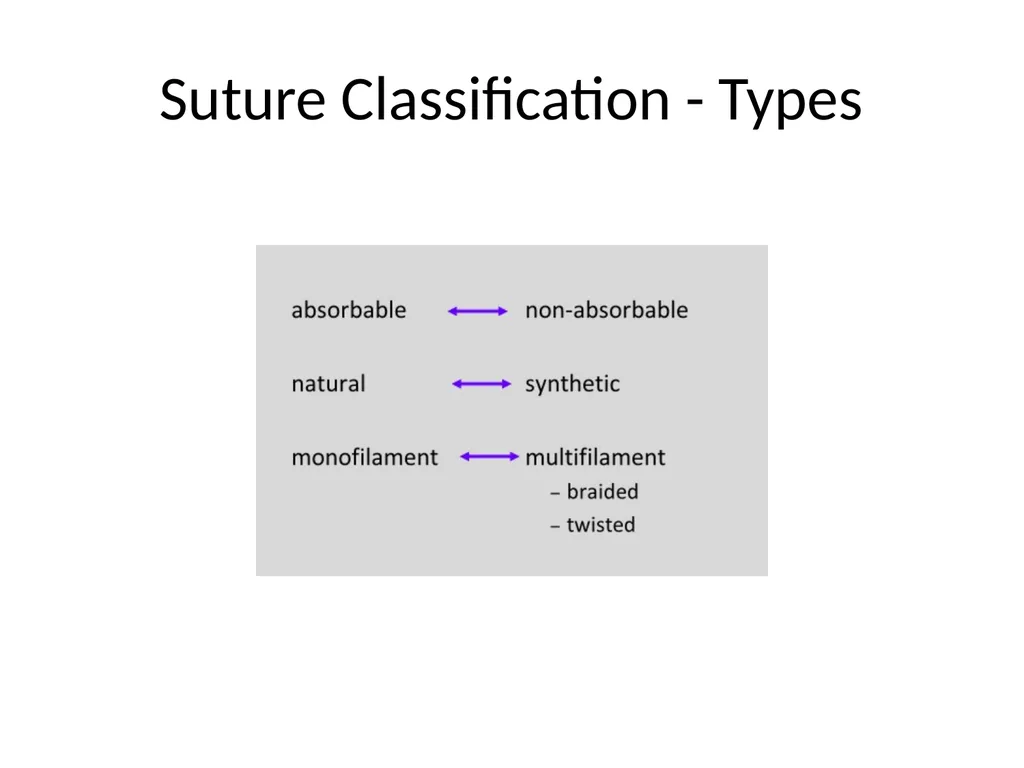
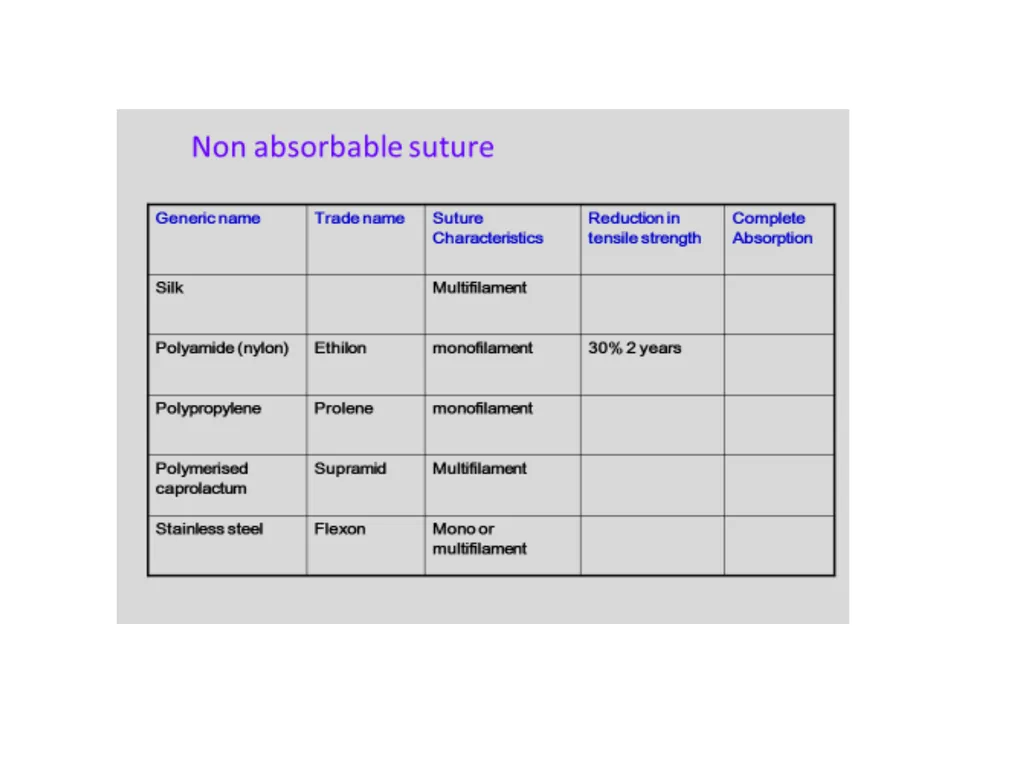
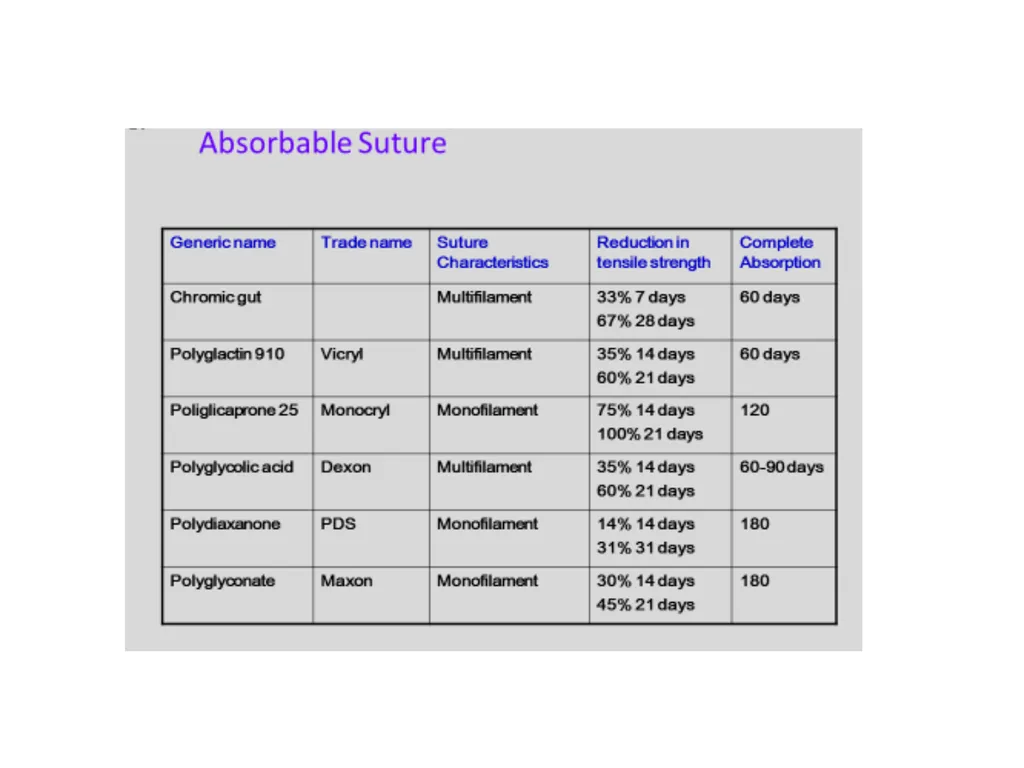
slide4. Suture Classification - Types<br>
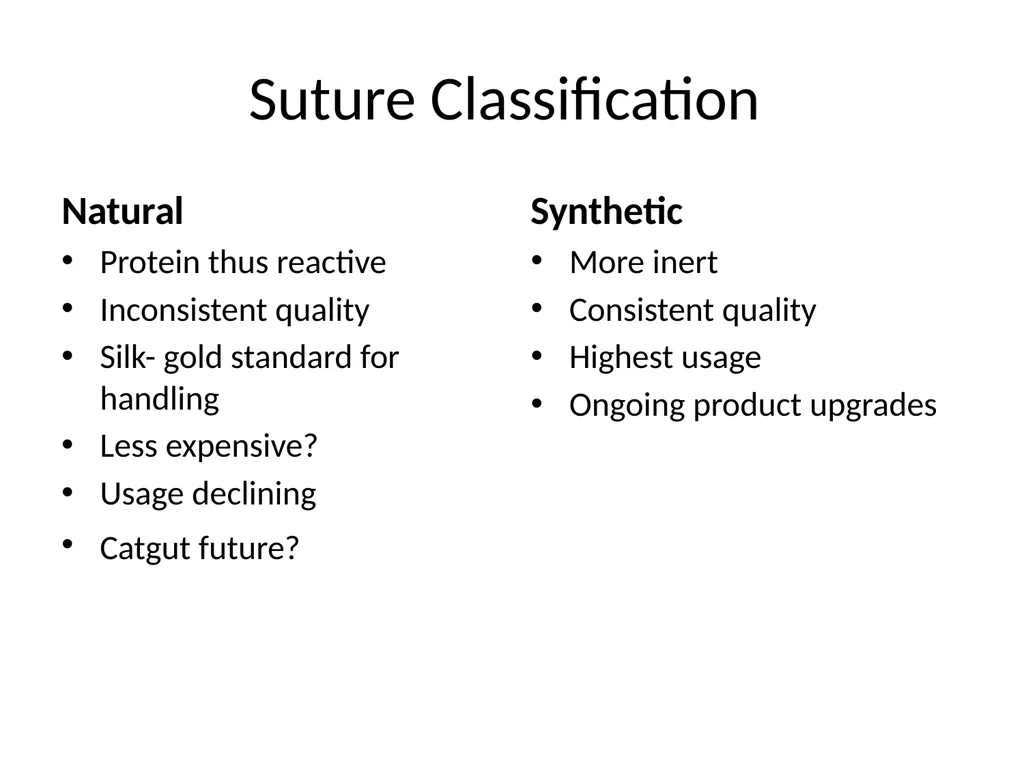
slide5. Suture Classification Natural
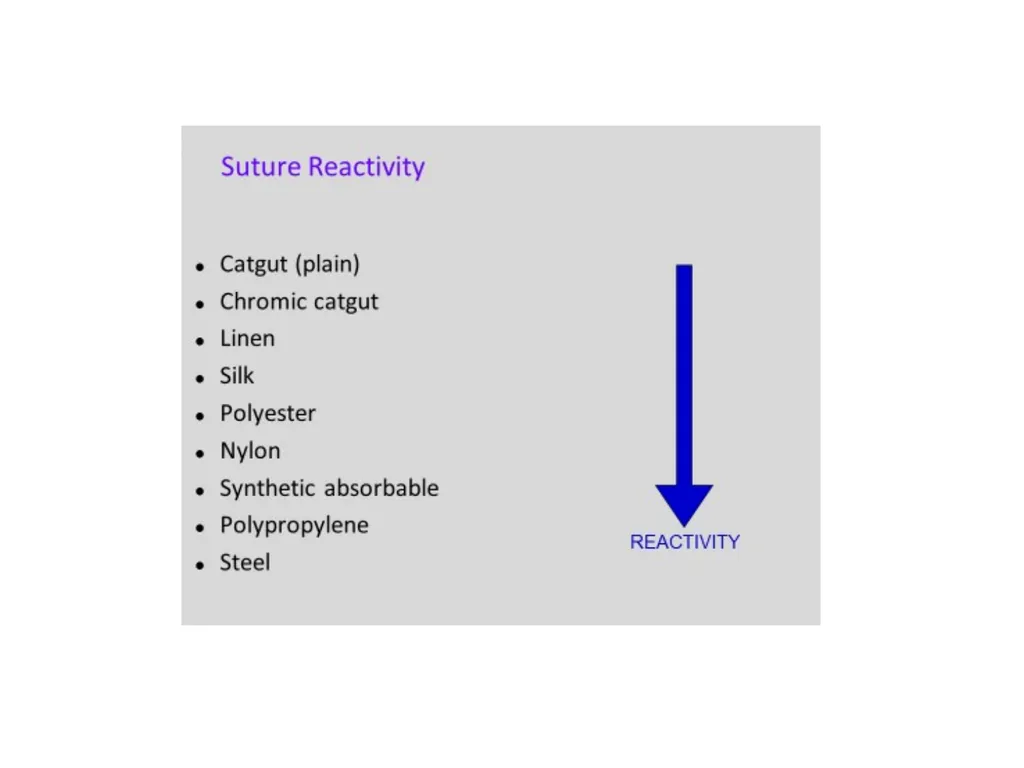
Protein thus reactive
Inconsistent quality
Silk- gold standard for handling
Less expensive?
Usage declining
Catgut future? Synthetic
More inert
Consistent quality
Highest usage
Ongoing product upgrades<br>
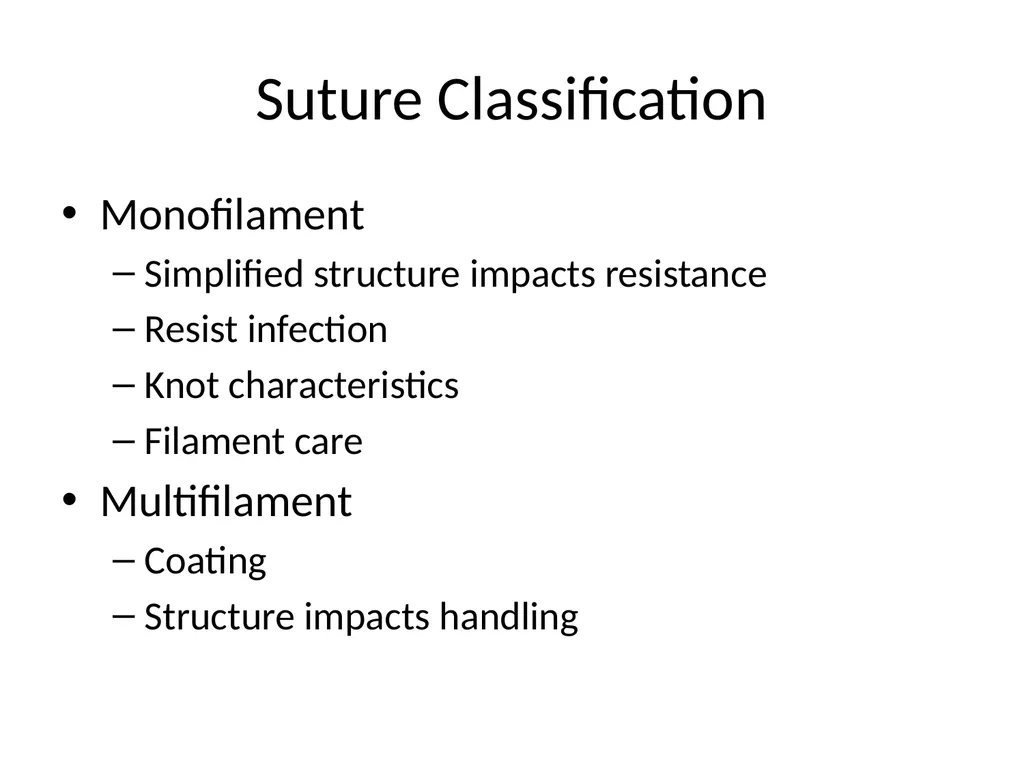
slide6. Suture Classification Monofilament
Simplified structure impacts resistance
Resist infection
Knot characteristics
Filament care
Multifilament
Coating
Structure impacts handling<br>
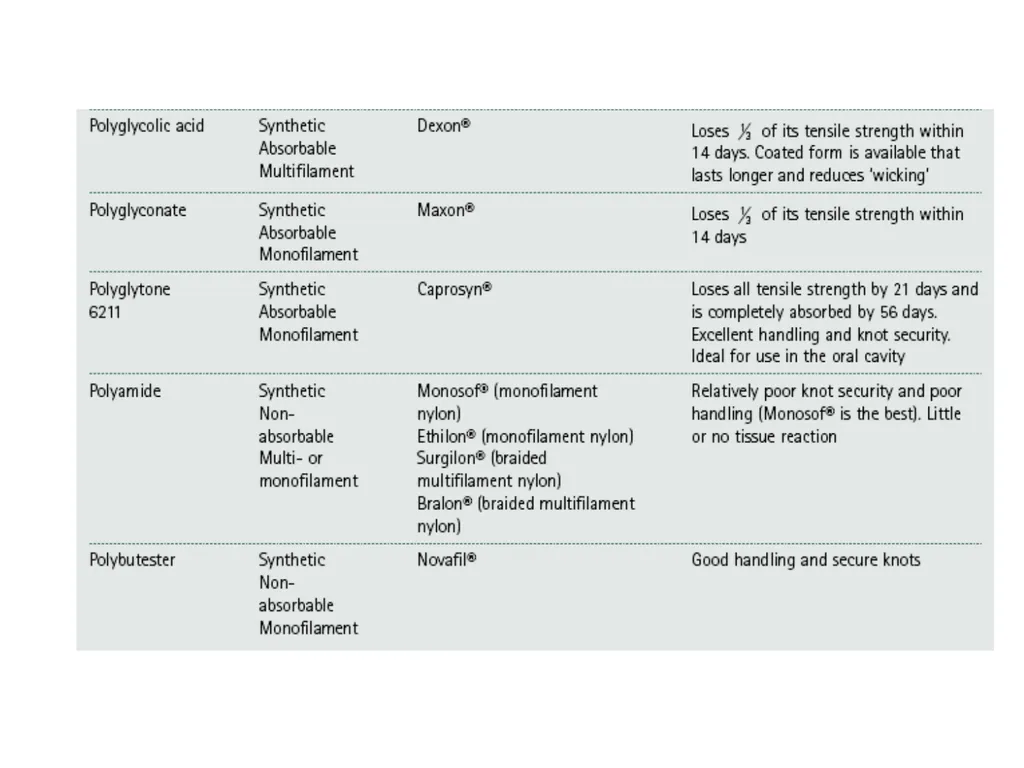
slide7. Suture Classification - Types<br>
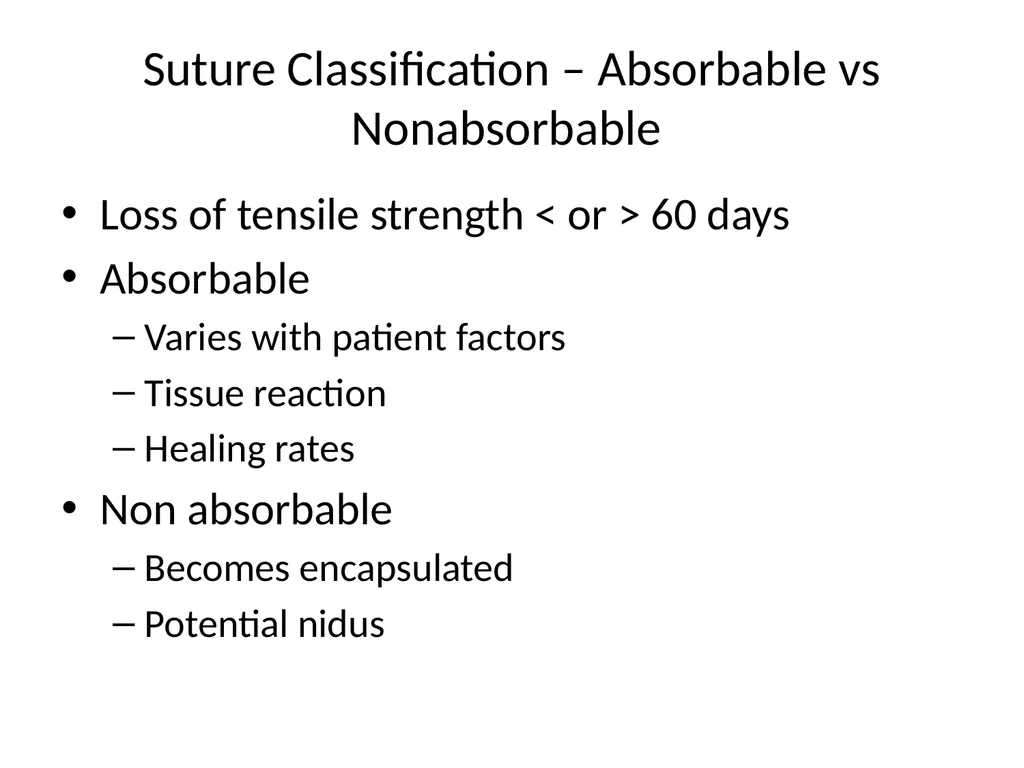
slide8. Suture Classification – Absorbable vs Nonabsorbable Loss of tensile strength < or > 60 days
Absorbable
Varies with patient factors
Tissue reaction
Healing rates
Non absorbable
Becomes encapsulated
Potential nidus<br>
slide18. Making a surgical incision<br>
slide19. Making a surgical incision<br>
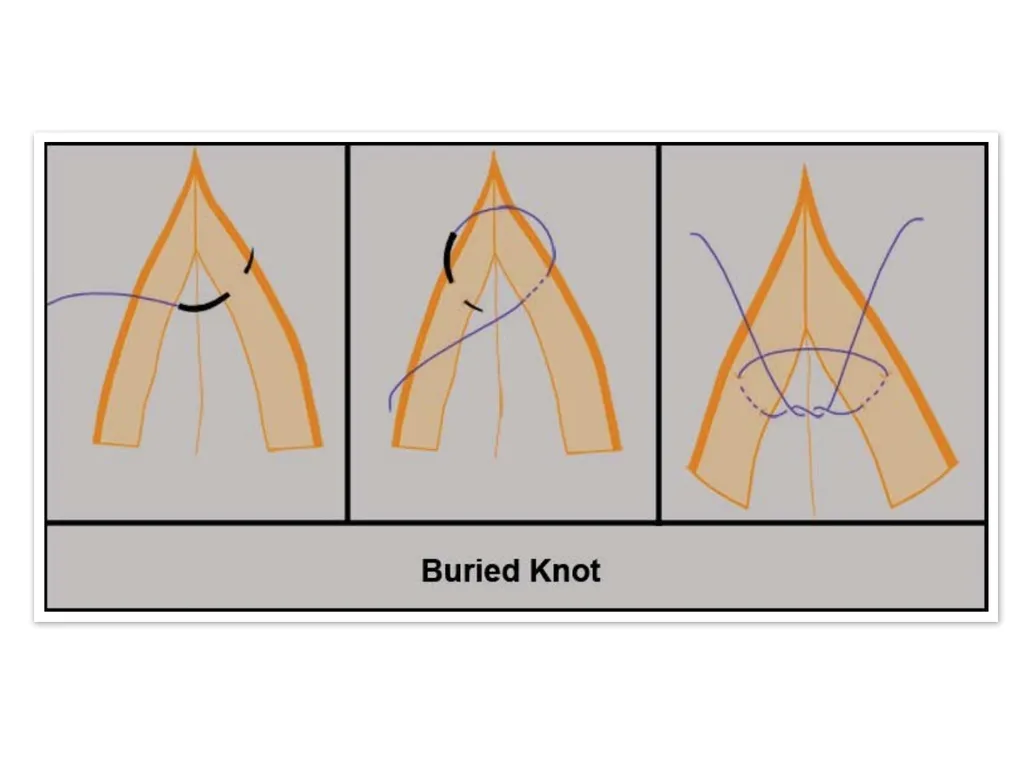
slide20. Buried Knots This technique is used to start a line of subcutaneous or intradermal sutures to reduce the irritation that may be caused by the knots rubbing against superficial tissues.
To bury the knot, introduce the needle deep in the far subcutaneous or intradermal tissue passing it up into the tissue, across the incision and then down into the tissue on the near side exiting deep in the incision line. Now form a knot, which will be buried within the incision line.<br>
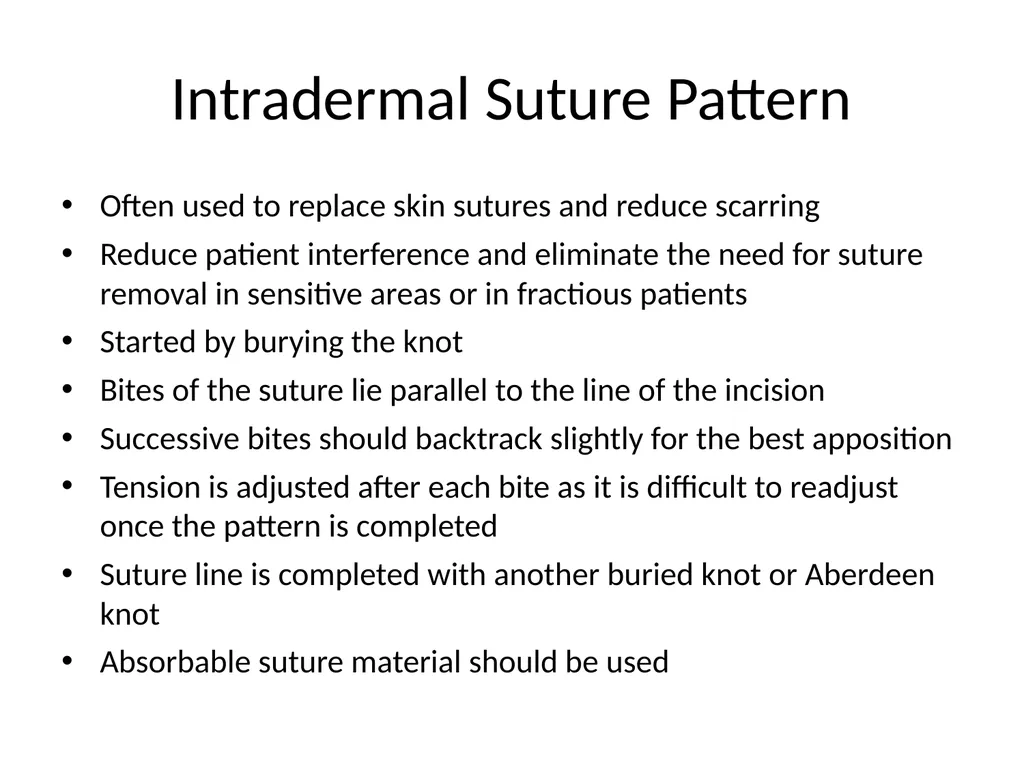
slide22. Intradermal Suture Pattern Often used to replace skin sutures and reduce scarring
Reduce patient interference and eliminate the need for suture removal in sensitive areas or in fractious patients
Started by burying the knot
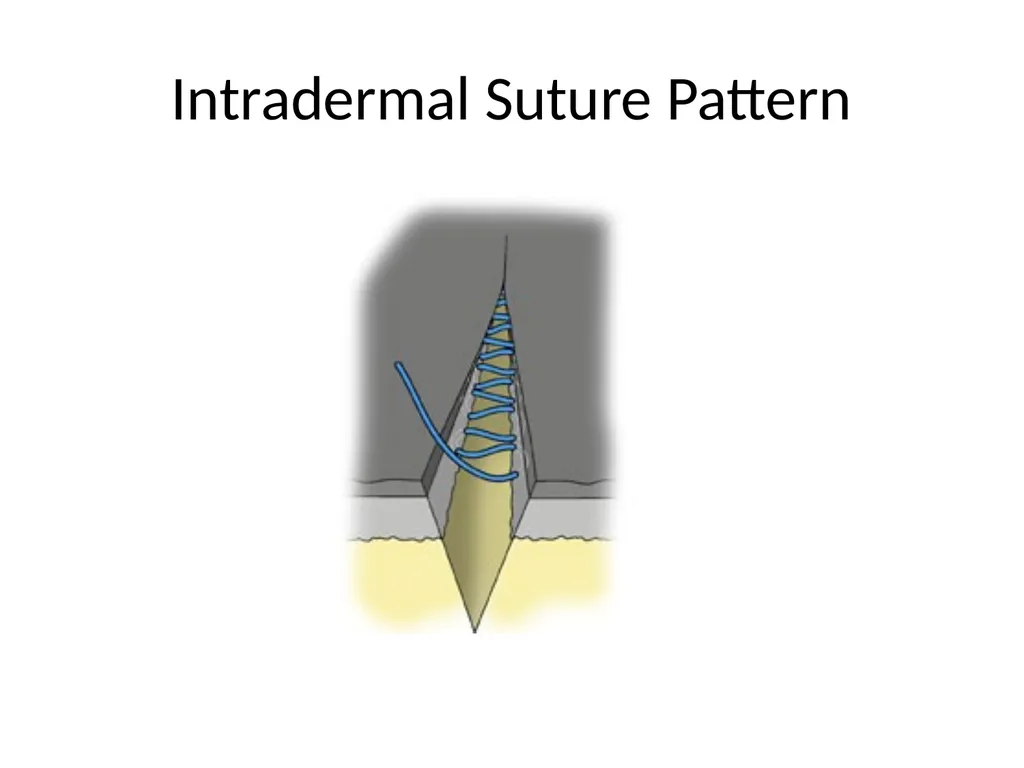
Bites of the suture lie parallel to the line of the incision
Successive bites should backtrack slightly for the best apposition
Tension is adjusted after each bite as it is difficult to readjust once the pattern is completed
Suture line is completed with another buried knot or Aberdeen knot
Absorbable suture material should be used<br>
slide23. Intradermal Suture Pattern<br>
slide24. Aberdeen Knot<br>
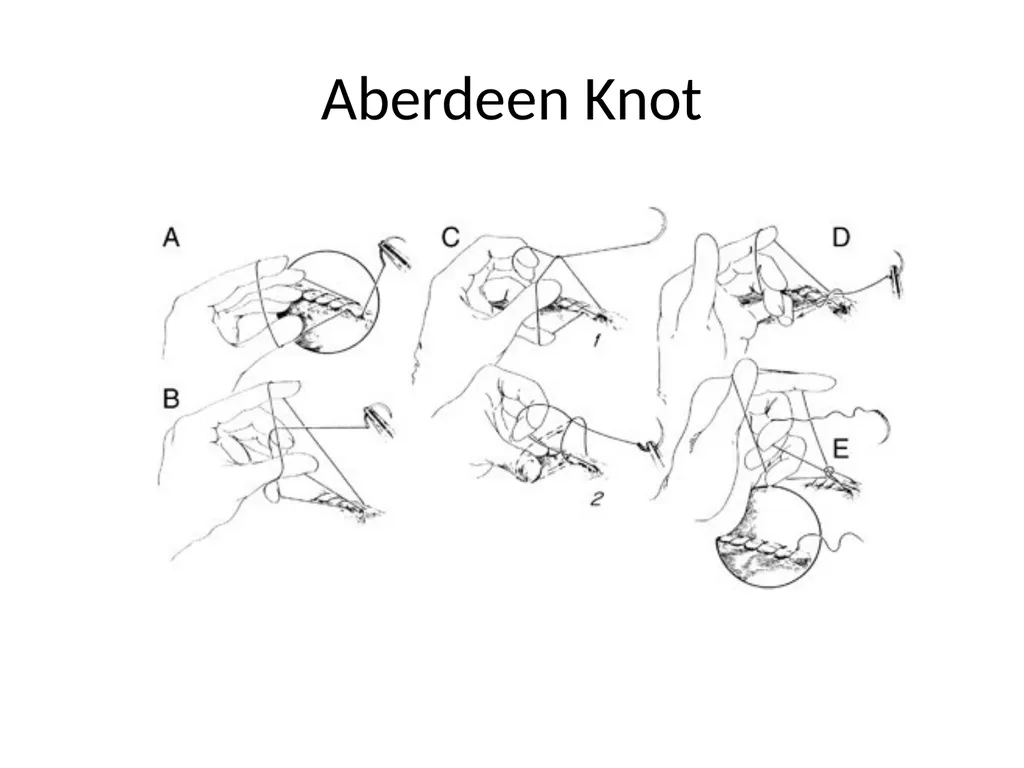
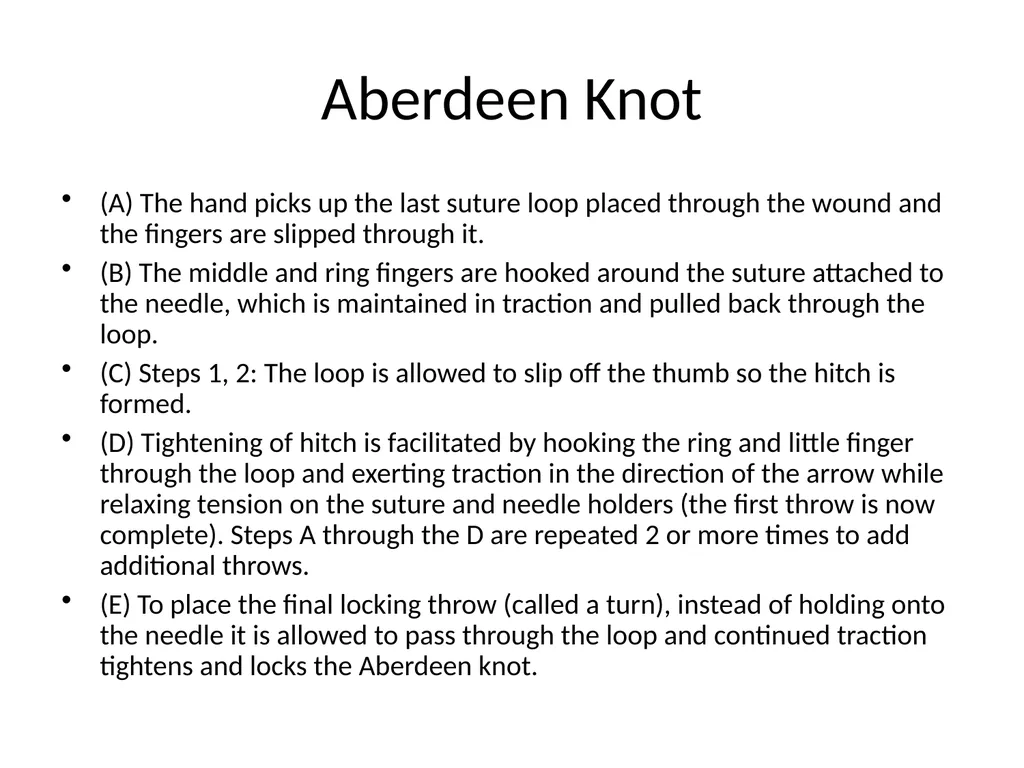
slide25. Aberdeen Knot (A) The hand picks up the last suture loop placed through the wound and the fingers are slipped through it.
(B) The middle and ring fingers are hooked around the suture attached to the needle, which is maintained in traction and pulled back through the loop.
(C) Steps 1, 2: The loop is allowed to slip off the thumb so the hitch is formed.
(D) Tightening of hitch is facilitated by hooking the ring and little finger through the loop and exerting traction in the direction of the arrow while relaxing tension on the suture and needle holders (the first throw is now complete). Steps A through the D are repeated 2 or more times to add additional throws.
(E) To place the final locking throw (called a turn), instead of holding onto the needle it is allowed to pass through the loop and continued traction tightens and locks the Aberdeen knot.<br>
slide26. Abdominal Closure - University of Glasgow Mahara<br>
slide27. Thank you for attending!!<br>
Lissann Wolfe<br>
slide2. What will be covered…. Choosing an appropriate suture material
How to make a surgical incision
How to bury a knot
Intradermal suture patterns
How to perform an Aberdeen knot<br>
slide3. Choosing Suture Material Absorbable vs nonabsorbable
Natural vs synthetic
Monofilament vs multifilament
Tensile strength
Ease of handling
Knot security
Capillary (fluid absorption & wicking)
Tissue being sutured, healing speed, cost<br>
slide4. Suture Classification - Types<br>
slide5. Suture Classification Natural
Protein thus reactive
Inconsistent quality
Silk- gold standard for handling
Less expensive?
Usage declining
Catgut future? Synthetic
More inert
Consistent quality
Highest usage
Ongoing product upgrades<br>
slide6. Suture Classification Monofilament
Simplified structure impacts resistance
Resist infection
Knot characteristics
Filament care
Multifilament
Coating
Structure impacts handling<br>
slide7. Suture Classification - Types<br>
slide8. Suture Classification – Absorbable vs Nonabsorbable Loss of tensile strength < or > 60 days
Absorbable
Varies with patient factors
Tissue reaction
Healing rates
Non absorbable
Becomes encapsulated
Potential nidus<br>
slide18. Making a surgical incision<br>
slide19. Making a surgical incision<br>
slide20. Buried Knots This technique is used to start a line of subcutaneous or intradermal sutures to reduce the irritation that may be caused by the knots rubbing against superficial tissues.
To bury the knot, introduce the needle deep in the far subcutaneous or intradermal tissue passing it up into the tissue, across the incision and then down into the tissue on the near side exiting deep in the incision line. Now form a knot, which will be buried within the incision line.<br>
slide22. Intradermal Suture Pattern Often used to replace skin sutures and reduce scarring
Reduce patient interference and eliminate the need for suture removal in sensitive areas or in fractious patients
Started by burying the knot
Bites of the suture lie parallel to the line of the incision
Successive bites should backtrack slightly for the best apposition
Tension is adjusted after each bite as it is difficult to readjust once the pattern is completed
Suture line is completed with another buried knot or Aberdeen knot
Absorbable suture material should be used<br>
slide23. Intradermal Suture Pattern<br>
slide24. Aberdeen Knot<br>
slide25. Aberdeen Knot (A) The hand picks up the last suture loop placed through the wound and the fingers are slipped through it.
(B) The middle and ring fingers are hooked around the suture attached to the needle, which is maintained in traction and pulled back through the loop.
(C) Steps 1, 2: The loop is allowed to slip off the thumb so the hitch is formed.
(D) Tightening of hitch is facilitated by hooking the ring and little finger through the loop and exerting traction in the direction of the arrow while relaxing tension on the suture and needle holders (the first throw is now complete). Steps A through the D are repeated 2 or more times to add additional throws.
(E) To place the final locking throw (called a turn), instead of holding onto the needle it is allowed to pass through the loop and continued traction tightens and locks the Aberdeen knot.<br>
slide26. Abdominal Closure - University of Glasgow Mahara<br>
slide27. Thank you for attending!!<br>