
Adverse Health Consequences of
TD
Published · 54 slides · 0 views
1 / 1











Description
Adverse Health Consequences of Performance-Enhancing Drugs: An Endocrine Society Scientific Statement Copyright 2014 by The Endocrine Society Received June 27, 2013. Accepted December 9, 2013 THE ENDOCRINE SOCIETYS Scientific Statement
Related Topics
Share
Embed code
Download this presentation From Below
"Adverse Health Consequences of" is the property of its rightful owner. Permission is granted to download and print the materials on this website for personal, non-commercial use only, and to display it on your personal computer provided you do not modify the materials and that you retain all copyright notices contained in the materials. By downloading content from our website, you accept the terms of this agreement.
Presentation Transcript
01
Adverse Health Consequences of Performance-Enhancing Drugs:
An Endocrine Society Scientific Statement Copyright © 2014 by The Endocrine Society
Received June 27, 2013. Accepted December 9, 2013<br>
An Endocrine Society Scientific Statement Copyright © 2014 by The Endocrine Society
Received June 27, 2013. Accepted December 9, 2013<br>
02
THE ENDOCRINE SOCIETY’S Scientific Statement Task Force (SSTF) deemed the medical consequences of performance-enhancing drug (PED) use an important topic for a scientific statement.
most media attention regarding PED use has focused on elite athletes and the illicit competitive advantage they gain from PEDs.
Neither the medical community nor policymakers appreciate that most PED users are not competitive athletes, but rather nonathlete weightlifters
(sometimes referred to as “recreational bodybuilders”).
As androgenic-anabolic steroids (AAS) are the most frequently used class of PEDs among athletes and nonathlete weightlifters, this review has devoted greater space and attention to the health consequences of AAS.<br>
most media attention regarding PED use has focused on elite athletes and the illicit competitive advantage they gain from PEDs.
Neither the medical community nor policymakers appreciate that most PED users are not competitive athletes, but rather nonathlete weightlifters
(sometimes referred to as “recreational bodybuilders”).
As androgenic-anabolic steroids (AAS) are the most frequently used class of PEDs among athletes and nonathlete weightlifters, this review has devoted greater space and attention to the health consequences of AAS.<br>
03
Definitions
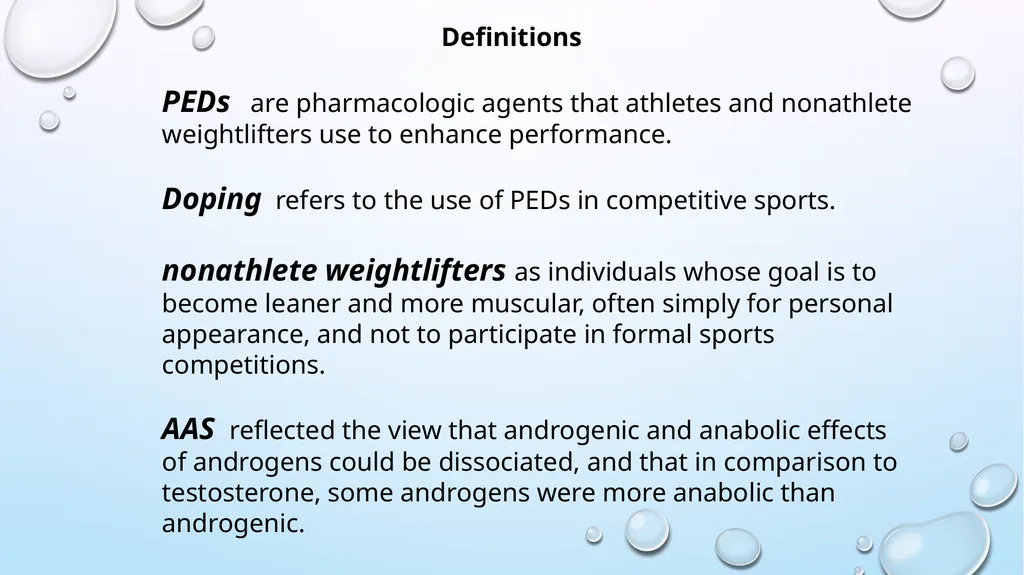
PEDs are pharmacologic agents that athletes and nonathlete weightlifters use to enhance performance.
Doping refers to the use of PEDs in competitive sports.
nonathlete weightlifters as individuals whose goal is to become leaner and more muscular, often simply for personal appearance, and not to participate in formal sports competitions.
AAS reflected the view that androgenic and anabolic effects of androgens could be dissociated, and that in comparison to testosterone, some androgens were more anabolic than androgenic.<br>
PEDs are pharmacologic agents that athletes and nonathlete weightlifters use to enhance performance.
Doping refers to the use of PEDs in competitive sports.
nonathlete weightlifters as individuals whose goal is to become leaner and more muscular, often simply for personal appearance, and not to participate in formal sports competitions.
AAS reflected the view that androgenic and anabolic effects of androgens could be dissociated, and that in comparison to testosterone, some androgens were more anabolic than androgenic.<br>
04
The Process of Data Gathering and Synthesis
The SSTF selected the chair (SB) of the statement development group. The chair selected a six-member expert panel (approved by Endocrine Society) with expertise in
the use and health consequences of performance-enhancing drugs. The expert panel conducted its deliberations regarding the scientific statement content through multiple
teleconferences, written correspondence, and a faceto-face meeting.
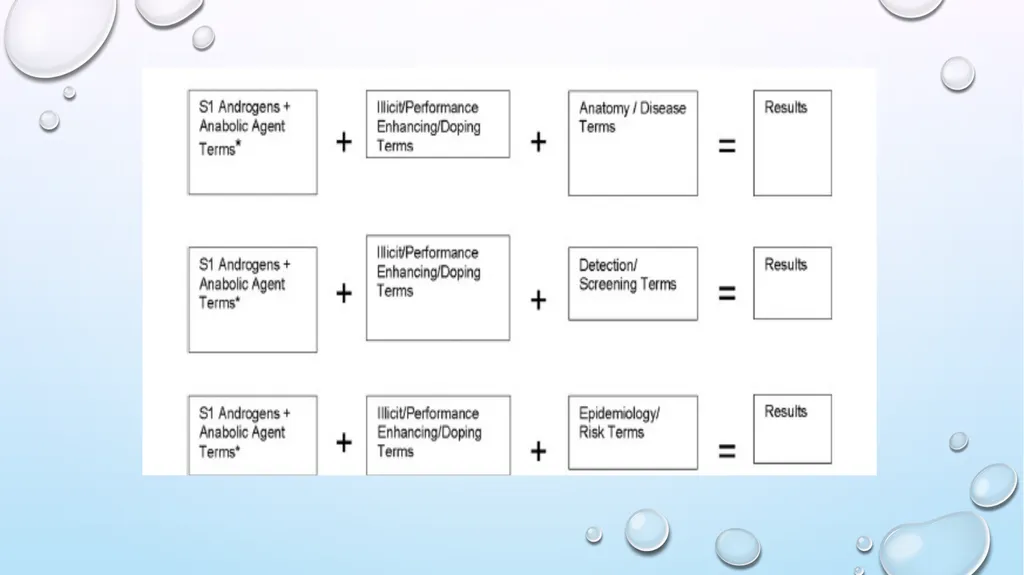
Three librarians associated with the writing team created search sets for the major categories and topics that the writing group prepared.
These search sets included:
The WADA Prohibited Substances (divided into each substance subgroup)
Illicit/Performance Enhancing/Doping Terms
Anatomy/Organ/Disease Terms Detection/Screening Terms Epidemiology/Risk Terms<br>
The SSTF selected the chair (SB) of the statement development group. The chair selected a six-member expert panel (approved by Endocrine Society) with expertise in
the use and health consequences of performance-enhancing drugs. The expert panel conducted its deliberations regarding the scientific statement content through multiple
teleconferences, written correspondence, and a faceto-face meeting.
Three librarians associated with the writing team created search sets for the major categories and topics that the writing group prepared.
These search sets included:
The WADA Prohibited Substances (divided into each substance subgroup)
Illicit/Performance Enhancing/Doping Terms
Anatomy/Organ/Disease Terms Detection/Screening Terms Epidemiology/Risk Terms<br>
05
Thus most of the evidence about the medical consequences of PED use has
emerged from case-control studies, case reports, and retrospective surveys, and as such is generally not of high quality.
Therefore studies of PEDs in animal models provide important comparisons with the human data.<br>
emerged from case-control studies, case reports, and retrospective surveys, and as such is generally not of high quality.
Therefore studies of PEDs in animal models provide important comparisons with the human data.<br>
06
Factors Contributing to the Limited Appreciation of
the Adverse Effects of Performance-enhancing Drugs
First, public attention is focused almost entirely on PED use among elite athletes, with an emphasis on how these drugs enable athletes to illicitly gain a competitive advantage.
Second, researchers cannot ethically conduct controlled studies of the long-term adverse effects of PEDs in normal volunteers, especially when using supra-physiologic
doses. Therefore, most of our knowledge comes from studies of PED users in the field (supplemented with studies in animals).<br>
the Adverse Effects of Performance-enhancing Drugs
First, public attention is focused almost entirely on PED use among elite athletes, with an emphasis on how these drugs enable athletes to illicitly gain a competitive advantage.
Second, researchers cannot ethically conduct controlled studies of the long-term adverse effects of PEDs in normal volunteers, especially when using supra-physiologic
doses. Therefore, most of our knowledge comes from studies of PED users in the field (supplemented with studies in animals).<br>
07
Third, since widespread illicit PED use did not appear in the general population until the 1980s and 1990s, the great majority of the world’s PED users are still under the
age of 50 today .As such, this relatively young population has not reached the age of risk for a range of diseases such as cardiovascular problems, that typically arise later in life. This likely explains why, to date, only occasional case reports have highlighted acute medical events and deaths associated with PEDs. And it’s likely that some
of the long-term effects of PEDs will only now start to become visible as the older members of the PED-using population reach the age of risk for these phenomena.<br>
age of 50 today .As such, this relatively young population has not reached the age of risk for a range of diseases such as cardiovascular problems, that typically arise later in life. This likely explains why, to date, only occasional case reports have highlighted acute medical events and deaths associated with PEDs. And it’s likely that some
of the long-term effects of PEDs will only now start to become visible as the older members of the PED-using population reach the age of risk for these phenomena.<br>
08
Fourth, PED use in the general population is usually covert.PEDuse typically begins after the teenage years and therefore evades scrutiny of parents or high school teachers.
Consequently, national surveys focusing on teenagers, such as high school students, will underestimate the total number of individuals who ultimately use PEDs, since the great majority of such individuals initiate use after their
teenage years .
Fifth, PED users often do not trust physicians; in one study, 56% of AAS users reported that they had never disclosed their AAS use to any physician.
Thus, physicians are often unaware of the prevalence of PED use.
Sixth, PED use rarely brings individuals to emergency rooms, since the most widely used class of PEDs, AAS,rarely precipitate a medical emergency comparable to an
overdose of alcohol or heroin.<br>
Consequently, national surveys focusing on teenagers, such as high school students, will underestimate the total number of individuals who ultimately use PEDs, since the great majority of such individuals initiate use after their
teenage years .
Fifth, PED users often do not trust physicians; in one study, 56% of AAS users reported that they had never disclosed their AAS use to any physician.
Thus, physicians are often unaware of the prevalence of PED use.
Sixth, PED use rarely brings individuals to emergency rooms, since the most widely used class of PEDs, AAS,rarely precipitate a medical emergency comparable to an
overdose of alcohol or heroin.<br>
09
There are several categories of PEDs that are currently popular among
nonathlete weightlifters and athletes.
Lean mass builders, the most frequently used PEDs, are generally promyogenic (anabolic) drugs that increase muscle mass or reduce fat mass.
By far the most prevalent illicit drugs in this category are anabolic androgenic steroids (AAS), which are the primary focus of this report.
Among nonathlete weightlifters, the use of AAS represents a higher proportion of overall PED use than that of all other categories of PEDs combined.
Historically, the term androgenic-anabolic steroid (AAS) reflected the view that androgenic and anabolic effects of androgens could be dissociated, and that in comparison to testosterone, some androgens were more anabolic than androgenic.<br>
nonathlete weightlifters and athletes.
Lean mass builders, the most frequently used PEDs, are generally promyogenic (anabolic) drugs that increase muscle mass or reduce fat mass.
By far the most prevalent illicit drugs in this category are anabolic androgenic steroids (AAS), which are the primary focus of this report.
Among nonathlete weightlifters, the use of AAS represents a higher proportion of overall PED use than that of all other categories of PEDs combined.
Historically, the term androgenic-anabolic steroid (AAS) reflected the view that androgenic and anabolic effects of androgens could be dissociated, and that in comparison to testosterone, some androgens were more anabolic than androgenic.<br>
10
In addition to AAS, nonathlete weightlifters and athletes also use human growth hormone (hGH) and insulin like growth factor-1 (IGF-I), as these PEDs have recently become available on the black market at reduced cost .
Similarly, some nonathlete weightlifters use the hormone insulin for its potential anabolic effects .
Finally, some nonathlete weightlifters use clenbuterol, a –adrenergic agonist that is thought to possess possible anabolic properties.
Clenbuterol and other illegal stimulants, such as amphetamine; and some hormones, such as thyroid hormones;also have thermogenic (fat-burning) properties that make them popular among nonathlete weightlifters.<br>
Similarly, some nonathlete weightlifters use the hormone insulin for its potential anabolic effects .
Finally, some nonathlete weightlifters use clenbuterol, a –adrenergic agonist that is thought to possess possible anabolic properties.
Clenbuterol and other illegal stimulants, such as amphetamine; and some hormones, such as thyroid hormones;also have thermogenic (fat-burning) properties that make them popular among nonathlete weightlifters.<br>
11
Competitive athletes tend to use several other categories of PEDs in addition to AAS.
For example, some competitive bodybuilders use diuretics (eg, furosemide, thiazides)to improve muscle definition onstage.
Some boxers or wrestlers use diuretics to reduce body weight so they can compete in a lower weight class.
Diuretics may also dilute the urine, which can reduce the concentration of the PED below the limit of detection.
Blood boosters (erythropoietins,other erythropoiesis-stimulating agents [ESAs], transfusions) increase endurance in events such as cycling,long-distance running, and skiing. Athletes also may combine
AAS and erythropoietins to train harder and recover faster.<br>
For example, some competitive bodybuilders use diuretics (eg, furosemide, thiazides)to improve muscle definition onstage.
Some boxers or wrestlers use diuretics to reduce body weight so they can compete in a lower weight class.
Diuretics may also dilute the urine, which can reduce the concentration of the PED below the limit of detection.
Blood boosters (erythropoietins,other erythropoiesis-stimulating agents [ESAs], transfusions) increase endurance in events such as cycling,long-distance running, and skiing. Athletes also may combine
AAS and erythropoietins to train harder and recover faster.<br>
12
Masking drugs reduce the ability to detect a banned substance.
For instance, epitestosterone can mask the detection of testosterone use.
And tranquilizers (benzodiazepines,opiates) reduce anxiety in events that require steady nerves (such as archery), and opiates can mask pain during competition.<br>
For instance, epitestosterone can mask the detection of testosterone use.
And tranquilizers (benzodiazepines,opiates) reduce anxiety in events that require steady nerves (such as archery), and opiates can mask pain during competition.<br>
13
The World Antidoping Agency (WADA), an international agency that oversees the implementation of the antidoping policies in all sports worldwide, maintains a list of substances (drugs, supplements, etc.,) that are banned from use in all sports at all times, banned from use during competition, or banned in specific sports .
WADA’s Anti-Doping Program is based on the WADA Code, a universal document that contains comprehensive guidelines for best practices in international and national antidoping programs .
WADA also publishes the doping violation thresholds for banned substances.
8<br>
WADA’s Anti-Doping Program is based on the WADA Code, a universal document that contains comprehensive guidelines for best practices in international and national antidoping programs .
WADA also publishes the doping violation thresholds for banned substances.
8<br>
14
Epidemiology of Performance-enhancing Drug Use
A. Age of Onset
Though it is widely believed that AAS use is common among teenagers, the great majority of AAS use begins after the teenage years .
the median age of onset across all studies consistently fell into the narrow range of 22 to 24 years. However, the actual median age of onset is probably Higher.
9<br>
A. Age of Onset
Though it is widely believed that AAS use is common among teenagers, the great majority of AAS use begins after the teenage years .
the median age of onset across all studies consistently fell into the narrow range of 22 to 24 years. However, the actual median age of onset is probably Higher.
9<br>
15
B. Prevalence of Use AAS use is widespread in Western countries,the U.S. appears to have the largest absolute number of AAS users.
The AAS users at greatest risk for adverse effects are
likely those who develop AAS dependence and accumulate many years of AAS exposure.
10<br>
The AAS users at greatest risk for adverse effects are
likely those who develop AAS dependence and accumulate many years of AAS exposure.
10<br>
16
The Types and Patterns of Performance-enhancing Drug Use
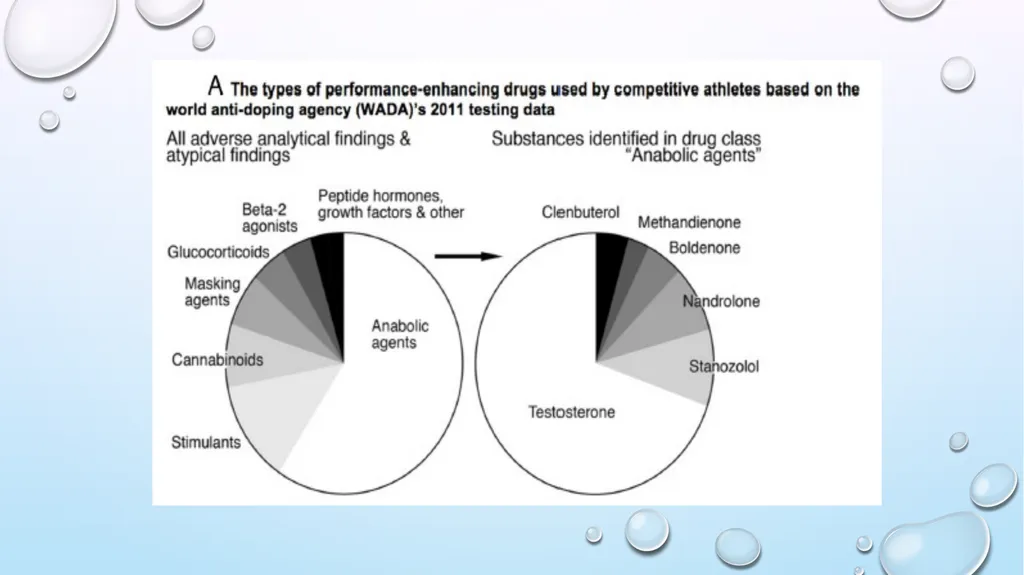
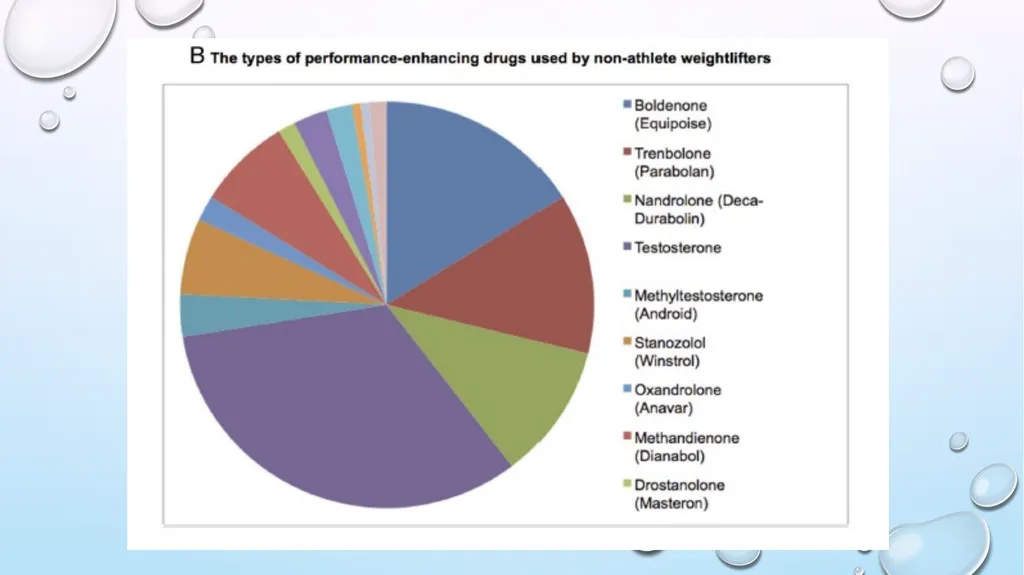
AAS are the most commonly used PEDs, with testosterone,boldenone, and trenbolone being the most frequently detected drugs among illicit PEDs users in the U.S.
Although boldenone is a veterinary steroid not approved for human use, this fact has not diminished its popularity among illicit AAS users. In the small subgroup of PED users who are elite athletes,
WADA most commonly detects testosterone, stanozolol, and nandrolone;and the highest prevalence of positive tests occur in bodybuilding,power lifting, weightlifting, boxing, and kickboxing.
11<br>
AAS are the most commonly used PEDs, with testosterone,boldenone, and trenbolone being the most frequently detected drugs among illicit PEDs users in the U.S.
Although boldenone is a veterinary steroid not approved for human use, this fact has not diminished its popularity among illicit AAS users. In the small subgroup of PED users who are elite athletes,
WADA most commonly detects testosterone, stanozolol, and nandrolone;and the highest prevalence of positive tests occur in bodybuilding,power lifting, weightlifting, boxing, and kickboxing.
11<br>
17
PEDs users often combine multiple drugs, including classical drugs of abuse such as opiates .
Most AAS users engage in high-intensity exercise to maximize anabolic gains. The combined use of AAS and opiates enables the user to continue training despite muscle and joint pain.
some individuals develop opioid dependence.
In particular, nalbuphine hydrochloride (Nubain) is popular among weightlifters, and is associated with other substance abuse.<br>
Most AAS users engage in high-intensity exercise to maximize anabolic gains. The combined use of AAS and opiates enables the user to continue training despite muscle and joint pain.
some individuals develop opioid dependence.
In particular, nalbuphine hydrochloride (Nubain) is popular among weightlifters, and is associated with other substance abuse.<br>
18
AAS may also interact with heroin in accidental drug overdose.
Recent studies increasingly suggest that the use of AAS and other PEDs often occurs in conjunction with use of multiple classical drugs of abuse.
PED users are increasingly encountered in needle-exchange programs,where they may sometimes represent most the clientele.
AAS may induce effects on the brain reward system that may render individuals susceptible to other drugs of abuse.<br>
Recent studies increasingly suggest that the use of AAS and other PEDs often occurs in conjunction with use of multiple classical drugs of abuse.
PED users are increasingly encountered in needle-exchange programs,where they may sometimes represent most the clientele.
AAS may induce effects on the brain reward system that may render individuals susceptible to other drugs of abuse.<br>
19
Athletes and nonathlete weightlifters that use AAS commonly combine different steroids (“stacking”) in cycles of increasing and decreasing concentrations (“pyramiding”).
Most stacks will include both androgens and nonsteroidal drugs.
The latter are typically chosen to provide further anabolic effects (hGH, IGF-I, insulin), to counteract negative side effects of AAS (aromatase inhibitors,estrogen receptor antagonists), to enhance fat and
water loss (diuretics, thyroid hormones, B2 adrenergic receptor agonists), to reactivate endogenous testosterone production at the end of a cycle (gonadotropins), and to reduce the risk of detection (diuretics, probenecid).<br>
Most stacks will include both androgens and nonsteroidal drugs.
The latter are typically chosen to provide further anabolic effects (hGH, IGF-I, insulin), to counteract negative side effects of AAS (aromatase inhibitors,estrogen receptor antagonists), to enhance fat and
water loss (diuretics, thyroid hormones, B2 adrenergic receptor agonists), to reactivate endogenous testosterone production at the end of a cycle (gonadotropins), and to reduce the risk of detection (diuretics, probenecid).<br>
20
Side effects of these nonsteroidal drugs include headache,nausea, nervousness, diarrhea, perspiration, hot flushes, and bone pain.
Athletes may add epitestosterone to normalize their testosterone/epitestosterone ratios,thus avoiding testosterone-use detection.
Researchers have not adequately investigated interactions of AAS with
nonsteroidal drugs.<br>
Athletes may add epitestosterone to normalize their testosterone/epitestosterone ratios,thus avoiding testosterone-use detection.
Researchers have not adequately investigated interactions of AAS with
nonsteroidal drugs.<br>
21
Association of Performance-enhancing Drug Use with Other High-risk Behaviors
Athletes and nonathlete weightlifters that use PEDs often engage in other high-risk health behaviors.
In addition to the risks associated with concomitant use of other drugs
such as alcohol and opiates with AAS, users of high doses of AAS may be more susceptible to rage, anti social and violent behaviors, and suicidality.
Sharing of needles and other paraphernalia and unprotected sex may increase the risk of infections such as hepatitis and HIV.
The use of PEDs, especially in conjunction with analgesics or stimulants, may allow athletes to engage in extremely high-intensity exercise, increasing the risk of musculoskeletal injuries.<br>
Athletes and nonathlete weightlifters that use PEDs often engage in other high-risk health behaviors.
In addition to the risks associated with concomitant use of other drugs
such as alcohol and opiates with AAS, users of high doses of AAS may be more susceptible to rage, anti social and violent behaviors, and suicidality.
Sharing of needles and other paraphernalia and unprotected sex may increase the risk of infections such as hepatitis and HIV.
The use of PEDs, especially in conjunction with analgesics or stimulants, may allow athletes to engage in extremely high-intensity exercise, increasing the risk of musculoskeletal injuries.<br>
22
Adverse Health Effects of Performance-enhancing Drugs
Because AAS,hGH,insulin, and erythropoietins are the most frequently used PEDs, we address the medical consequences of their use in detail .
Androgenic-anabolic Steroid
B. Human Growth HormonC.
Insulin<br>
Because AAS,hGH,insulin, and erythropoietins are the most frequently used PEDs, we address the medical consequences of their use in detail .
Androgenic-anabolic Steroid
B. Human Growth HormonC.
Insulin<br>
23
A. Androgenic-anabolic Steroid
1. Clinical Pharmacology
An androgen is a sex hormone that promotes the development and maintenance of the male sex characteristics;testosterone is the principal secreted androgen in men.
Androgens have both androgenic (masculinizing) effects(development of male secondary sex characteristics, including hair growth) and anabolic effects (increase in skeletal muscle mass and strength).
For decades, pharmaceutical companies have attempted to develop androgens that have preferential anabolic activity and reduced or no androgenic activity; these compounds have been referred to as anabolic steroids. While some steroidal compounds available to date are preferentially anabolic, most generally have both androgenic and anabolic effects.<br>
1. Clinical Pharmacology
An androgen is a sex hormone that promotes the development and maintenance of the male sex characteristics;testosterone is the principal secreted androgen in men.
Androgens have both androgenic (masculinizing) effects(development of male secondary sex characteristics, including hair growth) and anabolic effects (increase in skeletal muscle mass and strength).
For decades, pharmaceutical companies have attempted to develop androgens that have preferential anabolic activity and reduced or no androgenic activity; these compounds have been referred to as anabolic steroids. While some steroidal compounds available to date are preferentially anabolic, most generally have both androgenic and anabolic effects.<br>
24
we have used the term androgenic-anabolic steroids to describe these compounds that are structurally related to testosterone, bind to androgen receptor, and exert masculinizing as well as anabolic effects to varying degrees.
Testosterone remains popular, both among elite athletes and nonathlete weightlifters, because of its low price,relatively ready access, and the challenges in distinguishing exogenous from endogenous sources of testosterone.
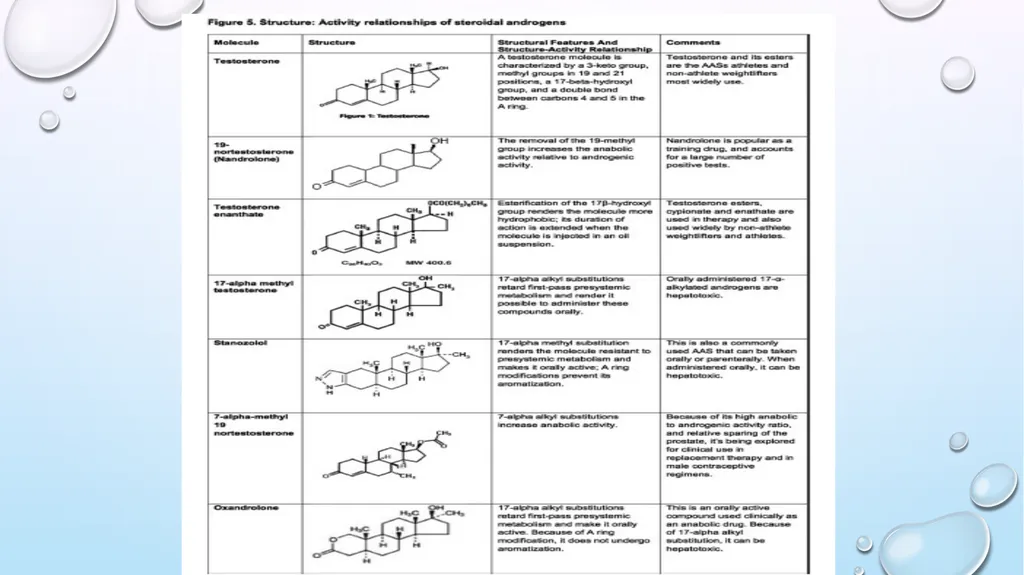
Numerous AAS have been synthesized by structural modifications of testosterone molecule . These structural modifications may alter the relative anabolic or androgenic activity, the binding affinity for the androgen receptor, coactivator recruitment, metabolic clearance,susceptibility to presystemic metabolism, and aromatization.<br>
Testosterone remains popular, both among elite athletes and nonathlete weightlifters, because of its low price,relatively ready access, and the challenges in distinguishing exogenous from endogenous sources of testosterone.
Numerous AAS have been synthesized by structural modifications of testosterone molecule . These structural modifications may alter the relative anabolic or androgenic activity, the binding affinity for the androgen receptor, coactivator recruitment, metabolic clearance,susceptibility to presystemic metabolism, and aromatization.<br>
25
Testosterone is metabolized rapidly in the body; however,esterification of the 17-hydroxyl group renders the molecule more hydrophobic.
When these esters of testosterone(such as testosterone enanthate and cypionate) are administered in an oily suspension, they are released very slowly into the aqueous plasma because of their hydrophobicity.
This extends their duration of action. These esters are readily de-esterified to testosterone in the body.<br>
When these esters of testosterone(such as testosterone enanthate and cypionate) are administered in an oily suspension, they are released very slowly into the aqueous plasma because of their hydrophobicity.
This extends their duration of action. These esters are readily de-esterified to testosterone in the body.<br>
26
Investigations of the structure-activity relationships have established that removal of the 19-methyl group increases the anabolic activity; thus, 19-nortestosterone(nandrolone) is a potent AAS and a very popular training drug that accounts for a large number of positive tests .
7 alkyl substitutions of 19-nortestosterone moleculemay further increase the anabolic to androgenic activity. 17--alkyl substitutions render the molecule resistant to degradation;thus 17--alkylated androgens can be administered orally.
Stanozolol is a 17--alkylated androgen that can be taken orally or by injection. Orally administered 17-a-alkylated androgens are hepatotoxic. Stanozolol is also nonaromatizable. Other substitutions in the steroid A ring may alter the susceptibility of the steroid molecule to aromatization.<br>
7 alkyl substitutions of 19-nortestosterone moleculemay further increase the anabolic to androgenic activity. 17--alkyl substitutions render the molecule resistant to degradation;thus 17--alkylated androgens can be administered orally.
Stanozolol is a 17--alkylated androgen that can be taken orally or by injection. Orally administered 17-a-alkylated androgens are hepatotoxic. Stanozolol is also nonaromatizable. Other substitutions in the steroid A ring may alter the susceptibility of the steroid molecule to aromatization.<br>
27
A number of nonsteroidal selective androgen modulators, which display tissue-specific activation of androgen signaling, are in development.
Although the Food and Drug Administration has not approved these novel nonsteroidal selective androgen receptor modulators for clinical use, some of them are already being sold illicitly on the Internet.<br>
Although the Food and Drug Administration has not approved these novel nonsteroidal selective androgen receptor modulators for clinical use, some of them are already being sold illicitly on the Internet.<br>
28
Athletes and nonathlete weightlifters take AAS orally,transdermally, or by intramuscular (IM) injection; however the most popular mode is the IM route.
Oral preparations have a short half-life and are taken daily, whereas injectable androgens are typically used weekly or biweekly.
A number of transdermal testosterone preparations have become available recently, but it is difficult to deliver large amounts of testosterone using the transdermal formulations.
Users may supplement their program of injections and pills with topical gels to provide a constant low-level testosterone supply.<br>
Oral preparations have a short half-life and are taken daily, whereas injectable androgens are typically used weekly or biweekly.
A number of transdermal testosterone preparations have become available recently, but it is difficult to deliver large amounts of testosterone using the transdermal formulations.
Users may supplement their program of injections and pills with topical gels to provide a constant low-level testosterone supply.<br>
29
Testosterone administration increases skeletal muscle mass by inducing the hypertrophy of both type I and 2 fibers ;testosterone does not change the absolute number or the relative proportion of type 1 and 2 fibers .
Testosterone promotes myogenic differentiation of muscle progenitor cells.
Testosterone stimulates circulating growth hormone (GH) and IGF-1, although circulating GH is not essential for mediating testosterone’s effects on muscle mass .<br>
Testosterone promotes myogenic differentiation of muscle progenitor cells.
Testosterone stimulates circulating growth hormone (GH) and IGF-1, although circulating GH is not essential for mediating testosterone’s effects on muscle mass .<br>
30
Testosterone increases maximal voluntary strength and leg power, but does not increase specific force .
Testosterone also promotes mitochondrial biogenesis and quality control (QC), and increases net oxygen delivery to the tissue by increasing red cell mass and tissue capillarity.
Testosterone also increases the circulating levels of 2, 3 biphosphoglycerate, which shifts the oxygen:hemoglobin curve to the left thereby facilitating oxygen unloading from oxyhemoglobin (Hbo2) .<br>
Testosterone also promotes mitochondrial biogenesis and quality control (QC), and increases net oxygen delivery to the tissue by increasing red cell mass and tissue capillarity.
Testosterone also increases the circulating levels of 2, 3 biphosphoglycerate, which shifts the oxygen:hemoglobin curve to the left thereby facilitating oxygen unloading from oxyhemoglobin (Hbo2) .<br>
31
The observations that testosterone improves neuromuscular transmission ,have led to speculation that testosterone may reduce reaction time, which may contribute to improved performance in sprint events or in sports requiring high level of hand-eye coordination such as baseball.
Testosterone administration may also affect mood and motivation, which may indirectly affect athletic Performance<br>
Testosterone administration may also affect mood and motivation, which may indirectly affect athletic Performance<br>
32
3. Detection
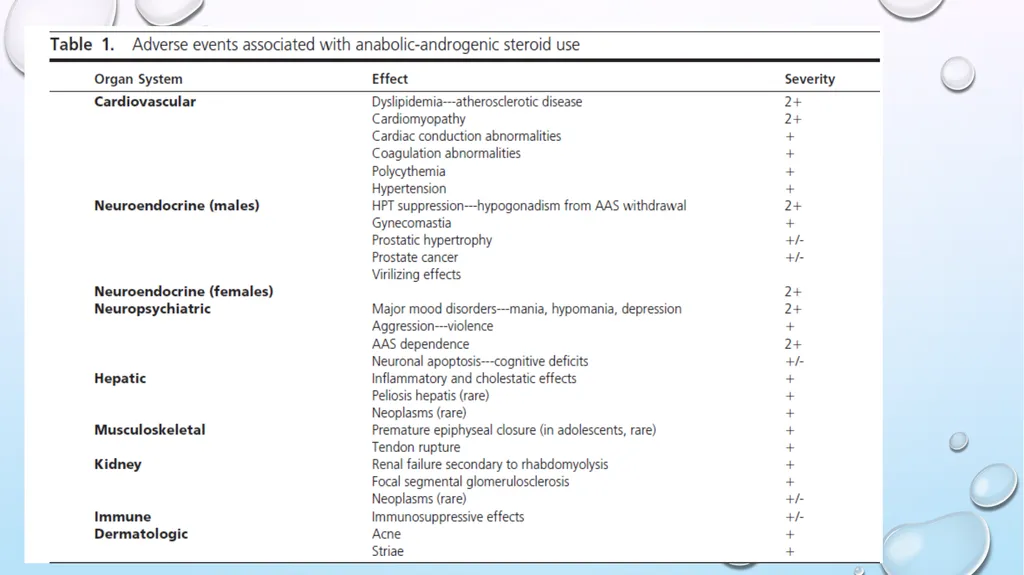
Some of the adverse effects seen in patients who use AAS, may include infertility,gynecomastia, sexual dysfunction,hair loss, acne, muscular appearance, and testicular atrophy.
Some indicators that might suggest AAS use are increased hemoglobin and hematocrit, suppressed LH and FSH and testosterone levels, low high-density lipoproteins cholesterol, and low sperm density.
Mass spectrometry-based tests (available in many commercial laboratories) can detect AAS in urine.<br>
Some of the adverse effects seen in patients who use AAS, may include infertility,gynecomastia, sexual dysfunction,hair loss, acne, muscular appearance, and testicular atrophy.
Some indicators that might suggest AAS use are increased hemoglobin and hematocrit, suppressed LH and FSH and testosterone levels, low high-density lipoproteins cholesterol, and low sperm density.
Mass spectrometry-based tests (available in many commercial laboratories) can detect AAS in urine.<br>
33
Testosterone abuse is more difficult to detect; but high testosterone, in association with suppressed LH and FSH levels, should raise suspicion of testosterone abuse.
A testosterone to epitestosterone ratio of more than 4 can confirm testosterone abuse, although it is rarely necessary to check testosterone levels in the clinical setting.
Often direct questioning will result in an admission by a patient that he or she is using AAS.<br>
A testosterone to epitestosterone ratio of more than 4 can confirm testosterone abuse, although it is rarely necessary to check testosterone levels in the clinical setting.
Often direct questioning will result in an admission by a patient that he or she is using AAS.<br>
34
A test based on gas chromatography/combustion/isotope ratio mass spectrometry can detect the difference in 13C/12C ratios (CIR) in endogenous and exogenous testosterone. The CIRs for androsterone, etiocholanolone,5- and 5-androstanediol, and testosterone are documented. As an internal reference, tests use an endogenous steroid either upstream of the steroid of interest
or from another steroid pathway, such as pregnanediol.
The difference between the CIRs of the two steroids should be less than 3%. The use of CIR in conjunction with the steroid profile results can provide a definitive answer about whether the athlete used a pharmaceutical testosterone product or not.
The detection of synthetic anabolic steroids by gas
The emergence of liquid chromatography/tandem mass spectrometry as a routine testing tool has allowed researchers to analyze a number of additional compounds, such as stanozolol, tetrahydrogestrinone , and clenbuterol ,with much greater sensitivity.<br>
or from another steroid pathway, such as pregnanediol.
The difference between the CIRs of the two steroids should be less than 3%. The use of CIR in conjunction with the steroid profile results can provide a definitive answer about whether the athlete used a pharmaceutical testosterone product or not.
The detection of synthetic anabolic steroids by gas
The emergence of liquid chromatography/tandem mass spectrometry as a routine testing tool has allowed researchers to analyze a number of additional compounds, such as stanozolol, tetrahydrogestrinone , and clenbuterol ,with much greater sensitivity.<br>
35
Human Growth Hormone
The metabolic actions of hGH also interact with those of insulin (and perhaps IGF-I) to control fat.
hGH enhances lipolysis and fatty acid oxidation as well as carbohydrate and protein metabolism during both the fasted and fed states.
In the fasted state, GH secretion increases and it partitions metabolic fuels from fat by stimulating lipolysis and fatty acid oxidation to provide energy to protect from catabolism.
At the whole-body level GH suppresses glucose oxidation and utilization, while at the same time enhancing hepatic glucose oxidation. GH also antagonizes insulin action;<br>
The metabolic actions of hGH also interact with those of insulin (and perhaps IGF-I) to control fat.
hGH enhances lipolysis and fatty acid oxidation as well as carbohydrate and protein metabolism during both the fasted and fed states.
In the fasted state, GH secretion increases and it partitions metabolic fuels from fat by stimulating lipolysis and fatty acid oxidation to provide energy to protect from catabolism.
At the whole-body level GH suppresses glucose oxidation and utilization, while at the same time enhancing hepatic glucose oxidation. GH also antagonizes insulin action;<br>
36
promotes protein anabolism and the acquisition of lean body mass; and reduces urea synthesis, blood urea concentration,and urinary urea excretion.
In healthy adults, hGH regulates all of the activities mentioned above (protein anabolic effects), spares protein oxidation, increases lean body mass (extracellular water and body cell mass), and decreases fat mass .
Despite these changes in body composition, there is little evidence that hGH in supra-physiologic doses affects physical performance.
Even if the administration of rhGH does not increase athletic performance, some elite athletes may take it to purportedly recover more rapidly (eg, from soft tissue damage) and allow for more vigorous training.<br>
In healthy adults, hGH regulates all of the activities mentioned above (protein anabolic effects), spares protein oxidation, increases lean body mass (extracellular water and body cell mass), and decreases fat mass .
Despite these changes in body composition, there is little evidence that hGH in supra-physiologic doses affects physical performance.
Even if the administration of rhGH does not increase athletic performance, some elite athletes may take it to purportedly recover more rapidly (eg, from soft tissue damage) and allow for more vigorous training.<br>
37
Human Growth Hormone
Detection
Two tests have been developed for the detection of rhGH: a direct method that measures variants of GH produced by the pituitary gland and a biomarkers method based on the GH-induced release of IGF-1 and the N-terminal propeptide of procollagen type III (P-III-NP).
In the variants or isoforms test, one immunoassay detects primarily pituitary isoforms ofGHincluding the 22 kiloDalton (kDa) isoform, oligomers of the 22 kDa,and some other isoforms.
The second immunoassay primarily detects monomeric 22 kDa GH found in rhGHpreparations. When a subject receives GH, it increases the concentration measured by the second assay and suppresses the pituitary forms, decreasing the concentration.
The result is a dramatic increase in the ratio of the two assays (recombinant/pituitary). The main limitation of any direct GH test is the short serum half-life of GH,which limits the detection window to less than 24 hours.
The biomarkers test is based on a score calculated from the age of the athlete, the IGF-1 concentration, and the P-III-NP concentration (384). By combining the two tests,one can correctly classify subjects who had received GH from normal subjects for a period of at least 7–10 days.
We can measure the concentration of IGF-1 by immunoassay and, more recently, by LC-MS/MS.
The P-III-NP is measured by immunoassay and can stay elevated for several weeks even after discontinuation of rhGH use (385).<br>
Detection
Two tests have been developed for the detection of rhGH: a direct method that measures variants of GH produced by the pituitary gland and a biomarkers method based on the GH-induced release of IGF-1 and the N-terminal propeptide of procollagen type III (P-III-NP).
In the variants or isoforms test, one immunoassay detects primarily pituitary isoforms ofGHincluding the 22 kiloDalton (kDa) isoform, oligomers of the 22 kDa,and some other isoforms.
The second immunoassay primarily detects monomeric 22 kDa GH found in rhGHpreparations. When a subject receives GH, it increases the concentration measured by the second assay and suppresses the pituitary forms, decreasing the concentration.
The result is a dramatic increase in the ratio of the two assays (recombinant/pituitary). The main limitation of any direct GH test is the short serum half-life of GH,which limits the detection window to less than 24 hours.
The biomarkers test is based on a score calculated from the age of the athlete, the IGF-1 concentration, and the P-III-NP concentration (384). By combining the two tests,one can correctly classify subjects who had received GH from normal subjects for a period of at least 7–10 days.
We can measure the concentration of IGF-1 by immunoassay and, more recently, by LC-MS/MS.
The P-III-NP is measured by immunoassay and can stay elevated for several weeks even after discontinuation of rhGH use (385).<br>
38
Insulin
Insulin is purportedly a PED, but most information on illicit insulin use is anecdotal. Athletes and nonathletes often use it after heavy workouts to enhance recovery. It
is popular because it is cheap and available.
The ingestion of glucose is vital to this type of doping, given the glucoselowering action of insulin, especially in those with normal
tissue insulin sensitivity<br>
Insulin is purportedly a PED, but most information on illicit insulin use is anecdotal. Athletes and nonathletes often use it after heavy workouts to enhance recovery. It
is popular because it is cheap and available.
The ingestion of glucose is vital to this type of doping, given the glucoselowering action of insulin, especially in those with normal
tissue insulin sensitivity<br>
39
The rationale of injecting insulin as a PED relates to its mediation of increases in the transport of glucose and amino acids into skeletal muscle and its effects on muscle fibers.
Insulin use also accelerates lipogenesis, inhibiting the release of free fatty acids (a muscle fuel); this is especially significant for endurance athletes.
However, athletes can gain additional weight (adipose tissue as well), which could be detrimental to performance in many sports, especially those separated into weight classes.<br>
Insulin use also accelerates lipogenesis, inhibiting the release of free fatty acids (a muscle fuel); this is especially significant for endurance athletes.
However, athletes can gain additional weight (adipose tissue as well), which could be detrimental to performance in many sports, especially those separated into weight classes.<br>
40
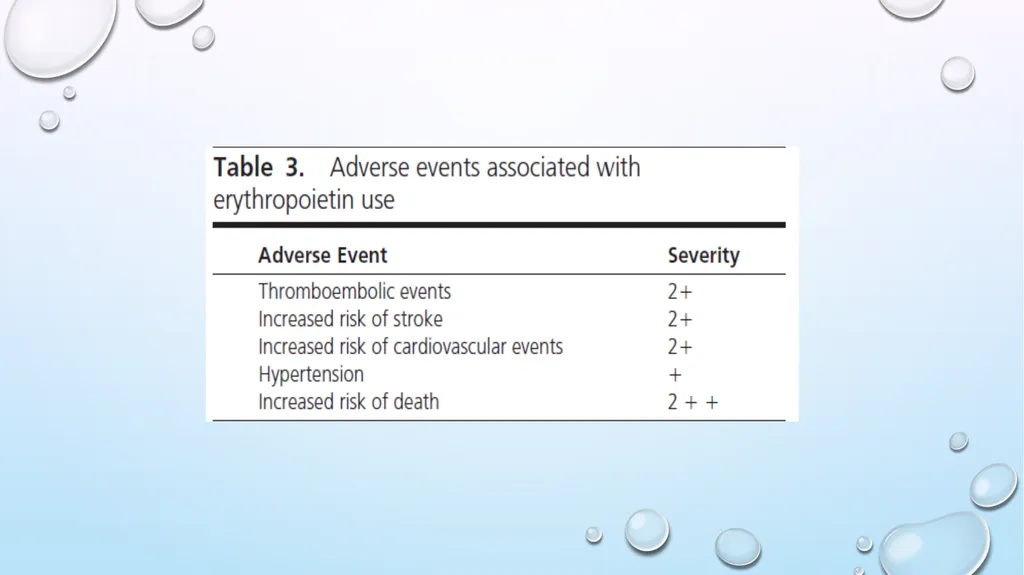
Erythropoietins
Clinical Pharmacology
Erythropoietin is a glycoprotein hormone that regulates red cell production. It is produced by the peritubular interstitial fibroblasts of the kidney and the perisinusoidal cells in the liver.
In adults, the kidneys are the dominant source of circulating erythropoietin, although the liver is an important contributor to erythropoietin production in the fetal and perinatal period.<br>
Clinical Pharmacology
Erythropoietin is a glycoprotein hormone that regulates red cell production. It is produced by the peritubular interstitial fibroblasts of the kidney and the perisinusoidal cells in the liver.
In adults, the kidneys are the dominant source of circulating erythropoietin, although the liver is an important contributor to erythropoietin production in the fetal and perinatal period.<br>
41
Erythropoietin stimulates erythropoiesis by binding to specific receptors on the surface of red cell progenitors, activating the Janus Kinase 2 signaling pathway, and promoting the survival of these progenitors.
Erythropoietin receptors are expressed maximally on colony forming units [erythroid (CFU-E) cells], and regulate further differentiation of these cells. The burst forming units [erythroid (BFU-E)], proerthyroblasts, and basophilic erythroblasts also express erythropoietin receptors.<br>
Erythropoietin receptors are expressed maximally on colony forming units [erythroid (CFU-E) cells], and regulate further differentiation of these cells. The burst forming units [erythroid (BFU-E)], proerthyroblasts, and basophilic erythroblasts also express erythropoietin receptors.<br>
42
In addition to its effects on erythropoiesis, erythropoietin also plays a role in wound healing, angiogenesis, and the brain’s response to hypoxic injury. erythropoietins
and other agents that stimulate erythropoiesis.
ESA use is most prevalent in endurance sports, such as distance running, cycling, race-walking, cross-country skiing, biathlons, and triathlons .
ESAs increase net oxygen delivery to the muscle by increasing red cell mass (VO2max) and thereby improving endurance.<br>
and other agents that stimulate erythropoiesis.
ESA use is most prevalent in endurance sports, such as distance running, cycling, race-walking, cross-country skiing, biathlons, and triathlons .
ESAs increase net oxygen delivery to the muscle by increasing red cell mass (VO2max) and thereby improving endurance.<br>
43
Detection
The biochemical tests on the urine are based on the differences in the electrophoretic mobility of recombinant erythropoietin and endogenous human erythropoietin, reflecting differences in glycosylation patterns and the isoelectric point.
An isoelectric focusing method separates the isoforms of erythropoietin,
which are detected using double immuno-blotting chemiluminiscence.
The test is quite sensitive, and can detect about 10 pg/mL of erythropoietin in the urine. Theisoelectric point for each erythropoietin glycoform is determined
by the presence of charged groups on the carbohydratemoieties..
Chemiluminiscence produces a single broad band; the position of the band is relatively sensitive to the carbohydrate content of the erythropoietin.<br>
The biochemical tests on the urine are based on the differences in the electrophoretic mobility of recombinant erythropoietin and endogenous human erythropoietin, reflecting differences in glycosylation patterns and the isoelectric point.
An isoelectric focusing method separates the isoforms of erythropoietin,
which are detected using double immuno-blotting chemiluminiscence.
The test is quite sensitive, and can detect about 10 pg/mL of erythropoietin in the urine. Theisoelectric point for each erythropoietin glycoform is determined
by the presence of charged groups on the carbohydratemoieties..
Chemiluminiscence produces a single broad band; the position of the band is relatively sensitive to the carbohydrate content of the erythropoietin.<br>
44
New models that also incorporate the measurement of hemoglobin, erythropoietin levels, and soluble transferrin receptor levels provide greater sensitivity, especially in users who may have taken small or moderate doses of recombinant erythropoietin several days or weeks before the test.
there’s a growing trend towards monitoring biomarkers of erythropoiesis(hemoglobin, hematocrit, and reticulocytes) over time (for an individual athlete) and analyzing these data using analytical models to identify patterns suggestive of doping.<br>
there’s a growing trend towards monitoring biomarkers of erythropoiesis(hemoglobin, hematocrit, and reticulocytes) over time (for an individual athlete) and analyzing these data using analytical models to identify patterns suggestive of doping.<br>
45
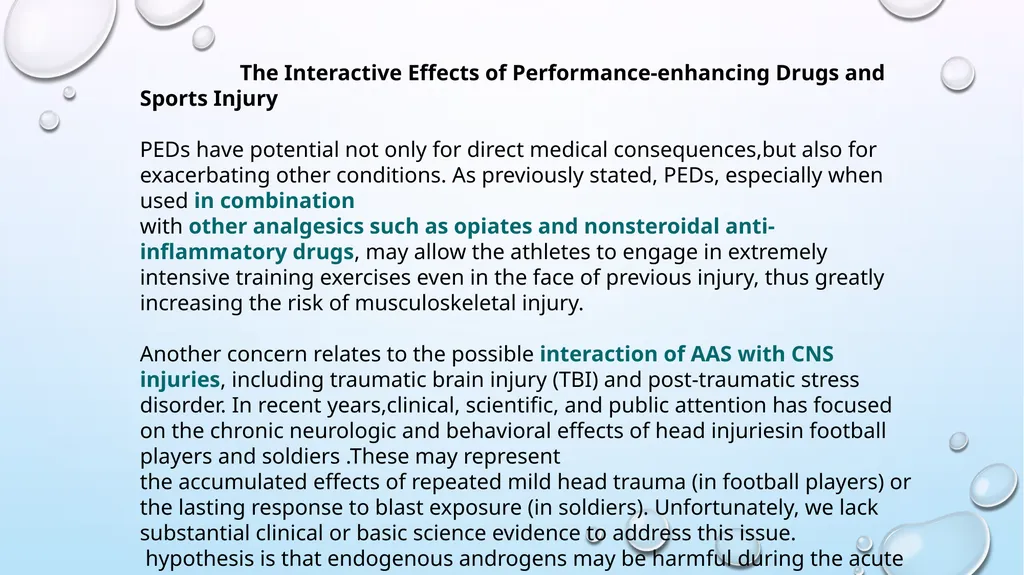
The Interactive Effects of Performance-enhancing Drugs and Sports Injury
PEDs have potential not only for direct medical consequences,but also for exacerbating other conditions. As previously stated, PEDs, especially when used in combination
with other analgesics such as opiates and nonsteroidal anti-inflammatory drugs, may allow the athletes to engage in extremely intensive training exercises even in the face of previous injury, thus greatly increasing the risk of musculoskeletal injury.
Another concern relates to the possible interaction of AAS with CNS injuries, including traumatic brain injury (TBI) and post-traumatic stress disorder. In recent years,clinical, scientific, and public attention has focused on the chronic neurologic and behavioral effects of head injuriesin football players and soldiers .These may represent
the accumulated effects of repeated mild head trauma (in football players) or the lasting response to blast exposure (in soldiers). Unfortunately, we lack substantial clinical or basic science evidence to address this issue.
hypothesis is that endogenous androgens may be harmful during the acute phase of ischemic brain injury, but can have beneficial effects during recovery. Even so, it is unclear
how this may translate to the elevated levels of androgens characteristic of AAS use.<br>
PEDs have potential not only for direct medical consequences,but also for exacerbating other conditions. As previously stated, PEDs, especially when used in combination
with other analgesics such as opiates and nonsteroidal anti-inflammatory drugs, may allow the athletes to engage in extremely intensive training exercises even in the face of previous injury, thus greatly increasing the risk of musculoskeletal injury.
Another concern relates to the possible interaction of AAS with CNS injuries, including traumatic brain injury (TBI) and post-traumatic stress disorder. In recent years,clinical, scientific, and public attention has focused on the chronic neurologic and behavioral effects of head injuriesin football players and soldiers .These may represent
the accumulated effects of repeated mild head trauma (in football players) or the lasting response to blast exposure (in soldiers). Unfortunately, we lack substantial clinical or basic science evidence to address this issue.
hypothesis is that endogenous androgens may be harmful during the acute phase of ischemic brain injury, but can have beneficial effects during recovery. Even so, it is unclear
how this may translate to the elevated levels of androgens characteristic of AAS use.<br>
46
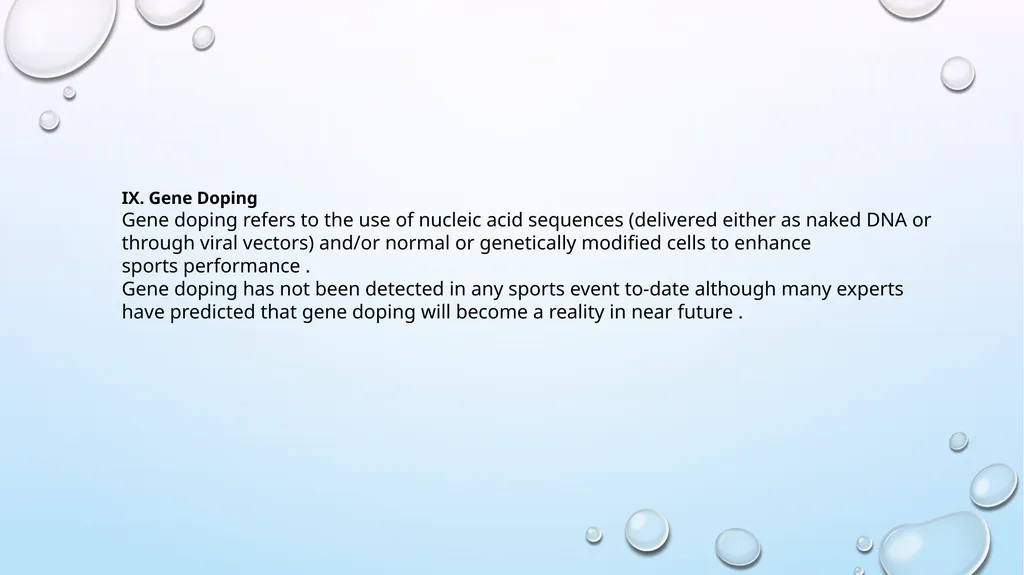
IX. Gene Doping
Gene doping refers to the use of nucleic acid sequences (delivered either as naked DNA or through viral vectors) and/or normal or genetically modified cells to enhance
sports performance .
Gene doping has not been detected in any sports event to-date although many experts have predicted that gene doping will become a reality in near future .<br>
Gene doping refers to the use of nucleic acid sequences (delivered either as naked DNA or through viral vectors) and/or normal or genetically modified cells to enhance
sports performance .
Gene doping has not been detected in any sports event to-date although many experts have predicted that gene doping will become a reality in near future .<br>