AEROBICS TRAINING SEMESTER 3 PHYSICAL EDUCATION By Dr. AMITA HANDA Shivaji College University of Delhi UNIT 1: INTRODUCTION INTRODUCTION TO AEROBICS BENEFITS OF PARTICIPATION IN AEROBICS EVOLUTION OF AEROBICS INDIVIDUALIZED AND GROUP
"AEROBICS TRAINING SEMESTER 3 PHYSICAL EDUCATION By" is the property of its rightful owner. Permission is granted to
download and print the materials on this website for personal, non-commercial use only, and to display it
on your personal computer provided you do not modify the materials and that you retain all copyright
notices contained in the materials. By downloading content from our website, you accept the terms of this
agreement.
Presentation Transcript
01
AEROBICS TRAINING SEMESTER 3
PHYSICAL EDUCATION
By
Dr. AMITA HANDA
Shivaji College
University of Delhi<br>
02
UNIT 1: INTRODUCTION INTRODUCTION TO AEROBICS
BENEFITS OF PARTICIPATION IN AEROBICS
EVOLUTION OF AEROBICS
INDIVIDUALIZED AND GROUP TRAINING IN AEROBICS Dr.Amita Handa<br>
03
AEROBICS: INTRODUCTION Aerobic means in the presence of oxygen.
low to moderate level of exercise and can be sustained over long periods.
Improving all elements of fitness .
It strengthens the heart and lungs and trains the cardiovascular system.
Is rhythmic in nature.
Examples are walking, jogging, running, cycling, rowing, cross-country skiing, skipping and hiking. Dr.Amita Handa<br>
04
DEFINITION OF AEROBICS Any of various sustained exercises, as jogging, rowing, swimming, or cycling, that stimulate and strengthen the heart and lungs, thereby improving the body's utilization of oxygen.
The use of oxygen to adequately meet energy demands during exercise.
Is a form of physical exercise that combines rhythmic exercise with stretching and strength training routines with the goal of improving all elements of fitness (flexibility, muscular strength, and cardio-vascular fitness). Dr.Amita Handa<br>
05
KIND OF AEROBICS Low Impact Aerobics: At least one foot stays in contact with the ground at all times ,Recommended for one with health issues, works the body's muscles and increases heart rate, without the additional strain to your joints.
High Impact Aerobics: Improve fitness component & skill. both the feet leave the ground, can put stress on your bones and joints
Others: Aqua/water Aerobics, step Aerobics, weight Aerobics, Floor Aerobics. Dr.Amita Handa<br>
06
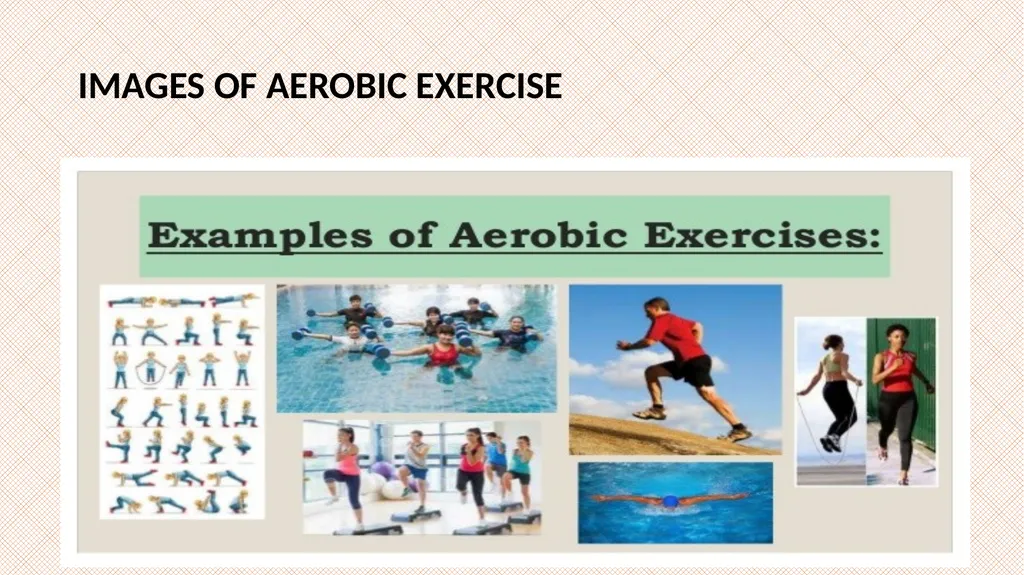
IMAGES OF AEROBIC EXERCISE Dr.Amita Handa<br>
07
BENEFIT OF AEROBICS Improves blood circulation and helps the body use oxygen better.
Increases energy.
Increases endurance.
Helps reduce the risk of developing heart disease.
Helps reduce the risk of developing other lifestyles diseases. Dr.Amita Handa<br>
08
BENEFIT OF AEROBICS Maintain a healthy weight.
Helps reduce stress, tension, anxiety, and depression.
Improves sleep.
Activates immune system.
Builds the muscular strength and makes your body more flexible. Dr.Amita Handa<br>
09
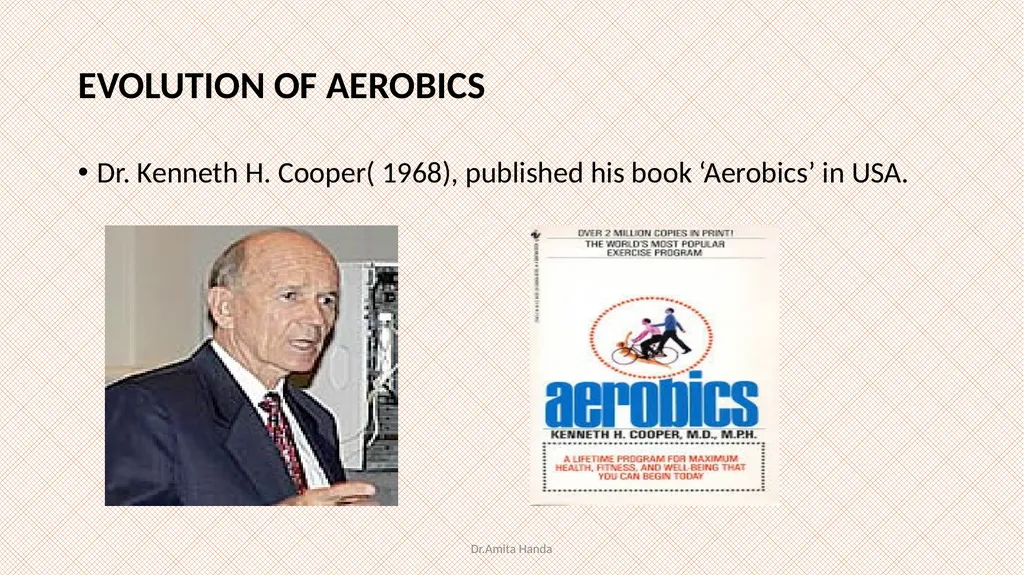
EVOLUTION OF AEROBICS Dr. Kenneth H. Cooper( 1968), published his book ‘Aerobics’ in USA. Dr.Amita Handa<br>
10
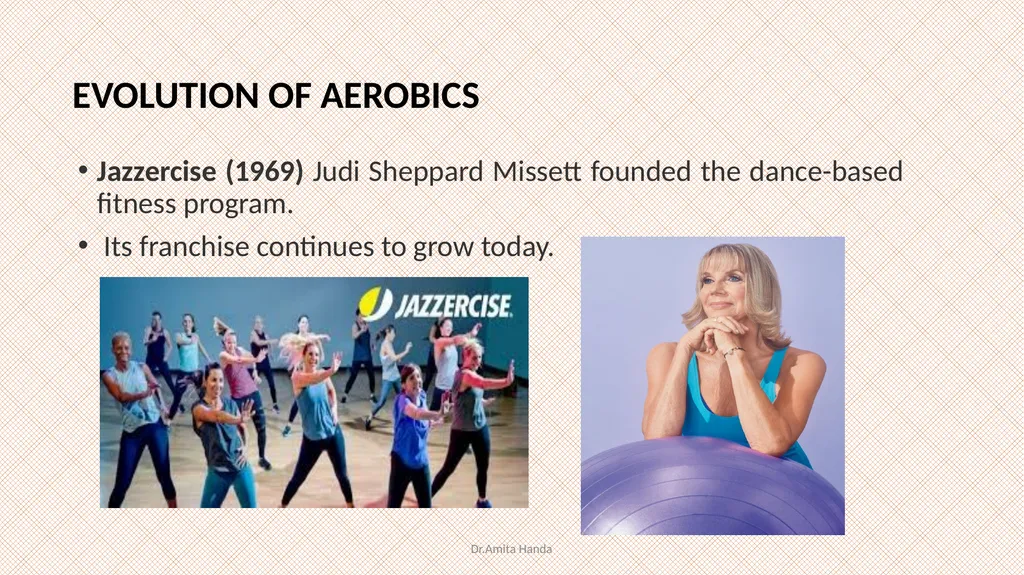
EVOLUTION OF AEROBICS Jazzercise (1969) Judi Sheppard Missett founded the dance-based fitness program.
Its franchise continues to grow today. Dr.Amita Handa<br>
11
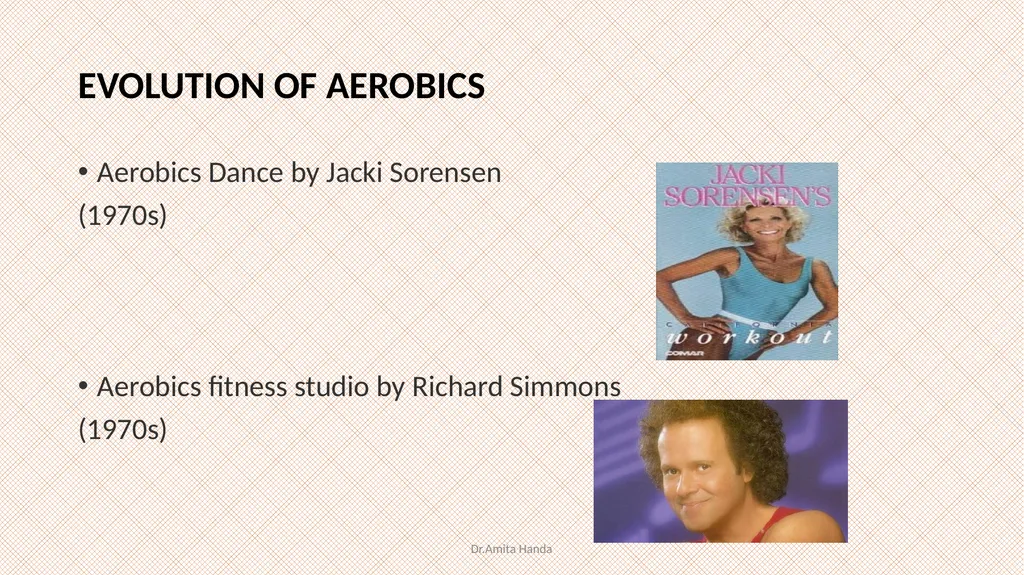
EVOLUTION OF AEROBICS Aerobics Dance by Jacki Sorensen
(1970s)
Aerobics fitness studio by Richard Simmons
(1970s) Dr.Amita Handa<br>
12
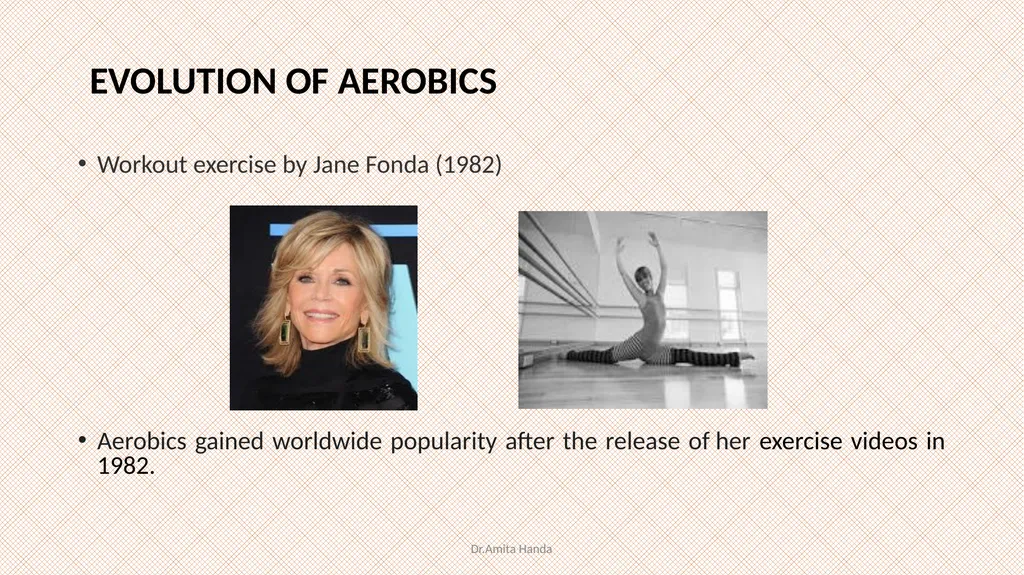
EVOLUTION OF AEROBICS Workout exercise by Jane Fonda (1982)
Aerobics gained worldwide popularity after the release of her exercise videos in 1982. Dr.Amita Handa<br>
13
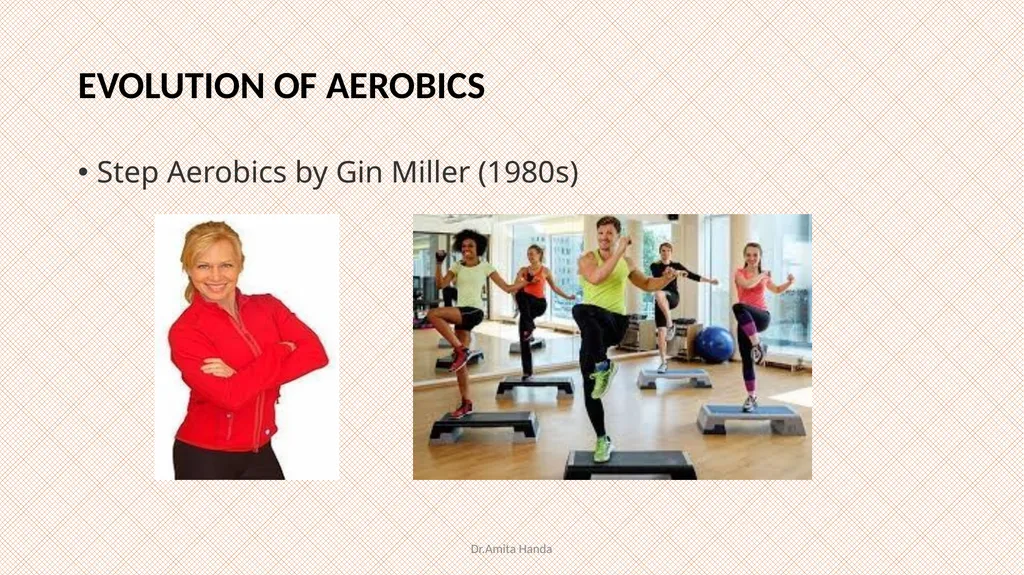
EVOLUTION OF AEROBICS Step Aerobics by Gin Miller (1980s) Dr.Amita Handa<br>
14
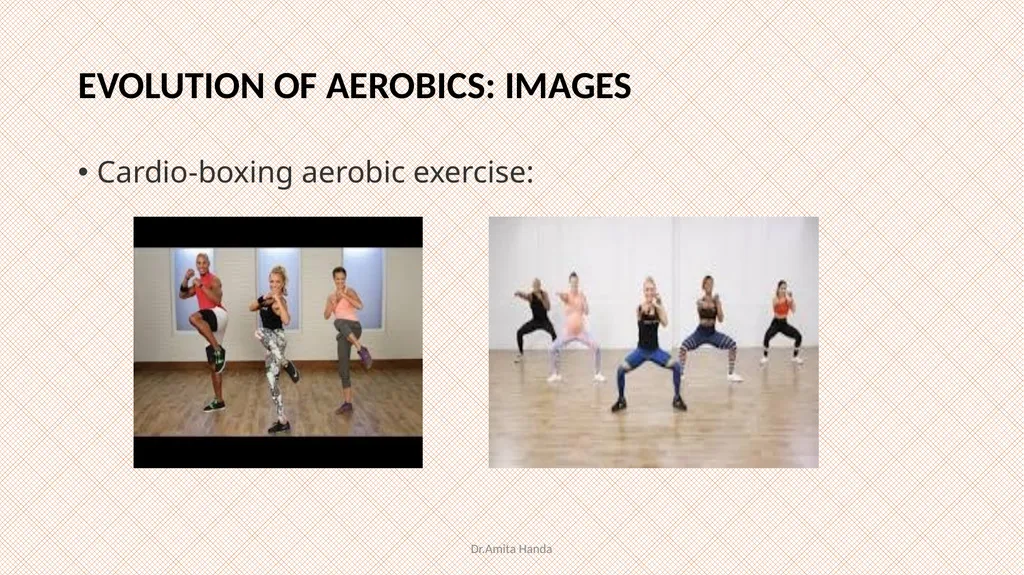
EVOLUTION OF AEROBICS Tae Bo by Billy Blanks (1990s):a new cardio-boxing aerobic exercise effective for weight loss.
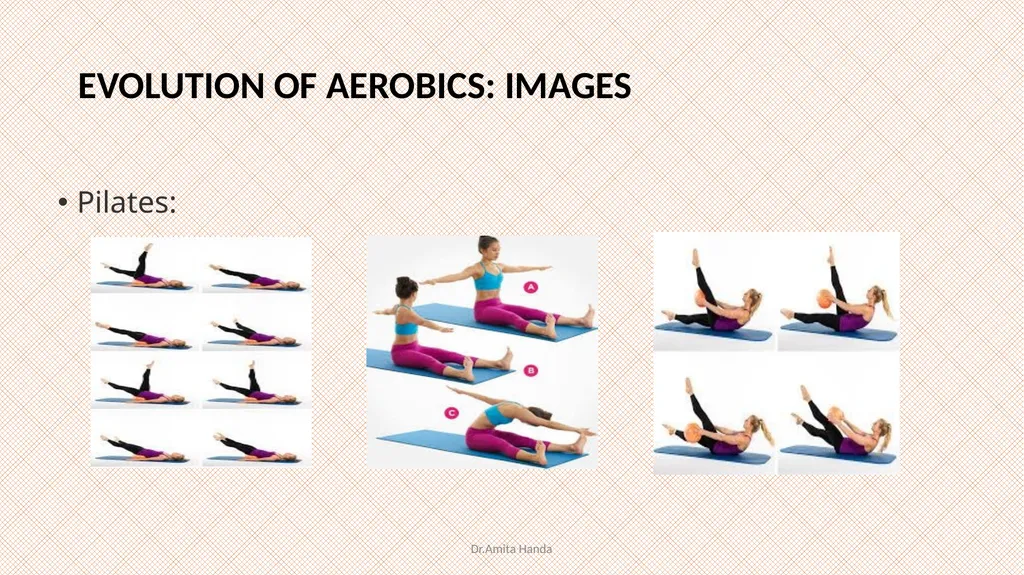
Pilates by Joseph Pilates in Germany (1990s)
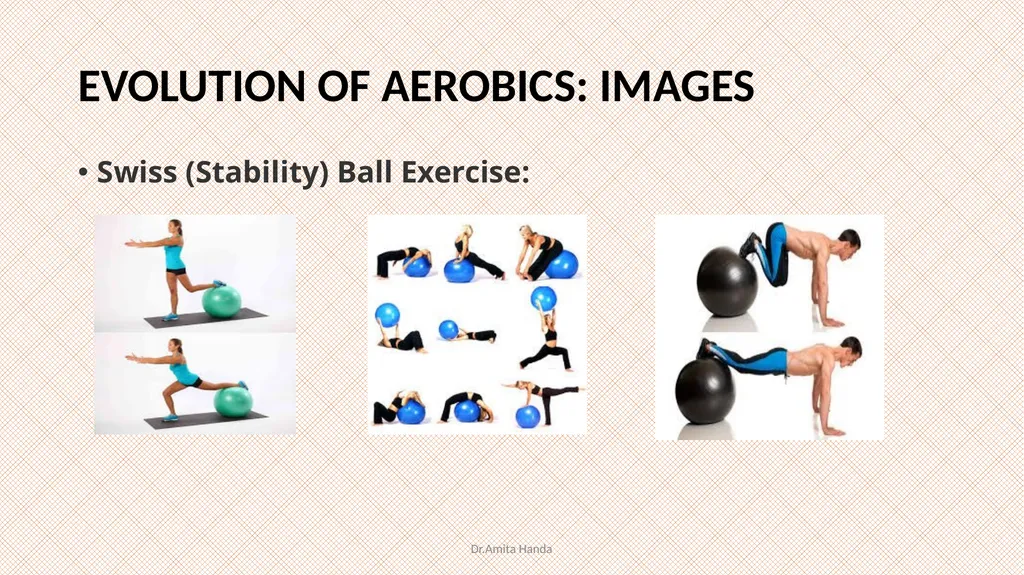
Swiss (Stability) Ball (1990s) by an Italian plastics manufacturer, Aquilino Casani.
First world championships at San Diego in March 1990. Dr.Amita Handa<br>
15
EVOLUTION OF AEROBICS: IMAGES Cardio-boxing aerobic exercise: Dr.Amita Handa<br>
16
EVOLUTION OF AEROBICS: IMAGES Pilates: Dr.Amita Handa<br>
17
EVOLUTION OF AEROBICS: IMAGES Swiss (Stability) Ball Exercise: Dr.Amita Handa<br>
18
EVOLUTION OF AEROBICS Zumba (1999) in Columbia by Albert ‘Beto’ Perez. Dr.Amita Handa<br>
19
EVOLUTION OF AEROBICS 21st Century Aerobics
Competitive/ sports aerobics came into existence.
Improved with technology. Dr.Amita Handa<br>
20
Training in Aerobics Types of training in Aerobics:
Individual training
Group Training
Training in Aerobics is characterized by :
setting objectives
teaching content based on these objectives.
evaluating performance. Dr.Amita Handa<br>
21
INDIVIDUALIZED TRAINING IN AEROBICS INTRODUCTION
Personalized supervision from your trainer.
Is a specialist and will cater to specific needs.
personal trainers to have credible certifications.
Quickly and effectively getting into shape.
Think of it only when you have some serious fitness goals to achieve.
Effective if suffering from an injury or a delicate health condition. Dr.Amita Handa<br>
22
INDIVIDUALIZED TRAINING IN AEROBICS The advantages are:
Desired time
Desired pace
Self-discipline
Healthy lifestyle
learning styles
Take less time to get a proper workout in.
Close supervision and safety.
More Concentration Dr.Amita Handa<br>
23
INDIVIDUALIZED TRAINING IN AEROBICS The disadvantages are:
Excuses
Feedback
Fun factor
There is a long lead time to prepare materials.
Lack of external motivation.
The trainer’s role needs to change. Dr.Amita Handa<br>
24
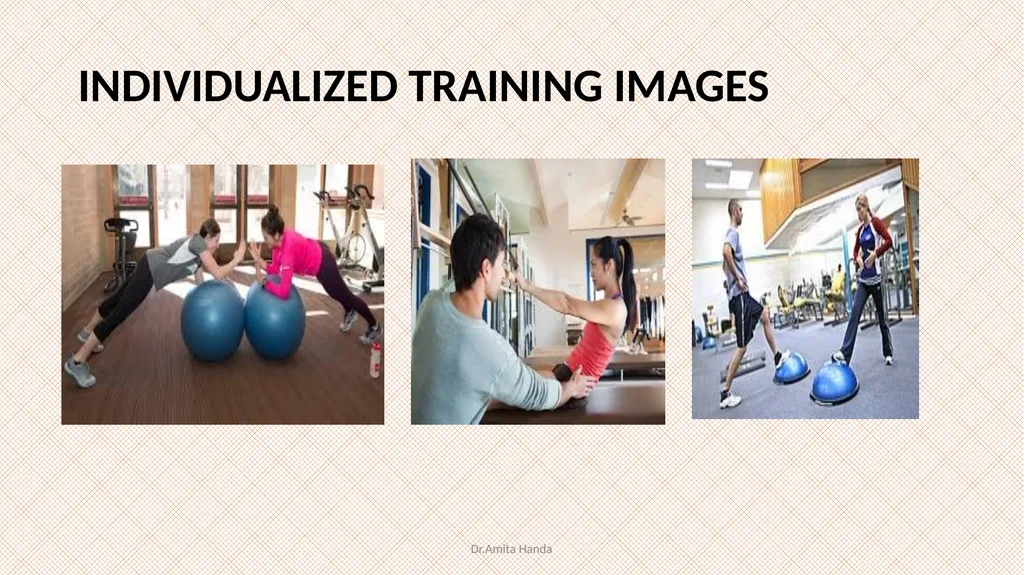
INDIVIDUALIZED TRAINING IMAGES Dr.Amita Handa<br>
25
GROUP TRAINING IN AEROBICS INTRODUCTION
works when groups are smaller.
Ineffective in large groups.
Infrastructure.
Music selection.
Coach decides the sequence of workout.
Fixed timing.
Fixed Pace Dr.Amita Handa<br>
26
GROUP TRAINING IN AEROBICS Advantages are:
Feedback
Impulses
Responsibility
Structured Planning
versatility
It can be a pleasant, fulfilling experience.
Motivation and encouragement.
there is a sense of moral support. Dr.Amita Handa<br>
27
GROUP TRAINING IN AEROBICS Disadvantages are:
Distraction
Group size
Characters of the group
One size fits all Dr.Amita Handa<br>
28
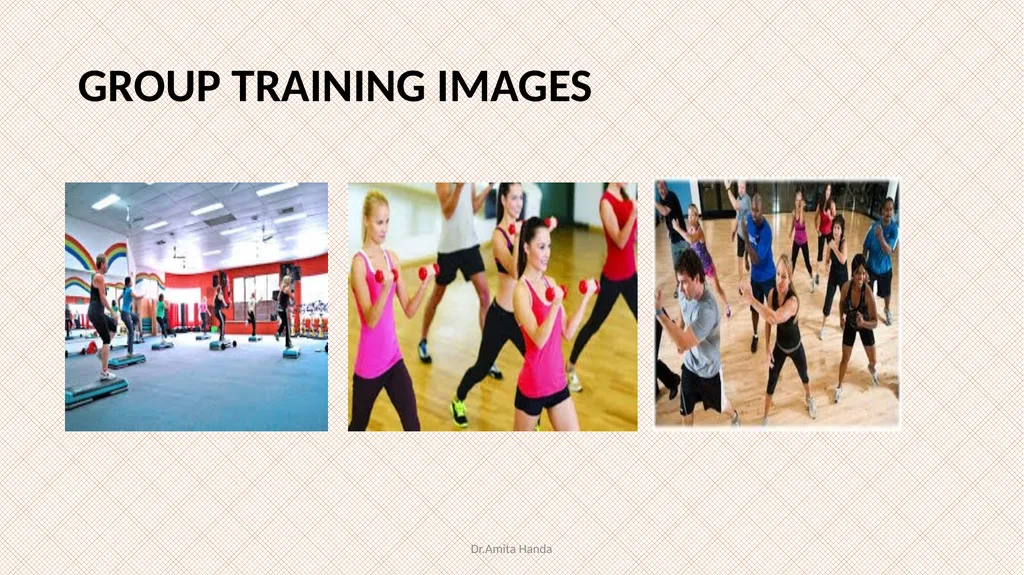
GROUP TRAINING IMAGES Dr.Amita Handa<br>
29
AEROBICS TRAINING: CONCLUSION An ideal training design of aerobics depends on the goal and personality of learner .
One can progress from a combination of individual training and group training. Dr.Amita Handa<br>