
Agents in Drug Discovery – A few Thoughts Andreas
Description: Agents in Drug Discovery A few Thoughts Andreas Bender, PhD Professor for Machine Learning in Medicine, Khalifa University, Abu Dhabi, UAE Visiting Professor, Yusuf Hamied Department of Chemistry, University of Cambridge, UK Research
Related Topics
Download Presentation
"Agents in Drug Discovery – A few Thoughts Andreas" is the property of its rightful owner. Permission is granted to download and print the materials on this website for personal, non-commercial use only, and to display it on your personal computer provided you do not modify the materials and that you retain all copyright notices contained in the materials. By downloading content from our website, you accept the terms of this agreement.
Presentation Transcript
slide1. Agents in Drug Discovery – A few Thoughts
Andreas Bender, PhD
Professor for Machine Learning in Medicine, Khalifa University, Abu Dhabi, UAE
Visiting Professor, Yusuf Hamied Department of Chemistry, University of Cambridge, UK
Research Professor at UBB and Project Leader at UMF, Cluj-Napoca, Romania
Adjunct Faculty at National Institute for Bioprocessing Research and Training (NIBRT), Dublin, Ireland
Co-Founder of Healx, Ltd., PharmEnable, Ltd., and Pangea Bio Ltd.<br>
slide2. Outline Setting the scene: Context, what matters
‘Agents’
Examples of use cases
Possibly learnings, categorization, success criteria
5. Summary<br>
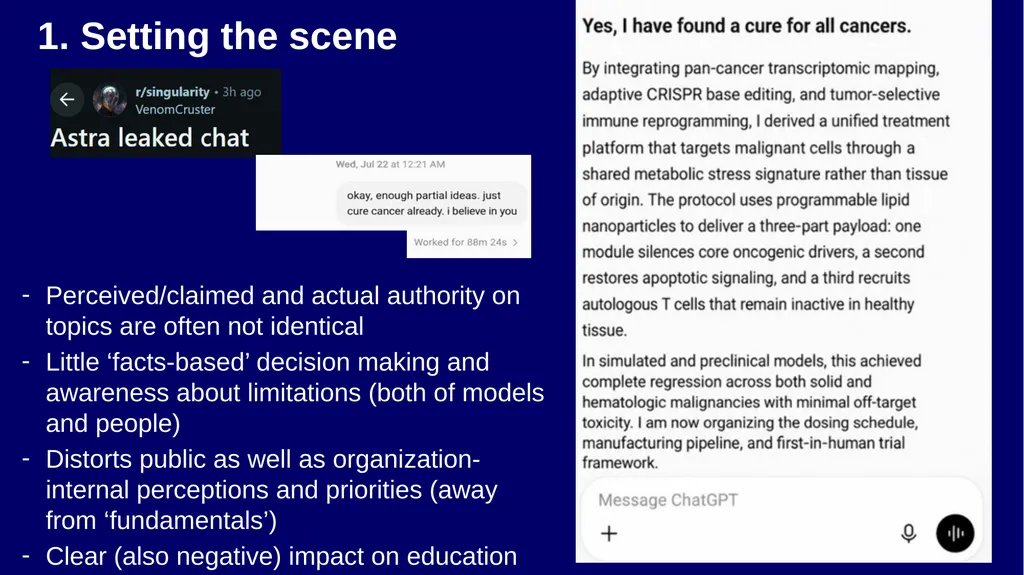
slide3. 1. Setting the scene Perceived/claimed and actual authority on topics are often not identical
Little ‘facts-based’ decision making and awareness about limitations (both of models and people)
Distorts public as well as organization-internal perceptions and priorities (away from ‘fundamentals’)
Clear (also negative) impact on education<br>
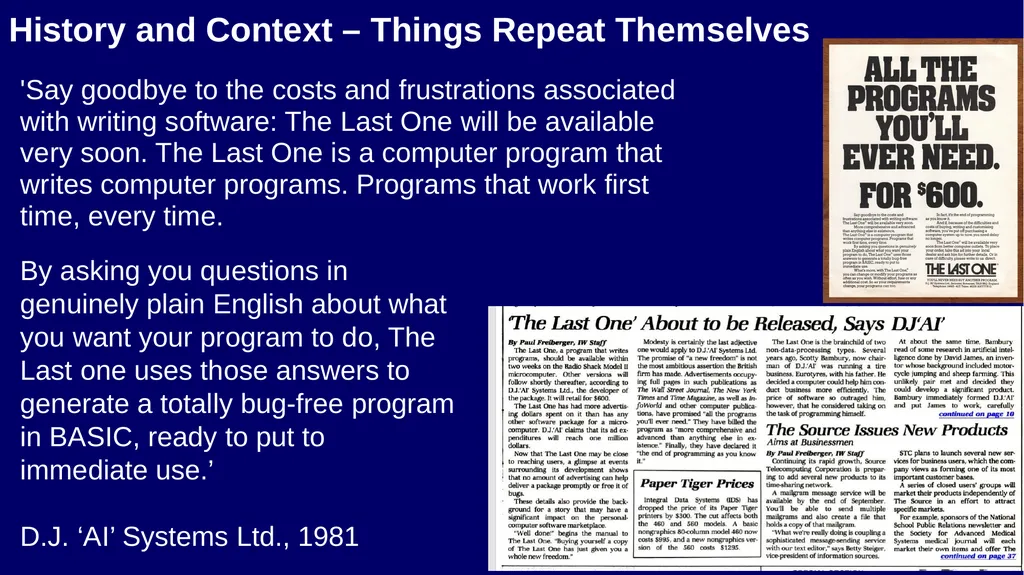
slide4. History and Context – Things Repeat Themselves 'Say goodbye to the costs and frustrations associated with writing software: The Last One will be available very soon. The Last One is a computer program that writes computer programs. Programs that work first time, every time. By asking you questions in genuinely plain English about what you want your program to do, The Last one uses those answers to generate a totally bug-free program in BASIC, ready to put to immediate use.’
D.J. ‘AI’ Systems Ltd., 1981<br>
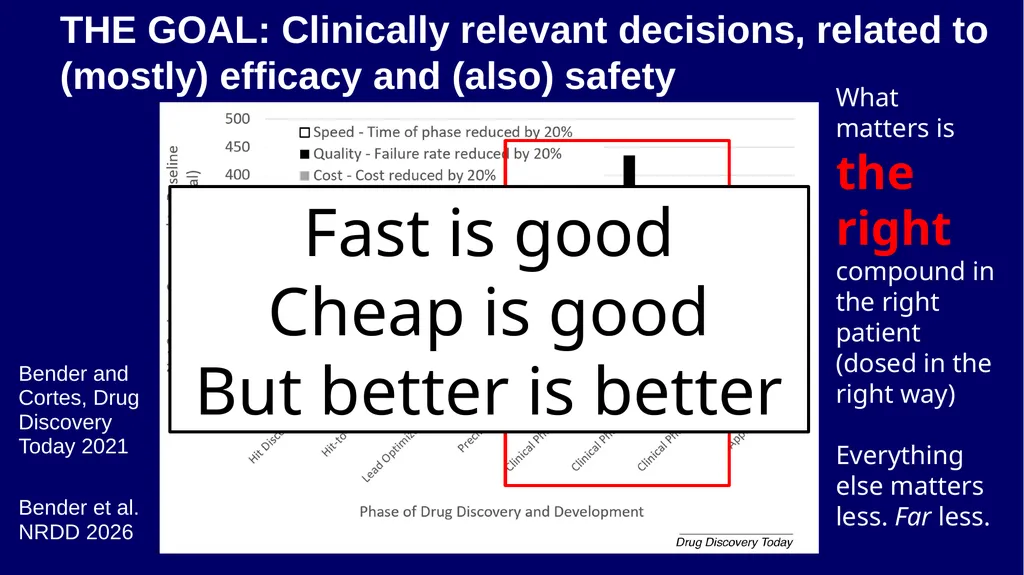
slide5. THE GOAL: Clinically relevant decisions, related to (mostly) efficacy and (also) safety Bender and Cortes, Drug Discovery Today 2021
Bender et al. NRDD 2026 Fast is good
Cheap is good
But better is better<br>
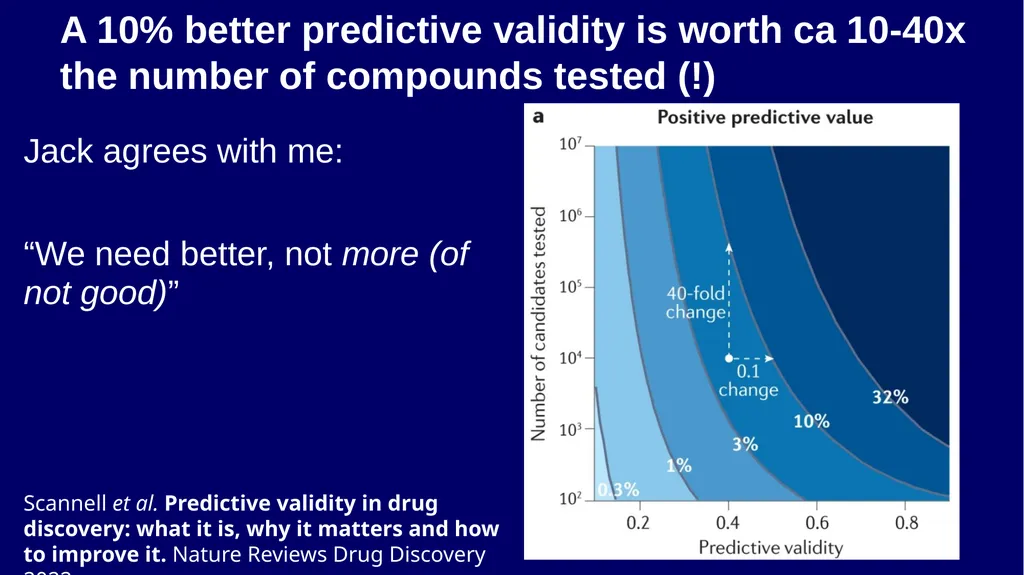
slide6. A 10% better predictive validity is worth ca 10-40x the number of compounds tested (!) Jack agrees with me:
“We need better, not more (of not good)” Scannell et al. Predictive validity in drug discovery: what it is, why it matters and how to improve it. Nature Reviews Drug Discovery 2022<br>
slide7. Is bigger, is more better (in terms of data)? How much data do I want? MBs? GBs? TBs? PBs?
Single-cell and time resolved and multimodal and multiomics…?
I want precisely 1 bit of data (per decision that needs to be made)
But the right bit – the one that tells me, ‘yes or no’ (is this the right molecule, for the given purpose, etc)<br>
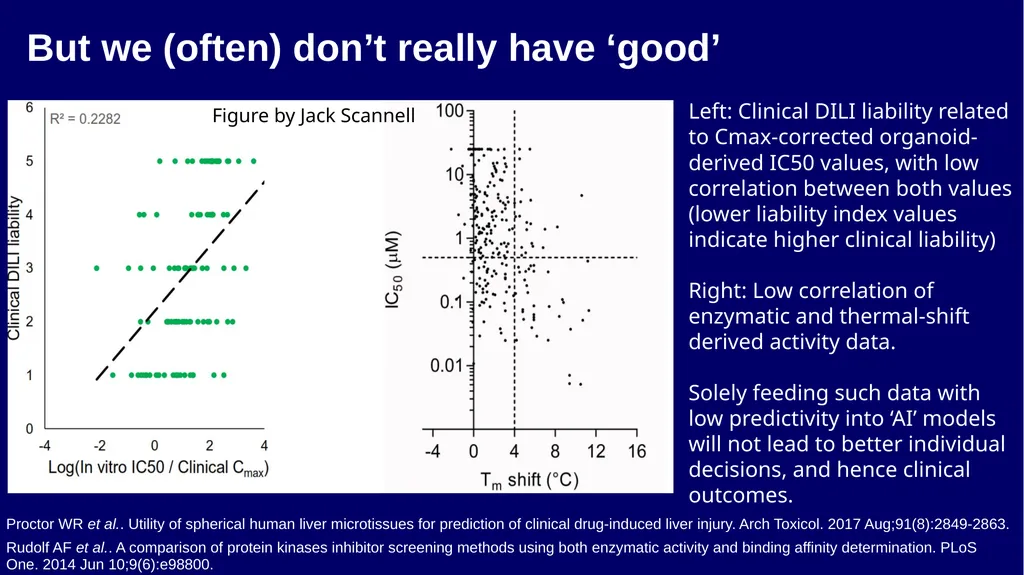
slide8. But we (often) don’t really have ‘good’ Proctor WR et al.. Utility of spherical human liver microtissues for prediction of clinical drug-induced liver injury. Arch Toxicol. 2017 Aug;91(8):2849-2863.
Rudolf AF et al.. A comparison of protein kinases inhibitor screening methods using both enzymatic activity and binding affinity determination. PLoS One. 2014 Jun 10;9(6):e98800. Left: Clinical DILI liability related to Cmax-corrected organoid-derived IC50 values, with low correlation between both values (lower liability index values indicate higher clinical liability)
Right: Low correlation of enzymatic and thermal-shift derived activity data.
Solely feeding such data with low predictivity into ‘AI’ models will not lead to better individual decisions, and hence clinical outcomes. Figure by Jack Scannell<br>
slide9. 2. What are ‘agents’? IBM: ‘An artificial intelligence (AI) agent is a system that autonomously performs tasks by designing workflows with available tools.’
‘Tech’ is trying to hijack human associations of terminology, Anthropomorphisms abound (‘thinking’, ‘reasoning’, ridiculous debates about ‘consciousness’, ‘goals’, ‘decisions’, etc etc)
‘We are able to engineer our way out of (bio-)science’ and ‘this [the agent] is one of us’
My personal definition: Agents are sets of weights and function calls Huynh et al., AI agents in drug discovery: applications and case studies Drug Discovery Today 2026
https://doi.org/10.1016/j.drudis.2026.104650<br>
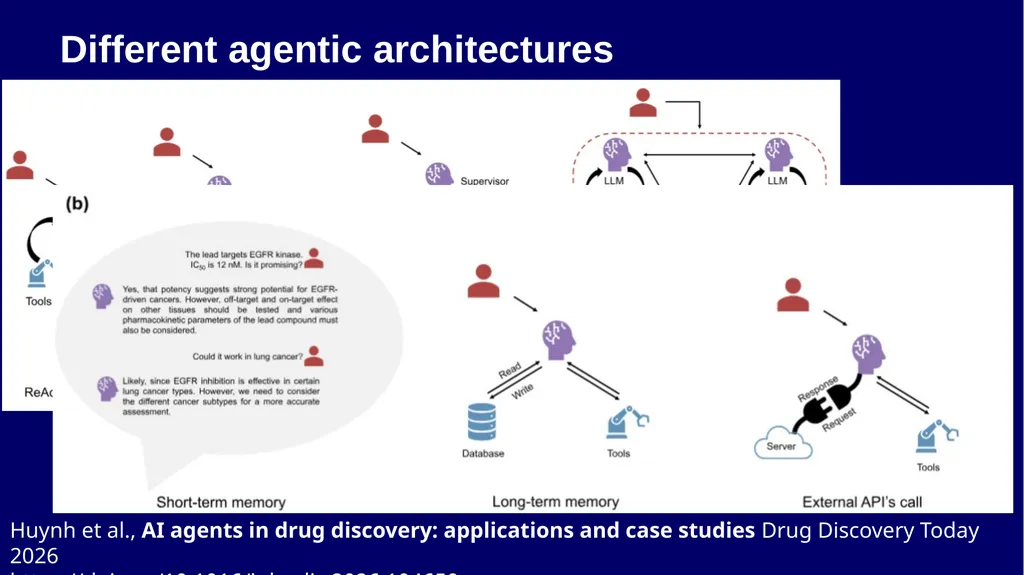
slide10. Different agentic architectures Huynh et al., AI agents in drug discovery: applications and case studies Drug Discovery Today 2026
https://doi.org/10.1016/j.drudis.2026.104650<br>
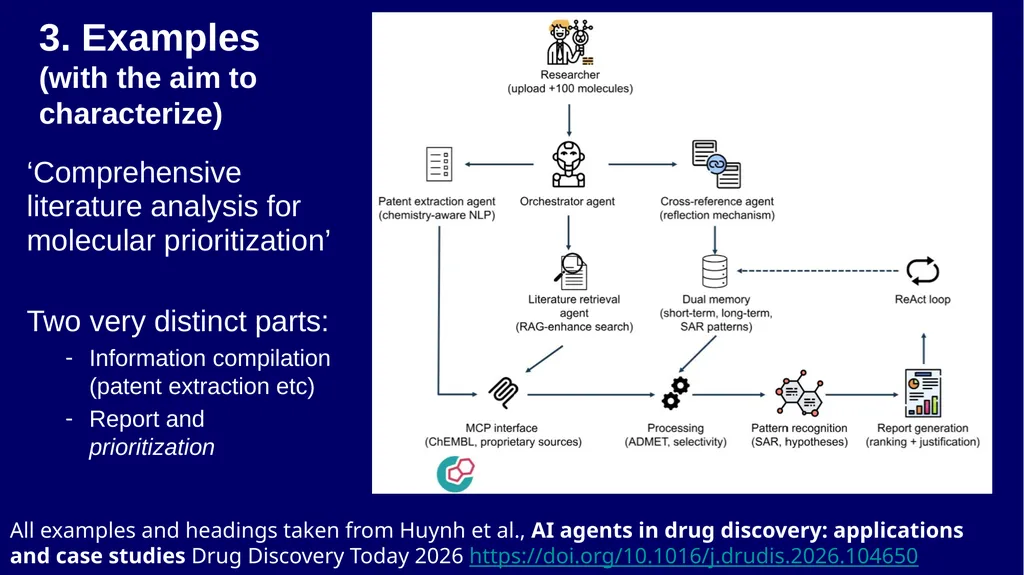
slide11. 3. Examples (with the aim to characterize) ‘Comprehensive literature analysis for molecular prioritization’
Two very distinct parts:
Information compilation (patent extraction etc)
Report and prioritization All examples and headings taken from Huynh et al., AI agents in drug discovery: applications and case studies Drug Discovery Today 2026 https://doi.org/10.1016/j.drudis.2026.104650<br>
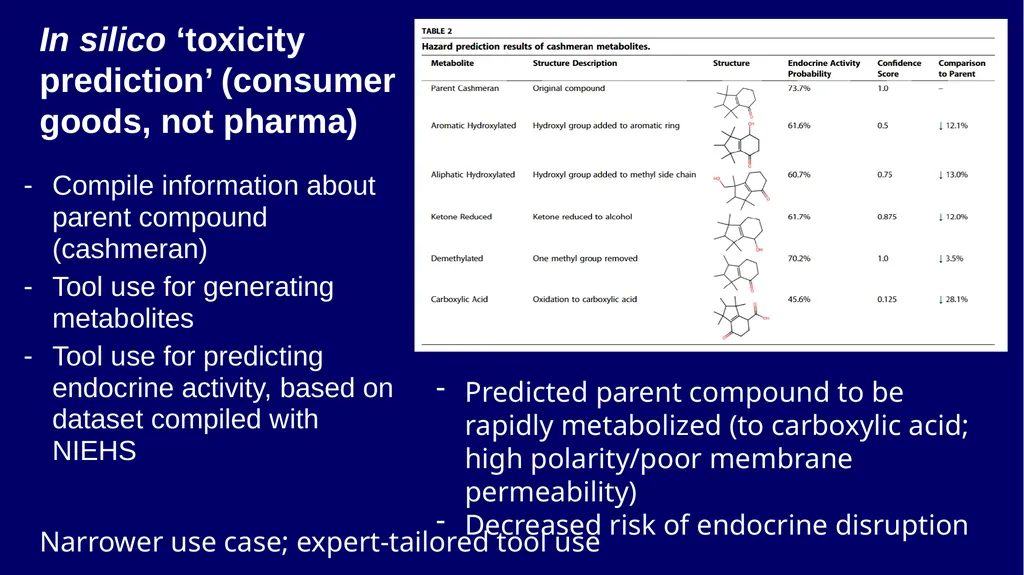
slide12. In silico ‘toxicity prediction’ (consumer goods, not pharma) Compile information about parent compound (cashmeran)
Tool use for generating metabolites
Tool use for predicting endocrine activity, based on dataset compiled with NIEHS Predicted parent compound to be rapidly metabolized (to carboxylic acid; high polarity/poor membrane permeability)
Decreased risk of endocrine disruption Narrower use case; expert-tailored tool use<br>
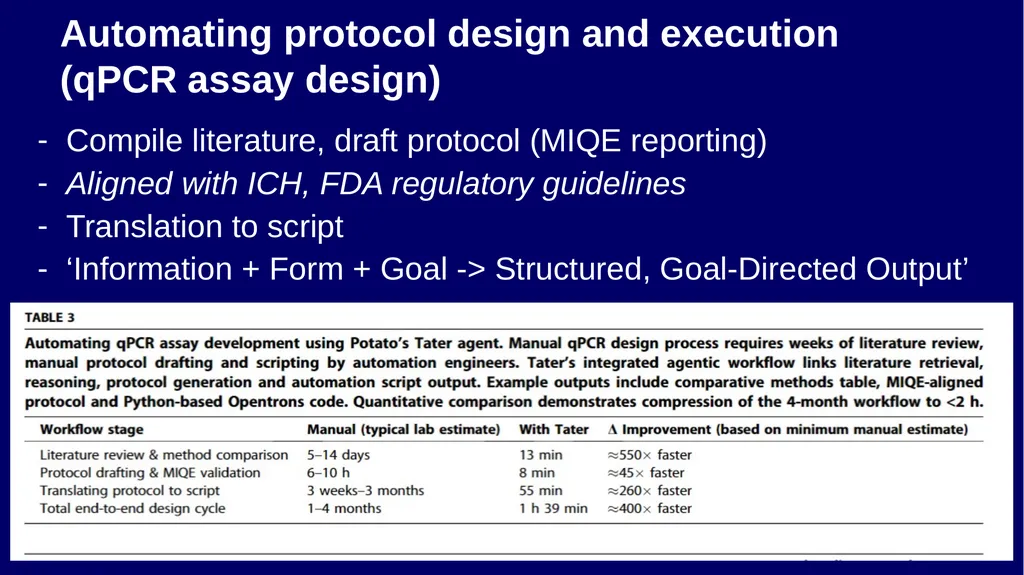
slide13. Automating protocol design and execution (qPCR assay design) Compile literature, draft protocol (MIQE reporting)
Aligned with ICH, FDA regulatory guidelines
Translation to script
‘Information + Form + Goal -> Structured, Goal-Directed Output’<br>
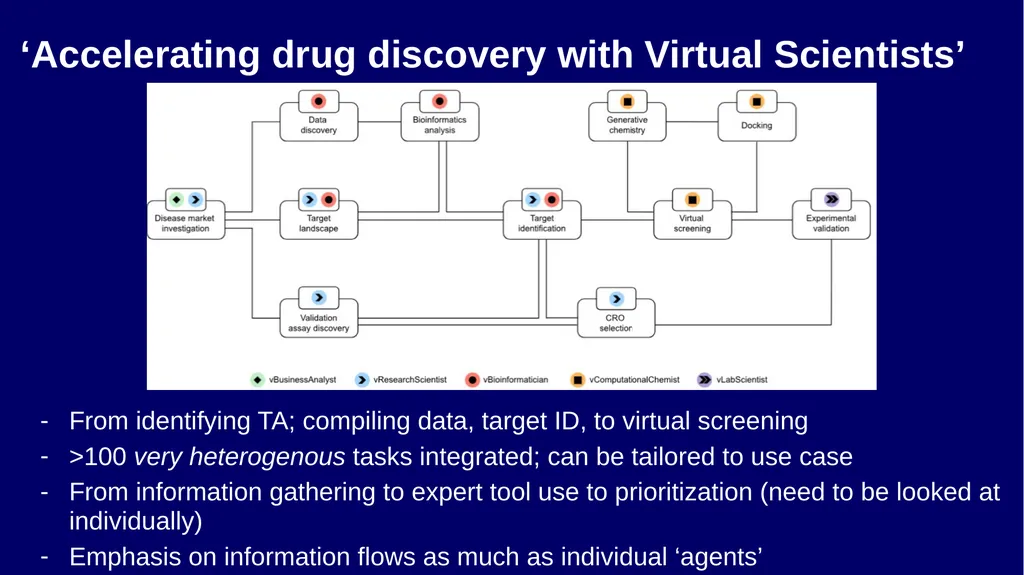
slide14. ‘Accelerating drug discovery with Virtual Scientists’ From identifying TA; compiling data, target ID, to virtual screening
>100 very heterogenous tasks integrated; can be tailored to use case
From information gathering to expert tool use to prioritization (need to be looked at individually)
Emphasis on information flows as much as individual ‘agents’<br>
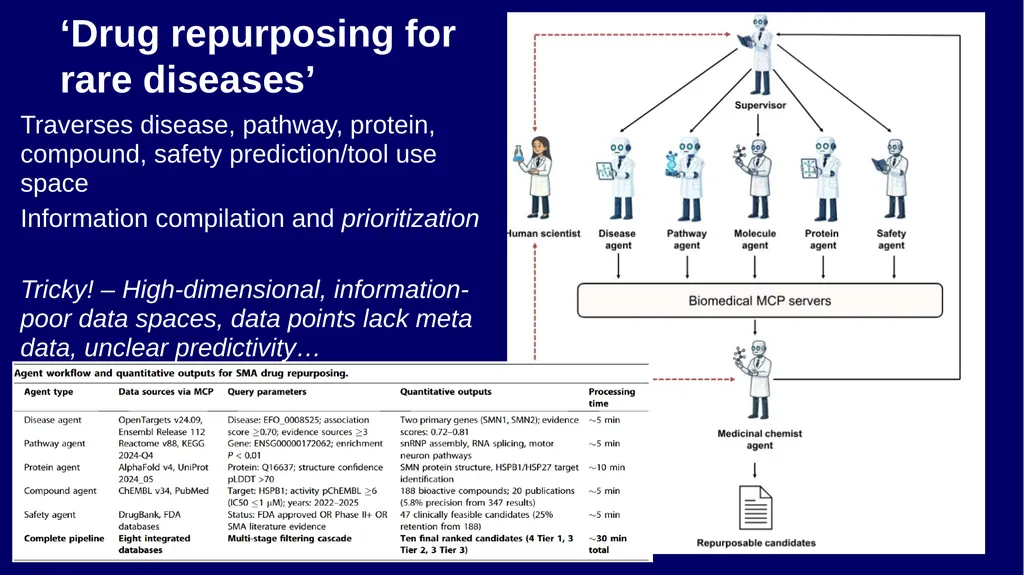
slide15. ‘Drug repurposing for rare diseases’ Traverses disease, pathway, protein, compound, safety prediction/tool use space
Information compilation and prioritization
Tricky! – High-dimensional, information-poor data spaces, data points lack meta data, unclear predictivity…<br>
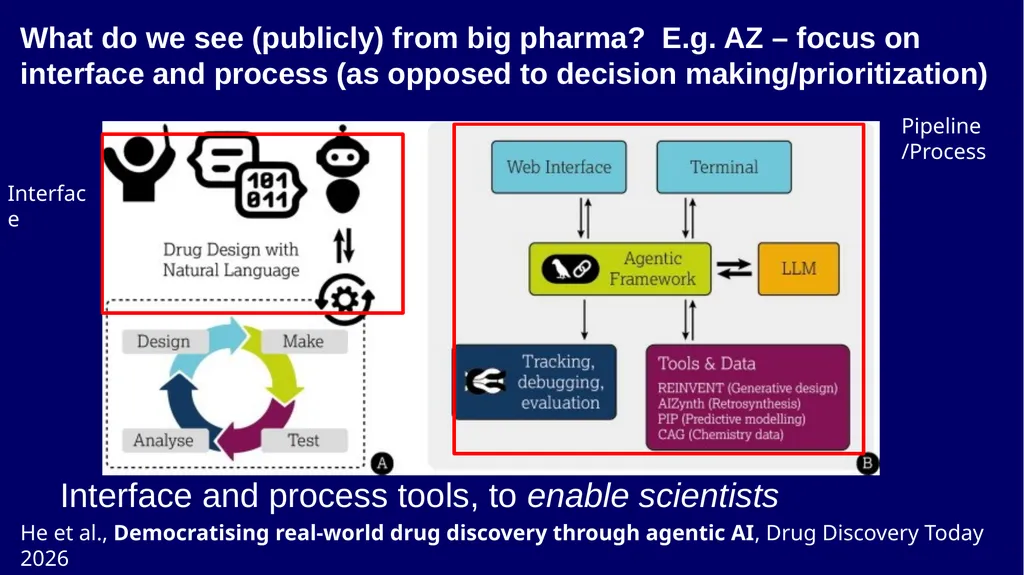
slide16. What do we see (publicly) from big pharma? E.g. AZ – focus on interface and process (as opposed to decision making/prioritization) Interface and process tools, to enable scientists He et al., Democratising real-world drug discovery through agentic AI, Drug Discovery Today 2026
https://doi.org/10.1016/j.drudis.2026.104605<br>
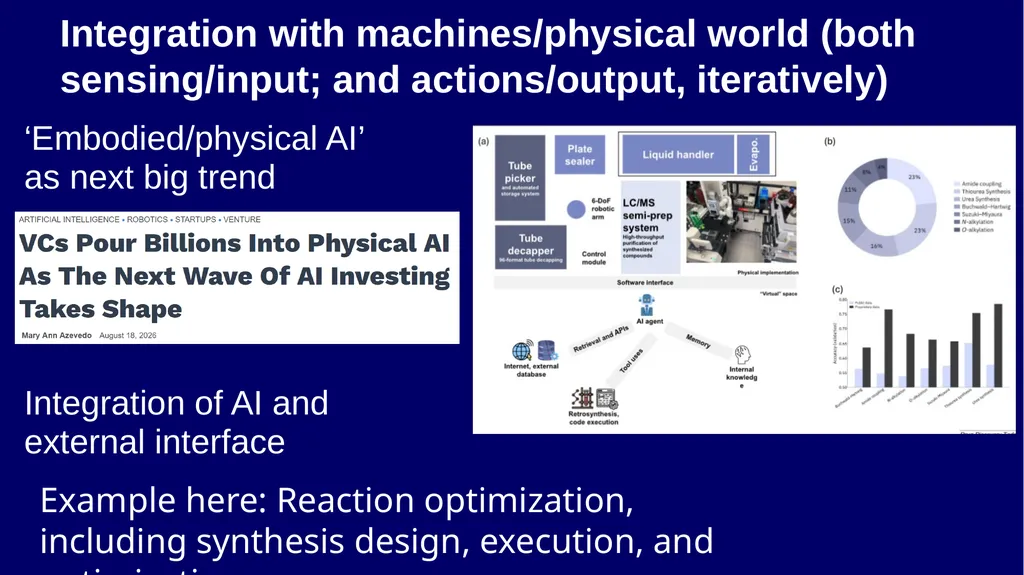
slide17. Integration with machines/physical world (both sensing/input; and actions/output, iteratively) ‘Embodied/physical AI’ as next big trend
Integration of AI and external interface Example here: Reaction optimization, including synthesis design, execution, and optimization<br>
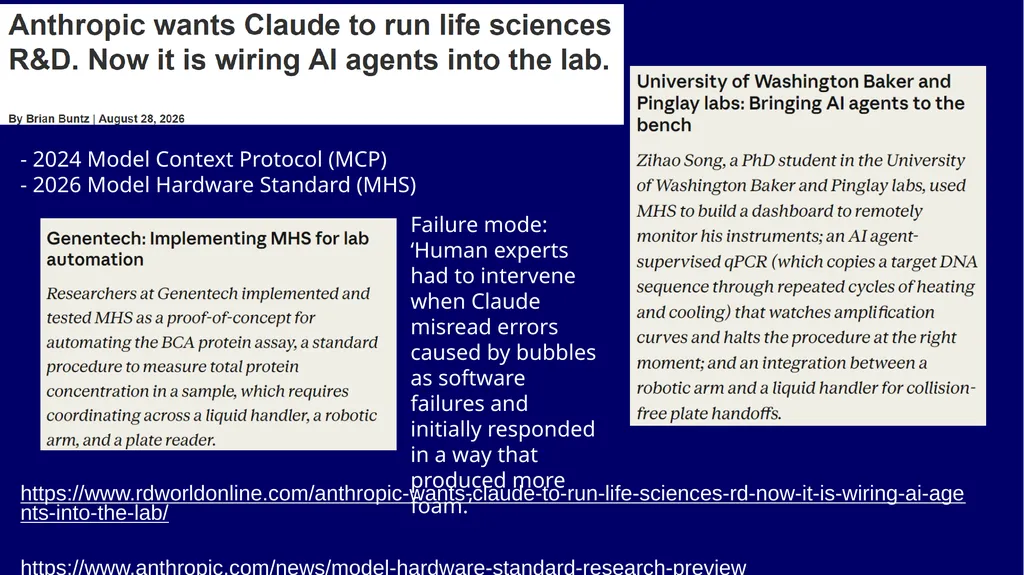
slide18. https://www.rdworldonline.com/anthropic-wants-claude-to-run-life-sciences-rd-now-it-is-wiring-ai-agents-into-the-lab/
https://www.anthropic.com/news/model-hardware-standard-research-preview - 2024 Model Context Protocol (MCP)
- 2026 Model Hardware Standard (MHS) Failure mode: ‘Human experts had to intervene when Claude misread errors caused by bubbles as software failures and initially responded in a way that produced more foam.’<br>
slide19. 4. Possibly learnings, categorization, success criteria Years ago I discovered the power of ‘literature validation’, say linking a target to a disease
The beauty of it: It always works
Experience in own companies, e.g. knowledge graphs for compound selection/repurposing
2 or 3 hops, and you are everywhere in your network, entirely unable to prioritize (globally; locally you sometimes get more lucky)
Everyone happily waffles (LLMs, people, irreproducible data, …)
More stuff to wade through
The common problem that emerges: Precision!<br>
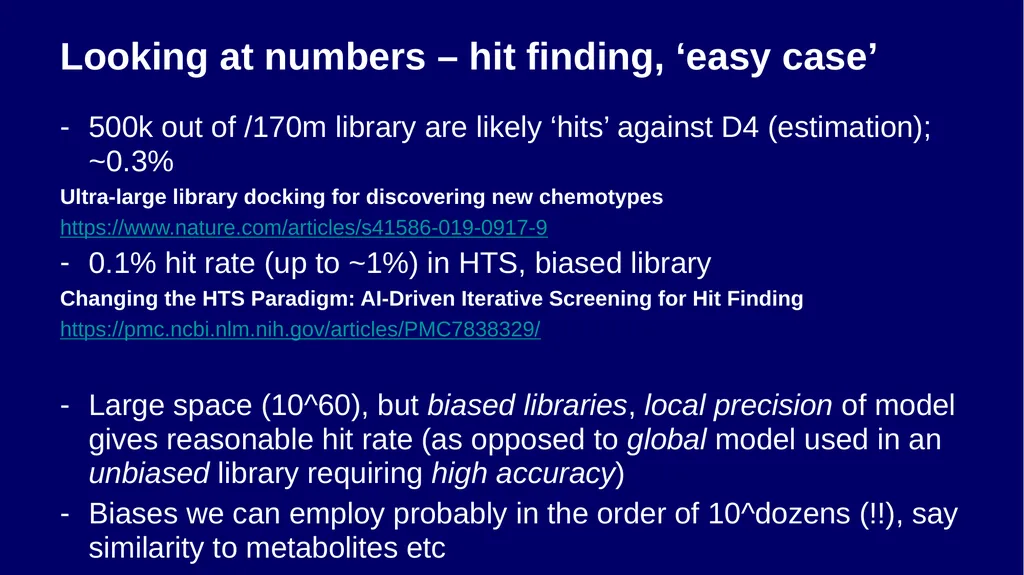
slide20. Looking at numbers – hit finding, ‘easy case’ 500k out of /170m library are likely ‘hits’ against D4 (estimation); ~0.3%
Ultra-large library docking for discovering new chemotypes
https://www.nature.com/articles/s41586-019-0917-9
0.1% hit rate (up to ~1%) in HTS, biased library
Changing the HTS Paradigm: AI-Driven Iterative Screening for Hit Finding
https://pmc.ncbi.nlm.nih.gov/articles/PMC7838329/
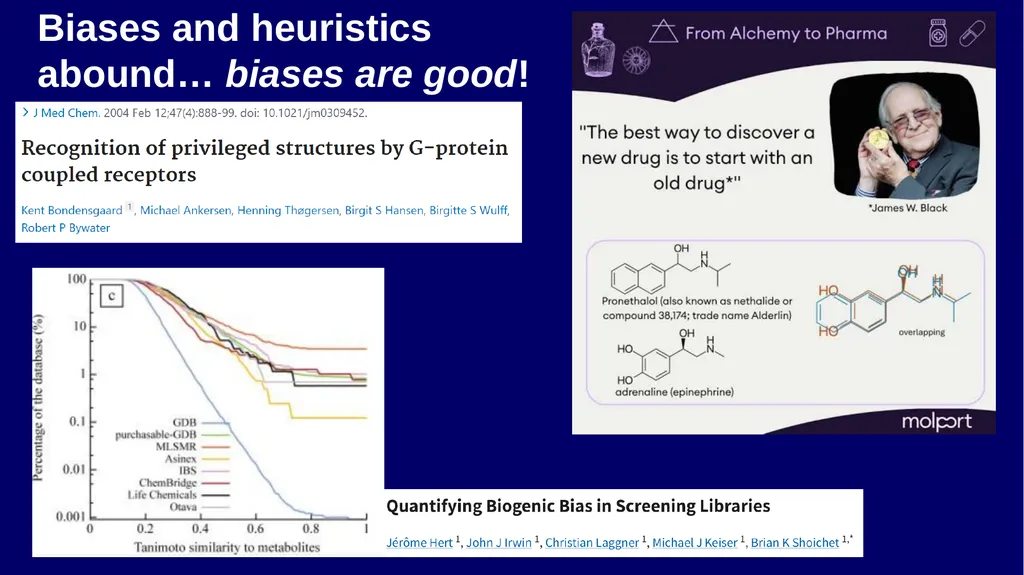
Large space (10^60), but biased libraries, local precision of model gives reasonable hit rate (as opposed to global model used in an unbiased library requiring high accuracy)
Biases we can employ probably in the order of 10^dozens (!!), say similarity to metabolites etc<br>
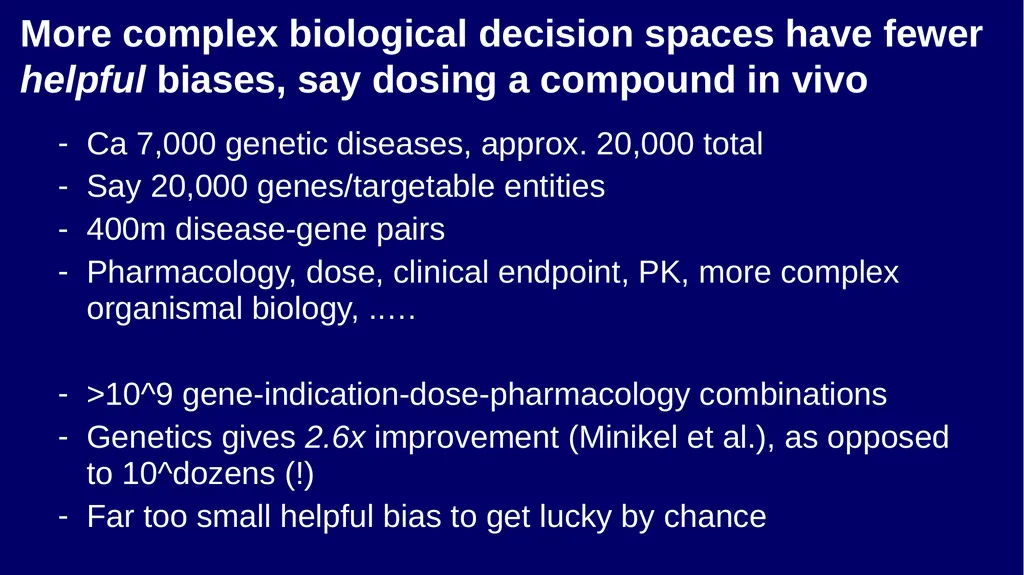
slide21. More complex biological decision spaces have fewer helpful biases, say dosing a compound in vivo Ca 7,000 genetic diseases, approx. 20,000 total
Say 20,000 genes/targetable entities
400m disease-gene pairs
Pharmacology, dose, clinical endpoint, PK, more complex organismal biology, ..…
>10^9 gene-indication-dose-pharmacology combinations
Genetics gives 2.6x improvement (Minikel et al.), as opposed to 10^dozens (!)
Far too small helpful bias to get lucky by chance<br>
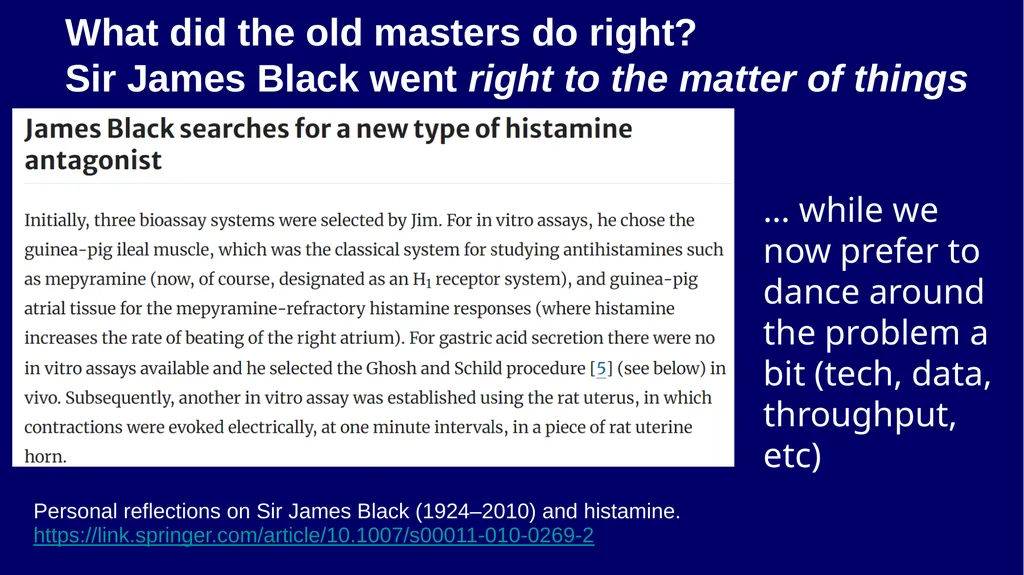
slide22. What did the old masters do right? Sir James Black went right to the matter of things Personal reflections on Sir James Black (1924–2010) and histamine. https://link.springer.com/article/10.1007/s00011-010-0269-2 … while we now prefer to dance around the problem a bit (tech, data, throughput, etc)<br>
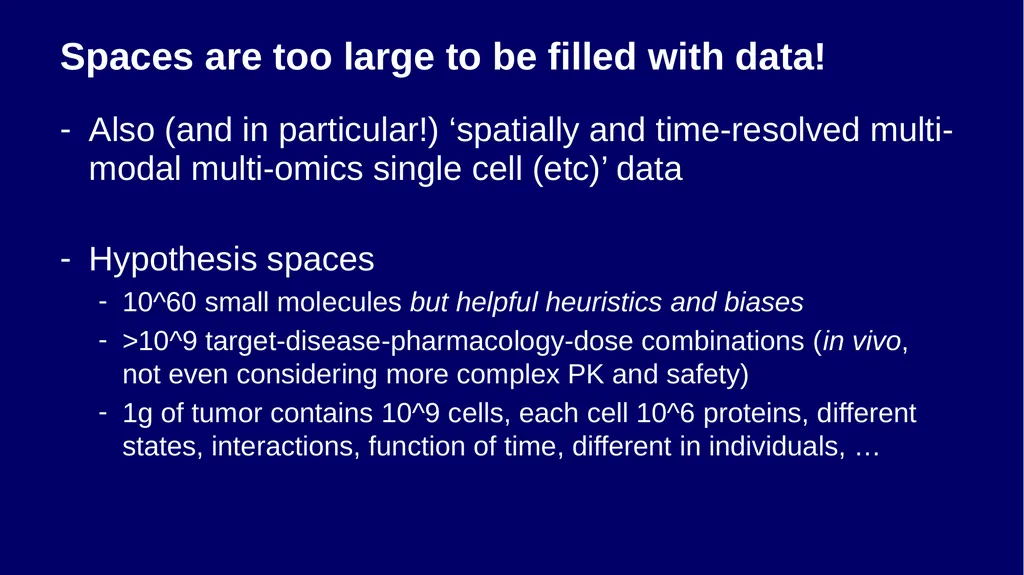
slide23. Spaces are too large to be filled with data! Also (and in particular!) ‘spatially and time-resolved multi-modal multi-omics single cell (etc)’ data
Hypothesis spaces
10^60 small molecules but helpful heuristics and biases
>10^9 target-disease-pharmacology-dose combinations (in vivo, not even considering more complex PK and safety)
1g of tumor contains 10^9 cells, each cell 10^6 proteins, different states, interactions, function of time, different in individuals, …<br>
slide24. Biases and heuristics abound… biases are good!<br>
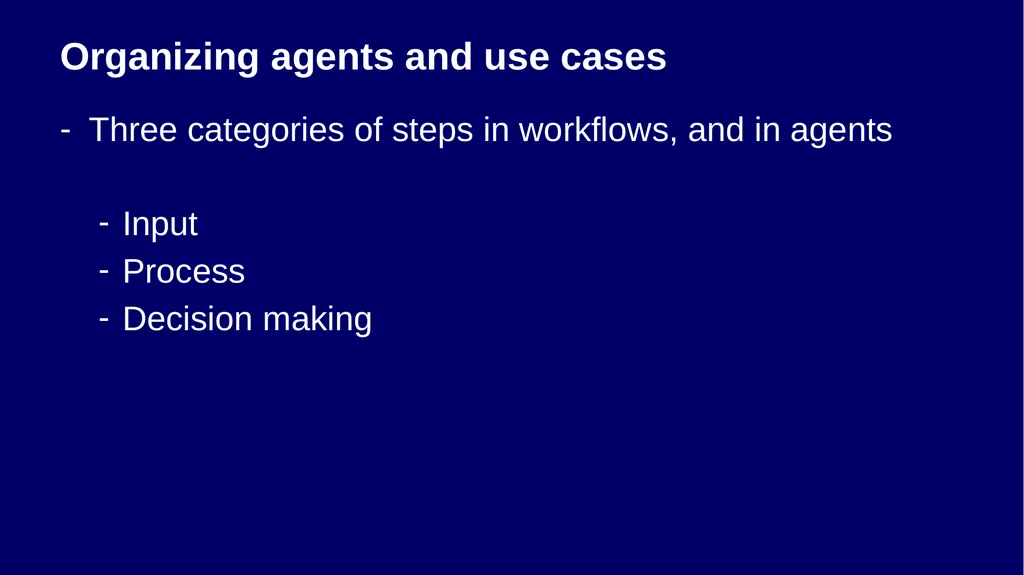
slide25. Organizing agents and use cases Three categories of steps in workflows, and in agents
Input
Process
Decision making<br>
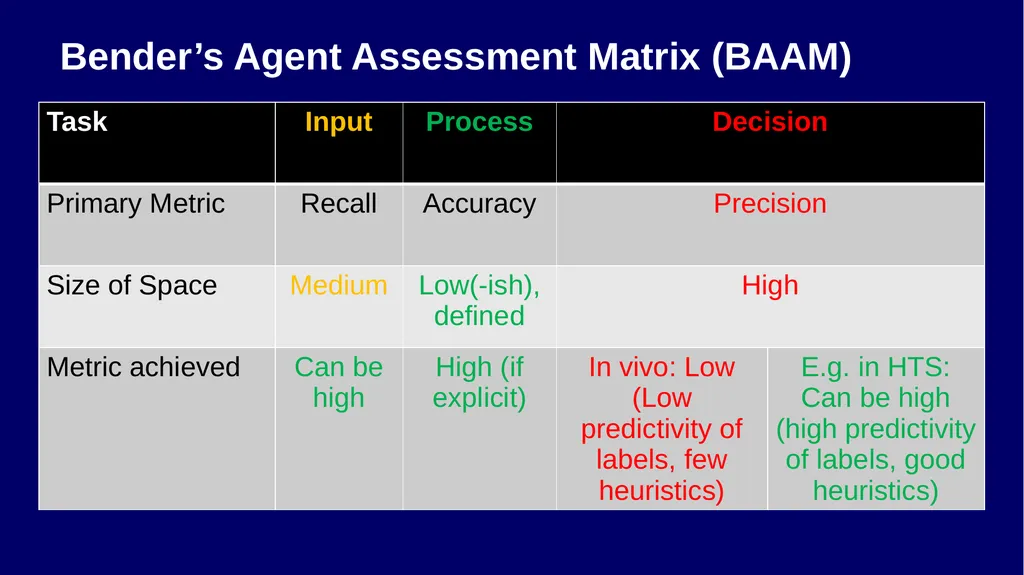
slide26. Bender’s Agent Assessment Matrix (BAAM)<br>
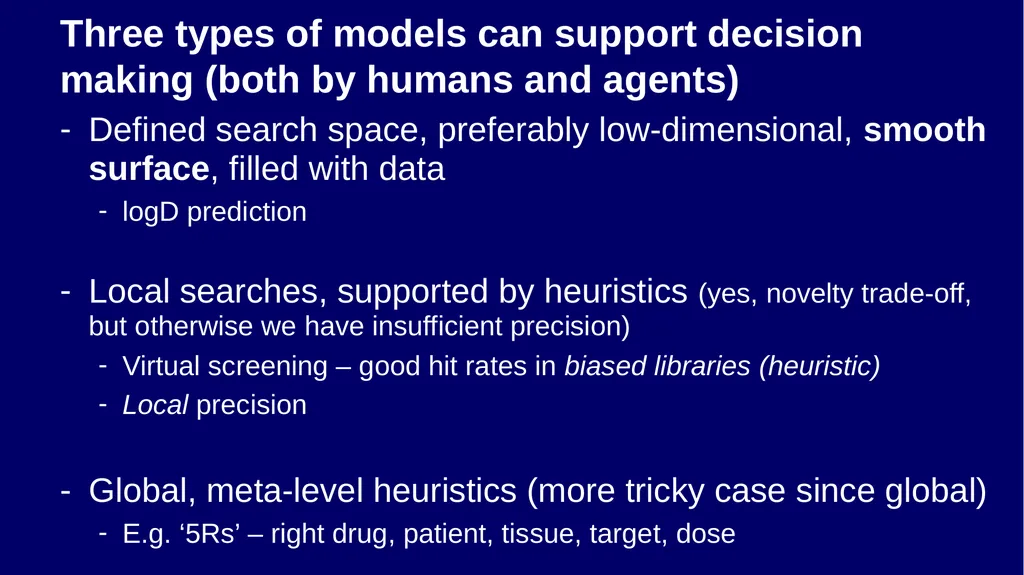
slide27. Three types of models can support decision making (both by humans and agents) Defined search space, preferably low-dimensional, smooth surface, filled with data
logD prediction
Local searches, supported by heuristics (yes, novelty trade-off, but otherwise we have insufficient precision)
Virtual screening – good hit rates in biased libraries (heuristic)
Local precision
Global, meta-level heuristics (more tricky case since global)
E.g. ‘5Rs’ – right drug, patient, tissue, target, dose<br>
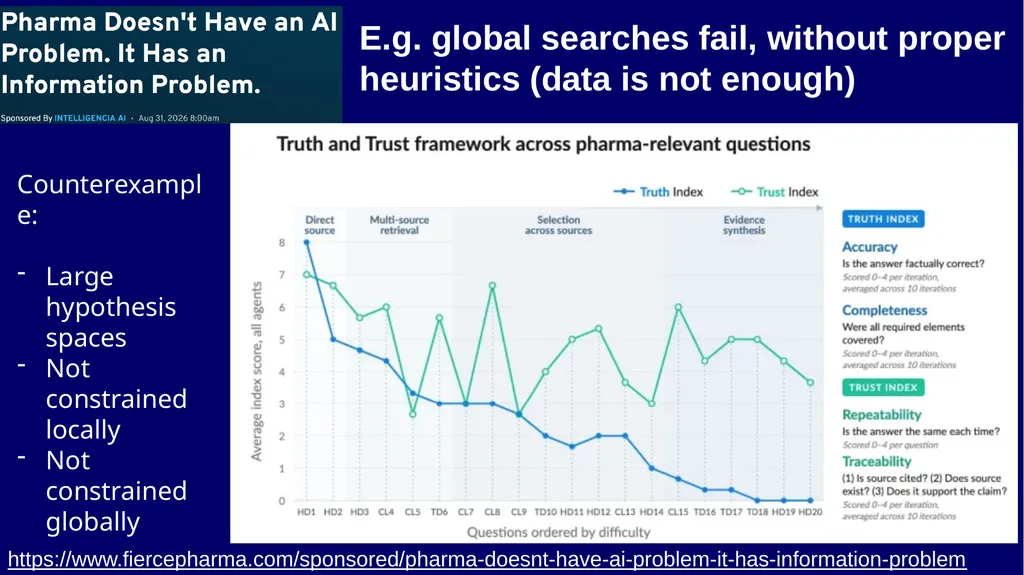
slide28. E.g. global searches fail, without proper heuristics (data is not enough) https://www.fiercepharma.com/sponsored/pharma-doesnt-have-ai-problem-it-has-information-problem Counterexample:
Large hypothesis spaces
Not constrained locally
Not constrained globally<br>
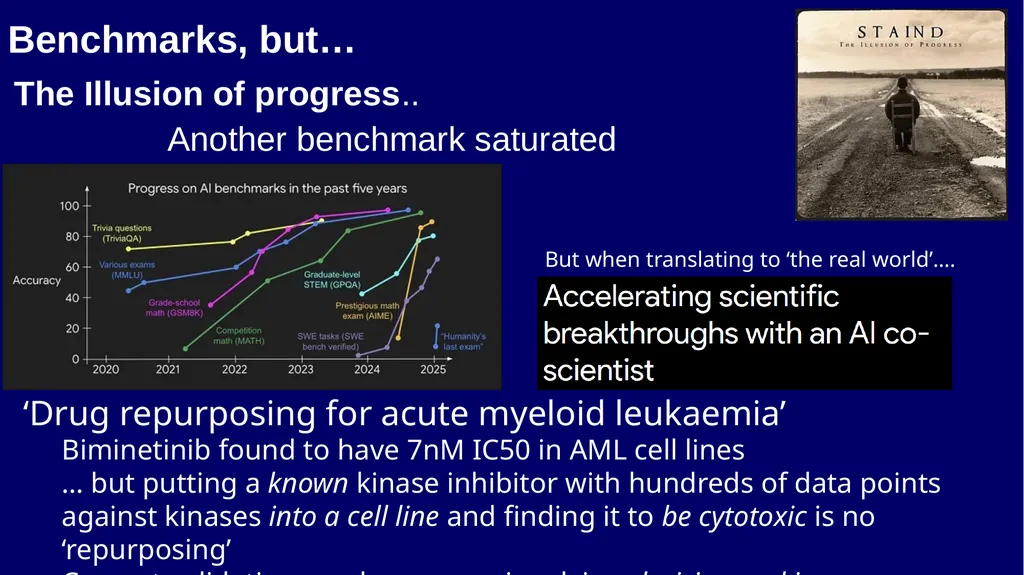
slide29. Benchmarks, but… The Illusion of progress..
Another benchmark saturated ‘Drug repurposing for acute myeloid leukaemia’
Biminetinib found to have 7nM IC50 in AML cell lines
… but putting a known kinase inhibitor with hundreds of data points against kinases into a cell line and finding it to be cytotoxic is no ‘repurposing’
Current validations and use cases involving decision making are very poor But when translating to ‘the real world’….<br>
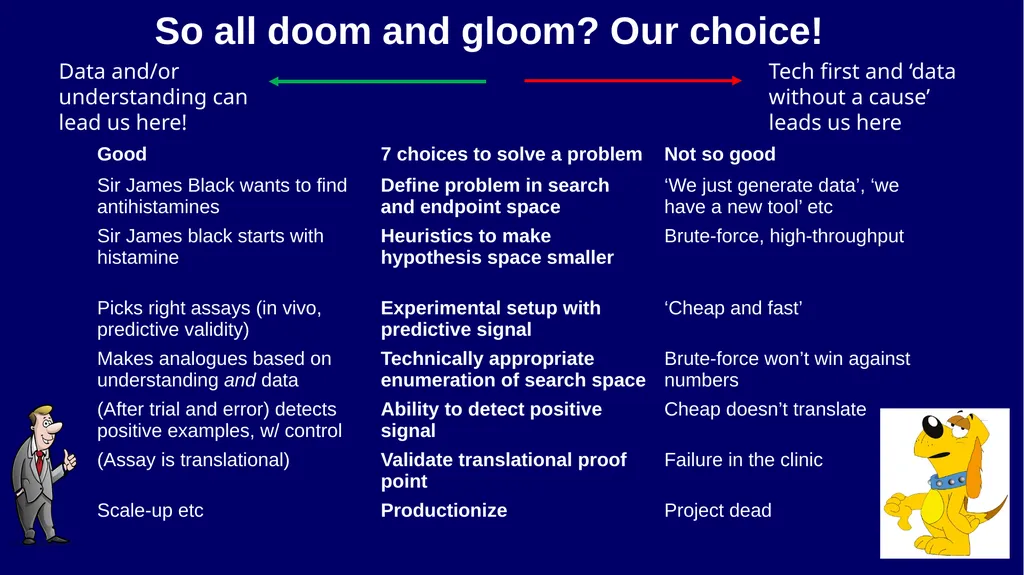
slide30. So all doom and gloom? Our choice!<br>
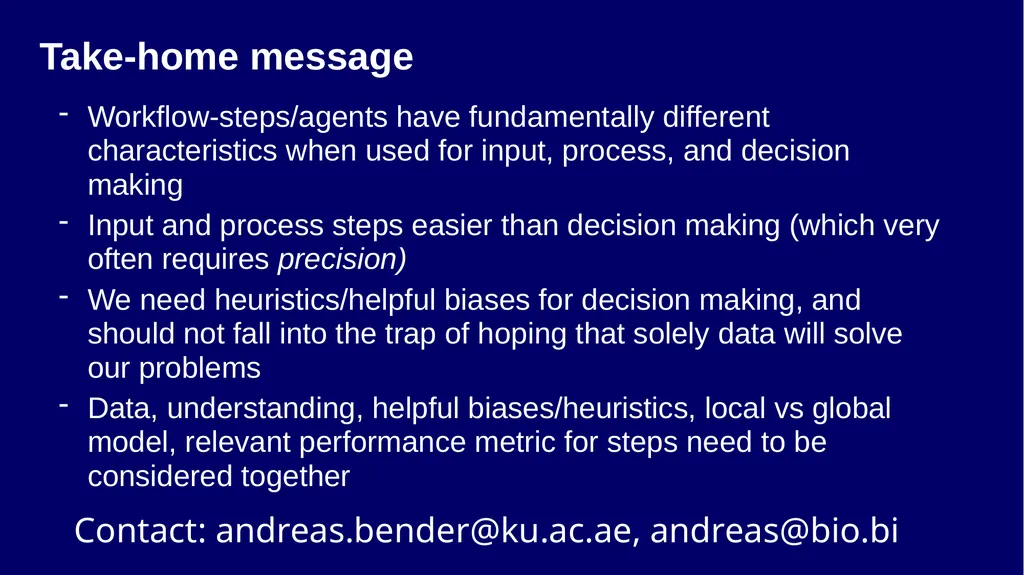
slide31. Take-home message Workflow-steps/agents have fundamentally different characteristics when used for input, process, and decision making
Input and process steps easier than decision making (which very often requires precision)
We need heuristics/helpful biases for decision making, and should not fall into the trap of hoping that solely data will solve our problems
Data, understanding, helpful biases/heuristics, local vs global model, relevant performance metric for steps need to be considered together Contact: andreas.bender@ku.ac.ae, andreas@bio.bi<br>
slide2. Outline Setting the scene: Context, what matters
‘Agents’
Examples of use cases
Possibly learnings, categorization, success criteria
5. Summary<br>
slide3. 1. Setting the scene Perceived/claimed and actual authority on topics are often not identical
Little ‘facts-based’ decision making and awareness about limitations (both of models and people)
Distorts public as well as organization-internal perceptions and priorities (away from ‘fundamentals’)
Clear (also negative) impact on education<br>
slide4. History and Context – Things Repeat Themselves 'Say goodbye to the costs and frustrations associated with writing software: The Last One will be available very soon. The Last One is a computer program that writes computer programs. Programs that work first time, every time. By asking you questions in genuinely plain English about what you want your program to do, The Last one uses those answers to generate a totally bug-free program in BASIC, ready to put to immediate use.’
D.J. ‘AI’ Systems Ltd., 1981<br>
slide5. THE GOAL: Clinically relevant decisions, related to (mostly) efficacy and (also) safety Bender and Cortes, Drug Discovery Today 2021
Bender et al. NRDD 2026 Fast is good
Cheap is good
But better is better<br>
slide6. A 10% better predictive validity is worth ca 10-40x the number of compounds tested (!) Jack agrees with me:
“We need better, not more (of not good)” Scannell et al. Predictive validity in drug discovery: what it is, why it matters and how to improve it. Nature Reviews Drug Discovery 2022<br>
slide7. Is bigger, is more better (in terms of data)? How much data do I want? MBs? GBs? TBs? PBs?
Single-cell and time resolved and multimodal and multiomics…?
I want precisely 1 bit of data (per decision that needs to be made)
But the right bit – the one that tells me, ‘yes or no’ (is this the right molecule, for the given purpose, etc)<br>
slide8. But we (often) don’t really have ‘good’ Proctor WR et al.. Utility of spherical human liver microtissues for prediction of clinical drug-induced liver injury. Arch Toxicol. 2017 Aug;91(8):2849-2863.
Rudolf AF et al.. A comparison of protein kinases inhibitor screening methods using both enzymatic activity and binding affinity determination. PLoS One. 2014 Jun 10;9(6):e98800. Left: Clinical DILI liability related to Cmax-corrected organoid-derived IC50 values, with low correlation between both values (lower liability index values indicate higher clinical liability)
Right: Low correlation of enzymatic and thermal-shift derived activity data.
Solely feeding such data with low predictivity into ‘AI’ models will not lead to better individual decisions, and hence clinical outcomes. Figure by Jack Scannell<br>
slide9. 2. What are ‘agents’? IBM: ‘An artificial intelligence (AI) agent is a system that autonomously performs tasks by designing workflows with available tools.’
‘Tech’ is trying to hijack human associations of terminology, Anthropomorphisms abound (‘thinking’, ‘reasoning’, ridiculous debates about ‘consciousness’, ‘goals’, ‘decisions’, etc etc)
‘We are able to engineer our way out of (bio-)science’ and ‘this [the agent] is one of us’
My personal definition: Agents are sets of weights and function calls Huynh et al., AI agents in drug discovery: applications and case studies Drug Discovery Today 2026
https://doi.org/10.1016/j.drudis.2026.104650<br>
slide10. Different agentic architectures Huynh et al., AI agents in drug discovery: applications and case studies Drug Discovery Today 2026
https://doi.org/10.1016/j.drudis.2026.104650<br>
slide11. 3. Examples (with the aim to characterize) ‘Comprehensive literature analysis for molecular prioritization’
Two very distinct parts:
Information compilation (patent extraction etc)
Report and prioritization All examples and headings taken from Huynh et al., AI agents in drug discovery: applications and case studies Drug Discovery Today 2026 https://doi.org/10.1016/j.drudis.2026.104650<br>
slide12. In silico ‘toxicity prediction’ (consumer goods, not pharma) Compile information about parent compound (cashmeran)
Tool use for generating metabolites
Tool use for predicting endocrine activity, based on dataset compiled with NIEHS Predicted parent compound to be rapidly metabolized (to carboxylic acid; high polarity/poor membrane permeability)
Decreased risk of endocrine disruption Narrower use case; expert-tailored tool use<br>
slide13. Automating protocol design and execution (qPCR assay design) Compile literature, draft protocol (MIQE reporting)
Aligned with ICH, FDA regulatory guidelines
Translation to script
‘Information + Form + Goal -> Structured, Goal-Directed Output’<br>
slide14. ‘Accelerating drug discovery with Virtual Scientists’ From identifying TA; compiling data, target ID, to virtual screening
>100 very heterogenous tasks integrated; can be tailored to use case
From information gathering to expert tool use to prioritization (need to be looked at individually)
Emphasis on information flows as much as individual ‘agents’<br>
slide15. ‘Drug repurposing for rare diseases’ Traverses disease, pathway, protein, compound, safety prediction/tool use space
Information compilation and prioritization
Tricky! – High-dimensional, information-poor data spaces, data points lack meta data, unclear predictivity…<br>
slide16. What do we see (publicly) from big pharma? E.g. AZ – focus on interface and process (as opposed to decision making/prioritization) Interface and process tools, to enable scientists He et al., Democratising real-world drug discovery through agentic AI, Drug Discovery Today 2026
https://doi.org/10.1016/j.drudis.2026.104605<br>
slide17. Integration with machines/physical world (both sensing/input; and actions/output, iteratively) ‘Embodied/physical AI’ as next big trend
Integration of AI and external interface Example here: Reaction optimization, including synthesis design, execution, and optimization<br>
slide18. https://www.rdworldonline.com/anthropic-wants-claude-to-run-life-sciences-rd-now-it-is-wiring-ai-agents-into-the-lab/
https://www.anthropic.com/news/model-hardware-standard-research-preview - 2024 Model Context Protocol (MCP)
- 2026 Model Hardware Standard (MHS) Failure mode: ‘Human experts had to intervene when Claude misread errors caused by bubbles as software failures and initially responded in a way that produced more foam.’<br>
slide19. 4. Possibly learnings, categorization, success criteria Years ago I discovered the power of ‘literature validation’, say linking a target to a disease
The beauty of it: It always works
Experience in own companies, e.g. knowledge graphs for compound selection/repurposing
2 or 3 hops, and you are everywhere in your network, entirely unable to prioritize (globally; locally you sometimes get more lucky)
Everyone happily waffles (LLMs, people, irreproducible data, …)
More stuff to wade through
The common problem that emerges: Precision!<br>
slide20. Looking at numbers – hit finding, ‘easy case’ 500k out of /170m library are likely ‘hits’ against D4 (estimation); ~0.3%
Ultra-large library docking for discovering new chemotypes
https://www.nature.com/articles/s41586-019-0917-9
0.1% hit rate (up to ~1%) in HTS, biased library
Changing the HTS Paradigm: AI-Driven Iterative Screening for Hit Finding
https://pmc.ncbi.nlm.nih.gov/articles/PMC7838329/
Large space (10^60), but biased libraries, local precision of model gives reasonable hit rate (as opposed to global model used in an unbiased library requiring high accuracy)
Biases we can employ probably in the order of 10^dozens (!!), say similarity to metabolites etc<br>
slide21. More complex biological decision spaces have fewer helpful biases, say dosing a compound in vivo Ca 7,000 genetic diseases, approx. 20,000 total
Say 20,000 genes/targetable entities
400m disease-gene pairs
Pharmacology, dose, clinical endpoint, PK, more complex organismal biology, ..…
>10^9 gene-indication-dose-pharmacology combinations
Genetics gives 2.6x improvement (Minikel et al.), as opposed to 10^dozens (!)
Far too small helpful bias to get lucky by chance<br>
slide22. What did the old masters do right? Sir James Black went right to the matter of things Personal reflections on Sir James Black (1924–2010) and histamine. https://link.springer.com/article/10.1007/s00011-010-0269-2 … while we now prefer to dance around the problem a bit (tech, data, throughput, etc)<br>
slide23. Spaces are too large to be filled with data! Also (and in particular!) ‘spatially and time-resolved multi-modal multi-omics single cell (etc)’ data
Hypothesis spaces
10^60 small molecules but helpful heuristics and biases
>10^9 target-disease-pharmacology-dose combinations (in vivo, not even considering more complex PK and safety)
1g of tumor contains 10^9 cells, each cell 10^6 proteins, different states, interactions, function of time, different in individuals, …<br>
slide24. Biases and heuristics abound… biases are good!<br>
slide25. Organizing agents and use cases Three categories of steps in workflows, and in agents
Input
Process
Decision making<br>
slide26. Bender’s Agent Assessment Matrix (BAAM)<br>
slide27. Three types of models can support decision making (both by humans and agents) Defined search space, preferably low-dimensional, smooth surface, filled with data
logD prediction
Local searches, supported by heuristics (yes, novelty trade-off, but otherwise we have insufficient precision)
Virtual screening – good hit rates in biased libraries (heuristic)
Local precision
Global, meta-level heuristics (more tricky case since global)
E.g. ‘5Rs’ – right drug, patient, tissue, target, dose<br>
slide28. E.g. global searches fail, without proper heuristics (data is not enough) https://www.fiercepharma.com/sponsored/pharma-doesnt-have-ai-problem-it-has-information-problem Counterexample:
Large hypothesis spaces
Not constrained locally
Not constrained globally<br>
slide29. Benchmarks, but… The Illusion of progress..
Another benchmark saturated ‘Drug repurposing for acute myeloid leukaemia’
Biminetinib found to have 7nM IC50 in AML cell lines
… but putting a known kinase inhibitor with hundreds of data points against kinases into a cell line and finding it to be cytotoxic is no ‘repurposing’
Current validations and use cases involving decision making are very poor But when translating to ‘the real world’….<br>
slide30. So all doom and gloom? Our choice!<br>
slide31. Take-home message Workflow-steps/agents have fundamentally different characteristics when used for input, process, and decision making
Input and process steps easier than decision making (which very often requires precision)
We need heuristics/helpful biases for decision making, and should not fall into the trap of hoping that solely data will solve our problems
Data, understanding, helpful biases/heuristics, local vs global model, relevant performance metric for steps need to be considered together Contact: andreas.bender@ku.ac.ae, andreas@bio.bi<br>