"Agility Moving Quickly and Adapting to Change" is the property of its rightful owner. Permission is granted to
download and print the materials on this website for personal, non-commercial use only, and to display it
on your personal computer provided you do not modify the materials and that you retain all copyright
notices contained in the materials. By downloading content from our website, you accept the terms of this
agreement.
Share
Embed code
Presentation Transcript
01
Agility Moving Quickly and Adapting to Change While Preserving Quality and Rigor September 22, 2022 Huntley Parker | SAIC Chief Solutions Architect
SPC5, PMI-ACP, CSM, ITIL4, DevOps
Philip Holmer | SAIC Chief Engineer<br>
02
Agenda Introduction
What is Agile?
Building in Quality
Q&A<br>
03
Introduction<br>
04
What is Agile?<br>
05
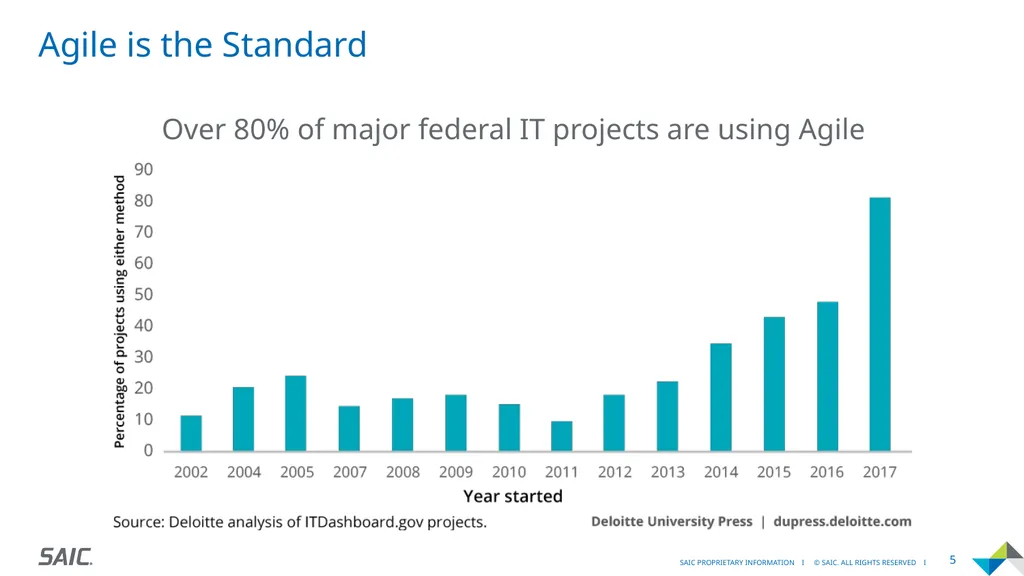
Agile is the Standard Over 80% of major federal IT projects are using Agile<br>
06
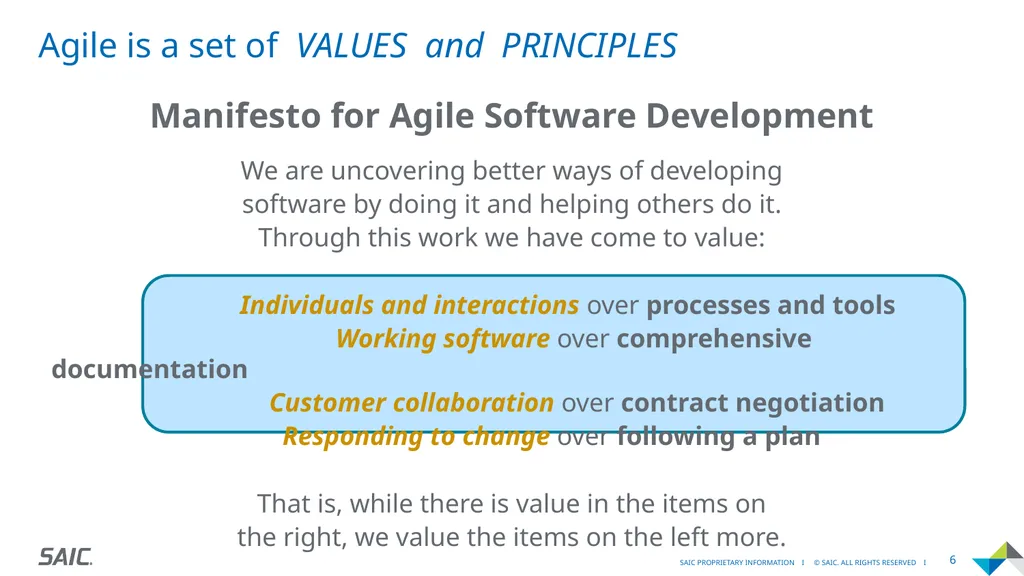
Manifesto for Agile Software Development
We are uncovering better ways of developing
software by doing it and helping others do it.
Through this work we have come to value:
Individuals and interactions over processes and tools
Working software over comprehensive documentation
Customer collaboration over contract negotiation
Responding to change over following a plan
That is, while there is value in the items on
the right, we value the items on the left more. Agile is a set of VALUES and PRINCIPLES<br>
07
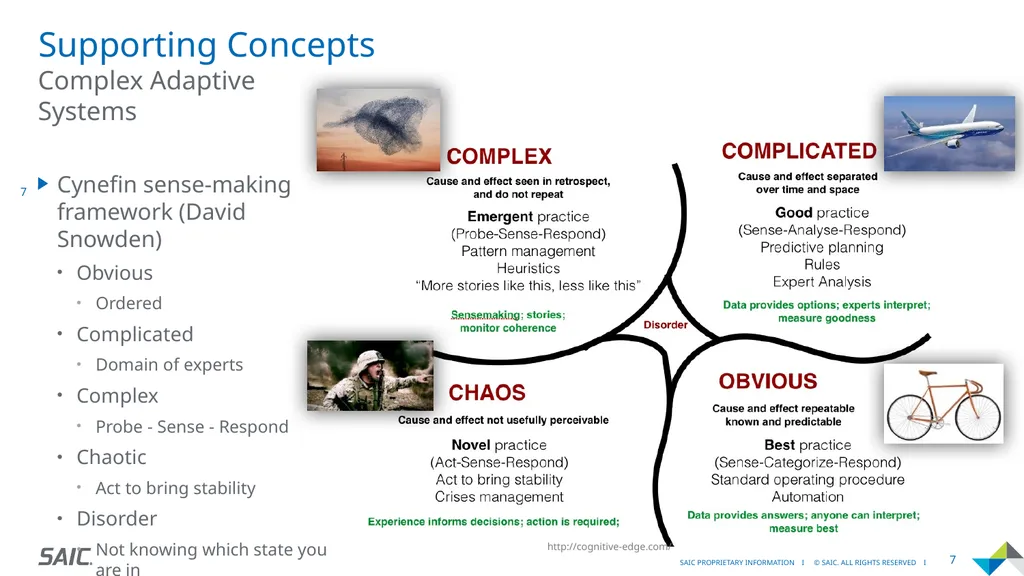
Complex Adaptive Systems
Cynefin sense-making framework (David Snowden)
Obvious
Ordered
Complicated
Domain of experts
Complex
Probe - Sense - Respond
Chaotic
Act to bring stability
Disorder
Not knowing which state you are in Supporting Concepts 7 http://cognitive-edge.com/<br>
08
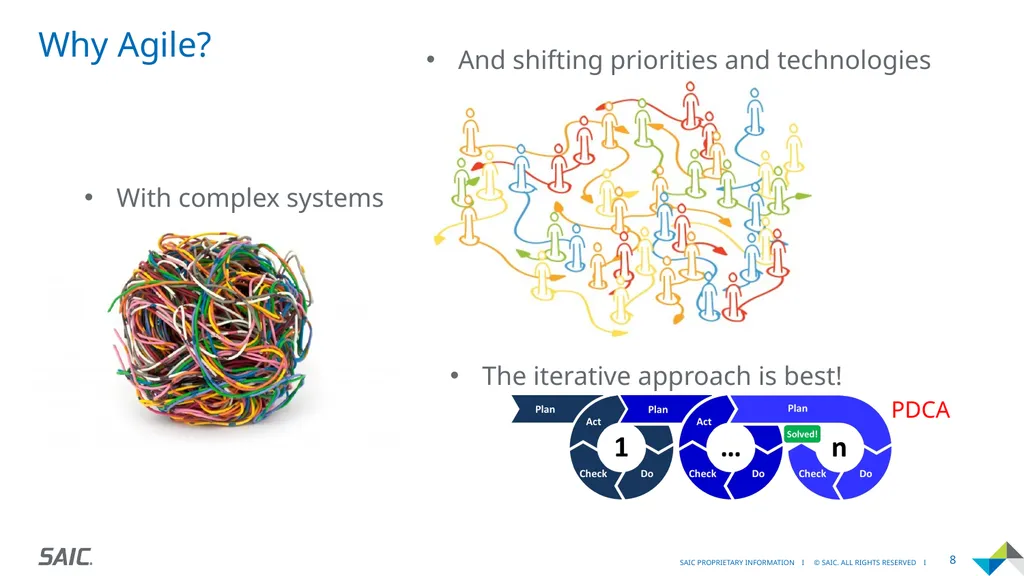
Why Agile? With complex systems And shifting priorities and technologies The iterative approach is best! PDCA<br>
09
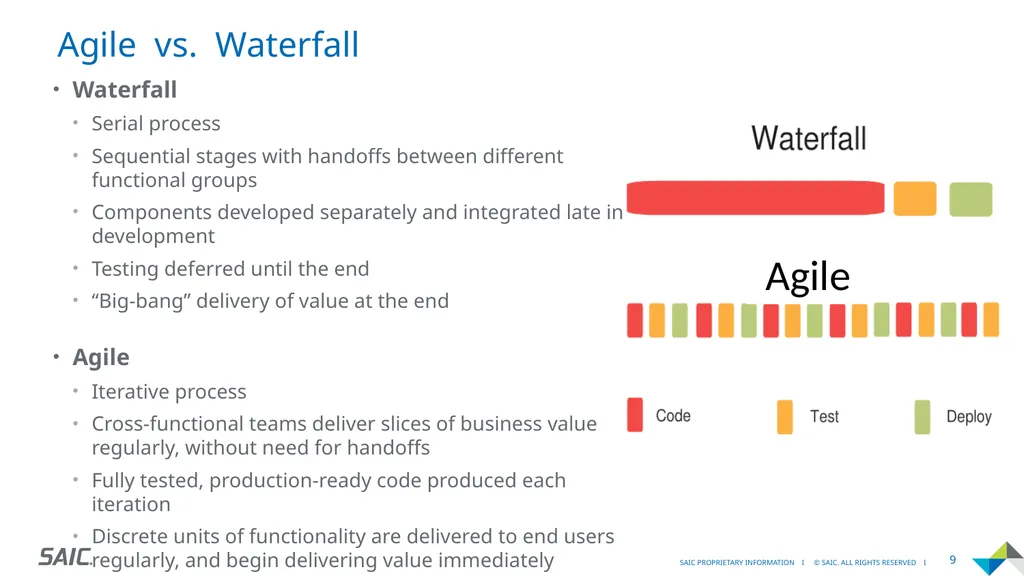
Agile vs. Waterfall Waterfall
Serial process
Sequential stages with handoffs between different functional groups
Components developed separately and integrated late in development
Testing deferred until the end
“Big-bang” delivery of value at the end
Agile
Iterative process
Cross-functional teams deliver slices of business value regularly, without need for handoffs
Fully tested, production-ready code produced each iteration
Discrete units of functionality are delivered to end users regularly, and begin delivering value immediately<br>
10
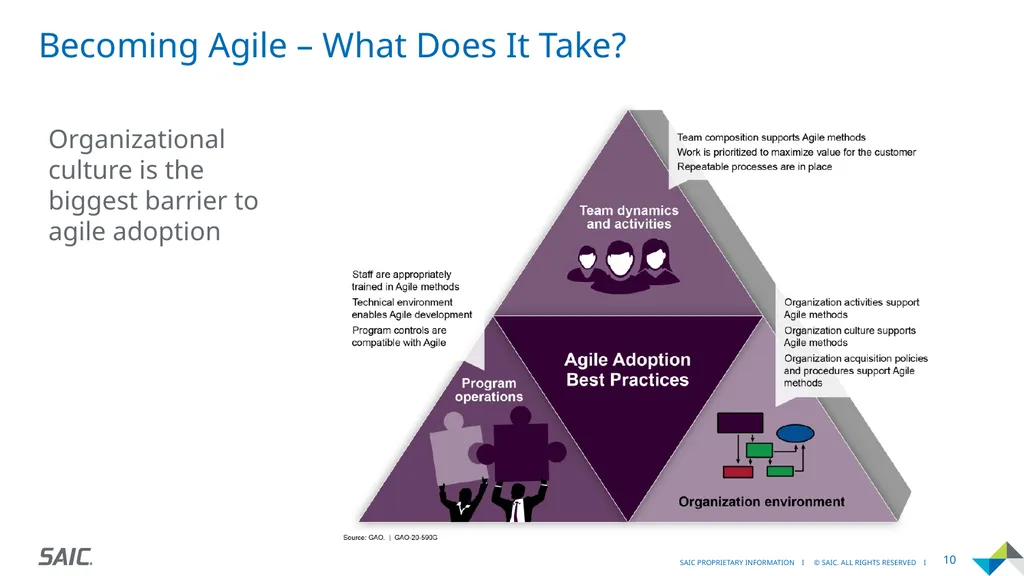
Becoming Agile – What Does It Take? Organizational culture is the biggest barrier to agile adoption<br>
11
Building In Quality<br>
12
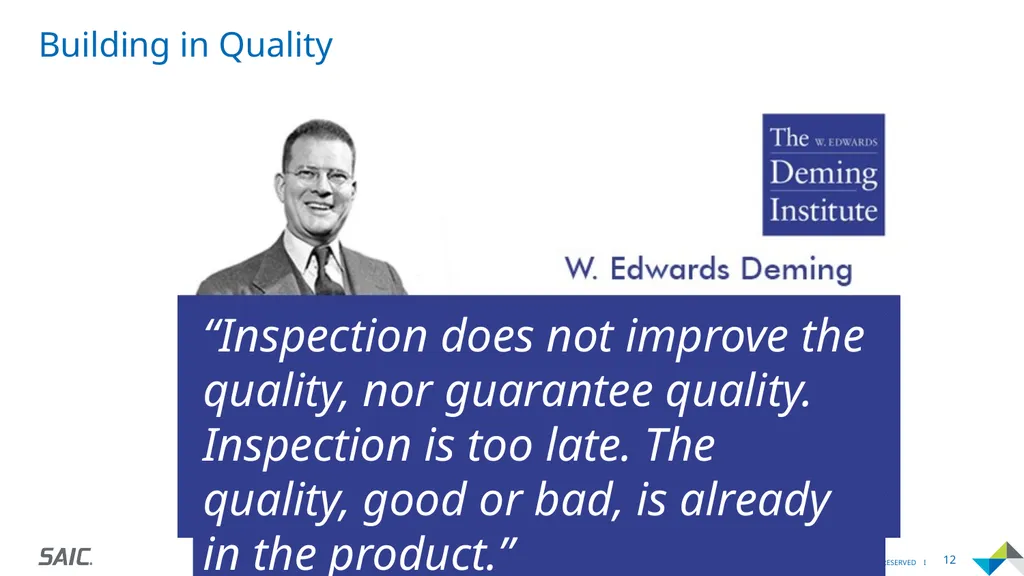
Building in Quality “Inspection does not improve the quality, nor guarantee quality. Inspection is too late. The quality, good or bad, is already in the product.”<br>
13
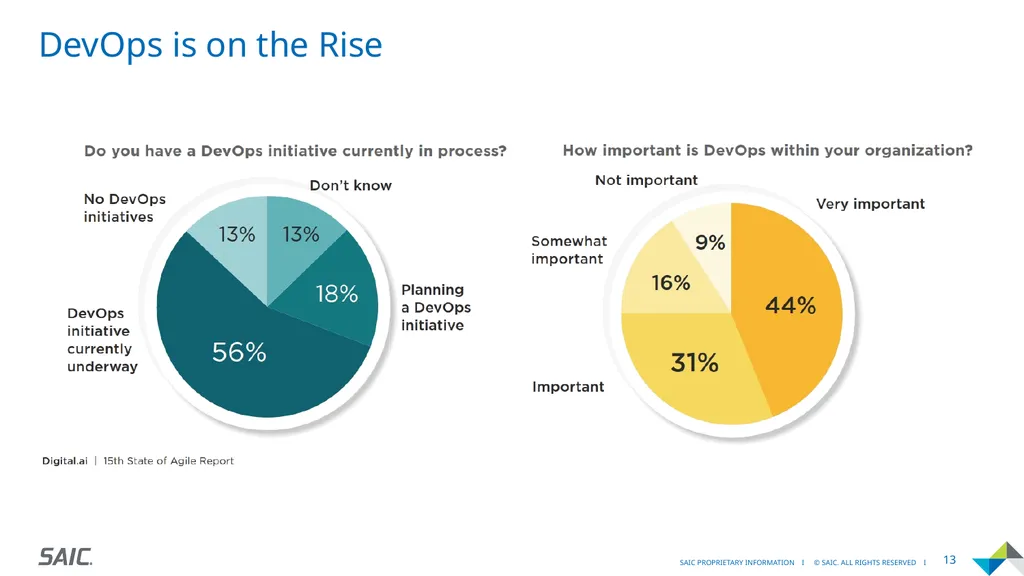
DevOps is on the Rise<br>
14
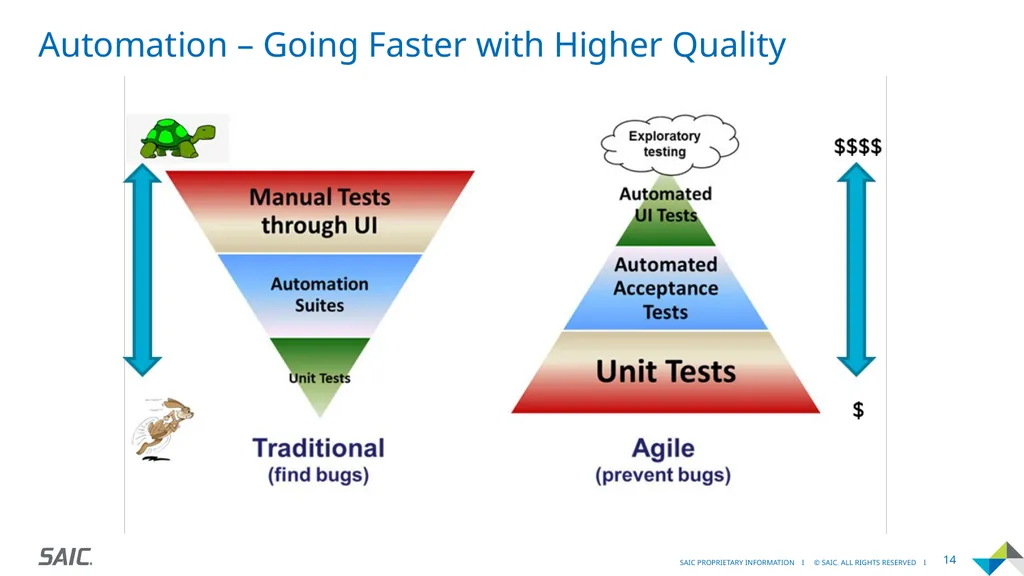
Automation – Going Faster with Higher Quality<br>
15
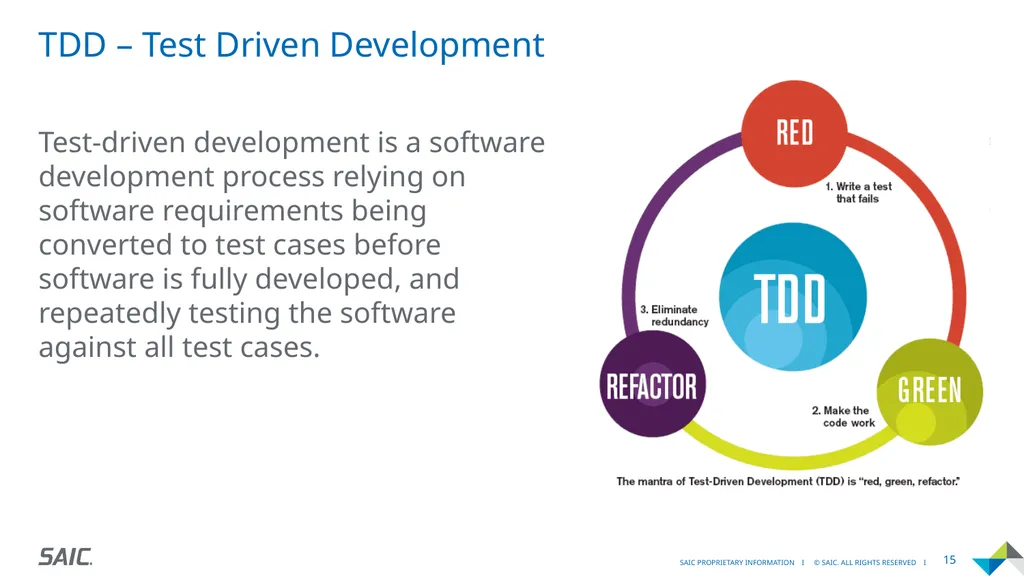
TDD – Test Driven Development Test-driven development is a software development process relying on software requirements being converted to test cases before software is fully developed, and repeatedly testing the software against all test cases.<br>
16
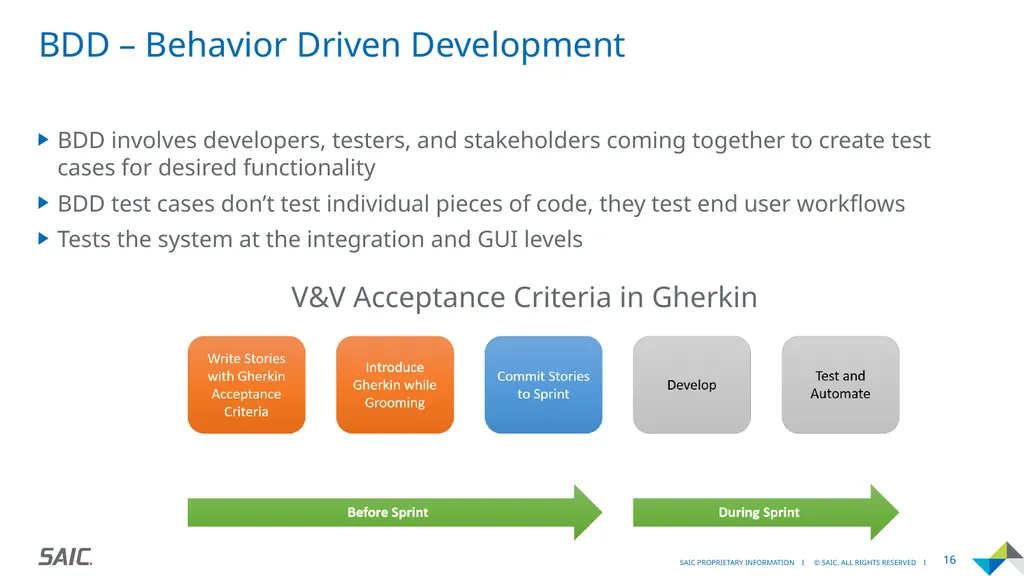
BDD involves developers, testers, and stakeholders coming together to create test cases for desired functionality
BDD test cases don’t test individual pieces of code, they test end user workflows
Tests the system at the integration and GUI levels BDD – Behavior Driven Development V&V Acceptance Criteria in Gherkin<br>
17
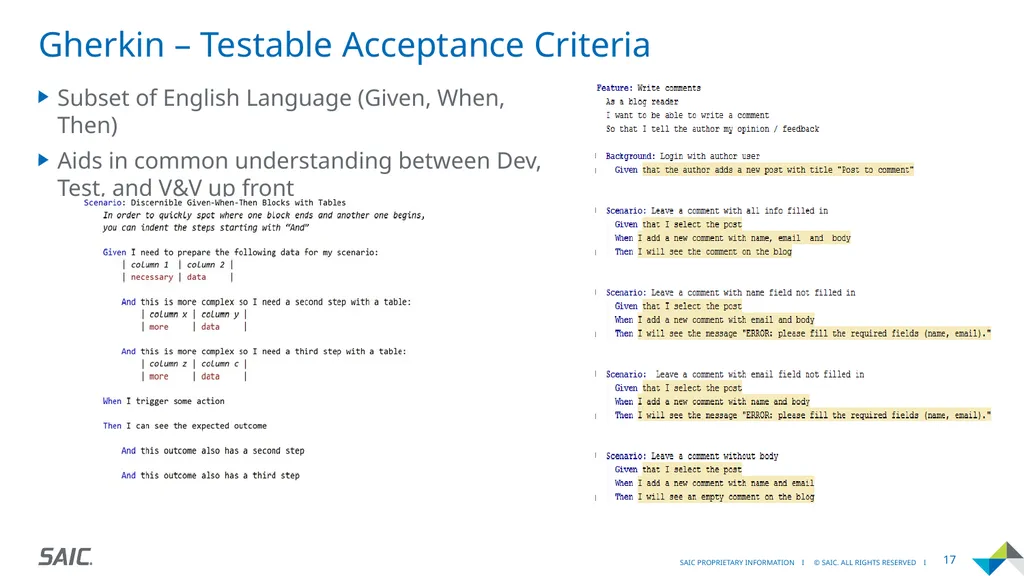
Subset of English Language (Given, When, Then)
Aids in common understanding between Dev, Test, and V&V up front Gherkin – Testable Acceptance Criteria<br>
18
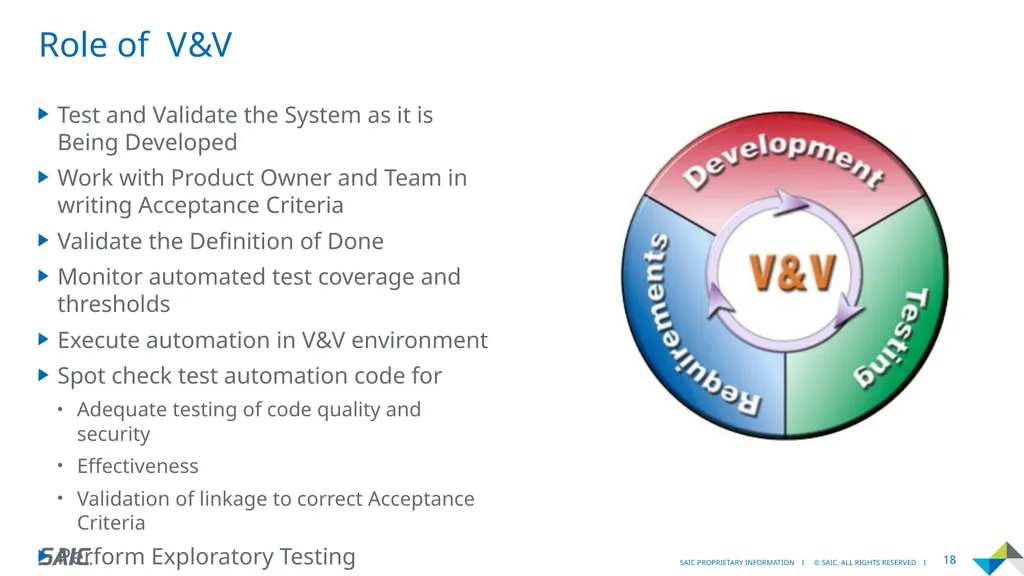
Test and Validate the System as it is Being Developed
Work with Product Owner and Team in writing Acceptance Criteria
Validate the Definition of Done
Monitor automated test coverage and thresholds
Execute automation in V&V environment
Spot check test automation code for
Adequate testing of code quality and security
Effectiveness
Validation of linkage to correct Acceptance Criteria
Perform Exploratory Testing Role of V&V<br>