04
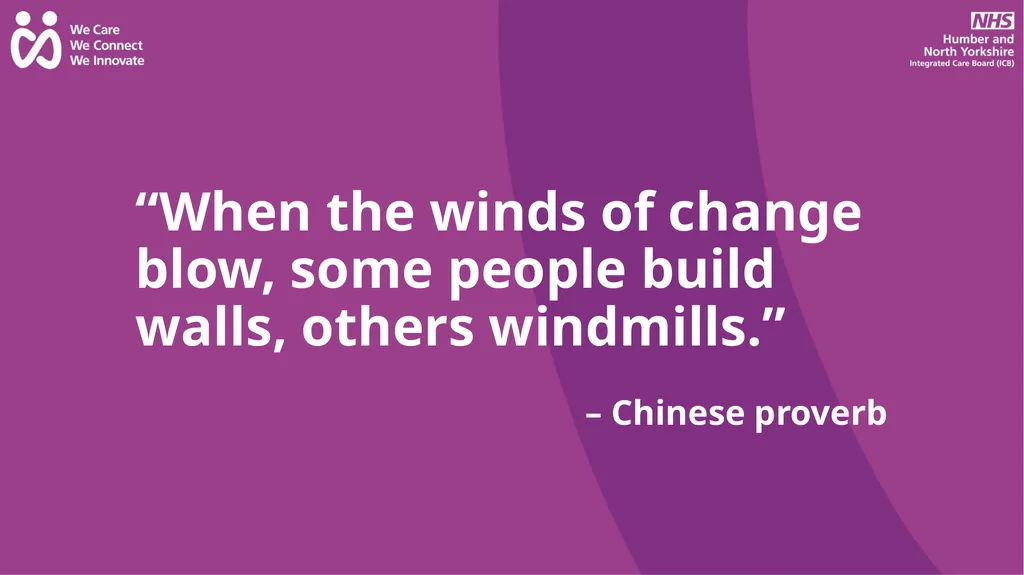
“When the winds of change blow, some people build walls, others windmills.” – Chinese proverb<br>
06
“We cannot direct the wind, but we can adjust the sails.” – Dolly Parton<br>
07
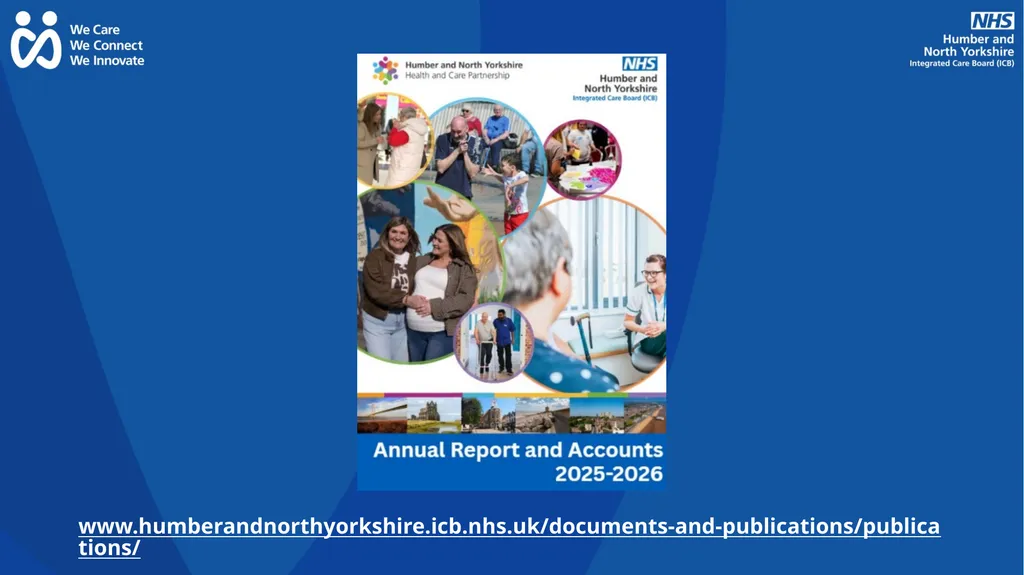
www.humberandnorthyorkshire.icb.nhs.uk/documents-and-publications/publications/<br>
08
Performance and key highlights 2025-26 Teresa Fenech, Chief Executive<br>
09
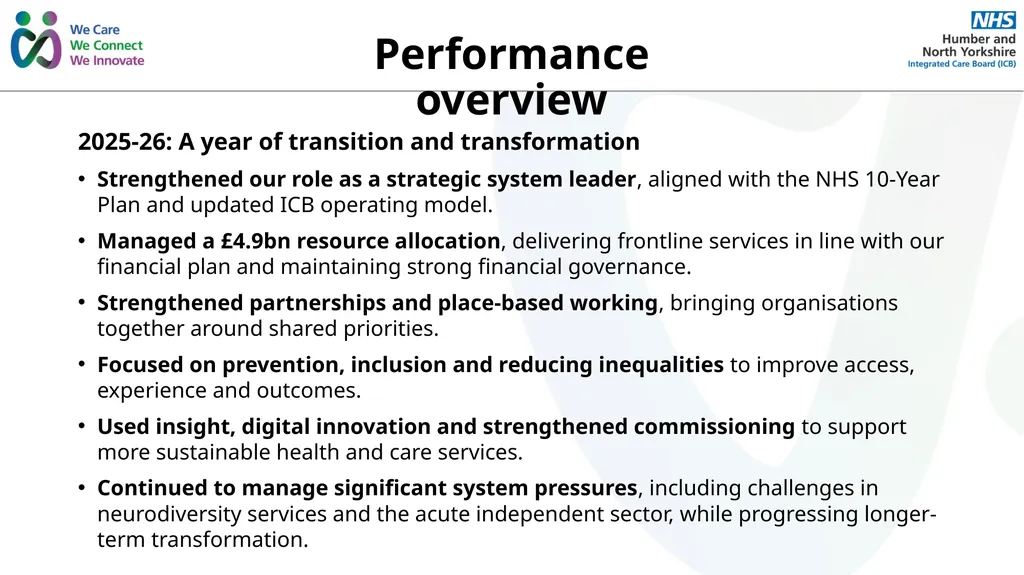
Performance overview 2025-26: A year of transition and transformation
Strengthened our role as a strategic system leader, aligned with the NHS 10-Year Plan and updated ICB operating model.
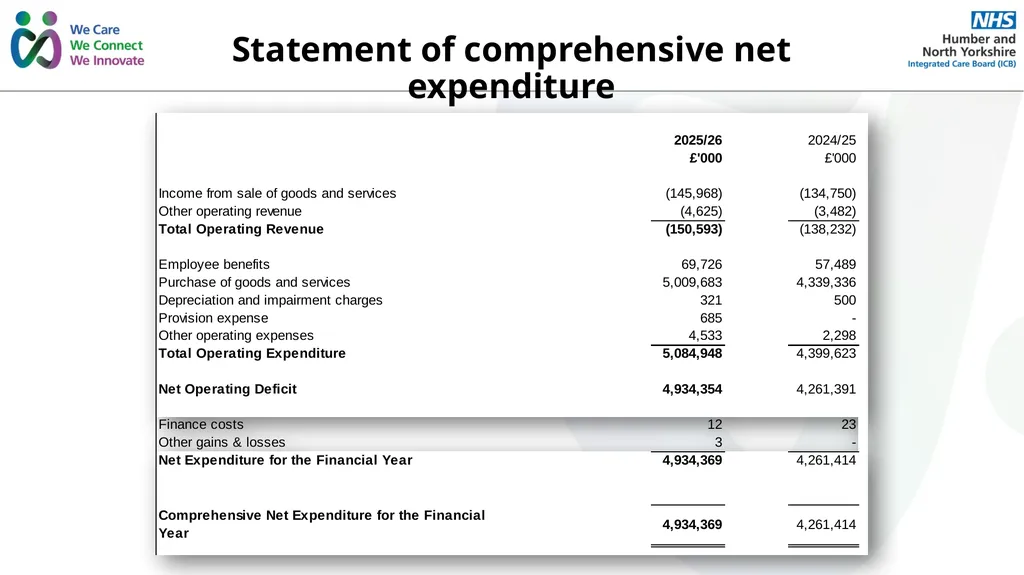
Managed a £4.9bn resource allocation, delivering frontline services in line with our financial plan and maintaining strong financial governance.
Strengthened partnerships and place-based working, bringing organisations together around shared priorities.
Focused on prevention, inclusion and reducing inequalities to improve access, experience and outcomes.
Used insight, digital innovation and strengthened commissioning to support more sustainable health and care services.
Continued to manage significant system pressures, including challenges in neurodiversity services and the acute independent sector, while progressing longer-term transformation.<br>
10
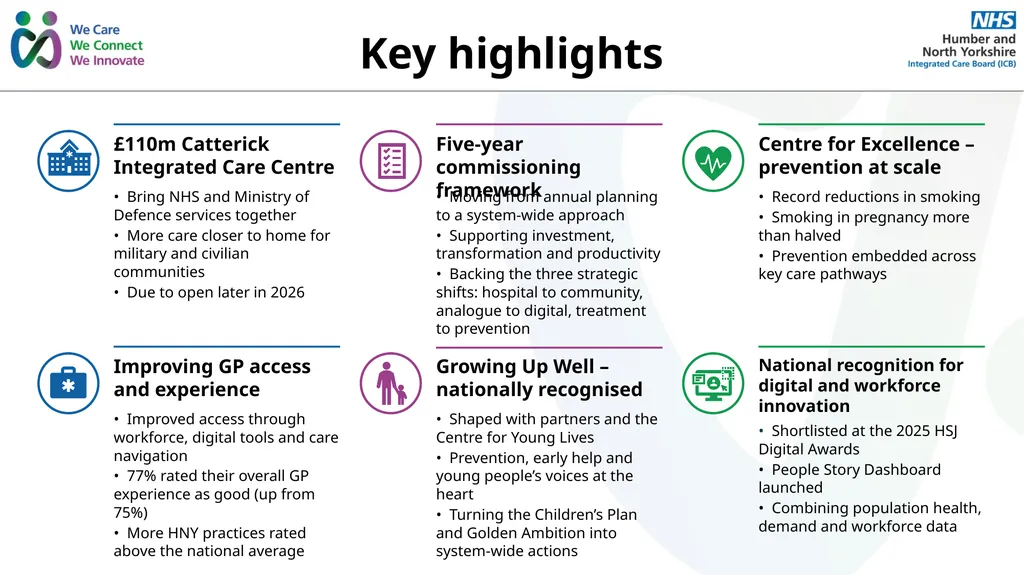
Key highlights £110m Catterick Integrated Care Centre • Bring NHS and Ministry of Defence services together
• More care closer to home for military and civilian communities
• Due to open later in 2026 Five-year commissioning framework • Moving from annual planning to a system-wide approach
• Supporting investment, transformation and productivity
• Backing the three strategic shifts: hospital to community, analogue to digital, treatment to prevention Centre for Excellence – prevention at scale • Record reductions in smoking
• Smoking in pregnancy more than halved
• Prevention embedded across key care pathways Improving GP access and experience • Improved access through workforce, digital tools and care navigation
• 77% rated their overall GP experience as good (up from 75%)
• More HNY practices rated above the national average Growing Up Well – nationally recognised • Shaped with partners and the Centre for Young Lives
• Prevention, early help and young people’s voices at the heart
• Turning the Children’s Plan and Golden Ambition into system-wide actions National recognition for digital and workforce innovation • Shortlisted at the 2025 HSJ Digital Awards
• People Story Dashboard launched
• Combining population health, demand and workforce data<br>
11
Financial review�2025-26 Desiree Irving-Brown, Executive Director of Finance<br>
12
Statement of comprehensive net expenditure<br>
13
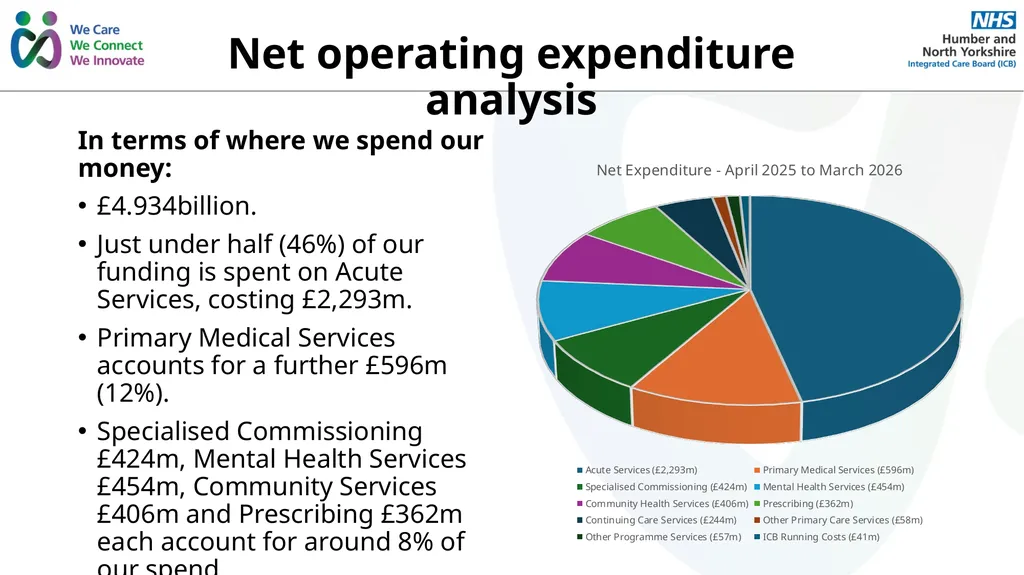
Net operating expenditure analysis In terms of where we spend our money:
£4.934billion.
Just under half (46%) of our funding is spent on Acute Services, costing £2,293m.
Primary Medical Services accounts for a further £596m (12%).
Specialised Commissioning £424m, Mental Health Services £454m, Community Services £406m and Prescribing £362m each account for around 8% of our spend.<br>
14
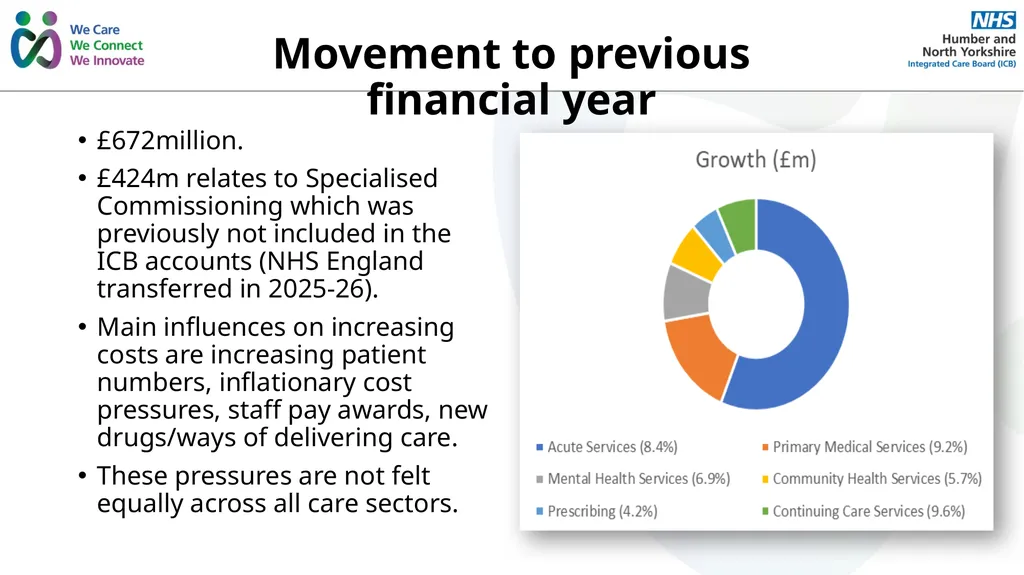
Movement to previous financial year £672million.
£424m relates to Specialised Commissioning which was previously not included in the ICB accounts (NHS England transferred in 2025-26).
Main influences on increasing costs are increasing patient numbers, inflationary cost pressures, staff pay awards, new drugs/ways of delivering care.
These pressures are not felt equally across all care sectors.<br>
15
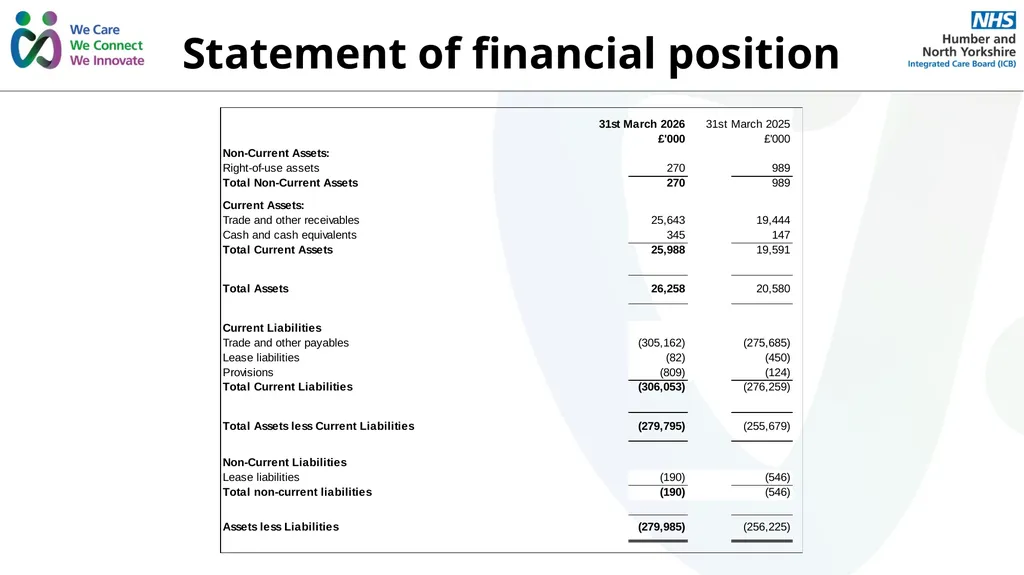
Statement of financial position<br>
16
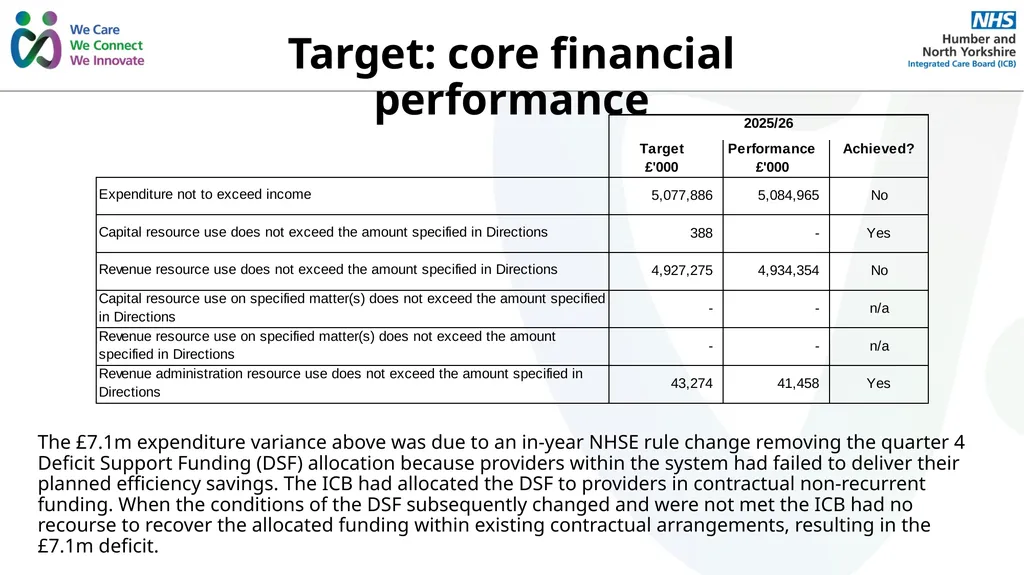
Target: core financial performance The £7.1m expenditure variance above was due to an in-year NHSE rule change removing the quarter 4 Deficit Support Funding (DSF) allocation because providers within the system had failed to deliver their planned efficiency savings. The ICB had allocated the DSF to providers in contractual non-recurrent funding. When the conditions of the DSF subsequently changed and were not met the ICB had no recourse to recover the allocated funding within existing contractual arrangements, resulting in the £7.1m deficit.<br>
17
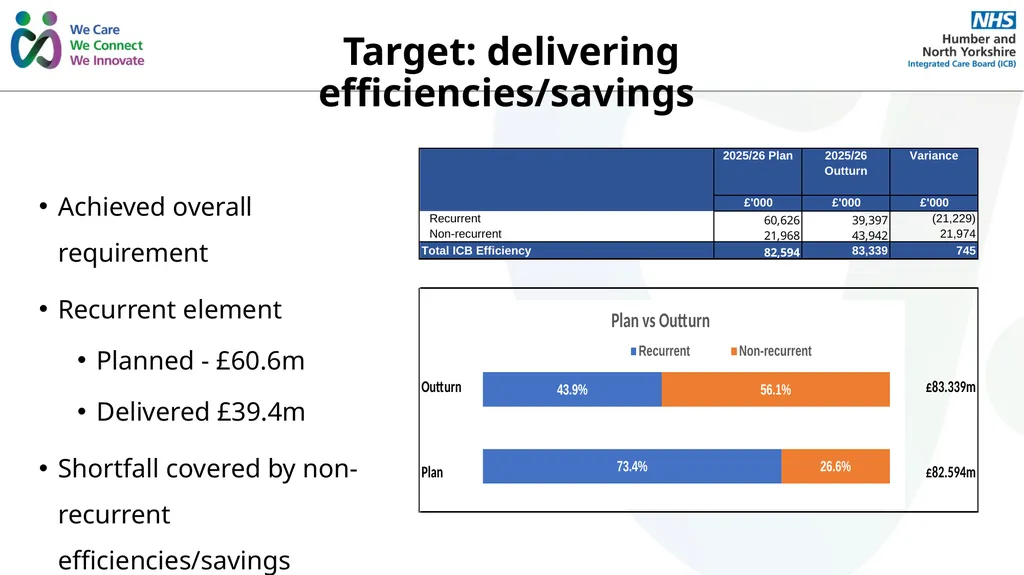
Target: delivering efficiencies/savings Achieved overall requirement
Recurrent element
Planned - £60.6m
Delivered £39.4m
Shortfall covered by non-recurrent efficiencies/savings<br>
18
Target: mental health investment standard Achieved (subject to review)<br>
19
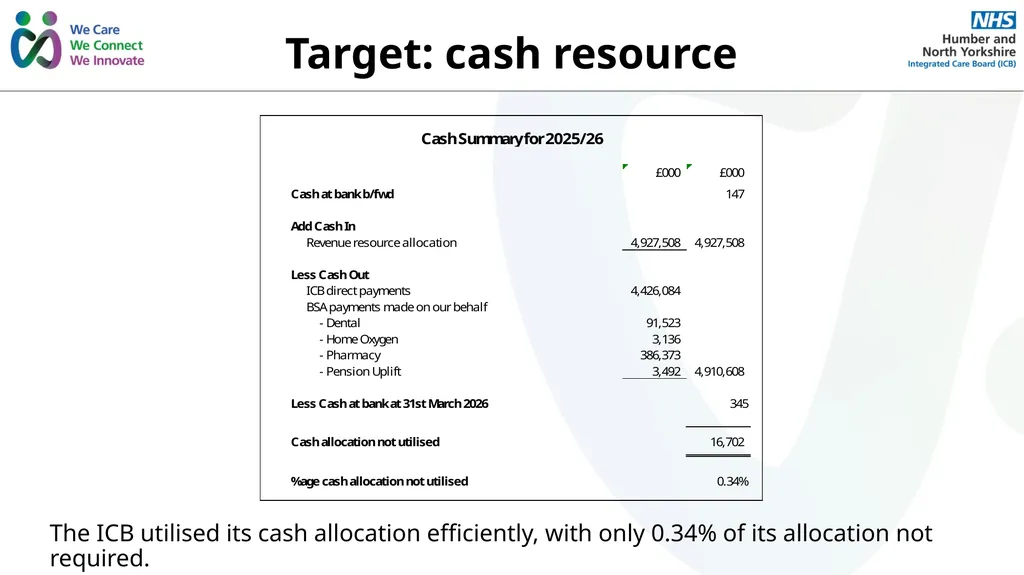
Target: cash resource The ICB utilised its cash allocation efficiently, with only 0.34% of its allocation not required.<br>
20
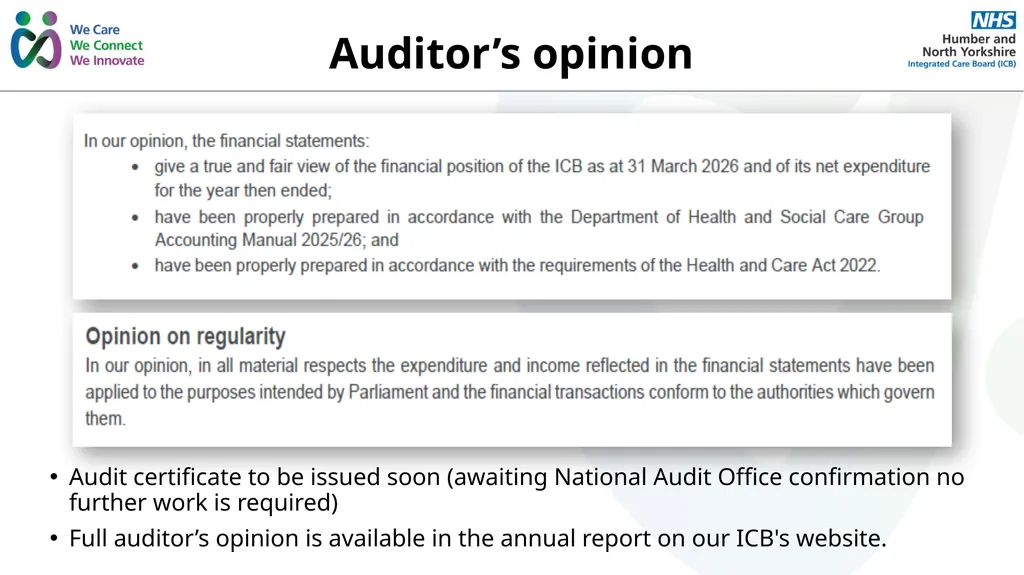
Auditor’s opinion Audit certificate to be issued soon (awaiting National Audit Office confirmation no further work is required)
Full auditor’s opinion is available in the annual report on our ICB's website.<br>
22
A healthier future for Humber and North Yorkshire Anja Hazebroek, Executive Director of Insight and
Commissioning Strategy<br>
23
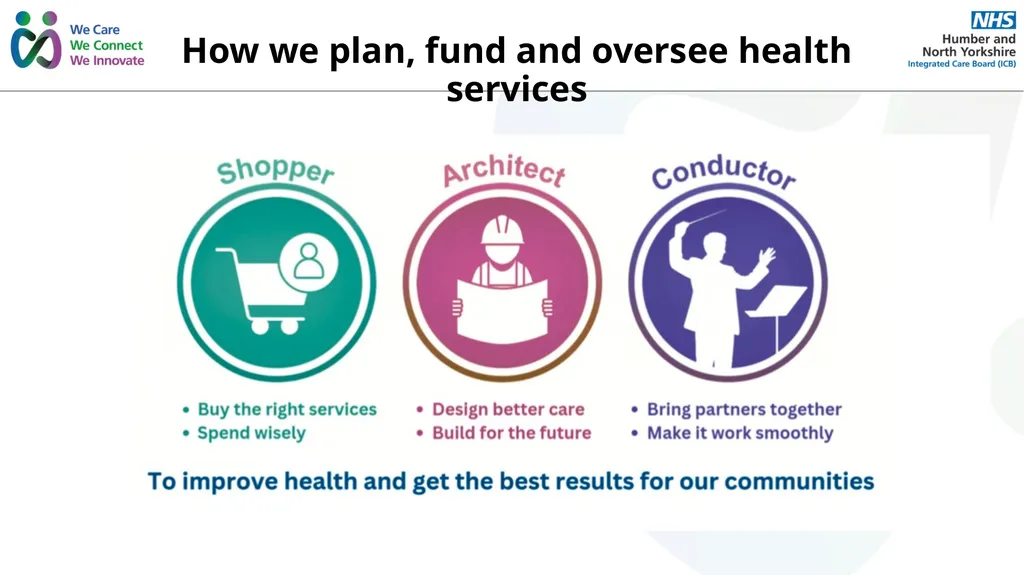
How we plan, fund and oversee health services<br>
24
We want to change the experience of care People have told us they want easier access, coordinated care and earlier support.<br>
25
Margaret – staying independent “The NHS noticed my risks before I reached crisis.” Illustrative composite persona — not a real patient<br>
26
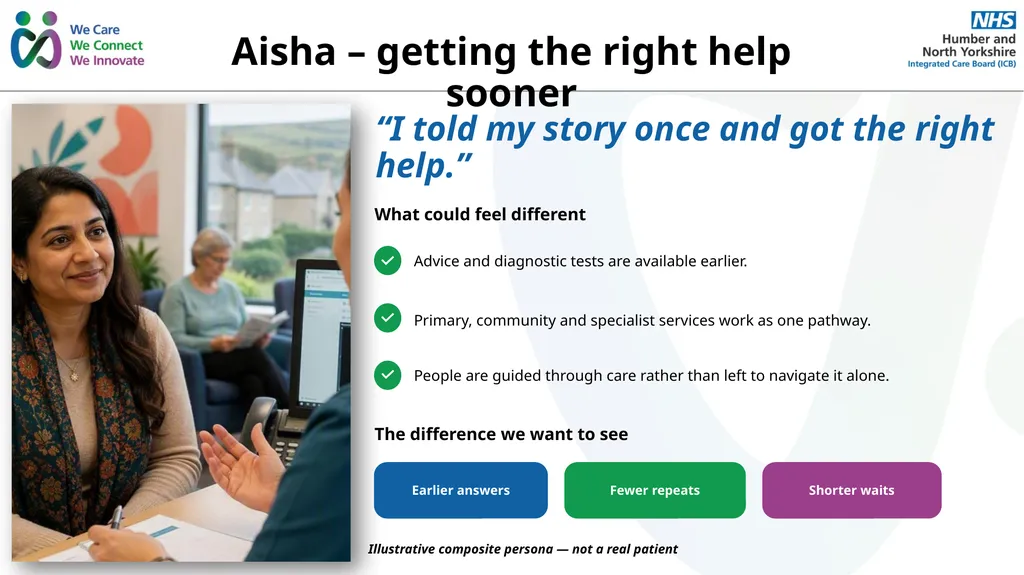
Aisha – getting the right help sooner “I told my story once and got the right help.” Illustrative composite persona — not a real patient<br>
27
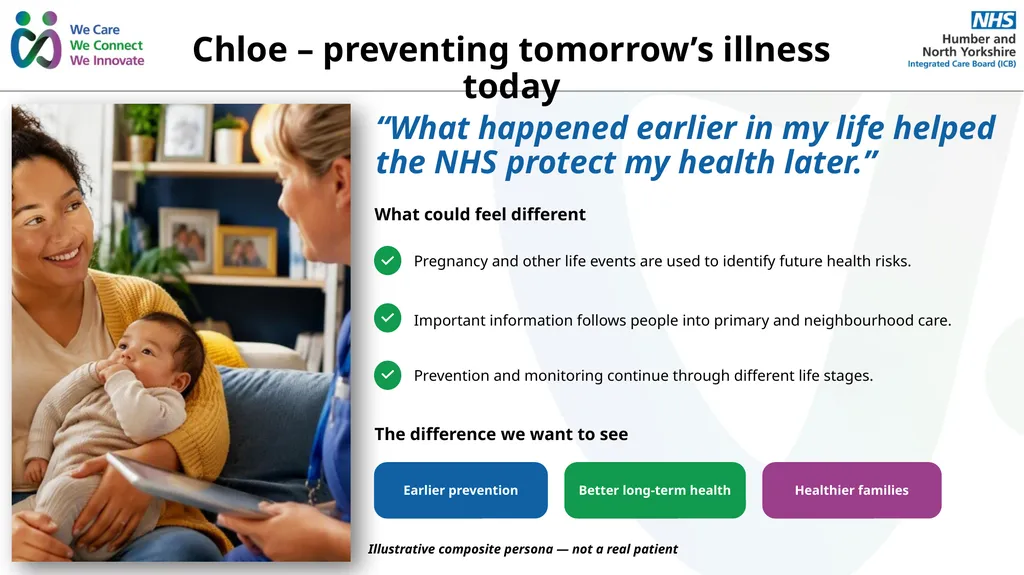
Chloe – preventing tomorrow’s illness today “What happened earlier in my life helped the NHS protect my health later.” Illustrative composite persona — not a real patient<br>
28
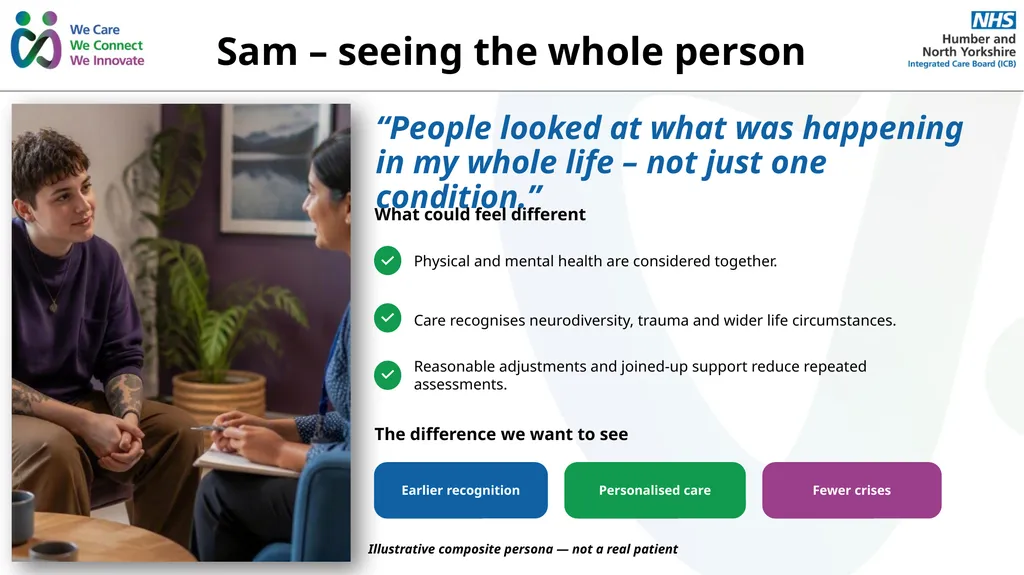
Sam – seeing the whole person “People looked at what was happening in my whole life – not just one condition.” Illustrative composite persona — not a real patient<br>
29
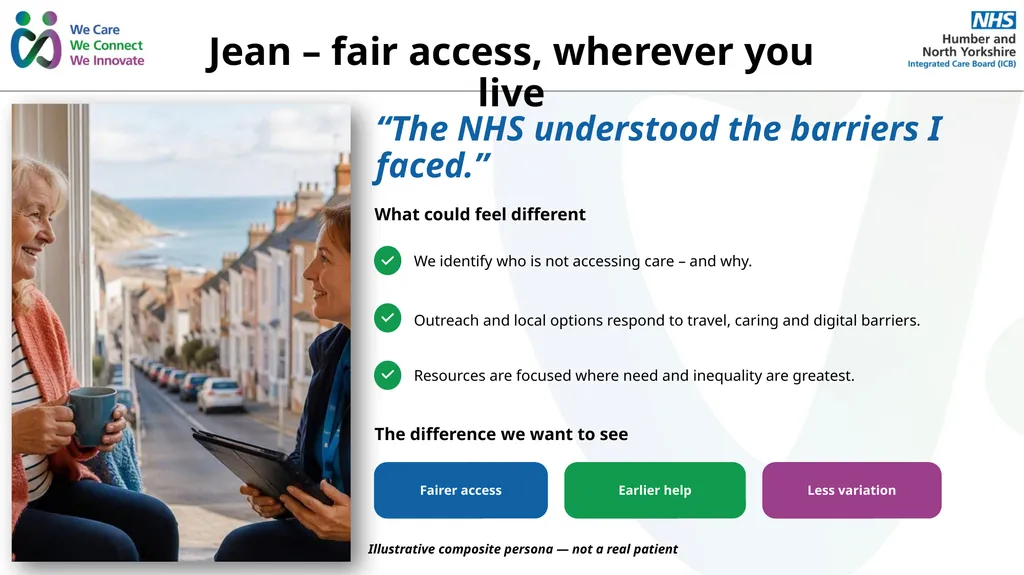
Jean – fair access, wherever you live “The NHS understood the barriers I faced.” Illustrative composite persona — not a real patient<br>
30
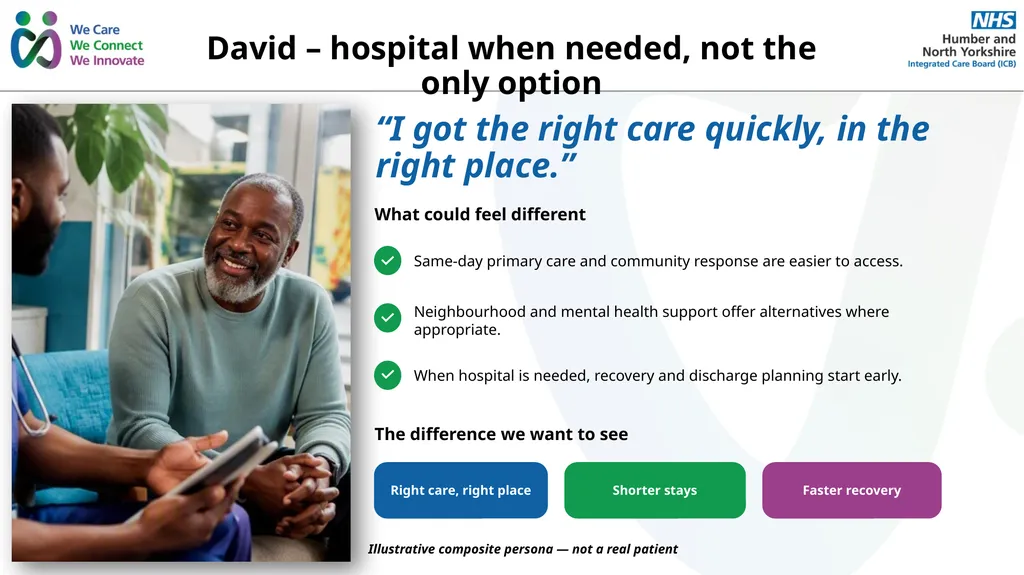
David – hospital when needed, not the only option “I got the right care quickly, in the right place.” Illustrative composite persona — not a real patient<br>
31
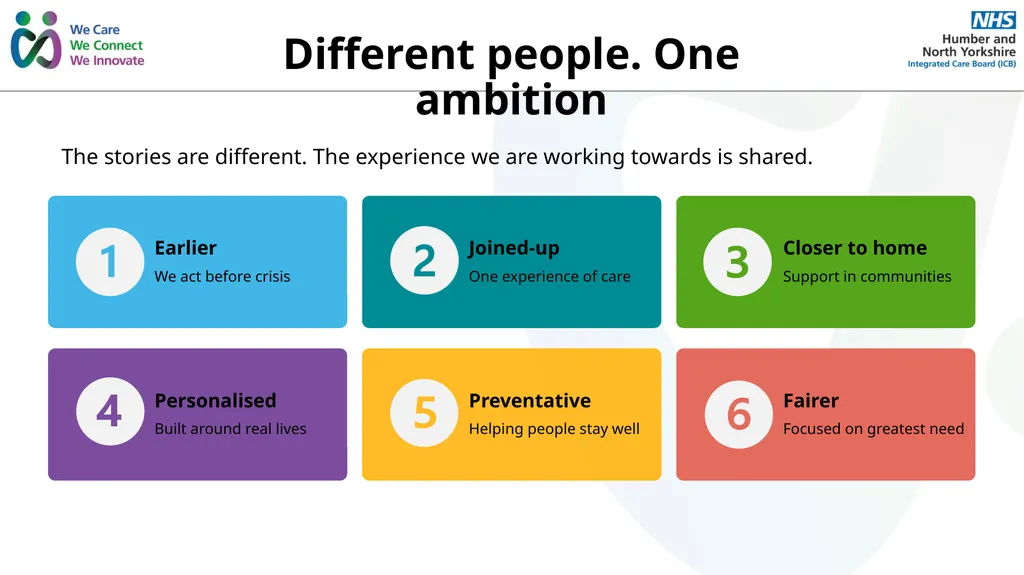
Different people. One ambition The stories are different. The experience we are working towards is shared.<br>
32
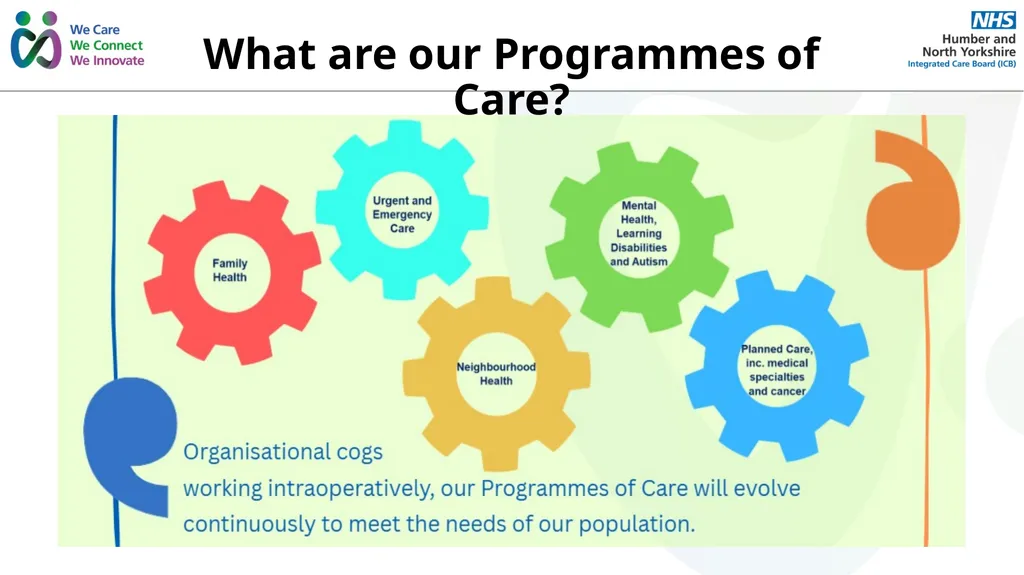
What are our Programmes of Care?<br>
33
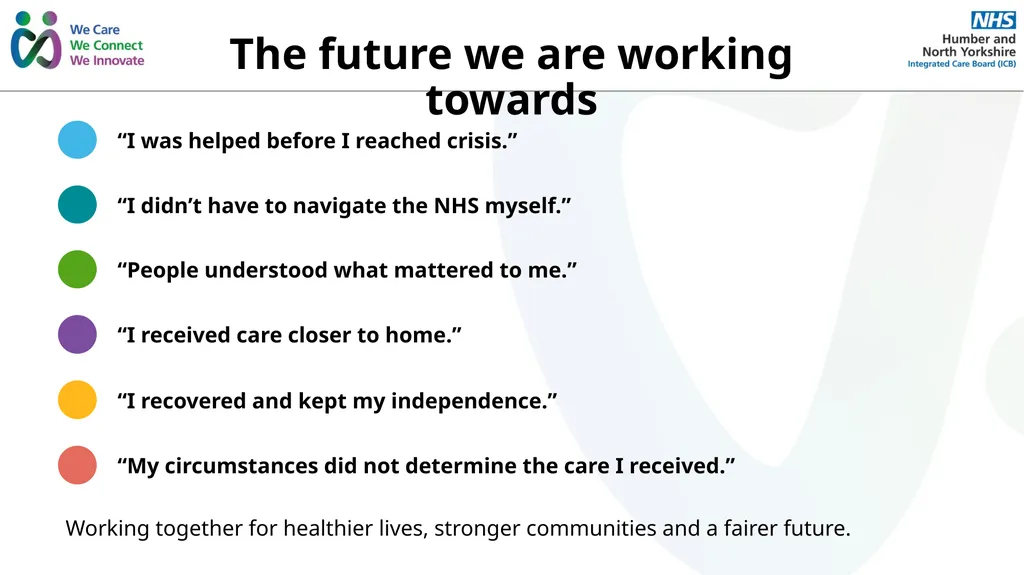
The future we are working towards Working together for healthier lives, stronger communities and a fairer future.<br>
34
Question and answer session<br>
35
Are you funding Ward 3 at Goole and District Hospital to keep step-down frailty?<br>
36
As the ICB moves towards becoming a strategic commissioner, how will smaller grassroots VCSE organisations be involved in designing and delivering prevention health inequalities work at Place level? ��Will there be commissioning or funding routes accessible to smaller community organisations?<br>
37
We support disabled people and families who are increasingly struggling to access the services they need. How will the ICB identify where people are falling through gaps between NHS, social care and community services?��What will it do to address those gaps? What is being done to prevent disabled people and their families being repeatedly referred, redirected or told they do not meet individual service criteria – despite still needing support?�
How will disabled people be involved in designing services, so they are genuinely accessible rather than technically available?<br>
38
For people facing long waits for assessments, diagnosis or specialist support, what provisions should be available while they are waiting?<br>
39
How is the ICB using data and intelligence to shift its commissioning budgets to build towards reducing health inequalities and ensuring a healthier population across Humber and North Yorkshire?<br>
40
We hear a lot about care in the community, but how is the ICB moving resources and decision-making power down to neighbourhood level to address localised drivers of health inequalities?<br>
41
Do you have a question? Please speak to a member of our Communications team before you leave.
If you’d prefer, email hnyicb.communications@nhs.net and we’ll make sure your question gets to the right person and is answered promptly.<br>
42
Closing remarks Jason Stamp, Chair<br>