
Agnotology as a teaching tool Dan Bedford
OM
Published · 35 slides · 0 views

1 / 1






Description
Agnotology as a teaching tool Dan Bedford Geography Department Weber State University Ogden UT 84408-1210 Epistemology: The study of how and why we know things Epistemology: The study of how and why we know things Agnotology: The study of
Related Topics
Share
Embed code
Download this presentation From Below
"Agnotology as a teaching tool Dan Bedford" is the property of its rightful owner. Permission is granted to download and print the materials on this website for personal, non-commercial use only, and to display it on your personal computer provided you do not modify the materials and that you retain all copyright notices contained in the materials. By downloading content from our website, you accept the terms of this agreement.
Presentation Transcript
01
Agnotology as a teaching tool Dan Bedford
Geography Department
Weber State University
Ogden UT 84408-1210<br>
Geography Department
Weber State University
Ogden UT 84408-1210<br>
02
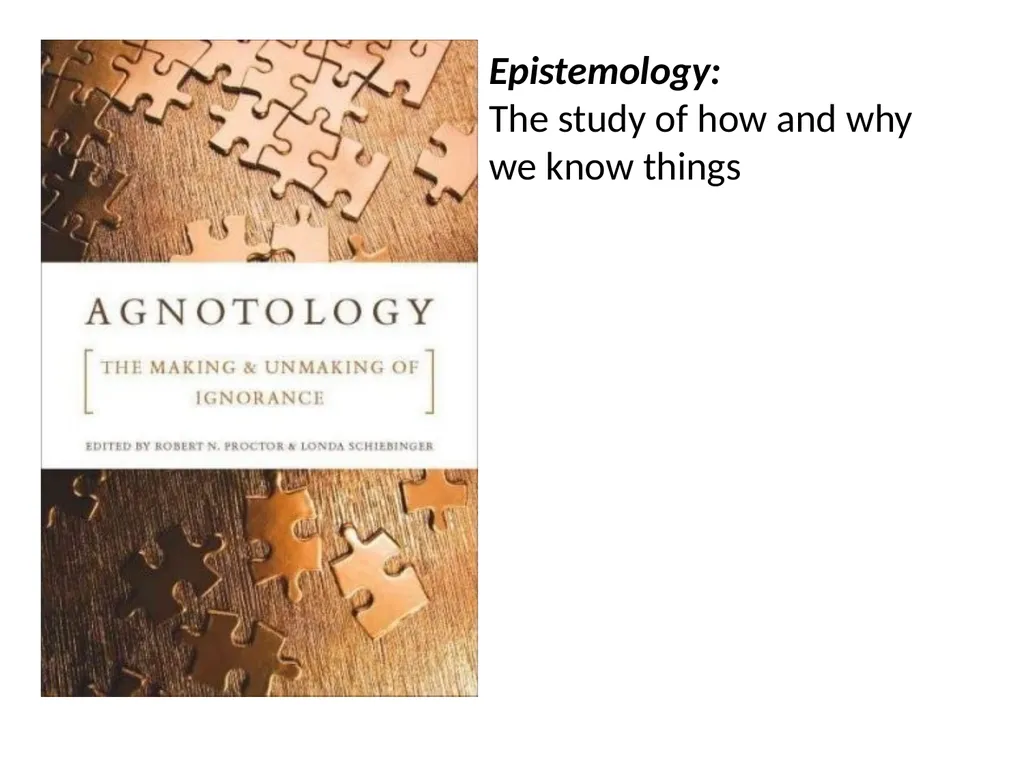
Epistemology:
The study of how and why
we know things<br>
The study of how and why
we know things<br>
03
Epistemology:
The study of how and why
we know things
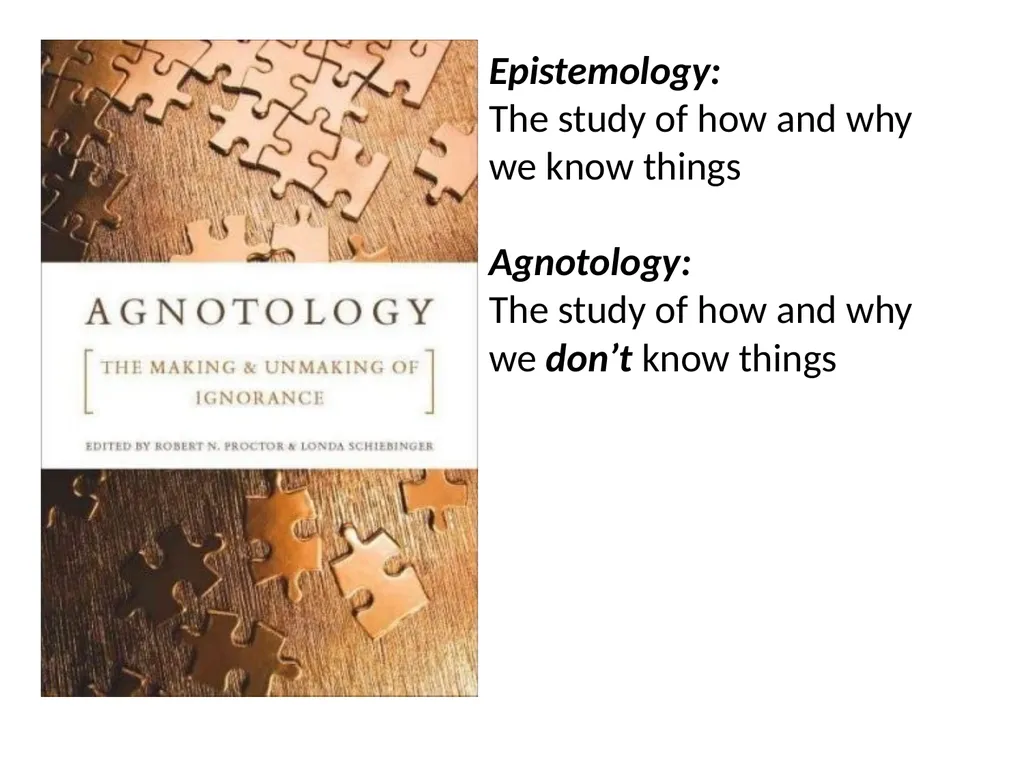
Agnotology:
The study of how and why
we don’t know things<br>
The study of how and why
we know things
Agnotology:
The study of how and why
we don’t know things<br>
04
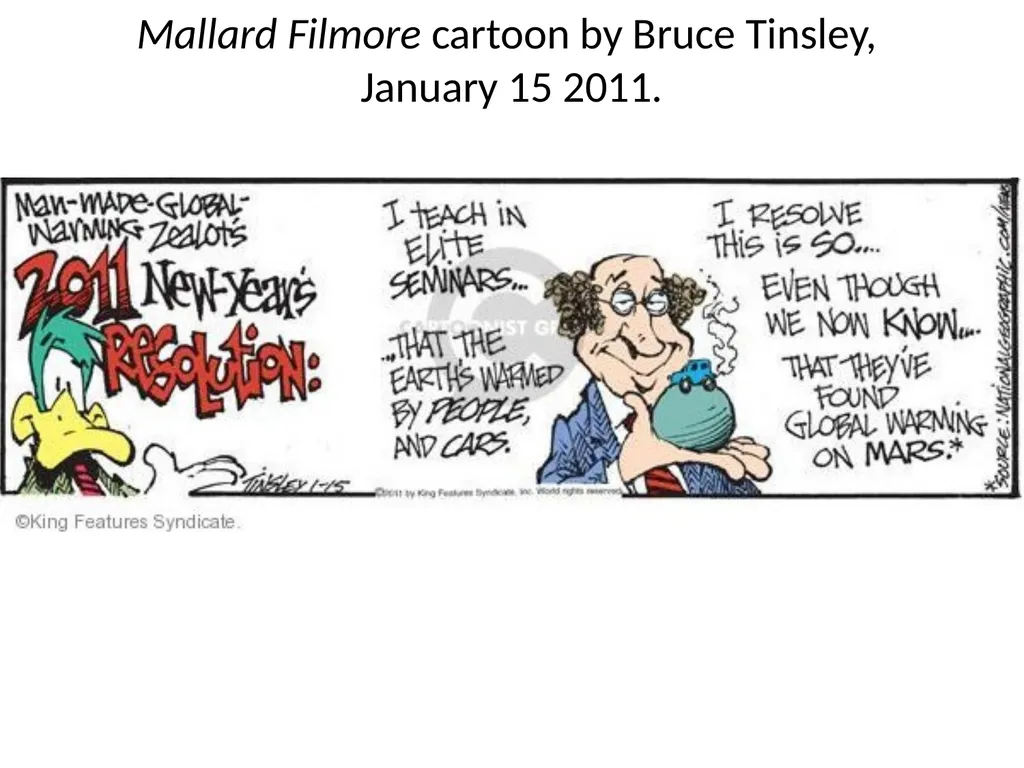
Mallard Filmore cartoon by Bruce Tinsley,
January 15 2011.<br>
January 15 2011.<br>
05
QUESTION:
Have you come across materials like these?<br>
Have you come across materials like these?<br>
06
QUESTION:
Have your students brought your attention to materials like these?<br>
Have your students brought your attention to materials like these?<br>
07
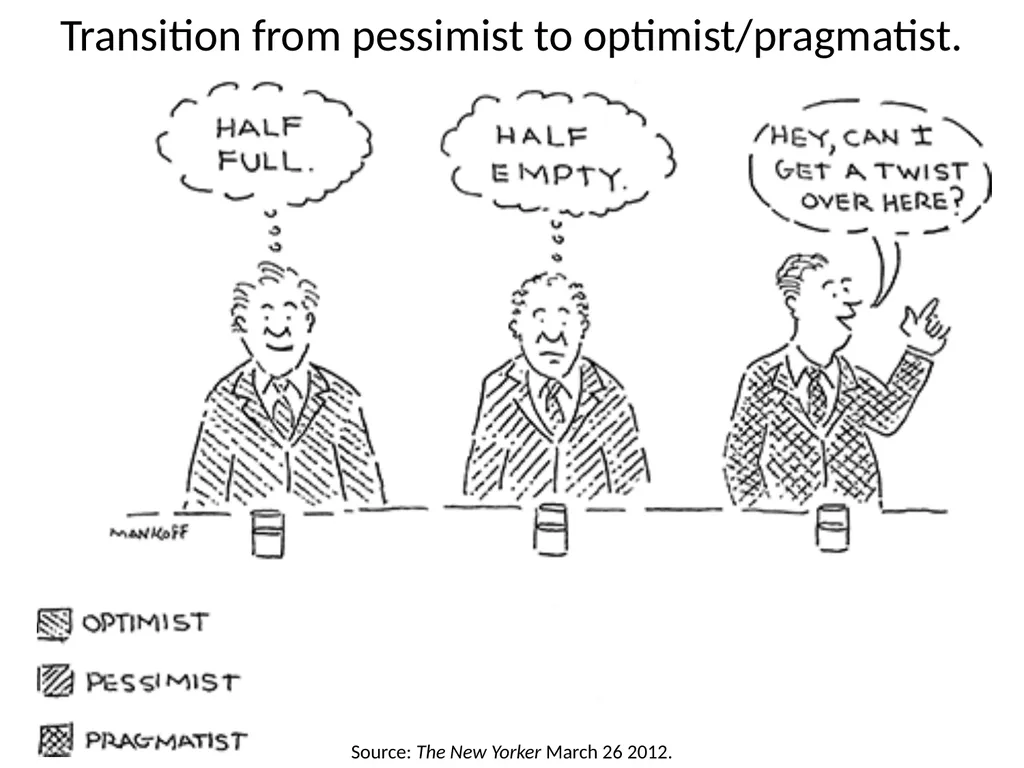
Transition from pessimist to optimist/pragmatist. Source: The New Yorker March 26 2012.<br>
08
Can I vaccinate my students against misinformation?<br>
09
The idea 1. Vaccination:
Equip students to identify misinformation
2. Classroom use:
Test student knowledge and critical thinking<br>
Equip students to identify misinformation
2. Classroom use:
Test student knowledge and critical thinking<br>
10
The idea (1): vaccination Identify flaws in specific items of misinformation<br>
11
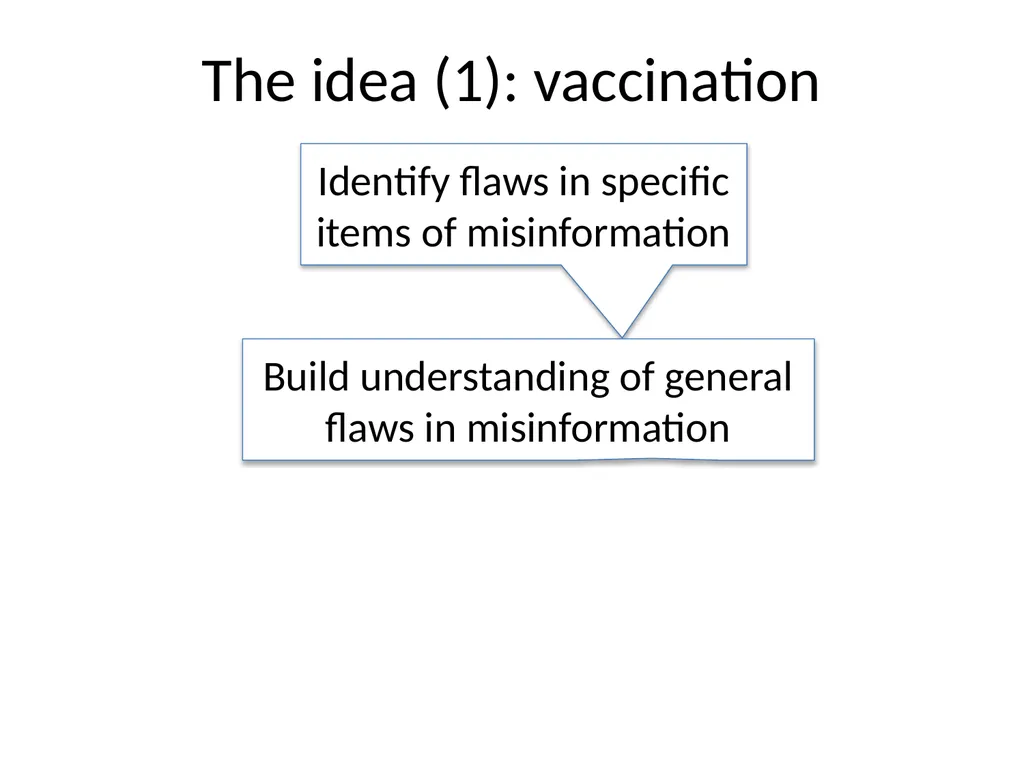
Identify flaws in specific items of misinformation Build understanding of general flaws in misinformation The idea (1): vaccination<br>
12
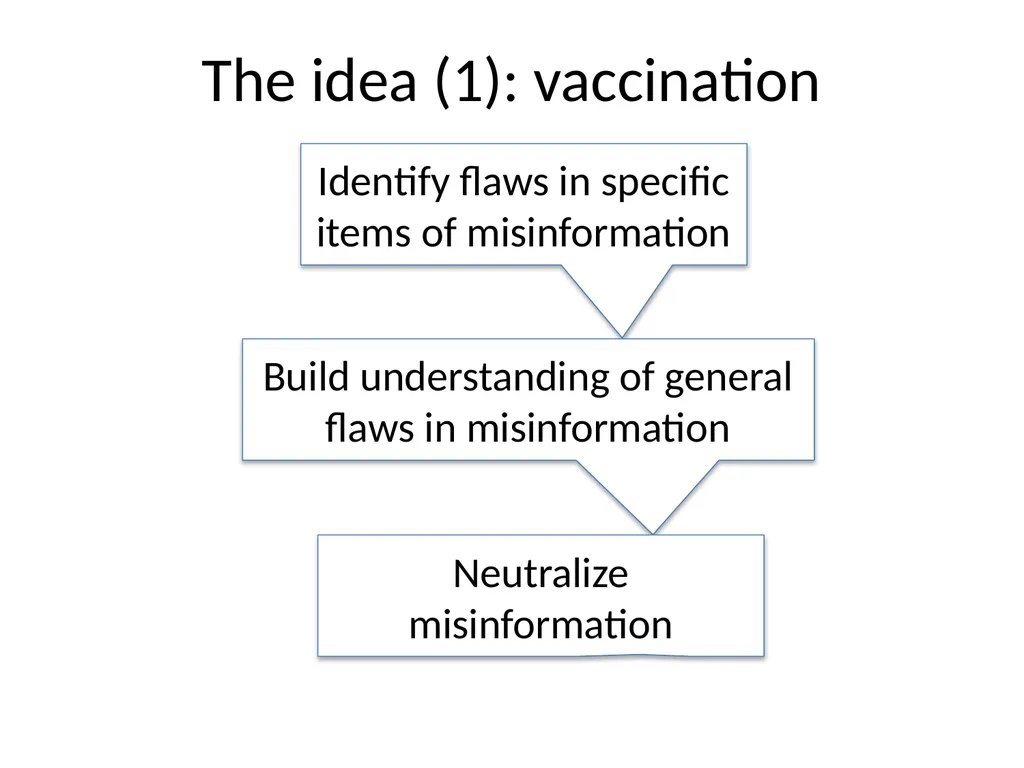
Identify flaws in specific items of misinformation Build understanding of general flaws in misinformation Neutralize misinformation The idea (1): vaccination<br>
13
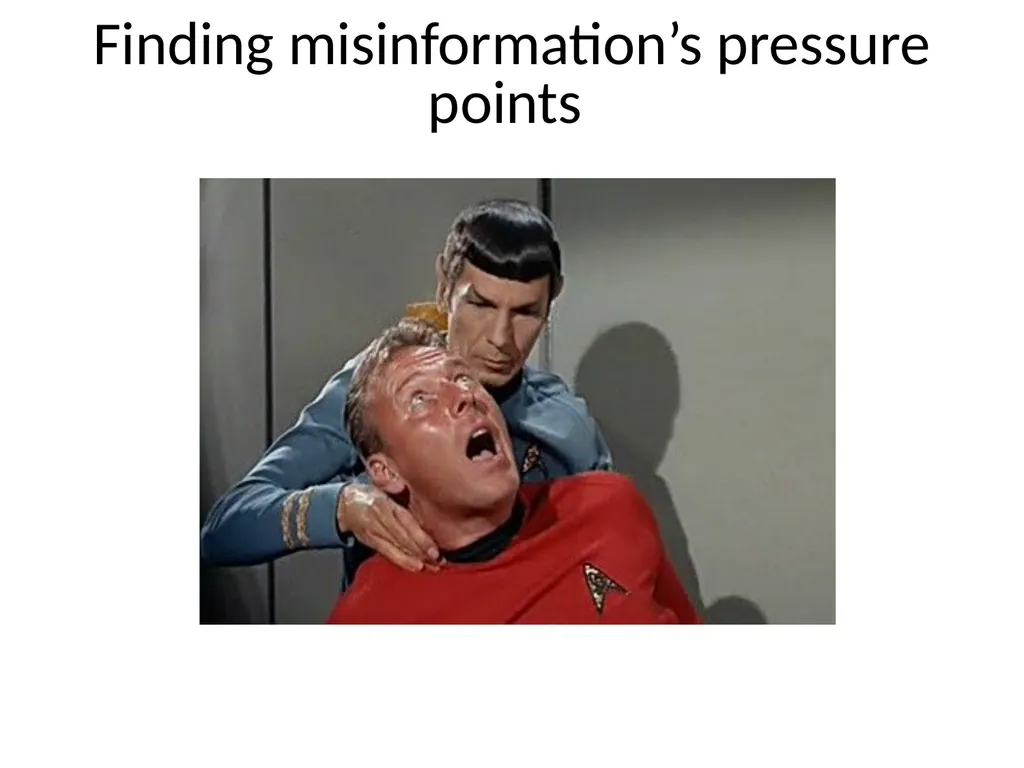
Finding misinformation’s pressure points<br>
14
The idea (2): classroom use Use misinformation to test:
Critical thinking
Content knowledge
Persistence/resilience of content knowledge<br>
Critical thinking
Content knowledge
Persistence/resilience of content knowledge<br>
15
The idea Use misinformation to test:
Critical thinking
Content knowledge
Persistence/resilience of content knowledge These are
LATE-SEMESTER EXERCISES<br>
Critical thinking
Content knowledge
Persistence/resilience of content knowledge These are
LATE-SEMESTER EXERCISES<br>
16
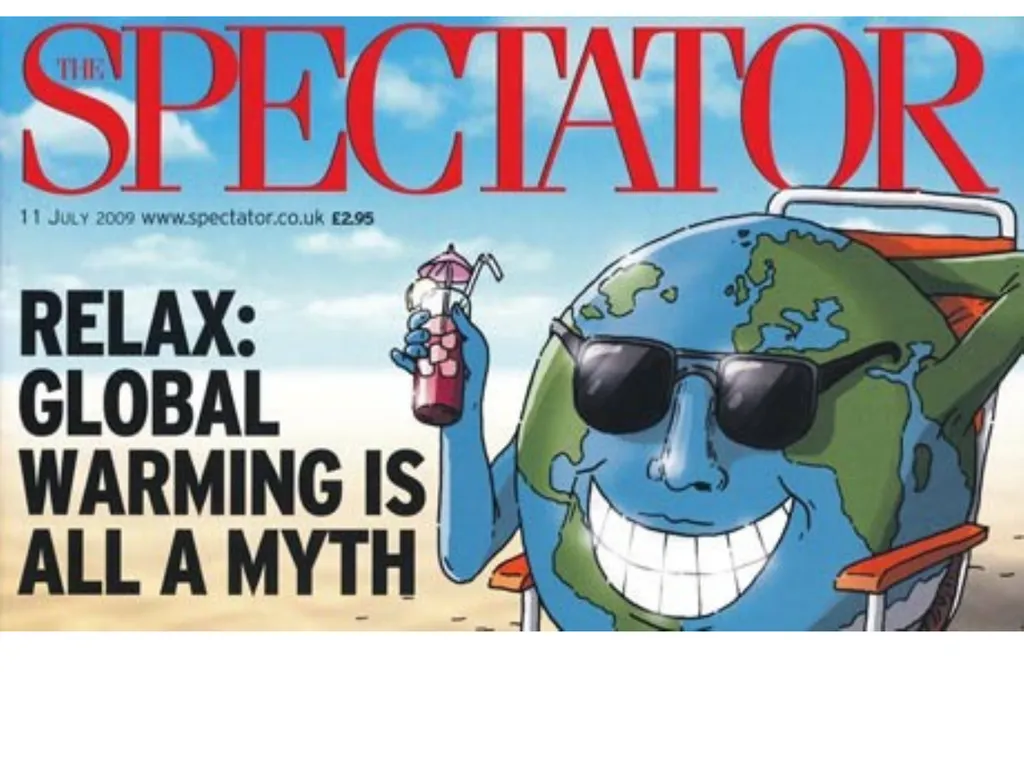
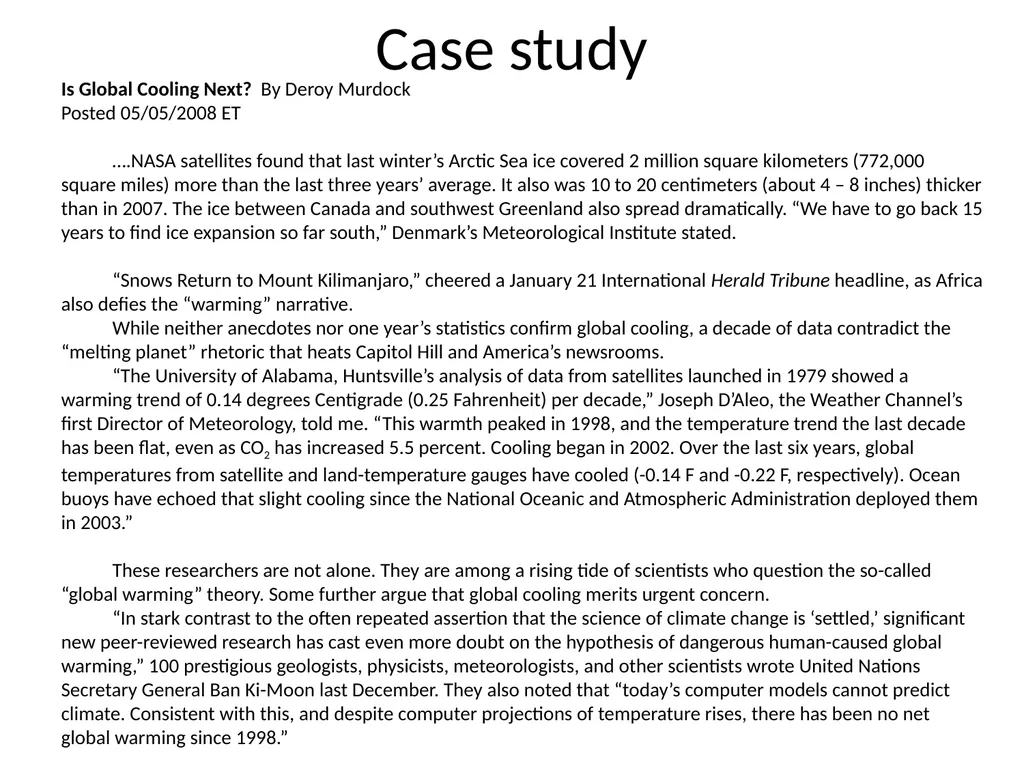
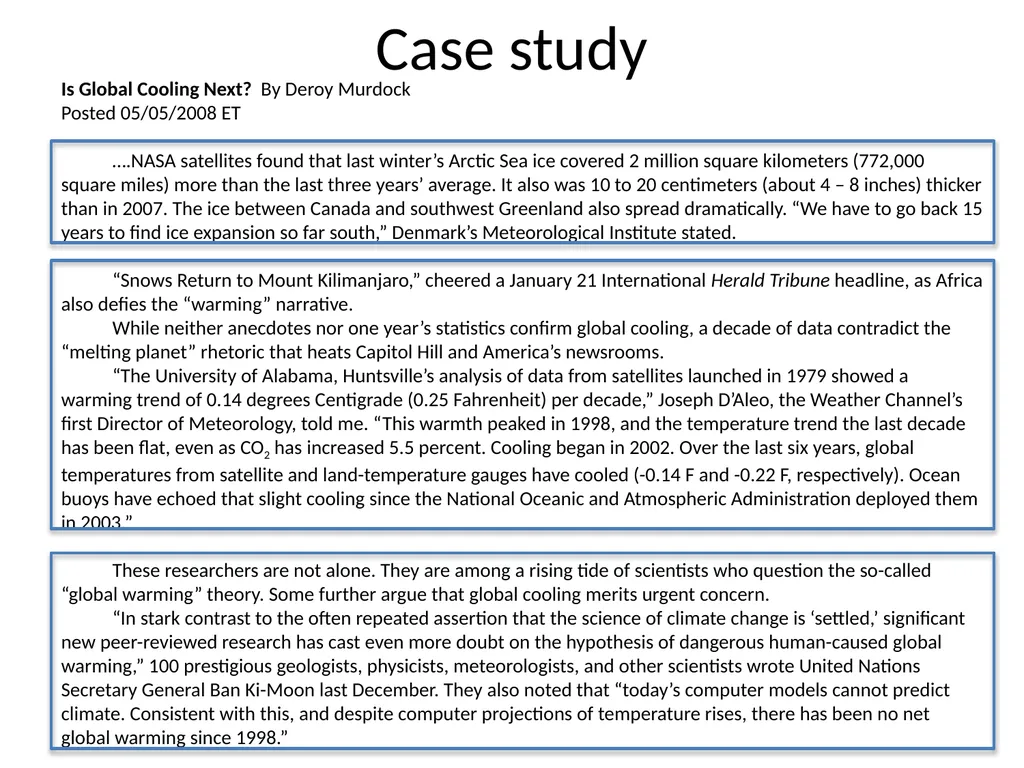
Case study Is Global Cooling Next? By Deroy Murdock
Posted 05/05/2008 ET
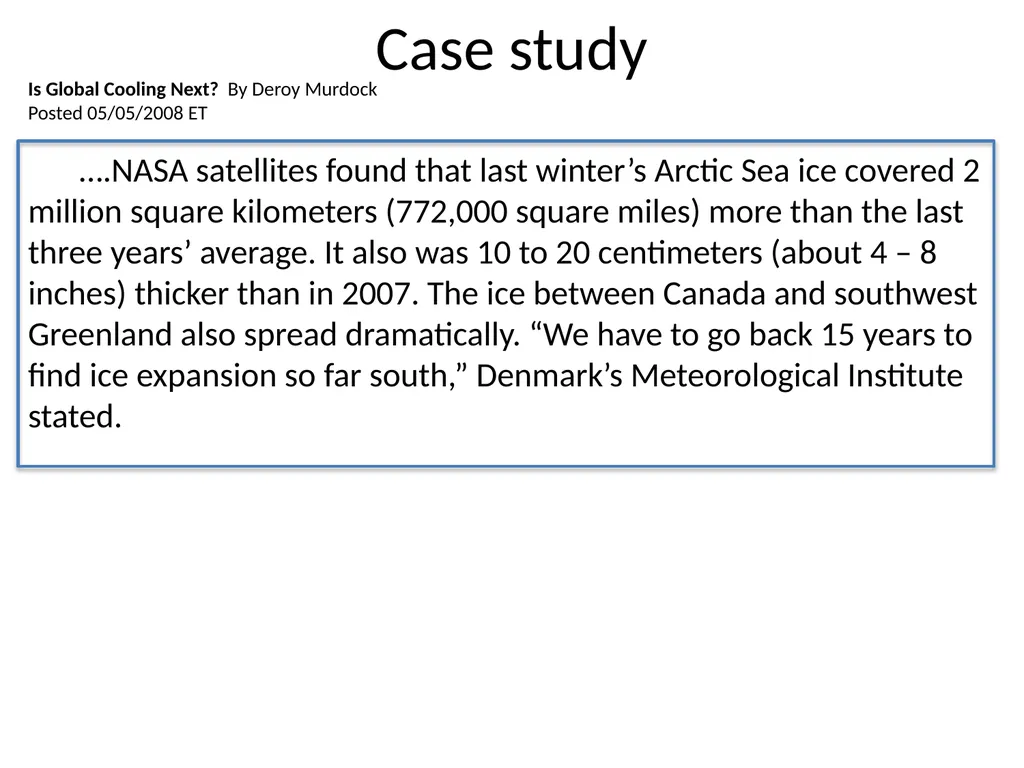
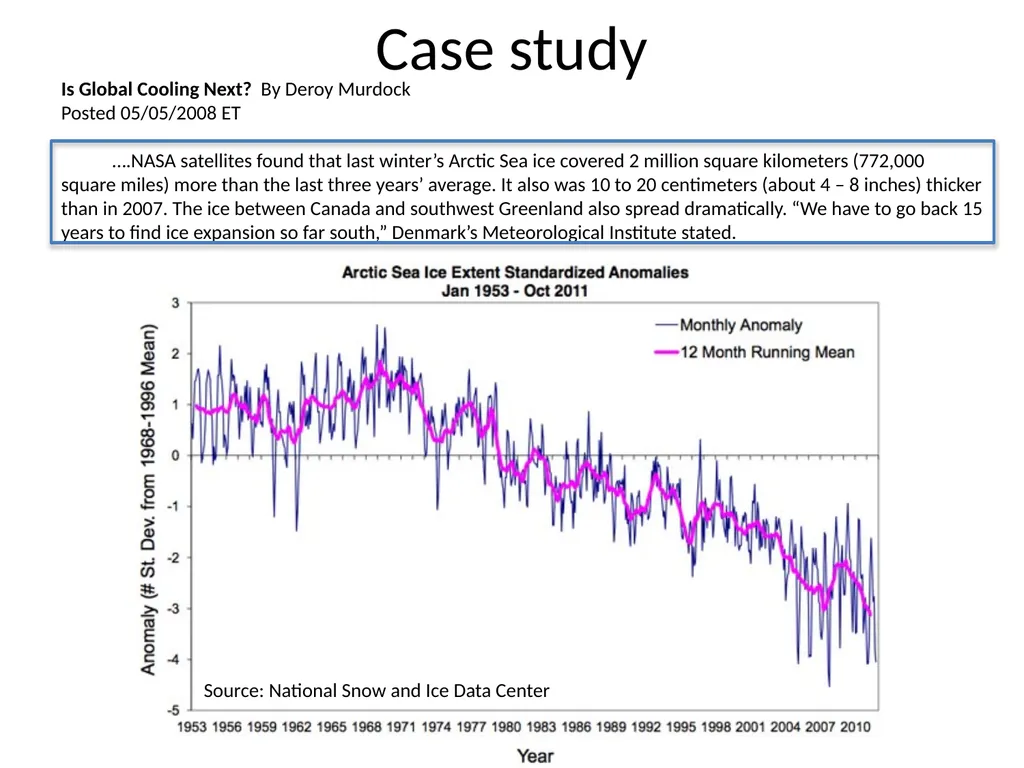
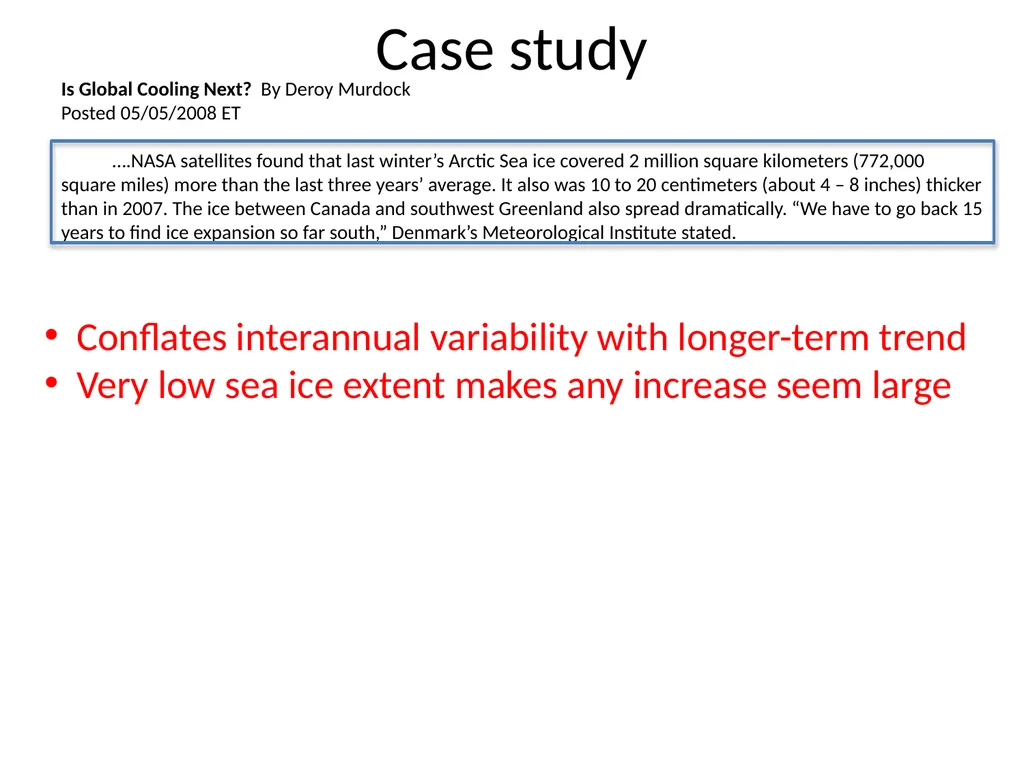
….NASA satellites found that last winter’s Arctic Sea ice covered 2 million square kilometers (772,000 square miles) more than the last three years’ average. It also was 10 to 20 centimeters (about 4 – 8 inches) thicker than in 2007. The ice between Canada and southwest Greenland also spread dramatically. “We have to go back 15 years to find ice expansion so far south,” Denmark’s Meteorological Institute stated.
“Snows Return to Mount Kilimanjaro,” cheered a January 21 International Herald Tribune headline, as Africa also defies the “warming” narrative.
While neither anecdotes nor one year’s statistics confirm global cooling, a decade of data contradict the “melting planet” rhetoric that heats Capitol Hill and America’s newsrooms.
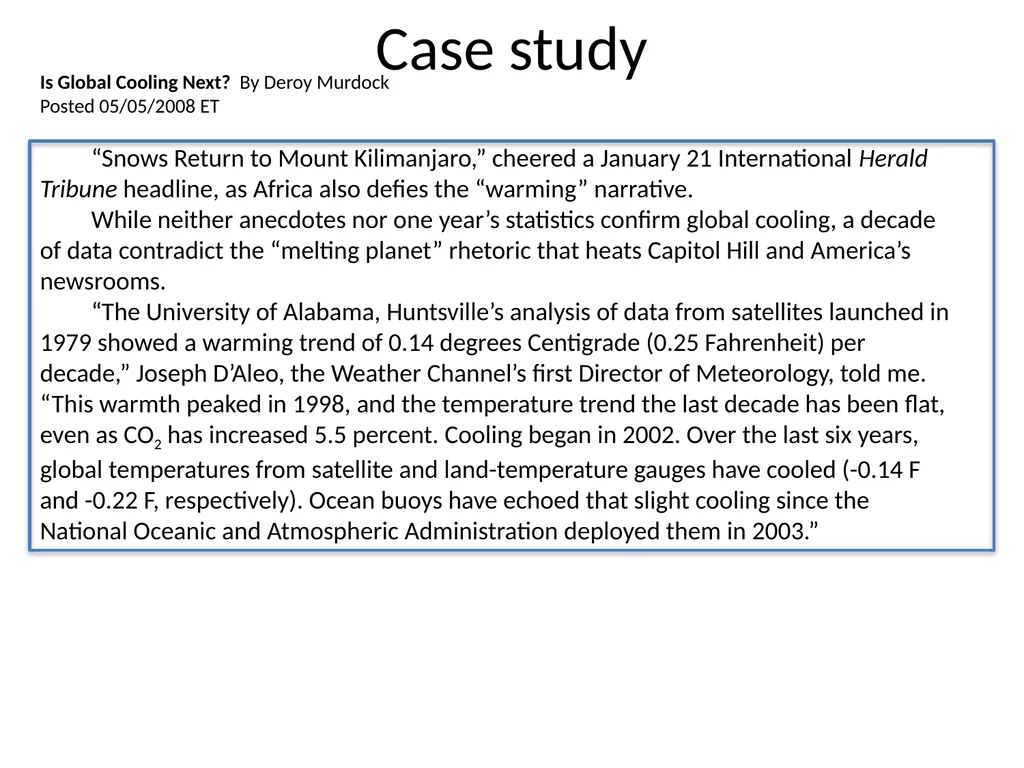
“The University of Alabama, Huntsville’s analysis of data from satellites launched in 1979 showed a warming trend of 0.14 degrees Centigrade (0.25 Fahrenheit) per decade,” Joseph D’Aleo, the Weather Channel’s first Director of Meteorology, told me. “This warmth peaked in 1998, and the temperature trend the last decade has been flat, even as CO2 has increased 5.5 percent. Cooling began in 2002. Over the last six years, global temperatures from satellite and land-temperature gauges have cooled (-0.14 F and -0.22 F, respectively). Ocean buoys have echoed that slight cooling since the National Oceanic and Atmospheric Administration deployed them in 2003.”
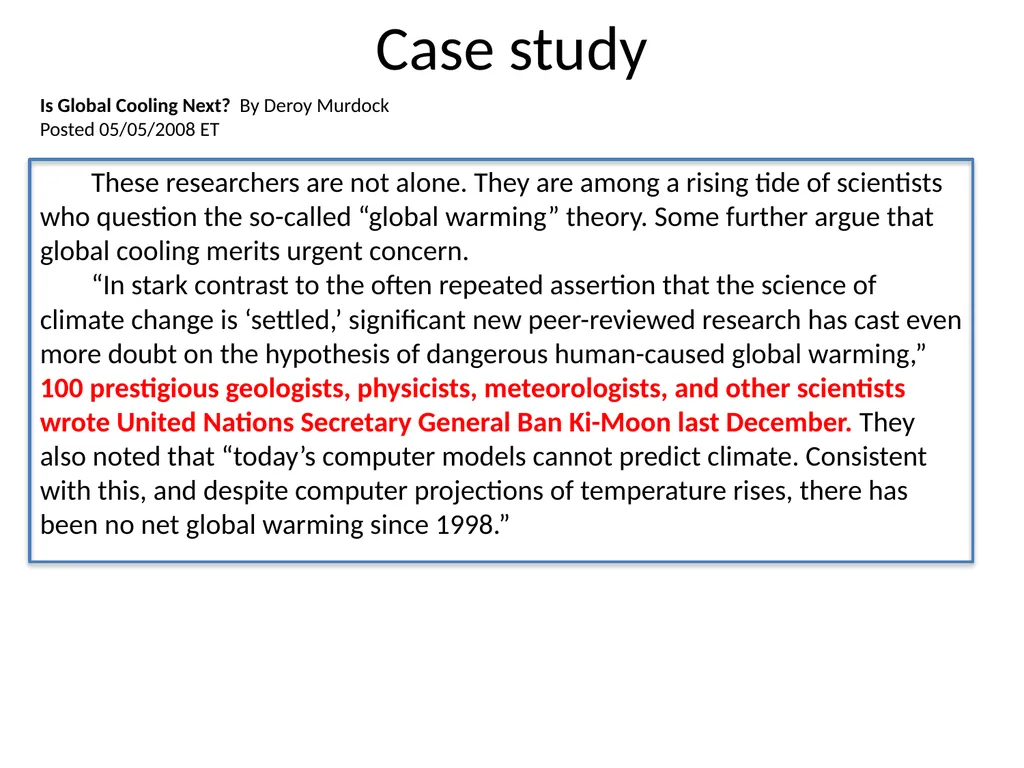
These researchers are not alone. They are among a rising tide of scientists who question the so-called “global warming” theory. Some further argue that global cooling merits urgent concern.
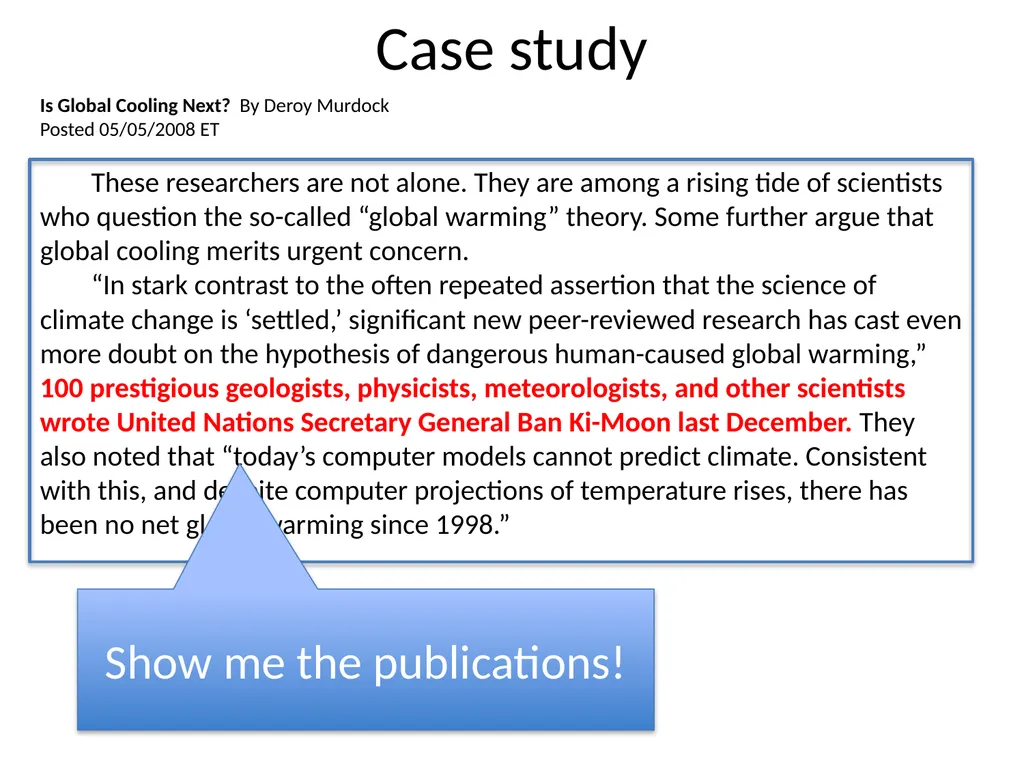
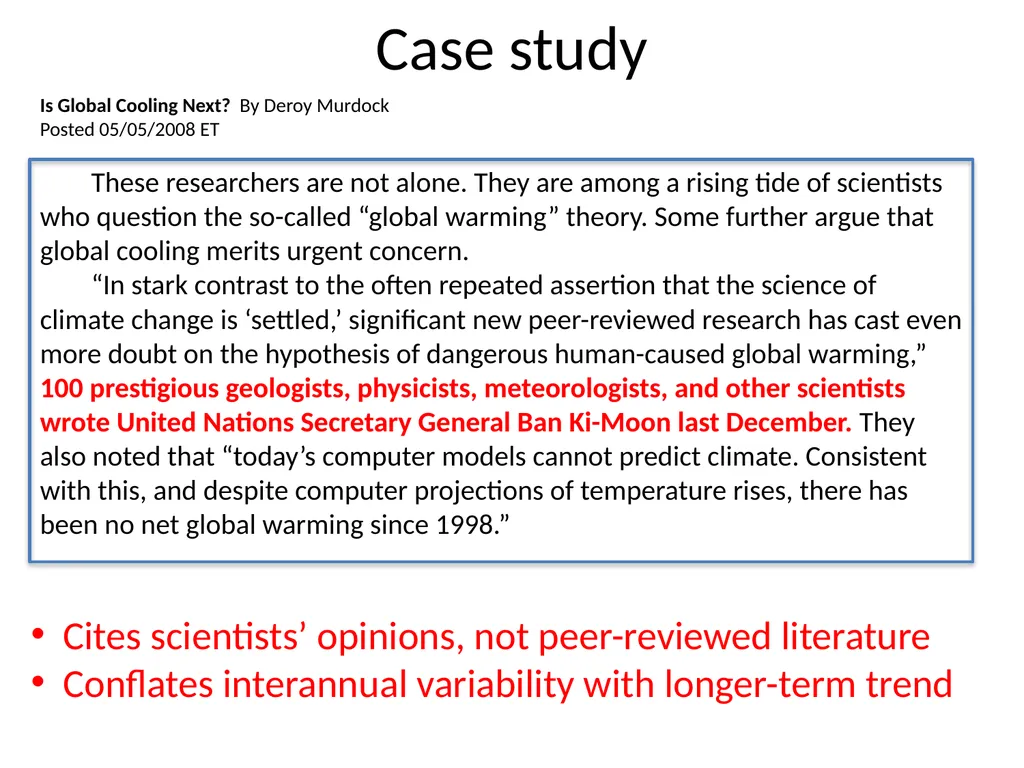
“In stark contrast to the often repeated assertion that the science of climate change is ‘settled,’ significant new peer-reviewed research has cast even more doubt on the hypothesis of dangerous human-caused global warming,” 100 prestigious geologists, physicists, meteorologists, and other scientists wrote United Nations Secretary General Ban Ki-Moon last December. They also noted that “today’s computer models cannot predict climate. Consistent with this, and despite computer projections of temperature rises, there has been no net global warming since 1998.”<br>
Posted 05/05/2008 ET
….NASA satellites found that last winter’s Arctic Sea ice covered 2 million square kilometers (772,000 square miles) more than the last three years’ average. It also was 10 to 20 centimeters (about 4 – 8 inches) thicker than in 2007. The ice between Canada and southwest Greenland also spread dramatically. “We have to go back 15 years to find ice expansion so far south,” Denmark’s Meteorological Institute stated.
“Snows Return to Mount Kilimanjaro,” cheered a January 21 International Herald Tribune headline, as Africa also defies the “warming” narrative.
While neither anecdotes nor one year’s statistics confirm global cooling, a decade of data contradict the “melting planet” rhetoric that heats Capitol Hill and America’s newsrooms.
“The University of Alabama, Huntsville’s analysis of data from satellites launched in 1979 showed a warming trend of 0.14 degrees Centigrade (0.25 Fahrenheit) per decade,” Joseph D’Aleo, the Weather Channel’s first Director of Meteorology, told me. “This warmth peaked in 1998, and the temperature trend the last decade has been flat, even as CO2 has increased 5.5 percent. Cooling began in 2002. Over the last six years, global temperatures from satellite and land-temperature gauges have cooled (-0.14 F and -0.22 F, respectively). Ocean buoys have echoed that slight cooling since the National Oceanic and Atmospheric Administration deployed them in 2003.”
These researchers are not alone. They are among a rising tide of scientists who question the so-called “global warming” theory. Some further argue that global cooling merits urgent concern.
“In stark contrast to the often repeated assertion that the science of climate change is ‘settled,’ significant new peer-reviewed research has cast even more doubt on the hypothesis of dangerous human-caused global warming,” 100 prestigious geologists, physicists, meteorologists, and other scientists wrote United Nations Secretary General Ban Ki-Moon last December. They also noted that “today’s computer models cannot predict climate. Consistent with this, and despite computer projections of temperature rises, there has been no net global warming since 1998.”<br>
17
Case study Is Global Cooling Next? By Deroy Murdock
Posted 05/05/2008 ET
….NASA satellites found that last winter’s Arctic Sea ice covered 2 million square kilometers (772,000 square miles) more than the last three years’ average. It also was 10 to 20 centimeters (about 4 – 8 inches) thicker than in 2007. The ice between Canada and southwest Greenland also spread dramatically. “We have to go back 15 years to find ice expansion so far south,” Denmark’s Meteorological Institute stated.
“Snows Return to Mount Kilimanjaro,” cheered a January 21 International Herald Tribune headline, as Africa also defies the “warming” narrative.
While neither anecdotes nor one year’s statistics confirm global cooling, a decade of data contradict the “melting planet” rhetoric that heats Capitol Hill and America’s newsrooms.
“The University of Alabama, Huntsville’s analysis of data from satellites launched in 1979 showed a warming trend of 0.14 degrees Centigrade (0.25 Fahrenheit) per decade,” Joseph D’Aleo, the Weather Channel’s first Director of Meteorology, told me. “This warmth peaked in 1998, and the temperature trend the last decade has been flat, even as CO2 has increased 5.5 percent. Cooling began in 2002. Over the last six years, global temperatures from satellite and land-temperature gauges have cooled (-0.14 F and -0.22 F, respectively). Ocean buoys have echoed that slight cooling since the National Oceanic and Atmospheric Administration deployed them in 2003.”
These researchers are not alone. They are among a rising tide of scientists who question the so-called “global warming” theory. Some further argue that global cooling merits urgent concern.
“In stark contrast to the often repeated assertion that the science of climate change is ‘settled,’ significant new peer-reviewed research has cast even more doubt on the hypothesis of dangerous human-caused global warming,” 100 prestigious geologists, physicists, meteorologists, and other scientists wrote United Nations Secretary General Ban Ki-Moon last December. They also noted that “today’s computer models cannot predict climate. Consistent with this, and despite computer projections of temperature rises, there has been no net global warming since 1998.”<br>
Posted 05/05/2008 ET
….NASA satellites found that last winter’s Arctic Sea ice covered 2 million square kilometers (772,000 square miles) more than the last three years’ average. It also was 10 to 20 centimeters (about 4 – 8 inches) thicker than in 2007. The ice between Canada and southwest Greenland also spread dramatically. “We have to go back 15 years to find ice expansion so far south,” Denmark’s Meteorological Institute stated.
“Snows Return to Mount Kilimanjaro,” cheered a January 21 International Herald Tribune headline, as Africa also defies the “warming” narrative.
While neither anecdotes nor one year’s statistics confirm global cooling, a decade of data contradict the “melting planet” rhetoric that heats Capitol Hill and America’s newsrooms.
“The University of Alabama, Huntsville’s analysis of data from satellites launched in 1979 showed a warming trend of 0.14 degrees Centigrade (0.25 Fahrenheit) per decade,” Joseph D’Aleo, the Weather Channel’s first Director of Meteorology, told me. “This warmth peaked in 1998, and the temperature trend the last decade has been flat, even as CO2 has increased 5.5 percent. Cooling began in 2002. Over the last six years, global temperatures from satellite and land-temperature gauges have cooled (-0.14 F and -0.22 F, respectively). Ocean buoys have echoed that slight cooling since the National Oceanic and Atmospheric Administration deployed them in 2003.”
These researchers are not alone. They are among a rising tide of scientists who question the so-called “global warming” theory. Some further argue that global cooling merits urgent concern.
“In stark contrast to the often repeated assertion that the science of climate change is ‘settled,’ significant new peer-reviewed research has cast even more doubt on the hypothesis of dangerous human-caused global warming,” 100 prestigious geologists, physicists, meteorologists, and other scientists wrote United Nations Secretary General Ban Ki-Moon last December. They also noted that “today’s computer models cannot predict climate. Consistent with this, and despite computer projections of temperature rises, there has been no net global warming since 1998.”<br>
18
Case study Is Global Cooling Next? By Deroy Murdock
Posted 05/05/2008 ET
….NASA satellites found that last winter’s Arctic Sea ice covered 2 million square kilometers (772,000 square miles) more than the last three years’ average. It also was 10 to 20 centimeters (about 4 – 8 inches) thicker than in 2007. The ice between Canada and southwest Greenland also spread dramatically. “We have to go back 15 years to find ice expansion so far south,” Denmark’s Meteorological Institute stated.<br>
Posted 05/05/2008 ET
….NASA satellites found that last winter’s Arctic Sea ice covered 2 million square kilometers (772,000 square miles) more than the last three years’ average. It also was 10 to 20 centimeters (about 4 – 8 inches) thicker than in 2007. The ice between Canada and southwest Greenland also spread dramatically. “We have to go back 15 years to find ice expansion so far south,” Denmark’s Meteorological Institute stated.<br>
19
Case study Is Global Cooling Next? By Deroy Murdock
Posted 05/05/2008 ET
….NASA satellites found that last winter’s Arctic Sea ice covered 2 million square kilometers (772,000 square miles) more than the last three years’ average. It also was 10 to 20 centimeters (about 4 – 8 inches) thicker than in 2007. The ice between Canada and southwest Greenland also spread dramatically. “We have to go back 15 years to find ice expansion so far south,” Denmark’s Meteorological Institute stated. Source: National Snow and Ice Data Center<br>
Posted 05/05/2008 ET
….NASA satellites found that last winter’s Arctic Sea ice covered 2 million square kilometers (772,000 square miles) more than the last three years’ average. It also was 10 to 20 centimeters (about 4 – 8 inches) thicker than in 2007. The ice between Canada and southwest Greenland also spread dramatically. “We have to go back 15 years to find ice expansion so far south,” Denmark’s Meteorological Institute stated. Source: National Snow and Ice Data Center<br>
20
Case study Is Global Cooling Next? By Deroy Murdock
Posted 05/05/2008 ET
….NASA satellites found that last winter’s Arctic Sea ice covered 2 million square kilometers (772,000 square miles) more than the last three years’ average. It also was 10 to 20 centimeters (about 4 – 8 inches) thicker than in 2007. The ice between Canada and southwest Greenland also spread dramatically. “We have to go back 15 years to find ice expansion so far south,” Denmark’s Meteorological Institute stated. Conflates interannual variability with longer-term trend
Very low sea ice extent makes any increase seem large<br>
Posted 05/05/2008 ET
….NASA satellites found that last winter’s Arctic Sea ice covered 2 million square kilometers (772,000 square miles) more than the last three years’ average. It also was 10 to 20 centimeters (about 4 – 8 inches) thicker than in 2007. The ice between Canada and southwest Greenland also spread dramatically. “We have to go back 15 years to find ice expansion so far south,” Denmark’s Meteorological Institute stated. Conflates interannual variability with longer-term trend
Very low sea ice extent makes any increase seem large<br>
21
Case study Is Global Cooling Next? By Deroy Murdock
Posted 05/05/2008 ET
“Snows Return to Mount Kilimanjaro,” cheered a January 21 International Herald Tribune headline, as Africa also defies the “warming” narrative.
While neither anecdotes nor one year’s statistics confirm global cooling, a decade of data contradict the “melting planet” rhetoric that heats Capitol Hill and America’s newsrooms.
“The University of Alabama, Huntsville’s analysis of data from satellites launched in 1979 showed a warming trend of 0.14 degrees Centigrade (0.25 Fahrenheit) per decade,” Joseph D’Aleo, the Weather Channel’s first Director of Meteorology, told me. “This warmth peaked in 1998, and the temperature trend the last decade has been flat, even as CO2 has increased 5.5 percent. Cooling began in 2002. Over the last six years, global temperatures from satellite and land-temperature gauges have cooled (-0.14 F and -0.22 F, respectively). Ocean buoys have echoed that slight cooling since the National Oceanic and Atmospheric Administration deployed them in 2003.”<br>
Posted 05/05/2008 ET
“Snows Return to Mount Kilimanjaro,” cheered a January 21 International Herald Tribune headline, as Africa also defies the “warming” narrative.
While neither anecdotes nor one year’s statistics confirm global cooling, a decade of data contradict the “melting planet” rhetoric that heats Capitol Hill and America’s newsrooms.
“The University of Alabama, Huntsville’s analysis of data from satellites launched in 1979 showed a warming trend of 0.14 degrees Centigrade (0.25 Fahrenheit) per decade,” Joseph D’Aleo, the Weather Channel’s first Director of Meteorology, told me. “This warmth peaked in 1998, and the temperature trend the last decade has been flat, even as CO2 has increased 5.5 percent. Cooling began in 2002. Over the last six years, global temperatures from satellite and land-temperature gauges have cooled (-0.14 F and -0.22 F, respectively). Ocean buoys have echoed that slight cooling since the National Oceanic and Atmospheric Administration deployed them in 2003.”<br>
22
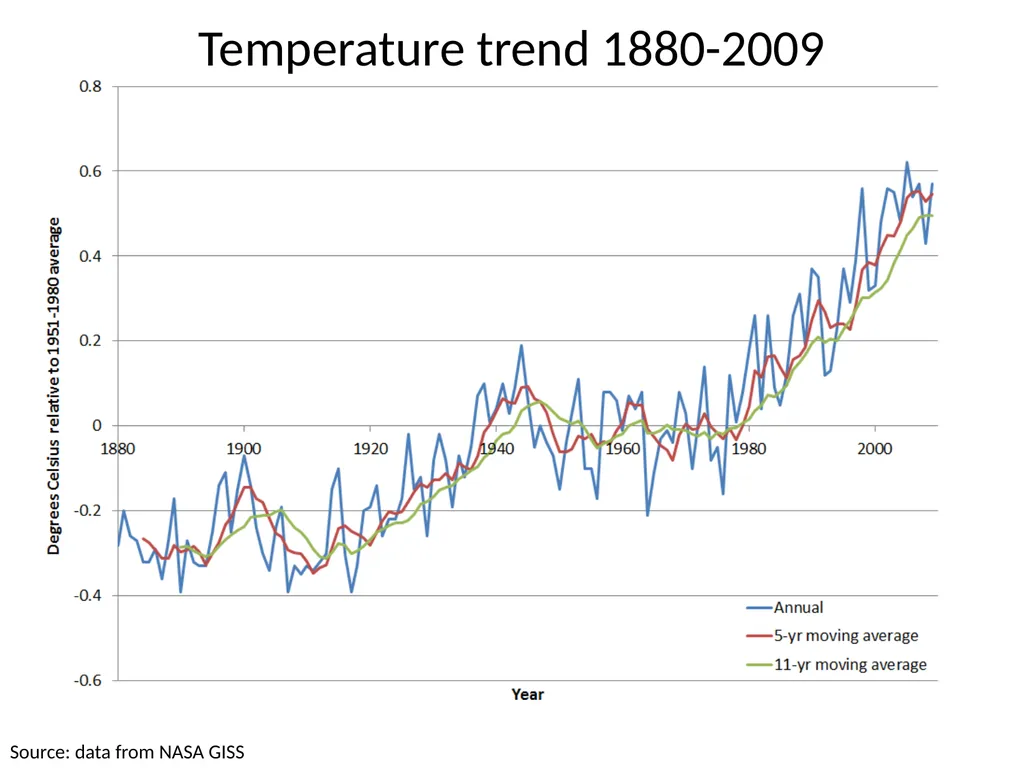
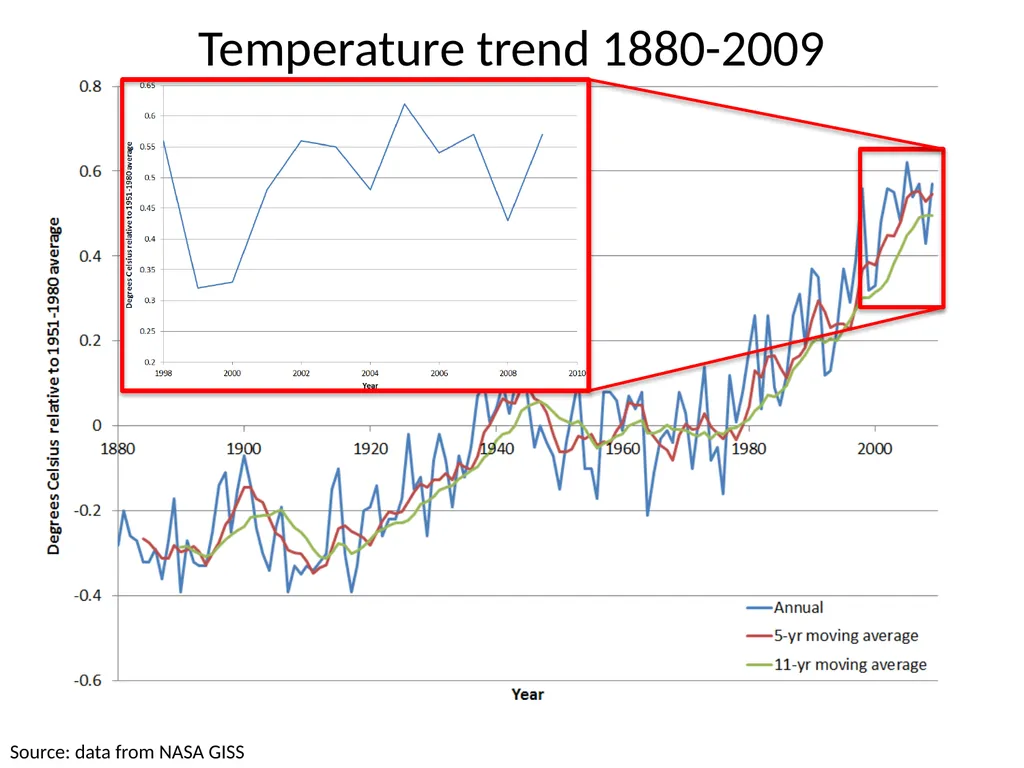
Source: data from NASA GISS Temperature trend 1880-2009<br>
23
Source: data from NASA GISS Temperature trend 1880-2009<br>
24
Case study Is Global Cooling Next? By Deroy Murdock
Posted 05/05/2008 ET
“Snows Return to Mount Kilimanjaro,” cheered a January 21 International Herald Tribune headline, as Africa also defies the “warming” narrative.
While neither anecdotes nor one year’s statistics confirm global cooling, a decade of data contradict the “melting planet” rhetoric that heats Capitol Hill and America’s newsrooms.
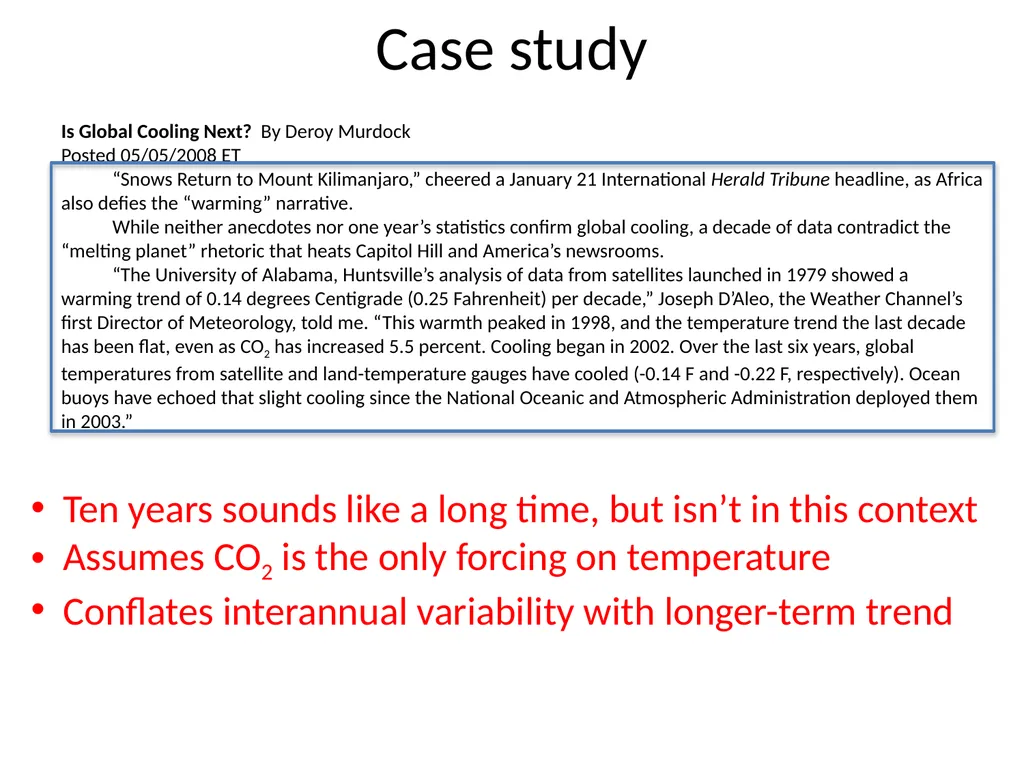
“The University of Alabama, Huntsville’s analysis of data from satellites launched in 1979 showed a warming trend of 0.14 degrees Centigrade (0.25 Fahrenheit) per decade,” Joseph D’Aleo, the Weather Channel’s first Director of Meteorology, told me. “This warmth peaked in 1998, and the temperature trend the last decade has been flat, even as CO2 has increased 5.5 percent. Cooling began in 2002. Over the last six years, global temperatures from satellite and land-temperature gauges have cooled (-0.14 F and -0.22 F, respectively). Ocean buoys have echoed that slight cooling since the National Oceanic and Atmospheric Administration deployed them in 2003.” Ten years sounds like a long time, but isn’t in this context
Assumes CO2 is the only forcing on temperature
Conflates interannual variability with longer-term trend<br>
Posted 05/05/2008 ET
“Snows Return to Mount Kilimanjaro,” cheered a January 21 International Herald Tribune headline, as Africa also defies the “warming” narrative.
While neither anecdotes nor one year’s statistics confirm global cooling, a decade of data contradict the “melting planet” rhetoric that heats Capitol Hill and America’s newsrooms.
“The University of Alabama, Huntsville’s analysis of data from satellites launched in 1979 showed a warming trend of 0.14 degrees Centigrade (0.25 Fahrenheit) per decade,” Joseph D’Aleo, the Weather Channel’s first Director of Meteorology, told me. “This warmth peaked in 1998, and the temperature trend the last decade has been flat, even as CO2 has increased 5.5 percent. Cooling began in 2002. Over the last six years, global temperatures from satellite and land-temperature gauges have cooled (-0.14 F and -0.22 F, respectively). Ocean buoys have echoed that slight cooling since the National Oceanic and Atmospheric Administration deployed them in 2003.” Ten years sounds like a long time, but isn’t in this context
Assumes CO2 is the only forcing on temperature
Conflates interannual variability with longer-term trend<br>
25
Case study Is Global Cooling Next? By Deroy Murdock
Posted 05/05/2008 ET
These researchers are not alone. They are among a rising tide of scientists who question the so-called “global warming” theory. Some further argue that global cooling merits urgent concern.
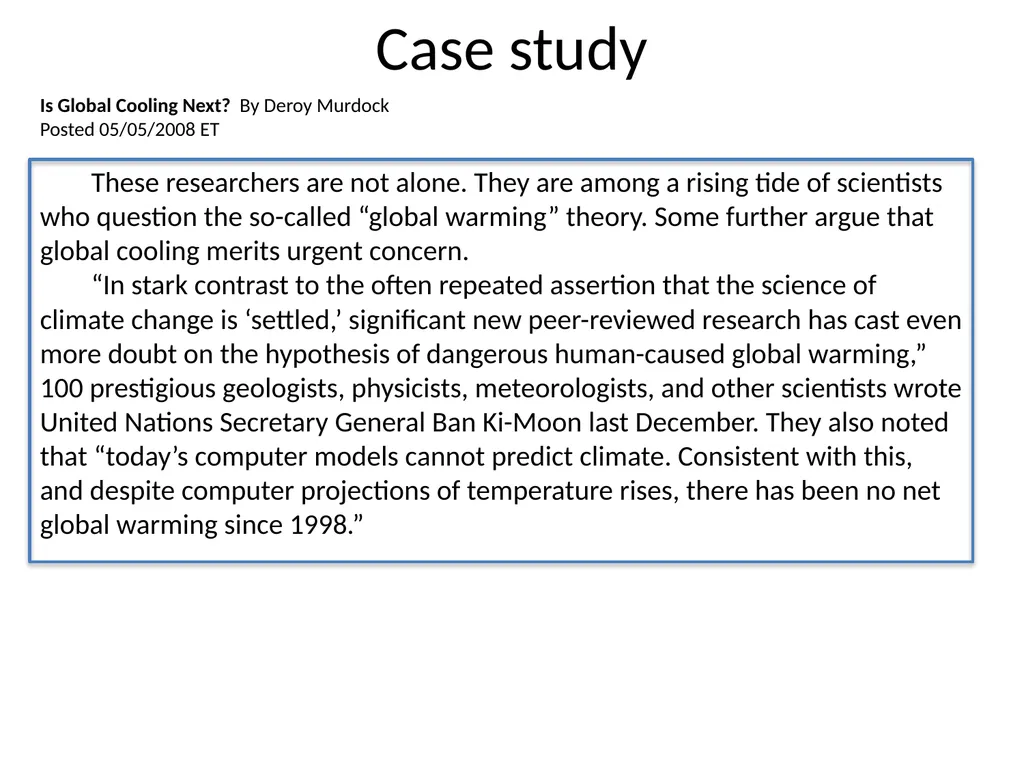
“In stark contrast to the often repeated assertion that the science of climate change is ‘settled,’ significant new peer-reviewed research has cast even more doubt on the hypothesis of dangerous human-caused global warming,” 100 prestigious geologists, physicists, meteorologists, and other scientists wrote United Nations Secretary General Ban Ki-Moon last December. They also noted that “today’s computer models cannot predict climate. Consistent with this, and despite computer projections of temperature rises, there has been no net global warming since 1998.”<br>
Posted 05/05/2008 ET
These researchers are not alone. They are among a rising tide of scientists who question the so-called “global warming” theory. Some further argue that global cooling merits urgent concern.
“In stark contrast to the often repeated assertion that the science of climate change is ‘settled,’ significant new peer-reviewed research has cast even more doubt on the hypothesis of dangerous human-caused global warming,” 100 prestigious geologists, physicists, meteorologists, and other scientists wrote United Nations Secretary General Ban Ki-Moon last December. They also noted that “today’s computer models cannot predict climate. Consistent with this, and despite computer projections of temperature rises, there has been no net global warming since 1998.”<br>
26
Case study Is Global Cooling Next? By Deroy Murdock
Posted 05/05/2008 ET
These researchers are not alone. They are among a rising tide of scientists who question the so-called “global warming” theory. Some further argue that global cooling merits urgent concern.
“In stark contrast to the often repeated assertion that the science of climate change is ‘settled,’ significant new peer-reviewed research has cast even more doubt on the hypothesis of dangerous human-caused global warming,” 100 prestigious geologists, physicists, meteorologists, and other scientists wrote United Nations Secretary General Ban Ki-Moon last December. They also noted that “today’s computer models cannot predict climate. Consistent with this, and despite computer projections of temperature rises, there has been no net global warming since 1998.”<br>
Posted 05/05/2008 ET
These researchers are not alone. They are among a rising tide of scientists who question the so-called “global warming” theory. Some further argue that global cooling merits urgent concern.
“In stark contrast to the often repeated assertion that the science of climate change is ‘settled,’ significant new peer-reviewed research has cast even more doubt on the hypothesis of dangerous human-caused global warming,” 100 prestigious geologists, physicists, meteorologists, and other scientists wrote United Nations Secretary General Ban Ki-Moon last December. They also noted that “today’s computer models cannot predict climate. Consistent with this, and despite computer projections of temperature rises, there has been no net global warming since 1998.”<br>
27
Case study Is Global Cooling Next? By Deroy Murdock
Posted 05/05/2008 ET
These researchers are not alone. They are among a rising tide of scientists who question the so-called “global warming” theory. Some further argue that global cooling merits urgent concern.
“In stark contrast to the often repeated assertion that the science of climate change is ‘settled,’ significant new peer-reviewed research has cast even more doubt on the hypothesis of dangerous human-caused global warming,” 100 prestigious geologists, physicists, meteorologists, and other scientists wrote United Nations Secretary General Ban Ki-Moon last December. They also noted that “today’s computer models cannot predict climate. Consistent with this, and despite computer projections of temperature rises, there has been no net global warming since 1998.” Show me the publications!<br>
Posted 05/05/2008 ET
These researchers are not alone. They are among a rising tide of scientists who question the so-called “global warming” theory. Some further argue that global cooling merits urgent concern.
“In stark contrast to the often repeated assertion that the science of climate change is ‘settled,’ significant new peer-reviewed research has cast even more doubt on the hypothesis of dangerous human-caused global warming,” 100 prestigious geologists, physicists, meteorologists, and other scientists wrote United Nations Secretary General Ban Ki-Moon last December. They also noted that “today’s computer models cannot predict climate. Consistent with this, and despite computer projections of temperature rises, there has been no net global warming since 1998.” Show me the publications!<br>
28
Case study Is Global Cooling Next? By Deroy Murdock
Posted 05/05/2008 ET
These researchers are not alone. They are among a rising tide of scientists who question the so-called “global warming” theory. Some further argue that global cooling merits urgent concern.
“In stark contrast to the often repeated assertion that the science of climate change is ‘settled,’ significant new peer-reviewed research has cast even more doubt on the hypothesis of dangerous human-caused global warming,” 100 prestigious geologists, physicists, meteorologists, and other scientists wrote United Nations Secretary General Ban Ki-Moon last December. They also noted that “today’s computer models cannot predict climate. Consistent with this, and despite computer projections of temperature rises, there has been no net global warming since 1998.” Cites scientists’ opinions, not peer-reviewed literature
Conflates interannual variability with longer-term trend<br>
Posted 05/05/2008 ET
These researchers are not alone. They are among a rising tide of scientists who question the so-called “global warming” theory. Some further argue that global cooling merits urgent concern.
“In stark contrast to the often repeated assertion that the science of climate change is ‘settled,’ significant new peer-reviewed research has cast even more doubt on the hypothesis of dangerous human-caused global warming,” 100 prestigious geologists, physicists, meteorologists, and other scientists wrote United Nations Secretary General Ban Ki-Moon last December. They also noted that “today’s computer models cannot predict climate. Consistent with this, and despite computer projections of temperature rises, there has been no net global warming since 1998.” Cites scientists’ opinions, not peer-reviewed literature
Conflates interannual variability with longer-term trend<br>
29
Agnotology in GEOG 3050
(upper division Weather and Climate) State of Fear: in-class discussion
State of Fear: written homework assignment
Final exam: analysis of syndicated newspaper op-ed<br>
State of Fear: written homework assignment
Final exam: analysis of syndicated newspaper op-ed<br>
30
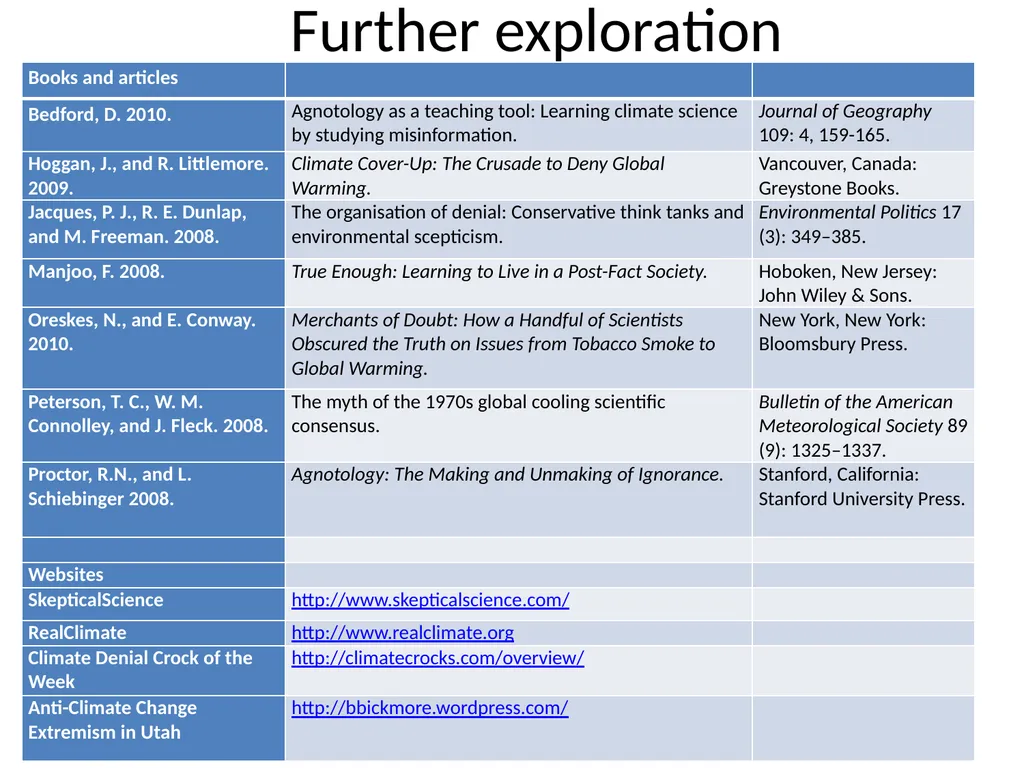
Further exploration<br>
31
Questions/comments? Have you tried anything similar?
Potential pitfalls?
What do you like/dislike about this approach?
Other stuff?<br>
Potential pitfalls?
What do you like/dislike about this approach?
Other stuff?<br>