Agronomical Practices for fodder production (Part1) By- Sanjay Kumar Asst. Prof., Dept. of LPM, BVC, Bihar Animal Sciences University, Patna Forage crops Fodder crops Forage crops- It refers to the plants used for feeding livestock. It
"Agronomical Practices for fodder production" is the property of its rightful owner. Permission is granted to
download and print the materials on this website for personal, non-commercial use only, and to display it
on your personal computer provided you do not modify the materials and that you retain all copyright
notices contained in the materials. By downloading content from our website, you accept the terms of this
agreement.
Presentation Transcript
01
Agronomical Practices for fodder production (Part1) By-
Sanjay Kumar
Asst. Prof., Dept. of LPM, BVC,
Bihar Animal Sciences University, Patna<br>
02
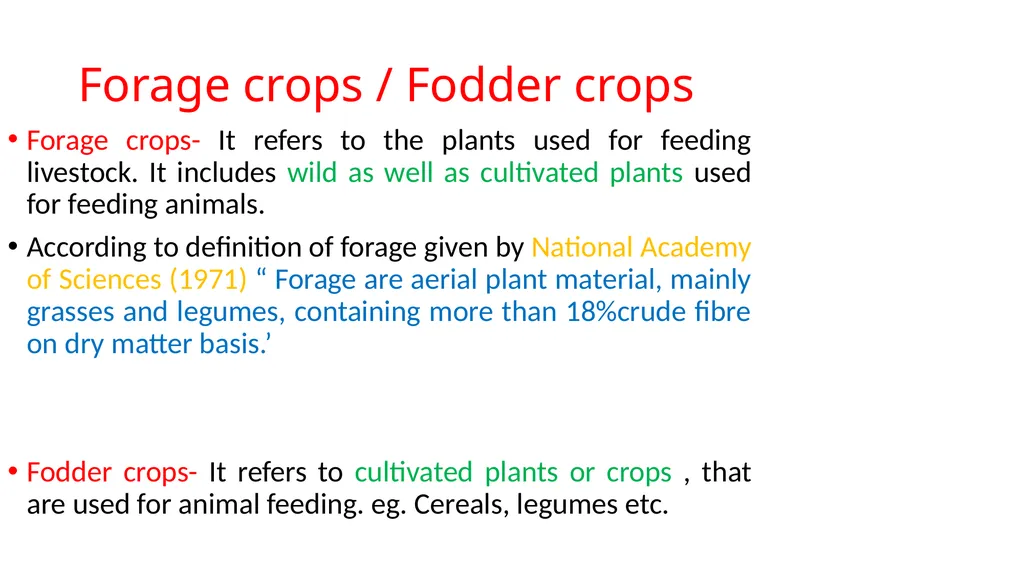
Forage crops / Fodder crops Forage crops- It refers to the plants used for feeding livestock. It includes wild as well as cultivated plants used for feeding animals.
According to definition of forage given by National Academy of Sciences (1971) “ Forage are aerial plant material, mainly grasses and legumes, containing more than 18%crude fibre on dry matter basis.’
Fodder crops- It refers to cultivated plants or crops , that are used for animal feeding. eg. Cereals, legumes etc.<br>
03
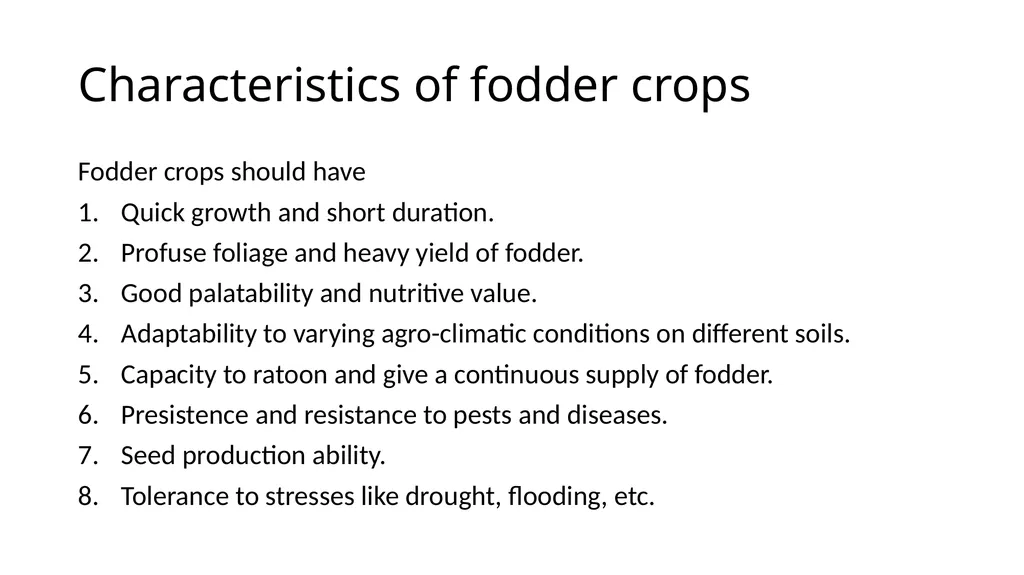
Characteristics of fodder crops Fodder crops should have
Quick growth and short duration.
Profuse foliage and heavy yield of fodder.
Good palatability and nutritive value.
Adaptability to varying agro-climatic conditions on different soils.
Capacity to ratoon and give a continuous supply of fodder.
Presistence and resistance to pests and diseases.
Seed production ability.
Tolerance to stresses like drought, flooding, etc.<br>
04
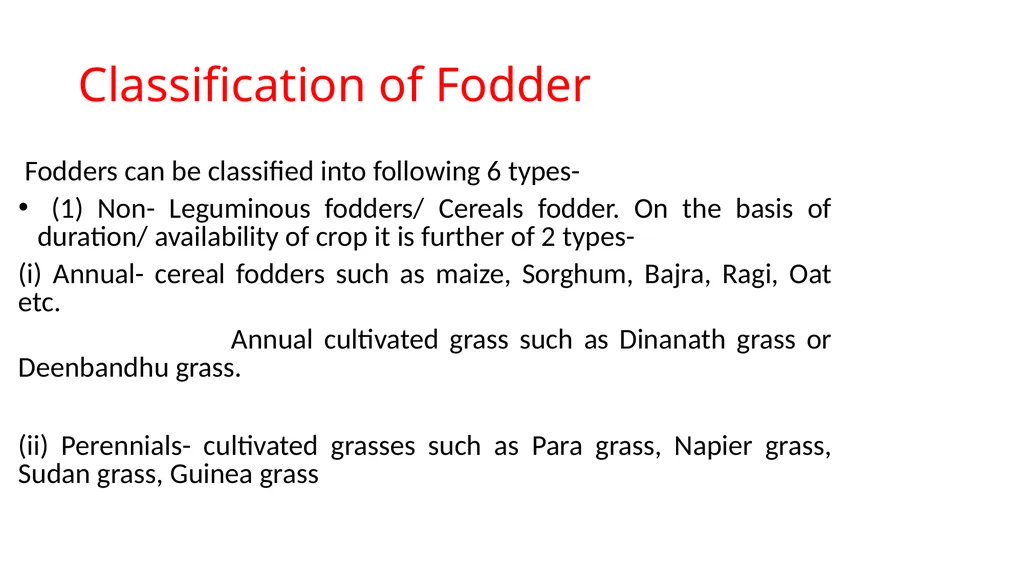
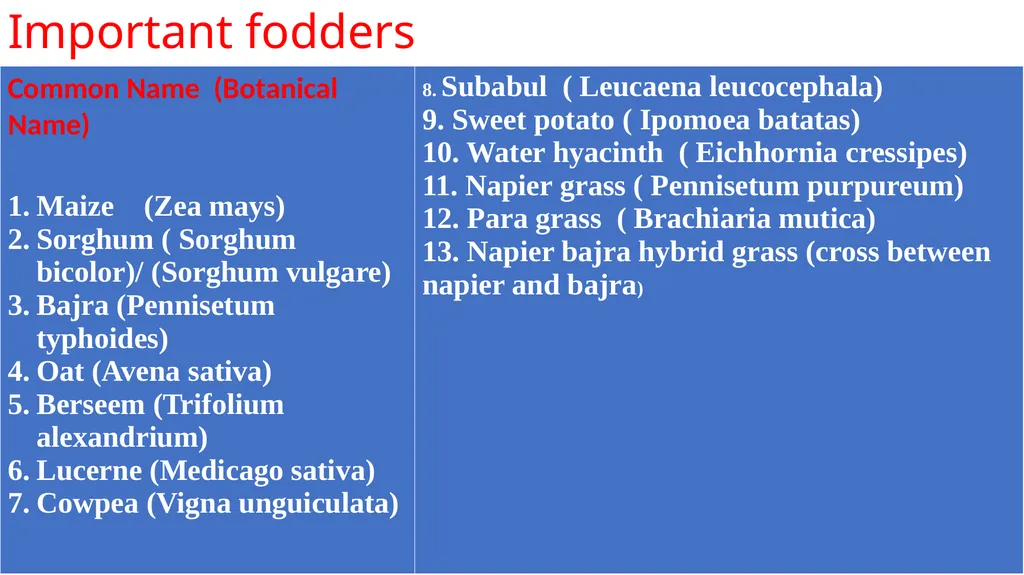
Classification of Fodder Fodders can be classified into following 6 types-
(1) Non- Leguminous fodders/ Cereals fodder. On the basis of duration/ availability of crop it is further of 2 types-
(i) Annual- cereal fodders such as maize, Sorghum, Bajra, Ragi, Oat etc.
Annual cultivated grass such as Dinanath grass or Deenbandhu grass.
(ii) Perennials- cultivated grasses such as Para grass, Napier grass, Sudan grass, Guinea grass<br>
05
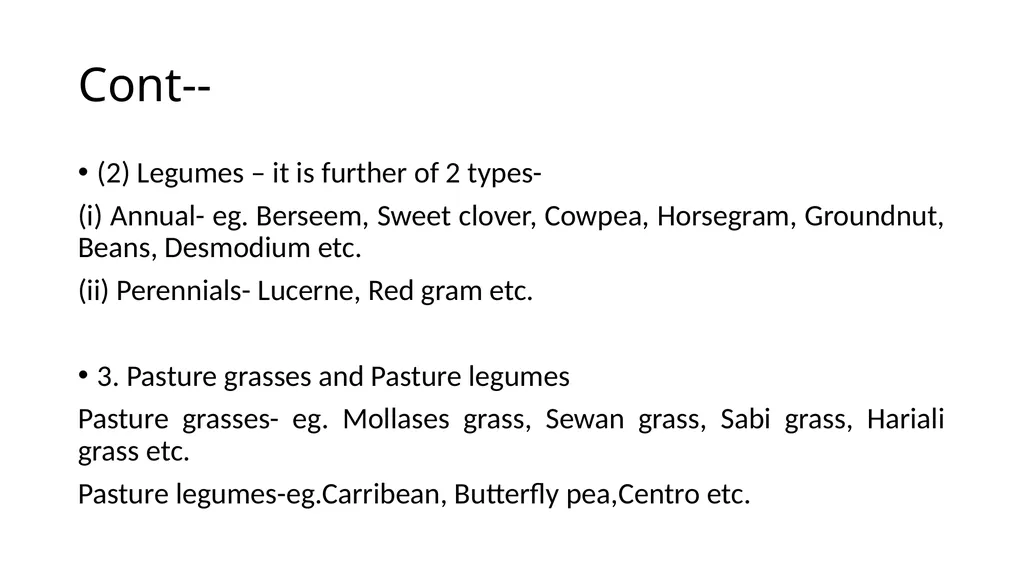
Cont-- (2) Legumes – it is further of 2 types-
(i) Annual- eg. Berseem, Sweet clover, Cowpea, Horsegram, Groundnut, Beans, Desmodium etc.
(ii) Perennials- Lucerne, Red gram etc.
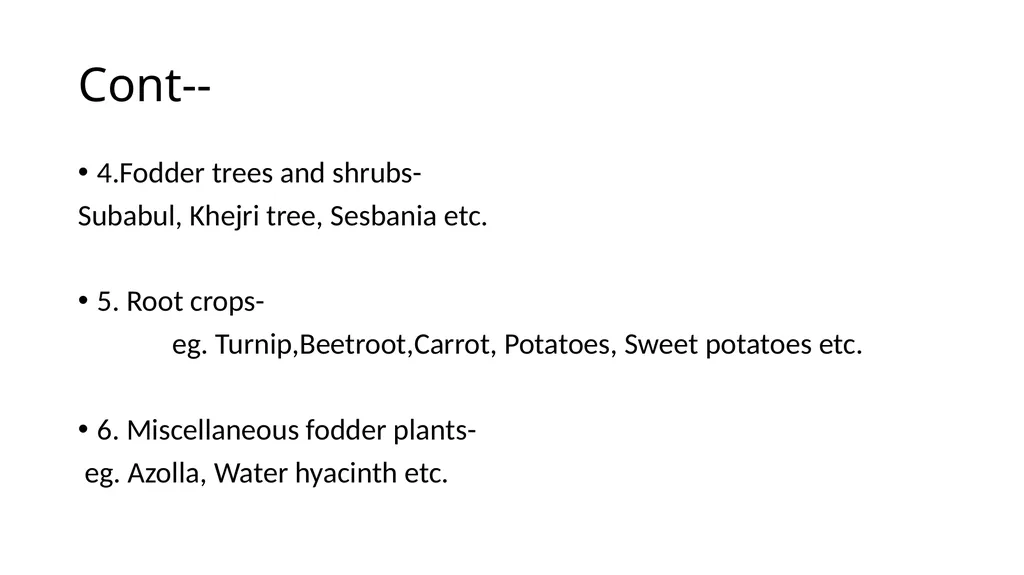
Cont-- 4.Fodder trees and shrubs-
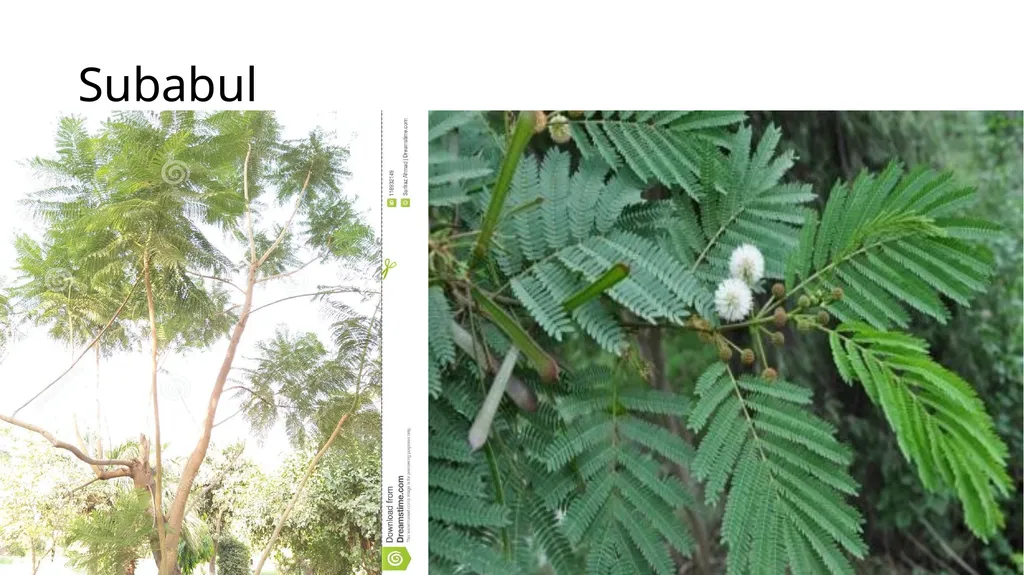
Subabul, Khejri tree, Sesbania etc.
5. Root crops-
eg. Turnip,Beetroot,Carrot, Potatoes, Sweet potatoes etc.
6. Miscellaneous fodder plants-
eg. Azolla, Water hyacinth etc.<br>
07
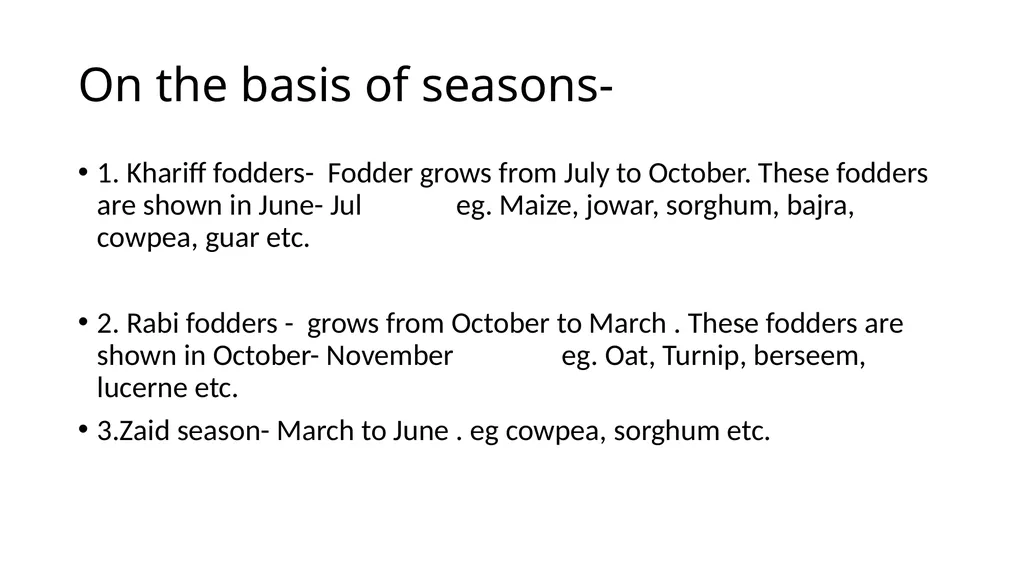
On the basis of seasons- 1. Khariff fodders- Fodder grows from July to October. These fodders are shown in June- Jul eg. Maize, jowar, sorghum, bajra, cowpea, guar etc.
2. Rabi fodders - grows from October to March . These fodders are shown in October- November eg. Oat, Turnip, berseem, lucerne etc.
3.Zaid season- March to June . eg cowpea, sorghum etc.<br>
08
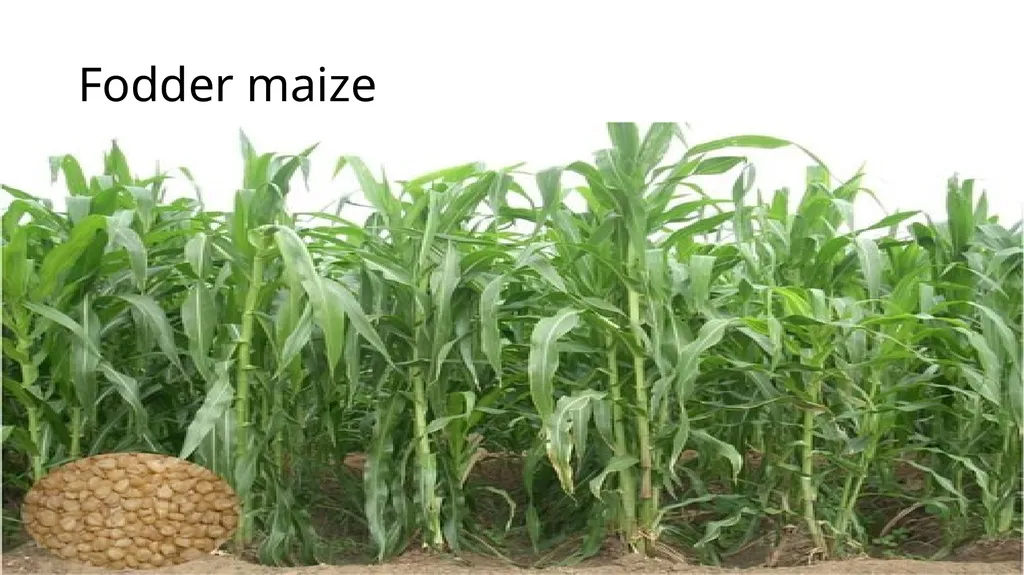
Fodder maize<br>
09
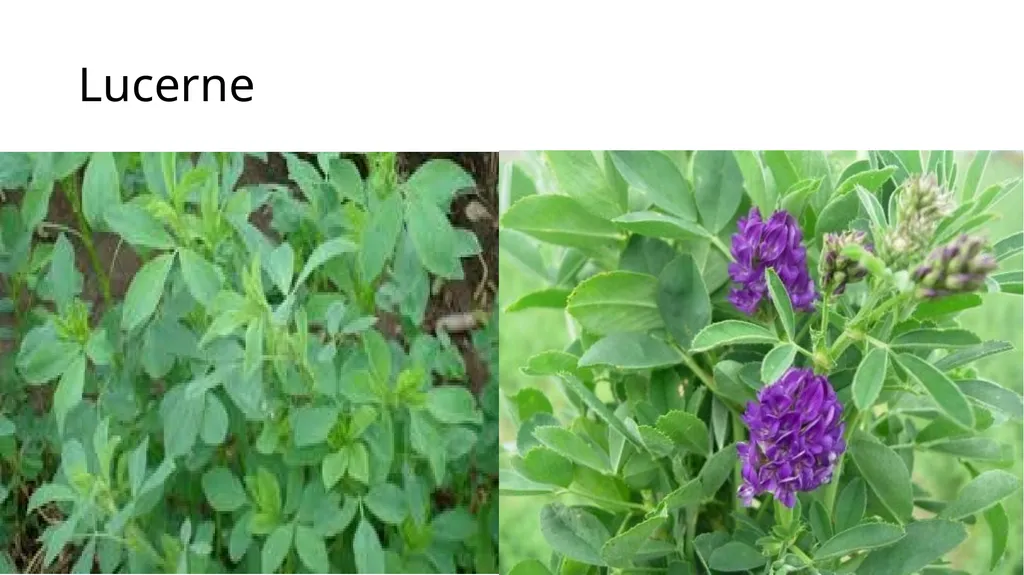
Lucerne<br>
10
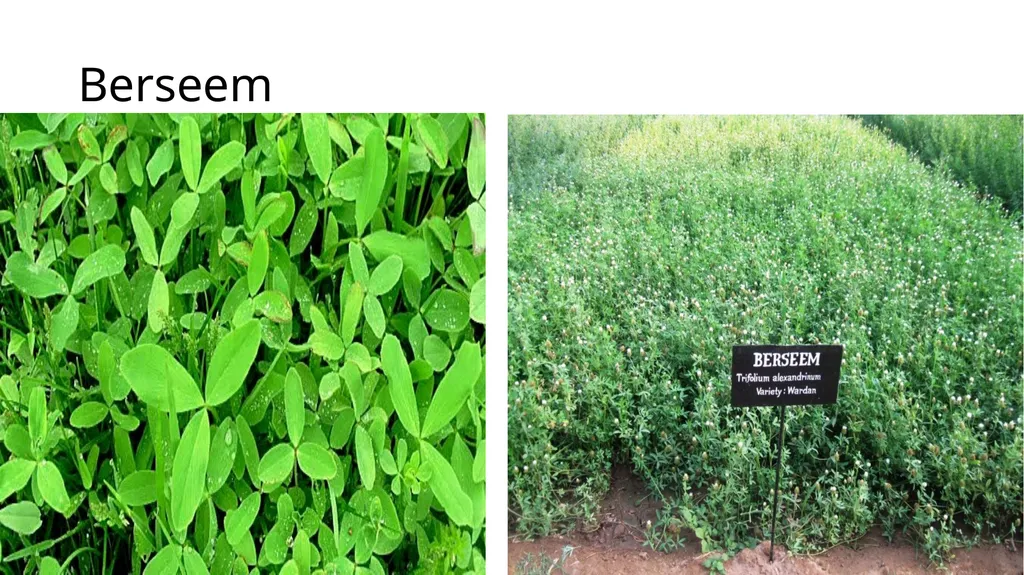
Berseem<br>
11
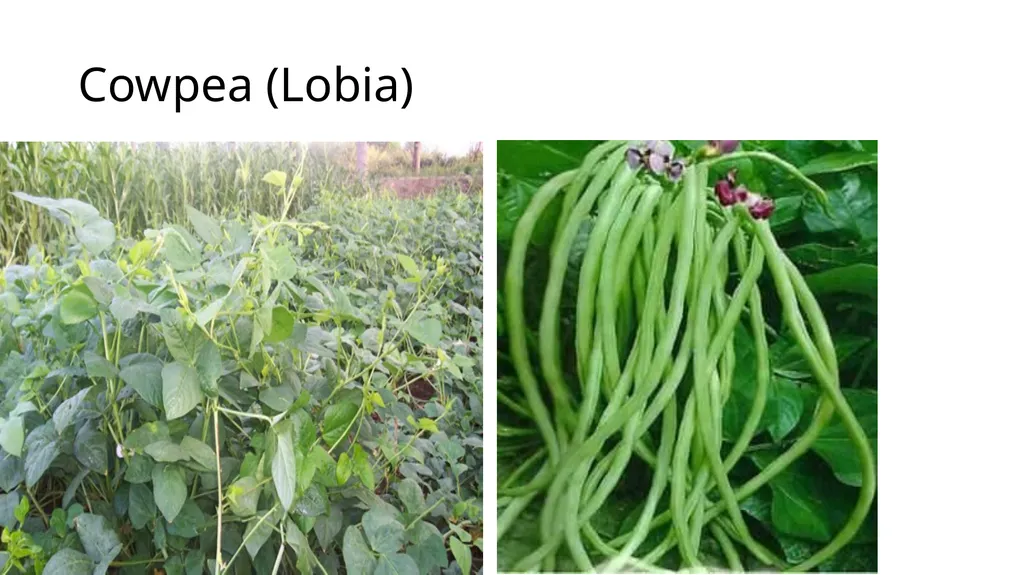
Cowpea (Lobia)<br>
12
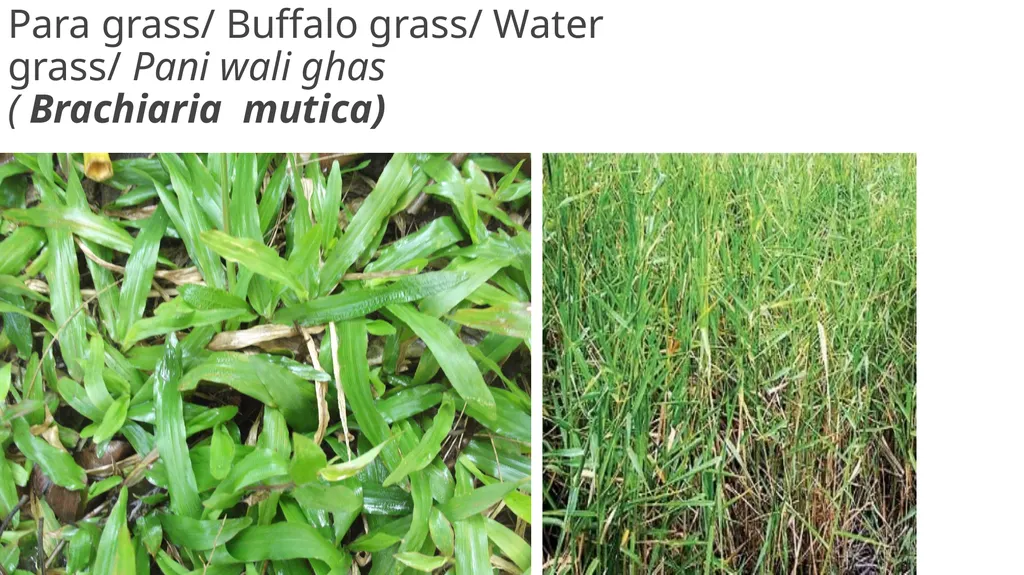
Para grass/ Buffalo grass/ Water grass/ Pani wali ghas ( Brachiaria mutica)<br>