
AIM: How to write Lewis Dot Structures (Electron
Description: AIM: How to write Lewis Dot Structures (Electron Dot Structures) DO NOW: Write the electron configuration for the phosphorus atom in the ground state. The phosphorus atom gains 3 electrons to form an ion. Write the new configuration.
Related Topics
Download Presentation
"AIM: How to write Lewis Dot Structures (Electron" is the property of its rightful owner. Permission is granted to download and print the materials on this website for personal, non-commercial use only, and to display it on your personal computer provided you do not modify the materials and that you retain all copyright notices contained in the materials. By downloading content from our website, you accept the terms of this agreement.
Presentation Transcript
slide1. AIM: How to write Lewis Dot Structures (Electron Dot Structures) DO NOW:
Write the electron configuration for the phosphorus atom in the ground state.
The phosphorus atom gains 3 electrons to form an ion. Write the new configuration.
Compare the charge of the phosphorus ion to the charge of the phosphorus atom.
Compare the sizes.<br>
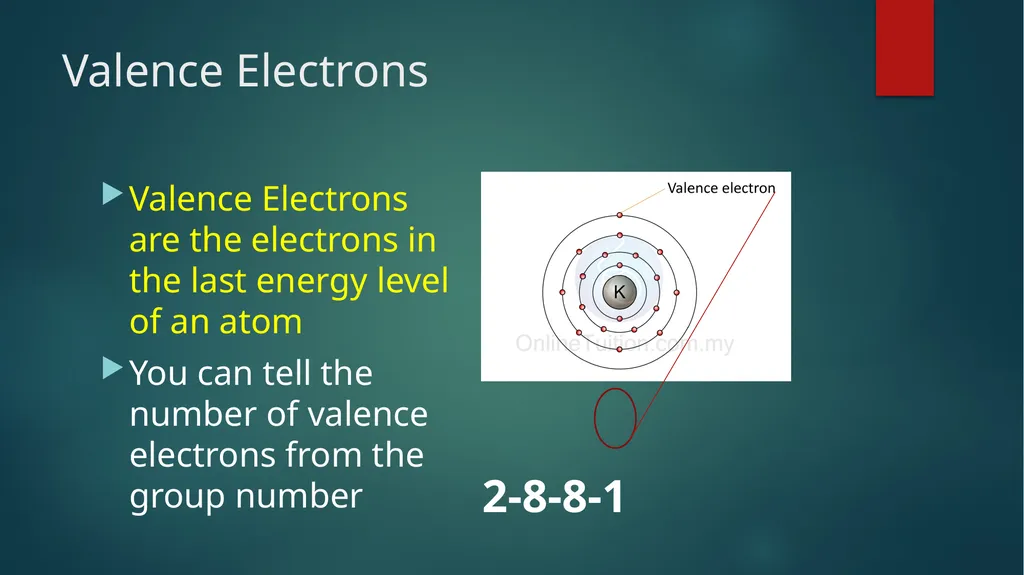
slide2. Valence Electrons Valence Electrons are the electrons in the last energy level of an atom
You can tell the number of valence electrons from the group number 2-8-8-1<br>
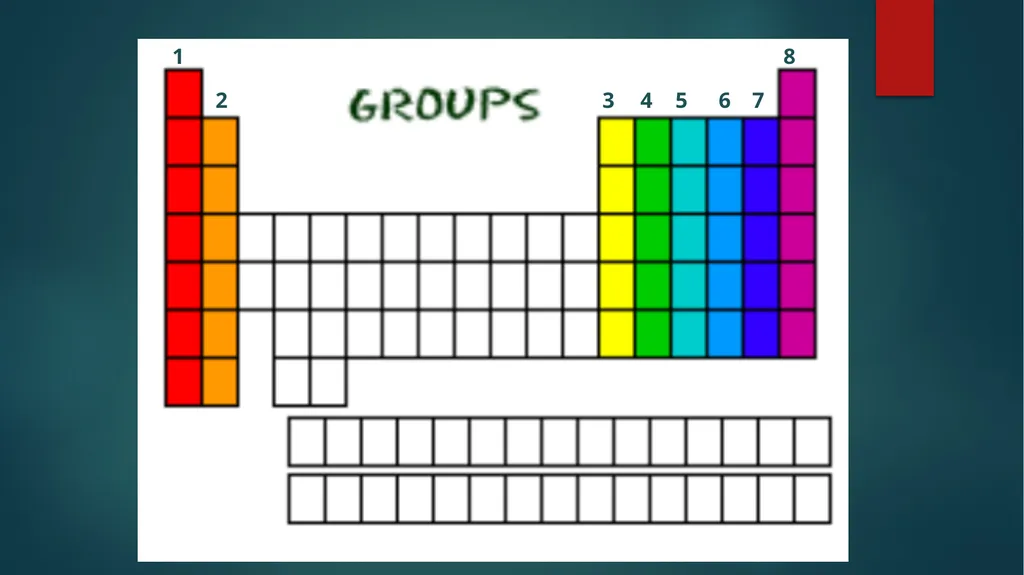
slide3. 1 2 3 4 5 6 7 8<br>
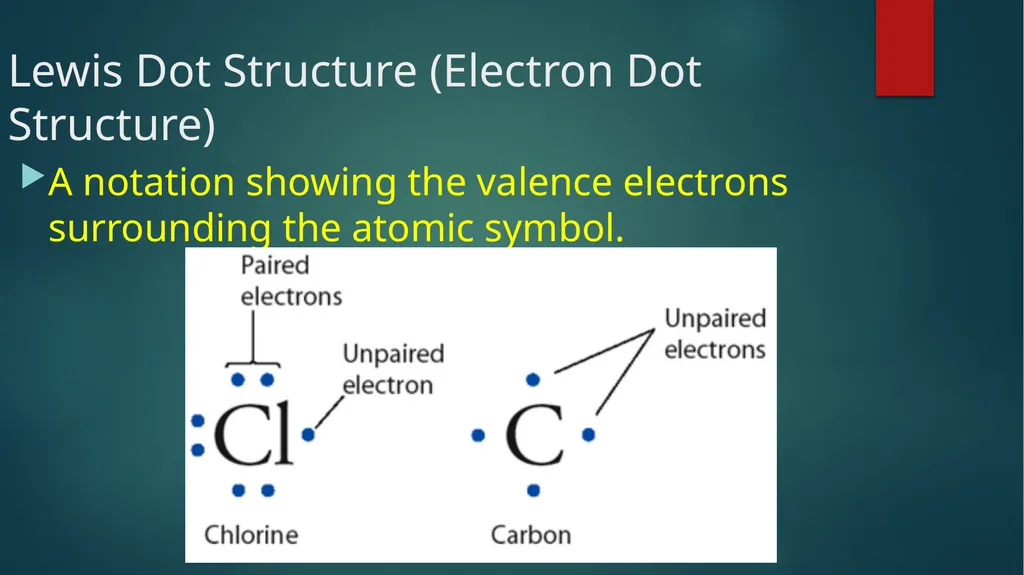
slide4. Lewis Dot Structure (Electron Dot Structure) A notation showing the valence electrons surrounding the atomic symbol.<br>
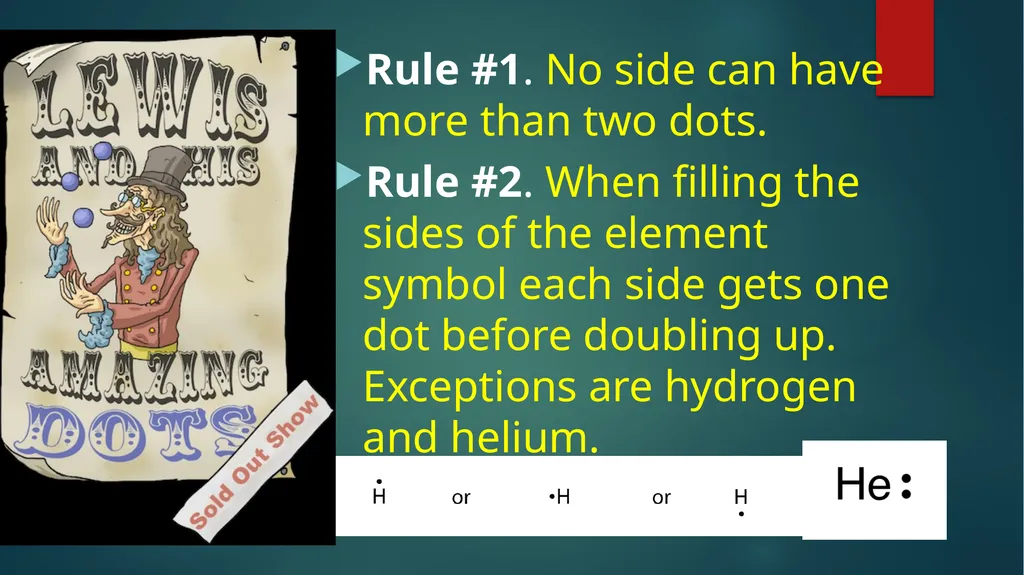
slide5. Rule #1. No side can have more than two dots.
Rule #2. When filling the sides of the element symbol each side gets one dot before doubling up. Exceptions are hydrogen and helium.<br>
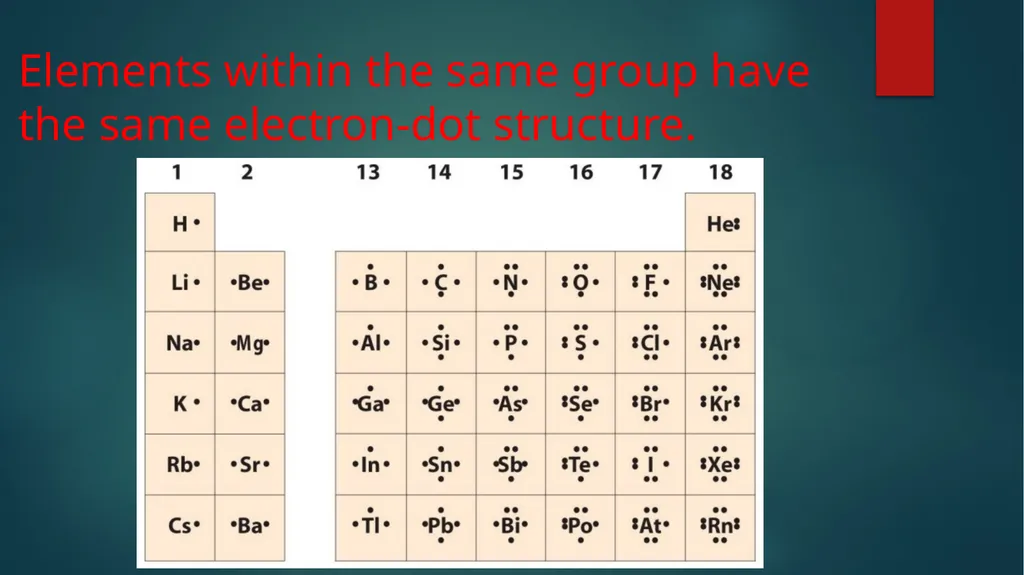
slide6. Elements within the same group have the same electron-dot structure.<br>
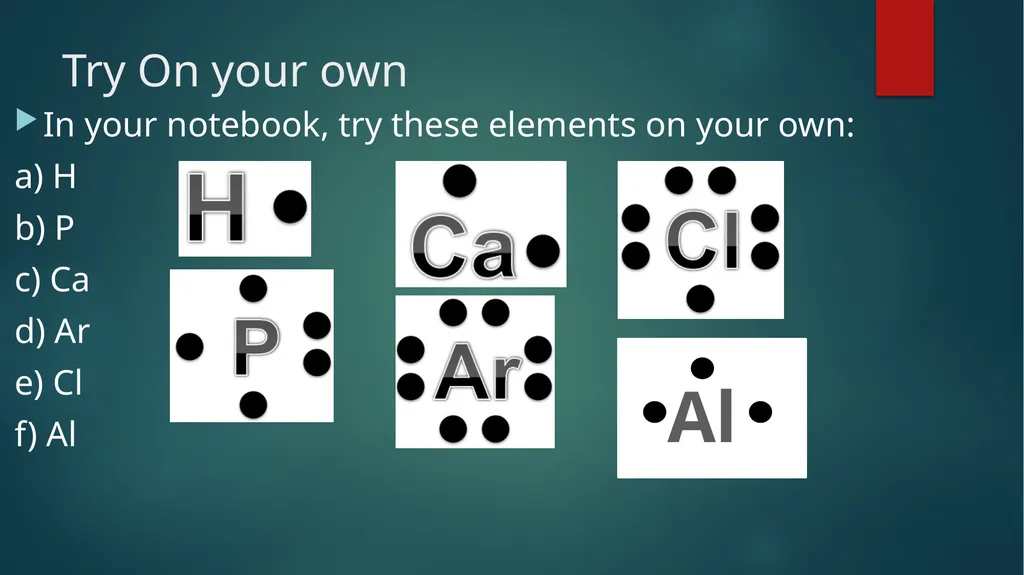
slide7. Try On your own In your notebook, try these elements on your own:
a) H
b) P
c) Ca
d) Ar
e) Cl
f) Al Al<br>
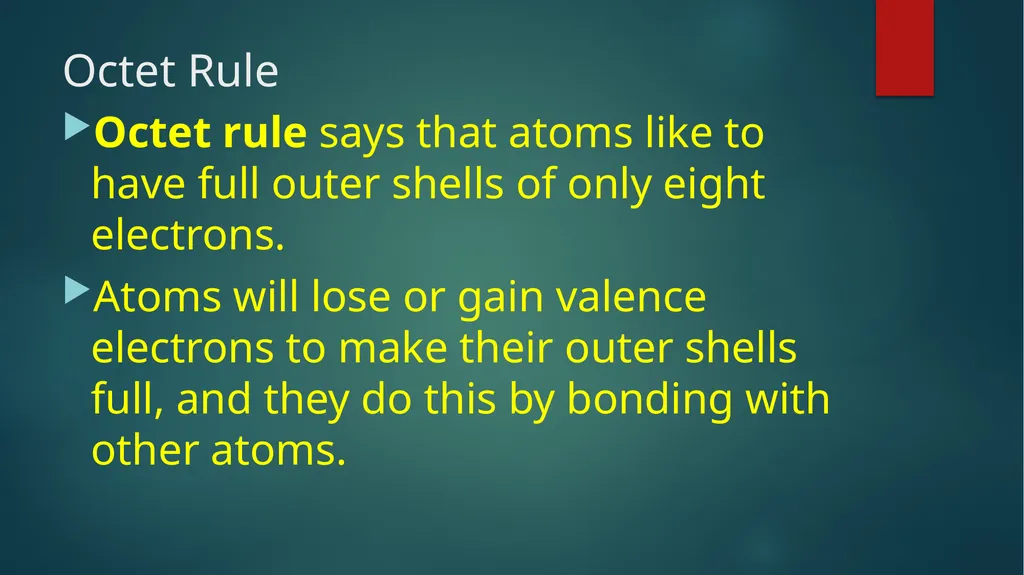
slide8. Octet Rule Octet rule says that atoms like to have full outer shells of only eight electrons.
Atoms will lose or gain valence electrons to make their outer shells full, and they do this by bonding with other atoms.<br>
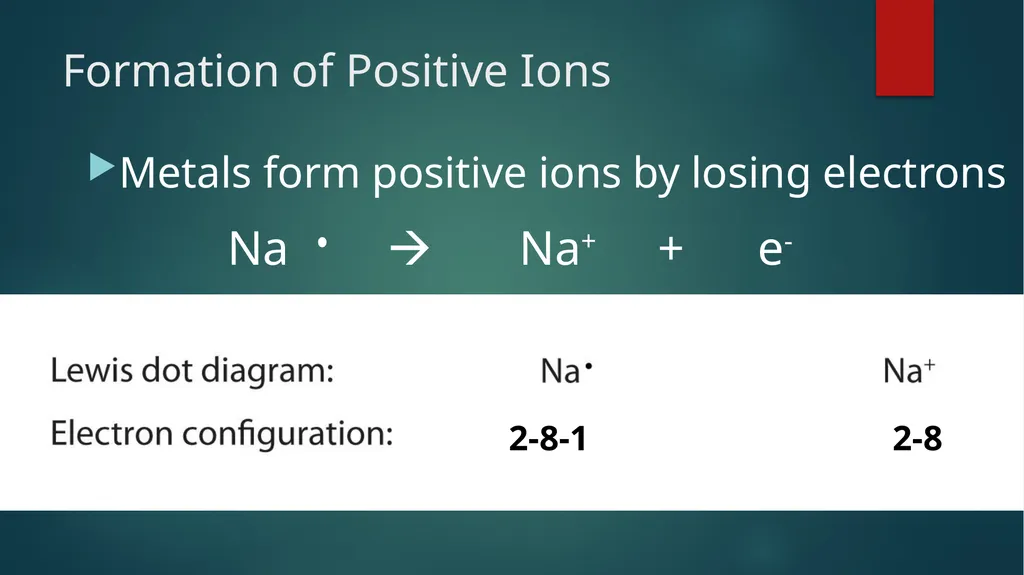
slide9. Formation of Positive Ions Metals form positive ions by losing electrons Na Na+ + e- 2-8-1 2-8<br>
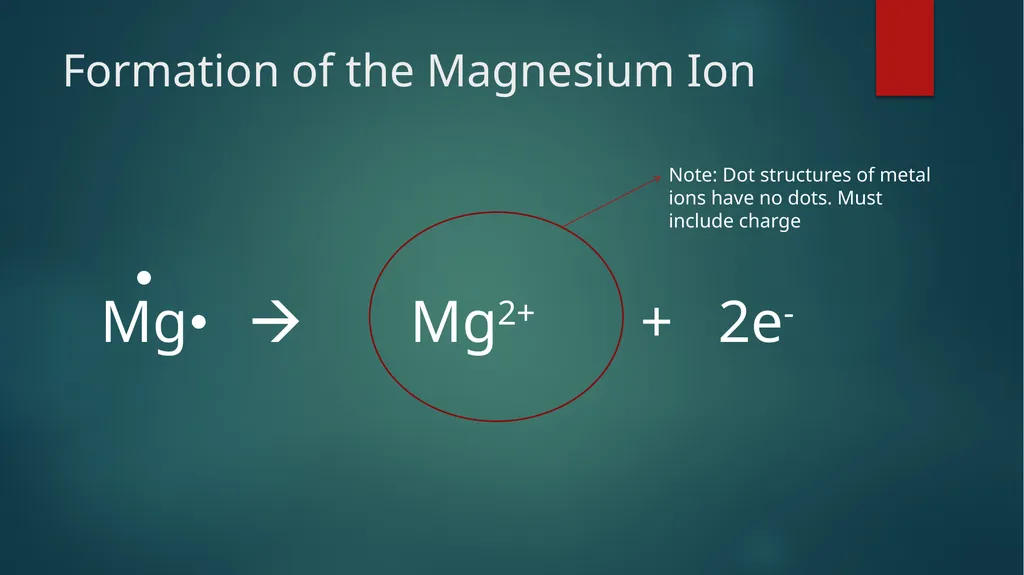
slide10. Formation of the Magnesium Ion Mg Mg2+ + 2e- Note: Dot structures of metal ions have no dots. Must include charge<br>
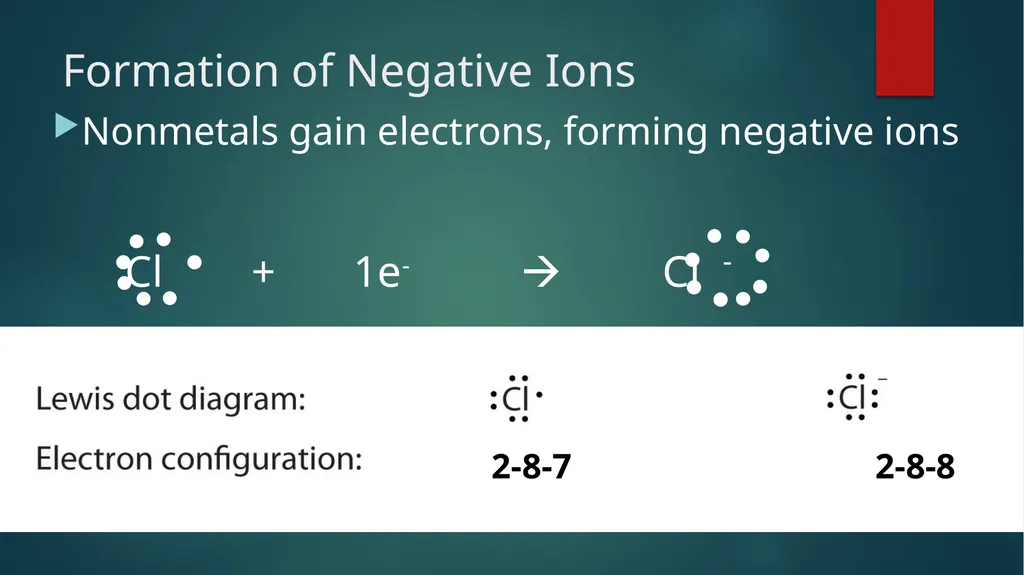
slide11. Formation of Negative Ions Nonmetals gain electrons, forming negative ions
Cl + 1e- Cl - 2-8-7 2-8-8<br>
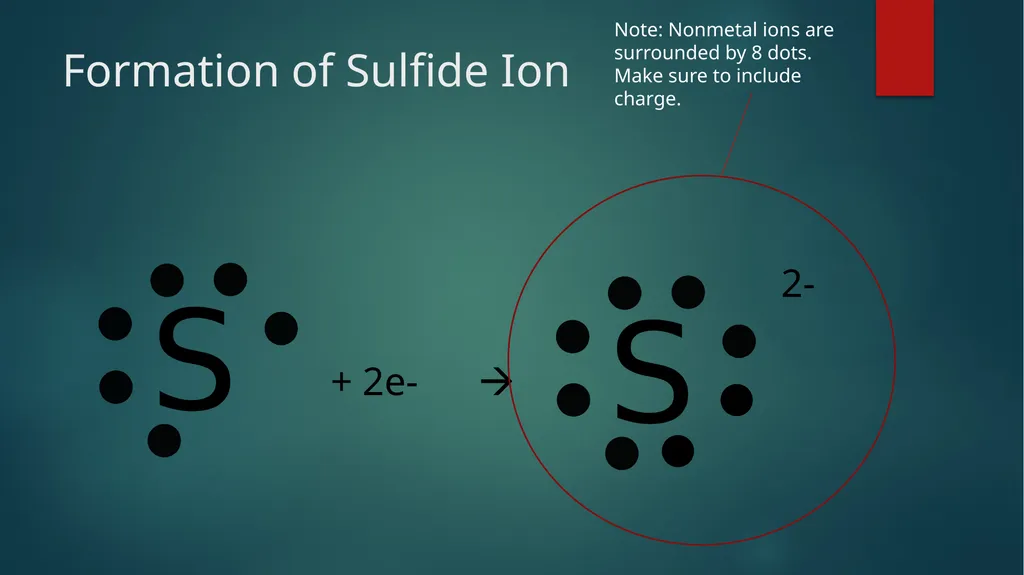
slide12. Formation of Sulfide Ion + 2e- 2- Note: Nonmetal ions are surrounded by 8 dots. Make sure to include charge.<br>
slide13. What is the Lewis electron dot diagram for each ion? Ca2+
O2−<br>
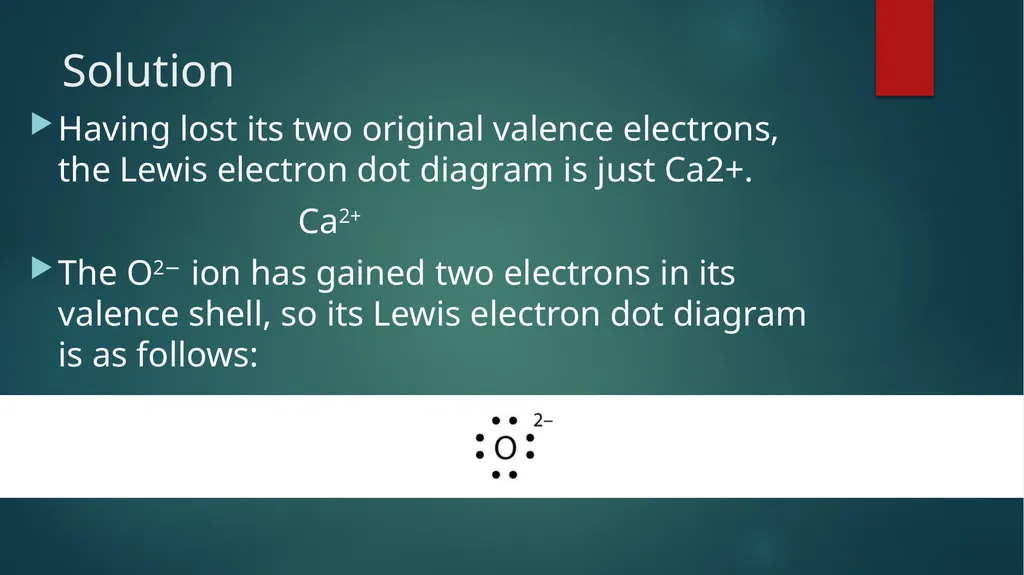
slide14. Solution Having lost its two original valence electrons, the Lewis electron dot diagram is just Ca2+.
Ca2+
The O2− ion has gained two electrons in its valence shell, so its Lewis electron dot diagram is as follows:<br>
slide15. SUMMARY Lewis electron dot diagrams use dots to represent valence electrons around an atomic symbol.
Lewis electron dot diagrams for ions have less (for (+) ions) or more (for (-) ions) dots than the corresponding atom.<br>
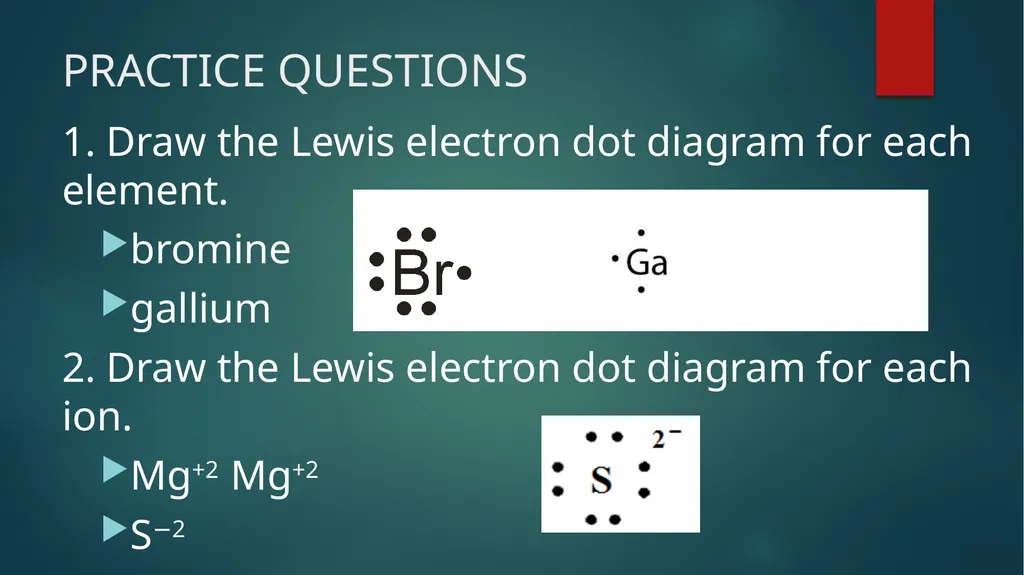
slide16. PRACTICE QUESTIONS 1. Draw the Lewis electron dot diagram for each element.
bromine
gallium
2. Draw the Lewis electron dot diagram for each ion.
Mg+2 Mg+2
S−2<br>
Write the electron configuration for the phosphorus atom in the ground state.
The phosphorus atom gains 3 electrons to form an ion. Write the new configuration.
Compare the charge of the phosphorus ion to the charge of the phosphorus atom.
Compare the sizes.<br>
slide2. Valence Electrons Valence Electrons are the electrons in the last energy level of an atom
You can tell the number of valence electrons from the group number 2-8-8-1<br>
slide3. 1 2 3 4 5 6 7 8<br>
slide4. Lewis Dot Structure (Electron Dot Structure) A notation showing the valence electrons surrounding the atomic symbol.<br>
slide5. Rule #1. No side can have more than two dots.
Rule #2. When filling the sides of the element symbol each side gets one dot before doubling up. Exceptions are hydrogen and helium.<br>
slide6. Elements within the same group have the same electron-dot structure.<br>
slide7. Try On your own In your notebook, try these elements on your own:
a) H
b) P
c) Ca
d) Ar
e) Cl
f) Al Al<br>
slide8. Octet Rule Octet rule says that atoms like to have full outer shells of only eight electrons.
Atoms will lose or gain valence electrons to make their outer shells full, and they do this by bonding with other atoms.<br>
slide9. Formation of Positive Ions Metals form positive ions by losing electrons Na Na+ + e- 2-8-1 2-8<br>
slide10. Formation of the Magnesium Ion Mg Mg2+ + 2e- Note: Dot structures of metal ions have no dots. Must include charge<br>
slide11. Formation of Negative Ions Nonmetals gain electrons, forming negative ions
Cl + 1e- Cl - 2-8-7 2-8-8<br>
slide12. Formation of Sulfide Ion + 2e- 2- Note: Nonmetal ions are surrounded by 8 dots. Make sure to include charge.<br>
slide13. What is the Lewis electron dot diagram for each ion? Ca2+
O2−<br>
slide14. Solution Having lost its two original valence electrons, the Lewis electron dot diagram is just Ca2+.
Ca2+
The O2− ion has gained two electrons in its valence shell, so its Lewis electron dot diagram is as follows:<br>
slide15. SUMMARY Lewis electron dot diagrams use dots to represent valence electrons around an atomic symbol.
Lewis electron dot diagrams for ions have less (for (+) ions) or more (for (-) ions) dots than the corresponding atom.<br>
slide16. PRACTICE QUESTIONS 1. Draw the Lewis electron dot diagram for each element.
bromine
gallium
2. Draw the Lewis electron dot diagram for each ion.
Mg+2 Mg+2
S−2<br>