Algorithm for the Management of Hypoglycaemia in
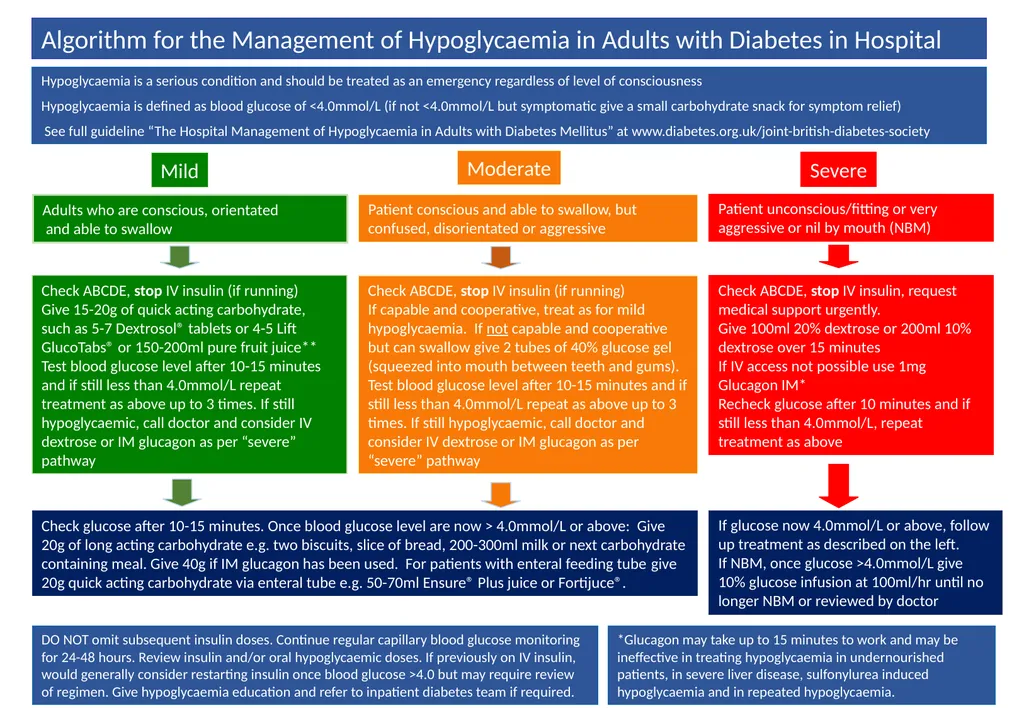
Description: Algorithm for the Management of Hypoglycaemia in Adults with Diabetes in Hospital Hypoglycaemia is a serious condition and should be treated as an emergency regardless of level of consciousness Hypoglycaemia is defined as blood glucose of
Related Topics
Download Presentation
"Algorithm for the Management of Hypoglycaemia in" is the property of its rightful owner. Permission is granted to download and print the materials on this website for personal, non-commercial use only, and to display it on your personal computer provided you do not modify the materials and that you retain all copyright notices contained in the materials. By downloading content from our website, you accept the terms of this agreement.
Presentation Transcript
slide1. Algorithm for the Management of Hypoglycaemia in Adults with Diabetes in Hospital Hypoglycaemia is a serious condition and should be treated as an emergency regardless of level of consciousness
Hypoglycaemia is defined as blood glucose of <4.0mmol/L (if not <4.0mmol/L but symptomatic give a small carbohydrate snack for symptom relief)
See full guideline “The Hospital Management of Hypoglycaemia in Adults with Diabetes Mellitus” at www.diabetes.org.uk/joint-british-diabetes-society Mild Moderate Severe Adults who are conscious, orientated
and able to swallow Check ABCDE, stop IV insulin (if running)
Give 15-20g of quick acting carbohydrate, such as 5-7 Dextrosol® tablets or 4-5 Lift GlucoTabs® or 150-200ml pure fruit juice**
Test blood glucose level after 10-15 minutes and if still less than 4.0mmol/L repeat treatment as above up to 3 times. If still hypoglycaemic, call doctor and consider IV dextrose or IM glucagon as per “severe” pathway Patient conscious and able to swallow, but confused, disorientated or aggressive Patient unconscious/fitting or very aggressive or nil by mouth (NBM) Check ABCDE, stop IV insulin (if running)
If capable and cooperative, treat as for mild hypoglycaemia. If not capable and cooperative but can swallow give 2 tubes of 40% glucose gel (squeezed into mouth between teeth and gums).
Test blood glucose level after 10-15 minutes and if still less than 4.0mmol/L repeat as above up to 3 times. If still hypoglycaemic, call doctor and consider IV dextrose or IM glucagon as per “severe” pathway Check ABCDE, stop IV insulin, request medical support urgently.
Give 100ml 20% dextrose or 200ml 10% dextrose over 15 minutes
If IV access not possible use 1mg Glucagon IM*
Recheck glucose after 10 minutes and if still less than 4.0mmol/L, repeat treatment as above Check glucose after 10-15 minutes. Once blood glucose level are now > 4.0mmol/L or above: Give 20g of long acting carbohydrate e.g. two biscuits, slice of bread, 200-300ml milk or next carbohydrate containing meal. Give 40g if IM glucagon has been used. For patients with enteral feeding tube give 20g quick acting carbohydrate via enteral tube e.g. 50-70ml Ensure® Plus juice or Fortijuce®. If glucose now 4.0mmol/L or above, follow up treatment as described on the left.
If NBM, once glucose >4.0mmol/L give 10% glucose infusion at 100ml/hr until no longer NBM or reviewed by doctor DO NOT omit subsequent insulin doses. Continue regular capillary blood glucose monitoring for 24-48 hours. Review insulin and/or oral hypoglycaemic doses. If previously on IV insulin, would generally consider restarting insulin once blood glucose >4.0 but may require review of regimen. Give hypoglycaemia education and refer to inpatient diabetes team if required. *Glucagon may take up to 15 minutes to work and may be ineffective in treating hypoglycaemia in undernourished patients, in severe liver disease, sulfonylurea induced hypoglycaemia and in repeated hypoglycaemia.<br>

Hypoglycaemia is defined as blood glucose of <4.0mmol/L (if not <4.0mmol/L but symptomatic give a small carbohydrate snack for symptom relief)
See full guideline “The Hospital Management of Hypoglycaemia in Adults with Diabetes Mellitus” at www.diabetes.org.uk/joint-british-diabetes-society Mild Moderate Severe Adults who are conscious, orientated
and able to swallow Check ABCDE, stop IV insulin (if running)
Give 15-20g of quick acting carbohydrate, such as 5-7 Dextrosol® tablets or 4-5 Lift GlucoTabs® or 150-200ml pure fruit juice**
Test blood glucose level after 10-15 minutes and if still less than 4.0mmol/L repeat treatment as above up to 3 times. If still hypoglycaemic, call doctor and consider IV dextrose or IM glucagon as per “severe” pathway Patient conscious and able to swallow, but confused, disorientated or aggressive Patient unconscious/fitting or very aggressive or nil by mouth (NBM) Check ABCDE, stop IV insulin (if running)
If capable and cooperative, treat as for mild hypoglycaemia. If not capable and cooperative but can swallow give 2 tubes of 40% glucose gel (squeezed into mouth between teeth and gums).
Test blood glucose level after 10-15 minutes and if still less than 4.0mmol/L repeat as above up to 3 times. If still hypoglycaemic, call doctor and consider IV dextrose or IM glucagon as per “severe” pathway Check ABCDE, stop IV insulin, request medical support urgently.
Give 100ml 20% dextrose or 200ml 10% dextrose over 15 minutes
If IV access not possible use 1mg Glucagon IM*
Recheck glucose after 10 minutes and if still less than 4.0mmol/L, repeat treatment as above Check glucose after 10-15 minutes. Once blood glucose level are now > 4.0mmol/L or above: Give 20g of long acting carbohydrate e.g. two biscuits, slice of bread, 200-300ml milk or next carbohydrate containing meal. Give 40g if IM glucagon has been used. For patients with enteral feeding tube give 20g quick acting carbohydrate via enteral tube e.g. 50-70ml Ensure® Plus juice or Fortijuce®. If glucose now 4.0mmol/L or above, follow up treatment as described on the left.
If NBM, once glucose >4.0mmol/L give 10% glucose infusion at 100ml/hr until no longer NBM or reviewed by doctor DO NOT omit subsequent insulin doses. Continue regular capillary blood glucose monitoring for 24-48 hours. Review insulin and/or oral hypoglycaemic doses. If previously on IV insulin, would generally consider restarting insulin once blood glucose >4.0 but may require review of regimen. Give hypoglycaemia education and refer to inpatient diabetes team if required. *Glucagon may take up to 15 minutes to work and may be ineffective in treating hypoglycaemia in undernourished patients, in severe liver disease, sulfonylurea induced hypoglycaemia and in repeated hypoglycaemia.<br>