All photos from Adobe Stock unless otherwise indicated March, 2021 Control of Hazardous Energy LockoutTagout (LOTO) What is hazardous energy? How is hazardous energy controlled? What is lockouttagout? Lockouttagout procedures Specific
"All photos from Adobe Stock unless otherwise" is the property of its rightful owner. Permission is granted to
download and print the materials on this website for personal, non-commercial use only, and to display it
on your personal computer provided you do not modify the materials and that you retain all copyright
notices contained in the materials. By downloading content from our website, you accept the terms of this
agreement.
Presentation Transcript
01
All photos from Adobe Stock unless otherwise indicated March, 2021 Control of Hazardous Energy Lockout/Tagout (LOTO)<br>
02
What is hazardous energy?
How is hazardous energy controlled?
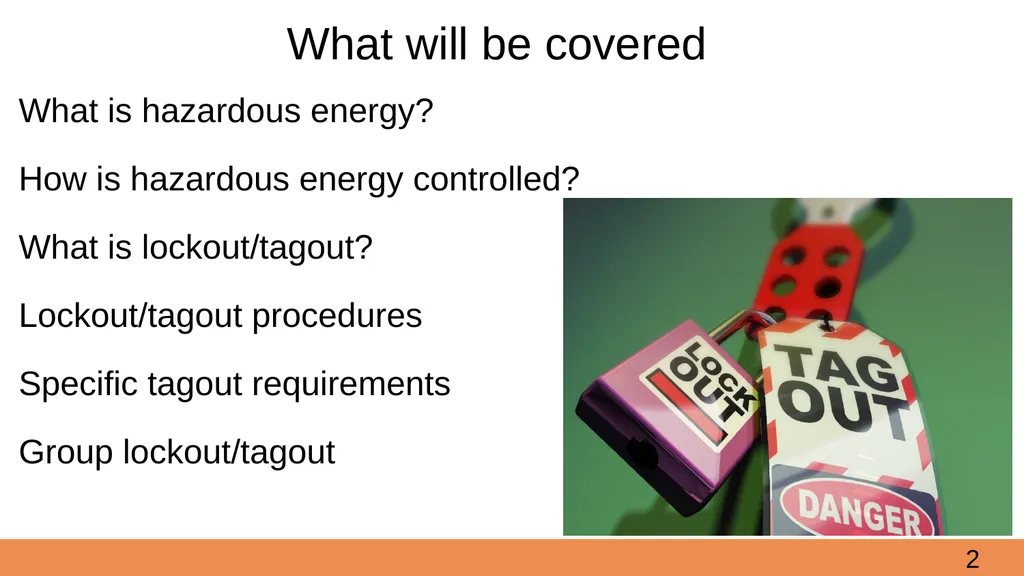
What is lockout/tagout?
Lockout/tagout procedures
Specific tagout requirements
Group lockout/tagout What will be covered<br>
03
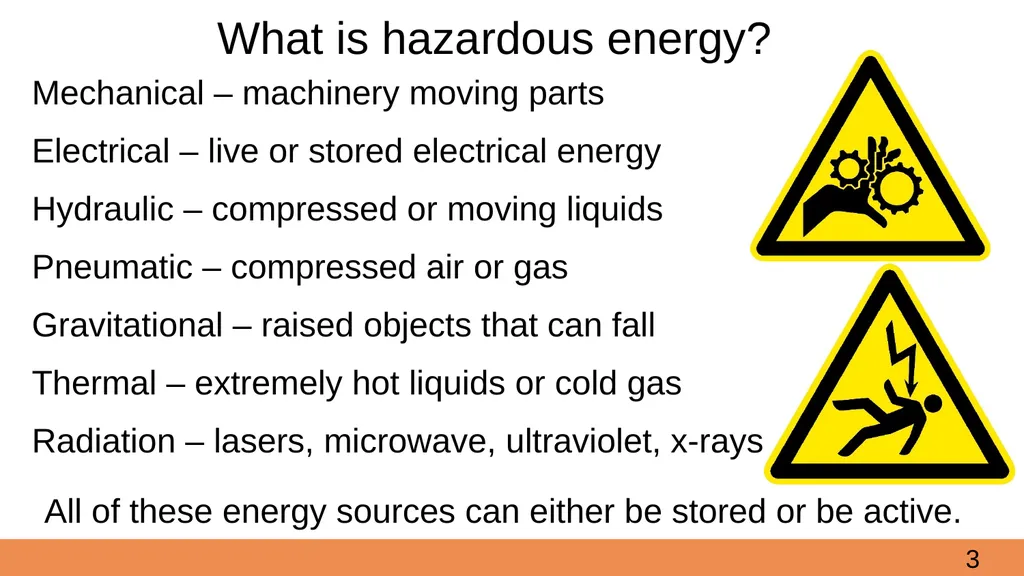
All of these energy sources can either be stored or be active. Mechanical – machinery moving parts
Electrical – live or stored electrical energy
Hydraulic – compressed or moving liquids
Pneumatic – compressed air or gas
Gravitational – raised objects that can fall
Thermal – extremely hot liquids or cold gas
Radiation – lasers, microwave, ultraviolet, x-rays What is hazardous energy?<br>
04
Can include the following:
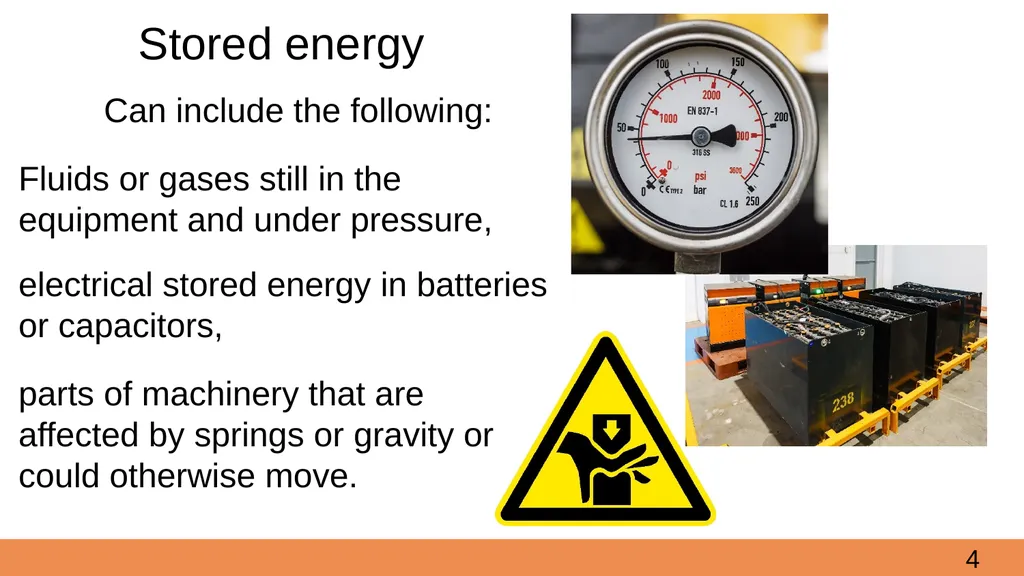
Fluids or gases still in the equipment and under pressure,
electrical stored energy in batteries or capacitors,
parts of machinery that are affected by springs or gravity or could otherwise move. Stored energy<br>
05
Identify all energy sources – potential (stored) or kinetic (moving or existing).
De-energize equipment by isolating or blocking the energy source.
Dissipate or release stored energy.
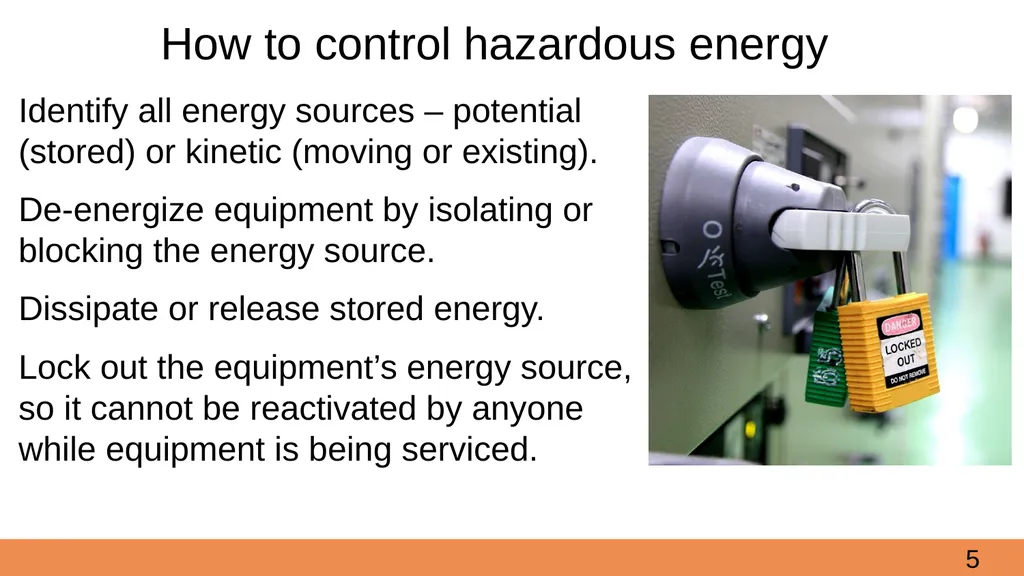
Lock out the equipment’s energy source, so it cannot be reactivated by anyone while equipment is being serviced. How to control hazardous energy<br>
06
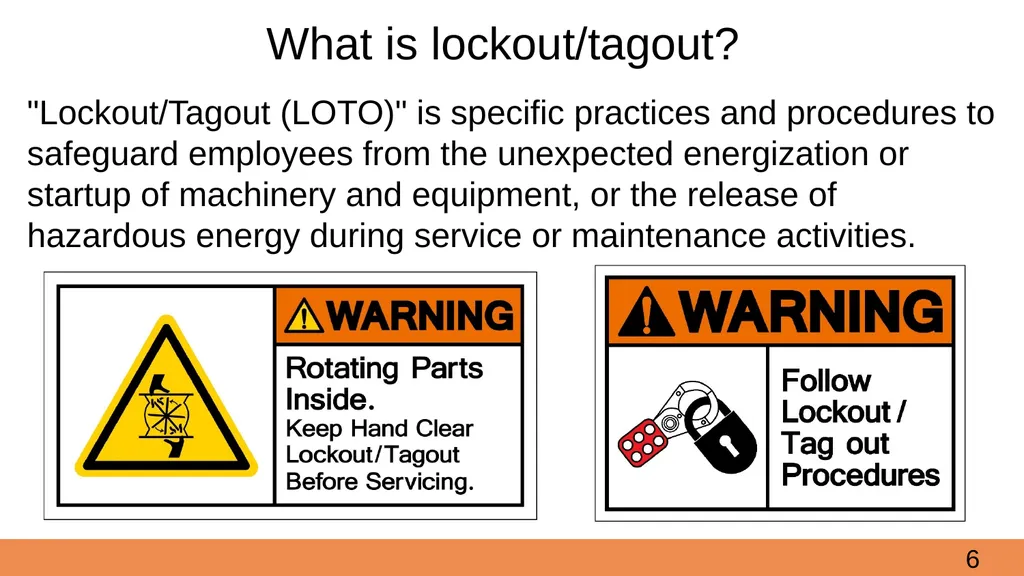
"Lockout/Tagout (LOTO)" is specific practices and procedures to safeguard employees from the unexpected energization or startup of machinery and equipment, or the release of hazardous energy during service or maintenance activities. What is lockout/tagout?<br>
07
YouTube Video - LOTO is not a choice YouTube video – Lockout/Tagout - It would have saved his life Why lockout/tagout is needed<br>
08
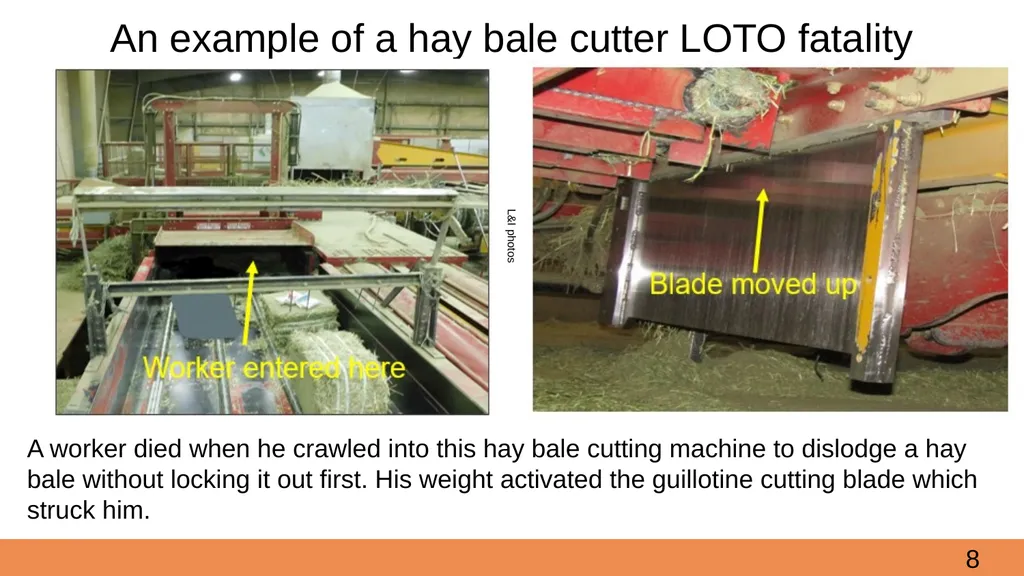
An example of a hay bale cutter LOTO fatality A worker died when he crawled into this hay bale cutting machine to dislodge a hay bale without locking it out first. His weight activated the guillotine cutting blade which struck him. L&I photos<br>
09
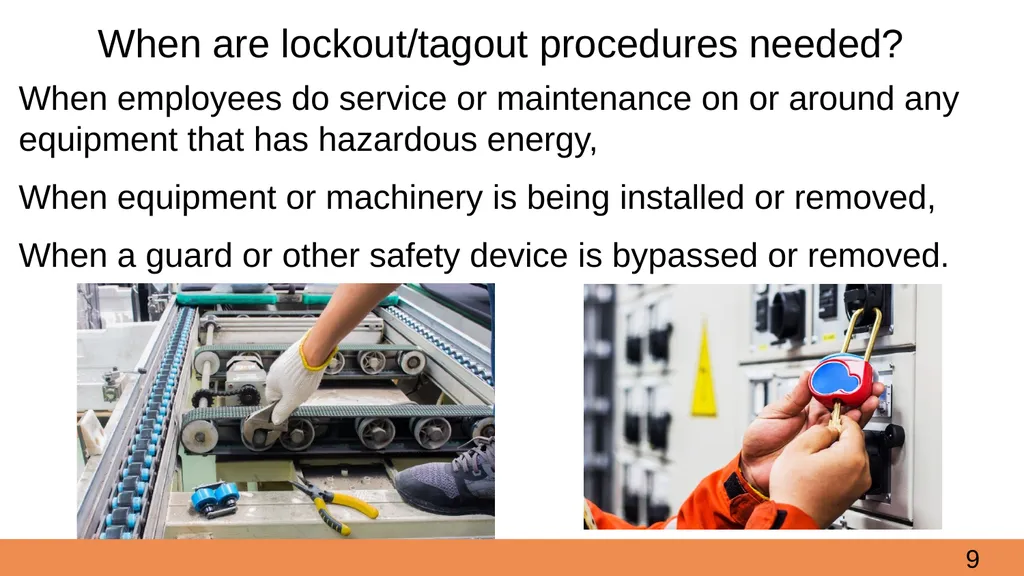
When employees do service or maintenance on or around any equipment that has hazardous energy,
When equipment or machinery is being installed or removed,
When a guard or other safety device is bypassed or removed. When are lockout/tagout procedures needed?<br>
10
Service and maintenance during normal production operations:
if an employee is not required to remove or bypass a guard or other safety device; or
place any body part into the point of operation or any other hazardous area created by machine operation.
Minor tool changes, adjustments, and other minor service during normal production:
If they are routine, repetitive, and integral to the use of the equipment for production; and
the work is done using measures which provide effective protection from hazards. When is lockout not required?<br>
11
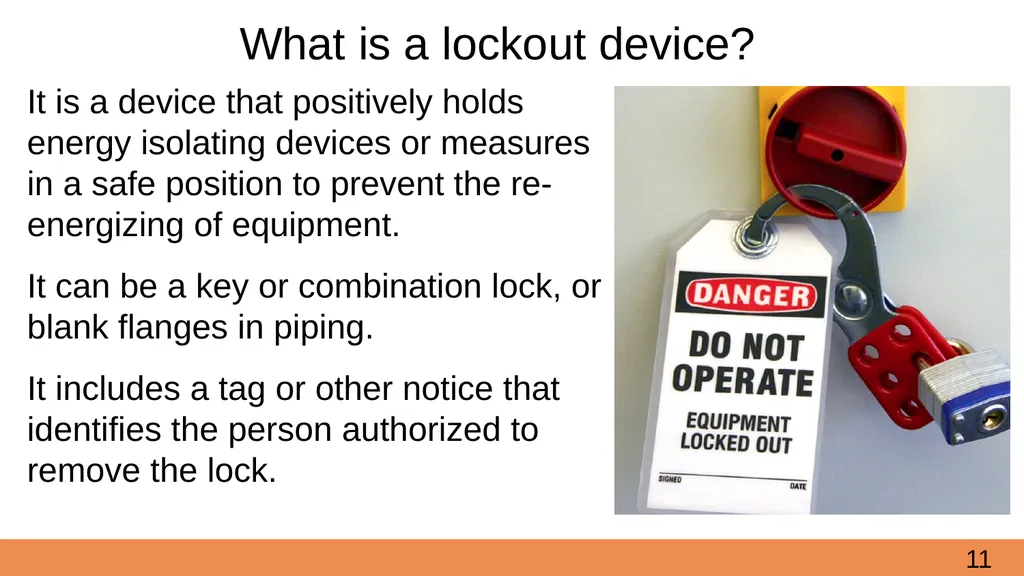
It is a device that positively holds energy isolating devices or measures in a safe position to prevent the re-energizing of equipment.
It can be a key or combination lock, or blank flanges in piping.
It includes a tag or other notice that identifies the person authorized to remove the lock. What is a lockout device?<br>
12
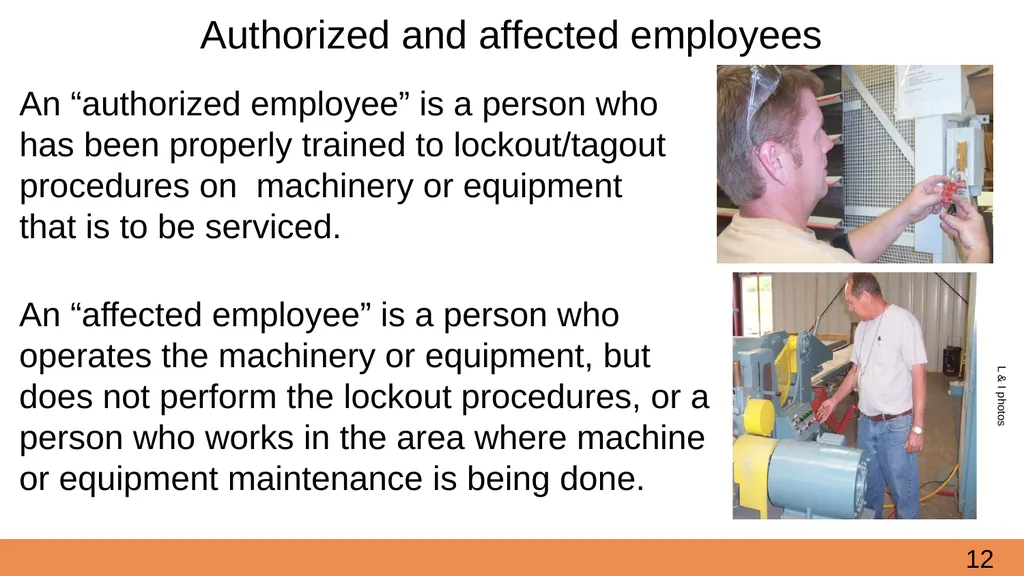
L & I photos An “affected employee” is a person who operates the machinery or equipment, but does not perform the lockout procedures, or a person who works in the area where machine or equipment maintenance is being done. An “authorized employee” is a person who has been properly trained to lockout/tagout procedures on machinery or equipment that is to be serviced. Authorized and affected employees<br>
13
Preparation – get ready, inform all affected employees
Shutdown – turn off or shut down operating equipment
Isolation – install isolating devices or implement procedures to block hazardous energy
Lockout/Tagout – apply LOTO devices or procedures
Stored energy check – verify that stored energy is released or restrained
Isolation verification – test to make sure LOTO is working Six steps of lockout/tagout procedures<br>
14
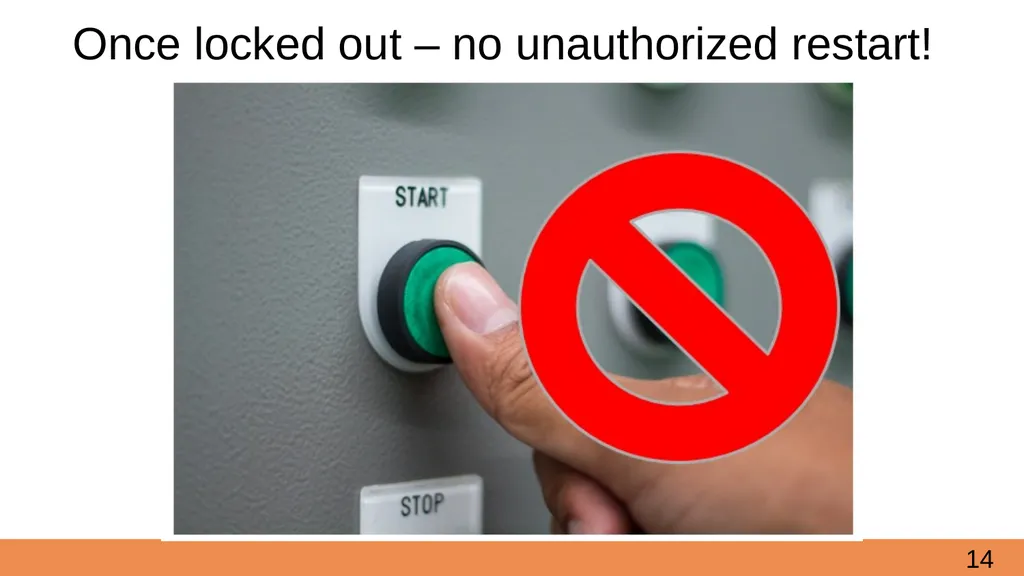
Once locked out – no unauthorized restart!<br>
15
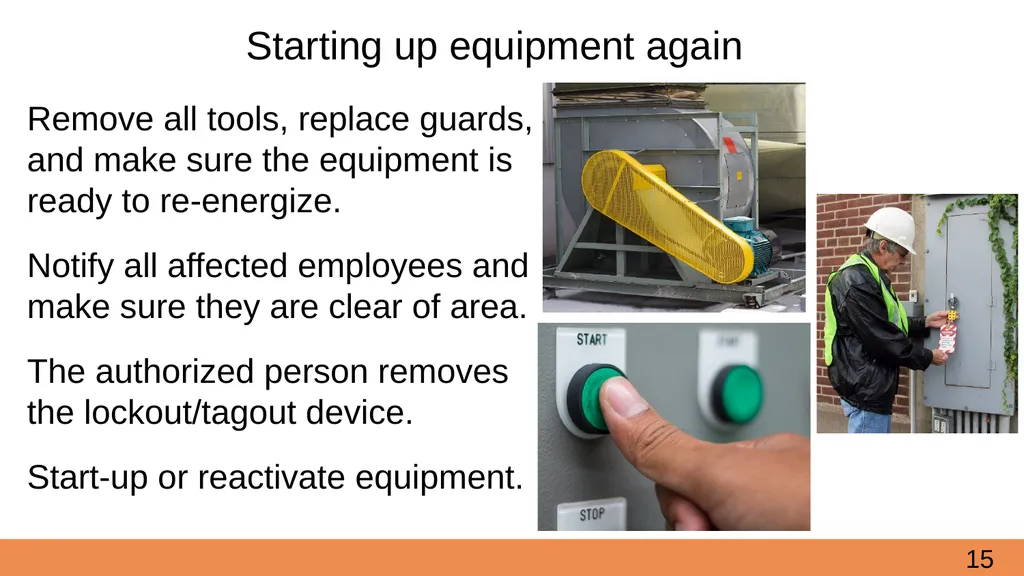
Remove all tools, replace guards, and make sure the equipment is ready to re-energize.
Notify all affected employees and make sure they are clear of area.
The authorized person removes the lockout/tagout device.
Start-up or reactivate equipment. Starting up equipment again<br>
16
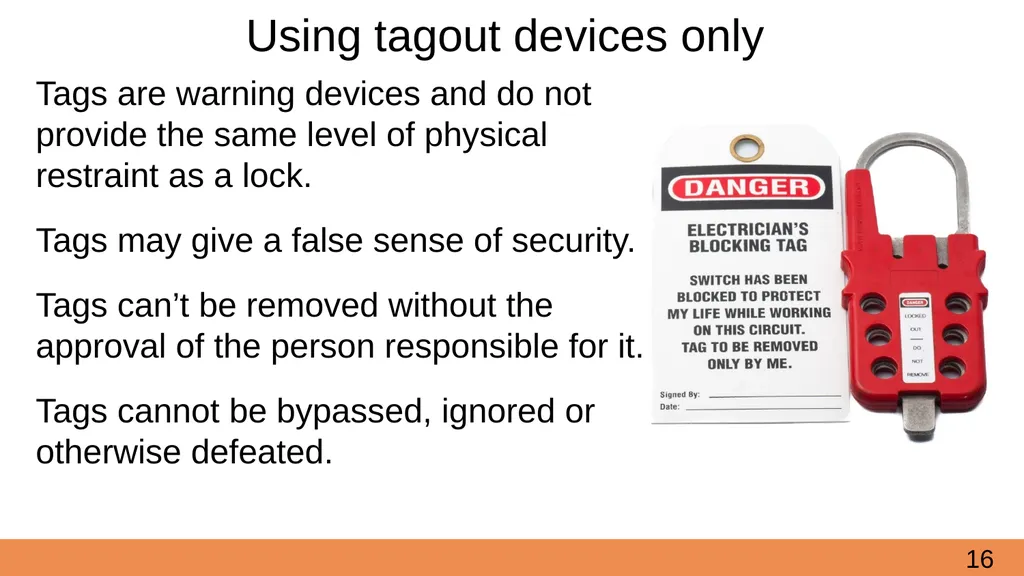
Tags are warning devices and do not provide the same level of physical restraint as a lock.
Tags may give a false sense of security.
Tags can’t be removed without the approval of the person responsible for it.
Tags cannot be bypassed, ignored or otherwise defeated. Using tagout devices only<br>
17
Tags must be legible and understandable
Tags must be made of materials that will withstand the environmental conditions they are exposed to.
Tags must be securely attached to energy-isolating devices so they can’t be accidently removed. More tagout rules<br>
18
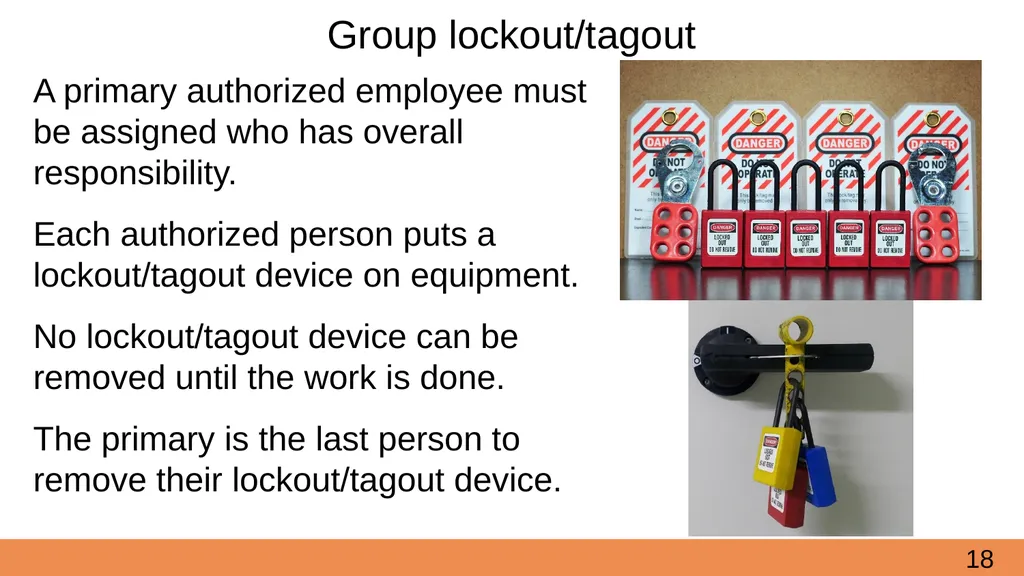
A primary authorized employee must be assigned who has overall responsibility.
Each authorized person puts a lockout/tagout device on equipment.
No lockout/tagout device can be removed until the work is done.
The primary is the last person to remove their lockout/tagout device. Group lockout/tagout<br>
19
List machinery or equipment here LOTO is required on the following equipment<br>
20
Describe your procedures here Link to Sample Lockout Procedure Template Our lockout/tagout procedures<br>
21
Link to Lockout/tagout Rule Describe your program here or pass out copies of written program Our lockout/tagout program<br>
22
Provide training on specific lockout/tagout procedures on specific machinery or equipment for authorized employees Further training for authorized employees<br>