
An Introduction to Clinical Trials Lupus
KB
Published · 27 slides · 0 views

1 / 1


Description
An Introduction to Clinical Trials Lupus Conversations Clinical Trials Popular Opinion Training Module 1 1 of 27 Boston Team: Candace Feldman, MD, SCD; Jessica Williams, MD, MPH; Elmer Freeman (CCHERS), Kreager Taber, BA Chicago Team:
Related Topics
Share
Embed code
Download this presentation From Below
"An Introduction to Clinical Trials Lupus" is the property of its rightful owner. Permission is granted to download and print the materials on this website for personal, non-commercial use only, and to display it on your personal computer provided you do not modify the materials and that you retain all copyright notices contained in the materials. By downloading content from our website, you accept the terms of this agreement.
Presentation Transcript
01
An Introduction to Clinical Trials Lupus Conversations Clinical Trials Popular Opinion Training Module 1 1 of 27 Boston Team: Candace Feldman, MD, SCD; Jessica Williams, MD, MPH; Elmer Freeman (CCHERS), Kreager Taber, BA
Chicago Team: Rosalind Ramsey-Goldman, MD, DrPH, Patricia Canessa, PhD; Karen Mancera-Cuevas, MS, MPH, CHES;
Holly Milaeger, MPH Funding: This work was funded by the Department of Health and Human Services, Public Health Service, Office of Minority Health Grant #1 CPIMP171141-01-00 and #1 CPIMP18116801-00<br>
Chicago Team: Rosalind Ramsey-Goldman, MD, DrPH, Patricia Canessa, PhD; Karen Mancera-Cuevas, MS, MPH, CHES;
Holly Milaeger, MPH Funding: This work was funded by the Department of Health and Human Services, Public Health Service, Office of Minority Health Grant #1 CPIMP171141-01-00 and #1 CPIMP18116801-00<br>
02
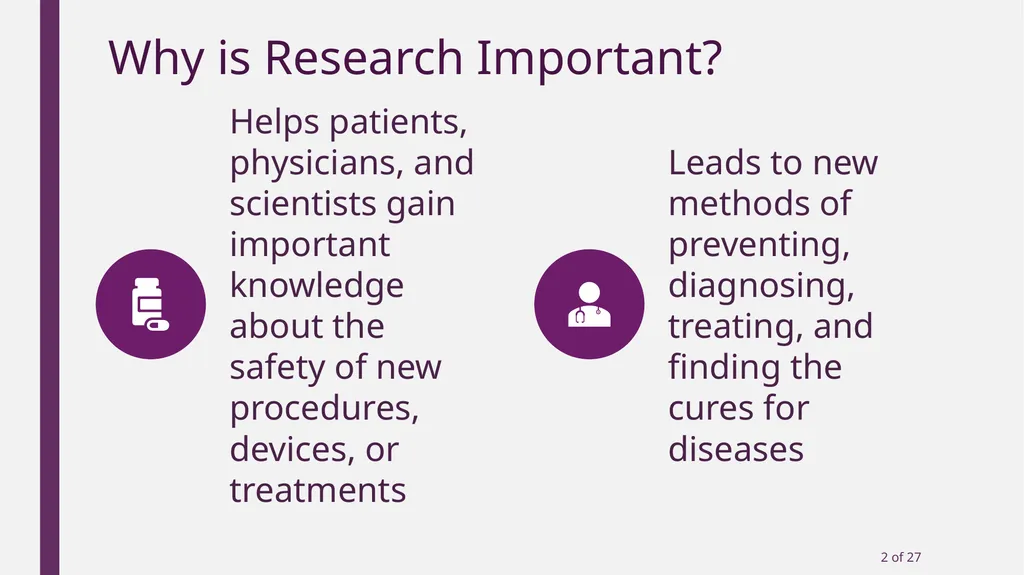
Why is Research Important? 2 of 27<br>
03
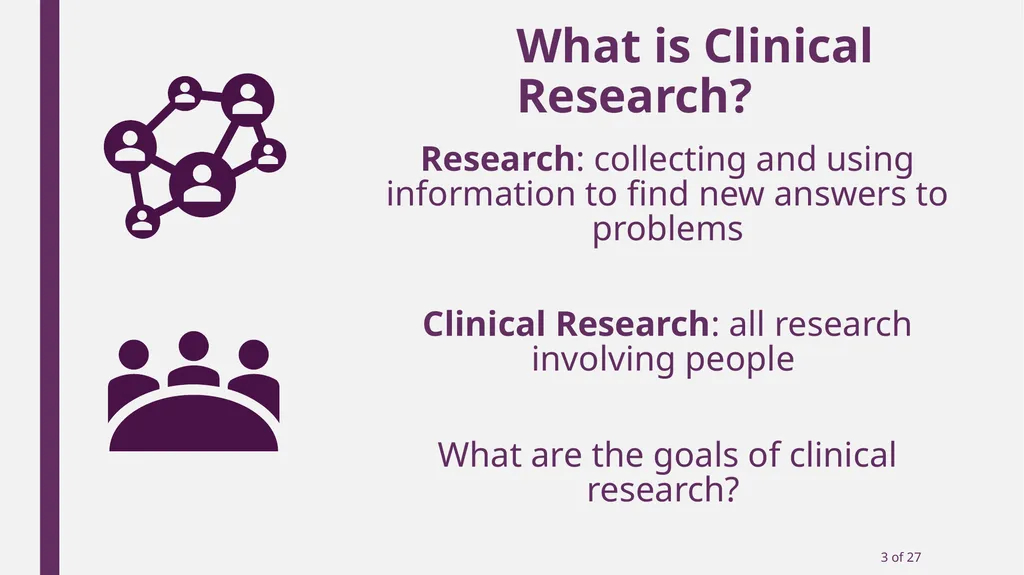
What is Clinical Research? Research: collecting and using information to find new answers to problems
Clinical Research: all research involving people
What are the goals of clinical research? 3 of 27<br>
Clinical Research: all research involving people
What are the goals of clinical research? 3 of 27<br>
04
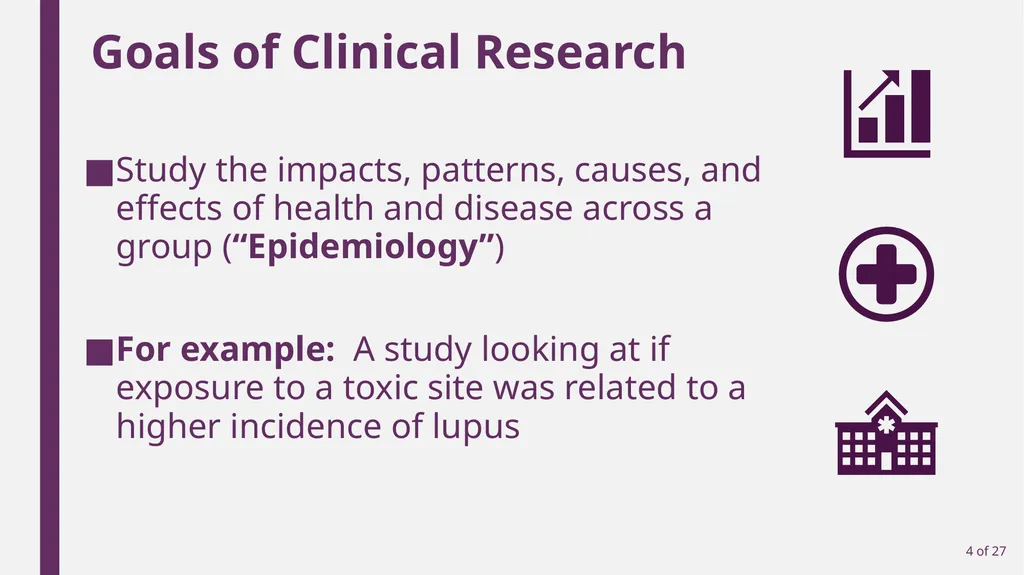
Goals of Clinical Research Study the impacts, patterns, causes, and effects of health and disease across a group (“Epidemiology”)
For example: A study looking at if exposure to a toxic site was related to a higher incidence of lupus 4 of 27<br>
For example: A study looking at if exposure to a toxic site was related to a higher incidence of lupus 4 of 27<br>
05
The purpose of the study is to understand how patients’ actions affect their health (“Behavioral”)
For example: A study looking at whether or not lupus patients are more likely to wear sunscreen during the summer if a mobile app sends them daily reminders Goals of Clinical Research 5 of 27<br>
For example: A study looking at whether or not lupus patients are more likely to wear sunscreen during the summer if a mobile app sends them daily reminders Goals of Clinical Research 5 of 27<br>
06
Goals of Clinical Research Examines how patients access health care services, and how much health care services cost the patient and the health care system (“Health Services”)
For example: A study examining the costs of care for patients with lupus 6 of 27<br>
For example: A study examining the costs of care for patients with lupus 6 of 27<br>
07
Evaluate effects of a specific treatment or medication on the people’s health (“Clinical Trials”)
For example: A study examining whether injection or infusion of the drug Belimumab is as effective for treating skin and joint lupus symptoms compared to the current standard-of-care treatment Goals of Clinical Research 7 of 27<br>
For example: A study examining whether injection or infusion of the drug Belimumab is as effective for treating skin and joint lupus symptoms compared to the current standard-of-care treatment Goals of Clinical Research 7 of 27<br>
08
The goal of clinical trials is to: Study the impacts, patterns, causes, and effects of health and disease
Examine how patients access health care services
Evaluate effects of a specific treatment or medication on the people’s health
All of the above 8 of 27<br>
Examine how patients access health care services
Evaluate effects of a specific treatment or medication on the people’s health
All of the above 8 of 27<br>
09
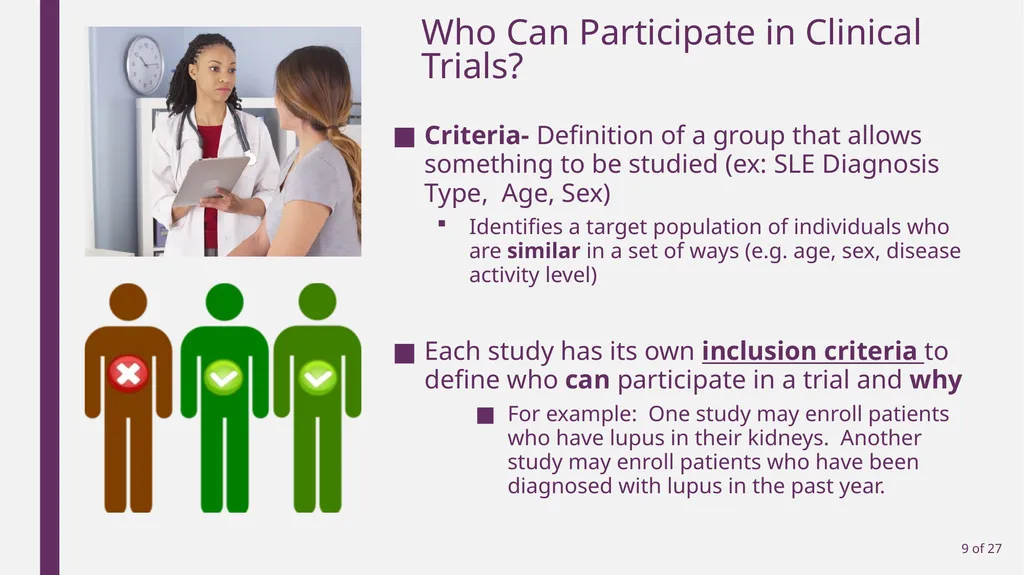
Criteria- Definition of a group that allows something to be studied (ex: SLE Diagnosis Type, Age, Sex)
Identifies a target population of individuals who are similar in a set of ways (e.g. age, sex, disease activity level)
Each study has its own inclusion criteria to define who can participate in a trial and why
For example: One study may enroll patients who have lupus in their kidneys. Another study may enroll patients who have been diagnosed with lupus in the past year. Who Can Participate in Clinical Trials? 9 of 27<br>
Identifies a target population of individuals who are similar in a set of ways (e.g. age, sex, disease activity level)
Each study has its own inclusion criteria to define who can participate in a trial and why
For example: One study may enroll patients who have lupus in their kidneys. Another study may enroll patients who have been diagnosed with lupus in the past year. Who Can Participate in Clinical Trials? 9 of 27<br>
10
Who Cannot Participate in Clinical Trials? Each study has its own exclusion criteria to define who cannot participate and why
For example: exclusion of patients with renal lupus
Other reasons for exclusion:
Treatment may not be safe for individuals with certain other illnesses
A disease may either be too active or inactive to be able to test whether a new medication will work safely and effectively 10 of 27<br>
For example: exclusion of patients with renal lupus
Other reasons for exclusion:
Treatment may not be safe for individuals with certain other illnesses
A disease may either be too active or inactive to be able to test whether a new medication will work safely and effectively 10 of 27<br>
11
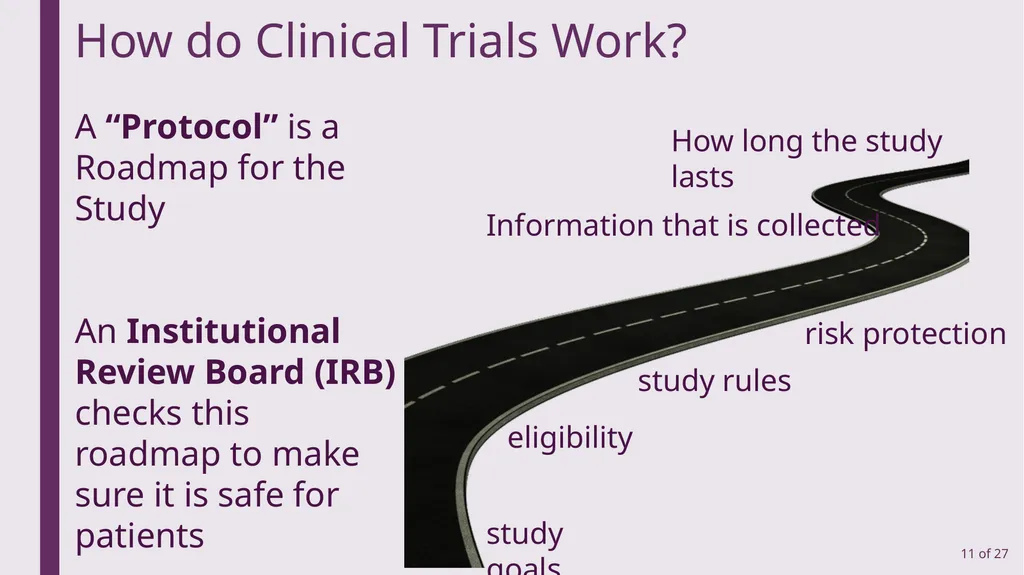
How do Clinical Trials Work? This Photo by Unknown Author is licensed under CC BY A “Protocol” is a Roadmap for the Study
An Institutional Review Board (IRB) checks this roadmap to make sure it is safe for patients study goals eligibility risk protection study rules Information that is collected How long the study lasts 11 of 27<br>
An Institutional Review Board (IRB) checks this roadmap to make sure it is safe for patients study goals eligibility risk protection study rules Information that is collected How long the study lasts 11 of 27<br>
12
In order to finish the study and get to the end of the road, we have to know the way we want to go first
We need to know the study’s goals, eligibility, risks and benefits, and how long it will last before we start going down the road
This lets us know the safest way to get there 12 of 27<br>
We need to know the study’s goals, eligibility, risks and benefits, and how long it will last before we start going down the road
This lets us know the safest way to get there 12 of 27<br>
13
The Belmont Report Published in 1979 and established the guidelines for ethics in medical research 13 of 27<br>
14
Respect for Persons People have the ability to decide if they want to participate, not participate, or withdraw from a study
People who are not able to consent because of age, illness, or mental disability must be protected
For example, a child with lupus cannot participate in a study unless his/her parents or guardian consents 14 of 27<br>
People who are not able to consent because of age, illness, or mental disability must be protected
For example, a child with lupus cannot participate in a study unless his/her parents or guardian consents 14 of 27<br>
15
Beneficence Research must make all efforts to maximize the benefits of the research and minimize risks
For example, patients with severe lupus kidney disease were not able to participate in a study comparing the drug belimumab to standard lupus treatment
The initial data from the trial suggested that the “standard of care” for kidney lupus was better 15 of 27<br>
For example, patients with severe lupus kidney disease were not able to participate in a study comparing the drug belimumab to standard lupus treatment
The initial data from the trial suggested that the “standard of care” for kidney lupus was better 15 of 27<br>
16
Justice Patients cannot be denied treatment because they don’t want to participate in research
Risks and benefits of the study must be described equally, and good AND bad results must be shared
For example, if a patient is enrolled in a clinical trial comparing the effects of belimumab on lupus symptoms to a placebo, they should be told about the side effects AND the potential benefits of the drug 16 of 27<br>
Risks and benefits of the study must be described equally, and good AND bad results must be shared
For example, if a patient is enrolled in a clinical trial comparing the effects of belimumab on lupus symptoms to a placebo, they should be told about the side effects AND the potential benefits of the drug 16 of 27<br>
17
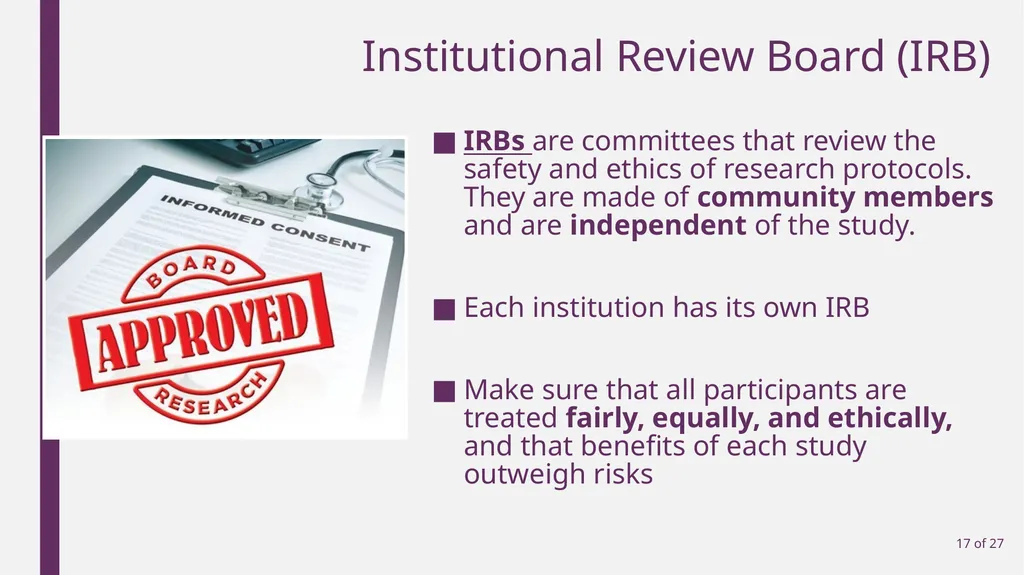
Institutional Review Board (IRB) IRBs are committees that review the safety and ethics of research protocols. They are made of community members and are independent of the study.
Each institution has its own IRB
Make sure that all participants are treated fairly, equally, and ethically, and that benefits of each study outweigh risks 17 of 27<br>
Each institution has its own IRB
Make sure that all participants are treated fairly, equally, and ethically, and that benefits of each study outweigh risks 17 of 27<br>
18
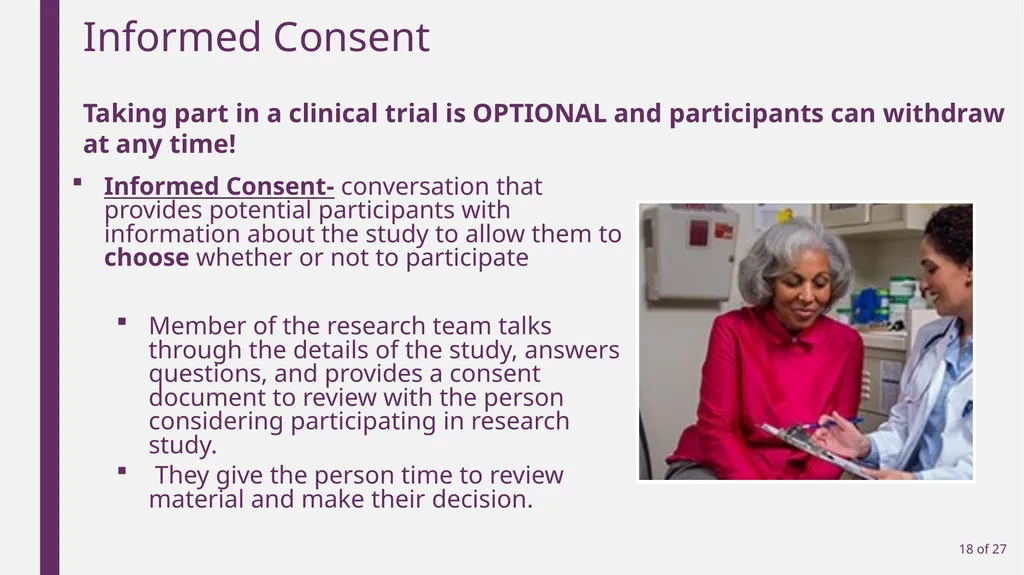
Informed Consent Informed Consent- conversation that provides potential participants with information about the study to allow them to choose whether or not to participate
Member of the research team talks through the details of the study, answers questions, and provides a consent document to review with the person considering participating in research study.
They give the person time to review material and make their decision. Taking part in a clinical trial is OPTIONAL and participants can withdraw at any time! 18 of 27<br>
Member of the research team talks through the details of the study, answers questions, and provides a consent document to review with the person considering participating in research study.
They give the person time to review material and make their decision. Taking part in a clinical trial is OPTIONAL and participants can withdraw at any time! 18 of 27<br>
19
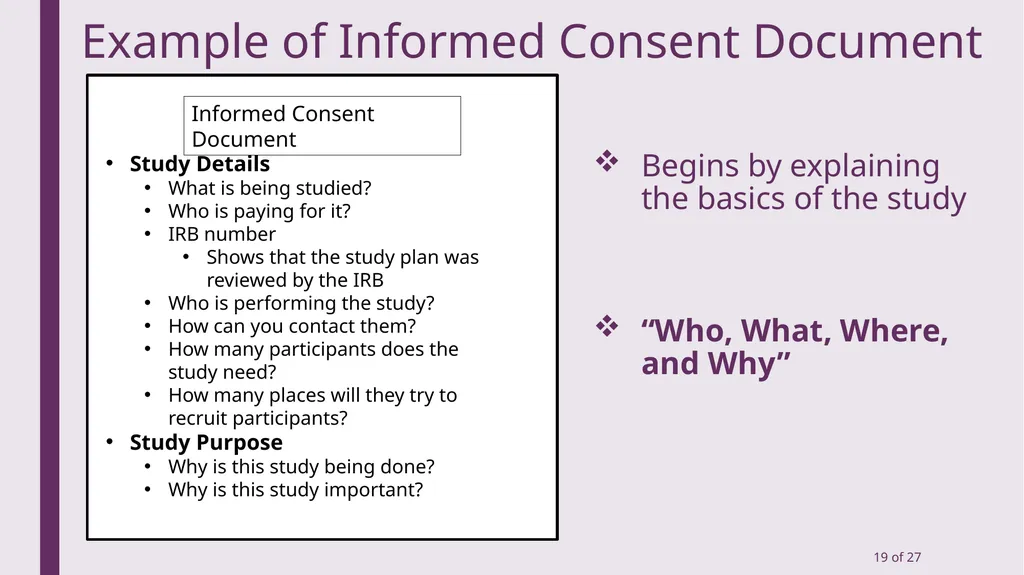
Example of Informed Consent Document Info Informed Consent Document Study Details
What is being studied?
Who is paying for it?
IRB number
Shows that the study plan was reviewed by the IRB
Who is performing the study?
How can you contact them?
How many participants does the study need?
How many places will they try to recruit participants?
Study Purpose
Why is this study being done?
Why is this study important? 19 of 27 Begins by explaining the basics of the study
“Who, What, Where, and Why”<br>
What is being studied?
Who is paying for it?
IRB number
Shows that the study plan was reviewed by the IRB
Who is performing the study?
How can you contact them?
How many participants does the study need?
How many places will they try to recruit participants?
Study Purpose
Why is this study being done?
Why is this study important? 19 of 27 Begins by explaining the basics of the study
“Who, What, Where, and Why”<br>
20
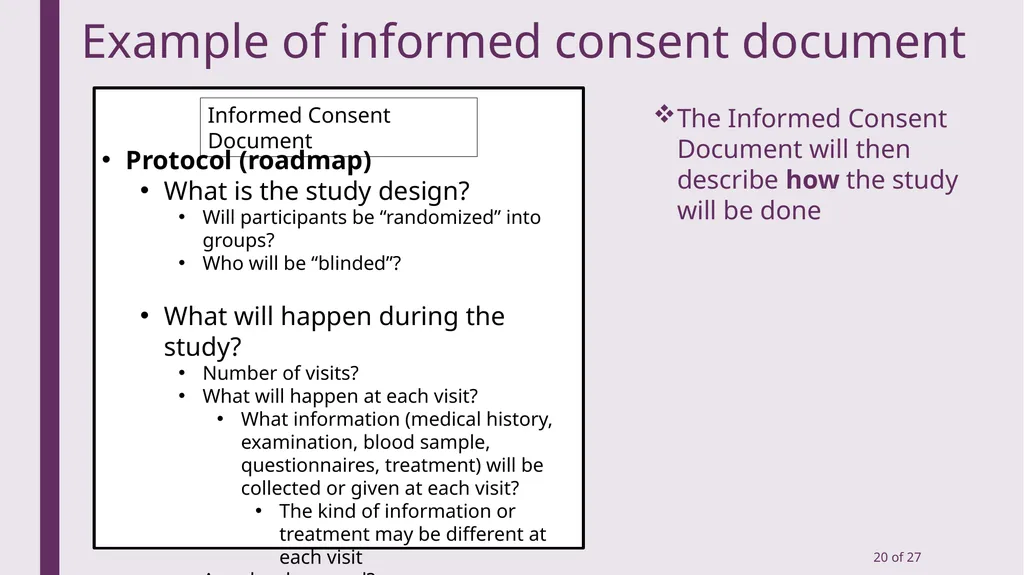
Example of informed consent document Info Informed Consent Document Protocol (roadmap)
What is the study design?
Will participants be “randomized” into groups?
Who will be “blinded”?
What will happen during the study?
Number of visits?
What will happen at each visit?
What information (medical history, examination, blood sample, questionnaires, treatment) will be collected or given at each visit?
The kind of information or treatment may be different at each visit
Are placebos used? 20 of 27 The Informed Consent Document will then describe how the study will be done<br>
What is the study design?
Will participants be “randomized” into groups?
Who will be “blinded”?
What will happen during the study?
Number of visits?
What will happen at each visit?
What information (medical history, examination, blood sample, questionnaires, treatment) will be collected or given at each visit?
The kind of information or treatment may be different at each visit
Are placebos used? 20 of 27 The Informed Consent Document will then describe how the study will be done<br>
21
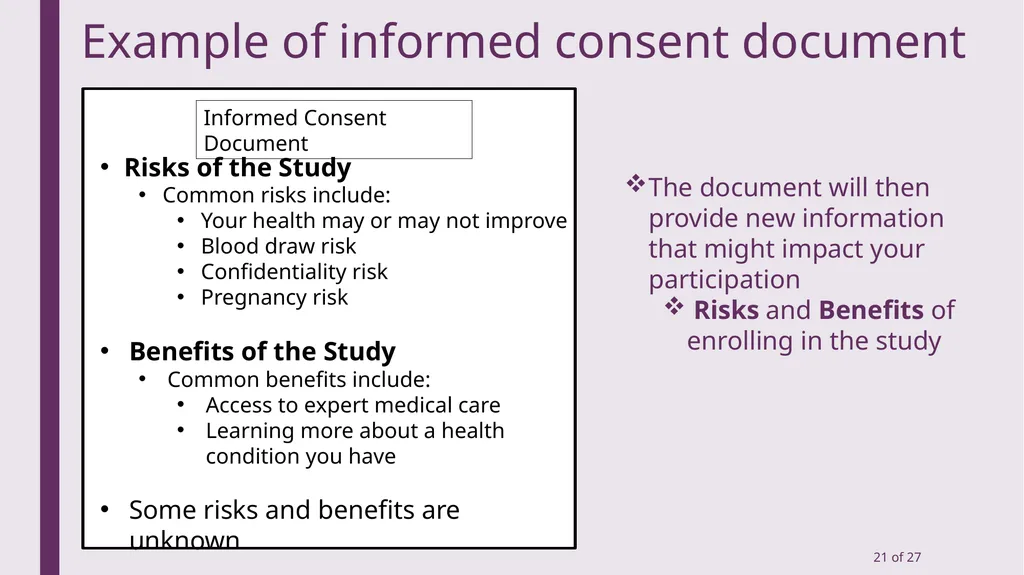
Example of informed consent document Info Informed Consent Document Risks of the Study
Common risks include:
Your health may or may not improve
Blood draw risk
Confidentiality risk
Pregnancy risk
Benefits of the Study
Common benefits include:
Access to expert medical care
Learning more about a health condition you have
Some risks and benefits are unknown 21 of 27 The document will then provide new information that might impact your participation
Risks and Benefits of enrolling in the study<br>
Common risks include:
Your health may or may not improve
Blood draw risk
Confidentiality risk
Pregnancy risk
Benefits of the Study
Common benefits include:
Access to expert medical care
Learning more about a health condition you have
Some risks and benefits are unknown 21 of 27 The document will then provide new information that might impact your participation
Risks and Benefits of enrolling in the study<br>
22
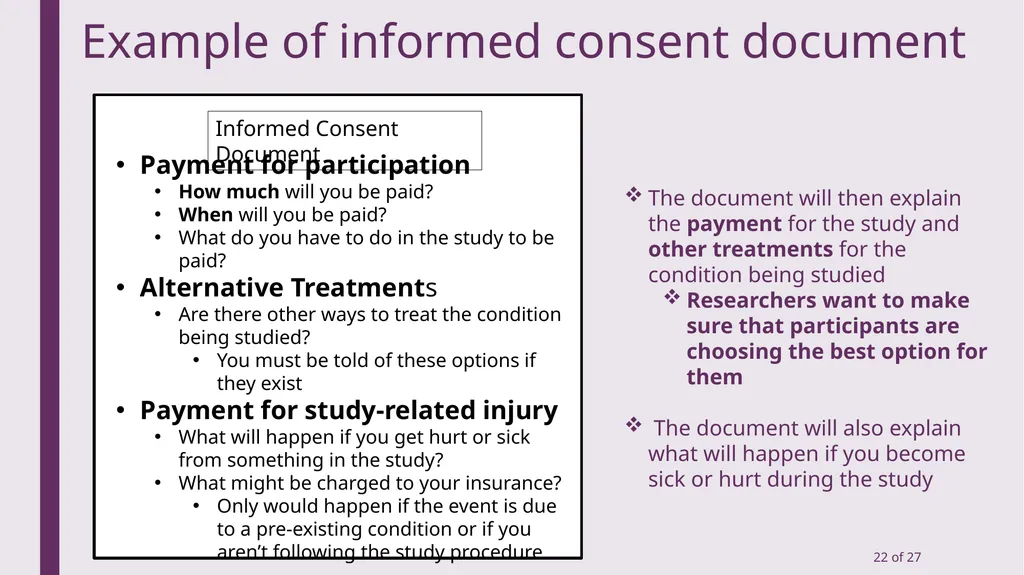
Example of informed consent document Info Informed Consent Document Payment for participation
How much will you be paid?
When will you be paid?
What do you have to do in the study to be paid?
Alternative Treatments
Are there other ways to treat the condition being studied?
You must be told of these options if they exist
Payment for study-related injury
What will happen if you get hurt or sick from something in the study?
What might be charged to your insurance?
Only would happen if the event is due to a pre-existing condition or if you aren’t following the study procedure 22 of 27 The document will then explain the payment for the study and other treatments for the condition being studied
Researchers want to make sure that participants are choosing the best option for them
The document will also explain what will happen if you become sick or hurt during the study<br>
How much will you be paid?
When will you be paid?
What do you have to do in the study to be paid?
Alternative Treatments
Are there other ways to treat the condition being studied?
You must be told of these options if they exist
Payment for study-related injury
What will happen if you get hurt or sick from something in the study?
What might be charged to your insurance?
Only would happen if the event is due to a pre-existing condition or if you aren’t following the study procedure 22 of 27 The document will then explain the payment for the study and other treatments for the condition being studied
Researchers want to make sure that participants are choosing the best option for them
The document will also explain what will happen if you become sick or hurt during the study<br>
23
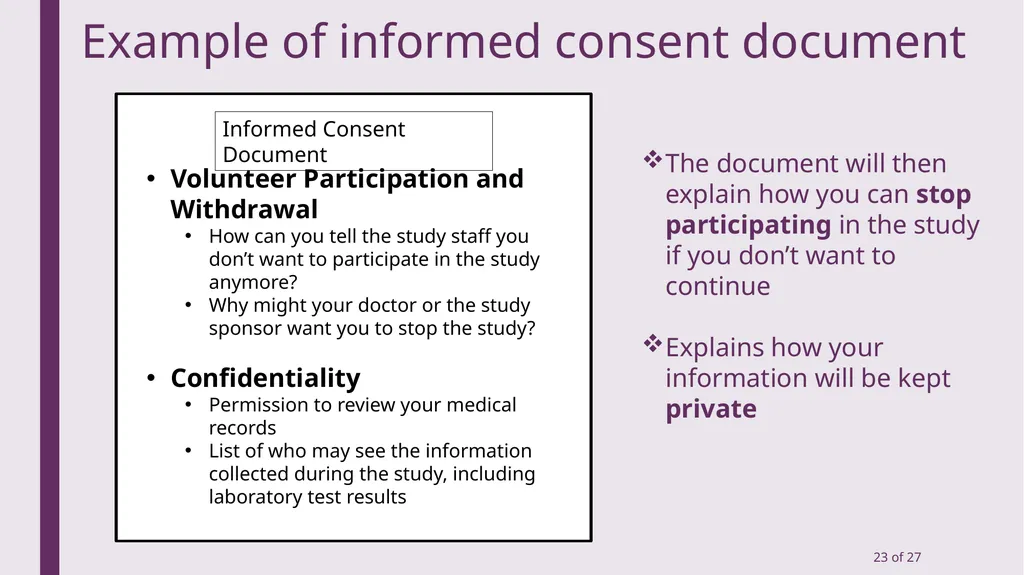
Example of informed consent document Info Informed Consent Document Volunteer Participation and Withdrawal
How can you tell the study staff you don’t want to participate in the study anymore?
Why might your doctor or the study sponsor want you to stop the study?
Confidentiality
Permission to review your medical records
List of who may see the information collected during the study, including laboratory test results 23 of 27 The document will then explain how you can stop participating in the study if you don’t want to continue
Explains how your information will be kept private<br>
How can you tell the study staff you don’t want to participate in the study anymore?
Why might your doctor or the study sponsor want you to stop the study?
Confidentiality
Permission to review your medical records
List of who may see the information collected during the study, including laboratory test results 23 of 27 The document will then explain how you can stop participating in the study if you don’t want to continue
Explains how your information will be kept private<br>
24
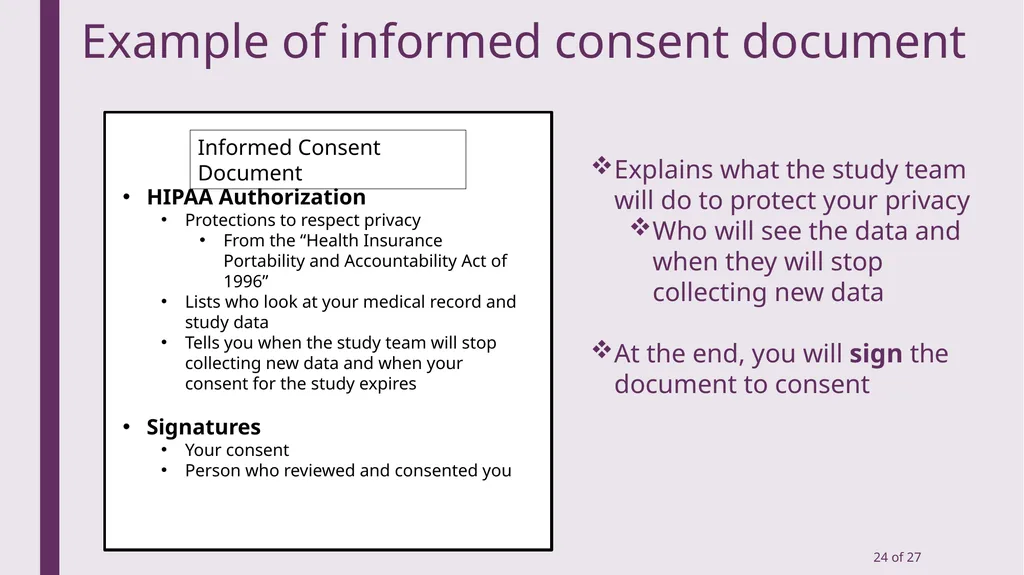
Example of informed consent document Info Informed Consent Document HIPAA Authorization
Protections to respect privacy
From the “Health Insurance Portability and Accountability Act of 1996”
Lists who look at your medical record and study data
Tells you when the study team will stop collecting new data and when your consent for the study expires
Signatures
Your consent
Person who reviewed and consented you 24 of 27 Explains what the study team will do to protect your privacy
Who will see the data and when they will stop collecting new data
At the end, you will sign the document to consent<br>
Protections to respect privacy
From the “Health Insurance Portability and Accountability Act of 1996”
Lists who look at your medical record and study data
Tells you when the study team will stop collecting new data and when your consent for the study expires
Signatures
Your consent
Person who reviewed and consented you 24 of 27 Explains what the study team will do to protect your privacy
Who will see the data and when they will stop collecting new data
At the end, you will sign the document to consent<br>
25
Thank you! Questions? 25 of 27 Questions? Thank you!<br>
26
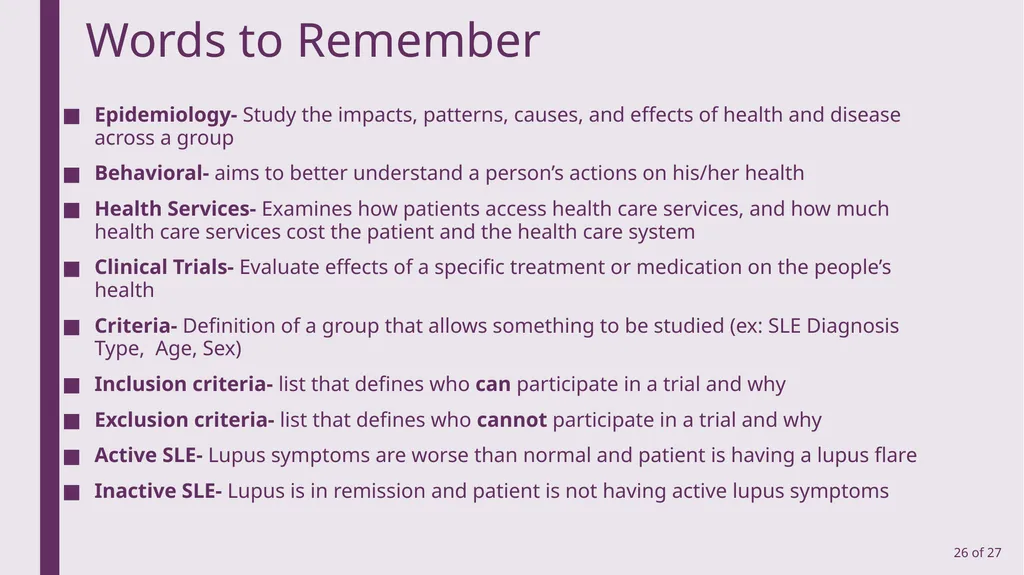
Words to Remember Epidemiology- Study the impacts, patterns, causes, and effects of health and disease across a group
Behavioral- aims to better understand a person’s actions on his/her health
Health Services- Examines how patients access health care services, and how much health care services cost the patient and the health care system
Clinical Trials- Evaluate effects of a specific treatment or medication on the people’s health
Criteria- Definition of a group that allows something to be studied (ex: SLE Diagnosis Type, Age, Sex)
Inclusion criteria- list that defines who can participate in a trial and why
Exclusion criteria- list that defines who cannot participate in a trial and why
Active SLE- Lupus symptoms are worse than normal and patient is having a lupus flare
Inactive SLE- Lupus is in remission and patient is not having active lupus symptoms 26 of 27<br>
Behavioral- aims to better understand a person’s actions on his/her health
Health Services- Examines how patients access health care services, and how much health care services cost the patient and the health care system
Clinical Trials- Evaluate effects of a specific treatment or medication on the people’s health
Criteria- Definition of a group that allows something to be studied (ex: SLE Diagnosis Type, Age, Sex)
Inclusion criteria- list that defines who can participate in a trial and why
Exclusion criteria- list that defines who cannot participate in a trial and why
Active SLE- Lupus symptoms are worse than normal and patient is having a lupus flare
Inactive SLE- Lupus is in remission and patient is not having active lupus symptoms 26 of 27<br>
27
Funding and Acknowledgements 27 Funding: This work was funded by the Department of Health and Human Services, Public Health Service, Office of Minority Health Grant #1 CPIMP171141-01-00 and #1 CPIMP18116801-00 Boston Team: Candace Feldman, MD, ScD; Jessica Williams, MD, MPH; Elmer Freeman (CCHERS), Kreager Taber, BA
Chicago Team: Rosalind Ramsey-Goldman, MD, DrPH, Patricia Canessa, PhD, Karen Mancera-Cuevas MS, MPH, CHES; Holly Milaeger, MPH<br>
Chicago Team: Rosalind Ramsey-Goldman, MD, DrPH, Patricia Canessa, PhD, Karen Mancera-Cuevas MS, MPH, CHES; Holly Milaeger, MPH<br>