Analytical Research Projects 1 Basic Elements of Analytical Research and Writing Overview 2 Project types Choosing a topic Identifying audience Conducting research Organization and format Project Types 3 Argumentative: Clearly defined
"Analytical Research Projects 1 Basic Elements of" is the property of its rightful owner. Permission is granted to
download and print the materials on this website for personal, non-commercial use only, and to display it
on your personal computer provided you do not modify the materials and that you retain all copyright
notices contained in the materials. By downloading content from our website, you accept the terms of this
agreement.
Presentation Transcript
01
Analytical Research Projects 1 Basic Elements of Analytical Research and Writing<br>
02
Overview 2 Project types
Choosing a topic
Identifying audience
Conducting research
Organization and format<br>
03
Project Types 3 Argumentative:
Clearly defined topic.
Clearly defined thesis statement (stance).
Goal: Persuade audience.
Example: Martha Schwartz is the most influential contemporary American landscape architect.
Must support thesis with proof (data) and sound reasoning.<br>
04
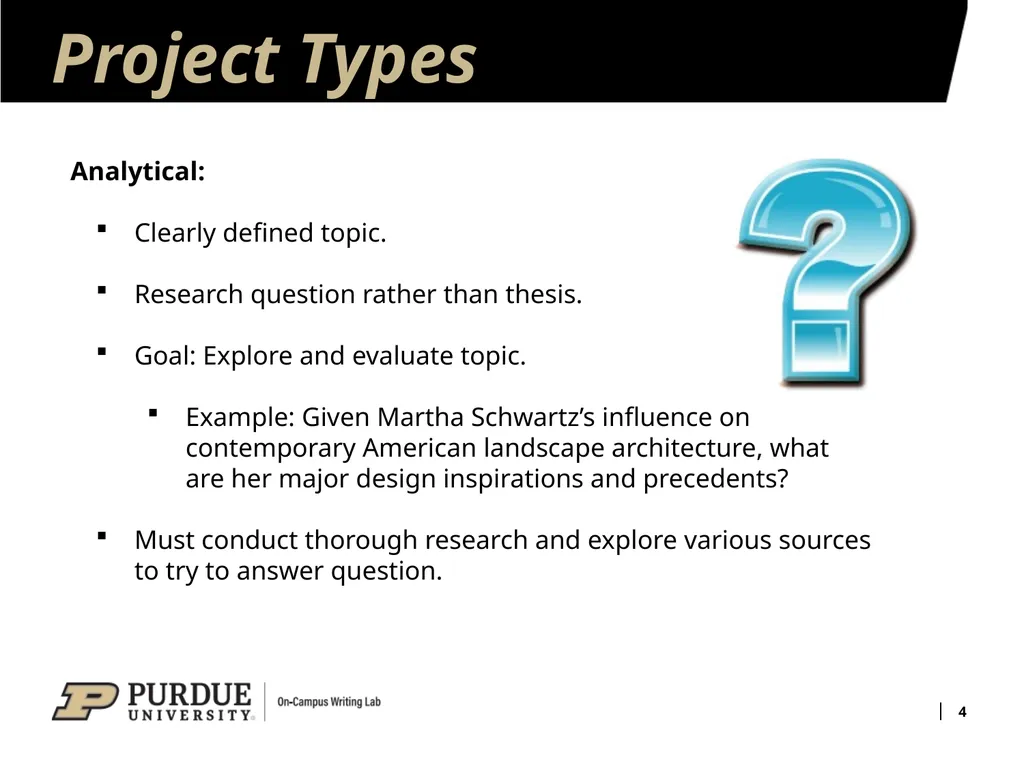
Project Types 4 Analytical:
Clearly defined topic.
Research question rather than thesis.
Goal: Explore and evaluate topic.
Example: Given Martha Schwartz’s influence on contemporary American landscape architecture, what are her major design inspirations and precedents?
Must conduct thorough research and explore various sources to try to answer question.<br>
05
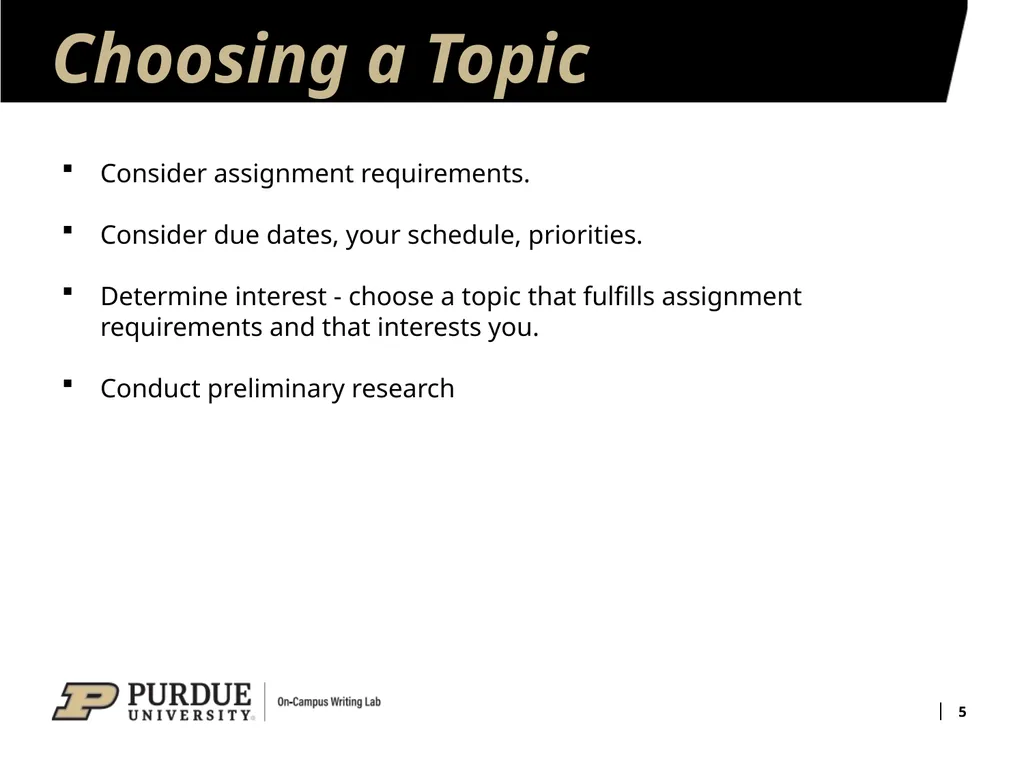
Choosing a Topic 5 Consider assignment requirements.
Consider due dates, your schedule, priorities.
Determine interest - choose a topic that fulfills assignment requirements and that interests you.
Conduct preliminary research<br>
06
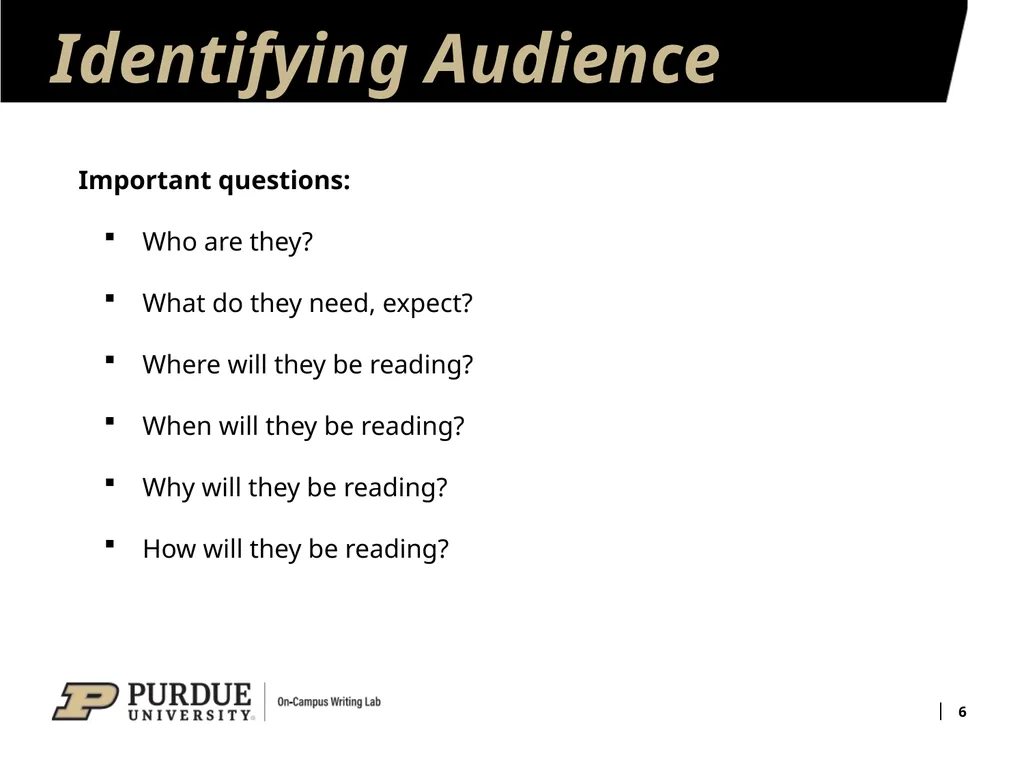
Identifying Audience 6 Important questions:
Who are they?
What do they need, expect?
Where will they be reading?
When will they be reading?
Why will they be reading?
How will they be reading?<br>
07
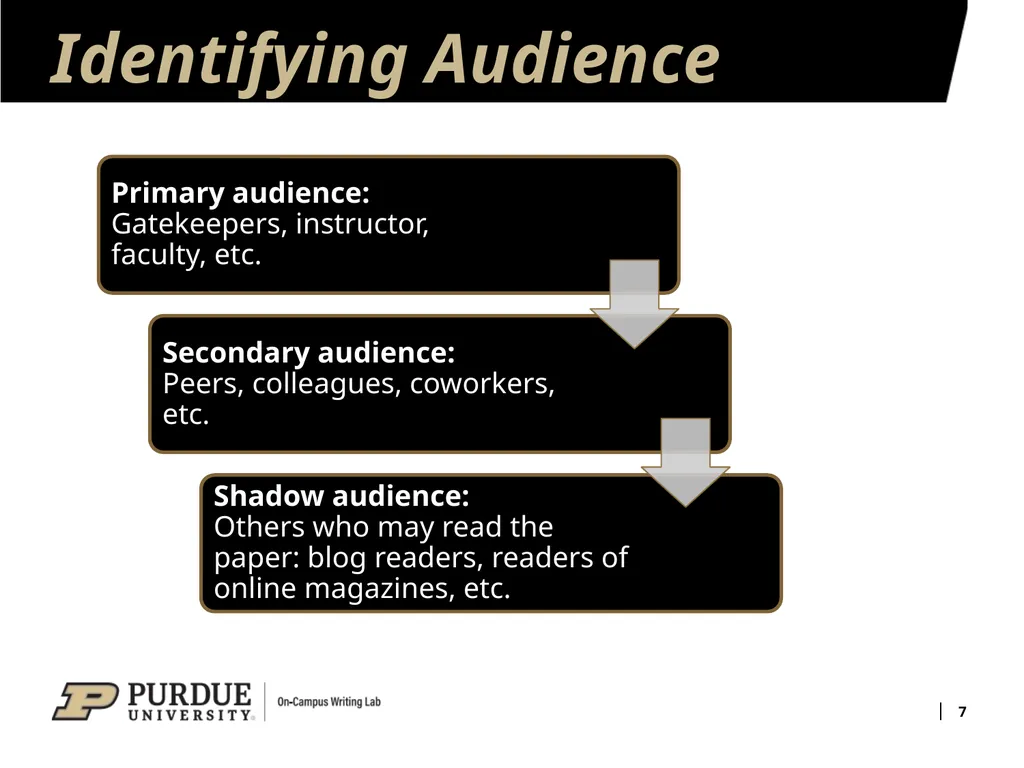
Identifying Audience 7<br>
08
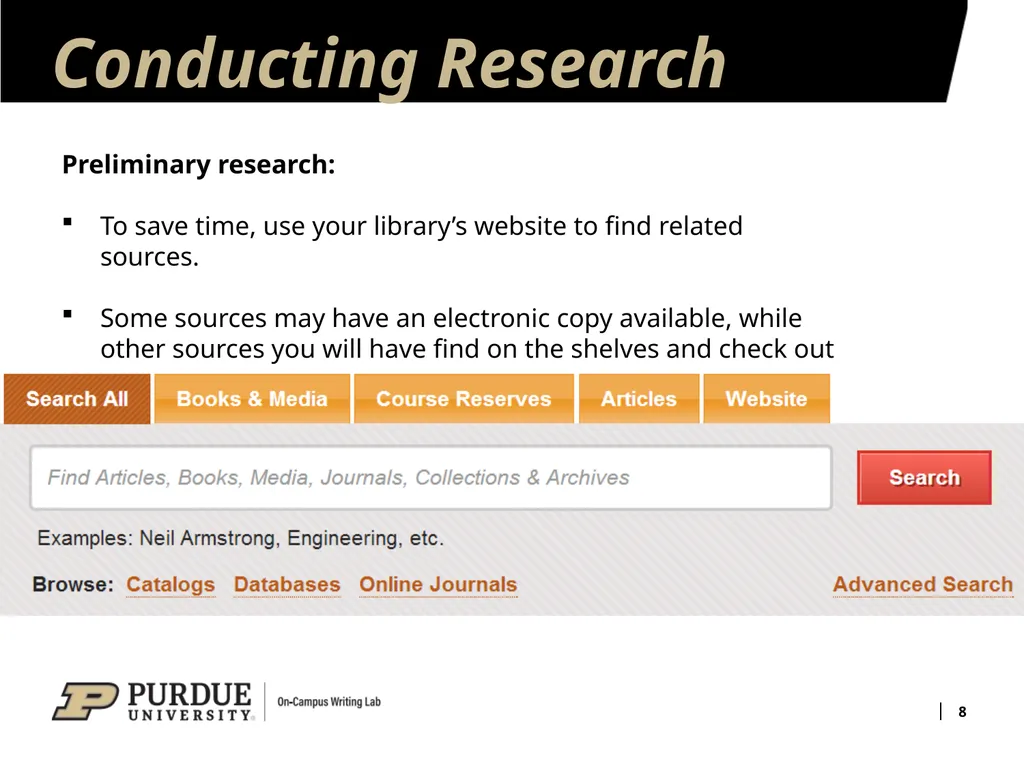
Conducting Research 8 Preliminary research:
To save time, use your library’s website to find related sources.
Some sources may have an electronic copy available, while other sources you will have find on the shelves and check out<br>
09
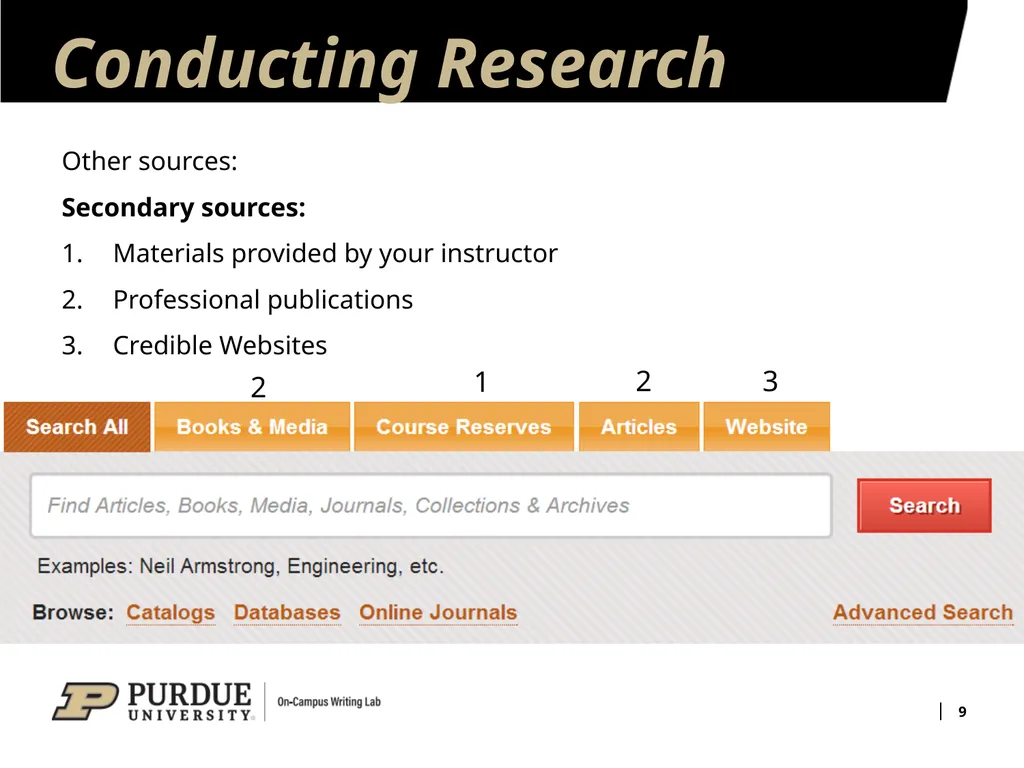
Conducting Research 9 Other sources:
Secondary sources:
Materials provided by your instructor
Professional publications
Credible Websites 2 1 2 3<br>
Use the Purdue OWL to help you conduct primary research:
https://owl.english.purdue.edu/owl/resource/559/1/<br>
11
Paper Organization: Introduction 11 How to write the introduction:
What is the purpose of the paper? Argumentative or Analytical?
For argumentative—What is your thesis?
For analytical—What are your research questions?
Audience (optional)—Is the audience familiar with topic, terms?
Research methods—How did you find your information?
Findings and conclusions.
Forecast organization of document.<br>
12
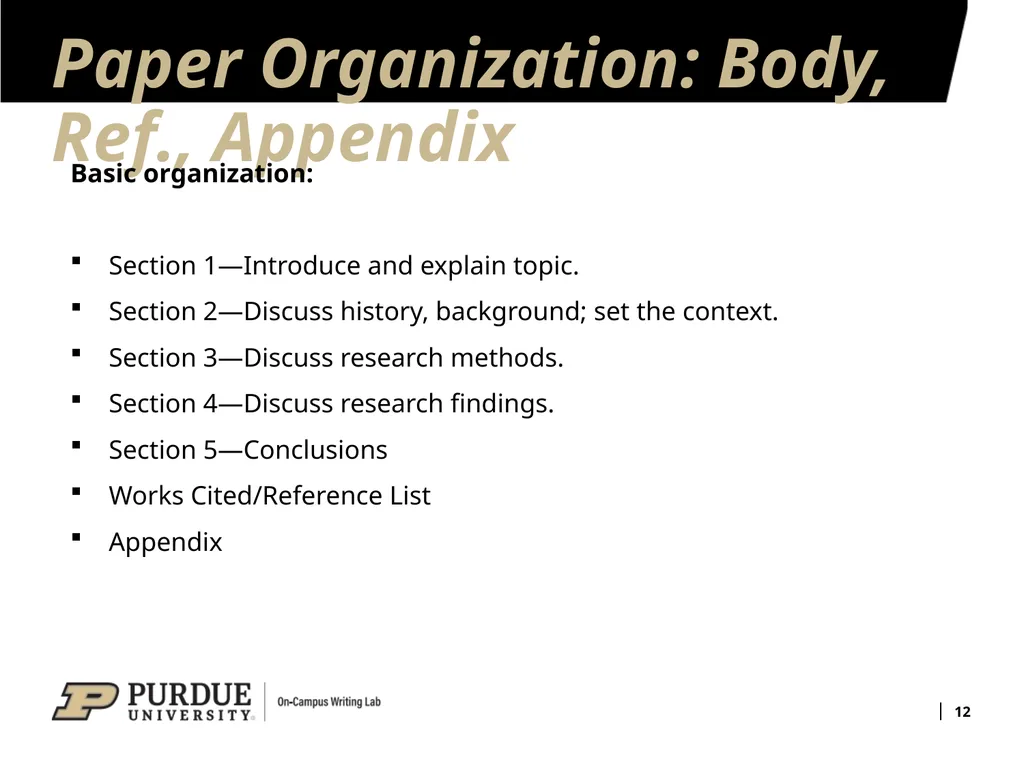
Paper Organization: Body, Ref., Appendix 12 Basic organization:
Section 1—Introduce and explain topic.
Section 2—Discuss history, background; set the context.
Section 3—Discuss research methods.
Section 4—Discuss research findings.
Section 5—Conclusions
Works Cited/Reference List
Appendix<br>
13
Thank You Purdue University On-Campus Writing Lab
Krach Leadership Center (2nd Floor)