
Analyzing the Benefits of More Complex Cache


Description: Analyzing the Benefits of More Complex Cache Replacement Policies in Moderns GPU LLCs Jarvis (Yuxiao) Jia and Matthew D. Sinclair University of Wisconsin-Madison jia44wisc.edu sinclaircs.wisc.edu Background: m5 GEMS gem5 Classic:
Related Topics
Download Presentation
"Analyzing the Benefits of More Complex Cache" is the property of its rightful owner. Permission is granted to download and print the materials on this website for personal, non-commercial use only, and to display it on your personal computer provided you do not modify the materials and that you retain all copyright notices contained in the materials. By downloading content from our website, you accept the terms of this agreement.
Presentation Transcript
slide1. Analyzing the Benefits of More Complex Cache
Replacement Policies in Moderns GPU LLCs Jarvis (Yuxiao) Jia and Matthew D. Sinclair
University of Wisconsin-Madison
jia44@wisc.edu sinclair@cs.wisc.edu<br>
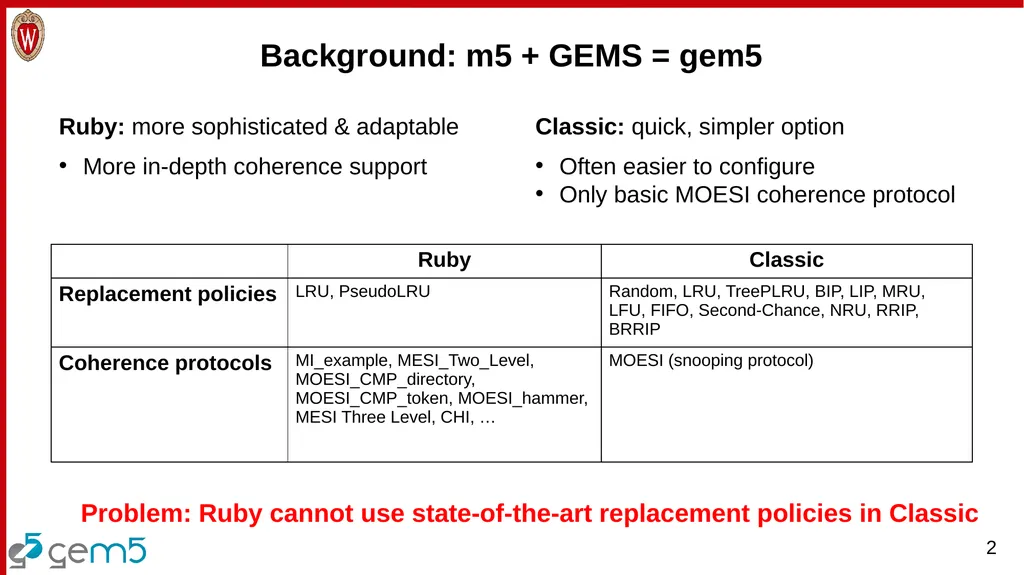
slide2. Background: m5 + GEMS = gem5 Classic: quick, simpler option
Often easier to configure
Only basic MOESI coherence protocol Ruby: more sophisticated & adaptable
More in-depth coherence support Problem: Ruby cannot use state-of-the-art replacement policies in Classic 2<br>
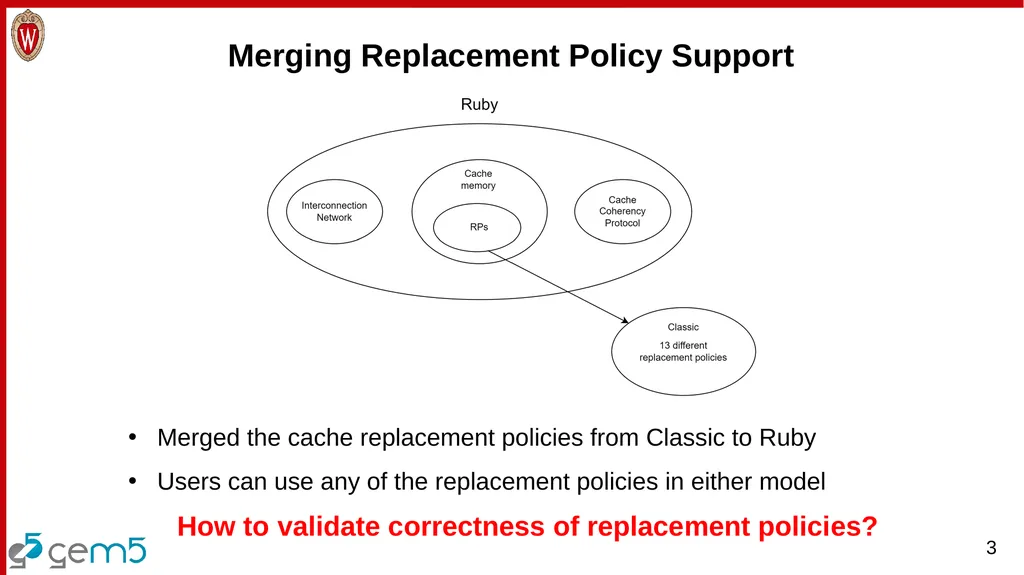
slide3. Merging Replacement Policy Support Merged the cache replacement policies from Classic to Ruby
Users can use any of the replacement policies in either model 3 How to validate correctness of replacement policies?<br>
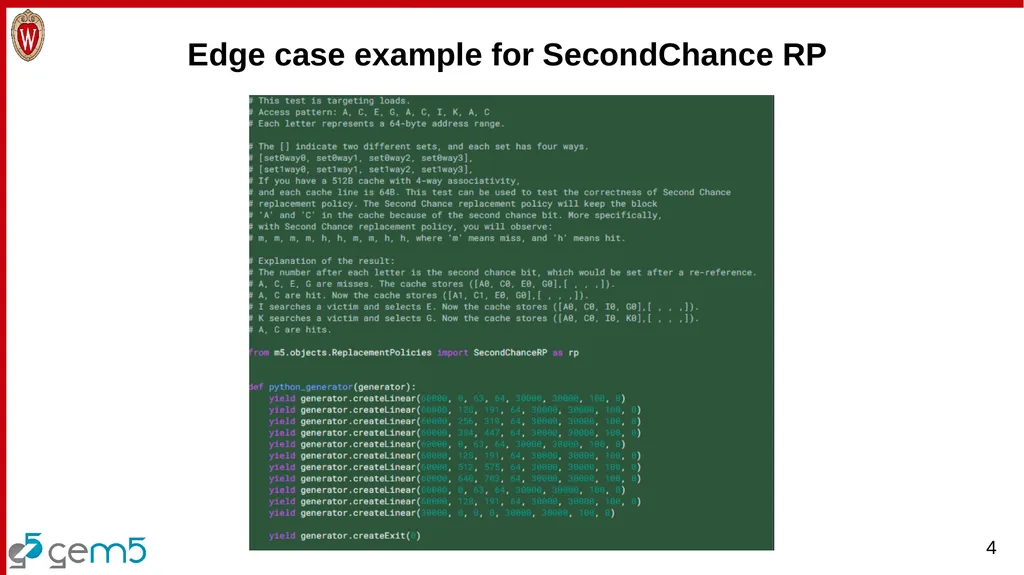
slide4. 4 Edge case example for SecondChance RP<br>
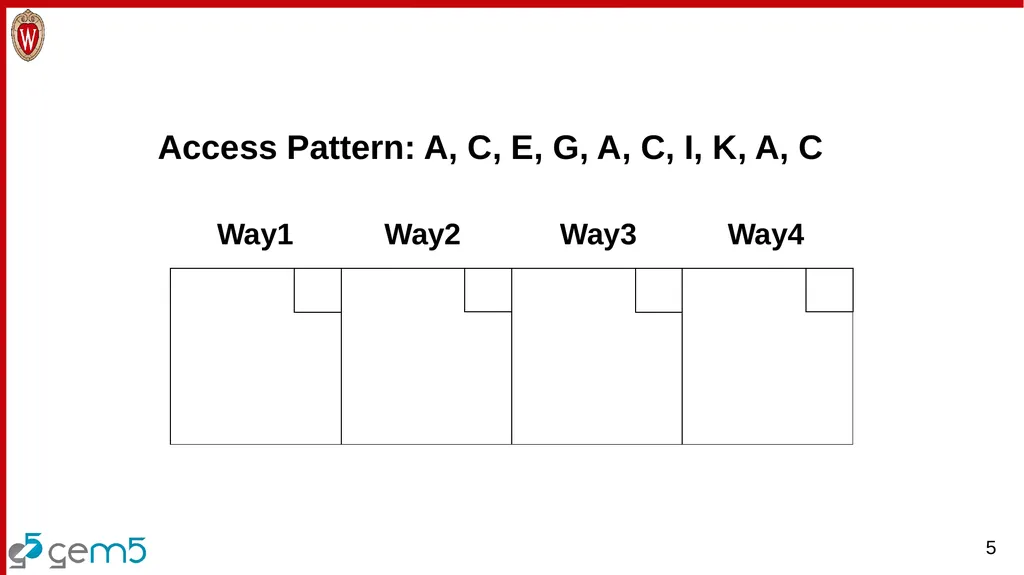
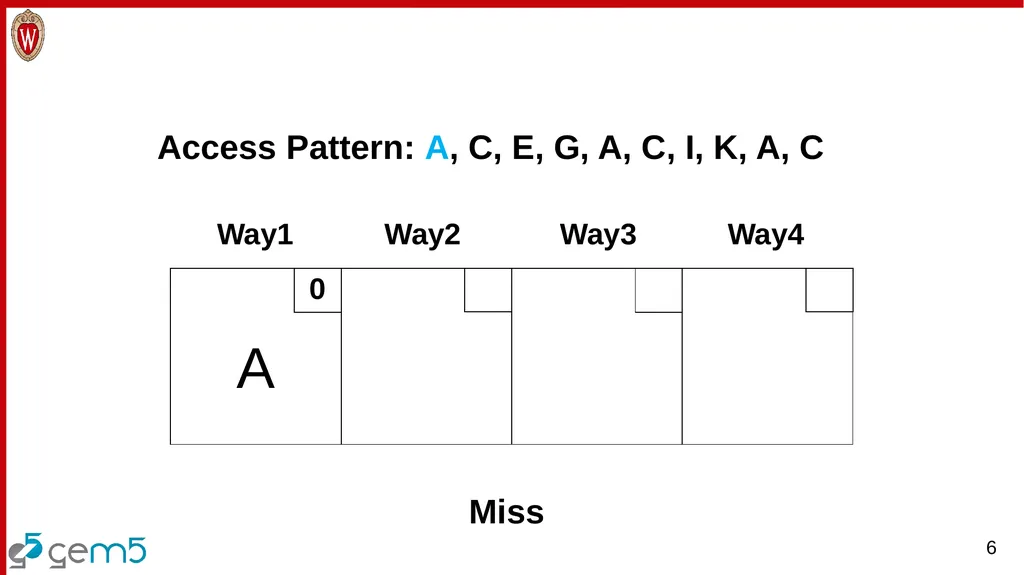
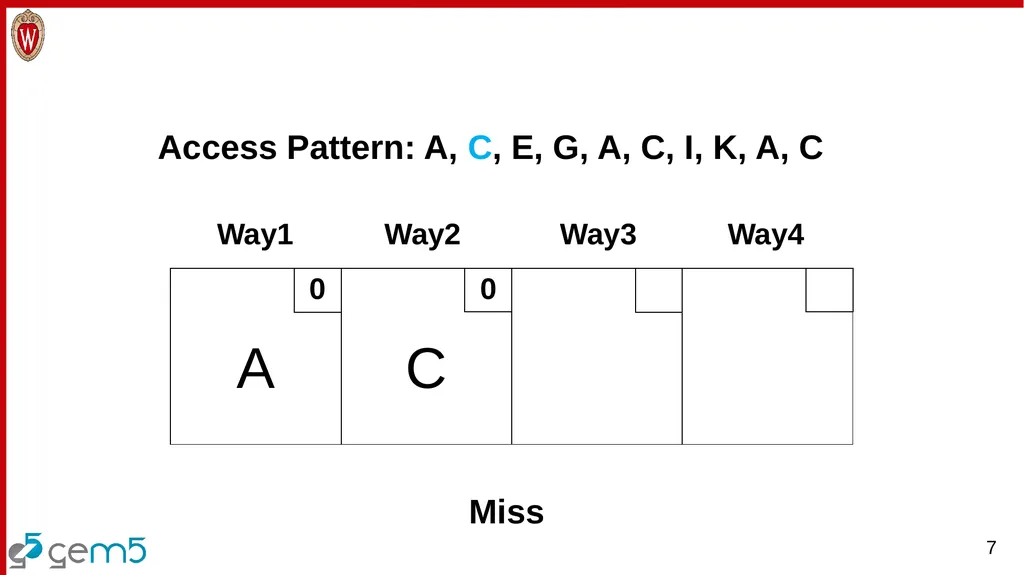
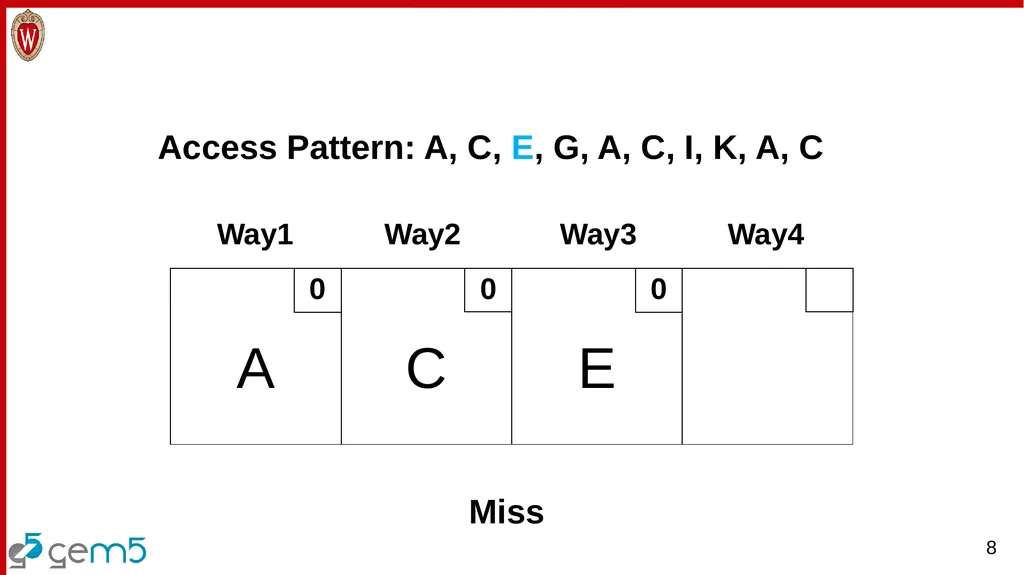
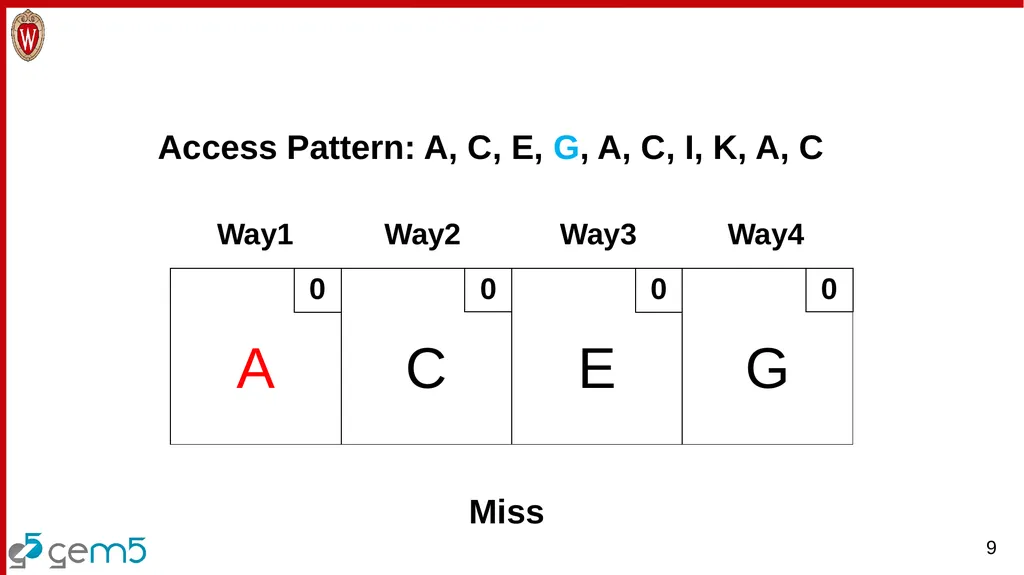
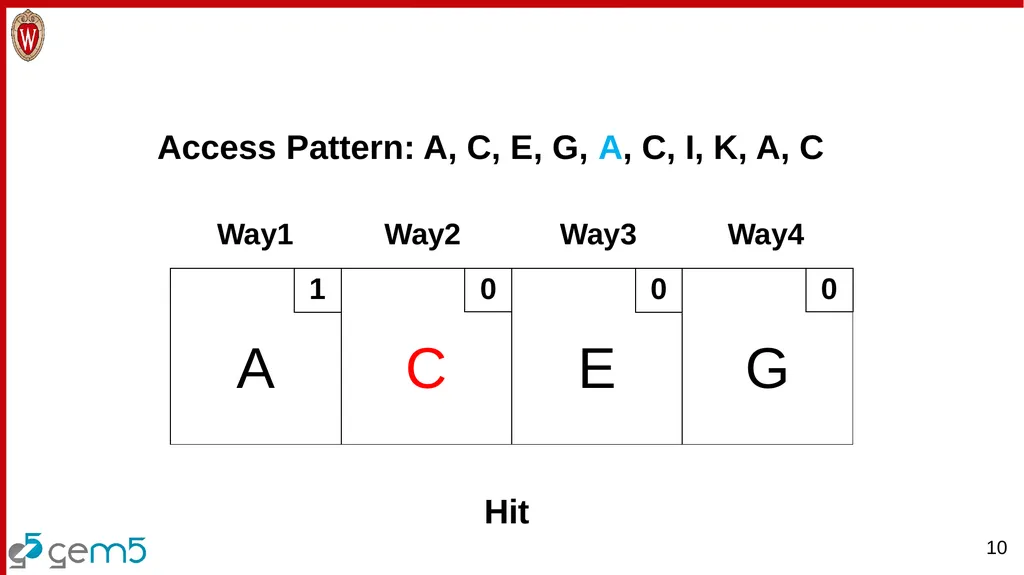
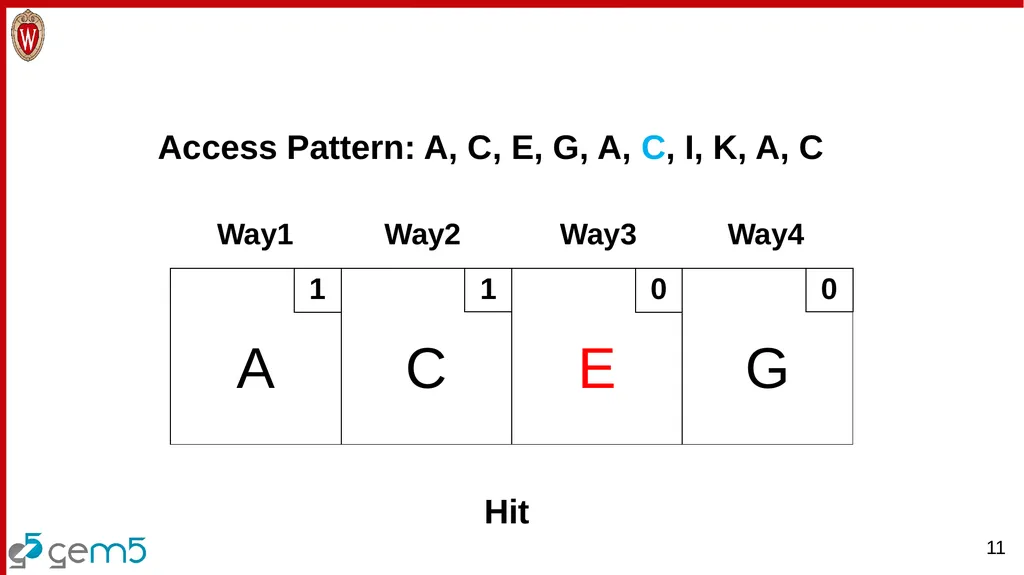
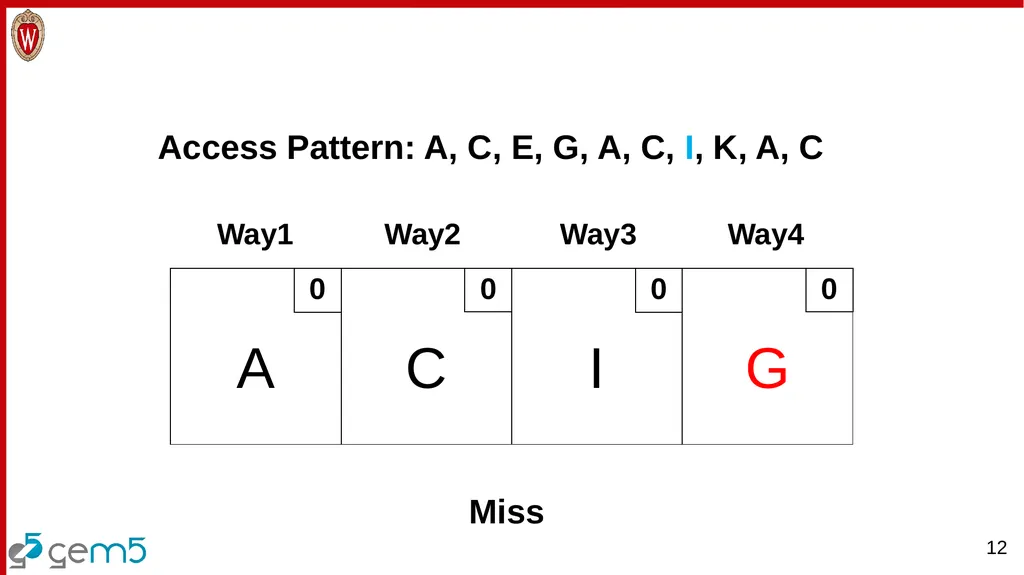
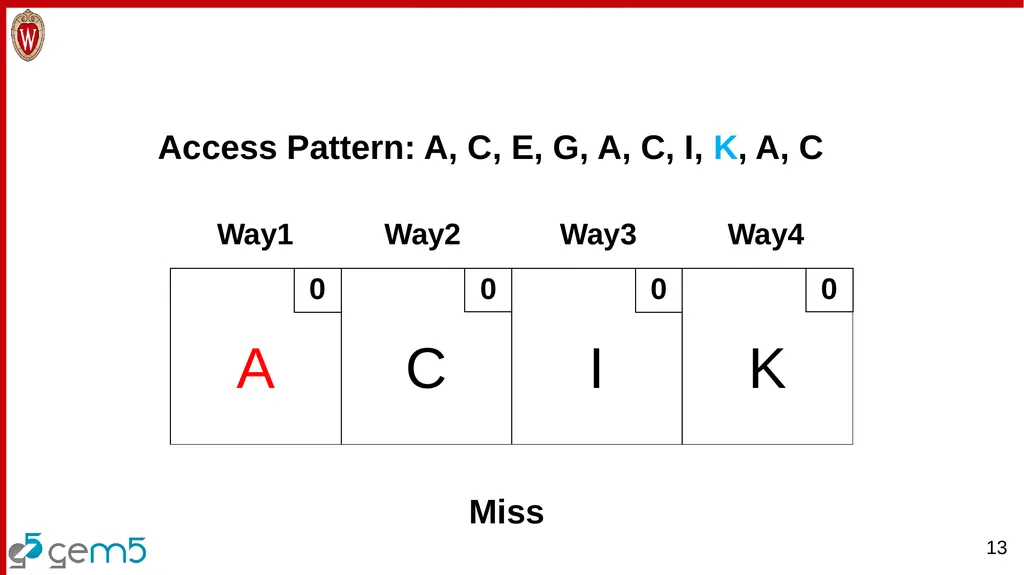
slide5. Access Pattern: A, C, E, G, A, C, I, K, A, C Way1 Way2 Way3 Way4 5<br>
slide6. Access Pattern: A, C, E, G, A, C, I, K, A, C Way1 Way2 Way3 Way4 Miss 6<br>
slide7. Access Pattern: A, C, E, G, A, C, I, K, A, C Way1 Way2 Way3 Way4 Miss 7<br>
slide8. Access Pattern: A, C, E, G, A, C, I, K, A, C Way1 Way2 Way3 Way4 Miss 8<br>
slide9. Access Pattern: A, C, E, G, A, C, I, K, A, C Way1 Way2 Way3 Way4 Miss 9<br>
slide10. Access Pattern: A, C, E, G, A, C, I, K, A, C Way1 Way2 Way3 Way4 Hit 10<br>
slide11. Access Pattern: A, C, E, G, A, C, I, K, A, C Way1 Way2 Way3 Way4 Hit 11<br>
slide12. Access Pattern: A, C, E, G, A, C, I, K, A, C Way1 Way2 Way3 Way4 Miss 12<br>
slide13. Access Pattern: A, C, E, G, A, C, I, K, A, C Way1 Way2 Way3 Way4 Miss 13<br>
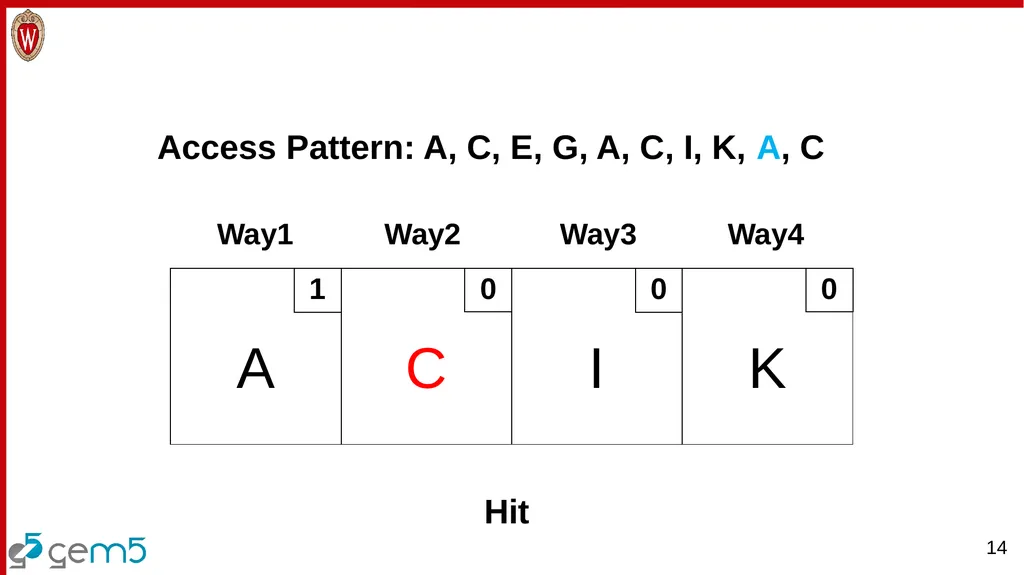
slide14. Access Pattern: A, C, E, G, A, C, I, K, A, C Hit 14 Way1 Way2 Way3 Way4<br>
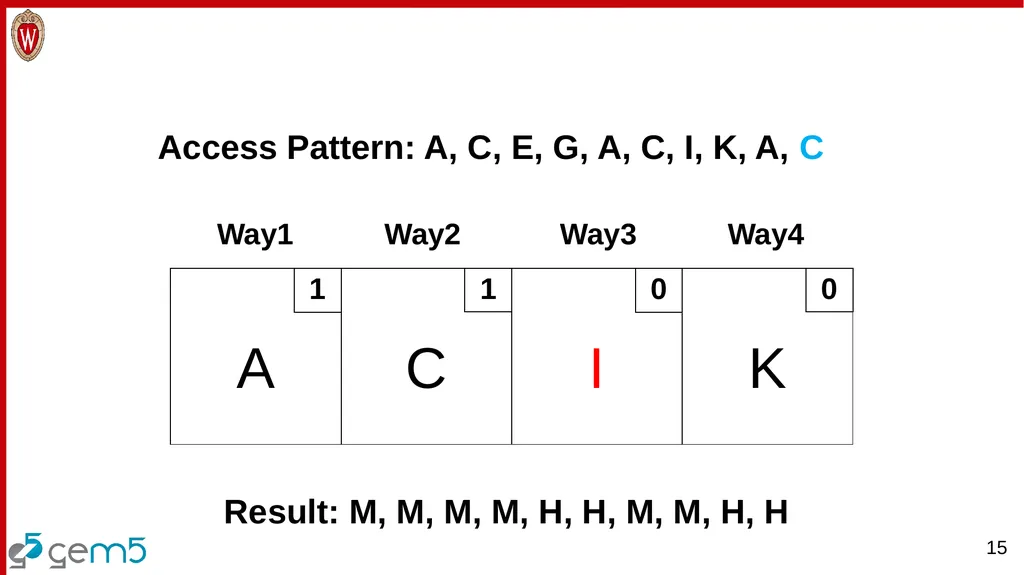
slide15. Access Pattern: A, C, E, G, A, C, I, K, A, C Way1 Way2 Way3 Way4 Result: M, M, M, M, H, H, M, M, H, H 15<br>
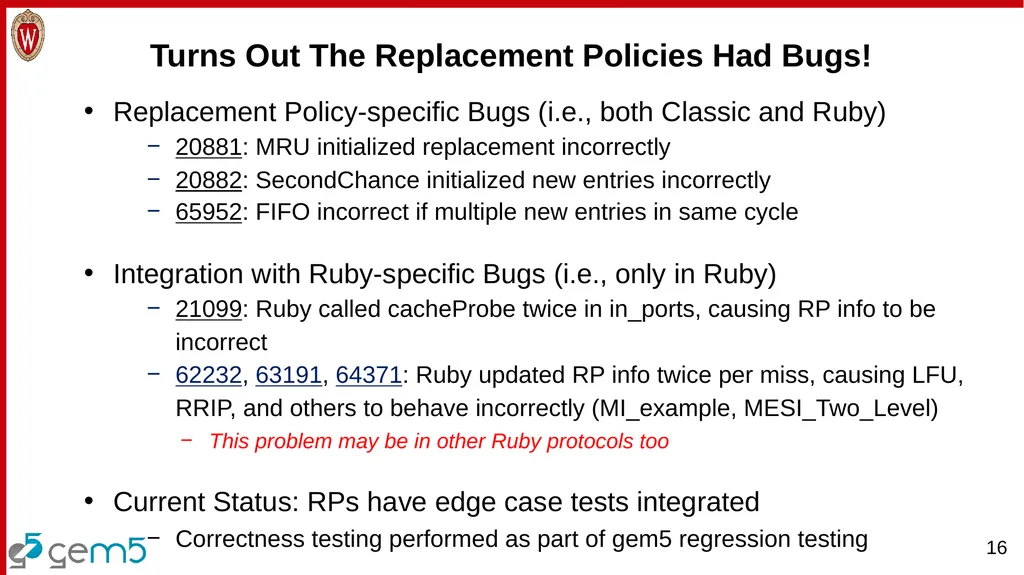
slide16. Replacement Policy-specific Bugs (i.e., both Classic and Ruby)
20881: MRU initialized replacement incorrectly
20882: SecondChance initialized new entries incorrectly
65952: FIFO incorrect if multiple new entries in same cycle
Integration with Ruby-specific Bugs (i.e., only in Ruby)
21099: Ruby called cacheProbe twice in in_ports, causing RP info to be incorrect
62232, 63191, 64371: Ruby updated RP info twice per miss, causing LFU, RRIP, and others to behave incorrectly (MI_example, MESI_Two_Level)
This problem may be in other Ruby protocols too
Current Status: RPs have edge case tests integrated
Correctness testing performed as part of gem5 regression testing Turns Out The Replacement Policies Had Bugs! 16<br>
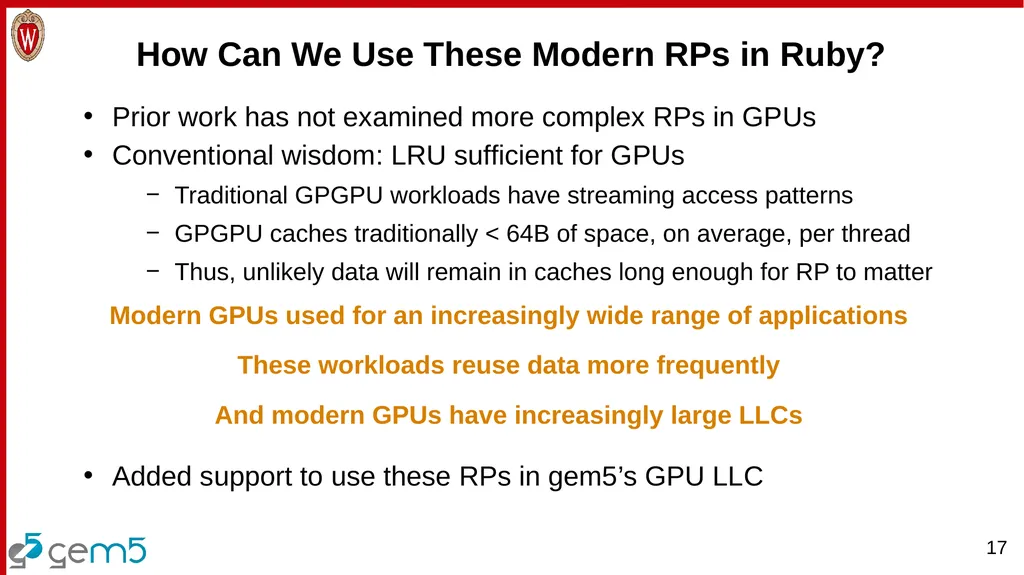
slide17. How Can We Use These Modern RPs in Ruby? Prior work has not examined more complex RPs in GPUs
Conventional wisdom: LRU sufficient for GPUs
Traditional GPGPU workloads have streaming access patterns
GPGPU caches traditionally < 64B of space, on average, per thread
Thus, unlikely data will remain in caches long enough for RP to matter Modern GPUs used for an increasingly wide range of applications
These workloads reuse data more frequently
And modern GPUs have increasingly large LLCs 17 Added support to use these RPs in gem5’s GPU LLC<br>
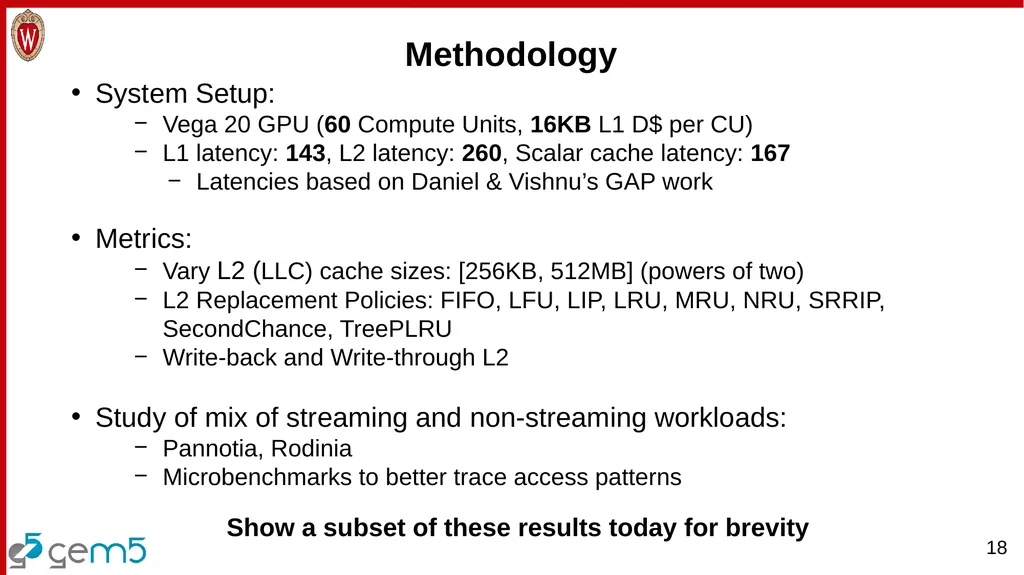
slide18. Methodology System Setup:
Vega 20 GPU (60 Compute Units, 16KB L1 D$ per CU)
L1 latency: 143, L2 latency: 260, Scalar cache latency: 167
Latencies based on Daniel & Vishnu’s GAP work
Metrics:
Vary L2 (LLC) cache sizes: [256KB, 512MB] (powers of two)
L2 Replacement Policies: FIFO, LFU, LIP, LRU, MRU, NRU, SRRIP, SecondChance, TreePLRU
Write-back and Write-through L2
Study of mix of streaming and non-streaming workloads:
Pannotia, Rodinia
Microbenchmarks to better trace access patterns Show a subset of these results today for brevity 18<br>
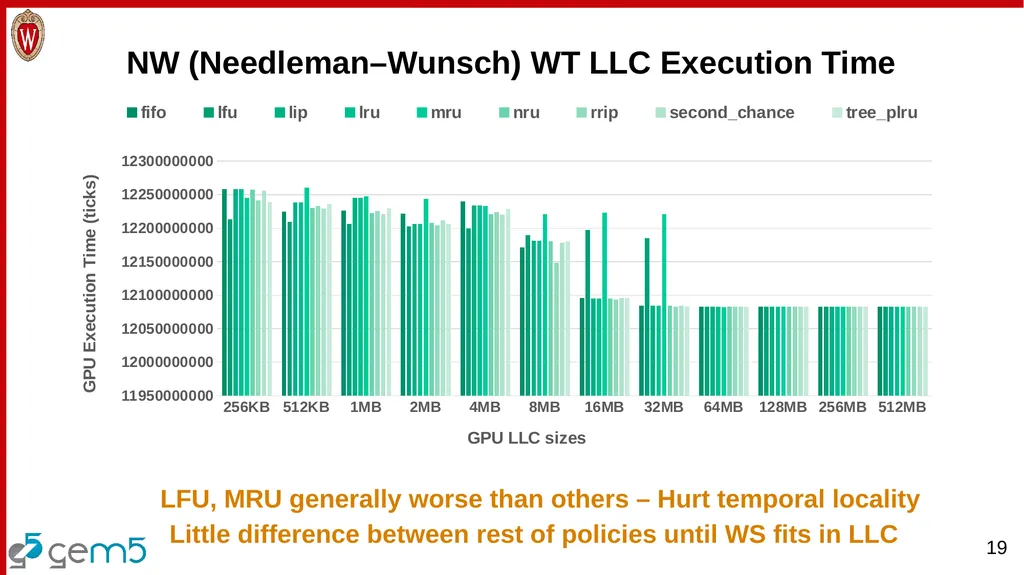
slide19. NW (Needleman–Wunsch) WT LLC Execution Time LFU, MRU generally worse than others – Hurt temporal locality Little difference between rest of policies until WS fits in LLC 19<br>
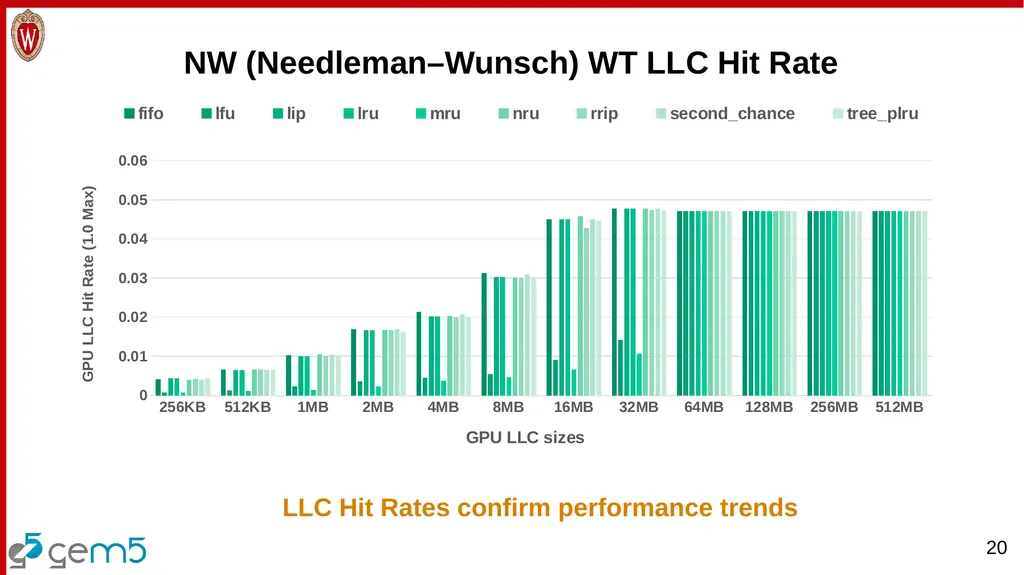
slide20. NW (Needleman–Wunsch) WT LLC Hit Rate LLC Hit Rates confirm performance trends 20<br>
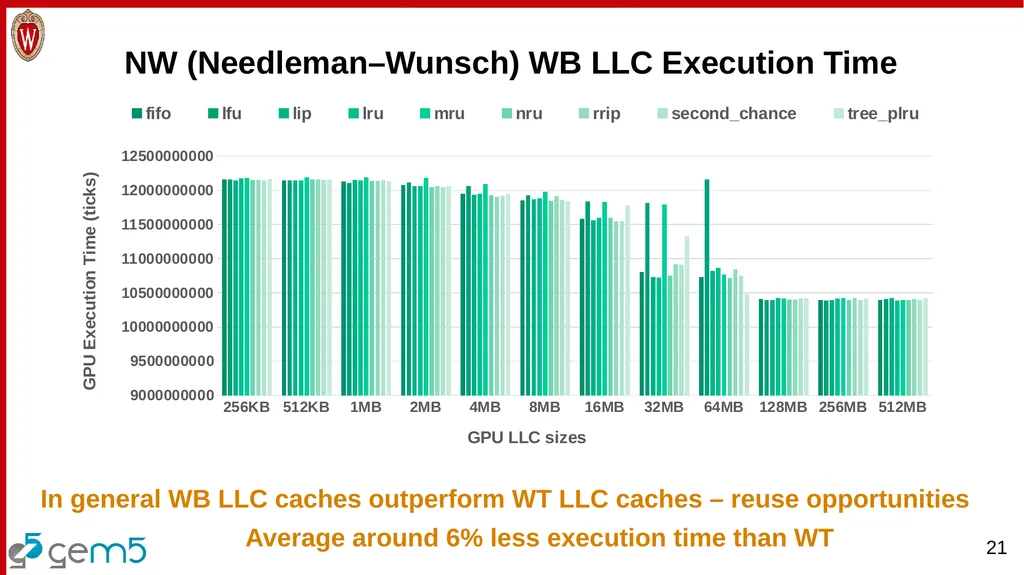
slide21. NW (Needleman–Wunsch) WB LLC Execution Time In general WB LLC caches outperform WT LLC caches – reuse opportunities Average around 6% less execution time than WT 21<br>
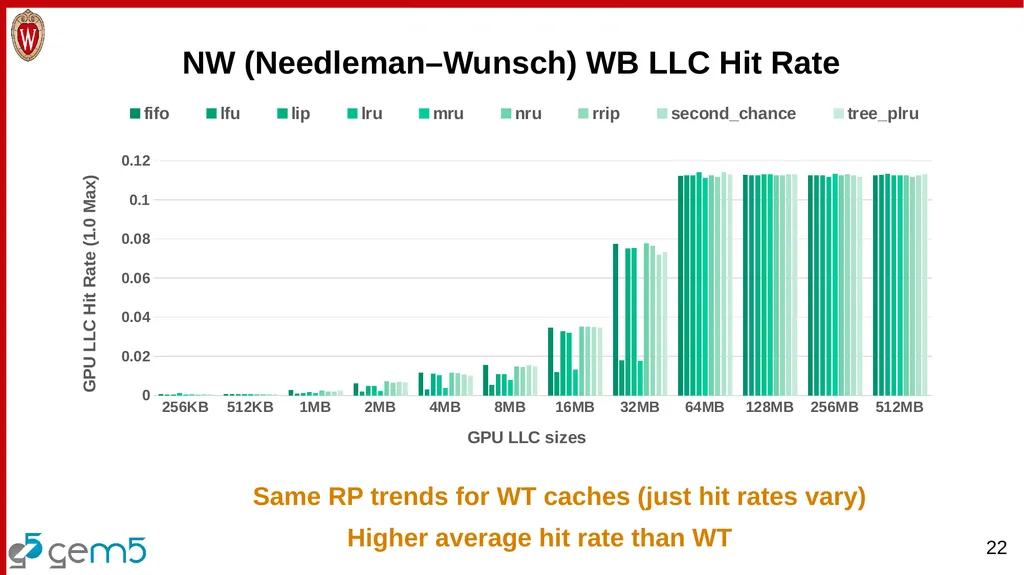
slide22. NW (Needleman–Wunsch) WB LLC Hit Rate Same RP trends for WT caches (just hit rates vary) Higher average hit rate than WT 22<br>
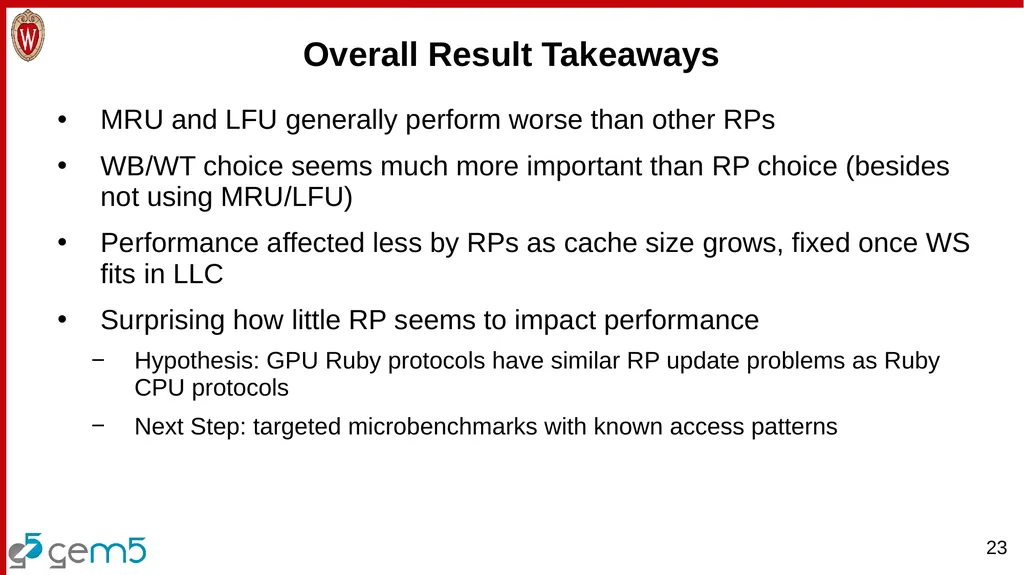
slide23. MRU and LFU generally perform worse than other RPs
WB/WT choice seems much more important than RP choice (besides not using MRU/LFU)
Performance affected less by RPs as cache size grows, fixed once WS fits in LLC
Surprising how little RP seems to impact performance
Hypothesis: GPU Ruby protocols have similar RP update problems as Ruby CPU protocols
Next Step: targeted microbenchmarks with known access patterns Overall Result Takeaways 23<br>
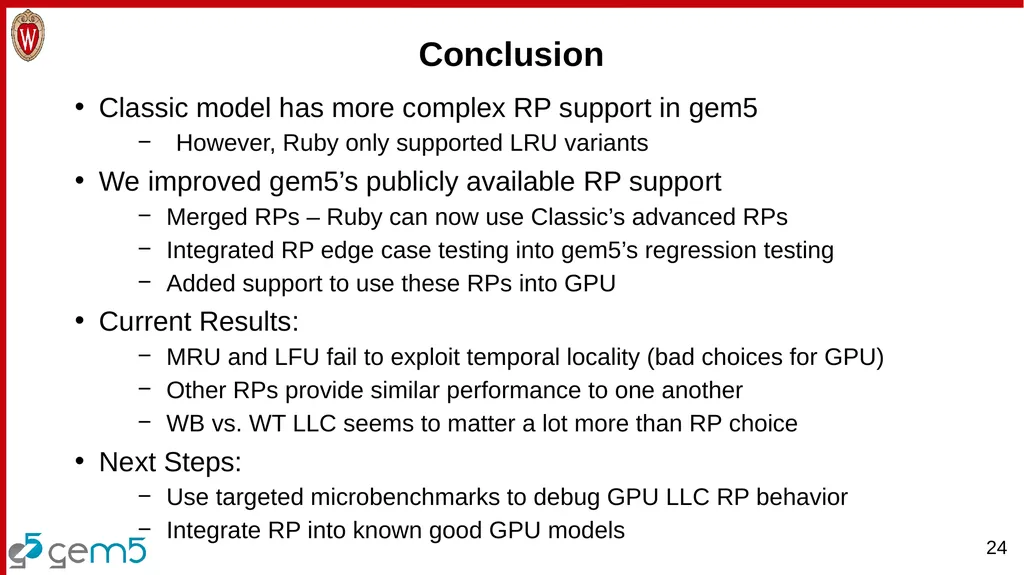
slide24. Conclusion Classic model has more complex RP support in gem5
However, Ruby only supported LRU variants
We improved gem5’s publicly available RP support
Merged RPs – Ruby can now use Classic’s advanced RPs
Integrated RP edge case testing into gem5’s regression testing
Added support to use these RPs into GPU
Current Results:
MRU and LFU fail to exploit temporal locality (bad choices for GPU)
Other RPs provide similar performance to one another
WB vs. WT LLC seems to matter a lot more than RP choice
Next Steps:
Use targeted microbenchmarks to debug GPU LLC RP behavior
Integrate RP into known good GPU models 24<br>
University of Wisconsin-Madison
jia44@wisc.edu sinclair@cs.wisc.edu<br>
slide2. Background: m5 + GEMS = gem5 Classic: quick, simpler option
Often easier to configure
Only basic MOESI coherence protocol Ruby: more sophisticated & adaptable
More in-depth coherence support Problem: Ruby cannot use state-of-the-art replacement policies in Classic 2<br>
slide3. Merging Replacement Policy Support Merged the cache replacement policies from Classic to Ruby
Users can use any of the replacement policies in either model 3 How to validate correctness of replacement policies?<br>
slide4. 4 Edge case example for SecondChance RP<br>
slide5. Access Pattern: A, C, E, G, A, C, I, K, A, C Way1 Way2 Way3 Way4 5<br>
slide6. Access Pattern: A, C, E, G, A, C, I, K, A, C Way1 Way2 Way3 Way4 Miss 6<br>
slide7. Access Pattern: A, C, E, G, A, C, I, K, A, C Way1 Way2 Way3 Way4 Miss 7<br>
slide8. Access Pattern: A, C, E, G, A, C, I, K, A, C Way1 Way2 Way3 Way4 Miss 8<br>
slide9. Access Pattern: A, C, E, G, A, C, I, K, A, C Way1 Way2 Way3 Way4 Miss 9<br>
slide10. Access Pattern: A, C, E, G, A, C, I, K, A, C Way1 Way2 Way3 Way4 Hit 10<br>
slide11. Access Pattern: A, C, E, G, A, C, I, K, A, C Way1 Way2 Way3 Way4 Hit 11<br>
slide12. Access Pattern: A, C, E, G, A, C, I, K, A, C Way1 Way2 Way3 Way4 Miss 12<br>
slide13. Access Pattern: A, C, E, G, A, C, I, K, A, C Way1 Way2 Way3 Way4 Miss 13<br>
slide14. Access Pattern: A, C, E, G, A, C, I, K, A, C Hit 14 Way1 Way2 Way3 Way4<br>
slide15. Access Pattern: A, C, E, G, A, C, I, K, A, C Way1 Way2 Way3 Way4 Result: M, M, M, M, H, H, M, M, H, H 15<br>
slide16. Replacement Policy-specific Bugs (i.e., both Classic and Ruby)
20881: MRU initialized replacement incorrectly
20882: SecondChance initialized new entries incorrectly
65952: FIFO incorrect if multiple new entries in same cycle
Integration with Ruby-specific Bugs (i.e., only in Ruby)
21099: Ruby called cacheProbe twice in in_ports, causing RP info to be incorrect
62232, 63191, 64371: Ruby updated RP info twice per miss, causing LFU, RRIP, and others to behave incorrectly (MI_example, MESI_Two_Level)
This problem may be in other Ruby protocols too
Current Status: RPs have edge case tests integrated
Correctness testing performed as part of gem5 regression testing Turns Out The Replacement Policies Had Bugs! 16<br>
slide17. How Can We Use These Modern RPs in Ruby? Prior work has not examined more complex RPs in GPUs
Conventional wisdom: LRU sufficient for GPUs
Traditional GPGPU workloads have streaming access patterns
GPGPU caches traditionally < 64B of space, on average, per thread
Thus, unlikely data will remain in caches long enough for RP to matter Modern GPUs used for an increasingly wide range of applications
These workloads reuse data more frequently
And modern GPUs have increasingly large LLCs 17 Added support to use these RPs in gem5’s GPU LLC<br>
slide18. Methodology System Setup:
Vega 20 GPU (60 Compute Units, 16KB L1 D$ per CU)
L1 latency: 143, L2 latency: 260, Scalar cache latency: 167
Latencies based on Daniel & Vishnu’s GAP work
Metrics:
Vary L2 (LLC) cache sizes: [256KB, 512MB] (powers of two)
L2 Replacement Policies: FIFO, LFU, LIP, LRU, MRU, NRU, SRRIP, SecondChance, TreePLRU
Write-back and Write-through L2
Study of mix of streaming and non-streaming workloads:
Pannotia, Rodinia
Microbenchmarks to better trace access patterns Show a subset of these results today for brevity 18<br>
slide19. NW (Needleman–Wunsch) WT LLC Execution Time LFU, MRU generally worse than others – Hurt temporal locality Little difference between rest of policies until WS fits in LLC 19<br>
slide20. NW (Needleman–Wunsch) WT LLC Hit Rate LLC Hit Rates confirm performance trends 20<br>
slide21. NW (Needleman–Wunsch) WB LLC Execution Time In general WB LLC caches outperform WT LLC caches – reuse opportunities Average around 6% less execution time than WT 21<br>
slide22. NW (Needleman–Wunsch) WB LLC Hit Rate Same RP trends for WT caches (just hit rates vary) Higher average hit rate than WT 22<br>
slide23. MRU and LFU generally perform worse than other RPs
WB/WT choice seems much more important than RP choice (besides not using MRU/LFU)
Performance affected less by RPs as cache size grows, fixed once WS fits in LLC
Surprising how little RP seems to impact performance
Hypothesis: GPU Ruby protocols have similar RP update problems as Ruby CPU protocols
Next Step: targeted microbenchmarks with known access patterns Overall Result Takeaways 23<br>
slide24. Conclusion Classic model has more complex RP support in gem5
However, Ruby only supported LRU variants
We improved gem5’s publicly available RP support
Merged RPs – Ruby can now use Classic’s advanced RPs
Integrated RP edge case testing into gem5’s regression testing
Added support to use these RPs into GPU
Current Results:
MRU and LFU fail to exploit temporal locality (bad choices for GPU)
Other RPs provide similar performance to one another
WB vs. WT LLC seems to matter a lot more than RP choice
Next Steps:
Use targeted microbenchmarks to debug GPU LLC RP behavior
Integrate RP into known good GPU models 24<br>