
ANIMAL GENETICS & BREEDING Theory Introduction Dr


Description: ANIMAL GENETICS BREEDING Theory Introduction Dr K G Mandal Univ. Professor Department of Animal Genetics Breeding Bihar Veterinary College, Patna Bihar Animal Sciences University, Patna Introduction to Animal Genetics Breeding What is
Related Topics
Download Presentation
"ANIMAL GENETICS & BREEDING Theory Introduction Dr" is the property of its rightful owner. Permission is granted to download and print the materials on this website for personal, non-commercial use only, and to display it on your personal computer provided you do not modify the materials and that you retain all copyright notices contained in the materials. By downloading content from our website, you accept the terms of this agreement.
Presentation Transcript
slide1. ANIMAL GENETICS & BREEDING
Theory
Introduction
Dr K G Mandal
Univ. Professor Department of Animal Genetics & Breeding Bihar Veterinary College, Patna Bihar Animal Sciences University, Patna<br>
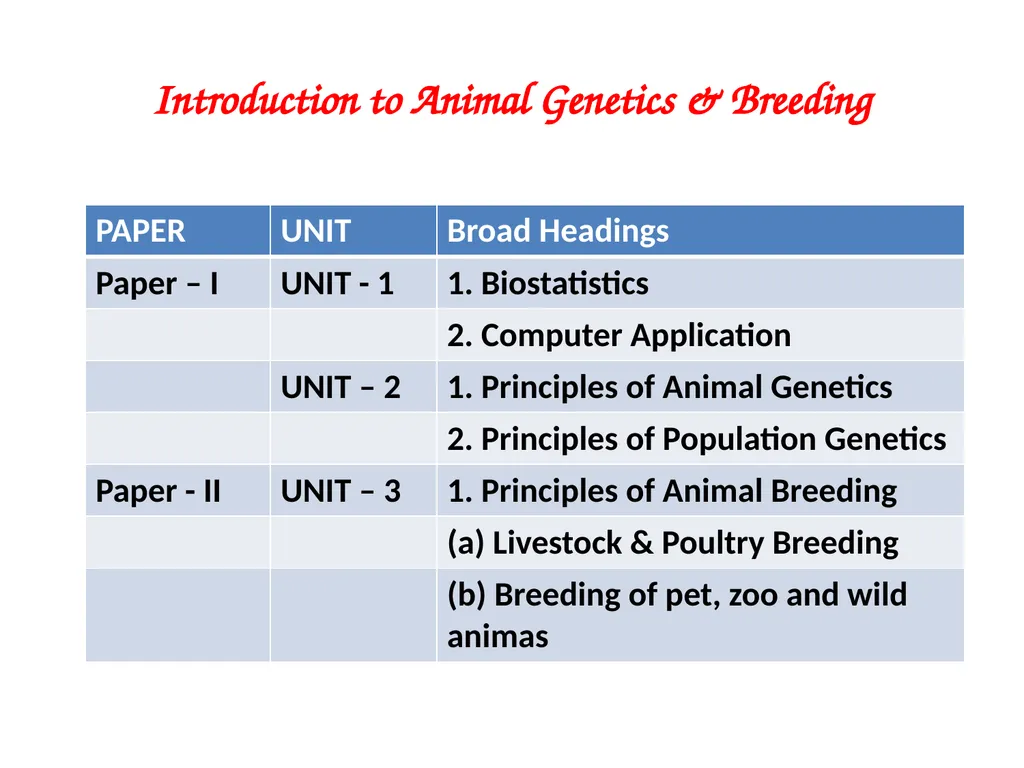
slide2. Introduction to Animal Genetics & Breeding<br>
slide3. What is genetics?
How the characters are inherited from parents to progeny?
How the offspring resemble the parents?
How a man produce a child and how a cow produce only a calf not lamb or kid?
Why there is variation from individual to individual, among offspring of the same parents?<br>
slide4. How the principles of genetics and population genetics can be applied for genetic improvement of farm animals and birds?
How molecular genetics can be applied for genetic improvement of farm animals?
What is statistics?
How the various statistical methods can be applied to solve the problems of animal breeding?<br>
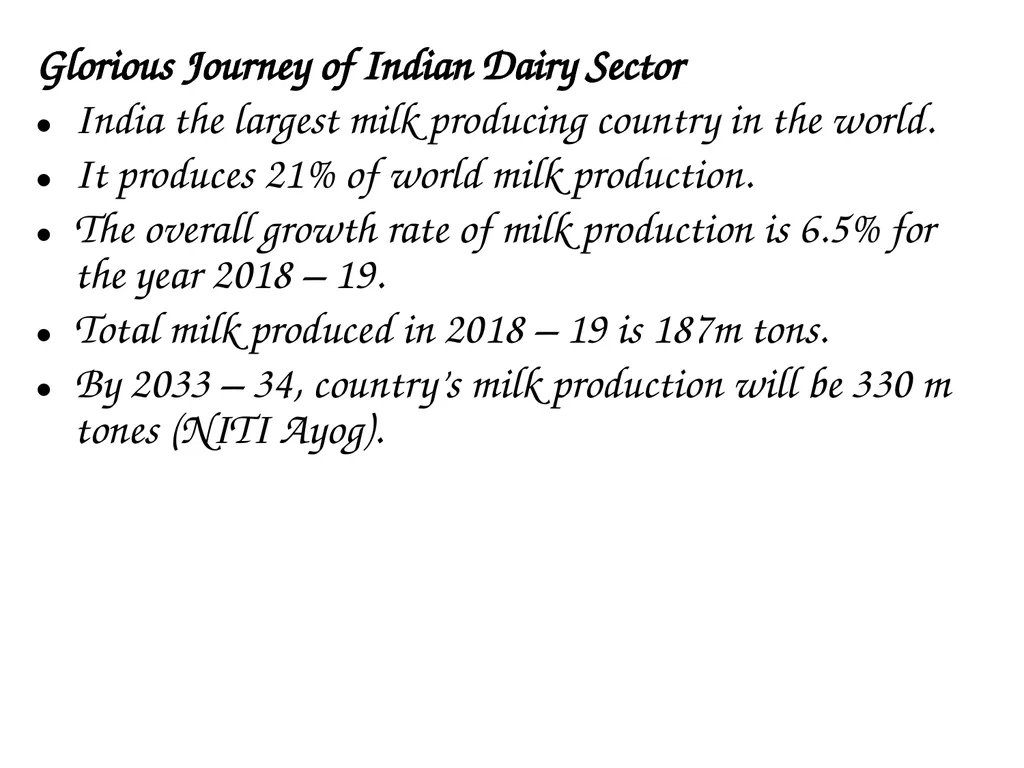
slide5. Glorious Journey of Indian Dairy Sector
India the largest milk producing country in the world.
It produces 21% of world milk production.
The overall growth rate of milk production is 6.5% for the year 2018 – 19.
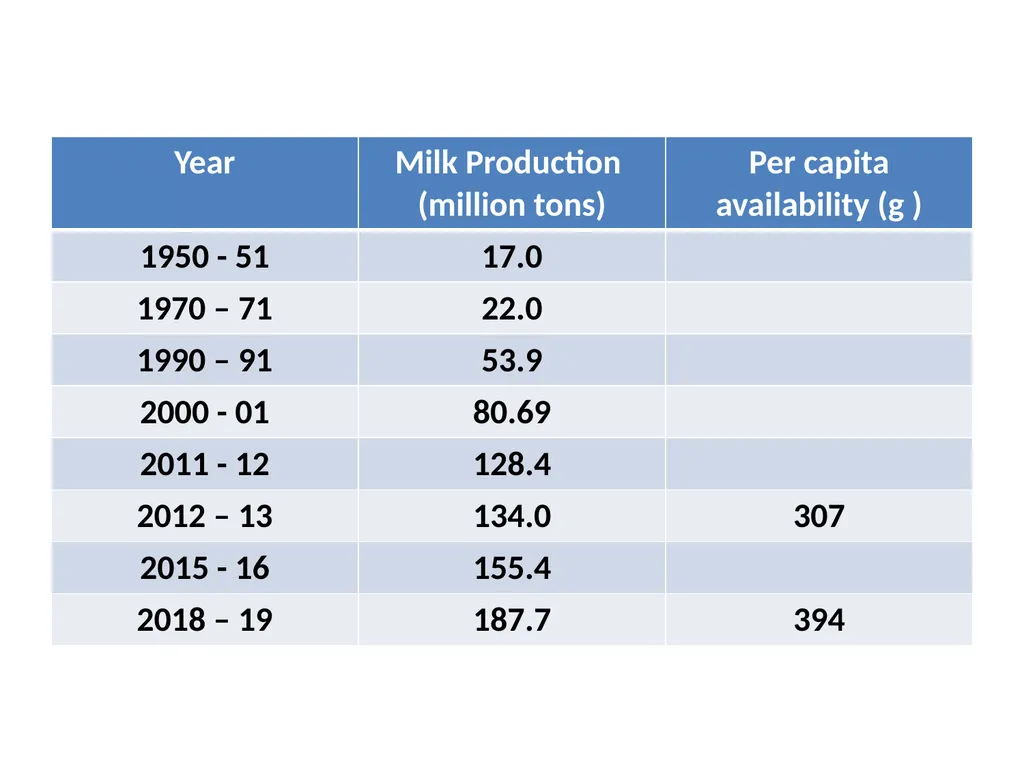
Total milk produced in 2018 – 19 is 187m tons.
By 2033 – 34, country’s milk production will be 330 m tones (NITI Ayog).<br>
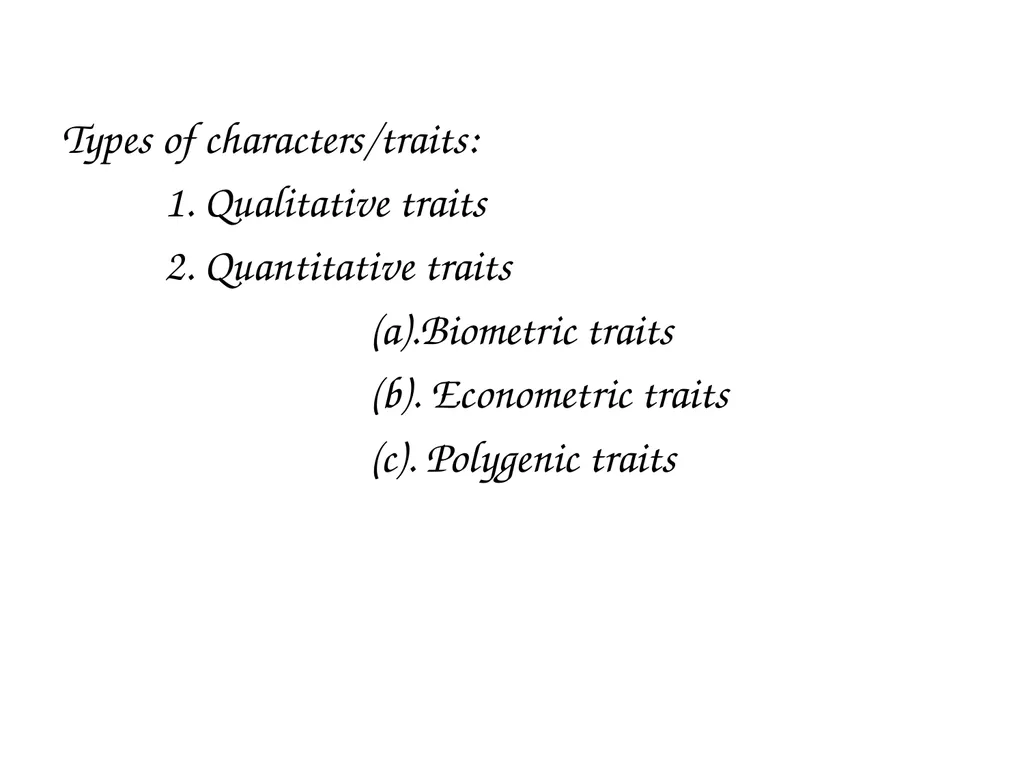
slide7. Types of characters/traits:
1. Qualitative traits
2. Quantitative traits
(a).Biometric traits
(b). Econometric traits
(c). Polygenic traits<br>
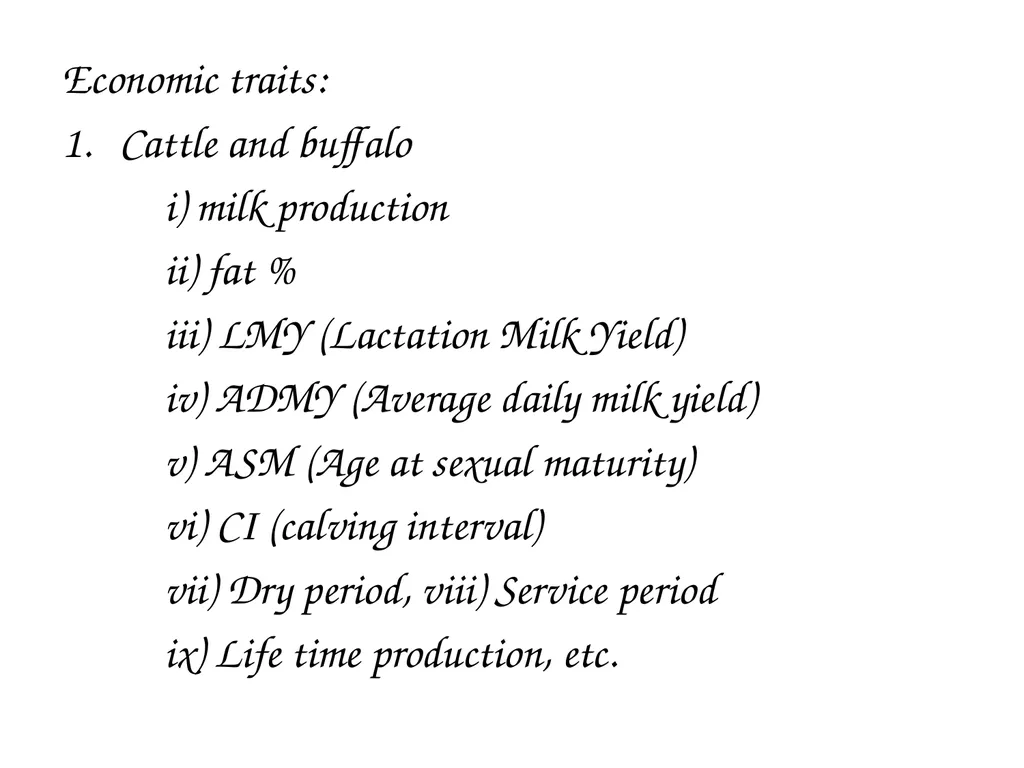
slide8. Economic traits:
Cattle and buffalo
i) milk production
ii) fat %
iii) LMY (Lactation Milk Yield)
iv) ADMY (Average daily milk yield)
v) ASM (Age at sexual maturity)
vi) CI (calving interval)
vii) Dry period, viii) Service period
ix) Life time production, etc.<br>
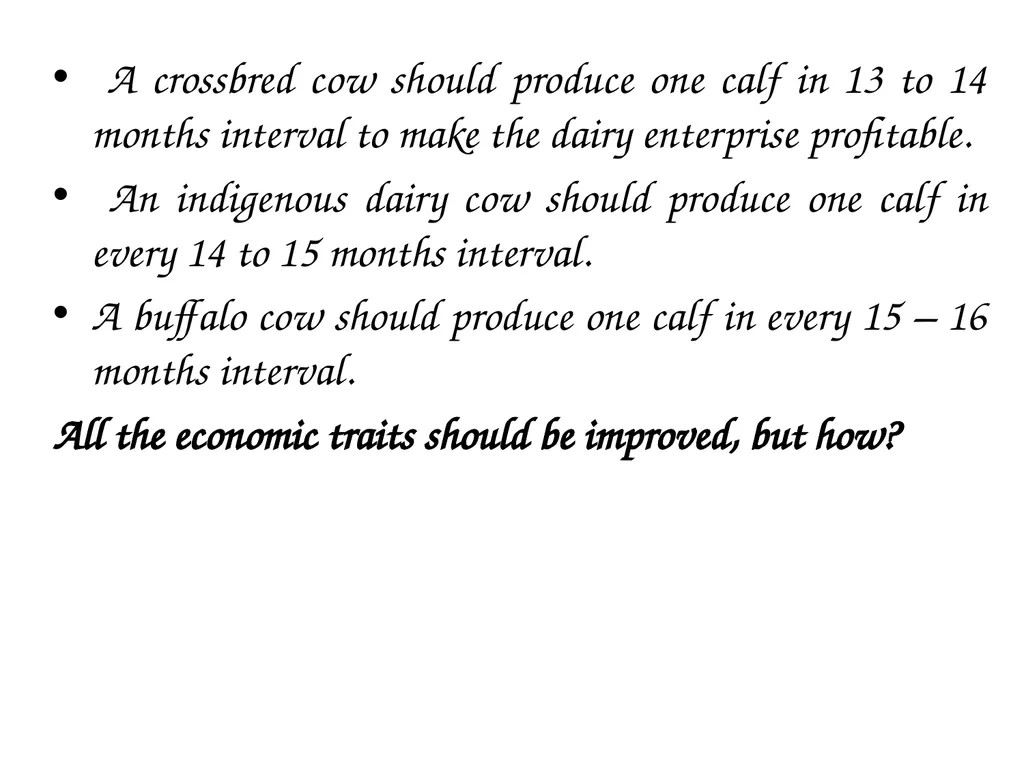
slide9. A crossbred cow should produce one calf in 13 to 14 months interval to make the dairy enterprise profitable.
An indigenous dairy cow should produce one calf in every 14 to 15 months interval.
A buffalo cow should produce one calf in every 15 – 16 months interval.
All the economic traits should be improved, but how?<br>
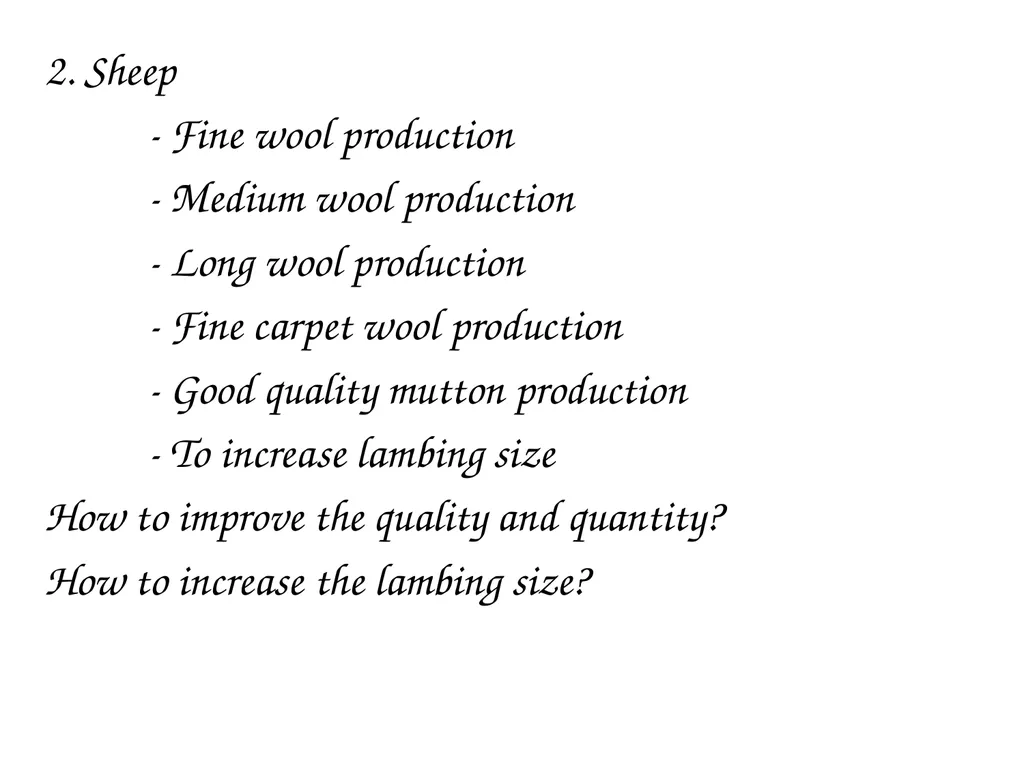
slide10. 2. Sheep
- Fine wool production
- Medium wool production
- Long wool production
- Fine carpet wool production
- Good quality mutton production
- To increase lambing size
How to improve the quality and quantity?
How to increase the lambing size?<br>
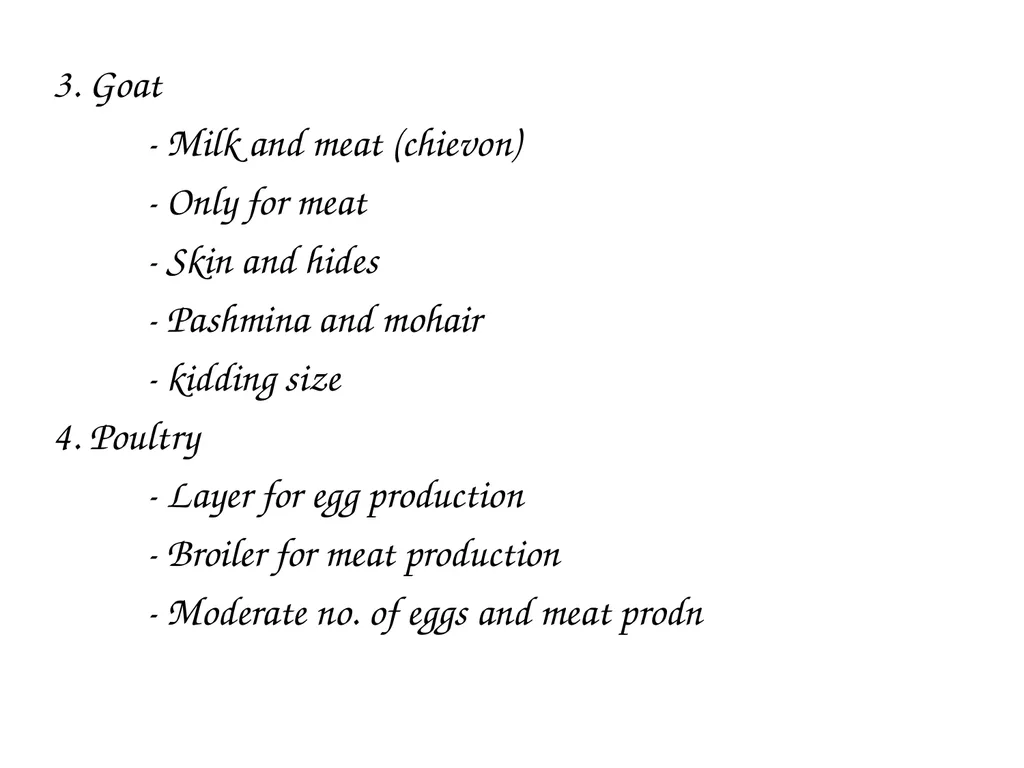
slide11. 3. Goat
- Milk and meat (chievon)
- Only for meat
- Skin and hides
- Pashmina and mohair
- kidding size
4. Poultry
- Layer for egg production
- Broiler for meat production
- Moderate no. of eggs and meat prodn<br>
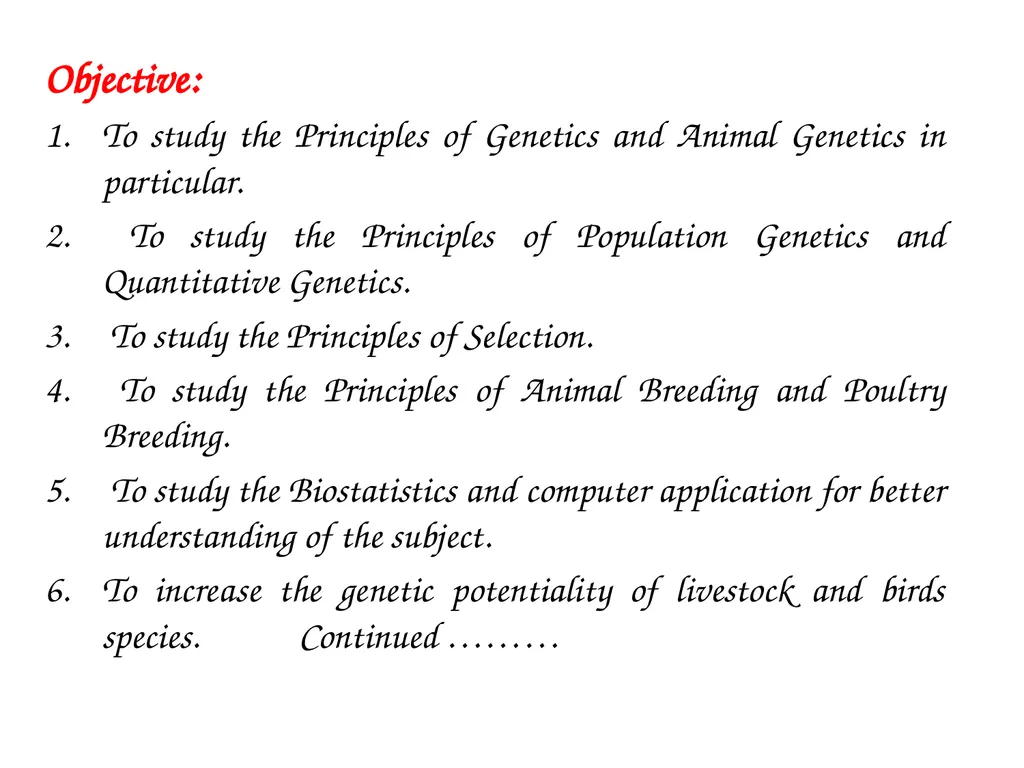
slide12. Objective:
To study the Principles of Genetics and Animal Genetics in particular.
To study the Principles of Population Genetics and Quantitative Genetics.
To study the Principles of Selection.
To study the Principles of Animal Breeding and Poultry Breeding.
To study the Biostatistics and computer application for better understanding of the subject.
To increase the genetic potentiality of livestock and birds species. Continued ………<br>
slide13. Continued …..
Genetic improvement of livestock and birds species through the application of principles of genetics, and population genetics in particular, along with biometric techniques is the ultimate objective of the study of Animal Genetics and Breeding.<br>
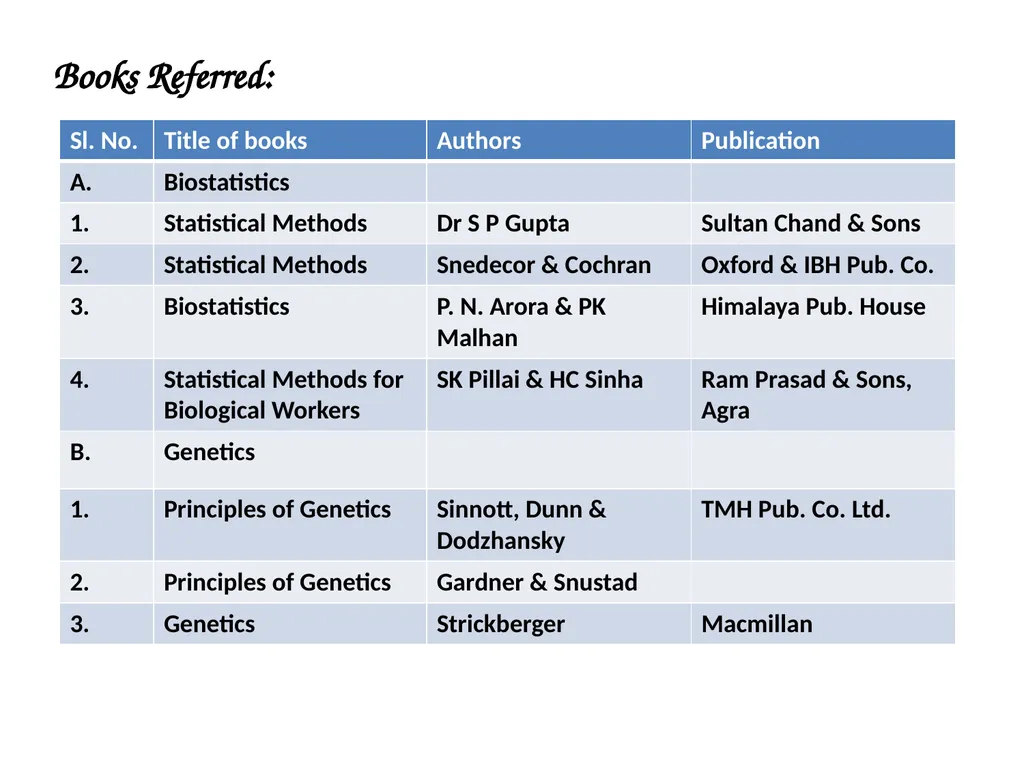
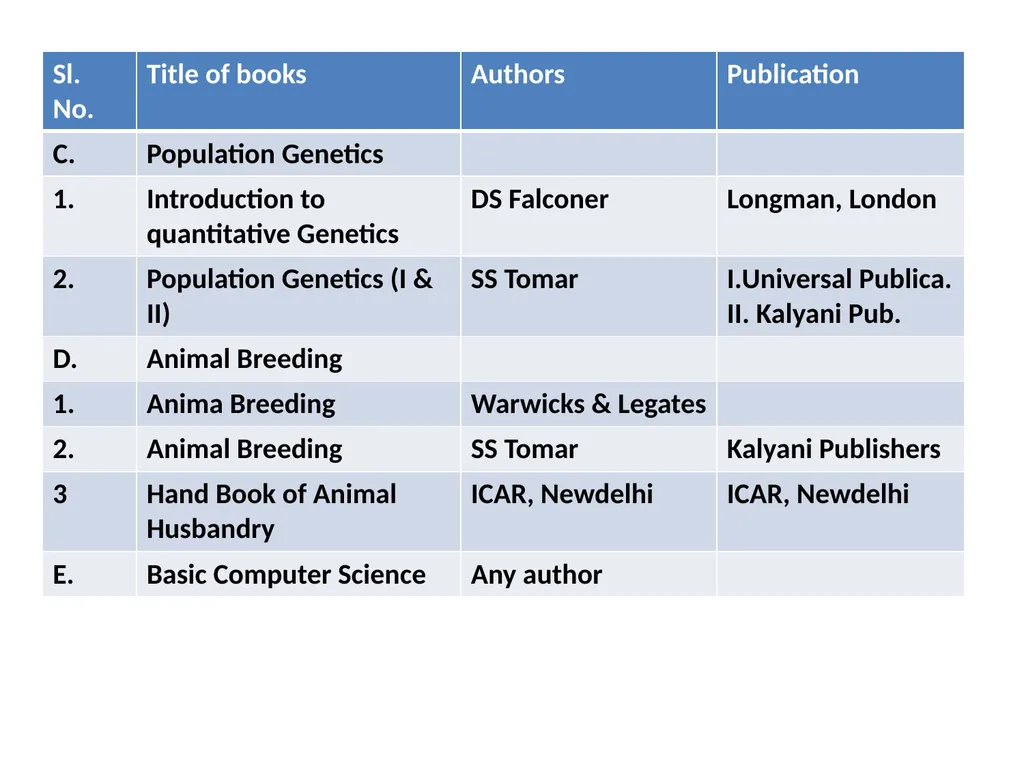
slide14. Books Referred:<br>
slide16. Thank You<br>
Theory
Introduction
Dr K G Mandal
Univ. Professor Department of Animal Genetics & Breeding Bihar Veterinary College, Patna Bihar Animal Sciences University, Patna<br>
slide2. Introduction to Animal Genetics & Breeding<br>
slide3. What is genetics?
How the characters are inherited from parents to progeny?
How the offspring resemble the parents?
How a man produce a child and how a cow produce only a calf not lamb or kid?
Why there is variation from individual to individual, among offspring of the same parents?<br>
slide4. How the principles of genetics and population genetics can be applied for genetic improvement of farm animals and birds?
How molecular genetics can be applied for genetic improvement of farm animals?
What is statistics?
How the various statistical methods can be applied to solve the problems of animal breeding?<br>
slide5. Glorious Journey of Indian Dairy Sector
India the largest milk producing country in the world.
It produces 21% of world milk production.
The overall growth rate of milk production is 6.5% for the year 2018 – 19.
Total milk produced in 2018 – 19 is 187m tons.
By 2033 – 34, country’s milk production will be 330 m tones (NITI Ayog).<br>
slide7. Types of characters/traits:
1. Qualitative traits
2. Quantitative traits
(a).Biometric traits
(b). Econometric traits
(c). Polygenic traits<br>
slide8. Economic traits:
Cattle and buffalo
i) milk production
ii) fat %
iii) LMY (Lactation Milk Yield)
iv) ADMY (Average daily milk yield)
v) ASM (Age at sexual maturity)
vi) CI (calving interval)
vii) Dry period, viii) Service period
ix) Life time production, etc.<br>
slide9. A crossbred cow should produce one calf in 13 to 14 months interval to make the dairy enterprise profitable.
An indigenous dairy cow should produce one calf in every 14 to 15 months interval.
A buffalo cow should produce one calf in every 15 – 16 months interval.
All the economic traits should be improved, but how?<br>
slide10. 2. Sheep
- Fine wool production
- Medium wool production
- Long wool production
- Fine carpet wool production
- Good quality mutton production
- To increase lambing size
How to improve the quality and quantity?
How to increase the lambing size?<br>
slide11. 3. Goat
- Milk and meat (chievon)
- Only for meat
- Skin and hides
- Pashmina and mohair
- kidding size
4. Poultry
- Layer for egg production
- Broiler for meat production
- Moderate no. of eggs and meat prodn<br>
slide12. Objective:
To study the Principles of Genetics and Animal Genetics in particular.
To study the Principles of Population Genetics and Quantitative Genetics.
To study the Principles of Selection.
To study the Principles of Animal Breeding and Poultry Breeding.
To study the Biostatistics and computer application for better understanding of the subject.
To increase the genetic potentiality of livestock and birds species. Continued ………<br>
slide13. Continued …..
Genetic improvement of livestock and birds species through the application of principles of genetics, and population genetics in particular, along with biometric techniques is the ultimate objective of the study of Animal Genetics and Breeding.<br>
slide14. Books Referred:<br>
slide16. Thank You<br>