
Animism by Anthony Casey Historic Development
Description: Animism by Anthony Casey Historic Development First spoken of in 1873 in Religion in Primitive Culture by Edward B. Taylor. The doctrine of Spiritual Beings From Latin anima meaning breath or soul. Evolutionary influence Study animistic
Related Topics
Download Presentation
"Animism by Anthony Casey Historic Development" is the property of its rightful owner. Permission is granted to download and print the materials on this website for personal, non-commercial use only, and to display it on your personal computer provided you do not modify the materials and that you retain all copyright notices contained in the materials. By downloading content from our website, you accept the terms of this agreement.
Presentation Transcript
slide1. Animism by
Anthony Casey<br>
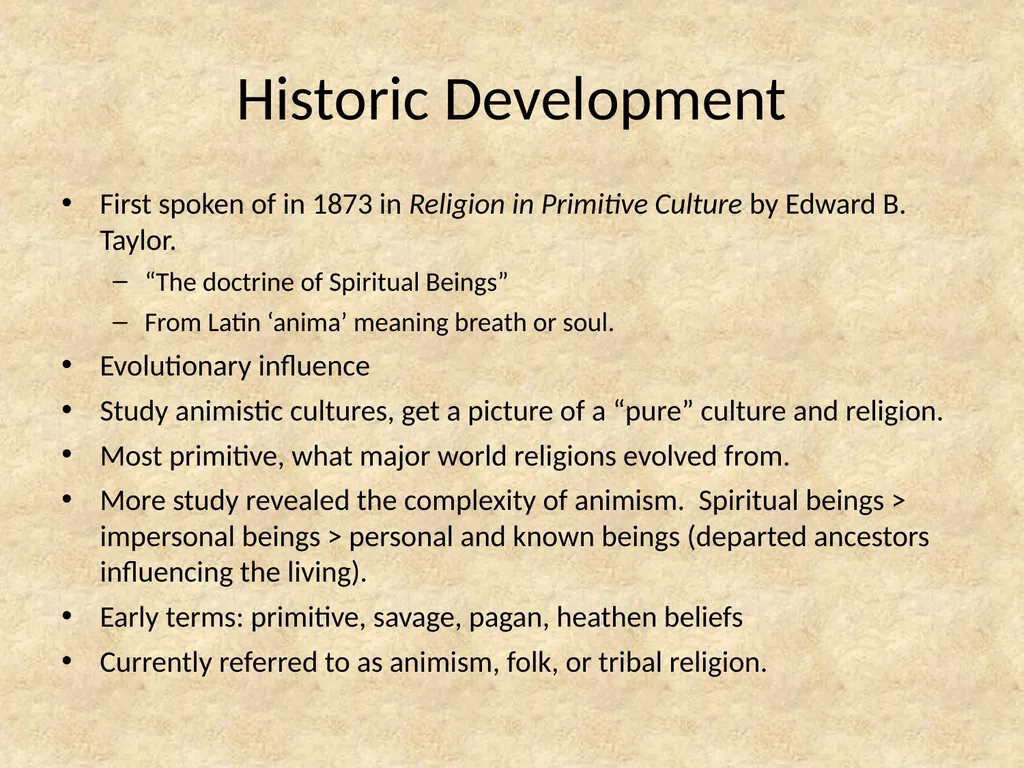
slide2. Historic Development First spoken of in 1873 in Religion in Primitive Culture by Edward B. Taylor.
“The doctrine of Spiritual Beings”
From Latin ‘anima’ meaning breath or soul.
Evolutionary influence
Study animistic cultures, get a picture of a “pure” culture and religion.
Most primitive, what major world religions evolved from.
More study revealed the complexity of animism. Spiritual beings > impersonal beings > personal and known beings (departed ancestors influencing the living).
Early terms: primitive, savage, pagan, heathen beliefs
Currently referred to as animism, folk, or tribal religion.<br>
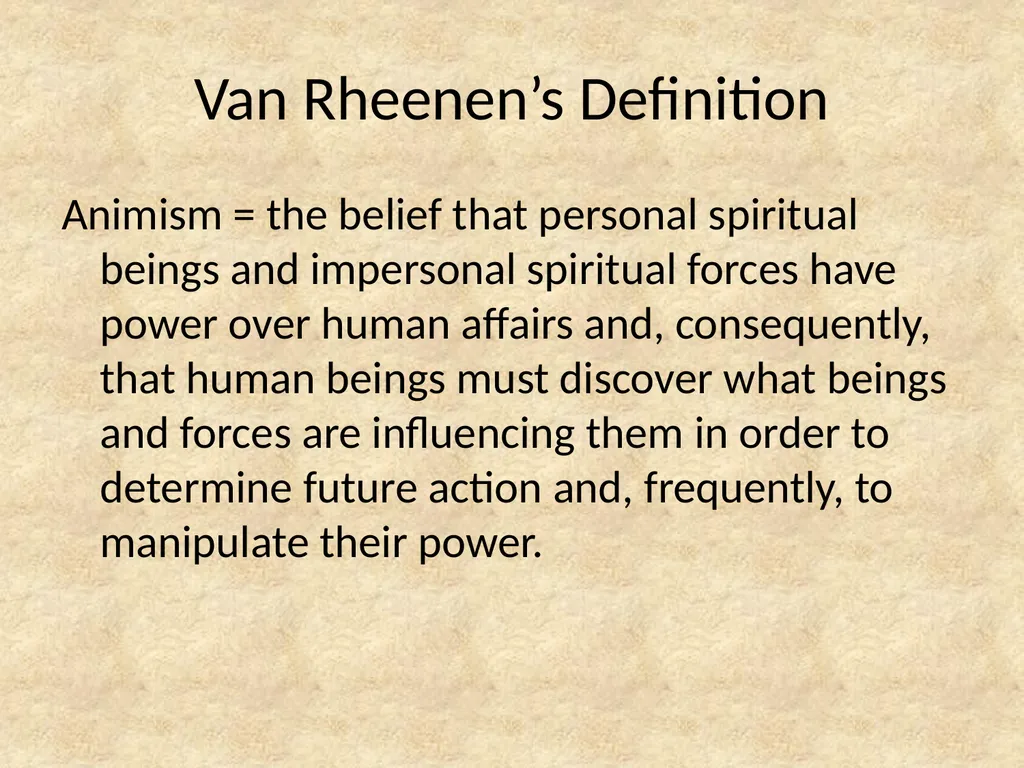
slide3. Van Rheenen’s Definition Animism = the belief that personal spiritual beings and impersonal spiritual forces have power over human affairs and, consequently, that human beings must discover what beings and forces are influencing them in order to determine future action and, frequently, to manipulate their power.<br>
slide4. Van Rheenen’s Definition Personal spiritual beings and impersonal forces
These forces have power over human affairs
Humans must discover which beings and forces influence them and then how to manipulate their power
Animism is power and fear driven<br>
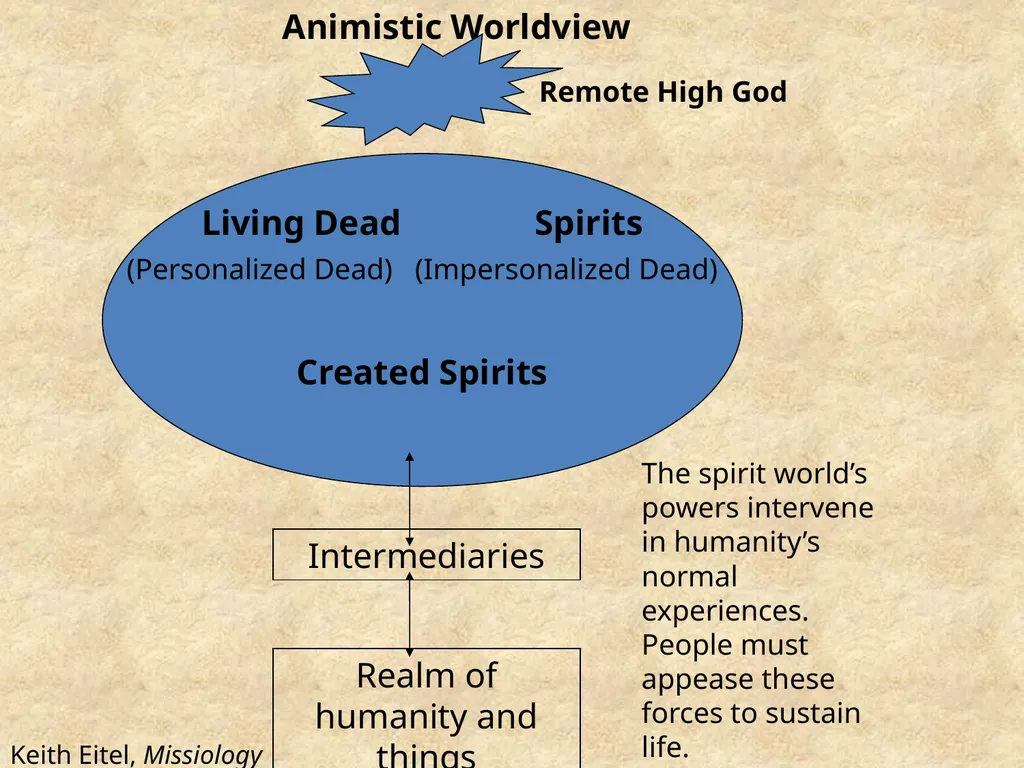
slide5. Animistic Worldview Remote High God Living Dead Spirits
(Personalized Dead) (Impersonalized Dead)
Created Spirits Intermediaries Realm of humanity and things The spirit world’s powers intervene in humanity’s normal experiences. People must appease these forces to sustain life. Keith Eitel, Missiology<br>
slide6. Animistic Worldview High Cosmic god
Created life and the world
Impersonal and distant, rarely directly worshipped
Act of ancestral folly caused a separation between the creator god and humans
The earth is left to be governed by lesser gods, spirits, and humans<br>
slide7. Animistic Worldview Middle Spirit Level
Local spirits mediate between the cosmic god and everyday human life
Spirits can be malevolent or benevolent and control a power sphere such as wealth, health, fertility, luck, ect.
Humans must cooperate with and appease the spirits and gain their favor
Spirits differ from powers/forces<br>
slide8. Animistic Worldview Realm of everyday life
Past Oriented
Humans have an inner life force that must remain strong
Spirit influence can cause the life force to wane, bringing on weakness, forgetfulness, soul fright, and bad luck
Shamans are the animistic priests and have the knowledge and power to influence the spirit world for human favor<br>
slide9. Animistic Worldview Appeasement Methods
Sacrifices
Chants and rituals
Amulets and life packs
Magic
Homeopathy (or Sympathy) and contagion<br>
slide10. Missions Significance Most people, historically, come to Christ out of an animistic background
40% from a pure animist culture
70% of Muslims are folk Muslims
Syncretistic nature of animism<br>
slide11. Missions Significance Similarity between animistic legends and Scripture
Creates bridges for the gospel
Peace child, banana stalk, Fon and Ashanti story of python
Cultural truths given in story form<br>
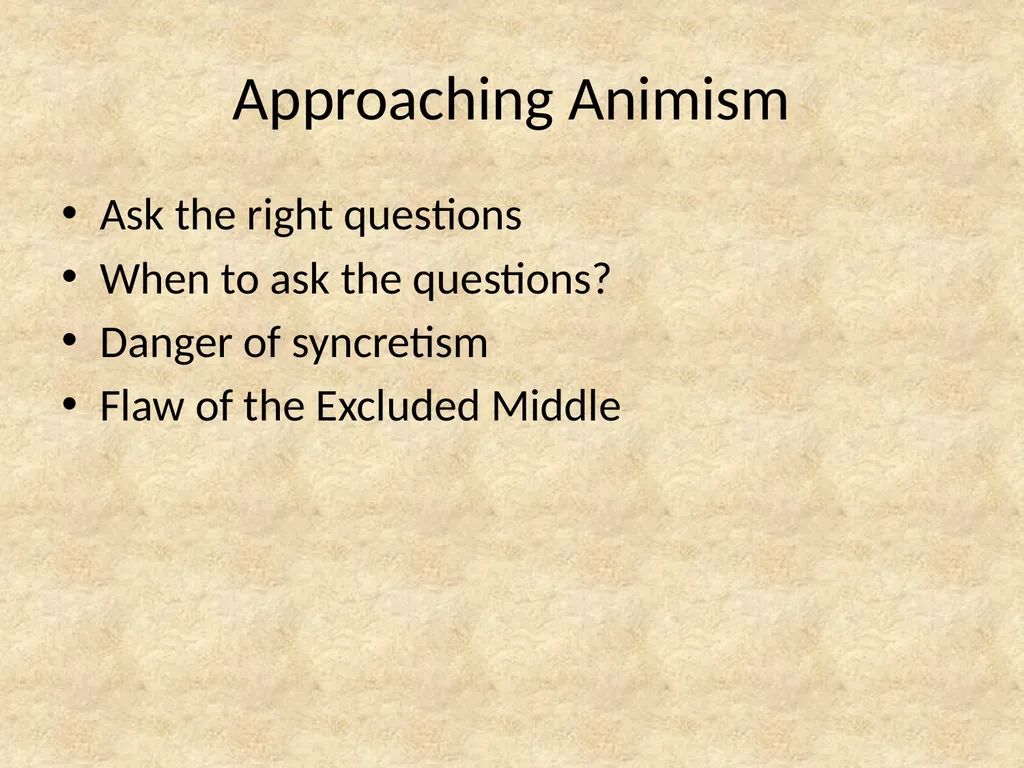
slide12. Approaching Animism Ask the right questions
When to ask the questions?
Danger of syncretism
Flaw of the Excluded Middle<br>
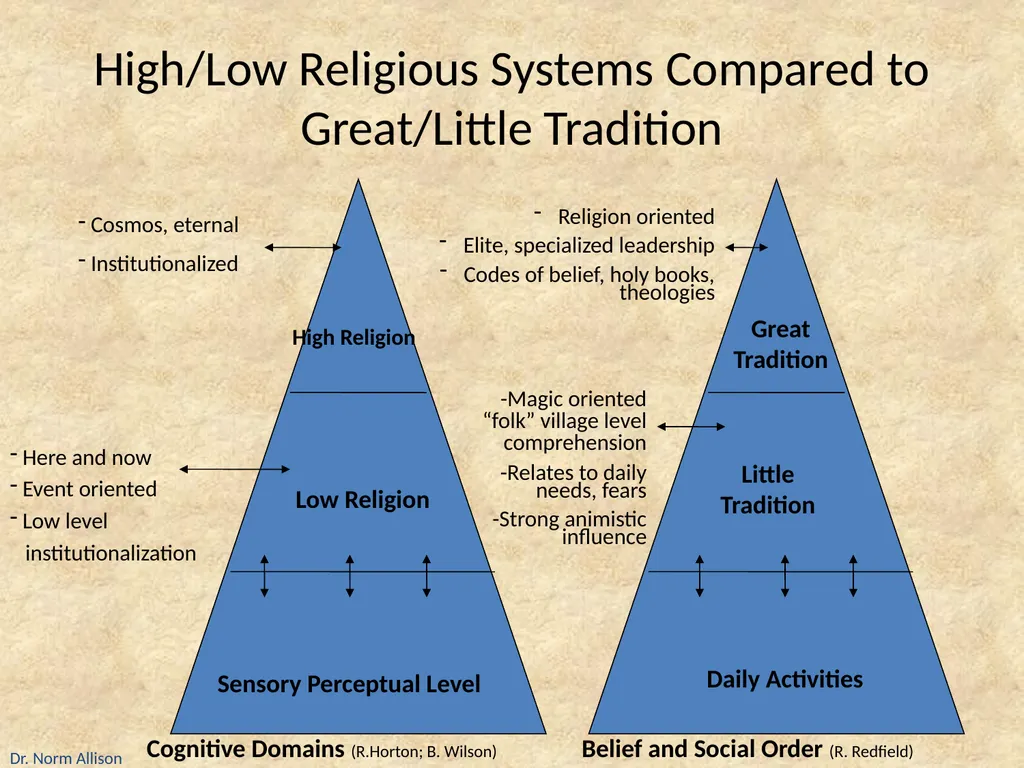
slide13. High/Low Religious Systems Compared to Great/Little Tradition High Religion Low Religion Sensory Perceptual Level Great Tradition Little Tradition Daily Activities Cognitive Domains (R.Horton; B. Wilson) Belief and Social Order (R. Redfield) Dr. Norm Allison Cosmos, eternal
Institutionalized Here and now
Event oriented
Low level
institutionalization Religion oriented
Elite, specialized leadership
Codes of belief, holy books, theologies -Magic oriented “folk” village level comprehension
-Relates to daily needs, fears
-Strong animistic influence<br>
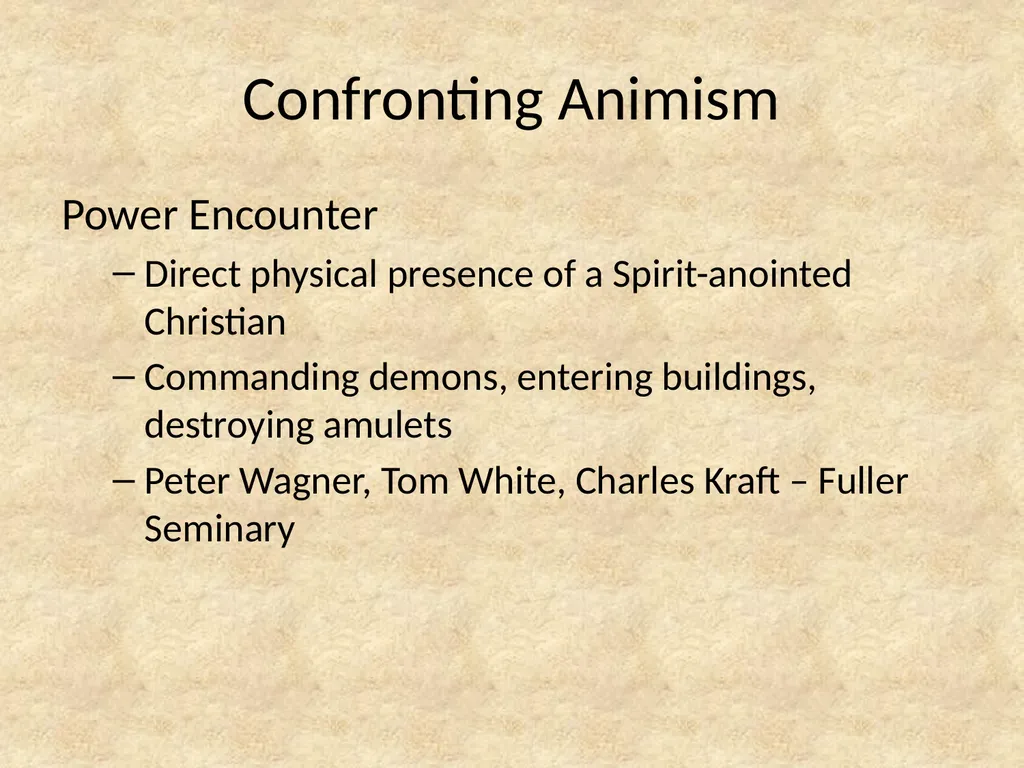
slide14. Confronting Animism Power Encounter
Direct physical presence of a Spirit-anointed Christian
Commanding demons, entering buildings, destroying amulets
Peter Wagner, Tom White, Charles Kraft – Fuller Seminary<br>
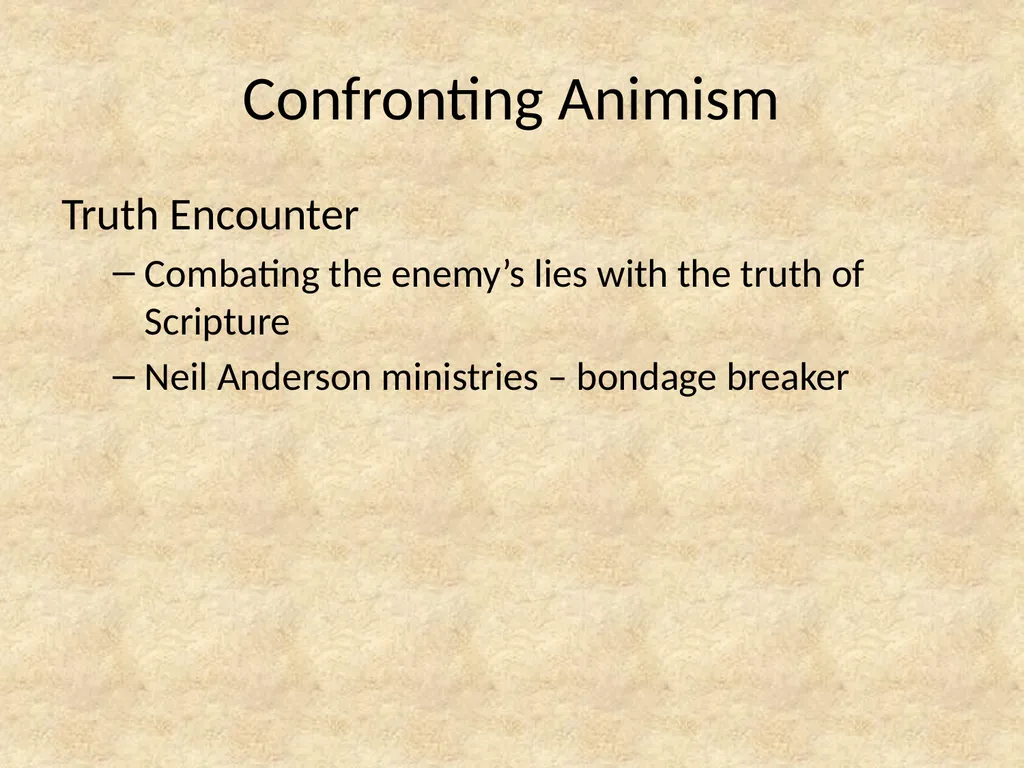
slide15. Confronting Animism Truth Encounter
Combating the enemy’s lies with the truth of Scripture
Neil Anderson ministries – bondage breaker<br>
slide16. Confronting Animism Holistic Approach
Danger of over-emphasizing power or truth encounter or avoiding the issue
Finding the answer to everyday practical issues like crop success, finding a spouse, fertility through critical contextualization
Need to stay long enough to understand the culture and work with the indigenous believers
Avoid syncretism through discipleship<br>
slide2. Historic Development First spoken of in 1873 in Religion in Primitive Culture by Edward B. Taylor.
“The doctrine of Spiritual Beings”
From Latin ‘anima’ meaning breath or soul.
Evolutionary influence
Study animistic cultures, get a picture of a “pure” culture and religion.
Most primitive, what major world religions evolved from.
More study revealed the complexity of animism. Spiritual beings > impersonal beings > personal and known beings (departed ancestors influencing the living).
Early terms: primitive, savage, pagan, heathen beliefs
Currently referred to as animism, folk, or tribal religion.<br>
slide3. Van Rheenen’s Definition Animism = the belief that personal spiritual beings and impersonal spiritual forces have power over human affairs and, consequently, that human beings must discover what beings and forces are influencing them in order to determine future action and, frequently, to manipulate their power.<br>
slide4. Van Rheenen’s Definition Personal spiritual beings and impersonal forces
These forces have power over human affairs
Humans must discover which beings and forces influence them and then how to manipulate their power
Animism is power and fear driven<br>
slide5. Animistic Worldview Remote High God Living Dead Spirits
(Personalized Dead) (Impersonalized Dead)
Created Spirits Intermediaries Realm of humanity and things The spirit world’s powers intervene in humanity’s normal experiences. People must appease these forces to sustain life. Keith Eitel, Missiology<br>
slide6. Animistic Worldview High Cosmic god
Created life and the world
Impersonal and distant, rarely directly worshipped
Act of ancestral folly caused a separation between the creator god and humans
The earth is left to be governed by lesser gods, spirits, and humans<br>
slide7. Animistic Worldview Middle Spirit Level
Local spirits mediate between the cosmic god and everyday human life
Spirits can be malevolent or benevolent and control a power sphere such as wealth, health, fertility, luck, ect.
Humans must cooperate with and appease the spirits and gain their favor
Spirits differ from powers/forces<br>
slide8. Animistic Worldview Realm of everyday life
Past Oriented
Humans have an inner life force that must remain strong
Spirit influence can cause the life force to wane, bringing on weakness, forgetfulness, soul fright, and bad luck
Shamans are the animistic priests and have the knowledge and power to influence the spirit world for human favor<br>
slide9. Animistic Worldview Appeasement Methods
Sacrifices
Chants and rituals
Amulets and life packs
Magic
Homeopathy (or Sympathy) and contagion<br>
slide10. Missions Significance Most people, historically, come to Christ out of an animistic background
40% from a pure animist culture
70% of Muslims are folk Muslims
Syncretistic nature of animism<br>
slide11. Missions Significance Similarity between animistic legends and Scripture
Creates bridges for the gospel
Peace child, banana stalk, Fon and Ashanti story of python
Cultural truths given in story form<br>
slide12. Approaching Animism Ask the right questions
When to ask the questions?
Danger of syncretism
Flaw of the Excluded Middle<br>
slide13. High/Low Religious Systems Compared to Great/Little Tradition High Religion Low Religion Sensory Perceptual Level Great Tradition Little Tradition Daily Activities Cognitive Domains (R.Horton; B. Wilson) Belief and Social Order (R. Redfield) Dr. Norm Allison Cosmos, eternal
Institutionalized Here and now
Event oriented
Low level
institutionalization Religion oriented
Elite, specialized leadership
Codes of belief, holy books, theologies -Magic oriented “folk” village level comprehension
-Relates to daily needs, fears
-Strong animistic influence<br>
slide14. Confronting Animism Power Encounter
Direct physical presence of a Spirit-anointed Christian
Commanding demons, entering buildings, destroying amulets
Peter Wagner, Tom White, Charles Kraft – Fuller Seminary<br>
slide15. Confronting Animism Truth Encounter
Combating the enemy’s lies with the truth of Scripture
Neil Anderson ministries – bondage breaker<br>
slide16. Confronting Animism Holistic Approach
Danger of over-emphasizing power or truth encounter or avoiding the issue
Finding the answer to everyday practical issues like crop success, finding a spouse, fertility through critical contextualization
Need to stay long enough to understand the culture and work with the indigenous believers
Avoid syncretism through discipleship<br>