
Ankylosing Spondylitis Pathology Ankylosing
Description: Ankylosing Spondylitis Pathology Ankylosing spondylities is characterized as seronegative disease .It is a form of arthrities that is long lasting .It affects the joint in the spine and the sacroilium in the pelvis causing eventually fusion
Related Topics
Download Presentation
"Ankylosing Spondylitis Pathology Ankylosing" is the property of its rightful owner. Permission is granted to download and print the materials on this website for personal, non-commercial use only, and to display it on your personal computer provided you do not modify the materials and that you retain all copyright notices contained in the materials. By downloading content from our website, you accept the terms of this agreement.
Presentation Transcript
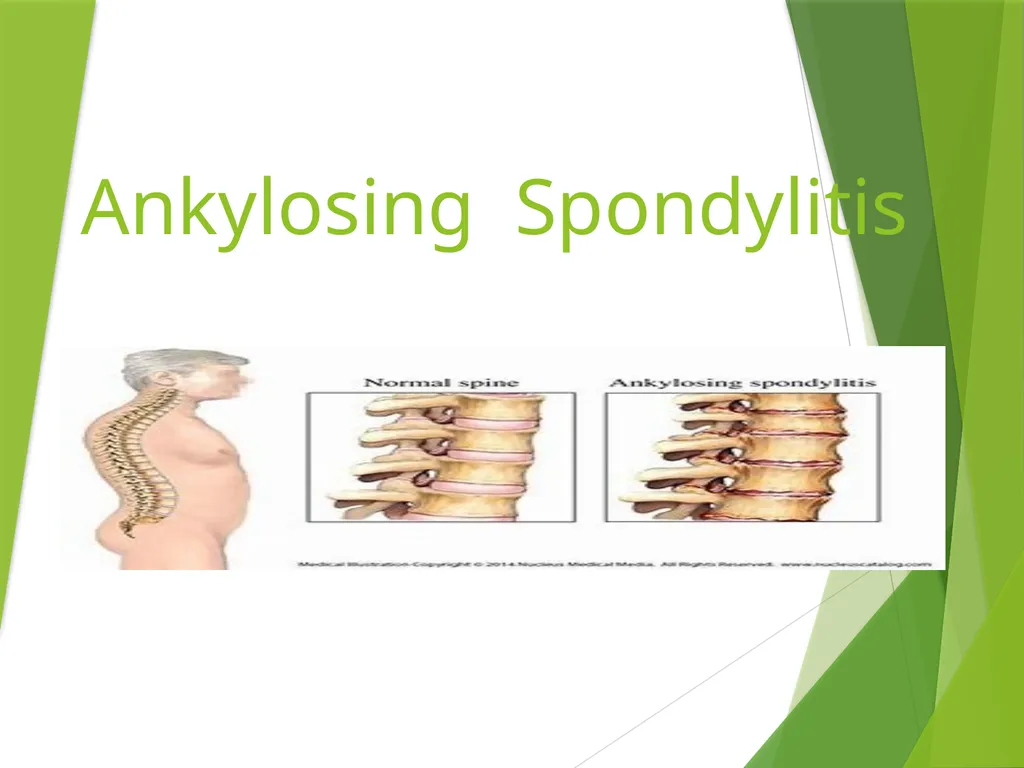
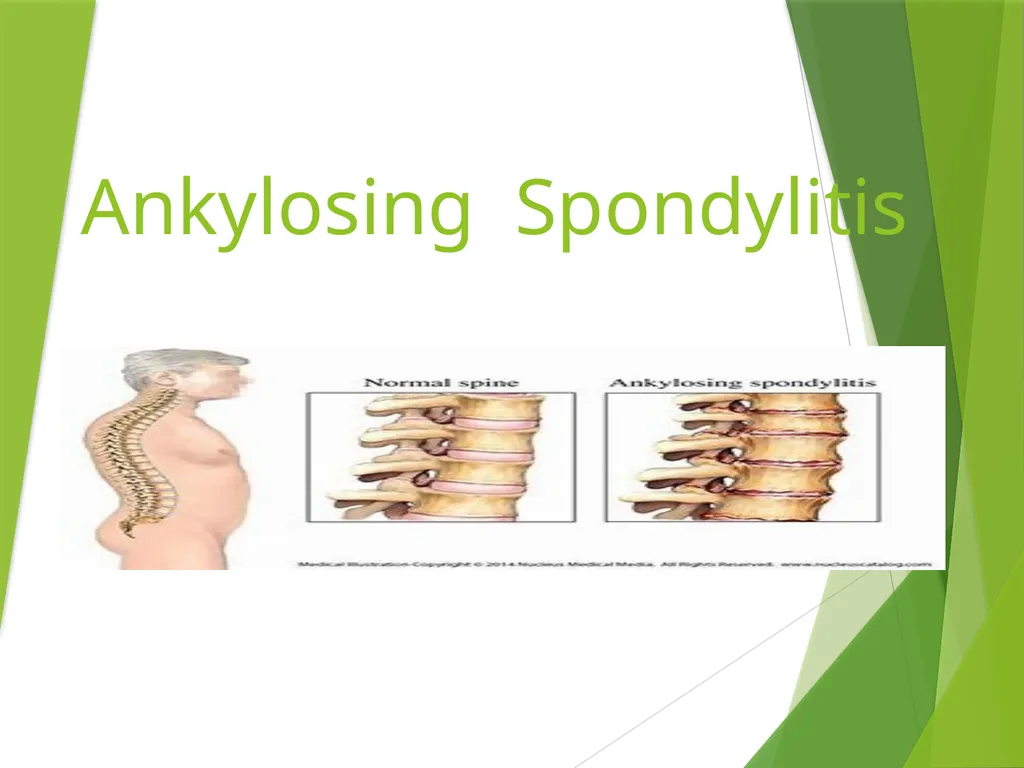
slide1. Ankylosing Spondylitis<br>
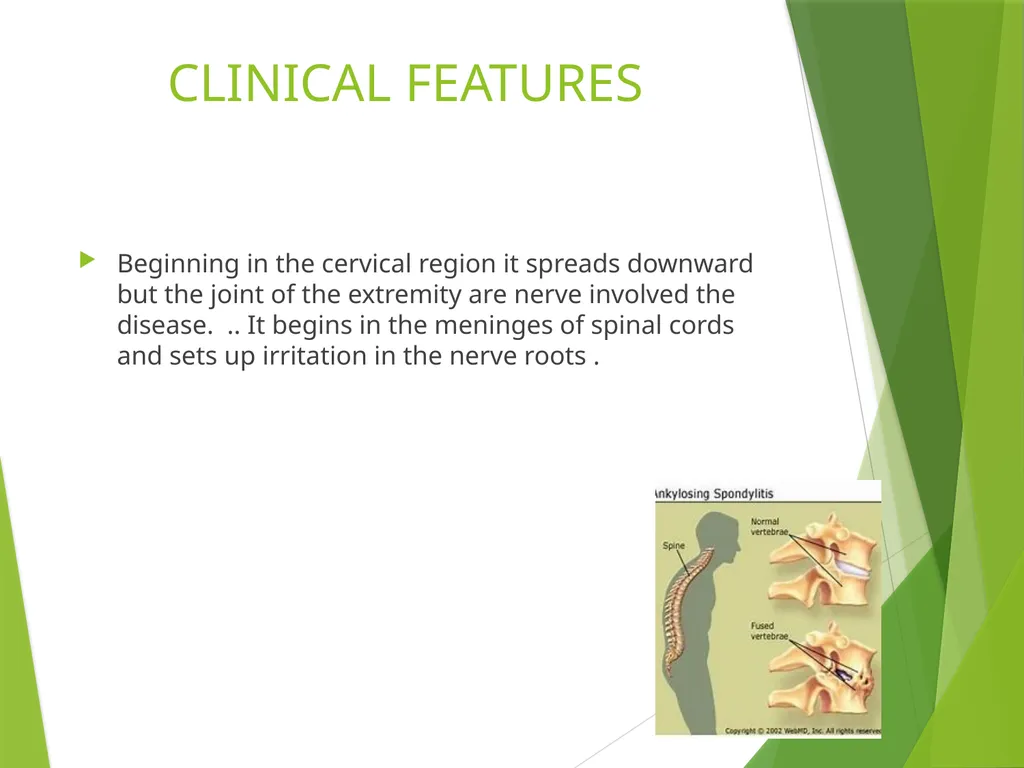
slide2. Pathology Ankylosing spondylities is characterized as seronegative disease .It is a form of arthrities that is long lasting .It affects the joint in the spine and the sacroilium in the pelvis causing eventually fusion of the spine.. Whereas characterized by a progressive inflammatory stiffening of the joint with a predilation for the joints of the cervical skeltal mainly sacro- iliac joint .
It can be due to genetical or envirnmental factor.<br>
slide3. OTHER NAMES OF ANKYLOSING SPONDYLITIS It is also known as ankylo-poietica / ankylosing spondylitis , previously also known as Bechterew ‘s disease , bechterew syndrome ,Marie Strumpell disease , Rhematoid spondylitis , Bekhterev’s disease, morbus bechterew .<br>
slide4. Etiology The exact etiology is unknown , a strong association found between a genetic marker , HLA-B 27 genotype 90 % of patients .
>Tumor necrosis factor -alpha (TNF –alpha ) >1L -1.
It is present in more than 85% of patients with A.S whereas in normal it is 1% and also associated with urethritis , ulcerative collitis .<br>
slide5. HLAB-27 It stands for Human Leukocyte antigen B* 27 ( subtype B* 2701-2724) .
HLA-B 27 is strongly associated with a certain set of auto immune disease referred to as “ seronegative spondylo arthopathies” .<br>
slide6. Types 1) Marie-strumpell type –beginning in lumbar region it spread upward , it involves the SI hip and shoulder joint and it is sometimes the smaller articulation as well as the muscles are more waisted .. Than in other type and there may be or may not be neurological symptoms this is most commonest form of AS.<br>
slide7. CLINICAL FEATURES Beginning in the cervical region it spreads downward but the joint of the extremity are nerve involved the disease. .. It begins in the meninges of spinal cords and sets up irritation in the nerve roots .<br>
slide8. Signs and symptoms Lumbar Region – there is a pain in the back and often one or both sciatic nerves because of rigidity and the fact that the patient lies down as much as possible , the lumbar spine is flattened
Mild or severe back and buttock pain that is often worse in the morning hours > continued inflammation of the ligaments ,tendons, joint capsule ( the soft tissue surroundings the joints ). .<br>
slide9. Thoracic spine Shortness of iliacus and psoas major ,kyphosis appears early because of rigidity but is not marked so much .
The ribs becomes joined to the vertebrae by ossification of costoclavicular joint , hence breathing becomes entirely abdominal, patient is particularly prone to respiration infection or disease because of rigidity there is often pain along course of intercostal nerves.<br>
slide10. Lower Cervical Region :- Marked kyphosis may be present because of the weight of the head compresses the vertebral bodies and bent the spine forward .The head itself is hyperextended to restore the line of vision .
The atlanto –axial joint escapes.<br>
slide11. OTHER FORMS- It is also furthur categorized into two forms
1) spondylitis O.A –O.A of the spinal cord
2) spondylities ankylopoitica- arthrities of the vertebral/ ankylosing of the joint .<br>
slide12. Course of disease :- the onset may be sudden or incidious progressive rapid or slow .
It may be arrested at early age and continues to every joint from the head to knee is ankylosed .
The initial symptoms are not often severe.<br>
slide14. Complications:- Associates complication in eyes , redness in the eye , conjuctivities can occur,,
Gibbus ( Hunch back ),
Tempomandible joints may be effected,
40-45% hips are involved ,
Chin becomes fixed to chest wall ..neck movements are lost.
Costochondral junction of the ribs become fixed ,
Kyphosis.<br>
slide15. Diagnosis :- A blood test for HLAB-27 genotype .
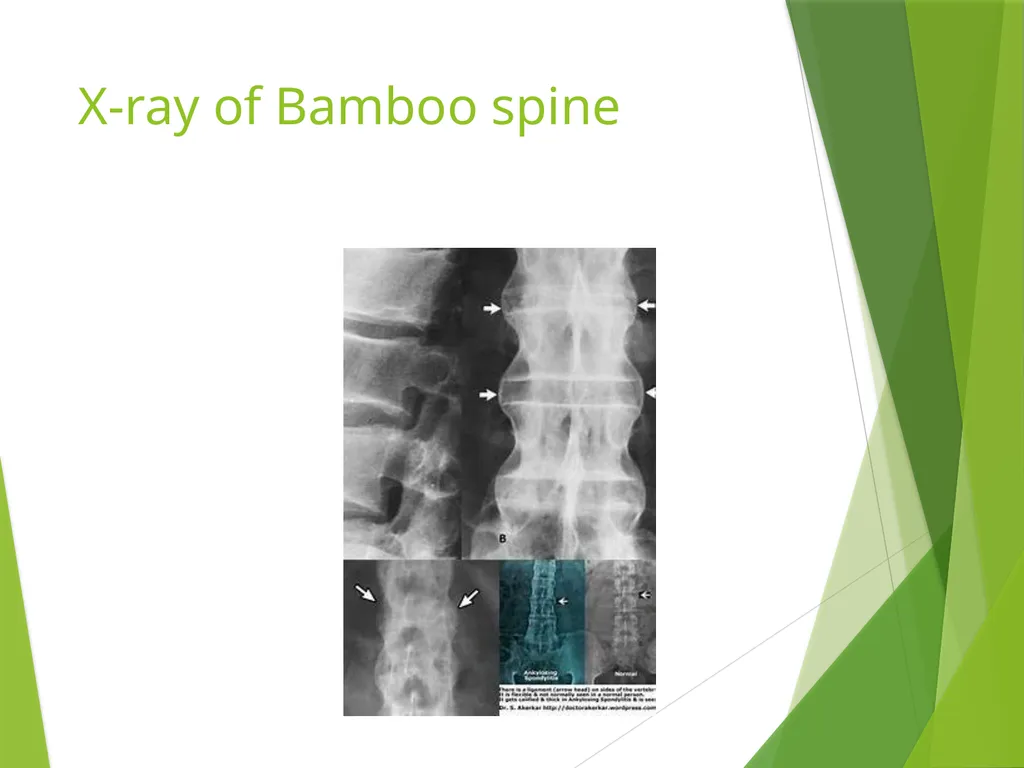
X-ray which shows characteristic spinal changes and sacroilities ,
ESR and CRP ,
Elivated serum IG-A levels .
Changes are seen in lumbar spine :- loss of lordosis , diffuse osteoporosis , reactive sclerosis .<br>
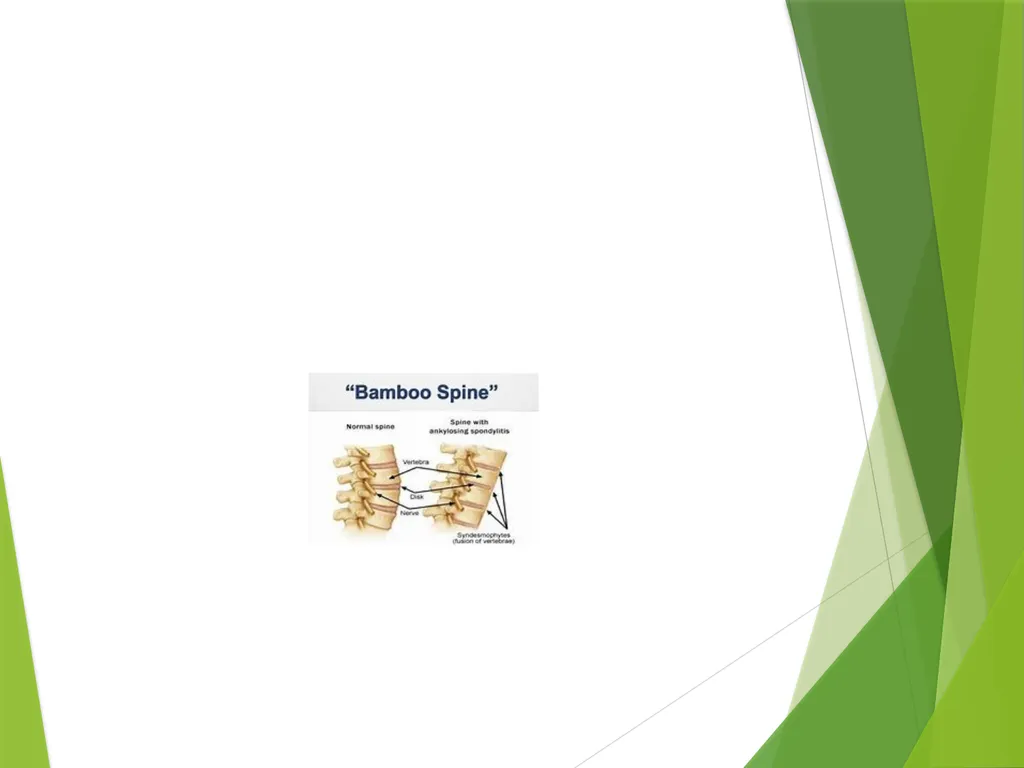
slide16. X-ray of Bamboo spine<br>
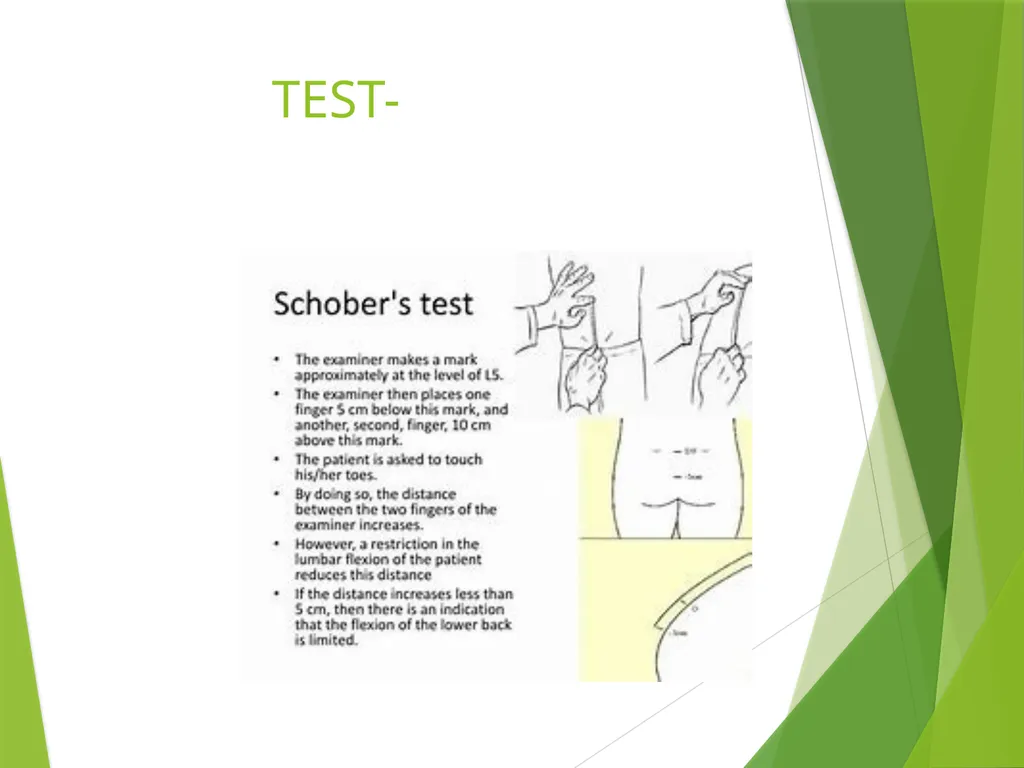
slide17. TEST-<br>
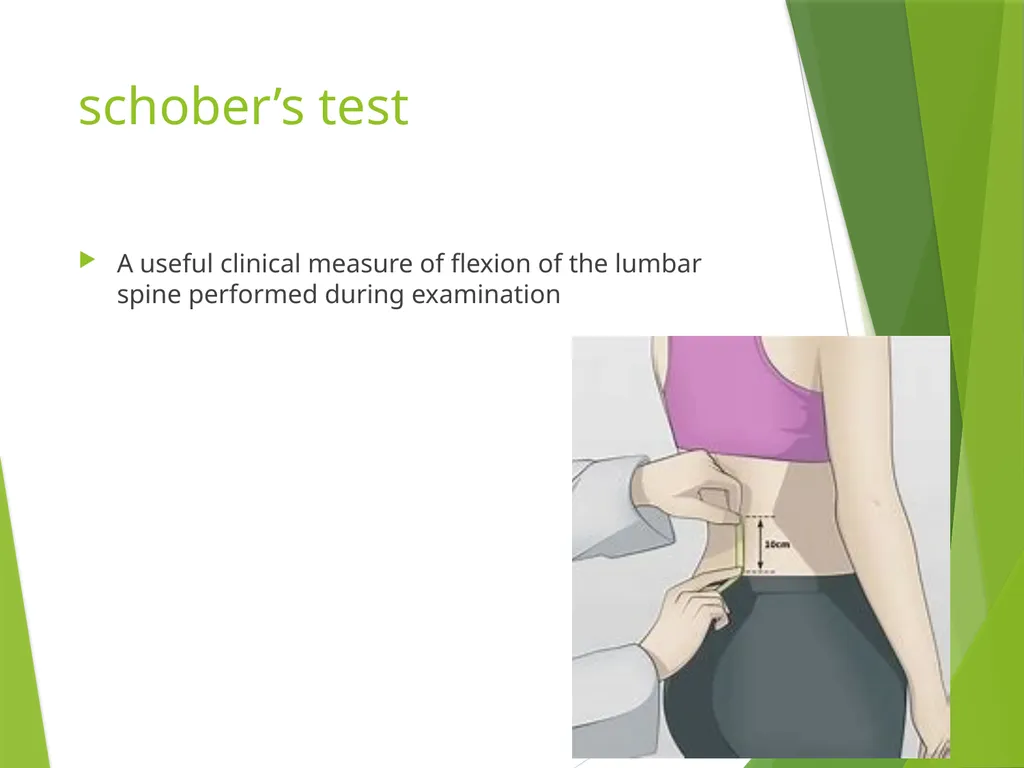
slide18. schober’s test A useful clinical measure of flexion of the lumbar spine performed during examination<br>
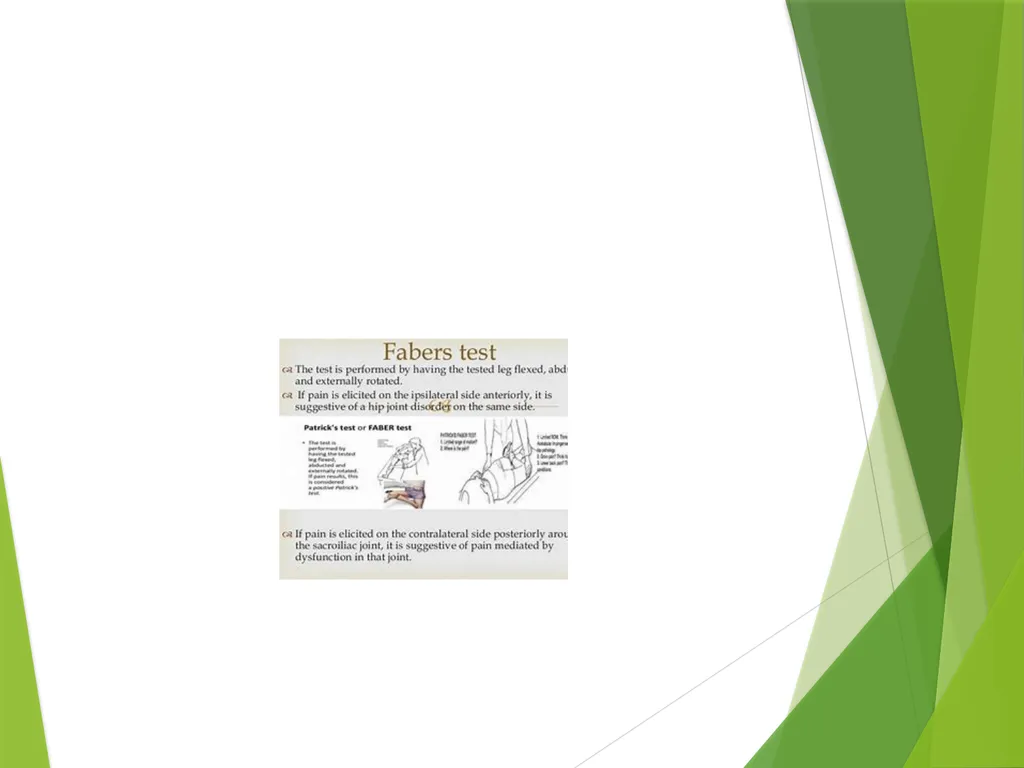
slide21. Assesment:- Sacroiliac compression , SLR , pump handling test, wall test , question mark deformity in bamboo spine .
FABER test,
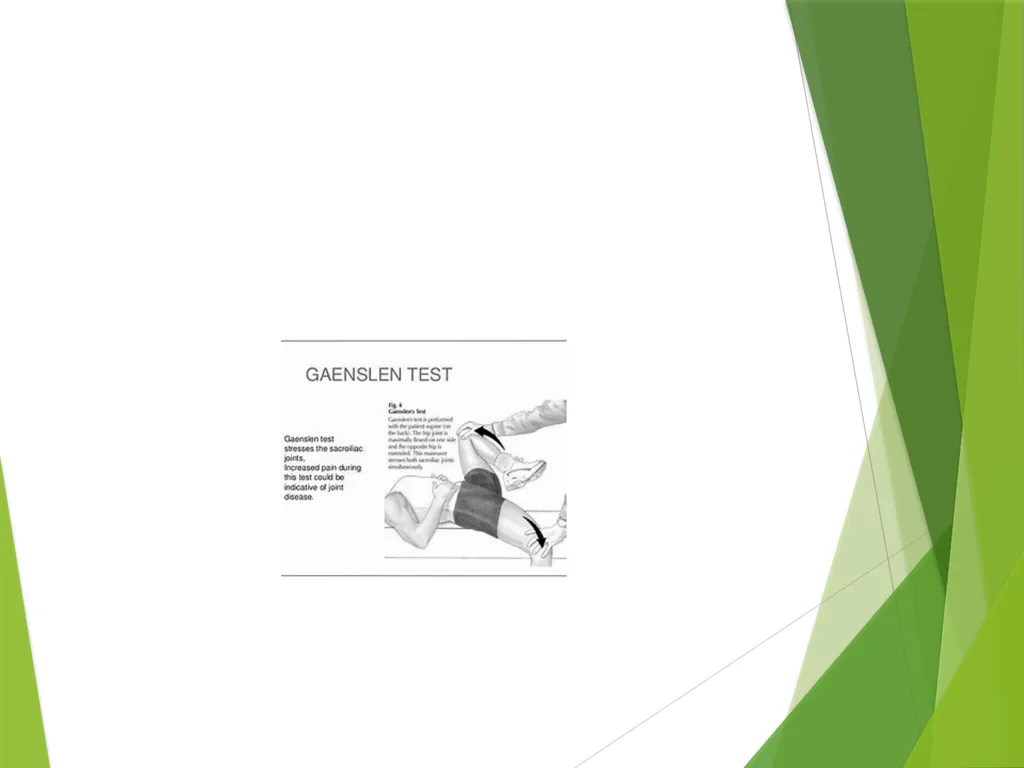
Gaenslen test ,
Pelvic compression test.<br>
slide22. Investigations :- Hazziness, sclerosis, widening , bony ankylosis , calcification , loss of lumbar curve , squaring of vertebrae , osteophytes, osteoporosis .<br>
slide23. Treatment :- Conservative treatment -:
1) Anti-inflammatory drugs – includes such as aspirin, ibuprofen , phenylbutazone etc..
2) DMARDS – used to reduce the immune system responses through immune suppression .
TNF-alpha blockers (antagonist ) .<br>
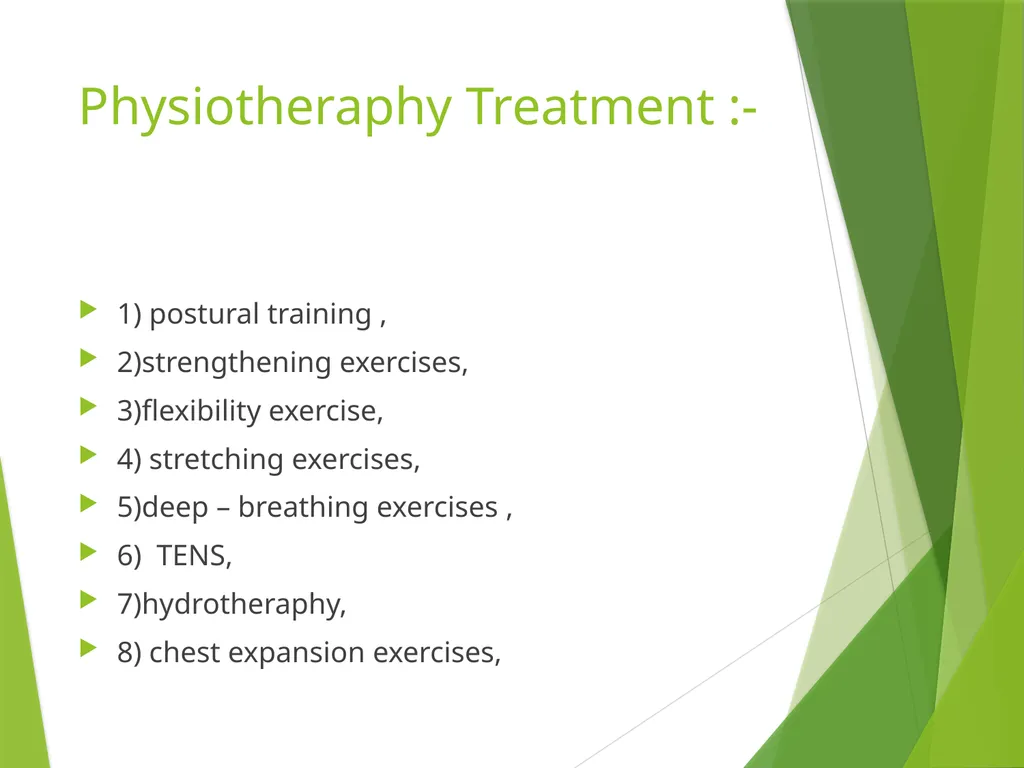
slide24. Physiotheraphy Treatment :- 1) postural training ,
2)strengthening exercises,
3)flexibility exercise,
4) stretching exercises,
5)deep – breathing exercises ,
6) TENS,
7)hydrotheraphy,
8) chest expansion exercises,<br>
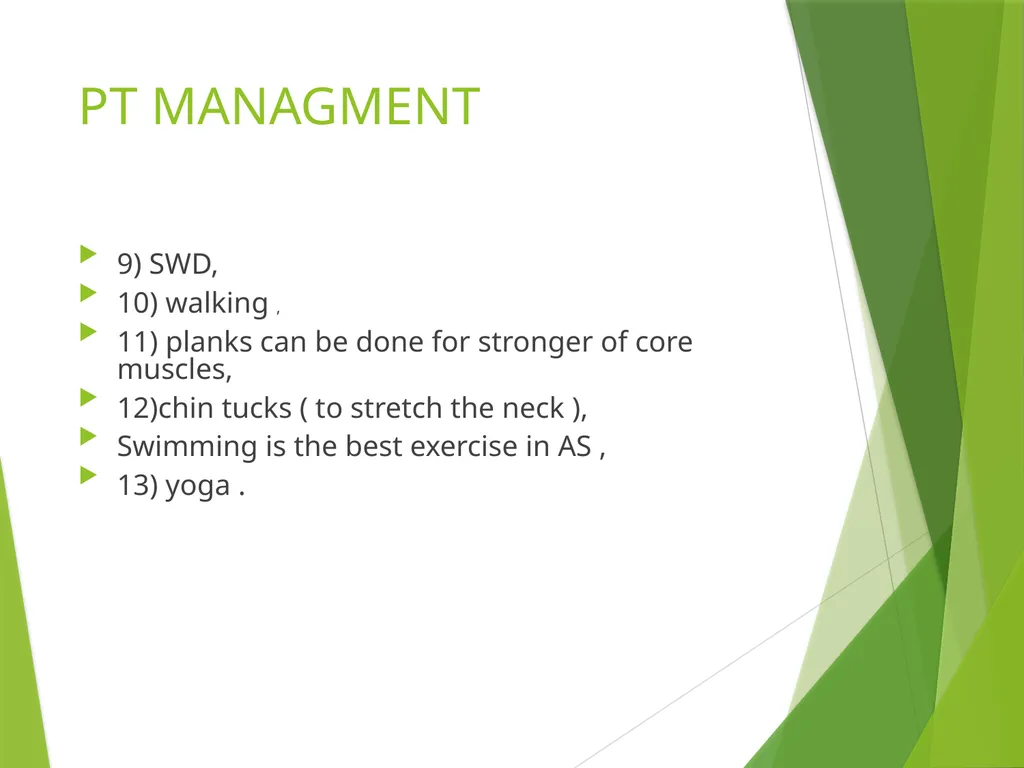
slide25. PT MANAGMENT 9) SWD,
10) walking ,
11) planks can be done for stronger of core muscles,
12)chin tucks ( to stretch the neck ),
Swimming is the best exercise in AS ,
13) yoga .<br>
slide2. Pathology Ankylosing spondylities is characterized as seronegative disease .It is a form of arthrities that is long lasting .It affects the joint in the spine and the sacroilium in the pelvis causing eventually fusion of the spine.. Whereas characterized by a progressive inflammatory stiffening of the joint with a predilation for the joints of the cervical skeltal mainly sacro- iliac joint .
It can be due to genetical or envirnmental factor.<br>
slide3. OTHER NAMES OF ANKYLOSING SPONDYLITIS It is also known as ankylo-poietica / ankylosing spondylitis , previously also known as Bechterew ‘s disease , bechterew syndrome ,Marie Strumpell disease , Rhematoid spondylitis , Bekhterev’s disease, morbus bechterew .<br>
slide4. Etiology The exact etiology is unknown , a strong association found between a genetic marker , HLA-B 27 genotype 90 % of patients .
>Tumor necrosis factor -alpha (TNF –alpha ) >1L -1.
It is present in more than 85% of patients with A.S whereas in normal it is 1% and also associated with urethritis , ulcerative collitis .<br>
slide5. HLAB-27 It stands for Human Leukocyte antigen B* 27 ( subtype B* 2701-2724) .
HLA-B 27 is strongly associated with a certain set of auto immune disease referred to as “ seronegative spondylo arthopathies” .<br>
slide6. Types 1) Marie-strumpell type –beginning in lumbar region it spread upward , it involves the SI hip and shoulder joint and it is sometimes the smaller articulation as well as the muscles are more waisted .. Than in other type and there may be or may not be neurological symptoms this is most commonest form of AS.<br>
slide7. CLINICAL FEATURES Beginning in the cervical region it spreads downward but the joint of the extremity are nerve involved the disease. .. It begins in the meninges of spinal cords and sets up irritation in the nerve roots .<br>
slide8. Signs and symptoms Lumbar Region – there is a pain in the back and often one or both sciatic nerves because of rigidity and the fact that the patient lies down as much as possible , the lumbar spine is flattened
Mild or severe back and buttock pain that is often worse in the morning hours > continued inflammation of the ligaments ,tendons, joint capsule ( the soft tissue surroundings the joints ). .<br>
slide9. Thoracic spine Shortness of iliacus and psoas major ,kyphosis appears early because of rigidity but is not marked so much .
The ribs becomes joined to the vertebrae by ossification of costoclavicular joint , hence breathing becomes entirely abdominal, patient is particularly prone to respiration infection or disease because of rigidity there is often pain along course of intercostal nerves.<br>
slide10. Lower Cervical Region :- Marked kyphosis may be present because of the weight of the head compresses the vertebral bodies and bent the spine forward .The head itself is hyperextended to restore the line of vision .
The atlanto –axial joint escapes.<br>
slide11. OTHER FORMS- It is also furthur categorized into two forms
1) spondylitis O.A –O.A of the spinal cord
2) spondylities ankylopoitica- arthrities of the vertebral/ ankylosing of the joint .<br>
slide12. Course of disease :- the onset may be sudden or incidious progressive rapid or slow .
It may be arrested at early age and continues to every joint from the head to knee is ankylosed .
The initial symptoms are not often severe.<br>
slide14. Complications:- Associates complication in eyes , redness in the eye , conjuctivities can occur,,
Gibbus ( Hunch back ),
Tempomandible joints may be effected,
40-45% hips are involved ,
Chin becomes fixed to chest wall ..neck movements are lost.
Costochondral junction of the ribs become fixed ,
Kyphosis.<br>
slide15. Diagnosis :- A blood test for HLAB-27 genotype .
X-ray which shows characteristic spinal changes and sacroilities ,
ESR and CRP ,
Elivated serum IG-A levels .
Changes are seen in lumbar spine :- loss of lordosis , diffuse osteoporosis , reactive sclerosis .<br>
slide16. X-ray of Bamboo spine<br>
slide17. TEST-<br>
slide18. schober’s test A useful clinical measure of flexion of the lumbar spine performed during examination<br>
slide21. Assesment:- Sacroiliac compression , SLR , pump handling test, wall test , question mark deformity in bamboo spine .
FABER test,
Gaenslen test ,
Pelvic compression test.<br>
slide22. Investigations :- Hazziness, sclerosis, widening , bony ankylosis , calcification , loss of lumbar curve , squaring of vertebrae , osteophytes, osteoporosis .<br>
slide23. Treatment :- Conservative treatment -:
1) Anti-inflammatory drugs – includes such as aspirin, ibuprofen , phenylbutazone etc..
2) DMARDS – used to reduce the immune system responses through immune suppression .
TNF-alpha blockers (antagonist ) .<br>
slide24. Physiotheraphy Treatment :- 1) postural training ,
2)strengthening exercises,
3)flexibility exercise,
4) stretching exercises,
5)deep – breathing exercises ,
6) TENS,
7)hydrotheraphy,
8) chest expansion exercises,<br>
slide25. PT MANAGMENT 9) SWD,
10) walking ,
11) planks can be done for stronger of core muscles,
12)chin tucks ( to stretch the neck ),
Swimming is the best exercise in AS ,
13) yoga .<br>