
Antineoplastic agents By Dr Abdul Samad Salahuddin

Description: Antineoplastic agents By Dr Abdul Samad Salahuddin Learning outcomes Understanding the mechanism of action of antineoplastic drugs, including alkylating agents and antimetabolites. Recognizing the classification of cancer cells (carcinoma,
Related Topics
Download Presentation
"Antineoplastic agents By Dr Abdul Samad Salahuddin" is the property of its rightful owner. Permission is granted to download and print the materials on this website for personal, non-commercial use only, and to display it on your personal computer provided you do not modify the materials and that you retain all copyright notices contained in the materials. By downloading content from our website, you accept the terms of this agreement.
Presentation Transcript
slide1. Antineoplastic agents By Dr Abdul Samad Salahuddin<br>
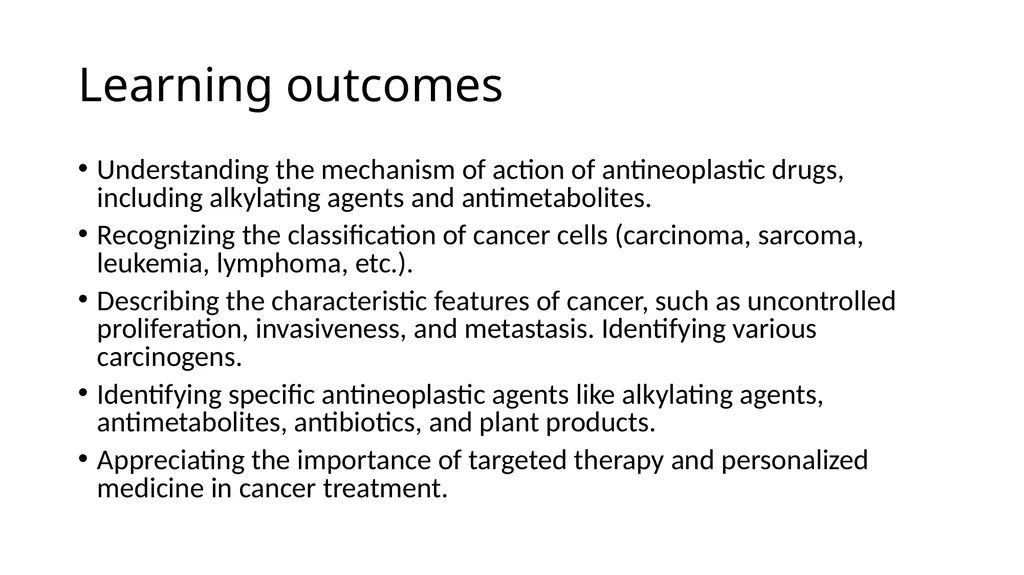
slide2. Learning outcomes Understanding the mechanism of action of antineoplastic drugs, including alkylating agents and antimetabolites.
Recognizing the classification of cancer cells (carcinoma, sarcoma, leukemia, lymphoma, etc.).
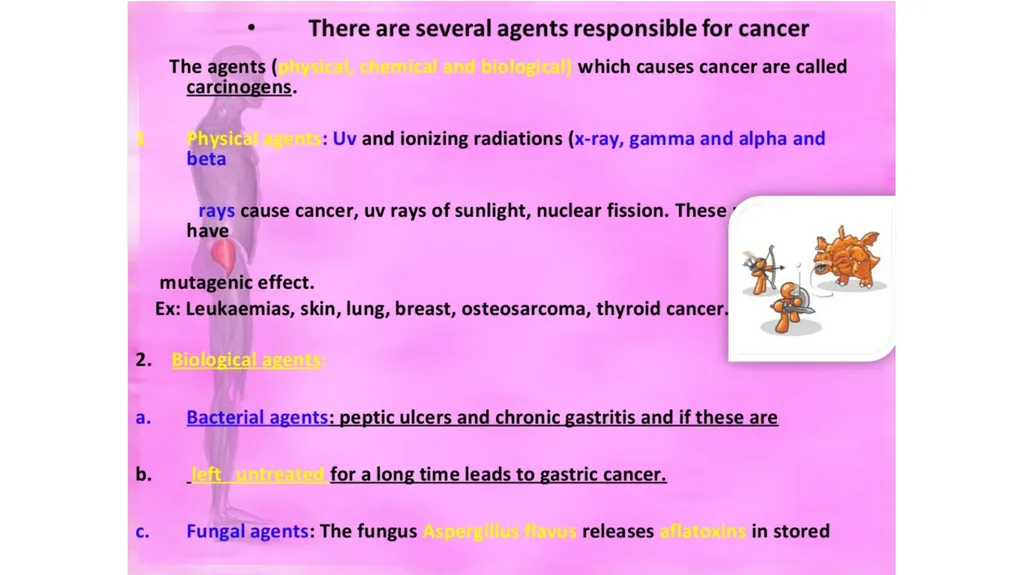
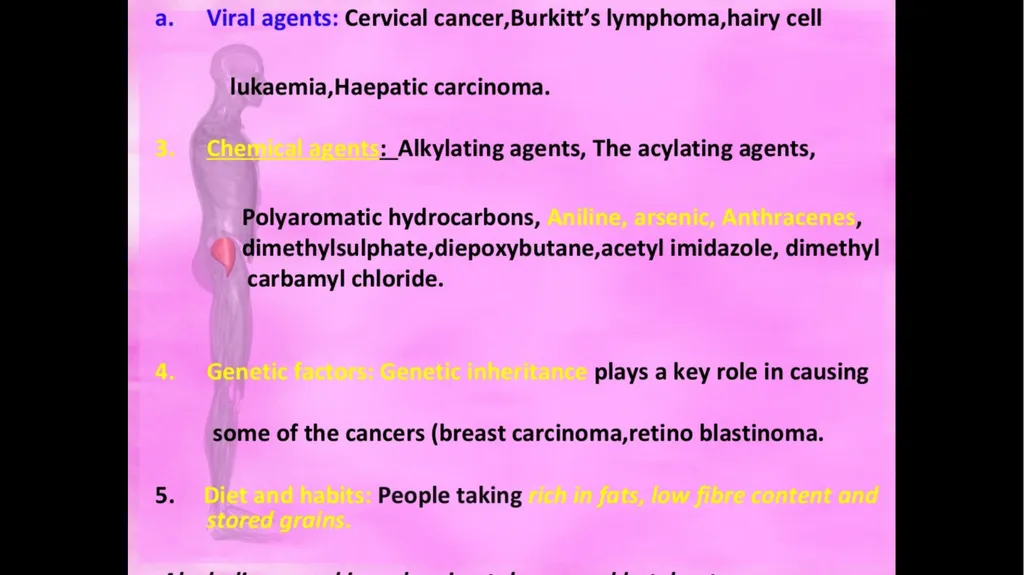
Describing the characteristic features of cancer, such as uncontrolled proliferation, invasiveness, and metastasis. Identifying various carcinogens.
Identifying specific antineoplastic agents like alkylating agents, antimetabolites, antibiotics, and plant products.
Appreciating the importance of targeted therapy and personalized medicine in cancer treatment.<br>
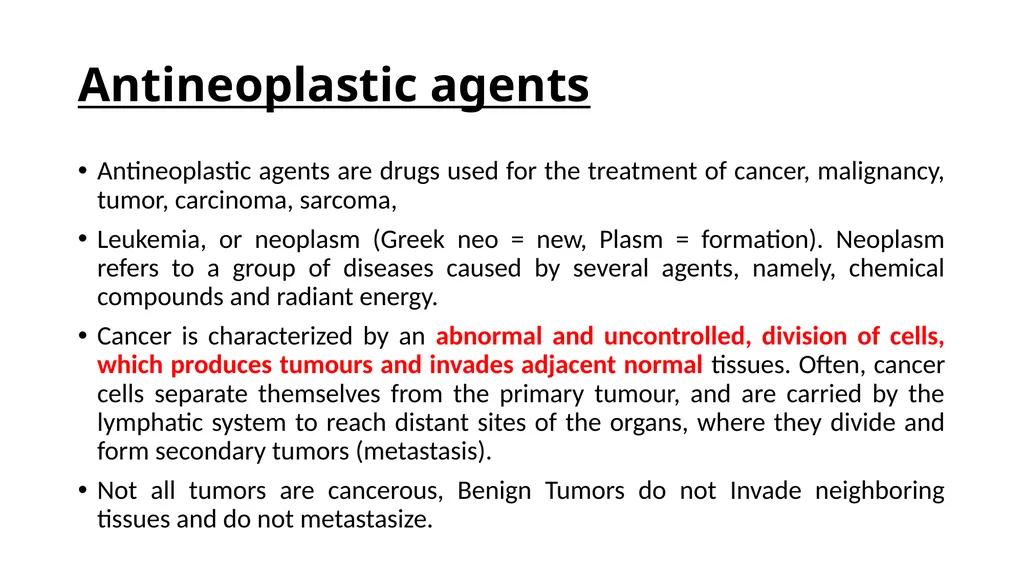
slide3. Antineoplastic agents Antineoplastic agents are drugs used for the treatment of cancer, malignancy, tumor, carcinoma, sarcoma,
Leukemia, or neoplasm (Greek neo = new, Plasm = formation). Neoplasm refers to a group of diseases caused by several agents, namely, chemical compounds and radiant energy.
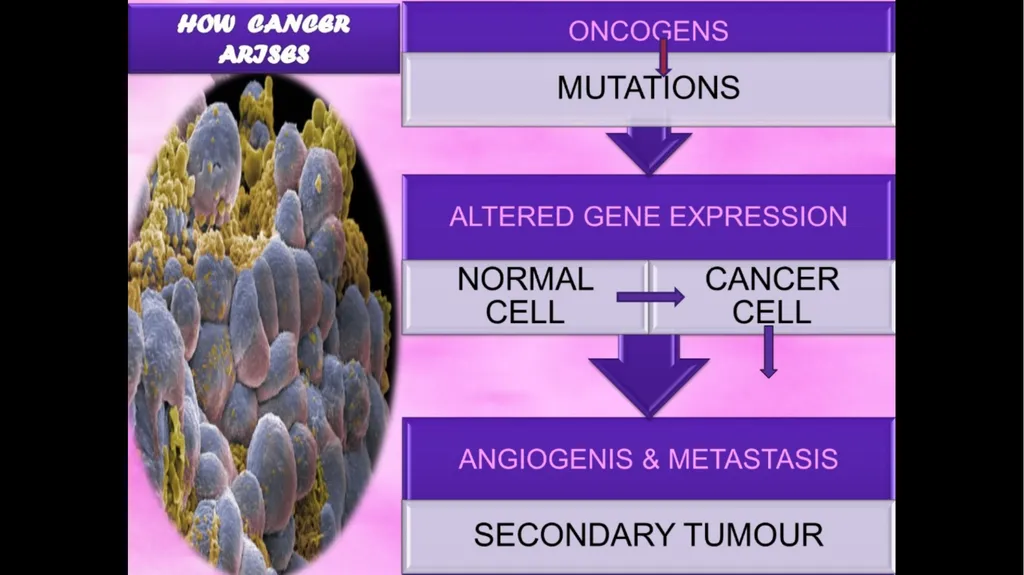
Cancer is characterized by an abnormal and uncontrolled, division of cells, which produces tumours and invades adjacent normal tissues. Often, cancer cells separate themselves from the primary tumour, and are carried by the lymphatic system to reach distant sites of the organs, where they divide and form secondary tumors (metastasis).
Not all tumors are cancerous, Benign Tumors do not Invade neighboring tissues and do not metastasize.<br>
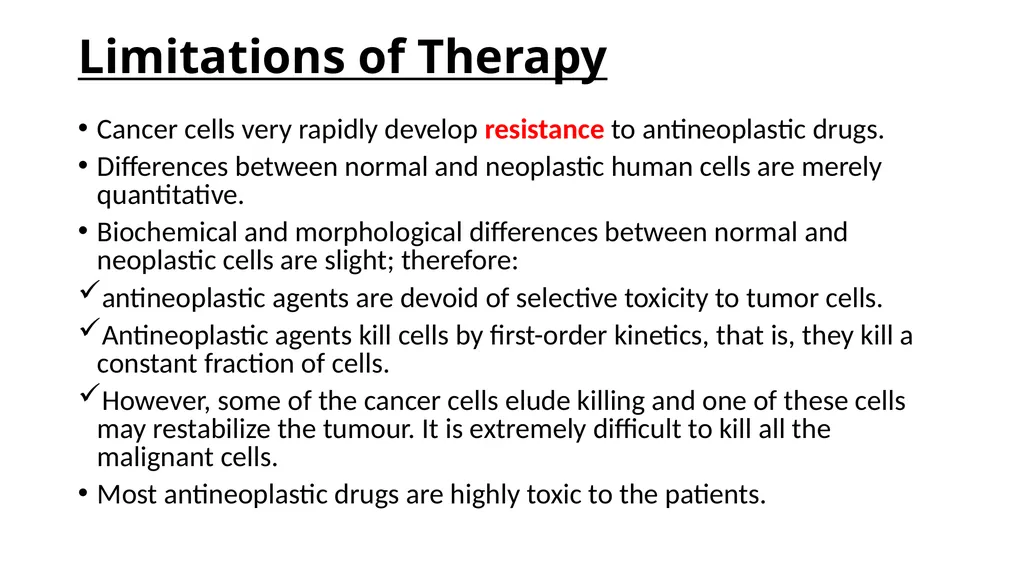
slide8. Limitations of Therapy Cancer cells very rapidly develop resistance to antineoplastic drugs.
Differences between normal and neoplastic human cells are merely quantitative.
Biochemical and morphological differences between normal and neoplastic cells are slight; therefore:
antineoplastic agents are devoid of selective toxicity to tumor cells.
Antineoplastic agents kill cells by first-order kinetics, that is, they kill a constant fraction of cells.
However, some of the cancer cells elude killing and one of these cells may restabilize the tumour. It is extremely difficult to kill all the malignant cells.
Most antineoplastic drugs are highly toxic to the patients.<br>
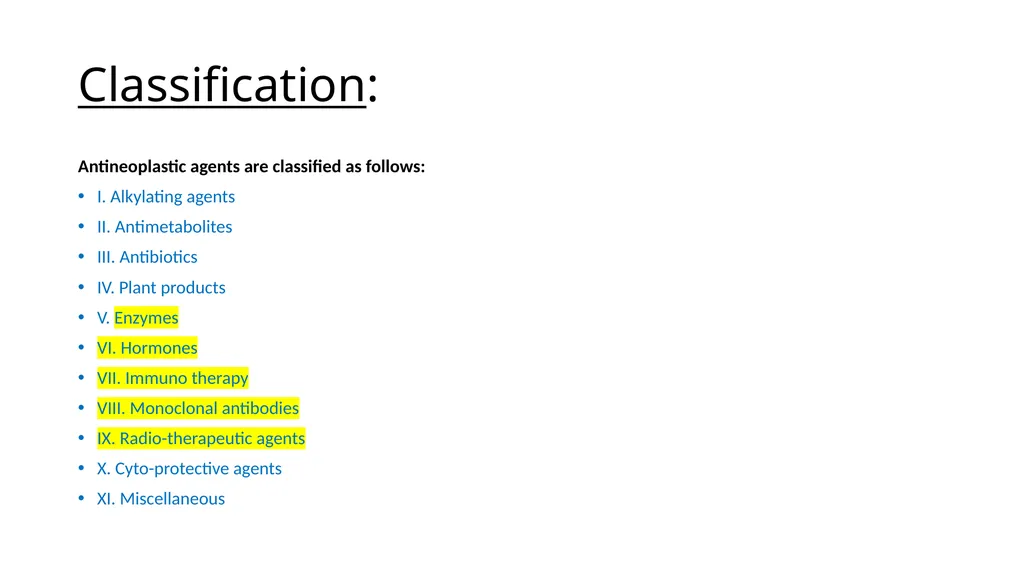
slide9. Classification: Antineoplastic agents are classified as follows:
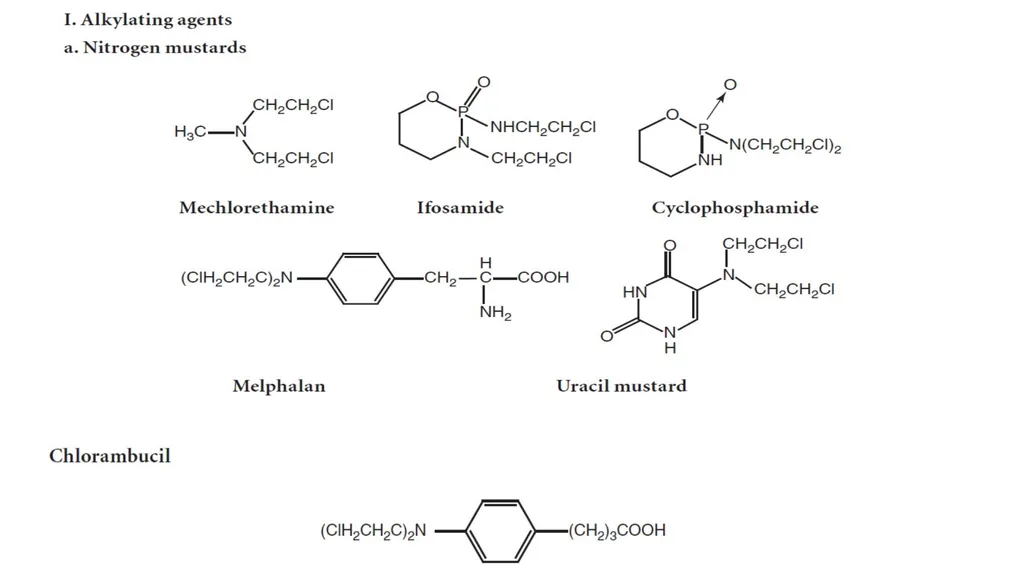
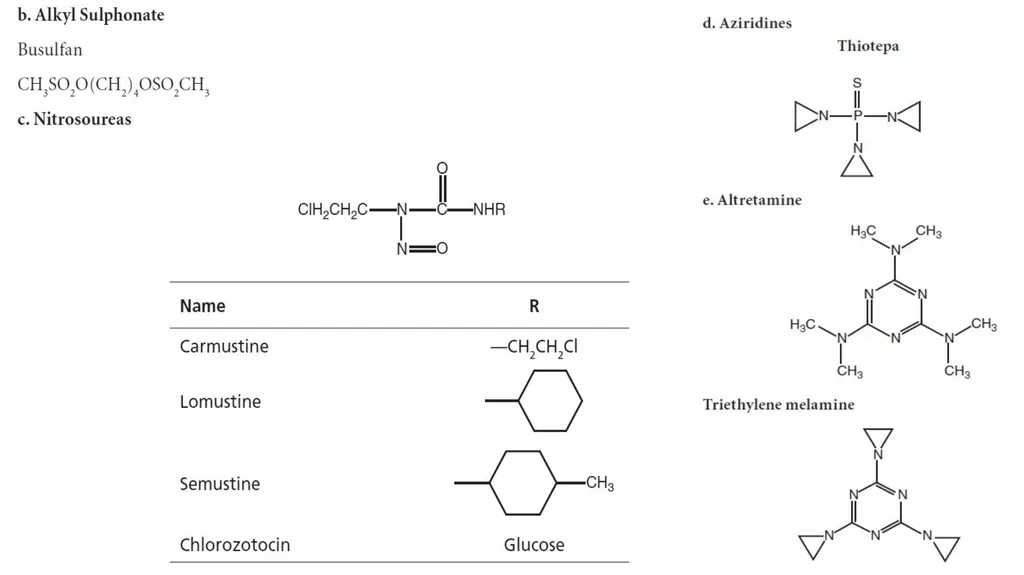
I. Alkylating agents
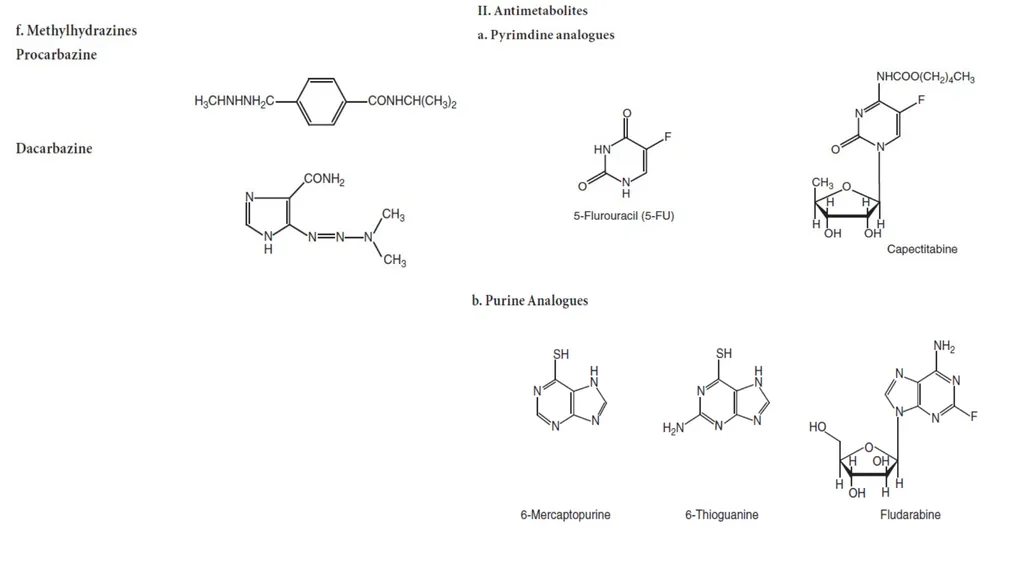
II. Antimetabolites
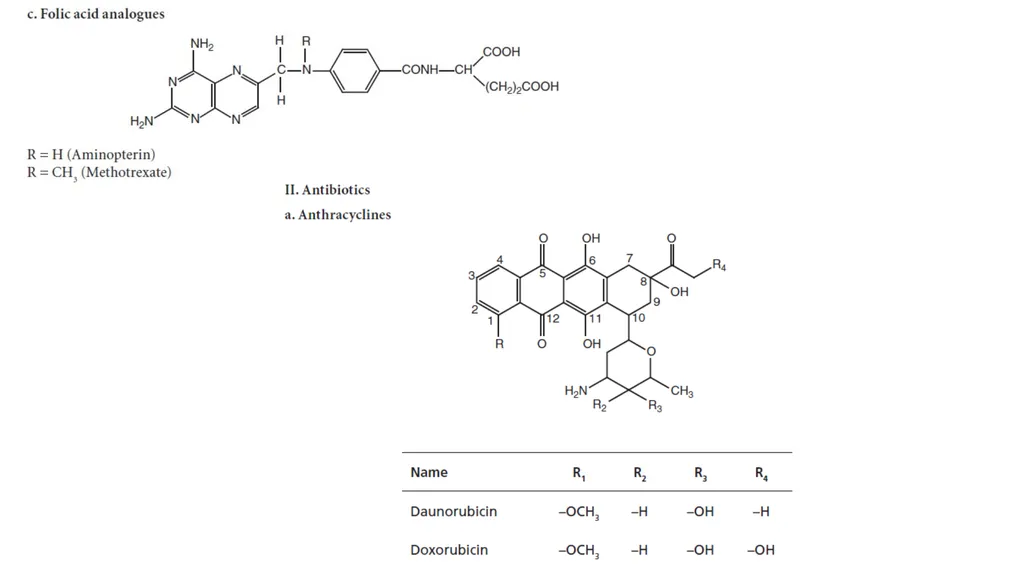
III. Antibiotics
IV. Plant products
V. Enzymes
VI. Hormones
VII. Immuno therapy
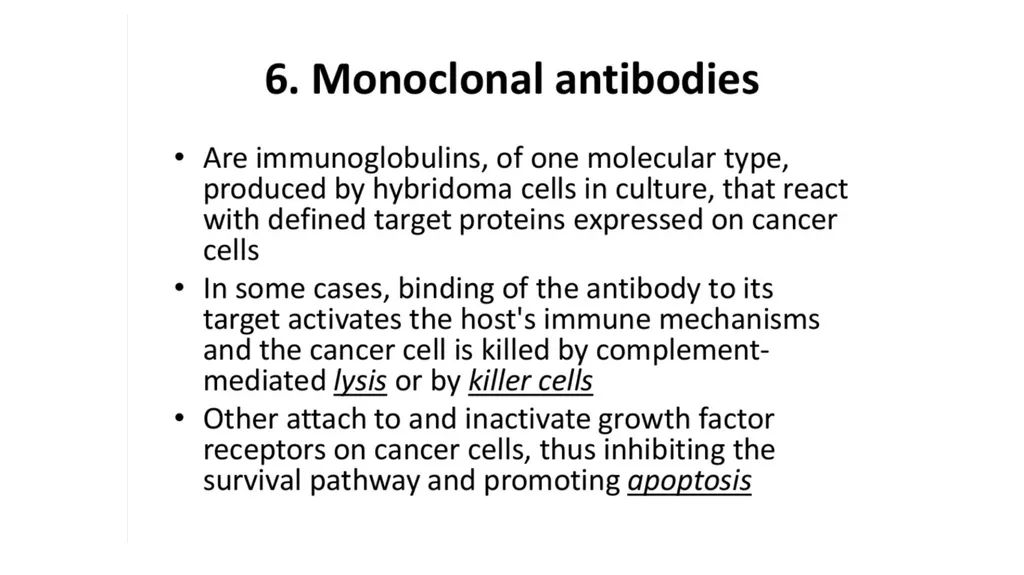
VIII. Monoclonal antibodies
IX. Radio-therapeutic agents
X. Cyto-protective agents
XI. Miscellaneous<br>
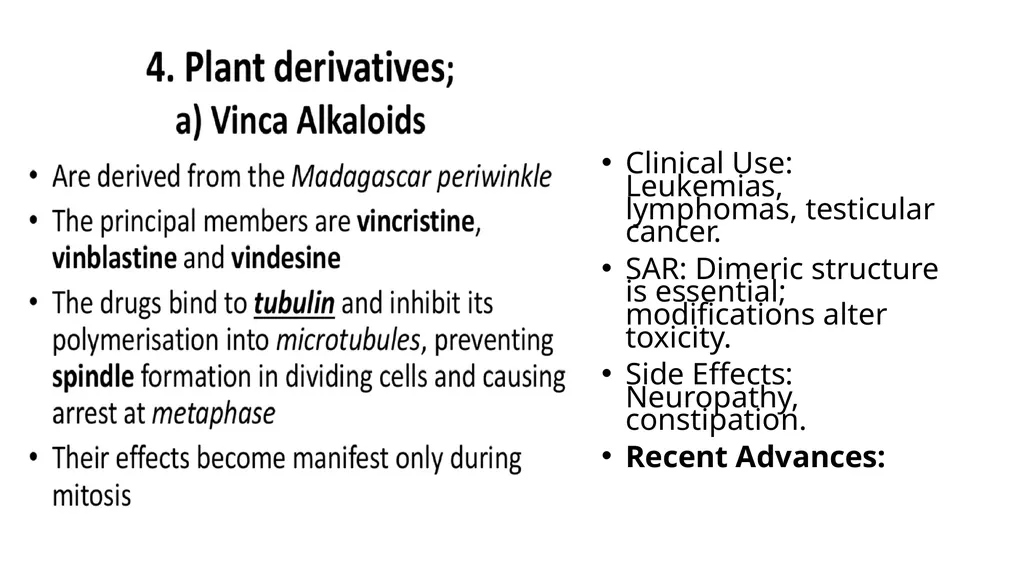
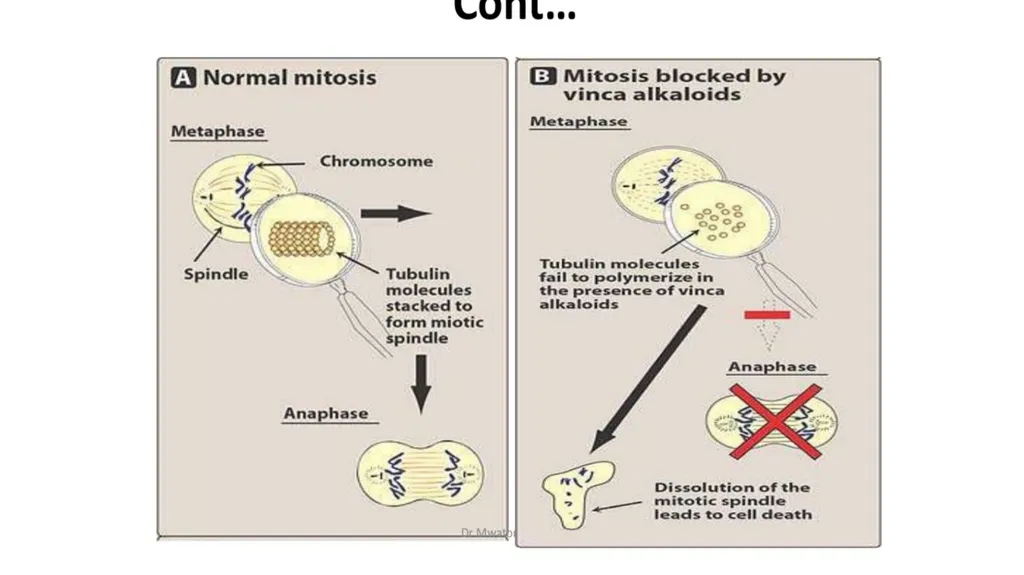
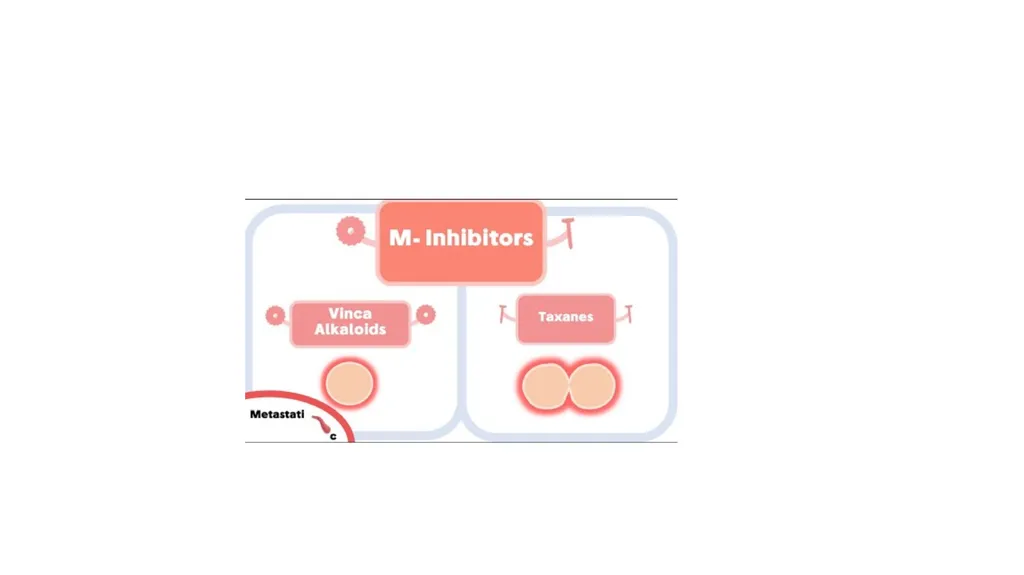
slide14. III. Plant Alkaloids
a. Vinca Alkaloids<br>
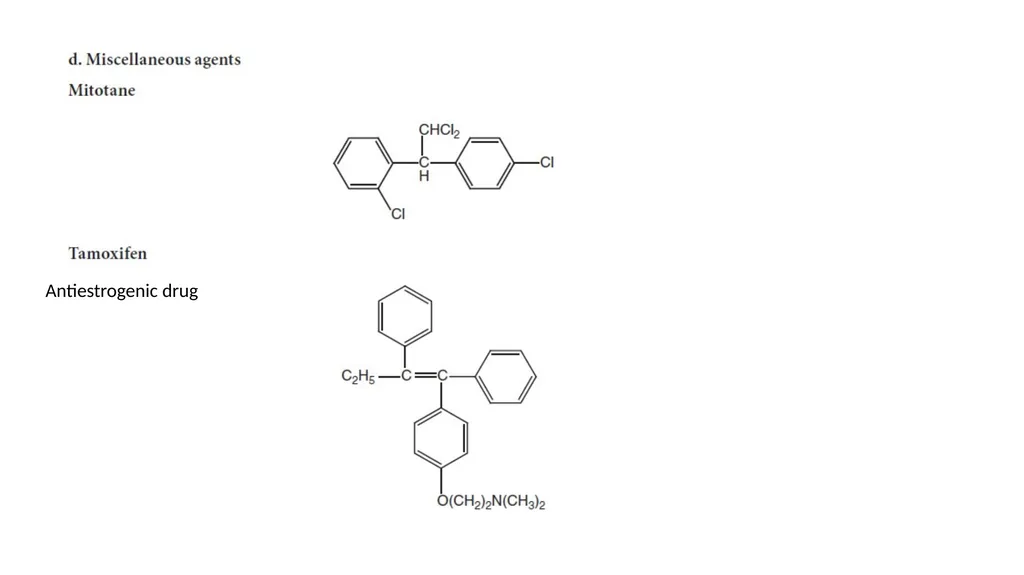
slide16. Antiestrogenic drug<br>
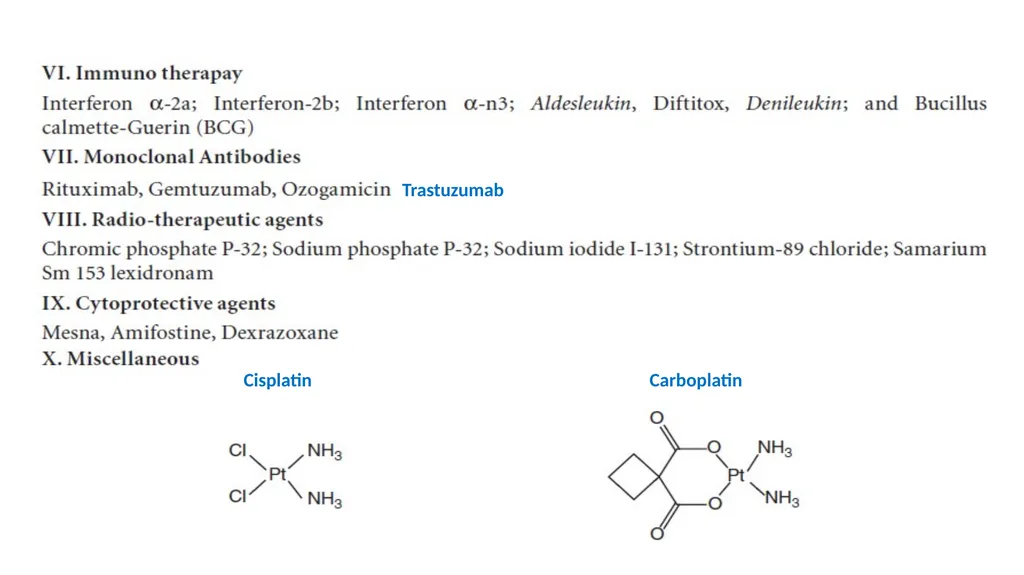
slide17. Trastuzumab Cisplatin Carboplatin<br>
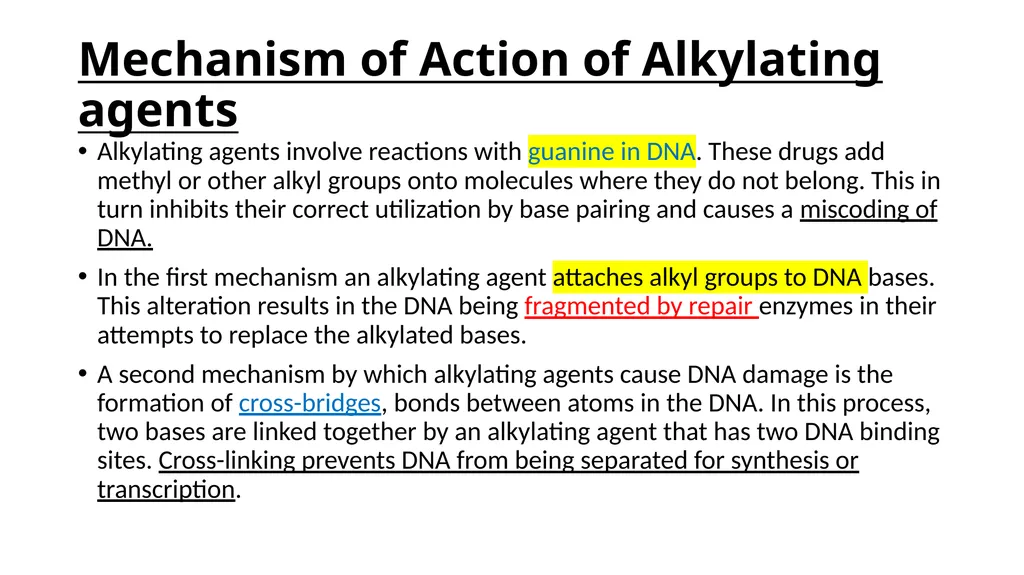
slide18. Mechanism of Action of Alkylating agents Alkylating agents involve reactions with guanine in DNA. These drugs add methyl or other alkyl groups onto molecules where they do not belong. This in turn inhibits their correct utilization by base pairing and causes a miscoding of DNA.
In the first mechanism an alkylating agent attaches alkyl groups to DNA bases. This alteration results in the DNA being fragmented by repair enzymes in their attempts to replace the alkylated bases.
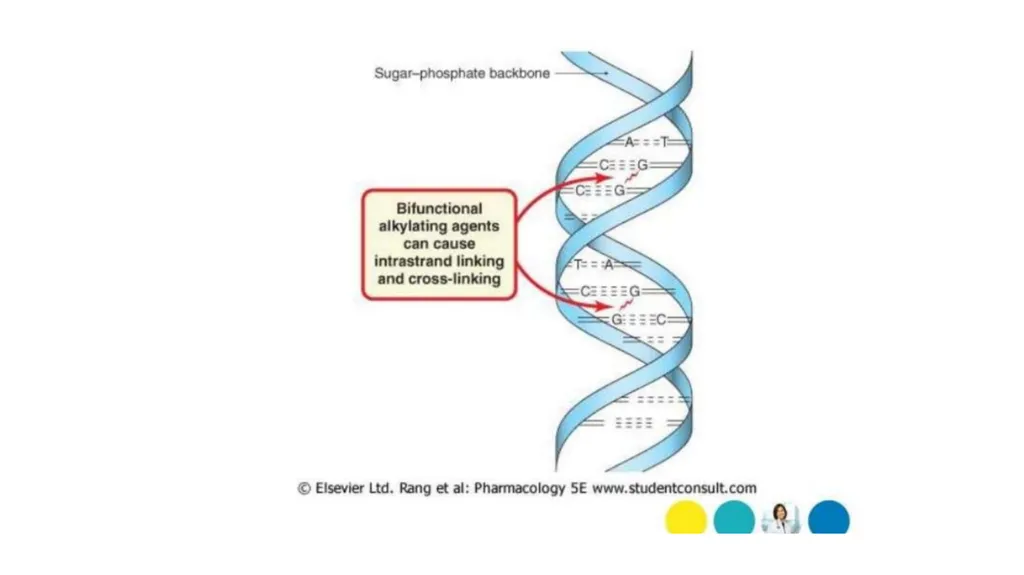
A second mechanism by which alkylating agents cause DNA damage is the formation of cross-bridges, bonds between atoms in the DNA. In this process, two bases are linked together by an alkylating agent that has two DNA binding sites. Cross-linking prevents DNA from being separated for synthesis or transcription.<br>
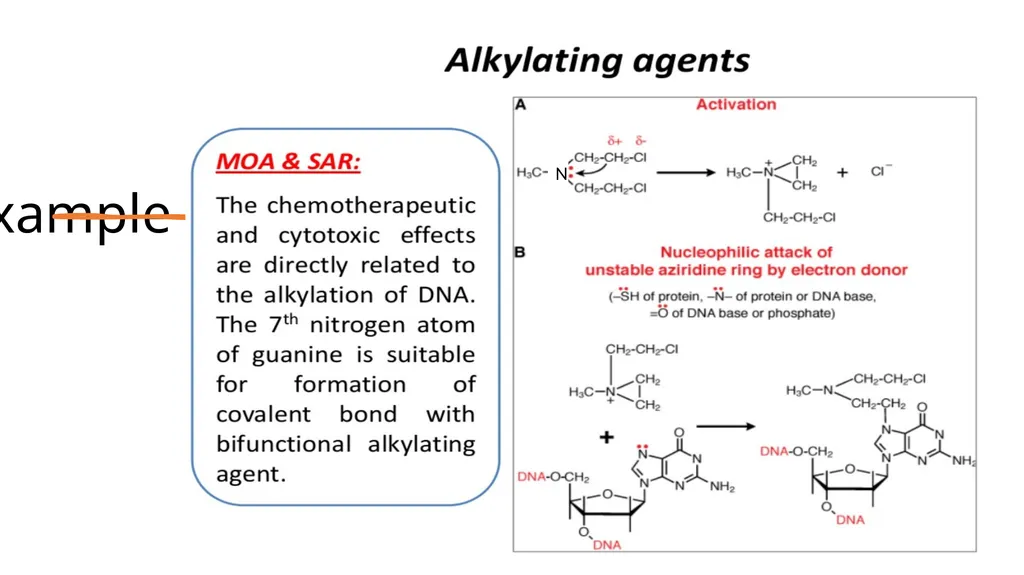
slide19. Example N<br>
slide21. Clinical Use: Leukemias, lymphomas, testicular cancer.
SAR: Dimeric structure is essential; modifications alter toxicity.
Side Effects: Neuropathy, constipation.
Recent Advances:<br>
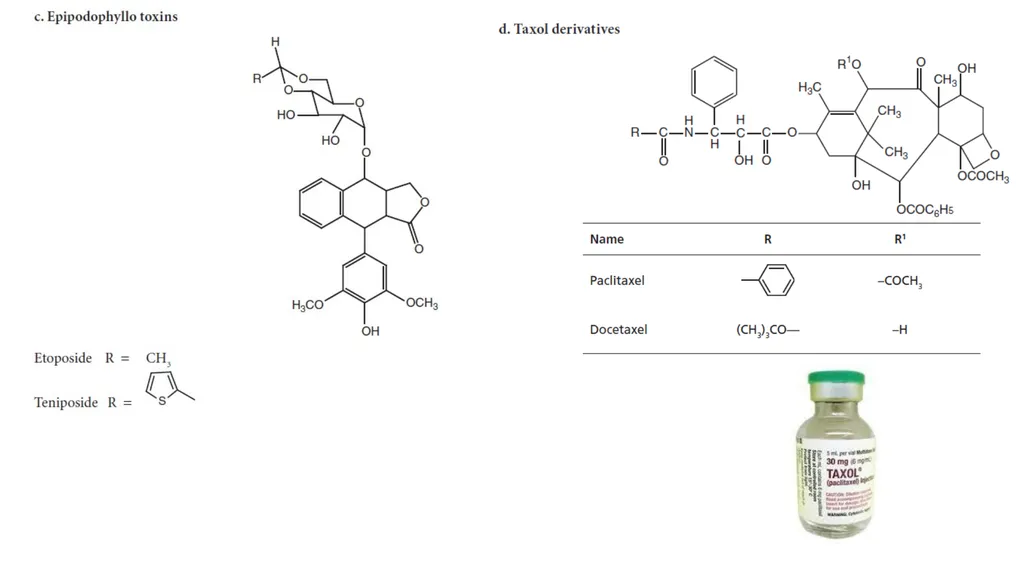
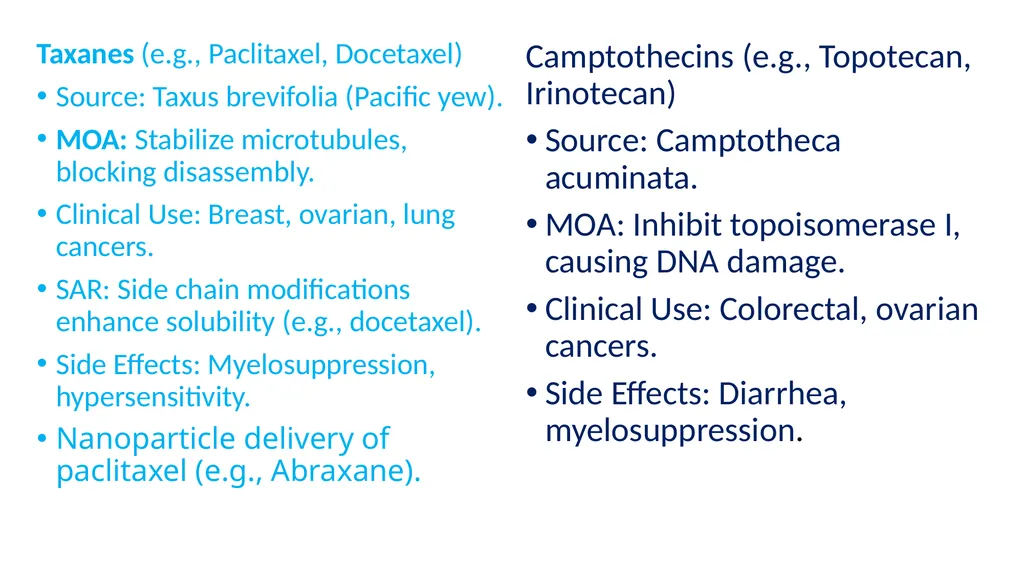
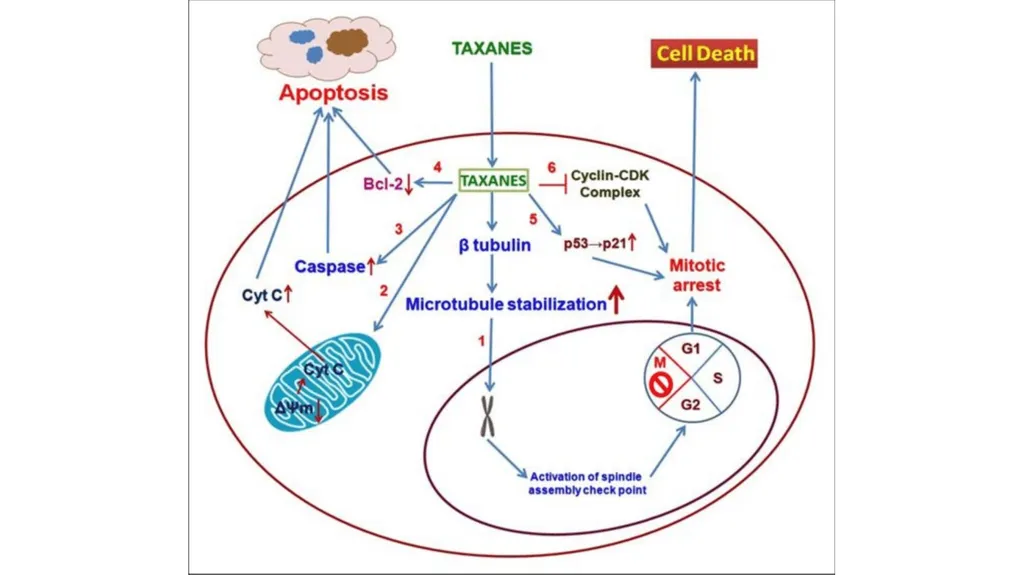
slide23. Taxanes (e.g., Paclitaxel, Docetaxel)
Source: Taxus brevifolia (Pacific yew).
MOA: Stabilize microtubules, blocking disassembly.
Clinical Use: Breast, ovarian, lung cancers.
SAR: Side chain modifications enhance solubility (e.g., docetaxel).
Side Effects: Myelosuppression, hypersensitivity.
Nanoparticle delivery of paclitaxel (e.g., Abraxane). Camptothecins (e.g., Topotecan, Irinotecan)
Source: Camptotheca acuminata.
MOA: Inhibit topoisomerase I, causing DNA damage.
Clinical Use: Colorectal, ovarian cancers.
Side Effects: Diarrhea, myelosuppression.<br>
slide2. Learning outcomes Understanding the mechanism of action of antineoplastic drugs, including alkylating agents and antimetabolites.
Recognizing the classification of cancer cells (carcinoma, sarcoma, leukemia, lymphoma, etc.).
Describing the characteristic features of cancer, such as uncontrolled proliferation, invasiveness, and metastasis. Identifying various carcinogens.
Identifying specific antineoplastic agents like alkylating agents, antimetabolites, antibiotics, and plant products.
Appreciating the importance of targeted therapy and personalized medicine in cancer treatment.<br>
slide3. Antineoplastic agents Antineoplastic agents are drugs used for the treatment of cancer, malignancy, tumor, carcinoma, sarcoma,
Leukemia, or neoplasm (Greek neo = new, Plasm = formation). Neoplasm refers to a group of diseases caused by several agents, namely, chemical compounds and radiant energy.
Cancer is characterized by an abnormal and uncontrolled, division of cells, which produces tumours and invades adjacent normal tissues. Often, cancer cells separate themselves from the primary tumour, and are carried by the lymphatic system to reach distant sites of the organs, where they divide and form secondary tumors (metastasis).
Not all tumors are cancerous, Benign Tumors do not Invade neighboring tissues and do not metastasize.<br>
slide8. Limitations of Therapy Cancer cells very rapidly develop resistance to antineoplastic drugs.
Differences between normal and neoplastic human cells are merely quantitative.
Biochemical and morphological differences between normal and neoplastic cells are slight; therefore:
antineoplastic agents are devoid of selective toxicity to tumor cells.
Antineoplastic agents kill cells by first-order kinetics, that is, they kill a constant fraction of cells.
However, some of the cancer cells elude killing and one of these cells may restabilize the tumour. It is extremely difficult to kill all the malignant cells.
Most antineoplastic drugs are highly toxic to the patients.<br>
slide9. Classification: Antineoplastic agents are classified as follows:
I. Alkylating agents
II. Antimetabolites
III. Antibiotics
IV. Plant products
V. Enzymes
VI. Hormones
VII. Immuno therapy
VIII. Monoclonal antibodies
IX. Radio-therapeutic agents
X. Cyto-protective agents
XI. Miscellaneous<br>
slide14. III. Plant Alkaloids
a. Vinca Alkaloids<br>
slide16. Antiestrogenic drug<br>
slide17. Trastuzumab Cisplatin Carboplatin<br>
slide18. Mechanism of Action of Alkylating agents Alkylating agents involve reactions with guanine in DNA. These drugs add methyl or other alkyl groups onto molecules where they do not belong. This in turn inhibits their correct utilization by base pairing and causes a miscoding of DNA.
In the first mechanism an alkylating agent attaches alkyl groups to DNA bases. This alteration results in the DNA being fragmented by repair enzymes in their attempts to replace the alkylated bases.
A second mechanism by which alkylating agents cause DNA damage is the formation of cross-bridges, bonds between atoms in the DNA. In this process, two bases are linked together by an alkylating agent that has two DNA binding sites. Cross-linking prevents DNA from being separated for synthesis or transcription.<br>
slide19. Example N<br>
slide21. Clinical Use: Leukemias, lymphomas, testicular cancer.
SAR: Dimeric structure is essential; modifications alter toxicity.
Side Effects: Neuropathy, constipation.
Recent Advances:<br>
slide23. Taxanes (e.g., Paclitaxel, Docetaxel)
Source: Taxus brevifolia (Pacific yew).
MOA: Stabilize microtubules, blocking disassembly.
Clinical Use: Breast, ovarian, lung cancers.
SAR: Side chain modifications enhance solubility (e.g., docetaxel).
Side Effects: Myelosuppression, hypersensitivity.
Nanoparticle delivery of paclitaxel (e.g., Abraxane). Camptothecins (e.g., Topotecan, Irinotecan)
Source: Camptotheca acuminata.
MOA: Inhibit topoisomerase I, causing DNA damage.
Clinical Use: Colorectal, ovarian cancers.
Side Effects: Diarrhea, myelosuppression.<br>