
ANXIETY DISORDER BY Dr Arpit Jaiswal Assistant



Description: ANXIETY DISORDER BY Dr Arpit Jaiswal Assistant Professor Department of Psychiatry INTRODUCTION Anxiety is the subjective experience of fear and its physical manifestation it is common, normal response to threat Pathological anxiety is
Related Topics
Download Presentation
"ANXIETY DISORDER BY Dr Arpit Jaiswal Assistant" is the property of its rightful owner. Permission is granted to download and print the materials on this website for personal, non-commercial use only, and to display it on your personal computer provided you do not modify the materials and that you retain all copyright notices contained in the materials. By downloading content from our website, you accept the terms of this agreement.
Presentation Transcript
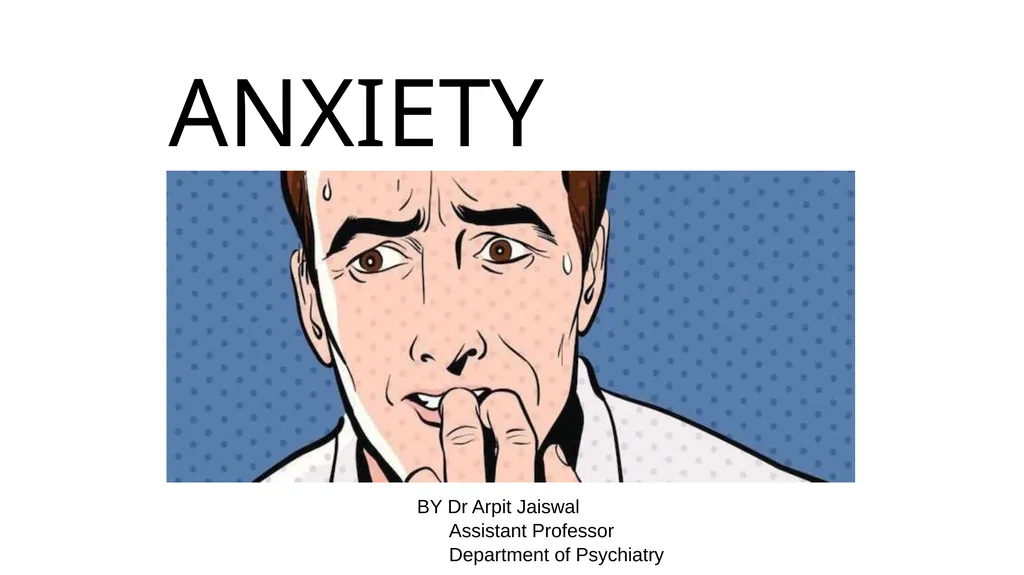
slide1. ANXIETY DISORDER BY Dr Arpit Jaiswal
Assistant Professor
Department of Psychiatry<br>
slide2. INTRODUCTION Anxiety is the subjective experience of fear and its physical manifestation
it is common, normal response to threat
Pathological anxiety is inappropriate (there is either no real source of fear or the source is not sufficient to account for the severity of the symptoms)
People with anxiety disorder, the symptoms will interfere with daily functioning and interpersonal relationship.<br>
slide3. Anxiety disorder are associated with neurotransmitter inbalances, including :
Increase activity of noradrenaline
Reduce activity of gamma-aminobutyric acid (GABA) and serotonin<br>
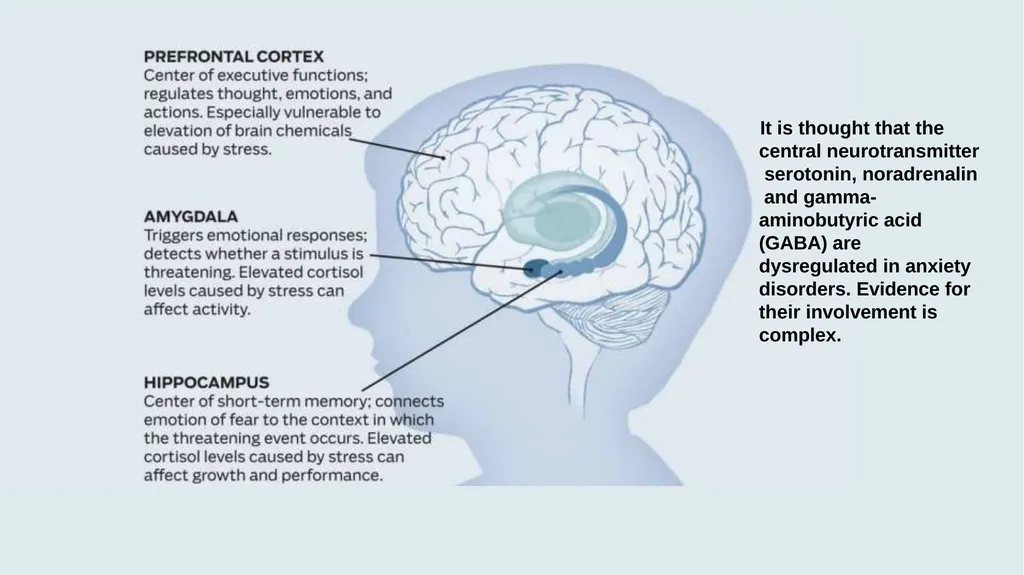
slide7. It is thought that the central neurotransmitter serotonin, noradrenalin and gamma- aminobutyric acid (GABA) are dysregulated in anxiety disorders. Evidence for their involvement is complex.<br>
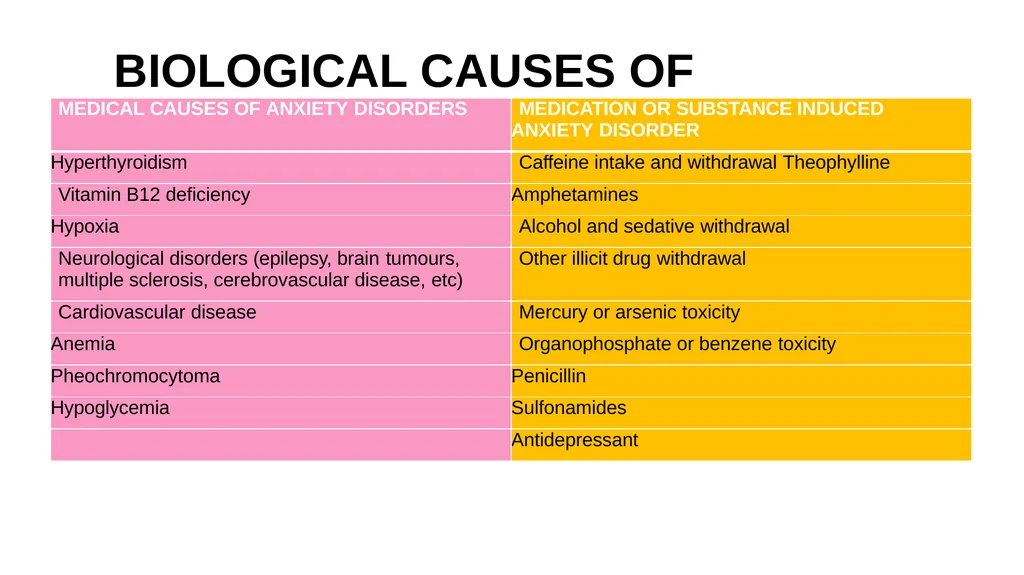
slide8. BIOLOGICAL CAUSES OF ANXIETY<br>
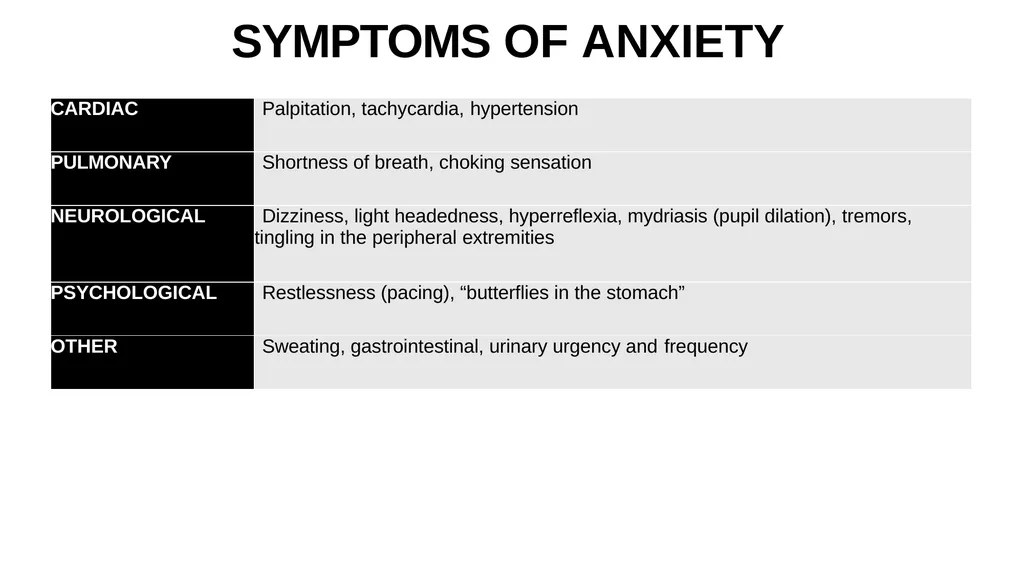
slide9. SYMPTOMS OF ANXIETY<br>
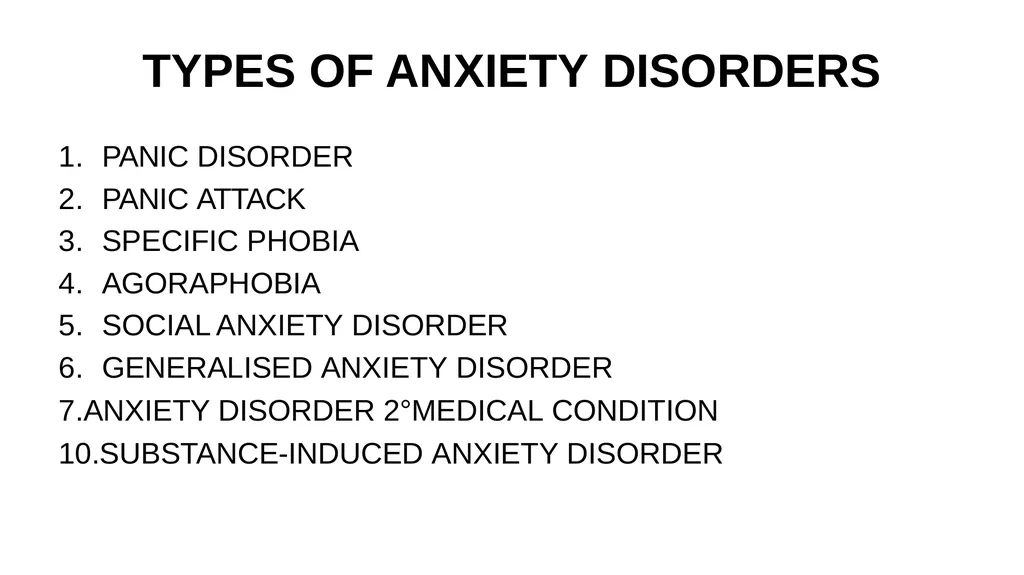
slide10. TYPES OF ANXIETY DISORDERS PANIC DISORDER
PANIC ATTACK
SPECIFIC PHOBIA
AGORAPHOBIA
SOCIAL ANXIETY DISORDER
GENERALISED ANXIETY DISORDER
ANXIETY DISORDER 2°MEDICAL CONDITION 10.SUBSTANCE-INDUCED ANXIETY DISORDER<br>
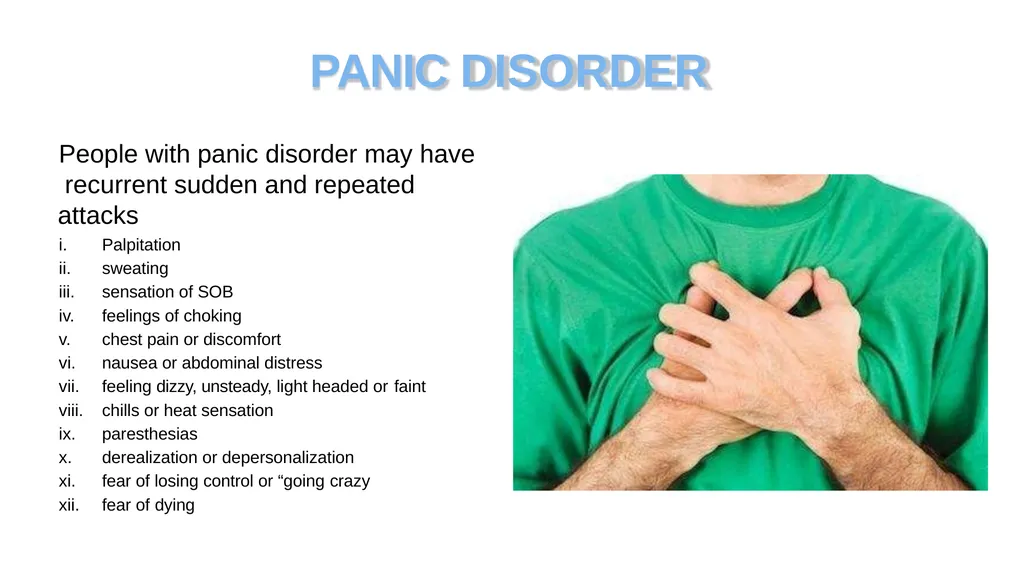
slide11. PANIC DISORDER People with panic disorder may have recurrent sudden and repeated attacks Palpitation
sweating
sensation of SOB
feelings of choking
chest pain or discomfort
nausea or abdominal distress
feeling dizzy, unsteady, light headed or faint
chills or heat sensation
paresthesias
derealization or depersonalization
fear of losing control or “going crazy
fear of dying<br>
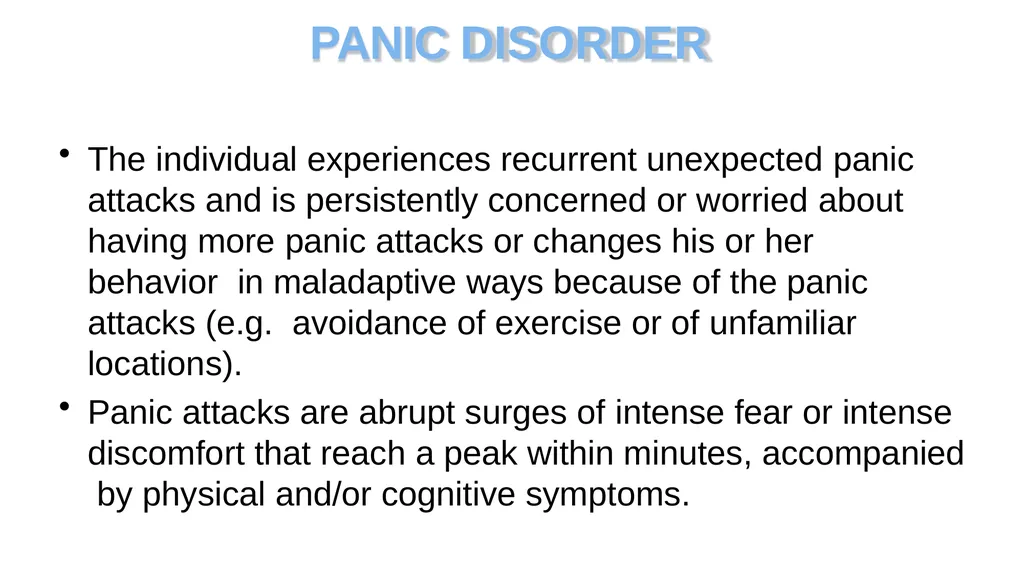
slide12. PANIC DISORDER The individual experiences recurrent unexpected panic attacks and is persistently concerned or worried about having more panic attacks or changes his or her behavior in maladaptive ways because of the panic attacks (e.g. avoidance of exercise or of unfamiliar locations).
Panic attacks are abrupt surges of intense fear or intense discomfort that reach a peak within minutes, accompanied by physical and/or cognitive symptoms.<br>
slide13. PANIC DISORDER Limited-symptoms panic attacks include fewer than four symptoms.
Panic attacks may be expected, such as in response to a typically feared object or situation or unexpected, meaning that the panic attack occurs for no apparent reason.<br>
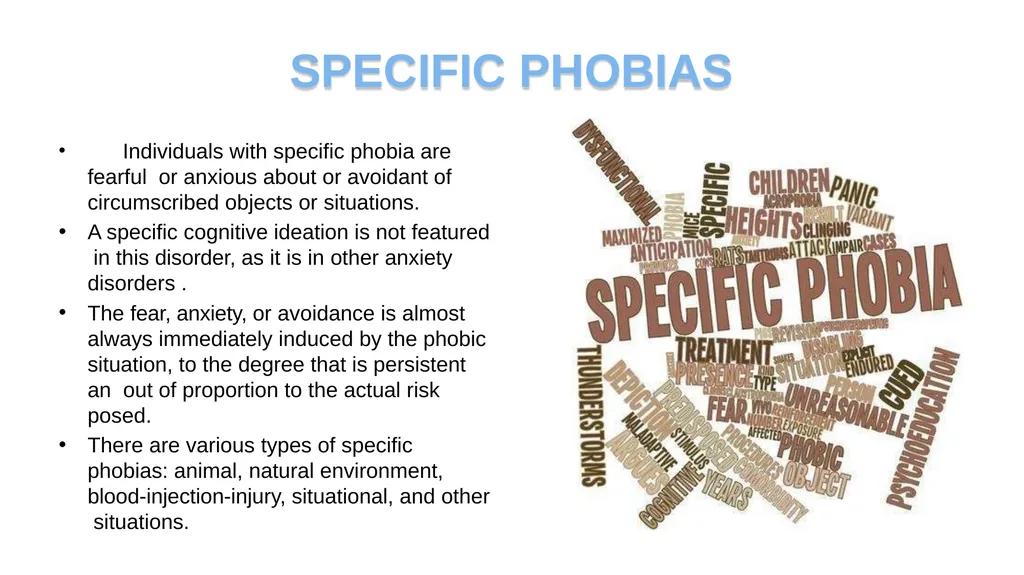
slide14. SPECIFIC PHOBIAS Individuals with specific phobia are fearful or anxious about or avoidant of circumscribed objects or situations.
A specific cognitive ideation is not featured in this disorder, as it is in other anxiety disorders .
The fear, anxiety, or avoidance is almost always immediately induced by the phobic situation, to the degree that is persistent an out of proportion to the actual risk posed.
There are various types of specific phobias: animal, natural environment, blood-injection-injury, situational, and other situations.<br>
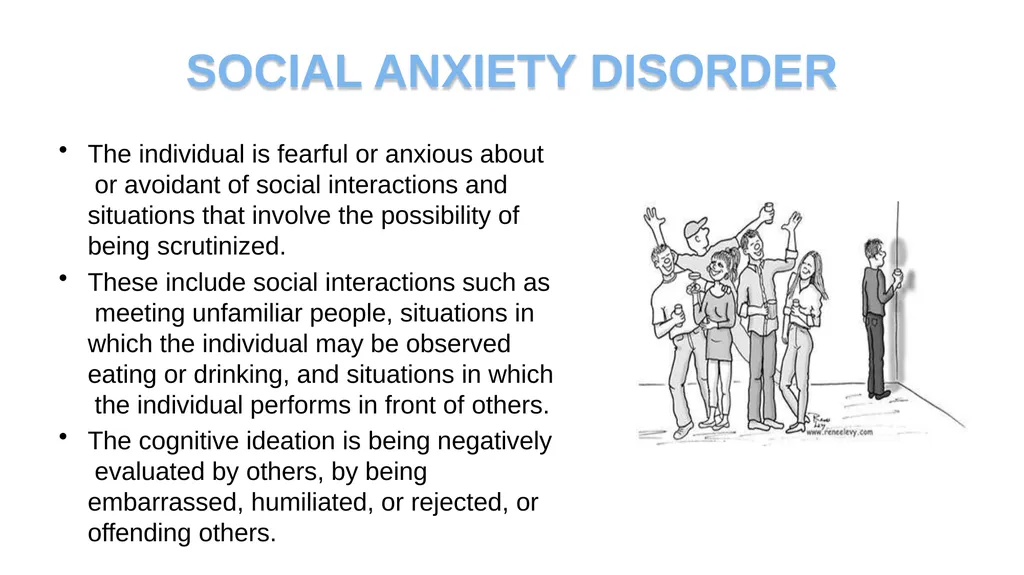
slide15. SOCIAL ANXIETY DISORDER The individual is fearful or anxious about or avoidant of social interactions and situations that involve the possibility of being scrutinized.
These include social interactions such as meeting unfamiliar people, situations in which the individual may be observed eating or drinking, and situations in which the individual performs in front of others.
The cognitive ideation is being negatively evaluated by others, by being embarrassed, humiliated, or rejected, or offending others.<br>
slide16. GENERALIZED ANXIETY DISORDER Excessive worry about a variety of everyday problems that causes them to feel tense and distressed. They worry about health issues, finance, family member’s wellbeing or safety
issues or something negative will happen even though the situation does not warrant such worries. Often they have trouble falling asleep or staying asleep.
Physical symptoms include fatigue, headaches, light-headedness, chest or stomach discomfort, shortness of breath, nausea or having to go to the toilet frequently.
GAD develops slowly. It often starts during the teen years or young adulthood. Symptoms may get better or worse at different times and often are worse during times of stress.<br>
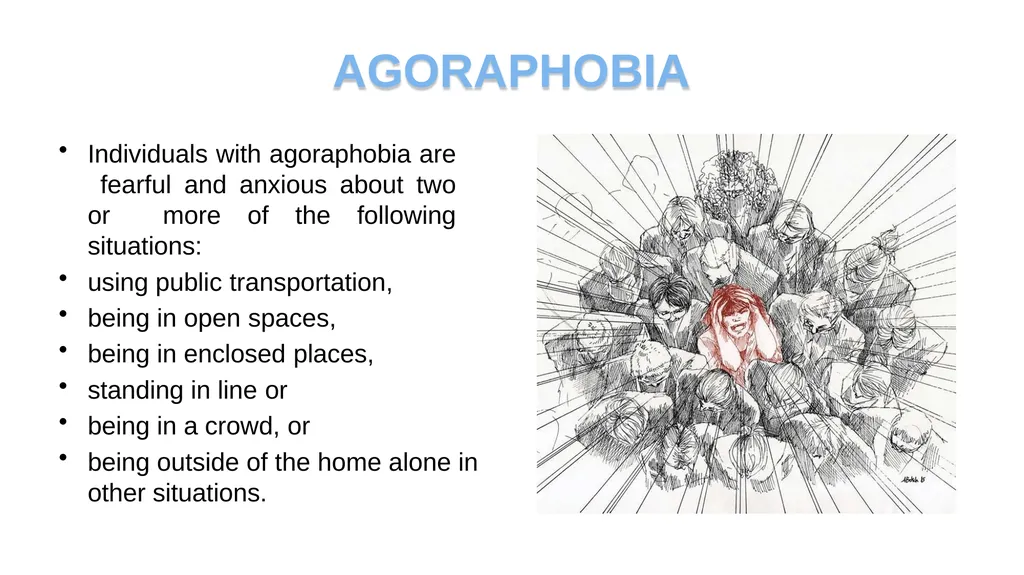
slide17. AGORAPHOBIA Individuals with agoraphobia are fearful and anxious about two or more of the following situations:
using public transportation,
being in open spaces,
being in enclosed places,
standing in line or
being in a crowd, or
being outside of the home alone in
other situations.<br>
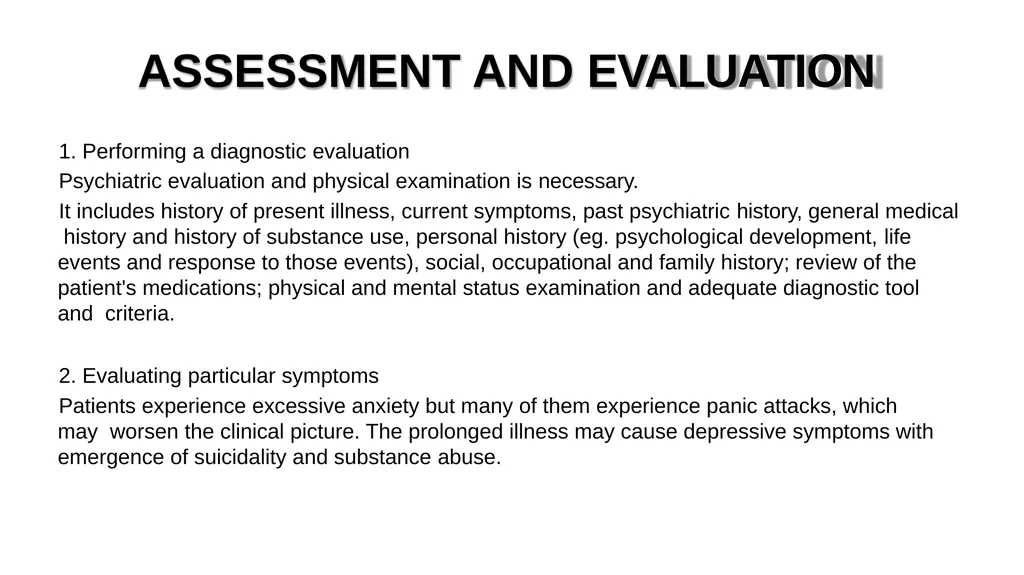
slide18. ASSESSMENT AND EVALUATION Performing a diagnostic evaluation
Psychiatric evaluation and physical examination is necessary.
It includes history of present illness, current symptoms, past psychiatric history, general medical history and history of substance use, personal history (eg. psychological development, life events and response to those events), social, occupational and family history; review of the patient's medications; physical and mental status examination and adequate diagnostic tool and criteria.
Evaluating particular symptoms
Patients experience excessive anxiety but many of them experience panic attacks, which may worsen the clinical picture. The prolonged illness may cause depressive symptoms with emergence of suicidality and substance abuse.<br>
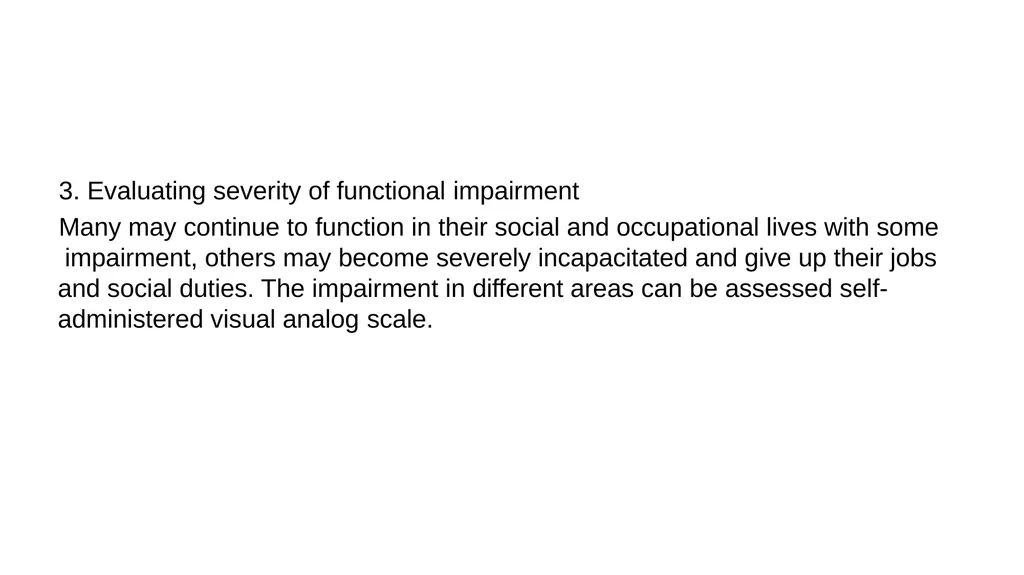
slide19. 3. Evaluating severity of functional impairment
Many may continue to function in their social and occupational lives with some impairment, others may become severely incapacitated and give up their jobs and social duties. The impairment in different areas can be assessed self- administered visual analog scale.<br>
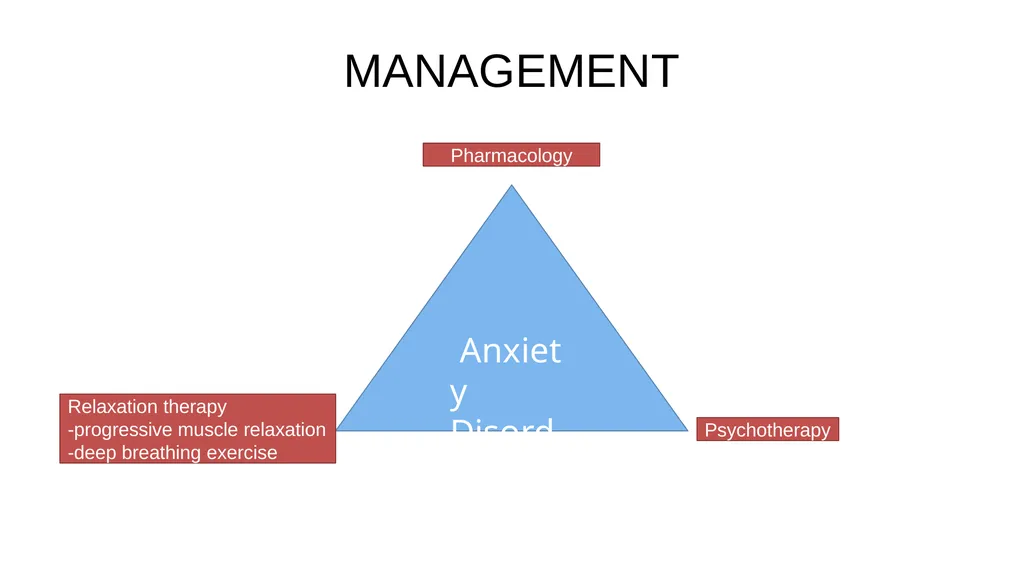
slide20. Anxiety Disorder Pharmacology Relaxation therapy
-progressive muscle relaxation
-deep breathing exercise Psychotherapy MANAGEMENT<br>
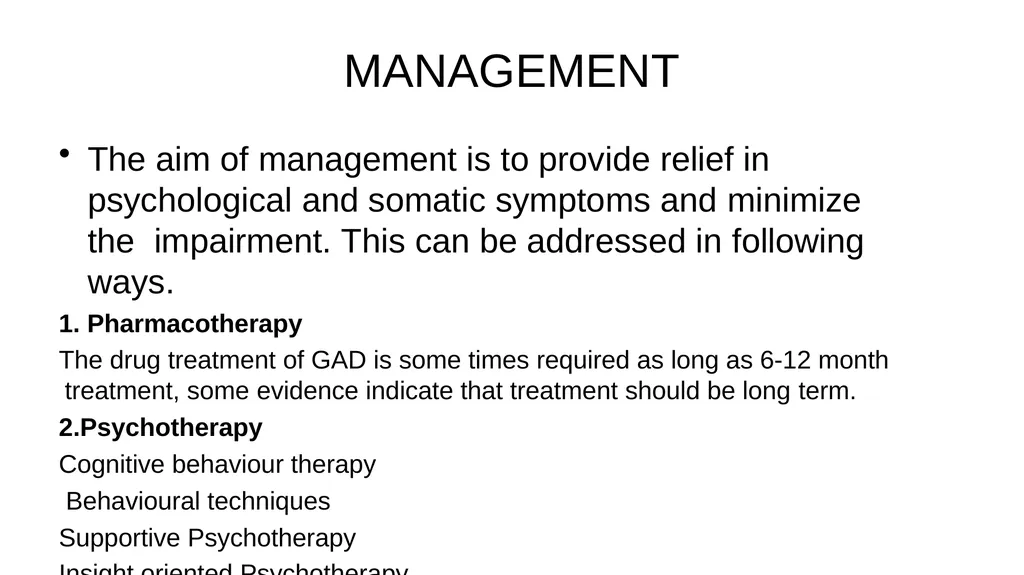
slide21. MANAGEMENT The aim of management is to provide relief in psychological and somatic symptoms and minimize the impairment. This can be addressed in following ways.
Pharmacotherapy
The drug treatment of GAD is some times required as long as 6-12 month treatment, some evidence indicate that treatment should be long term.
Psychotherapy Cognitive behaviour therapy Behavioural techniques Supportive Psychotherapy
Insight oriented Psychotherapy<br>
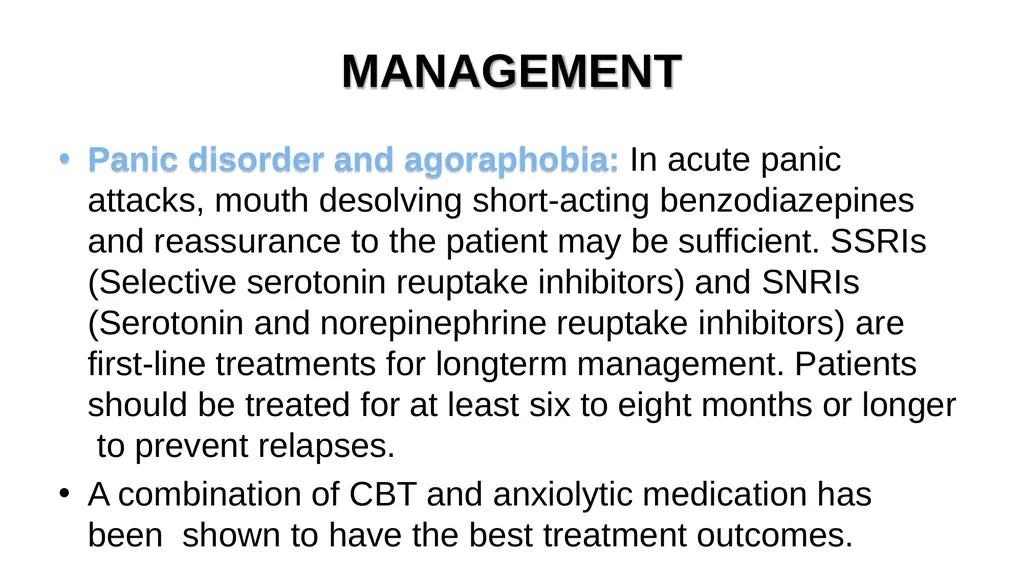
slide22. MANAGEMENT Panic disorder and agoraphobia: In acute panic attacks, mouth desolving short-acting benzodiazepines and reassurance to the patient may be sufficient. SSRIs (Selective serotonin reuptake inhibitors) and SNRIs (Serotonin and norepinephrine reuptake inhibitors) are first-line treatments for longterm management. Patients should be treated for at least six to eight months or longer to prevent relapses.
A combination of CBT and anxiolytic medication has been shown to have the best treatment outcomes.<br>
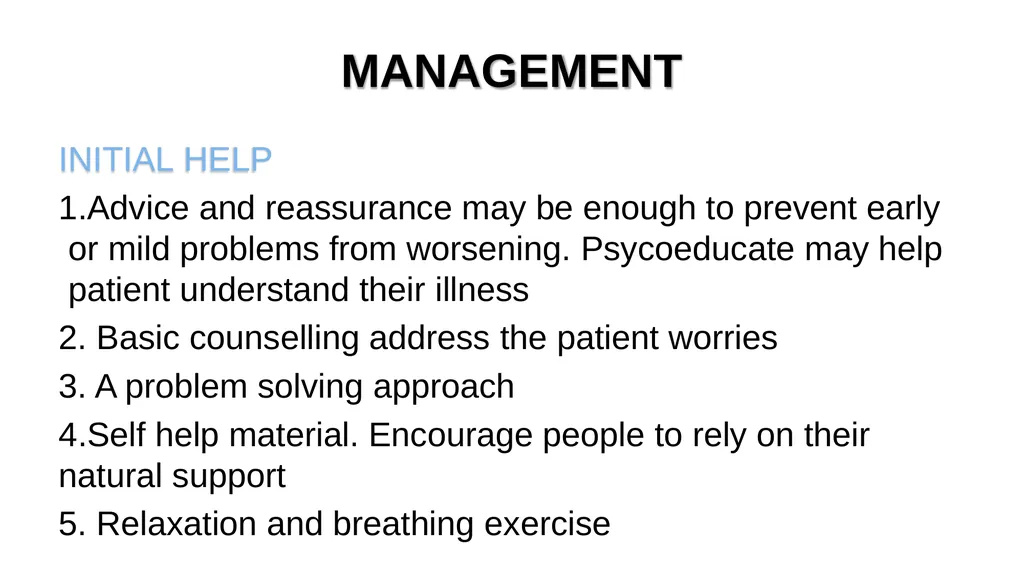
slide23. MANAGEMENT INITIAL HELP
Advice and reassurance may be enough to prevent early or mild problems from worsening. Psycoeducate may help patient understand their illness
Basic counselling address the patient worries
A problem solving approach
Self help material. Encourage people to rely on their natural support
Relaxation and breathing exercise<br>
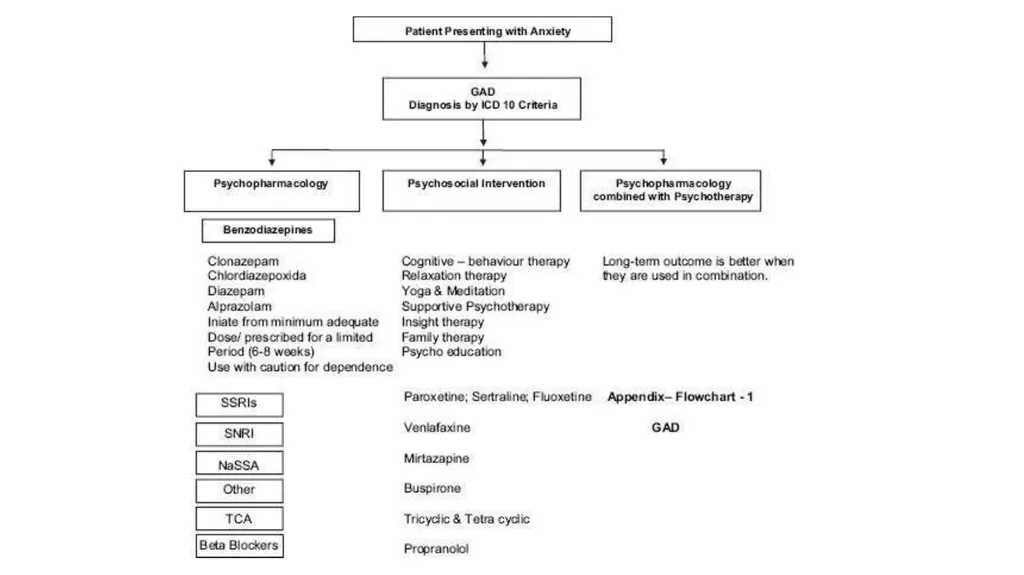
slide24. In GAD and Social anxiety disorder (SAD): Choice of Drugs for Management are SSRIs, SNRIs and pregabalin (gabapentinoid). Buspirone and hydroxyzine are second line treatment. Benzodiazepines should only be used for long-term treatment when other drugs or CBT have not shown results.
Specific phobia: Specific phobia should be treated with behaviour therapy including systematic desensatisation. SSRIs or short acting benzodiazepines should be tried in cases not responding to behaviour therapy.<br>
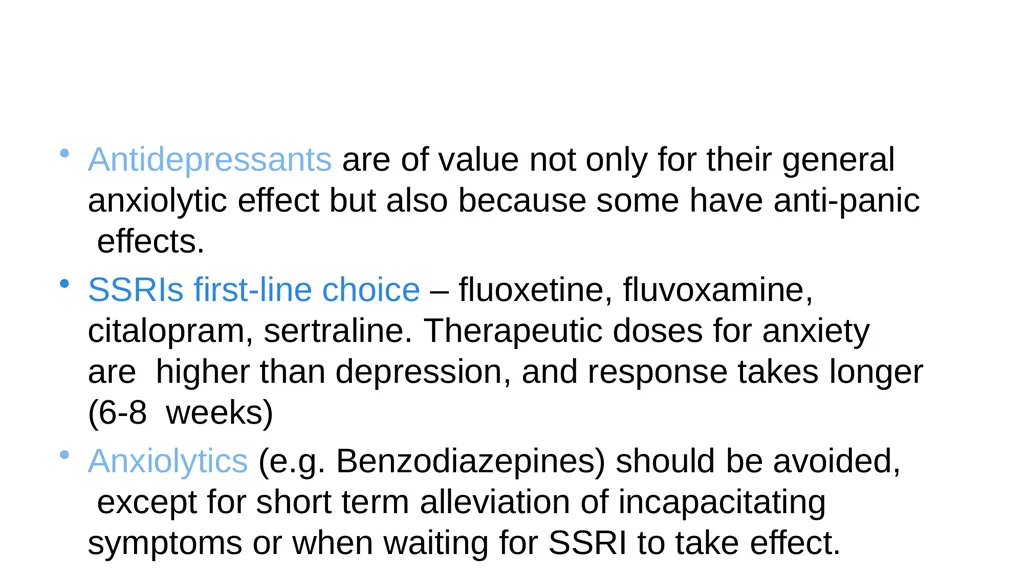
slide26. Antidepressants are of value not only for their general anxiolytic effect but also because some have anti-panic effects.
SSRIs first-line choice – fluoxetine, fluvoxamine, citalopram, sertraline. Therapeutic doses for anxiety are higher than depression, and response takes longer (6-8 weeks)
Anxiolytics (e.g. Benzodiazepines) should be avoided, except for short term alleviation of incapacitating symptoms or when waiting for SSRI to take effect.<br>
slide27. Medications including:
Buspirone – non-benzodiazepine anxiolytic which can be used for short-term relief in GAD. Less likely to cause dependence than benzodiapine, takes 4 weeks to work. It is not very popular because of its delayed action and dysphoric side effects
Anxiolytic drugs – Benzodiazepines: rapid relief from anxiety at times of crisis, frequently used to cover the 2-3weeks it takes for antidepressants to work. Limit used of anxiolytics, no more than 3 weeks – risk of dependency.
Antidepressants – effective at reducing anxiety. Can be used long term, do not produce dependence.<br>
slide28. BENZODIAZEPINES Short acting – less than 12 hours
Lorazepam
Temazepam
Oxazepam
Triazolam
Long acting – more than 24 hours
Diazepam
Nitrazepam
Flurazepam
Chlordiazepoxide
Clobazam
Chlorazepate
Alprazolam<br>
Assistant Professor
Department of Psychiatry<br>
slide2. INTRODUCTION Anxiety is the subjective experience of fear and its physical manifestation
it is common, normal response to threat
Pathological anxiety is inappropriate (there is either no real source of fear or the source is not sufficient to account for the severity of the symptoms)
People with anxiety disorder, the symptoms will interfere with daily functioning and interpersonal relationship.<br>
slide3. Anxiety disorder are associated with neurotransmitter inbalances, including :
Increase activity of noradrenaline
Reduce activity of gamma-aminobutyric acid (GABA) and serotonin<br>
slide7. It is thought that the central neurotransmitter serotonin, noradrenalin and gamma- aminobutyric acid (GABA) are dysregulated in anxiety disorders. Evidence for their involvement is complex.<br>
slide8. BIOLOGICAL CAUSES OF ANXIETY<br>
slide9. SYMPTOMS OF ANXIETY<br>
slide10. TYPES OF ANXIETY DISORDERS PANIC DISORDER
PANIC ATTACK
SPECIFIC PHOBIA
AGORAPHOBIA
SOCIAL ANXIETY DISORDER
GENERALISED ANXIETY DISORDER
ANXIETY DISORDER 2°MEDICAL CONDITION 10.SUBSTANCE-INDUCED ANXIETY DISORDER<br>
slide11. PANIC DISORDER People with panic disorder may have recurrent sudden and repeated attacks Palpitation
sweating
sensation of SOB
feelings of choking
chest pain or discomfort
nausea or abdominal distress
feeling dizzy, unsteady, light headed or faint
chills or heat sensation
paresthesias
derealization or depersonalization
fear of losing control or “going crazy
fear of dying<br>
slide12. PANIC DISORDER The individual experiences recurrent unexpected panic attacks and is persistently concerned or worried about having more panic attacks or changes his or her behavior in maladaptive ways because of the panic attacks (e.g. avoidance of exercise or of unfamiliar locations).
Panic attacks are abrupt surges of intense fear or intense discomfort that reach a peak within minutes, accompanied by physical and/or cognitive symptoms.<br>
slide13. PANIC DISORDER Limited-symptoms panic attacks include fewer than four symptoms.
Panic attacks may be expected, such as in response to a typically feared object or situation or unexpected, meaning that the panic attack occurs for no apparent reason.<br>
slide14. SPECIFIC PHOBIAS Individuals with specific phobia are fearful or anxious about or avoidant of circumscribed objects or situations.
A specific cognitive ideation is not featured in this disorder, as it is in other anxiety disorders .
The fear, anxiety, or avoidance is almost always immediately induced by the phobic situation, to the degree that is persistent an out of proportion to the actual risk posed.
There are various types of specific phobias: animal, natural environment, blood-injection-injury, situational, and other situations.<br>
slide15. SOCIAL ANXIETY DISORDER The individual is fearful or anxious about or avoidant of social interactions and situations that involve the possibility of being scrutinized.
These include social interactions such as meeting unfamiliar people, situations in which the individual may be observed eating or drinking, and situations in which the individual performs in front of others.
The cognitive ideation is being negatively evaluated by others, by being embarrassed, humiliated, or rejected, or offending others.<br>
slide16. GENERALIZED ANXIETY DISORDER Excessive worry about a variety of everyday problems that causes them to feel tense and distressed. They worry about health issues, finance, family member’s wellbeing or safety
issues or something negative will happen even though the situation does not warrant such worries. Often they have trouble falling asleep or staying asleep.
Physical symptoms include fatigue, headaches, light-headedness, chest or stomach discomfort, shortness of breath, nausea or having to go to the toilet frequently.
GAD develops slowly. It often starts during the teen years or young adulthood. Symptoms may get better or worse at different times and often are worse during times of stress.<br>
slide17. AGORAPHOBIA Individuals with agoraphobia are fearful and anxious about two or more of the following situations:
using public transportation,
being in open spaces,
being in enclosed places,
standing in line or
being in a crowd, or
being outside of the home alone in
other situations.<br>
slide18. ASSESSMENT AND EVALUATION Performing a diagnostic evaluation
Psychiatric evaluation and physical examination is necessary.
It includes history of present illness, current symptoms, past psychiatric history, general medical history and history of substance use, personal history (eg. psychological development, life events and response to those events), social, occupational and family history; review of the patient's medications; physical and mental status examination and adequate diagnostic tool and criteria.
Evaluating particular symptoms
Patients experience excessive anxiety but many of them experience panic attacks, which may worsen the clinical picture. The prolonged illness may cause depressive symptoms with emergence of suicidality and substance abuse.<br>
slide19. 3. Evaluating severity of functional impairment
Many may continue to function in their social and occupational lives with some impairment, others may become severely incapacitated and give up their jobs and social duties. The impairment in different areas can be assessed self- administered visual analog scale.<br>
slide20. Anxiety Disorder Pharmacology Relaxation therapy
-progressive muscle relaxation
-deep breathing exercise Psychotherapy MANAGEMENT<br>
slide21. MANAGEMENT The aim of management is to provide relief in psychological and somatic symptoms and minimize the impairment. This can be addressed in following ways.
Pharmacotherapy
The drug treatment of GAD is some times required as long as 6-12 month treatment, some evidence indicate that treatment should be long term.
Psychotherapy Cognitive behaviour therapy Behavioural techniques Supportive Psychotherapy
Insight oriented Psychotherapy<br>
slide22. MANAGEMENT Panic disorder and agoraphobia: In acute panic attacks, mouth desolving short-acting benzodiazepines and reassurance to the patient may be sufficient. SSRIs (Selective serotonin reuptake inhibitors) and SNRIs (Serotonin and norepinephrine reuptake inhibitors) are first-line treatments for longterm management. Patients should be treated for at least six to eight months or longer to prevent relapses.
A combination of CBT and anxiolytic medication has been shown to have the best treatment outcomes.<br>
slide23. MANAGEMENT INITIAL HELP
Advice and reassurance may be enough to prevent early or mild problems from worsening. Psycoeducate may help patient understand their illness
Basic counselling address the patient worries
A problem solving approach
Self help material. Encourage people to rely on their natural support
Relaxation and breathing exercise<br>
slide24. In GAD and Social anxiety disorder (SAD): Choice of Drugs for Management are SSRIs, SNRIs and pregabalin (gabapentinoid). Buspirone and hydroxyzine are second line treatment. Benzodiazepines should only be used for long-term treatment when other drugs or CBT have not shown results.
Specific phobia: Specific phobia should be treated with behaviour therapy including systematic desensatisation. SSRIs or short acting benzodiazepines should be tried in cases not responding to behaviour therapy.<br>
slide26. Antidepressants are of value not only for their general anxiolytic effect but also because some have anti-panic effects.
SSRIs first-line choice – fluoxetine, fluvoxamine, citalopram, sertraline. Therapeutic doses for anxiety are higher than depression, and response takes longer (6-8 weeks)
Anxiolytics (e.g. Benzodiazepines) should be avoided, except for short term alleviation of incapacitating symptoms or when waiting for SSRI to take effect.<br>
slide27. Medications including:
Buspirone – non-benzodiazepine anxiolytic which can be used for short-term relief in GAD. Less likely to cause dependence than benzodiapine, takes 4 weeks to work. It is not very popular because of its delayed action and dysphoric side effects
Anxiolytic drugs – Benzodiazepines: rapid relief from anxiety at times of crisis, frequently used to cover the 2-3weeks it takes for antidepressants to work. Limit used of anxiolytics, no more than 3 weeks – risk of dependency.
Antidepressants – effective at reducing anxiety. Can be used long term, do not produce dependence.<br>
slide28. BENZODIAZEPINES Short acting – less than 12 hours
Lorazepam
Temazepam
Oxazepam
Triazolam
Long acting – more than 24 hours
Diazepam
Nitrazepam
Flurazepam
Chlordiazepoxide
Clobazam
Chlorazepate
Alprazolam<br>