
Ar. Kishore Thapa August 28, 2015 Engineering
Description: Ar. Kishore Thapa August 28, 2015 Engineering Ethics on the Social Mirror Who is an Engineer? Who plans, designs and constructs infrastructure, machines, equipments or systems. Who ensures quality, efficiency , sustainability and cost
Related Topics
Download Presentation
"Ar. Kishore Thapa August 28, 2015 Engineering" is the property of its rightful owner. Permission is granted to download and print the materials on this website for personal, non-commercial use only, and to display it on your personal computer provided you do not modify the materials and that you retain all copyright notices contained in the materials. By downloading content from our website, you accept the terms of this agreement.
Presentation Transcript
slide1. Ar. Kishore Thapa
August 28, 2015 Engineering Ethics on the Social Mirror<br>
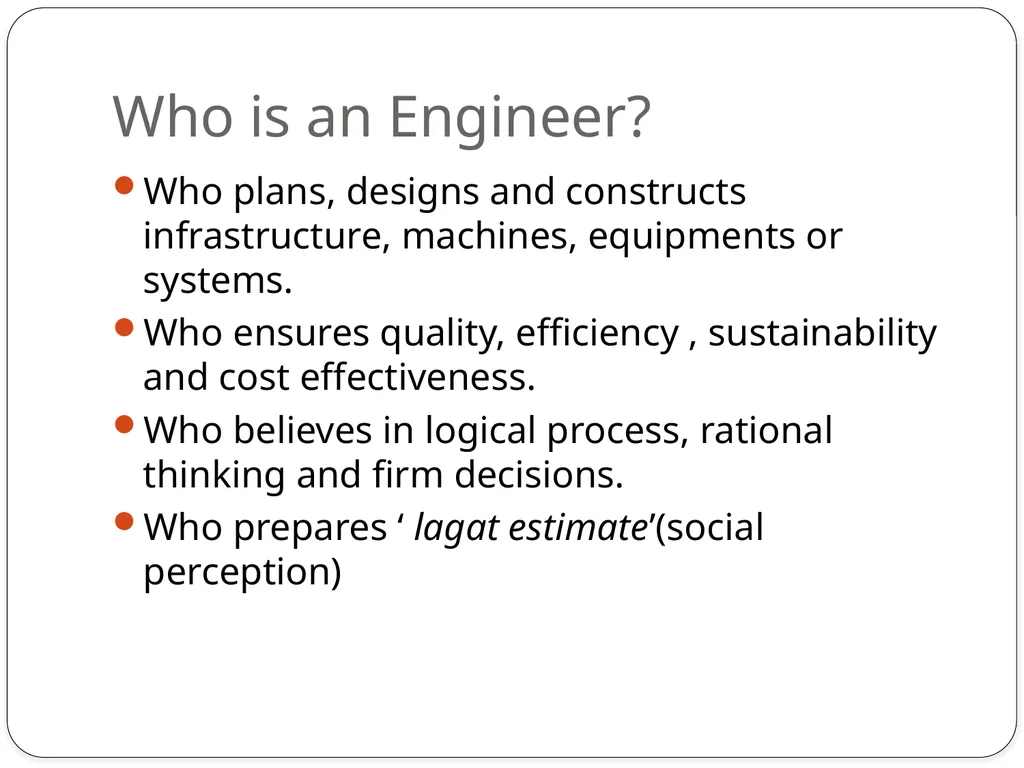
slide2. Who is an Engineer? Who plans, designs and constructs infrastructure, machines, equipments or systems.
Who ensures quality, efficiency , sustainability and cost effectiveness.
Who believes in logical process, rational thinking and firm decisions.
Who prepares ‘ lagat estimate’(social perception)<br>
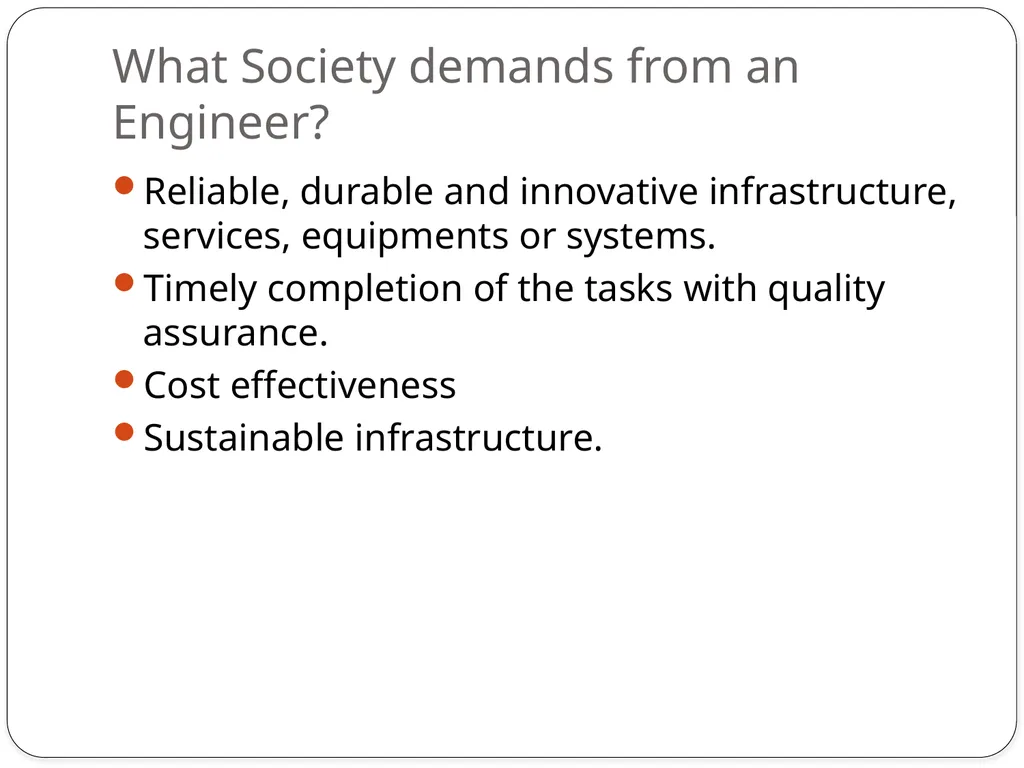
slide3. What Society demands from an Engineer? Reliable, durable and innovative infrastructure, services, equipments or systems.
Timely completion of the tasks with quality assurance.
Cost effectiveness
Sustainable infrastructure.<br>
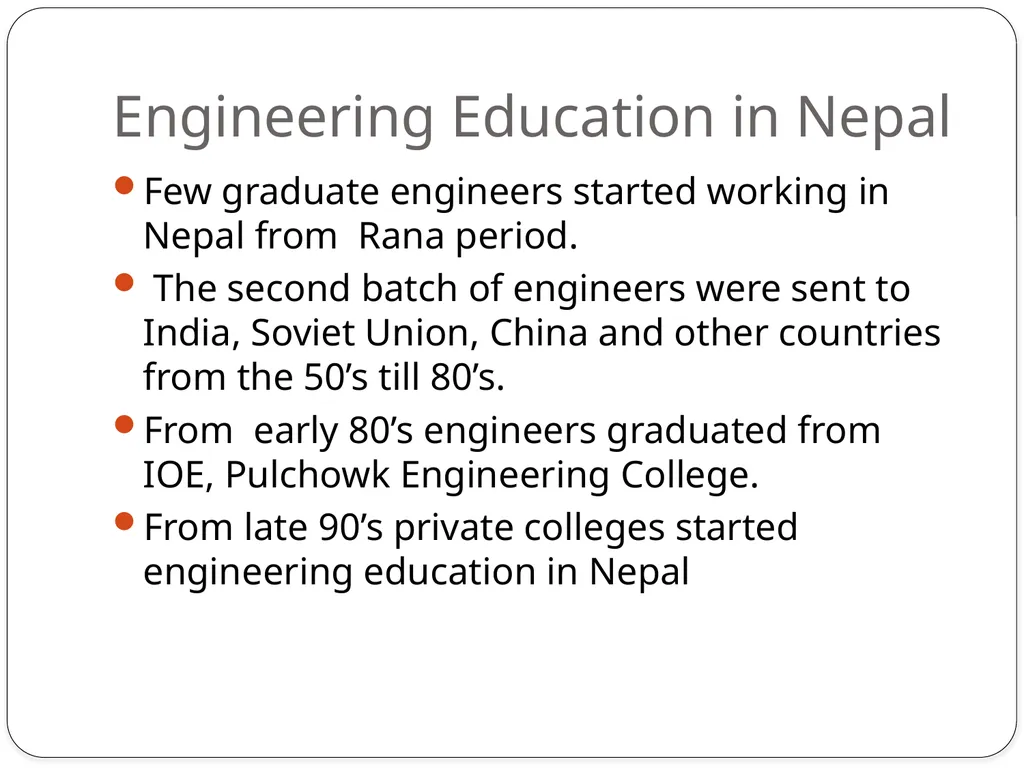
slide4. Engineering Education in Nepal Few graduate engineers started working in Nepal from Rana period.
The second batch of engineers were sent to India, Soviet Union, China and other countries from the 50’s till 80’s.
From early 80’s engineers graduated from IOE, Pulchowk Engineering College.
From late 90’s private colleges started engineering education in Nepal<br>
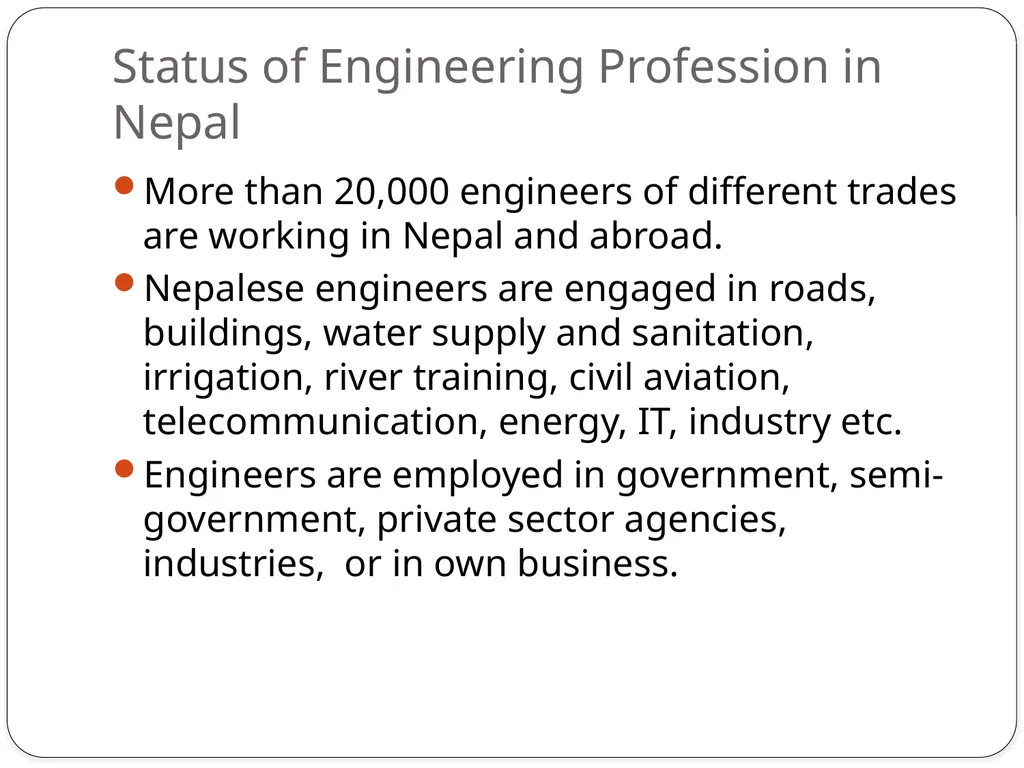
slide5. Status of Engineering Profession in Nepal More than 20,000 engineers of different trades are working in Nepal and abroad.
Nepalese engineers are engaged in roads, buildings, water supply and sanitation, irrigation, river training, civil aviation, telecommunication, energy, IT, industry etc.
Engineers are employed in government, semi-government, private sector agencies, industries, or in own business.<br>
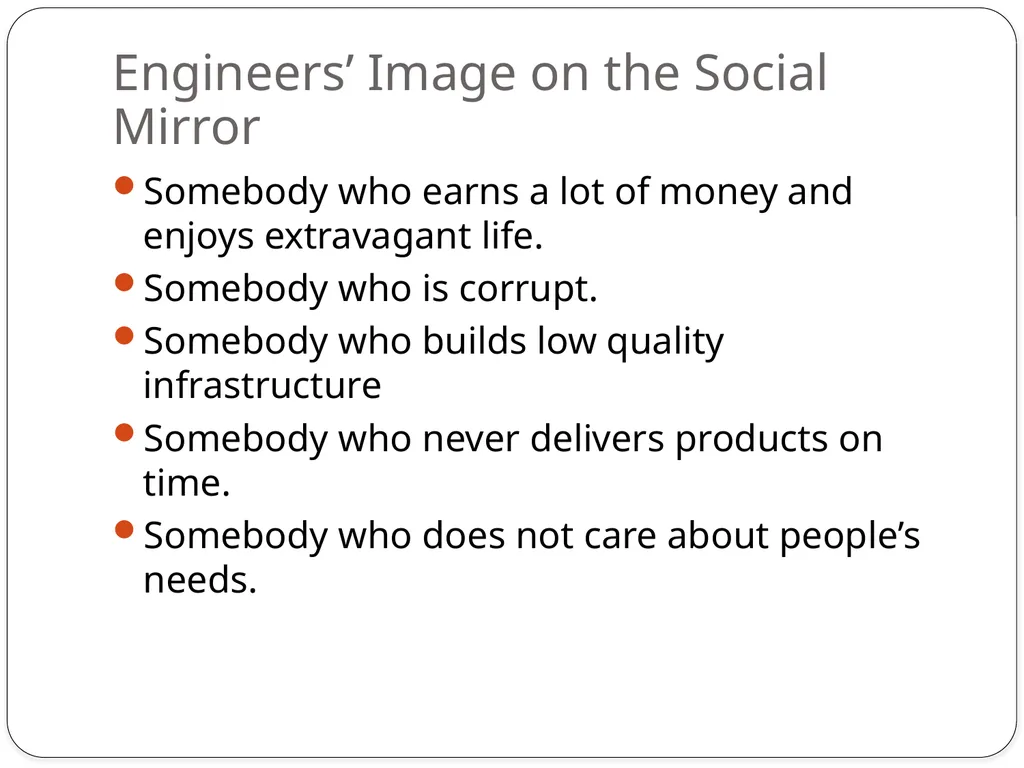
slide6. Engineers’ Image on the Social Mirror Somebody who earns a lot of money and enjoys extravagant life.
Somebody who is corrupt.
Somebody who builds low quality infrastructure
Somebody who never delivers products on time.
Somebody who does not care about people’s needs.<br>
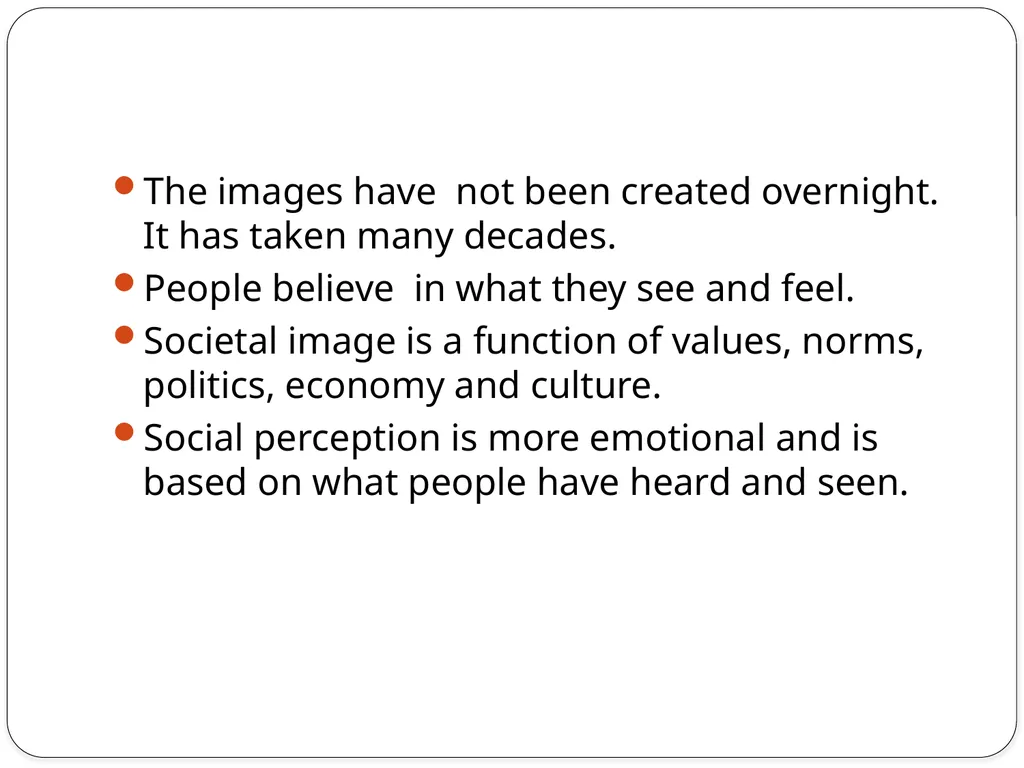
slide7. The images have not been created overnight. It has taken many decades.
People believe in what they see and feel.
Societal image is a function of values, norms, politics, economy and culture.
Social perception is more emotional and is based on what people have heard and seen.<br>
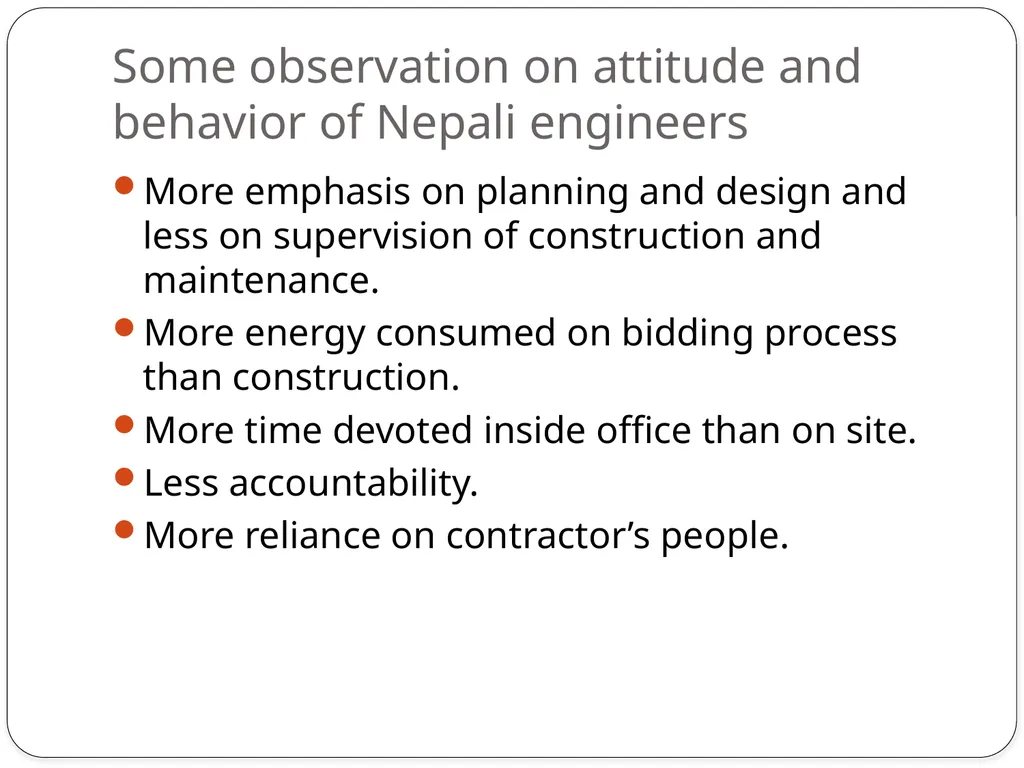
slide8. Some observation on attitude and behavior of Nepali engineers More emphasis on planning and design and less on supervision of construction and maintenance.
More energy consumed on bidding process than construction.
More time devoted inside office than on site.
Less accountability.
More reliance on contractor’s people.<br>
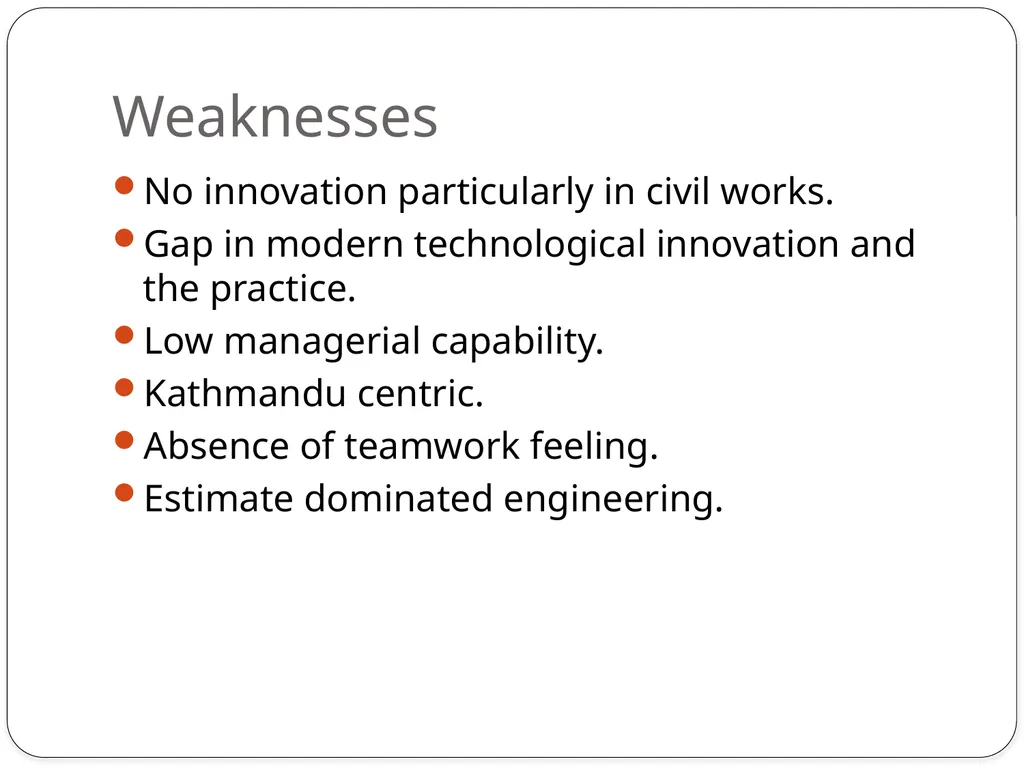
slide9. Weaknesses No innovation particularly in civil works.
Gap in modern technological innovation and the practice.
Low managerial capability.
Kathmandu centric.
Absence of teamwork feeling.
Estimate dominated engineering.<br>
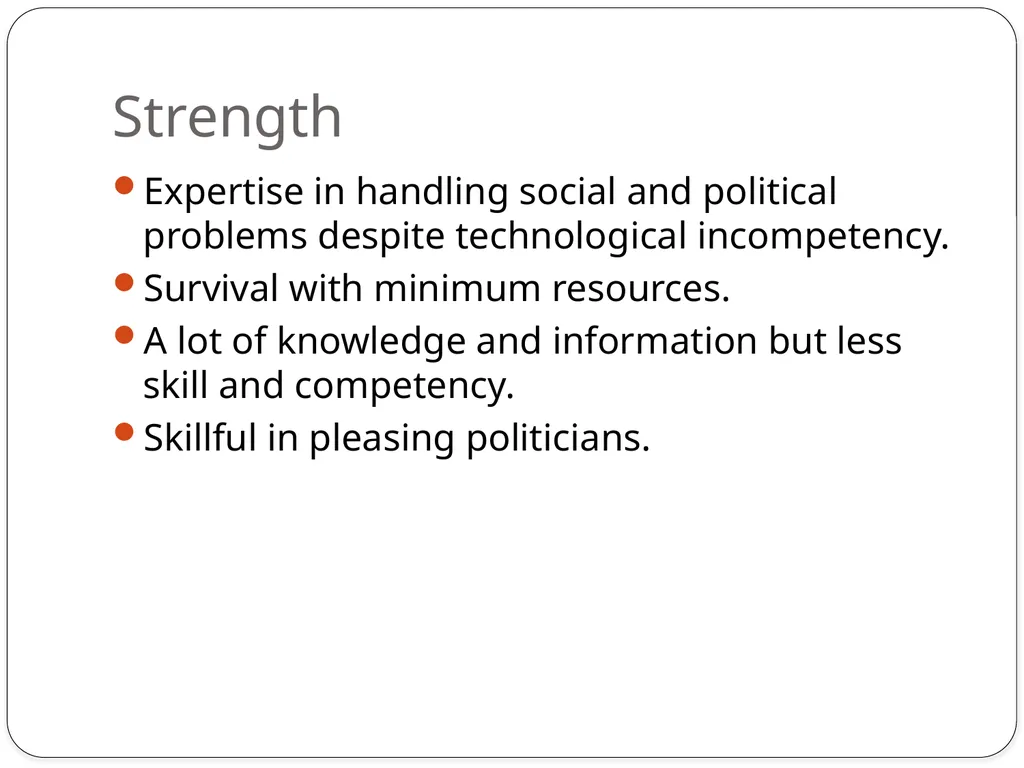
slide10. Strength Expertise in handling social and political problems despite technological incompetency.
Survival with minimum resources.
A lot of knowledge and information but less skill and competency.
Skillful in pleasing politicians.<br>
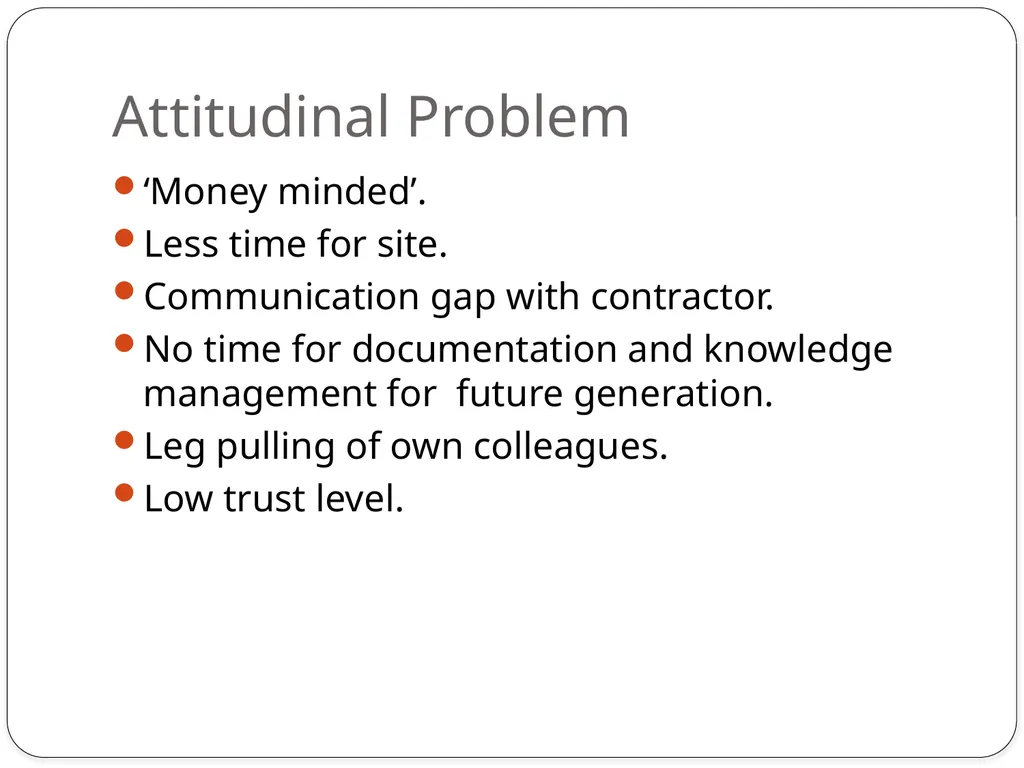
slide11. Attitudinal Problem ‘Money minded’.
Less time for site.
Communication gap with contractor.
No time for documentation and knowledge management for future generation.
Leg pulling of own colleagues.
Low trust level.<br>
slide12. Behavioral problem High mobilization for securing ‘good post’ and ‘good projects’.
‘Elite’ behavior.
Weakness in conversation and presentation.
Different language due to fragmentation of disciplines.
‘Institutional syndrome’.<br>
slide13. Image and the Mirror The quality of the image depends on the object as well as the mirror.
Bad object has bad image but distortion in the mirror blurs the image of the good object.
Engineers can not change the society much but they can change themselves.<br>
slide14. The process of Change Lets believe in hard work and the long path of success( no short cut).
The society has trusted us and let us not betray them.
Lets not undermine life , safety and comfort of users of infrastructure built by us.
Lets take responsibility of what we do.
Lets respect the contribution of our forefathers and inspire future generation.<br>
slide15. The process …… Lets consider engineering ethics as core value of our profession.
Lets address the needs of the present generation without compromising the needs of the future generation.
Lets enhance our managerial capability in addition to engineering competency.
Lets learn occupational health, public convenience, environmental protection, local context, scheduling of task etc.<br>
slide16. Lets be a good human being before being an Engineer.
Lets develop compassion, service, sacrifice and patience in our work.
Lets learn from each other. Always review the completed projects and document the lesson learnt so that next time we do much better.<br>
slide17. Lets be skilful and competent rather than informative.
Lets develop working tools( type designs, specifications, guidelines, standards, procedures).
Lets ensure our presence at construction site.<br>
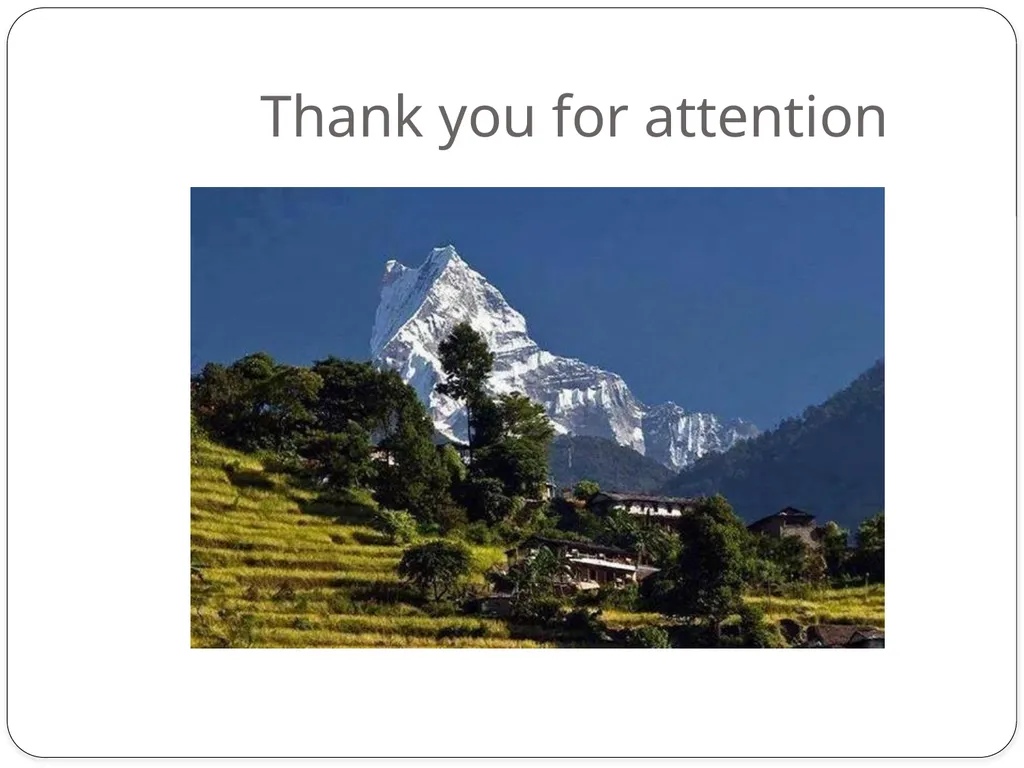
slide18. Thank you for attention<br>
August 28, 2015 Engineering Ethics on the Social Mirror<br>
slide2. Who is an Engineer? Who plans, designs and constructs infrastructure, machines, equipments or systems.
Who ensures quality, efficiency , sustainability and cost effectiveness.
Who believes in logical process, rational thinking and firm decisions.
Who prepares ‘ lagat estimate’(social perception)<br>
slide3. What Society demands from an Engineer? Reliable, durable and innovative infrastructure, services, equipments or systems.
Timely completion of the tasks with quality assurance.
Cost effectiveness
Sustainable infrastructure.<br>
slide4. Engineering Education in Nepal Few graduate engineers started working in Nepal from Rana period.
The second batch of engineers were sent to India, Soviet Union, China and other countries from the 50’s till 80’s.
From early 80’s engineers graduated from IOE, Pulchowk Engineering College.
From late 90’s private colleges started engineering education in Nepal<br>
slide5. Status of Engineering Profession in Nepal More than 20,000 engineers of different trades are working in Nepal and abroad.
Nepalese engineers are engaged in roads, buildings, water supply and sanitation, irrigation, river training, civil aviation, telecommunication, energy, IT, industry etc.
Engineers are employed in government, semi-government, private sector agencies, industries, or in own business.<br>
slide6. Engineers’ Image on the Social Mirror Somebody who earns a lot of money and enjoys extravagant life.
Somebody who is corrupt.
Somebody who builds low quality infrastructure
Somebody who never delivers products on time.
Somebody who does not care about people’s needs.<br>
slide7. The images have not been created overnight. It has taken many decades.
People believe in what they see and feel.
Societal image is a function of values, norms, politics, economy and culture.
Social perception is more emotional and is based on what people have heard and seen.<br>
slide8. Some observation on attitude and behavior of Nepali engineers More emphasis on planning and design and less on supervision of construction and maintenance.
More energy consumed on bidding process than construction.
More time devoted inside office than on site.
Less accountability.
More reliance on contractor’s people.<br>
slide9. Weaknesses No innovation particularly in civil works.
Gap in modern technological innovation and the practice.
Low managerial capability.
Kathmandu centric.
Absence of teamwork feeling.
Estimate dominated engineering.<br>
slide10. Strength Expertise in handling social and political problems despite technological incompetency.
Survival with minimum resources.
A lot of knowledge and information but less skill and competency.
Skillful in pleasing politicians.<br>
slide11. Attitudinal Problem ‘Money minded’.
Less time for site.
Communication gap with contractor.
No time for documentation and knowledge management for future generation.
Leg pulling of own colleagues.
Low trust level.<br>
slide12. Behavioral problem High mobilization for securing ‘good post’ and ‘good projects’.
‘Elite’ behavior.
Weakness in conversation and presentation.
Different language due to fragmentation of disciplines.
‘Institutional syndrome’.<br>
slide13. Image and the Mirror The quality of the image depends on the object as well as the mirror.
Bad object has bad image but distortion in the mirror blurs the image of the good object.
Engineers can not change the society much but they can change themselves.<br>
slide14. The process of Change Lets believe in hard work and the long path of success( no short cut).
The society has trusted us and let us not betray them.
Lets not undermine life , safety and comfort of users of infrastructure built by us.
Lets take responsibility of what we do.
Lets respect the contribution of our forefathers and inspire future generation.<br>
slide15. The process …… Lets consider engineering ethics as core value of our profession.
Lets address the needs of the present generation without compromising the needs of the future generation.
Lets enhance our managerial capability in addition to engineering competency.
Lets learn occupational health, public convenience, environmental protection, local context, scheduling of task etc.<br>
slide16. Lets be a good human being before being an Engineer.
Lets develop compassion, service, sacrifice and patience in our work.
Lets learn from each other. Always review the completed projects and document the lesson learnt so that next time we do much better.<br>
slide17. Lets be skilful and competent rather than informative.
Lets develop working tools( type designs, specifications, guidelines, standards, procedures).
Lets ensure our presence at construction site.<br>
slide18. Thank you for attention<br>