Arctic Languages Perspectives May 27, 2015 Hishinlai Peter (Kathy R. Sikorski) University of Alaska Fairbanks Tromsø, Norway 2008 Recommendations Reinforce importance of Arctic Indigenous languages holistically Lead and facilitate
"Arctic Languages Perspectives May 27, 2015" is the property of its rightful owner. Permission is granted to
download and print the materials on this website for personal, non-commercial use only, and to display it
on your personal computer provided you do not modify the materials and that you retain all copyright
notices contained in the materials. By downloading content from our website, you accept the terms of this
agreement.
Presentation Transcript
01
Arctic Languages Perspectives May 27, 2015
Hishinlai’ Peter
(Kathy R. Sikorski)
University of Alaska Fairbanks<br>
02
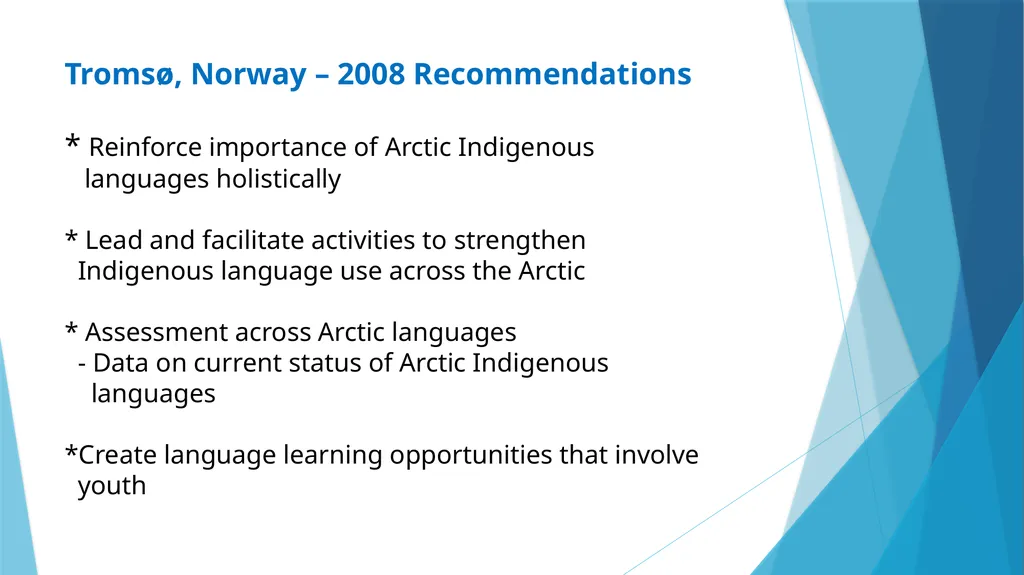
Tromsø, Norway – 2008 Recommendations * Reinforce importance of Arctic Indigenous languages holistically * Lead and facilitate activities to strengthen Indigenous language use across the Arctic * Assessment across Arctic languages - Data on current status of Arctic Indigenous languages *Create language learning opportunities that involve youth<br>
03
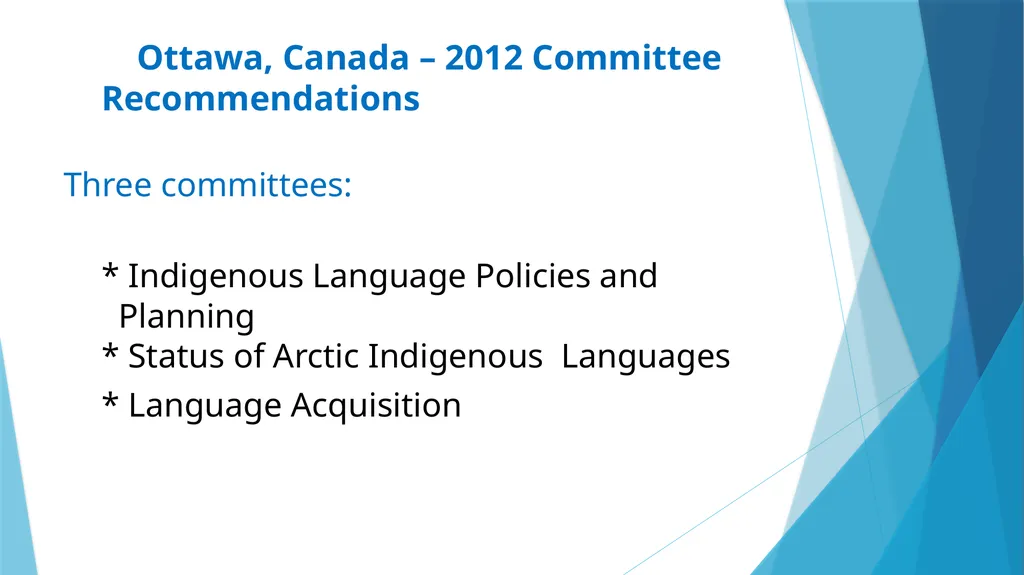
Ottawa, Canada – 2012 Committee Recommendations Three committees: * Indigenous Language Policies and Planning * Status of Arctic Indigenous Languages * Language Acquisition<br>
04
Indigenous Language Policies and Planning Perspective (1) Only one policy reported (2) More policies and ideas needed<br>
05
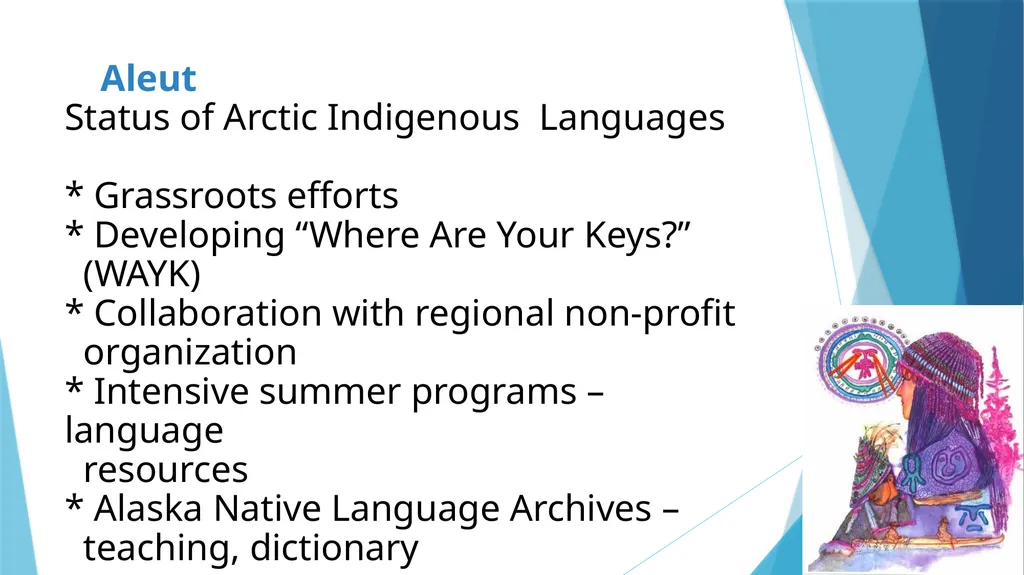
Aleut Status of Arctic Indigenous Languages * Grassroots efforts * Developing “Where Are Your Keys?” (WAYK) * Collaboration with regional non-profit organization * Intensive summer programs – language resources * Alaska Native Language Archives – teaching, dictionary<br>
06
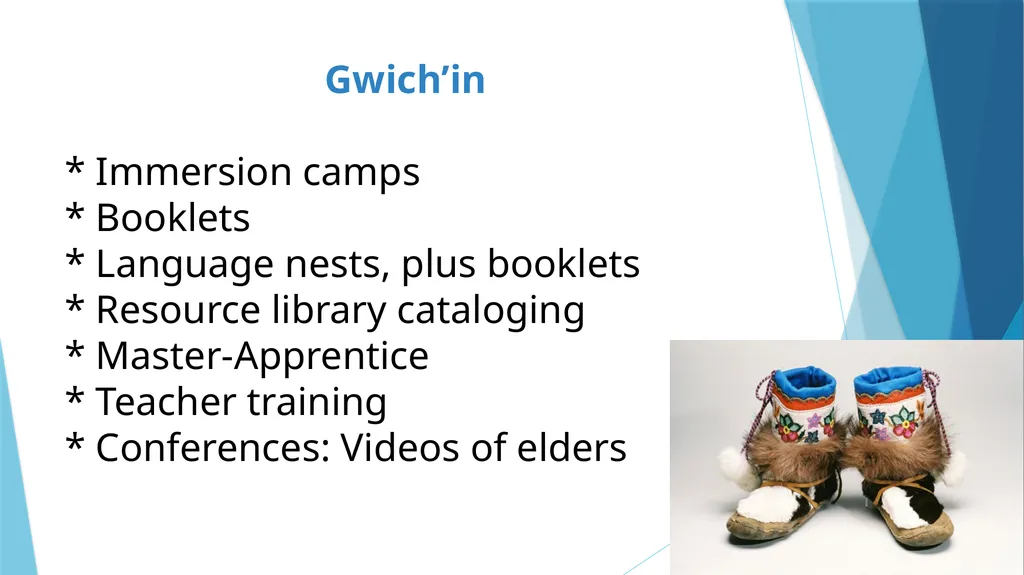
Gwich’in * Immersion camps * Booklets * Language nests, plus booklets * Resource library cataloging * Master-Apprentice * Teacher training * Conferences: Videos of elders<br>
07
Other Athabascan * Online dictionary, and language lessons * iTunes App * Story Books - cultural activities * Orthography Book * Alaska Native Language Archives – various groups<br>
08
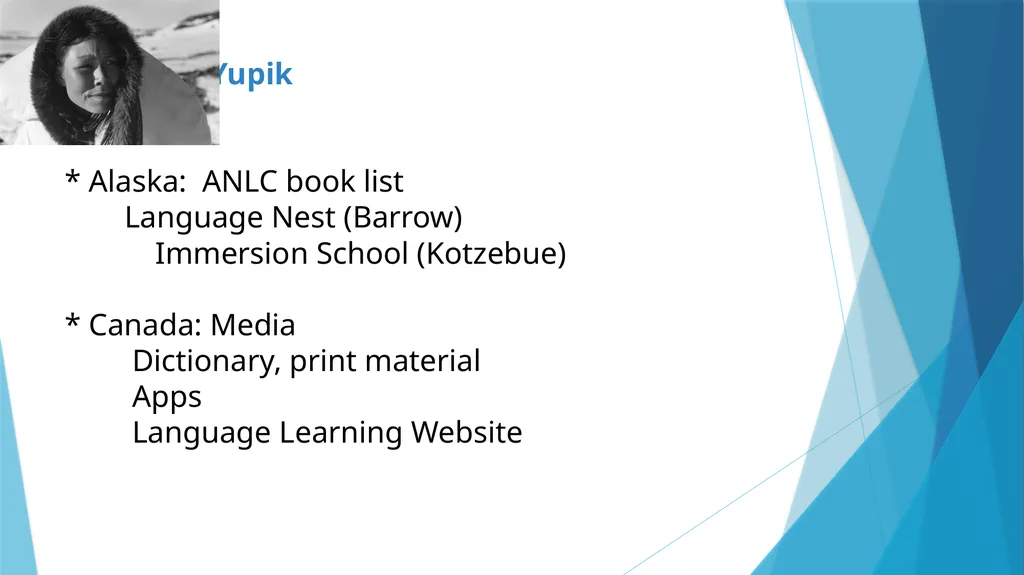
Inuit/Yupik * Alaska: ANLC book list Language Nest (Barrow) Immersion School (Kotzebue) * Canada: Media Dictionary, print material Apps Language Learning Website<br>
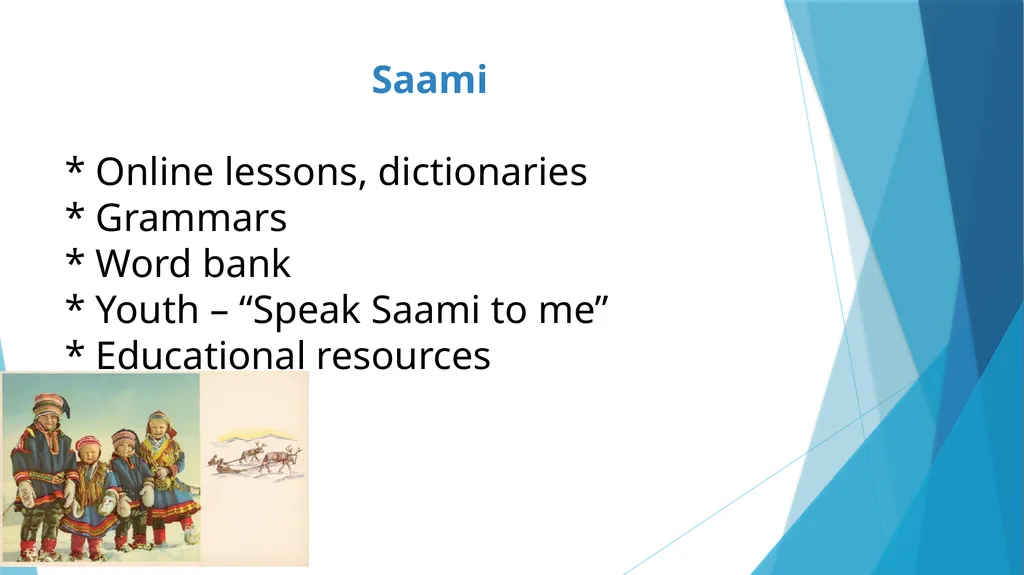
Saami * Online lessons, dictionaries * Grammars * Word bank * Youth – “Speak Saami to me” * Educational resources<br>
11
Status of Indigenous Languages Perspectives (1) Pockets of efforts being done (2) Need to collaborate and share<br>
12
Language Acquisition/Teaching Develop an aggressive curriculum and language lessons that engage students through appropriate culture
Supply teacher training that uses known methods of SLA, such as “Communicative Competence” (Canale & Swain, 1980) or SCT (interaction through social context)<br>