
ASU 2016-02 Leases When is it effective? Non
Description: ASU 2016-02 Leases When is it effective? Non Public Entities must adopt beginning in 2020 Dont Delay Start Planning now Suggestions for Implementation Form task force or steering committee; designate individual to champion engage entire
Related Topics
Download Presentation
"ASU 2016-02 Leases When is it effective? Non" is the property of its rightful owner. Permission is granted to download and print the materials on this website for personal, non-commercial use only, and to display it on your personal computer provided you do not modify the materials and that you retain all copyright notices contained in the materials. By downloading content from our website, you accept the terms of this agreement.
Presentation Transcript
slide1. ASU 2016-02 Leases<br>
slide2. When is it effective? Non Public Entities must adopt beginning in 2020<br>
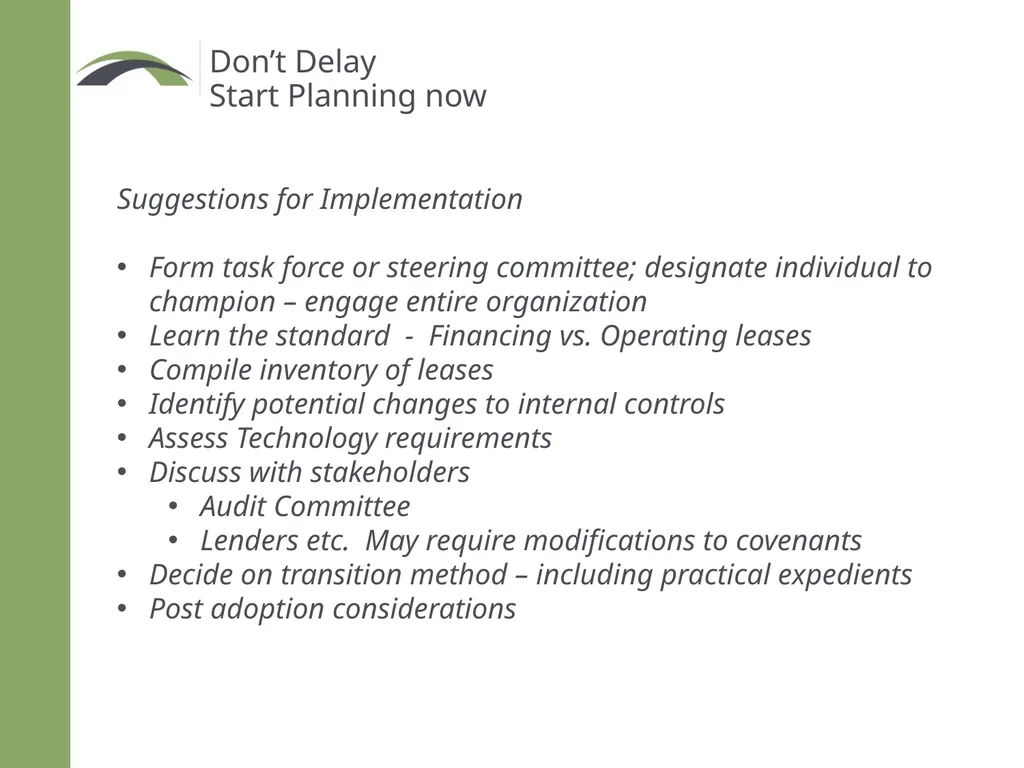
slide3. Don’t Delay Start Planning now Suggestions for Implementation
Form task force or steering committee; designate individual to champion – engage entire organization
Learn the standard - Financing vs. Operating leases
Compile inventory of leases
Identify potential changes to internal controls
Assess Technology requirements
Discuss with stakeholders
Audit Committee
Lenders etc. May require modifications to covenants
Decide on transition method – including practical expedients
Post adoption considerations<br>
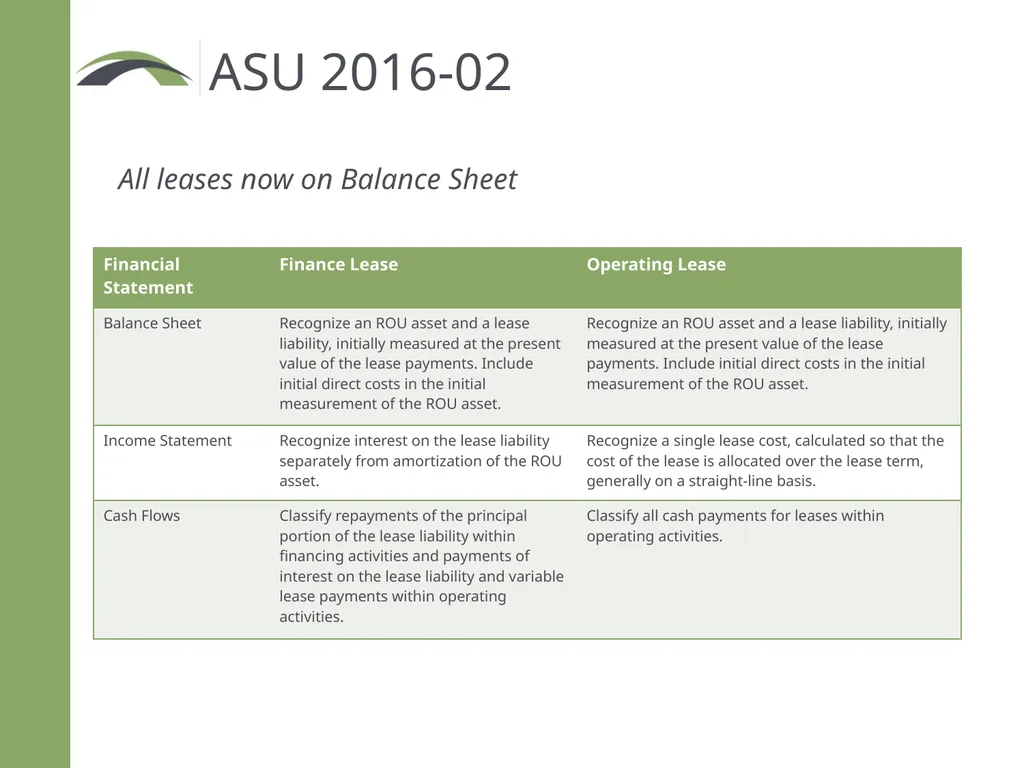
slide4. ASU 2016-02 All leases now on Balance Sheet<br>
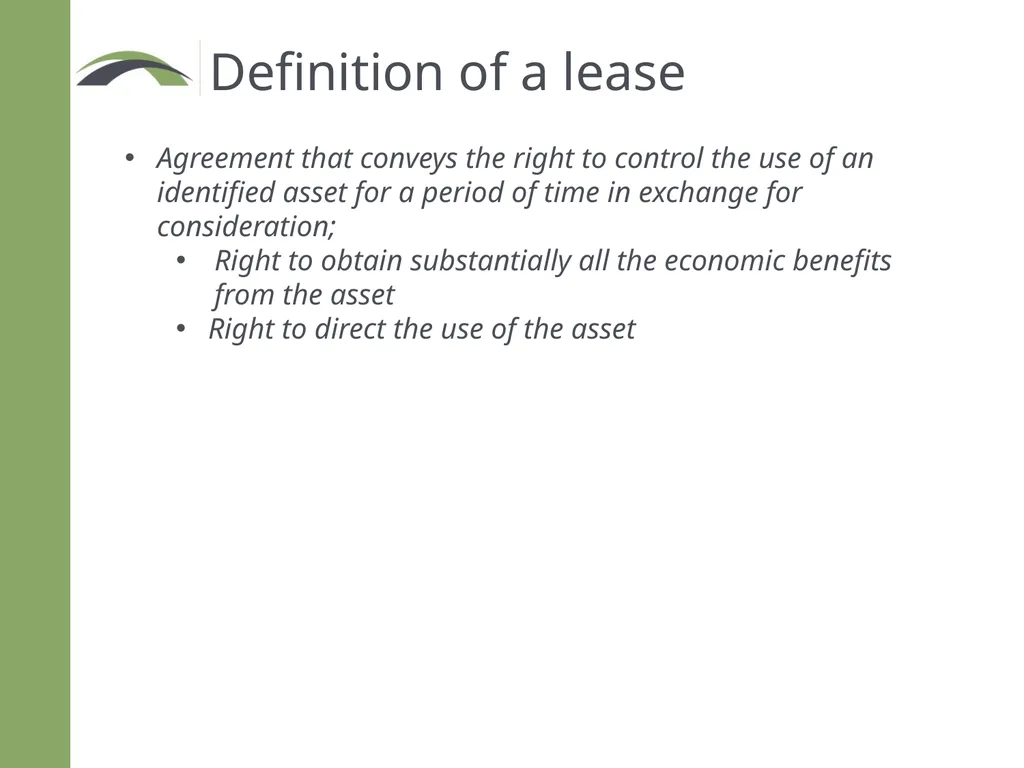
slide5. Definition of a lease Agreement that conveys the right to control the use of an identified asset for a period of time in exchange for consideration;
Right to obtain substantially all the economic benefits from the asset
Right to direct the use of the asset<br>
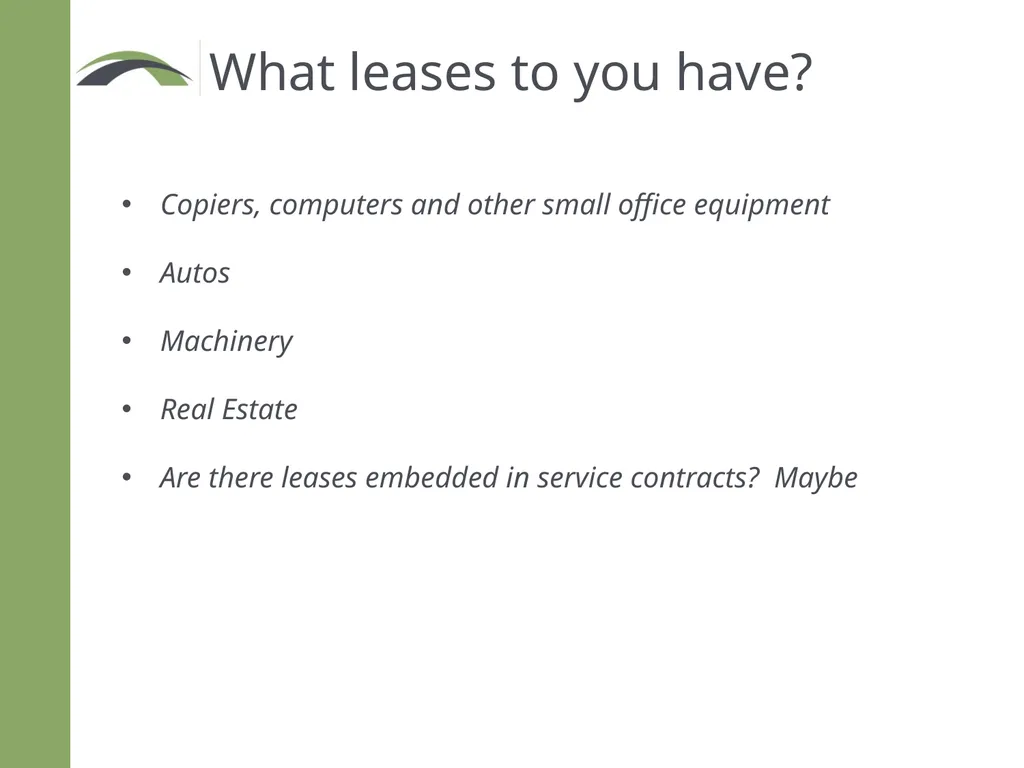
slide6. What leases to you have? Copiers, computers and other small office equipment
Autos
Machinery
Real Estate
Are there leases embedded in service contracts? Maybe<br>
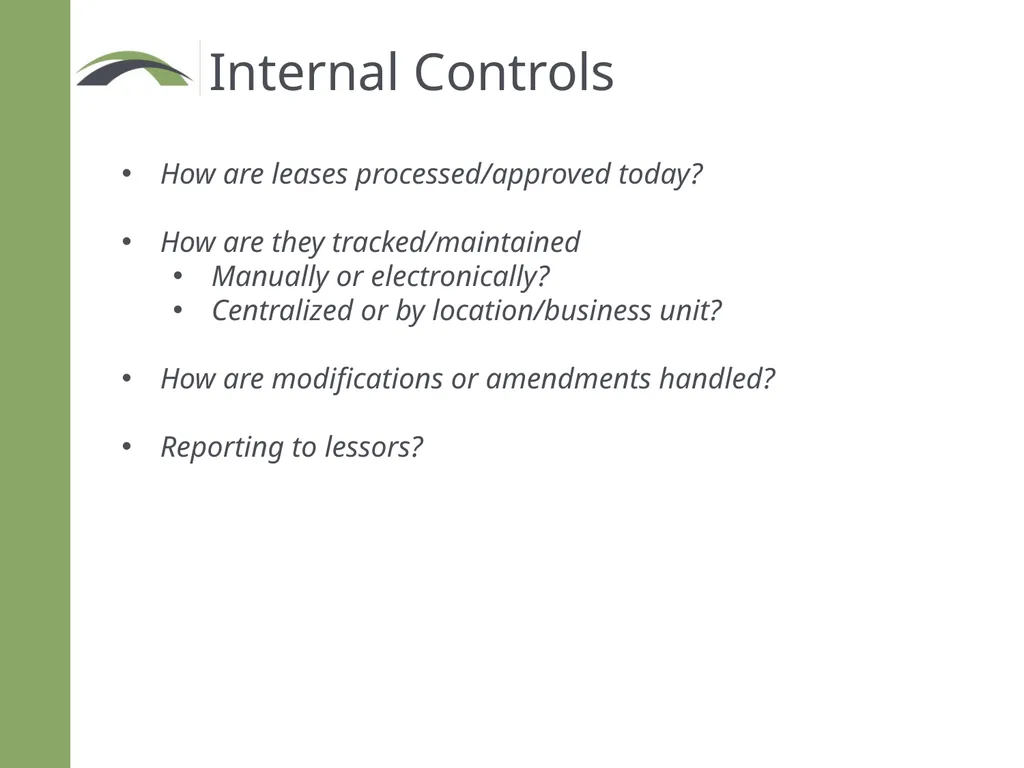
slide7. Internal Controls How are leases processed/approved today?
How are they tracked/maintained
Manually or electronically?
Centralized or by location/business unit?
How are modifications or amendments handled?
Reporting to lessors?<br>
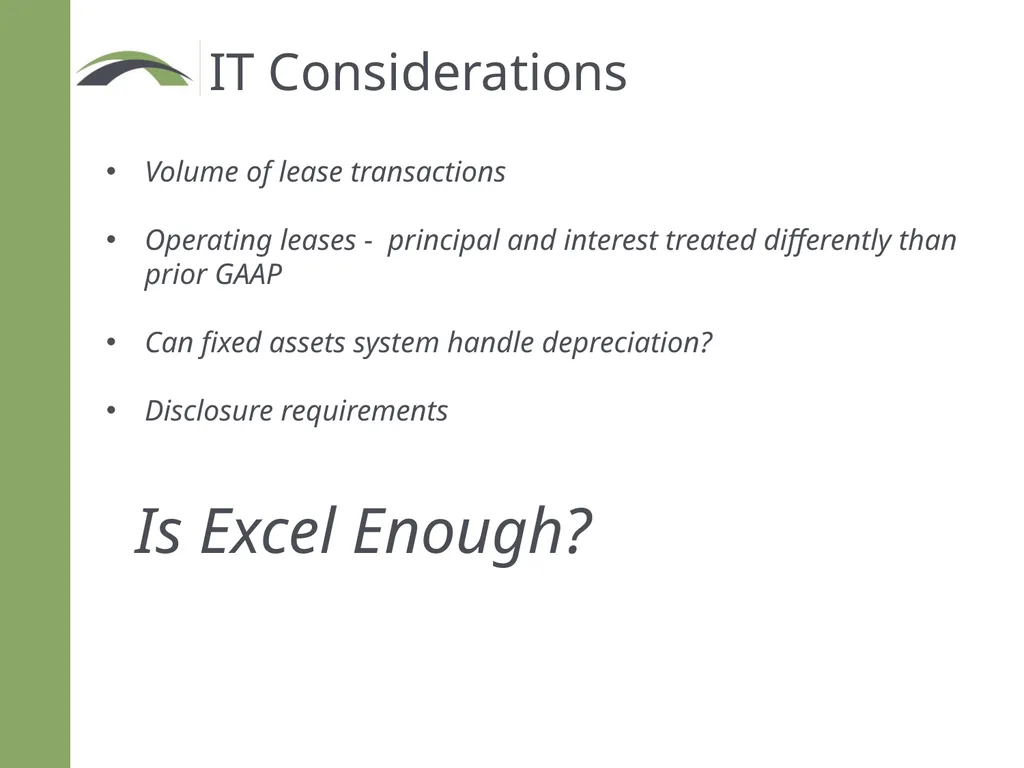
slide8. IT Considerations Volume of lease transactions
Operating leases - principal and interest treated differently than prior GAAP
Can fixed assets system handle depreciation?
Disclosure requirements Is Excel Enough?<br>
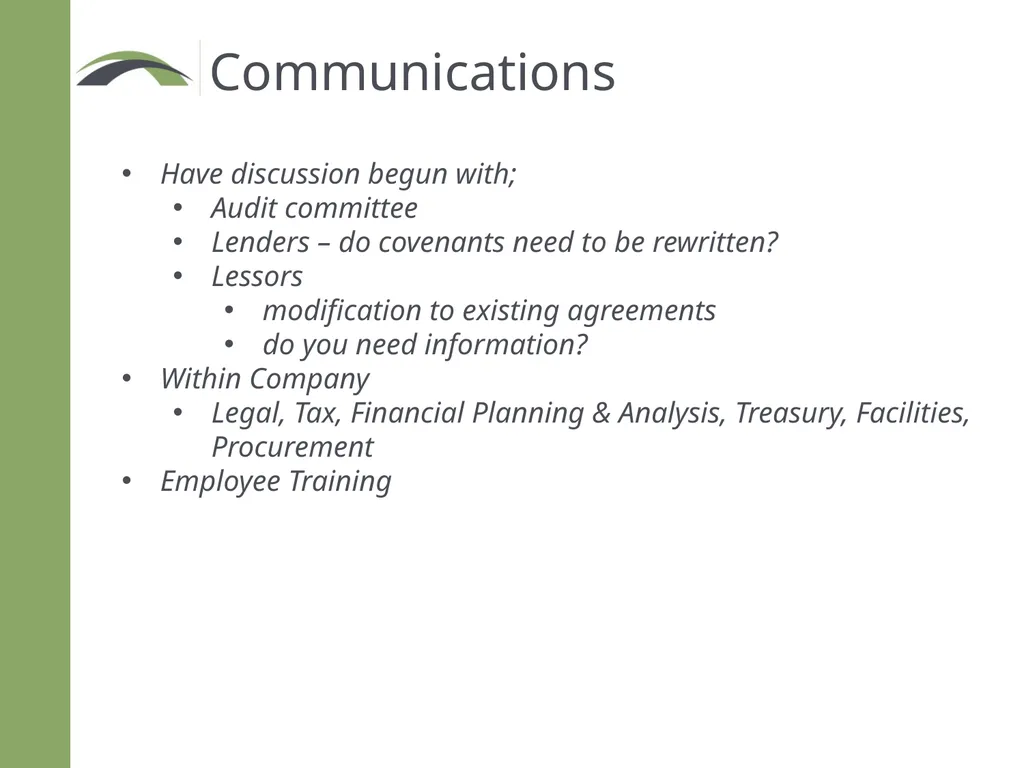
slide9. Communications Have discussion begun with;
Audit committee
Lenders – do covenants need to be rewritten?
Lessors
modification to existing agreements
do you need information?
Within Company
Legal, Tax, Financial Planning & Analysis, Treasury, Facilities, Procurement
Employee Training<br>
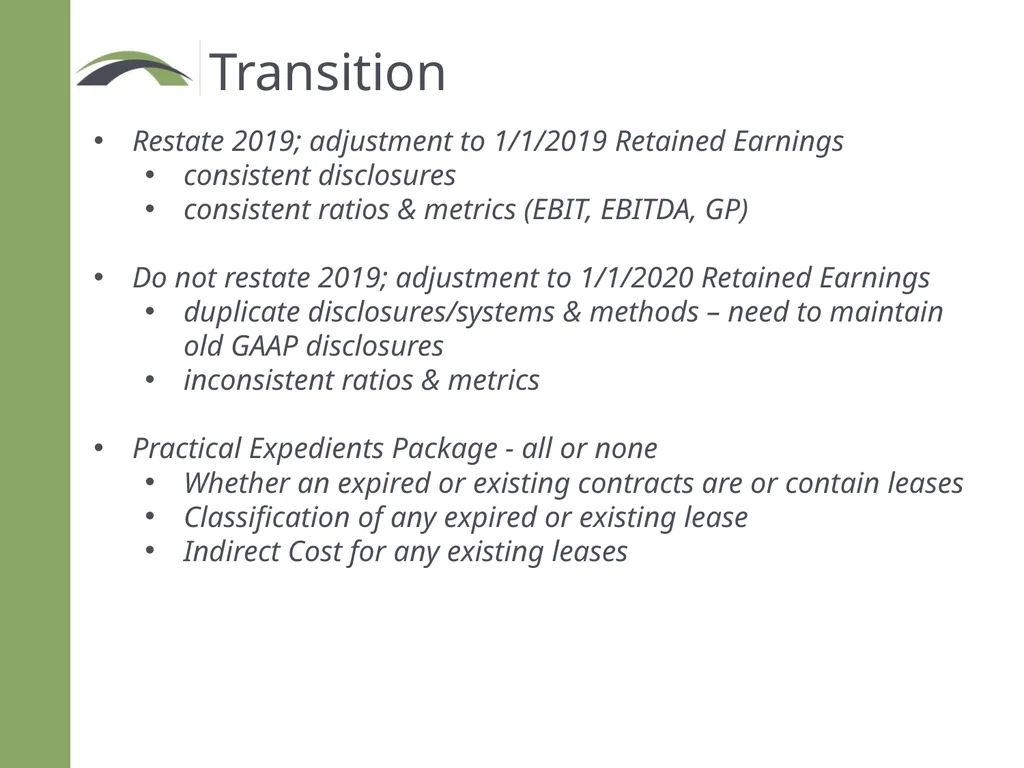
slide10. Transition Restate 2019; adjustment to 1/1/2019 Retained Earnings
consistent disclosures
consistent ratios & metrics (EBIT, EBITDA, GP)
Do not restate 2019; adjustment to 1/1/2020 Retained Earnings
duplicate disclosures/systems & methods – need to maintain old GAAP disclosures
inconsistent ratios & metrics
Practical Expedients Package - all or none
Whether an expired or existing contracts are or contain leases
Classification of any expired or existing lease
Indirect Cost for any existing leases<br>
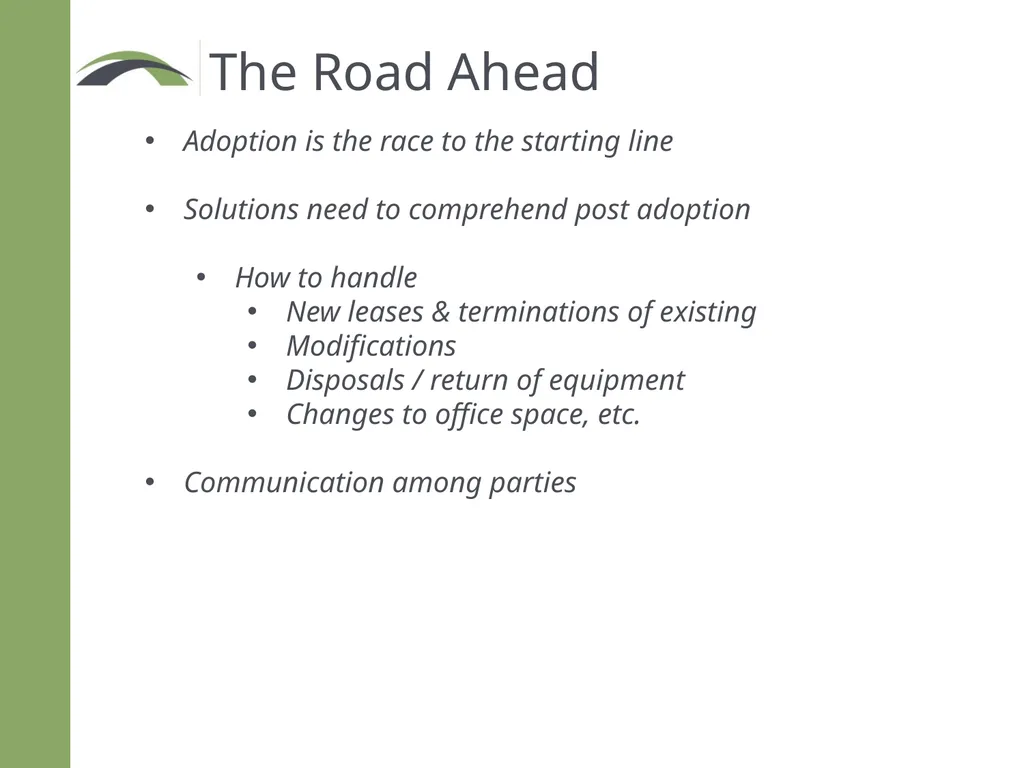
slide11. The Road Ahead Adoption is the race to the starting line
Solutions need to comprehend post adoption
How to handle
New leases & terminations of existing
Modifications
Disposals / return of equipment
Changes to office space, etc.
Communication among parties<br>
slide2. When is it effective? Non Public Entities must adopt beginning in 2020<br>
slide3. Don’t Delay Start Planning now Suggestions for Implementation
Form task force or steering committee; designate individual to champion – engage entire organization
Learn the standard - Financing vs. Operating leases
Compile inventory of leases
Identify potential changes to internal controls
Assess Technology requirements
Discuss with stakeholders
Audit Committee
Lenders etc. May require modifications to covenants
Decide on transition method – including practical expedients
Post adoption considerations<br>
slide4. ASU 2016-02 All leases now on Balance Sheet<br>
slide5. Definition of a lease Agreement that conveys the right to control the use of an identified asset for a period of time in exchange for consideration;
Right to obtain substantially all the economic benefits from the asset
Right to direct the use of the asset<br>
slide6. What leases to you have? Copiers, computers and other small office equipment
Autos
Machinery
Real Estate
Are there leases embedded in service contracts? Maybe<br>
slide7. Internal Controls How are leases processed/approved today?
How are they tracked/maintained
Manually or electronically?
Centralized or by location/business unit?
How are modifications or amendments handled?
Reporting to lessors?<br>
slide8. IT Considerations Volume of lease transactions
Operating leases - principal and interest treated differently than prior GAAP
Can fixed assets system handle depreciation?
Disclosure requirements Is Excel Enough?<br>
slide9. Communications Have discussion begun with;
Audit committee
Lenders – do covenants need to be rewritten?
Lessors
modification to existing agreements
do you need information?
Within Company
Legal, Tax, Financial Planning & Analysis, Treasury, Facilities, Procurement
Employee Training<br>
slide10. Transition Restate 2019; adjustment to 1/1/2019 Retained Earnings
consistent disclosures
consistent ratios & metrics (EBIT, EBITDA, GP)
Do not restate 2019; adjustment to 1/1/2020 Retained Earnings
duplicate disclosures/systems & methods – need to maintain old GAAP disclosures
inconsistent ratios & metrics
Practical Expedients Package - all or none
Whether an expired or existing contracts are or contain leases
Classification of any expired or existing lease
Indirect Cost for any existing leases<br>
slide11. The Road Ahead Adoption is the race to the starting line
Solutions need to comprehend post adoption
How to handle
New leases & terminations of existing
Modifications
Disposals / return of equipment
Changes to office space, etc.
Communication among parties<br>