04
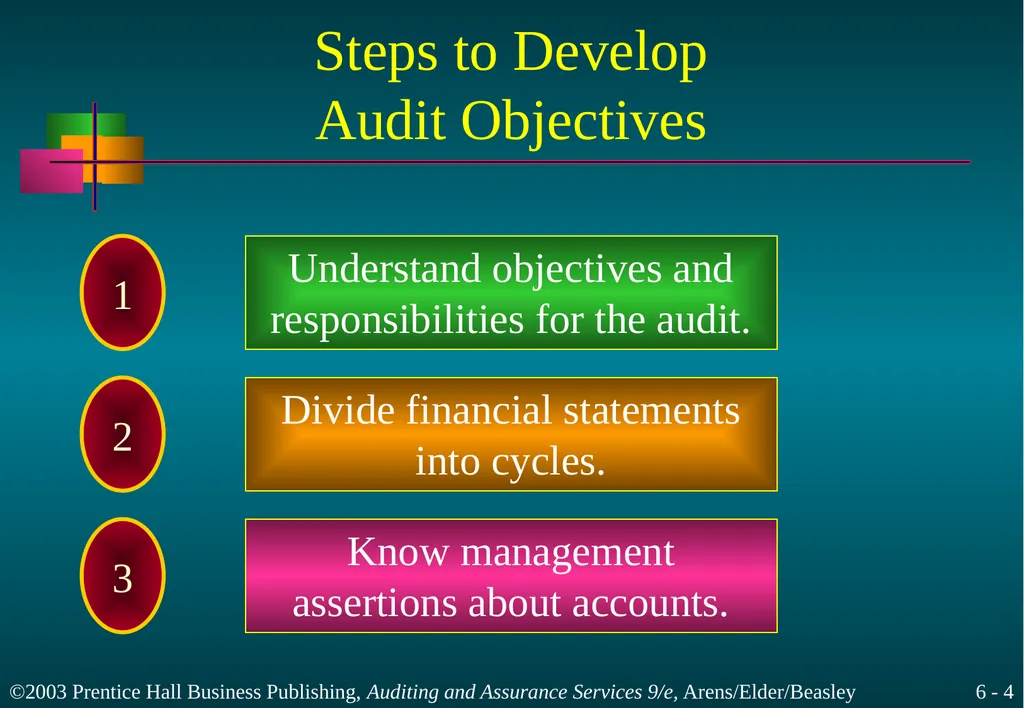
Steps to Develop�Audit Objectives Understand objectives and
responsibilities for the audit. 1 2 Divide financial statements
into cycles. 3 Know management
assertions about accounts.<br>
05
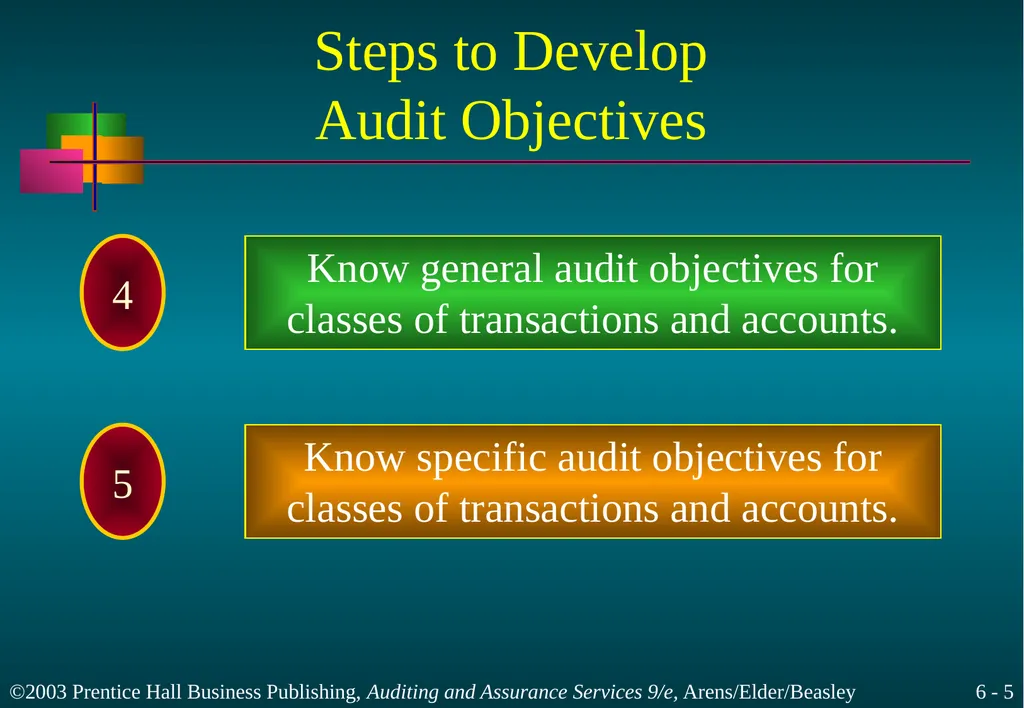
Steps to Develop�Audit Objectives Know general audit objectives for
classes of transactions and accounts. 4 5 Know specific audit objectives for
classes of transactions and accounts.<br>
06
Learning Objective 2 Distinguish management’s
responsibilities for preparing
financial statements from the
auditor’s responsibilities for
verifying those financial statements.<br>
07
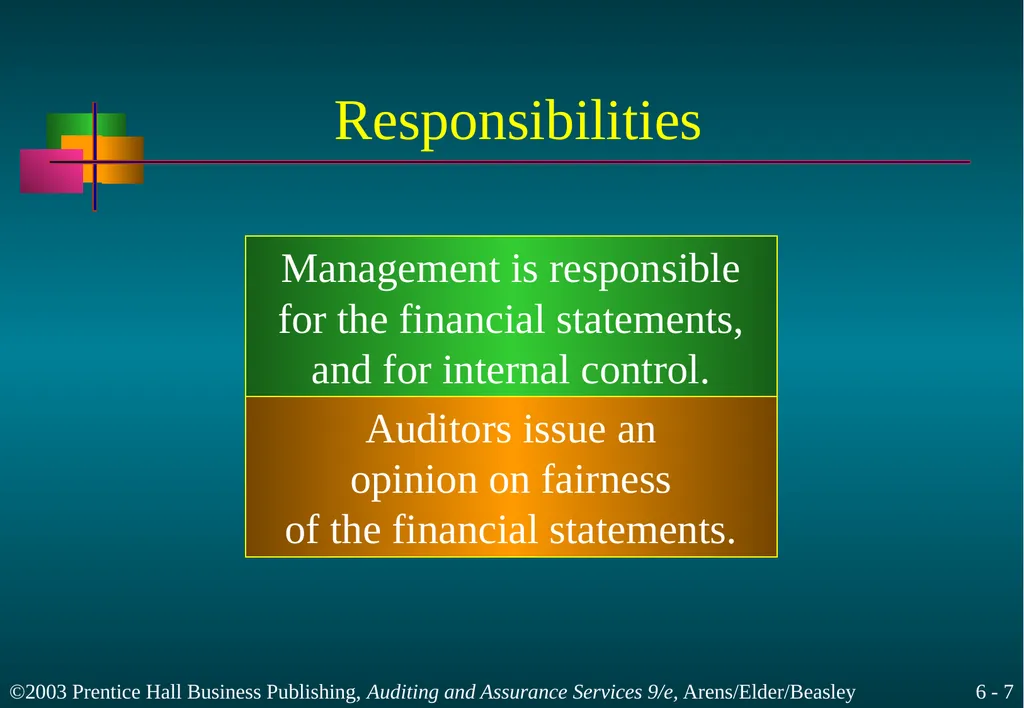
Responsibilities Management is responsible
for the financial statements,
and for internal control. Auditors issue an
opinion on fairness
of the financial statements.<br>
08
Learning Objective 3 Explain the auditor’s
responsibility for discovering
material misstatements.<br>
09
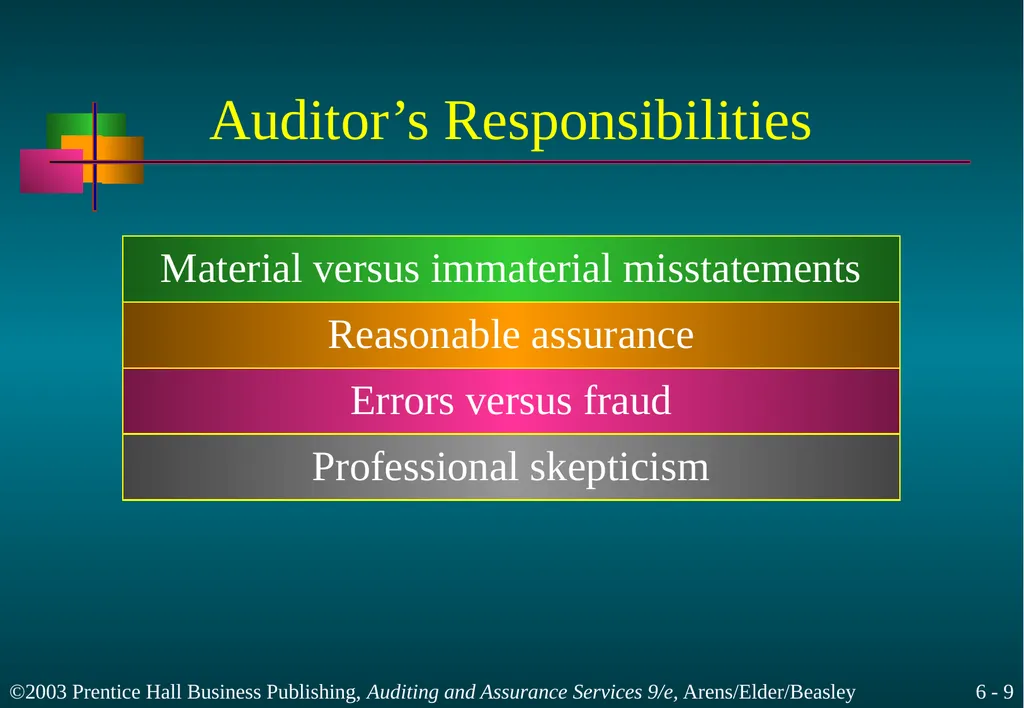
Auditor’s Responsibilities Material versus immaterial misstatements Reasonable assurance Errors versus fraud Professional skepticism<br>
10
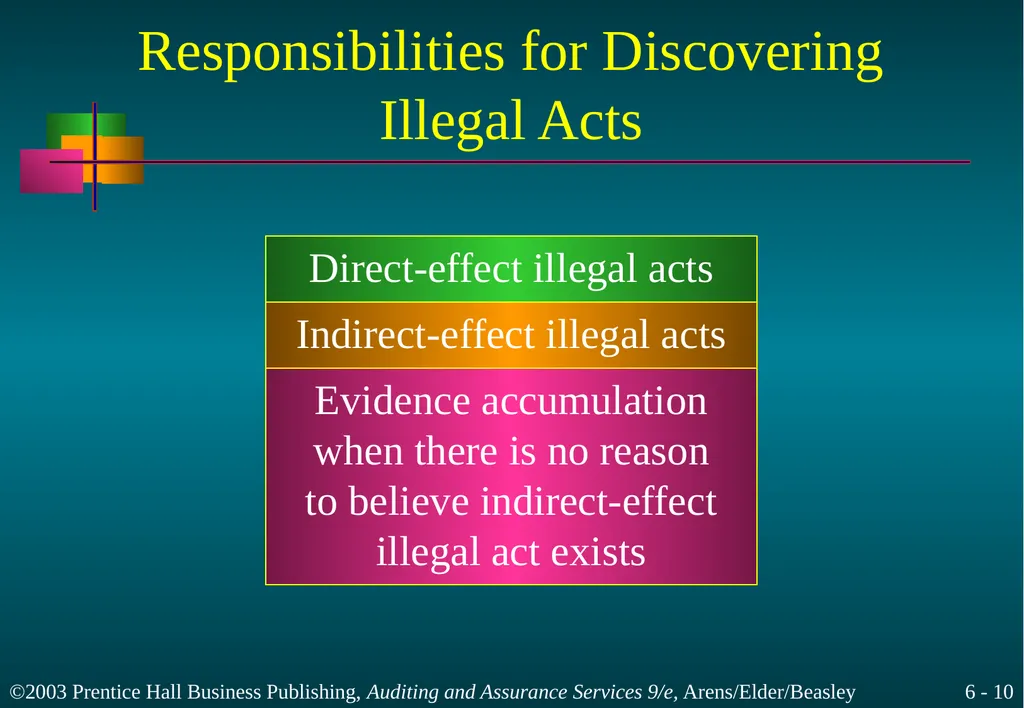
Responsibilities for Discovering Illegal Acts Direct-effect illegal acts Indirect-effect illegal acts Evidence accumulation
when there is no reason
to believe indirect-effect
illegal act exists<br>
11
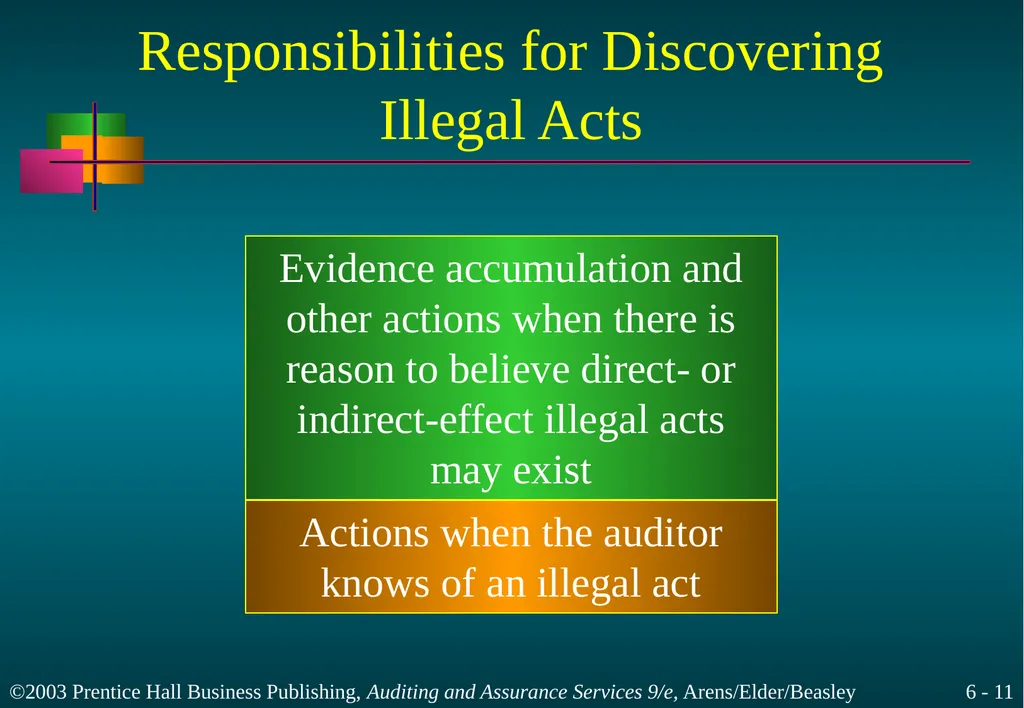
Responsibilities for Discovering Illegal Acts Evidence accumulation and
other actions when there is
reason to believe direct- or
indirect-effect illegal acts
may exist Actions when the auditor
knows of an illegal act<br>
12
Learning Objective 4 Classify transactions and account
balances into financial statement
cycles and identify benefits of a cycle
approach to segmenting the audit.<br>
13
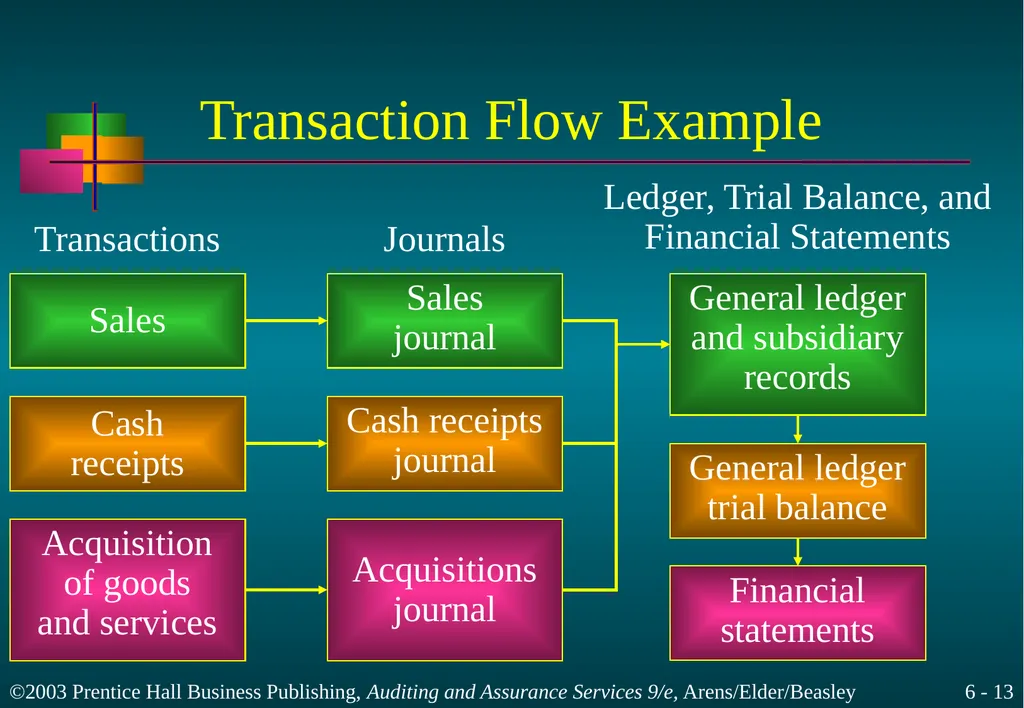
Transaction Flow Example Transactions Journals Ledger, Trial Balance, and
Financial Statements Acquisition
of goods
and services Cash receipts
journal Sales Sales
journal Cash
receipts Acquisitions
journal General ledger
and subsidiary
records General ledger
trial balance Financial
statements<br>
14
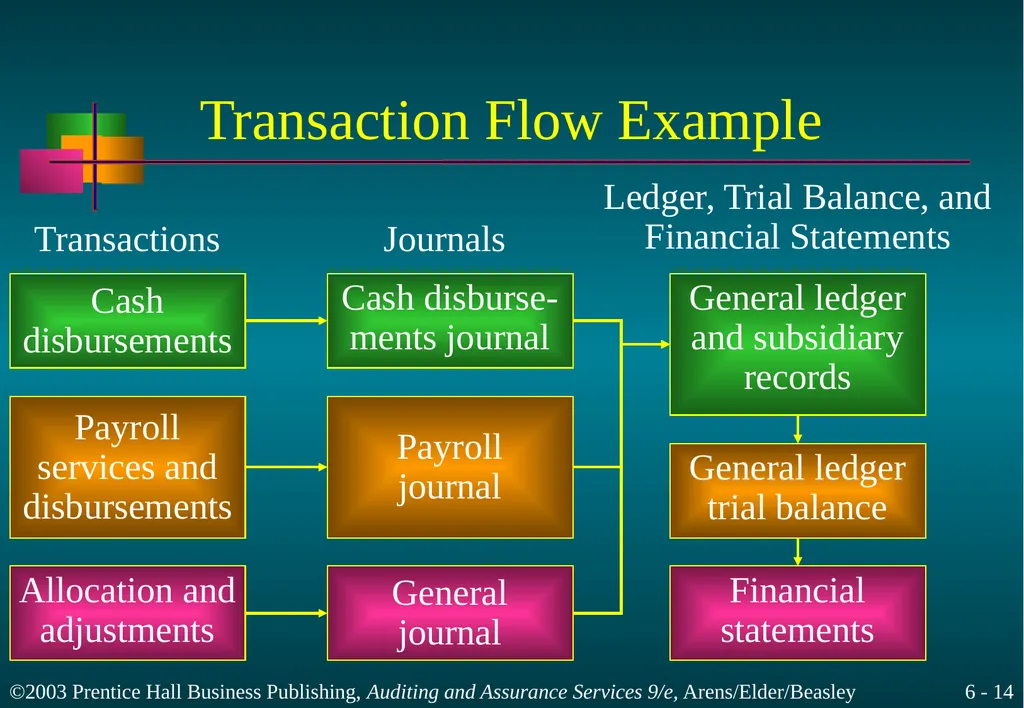
Transaction Flow Example Transactions Journals Ledger, Trial Balance, and
Financial Statements Allocation and
adjustments Payroll
journal Cash
disbursements Cash disburse-
ments journal Payroll
services and
disbursements General
journal General ledger
and subsidiary
records General ledger
trial balance Financial
statements<br>
15
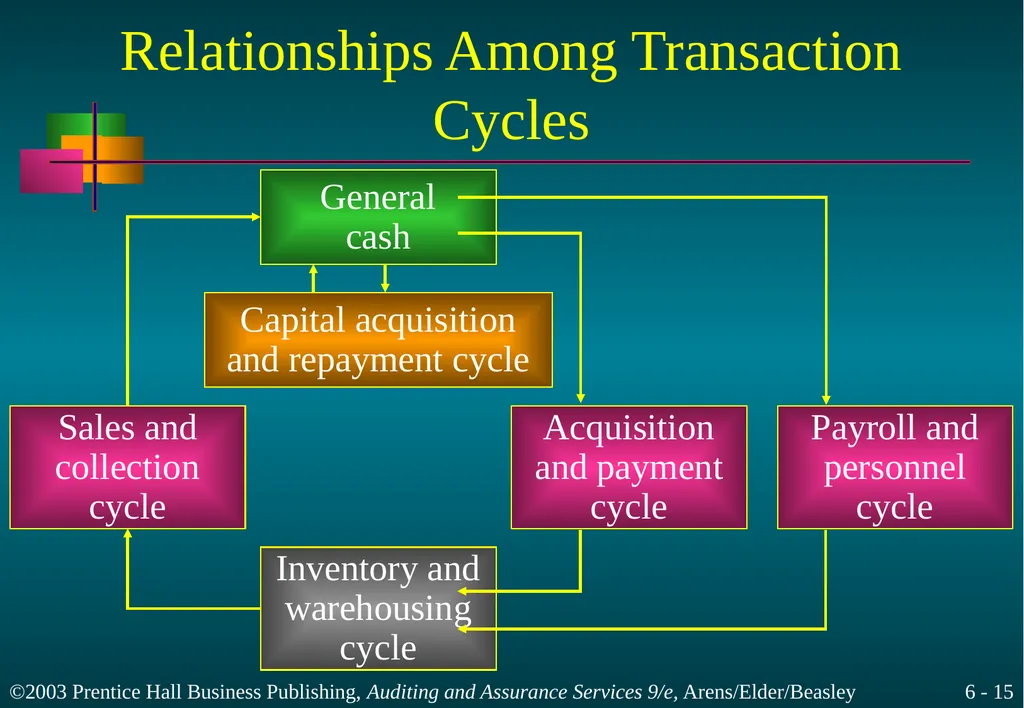
Relationships Among Transaction Cycles General
cash Capital acquisition
and repayment cycle Sales and
collection
cycle Acquisition
and payment
cycle Payroll and
personnel
cycle Inventory and
warehousing
cycle<br>
16
Learning Objective 5 Describe why the auditor obtains
a combination of assurance by
auditing classes of transactions
and ending balances in accounts.<br>
17
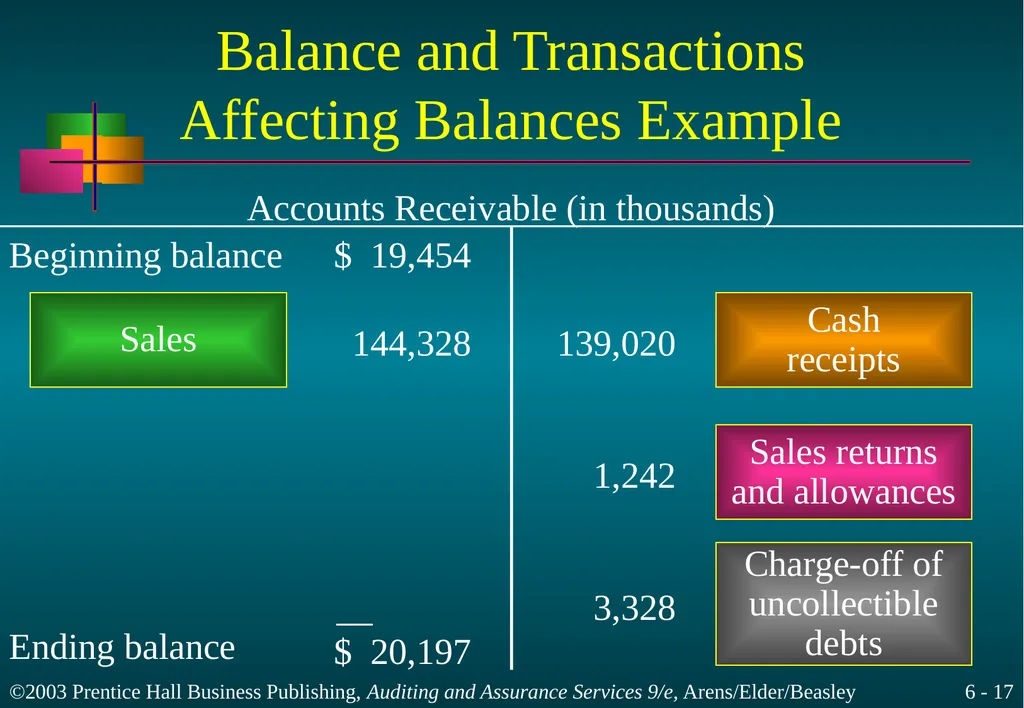
Balance and Transactions Affecting Balances Example $ 19,454
144,328
$ 20,197 139,020
1,242
3,328 Charge-off of
uncollectible
debts Cash
receipts Sales returns
and allowances Sales Accounts Receivable (in thousands) Beginning balance Ending balance<br>
18
Learning Objective 6 Distinguish among
the five categories of
management assertions
about financial information.<br>
19
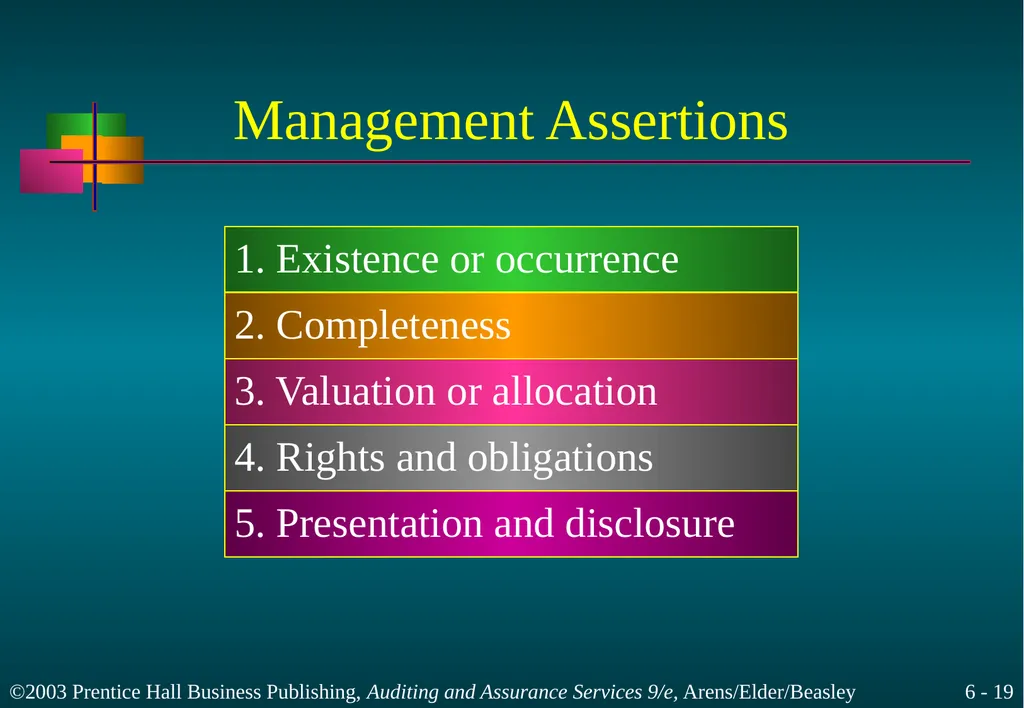
Management Assertions 1. Existence or occurrence 2. Completeness 3. Valuation or allocation 4. Rights and obligations 5. Presentation and disclosure<br>
20
Learning Objective 7 List the six general transaction-
related audit objectives to the
five management assertions.<br>
21
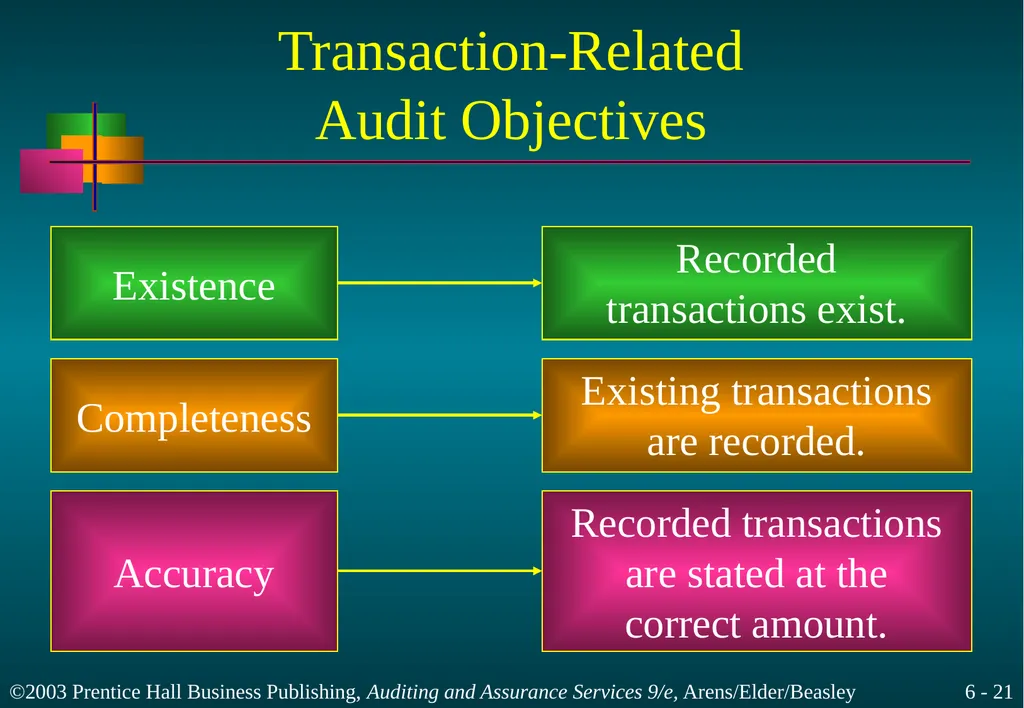
Transaction-Related�Audit Objectives Existence Completeness Accuracy Recorded
transactions exist. Existing transactions
are recorded. Recorded transactions
are stated at the
correct amount.<br>
22
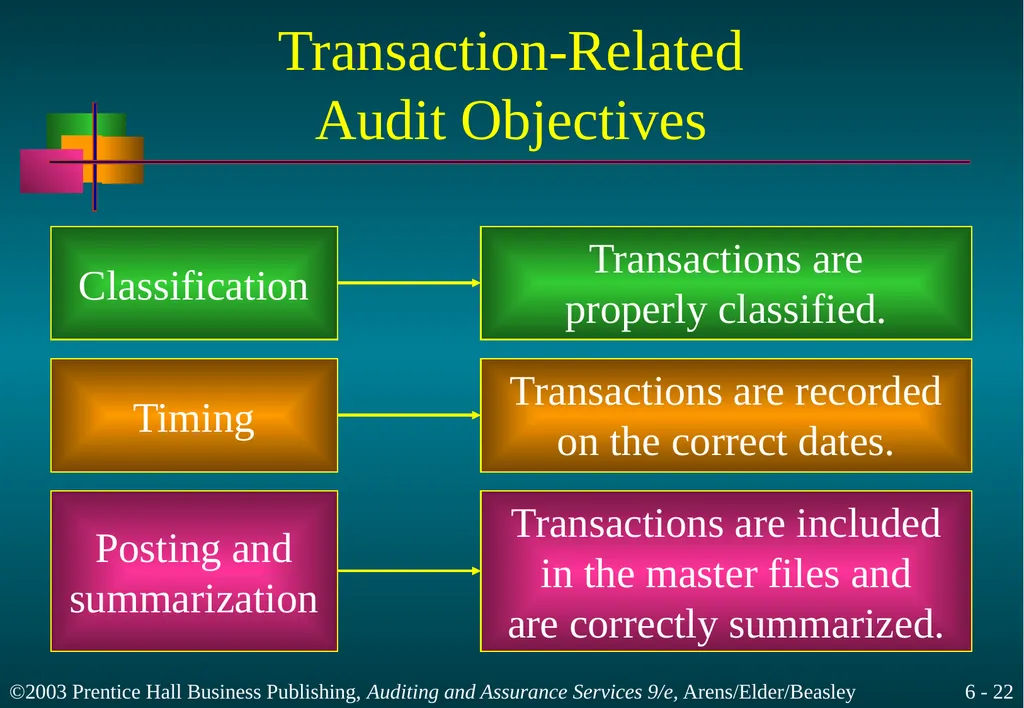
Transaction-Related�Audit Objectives Classification Timing Posting and
summarization Transactions are
properly classified. Transactions are recorded
on the correct dates. Transactions are included
in the master files and
are correctly summarized.<br>
23
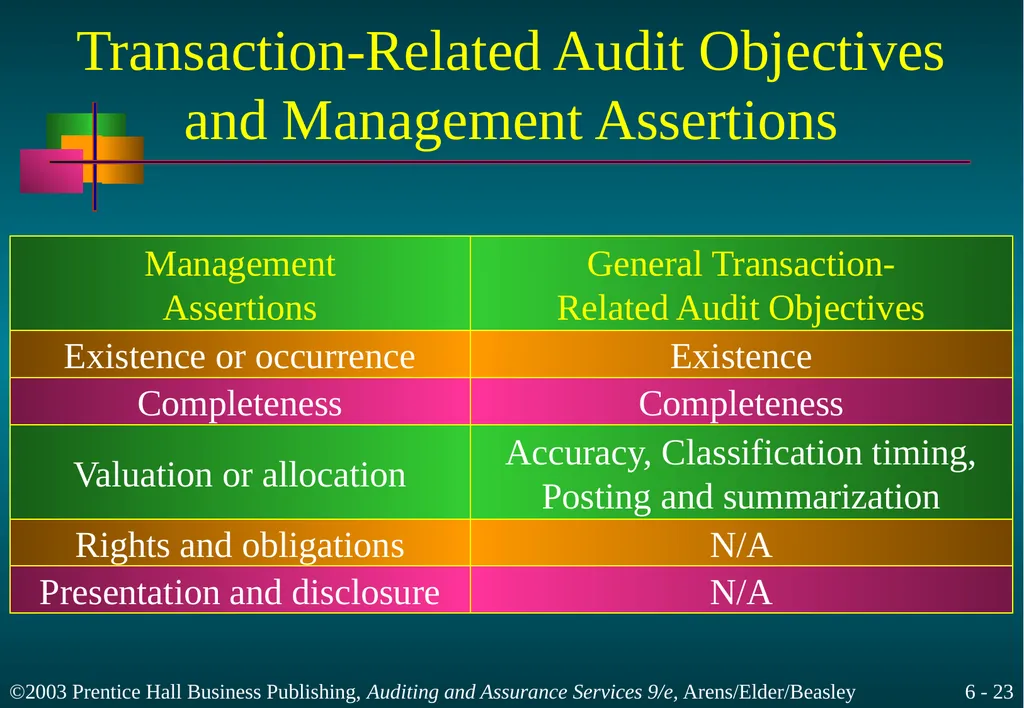
Transaction-Related Audit Objectives�and Management Assertions Management
Assertions General Transaction-
Related Audit Objectives Existence or occurrence Completeness Valuation or allocation Rights and obligations Presentation and disclosure Existence Completeness Accuracy, Classification timing,
Posting and summarization N/A N/A<br>
24
Learning Objective 8 Link the nine general balance-
related audit objectives to the
five management assertions.<br>
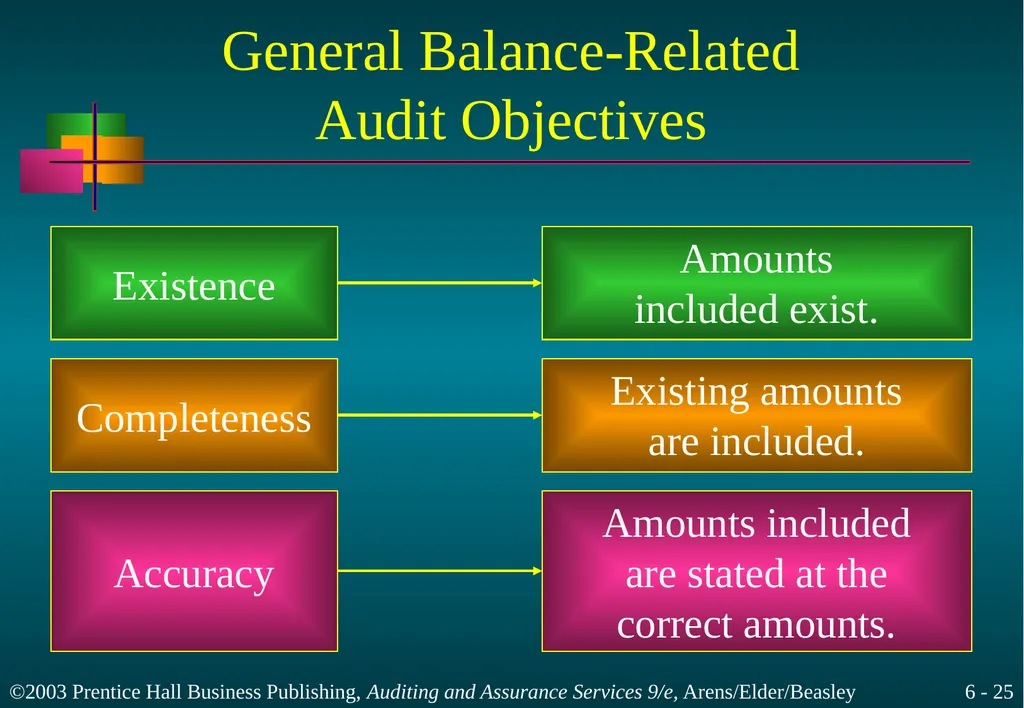
25
General Balance-Related�Audit Objectives Existence Completeness Accuracy Amounts
included exist. Existing amounts
are included. Amounts included
are stated at the
correct amounts.<br>
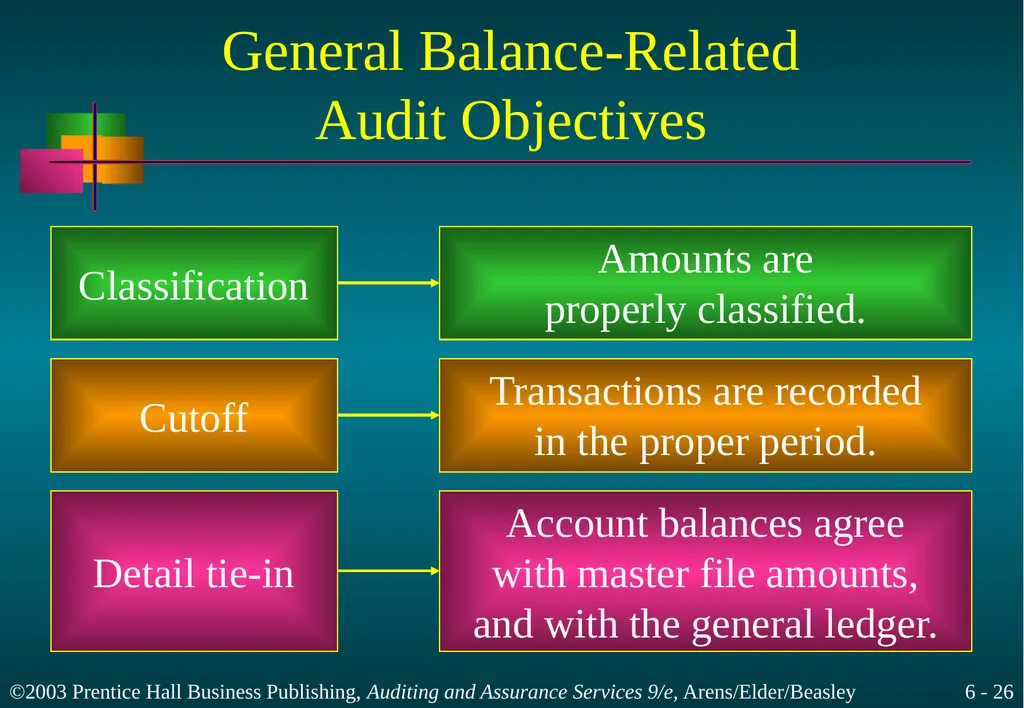
26
General Balance-Related�Audit Objectives Classification Cutoff Detail tie-in Amounts are
properly classified. Transactions are recorded
in the proper period. Account balances agree
with master file amounts,
and with the general ledger.<br>
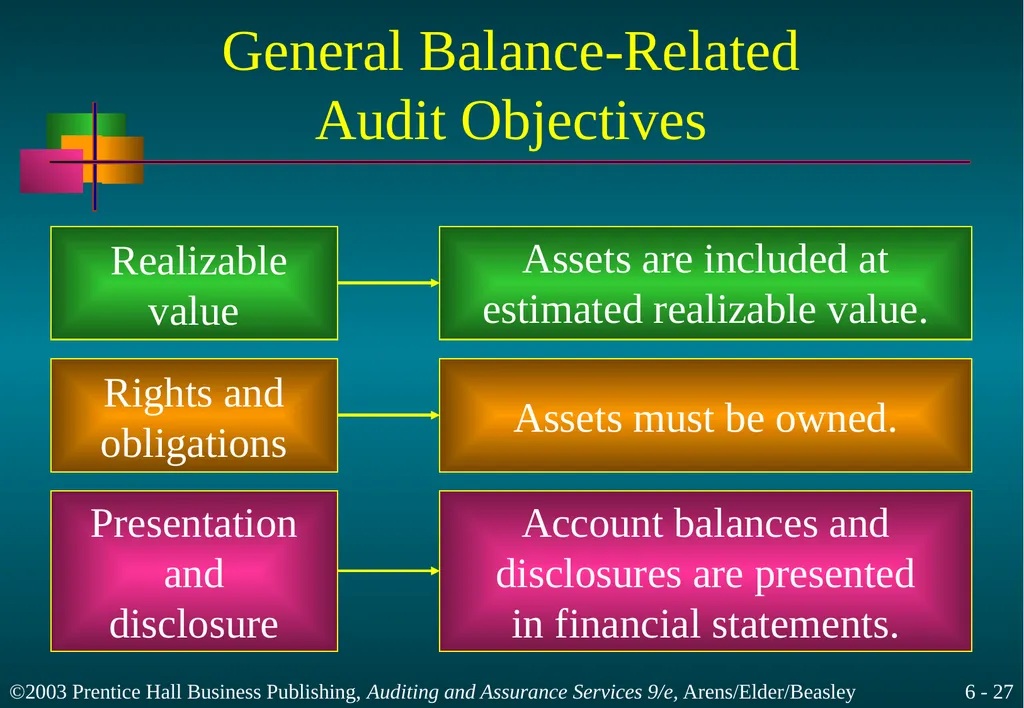
27
General Balance-Related�Audit Objectives Realizable
value Rights and
obligations Presentation
and
disclosure Assets are included at
estimated realizable value. Assets must be owned. Account balances and
disclosures are presented
in financial statements.<br>
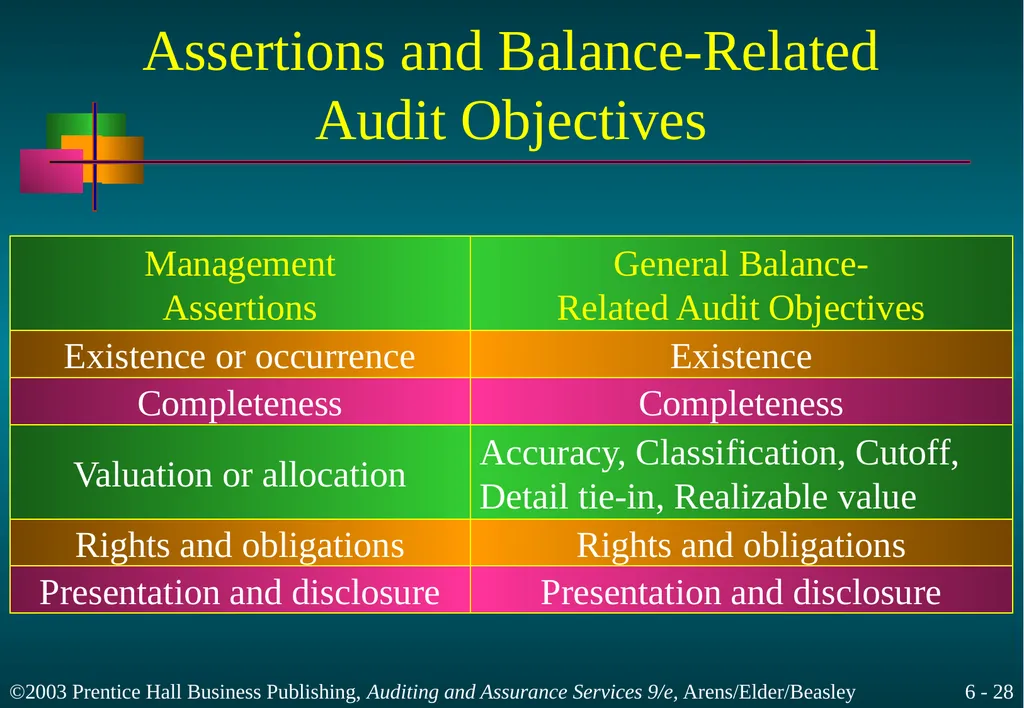
28
Assertions and Balance-Related Audit Objectives Management
Assertions General Balance-
Related Audit Objectives Existence or occurrence Completeness Valuation or allocation Rights and obligations Presentation and disclosure Existence Completeness Accuracy, Classification, Cutoff,
Detail tie-in, Realizable value Rights and obligations Presentation and disclosure<br>
29
Learning Objective 9 Explain the relationship
between audit objectives
and the accumulation
of audit evidence.<br>
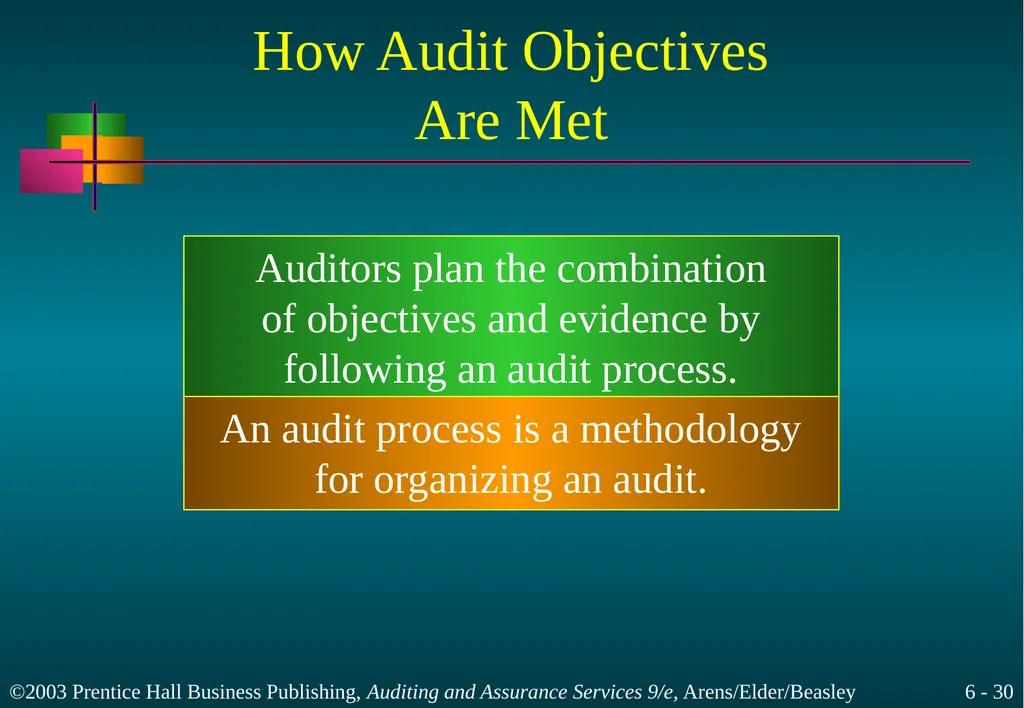
30
How Audit Objectives�Are Met Auditors plan the combination
of objectives and evidence by
following an audit process. An audit process is a methodology
for organizing an audit.<br>
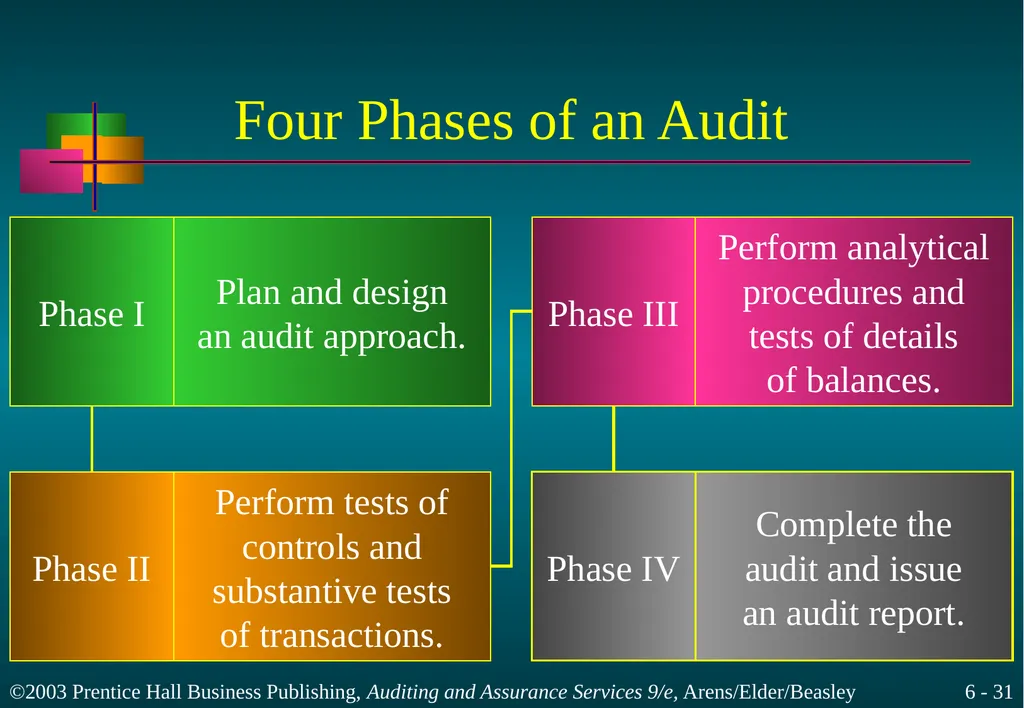
31
Four Phases of an Audit Phase I Phase II Phase III Phase IV Plan and design
an audit approach. Perform tests of
controls and
substantive tests
of transactions. Perform analytical
procedures and
tests of details
of balances. Complete the
audit and issue
an audit report.<br>
33
&
Assurance Service
An Integrated Approach Nine Edition Printed by
Gusnardi
132 230 690<br>