
AUDITING E.MADHU LECUTURER IN COMMERCE
Description: AUDITING E.MADHU LECUTURER IN COMMERCE Introduction to Auditing Definition of auditing Auditing is a systematic examination of financial, operational, or compliance information and processes within an organization to provide an independent
Related Topics
Download Presentation
"AUDITING E.MADHU LECUTURER IN COMMERCE" is the property of its rightful owner. Permission is granted to download and print the materials on this website for personal, non-commercial use only, and to display it on your personal computer provided you do not modify the materials and that you retain all copyright notices contained in the materials. By downloading content from our website, you accept the terms of this agreement.
Presentation Transcript
slide1. AUDITING E.MADHU
LECUTURER IN COMMERCE<br>
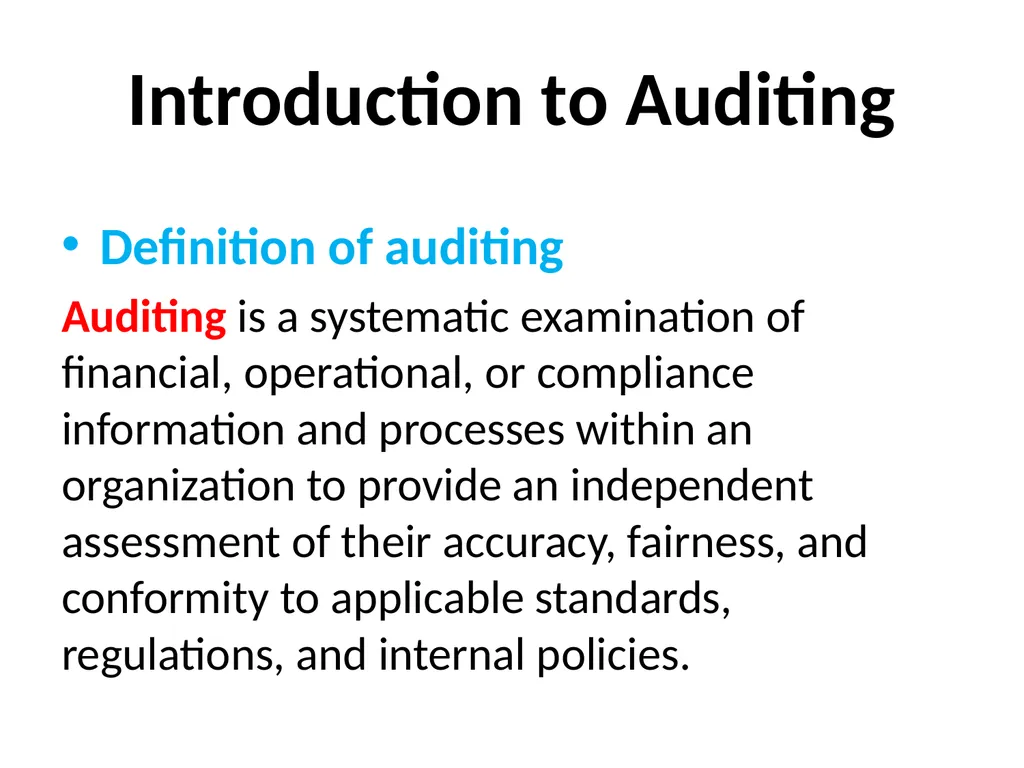
slide2. Introduction to Auditing Definition of auditing
Auditing is a systematic examination of financial, operational, or compliance information and processes within an organization to provide an independent assessment of their accuracy, fairness, and conformity to applicable standards, regulations, and internal policies.<br>
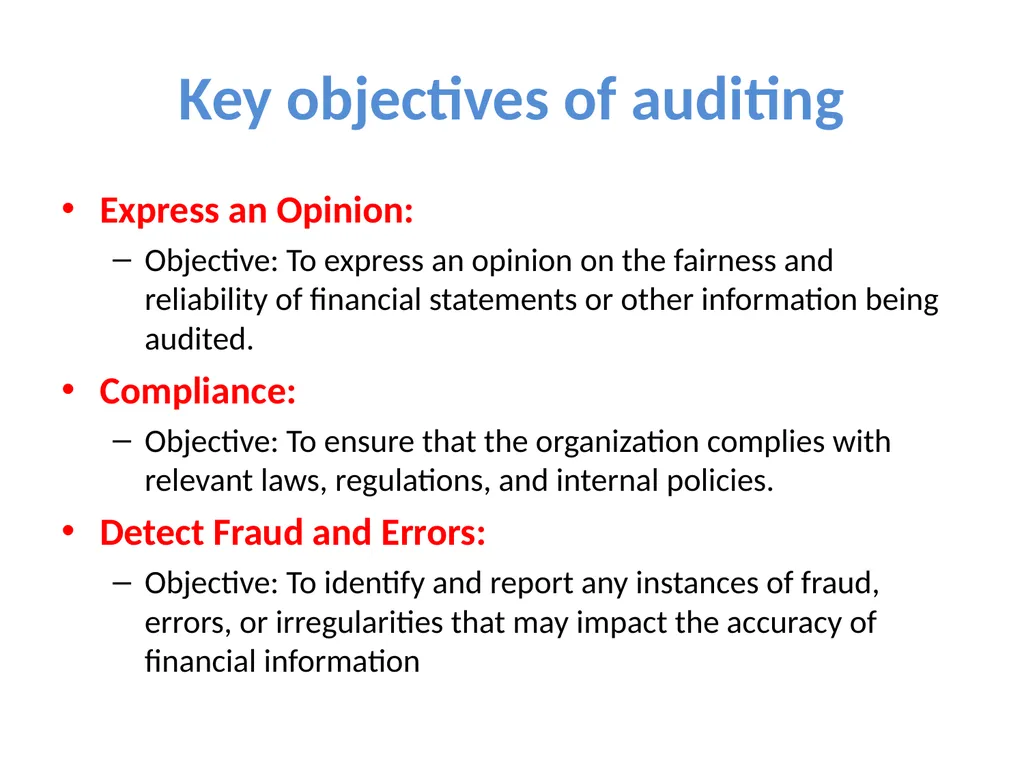
slide3. Key objectives of auditing Express an Opinion:
Objective: To express an opinion on the fairness and reliability of financial statements or other information being audited.
Compliance:
Objective: To ensure that the organization complies with relevant laws, regulations, and internal policies.
Detect Fraud and Errors:
Objective: To identify and report any instances of fraud, errors, or irregularities that may impact the accuracy of financial information<br>
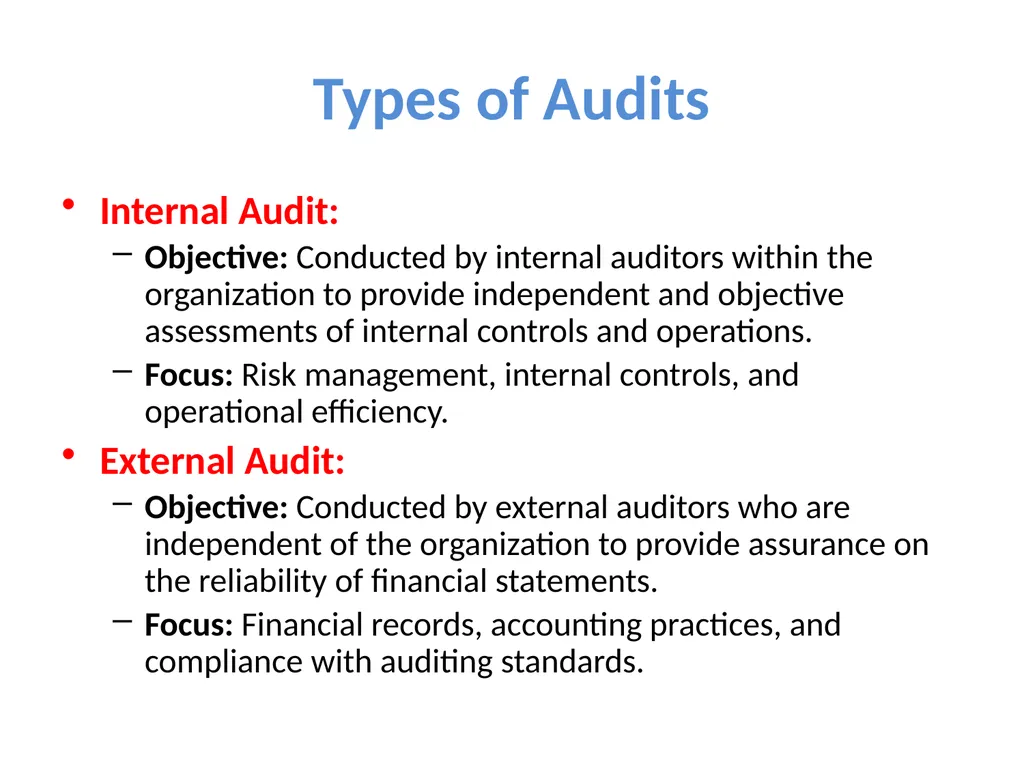
slide4. Types of Audits Internal Audit:
Objective: Conducted by internal auditors within the organization to provide independent and objective assessments of internal controls and operations.
Focus: Risk management, internal controls, and operational efficiency.
External Audit:
Objective: Conducted by external auditors who are independent of the organization to provide assurance on the reliability of financial statements.
Focus: Financial records, accounting practices, and compliance with auditing standards.<br>
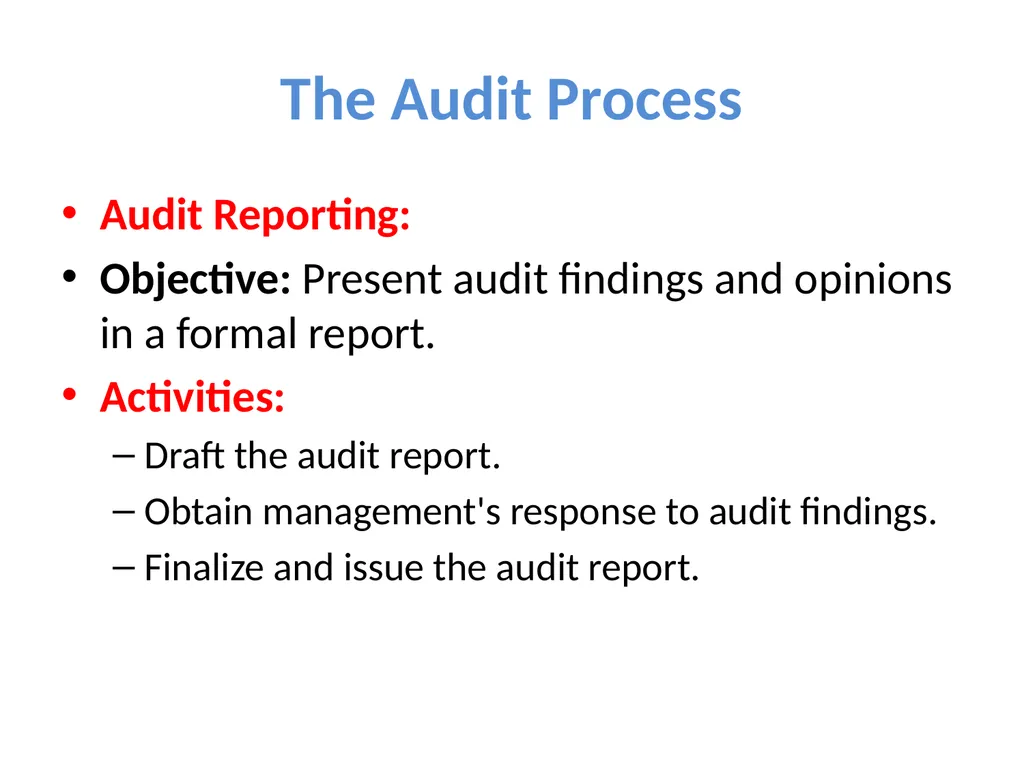
slide5. The Audit Process Audit Reporting:
Objective: Present audit findings and opinions in a formal report.
Activities:
Draft the audit report.
Obtain management's response to audit findings.
Finalize and issue the audit report.<br>
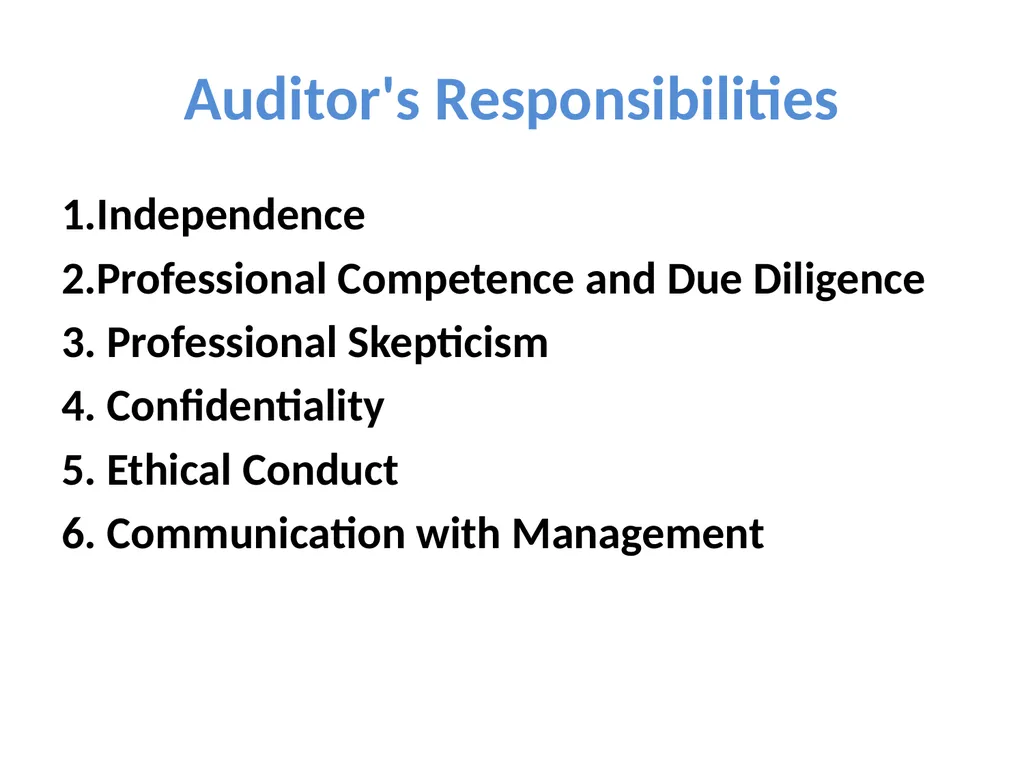
slide6. Auditor's Responsibilities 1.Independence
2.Professional Competence and Due Diligence
3. Professional Skepticism
4. Confidentiality
5. Ethical Conduct
6. Communication with Management<br>
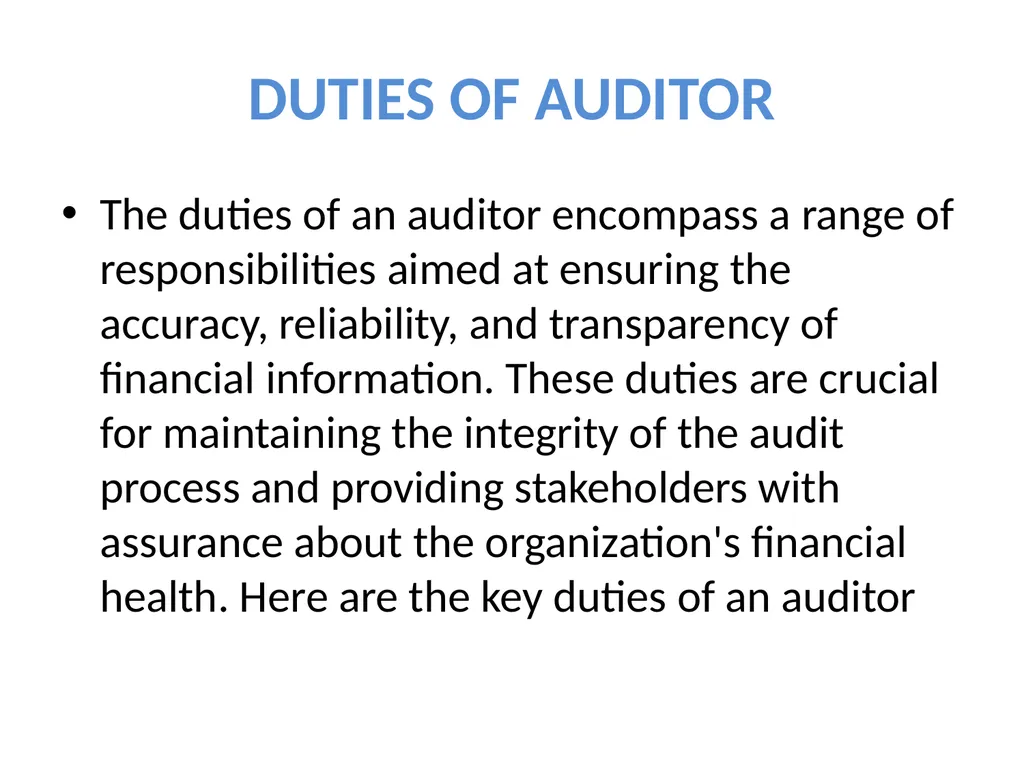
slide7. DUTIES OF AUDITOR The duties of an auditor encompass a range of responsibilities aimed at ensuring the accuracy, reliability, and transparency of financial information. These duties are crucial for maintaining the integrity of the audit process and providing stakeholders with assurance about the organization's financial health. Here are the key duties of an auditor<br>
slide8. AUDIT NOTE BOOK An audit notebook, also known as an audit working papers or audit documentation, is a crucial tool used by auditors to record and organize the evidence, procedures, and findings throughout the audit process. The audit notebook serves as a comprehensive record of the audit engagement and supports the final audit report.<br>
slide9. Internal vs. External Audits An external audit, also known as an independent audit, is a systematic examination of an organization's financial statements, operations, and internal controls conducted by an independent external auditor.
The primary objective of an external audit is to provide an opinion on the fairness and reliability of an organization's financial statements.
This opinion is crucial for stakeholders, such as investors, creditors, and regulatory authorities, as it enhances confidence in the accuracy of the financial information presented by the organization.<br>
slide10. Vouching Definition: Vouching involves selecting individual transactions from the financial records and examining the supporting documents and evidence that substantiate those transactions.
Purpose: The primary purpose of vouching is to ensure that the transactions reported in the financial statements are valid, properly authorized, and supported by appropriate documentation.<br>
slide11. VOUCHING OF TRADING TRANSACTIONS Vouching of trading transactions is a critical process in auditing, particularly in the context of businesses engaged in buying and selling goods.
The term "trading transactions" typically refers to transactions related to the purchase and sale of goods, and vouching is the process of verifying these transactions by examining supporting documents.<br>
slide12. VERIFICATION AND VALUATION OF ASSETS The verification and valuation of assets are integral components of the audit process.
Auditors assess the existence, ownership, and valuation of assets to ensure that a company's financial statements present a true and fair view of its financial position.
Here's how auditors typically approach the verification and valuation of assets<br>
slide13. Audit Report An audit report is a formal document issued by an auditor at the conclusion of an audit engagement.
The primary purpose of the audit report is to communicate the auditor's opinion on the fairness and reliability of the financial statements of an organization.
The audit report is an essential component of the external audit process, providing assurance to stakeholders about the accuracy of the financial information presented by the audited entity.
Here are key elements typically included in an audit report<br>
LECUTURER IN COMMERCE<br>
slide2. Introduction to Auditing Definition of auditing
Auditing is a systematic examination of financial, operational, or compliance information and processes within an organization to provide an independent assessment of their accuracy, fairness, and conformity to applicable standards, regulations, and internal policies.<br>
slide3. Key objectives of auditing Express an Opinion:
Objective: To express an opinion on the fairness and reliability of financial statements or other information being audited.
Compliance:
Objective: To ensure that the organization complies with relevant laws, regulations, and internal policies.
Detect Fraud and Errors:
Objective: To identify and report any instances of fraud, errors, or irregularities that may impact the accuracy of financial information<br>
slide4. Types of Audits Internal Audit:
Objective: Conducted by internal auditors within the organization to provide independent and objective assessments of internal controls and operations.
Focus: Risk management, internal controls, and operational efficiency.
External Audit:
Objective: Conducted by external auditors who are independent of the organization to provide assurance on the reliability of financial statements.
Focus: Financial records, accounting practices, and compliance with auditing standards.<br>
slide5. The Audit Process Audit Reporting:
Objective: Present audit findings and opinions in a formal report.
Activities:
Draft the audit report.
Obtain management's response to audit findings.
Finalize and issue the audit report.<br>
slide6. Auditor's Responsibilities 1.Independence
2.Professional Competence and Due Diligence
3. Professional Skepticism
4. Confidentiality
5. Ethical Conduct
6. Communication with Management<br>
slide7. DUTIES OF AUDITOR The duties of an auditor encompass a range of responsibilities aimed at ensuring the accuracy, reliability, and transparency of financial information. These duties are crucial for maintaining the integrity of the audit process and providing stakeholders with assurance about the organization's financial health. Here are the key duties of an auditor<br>
slide8. AUDIT NOTE BOOK An audit notebook, also known as an audit working papers or audit documentation, is a crucial tool used by auditors to record and organize the evidence, procedures, and findings throughout the audit process. The audit notebook serves as a comprehensive record of the audit engagement and supports the final audit report.<br>
slide9. Internal vs. External Audits An external audit, also known as an independent audit, is a systematic examination of an organization's financial statements, operations, and internal controls conducted by an independent external auditor.
The primary objective of an external audit is to provide an opinion on the fairness and reliability of an organization's financial statements.
This opinion is crucial for stakeholders, such as investors, creditors, and regulatory authorities, as it enhances confidence in the accuracy of the financial information presented by the organization.<br>
slide10. Vouching Definition: Vouching involves selecting individual transactions from the financial records and examining the supporting documents and evidence that substantiate those transactions.
Purpose: The primary purpose of vouching is to ensure that the transactions reported in the financial statements are valid, properly authorized, and supported by appropriate documentation.<br>
slide11. VOUCHING OF TRADING TRANSACTIONS Vouching of trading transactions is a critical process in auditing, particularly in the context of businesses engaged in buying and selling goods.
The term "trading transactions" typically refers to transactions related to the purchase and sale of goods, and vouching is the process of verifying these transactions by examining supporting documents.<br>
slide12. VERIFICATION AND VALUATION OF ASSETS The verification and valuation of assets are integral components of the audit process.
Auditors assess the existence, ownership, and valuation of assets to ensure that a company's financial statements present a true and fair view of its financial position.
Here's how auditors typically approach the verification and valuation of assets<br>
slide13. Audit Report An audit report is a formal document issued by an auditor at the conclusion of an audit engagement.
The primary purpose of the audit report is to communicate the auditor's opinion on the fairness and reliability of the financial statements of an organization.
The audit report is an essential component of the external audit process, providing assurance to stakeholders about the accuracy of the financial information presented by the audited entity.
Here are key elements typically included in an audit report<br>