Automatic vs. compression splices Chad Nicolay Product manager-connectoRs Splice - overview Automatic Quick, user friendly installation no external tools or dies needed Internal spring and jaws used to grab conductor Tensile load sets the
"Automatic vs. compression splices Chad Nicolay" is the property of its rightful owner. Permission is granted to
download and print the materials on this website for personal, non-commercial use only, and to display it
on your personal computer provided you do not modify the materials and that you retain all copyright
notices contained in the materials. By downloading content from our website, you accept the terms of this
agreement.
Presentation Transcript
01
Automatic vs. compression splices Chad Nicolay
Product manager-connectoRs<br>
02
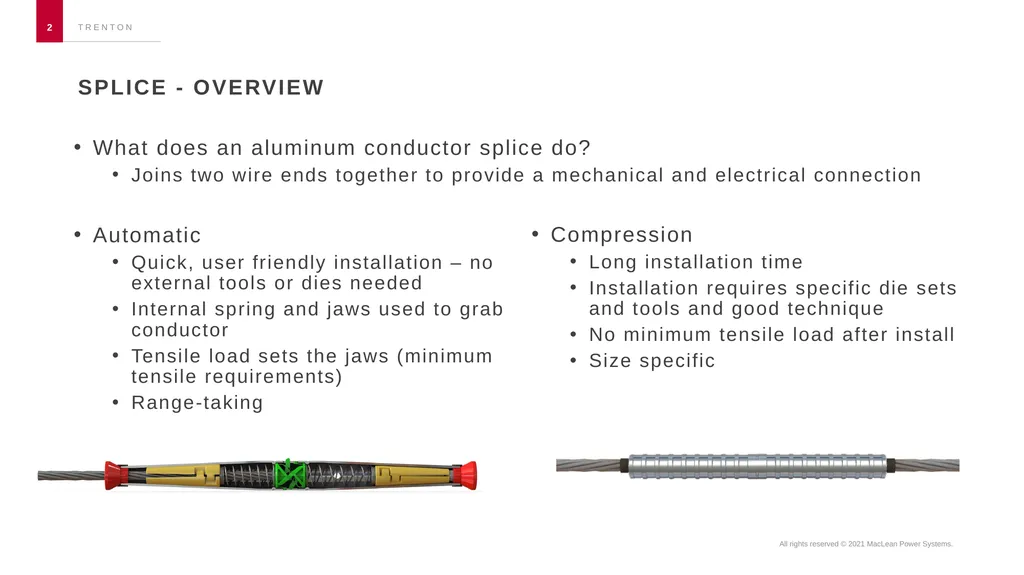
Splice - overview Automatic
Quick, user friendly installation – no external tools or dies needed
Internal spring and jaws used to grab conductor
Tensile load sets the jaws (minimum tensile requirements)
Range-taking trenton 2 Compression
Long installation time
Installation requires specific die sets and tools and good technique
No minimum tensile load after install
Size specific What does an aluminum conductor splice do?
Joins two wire ends together to provide a mechanical and electrical connection<br>
03
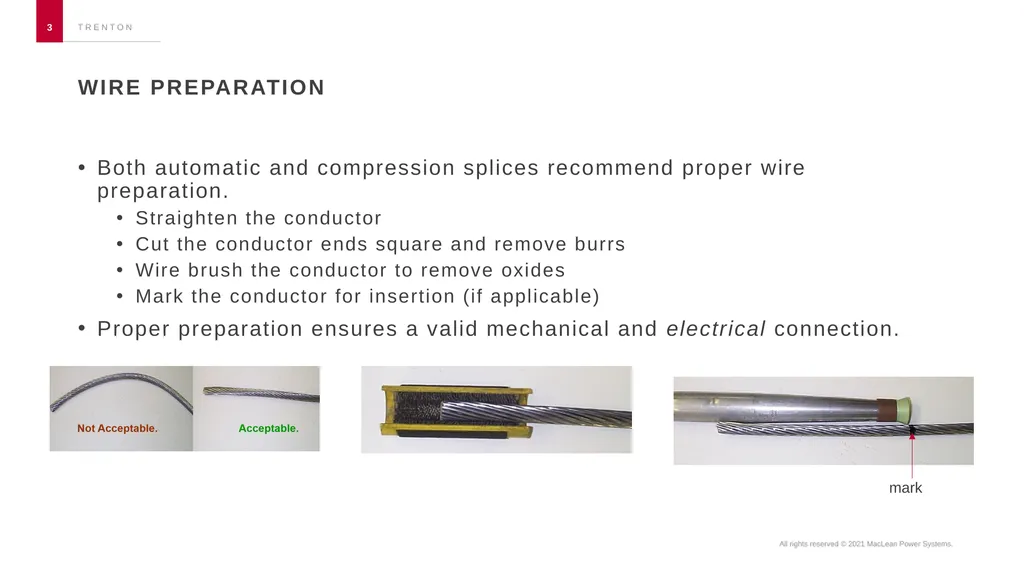
Wire preparation Both automatic and compression splices recommend proper wire preparation.
Straighten the conductor
Cut the conductor ends square and remove burrs
Wire brush the conductor to remove oxides
Mark the conductor for insertion (if applicable)
Proper preparation ensures a valid mechanical and electrical connection. trenton 3 mark<br>
04
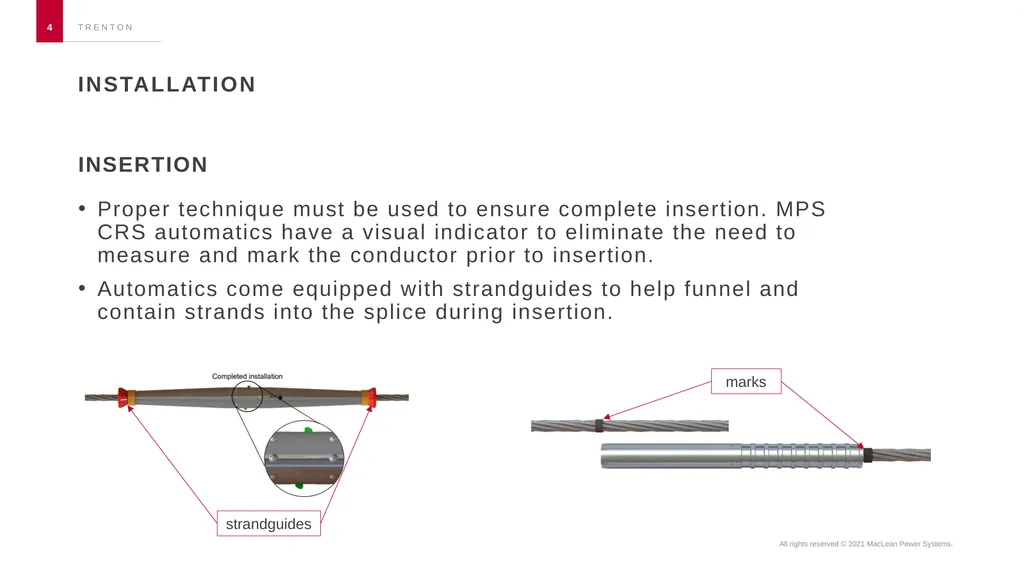
INSERTION Proper technique must be used to ensure complete insertion. MPS CRS automatics have a visual indicator to eliminate the need to measure and mark the conductor prior to insertion.
Automatics come equipped with strandguides to help funnel and contain strands into the splice during insertion. trenton 4 Installation strandguides<br>
05
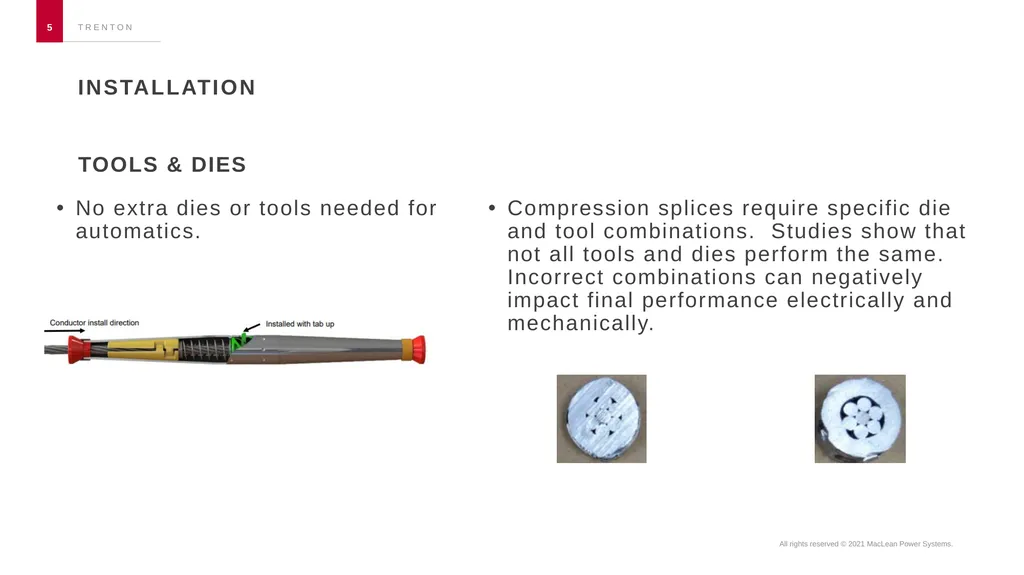
TOOLS & DIES Compression splices require specific die and tool combinations. Studies show that not all tools and dies perform the same. Incorrect combinations can negatively impact final performance electrically and mechanically. trenton 5 Installation No extra dies or tools needed for automatics.<br>
06
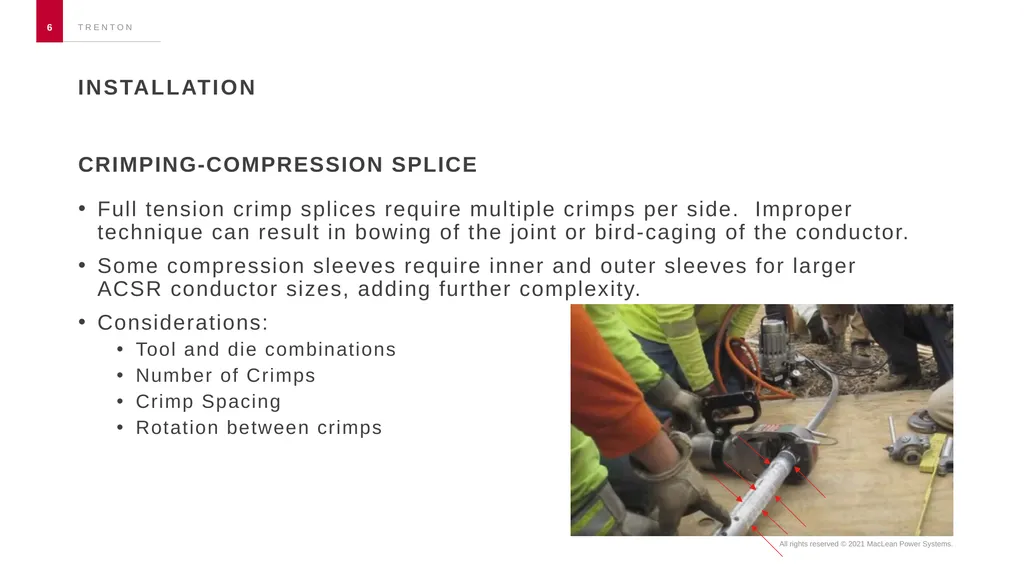
CRIMPING-COMPRESSION SPLICE Full tension crimp splices require multiple crimps per side. Improper technique can result in bowing of the joint or bird-caging of the conductor.
Some compression sleeves require inner and outer sleeves for larger ACSR conductor sizes, adding further complexity.
Considerations:
Tool and die combinations
Number of Crimps
Crimp Spacing
Rotation between crimps trenton 6 Installation<br>
07
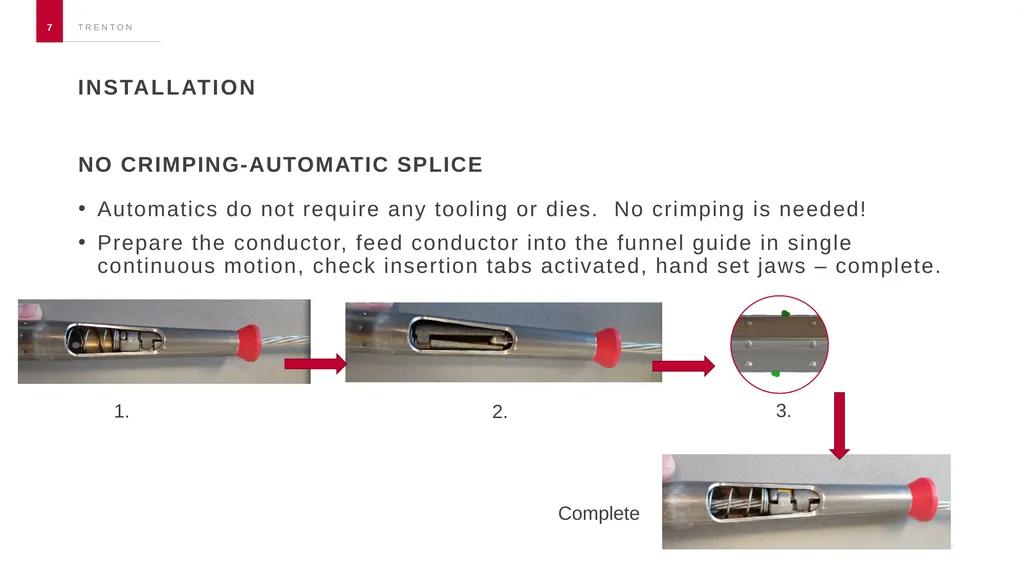
NO CRIMPING-AUTOMATIC SPLICE Automatics do not require any tooling or dies. No crimping is needed!
Prepare the conductor, feed conductor into the funnel guide in single continuous motion, check insertion tabs activated, hand set jaws – complete. trenton 7 Installation 1. 2. 3. Complete<br>
08
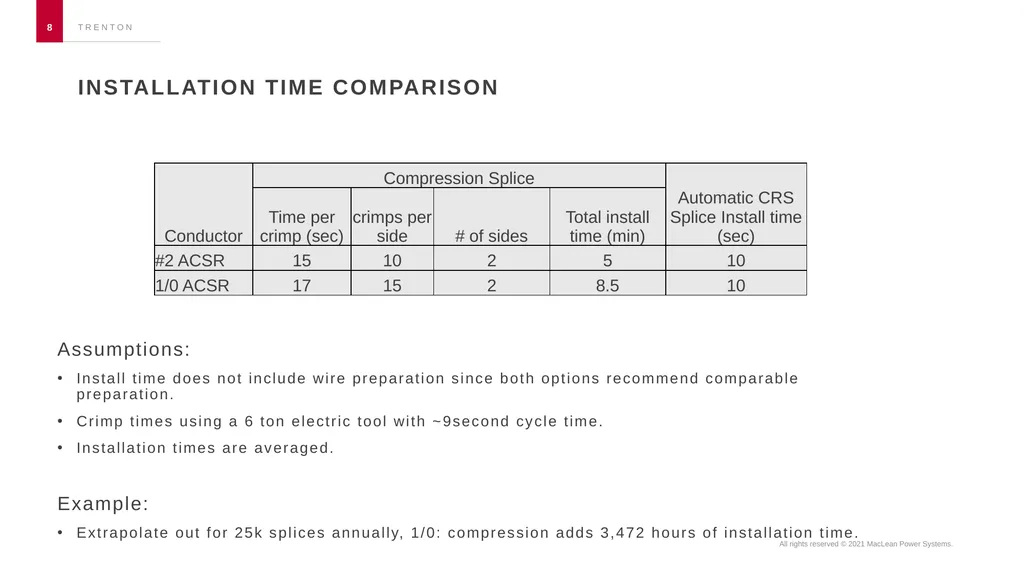
trenton 8 Installation TIME Comparison Assumptions:
Install time does not include wire preparation since both options recommend comparable preparation.
Crimp times using a 6 ton electric tool with ~9second cycle time.
Installation times are averaged.
Example:
Extrapolate out for 25k splices annually, 1/0: compression adds 3,472 hours of installation time.<br>
09
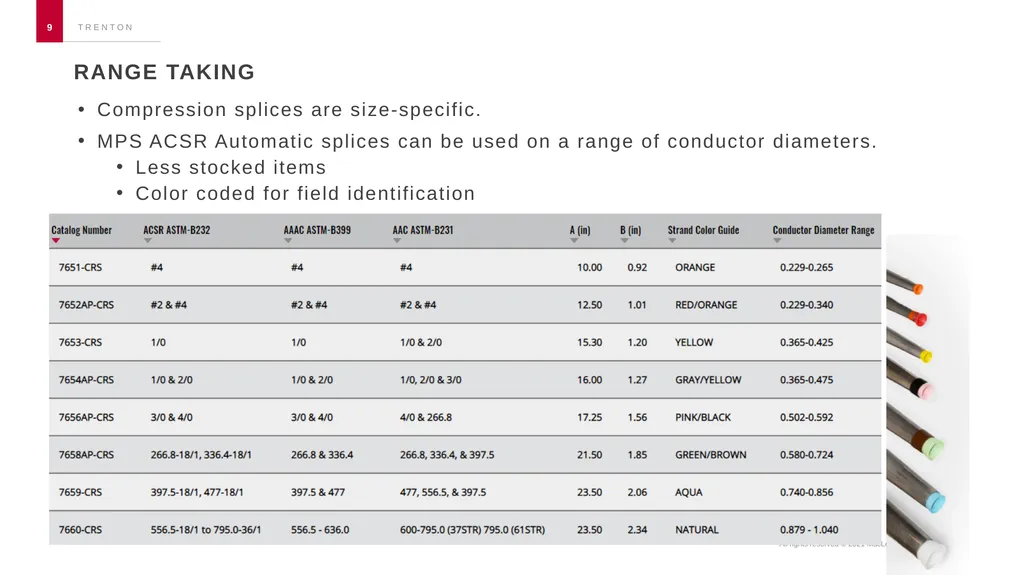
RANGE TAKING Compression splices are size-specific.
MPS ACSR Automatic splices can be used on a range of conductor diameters.
Less stocked items
Color coded for field identification trenton 9<br>
10
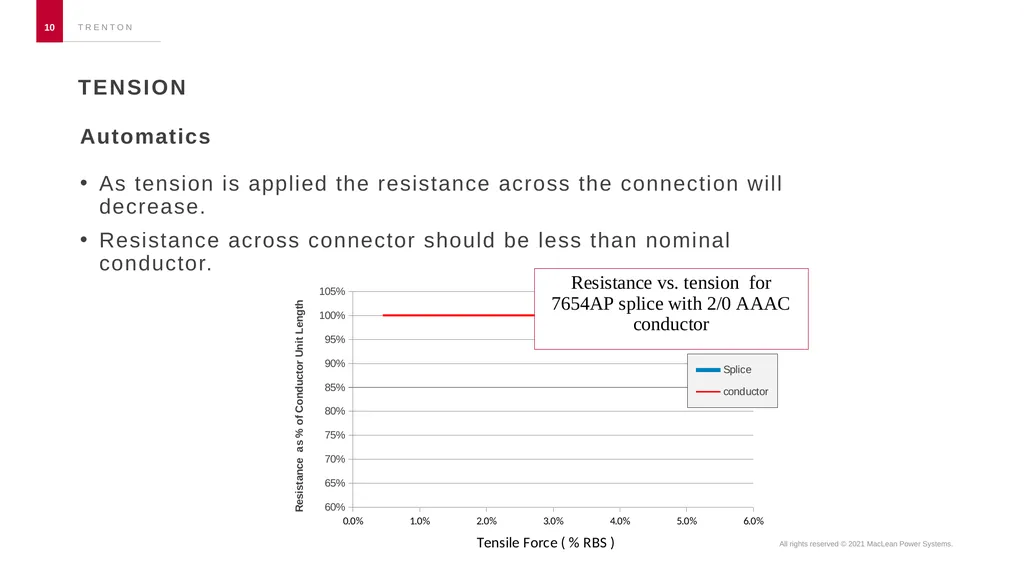
Automatics As tension is applied the resistance across the connection will decrease.
Resistance across connector should be less than nominal conductor. trenton 10 Tension<br>
11
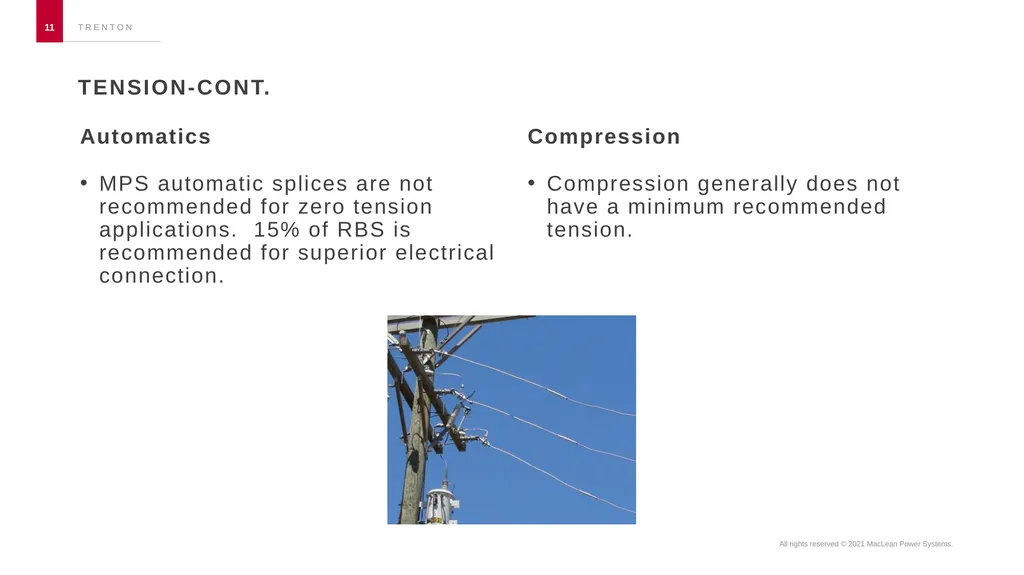
Automatics MPS automatic splices are not recommended for zero tension applications. 15% of RBS is recommended for superior electrical connection. Compression Compression generally does not have a minimum recommended tension. trenton 11 Tension-cont.<br>
12
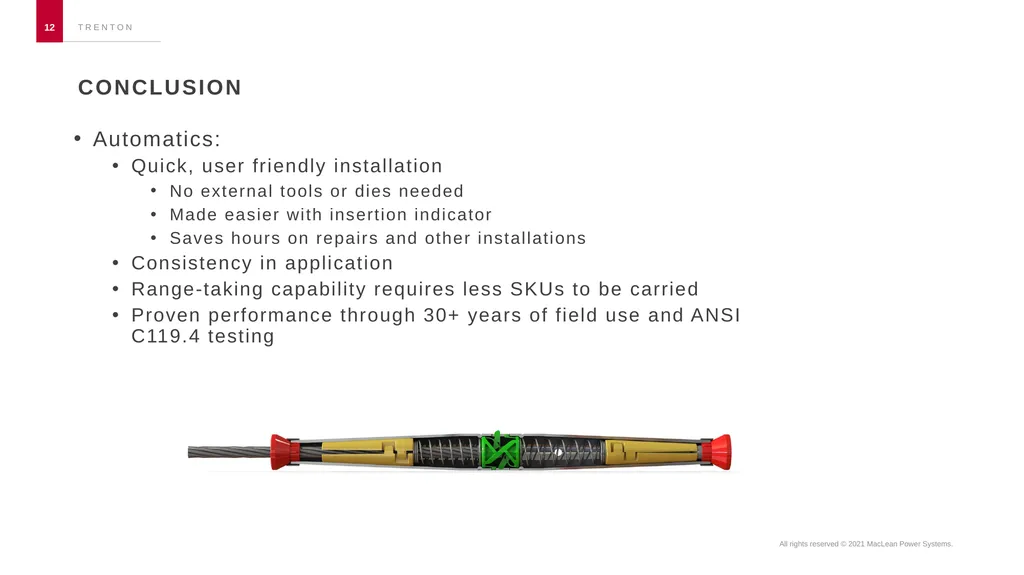
conclusion Automatics:
Quick, user friendly installation
No external tools or dies needed
Made easier with insertion indicator
Saves hours on repairs and other installations
Consistency in application
Range-taking capability requires less SKUs to be carried
Proven performance through 30+ years of field use and ANSI C119.4 testing trenton 12<br>
13
For more information, visit:
macleanpower.com/connectors/<br>