
Banking Agenda Start time: ____ Break time: ____


Description: Banking Agenda Start time: Break time: (10 minutes) End time: Please set phones to silent ring and answer outside of the room. Banking This module covers: The basic services that financial institutions offer How to choose the
Related Topics
Download Presentation
"Banking Agenda Start time: ____ Break time: ____" is the property of its rightful owner. Permission is granted to download and print the materials on this website for personal, non-commercial use only, and to display it on your personal computer provided you do not modify the materials and that you retain all copyright notices contained in the materials. By downloading content from our website, you accept the terms of this agreement.
Presentation Transcript
slide1. Banking<br>
slide2. Agenda Start time: ____
Break time: ____ (10 minutes)
End time: ____
Please set phones to silent ring and answer outside of the room.<br>
slide3. Banking This module covers:
The basic services that financial institutions offer
How to choose the type of banking account you need
What your rights and responsibilities are when using a financial institution
How to keep your accounts safe
What to do if you think someone may be using your account illegally<br>
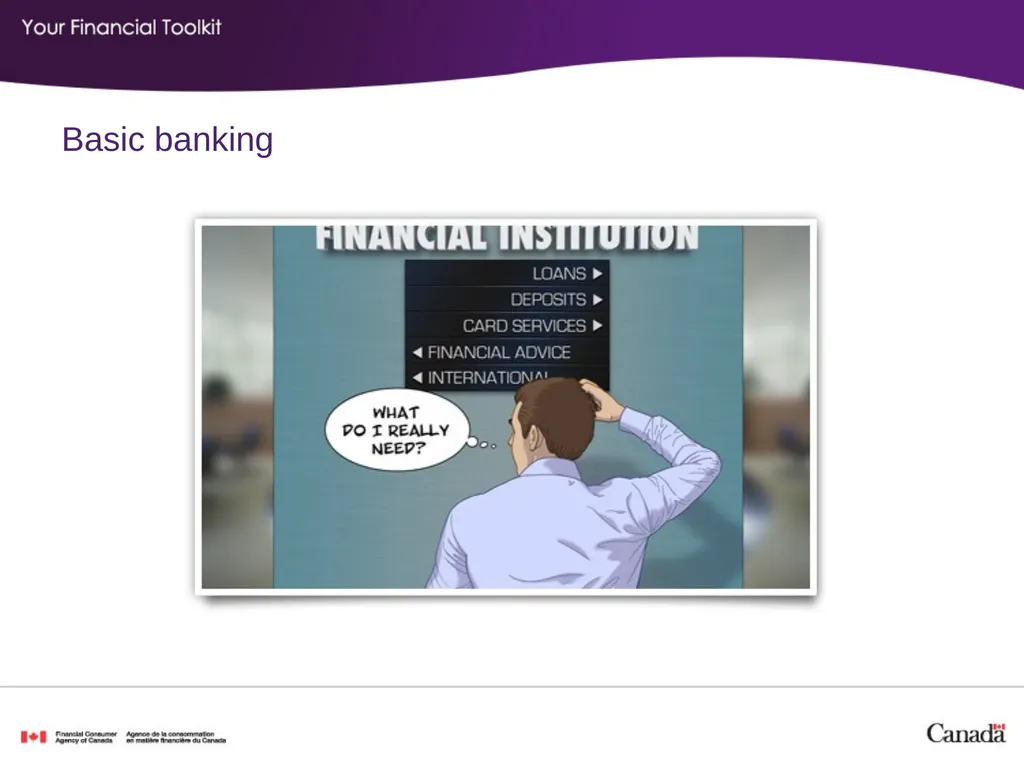
slide4. Basic banking<br>
slide5. Basic banking This section covers:
Basic banking services, such as deposits and card services
How the deposit insurance system keeps your deposits safe
How to use banking services for your everyday needs<br>
slide6. Banking services Banks, credit unions, caisses populaires and trust companies offer:
Deposit services
Card services
Loans
And other services<br>
slide7. Deposit insurance Protects depositors if insured institution cannot return deposits.
Different deposit insurance systems:
One for institutions regulated by federal government
Others for institutions regulated by province or territory
Check which insurance system applies to your deposit and what the insurance limits are.<br>
slide8. Ways to do your banking Financial institutions offer you many different ways to do your banking, these are:
In person
By phone
By Internet or mobile device
By automated teller machine
By debit card reader (point-of-sale terminal or POS)<br>
slide9. Banking for your future Consider automatic transfers to your savings account. This helps you:
Save for emergencies
Prepare for big expenses
Start on long-term savings and investments<br>
slide10. Summary of key messages Deposit institutions include banks, credit unions, caisses populaires and trust companies
They help you manage your money and keep it safe
Main services include deposits, debit card services and loans
Services are available:
In person
Online by phone or mobile
Through automated teller machines<br>
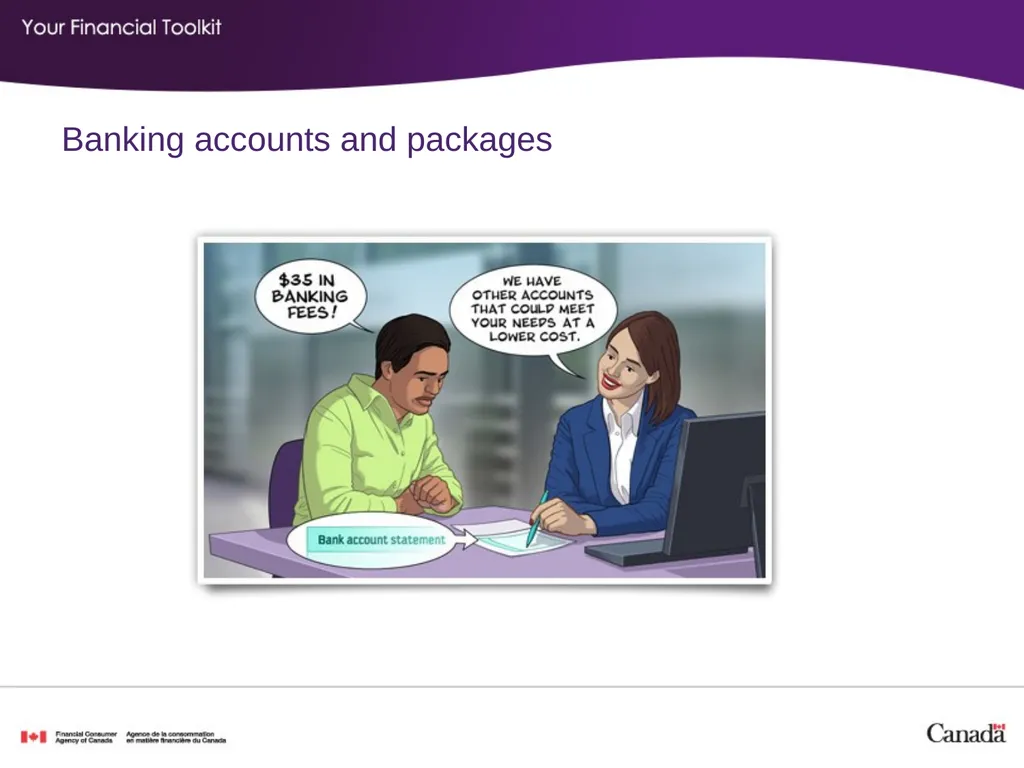
slide11. Banking accounts and packages<br>
slide12. Banking accounts and packages This section covers:
The main features of chequing and savings accounts
The interest paid and how it affects your savings
The account fees you’ll pay and how to reduce them
How to read your account statement<br>
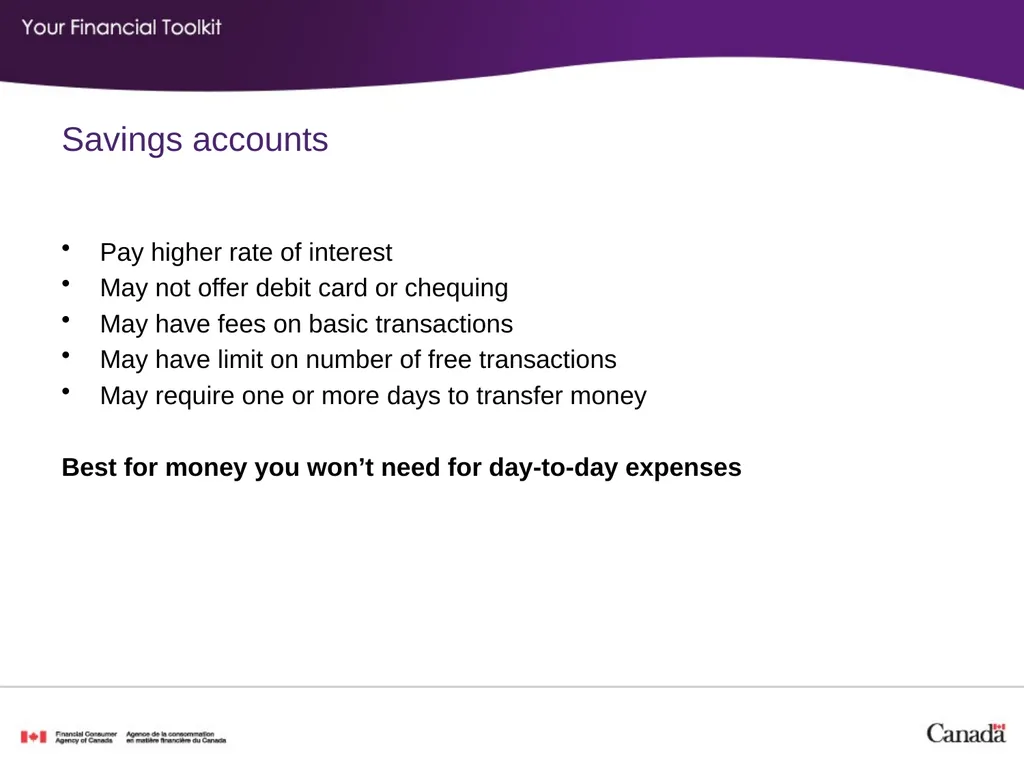
slide13. Savings accounts Pay higher rate of interest
May not offer debit card or chequing
May have fees on basic transactions
May have limit on number of free transactions
May require one or more days to transfer money
Best for money you won’t need for day-to-day expenses<br>
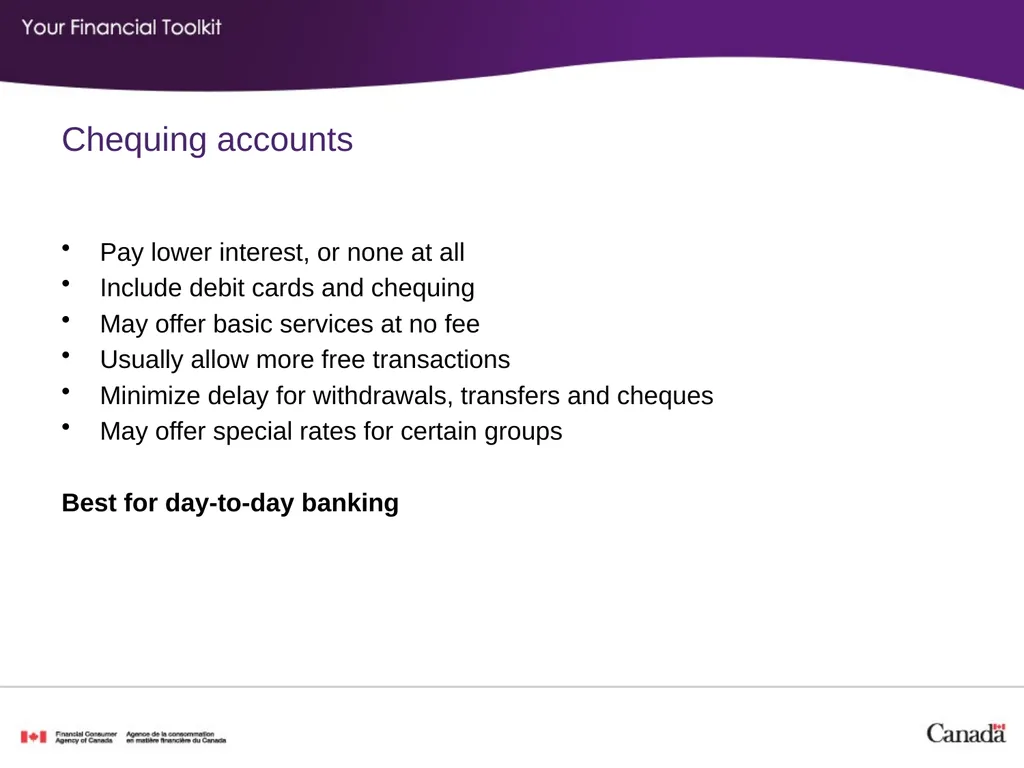
slide14. Chequing accounts Pay lower interest, or none at all
Include debit cards and chequing
May offer basic services at no fee
Usually allow more free transactions
Minimize delay for withdrawals, transfers and cheques
May offer special rates for certain groups
Best for day-to-day banking<br>
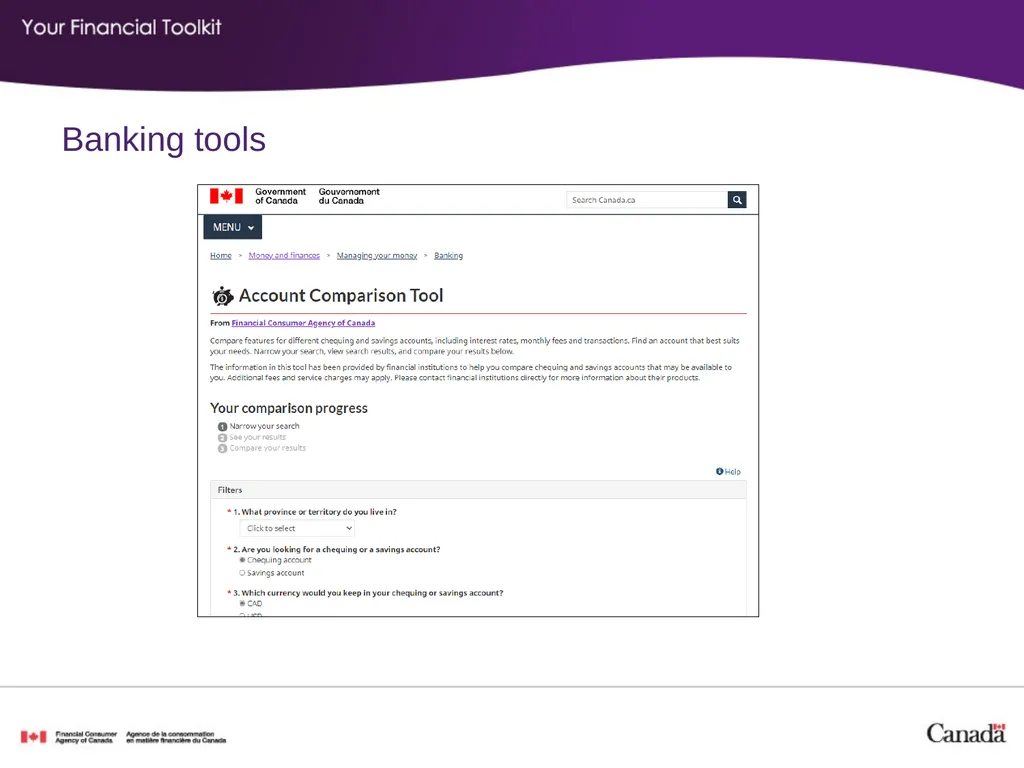
slide15. Banking tools<br>
slide16. Interest Interest paid on your accounts adds to your savings.
Savings accounts normally pay compound interest:
Interest on interest previously paid into your account
Some investments pay simple interest:
Interest is calculated on the original amount only<br>
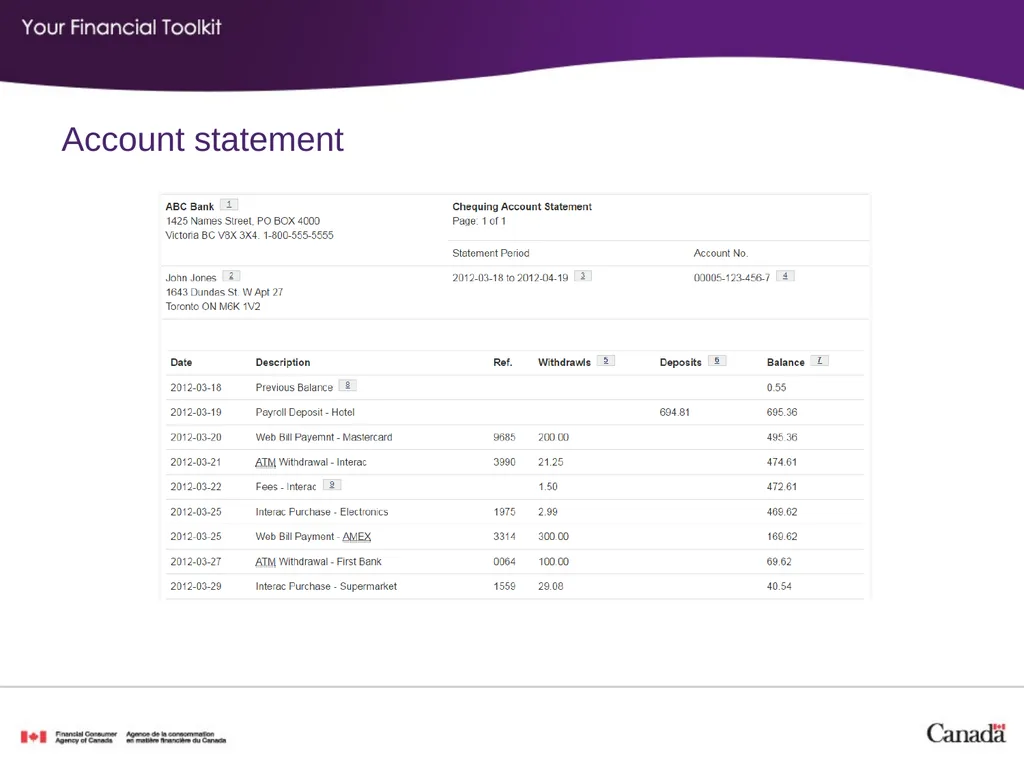
slide17. Account statement<br>
slide18. Manage your fees Manage your account fees to reduce your banking costs.
Watch how many transactions you make
Use the cheapest method to do your banking
Get only the records you really need
Watch your account balance
Ask for special fees based on your age or minimum balance
Negotiate for lower fees<br>
slide19. Summary of key messages Pick a convenient location
Get only the services you need
Pick the account with the lowest fees for the services you need
Compare rates before you open an account
Check your account statements every month<br>
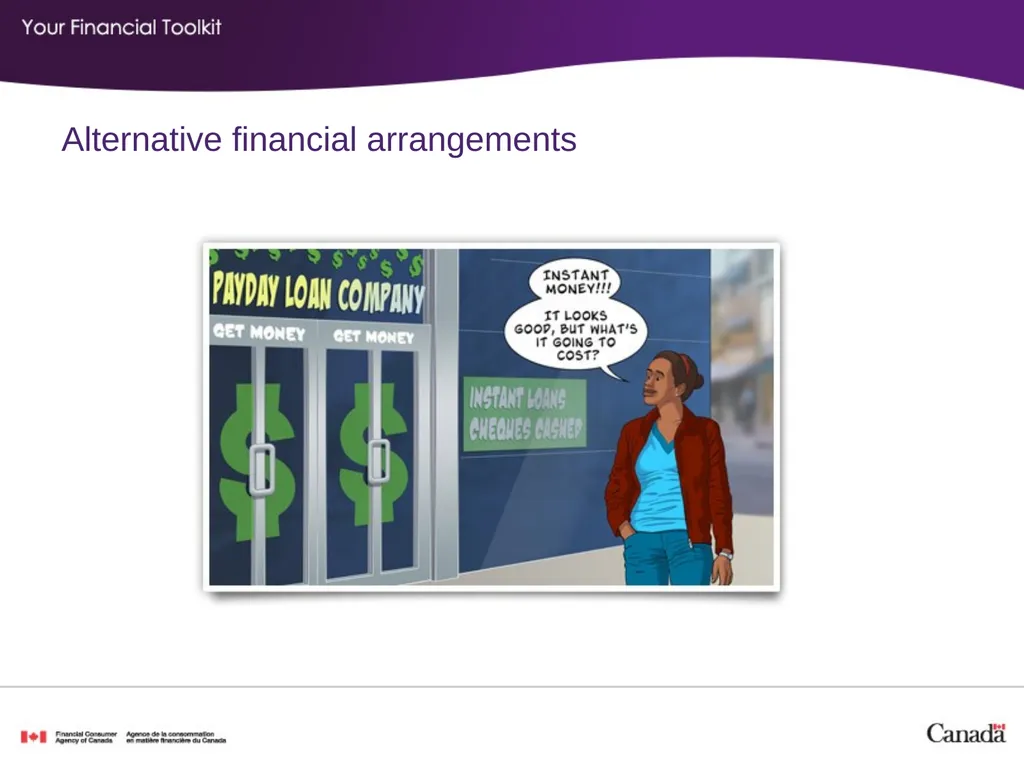
slide20. Alternative financial arrangements<br>
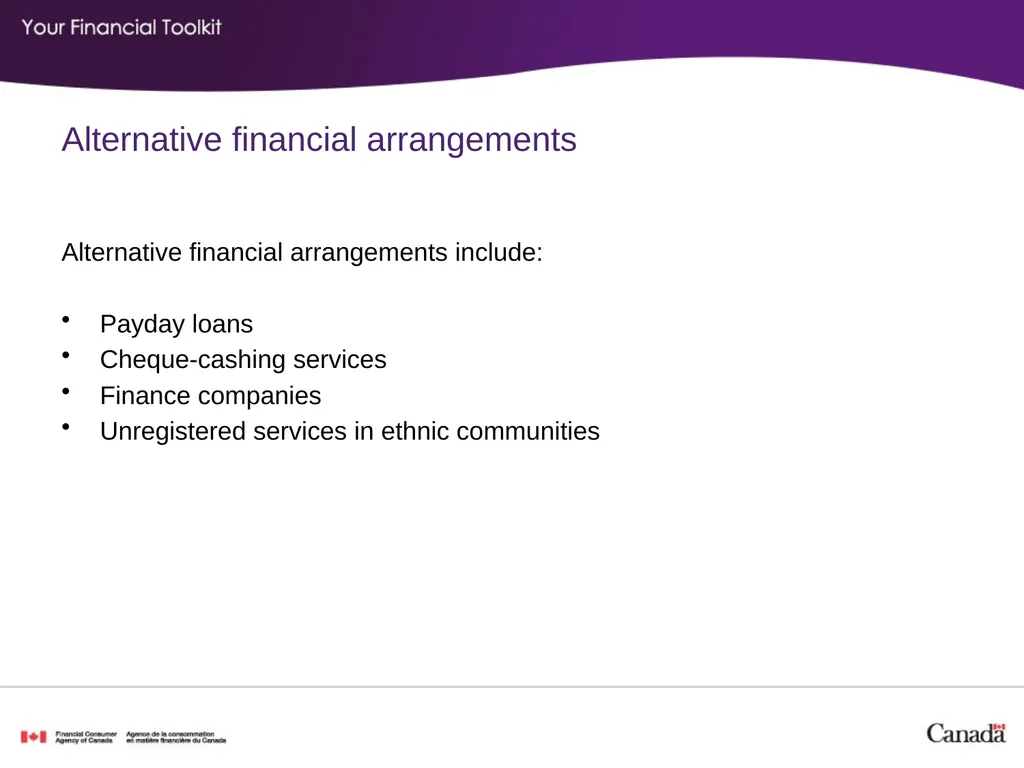
slide21. Alternative financial arrangements Alternative financial arrangements include:
Payday loans
Cheque-cashing services
Finance companies
Unregistered services in ethnic communities<br>
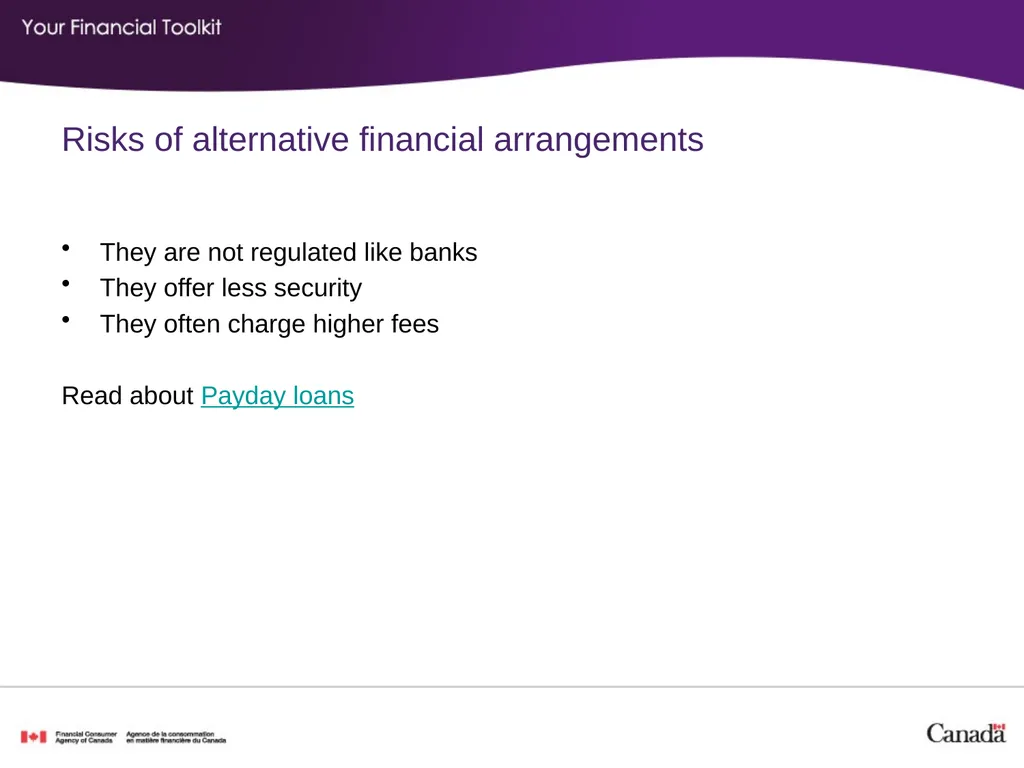
slide22. Risks of alternative financial arrangements They are not regulated like banks
They offer less security
They often charge higher fees
Read about Payday loans<br>
slide23. Your rights and responsibilities<br>
slide24. Your rights and responsibilities This section covers:
Your rights when you use a regulated financial institution
The responsibilities you have to keep your account secure
How to make a complaint about a financial institution<br>
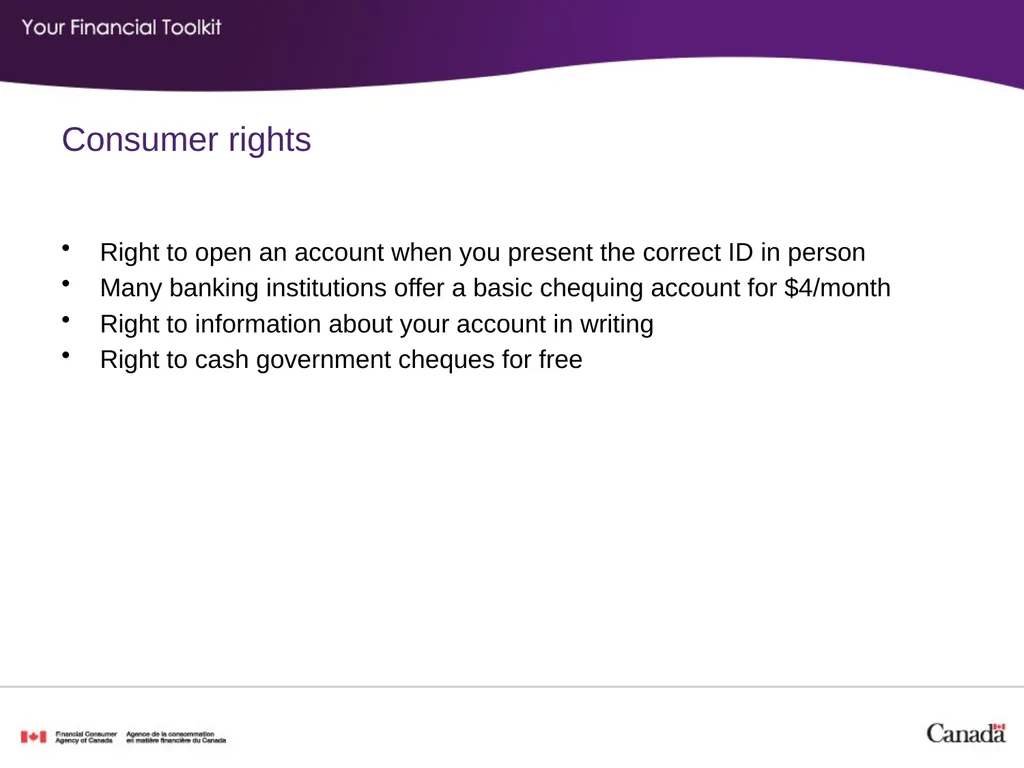
slide25. Consumer rights Right to open an account when you present the correct ID in person
Many banking institutions offer a basic chequing account for $4/month
Right to information about your account in writing
Right to cash government cheques for free<br>
slide26. Your responsibilities Read and understand account agreement
Check your account statement regularly
Report anything you think is not right
Keep your account documents, passwords and PINs secure<br>
slide27. The debit card code A voluntary code that protects you when you use debit card services in Canada.
You must:
Choose a PIN that is hard to guess
Keep your PIN secure
Check your account statements
Report problems to your financial institution
For full details, go to the Financial Consumer Agency of Canada’s information on the Canadian Code of Practice for Consumer Debit Card Services.<br>
slide28. Making complaints Financial institutions must have a way for customers to make complaints.
Step 1: Discuss problems with local branch
Step 2: Ask for review by senior bank official
Step 3: Ask for review by an independent official
Contact federal, provincial or territorial regulator
For more information, contact FCAC.<br>
slide29. Summary of key messages You have rights at your financial institution
You can complain if your rights are not honoured
Independent officers can help<br>
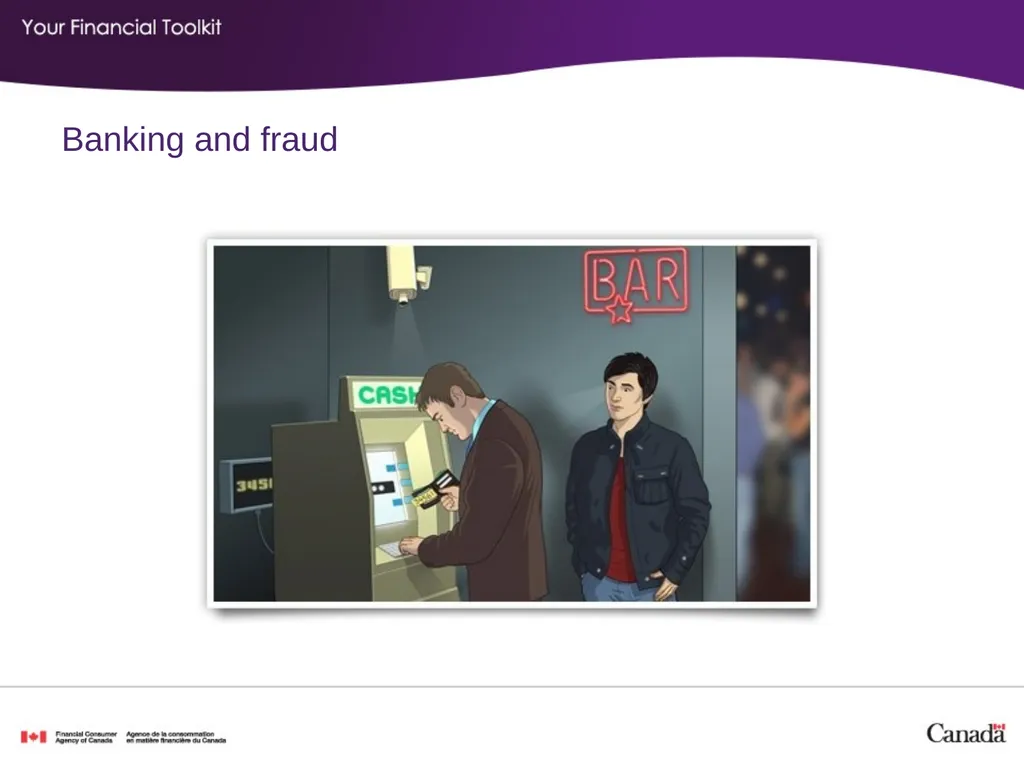
slide30. Banking and fraud<br>
slide31. Banking and fraud This section covers:
How debit card fraud happens
How to protect yourself from debit card fraud
What to do if you are a victim of debit card fraud<br>
slide32. Debit card fraud Debit card fraud can happen with:
An altered card reader or ATM
A thief who watches you enter your PIN
A separate card reader
A stranger who steals your card and PIN<br>
slide33. Protect yourself from debit card fraud Debit card tips:
Choose a PIN that’s hard to guess
Hide your PIN and don’t share it
Keep your debit card in a safe place
Don’t lend your card
Swipe your card yourself (or watch it)
Notify the card issuer if:
Your card stops working
Your statement shows a purchase you didn’t make
Your statement does not show a purchase you did make<br>
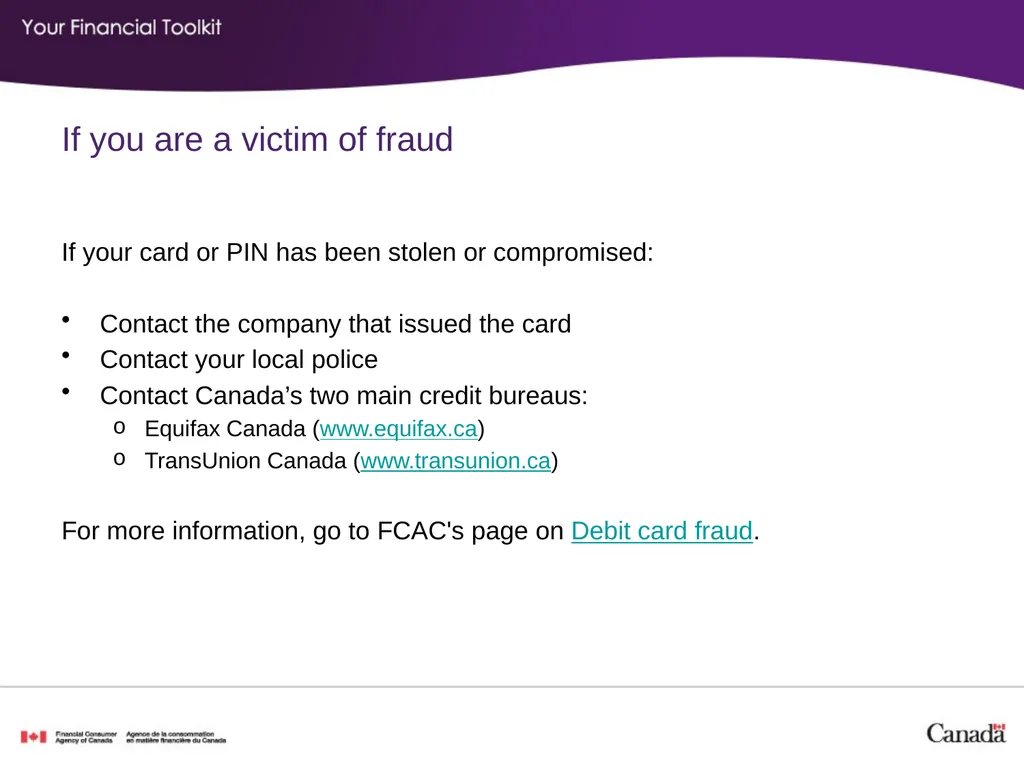
slide34. If you are a victim of fraud If your card or PIN has been stolen or compromised:
Contact the company that issued the card
Contact your local police
Contact Canada’s two main credit bureaus:
Equifax Canada (www.equifax.ca)
TransUnion Canada (www.transunion.ca)
For more information, go to FCAC's page on Debit card fraud.<br>
slide35. Summary of key messages Stay alert to fraud, it can happen to you
Keep card, PIN and other information secure and confidential
If you become a victim, tell the company that issued the card and the police<br>
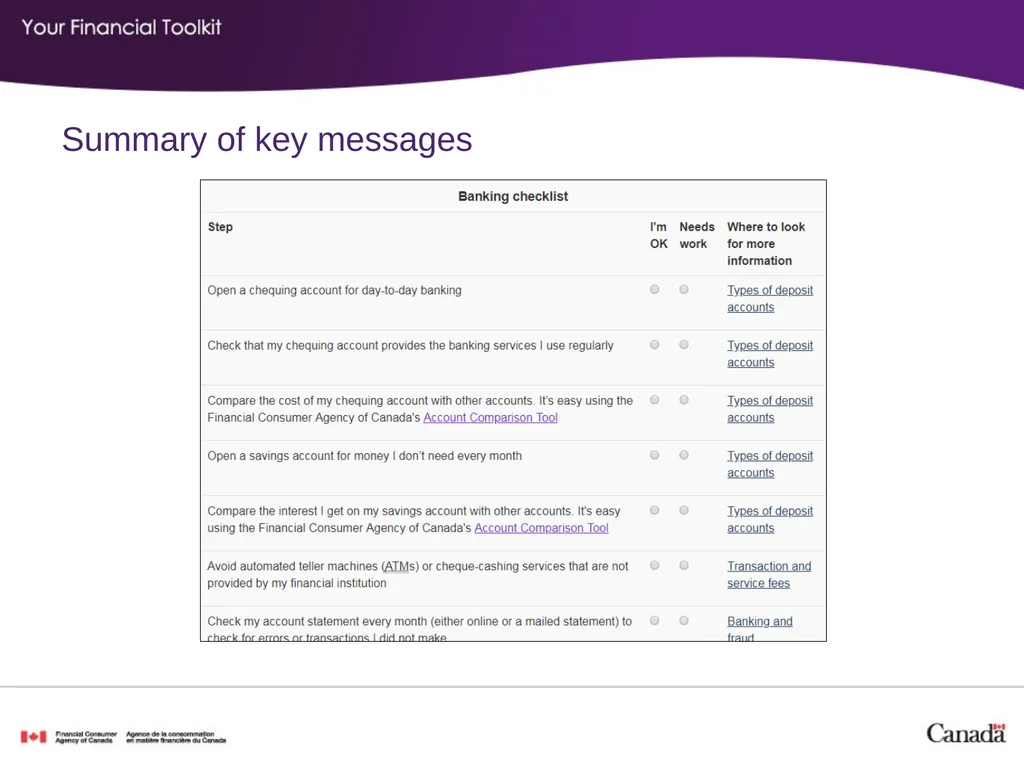
slide36. Summary of key messages<br>
slide2. Agenda Start time: ____
Break time: ____ (10 minutes)
End time: ____
Please set phones to silent ring and answer outside of the room.<br>
slide3. Banking This module covers:
The basic services that financial institutions offer
How to choose the type of banking account you need
What your rights and responsibilities are when using a financial institution
How to keep your accounts safe
What to do if you think someone may be using your account illegally<br>
slide4. Basic banking<br>
slide5. Basic banking This section covers:
Basic banking services, such as deposits and card services
How the deposit insurance system keeps your deposits safe
How to use banking services for your everyday needs<br>
slide6. Banking services Banks, credit unions, caisses populaires and trust companies offer:
Deposit services
Card services
Loans
And other services<br>
slide7. Deposit insurance Protects depositors if insured institution cannot return deposits.
Different deposit insurance systems:
One for institutions regulated by federal government
Others for institutions regulated by province or territory
Check which insurance system applies to your deposit and what the insurance limits are.<br>
slide8. Ways to do your banking Financial institutions offer you many different ways to do your banking, these are:
In person
By phone
By Internet or mobile device
By automated teller machine
By debit card reader (point-of-sale terminal or POS)<br>
slide9. Banking for your future Consider automatic transfers to your savings account. This helps you:
Save for emergencies
Prepare for big expenses
Start on long-term savings and investments<br>
slide10. Summary of key messages Deposit institutions include banks, credit unions, caisses populaires and trust companies
They help you manage your money and keep it safe
Main services include deposits, debit card services and loans
Services are available:
In person
Online by phone or mobile
Through automated teller machines<br>
slide11. Banking accounts and packages<br>
slide12. Banking accounts and packages This section covers:
The main features of chequing and savings accounts
The interest paid and how it affects your savings
The account fees you’ll pay and how to reduce them
How to read your account statement<br>
slide13. Savings accounts Pay higher rate of interest
May not offer debit card or chequing
May have fees on basic transactions
May have limit on number of free transactions
May require one or more days to transfer money
Best for money you won’t need for day-to-day expenses<br>
slide14. Chequing accounts Pay lower interest, or none at all
Include debit cards and chequing
May offer basic services at no fee
Usually allow more free transactions
Minimize delay for withdrawals, transfers and cheques
May offer special rates for certain groups
Best for day-to-day banking<br>
slide15. Banking tools<br>
slide16. Interest Interest paid on your accounts adds to your savings.
Savings accounts normally pay compound interest:
Interest on interest previously paid into your account
Some investments pay simple interest:
Interest is calculated on the original amount only<br>
slide17. Account statement<br>
slide18. Manage your fees Manage your account fees to reduce your banking costs.
Watch how many transactions you make
Use the cheapest method to do your banking
Get only the records you really need
Watch your account balance
Ask for special fees based on your age or minimum balance
Negotiate for lower fees<br>
slide19. Summary of key messages Pick a convenient location
Get only the services you need
Pick the account with the lowest fees for the services you need
Compare rates before you open an account
Check your account statements every month<br>
slide20. Alternative financial arrangements<br>
slide21. Alternative financial arrangements Alternative financial arrangements include:
Payday loans
Cheque-cashing services
Finance companies
Unregistered services in ethnic communities<br>
slide22. Risks of alternative financial arrangements They are not regulated like banks
They offer less security
They often charge higher fees
Read about Payday loans<br>
slide23. Your rights and responsibilities<br>
slide24. Your rights and responsibilities This section covers:
Your rights when you use a regulated financial institution
The responsibilities you have to keep your account secure
How to make a complaint about a financial institution<br>
slide25. Consumer rights Right to open an account when you present the correct ID in person
Many banking institutions offer a basic chequing account for $4/month
Right to information about your account in writing
Right to cash government cheques for free<br>
slide26. Your responsibilities Read and understand account agreement
Check your account statement regularly
Report anything you think is not right
Keep your account documents, passwords and PINs secure<br>
slide27. The debit card code A voluntary code that protects you when you use debit card services in Canada.
You must:
Choose a PIN that is hard to guess
Keep your PIN secure
Check your account statements
Report problems to your financial institution
For full details, go to the Financial Consumer Agency of Canada’s information on the Canadian Code of Practice for Consumer Debit Card Services.<br>
slide28. Making complaints Financial institutions must have a way for customers to make complaints.
Step 1: Discuss problems with local branch
Step 2: Ask for review by senior bank official
Step 3: Ask for review by an independent official
Contact federal, provincial or territorial regulator
For more information, contact FCAC.<br>
slide29. Summary of key messages You have rights at your financial institution
You can complain if your rights are not honoured
Independent officers can help<br>
slide30. Banking and fraud<br>
slide31. Banking and fraud This section covers:
How debit card fraud happens
How to protect yourself from debit card fraud
What to do if you are a victim of debit card fraud<br>
slide32. Debit card fraud Debit card fraud can happen with:
An altered card reader or ATM
A thief who watches you enter your PIN
A separate card reader
A stranger who steals your card and PIN<br>
slide33. Protect yourself from debit card fraud Debit card tips:
Choose a PIN that’s hard to guess
Hide your PIN and don’t share it
Keep your debit card in a safe place
Don’t lend your card
Swipe your card yourself (or watch it)
Notify the card issuer if:
Your card stops working
Your statement shows a purchase you didn’t make
Your statement does not show a purchase you did make<br>
slide34. If you are a victim of fraud If your card or PIN has been stolen or compromised:
Contact the company that issued the card
Contact your local police
Contact Canada’s two main credit bureaus:
Equifax Canada (www.equifax.ca)
TransUnion Canada (www.transunion.ca)
For more information, go to FCAC's page on Debit card fraud.<br>
slide35. Summary of key messages Stay alert to fraud, it can happen to you
Keep card, PIN and other information secure and confidential
If you become a victim, tell the company that issued the card and the police<br>
slide36. Summary of key messages<br>