Barriers to and Recommendations for Adoption of DHT-derived Endpoints: Review of CTTIs Current Novel Endpoint Project Results Brian Perry, Social Science Lead, CTTI July 27, 2021 Objectives Describe the evidence used to support DHT-derived
"Barriers to and Recommendations for Adoption of" is the property of its rightful owner. Permission is granted to
download and print the materials on this website for personal, non-commercial use only, and to display it
on your personal computer provided you do not modify the materials and that you retain all copyright
notices contained in the materials. By downloading content from our website, you accept the terms of this
agreement.
Presentation Transcript
01
Barriers to and Recommendations for Adoption of DHT-derived Endpoints: Review of CTTI’s Current Novel Endpoint Project Results Brian Perry, Social Science Lead, CTTI July 27, 2021<br>
02
Objectives
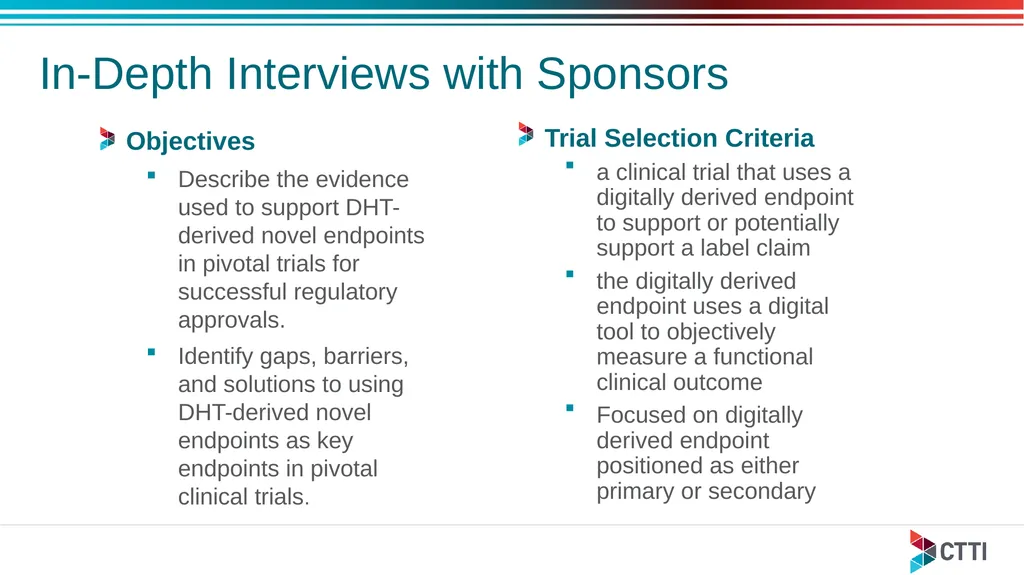
Describe the evidence used to support DHT-derived novel endpoints in pivotal trials for successful regulatory approvals.
Identify gaps, barriers, and solutions to using DHT-derived novel endpoints as key endpoints in pivotal clinical trials. Trial Selection Criteria
a clinical trial that uses a digitally derived endpoint to support or potentially support a label claim
the digitally derived endpoint uses a digital tool to objectively measure a functional clinical outcome
Focused on digitally derived endpoint positioned as either primary or secondary In-Depth Interviews with Sponsors<br>
03
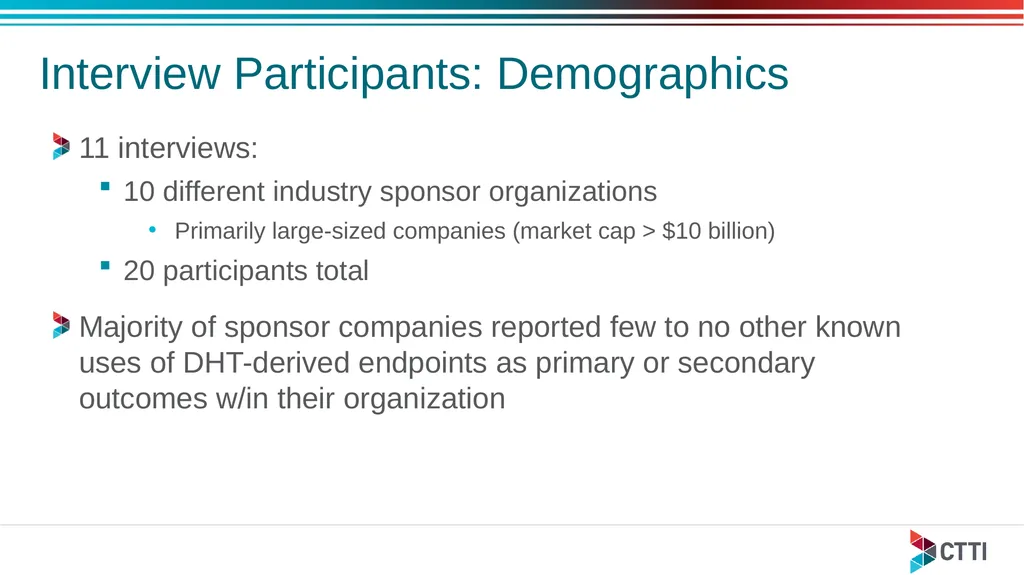
11 interviews:
10 different industry sponsor organizations
Primarily large-sized companies (market cap > $10 billion)
20 participants total
Majority of sponsor companies reported few to no other known uses of DHT-derived endpoints as primary or secondary outcomes w/in their organization Interview Participants: Demographics<br>
04
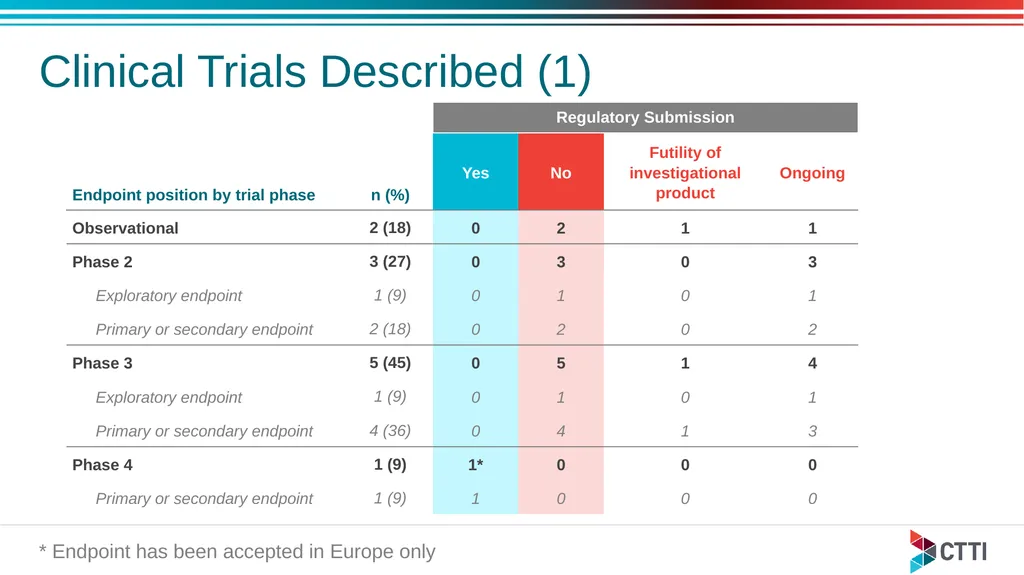
* Endpoint has been accepted in Europe only Clinical Trials Described (1)<br>
05
Therapeutic areas included:
neurology (5)
pulmonology (2)
rare disease (2)
orthopedics (1)
cardiology (1)
DHTs used ranged from technologies that are widely available for consumer use to those intended just for clinical trial purposes Clinical Trials Described (2)<br>
06
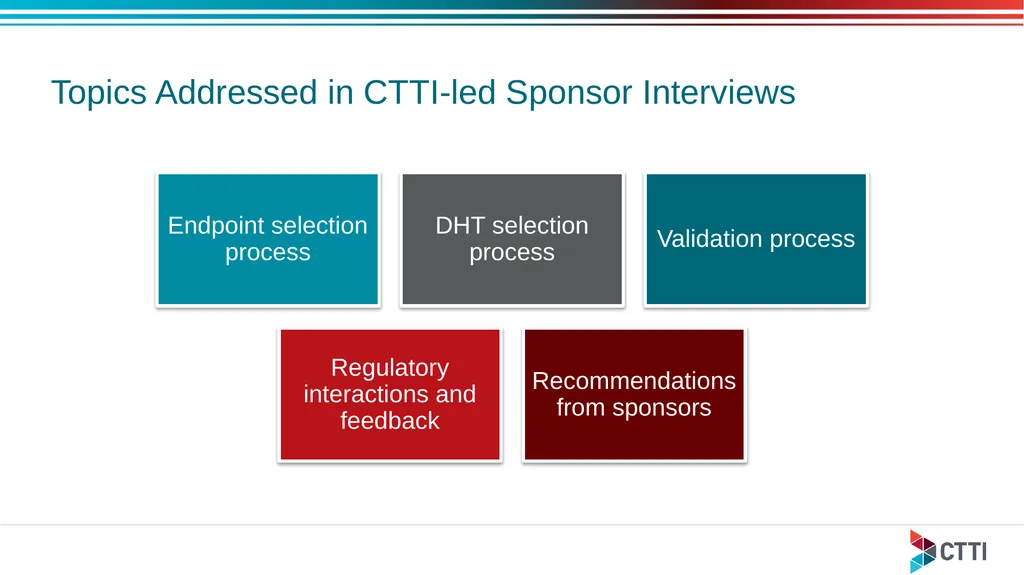
Topics Addressed in CTTI-led Sponsor Interviews<br>
07
Summary of Identified Barriers<br>
08
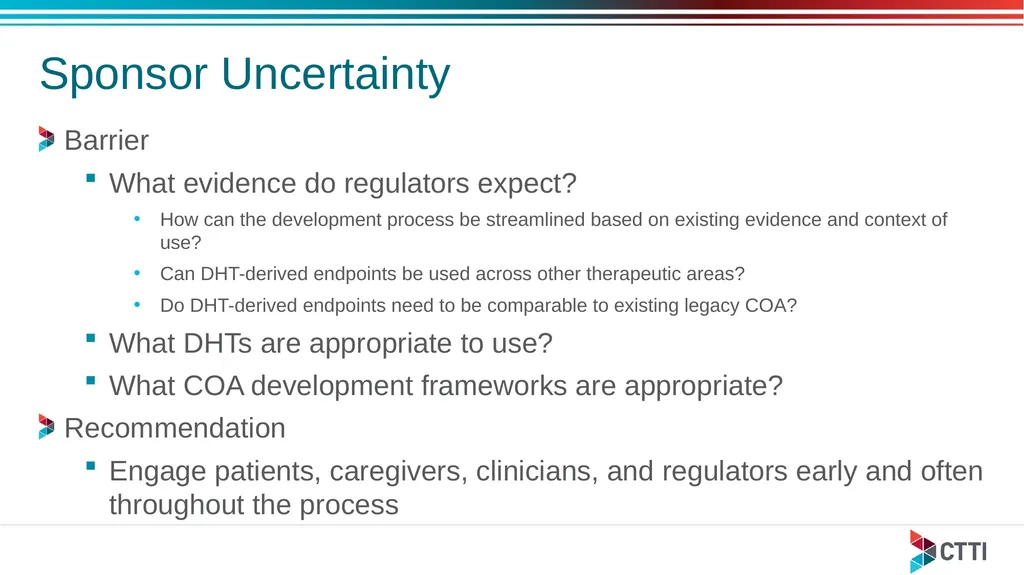
Barrier
What evidence do regulators expect?
How can the development process be streamlined based on existing evidence and context of use?
Can DHT-derived endpoints be used across other therapeutic areas?
Do DHT-derived endpoints need to be comparable to existing legacy COA?
What DHTs are appropriate to use?
What COA development frameworks are appropriate?
Recommendation
Engage patients, caregivers, clinicians, and regulators early and often throughout the process Sponsor Uncertainty<br>
09
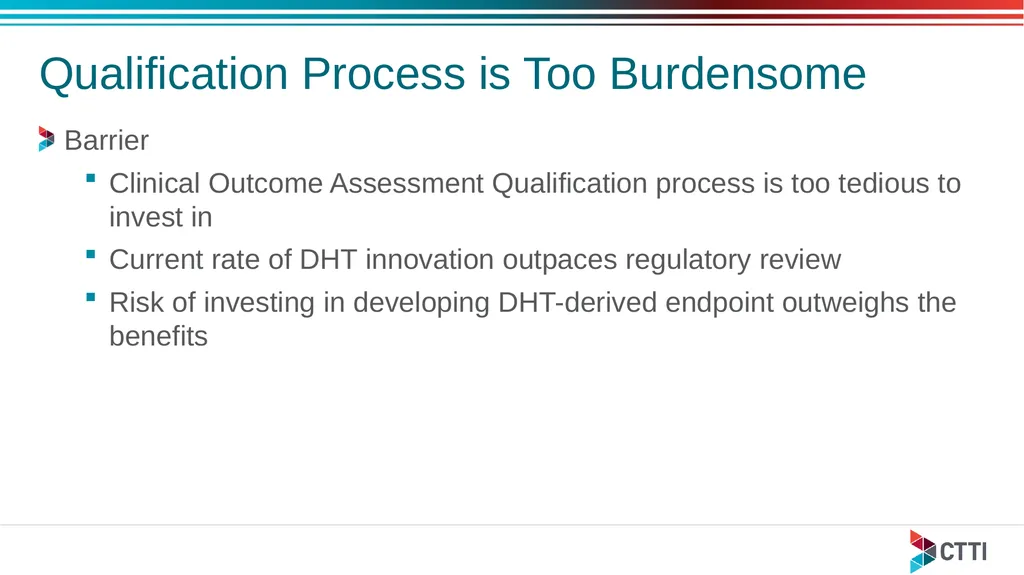
Barrier
Clinical Outcome Assessment Qualification process is too tedious to invest in
Current rate of DHT innovation outpaces regulatory review
Risk of investing in developing DHT-derived endpoint outweighs the benefits Qualification Process is Too Burdensome<br>
10
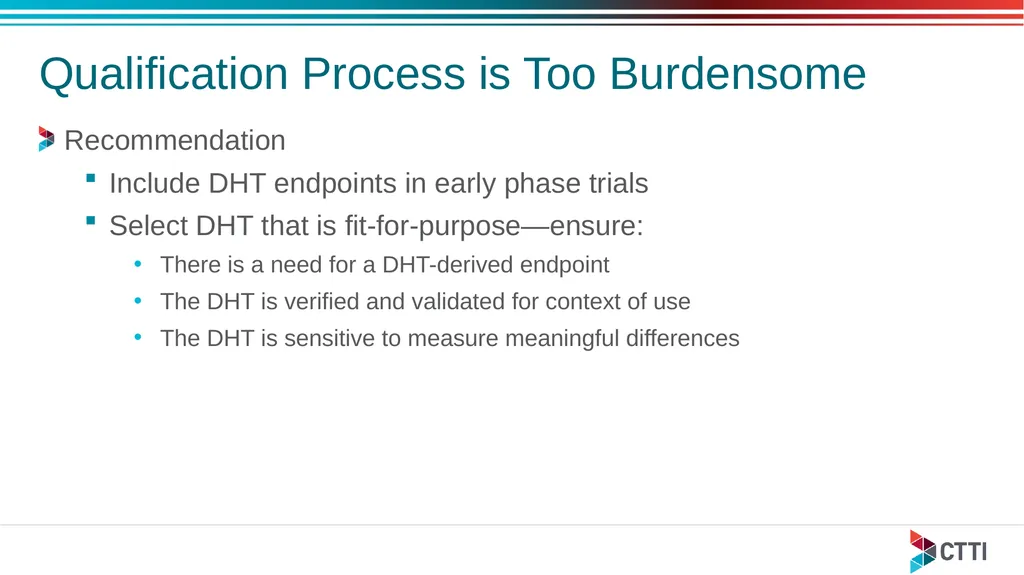
Recommendation
Include DHT endpoints in early phase trials
Select DHT that is fit-for-purpose—ensure:
There is a need for a DHT-derived endpoint
The DHT is verified and validated for context of use
The DHT is sensitive to measure meaningful differences Qualification Process is Too Burdensome<br>
11
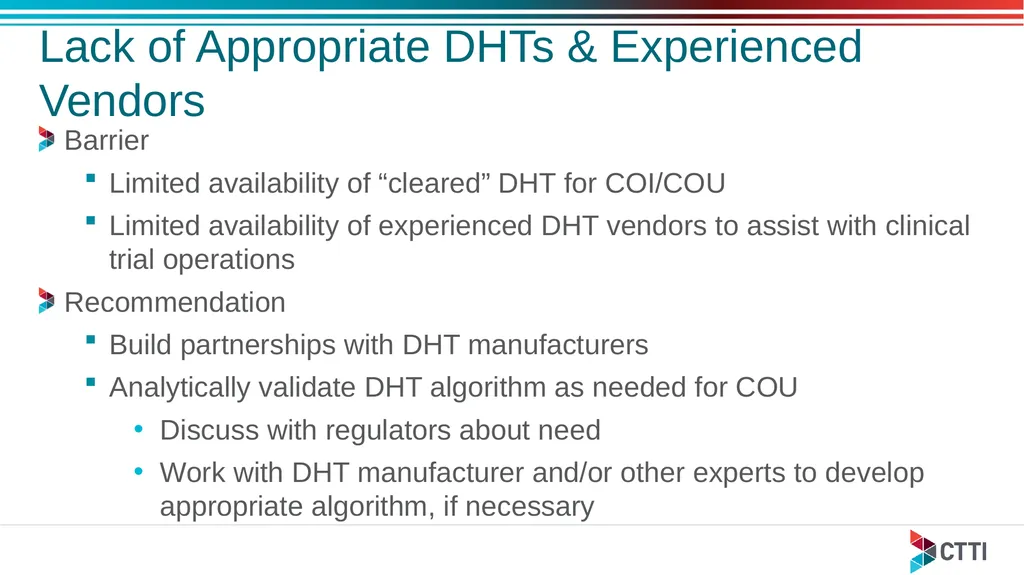
Barrier
Limited availability of “cleared” DHT for COI/COU
Limited availability of experienced DHT vendors to assist with clinical trial operations
Recommendation
Build partnerships with DHT manufacturers
Analytically validate DHT algorithm as needed for COU
Discuss with regulators about need
Work with DHT manufacturer and/or other experts to develop appropriate algorithm, if necessary Lack of Appropriate DHTs & Experienced Vendors<br>
12
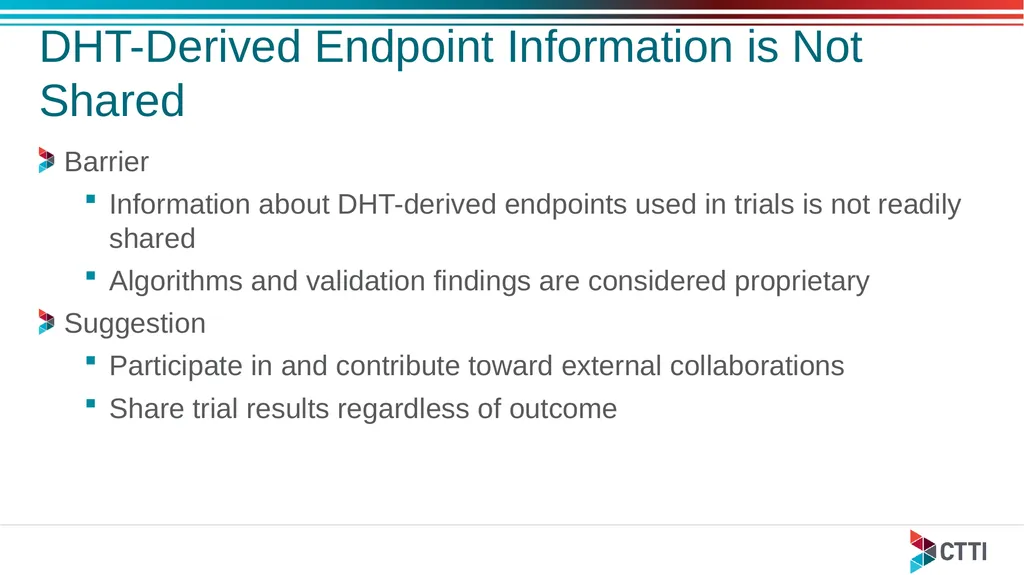
Barrier
Information about DHT-derived endpoints used in trials is not readily shared
Algorithms and validation findings are considered proprietary
Suggestion
Participate in and contribute toward external collaborations
Share trial results regardless of outcome DHT-Derived Endpoint Information is Not Shared<br>
13
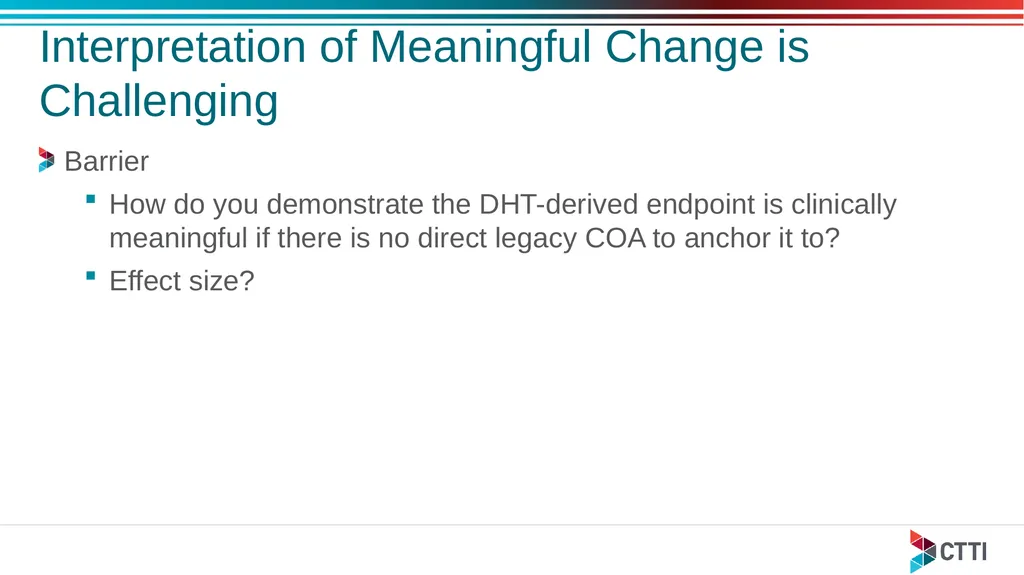
Barrier
How do you demonstrate the DHT-derived endpoint is clinically meaningful if there is no direct legacy COA to anchor it to?
Effect size? Interpretation of Meaningful Change is Challenging<br>
14
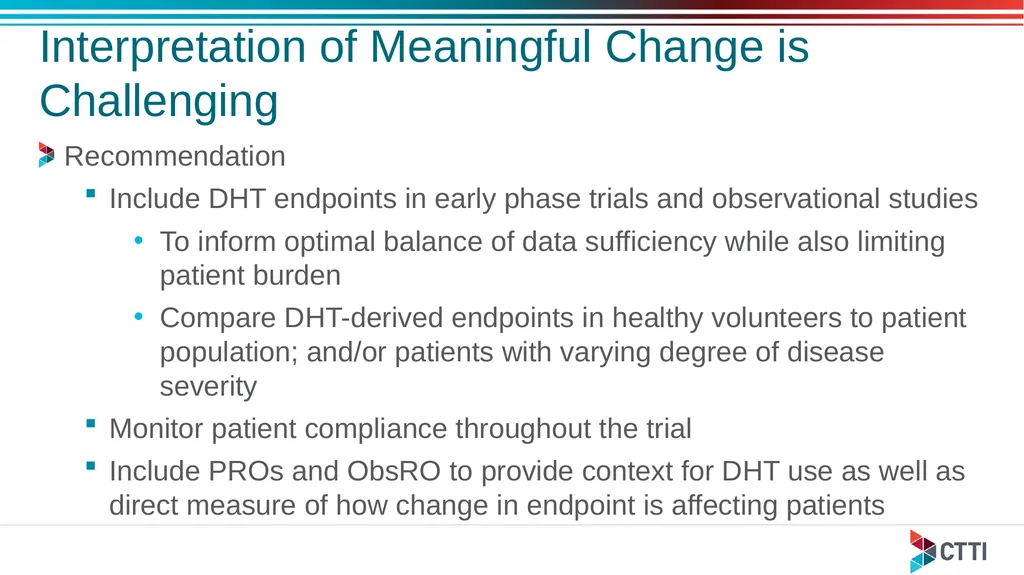
Recommendation
Include DHT endpoints in early phase trials and observational studies
To inform optimal balance of data sufficiency while also limiting patient burden
Compare DHT-derived endpoints in healthy volunteers to patient population; and/or patients with varying degree of disease severity
Monitor patient compliance throughout the trial
Include PROs and ObsRO to provide context for DHT use as well as direct measure of how change in endpoint is affecting patients Interpretation of Meaningful Change is Challenging<br>
15
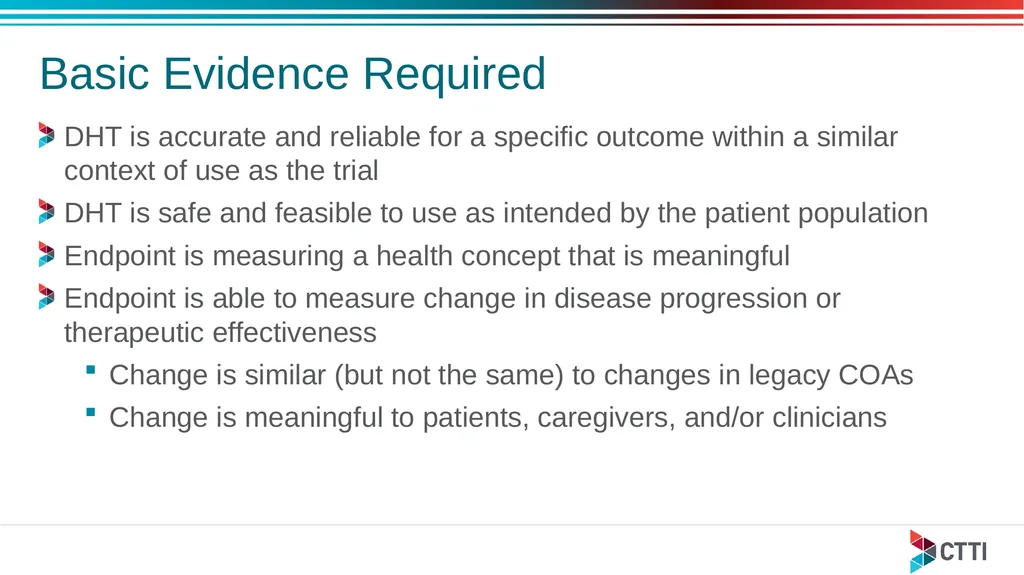
DHT is accurate and reliable for a specific outcome within a similar context of use as the trial
DHT is safe and feasible to use as intended by the patient population
Endpoint is measuring a health concept that is meaningful
Endpoint is able to measure change in disease progression or therapeutic effectiveness
Change is similar (but not the same) to changes in legacy COAs
Change is meaningful to patients, caregivers, and/or clinicians Basic Evidence Required<br>
16
Reflections from the Clinical Path Innovation Meeting (CPIM) July 16, 2021<br>