Basic Orientation for Staff and Volunteers
Description: Basic Orientation for Staff and Volunteers Template Training Module from the ASPCA webinar A Road Map to New Hire Orientation www.ASPCApro.orgwebinars Watch the webinar recording A Road Map to New Hire Orientation. Then customize this
Related Topics
Download Presentation
"Basic Orientation for Staff and Volunteers" is the property of its rightful owner. Permission is granted to download and print the materials on this website for personal, non-commercial use only, and to display it on your personal computer provided you do not modify the materials and that you retain all copyright notices contained in the materials. By downloading content from our website, you accept the terms of this agreement.
Presentation Transcript
slide1. Basic Orientation for Staff and Volunteers Template Training Module from the ASPCA webinar A Road Map to New Hire Orientationwww.ASPCApro.org/webinars<br>
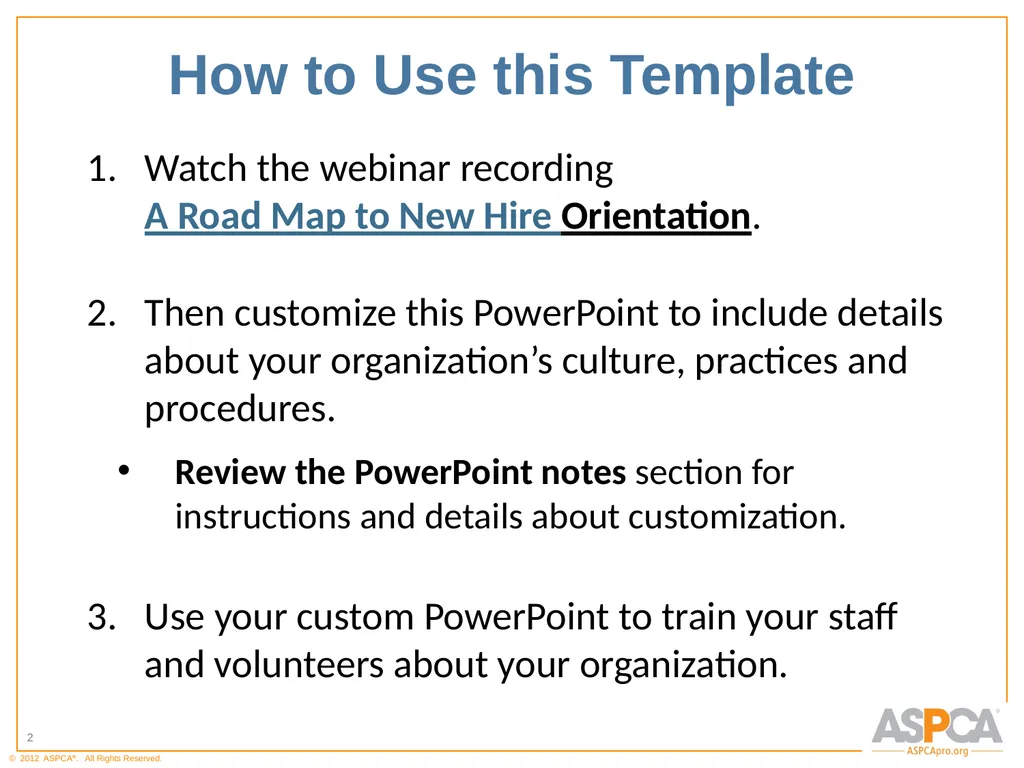
slide2. Watch the webinar recording A Road Map to New Hire Orientation.
Then customize this PowerPoint to include details about your organization’s culture, practices and procedures.
Review the PowerPoint notes section for instructions and details about customization.
Use your custom PowerPoint to train your staff and volunteers about your organization. How to Use this Template<br>
slide3. Contact Kate PullenSenior Director, Shelter Outreach, ASPCA kate.pullen@aspca.org
Visit www.ASPCApro.org for resources:
Shelter Health and Medicine
Standard Operating Procedures
Webinar recordings on personnel issues like hiring and firing Need Help?<br>
slide4. Your Agency Name Here New Hire Orientation Training<br>
slide5. Different Types of Shelters National organizations
Open admission
Limited admission
Organization in relationship to shelters across the country<br>
slide6. Overview of [your agency name here] History of organization
Customer Service
Staff Responsibilities
Shelter Hours
Mission/Ethics of organization
Values of Agency
Organizational Chart
Goals of the organization
Public perception and humane organizations
The Why behind the philosophy of agency<br>
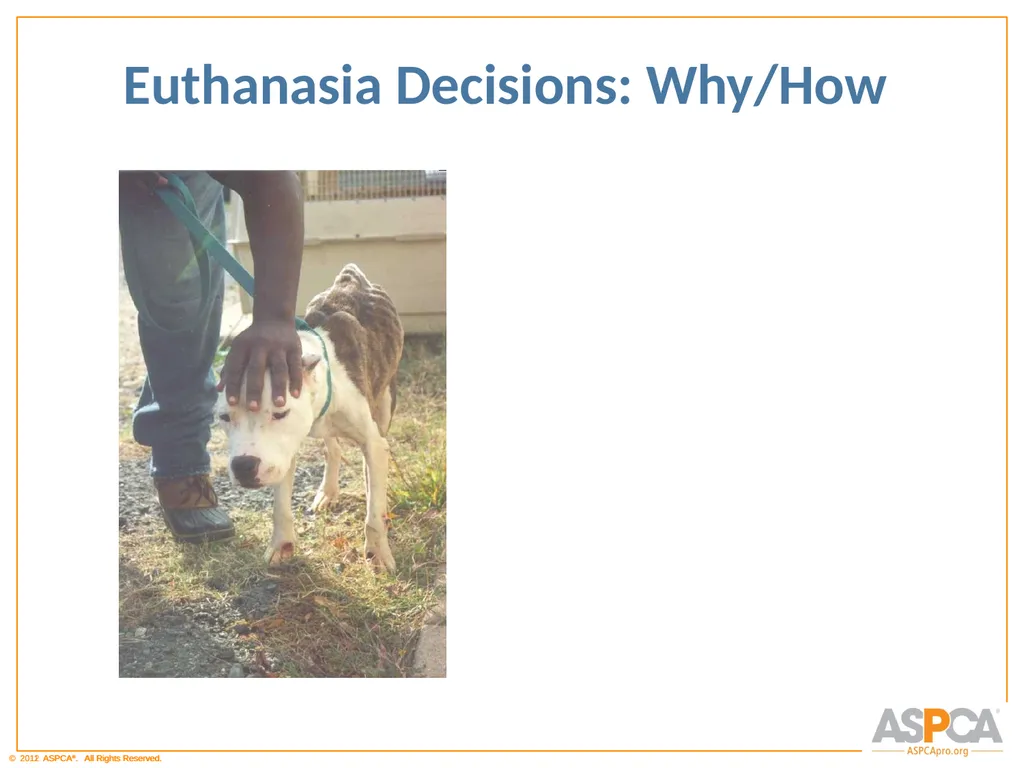
slide7. Euthanasia Decisions: Why/How<br>
slide8. Disease Transmission 101 and Animal Health Herd Health
Isolation and Separation
How disease spreads
Cat diseases
Dog diseases
Sanitation – why and how<br>
slide9. Disease Transmission 101 /Animal Health – Isolation and Separation Adoption Animals that have been identified by the staff as available for adoption or transfer –the public can visit with them and volunteers can work and socialize with them
Healthy Hold Animals that have recently arrived and are deemed healthy. Animals are held in this area to give them time to relax, acclimate to the facility and for staff to conduct a behavior evaluation to determine the best placement.
Quarantine/Court Holds Animals that are either in quarantine for rabies observation or have been seized per our animal control department. Animals in this area must only be handled by paid staff, due to safety concerns, state laws concerning quarantine protocols.
Feral This housing is set up for feral cats or cats that enter the facility as possibly feral. This area is meant to be as quiet as possible to allow the cats time to acclimate and relax.
Isolation This housing area is for all animals that enter the facility with any sort of contagious disease, or those animals that become sick at the shelter.<br>
slide10. Understanding Diseases<br>
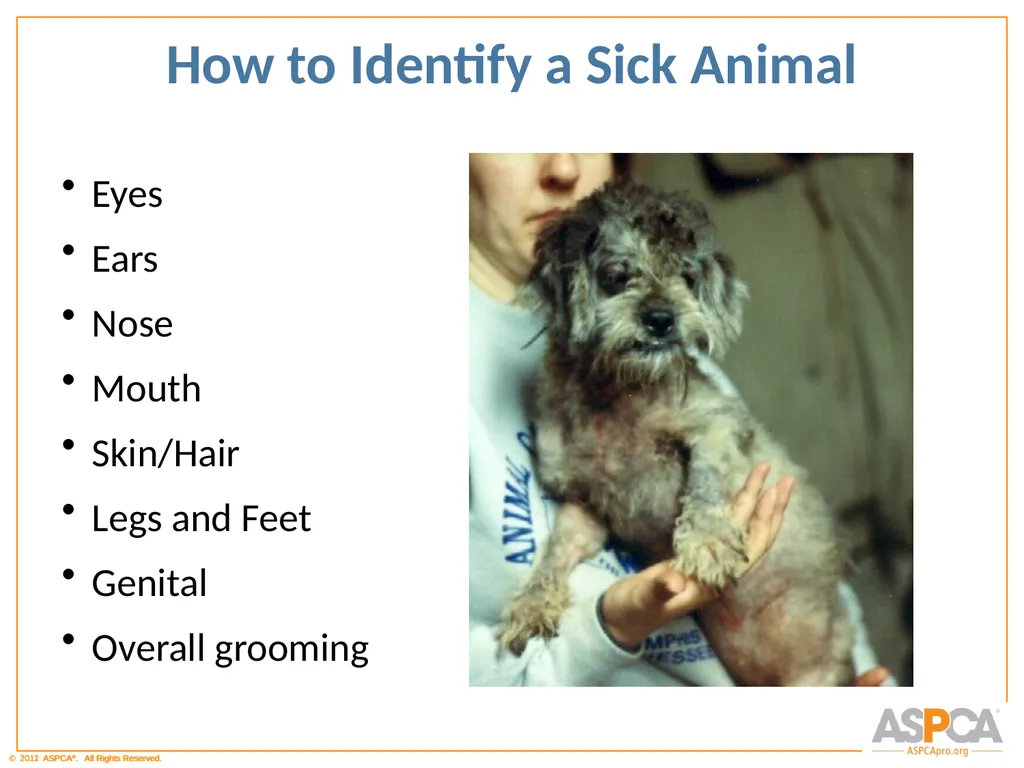
slide11. How to Identify a Sick Animal Eyes
Ears
Nose
Mouth
Skin/Hair
Legs and Feet
Genital
Overall grooming<br>
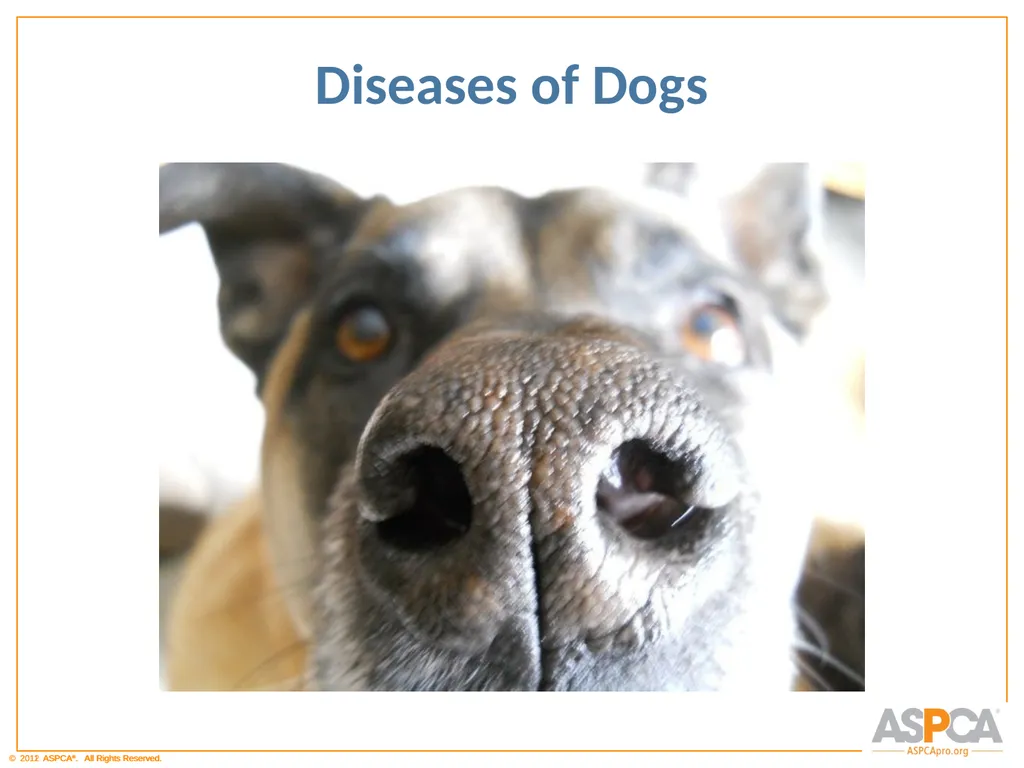
slide12. Diseases of Dogs<br>
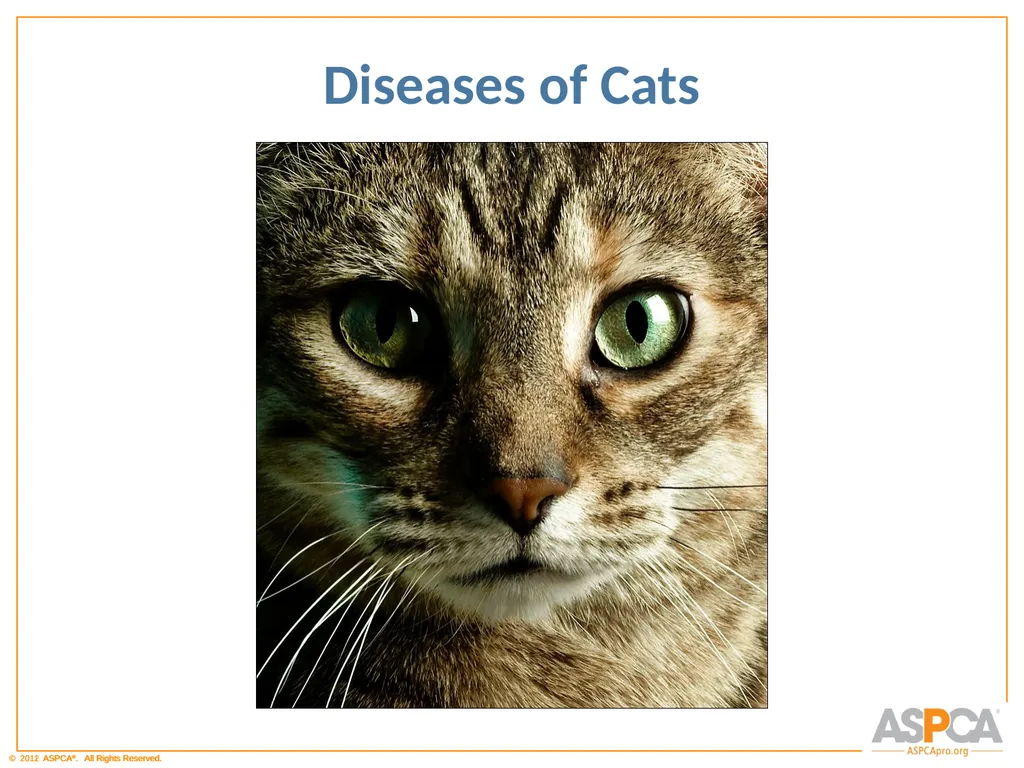
slide13. Diseases of Cats<br>
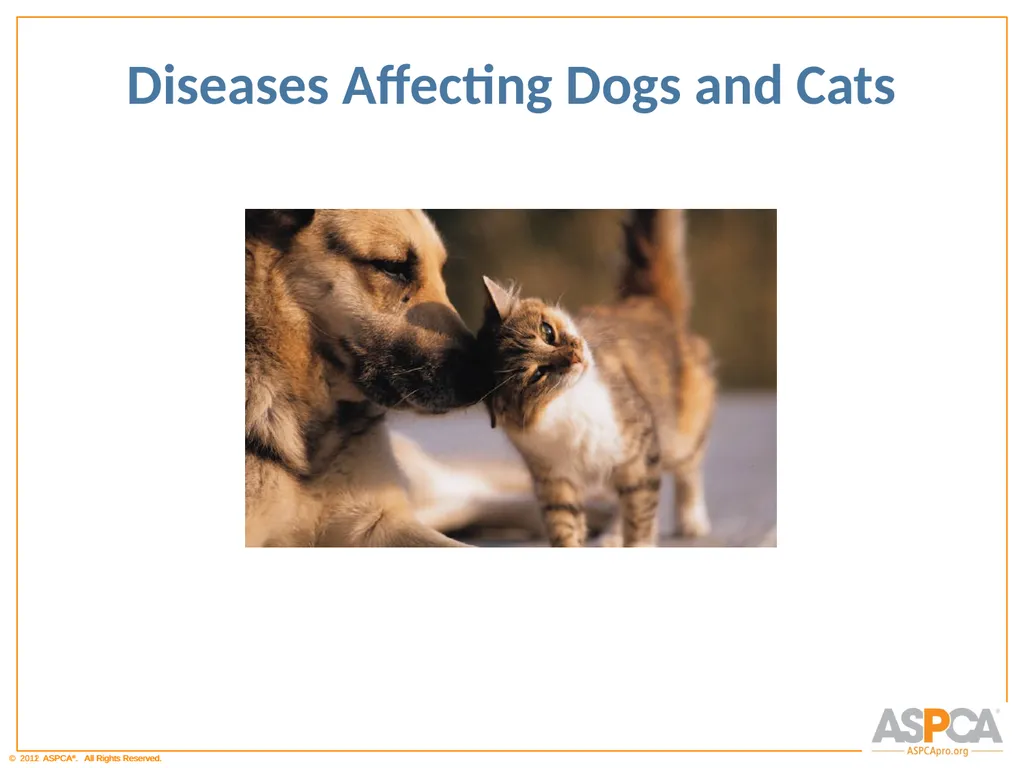
slide14. Diseases Affecting Dogs and Cats<br>
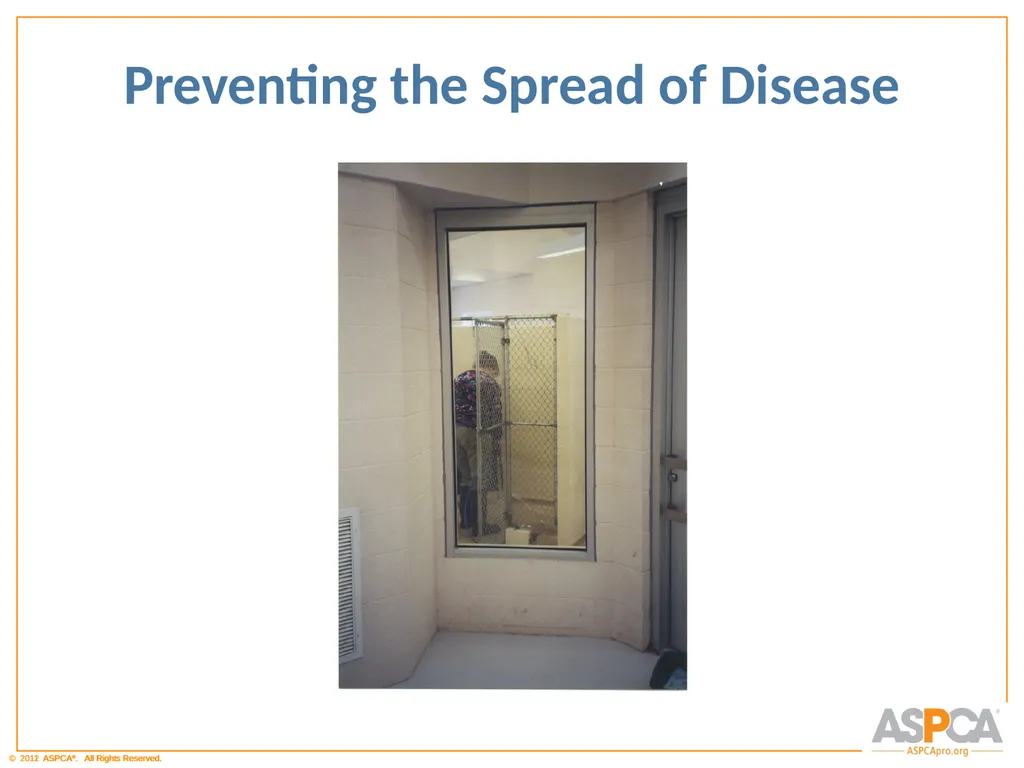
slide15. Preventing the Spread of Disease<br>
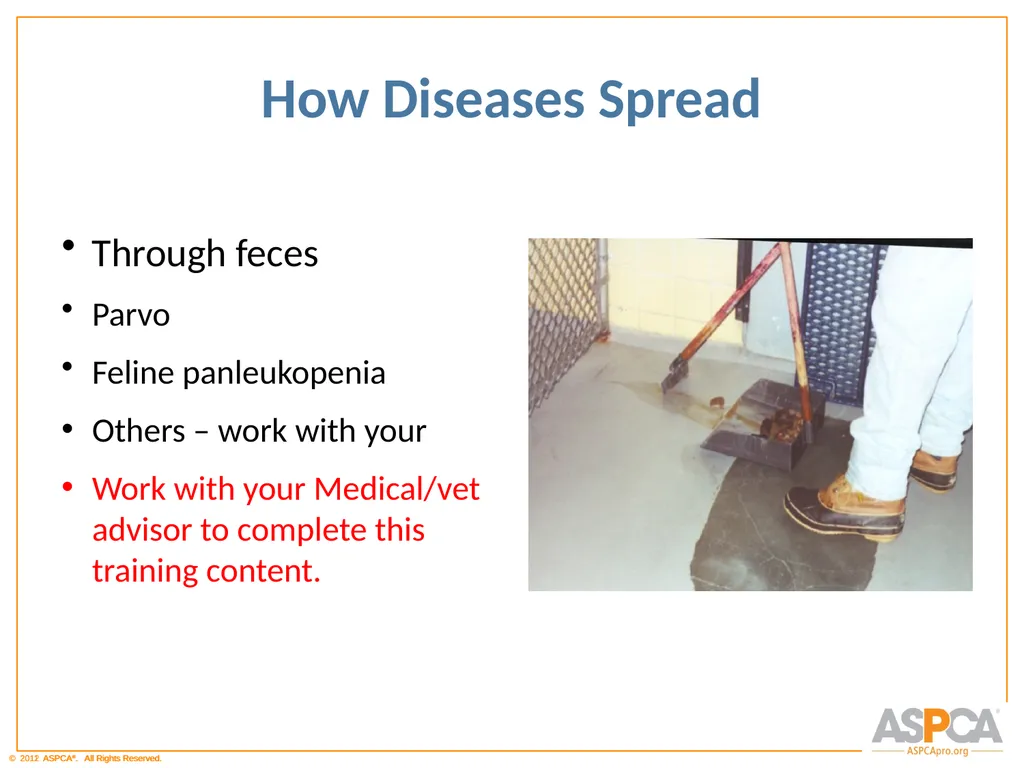
slide16. How Diseases Spread Through feces
Parvo
Feline panleukopenia
Others – work with your
Work with your Medical/vet advisor to complete this training content.<br>
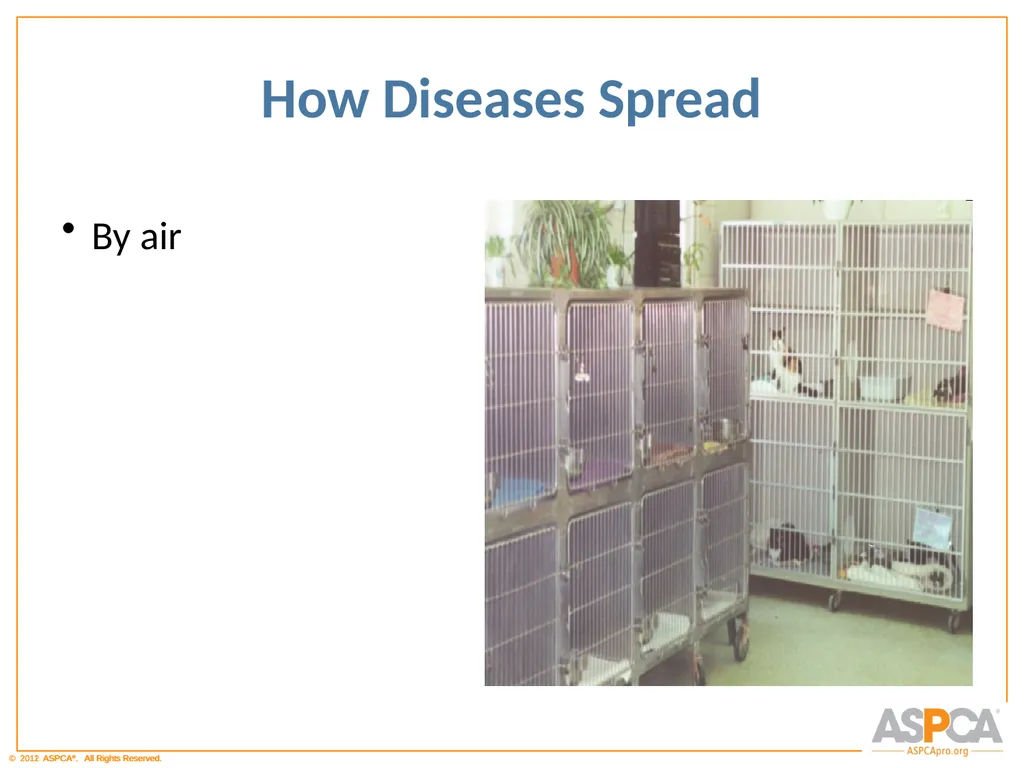
slide17. How Diseases Spread By air<br>
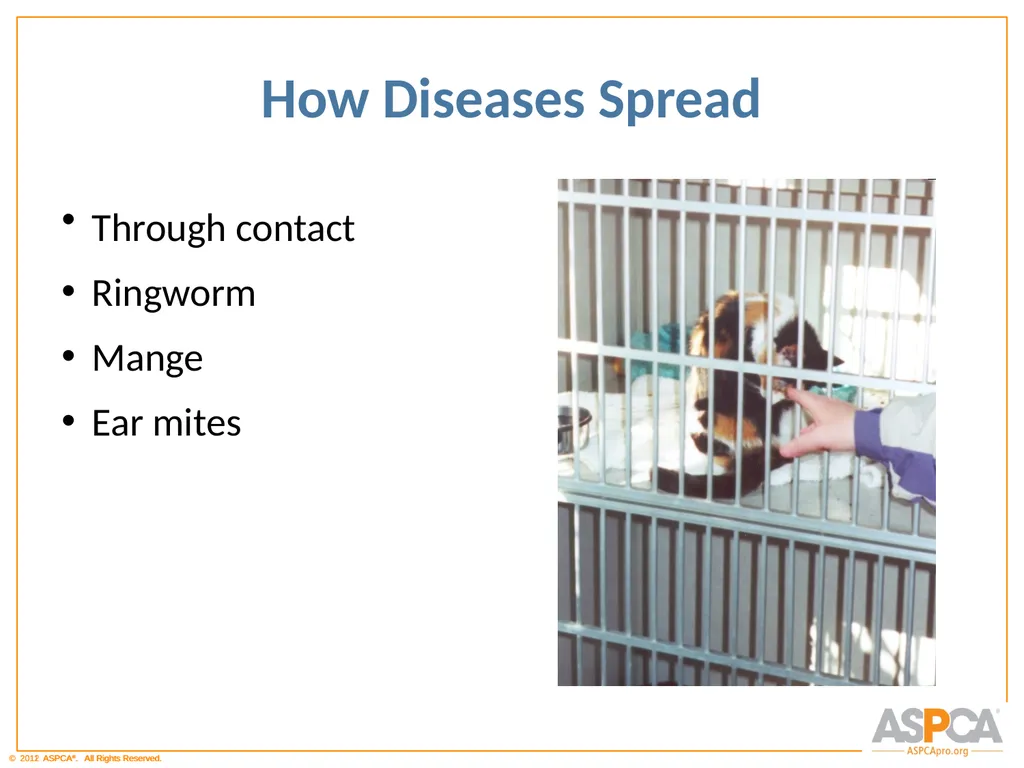
slide18. How Diseases Spread Through contact
Ringworm
Mange
Ear mites<br>
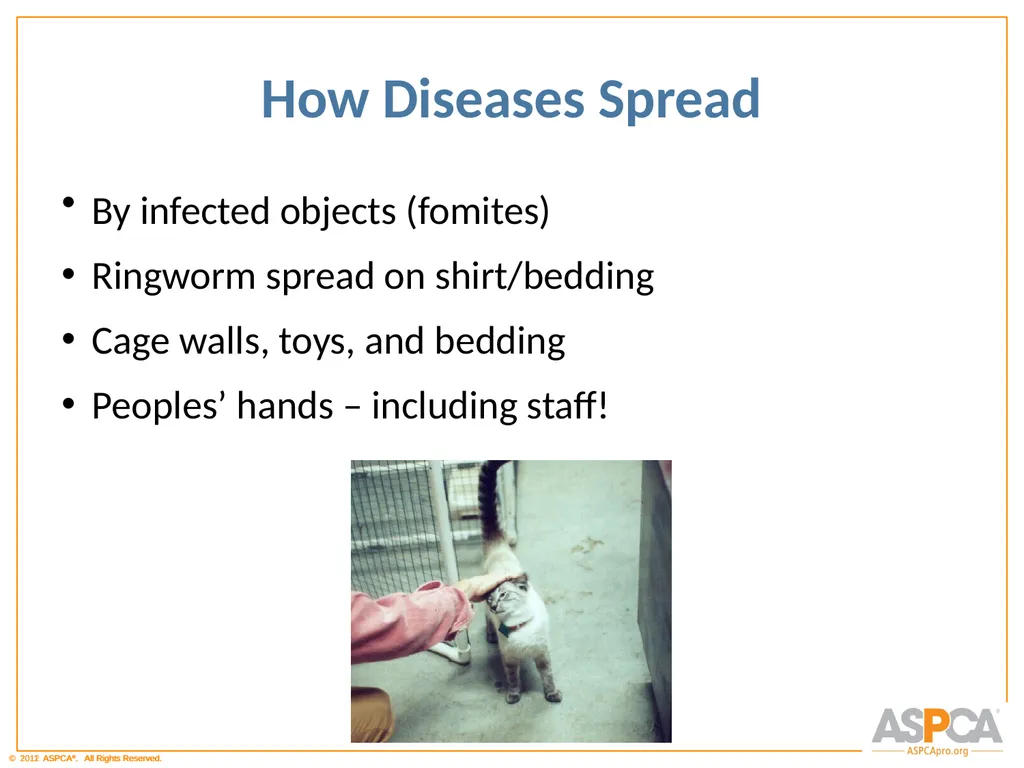
slide19. How Diseases Spread By infected objects (fomites)
Ringworm spread on shirt/bedding
Cage walls, toys, and bedding
Peoples’ hands – including staff!<br>
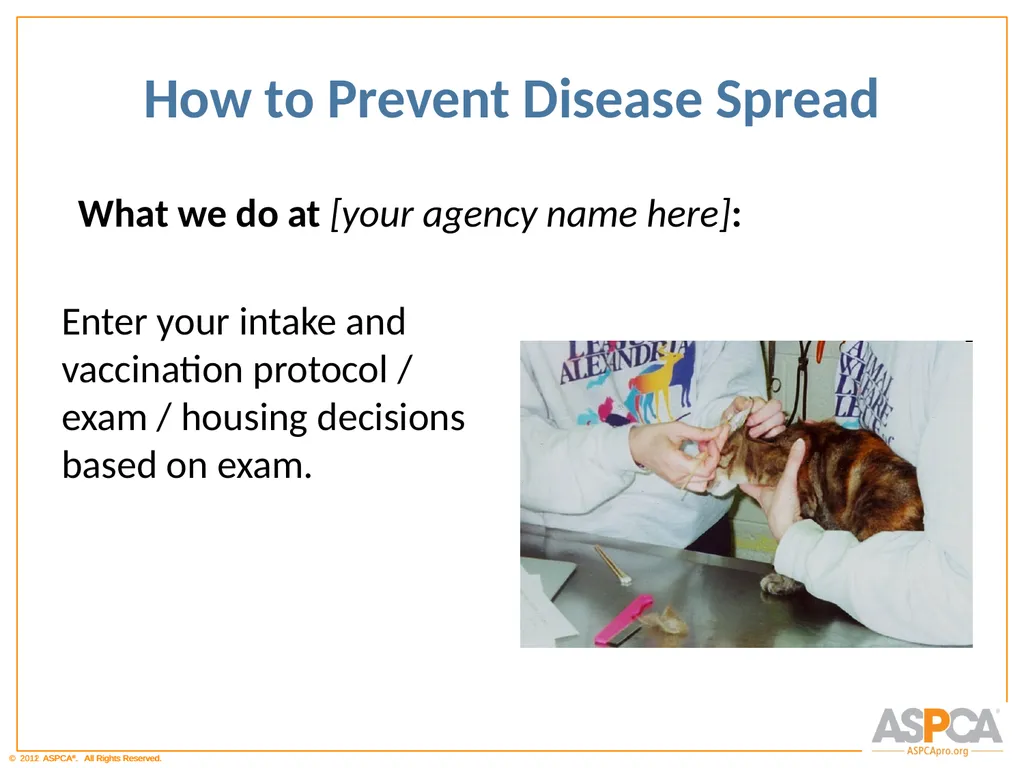
slide20. How to Prevent Disease Spread Enter your intake and vaccination protocol / exam / housing decisions based on exam. What we do at [your agency name here]:<br>
slide21. Shelter Sanitation<br>
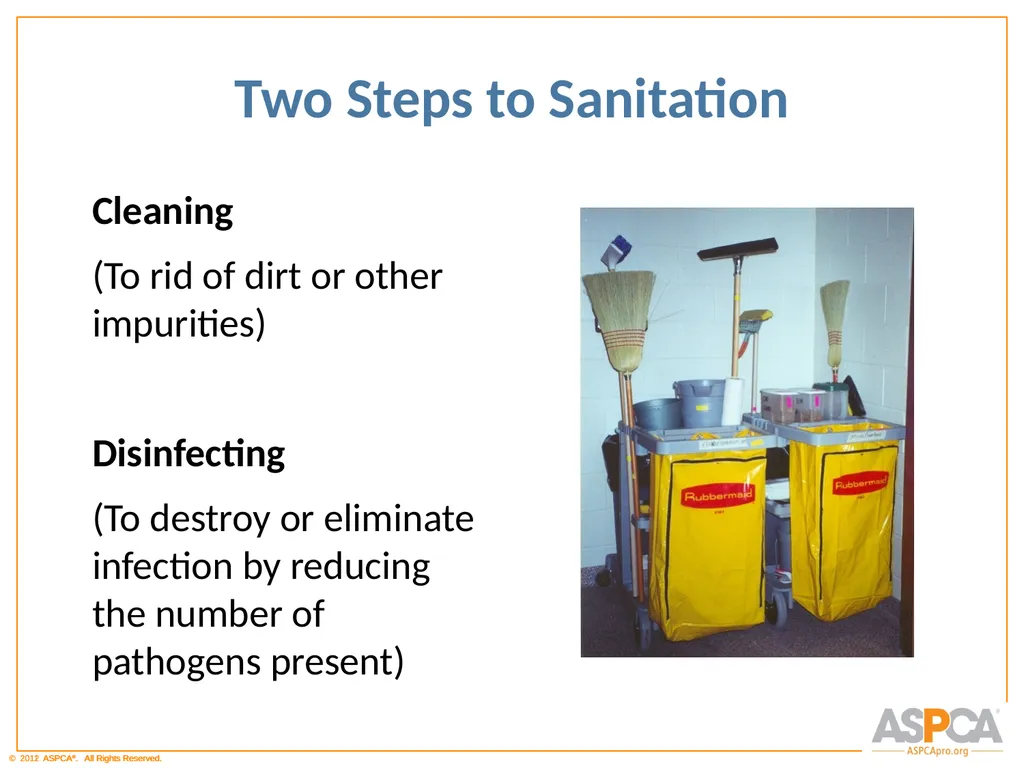
slide22. Two Steps to Sanitation Cleaning
(To rid of dirt or other impurities)
Disinfecting
(To destroy or eliminate infection by reducing the number of pathogens present)<br>
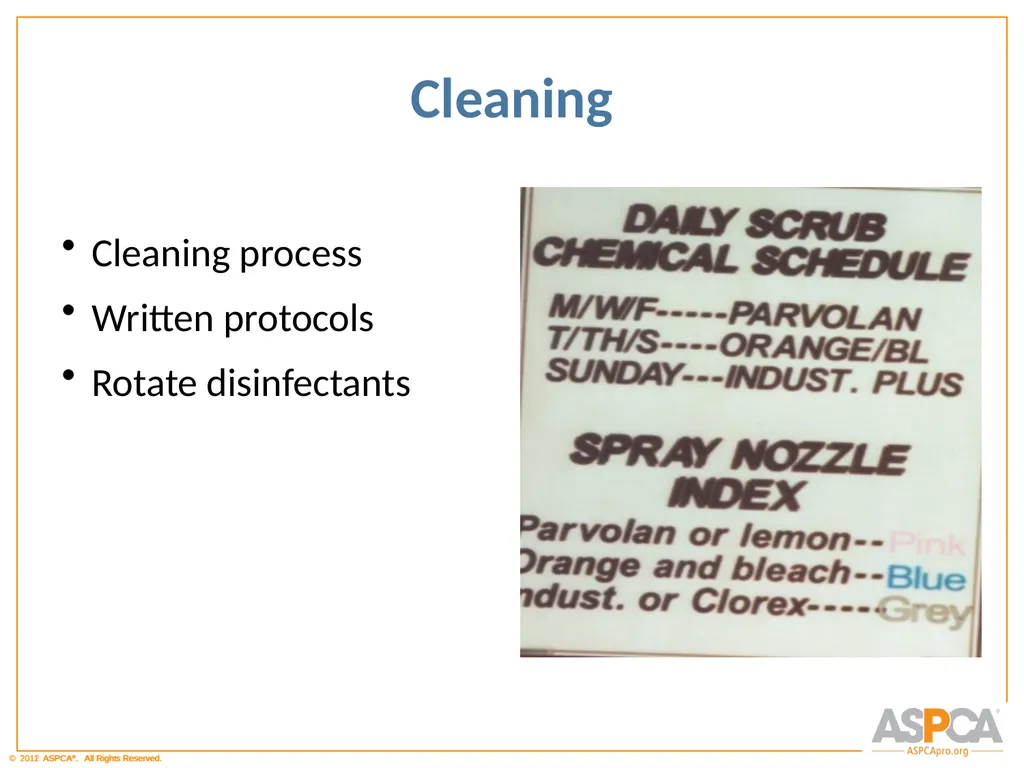
slide23. Cleaning Cleaning process
Written protocols
Rotate disinfectants<br>
slide24. Cleaning Protocol for [your agency name here]:<br>
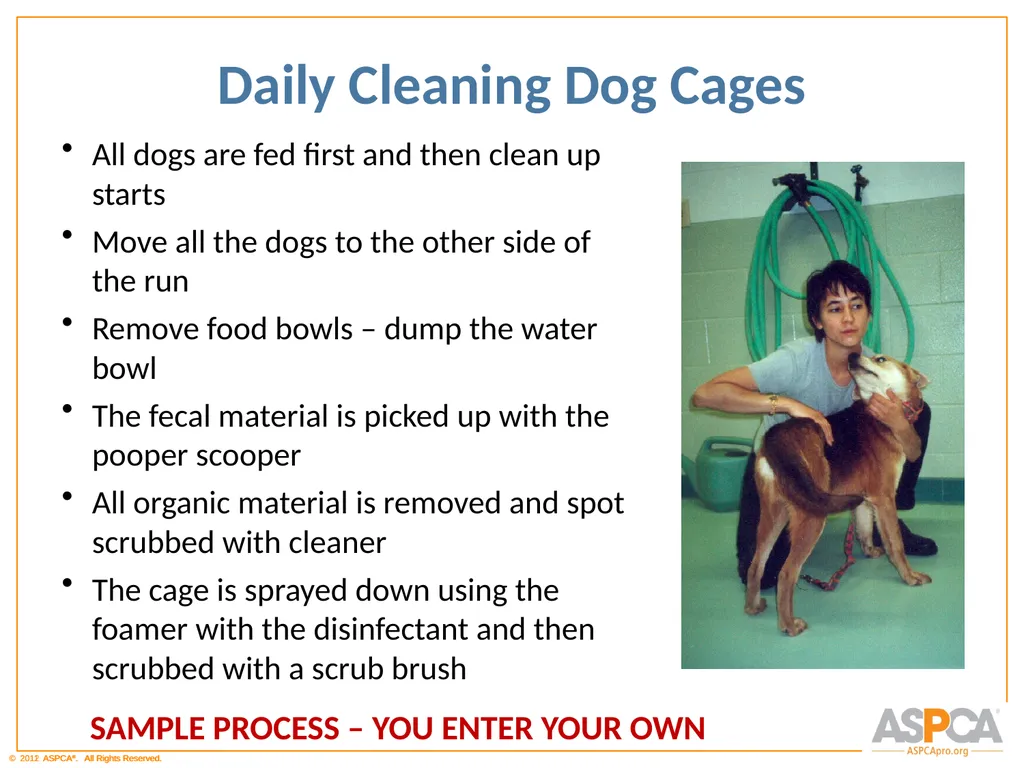
slide25. Daily Cleaning Dog Cages All dogs are fed first and then clean up starts
Move all the dogs to the other side of the run
Remove food bowls – dump the water bowl
The fecal material is picked up with the pooper scooper
All organic material is removed and spot scrubbed with cleaner
The cage is sprayed down using the foamer with the disinfectant and then scrubbed with a scrub brush SAMPLE PROCESS – YOU ENTER YOUR OWN<br>
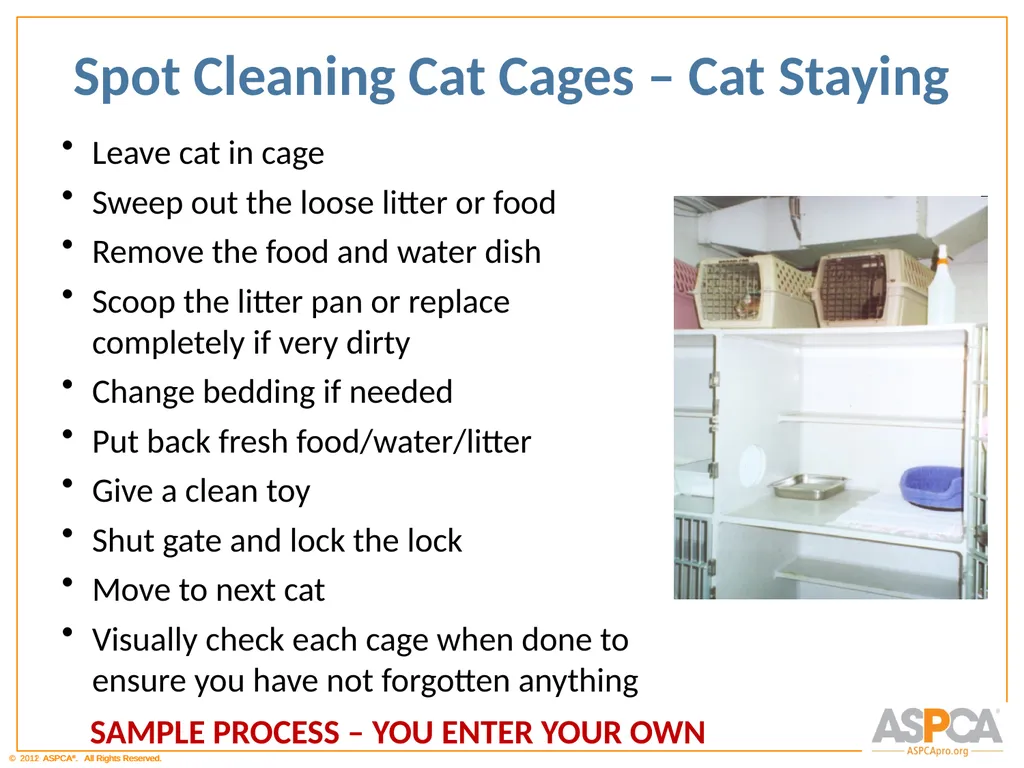
slide26. Spot Cleaning Cat Cages – Cat Staying Leave cat in cage
Sweep out the loose litter or food
Remove the food and water dish
Scoop the litter pan or replace completely if very dirty
Change bedding if needed
Put back fresh food/water/litter
Give a clean toy
Shut gate and lock the lock
Move to next cat
Visually check each cage when done to ensure you have not forgotten anything SAMPLE PROCESS – YOU ENTER YOUR OWN<br>
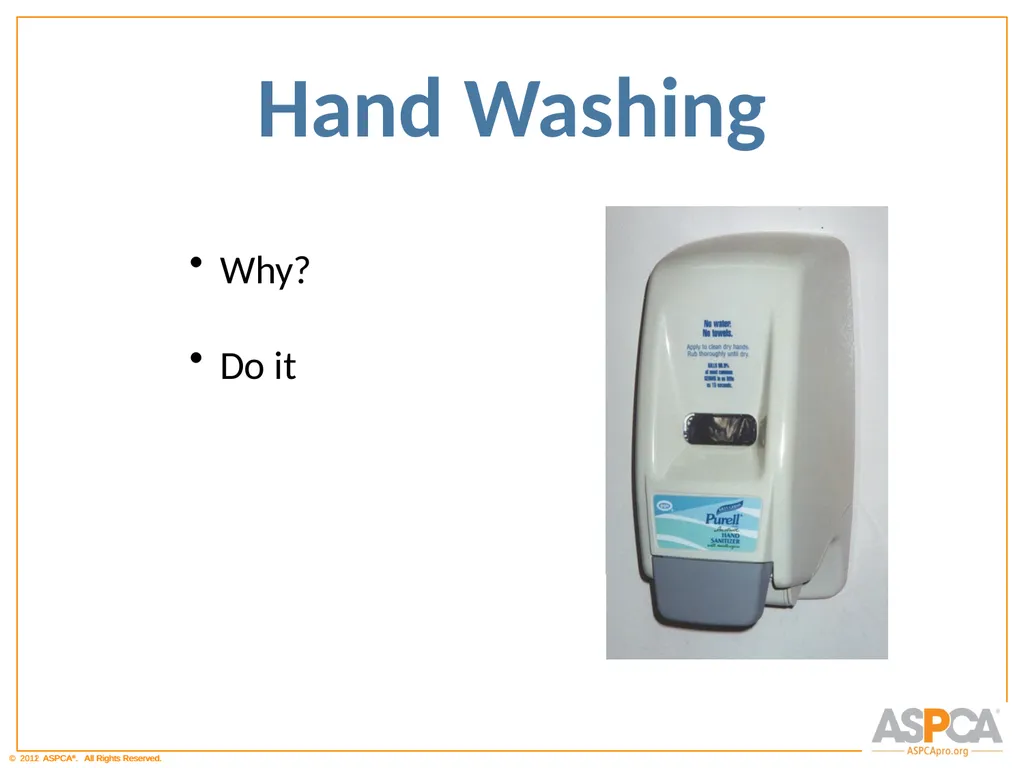
slide27. Hand Washing Why?
Do it<br>
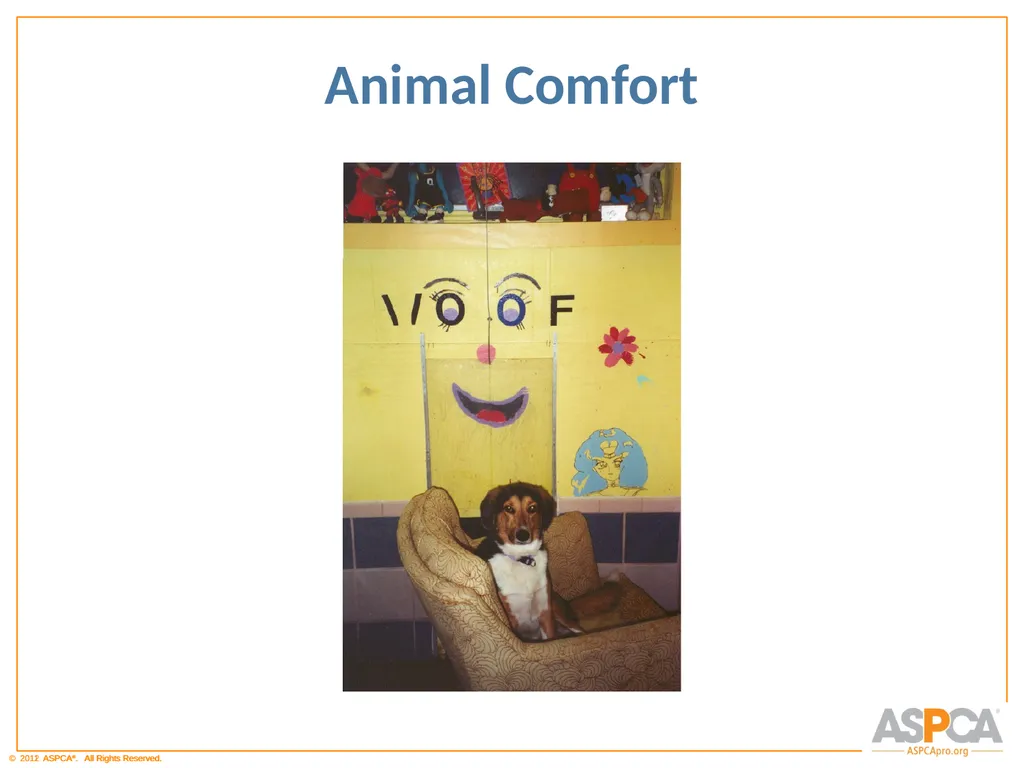
slide28. Animal Comfort<br>
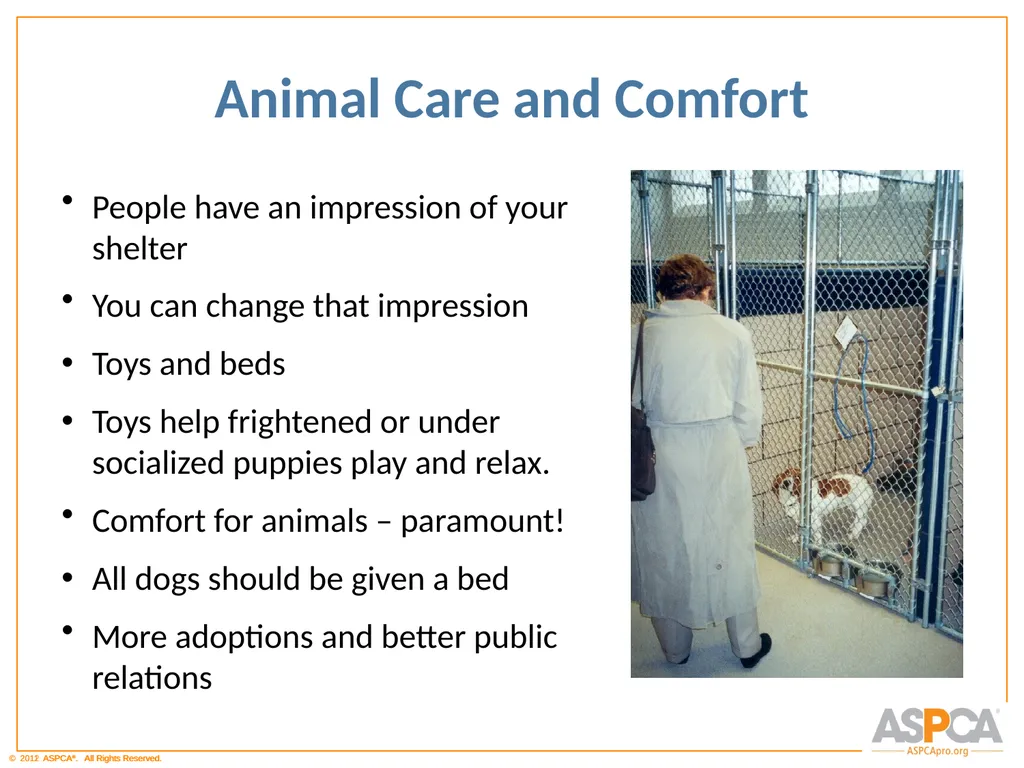
slide29. Animal Care and Comfort People have an impression of your shelter
You can change that impression
Toys and beds
Toys help frightened or under socialized puppies play and relax.
Comfort for animals – paramount!
All dogs should be given a bed
More adoptions and better public relations<br>
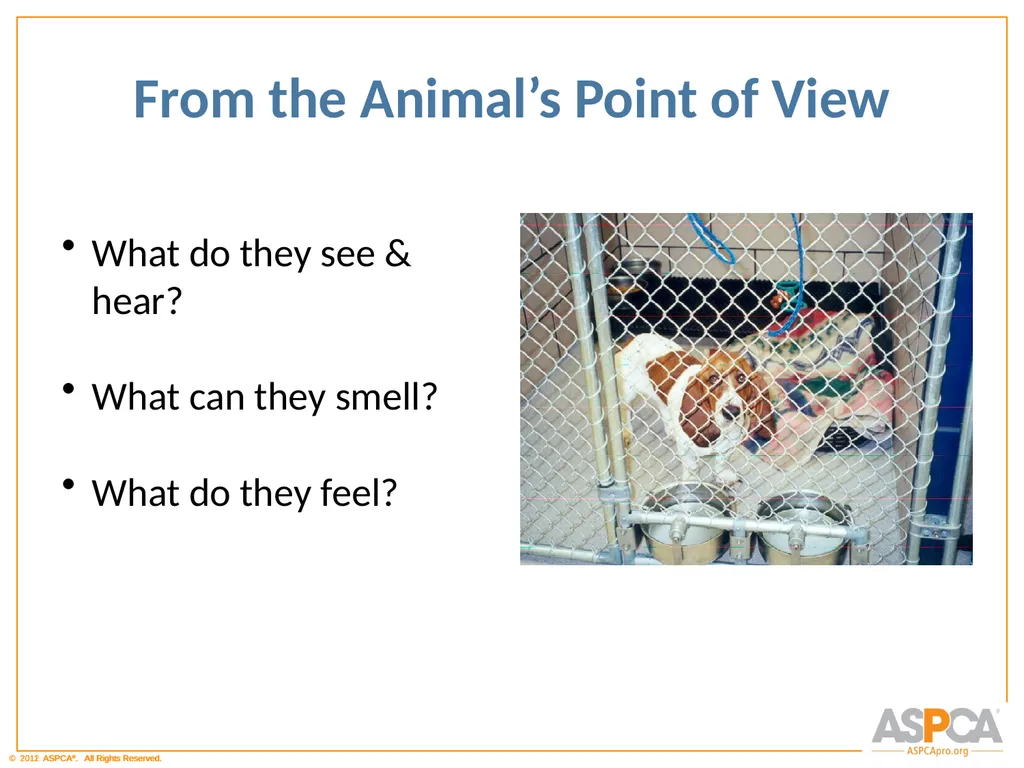
slide30. From the Animal’s Point of View What do they see & hear?
What can they smell?
What do they feel?<br>
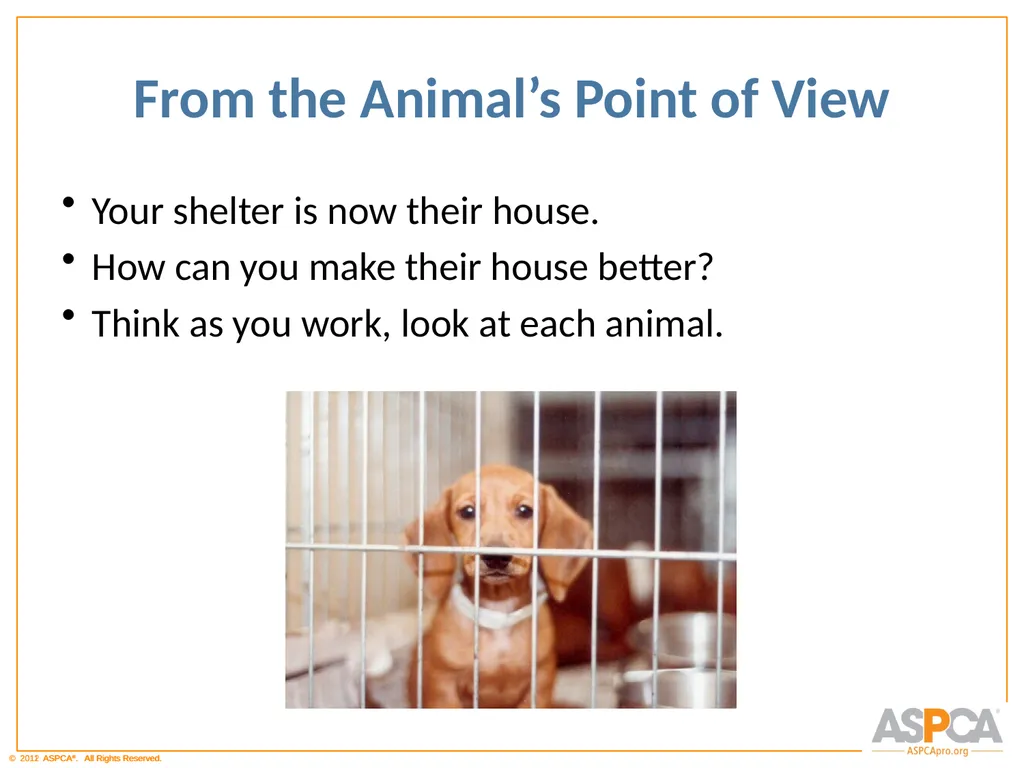
slide31. From the Animal’s Point of View Your shelter is now their house.
How can you make their house better?
Think as you work, look at each animal.<br>
slide32. Zoonotic and Safety Issues How to protect self
Reporting injury
Importance of communication regarding animal health issues
MSDS Sheets
Zoonotic diseases<br>
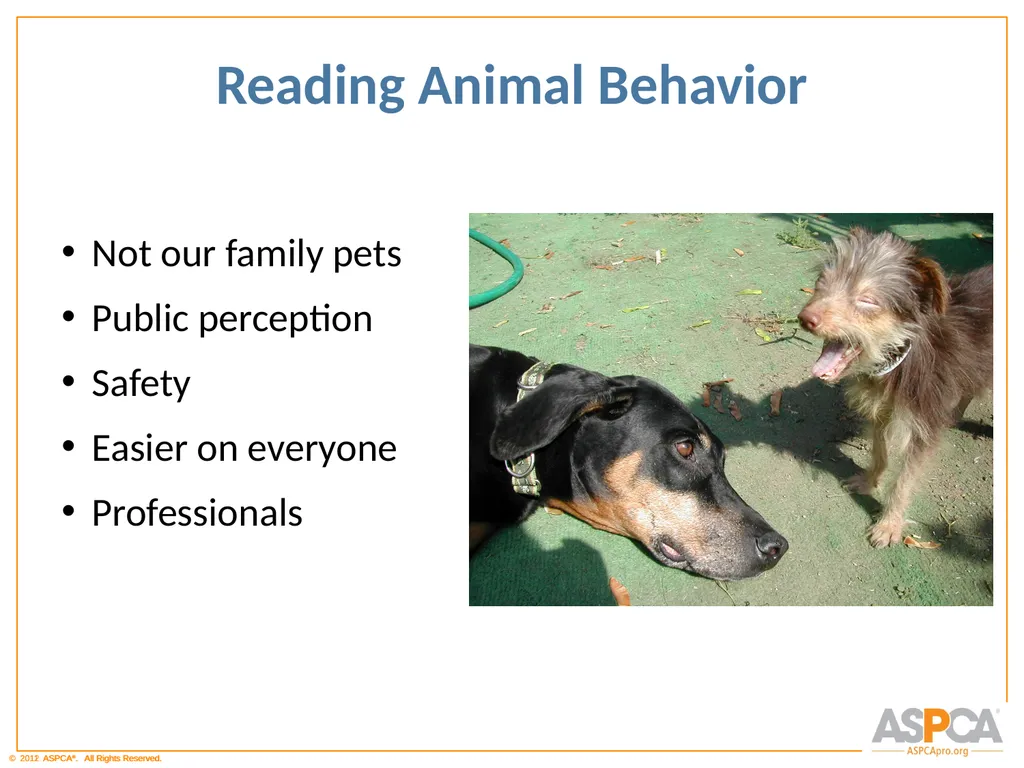
slide33. Reading Animal Behavior Not our family pets
Public perception
Safety
Easier on everyone
Professionals<br>
slide34. Webinars for Reading Animal Behaviorwww.aspcapro.org/webinars Canine Communication: Understanding Canine Body Language
Feline Communication<br>
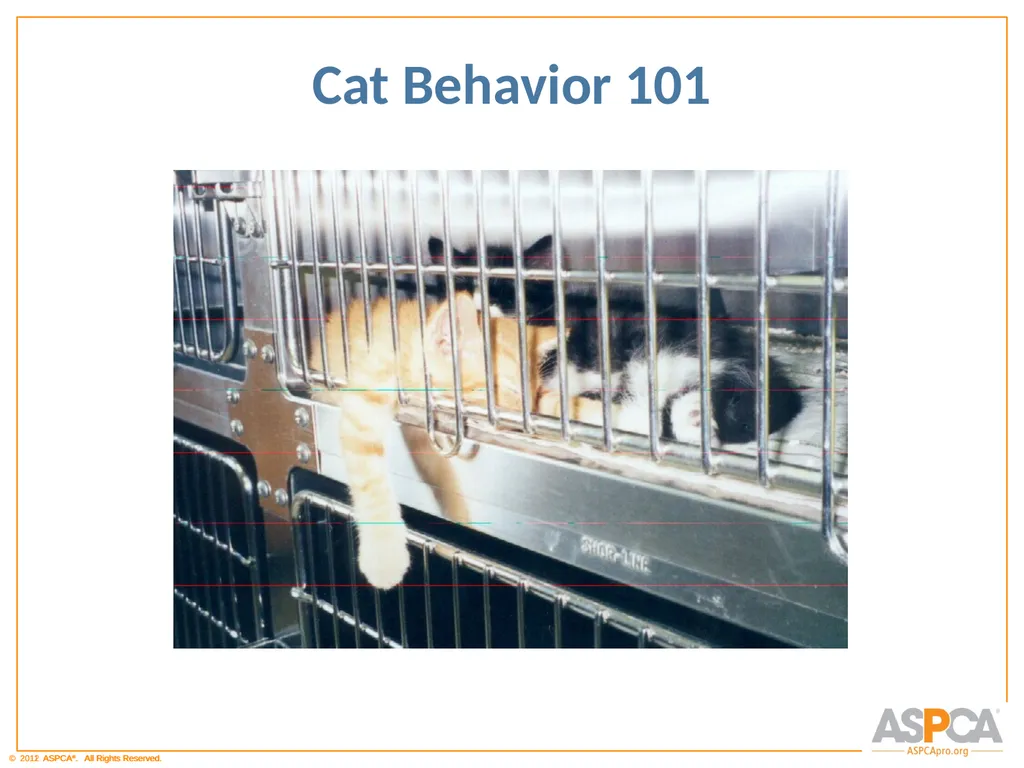
slide35. Cat Behavior 101<br>
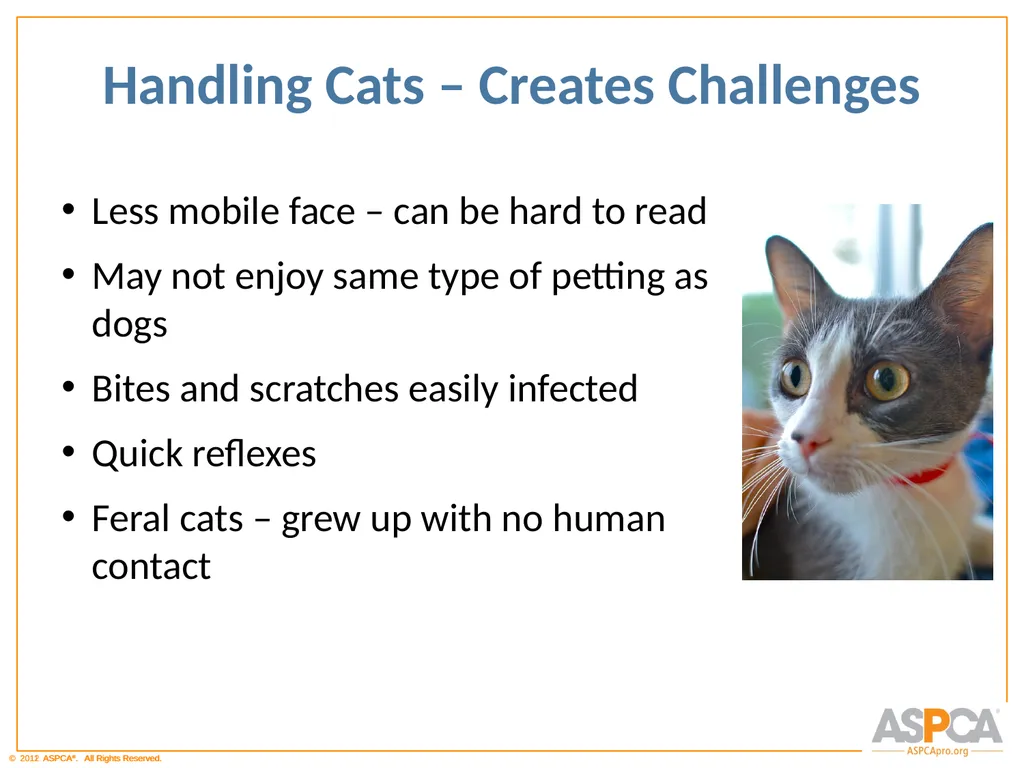
slide36. Handling Cats – Creates Challenges Less mobile face – can be hard to read
May not enjoy same type of petting as dogs
Bites and scratches easily infected
Quick reflexes
Feral cats – grew up with no human contact<br>
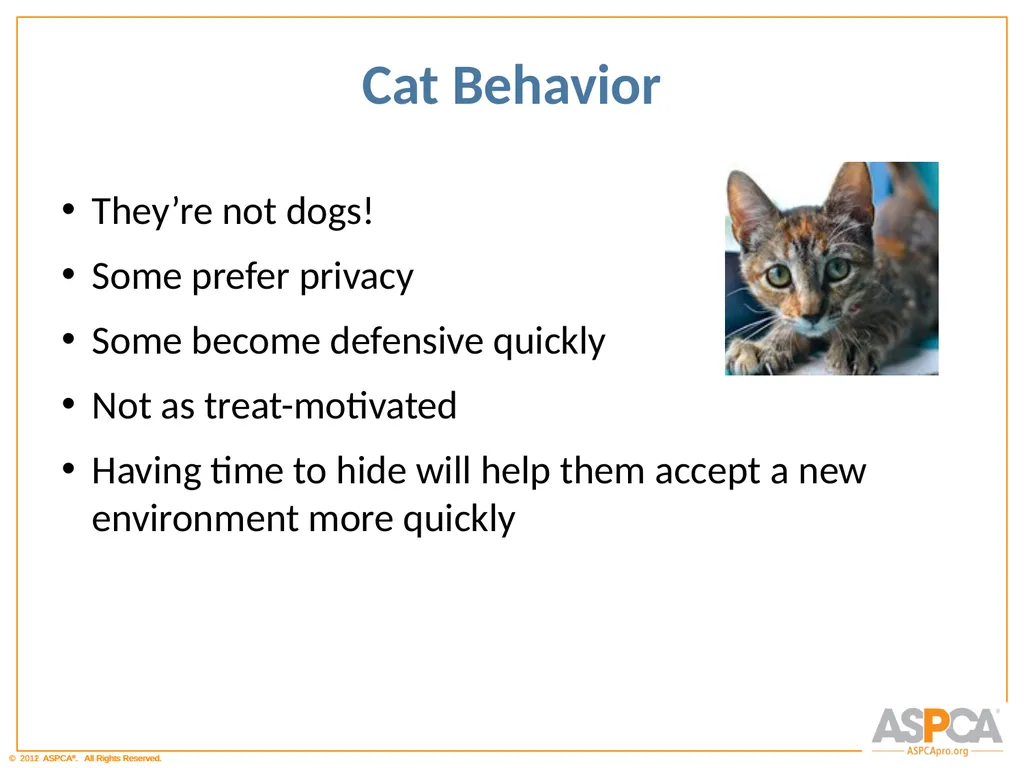
slide37. Cat Behavior They’re not dogs!
Some prefer privacy
Some become defensive quickly
Not as treat-motivated
Having time to hide will help them accept a new environment more quickly<br>
slide38. Cat Behavior Minimal handling for the first 24 hours
Provide hiding spaces
Place a towel/sheet over the cage front to minimize outside noises and stress
ALWAYS cover transport cages
Avoid dogs
Use “Caution” signs at first, as needed<br>
slide39. Cat Behavior Talk slowly, softly and often
Try to make your self smaller, approach cage with your side to the front – less bulk
Use the least amount of restraint necessary
Take things slowly
Ask for help – better than getting bitten
Observe cats and start learning to read their language
Over time your confidence will grow<br>
slide40. Additional Training
ASPCApro Webinars
aspcapro.org/webinars
Resources, Case Studies, and Examples
www.ASPCApro.org<br>

slide2. Watch the webinar recording A Road Map to New Hire Orientation.
Then customize this PowerPoint to include details about your organization’s culture, practices and procedures.
Review the PowerPoint notes section for instructions and details about customization.
Use your custom PowerPoint to train your staff and volunteers about your organization. How to Use this Template<br>
slide3. Contact Kate PullenSenior Director, Shelter Outreach, ASPCA kate.pullen@aspca.org
Visit www.ASPCApro.org for resources:
Shelter Health and Medicine
Standard Operating Procedures
Webinar recordings on personnel issues like hiring and firing Need Help?<br>
slide4. Your Agency Name Here New Hire Orientation Training<br>
slide5. Different Types of Shelters National organizations
Open admission
Limited admission
Organization in relationship to shelters across the country<br>
slide6. Overview of [your agency name here] History of organization
Customer Service
Staff Responsibilities
Shelter Hours
Mission/Ethics of organization
Values of Agency
Organizational Chart
Goals of the organization
Public perception and humane organizations
The Why behind the philosophy of agency<br>
slide7. Euthanasia Decisions: Why/How<br>
slide8. Disease Transmission 101 and Animal Health Herd Health
Isolation and Separation
How disease spreads
Cat diseases
Dog diseases
Sanitation – why and how<br>
slide9. Disease Transmission 101 /Animal Health – Isolation and Separation Adoption Animals that have been identified by the staff as available for adoption or transfer –the public can visit with them and volunteers can work and socialize with them
Healthy Hold Animals that have recently arrived and are deemed healthy. Animals are held in this area to give them time to relax, acclimate to the facility and for staff to conduct a behavior evaluation to determine the best placement.
Quarantine/Court Holds Animals that are either in quarantine for rabies observation or have been seized per our animal control department. Animals in this area must only be handled by paid staff, due to safety concerns, state laws concerning quarantine protocols.
Feral This housing is set up for feral cats or cats that enter the facility as possibly feral. This area is meant to be as quiet as possible to allow the cats time to acclimate and relax.
Isolation This housing area is for all animals that enter the facility with any sort of contagious disease, or those animals that become sick at the shelter.<br>
slide10. Understanding Diseases<br>
slide11. How to Identify a Sick Animal Eyes
Ears
Nose
Mouth
Skin/Hair
Legs and Feet
Genital
Overall grooming<br>
slide12. Diseases of Dogs<br>
slide13. Diseases of Cats<br>
slide14. Diseases Affecting Dogs and Cats<br>
slide15. Preventing the Spread of Disease<br>
slide16. How Diseases Spread Through feces
Parvo
Feline panleukopenia
Others – work with your
Work with your Medical/vet advisor to complete this training content.<br>
slide17. How Diseases Spread By air<br>
slide18. How Diseases Spread Through contact
Ringworm
Mange
Ear mites<br>
slide19. How Diseases Spread By infected objects (fomites)
Ringworm spread on shirt/bedding
Cage walls, toys, and bedding
Peoples’ hands – including staff!<br>
slide20. How to Prevent Disease Spread Enter your intake and vaccination protocol / exam / housing decisions based on exam. What we do at [your agency name here]:<br>
slide21. Shelter Sanitation<br>
slide22. Two Steps to Sanitation Cleaning
(To rid of dirt or other impurities)
Disinfecting
(To destroy or eliminate infection by reducing the number of pathogens present)<br>
slide23. Cleaning Cleaning process
Written protocols
Rotate disinfectants<br>
slide24. Cleaning Protocol for [your agency name here]:<br>
slide25. Daily Cleaning Dog Cages All dogs are fed first and then clean up starts
Move all the dogs to the other side of the run
Remove food bowls – dump the water bowl
The fecal material is picked up with the pooper scooper
All organic material is removed and spot scrubbed with cleaner
The cage is sprayed down using the foamer with the disinfectant and then scrubbed with a scrub brush SAMPLE PROCESS – YOU ENTER YOUR OWN<br>
slide26. Spot Cleaning Cat Cages – Cat Staying Leave cat in cage
Sweep out the loose litter or food
Remove the food and water dish
Scoop the litter pan or replace completely if very dirty
Change bedding if needed
Put back fresh food/water/litter
Give a clean toy
Shut gate and lock the lock
Move to next cat
Visually check each cage when done to ensure you have not forgotten anything SAMPLE PROCESS – YOU ENTER YOUR OWN<br>
slide27. Hand Washing Why?
Do it<br>
slide28. Animal Comfort<br>
slide29. Animal Care and Comfort People have an impression of your shelter
You can change that impression
Toys and beds
Toys help frightened or under socialized puppies play and relax.
Comfort for animals – paramount!
All dogs should be given a bed
More adoptions and better public relations<br>
slide30. From the Animal’s Point of View What do they see & hear?
What can they smell?
What do they feel?<br>
slide31. From the Animal’s Point of View Your shelter is now their house.
How can you make their house better?
Think as you work, look at each animal.<br>
slide32. Zoonotic and Safety Issues How to protect self
Reporting injury
Importance of communication regarding animal health issues
MSDS Sheets
Zoonotic diseases<br>
slide33. Reading Animal Behavior Not our family pets
Public perception
Safety
Easier on everyone
Professionals<br>
slide34. Webinars for Reading Animal Behaviorwww.aspcapro.org/webinars Canine Communication: Understanding Canine Body Language
Feline Communication<br>
slide35. Cat Behavior 101<br>
slide36. Handling Cats – Creates Challenges Less mobile face – can be hard to read
May not enjoy same type of petting as dogs
Bites and scratches easily infected
Quick reflexes
Feral cats – grew up with no human contact<br>
slide37. Cat Behavior They’re not dogs!
Some prefer privacy
Some become defensive quickly
Not as treat-motivated
Having time to hide will help them accept a new environment more quickly<br>
slide38. Cat Behavior Minimal handling for the first 24 hours
Provide hiding spaces
Place a towel/sheet over the cage front to minimize outside noises and stress
ALWAYS cover transport cages
Avoid dogs
Use “Caution” signs at first, as needed<br>
slide39. Cat Behavior Talk slowly, softly and often
Try to make your self smaller, approach cage with your side to the front – less bulk
Use the least amount of restraint necessary
Take things slowly
Ask for help – better than getting bitten
Observe cats and start learning to read their language
Over time your confidence will grow<br>
slide40. Additional Training
ASPCApro Webinars
aspcapro.org/webinars
Resources, Case Studies, and Examples
www.ASPCApro.org<br>