Behaviorally Directed Hiring Process An Overview Educator Preparation Information Educators are often placed in positions that require them to participate in the interview and or hiring process. Few Education Preparation Programs prepare
"Behaviorally Directed Hiring Process An Overview" is the property of its rightful owner. Permission is granted to
download and print the materials on this website for personal, non-commercial use only, and to display it
on your personal computer provided you do not modify the materials and that you retain all copyright
notices contained in the materials. By downloading content from our website, you accept the terms of this
agreement.
Presentation Transcript
01
Behaviorally Directed Hiring Process An Overview<br>
02
Educator Preparation Information Educators are often placed in positions that require them to participate in the interview and or hiring process. Few “Education Preparation Programs” prepare educators to conduct the hiring process.
Main Goal of the Process
The interview and hiring process seeks to focus on predicting future performance base on past behavior.<br>
03
Behaviorally Directed Hiring Developing the Applicant Pool
Sources for “Applicant Selection”:
1. Referrals from University Placement Offices.
2. Recommendations from instructors in Departments/Schools within the universities or colleges from which the candidate graduated.
3. University/College “Interview Fairs.”
4. “Recruitment Brochures”
5. Personal Contact Made to Peer Groups in “Educational Institution” like your own.<br>
04
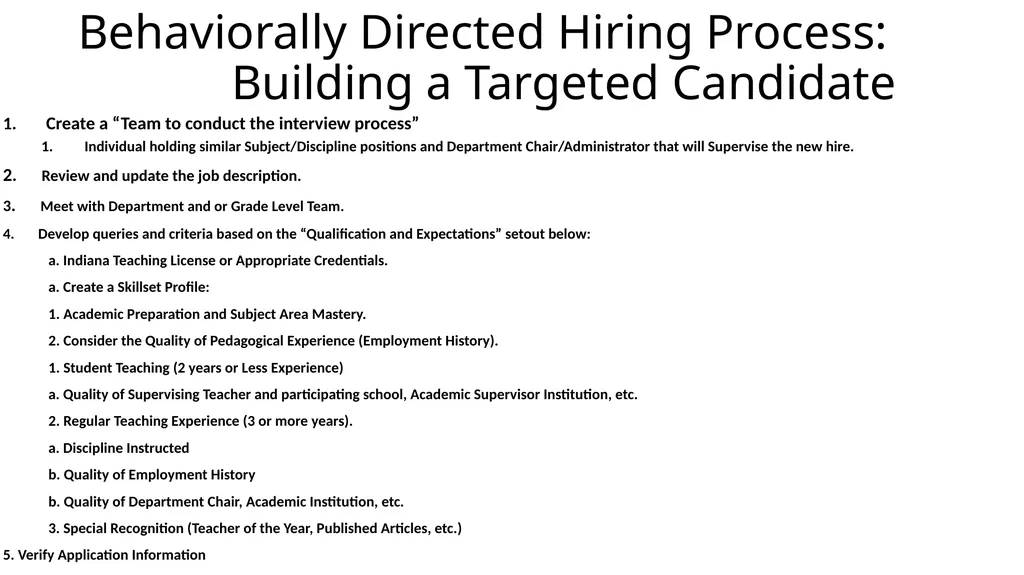
Behaviorally Directed Hiring Process: Building a Targeted Candidate Create a “Team to conduct the interview process”
Individual holding similar Subject/Discipline positions and Department Chair/Administrator that will Supervise the new hire.
2. Review and update the job description.
3. Meet with Department and or Grade Level Team.
4. Develop queries and criteria based on the “Qualification and Expectations” setout below:
a. Indiana Teaching License or Appropriate Credentials.
a. Create a Skillset Profile:
1. Academic Preparation and Subject Area Mastery.
2. Consider the Quality of Pedagogical Experience (Employment History).
1. Student Teaching (2 years or Less Experience)
a. Quality of Supervising Teacher and participating school, Academic Supervisor Institution, etc.
2. Regular Teaching Experience (3 or more years).
a. Discipline Instructed
b. Quality of Employment History
b. Quality of Department Chair, Academic Institution, etc.
3. Special Recognition (Teacher of the Year, Published Articles, etc.)
5. Verify Application Information<br>
05
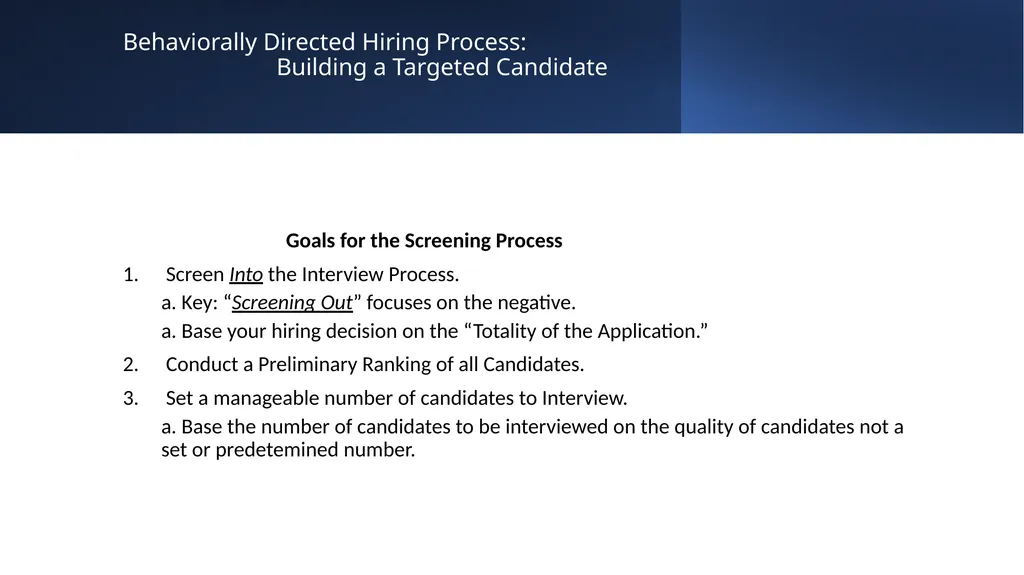
Behaviorally Directed Hiring Process: Building a Targeted Candidate Goals for the Screening Process
Screen Into the Interview Process.
a. Key: “Screening Out” focuses on the negative.
a. Base your hiring decision on the “Totality of the Application.”
Conduct a Preliminary Ranking of all Candidates.
Set a manageable number of candidates to Interview.
a. Base the number of candidates to be interviewed on the quality of candidates not a set or predetemined number.<br>
06
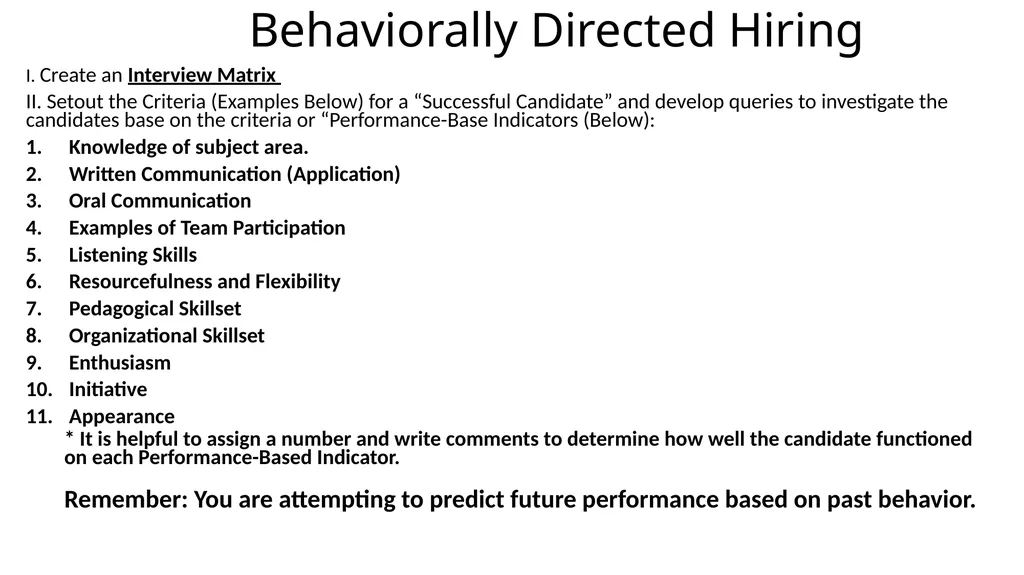
Behaviorally Directed Hiring I. Create an Interview Matrix
II. Setout the Criteria (Examples Below) for a “Successful Candidate” and develop queries to investigate the candidates base on the criteria or “Performance-Base Indicators (Below):
Knowledge of subject area.
Written Communication (Application)
Oral Communication
Examples of Team Participation
Listening Skills
Resourcefulness and Flexibility
Pedagogical Skillset
Organizational Skillset
Enthusiasm
Initiative
Appearance
* It is helpful to assign a number and write comments to determine how well the candidate functioned on each Performance-Based Indicator.
Remember: You are attempting to predict future performance based on past behavior.<br>
07
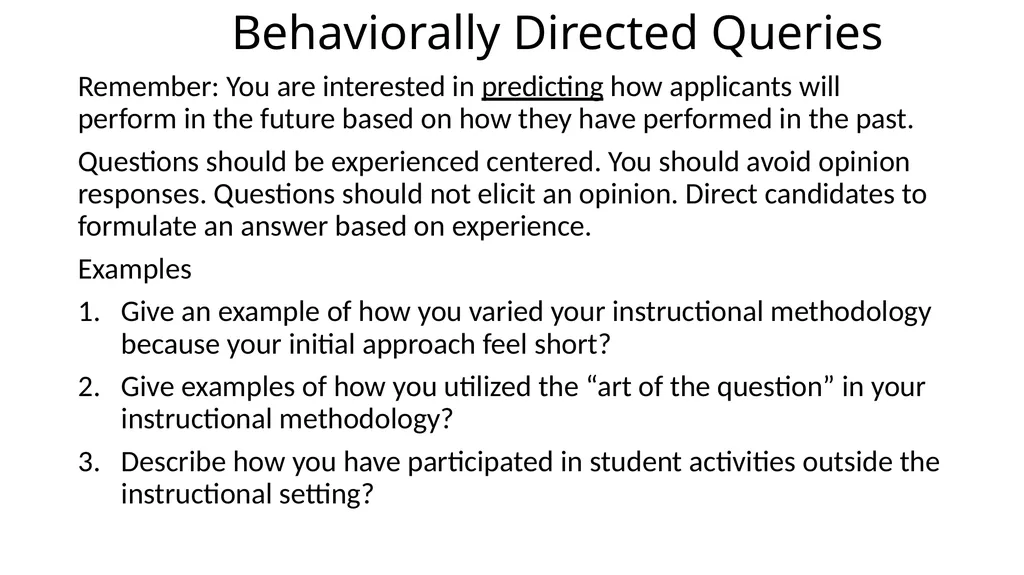
Behaviorally Directed Queries Remember: You are interested in predicting how applicants will perform in the future based on how they have performed in the past.
Questions should be experienced centered. You should avoid opinion responses. Questions should not elicit an opinion. Direct candidates to formulate an answer based on experience.
Examples
Give an example of how you varied your instructional methodology because your initial approach feel short?
Give examples of how you utilized the “art of the question” in your instructional methodology?
Describe how you have participated in student activities outside the instructional setting?<br>
08
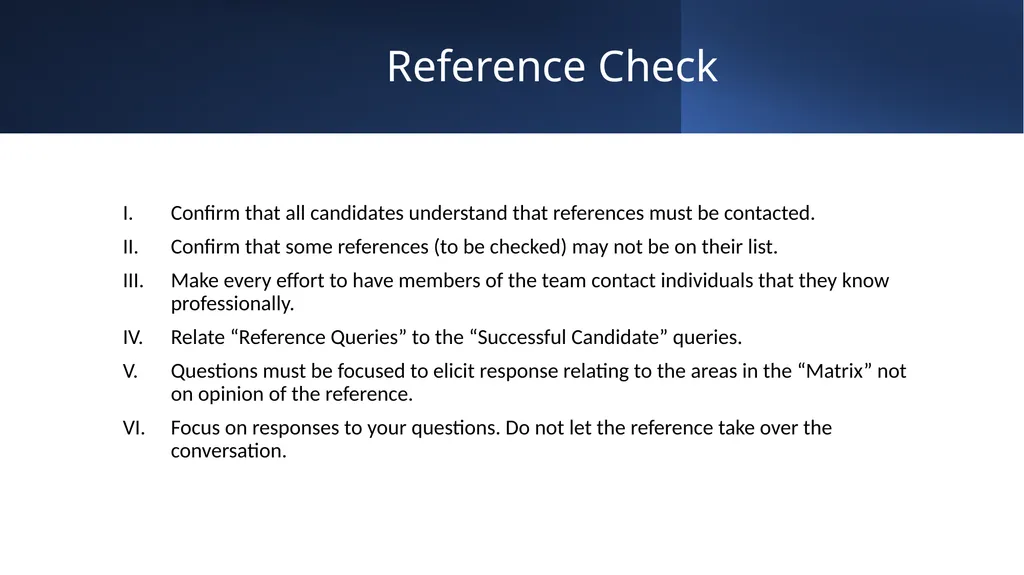
Reference Check Confirm that all candidates understand that references must be contacted.
Confirm that some references (to be checked) may not be on their list.
Make every effort to have members of the team contact individuals that they know professionally.
Relate “Reference Queries” to the “Successful Candidate” queries.
Questions must be focused to elicit response relating to the areas in the “Matrix” not on opinion of the reference.
Focus on responses to your questions. Do not let the reference take over the conversation.<br>