04
Standards of Learning for Biology: BIO.1 The student will demonstrate an understanding of scientific reasoning, logic, and the nature of science by planning and conducting investigations in which
b) hypotheses are formulated based on direct observations and information from scientific literature;
c) variables are defined and investigations are designed to test hypotheses;
k) differentiation is made between a scientific hypothesis, theory, and law;<br>
05
Science & the�Scientific Method<br>
06
What is Science? Science is the attempt to put the universe in some kind of order that humans can understand.
From Latin scire (which means “to know”)<br>
07
What do I need to know about the nature of science?<br>
08
Science is constantly changing!<br>
09
Science is constantly changing! Scientists verify each other’s work.
Every once in a while, the scientists find that a theory or scenario does not always hold true…. So what then?????<br>
10
SCIENCE MUST CHANGE TO FIT THE NEW FINDINGS.
This is why Science is constantly changing.<br>
11
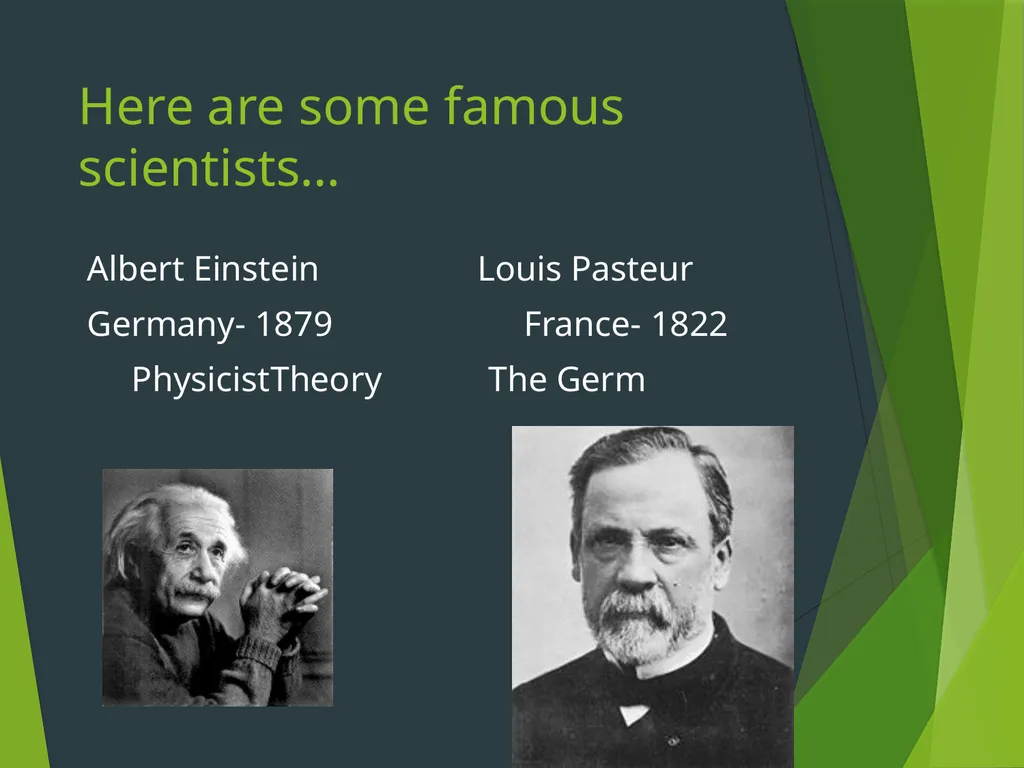
Here are some famous scientists… Albert Einstein Louis Pasteur
Germany- 1879 France- 1822
Physicist Theory The Germ<br>
12
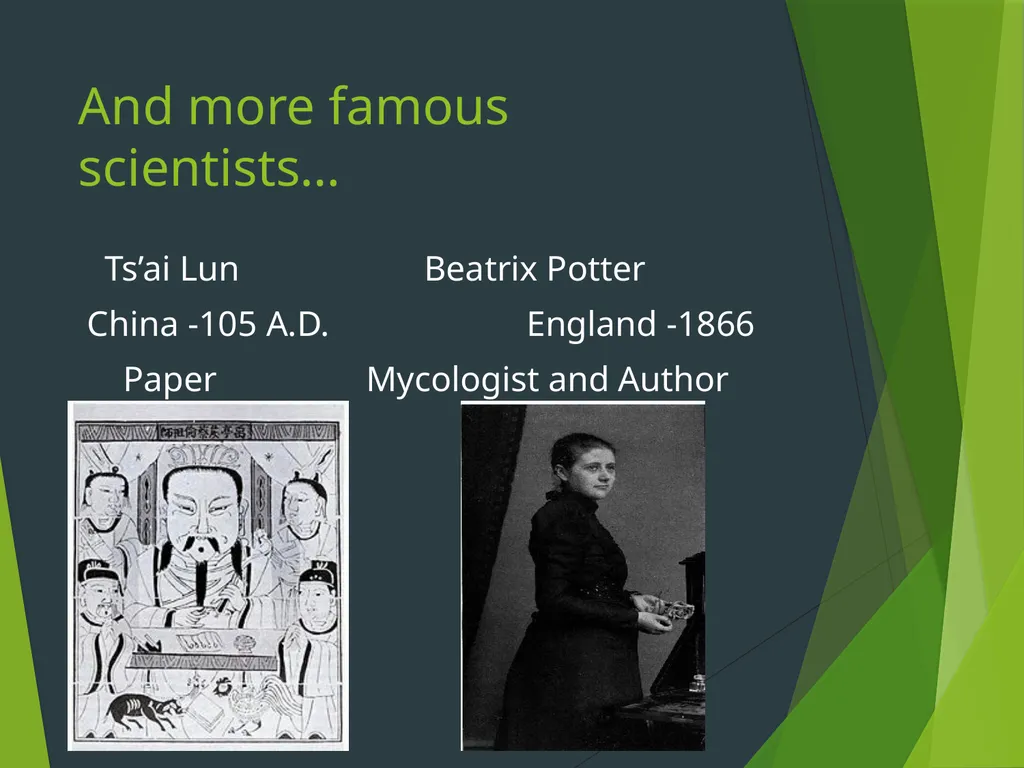
And more famous scientists… Ts’ai Lun Beatrix Potter
China -105 A.D. England -1866
Paper Mycologist and Author<br>
13
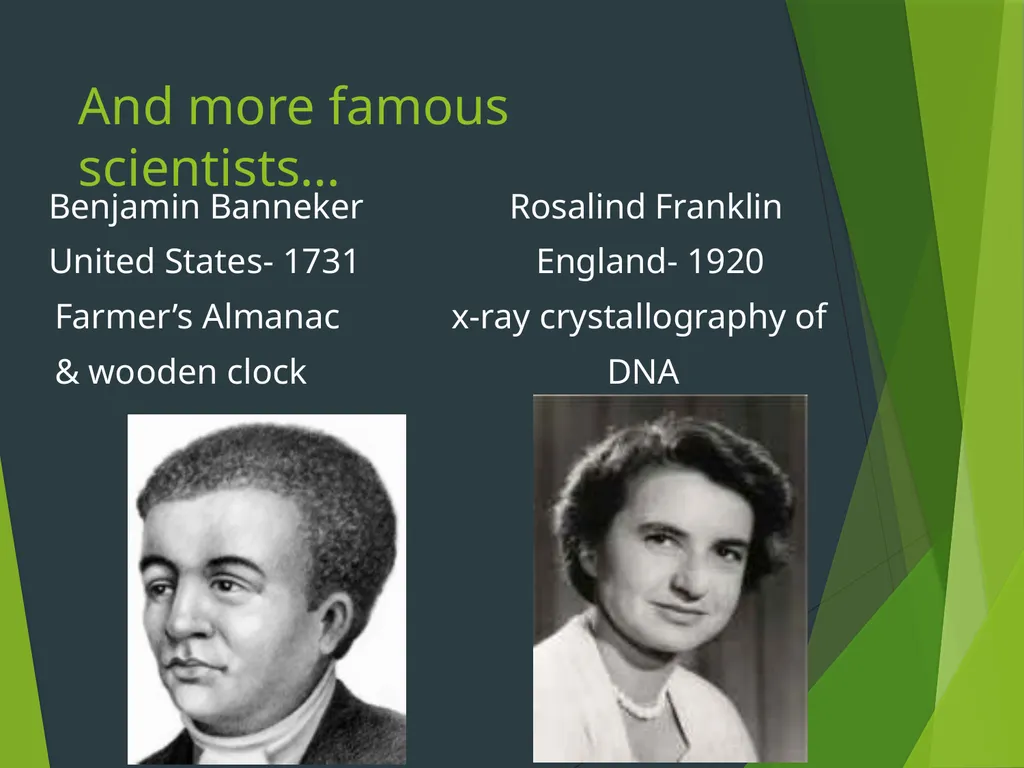
And more famous scientists… Benjamin Banneker Rosalind Franklin
United States- 1731 England- 1920
Farmer’s Almanac x-ray crystallography of
& wooden clock DNA<br>
14
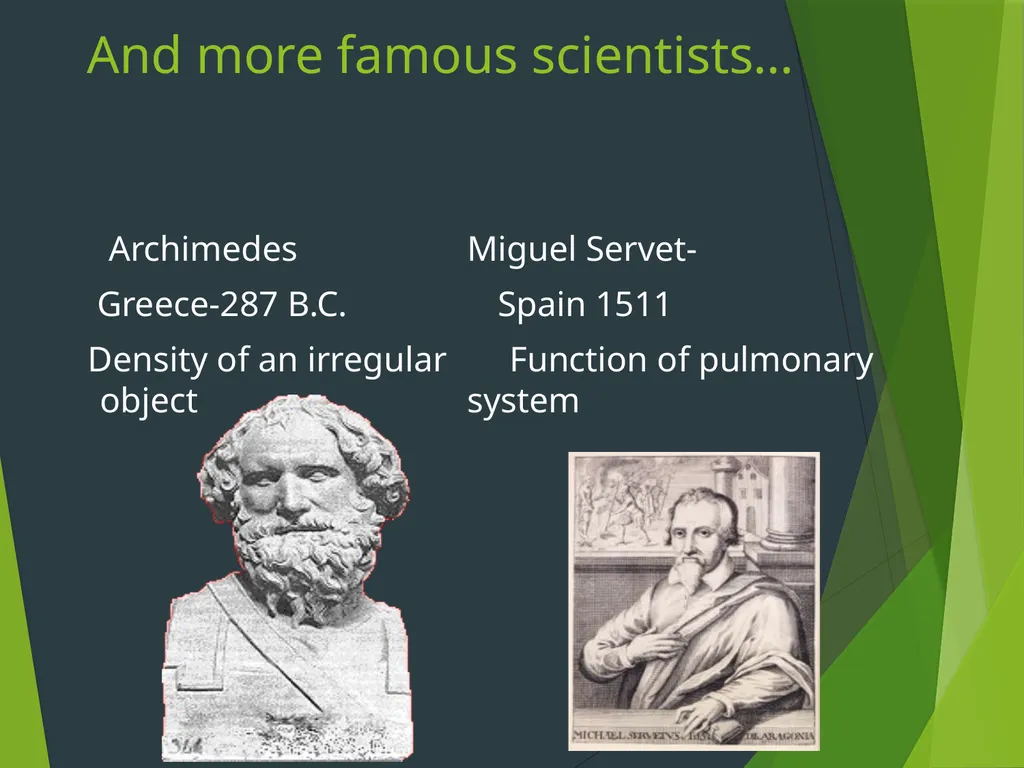
And more famous scientists… Archimedes Miguel Servet-
Greece-287 B.C. Spain 1511
Density of an irregular Function of pulmonary object system<br>
15
What’s the point????<br>
16
Scientists can be of any age, race, gender, religion or culture!<br>
17
You can be a Scientist!<br>
18
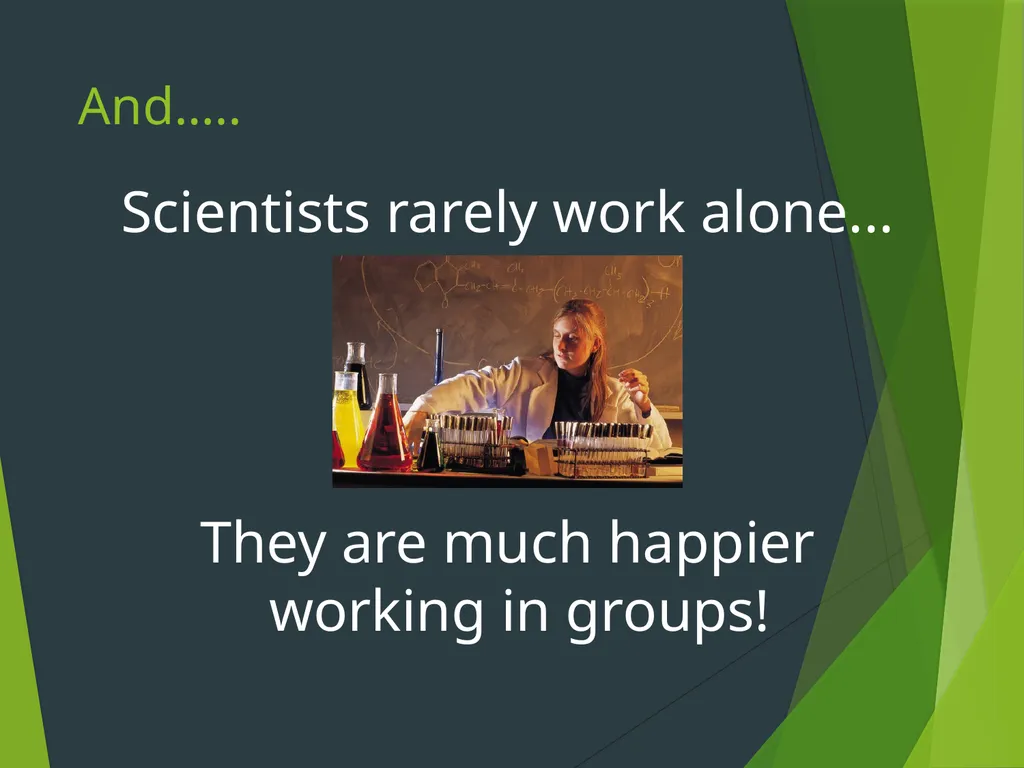
And….. Scientists rarely work alone...
They are much happier working in groups!<br>
19
So far we know… Science is constantly changing
Scientists can be from any race, gender, age, culture or religion.
Scientists like to work in groups!<br>
20
So, How Do We Study Science?<br>
21
We use the Scientific Method!!!<br>
22
Step 1: Identify a problem Ask a question.<br>
23
Step 2: Research the Problem Look at reliable sources
Determine what is already known about the problem.
Write this under “Background Information” in the lab write-up.<br>
24
Step 3: Form a Hypothesis Hypothesis- a testable explanation of an observation
A hypothesis is NOT just an educated guess about what you think will happen. It must be TESTABLE!!!!<br>
25
Step 4: Design an Experiment How are you going to test your hypothesis?
You Design an Experiment!<br>
26
Step 5: Test your hypothesis Follow a procedure
Keep the procedure the same every time!<br>
27
How many times should you repeat the trials to make sure your experiment is valid?<br>
29
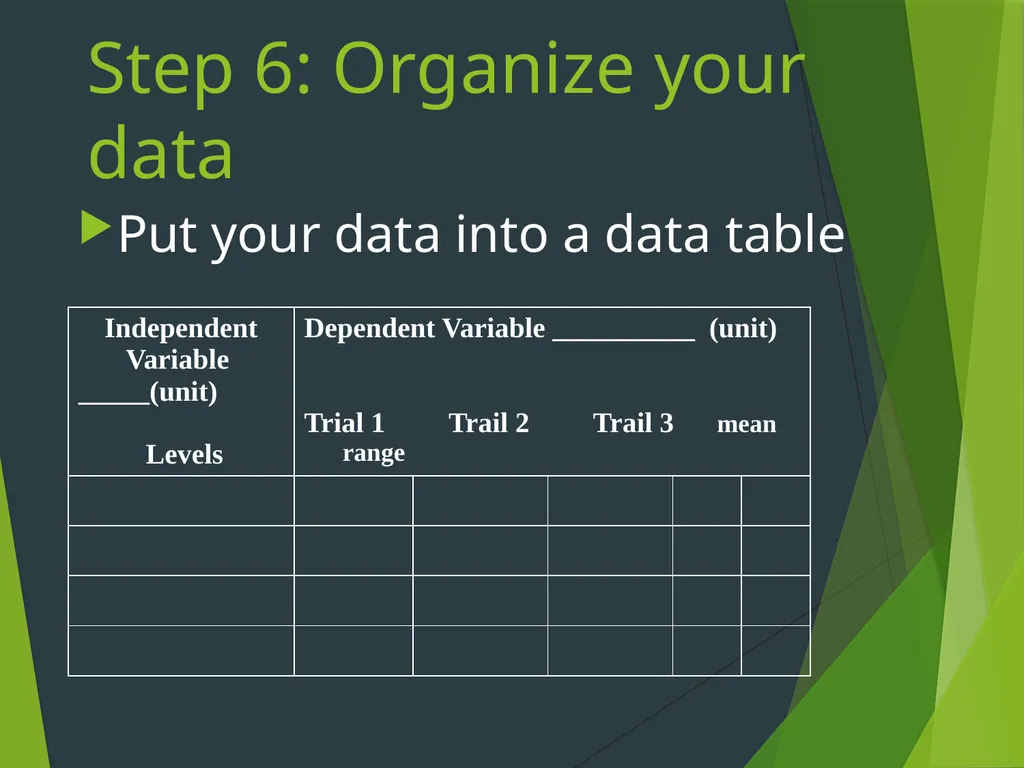
Step 6: Organize your data Put your data into a data table<br>
30
Step 6: Organize your data Make the data table into a graph
Graphs make it easier to see patterns in the data.<br>
31
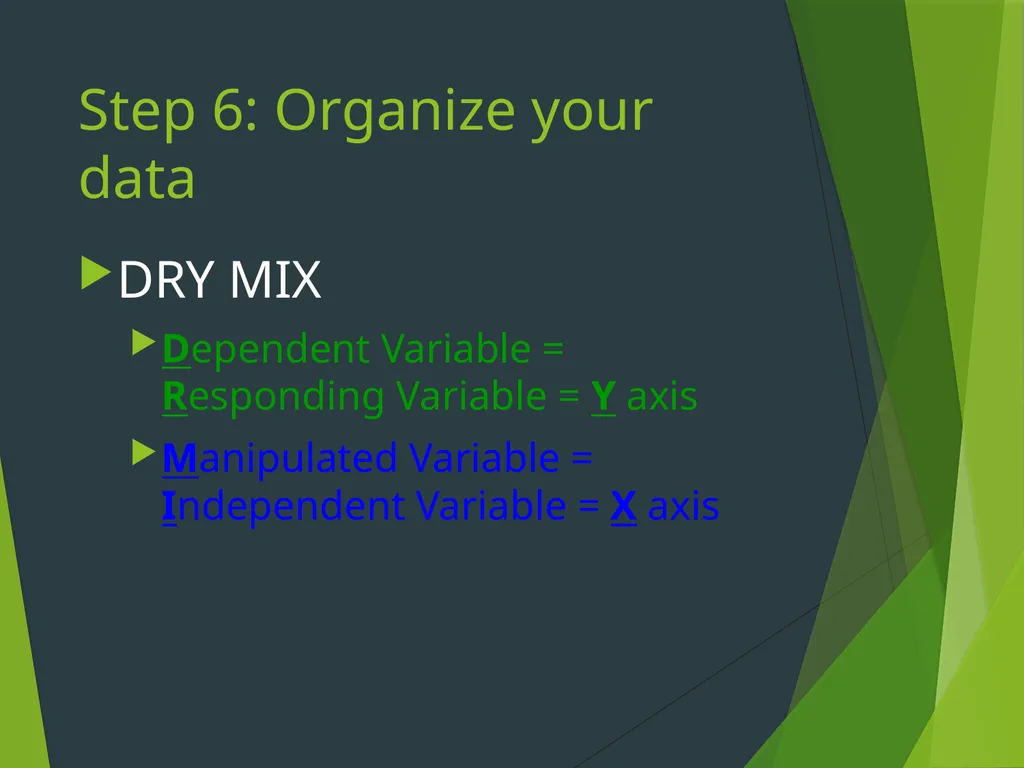
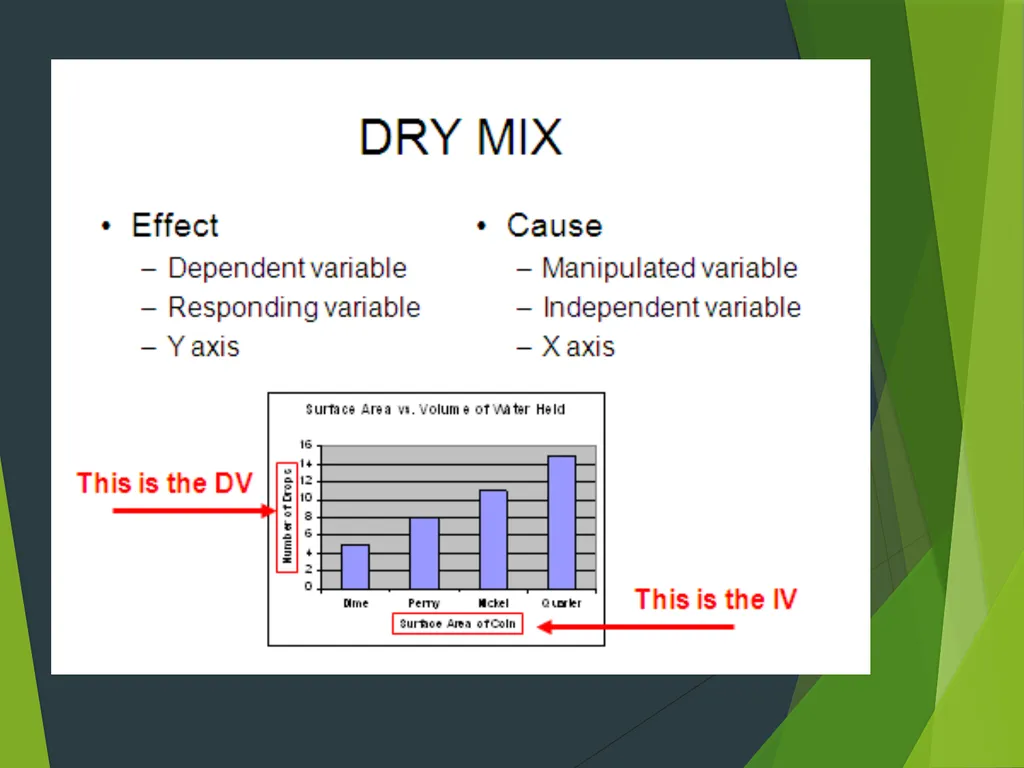
Step 6: Organize your data DRY MIX
Dependent Variable = Responding Variable = Y axis
Manipulated Variable = Independent Variable = X axis<br>
32
Step 7: Draw Conclusion(s) Was your hypothesis correct?
If your hypothesis was not accurate or if you think there was an error collecting data Start over and re-do experiment!<br>
33
Step 8: Communicate Results Tell the scientific community what you discovered!<br>
35
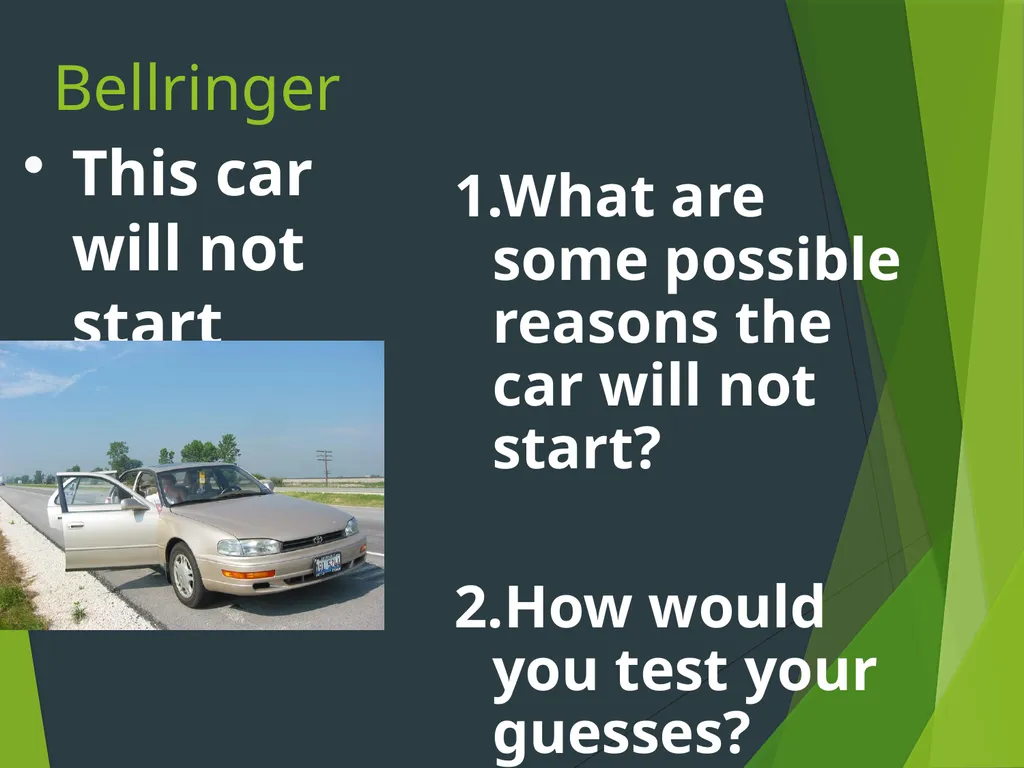
Bellringer This car will not start 1.What are some possible reasons the car will not start?
2.How would you test your guesses?<br>
36
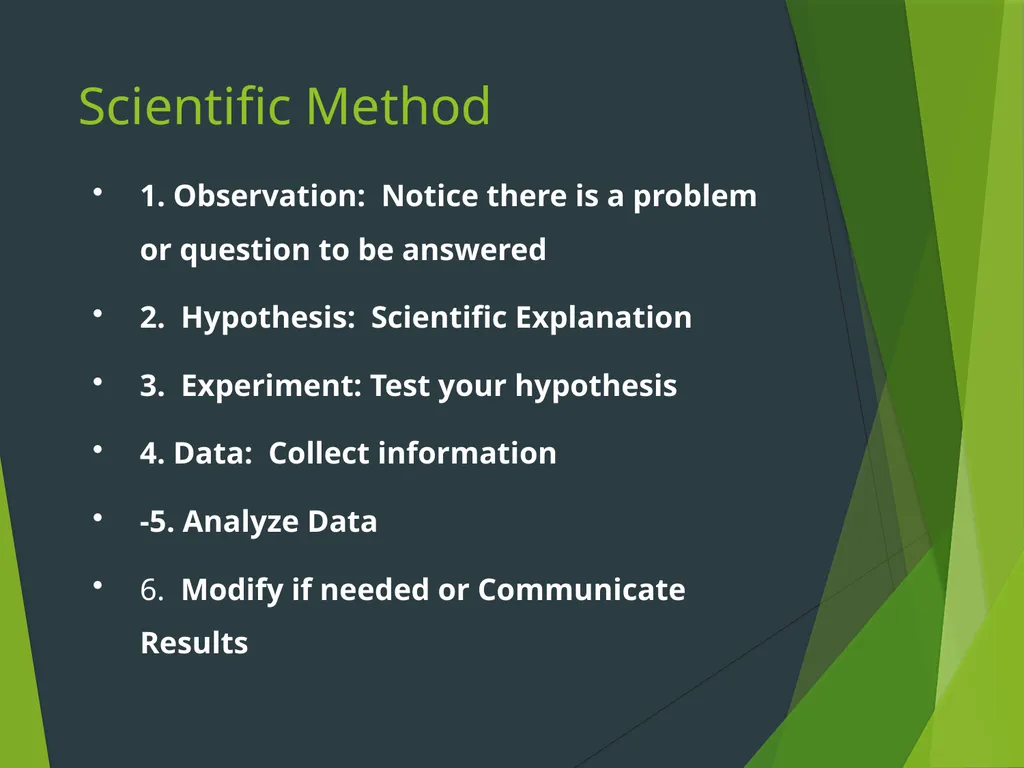
Scientific Method 1. Observation: Notice there is a problem or question to be answered
2. Hypothesis: Scientific Explanation
3. Experiment: Test your hypothesis
4. Data: Collect information
-5. Analyze Data
6. Modify if needed or Communicate Results<br>
37
Experiment Control: used to compare experimental results. Does not receive any experimental treatment/changes
Variable: Factor changed during experiment
Independent Variable: What do you change
Dependent Variable: what do we measure<br>
38
Control, Variables, and Constants Control: �What is used to COMPARE the results to. It is the variable in which no independent variable has been applied.��Variable:�Anything that changes in an experiment. There are 2 types:� Independent: What you change on purpose (cause)� Dependent: What you observe changing, or� What you measure/observe (effect)��Constant:�Anything that stays the same in an experiment to make sure that only the Independent Variable is being changed.<br>
39
Data Qualitative Data: Express with Numbers
-Quantitative Data: Express with Descriptions
Display in graphs: Bar, Line, Circle
X axis: Independent Variable
Y axis: Dependent Variable<br>
40
Analyze Results 1. If results are consistent with hypothesis, communicate and publish results.
2. If results are not consistent with hypothesis, modify experiment.<br>
41
Conclusion 1. Experiment must be repeatable.
2. Theory versus Law
-Theory is subject to change as more knowledge is gained. “Theory of Evolution”
-Laws are universally accepted to be true. “Law of Gravity”<br>
42
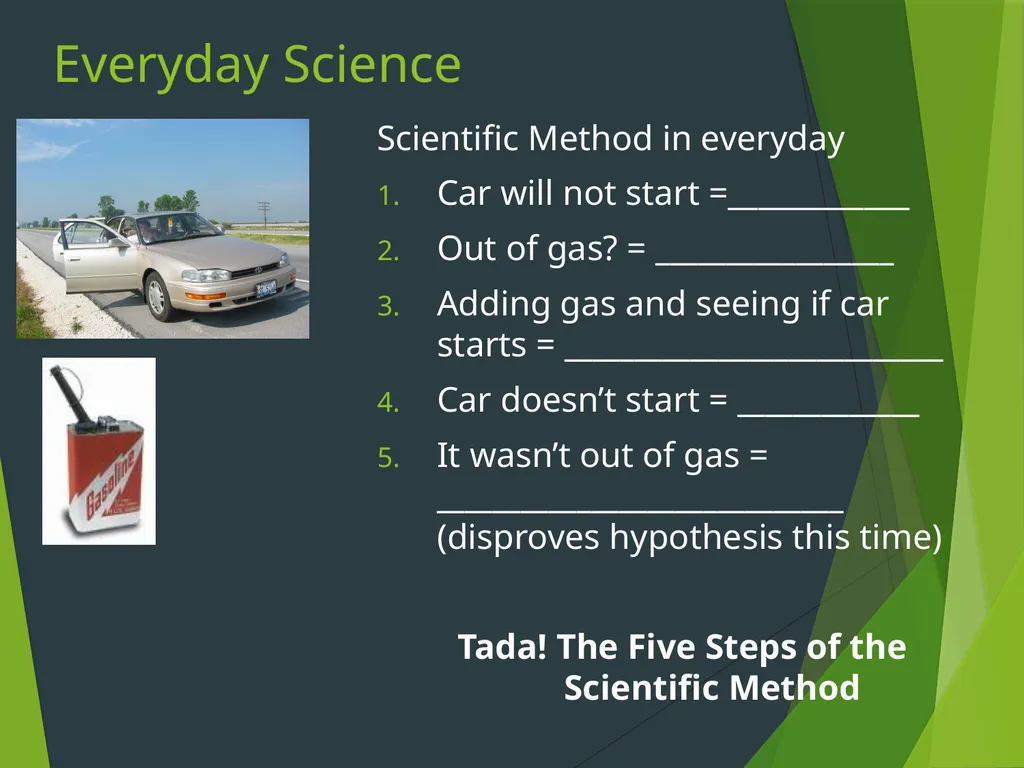
Everyday Science Scientific Method in everyday
Car will not start =____________
Out of gas? = _________________
Adding gas and seeing if car starts = ___________________________
Car doesn’t start = _____________
It wasn’t out of gas = _____________________________ (disproves hypothesis this time)
Tada! The Five Steps of the Scientific Method<br>
43
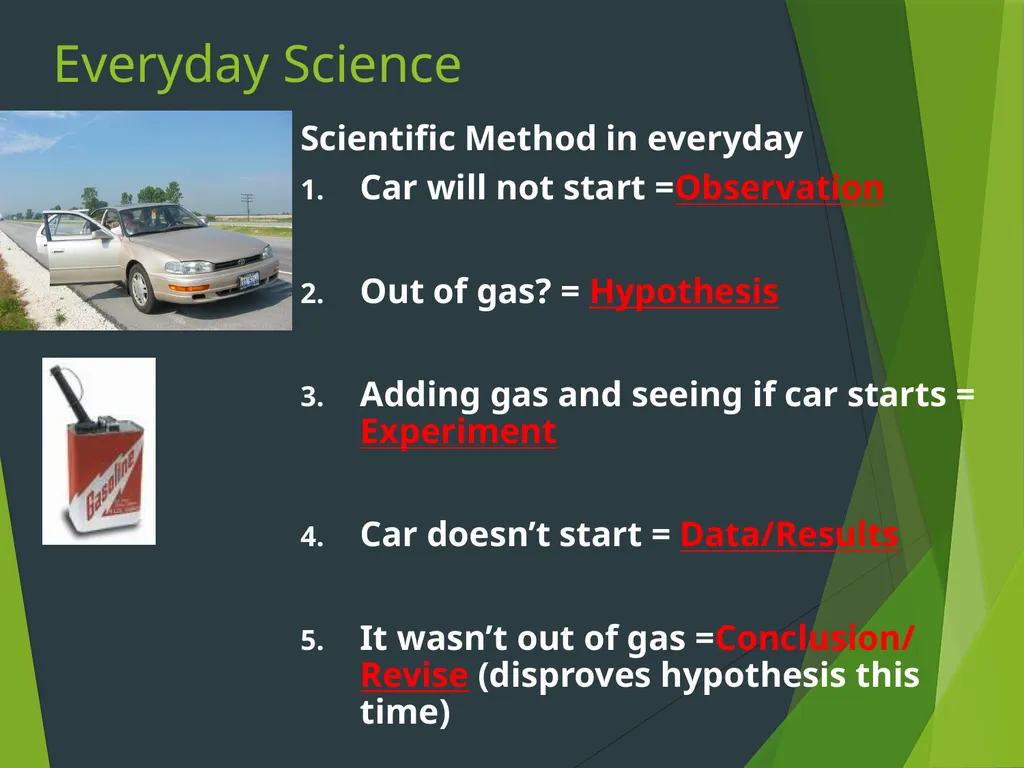
Everyday Science Scientific Method in everyday
Car will not start =Observation
Out of gas? = Hypothesis
Adding gas and seeing if car starts = Experiment
Car doesn’t start = Data/Results
It wasn’t out of gas =Conclusion/ Revise (disproves hypothesis this time)<br>
44
Station 1:Identify parts of experiments including: Independent Variables
Dependent Variables
Experimental Group(s)
Control Group
Constants<br>
45
Station 2: Create flash cards and study will them with a partner Independent Variables
Dependent Variables
Experimental Group(s)
Control Group
Constants
Scientific Method
Theory<br>
46
Station 3: Design the experiment Choose one of the questions below and design an experiment to determine the answer.
You must make a hypothesis, determine an independent variable, dependent variable, control group, experimental group(s), and at least 3 constants<br>
47
Station 4: Create a Study Sheet Fill the space below with important words, phrases, or images that you think you should study for your quiz.
You must fill the entire page and use at least three colors.<br>
48
Station 5: Finish Lab Safety Projects If you have not finished your laboratory safety project you need to complete it by the end of class.
No if, ands, or buts.<br>
49
Homework Return Signature Page
Due by 08/29/2014
HW9: Evaluating Experiments
Due next class 08/22/2014<br>