Ben Page, Chief Executive, Ipsos MORI Public Trust in the banking industry how bad is it? ben.pageipsos.com benatipsosmori Who do you trust to tell the truth? Now I will read you a list of different types of people. For each would you
"Ben Page, Chief Executive, Ipsos MORI Public Trust" is the property of its rightful owner. Permission is granted to
download and print the materials on this website for personal, non-commercial use only, and to display it
on your personal computer provided you do not modify the materials and that you retain all copyright
notices contained in the materials. By downloading content from our website, you accept the terms of this
agreement.
Presentation Transcript
01
Ben Page, Chief Executive, Ipsos MORI Public Trust in the banking industry – how bad is it? ben.page@ipsos.com @benatipsosmori<br>
02
Who do you trust to tell the truth? “Now I will read you a list of different types of people. For each would you tell me if you generally trust them to tell the truth, or not?” % trust to tell the truth Base: 998 British adults aged 15+, fieldwork 20 - 26 October 2017<br>
03
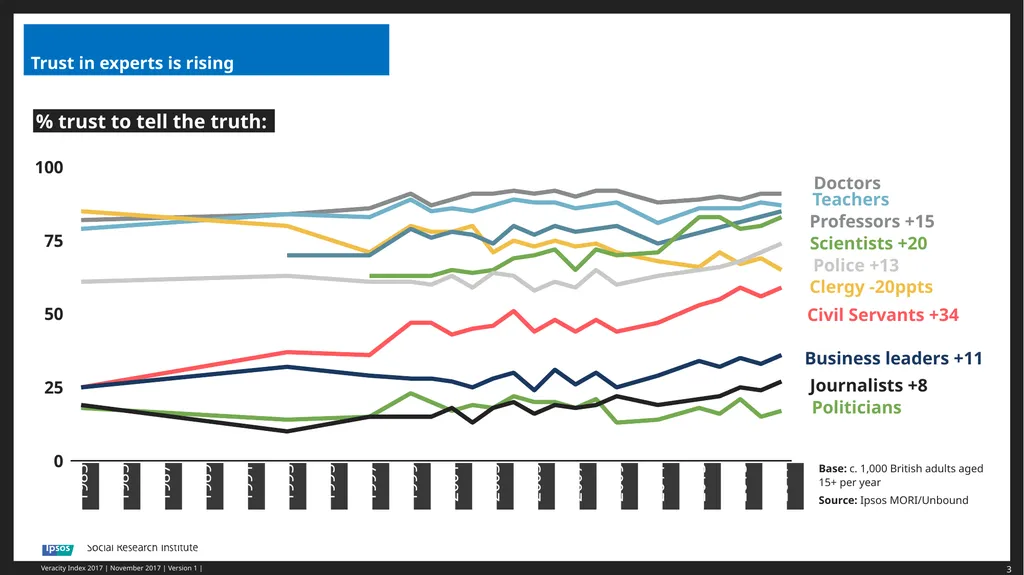
% trust to tell the truth: Doctors Teachers Clergy -20ppts Professors +15 Scientists +20 Police +13 Civil Servants +34 Journalists +8 Politicians Business leaders +11 Source: Ipsos MORI/Unbound Base: c. 1,000 British adults aged 15+ per year Trust in experts is rising<br>
04
Trust in business leaders and bankers % trust to tell the truth: *: This profession listed for the first time in 2017 Base: c. 1,000 British adults aged 15+ per year<br>
05
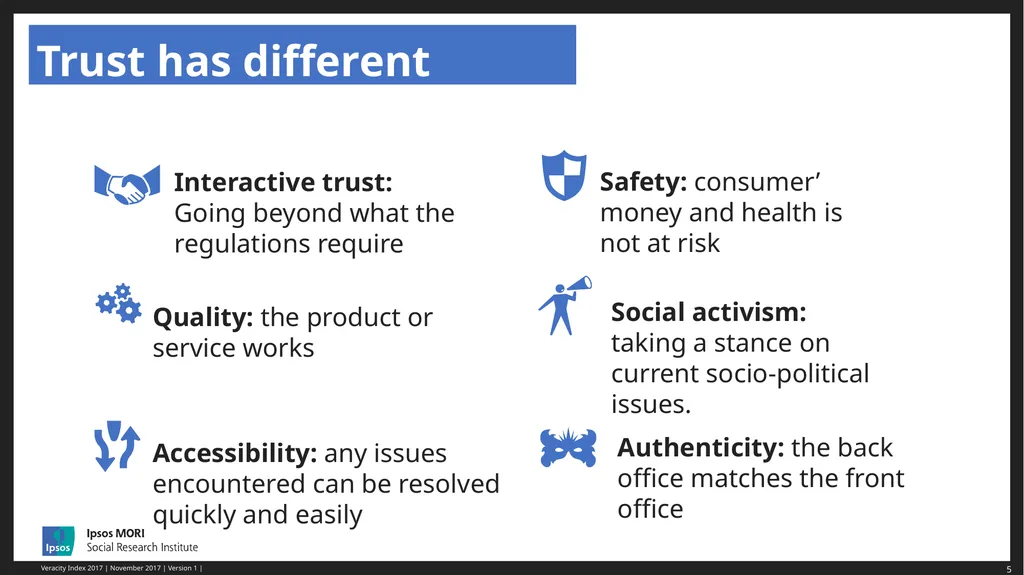
Trust has different aspects<br>
06
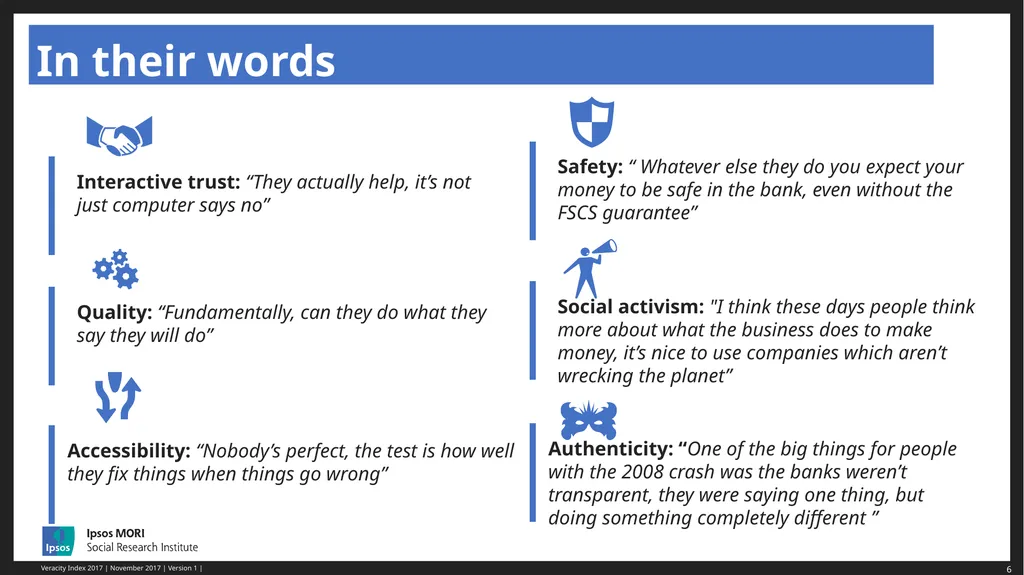
In their words<br>
07
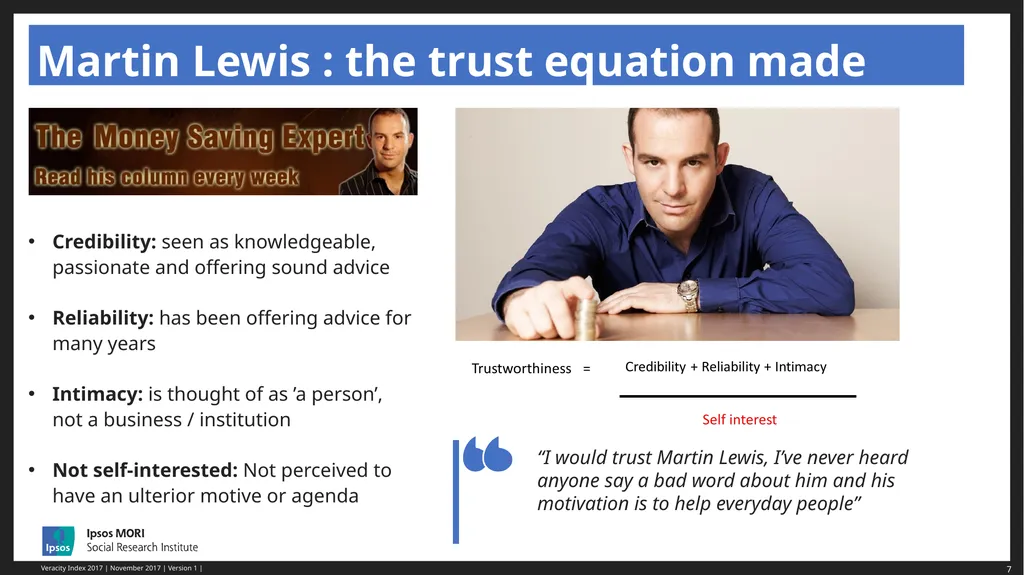
Martin Lewis : the trust equation made flesh Credibility: seen as knowledgeable, passionate and offering sound advice
Reliability: has been offering advice for many years
Intimacy: is thought of as ’a person’, not a business / institution
Not self-interested: Not perceived to have an ulterior motive or agenda<br>
08
Trust in The Banking Industry<br>
09
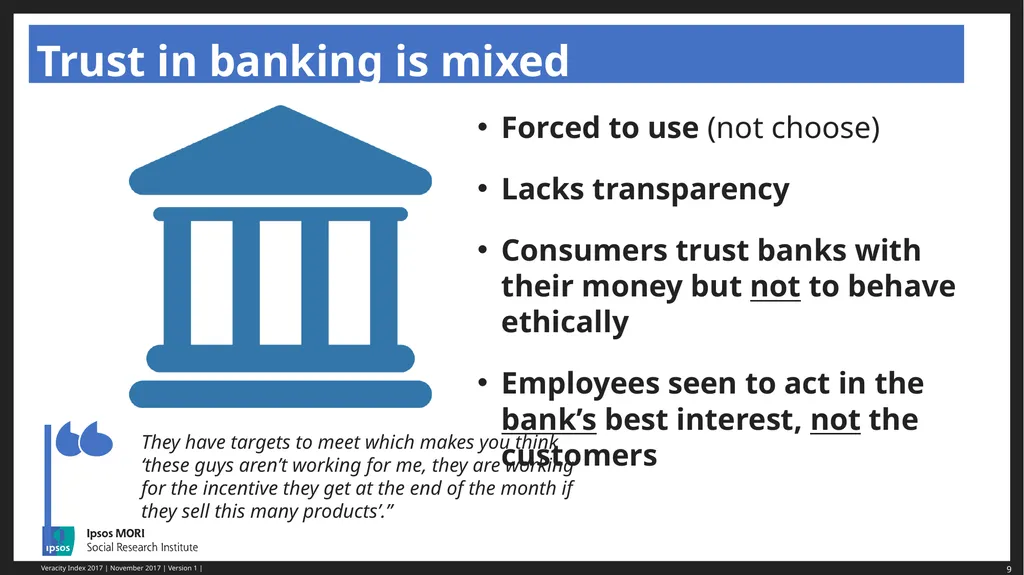
Trust in banking is mixed Forced to use (not choose)
Lacks transparency
Consumers trust banks with their money but not to behave ethically
Employees seen to act in the bank’s best interest, not the customers<br>
10
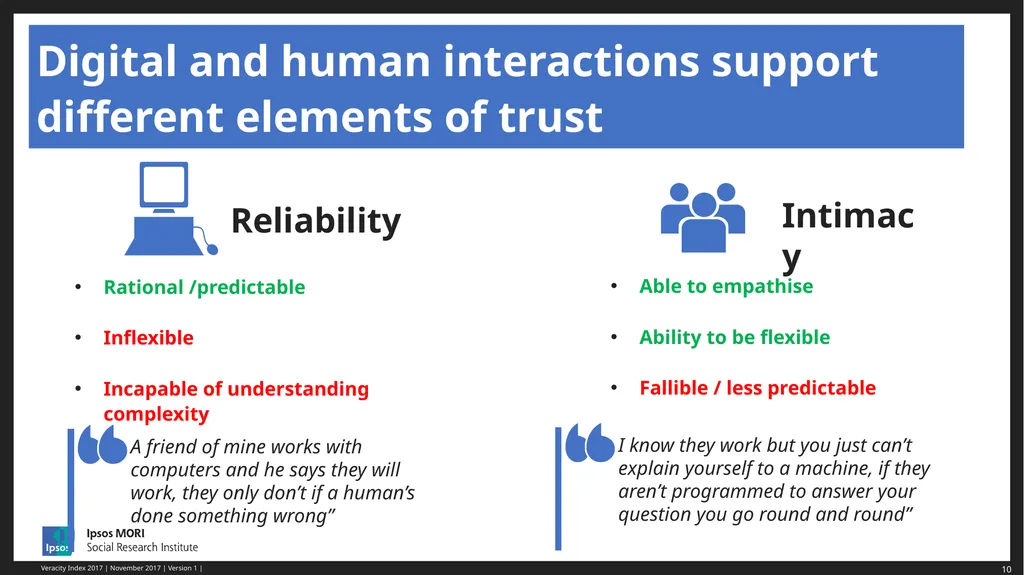
Digital and human interactions support different elements of trust Able to empathise
Ability to be flexible
Fallible / less predictable Rational /predictable
Inflexible
Incapable of understanding complexity Reliability Intimacy<br>
11
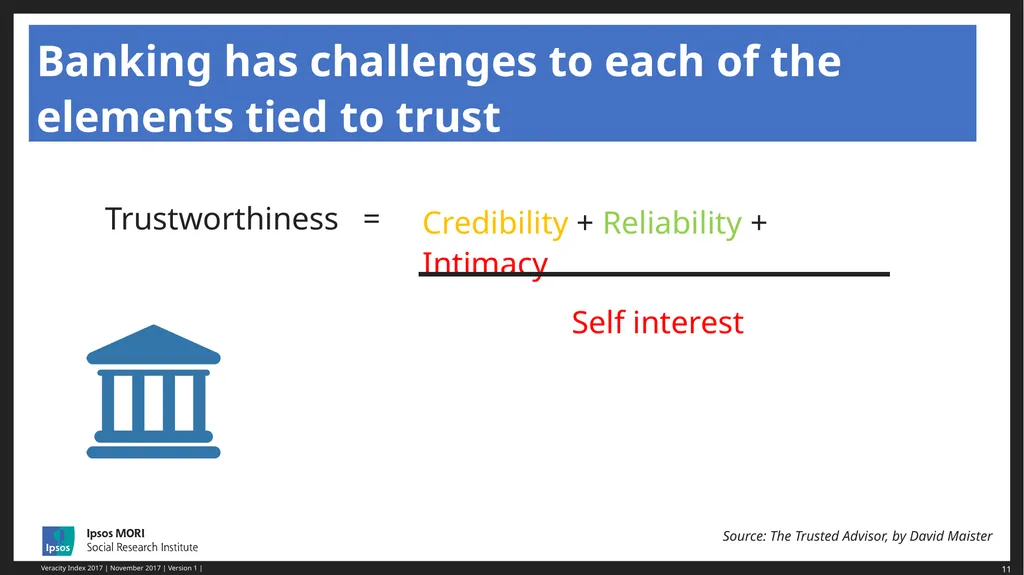
Credibility + Reliability + Intimacy Self interest Trustworthiness = Source: The Trusted Advisor, by David Maister Banking has challenges to each of the elements tied to trust<br>
12
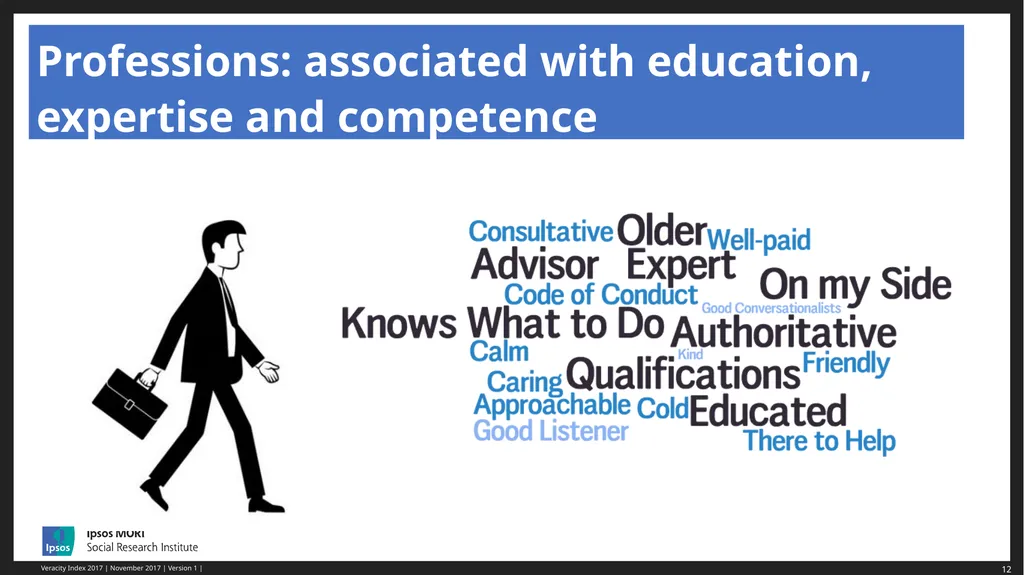
Professions: associated with education, expertise and competence<br>
13
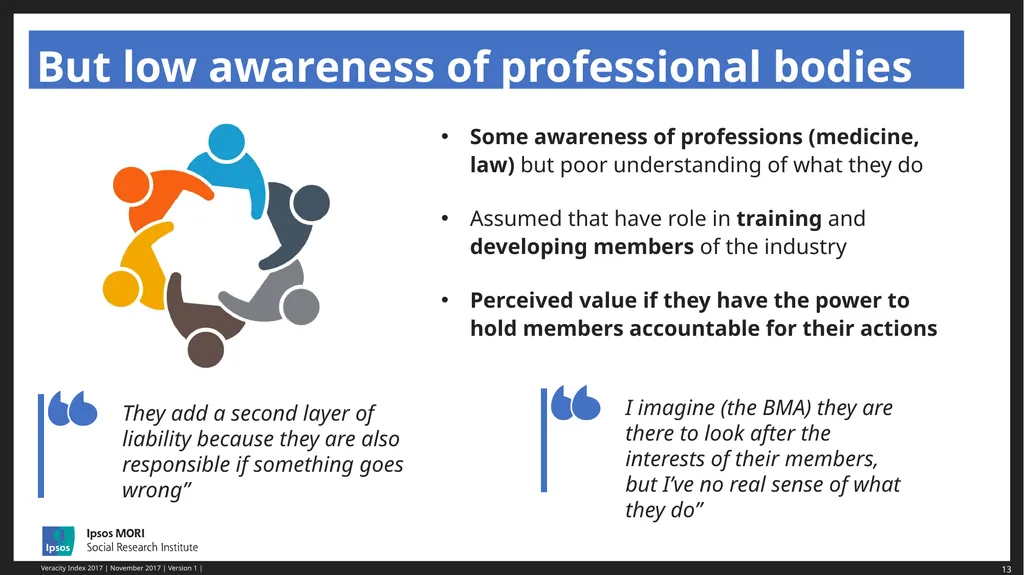
But low awareness of professional bodies Some awareness of professions (medicine, law) but poor understanding of what they do
Assumed that have role in training and developing members of the industry
Perceived value if they have the power to hold members accountable for their actions<br>
14
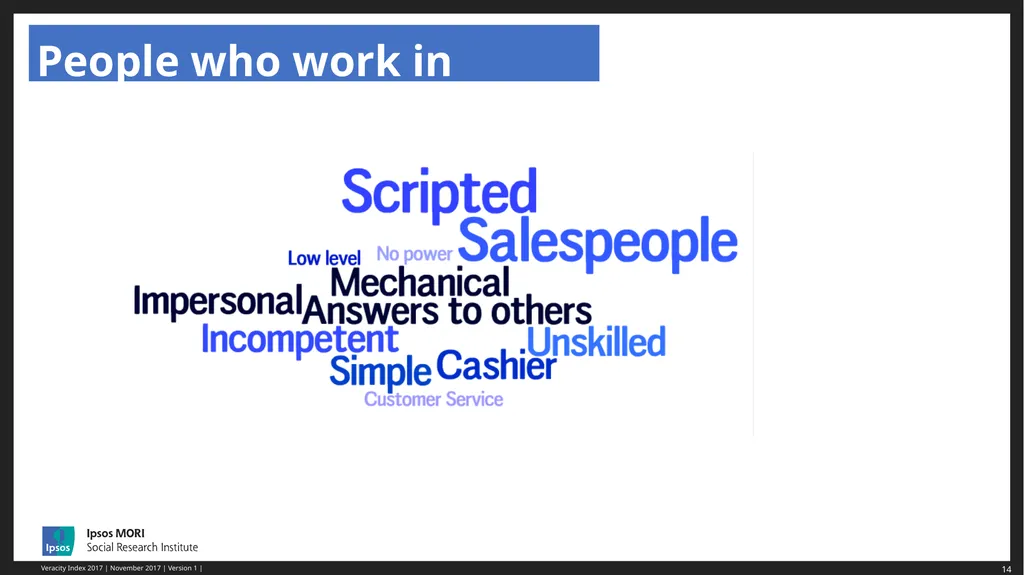
People who work in banks?<br>
15
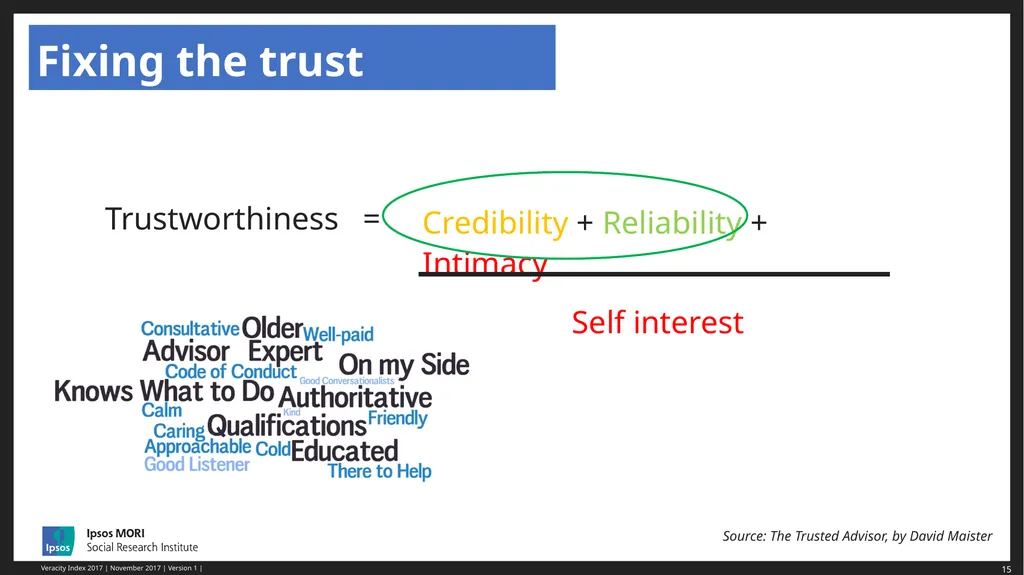
Credibility + Reliability + Intimacy Self interest Trustworthiness = Source: The Trusted Advisor, by David Maister Fixing the trust equation<br>
16
Conclusions First – no collapse in trust: better than many professions
But challenge of low awareness…and
Challenge self interest perception – jobs, credit, trade
How much can the industry do itself?
How much should the Chartered Banker Institute do?
Demonstrate “teeth” – but not too much
Build on strong reliability and consistency – with digital intimacy?
Over to you!<br>
17
Ben Page, Chief Executive, Ipsos MORI THANK YOU ben.page@ipsos.com @benatipsosmori<br>