
BIO 201 : Introduction to Biochemistry &
MY
Published · 26 slides · 0 views

1 / 1

Description
BIO 201 : Introduction to Biochemistry Biotechnology Instructor Abhinandan Chowdhury Lecturer Dept. Biochemistry Microbiology North South University Dhaka, Bangladesh Abhinandan Chowdhury (ACh) Lecturer Dept. Biochemistry Microbiology
Related Topics
Share
Embed code
Download this presentation From Below
"BIO 201 : Introduction to Biochemistry &" is the property of its rightful owner. Permission is granted to download and print the materials on this website for personal, non-commercial use only, and to display it on your personal computer provided you do not modify the materials and that you retain all copyright notices contained in the materials. By downloading content from our website, you accept the terms of this agreement.
Presentation Transcript
01
BIO 201 :
Introduction to Biochemistry
&
Biotechnology Instructor
Abhinandan Chowdhury
Lecturer
Dept. Biochemistry & Microbiology
North South University
Dhaka, Bangladesh<br>
Abhinandan Chowdhury
Lecturer
Dept. Biochemistry & Microbiology
North South University
Dhaka, Bangladesh<br>
02
Abhinandan Chowdhury (ACh) Lecturer
Dept. Biochemistry & Microbiology
North South University
Dhaka, Bangladesh
Email; abcnsuedu@gmail.com
Website: www.abhinandanchowdhury.weebly.com
Room: SAC 833 (C)
Research Interest:
Antibiotic resistance, microbiology. Chemical biology, analytical bioscience , Toxionology<br>
Dept. Biochemistry & Microbiology
North South University
Dhaka, Bangladesh
Email; abcnsuedu@gmail.com
Website: www.abhinandanchowdhury.weebly.com
Room: SAC 833 (C)
Research Interest:
Antibiotic resistance, microbiology. Chemical biology, analytical bioscience , Toxionology<br>
03
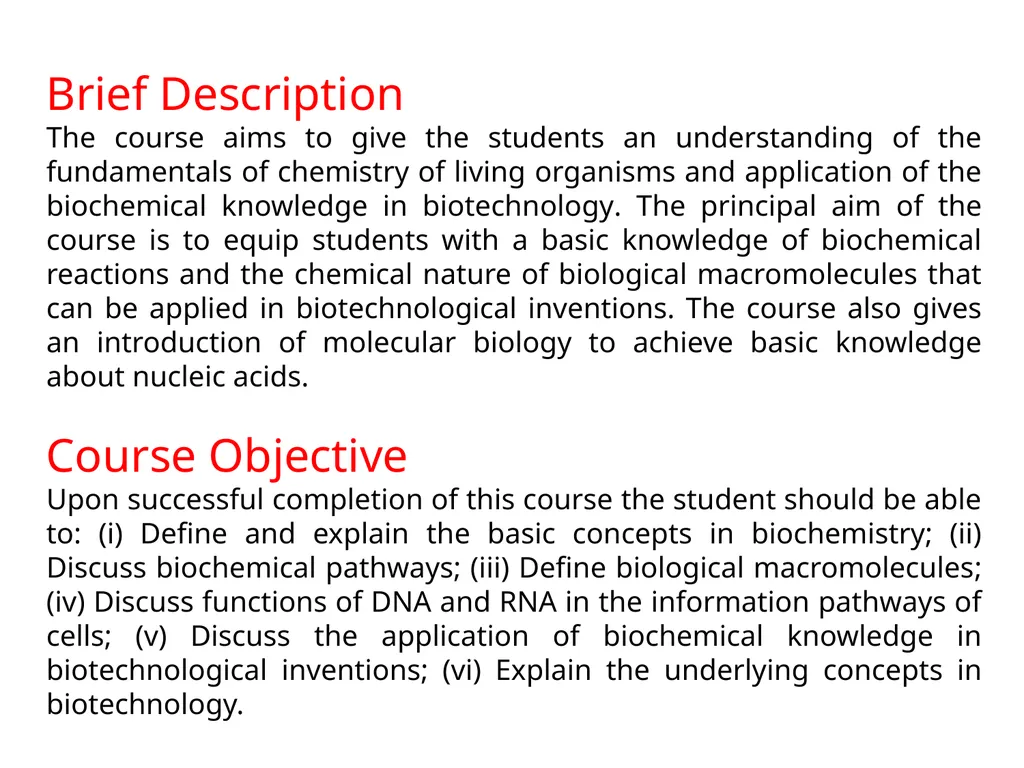
Brief Description
The course aims to give the students an understanding of the fundamentals of chemistry of living organisms and application of the biochemical knowledge in biotechnology. The principal aim of the course is to equip students with a basic knowledge of biochemical reactions and the chemical nature of biological macromolecules that can be applied in biotechnological inventions. The course also gives an introduction of molecular biology to achieve basic knowledge about nucleic acids.
Course Objective
Upon successful completion of this course the student should be able to: (i) Define and explain the basic concepts in biochemistry; (ii) Discuss biochemical pathways; (iii) Define biological macromolecules; (iv) Discuss functions of DNA and RNA in the information pathways of cells; (v) Discuss the application of biochemical knowledge in biotechnological inventions; (vi) Explain the underlying concepts in biotechnology.<br>
04
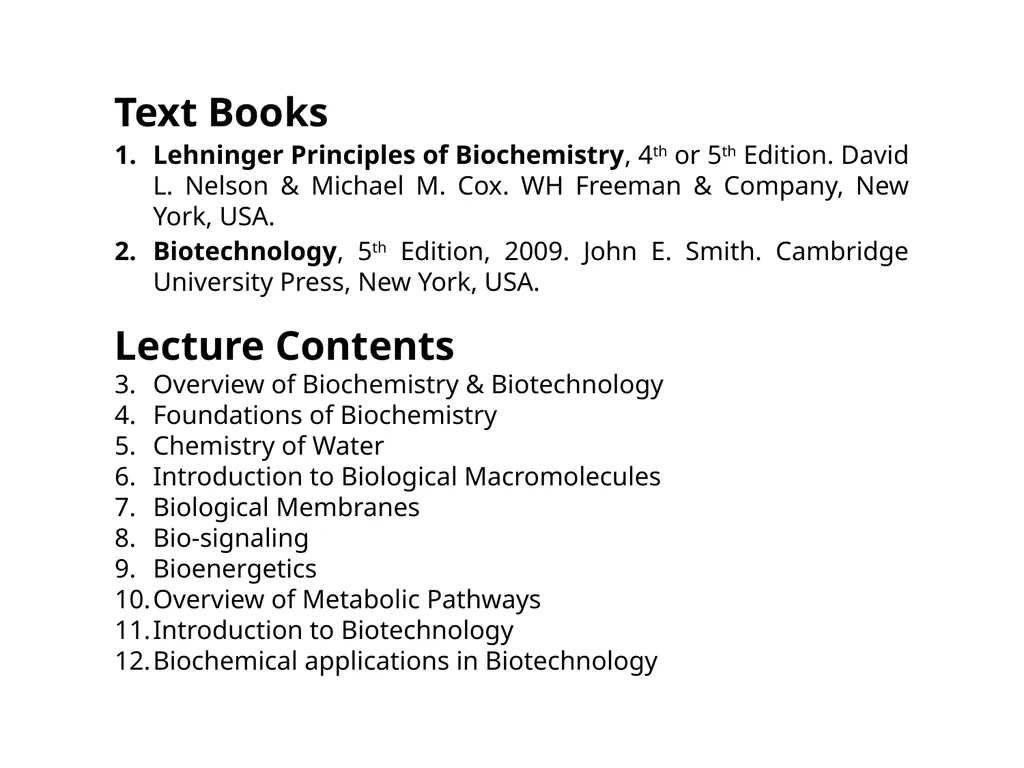
Text Books
Lehninger Principles of Biochemistry, 4th or 5th Edition. David L. Nelson & Michael M. Cox. WH Freeman & Company, New York, USA.
Biotechnology, 5th Edition, 2009. John E. Smith. Cambridge University Press, New York, USA.
Lecture Contents
Overview of Biochemistry & Biotechnology
Foundations of Biochemistry
Chemistry of Water
Introduction to Biological Macromolecules
Biological Membranes
Bio-signaling
Bioenergetics
Overview of Metabolic Pathways
Introduction to Biotechnology
Biochemical applications in Biotechnology<br>
05
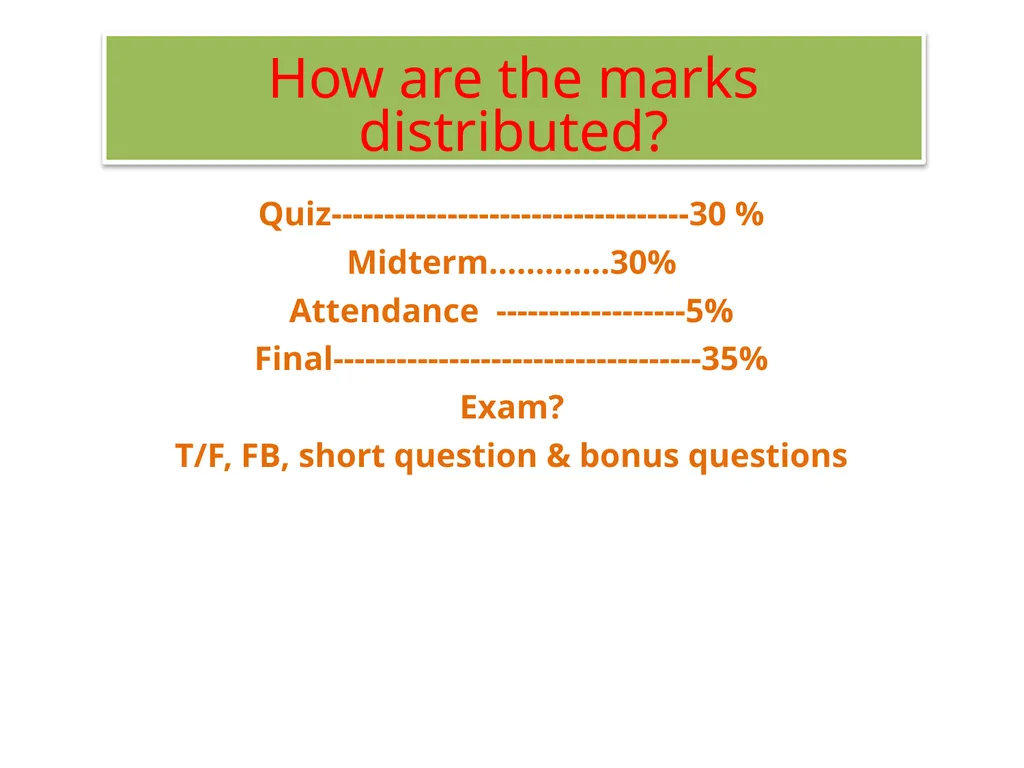
How are the marks distributed? Quiz----------------------------------30 %
Midterm………….30%
Attendance ------------------5%
Final-----------------------------------35%
Exam?
T/F, FB, short question & bonus questions<br>
Midterm………….30%
Attendance ------------------5%
Final-----------------------------------35%
Exam?
T/F, FB, short question & bonus questions<br>
06
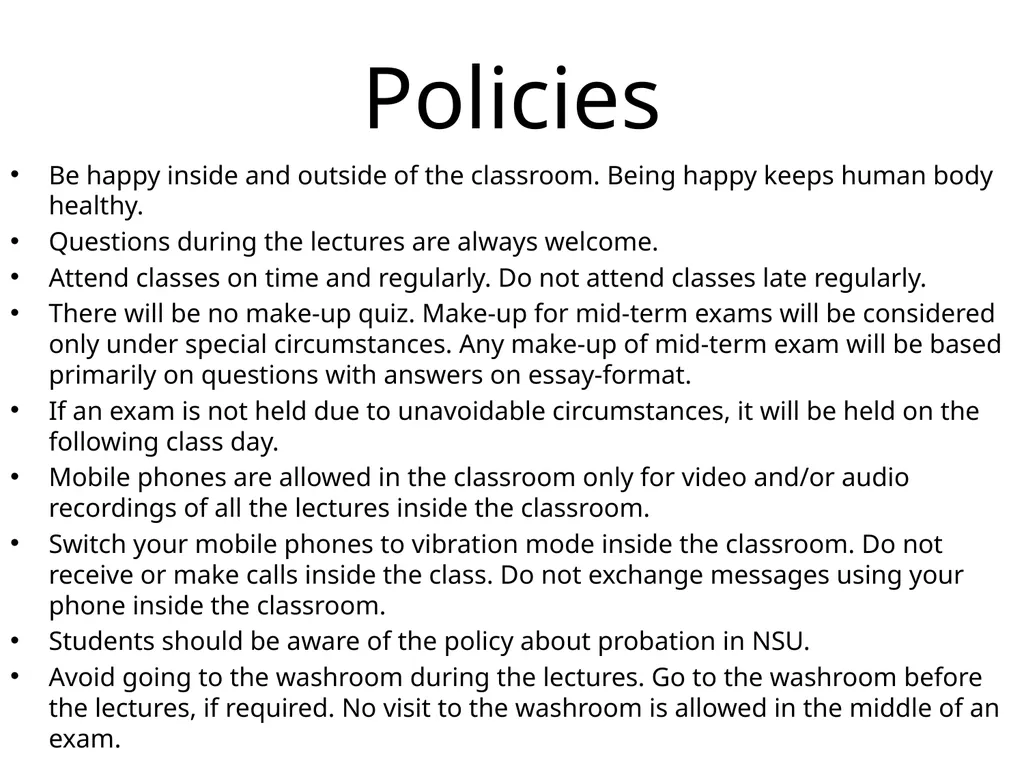
Policies Be happy inside and outside of the classroom. Being happy keeps human body healthy.
Questions during the lectures are always welcome.
Attend classes on time and regularly. Do not attend classes late regularly.
There will be no make-up quiz. Make-up for mid-term exams will be considered only under special circumstances. Any make-up of mid-term exam will be based primarily on questions with answers on essay-format.
If an exam is not held due to unavoidable circumstances, it will be held on the following class day.
Mobile phones are allowed in the classroom only for video and/or audio recordings of all the lectures inside the classroom.
Switch your mobile phones to vibration mode inside the classroom. Do not receive or make calls inside the class. Do not exchange messages using your phone inside the classroom.
Students should be aware of the policy about probation in NSU.
Avoid going to the washroom during the lectures. Go to the washroom before the lectures, if required. No visit to the washroom is allowed in the middle of an exam.<br>
07
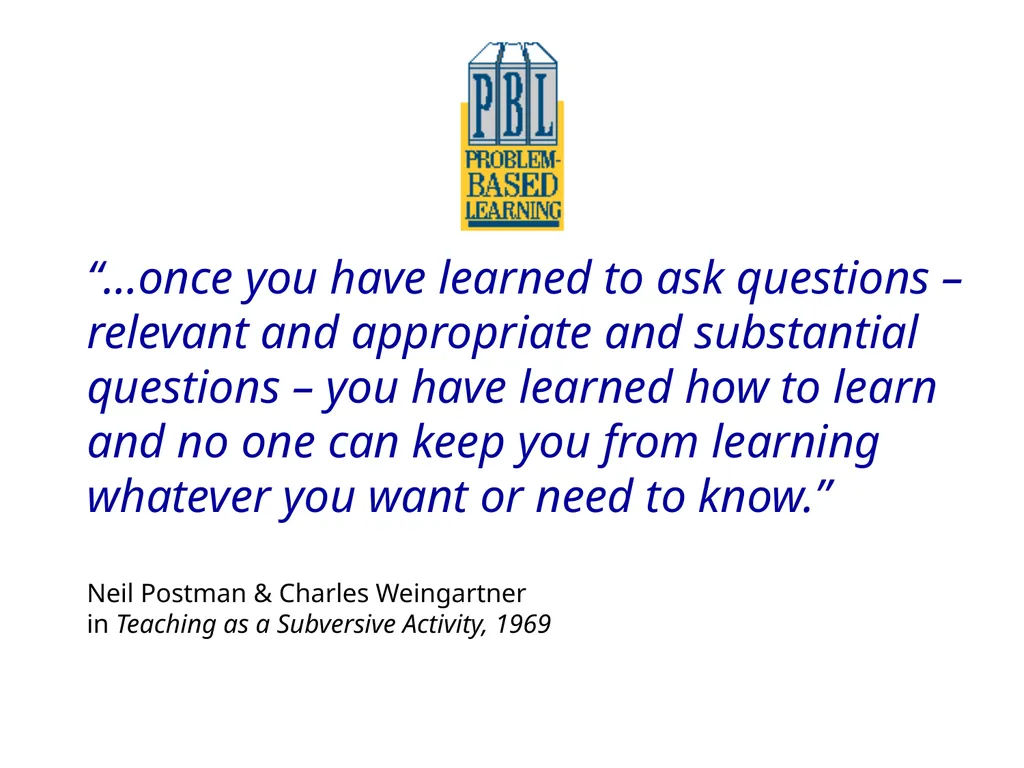
“…once you have learned to ask questions – relevant and appropriate and substantial
questions – you have learned how to learn
and no one can keep you from learning
whatever you want or need to know.” Neil Postman & Charles Weingartner
in Teaching as a Subversive Activity, 1969<br>
questions – you have learned how to learn
and no one can keep you from learning
whatever you want or need to know.” Neil Postman & Charles Weingartner
in Teaching as a Subversive Activity, 1969<br>
08
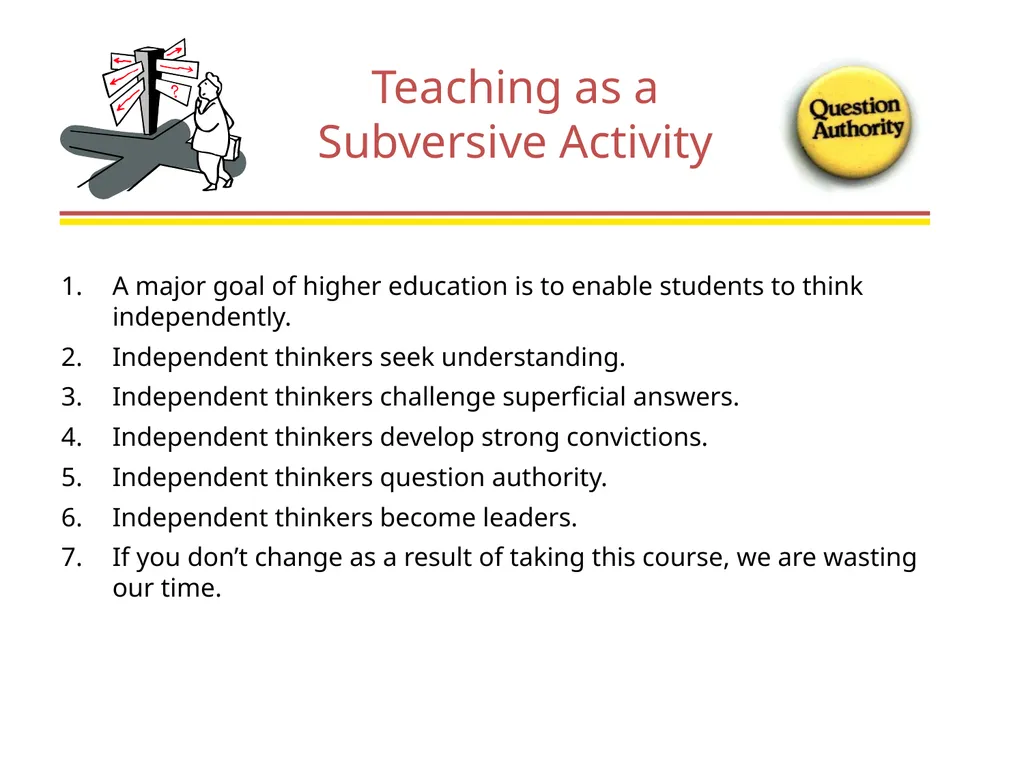
A major goal of higher education is to enable students to think independently.
Independent thinkers seek understanding.
Independent thinkers challenge superficial answers.
Independent thinkers develop strong convictions.
Independent thinkers question authority.
Independent thinkers become leaders.
If you don’t change as a result of taking this course, we are wasting our time. Teaching as a Subversive Activity<br>
09
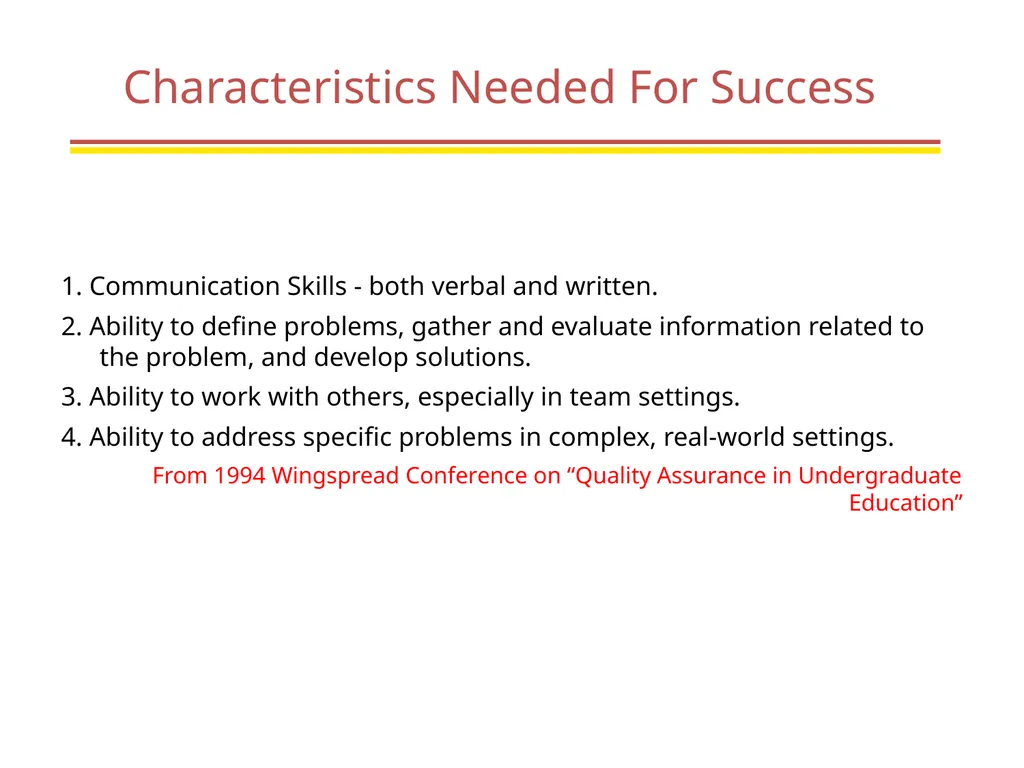
1. Communication Skills - both verbal and written.
2. Ability to define problems, gather and evaluate information related to the problem, and develop solutions.
3. Ability to work with others, especially in team settings.
4. Ability to address specific problems in complex, real-world settings.
From 1994 Wingspread Conference on “Quality Assurance in Undergraduate Education” Characteristics Needed For Success<br>
10
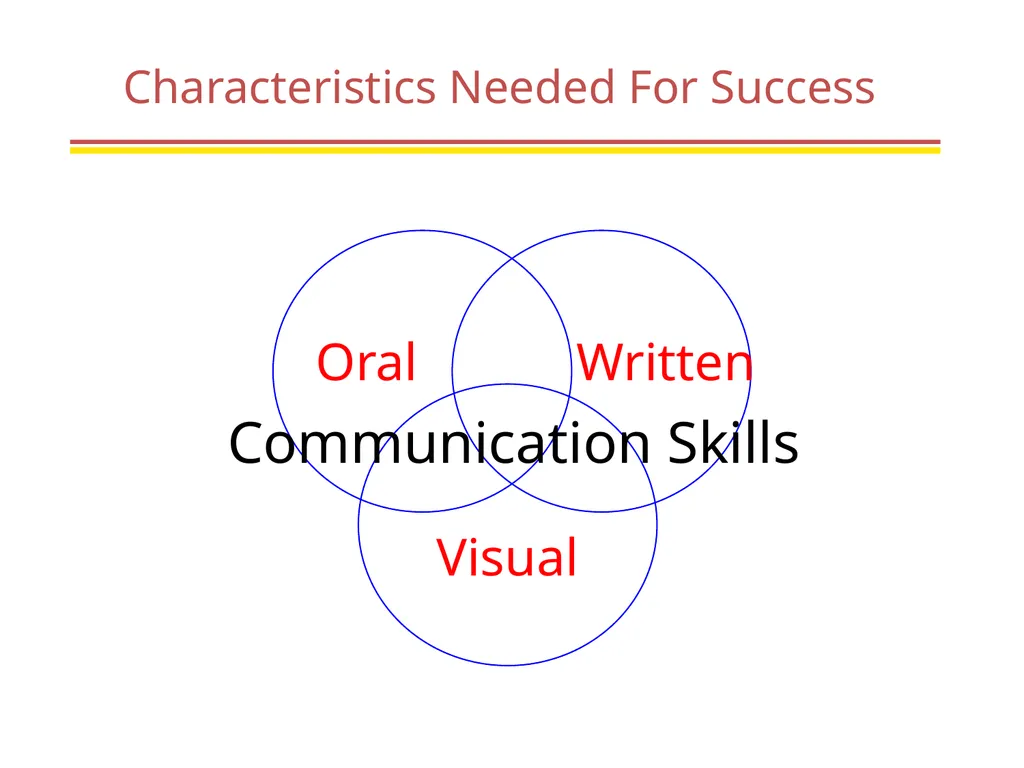
Visual Oral Written Communication Skills Characteristics Needed For Success<br>
11
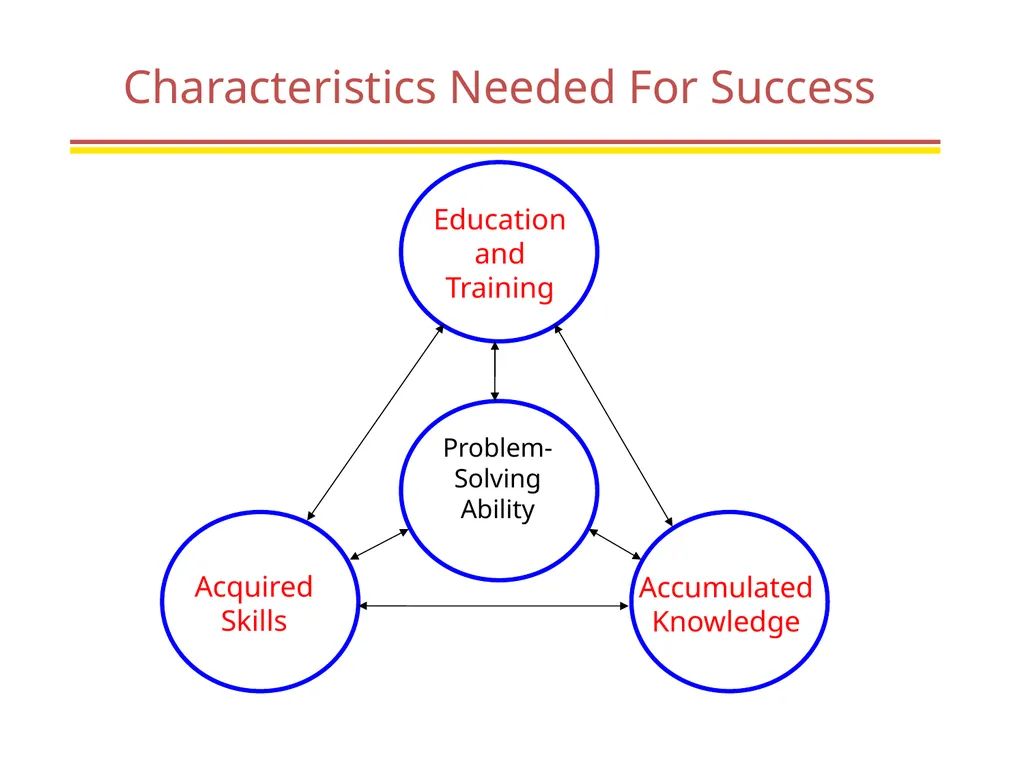
Acquired
Skills Education
and
Training Accumulated
Knowledge Problem-
Solving
Ability Characteristics Needed For Success<br>
Skills Education
and
Training Accumulated
Knowledge Problem-
Solving
Ability Characteristics Needed For Success<br>
12
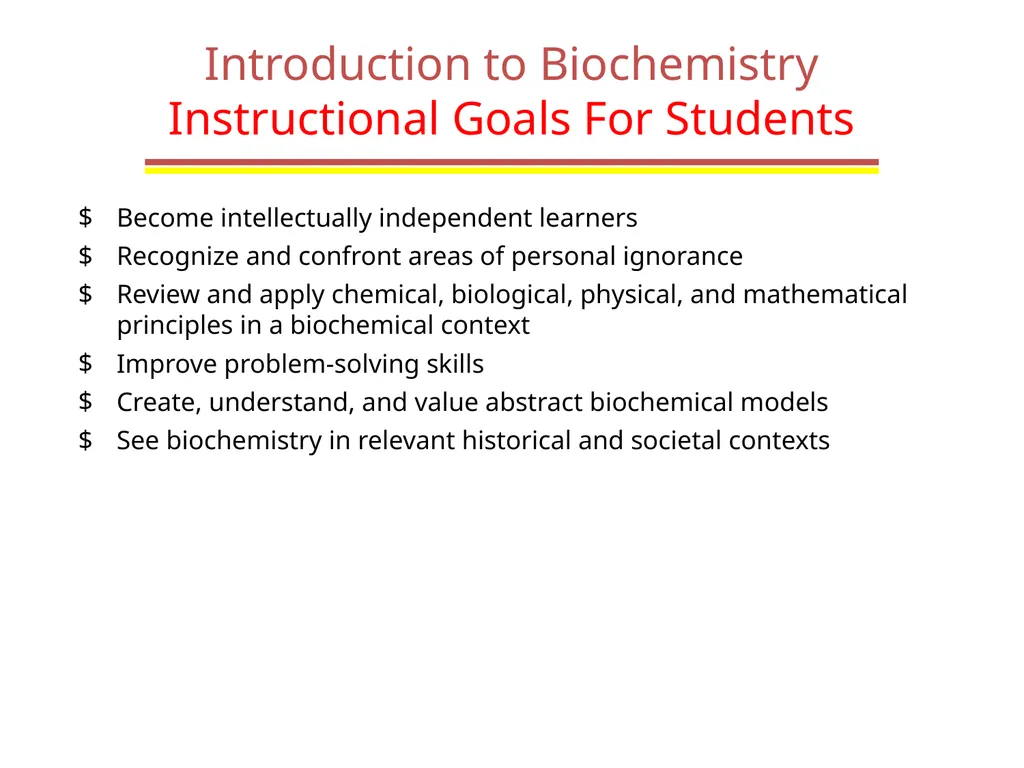
Introduction to Biochemistry
Instructional Goals For Students Become intellectually independent learners
Recognize and confront areas of personal ignorance
Review and apply chemical, biological, physical, and mathematical principles in a biochemical context
Improve problem-solving skills
Create, understand, and value abstract biochemical models
See biochemistry in relevant historical and societal contexts<br>
13
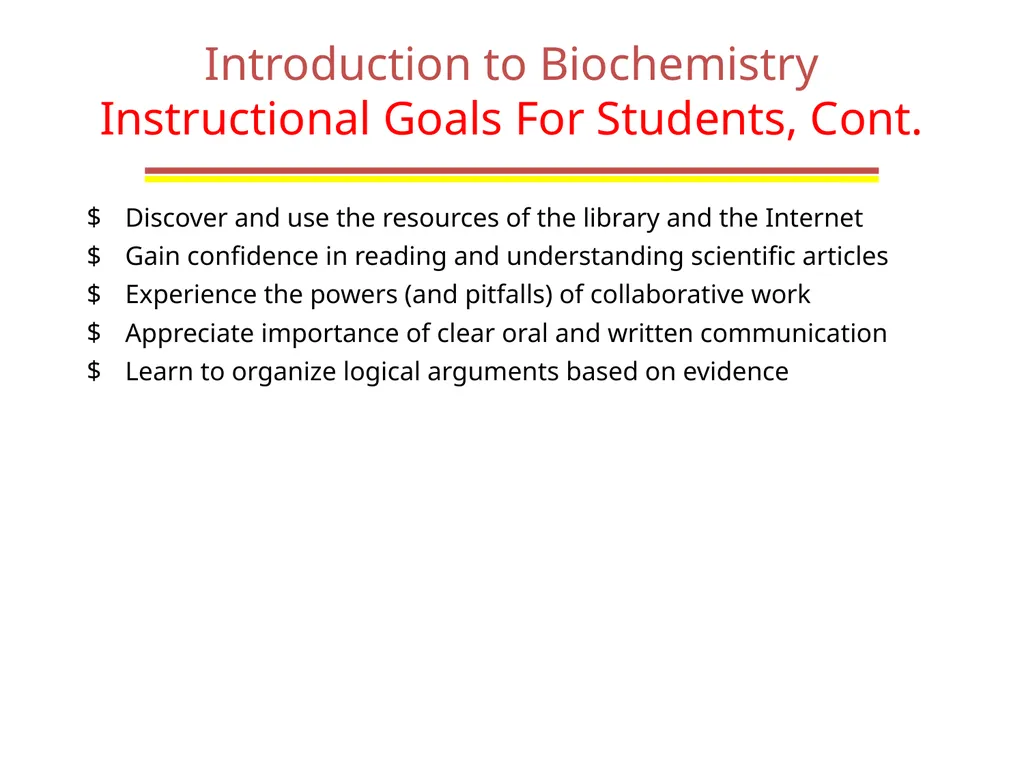
Introduction to Biochemistry
Instructional Goals For Students, Cont. Discover and use the resources of the library and the Internet
Gain confidence in reading and understanding scientific articles
Experience the powers (and pitfalls) of collaborative work
Appreciate importance of clear oral and written communication
Learn to organize logical arguments based on evidence<br>
Gain confidence in reading and understanding scientific articles
Experience the powers (and pitfalls) of collaborative work
Appreciate importance of clear oral and written communication
Learn to organize logical arguments based on evidence<br>
14
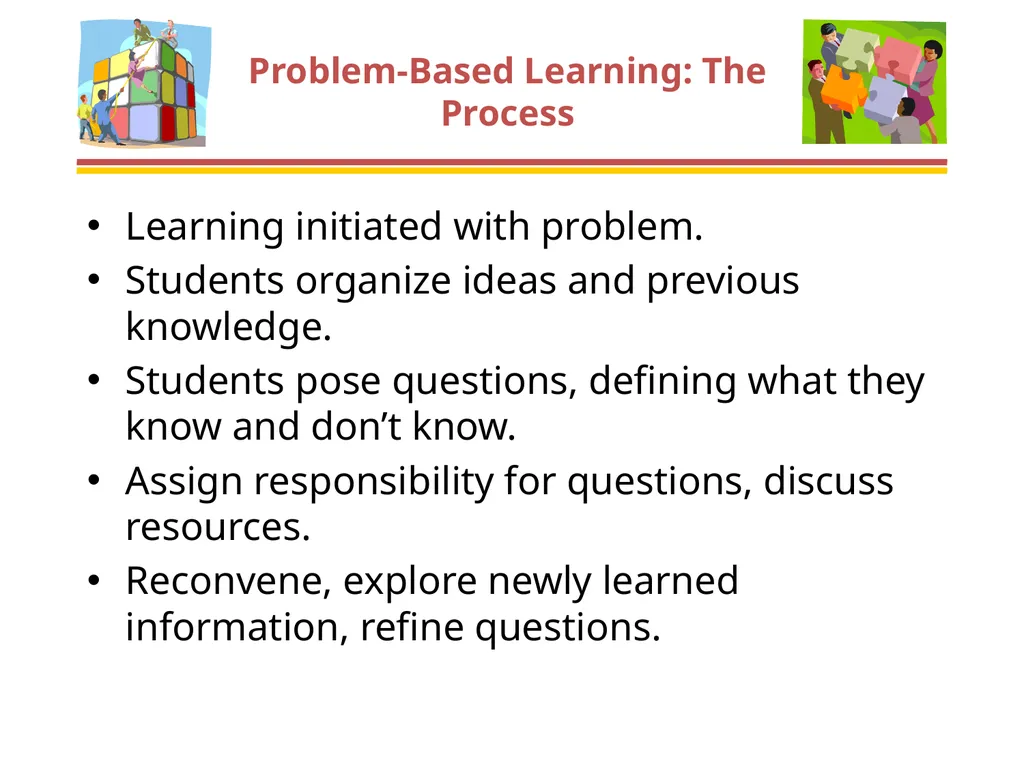
Problem-Based Learning: The Process Learning initiated with problem.
Students organize ideas and previous knowledge.
Students pose questions, defining what they know and don’t know.
Assign responsibility for questions, discuss resources.
Reconvene, explore newly learned information, refine questions.<br>
Students organize ideas and previous knowledge.
Students pose questions, defining what they know and don’t know.
Assign responsibility for questions, discuss resources.
Reconvene, explore newly learned information, refine questions.<br>
15
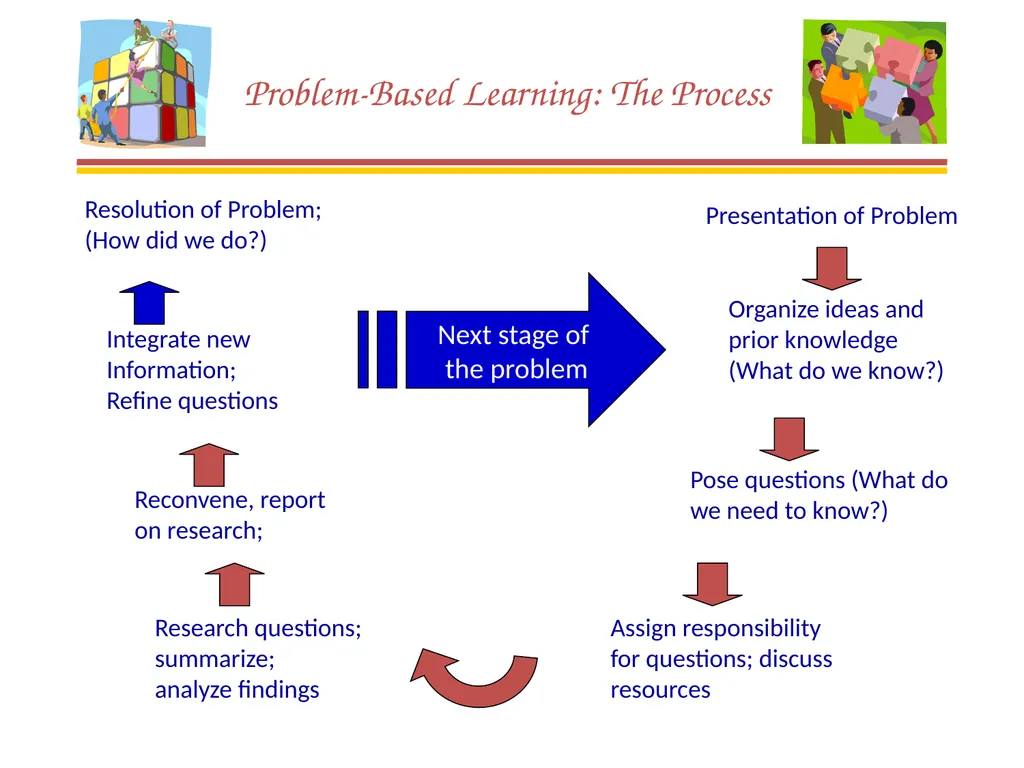
Presentation of Problem Organize ideas and
prior knowledge
(What do we know?) Pose questions (What do
we need to know?) Assign responsibility
for questions; discuss
resources Research questions;
summarize;
analyze findings Reconvene, report
on research; Integrate new
Information;
Refine questions Resolution of Problem;
(How did we do?) Next stage of
the problem Problem-Based Learning: The Process<br>
16
BIO201
Introduction to
Biochemistry & Biotechnology Lecture 1<br>
17
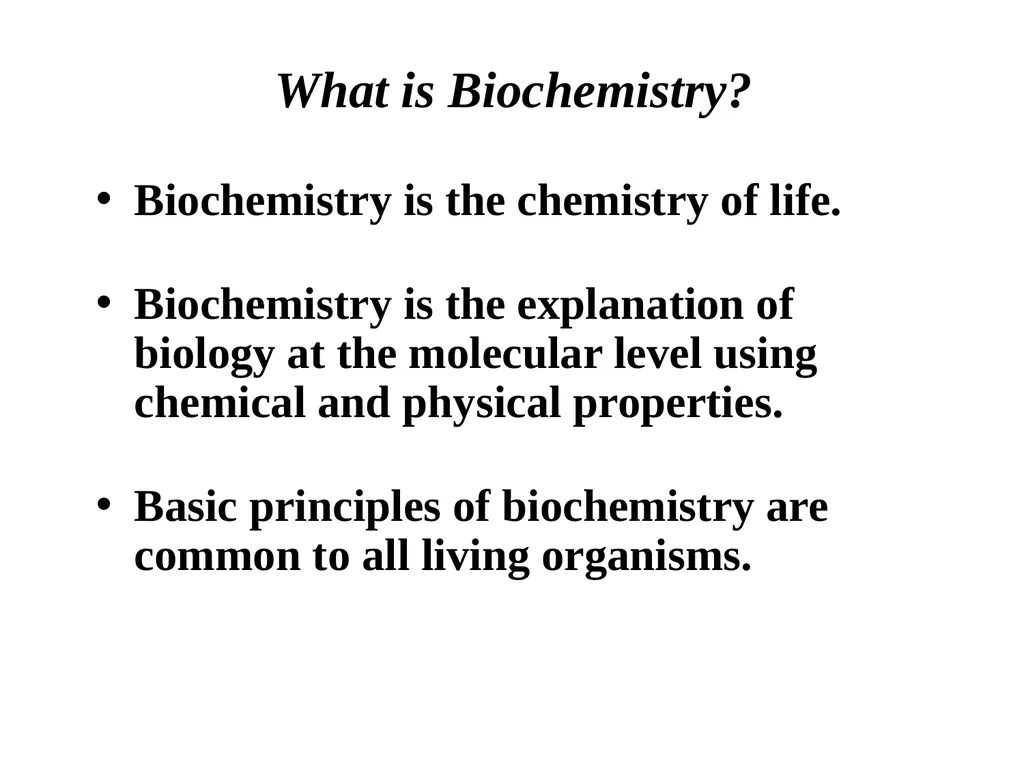
Biochemistry is the chemistry of life.
Biochemistry is the explanation of biology at the molecular level using chemical and physical properties.
Basic principles of biochemistry are common to all living organisms. What is Biochemistry?<br>
Biochemistry is the explanation of biology at the molecular level using chemical and physical properties.
Basic principles of biochemistry are common to all living organisms. What is Biochemistry?<br>
18
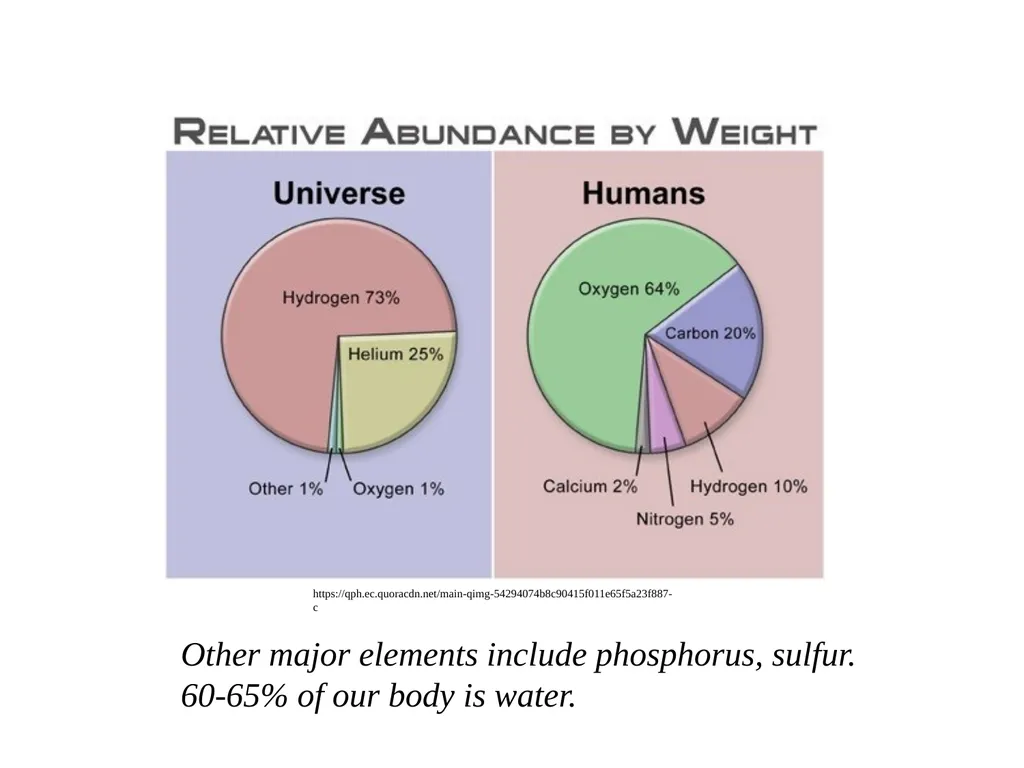
Other major elements include phosphorus, sulfur.
60-65% of our body is water.<br>
60-65% of our body is water.<br>
19
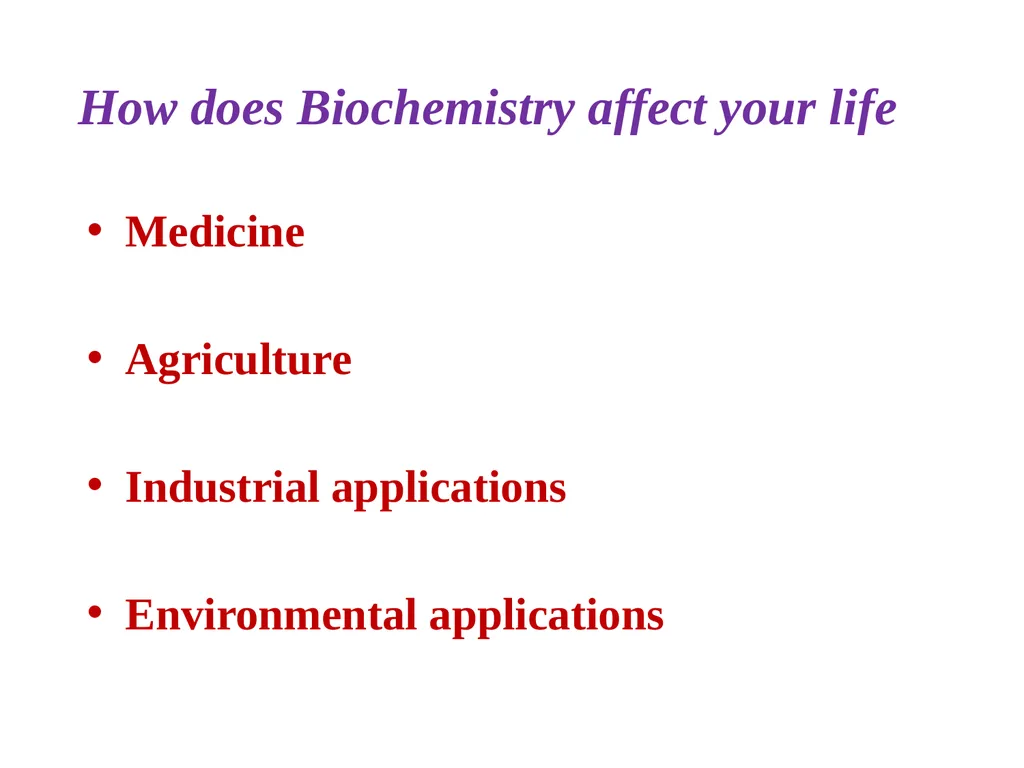
How does Biochemistry affect your life Medicine
Agriculture
Industrial applications
Environmental applications<br>
Agriculture
Industrial applications
Environmental applications<br>
20
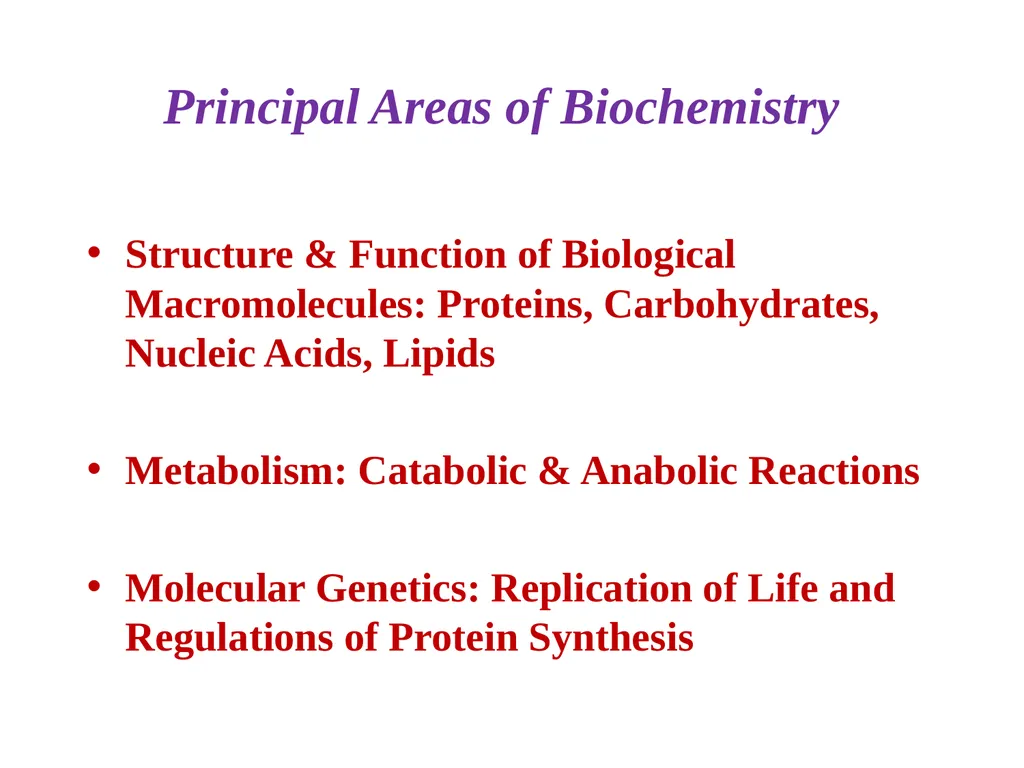
Structure & Function of Biological Macromolecules: Proteins, Carbohydrates, Nucleic Acids, Lipids
Metabolism: Catabolic & Anabolic Reactions
Molecular Genetics: Replication of Life and Regulations of Protein Synthesis Principal Areas of Biochemistry<br>
Metabolism: Catabolic & Anabolic Reactions
Molecular Genetics: Replication of Life and Regulations of Protein Synthesis Principal Areas of Biochemistry<br>
21
Biotechnology: Bio means living and technology is the application of science to achieve industrial or commercial objectives. So, Biotechnology is the use of living materials for an industrial or commercial objective. What is Biotechnology?<br>
22
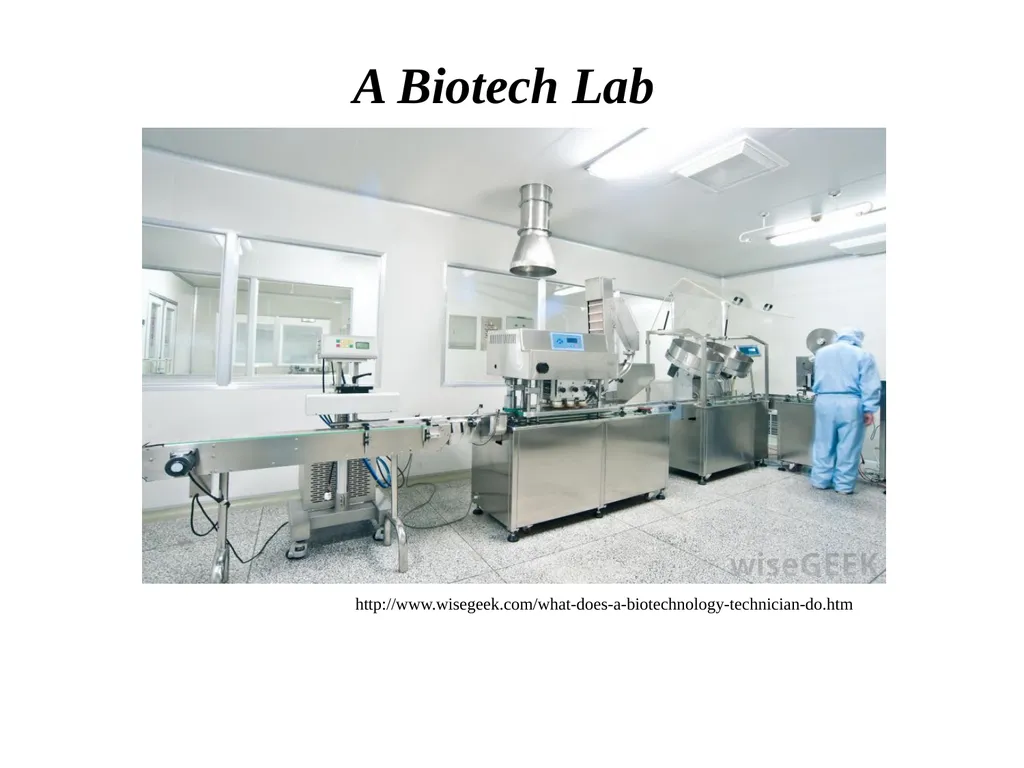
A Biotech Lab http://www.wisegeek.com/what-does-a-biotechnology-technician-do.htm<br>
23
Jute Genome Project Whole Genome Sequencing of jute by Bangladeshi Scientists led by late Maqsudul Alam open up the way for manipulation of jute DNA by genetic engineering not only to protect it from diseases but also to improve jute quality.<br>
24
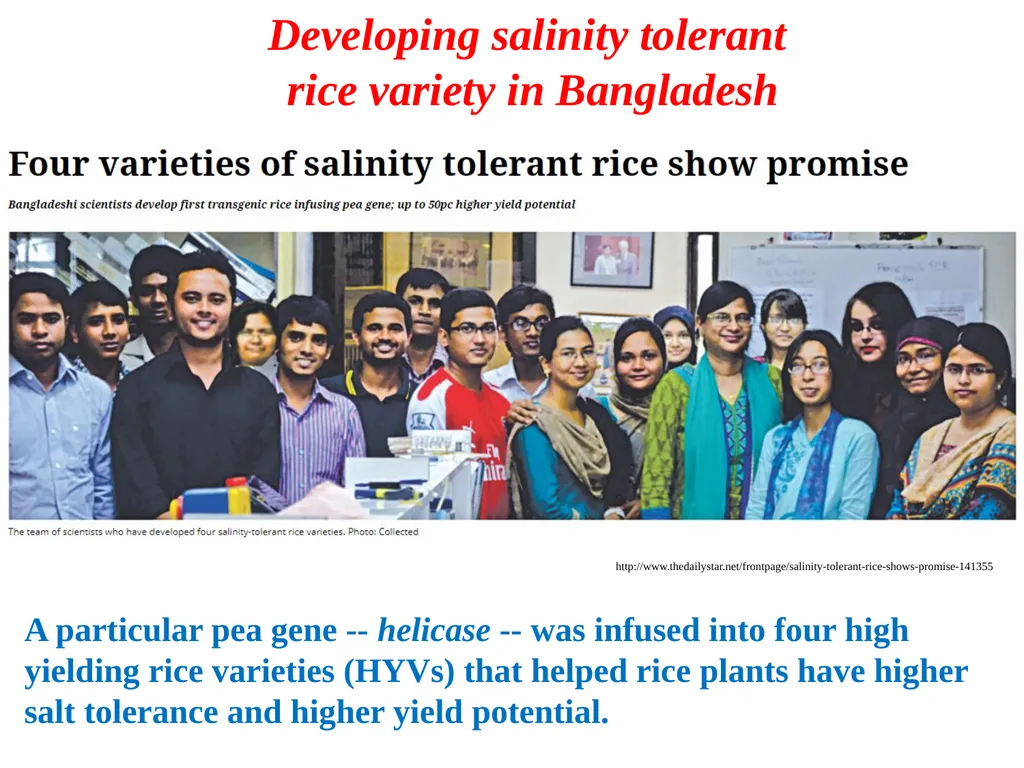
Developing salinity tolerant
rice variety in Bangladesh A particular pea gene -- helicase -- was infused into four high yielding rice varieties (HYVs) that helped rice plants have higher salt tolerance and higher yield potential.<br>
rice variety in Bangladesh A particular pea gene -- helicase -- was infused into four high yielding rice varieties (HYVs) that helped rice plants have higher salt tolerance and higher yield potential.<br>
25
What can one do with a major in
Biochemistry and Biotechnology or Microbiology? -Biological scientists study living organisms and their relationship to the environment. They perform research to gain a better understanding of fundamental life processes and apply that understanding to developing new products or processes.
-Research can be broken down into two categories: basic and applied. Basic research is conducted without any intended aim; the goal is simply to expand on human knowledge. Applied research is directed towards solving a particular problem.
-Most biological scientists specialize in one area of biology, such as zoology (the study of animals) or microbiology (the study of microscopic organisms). https://www.mnstate.edu/biosciences/careersinbiochemistryandbiotechnologyemphasis.aspx<br>
26
Next Lecture:
Foundations of Biochemistry Reference Textbook:
Lehninger Principles of Biochemistry
4th or 5th Edition
David L. Nelson, Michael M. Cox WH Freeman & Company,
New York, USA<br>
4th or 5th Edition
David L. Nelson, Michael M. Cox WH Freeman & Company,
New York, USA<br>