
‘Bite size teaching’ to improve dementia care on


Description: Bite size teaching to improve dementia care on general wards Liaison Psychiatry for Older people team ( LPOP) Geriatric Medicine team Presenter: Dr Radhika Oruganti , Consultant Psychiatrist Dr Fernandez, Consultant Geriatrician Who
Related Topics
Download Presentation
"‘Bite size teaching’ to improve dementia care on" is the property of its rightful owner. Permission is granted to download and print the materials on this website for personal, non-commercial use only, and to display it on your personal computer provided you do not modify the materials and that you retain all copyright notices contained in the materials. By downloading content from our website, you accept the terms of this agreement.
Presentation Transcript
slide1. ‘Bite size teaching’ to improve dementia care on general wards Liaison Psychiatry for Older people team ( LPOP)& Geriatric Medicine team
Presenter: Dr Radhika Oruganti , Consultant Psychiatrist
&
Dr Fernandez, Consultant Geriatrician<br>
slide2. Who was in our team? Joint venture by Geriatricians and Liaison Psychiatry for Older people’s (LPOP) team
LPOP team: Dr Radhika Oruganti , Dr Rugi Saeed, Stephanie James, Alana Fowler, Lana Garlick, Emma Murdoch, Jade, Katie, Emma Roberts
Geriatrics team: Dr Fernandez, Dr O’Mahony & East 8 Staff<br>
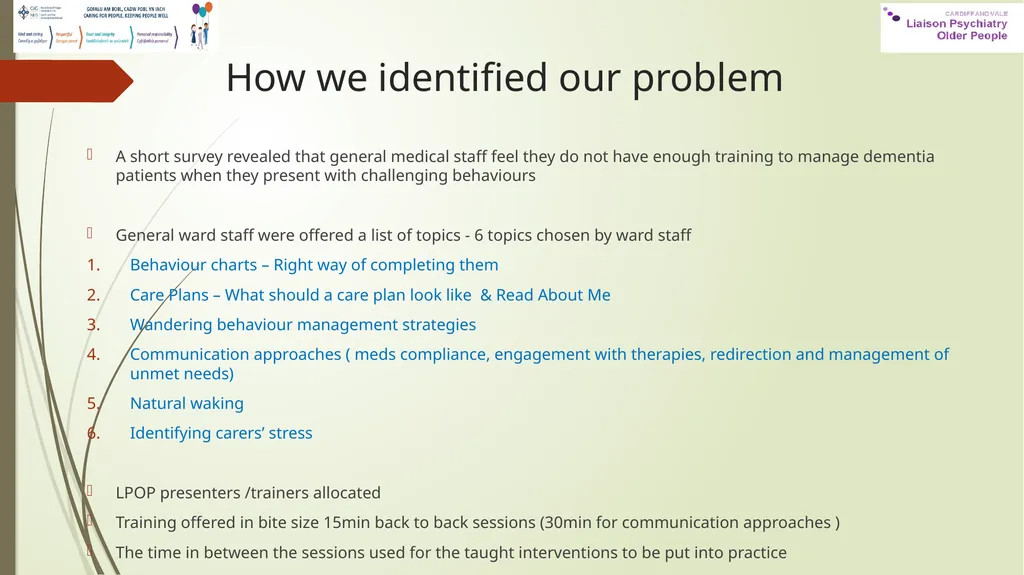
slide3. How we identified our problem A short survey revealed that general medical staff feel they do not have enough training to manage dementia patients when they present with challenging behaviours
General ward staff were offered a list of topics - 6 topics chosen by ward staff
Behaviour charts – Right way of completing them
Care Plans – What should a care plan look like & Read About Me
Wandering behaviour management strategies
Communication approaches ( meds compliance, engagement with therapies, redirection and management of unmet needs)
Natural waking
Identifying carers’ stress
LPOP presenters /trainers allocated
Training offered in bite size 15min back to back sessions (30min for communication approaches )
The time in between the sessions used for the taught interventions to be put into practice<br>
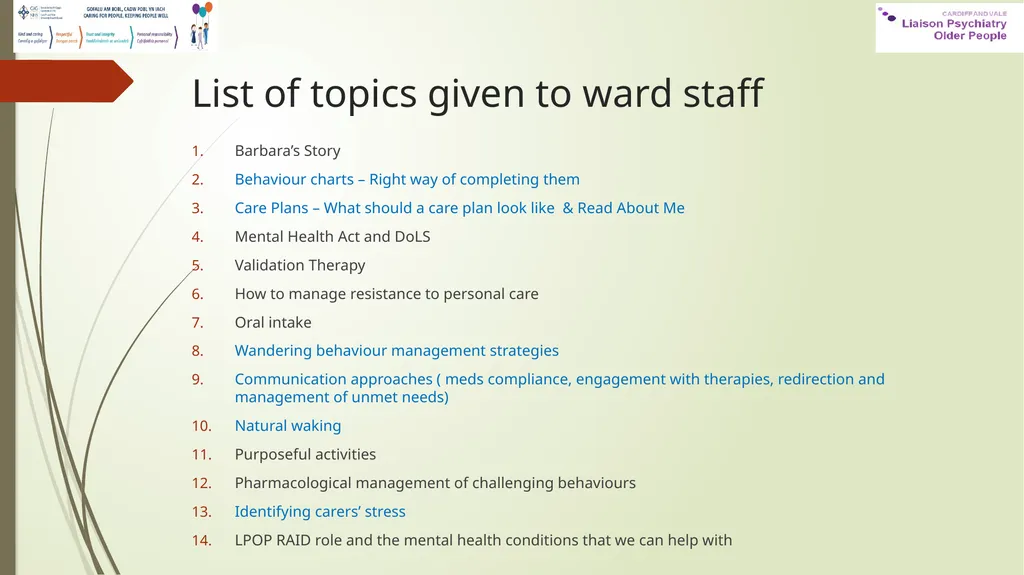
slide4. List of topics given to ward staff Barbara’s Story
Behaviour charts – Right way of completing them
Care Plans – What should a care plan look like & Read About Me
Mental Health Act and DoLS
Validation Therapy
How to manage resistance to personal care
Oral intake
Wandering behaviour management strategies
Communication approaches ( meds compliance, engagement with therapies, redirection and management of unmet needs)
Natural waking
Purposeful activities
Pharmacological management of challenging behaviours
Identifying carers’ stress
LPOP RAID role and the mental health conditions that we can help with<br>
slide5. What change ideas did we apply? Enhance staff training in
identification of triggers and approaches to manage challenging behaviours
Improve completion of care plans
Accurate completion of behaviour charts as an aid to identify triggers and approaches that help the patient
Engagement of senior ward staff- Consultants and Ward managers
Ward staff keen to learn
LPOP took training to their door step
Trainings sessions offered in bitesize
Training topics chosen by ward staff
LPOP - team work and flexibility
LPOP HCSW presence on East 8 during these sessions<br>
slide6. How we measured our change LPOP met with Geriatrics team to discuss the training goals prior to the start of the programme
Pre and post training feedback for each teaching session was collected
Scrutiny of Case notes for completed care plans, behaviour charts and ‘Read about me’ document – Pre and post training programme
Post programme meeting to seek feedback about the training as well as the notable changes in patient care on the ward.<br>
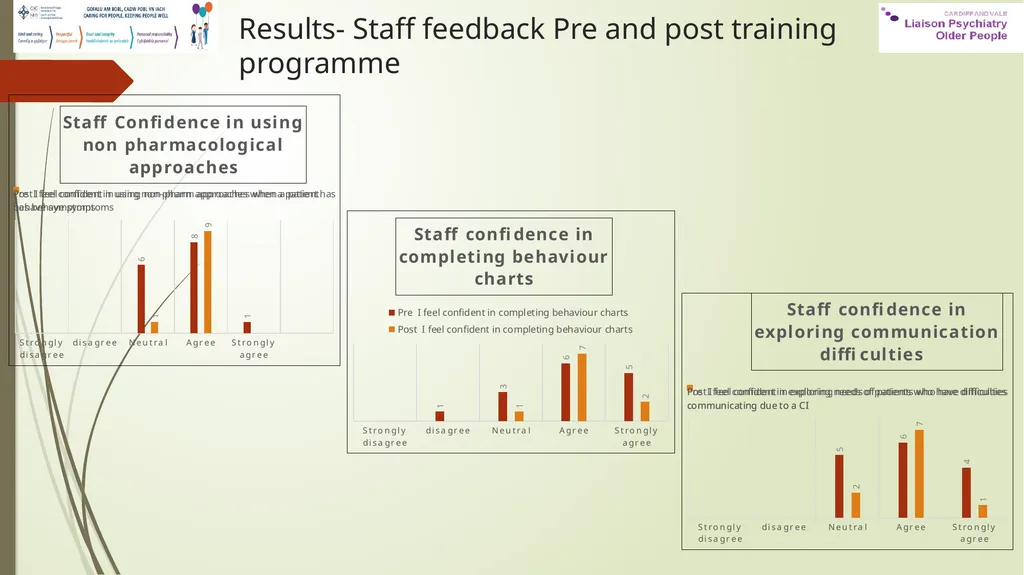
slide7. Results- Staff feedback Pre and post training programme<br>
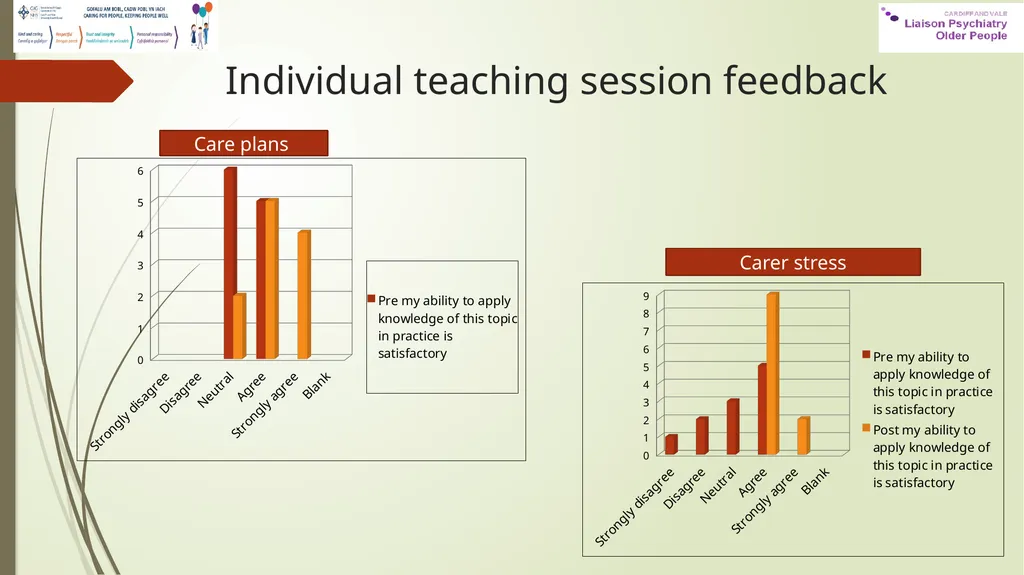
slide8. Individual teaching session feedback Carer stress Care plans<br>
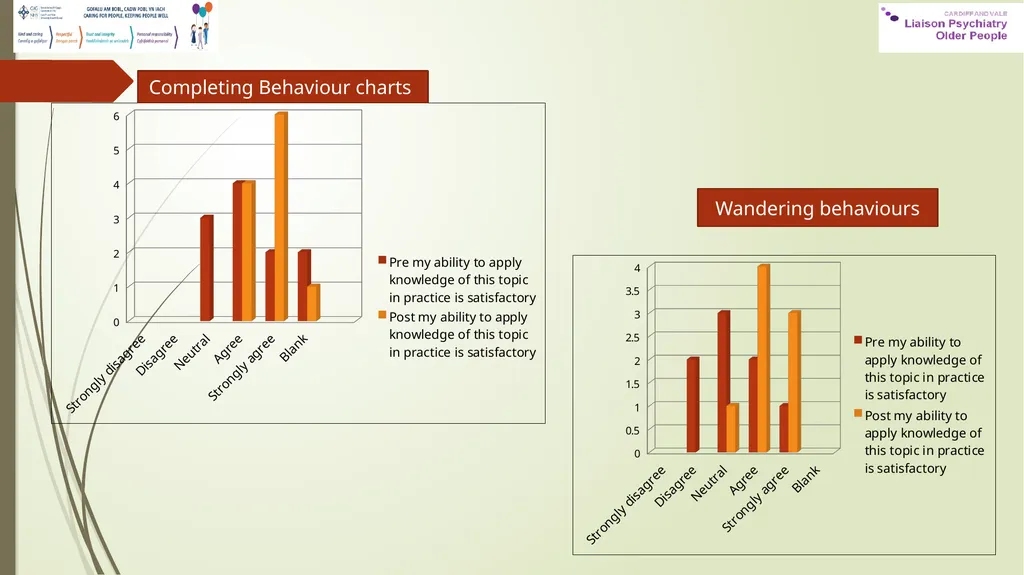
slide9. Completing Behaviour charts Wandering behaviours<br>
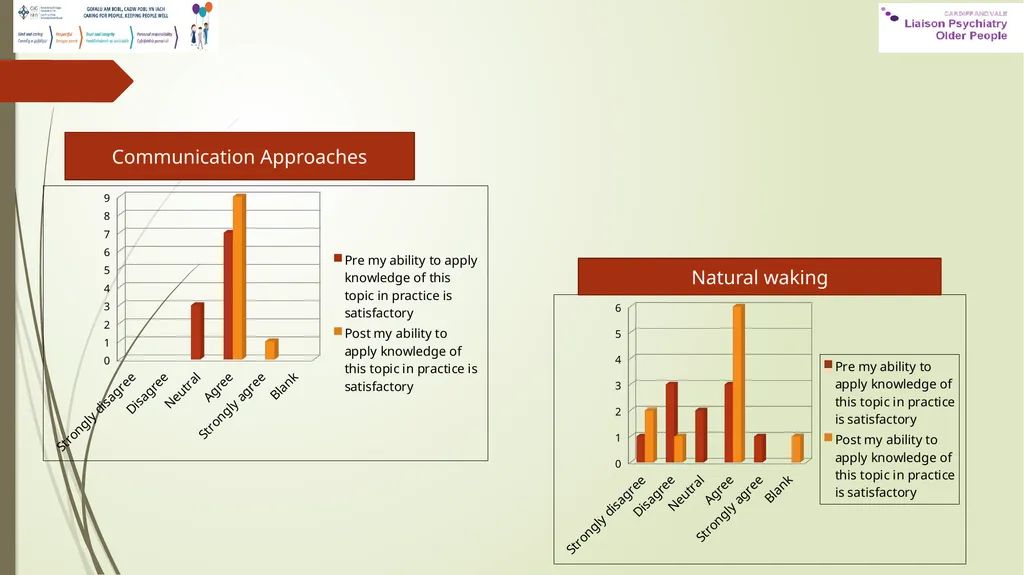
slide10. Communication Approaches Natural waking<br>
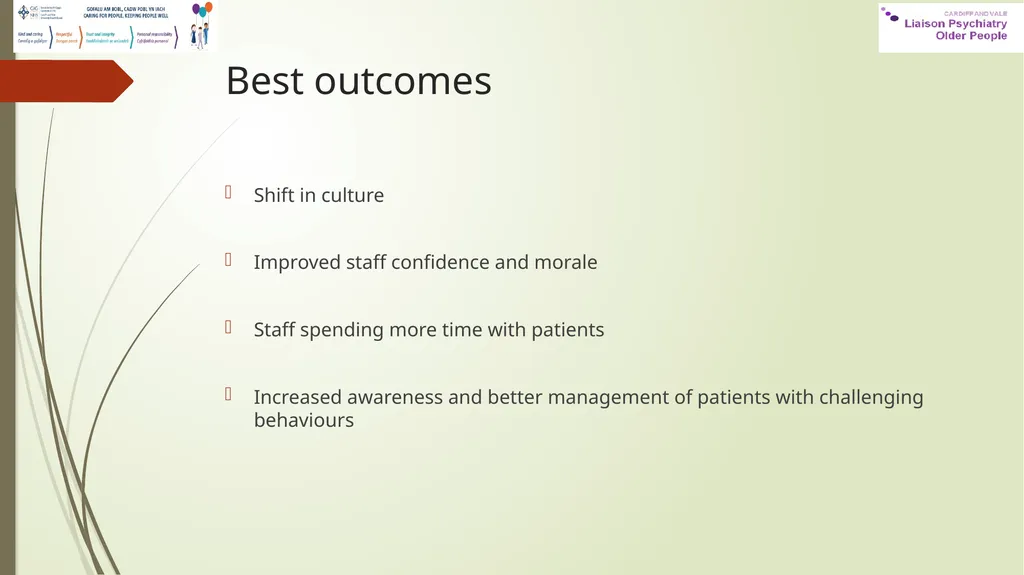
slide11. Best outcomes Shift in culture
Improved staff confidence and morale
Staff spending more time with patients
Increased awareness and better management of patients with challenging behaviours<br>
slide12. Where are we now and what are our future plans? Implementing training sessions regularly
Implement similar projects on other wards
Modelling approaches
Signpost staff to available training resources<br>
slide13. Any Questions Thank you<br>
Presenter: Dr Radhika Oruganti , Consultant Psychiatrist
&
Dr Fernandez, Consultant Geriatrician<br>
slide2. Who was in our team? Joint venture by Geriatricians and Liaison Psychiatry for Older people’s (LPOP) team
LPOP team: Dr Radhika Oruganti , Dr Rugi Saeed, Stephanie James, Alana Fowler, Lana Garlick, Emma Murdoch, Jade, Katie, Emma Roberts
Geriatrics team: Dr Fernandez, Dr O’Mahony & East 8 Staff<br>
slide3. How we identified our problem A short survey revealed that general medical staff feel they do not have enough training to manage dementia patients when they present with challenging behaviours
General ward staff were offered a list of topics - 6 topics chosen by ward staff
Behaviour charts – Right way of completing them
Care Plans – What should a care plan look like & Read About Me
Wandering behaviour management strategies
Communication approaches ( meds compliance, engagement with therapies, redirection and management of unmet needs)
Natural waking
Identifying carers’ stress
LPOP presenters /trainers allocated
Training offered in bite size 15min back to back sessions (30min for communication approaches )
The time in between the sessions used for the taught interventions to be put into practice<br>
slide4. List of topics given to ward staff Barbara’s Story
Behaviour charts – Right way of completing them
Care Plans – What should a care plan look like & Read About Me
Mental Health Act and DoLS
Validation Therapy
How to manage resistance to personal care
Oral intake
Wandering behaviour management strategies
Communication approaches ( meds compliance, engagement with therapies, redirection and management of unmet needs)
Natural waking
Purposeful activities
Pharmacological management of challenging behaviours
Identifying carers’ stress
LPOP RAID role and the mental health conditions that we can help with<br>
slide5. What change ideas did we apply? Enhance staff training in
identification of triggers and approaches to manage challenging behaviours
Improve completion of care plans
Accurate completion of behaviour charts as an aid to identify triggers and approaches that help the patient
Engagement of senior ward staff- Consultants and Ward managers
Ward staff keen to learn
LPOP took training to their door step
Trainings sessions offered in bitesize
Training topics chosen by ward staff
LPOP - team work and flexibility
LPOP HCSW presence on East 8 during these sessions<br>
slide6. How we measured our change LPOP met with Geriatrics team to discuss the training goals prior to the start of the programme
Pre and post training feedback for each teaching session was collected
Scrutiny of Case notes for completed care plans, behaviour charts and ‘Read about me’ document – Pre and post training programme
Post programme meeting to seek feedback about the training as well as the notable changes in patient care on the ward.<br>
slide7. Results- Staff feedback Pre and post training programme<br>
slide8. Individual teaching session feedback Carer stress Care plans<br>
slide9. Completing Behaviour charts Wandering behaviours<br>
slide10. Communication Approaches Natural waking<br>
slide11. Best outcomes Shift in culture
Improved staff confidence and morale
Staff spending more time with patients
Increased awareness and better management of patients with challenging behaviours<br>
slide12. Where are we now and what are our future plans? Implementing training sessions regularly
Implement similar projects on other wards
Modelling approaches
Signpost staff to available training resources<br>
slide13. Any Questions Thank you<br>