04
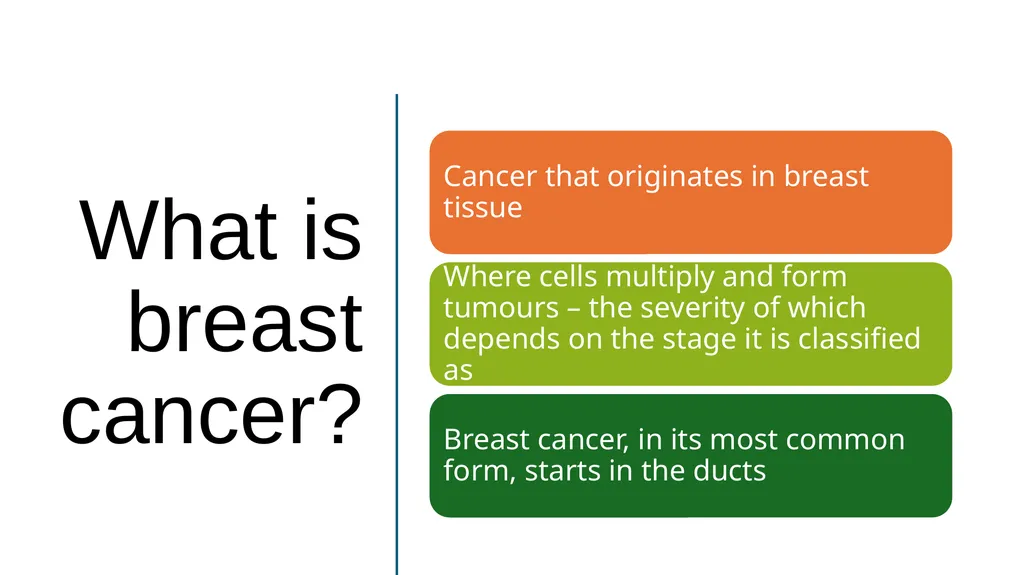
What is breast cancer?<br>
05
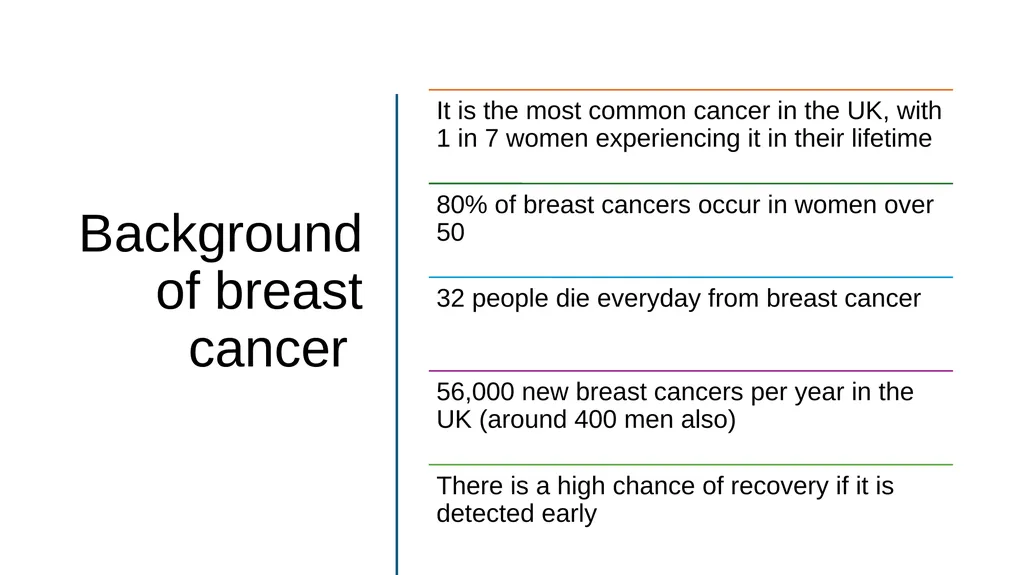
Background of breast cancer<br>
06
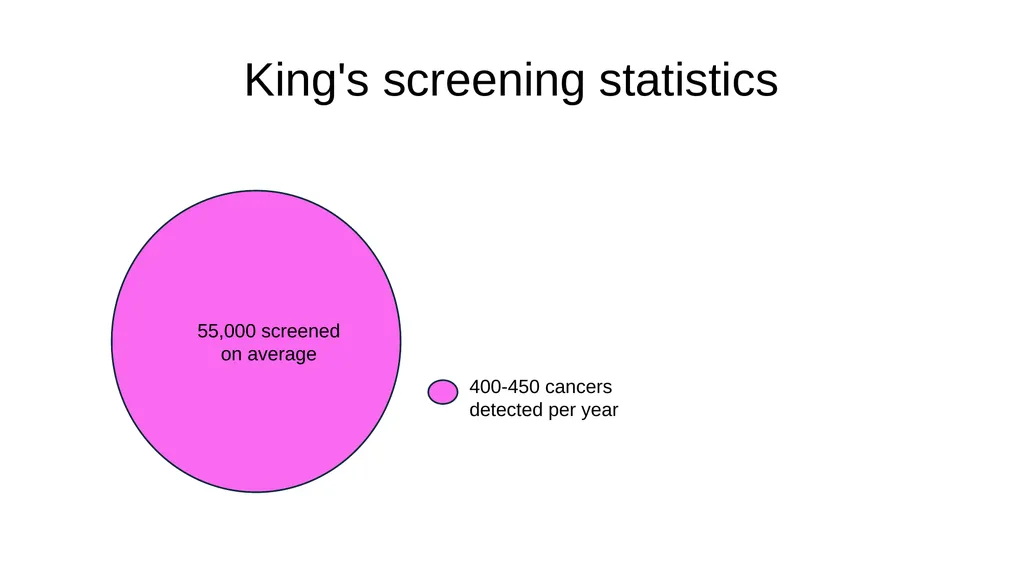
King's screening statistics 55,000 screened on average 400-450 cancers detected per year<br>
07
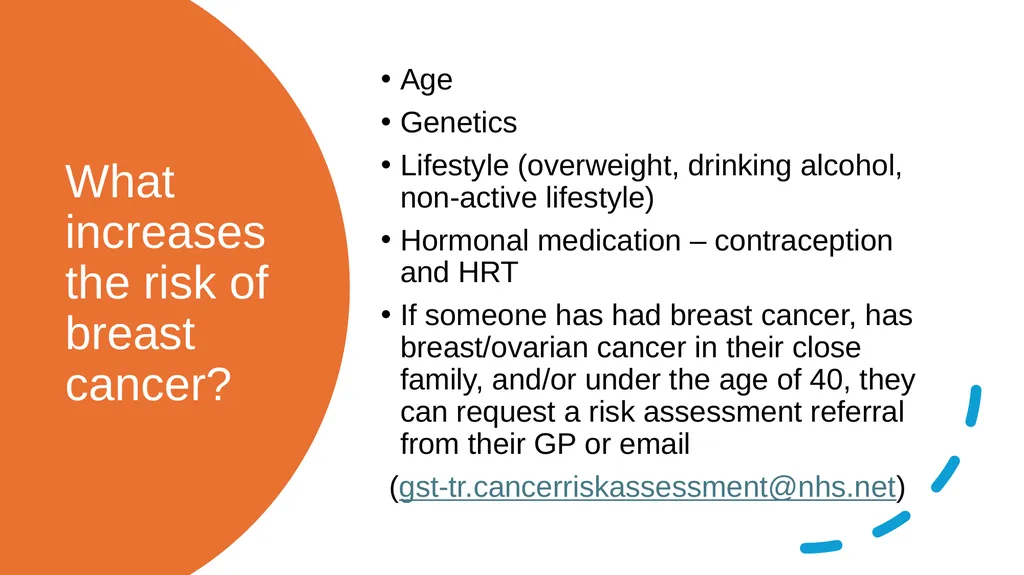
What increases the risk of breast cancer? Age
Genetics
Lifestyle (overweight, drinking alcohol, non-active lifestyle)
Hormonal medication – contraception and HRT
If someone has had breast cancer, has breast/ovarian cancer in their close family, and/or under the age of 40, they can request a risk assessment referral from their GP or email
(gst-tr.cancerriskassessment@nhs.net)<br>
08
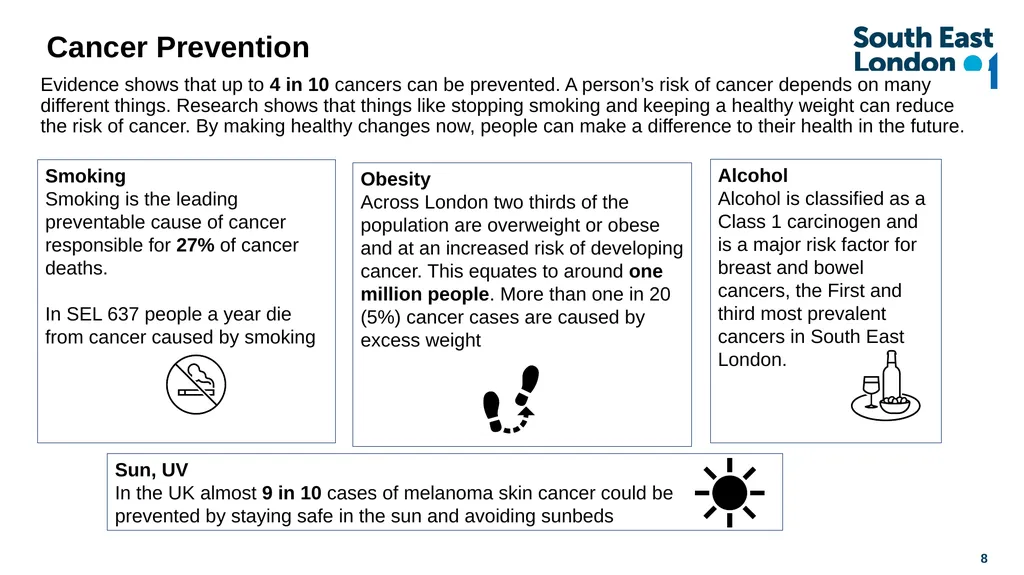
Evidence shows that up to 4 in 10 cancers can be prevented. A person’s risk of cancer depends on many different things. Research shows that things like stopping smoking and keeping a healthy weight can reduce the risk of cancer. By making healthy changes now, people can make a difference to their health in the future. 8 Cancer Prevention Sun, UV
In the UK almost 9 in 10 cases of melanoma skin cancer could be
prevented by staying safe in the sun and avoiding sunbeds<br>
09
What do we already do from a public health perspective? Offer breast screening to 50-70 population
Discussion of being breast aware from breast charities – CoppaFeel, Breast Cancer Now etc.
Promotion of healthier lifestyles: Less drinking, Healthy diet, Exercise/more active lifestyle
Cancer facilitators
Although we can be doing more… <br>
10
Breast screening programme First breast screening is offered between 50 and before someone's 53rd birthday, and up to their 71st birthday
Consists of a breast X-ray, called a mammogram, every 3 years
Detects early cancers (about 1 in every 100 who attend)
Good evidence that breasts screening saves lives – around 1,300 every year<br>
11
What does the screening test involve? A mammographer (a specific breast screening radiographer, who is female) will give someone a breast X-ray (mammogram)
This involves a machine that uses a clear plate to compress the breast down for the X-ray. Two pictures of each breast will be taken; one from top to bottom, and then side to side, including the bit of the breast that links into the armpit.
At King’s College Hospital NHS Trust, we run screening services in SEL at our main hospital in Camberwell and at static satellite screening sites, as well as a symptomatic clinic<br>
12
Positives of screening The breast screening service is for well women, to detect early cancers
Detecting cancer early means an earlier diagnosis and an increased likelihood that treatment can have more successful options, increased survival and quality of life
Free
Reassurance with negative result
Saves lives!<br>
13
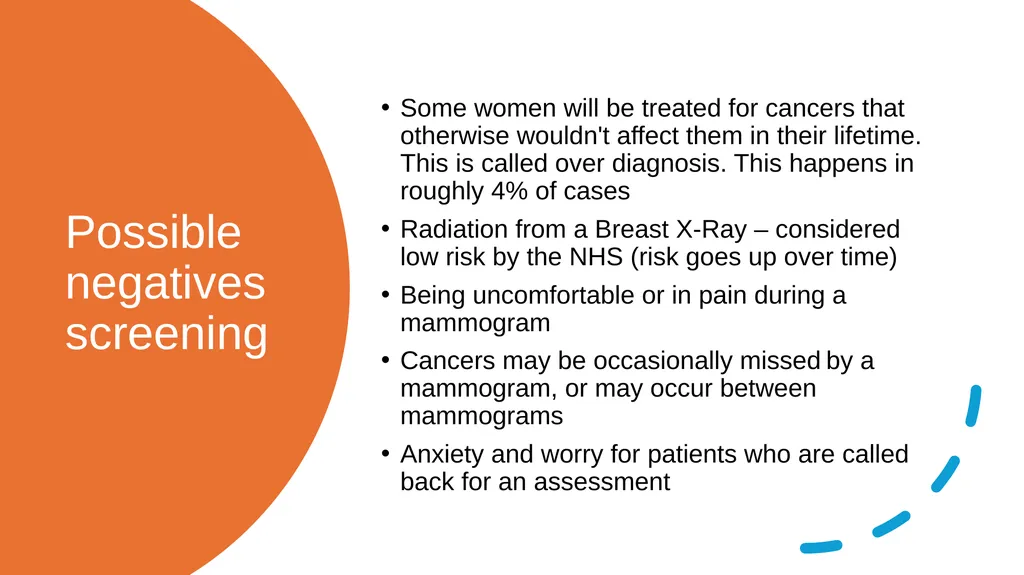
Possible negatives screening Some women will be treated for cancers that otherwise wouldn't affect them in their lifetime. This is called over diagnosis. This happens in roughly 4% of cases
Radiation from a Breast X-Ray – considered low risk by the NHS (risk goes up over time)
Being uncomfortable or in pain during a mammogram
Cancers may be occasionally missed by a mammogram, or may occur between mammograms
Anxiety and worry for patients who are called back for an assessment<br>
14
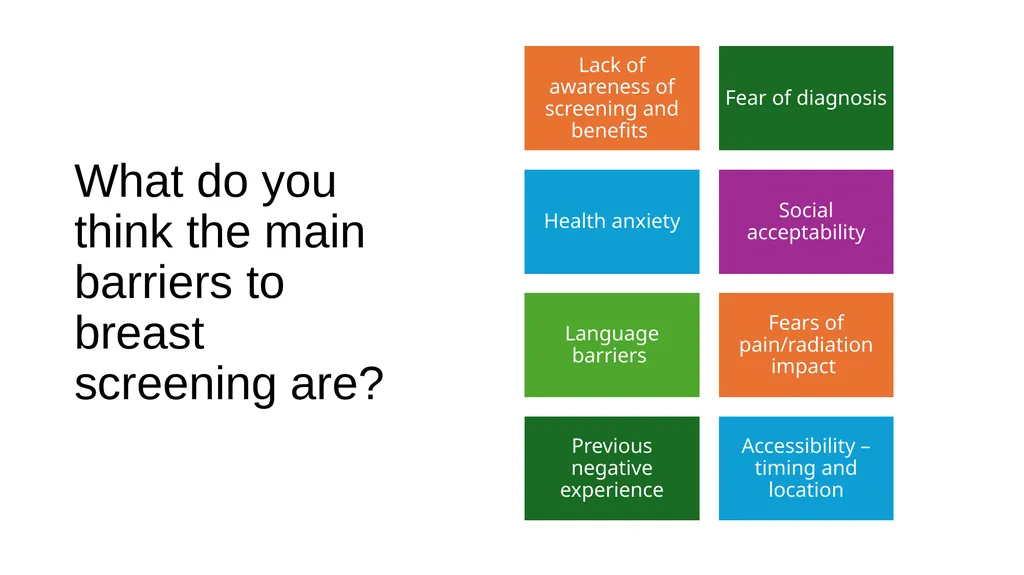
What do you think the main barriers to breast screening are?<br>
15
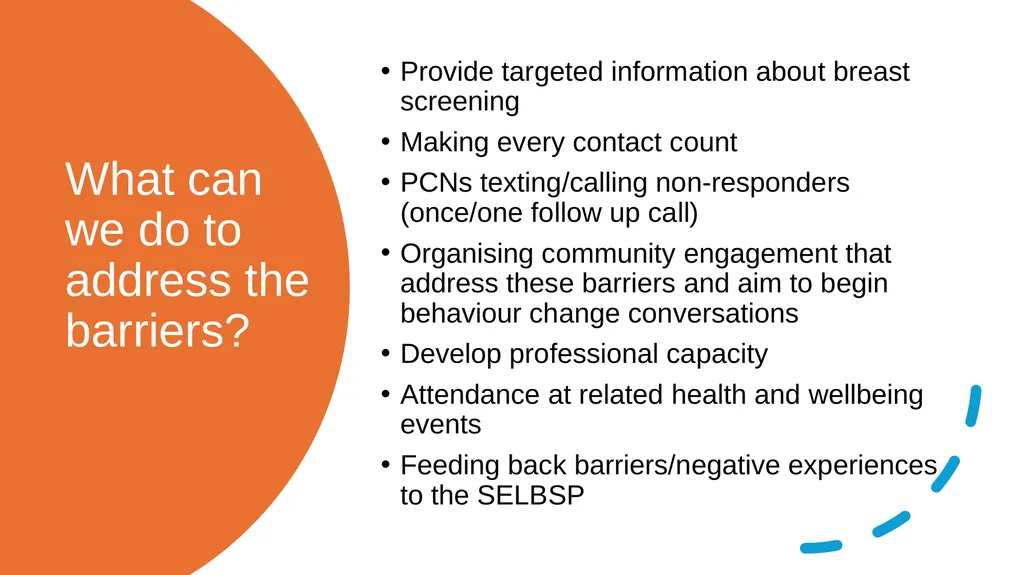
What can we do to address the barriers? Provide targeted information about breast screening
Making every contact count
PCNs texting/calling non-responders (once/one follow up call)
Organising community engagement that address these barriers and aim to begin behaviour change conversations
Develop professional capacity
Attendance at related health and wellbeing events
Feeding back barriers/negative experiences to the SELBSP<br>
16
Black women and screening Lack of knowledge identified as a key barrier to accessing screening in ethnic minorities
Black Caribbean women are slightly more likely to attend first screening than Black African women but still at slightly lower rates than white women
Black women are more likely to be diagnosed with cancer at a later stage: academics still researching WHY some reasons are: low awareness, feeling less confident discussing symptoms, lifestyle, genetics
We know deprivation and discrimination greatly impact people’s health also
Low trust in services<br>
17
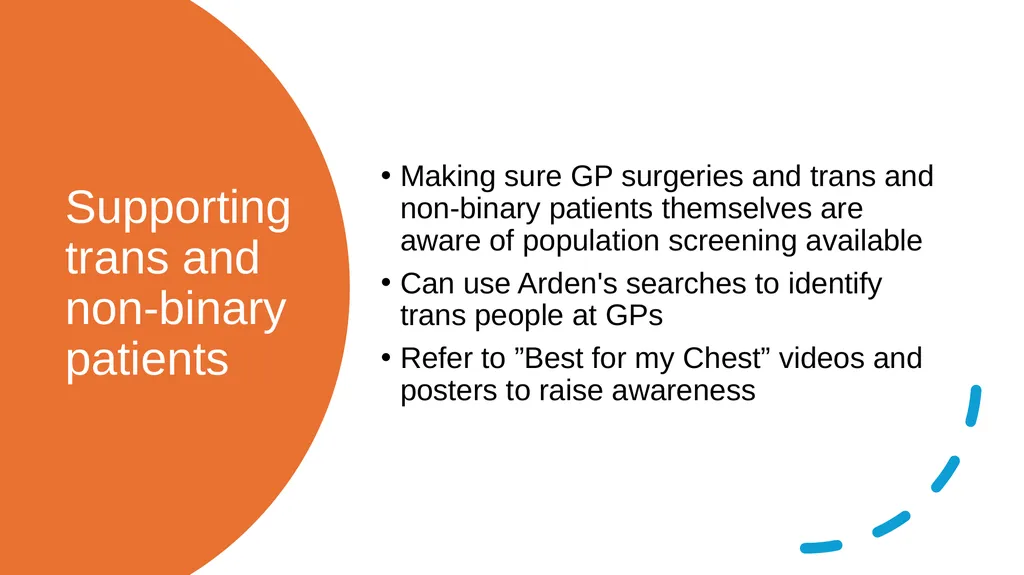
Supporting trans and non-binary patients Making sure GP surgeries and trans and non-binary patients themselves are aware of population screening available
Can use Arden's searches to identify trans people at GPs
Refer to ”Best for my Chest” videos and posters to raise awareness<br>
18
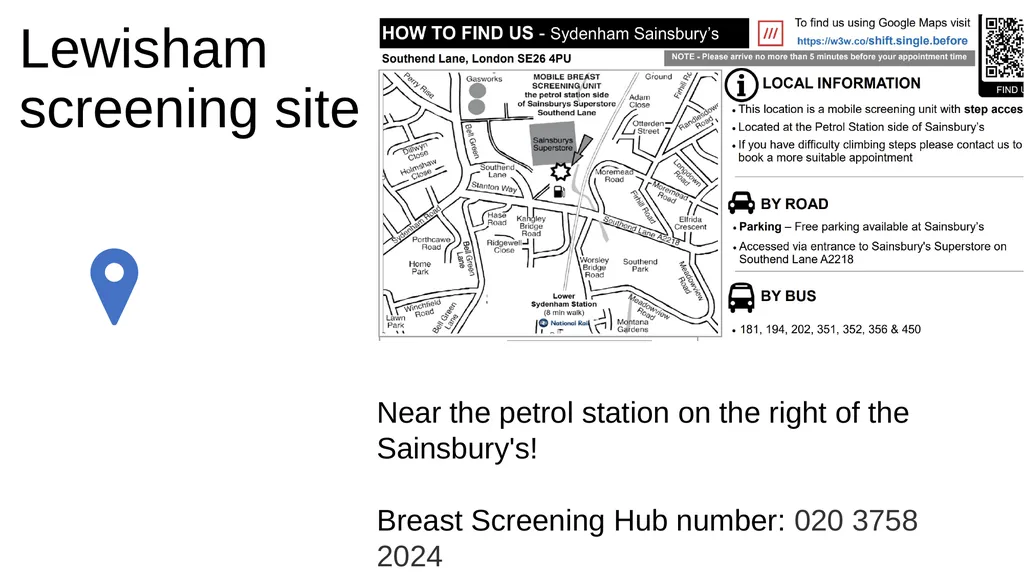
Lewisham screening site Near the petrol station on the right of the Sainsbury's!
Breast Screening Hub number: 020 3758 2024<br>
19
People can rebook or change the location of the appointment when they receive their invite
They can also self-refer if they have never been to screening/missed their last appointment
Depending on staff capacity, we sometimes have early morning/ weekend appointments – clients can call the hub and see<br>
20
Scenarios A woman has missed two of her previous mammograms. She says that she doesn’t want to go because she believes that God will help her if she has cancer, and that she doesn’t need to come. She is also worried about radiation in breast screening.<br>
21
A woman has received her first appointment, but is unsure about whether she should come. She’s heard its painful, and isn’t sure her male family members think she should come. She is concerned about her modesty around male healthcare staff also.<br>
22
A woman has come to breast screening once, but she says she has heard her neighbours sister got ‘poked about’ in an assessment clinic, and it seems like they were bothering her life to treat her for a cancer she couldn’t even feel.<br>
23
Wider health promotion Education around being breast aware: highlighting symptoms of breast cancer (lumps/thickened area, change in size or shape of breasts, discharge from nipples, sunken in nipple, dimpling of skin on breasts, lump or swelling in armpits)
Breast pain on its own is not usually a symptom of breast cancer
Touch, Look, Check
Prevention of breast cancer: promoting healthier lifestyles around alcohol consumption, keeping to a healthy weight including exercise and healthy diet<br>
24
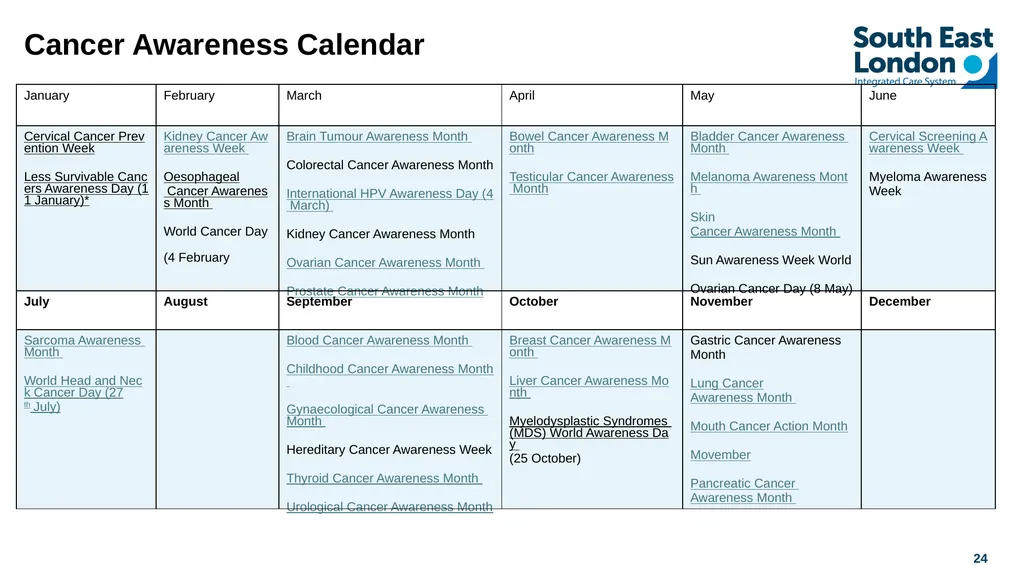
24 Cancer Awareness Calendar<br>
25
My role What am I doing in SEL (aside from training)
Feedback to me: any common barriers you are hearing, service feedback, other professionals I could train etc.<br>
26
Your role Making connections count with patients
Encouraging people to attend their appointments
Support around calling hub numbers to rebook time or location
Signposting to our website: appointment requesting
Respecting autonomy but delivering wider health promotional messaging aiming to empower and motivate<br>
27
Feedback form Please fill in our feedback form about todays training!<br>
28
Thank you!��https://forms.gle/Hg4n6EicS7EYJ4J9A<br>