Buffer solutions Buffers: are compounds or mixtures of compounds that, by their presence in solution, resist changes in pH upon the addition of small quantities of acid or alkali. buffer action : The resistance to a change in pH . What is a
"Buffer solutions Buffers: are compounds or" is the property of its rightful owner. Permission is granted to
download and print the materials on this website for personal, non-commercial use only, and to display it
on your personal computer provided you do not modify the materials and that you retain all copyright
notices contained in the materials. By downloading content from our website, you accept the terms of this
agreement.
Presentation Transcript
01
Buffer solutions<br>
02
Buffers: are compounds or mixtures of compounds that, by their presence in solution, resist changes in pH upon the addition of small quantities of acid or alkali.
buffer action : The resistance to a change in pH .<br>
03
What is a Buffer? A combination of a weak acid and its conjugate base (i.e., its salt) or
a weak base and its conjugate acid .<br>
04
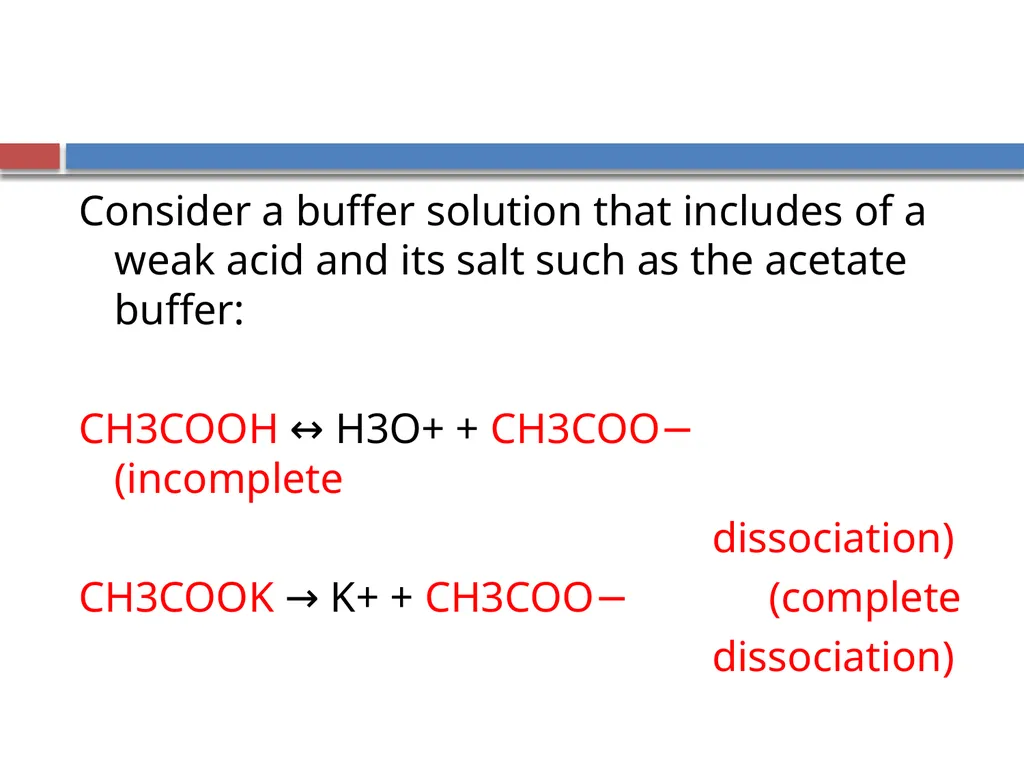
Consider a buffer solution that includes of a weak acid and its salt such as the acetate buffer:
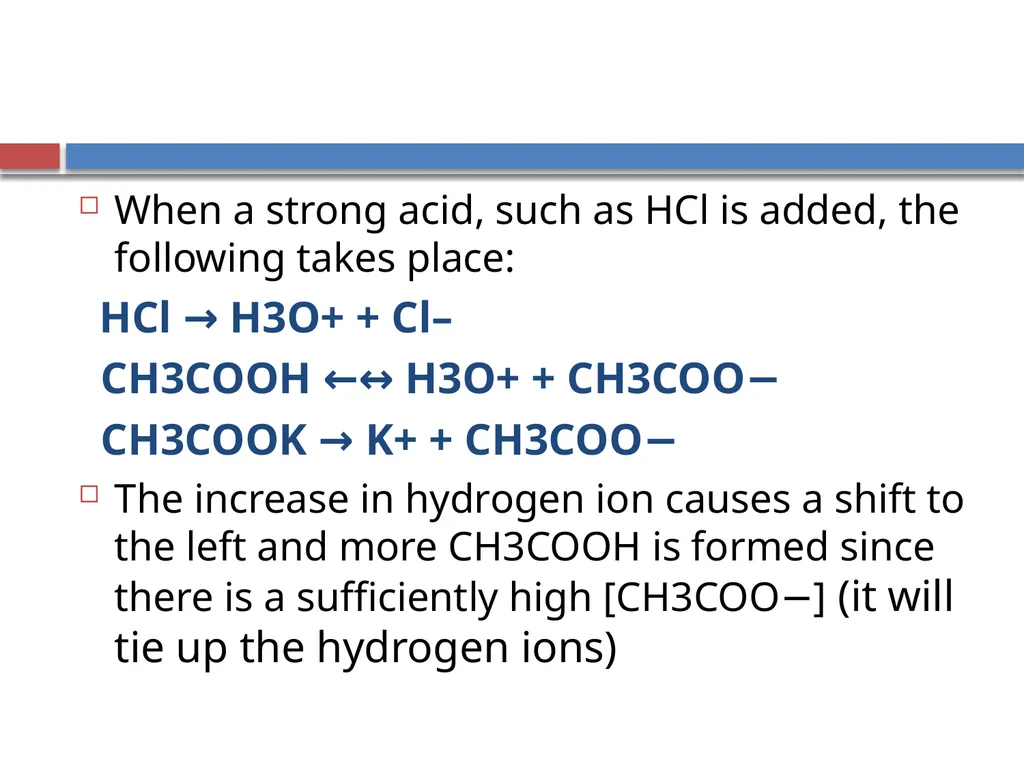
When a strong acid, such as HCl is added, the following takes place:
HCl → H3O+ + Cl–
CH3COOH ←↔ H3O+ + CH3COO−
CH3COOK → K+ + CH3COO−
The increase in hydrogen ion causes a shift to the left and more CH3COOH is formed since there is a sufficiently high [CH3COO−] (it will tie up the hydrogen ions)<br>
06
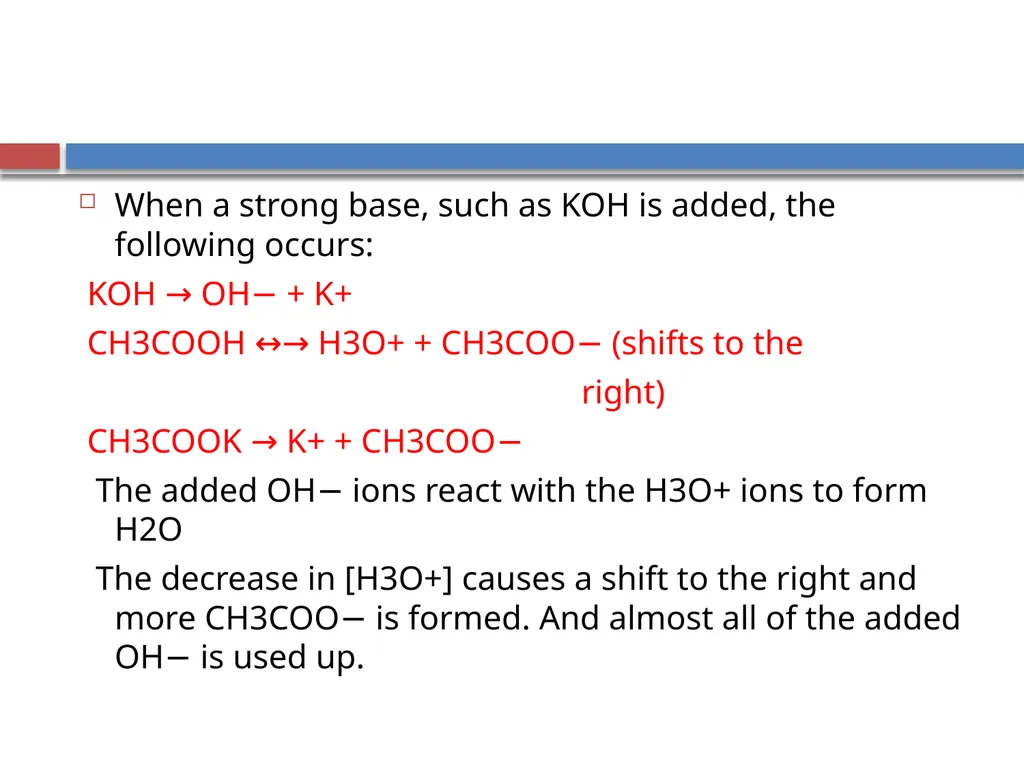
When a strong base, such as KOH is added, the following occurs:
KOH → OH− + K+
CH3COOH ↔→ H3O+ + CH3COO− (shifts to the
right)
CH3COOK → K+ + CH3COO−
The added OH− ions react with the H3O+ ions to form H2O
The decrease in [H3O+] causes a shift to the right and more CH3COO− is formed. And almost all of the added OH− is used up.<br>
07
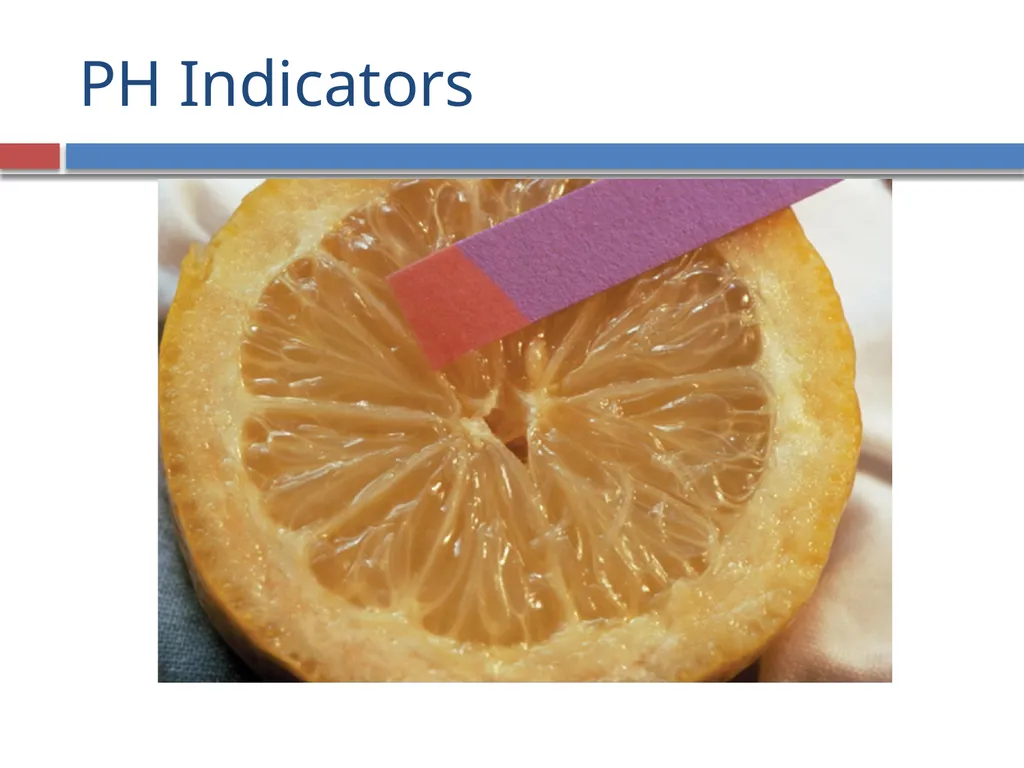
PH Indicators<br>
08
PH Indicators Indicators may be considered as weak acids or weak bases that act like buffers and also exhibit colour changes as their degree of dissociation varies with pH (1-12).
For example, methyl red shows its full alkaline colour, yellow, at a pH of about 6 and its full acid colour, red, at about pH 4.<br>
09
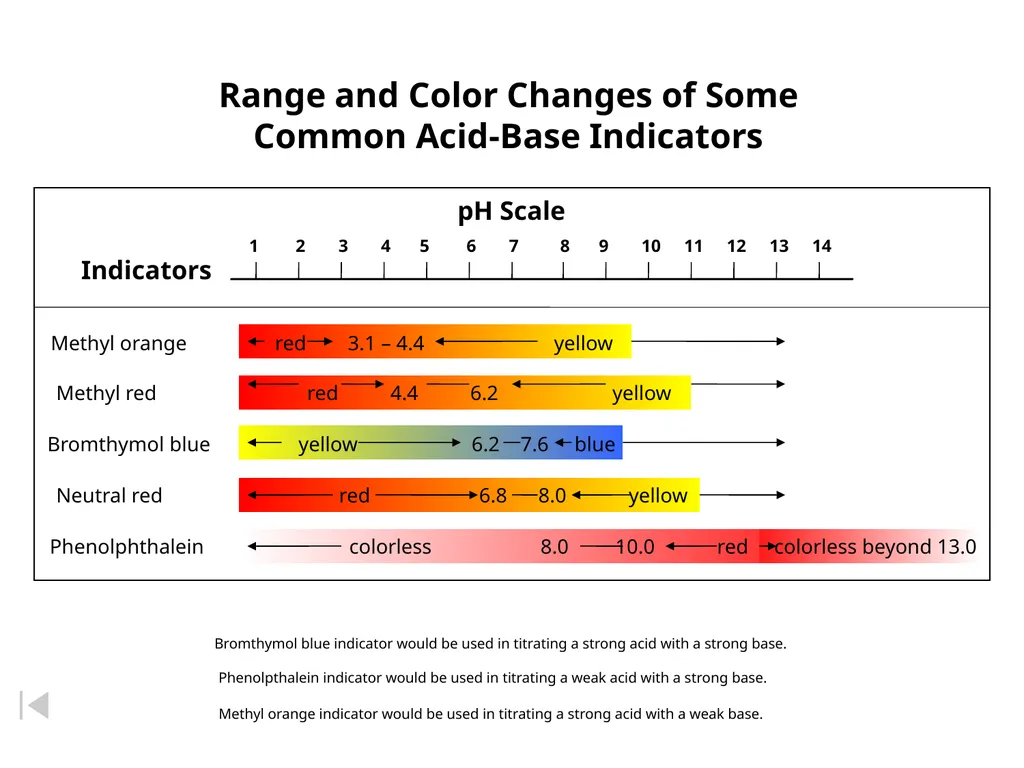
Range and Color Changes of Some
Common Acid-Base Indicators Indicators pH Scale 1 2 3 4 5 6 7 8 9 10 11 12 13 14 Methyl orange red 3.1 – 4.4 yellow Methyl red red 4.4 6.2 yellow Bromthymol blue yellow 6.2 7.6 blue Neutral red red 6.8 8.0 yellow Phenolphthalein colorless 8.0 10.0 red colorless beyond 13.0 Bromthymol blue indicator would be used in titrating a strong acid with a strong base. Phenolpthalein indicator would be used in titrating a weak acid with a strong base. Methyl orange indicator would be used in titrating a strong acid with a weak base.<br>
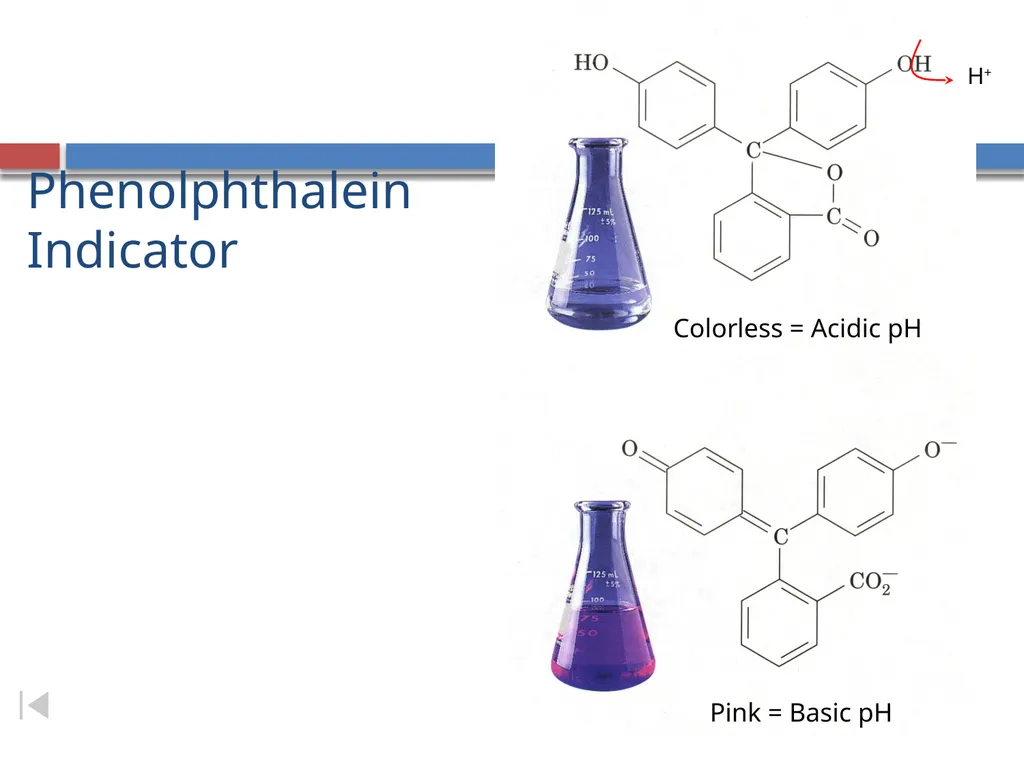
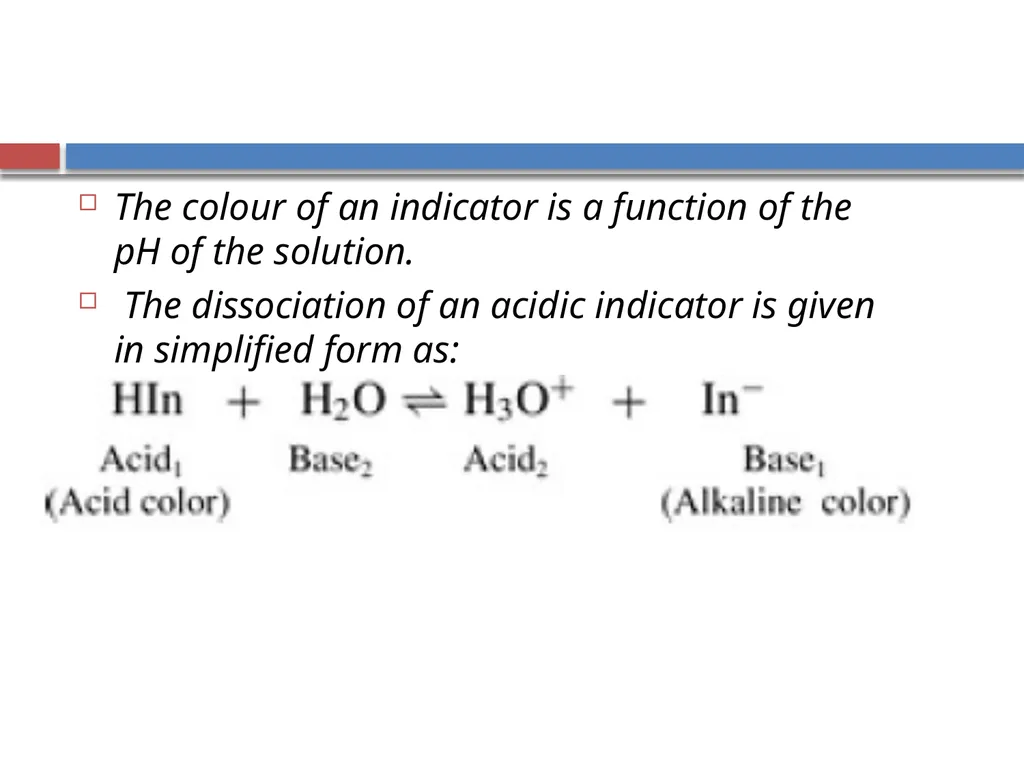
The colour of an indicator is a function of the pH of the solution.
The dissociation of an acidic indicator is given in simplified form as:<br>
12
HIn is the un-ionized form of the indicator, which gives the acid colour, and In- is the ionized form, which produces the basic colour.
If an acid is added to a solution of the indicator, the hydrogen ion concentration term on the right-hand side of equation is increased, and the ionization is repressed by the common ion effect. The indicator is then predominantly in the form of HIn, the acid colour.<br>
13
If base is added, [H3O+] is reduced by reaction of the acid with the base, reaction proceeds to the right, yielding more ionized indicator In-, and the base colour predominates.
Several indicators can be combined to yield so-called universal indicators just as buffers can be mixed to cover a wide pH range (red-purple).<br>
14
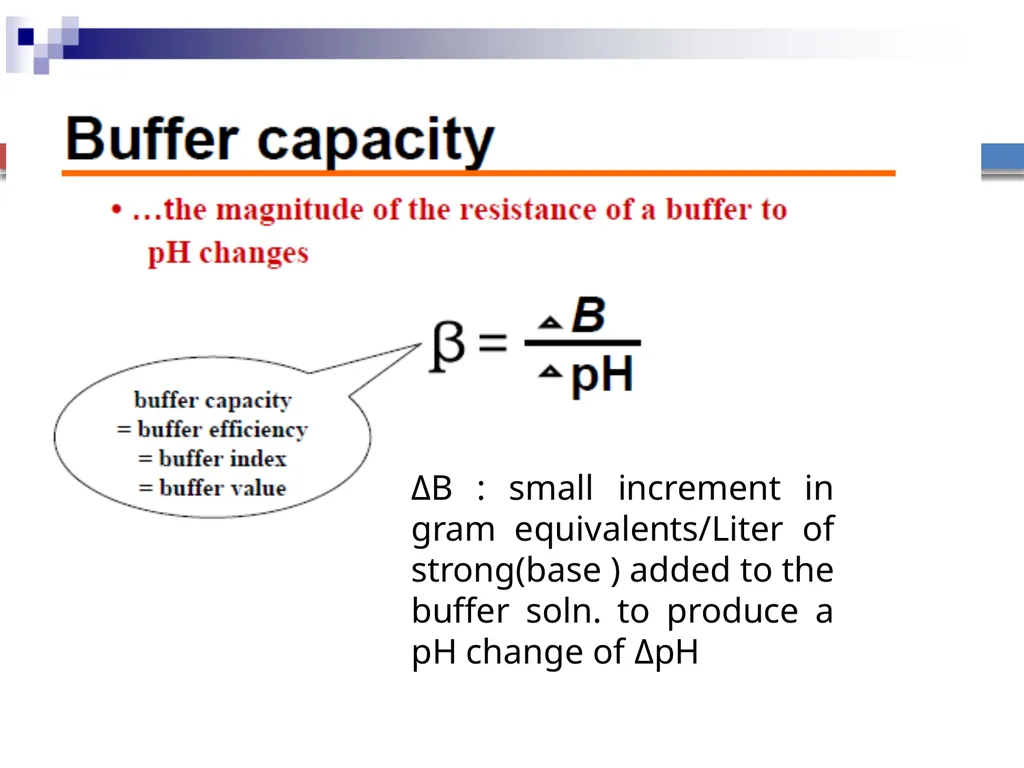
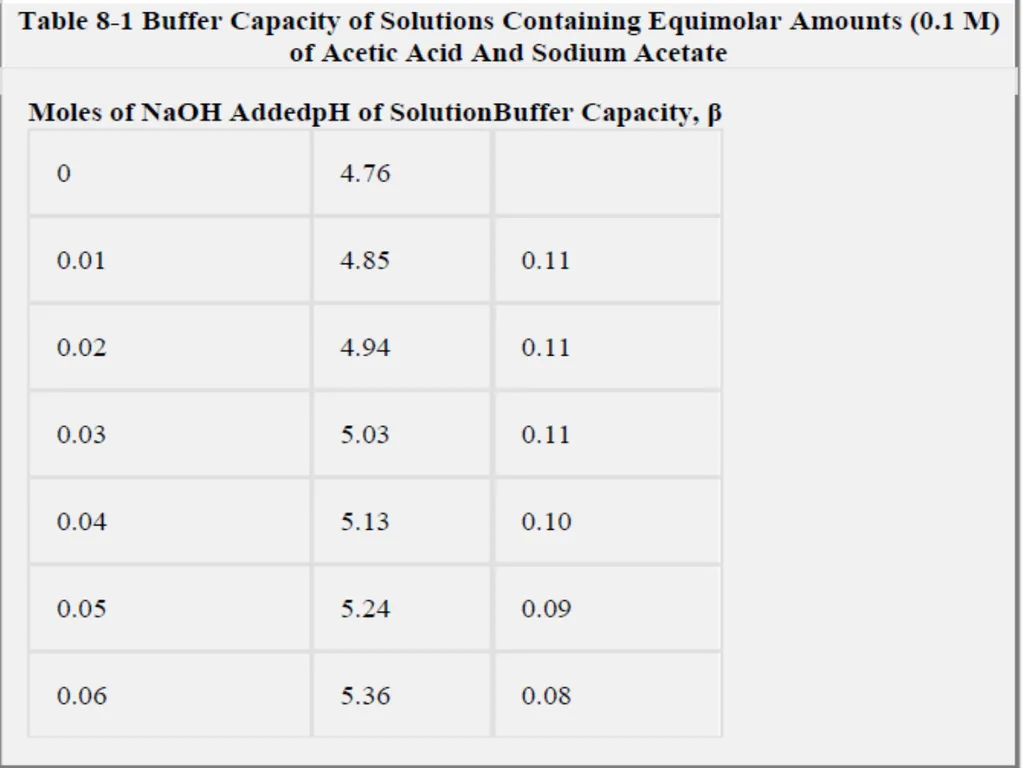
ΔB : small increment in gram equivalents/Liter of strong(base ) added to the buffer soln. to produce a pH change of ΔpH<br>
15
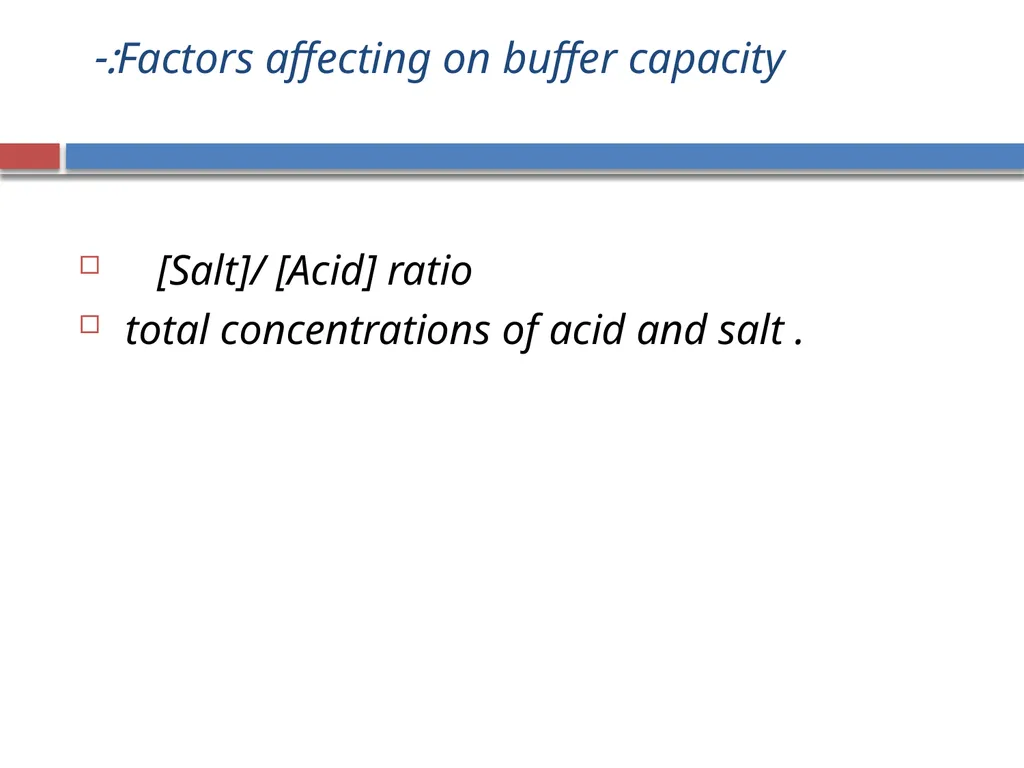
Factors affecting on buffer capacity:- [Salt]/ [Acid] ratio
total concentrations of acid and salt .<br>
16
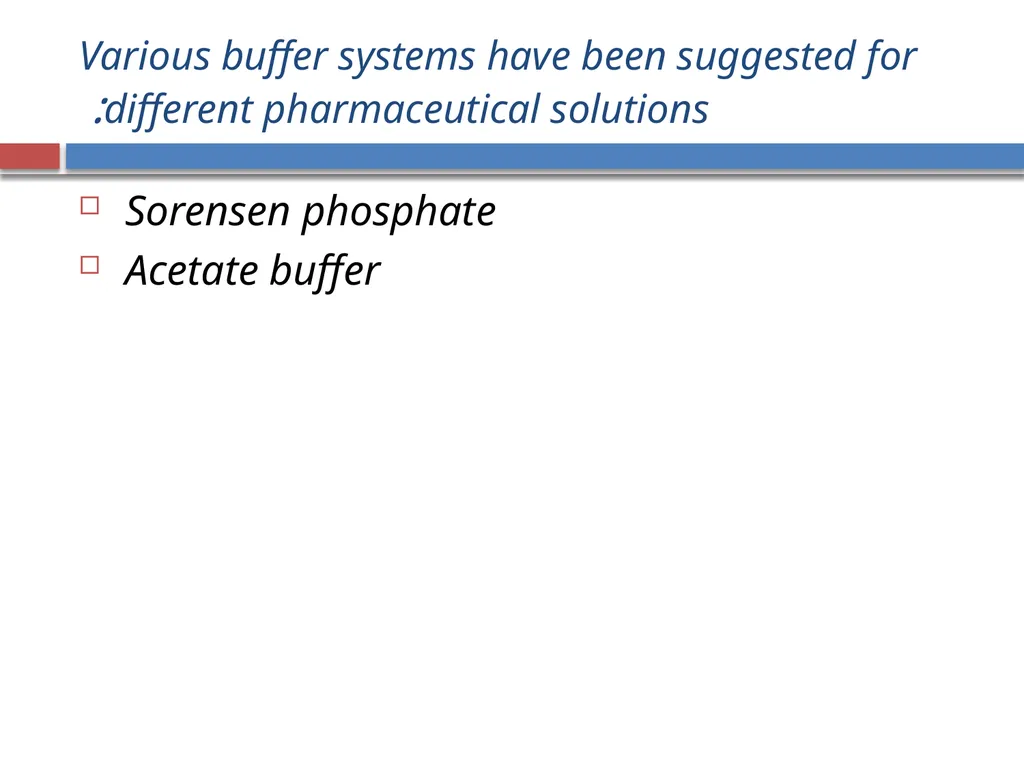
Various buffer systems have been suggested for different pharmaceutical solutions: Sorensen phosphate
Acetate buffer<br>
17
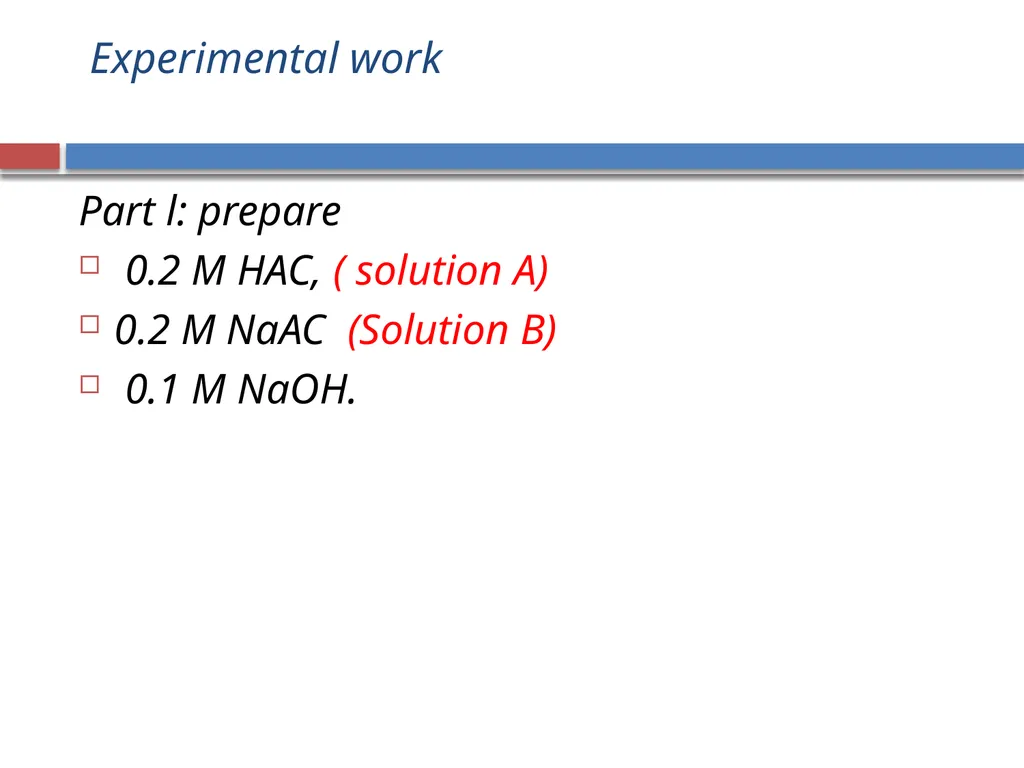
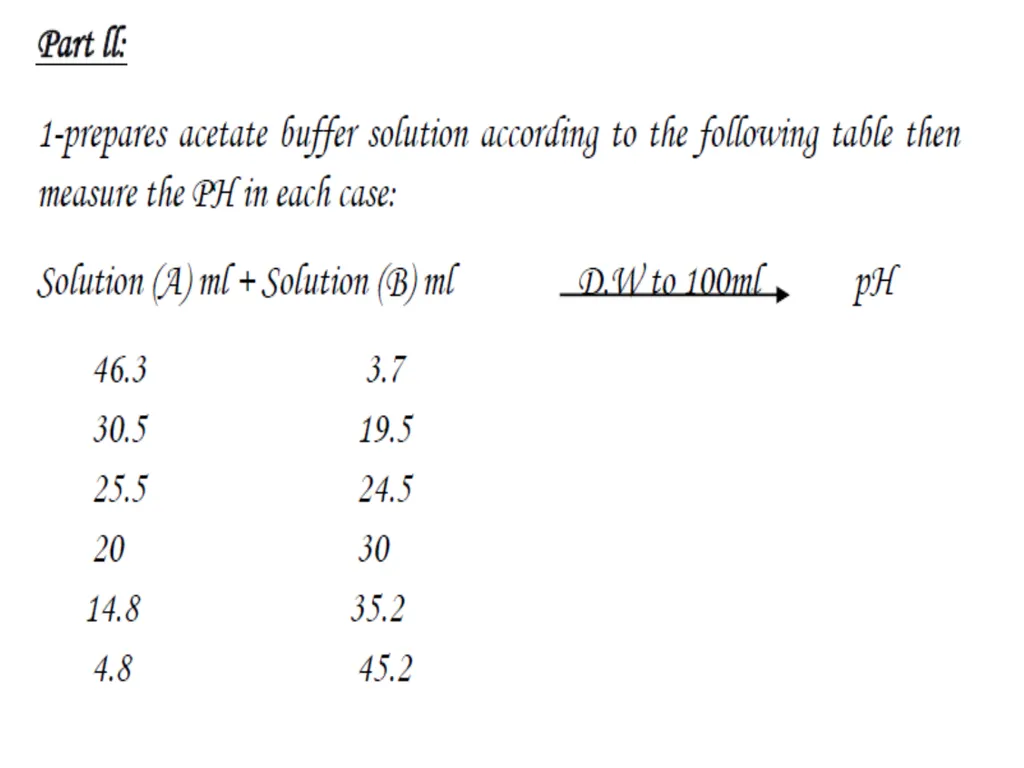
Experimental work Part l: prepare
0.2 M HAC, ( solution A)
0.2 M NaAC (Solution B)
0.1 M NaOH.<br>
18
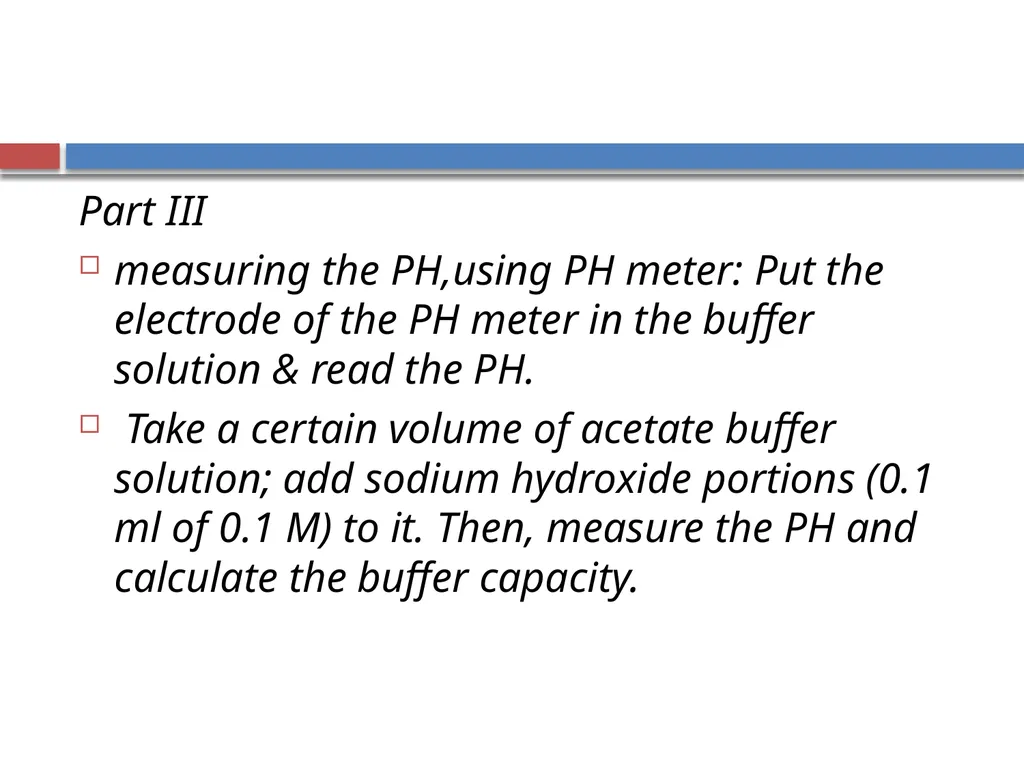
Part III
measuring the PH,using PH meter: Put the electrode of the PH meter in the buffer solution & read the PH.
Take a certain volume of acetate buffer solution; add sodium hydroxide portions (0.1 ml of 0.1 M) to it. Then, measure the PH and calculate the buffer capacity.<br>