
Building block of matter P. Choudhury Elements A
FD
Published · 53 slides · 0 views

1 / 1





Description
Building block of matter P. Choudhury Elements A substance that cannot be broken down into simple substances by chemical methods is called elements. Elements are made up of tiny particle called atoms that cannot be seen through microscope.
Related Topics
Share
Embed code
Download this presentation From Below
"Building block of matter P. Choudhury Elements A" is the property of its rightful owner. Permission is granted to download and print the materials on this website for personal, non-commercial use only, and to display it on your personal computer provided you do not modify the materials and that you retain all copyright notices contained in the materials. By downloading content from our website, you accept the terms of this agreement.
Presentation Transcript
01
Building block of matter P. Choudhury<br>
02
Elements A substance that cannot be broken down into simple substances by chemical methods is called elements. Elements are made up of tiny particle called atoms that cannot be seen through microscope. An atom is the smallest particle of an elements. All Matters are made up of atoms.
An element is made up only one kind of atom. For example Oxygen is made up only oxygen atoms. Examples of elements<br>
An element is made up only one kind of atom. For example Oxygen is made up only oxygen atoms. Examples of elements<br>
03
Chemical symbols of elements Each element is represented by a chemical symbol. Chemical symbols are fixed and used by all scientists
The symbol of an elements consists of a letter or two letters
Some elements are represented by the first letter of their names. For example hydrogen is represented as H and so on<br>
The symbol of an elements consists of a letter or two letters
Some elements are represented by the first letter of their names. For example hydrogen is represented as H and so on<br>
04
If the names of more than one element start with the same letter, then two letters of each elements name are used for its symbol. For example Calcium is represented as “Ca” and Chlorine as Cl
First letter of a symbol is always written as a Capital letter and the second letter as a lowercase letter.
Examples of elements<br>
First letter of a symbol is always written as a Capital letter and the second letter as a lowercase letter.
Examples of elements<br>
05
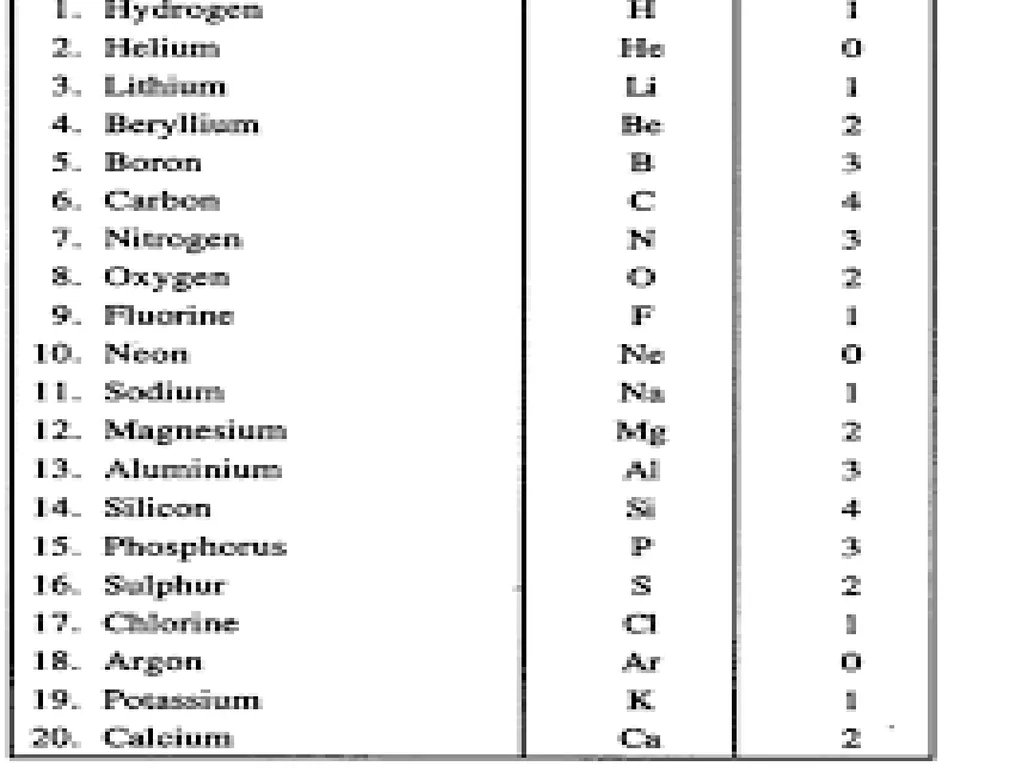
Molecules of Elements The smallest particle of a substances that can exist by itself in nature is called a molecule. A molecule of an element can contain one or more atoms of the same kind. For example a helium molecule consists of a single helium atom. One Oxygen molecule is formed of two oxygen atoms and one sulphur molecule is formed of eight sulphur atoms.<br>
06
Compounds Two or more elements combine chemically in a fixed ratio to form a compound. Water, Carbon dioxide , salt and sugar are examples of compounds. The elements in a compound are joined by force of attraction called chemical bonds. They can usually be separated only by a chemical reaction.<br>
07
Compounds are made up of molecules. A molecule of a compound contains two or more atoms of different elements. As compounds are made up of two or more elements, they can exist only as molecules. For example water is made up of hydrogen and oxygen. Each water molecule contains two hydrogen atoms and one oxygen atom.<br>
08
Naming a chemical Compound Compounds have at least two parts to their name. When a metal and a non metal combine to form a compound, the metal retains its name. The non metals name changes slightly. Oxygen becomes oxide. Chlorine becomes chloride, sulphur becomes sulphide and so on. For Example When sodium combine with chlorine, the compound formed is called sodium chloride<br>
09
Mixtures When two or more elements or compounds are combined physically in any ratio, the resulting substance is called a mixture. The chemical properties of the elements or compounds do not change. Therefore, no new molecules are formed. The elements or compounds that form a mixture can usually be separated by physical methods<br>
10
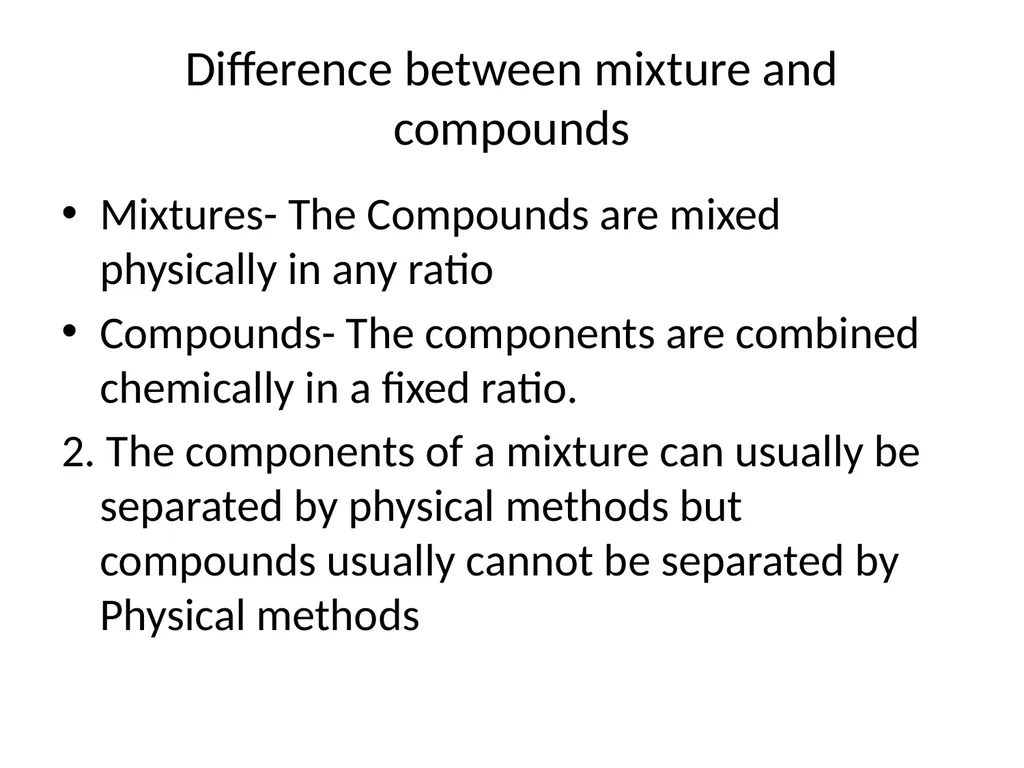
Difference between mixture and compounds Mixtures- The Compounds are mixed physically in any ratio
Compounds- The components are combined chemically in a fixed ratio.
2. The components of a mixture can usually be separated by physical methods but compounds usually cannot be separated by Physical methods<br>
Compounds- The components are combined chemically in a fixed ratio.
2. The components of a mixture can usually be separated by physical methods but compounds usually cannot be separated by Physical methods<br>
11
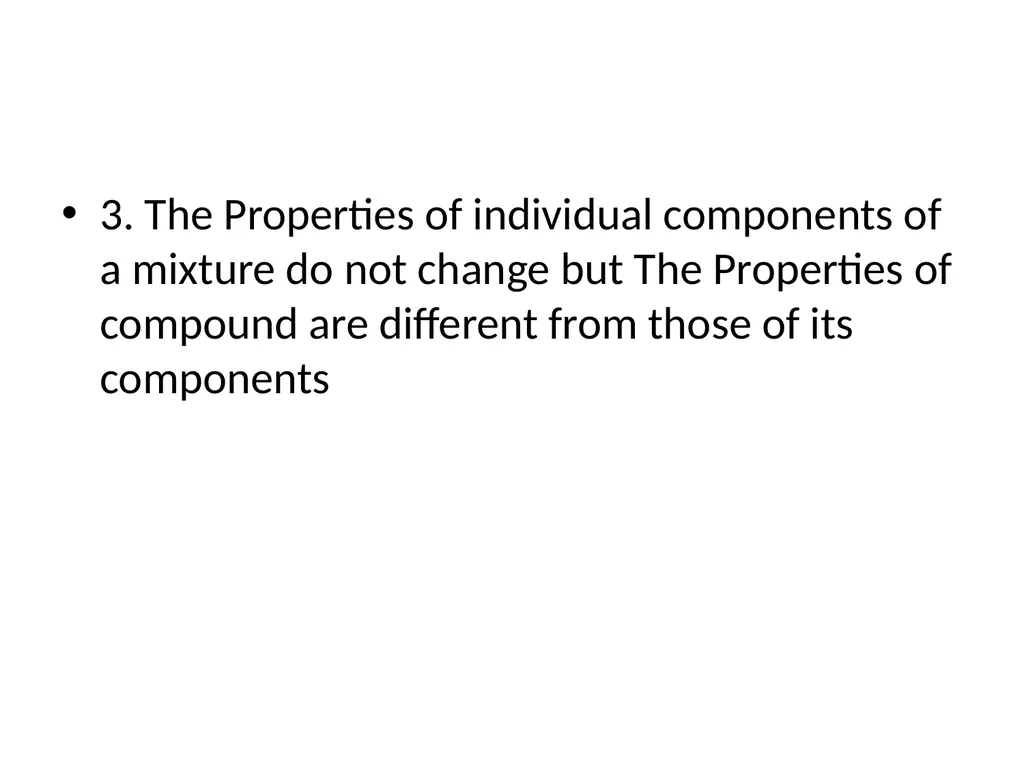
3. The Properties of individual components of a mixture do not change but The Properties of compound are different from those of its components<br>
12
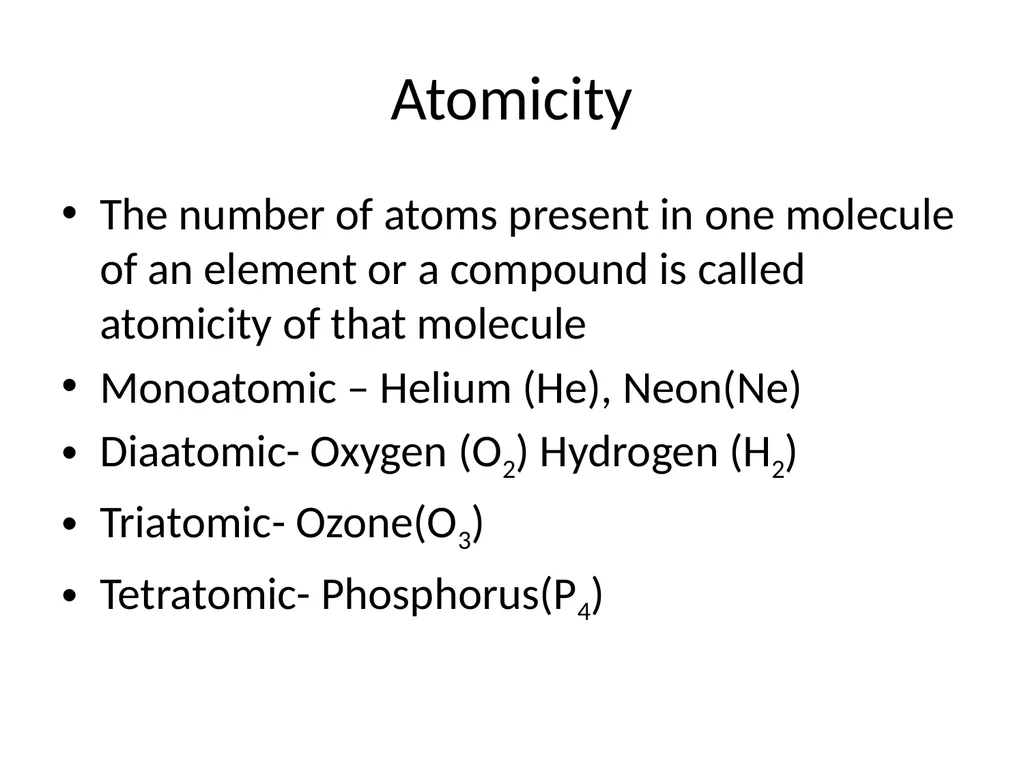
Atomicity The number of atoms present in one molecule of an element or a compound is called atomicity of that molecule
Monoatomic – Helium (He), Neon(Ne)
Diaatomic- Oxygen (O2) Hydrogen (H2)
Triatomic- Ozone(O3)
Tetratomic- Phosphorus(P4)<br>
Monoatomic – Helium (He), Neon(Ne)
Diaatomic- Oxygen (O2) Hydrogen (H2)
Triatomic- Ozone(O3)
Tetratomic- Phosphorus(P4)<br>
13
The number of atoms of each element in a molecule of a compound is fixed. A carbon dioxide molecule always contains one carbon atom and two oxygen atoms. Its atomicity is 3<br>
14
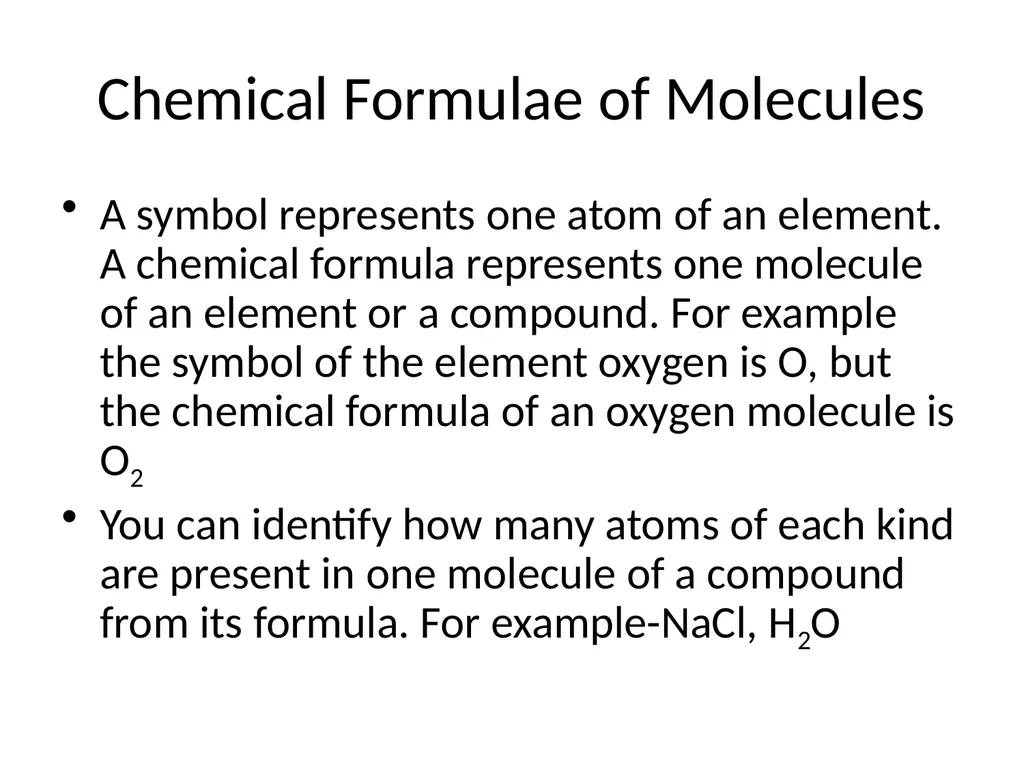
Chemical Formulae of Molecules A symbol represents one atom of an element. A chemical formula represents one molecule of an element or a compound. For example the symbol of the element oxygen is O, but the chemical formula of an oxygen molecule is O2
You can identify how many atoms of each kind are present in one molecule of a compound from its formula. For example-NaCl, H2O<br>
You can identify how many atoms of each kind are present in one molecule of a compound from its formula. For example-NaCl, H2O<br>
15
Combining capacity To write the chemical formula of a compound, we should know the elements that make up the compound. We also need to know to know the valency of the elements. The valency of an element is a number that denotes its combining capacity.
Bromine, Chlorine, Hydregen, Potassium, Sodium Valency is one<br>
Bromine, Chlorine, Hydregen, Potassium, Sodium Valency is one<br>
16
Valency a Variable Valency Calcium, Magnesium, oxygen, zinc Valency is two
Aluminium- Valency is 3
Carbon- 2 or 4
Iron- 2 or 3
Sulphur- Valency is 2,4 or 6
Nitrogen – 3 0r 5<br>
Aluminium- Valency is 3
Carbon- 2 or 4
Iron- 2 or 3
Sulphur- Valency is 2,4 or 6
Nitrogen – 3 0r 5<br>
17
Some elements in the table have more than one valency. These elements are said to have variable valency. Some elements like neon and helium have a valency of 0. They do not combine with other elements easily<br>
18
Valency is the measure of the combining capacity of atoms or molecules. Therefore, it is the capacity of an atom of a single element to react and combine with particular numbers of atoms of another element.<br>
19
The combining capacity of an atom is known as its valency. The number of bonds that an atom can form as part of a compound is expressed by the valency of the element.
Method to find Valency
If the number of electrons in the outer shell is between one to four, the compound is said to have positive valency. For compounds with electrons four, five, six, or seven, the valency is determined by subtracting the electron from eight. All noble gases except for Helium have eight electrons.<br>
Method to find Valency
If the number of electrons in the outer shell is between one to four, the compound is said to have positive valency. For compounds with electrons four, five, six, or seven, the valency is determined by subtracting the electron from eight. All noble gases except for Helium have eight electrons.<br>
20
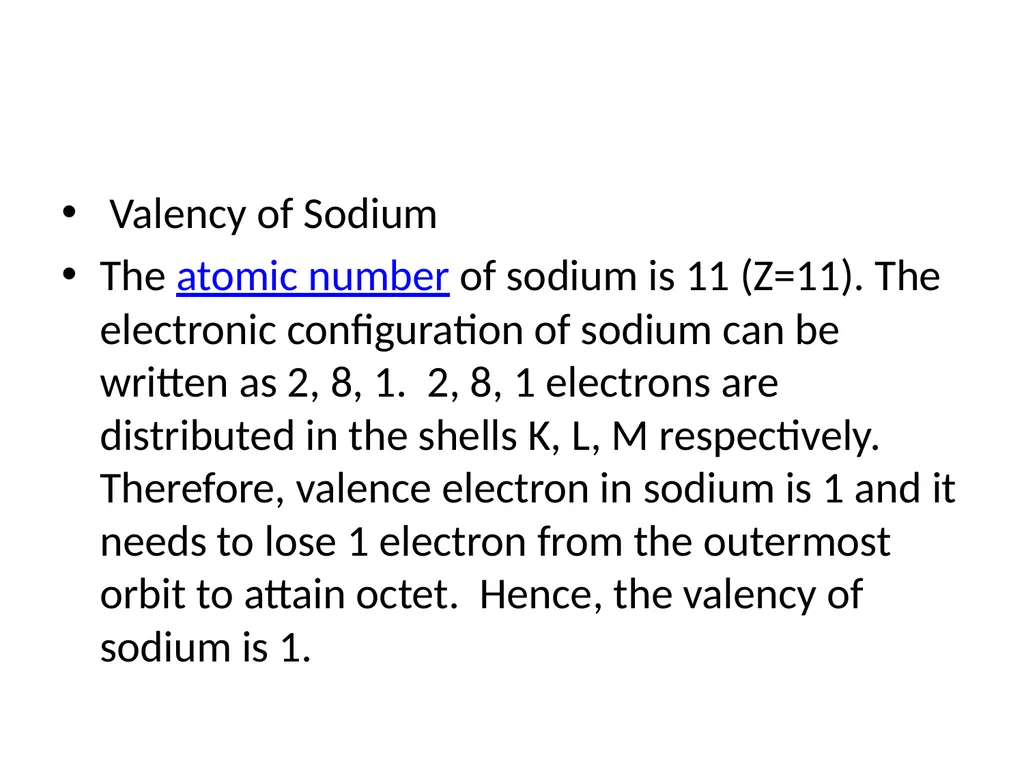
Valency of Sodium
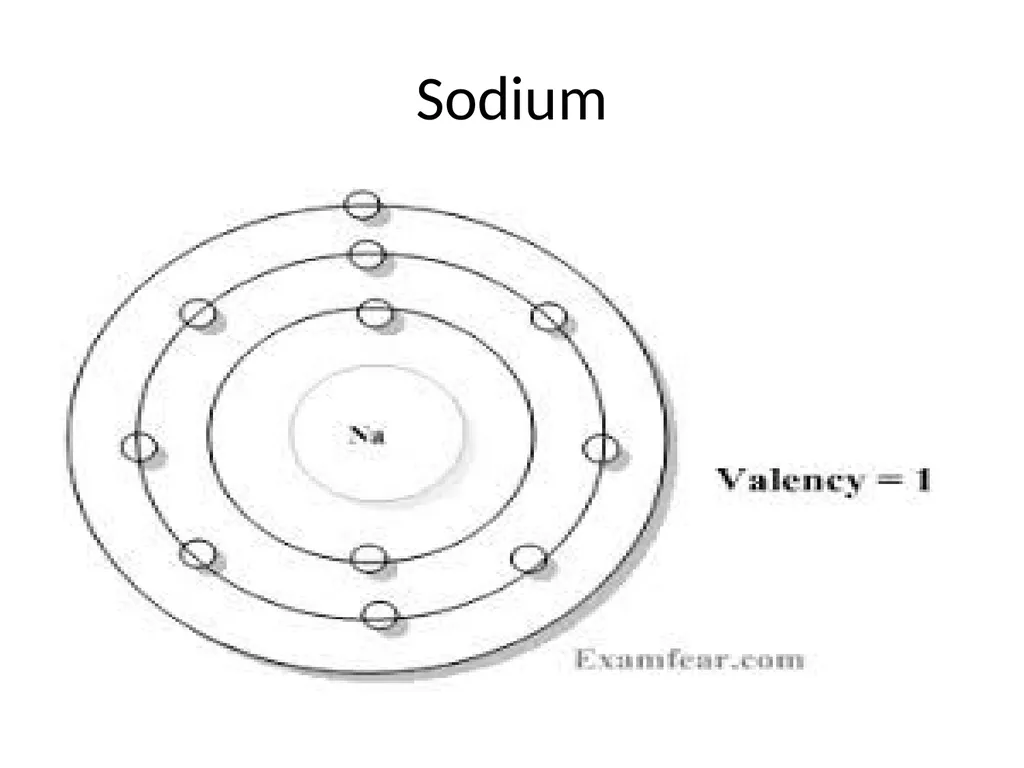
The atomic number of sodium is 11 (Z=11). The electronic configuration of sodium can be written as 2, 8, 1. 2, 8, 1 electrons are distributed in the shells K, L, M respectively. Therefore, valence electron in sodium is 1 and it needs to lose 1 electron from the outermost orbit to attain octet. Hence, the valency of sodium is 1.<br>
The atomic number of sodium is 11 (Z=11). The electronic configuration of sodium can be written as 2, 8, 1. 2, 8, 1 electrons are distributed in the shells K, L, M respectively. Therefore, valence electron in sodium is 1 and it needs to lose 1 electron from the outermost orbit to attain octet. Hence, the valency of sodium is 1.<br>
21
Sodium<br>
22
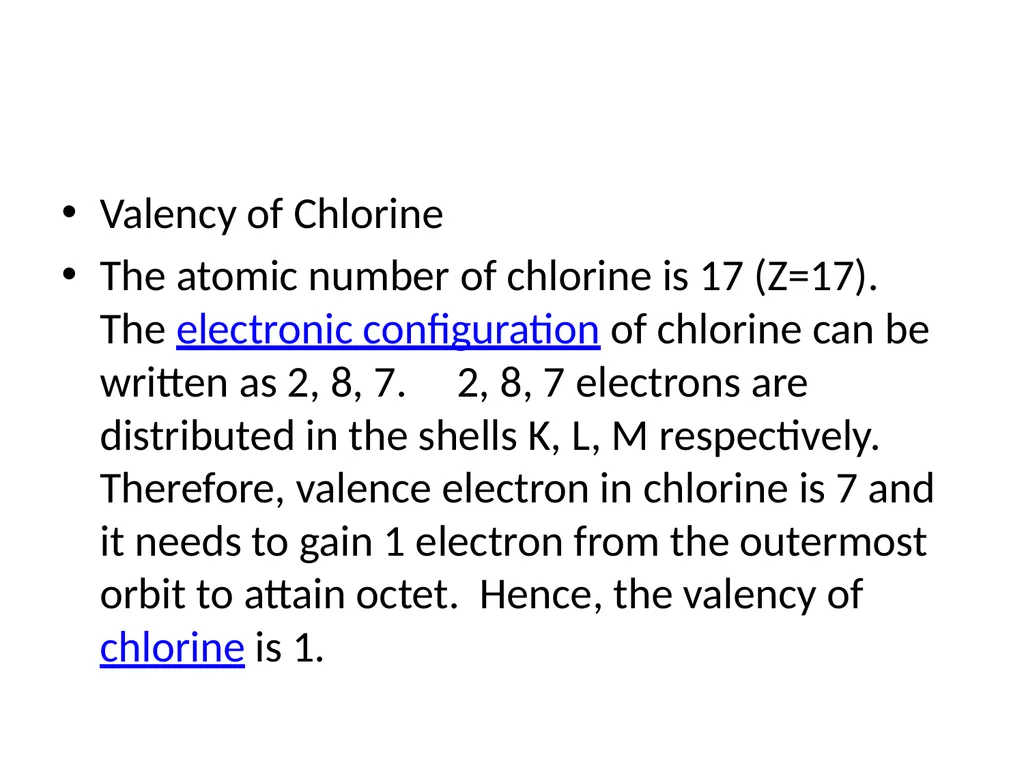
Valency of Chlorine
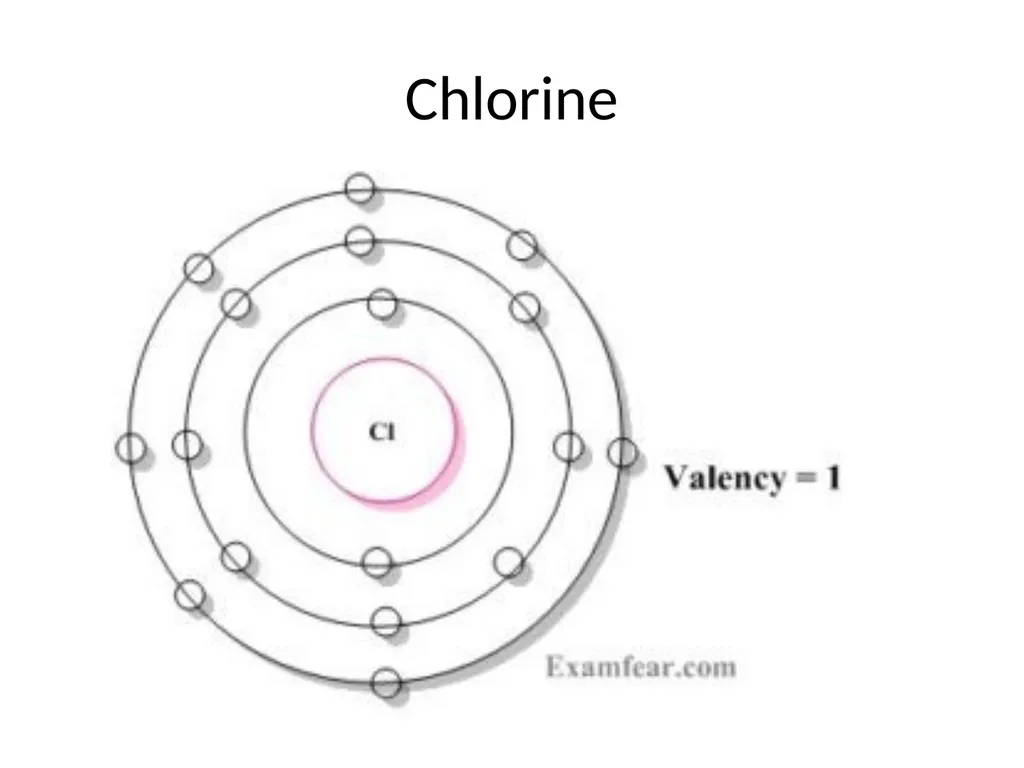
The atomic number of chlorine is 17 (Z=17). The electronic configuration of chlorine can be written as 2, 8, 7. 2, 8, 7 electrons are distributed in the shells K, L, M respectively. Therefore, valence electron in chlorine is 7 and it needs to gain 1 electron from the outermost orbit to attain octet. Hence, the valency of chlorine is 1.<br>
The atomic number of chlorine is 17 (Z=17). The electronic configuration of chlorine can be written as 2, 8, 7. 2, 8, 7 electrons are distributed in the shells K, L, M respectively. Therefore, valence electron in chlorine is 7 and it needs to gain 1 electron from the outermost orbit to attain octet. Hence, the valency of chlorine is 1.<br>
23
Chlorine<br>
24
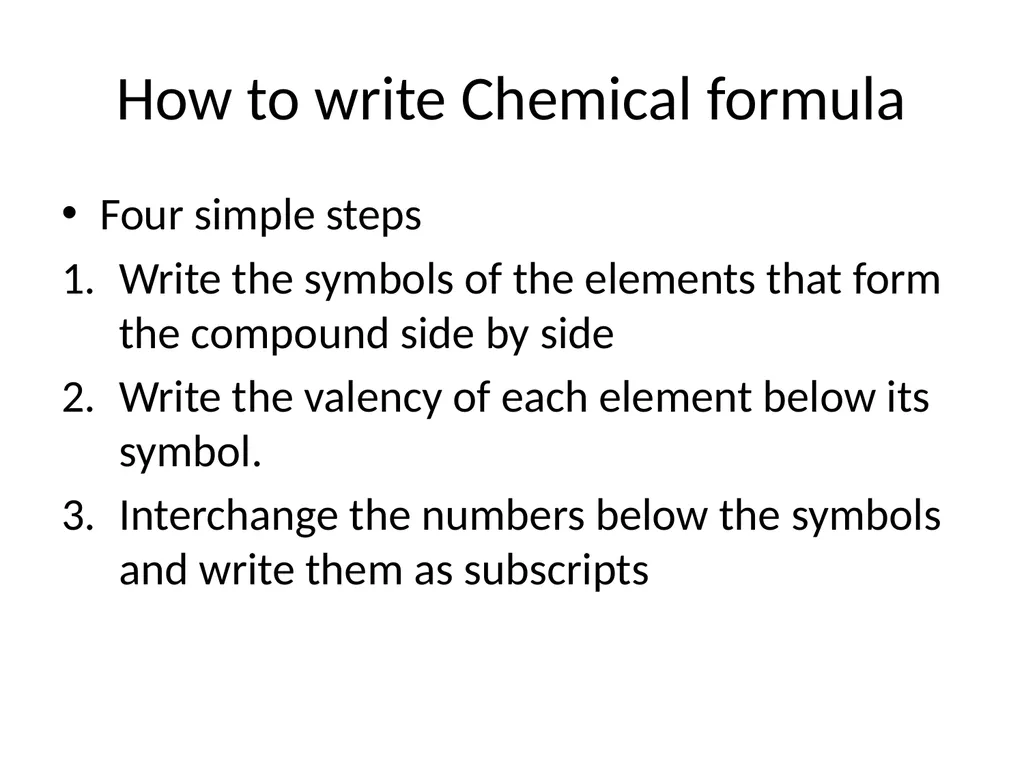
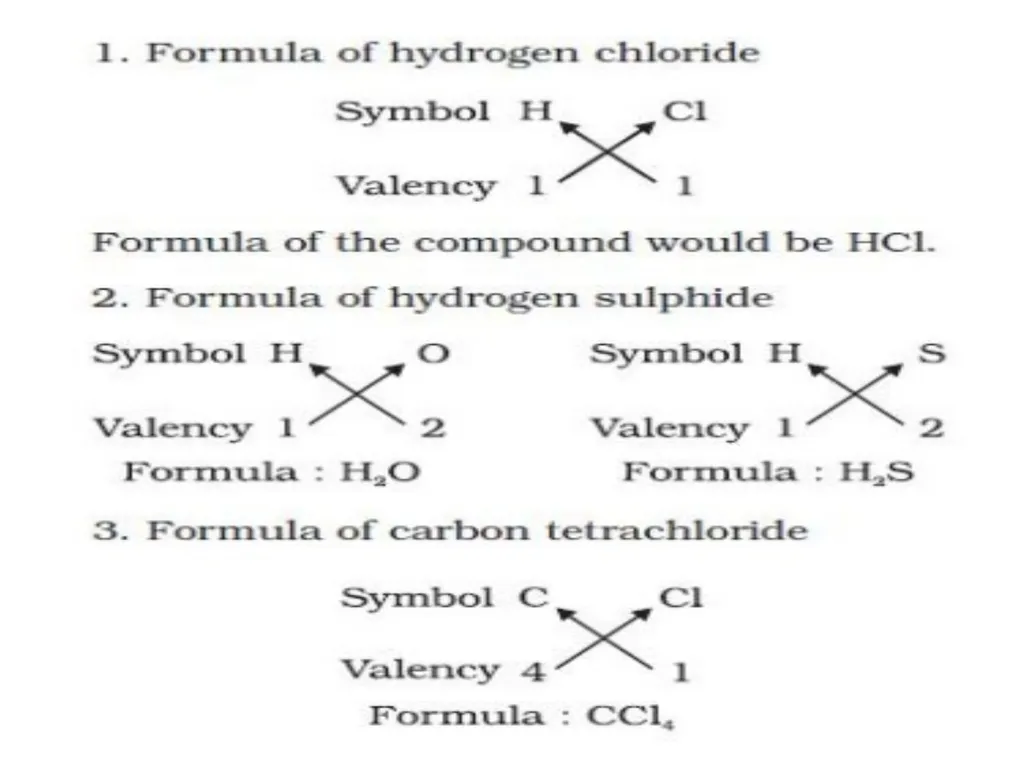
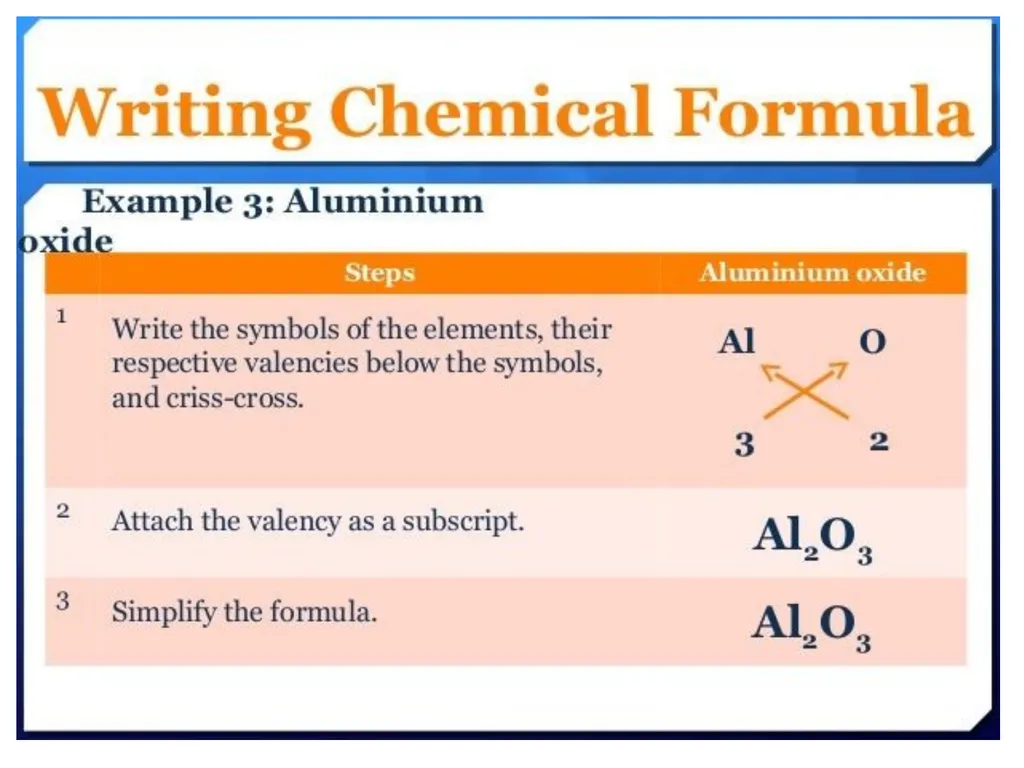
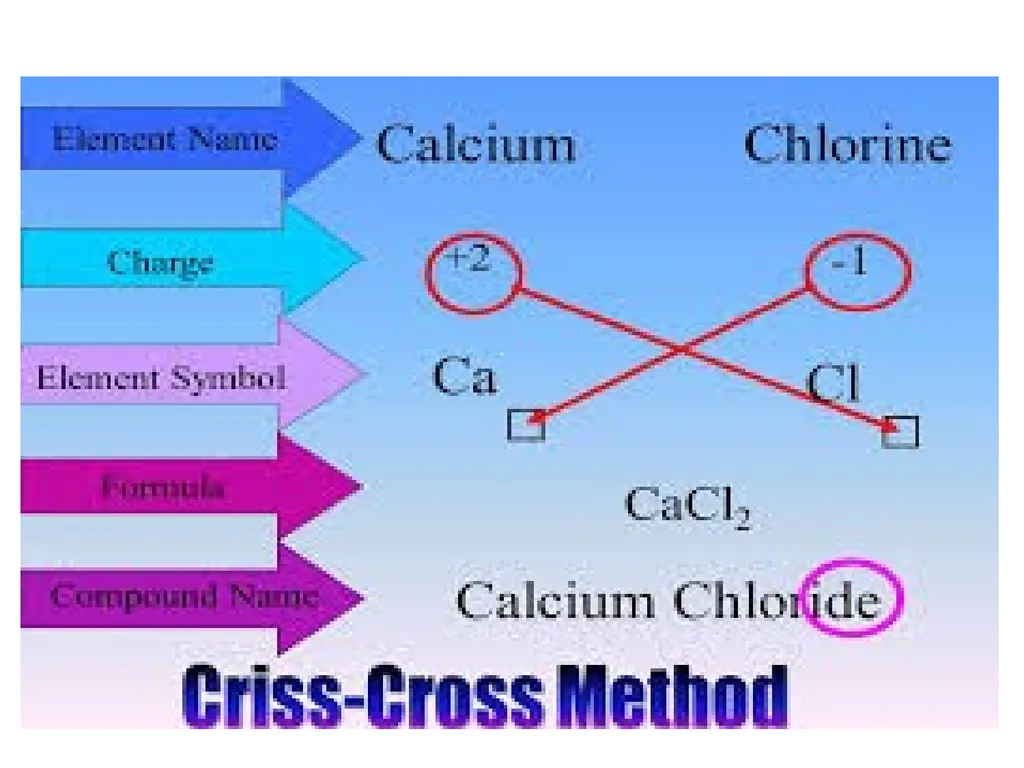
How to write Chemical formula Four simple steps
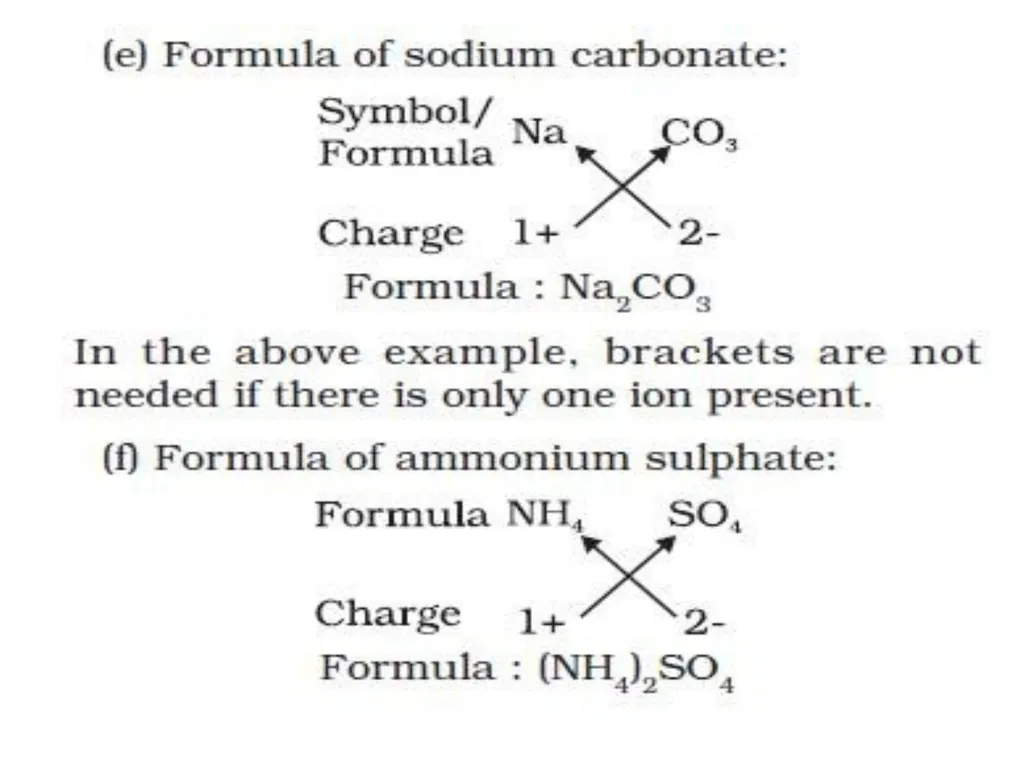
Write the symbols of the elements that form the compound side by side
Write the valency of each element below its symbol.
Interchange the numbers below the symbols and write them as subscripts<br>
Write the symbols of the elements that form the compound side by side
Write the valency of each element below its symbol.
Interchange the numbers below the symbols and write them as subscripts<br>
25
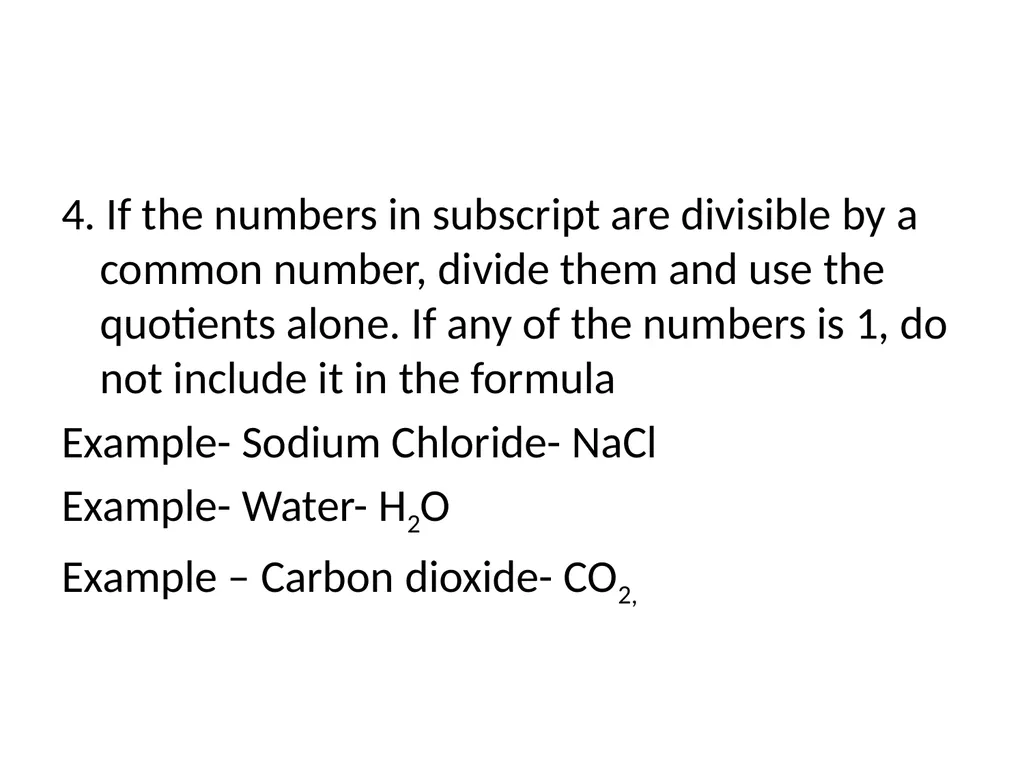
4. If the numbers in subscript are divisible by a common number, divide them and use the quotients alone. If any of the numbers is 1, do not include it in the formula
Example- Sodium Chloride- NaCl
Example- Water- H2O
Example – Carbon dioxide- CO2,<br>
Example- Sodium Chloride- NaCl
Example- Water- H2O
Example – Carbon dioxide- CO2,<br>
26
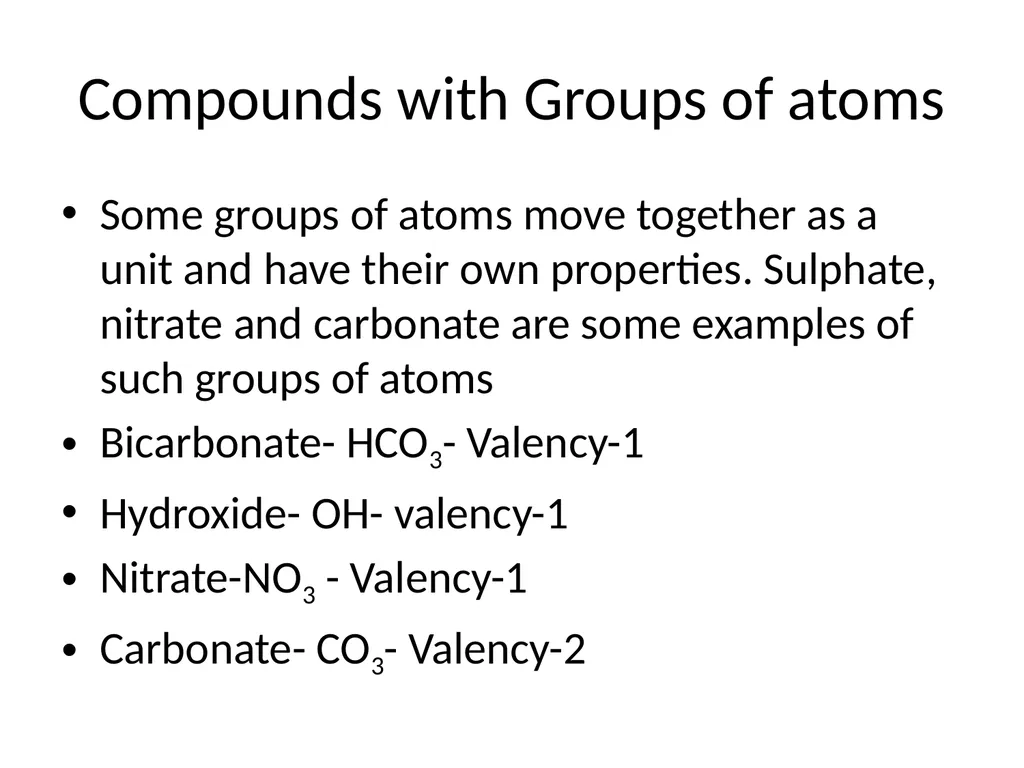
Compounds with Groups of atoms Some groups of atoms move together as a unit and have their own properties. Sulphate, nitrate and carbonate are some examples of such groups of atoms
Bicarbonate- HCO3- Valency-1
Hydroxide- OH- valency-1
Nitrate-NO3 - Valency-1
Carbonate- CO3- Valency-2<br>
Bicarbonate- HCO3- Valency-1
Hydroxide- OH- valency-1
Nitrate-NO3 - Valency-1
Carbonate- CO3- Valency-2<br>
27
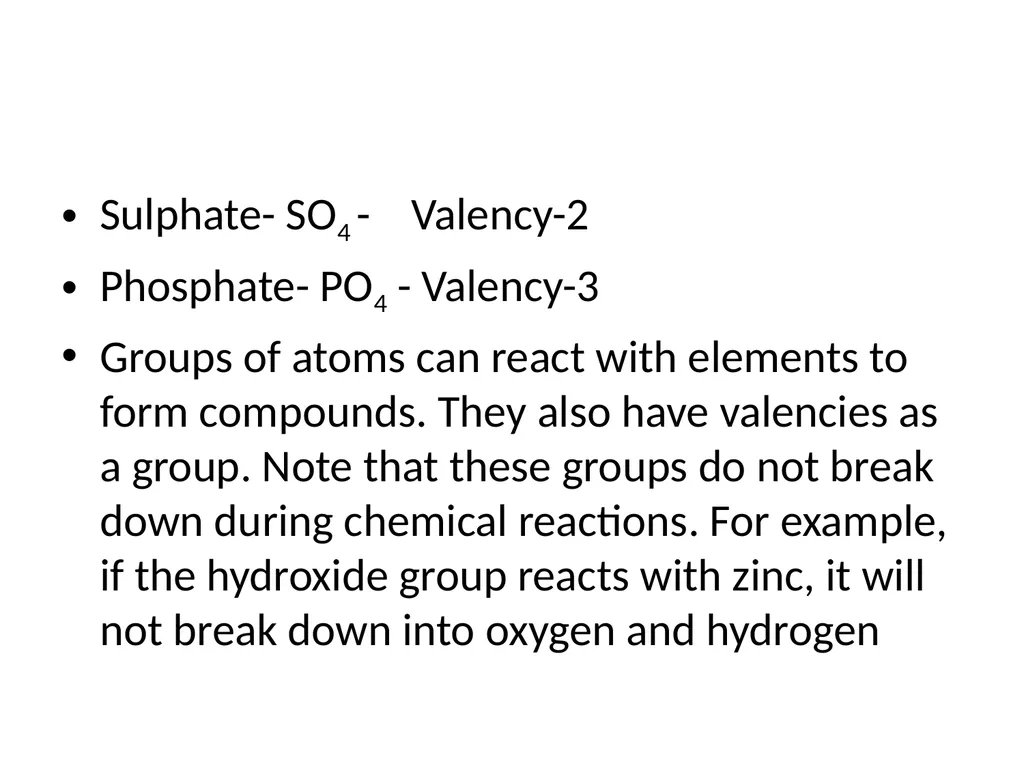
Sulphate- SO4 - Valency-2
Phosphate- PO4 - Valency-3
Groups of atoms can react with elements to form compounds. They also have valencies as a group. Note that these groups do not break down during chemical reactions. For example, if the hydroxide group reacts with zinc, it will not break down into oxygen and hydrogen<br>
Phosphate- PO4 - Valency-3
Groups of atoms can react with elements to form compounds. They also have valencies as a group. Note that these groups do not break down during chemical reactions. For example, if the hydroxide group reacts with zinc, it will not break down into oxygen and hydrogen<br>
28
Radicals : A radical is an atom of an element or a group of atoms of different elements that behaves as a single unit with a positive or negative charge on it. Valency : It is the number of electrons donated or accepted by the valence shell of an atom during chemical combination.<br>
29
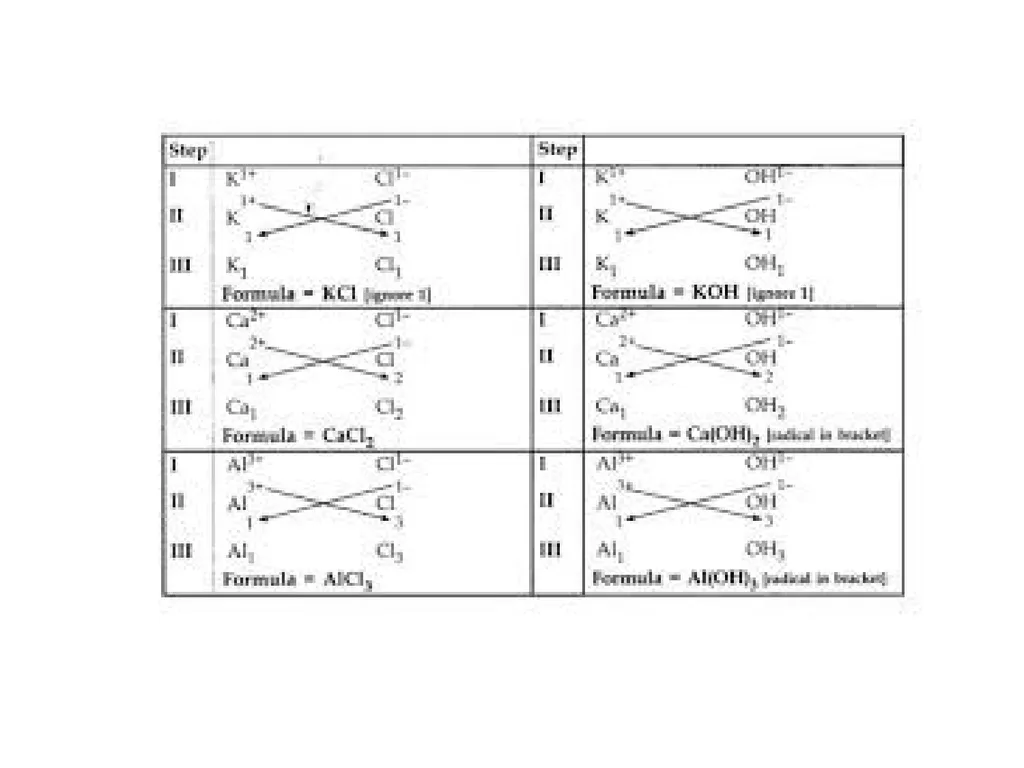
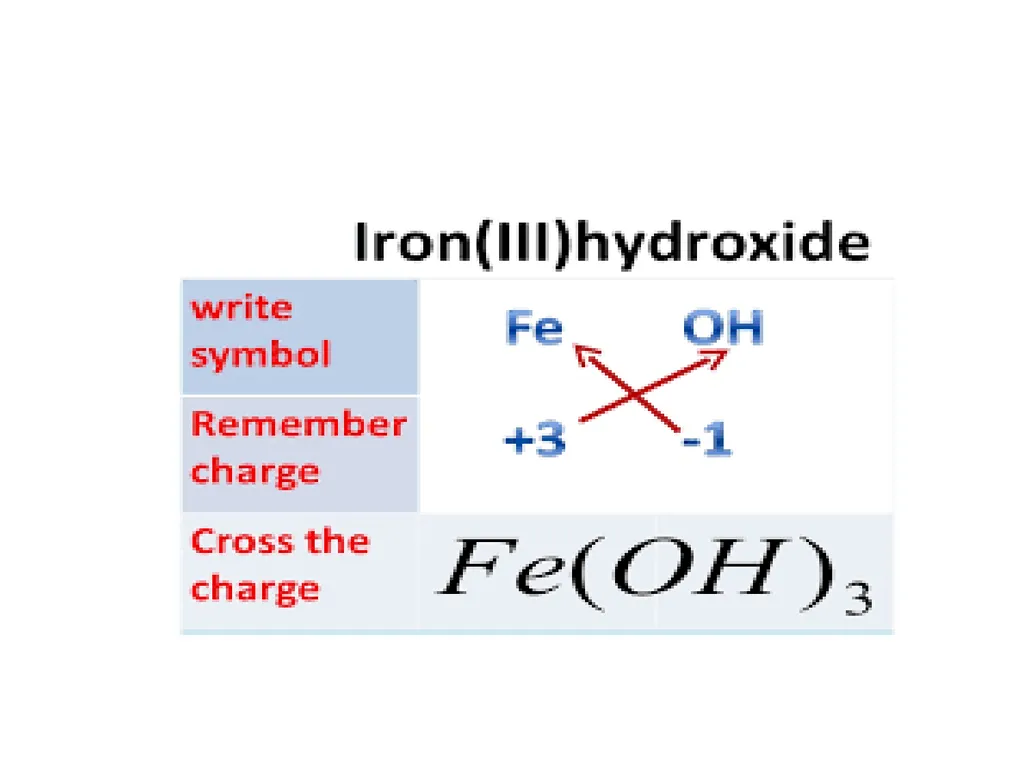
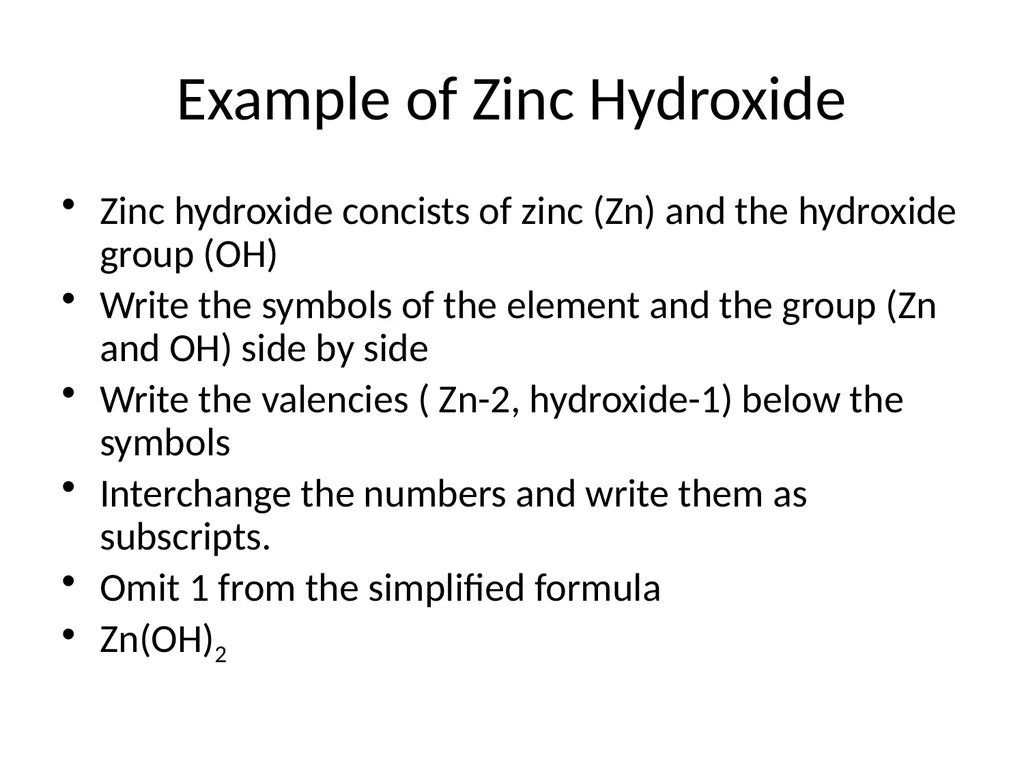
Example of Zinc Hydroxide Zinc hydroxide concists of zinc (Zn) and the hydroxide group (OH)
Write the symbols of the element and the group (Zn and OH) side by side
Write the valencies ( Zn-2, hydroxide-1) below the symbols
Interchange the numbers and write them as subscripts.
Omit 1 from the simplified formula
Zn(OH)2<br>
Write the symbols of the element and the group (Zn and OH) side by side
Write the valencies ( Zn-2, hydroxide-1) below the symbols
Interchange the numbers and write them as subscripts.
Omit 1 from the simplified formula
Zn(OH)2<br>
30
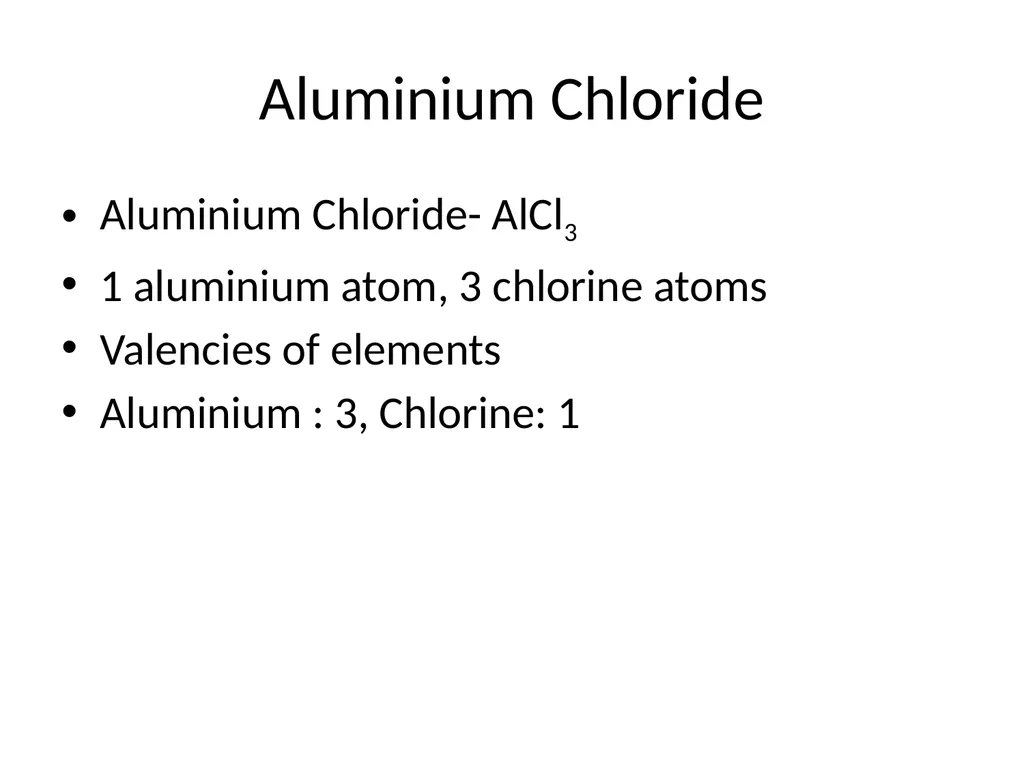
Aluminium Chloride Aluminium Chloride- AlCl3
1 aluminium atom, 3 chlorine atoms
Valencies of elements
Aluminium : 3, Chlorine: 1<br>
1 aluminium atom, 3 chlorine atoms
Valencies of elements
Aluminium : 3, Chlorine: 1<br>
31
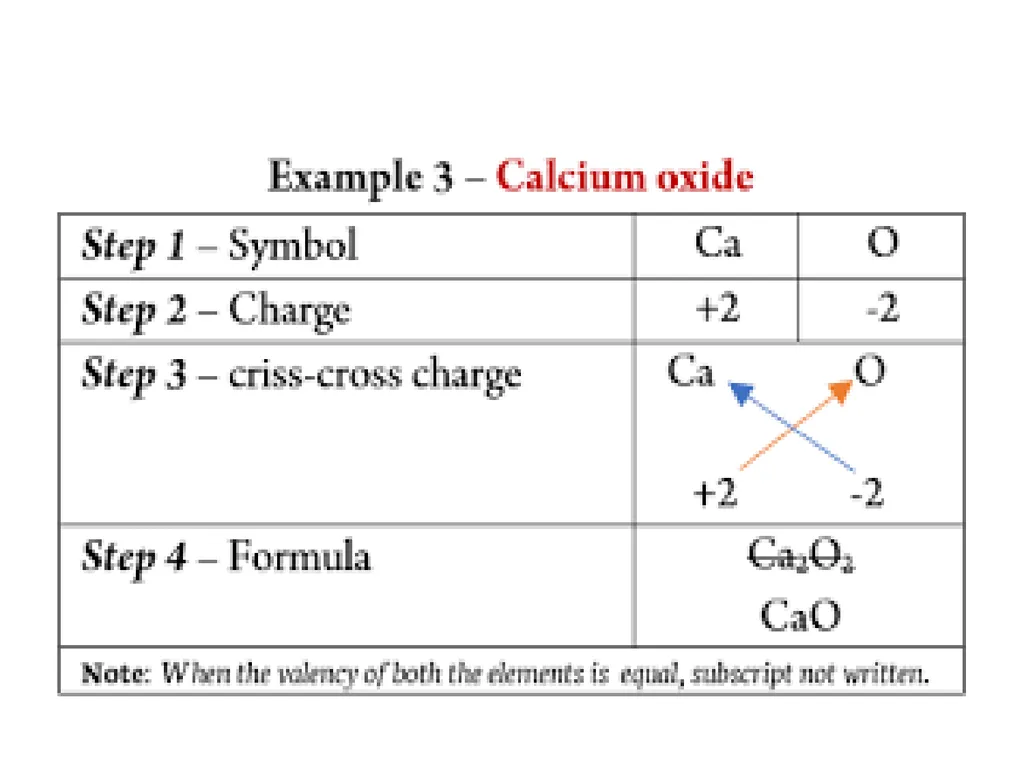
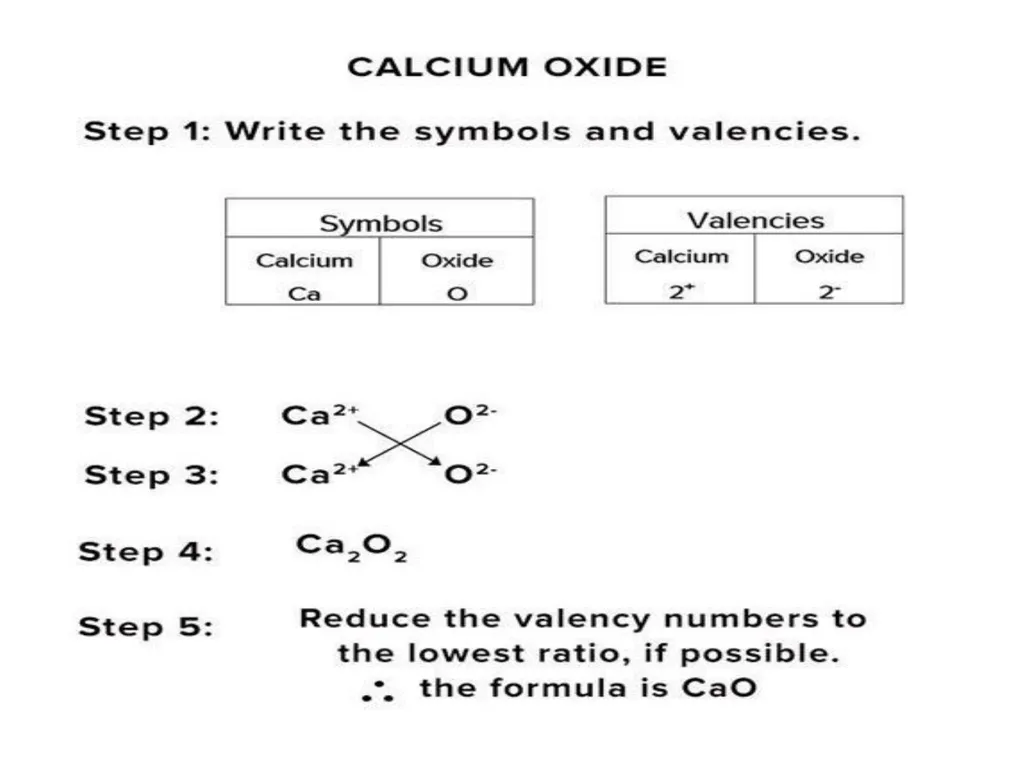
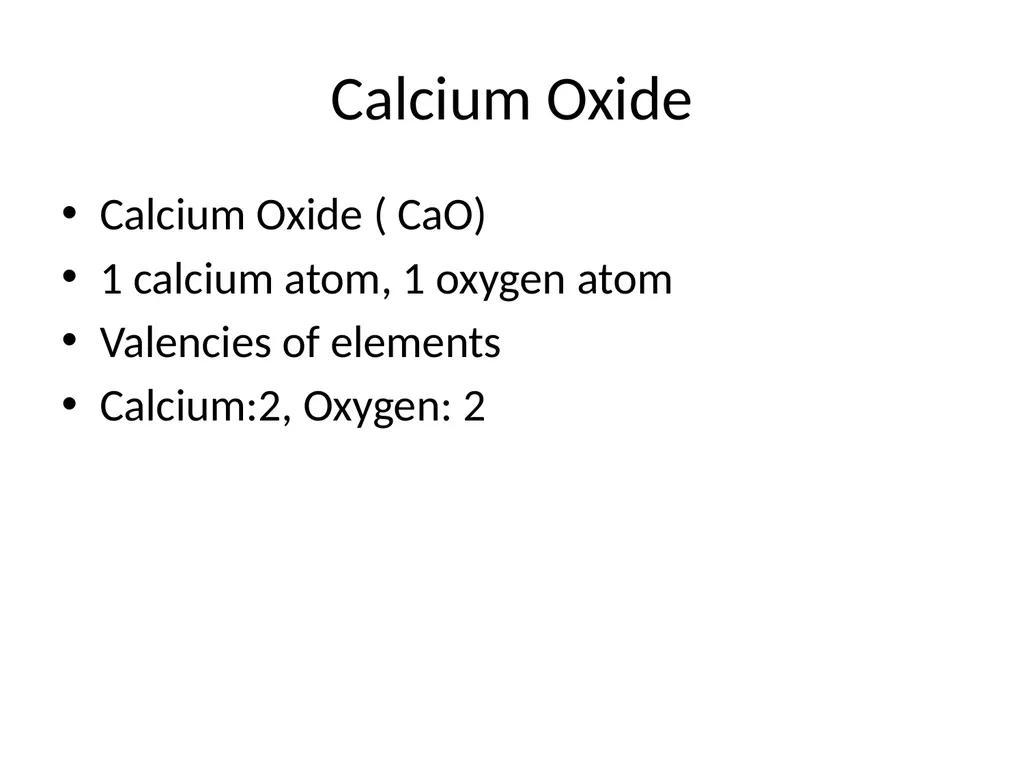
Calcium Oxide Calcium Oxide ( CaO)
1 calcium atom, 1 oxygen atom
Valencies of elements
Calcium:2, Oxygen: 2<br>
1 calcium atom, 1 oxygen atom
Valencies of elements
Calcium:2, Oxygen: 2<br>
32
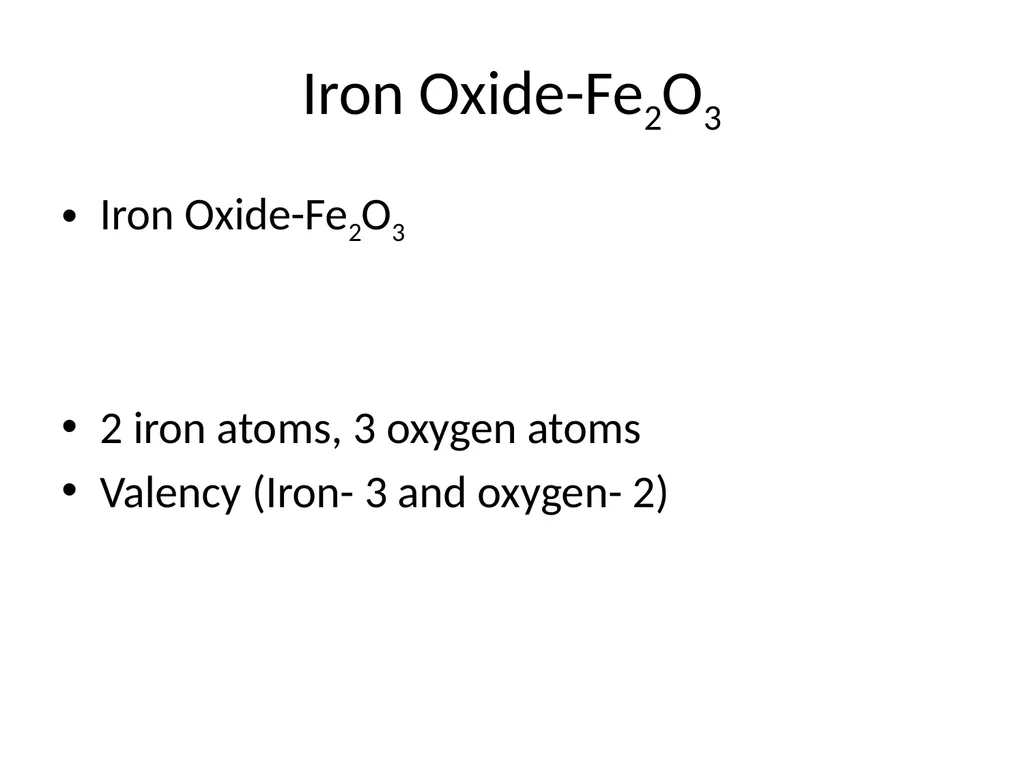
Iron Oxide-Fe2O3 Iron Oxide-Fe2O3
2 iron atoms, 3 oxygen atoms
Valency (Iron- 3 and oxygen- 2)<br>
2 iron atoms, 3 oxygen atoms
Valency (Iron- 3 and oxygen- 2)<br>
33
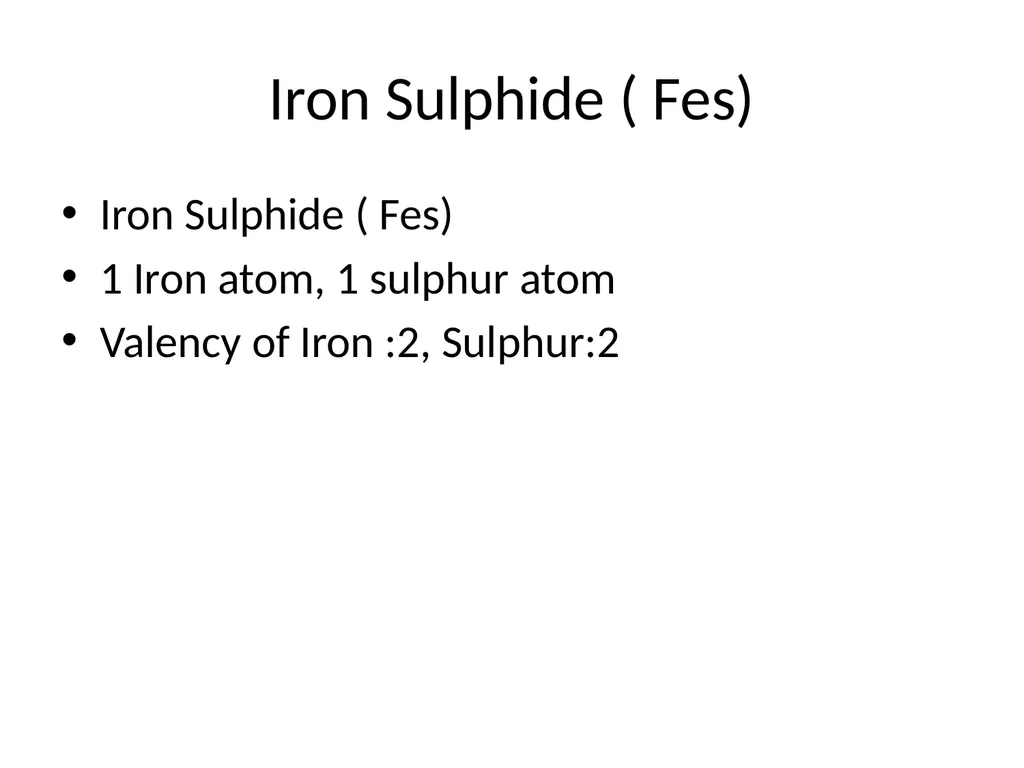
Iron Sulphide ( Fes) Iron Sulphide ( Fes)
1 Iron atom, 1 sulphur atom
Valency of Iron :2, Sulphur:2<br>
1 Iron atom, 1 sulphur atom
Valency of Iron :2, Sulphur:2<br>
34
Sulphur dioxide SO2 Sulphur dioxide SO2
Sulphur atom-1 and Oxygen atom -2
Valency of Sulphur-4 and Valency of Oxygen is -2<br>
Sulphur atom-1 and Oxygen atom -2
Valency of Sulphur-4 and Valency of Oxygen is -2<br>
35
Difference between elements and compound A compound contains atoms of different elements chemically combined together in a fixed ratio. An element is a pure chemical substance made of same type of atom. ... Compounds contain different elements in a fixed ratio arranged in a defined manner through chemical bonds.<br>
36
Difference between element and compound As only one type of atoms make up an element, all the properties of that atom are represented by its atom. In case of compounds, the same type of molecules makes up the compound. Elements cannot be broken down by chemical reactions. Compounds can be easily separated into simpler substances by chemical reactions.<br>
37
Difference between atom and molecule Atom- It is a smallest particle of an element.
It consists of nucleus (containing protons and neutrons) and electrons.
May or may not exist in free state.
Molecules-It is a group of two or more atoms combined together.
Exist in free state.<br>
It consists of nucleus (containing protons and neutrons) and electrons.
May or may not exist in free state.
Molecules-It is a group of two or more atoms combined together.
Exist in free state.<br>
38
Atom and Molecule The tiny particle of a chemical element, which may or may not exist independently is called an atom. Molecules refer to the set of the atoms held together by the bond, indicating the smallest unit of a compound.<br>
39
Symbol And Formula A symbol represents one atom of an element. A chemical formula represents one molecule of an element or a compound. For example the symbol of the element oxygen is O, but the chemical formula of an oxygen molecule is O2<br>
40
1. Which of the following is not an element?
(i) Mg (ii) Au (iii) CO2 (iv) Fe
2. The symbol of potassium is
(i) P (ii) Ca (iii) Pb (iv) K
3. which of the following is not a compound
(i) ZnO (ii) Au (iii) CO2 (iv) Mgo
4. Which of the following is the correct way to write the formula of common salt?
(i) NACL (ii) NaCL (iii) Nacl (iv) NaCl
5. Which of the following has variable valency
(i) Sodium (ii) oxygen (iii) iron (iv) bromine
6. Name any twenty elements and write their symbols
7. Define the following
Molecule, compound, Mixtures, Atomicity, valency and variable valency
8. Write the chemical symbol of the following
Sodium chloride, water, carbondioxide, Zinc hydroxide, calcium oxide, sulphur dioxide<br>
(i) Mg (ii) Au (iii) CO2 (iv) Fe
2. The symbol of potassium is
(i) P (ii) Ca (iii) Pb (iv) K
3. which of the following is not a compound
(i) ZnO (ii) Au (iii) CO2 (iv) Mgo
4. Which of the following is the correct way to write the formula of common salt?
(i) NACL (ii) NaCL (iii) Nacl (iv) NaCl
5. Which of the following has variable valency
(i) Sodium (ii) oxygen (iii) iron (iv) bromine
6. Name any twenty elements and write their symbols
7. Define the following
Molecule, compound, Mixtures, Atomicity, valency and variable valency
8. Write the chemical symbol of the following
Sodium chloride, water, carbondioxide, Zinc hydroxide, calcium oxide, sulphur dioxide<br>
41
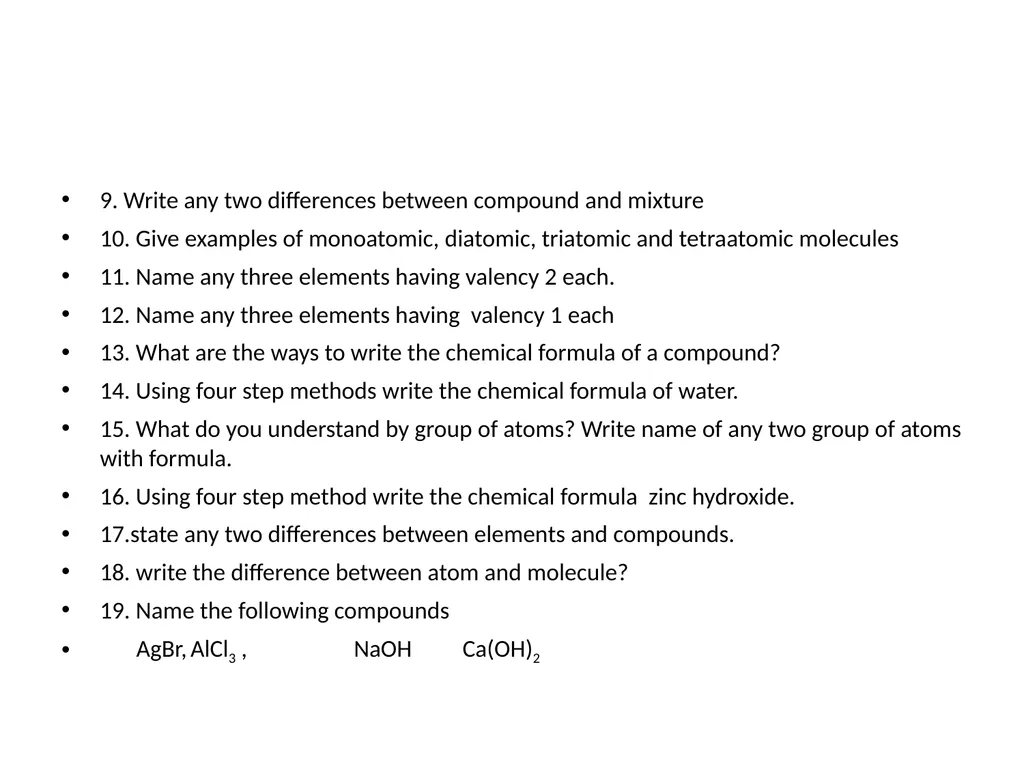
9. Write any two differences between compound and mixture
10. Give examples of monoatomic, diatomic, triatomic and tetraatomic molecules
11. Name any three elements having valency 2 each.
12. Name any three elements having valency 1 each
13. What are the ways to write the chemical formula of a compound?
14. Using four step methods write the chemical formula of water.
15. What do you understand by group of atoms? Write name of any two group of atoms with formula.
16. Using four step method write the chemical formula zinc hydroxide.
17.state any two differences between elements and compounds.
18. write the difference between atom and molecule?
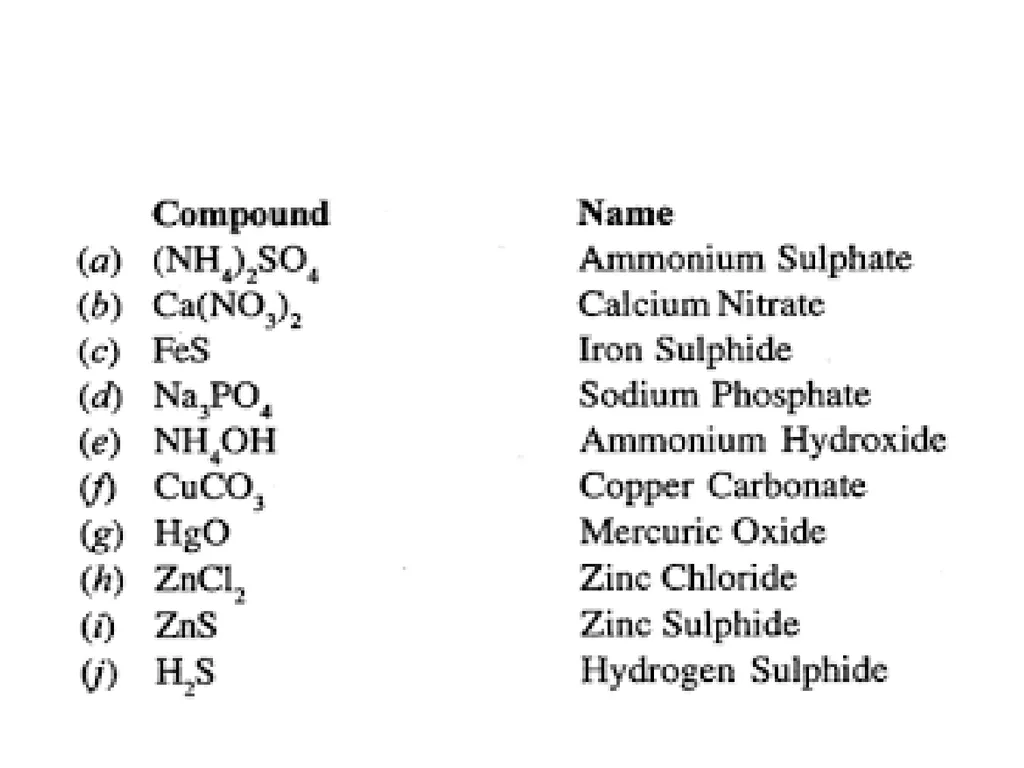
19. Name the following compounds
AgBr, AlCl3 , NaOH Ca(OH)2<br>
10. Give examples of monoatomic, diatomic, triatomic and tetraatomic molecules
11. Name any three elements having valency 2 each.
12. Name any three elements having valency 1 each
13. What are the ways to write the chemical formula of a compound?
14. Using four step methods write the chemical formula of water.
15. What do you understand by group of atoms? Write name of any two group of atoms with formula.
16. Using four step method write the chemical formula zinc hydroxide.
17.state any two differences between elements and compounds.
18. write the difference between atom and molecule?
19. Name the following compounds
AgBr, AlCl3 , NaOH Ca(OH)2<br>
42
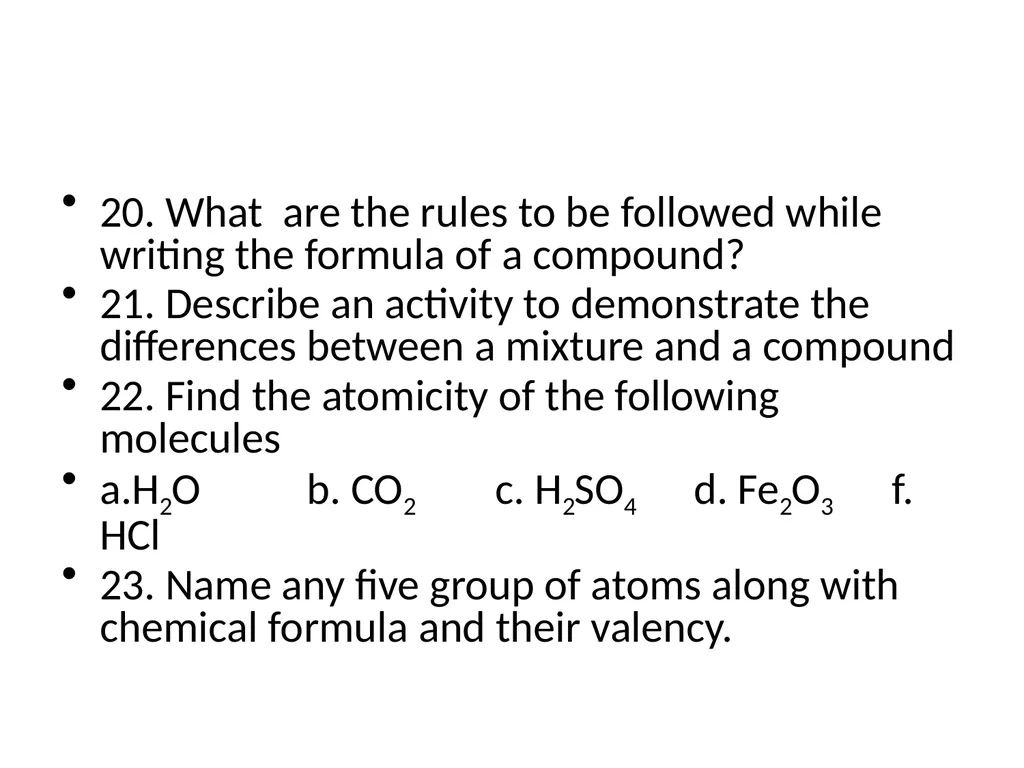
20. What are the rules to be followed while writing the formula of a compound?
21. Describe an activity to demonstrate the differences between a mixture and a compound
22. Find the atomicity of the following molecules
a.H2O b. CO2 c. H2SO4 d. Fe2O3 f. HCl
23. Name any five group of atoms along with chemical formula and their valency.<br>
21. Describe an activity to demonstrate the differences between a mixture and a compound
22. Find the atomicity of the following molecules
a.H2O b. CO2 c. H2SO4 d. Fe2O3 f. HCl
23. Name any five group of atoms along with chemical formula and their valency.<br>