
C1: Chapter 1 – Algebraic Manipulation Dr J Frost
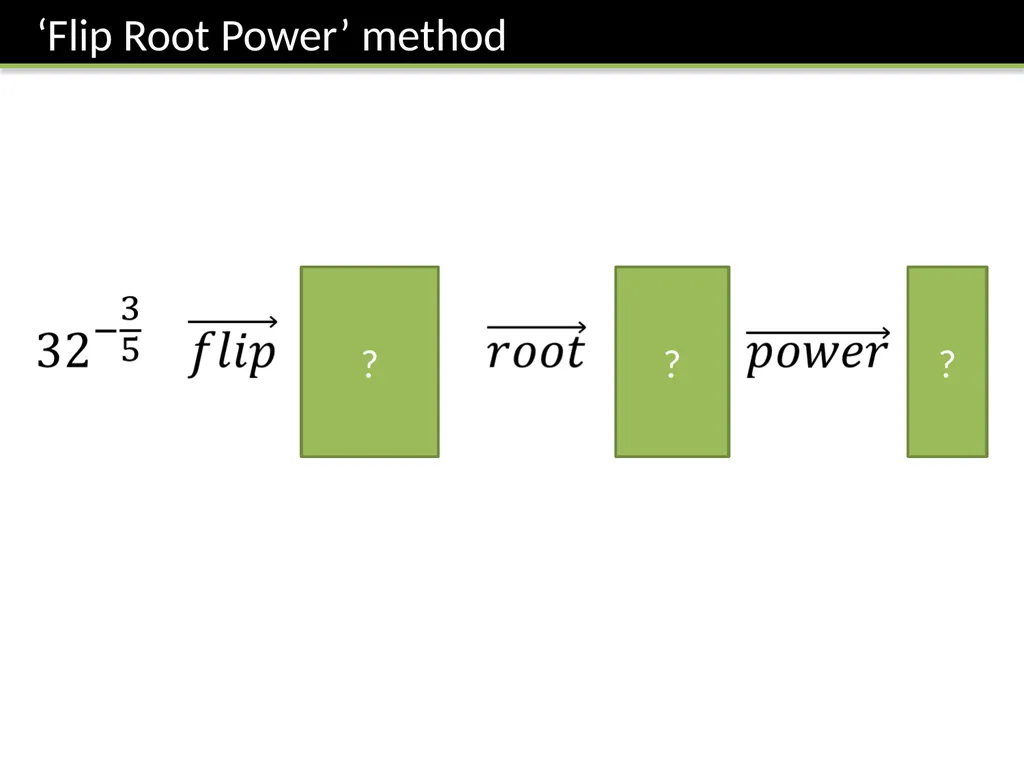
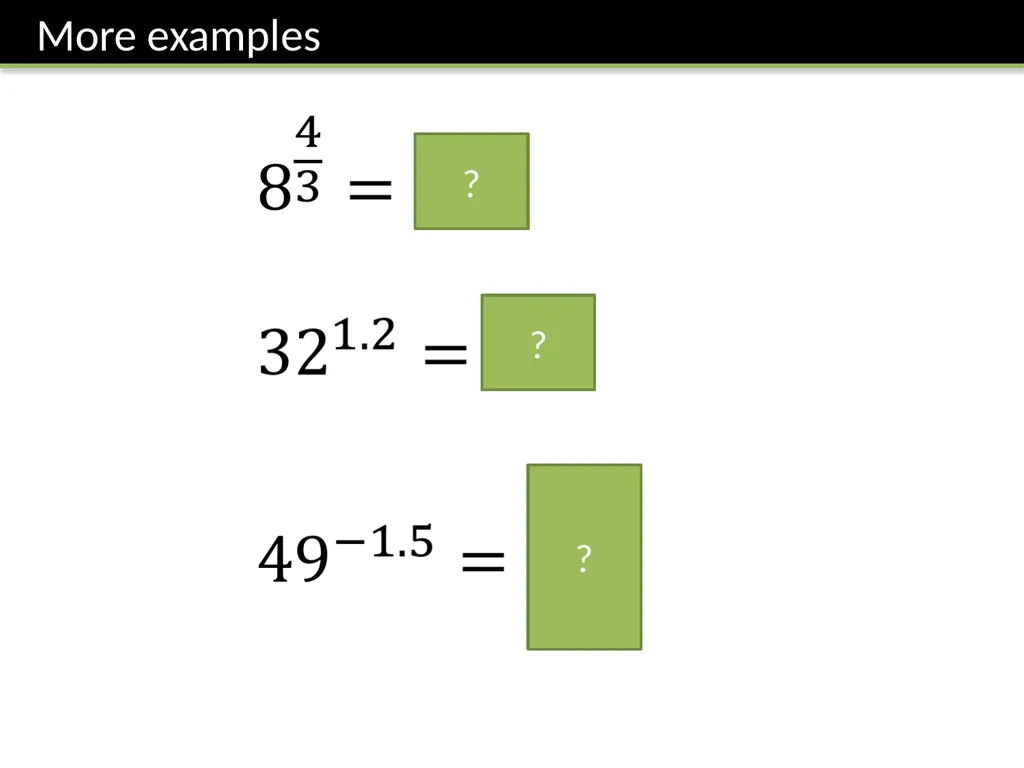

Description: C1: Chapter 1 Algebraic Manipulation Dr J Frost (jfrosttiffin.kingston.sch.uk) Last modified: 2nd September 2013 Expand the following. ? ? ? ? ? ? ? ? ? ? ? ? ? ? ? ? ? ? ? Example 7d on page 9 is wrong: ? Whenever you have fractional
Related Topics
Download Presentation
"C1: Chapter 1 – Algebraic Manipulation Dr J Frost" is the property of its rightful owner. Permission is granted to download and print the materials on this website for personal, non-commercial use only, and to display it on your personal computer provided you do not modify the materials and that you retain all copyright notices contained in the materials. By downloading content from our website, you accept the terms of this agreement.
Presentation Transcript
slide1. C1: Chapter 1 – Algebraic Manipulation Dr J Frost (jfrost@tiffin.kingston.sch.uk) Last modified: 2nd September 2013<br>
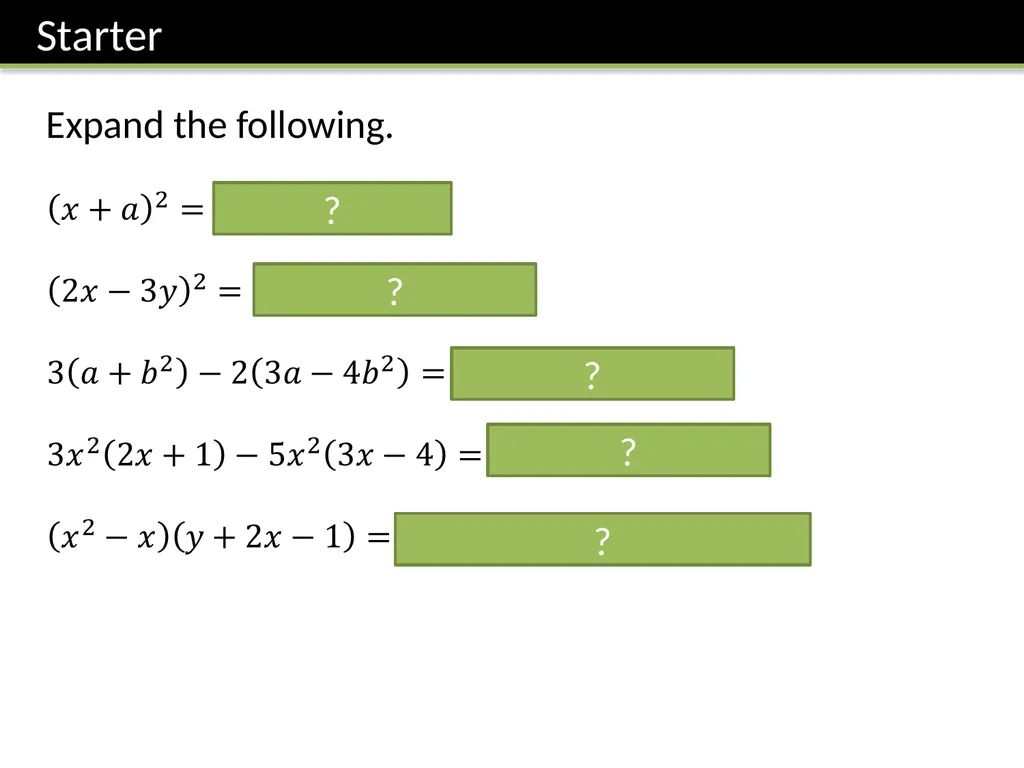
slide2. Expand the following. ? ? ? ? ?<br>
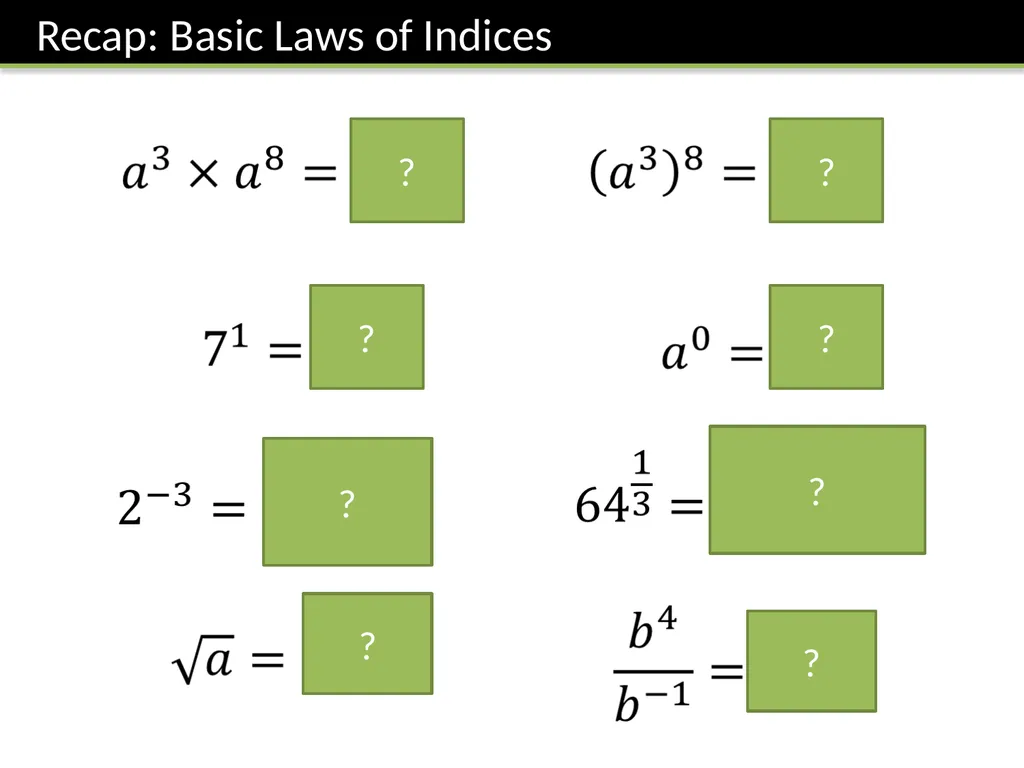
slide3. ? ? ? ? ? ? ? ?<br>
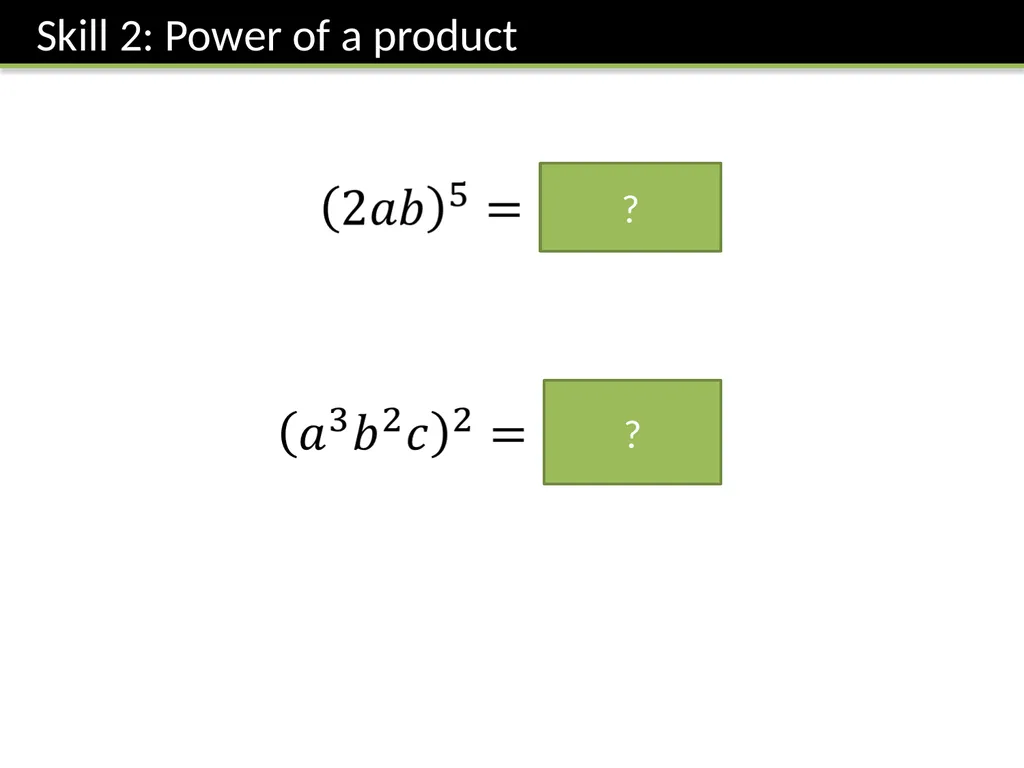
slide4. ? ? ?<br>
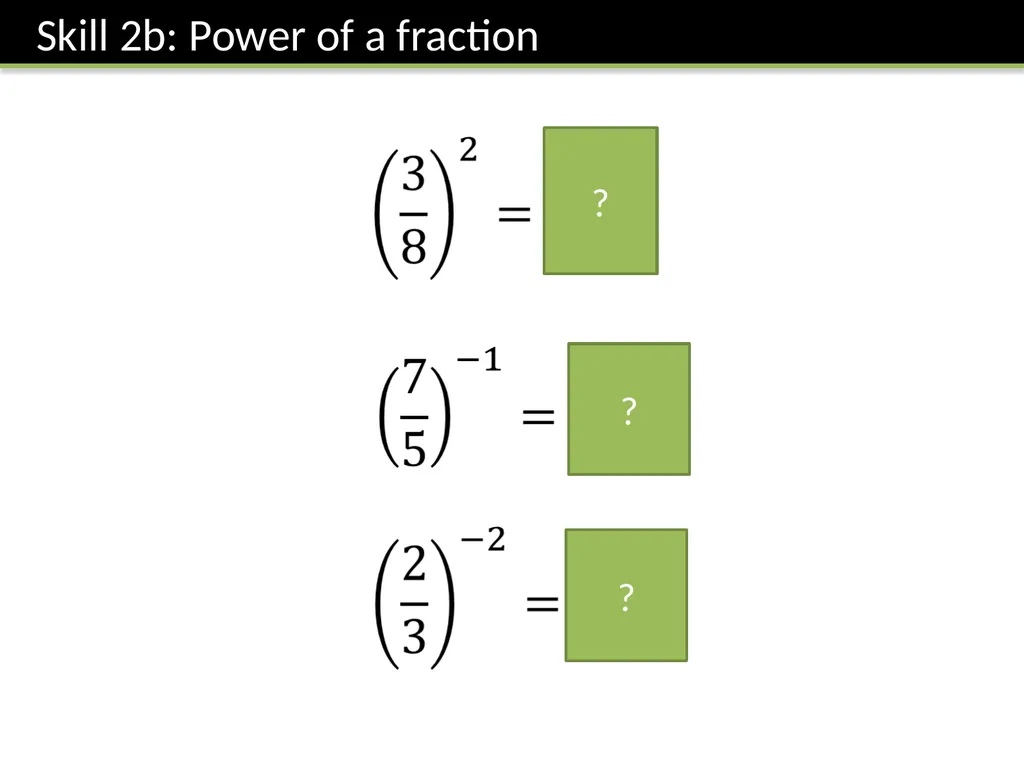
slide5. ? ? ?<br>
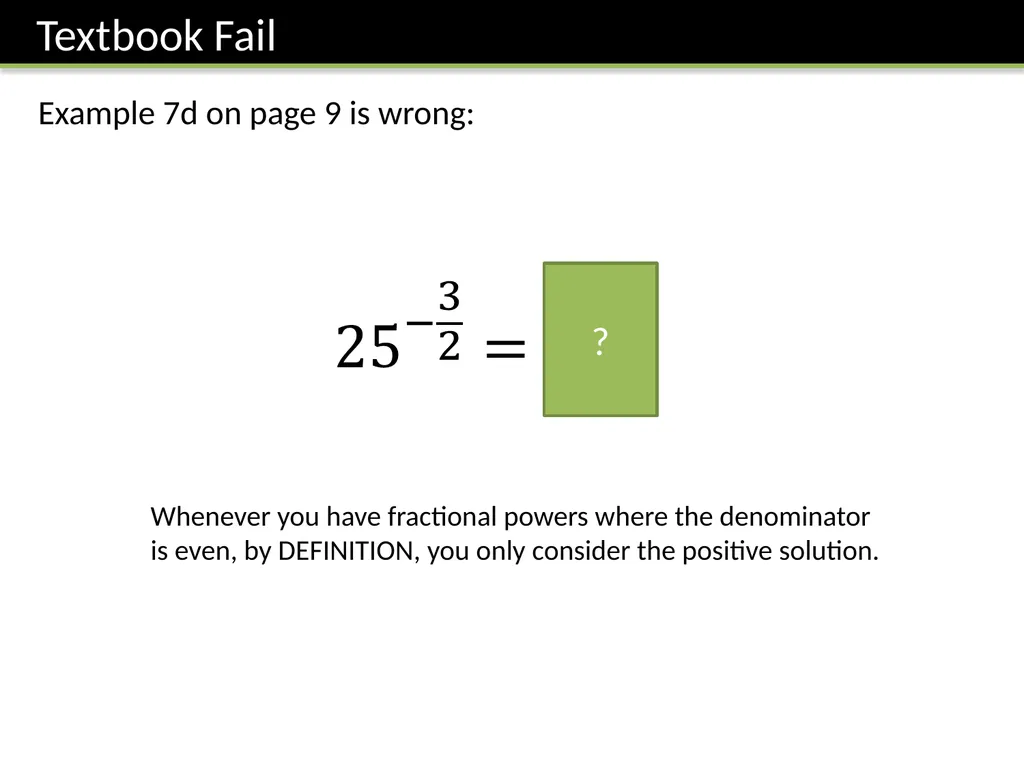
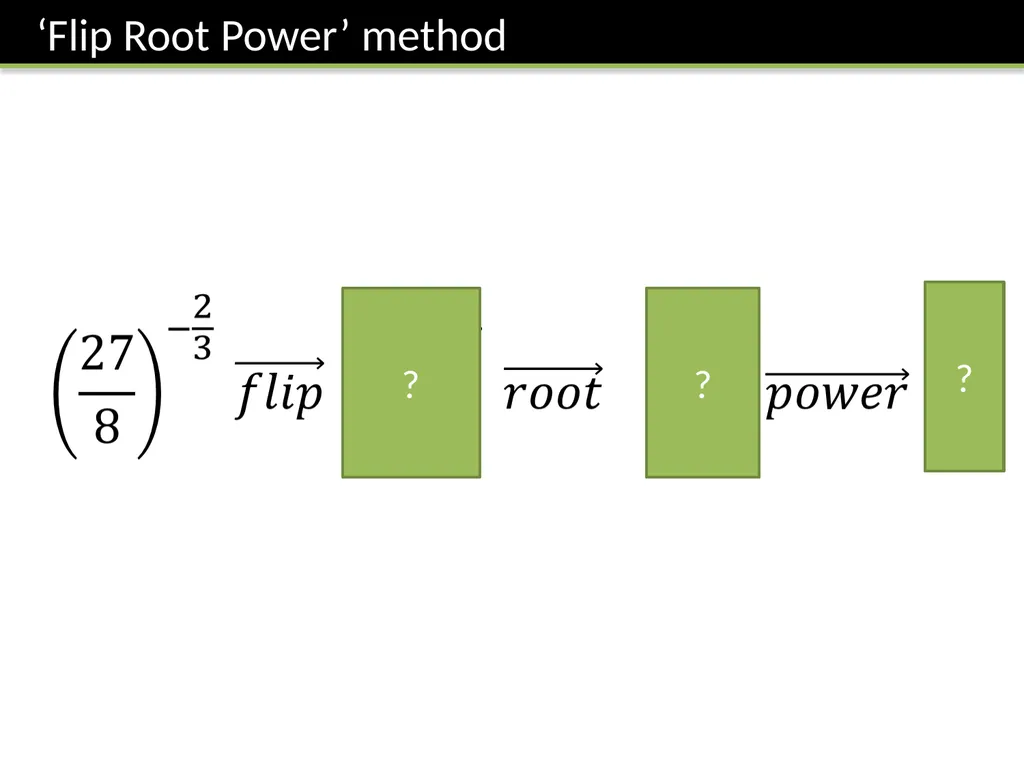
slide6. Example 7d on page 9 is wrong: ? Whenever you have fractional powers where the denominator is even, by DEFINITION, you only consider the positive solution.<br>
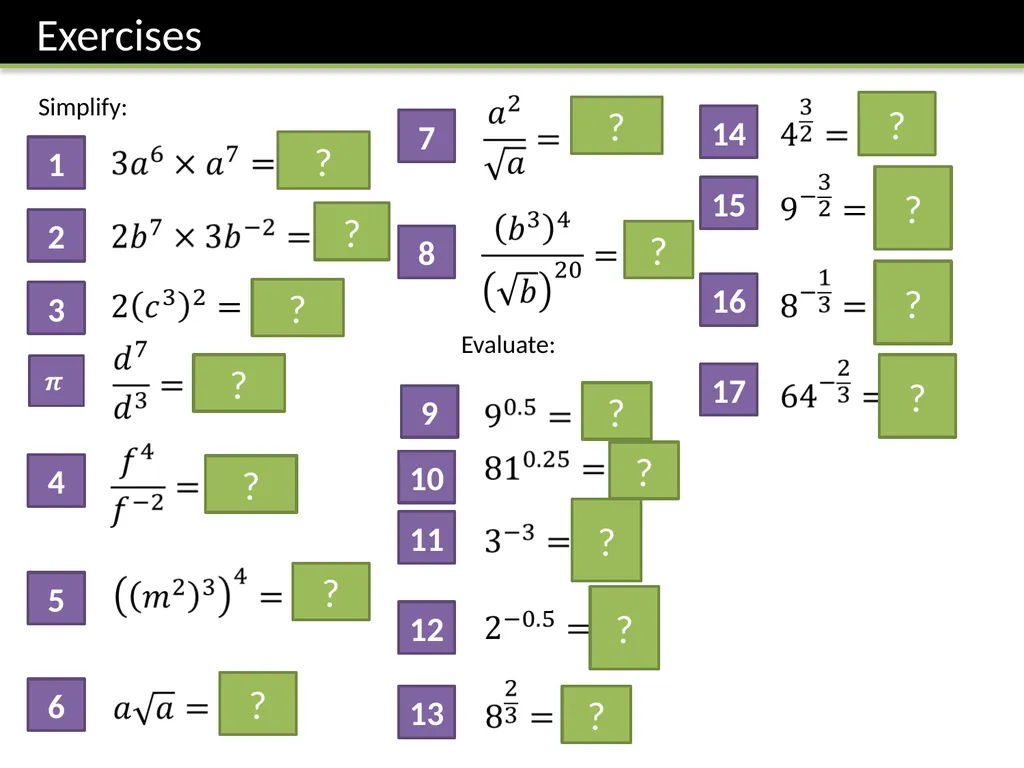
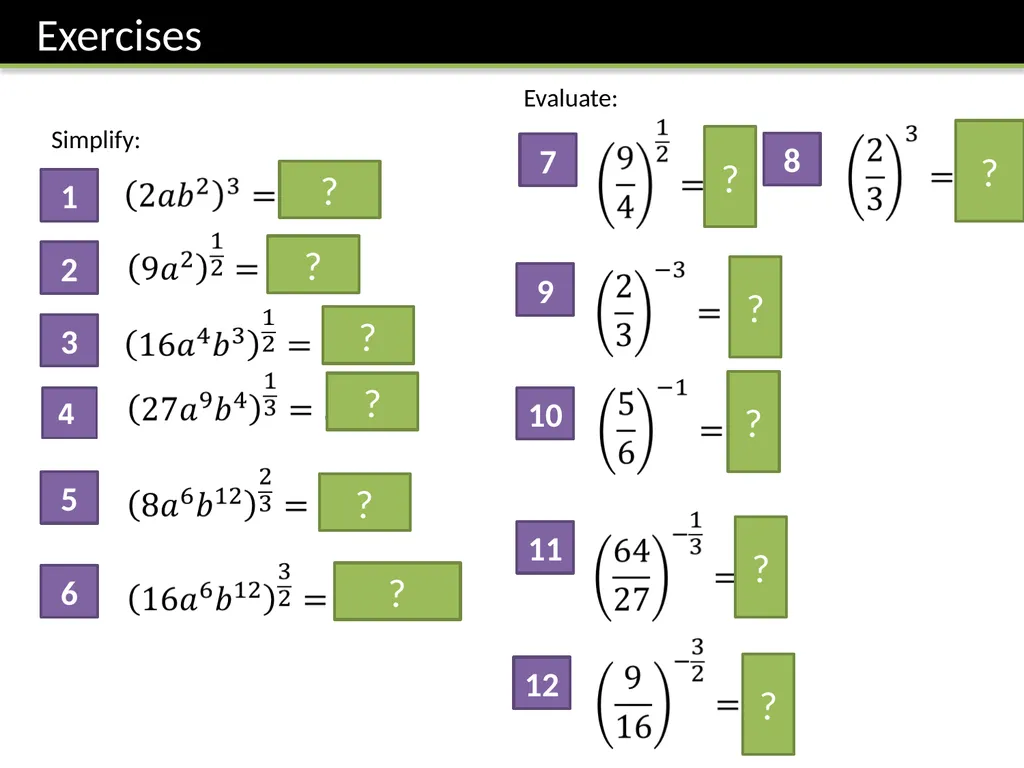
slide7. 1 2 3 4 5 6 7 8 9 Simplify: Evaluate: 10 11 12 13 14 15 16 17 ? ? ? ? ? ? ? ? ? ? ? ? ? ? ? ? ? ?<br>
slide8. ? ?<br>
slide9. ? ? ?<br>
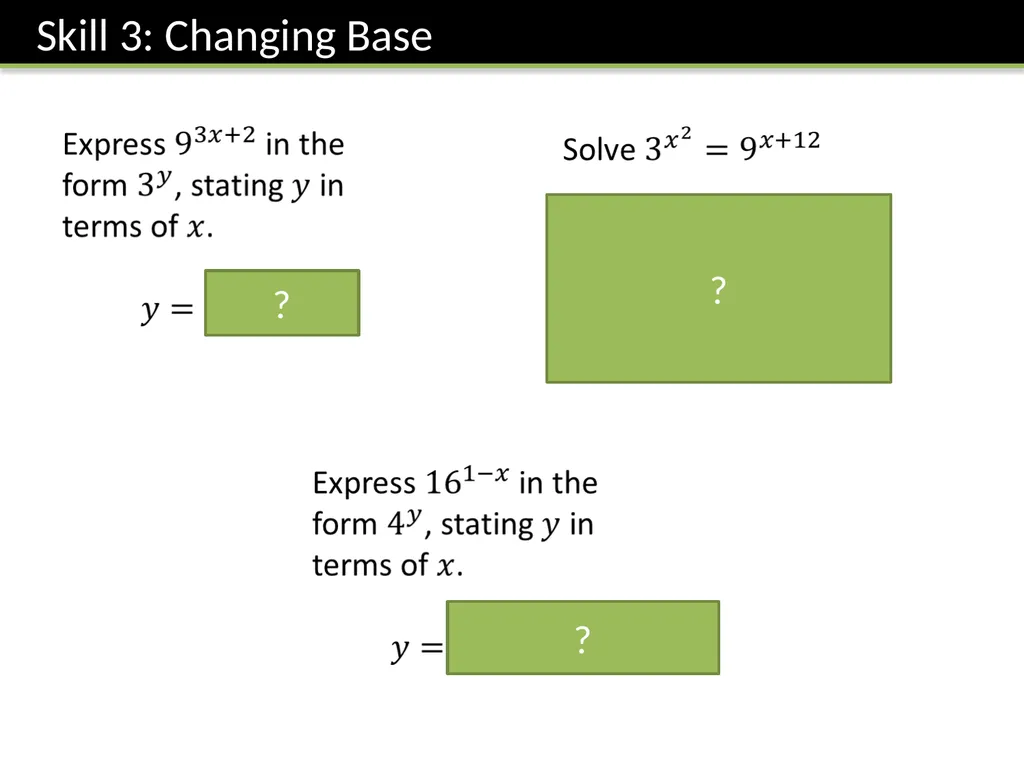
slide10. ? ? ?<br>
slide11. 1 2 3 5 Simplify: ? ? ? ? 6 ? ? 7 9 10 11 Evaluate: 12 8 ? ? ? ? ? ?<br>
slide12. ? ? ?<br>
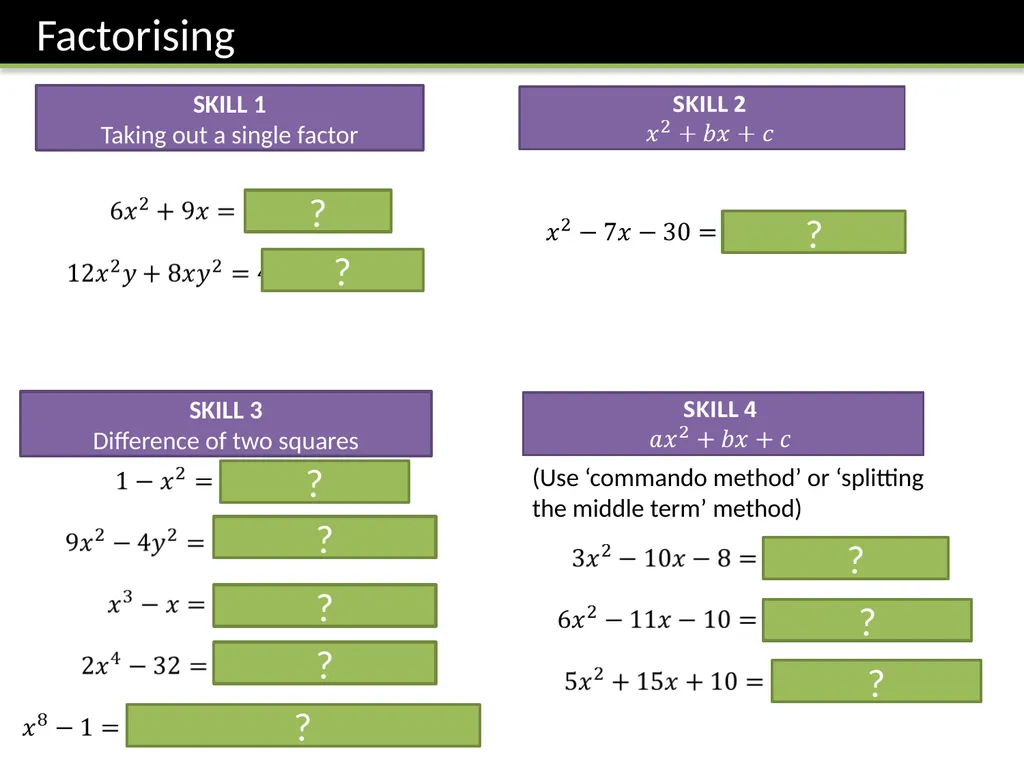
slide13. SKILL 1
Taking out a single factor SKILL 3
Difference of two squares (Use ‘commando method’ or ‘splitting the middle term’ method) ? ? ? ? ? ? ? ? ? ? ?<br>
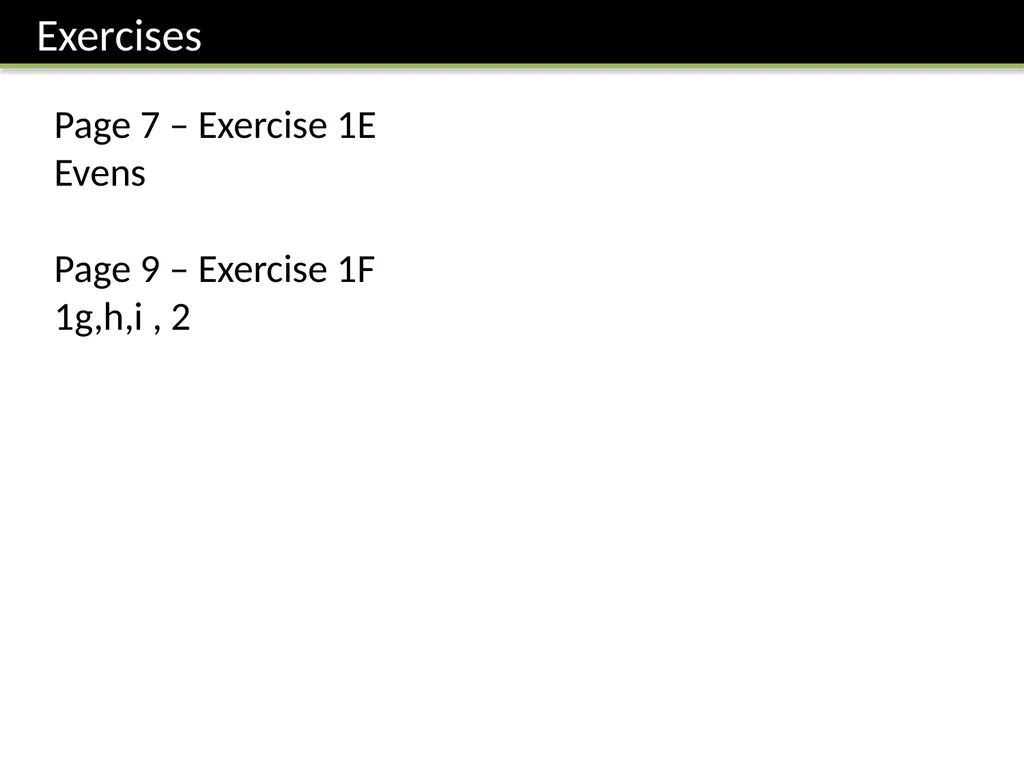
slide14. Page 7 – Exercise 1E
Evens
Page 9 – Exercise 1F
1g,h,i , 2<br>
slide15. ? ? ? ?<br>
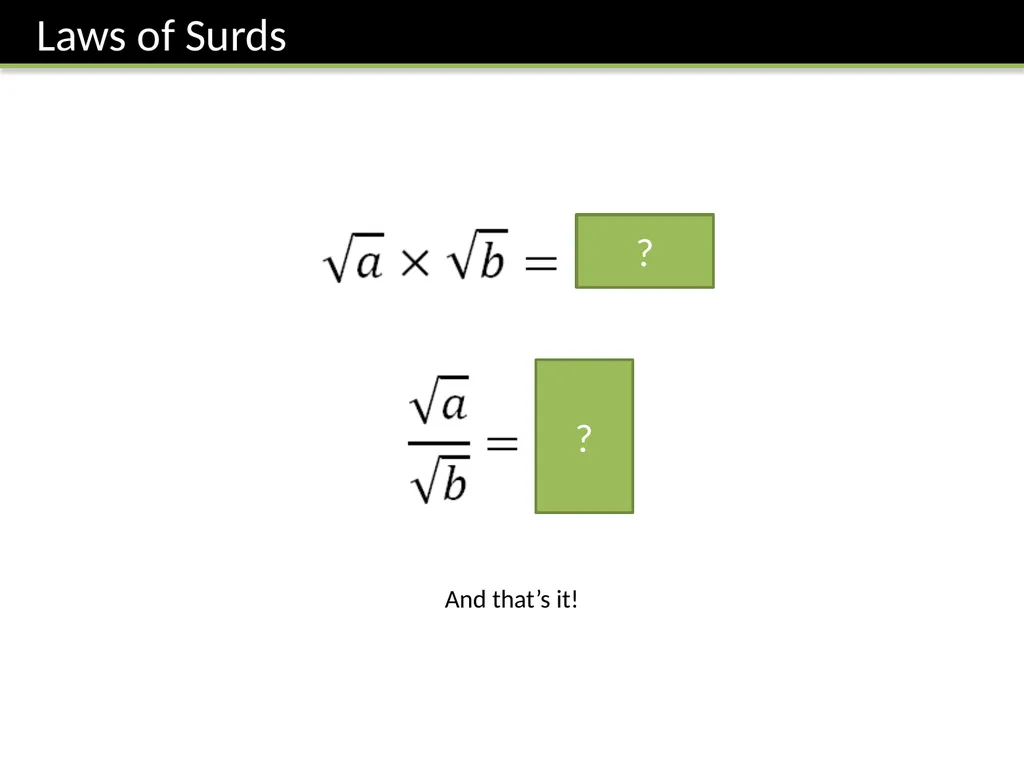
slide16. ? ? And that’s it!<br>
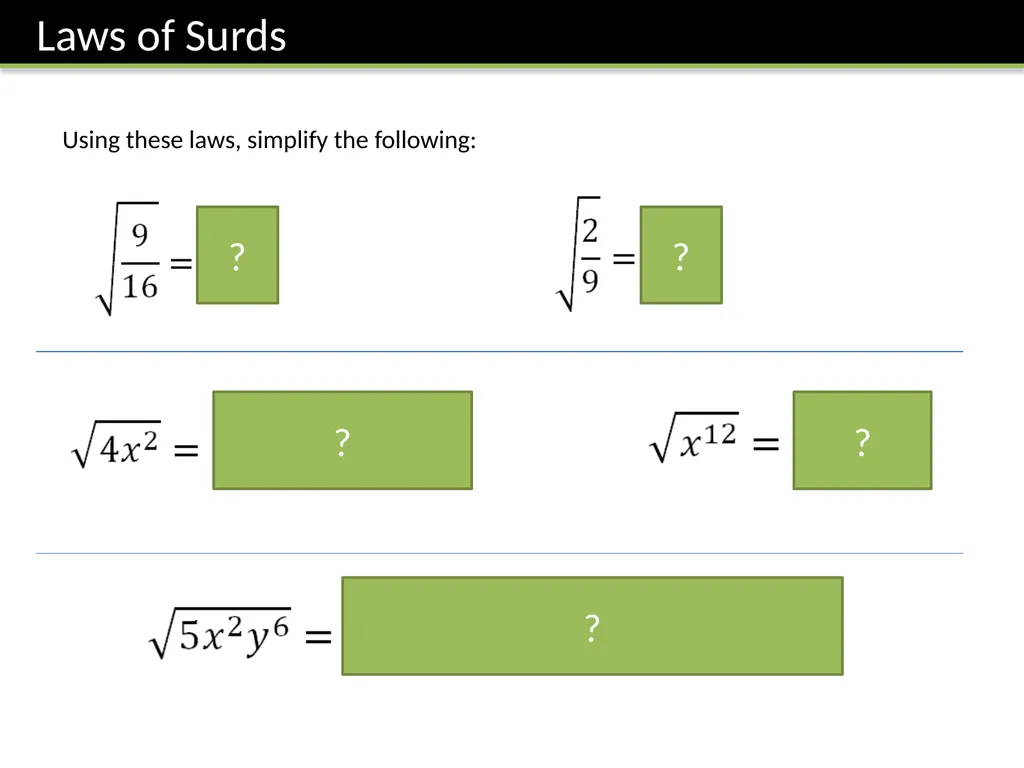
slide17. Using these laws, simplify the following: ? ? ? ? ?<br>
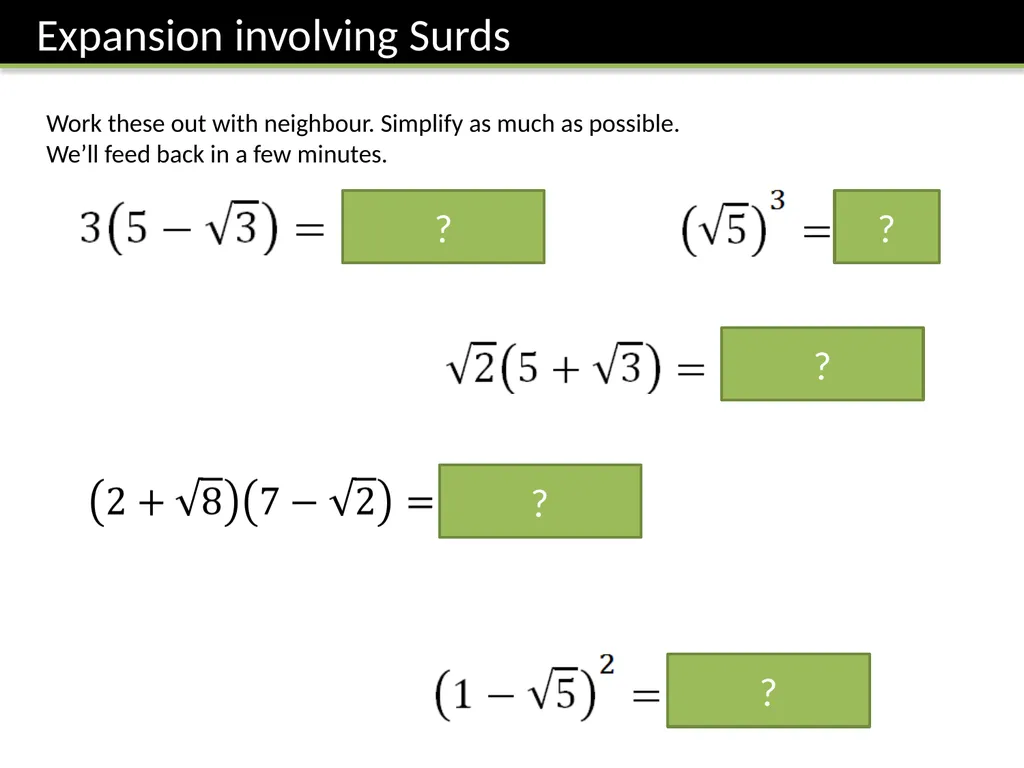
slide18. ? ? ? Work these out with neighbour. Simplify as much as possible.
We’ll feed back in a few minutes. ? ?<br>
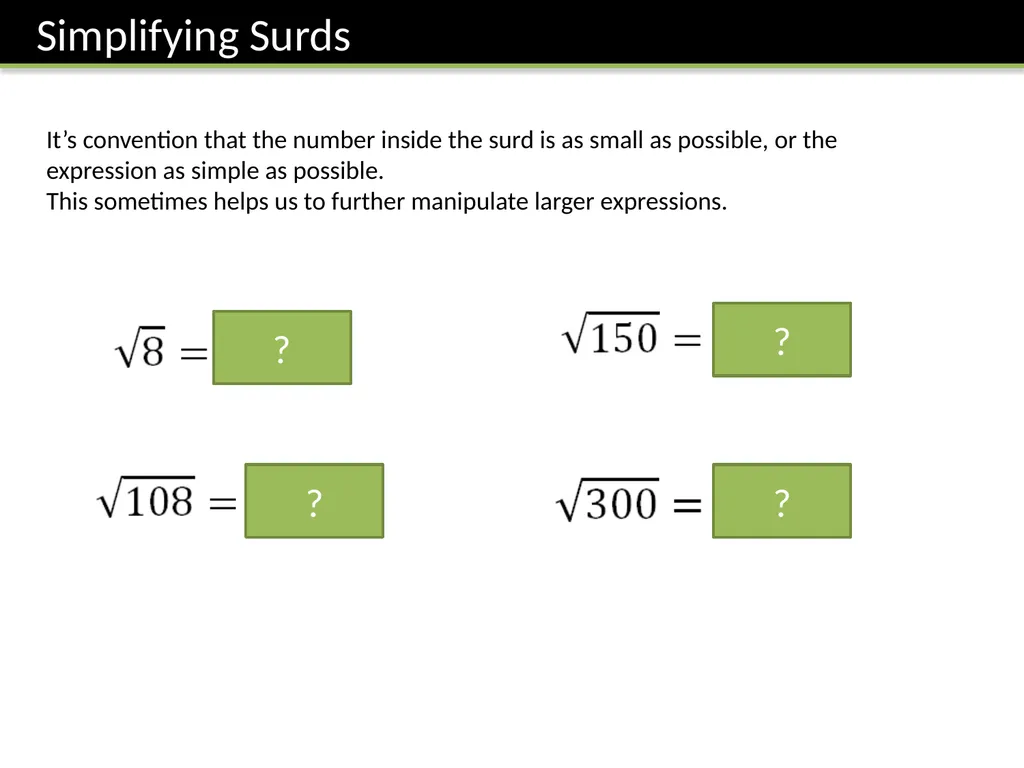
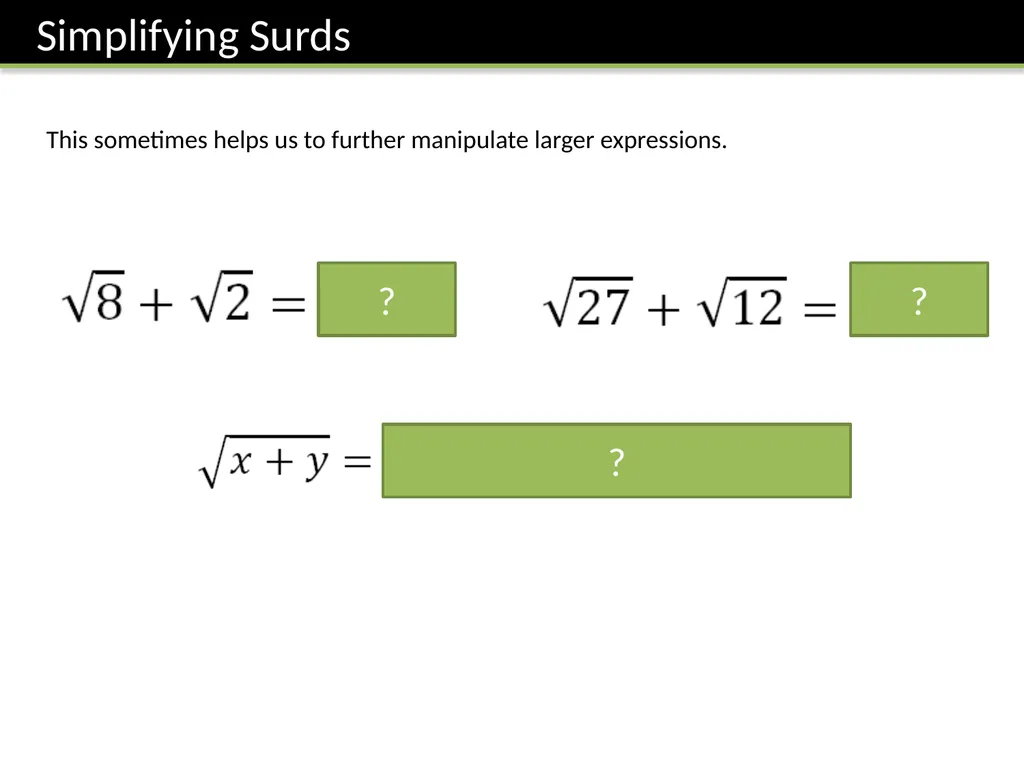
slide19. It’s convention that the number inside the surd is as small as possible, or the expression as simple as possible.
This sometimes helps us to further manipulate larger expressions. ? ? ? ?<br>
slide20. This sometimes helps us to further manipulate larger expressions. ? ? ?<br>
slide21. Here’s a surd. What could we multiply it by such that it’s no longer an irrational number? ? ?<br>
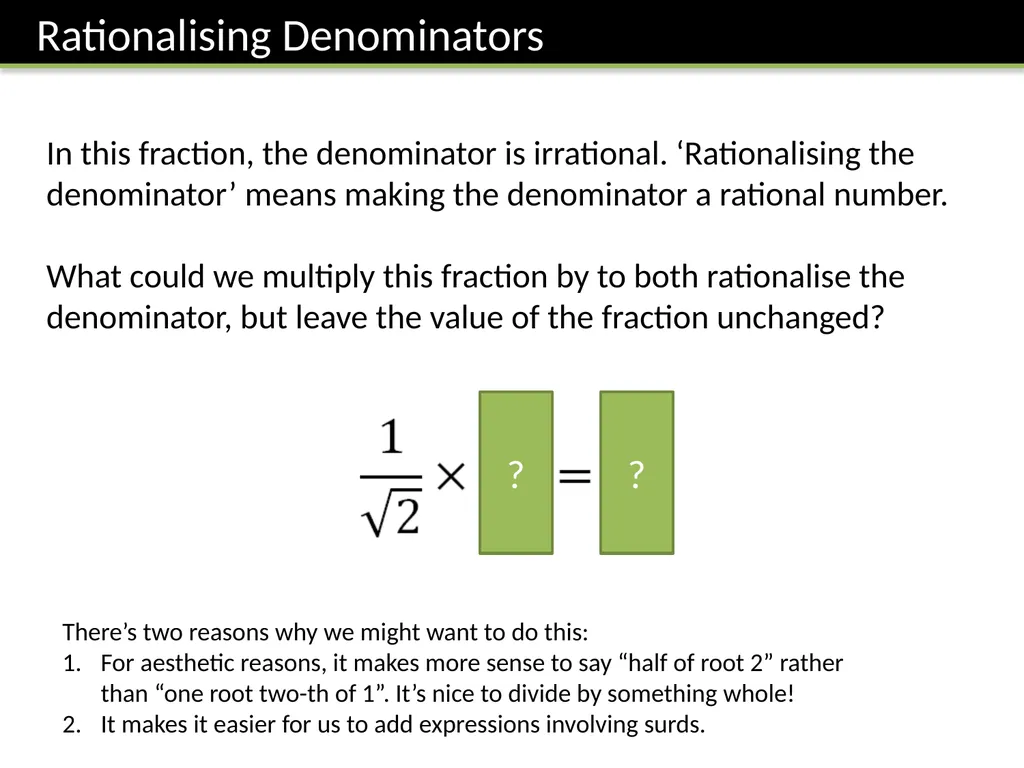
slide22. In this fraction, the denominator is irrational. ‘Rationalising the denominator’ means making the denominator a rational number.
What could we multiply this fraction by to both rationalise the denominator, but leave the value of the fraction unchanged? ? ? There’s two reasons why we might want to do this:
For aesthetic reasons, it makes more sense to say “half of root 2” rather than “one root two-th of 1”. It’s nice to divide by something whole!
It makes it easier for us to add expressions involving surds.<br>
slide23. ? ? ?<br>
slide24. ? ?<br>
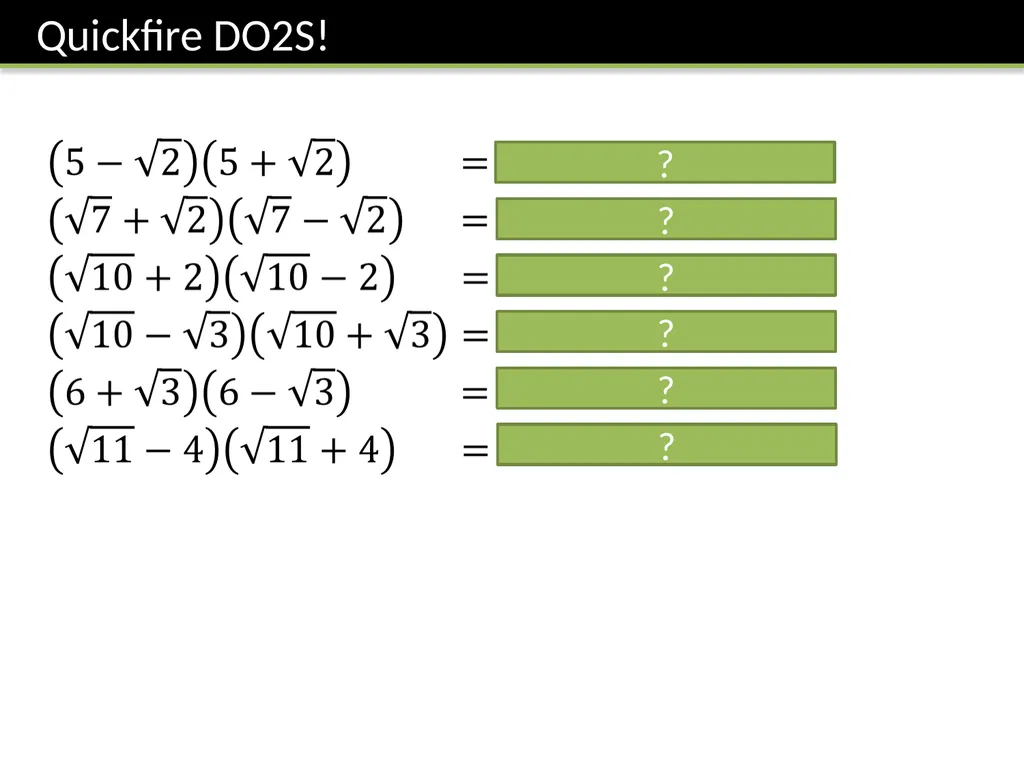
slide25. ? ? ? ? ? ?<br>
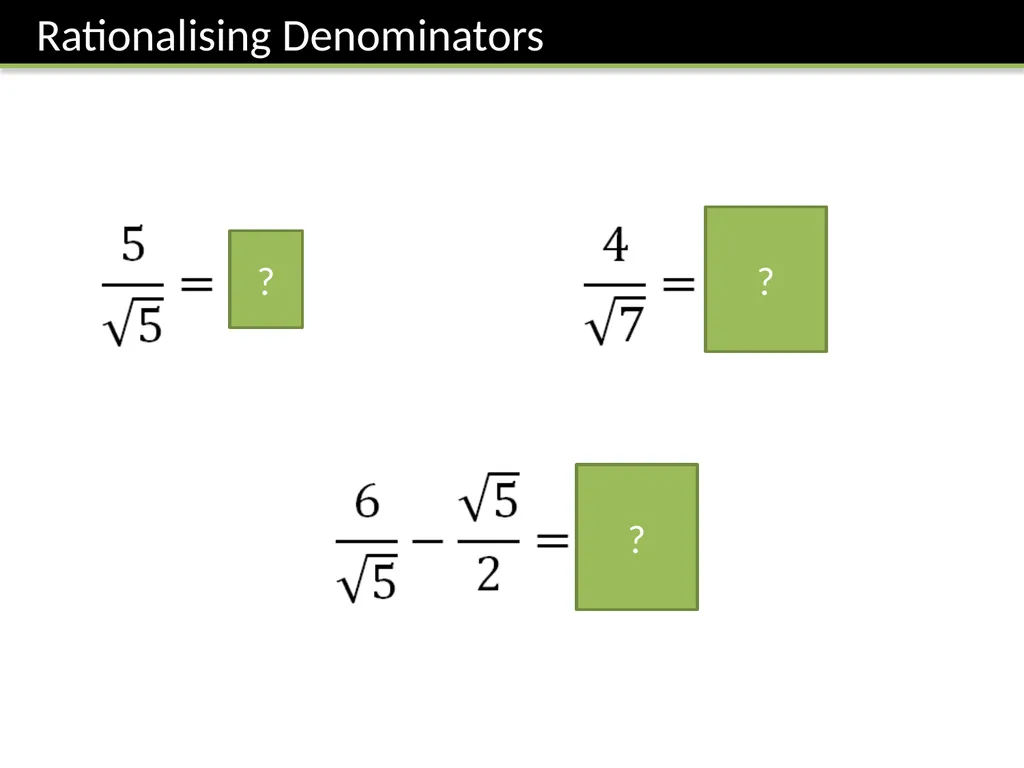
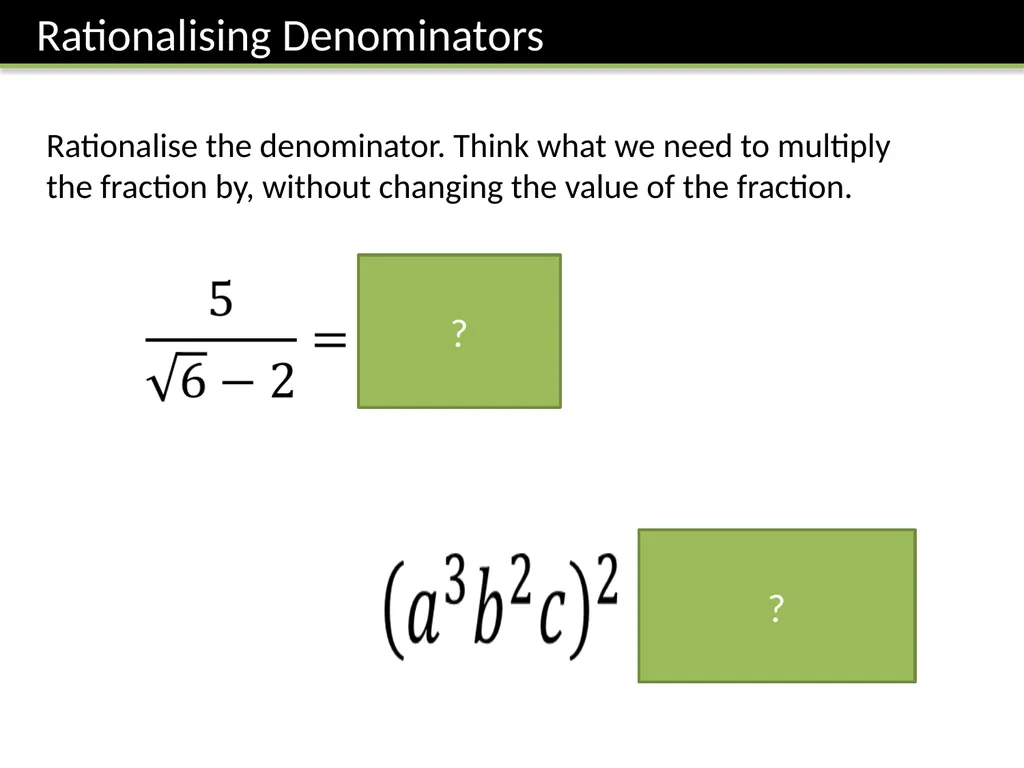
slide26. Rationalise the denominator. Think what we need to multiply the fraction by, without changing the value of the fraction. ? ?<br>
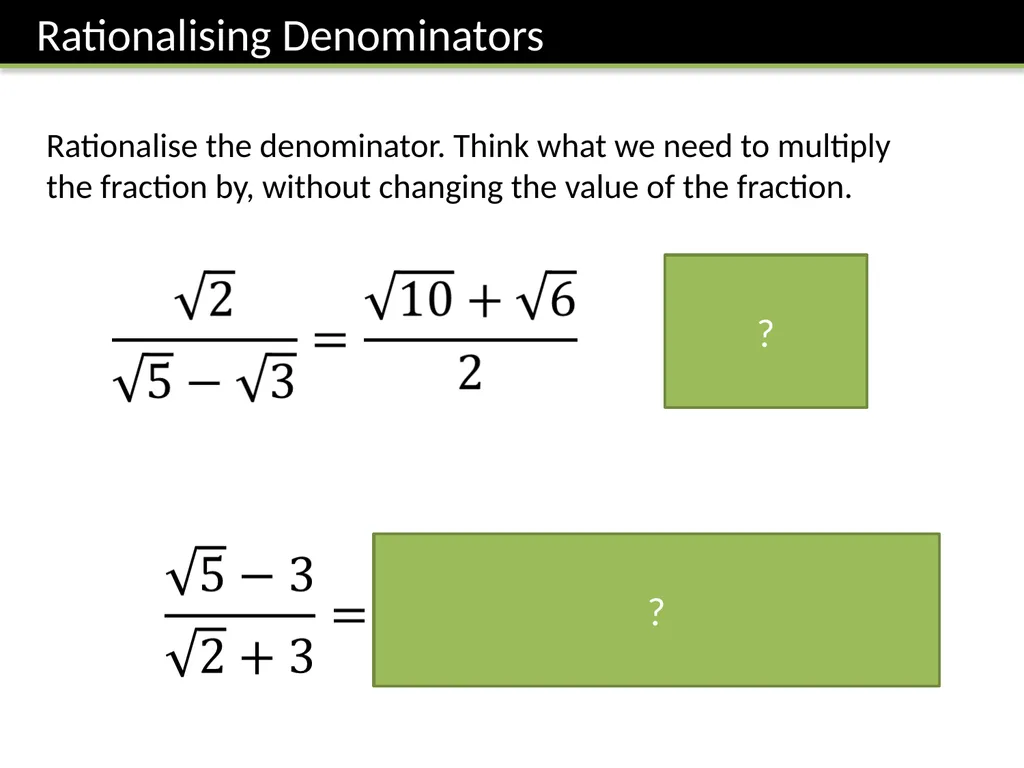
slide27. Rationalise the denominator. Think what we need to multiply the fraction by, without changing the value of the fraction. ? ?<br>
slide28. Page 12 – Exercise 1H
Odds<br>
slide2. Expand the following. ? ? ? ? ?<br>
slide3. ? ? ? ? ? ? ? ?<br>
slide4. ? ? ?<br>
slide5. ? ? ?<br>
slide6. Example 7d on page 9 is wrong: ? Whenever you have fractional powers where the denominator is even, by DEFINITION, you only consider the positive solution.<br>
slide7. 1 2 3 4 5 6 7 8 9 Simplify: Evaluate: 10 11 12 13 14 15 16 17 ? ? ? ? ? ? ? ? ? ? ? ? ? ? ? ? ? ?<br>
slide8. ? ?<br>
slide9. ? ? ?<br>
slide10. ? ? ?<br>
slide11. 1 2 3 5 Simplify: ? ? ? ? 6 ? ? 7 9 10 11 Evaluate: 12 8 ? ? ? ? ? ?<br>
slide12. ? ? ?<br>
slide13. SKILL 1
Taking out a single factor SKILL 3
Difference of two squares (Use ‘commando method’ or ‘splitting the middle term’ method) ? ? ? ? ? ? ? ? ? ? ?<br>
slide14. Page 7 – Exercise 1E
Evens
Page 9 – Exercise 1F
1g,h,i , 2<br>
slide15. ? ? ? ?<br>
slide16. ? ? And that’s it!<br>
slide17. Using these laws, simplify the following: ? ? ? ? ?<br>
slide18. ? ? ? Work these out with neighbour. Simplify as much as possible.
We’ll feed back in a few minutes. ? ?<br>
slide19. It’s convention that the number inside the surd is as small as possible, or the expression as simple as possible.
This sometimes helps us to further manipulate larger expressions. ? ? ? ?<br>
slide20. This sometimes helps us to further manipulate larger expressions. ? ? ?<br>
slide21. Here’s a surd. What could we multiply it by such that it’s no longer an irrational number? ? ?<br>
slide22. In this fraction, the denominator is irrational. ‘Rationalising the denominator’ means making the denominator a rational number.
What could we multiply this fraction by to both rationalise the denominator, but leave the value of the fraction unchanged? ? ? There’s two reasons why we might want to do this:
For aesthetic reasons, it makes more sense to say “half of root 2” rather than “one root two-th of 1”. It’s nice to divide by something whole!
It makes it easier for us to add expressions involving surds.<br>
slide23. ? ? ?<br>
slide24. ? ?<br>
slide25. ? ? ? ? ? ?<br>
slide26. Rationalise the denominator. Think what we need to multiply the fraction by, without changing the value of the fraction. ? ?<br>
slide27. Rationalise the denominator. Think what we need to multiply the fraction by, without changing the value of the fraction. ? ?<br>
slide28. Page 12 – Exercise 1H
Odds<br>